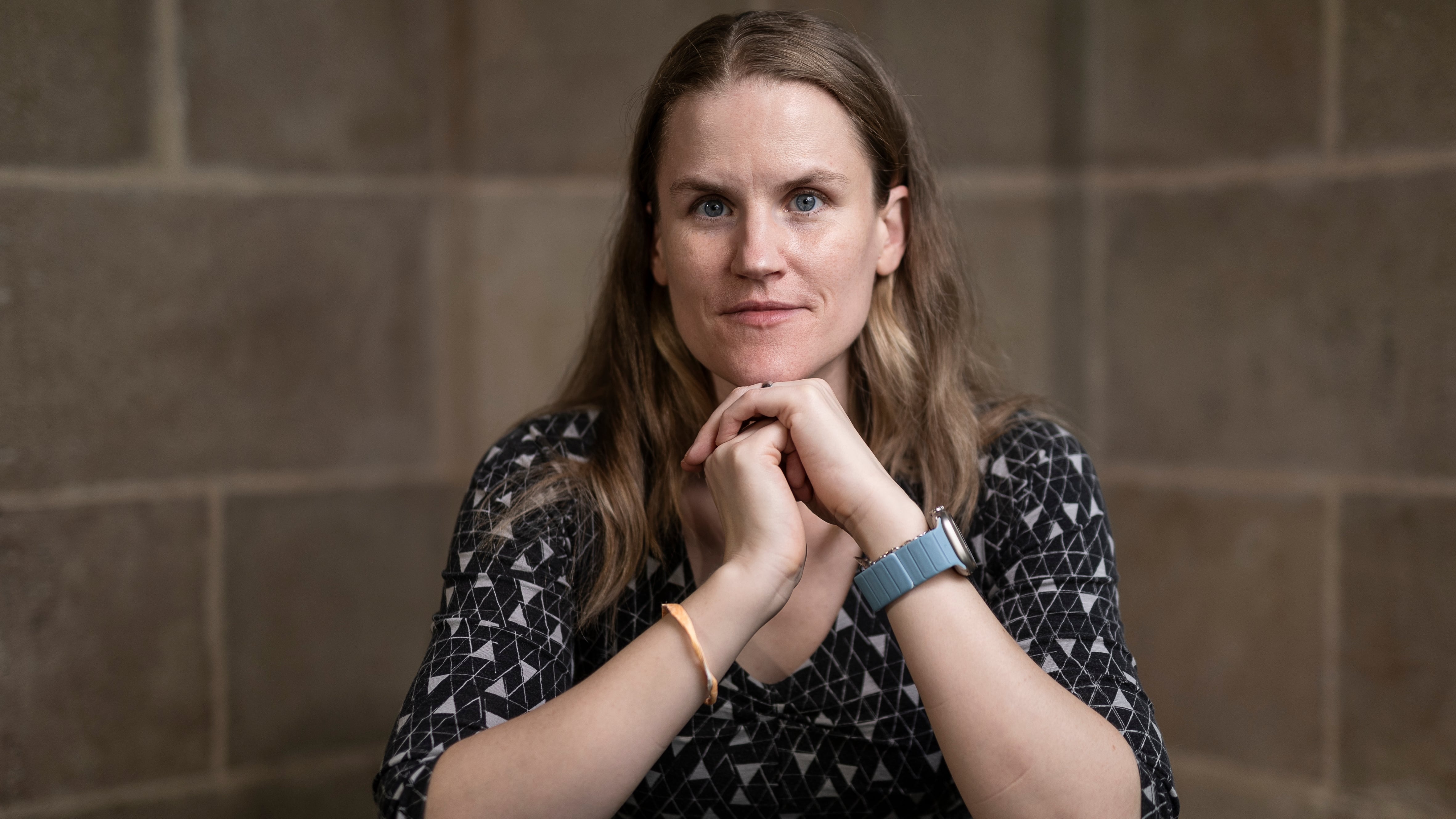
In September 2021, The Wall Street Journal published the Facebook Files, a series of reports based on internal documents from the tech company that, among other things, showed its executives were aware of the harms Instagram and Facebook were causing young people. It was a bombshell. It triggered the biggest reputational crisis for Mark Zuckerberg’s company, which weeks later rebranded as Meta. The person behind it was engineer Frances Haugen, 42, who left her post at Facebook carrying 21,000 in
In September 2021, The Wall Street Journal published the Facebook Files, a series of reports based on internal documents from the tech company that, among other things, showed its executives were aware of the harms Instagram and Facebook were causing young people. It was a bombshell. It triggered the biggest reputational crisis for Mark Zuckerberg’s company, which weeks later rebranded as Meta. The person behind it was engineer Frances Haugen, 42, who left her post at Facebook carrying 21,000 internal documents. The U.S. Senate summoned her to testify, and investigations were opened into her revelations.
NEW YORK, June 2 — Meta is facing scrutiny after security researchers found that its AI‑powered support chatbot could be manipulated to grant unauthorised access to Instagram accounts.Futurism reported that multiple users and cybersecurity researchers demonstrated how Meta’s automated support agent — designed to help with account recovery — could be tricked into handing over access links simply by claiming to be the account owner. In several documented cases, the
NEW YORK, June 2 — Meta is facing scrutiny after security researchers found that its AI‑powered support chatbot could be manipulated to grant unauthorised access to Instagram accounts.
Futurism reported that multiple users and cybersecurity researchers demonstrated how Meta’s automated support agent — designed to help with account recovery — could be tricked into handing over access links simply by claiming to be the account owner. In several documented cases, the bot allegedly provided password‑reset or login‑recovery URLs without verifying the requester’s identity.
According to the report, the vulnerability allowed attackers to bypass standard security checks, including two‑factor authentication, by exploiting the chatbot’s willingness to accept unverified claims. Screenshots shared by researchers showed the bot responding with recovery links after minimal prompting.
Meta told Futurism that it had taken action to address the issue, but did not specify what changes were made. The company also said it had not found evidence of “widespread abuse,” though researchers quoted in the article argued that the flaw was significant and easily exploitable.
Cybersecurity analysts warned that the incident highlights broader risks in deploying AI systems for sensitive support functions without robust verification safeguards. Some experts said the case underscores how AI‑driven customer service tools can unintentionally create new attack surfaces if not properly secured.
The report noted that several affected Instagram users have since regained control of their accounts.
Meta has removed a series of scam ads impersonating the International Criminal Police Organization (INTERPOL) following HKFP’s enquiries.
Since-removed scam ads impersonating INTERPOL appeared on Meta platforms in recent weeks. Photo: HKFP screenshot.
The ads, targeting Hongkongers, appeared for weeks on Facebook. They urged users to get in touch with the global policing body if they wished to retrieve funds previously lost to scams – however, the ads were fraudulent.
The posts were p
Meta has removed a series of scam ads impersonating the International Criminal Police Organization (INTERPOL) following HKFP’s enquiries.
Since-removed scam ads impersonating INTERPOL appeared on Meta platforms in recent weeks. Photo: HKFP screenshot.
The ads, targeting Hongkongers, appeared for weeks on Facebook. They urged users to get in touch with the global policing body if they wished to retrieve funds previously lost to scams – however, the ads were fraudulent.
The posts were published by a since-removed fake news outlet page called “Hong Kong Daily,” which falsely claimed to share an office address with HKFP.
Since-removed scam ads impersonating INTERPOL appeared on Meta platforms in recent weeks. Photo: HKFP screenshot.
INTERPOL told HKFP that such ads should be reported to the local police. “To confirm that INTERPOL never contacts members of the public directly, never demands money from people and never asks for bank details or any money transfer,” it said on Thursday. “Any such request or advert is fake. Members of the public should not engage and report any such emails or adverts to the local police.”
In response to HKFP on Friday, a spokesperson for the Hong Kong Police Force said they have been “actively engaging relevant authorities to verify and remove suspicious or fraudulent websites. In the process of removing such websites, cooperation with concerned parties, including various service providers, is essential. The Hong Kong Police Force is committed to safeguarding the interests of the public by working with these service providers to suppress fraudulent messages.”
The police force is part of the INTERPOL Member State of China.
Meta’s US$3.5 bn profits from scams – report
Last year, Meta banned over 3.7 million items of ad content in Hong Kong and 134 million instances globally. Also in 2025, the tech giant took down 10.9 million accounts associated with scam centres. The company owns Facebook, Instagram and WhatsApp.
A spokesperson for Meta told HKFP on Friday that ads which impersonate organisations or seek to defraud people go against its policies.
“The flagged Facebook Page and associated ads have been removed for violating our policies,” the spokesperson said. “Fighting scams on our platforms is one of our top priorities and as scammers have grown in sophistication in recent years, so have our efforts. We use AI-powered detection technology to identify and remove scam ads at scale, and we also encourage anyone who encounters suspicious ads to report them through our in-app tools.”
File photo: Tom Grundy/HKFP.
Nevertheless, according to a report by Reuters news agency, Meta earns US$3.5 billion (HK$27.4 billion) from just a portion of scam ads every six months.
Citing internal Meta documents, Reuters said that the social media company projected that 10 per cent of its 2024 revenue would come from ads for scams and banned goods, amounting to US$16 billion (HK$124.8 billion).
Other fraudulent ads, appearing to target scam victims, remained online as of Monday, according to HKFP’s checks.
A fraudulent Meta ad running on Facebook, as of May 11, 2026. Screenshot: HKFP.
One ad targeting Hongkongers, published by a page called “Law Help,” urged those “affected by online fraud or an unregulated broker” to submit their details.
Scammers have been posing as law enforcement officers to defraud victims.
In March, Nikkei Asia reported that mock police stations and banks had been set up at scam centres, used to fool victims interacting via video call.
US President Donald Trump is due to visit China on May 14-15, where he is expected to meet leader Xi Jinping, after delaying an earlier summit because of the Iran war.
US President Donald Trump (left) greets Chinese President Xi Jinping before a bilateral meeting at the Gimhae International Airport terminal, in Busan, South Korea, on October 30, 2025. Photo: The White House, via Flickr.
Here is what Beijing could be hoping to achieve:
What does China want?
Beyond diplomatic niceties
US President Donald Trump is due to visit China on May 14-15, where he is expected to meet leader Xi Jinping, after delaying an earlier summit because of the Iran war.
US President Donald Trump (left) greets Chinese President Xi Jinping before a bilateral meeting at the Gimhae International Airport terminal, in Busan, South Korea, on October 30, 2025. Photo: The White House, via Flickr.
Here is what Beijing could be hoping to achieve:
What does China want?
Beyond diplomatic niceties and behind closed doors, Beijing will be looking for small, concrete achievements, analysts said, but will stay “realistically pragmatic” given Trump’s unpredictable nature.
China wants a broad reset in ties but knows this would be unlikely, said Benjamin Ho from Singapore’s S. Rajaratnam School of International Studies.
Beijing and Washington had been locked in a blistering trade war in which US levies on many Chinese goods reached an eye-watering 145 percent.
The tit-for-tat escalation cooled off after Trump and Xi agreed in October to a one-year truce, with experts saying Beijing’s baseline goal for the upcoming meeting would be to extend that agreement.
“What China needs is for Trump to follow through on his promise to engage, with at least a few concrete outcomes discussed at the highest level,” said Yue Su from the Economist Intelligence Unit (EIU).
Beijing will be satisfied with “targeted” results such as limited tariff reductions that would justify a measured rollback of its own tariffs or export restrictions, she said.
What about the Iran war?
The topic of Iran will be “hard to avoid” in the Trump-Xi meeting, experts said, but “this is not a domain China is eager to engage deeply on”.
“The US is already raising pressure pre-summit on China by targeting its economic ties with Tehran,” said Lizzi Lee at the Asia Society Policy Institute.
Chinese Foreign Minister Wang Yi (right) and Iranian Foreign Minister Abbas Araghchi in Beijing on May 6, 2026. Photo: China’s Ministry of Foreign Affairs.
Trump warned last month he would hit China’s goods with a 50 percent tariff if it provided military assistance to Iran.
Beijing is a close partner of Tehran and has called US-Israeli strikes on Iran illegal, but it has also criticised Iranian attacks on Gulf countries and called for the Strait of Hormuz to be reopened.
However, China will not accept pressure from the United States to take action on Iran or Russia, over whom it “may have some influence but not decisive control”, the EIU’s Su said.
Beijing will also aim to avoid “additional complications” such as new US tariffs linked to China’s trade with Iran being introduced into an “already complex relationship”, Su said.
The Iran war will add “another layer of mutual pressure”, Lee said, but the real negotiating terrain remains in trade and investment.
What are China’s bargaining chips?
One of China’s key bargaining chips is its rare earths — metals crucial in the production of everything from smartphones to electric cars.
China’s dominance in the rare earths industry, from natural reserves and mining through processing and innovation, is the result of a decades-long drive.
It remains China’s strongest tool if meaningful concessions from the United States are needed, Su said.
Trump has shown that he “cares a lot about” rare earths, said Joe Mazur, a geopolitics analyst at Beijing-based consultancy Trivium China.
“I think that’s sort of something that the US doesn’t really have an answer to,” he said.
Mazur thinks that China is “going to line up… quick wins” before the visit, which may include buying more US agricultural products or Boeing jets.
China, he said, might hope “that will put Trump and his team in a positive frame of mind when they’re then discussing more complex, thornier issues”.
How has Beijing prepared?
China has hedged against instability brought about by Trump through diversifying trade towards Southeast Asia and the Global South, and strengthening regional ties, said the Asia Society’s Lee.
However, a lot of these measures, including diversification of energy imports, a push towards electrification and tech self-sufficiency, predate Trump’s second term, Mazur said.
“If this meeting goes exceptionally well, it’s not going to change the trajectory that China’s on,” he said.
“This push to America-proof the Chinese economy is going to continue, no matter what happens.”
Is China confident?
Beijing will enter talks “cautiously confident”, Lee said.
It believes it can absorb pressure better now and is more comfortable playing “a long game” than Trump, who is facing midterm election pressure, she said.
A visit to Beijing by Russian President Vladimir Putin is also on the cards, with Foreign Minister Sergei Lavrov — who met Xi in April — saying it would happen in the first half of this year.
A back-to-back visit would send the message that “just because he (Xi) had a good meeting with Trump, it doesn’t mean that Chinese support for Russia is going anywhere”, Mazur told AFP.
A friend is upset because you didn’t “like” a photo from her last trip, but the truth is you haven’t even had a chance to see it. Instead of displaying it on your feed, Instagram prioritized showing you ads for food. Seguir leyendo
A friend is upset because you didn’t “like” a photo from her last trip, but the truth is you haven’t even had a chance to see it. Instead of displaying it on your feed, Instagram prioritized showing you ads for food.
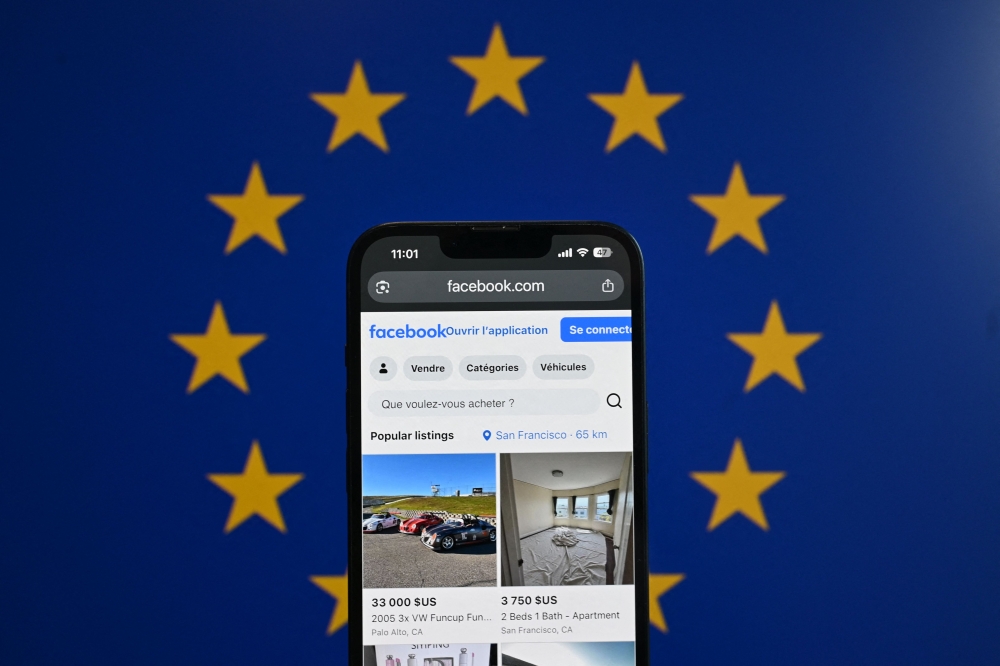
BRUSSELS, June 3 — Meta secured a partial victory today over the EU’s powers to regulate tech giants, as a top court ruled the bloc was wrong to slap tough rules on its Facebook Marketplace platform — but threw out an appeal over Messenger.The US giant filed a challenge with the EU’s General Court in Luxembourg over both platforms’ designation under the Digital Markets Act (DMA), one of several digital laws facing fierce criticism from tech giants and US Presiden
BRUSSELS, June 3 — Meta secured a partial victory today over the EU’s powers to regulate tech giants, as a top court ruled the bloc was wrong to slap tough rules on its Facebook Marketplace platform — but threw out an appeal over Messenger.
The US giant filed a challenge with the EU’s General Court in Luxembourg over both platforms’ designation under the Digital Markets Act (DMA), one of several digital laws facing fierce criticism from tech giants and US President Donald Trump’s administration.
Meta faces strict rules and obligations after being designated a so-called “gatekeeper” under the DMA, and its Facebook, Instagram and WhatsApp apps are subject to extra scrutiny as “core platform services”.
In its challenge, Meta argued that Messenger and Marketplace were an extension of Facebook, and should not face stringent obligations of their own.
“By its judgment today, the General Court of the European Union annuls the decision designating Meta as a gatekeeper as regards Marketplace, while maintaining Meta’s designation for its interpersonal communications service Messenger,” the court said in a statement.
In practice, the European Commission had agreed in April last year to lift the designation of Marketplace, but Meta nonetheless welcomed the court decision — seen as a test of the EU’s powers to regulate the sector.
The Marketplace ruling “confirms that it should not have been designated in the first place”, a Meta spokesperson said.
“We are reviewing the court’s finding on Messenger and will consider our options,” they said.
In its challenge, Meta argued that Messenger and Marketplace were an extension of Facebook, and should not face stringent obligations of their own. — AFP pic
‘Erred in law’
The DMA comes with a list of do’s and don’ts for the world’s biggest digital platforms in an attempt to keep them in check and create an open online space.
Concerning the imposition of tougher rules on Marketplace, the court found the European Commission had “erred in law” on several counts.
It faulted the EU executive for failing to take into account changes made to the platform in mid-2023, and more broadly said its case “lacks sufficient reasoning”.
Regarding Messenger, however, the court agreed with the commission that it was “distinct from the Facebook social network”, noting that it was “offered by means of standalone applications” and that “Meta promotes tools that are specific to that service”.
The EU court in 2024 ruled against a similar bid by TikTok to challenge its DMA designation, a decision the company has appealed.
Alongside Meta and TikTok’s owner ByteDance, the other “gatekeepers” are Google parent Alphabet, Amazon, Apple, Booking and Microsoft.
The EU last year imposed its first fines for breaking the DMA rule, hitting Meta and Apple with penalties of €200 million (RM923 million) and €500 million respectively.
The fines have given rise to accusations by Washington that the EU is deliberately targeting American companies, which Brussels denies. — AFP
Meta has reportedly removed a controversial facial recognition system, internally known as "Name Tag," that was discovered in the code of a companion app for its line of Ray-Ban smart glasses.
[Read More]
Meta has reportedly removed a controversial facial recognition system, internally known as "Name Tag," that was discovered in the code of a companion app for its line of Ray-Ban smart glasses.
Measures to include restrictions on ‘safe’ social media apps, with some fearing banning some platforms and not others will lead to legal challengesTeenagers under the age of 16 are to be banned from accessing “high-risk” social media apps while safer platforms will be subjected to restrictions, under a sweeping government crackdown.Under-18s will also be banned from using romantic or sexual AI chatbots after a consultation on keeping children safe online. Continue reading...
Measures to include restrictions on ‘safe’ social media apps, with some fearing banning some platforms and not others will lead to legal challenges
Teenagers under the age of 16 are to be banned from accessing “high-risk” social media apps while safer platforms will be subjected to restrictions, under a sweeping government crackdown.
On the first day of Cannes, artificial intelligence already sparked a debate between two jury members, Demi Moore and Paul Laverty. From that moment, the festival and the market running alongside it diverged in their reactions to the digital tool: while Cannes imposes limits on its use (even though one of its sponsors, which joined in 2026, is Meta, owner of Meta AI) and artists warn of its dangers, the market saw a rush of Chinese films made with AI and a handful of Western projects embracing i
On the first day of Cannes, artificial intelligence already sparked a debate between two jury members, Demi Moore and Paul Laverty. From that moment, the festival and the market running alongside it diverged in their reactions to the digital tool: while Cannes imposes limits on its use (even though one of its sponsors, which joined in 2026, is Meta, owner of Meta AI) and artists warn of its dangers, the market saw a rush of Chinese films made with AI and a handful of Western projects embracing its use. Filmmakers will be wary, but the industry has rushed to exploit AI.
Oscar winner Mikey Madison and Jeremy Strong to star in film focused on fallout from whistleblower Frances HaugenThe first trailer for Aaron Sorkin’s eagerly anticipated follow-up to The Social Network has landed.The Social Reckoning has been described as a film that isn’t a “straight sequel” but one that will still revisit Mark Zuckerberg and Facebook. Continue reading...
Big tech firms have been responding to the UK’s “world leading” social media ban and unsurprisingly they are not impressed. The UK unveiled legislation earlier today that will see 10 social media platforms including X, YouTube, Facebook, TikTok and Snapchat completely banned for under-16s. Prime Minister Keir Starmer said the UK is taking “world leading […]
Big tech firms have been responding to the UK’s “world leading” social media ban and unsurprisingly they are not impressed. The UK unveiled legislation earlier today that will see 10 social media platforms including X, YouTube, Facebook, TikTok and Snapchat completely banned for under-16s. Prime Minister Keir Starmer said the UK is taking “world leading […]
On December 8, 1980, John Lennon and Yoko Ono sat down to talk to a small crew from San Francisco’s KFRC radio station in their Dakota Building apartment in New York. It was the only radio interview they gave to promote their album Double Fantasy, released three weeks earlier. For two hours and 45 minutes they spoke calmly, optimistically and, in Lennon’s case, in an almost messianic voice, about life. That night, returning home, Lennon would be shot dead by Mark David Chapman. Given the circums
On December 8, 1980, John Lennon and Yoko Ono sat down to talk to a small crew from San Francisco’s KFRC radio station in their Dakota Building apartment in New York. It was the only radio interview they gave to promote their album Double Fantasy, released three weeks earlier. For two hours and 45 minutes they spoke calmly, optimistically and, in Lennon’s case, in an almost messianic voice, about life. That night, returning home, Lennon would be shot dead by Mark David Chapman. Given the circumstances, the interview could be viewed as prophetic, which is Steven Soderbergh’s angle in his documentary John Lennon: The Last Interview, presented at Cannes in a special session.

 Login
Login