Normal view

  • ✇Hong Kong Free Press HKFP
  • Trump warns against Taiwan independence after visiting China AFP
    US President Donald Trump on Friday warned Taiwan against declaring formal independence after concluding his visit to China, whose leader Xi Jinping had pressed him not to support the self-ruling island. US President Donald Trump and Chinese President Xi Jinping tour the Hall of Prayer of Good Harvest at the Temple of Heaven in Beijing on May 14, 2026. Photo: The White House, via Flickr. Trump ended the state visit claiming to have made “fantastic” trade deals, although the details were v
     

Trump warns against Taiwan independence after visiting China

By: AFP
16 May 2026 at 03:42
Trump Xi featured image

US President Donald Trump on Friday warned Taiwan against declaring formal independence after concluding his visit to China, whose leader Xi Jinping had pressed him not to support the self-ruling island.

US President Donald Trump Chinese President Xi Jinping tour the Hall of Prayer of Good Harvest at the Temple of Heaven in Beijing on May 14, 2026. Photo: The White House, via Flickr.
US President Donald Trump and Chinese President Xi Jinping tour the Hall of Prayer of Good Harvest at the Temple of Heaven in Beijing on May 14, 2026. Photo: The White House, via Flickr.

Trump ended the state visit claiming to have made “fantastic” trade deals, although the details were vague, and he did not appear to secure any breakthrough with China over his stalemated war on Iran.

Trump invited Xi for a reciprocal visit to Washington in September, signalling both sides will likely seek stability in the often turbulent relationship between the world’s two largest economies.

On a key issue for Xi, Trump made clear he opposed a declaration of independence by Taiwan and appeared to question why the United States would defend the island in case of attack.

“I’m not looking to have somebody go independent. And, you know, we’re supposed to travel 9,500 miles to fight a war. I’m not looking for that,” he told Fox News’ “Special Report with Bret Baier.”

“I want them to cool down. I want China to cool down,” Trump said.

“We’re not looking to have wars, and if you kept it the way it is, I think China’s going to be OK with that.”

The United States recognizes only Beijing and does not support formal independence by Taiwan, but historically has stopped short of explicitly saying it opposes independence.

Under US law, the United States is required to provide weapons to Taiwan for its defence, but it has been ambiguous on whether US forces would come to the island’s aid.

Xi had begun the summit with a warning on Taiwan, whose President Lai Ching-te considers the island already independent, making a declaration unnecessary.

Xi told Trump that missteps on the sensitive issue could cause “conflict”.

Referring to comments by Secretary of State Marco Rubio, who said US policy toward Taipei was unchanged, Taiwan’s foreign ministry thanked the United States for showing “it supports and values Taiwan Strait peace and stability”.

No details on ‘fantastic’ deals

On Friday, Boeing confirmed that China had made an “initial commitment” to buy 200 aircraft, a deal previously announced by Trump. The company said more orders could follow.

Trump also said Beijing would buy American oil and soybeans.

US President Donald Trump and Chinese President Xi Jinping at Zhongnanhai in Beijing on May 15, 2026,. Photo: The White House, via Flickr.

“We’ve made some fantastic trade deals, great for both countries,” he said after a walk with Xi in the gardens of Zhongnanhai, a central leadership compound next to Beijing’s Forbidden City.

“We’ve settled a lot of different problems that other people wouldn’t have been able to solve,” Trump added, without providing specifics.

Xi promised to send Trump rose seeds for the White House Rose Garden and said it was a “milestone visit”.

But beyond Boeing, there were no other formal announcements from companies or from China on trade deals.

The reserve on the Chinese side echoes the tone of the summit as a whole, where Trump’s overtures to Xi — whom he described as a “great leader” and “friend” — were met with a more muted response.

“Trump got the optics he was looking for and the Chinese were happy to give them to him,” said Jacob Stokes, a senior fellow at the Centre for a New American Security.

Little on Iran

Trump had delayed the trip once due to the war in Iran, which has rebuffed his appeals for a peace agreement and retaliated by exerting control over the key Strait of Hormuz, sending global oil prices soaring.

US President Donald Trump and Chinese President Xi Jinping at Zhongnanhai in Beijing on May 15, 2026. Photo: The White House, via Flickr.

Trump said Xi had assured him that China was not preparing military aid to Iran. Israel has alleged that Beijing has provided key missile technology to Tehran.

The Chinese foreign ministry on Friday released a statement on Iran saying “shipping lanes should be reopened as soon as possible”.

Trump also acknowledged that he could not persuade Xi to free Jimmy Lai, the imprisoned Hong Kong pro-democracy media tycoon whose cause is broadly backed in Washington.

“He told me, Jimmy Lai is a tough one for him to do,” Trump told reporters.

Bonnie Glaser, managing director of the German Marshall Fund’s Indo-Pacific program, noted that Trump had already sounded half-hearted in his public comments on Lai.

“My sense is that the Chinese see that this is not a top priority for the United States,” she said.

“What Trump seems to want most is purchases of American products — that appears to be his highest priority.”

The two leaders had been expected to discuss extending the one-year tariff truce that paused their frenetic 2025 trade war, struck during their last meeting in October.

But Trump told reporters on the way home that it “wasn’t brought up”.
  • ✇El País in English
  • Power of Siberia-2, the gas pipeline the Kremlin craves and that brings Xi and Putin together Ignacio Fariza
    Poised to become the king of pipelines, with a total route of more than 2,600 kilometers (1,615 miles), Power of Siberia-2 is set to change two things forever: global natural gas flows and the already solid alliance between China and Russia. A few loose ends remain before it becomes reality, but after Tuesday’s meeting between Xi Jinping and Vladimir Putin, the road appears paved for the pipeline that will link the Yamal Peninsula ― one of the world’s largest gas fields ― with Beijing and Shangh
     

Power of Siberia-2, the gas pipeline the Kremlin craves and that brings Xi and Putin together

22 May 2026 at 17:47

Poised to become the king of pipelines, with a total route of more than 2,600 kilometers (1,615 miles), Power of Siberia-2 is set to change two things forever: global natural gas flows and the already solid alliance between China and Russia. A few loose ends remain before it becomes reality, but after Tuesday’s meeting between Xi Jinping and Vladimir Putin, the road appears paved for the pipeline that will link the Yamal Peninsula ― one of the world’s largest gas fields ― with Beijing and Shanghai to come to fruition.

Seguir leyendo

© Alexander Kazakov (Alexander Kazakov/Pool Sputnik Kremlin via AP)

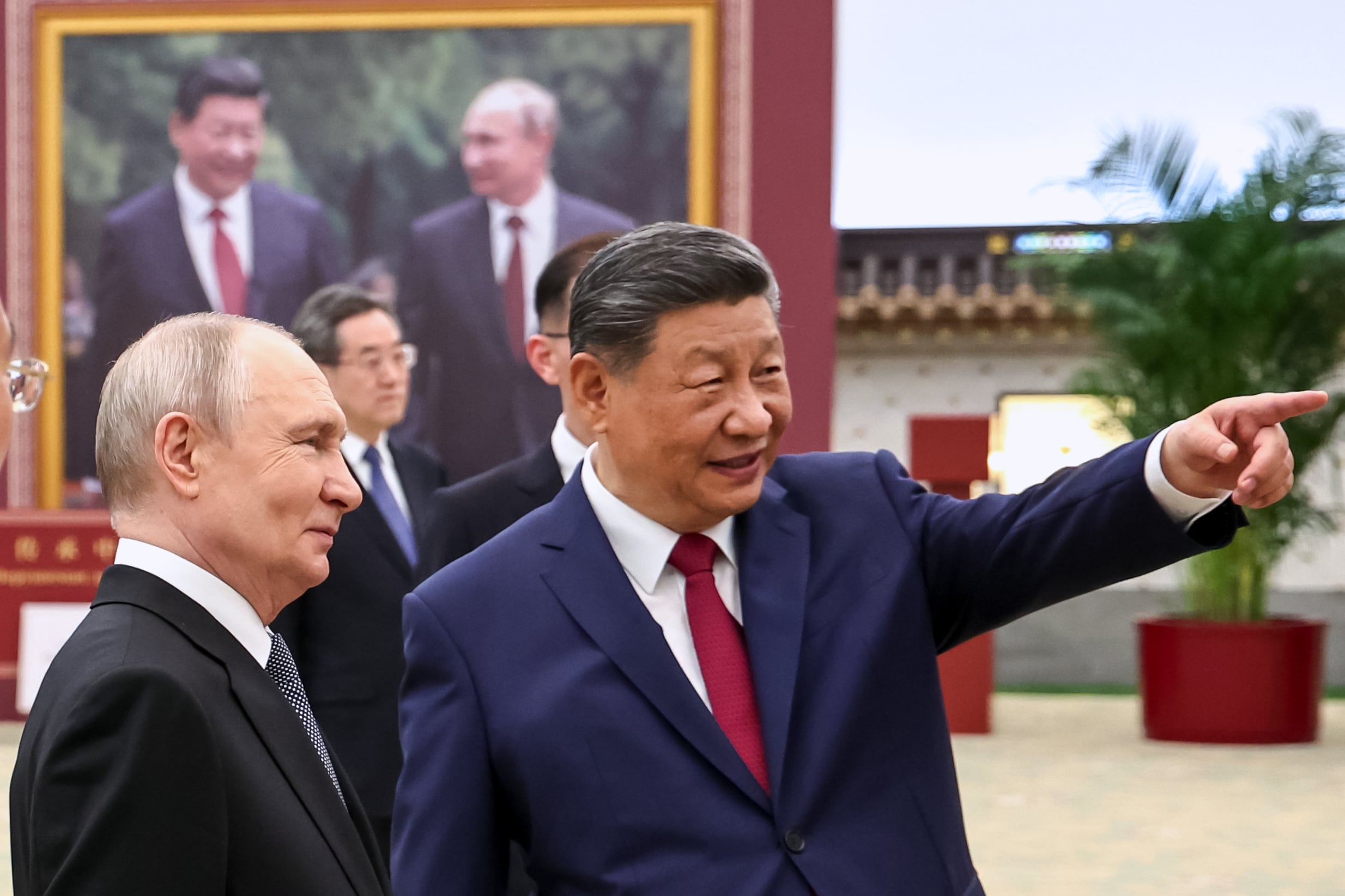
Vladimir Putin and Xi Jinping, last Tuesday in Beijing.
  • ✇Hong Kong Free Press HKFP
  • Trump says Xi signaled release of Hong Kong media mogul Jimmy Lai unlikely AFP
    Chinese President Xi Jinping suggested that imprisoned Hong Kong pro-democracy media mogul Jimmy Lai is unlikely to be released, US President Donald Trump said Friday. US President Donald Trump speaks to reporters aboard Air Force One after his departure from Beijing Capital Airport on May 15, 2026, on his way back to the United States. Photo: Brendan Smialowski/AFP. Asked about the fate of political prisoners in China following a high-stakes summit in Beijing, Trump said that Xi would “s
     

Trump says Xi signaled release of Hong Kong media mogul Jimmy Lai unlikely

By: AFP
16 May 2026 at 02:48
Donald Trump Jimmy Lai featured image

Chinese President Xi Jinping suggested that imprisoned Hong Kong pro-democracy media mogul Jimmy Lai is unlikely to be released, US President Donald Trump said Friday.

US President Donald Trump speaks to reporters aboard Air Force One after his departure from Beijing Capital Airport on May 15, 2026, on his way back to the United States. Photo: Brendan Smialowski/AFP.

Asked about the fate of political prisoners in China following a high-stakes summit in Beijing, Trump said that Xi would “strongly” consider the release of a pastor of an underground church, but that freeing Lai was a “tough one for him to do.”

Speaking to reporters on board Air Force One, Trump said of Lai’s fate: “I did bring him up, it’s a tougher one for him, it’s a tougher one.”

Trump added: “He told me, Jimmy Lai is a tough one for him to do.”

Lai, the 78-year-old founder of the now-defunct Apple Daily newspaper, was found guilty in December on charges of foreign collusion and seditious publication and sentenced to 20 years in prison.

The sentence was the harshest penalty doled out so far under a national security law imposed on Hong Kong by Beijing after widespread pro-democracy protests in 2019 and received international condemnation.

Hong Kong media mogul Jimmy Lai. File Photo: HKFP.

Trump added Friday that Xi promised “He’s going to strongly consider the pastor,” referring to Jin Mingri, the founder of a prominent Chinese underground church detained in October in a sweeping national crackdown.

Jin founded the unregistered Zion Church in 2007 in Beijing. It grew to 1,500 members before shuttering in 2018 under pressure from Chinese authorities.

But the church maintained an online presence that flourished during the Covid pandemic, amassing a following across 40 Chinese cities.

Jin was arrested on October 10 on “suspicion of the illegal use of information networks.”

Eric Lai, senior fellow at Georgetown Center for Asian Law, said that while it was clear that Jimmy Lai’s case was not a priority at the summit, it was still significant that Trump raised it.

“Obviously, the CCP does not compromise on its perception of regime security and they have never changed their attitudes and positioning towards Jimmy Lai and his imprisonment,” he said referring to China’s Communist Party.

“That said, it is also evident that international attention and internal pressure in US society remains essential to the US government keeping an agenda on Jimmy Lai alongside other political prisoners in China,” he added.

  • ✇Hong Kong Free Press HKFP
  • Xi warns Trump Taiwan issue could lead to ‘conflict’ as US-China summit kicks off AFP
    By Danny Kemp Chinese President Xi Jinping warned his US counterpart Donald Trump that missteps on Taiwan could push their two countries into “conflict”, a stark opening salvo as they met in Beijing on Thursday at a superpower summit. China’s President Xi Jinping (right) and US President Donald Trump inspect the honour guard in Beijing on May 14, 2026. Photo: Mao Ning Chinese Foreign Ministry Spokesperson, via Facebook. Trump had arrived in China with accolades for his host, calling Xi
     

Xi warns Trump Taiwan issue could lead to ‘conflict’ as US-China summit kicks off

By: AFP
14 May 2026 at 06:16
Xi Trump featured image

By Danny Kemp

Chinese President Xi Jinping warned his US counterpart Donald Trump that missteps on Taiwan could push their two countries into “conflict”, a stark opening salvo as they met in Beijing on Thursday at a superpower summit.

China's President Xi Jinping (right) and US President Donald Trump inspect the honour guard in Beijing on May 14, 2026. Photo: Mao Ning Chinese Foreign Ministry Spokesperson, via Facebook.
China’s President Xi Jinping (right) and US President Donald Trump inspect the honour guard in Beijing on May 14, 2026. Photo: Mao Ning Chinese Foreign Ministry Spokesperson, via Facebook.

Trump had arrived in China with accolades for his host, calling Xi a “great leader” and “friend”, as he predicted that their countries would have “a fantastic future together”.

But beyond the pomp as he welcomed Trump, Xi in less effusive tones said the two sides “should be partners and not rivals”, while highlighting the issue of self-ruled democratic Taiwan — which Beijing claims as its territory — straight off the bat.

“The Taiwan question is the most important issue in China-US relations,” Xi said, according to remarks published by Chinese state media shortly after talks began.

“If mishandled, the two nations could collide or even come into conflict, pushing the entire China-US relationship into a highly perilous situation,” he added at the opening talks that lasted around two hours and 15 minutes.

Trump’s trip to Beijing is the first by a US president in nearly a decade, with the grand reception belying a host of unresolved trade and geopolitical tensions between the two countries.

Xi greeted Trump with a red-carpet welcome at the opulent Great Hall of the People, with military band fanfare, a gun salute and a host of schoolchildren jumping and chanting “welcome!”.

Schoolchildren greet China's President Xi Jinping and US President Donald Trump at the Great Hall of the People in Beijing on May 14, 2026. Photo: Mao Ning Chinese Foreign Ministry Spokesperson, via Facebook.
Schoolchildren greet China’s President Xi Jinping and US President Donald Trump at the Great Hall of the People in Beijing on May 14, 2026. Photo: Mao Ning Chinese Foreign Ministry Spokesperson, via Facebook.

Seemingly enjoying the ceremony, Trump said “the relationship between China and the USA is going to be better than ever before”.

Xi instead referenced an ancient Greek political theory about the risks of war when a rising power rivals a ruling power.

“Can China and the United States transcend the so-called ‘Thucydides Trap’ and forge a new paradigm for major-power relations,” Xi asked, adding that “cooperation benefits both sides, while confrontation harms both”.

There has been plenty of the latter since Trump’s last visit in 2017, with the two countries having spent much of 2025 embroiled in a dizzying trade war and at odds on many major global issues.

‘Blunt language’

Taiwan is a longstanding sore point.

The United States recognises only Beijing but under domestic law is required to provide weapons to Taiwan so that it can defend itself.

China has sworn to take the self-ruled democracy and has not ruled out using force, ramping up military pressure in recent years.

Following Xi’s comments on Thursday, Taipei called China the “sole risk” to regional peace, and insisted that “the US side has repeatedly reaffirmed its clear and firm support”.

But Trump said Monday he would speak to Xi about US arms sales to Taiwan, a departure from historic US insistence that it will not consult Beijing on the matter.

China's President Xi Jinping (right) and US President Donald Trump at the Great Hall of the People in Beijing on May 14, 2026. Photo: Mao Ning Chinese Foreign Ministry Spokesperson, via Facebook.
China’s President Xi Jinping (right) and US President Donald Trump at the Great Hall of the People in Beijing on May 14, 2026. Photo: Mao Ning Chinese Foreign Ministry Spokesperson, via Facebook.

Adam Ni, editor of newsletter China Neican, told AFP that while such “blunt language” was not uncommon in Chinese foreign policy, it was unusual coming from Xi himself.

“Xi wants to make it very clear… he thinks the Taiwan issue is the potential powder keg between the two superpowers,” Ni added.

China has been “signalling a desire for US compromise on Taiwan in the lead up to the summit,” the National University of Singapore’s Chong Ja Ian told AFP.

Xi’s demand could suggest “they see some opportunity to convince Trump”, he said.

Iran overshadows

A new addition to the list of contentious issues to be discussed, the Iran war, threatens to weaken Trump’s position, having already forced him to postpone his trip from March.

The US president said he expected a “long talk” with Xi about Iran, which sells most of its US-sanctioned oil to China, but insisted that “I don’t think we need any help” from Beijing.

China's President Xi Jinping (right) and US President Donald Trump visit the Temple of Heaven in Beijing on May 14, 2026. Photo: Brendan Smialowski/Pool/AFP.
China’s President Xi Jinping (right) and US President Donald Trump visit the Temple of Heaven in Beijing on May 14, 2026. Photo: Brendan Smialowski/Pool/AFP.

However, his secretary of state Marco Rubio, historically a fierce opponent of Beijing, said the US side was hoping “to convince (China) to play a more active role”.

Trump is also hoping for business deals on agriculture, aircraft and other sectors.

Elite businessmen in his delegation, including Nvidia’s Jensen Huang and Tesla’s Elon Musk, were on the stairs of the Great Hall of the People on Thursday for the welcome ceremony.

Musk told reporters afterwards the meeting had been “wonderful”, while Huang said the two presidents “were incredible”.

Xi later told the delegation that his country’s “doors to the outside world will open wider and wider” and that US companies would enjoy “even brighter prospects in China”.

On the eve of the summit, US Treasury Secretary Scott Bessent and Chinese Vice Premier He Lifeng met in South Korea to seek progress in ending a long-simmering trade war between the two.

Xi said the talks “reached results that were generally balanced and positive”, and urged both sides to “safeguard the current hard-won positive momentum”.

Trump and Xi are set to discuss extending a one-year tariff truce reached during their last meeting in South Korea in October.

China’s controls on rare earth exports and AI rivalry are among other topics expected to be taken up.

After their morning meeting, the two men took a break from negotiations, heading to the Temple of Heaven, a World Heritage site where China’s emperors once prayed for good harvests.

The two will return to the Great Hall of the People this evening for a state banquet.

  • ✇Hong Kong Free Press HKFP
  • Taiwan opposition leader seeks to maintain US defence cooperation AFP
    The leader of Taiwan’s main opposition party said Friday she hopes to maintain engagement with the United States on the island’s defense capabilities, speaking on a two-week US visit aimed at growing trust with Washington. Taiwanese opposition leader and Kuomintang chairperson Cheng Li-wun participates in a press conference at the Jefferson Hotel in Washington, DC, on June 12, 2026. Photo: Alex Wrobleski/AFP. Addressing reporters in the US capital, Kuomintang chairwoman Cheng Li-wun said
     

Taiwan opposition leader seeks to maintain US defence cooperation

By: AFP
13 June 2026 at 05:32
Cheng Li-wun featured image

The leader of Taiwan’s main opposition party said Friday she hopes to maintain engagement with the United States on the island’s defense capabilities, speaking on a two-week US visit aimed at growing trust with Washington.

Taiwanese opposition leader and Kuomintang chairperson Cheng Li-wun participates in a press conference at the Jefferson Hotel in Washington, DC, on June 12, 2026.
Taiwanese opposition leader and Kuomintang chairperson Cheng Li-wun participates in a press conference at the Jefferson Hotel in Washington, DC, on June 12, 2026. Photo: Alex Wrobleski/AFP.

Addressing reporters in the US capital, Kuomintang chairwoman Cheng Li-wun said the party has expressed support for Taiwan’s defense capabilities and hopes “to continue maintaining and deepening our cooperation with the US in this regard.”

She did not comment specifically about a US$14 billion US arms sale to Taiwan that remains under review. Such sales are a thorny issue between Washington and Beijing.

Cheng in April became the first KMT leader in a decade to visit Beijing and meet Chinese President Xi Jinping, and her US trip comes just weeks after President Donald Trump himself held a summit with Xi.

The KMT, which has long advocated for closer ties with China, recently thwarted the Taiwanese government’s plan to spend nearly US$40 billion on critical weapons such as US arms and domestically produced drones.

In Washington, the KMT comes up against concerns over its more pro-engagement position, compared with President Lai Ching-te’s Democratic Progressive Party.

Cheng has rocked Taiwanese politics since her unexpected rise to the top of the party last year and drawn criticism for being too pro-China.

Beijing claims Taiwan is part of its territory and has threatened to use force to seize it.

On Friday, Cheng hit back at critics, saying that “seeking peaceful dialogue across the Taiwan Strait does not mean abandoning Taiwan’s defense capabilities.”

She added that she met nine members of Congress during her visit, alongside academics and others, touting the trip as a success.

She said Trump’s recent warning to the island against making a declaration of independence was also aligned with the KMT’s positions.

After wrapping up his state visit to Beijing last month, Trump said in an interview that “I’m not looking to have somebody go independent. And, you know, we’re supposed to travel 9,500 miles to fight a war. I’m not looking for that.”

Cheng’s itinerary also included stops in San Francisco, Los Angeles, Boston and New York.

  • ✇Hong Kong Free Press HKFP
  • Taiwan’s President Lai says ‘happy’ to talk to Trump AFP
    Taiwan’s President Lai Ching-te said Thursday he would be “happy” to talk to US leader Donald Trump — a conversation that would break more than four decades of diplomatic protocol and risk angering China. Taiwan President Lai Ching-te delivers a speech to mark his second anniversary in office on May 20, 2026. File photo: Taiwan’s Presidential Office, via Flickr. Trump told reporters on Wednesday that he would speak to Lai, as the White House weighs arms sales to the democratic island.
     

Taiwan’s President Lai says ‘happy’ to talk to Trump

By: AFP
21 May 2026 at 06:59
Lai Ching-te Donald Trump featured image

Taiwan’s President Lai Ching-te said Thursday he would be “happy” to talk to US leader Donald Trump — a conversation that would break more than four decades of diplomatic protocol and risk angering China.

Taiwan President Lai Ching-te delivers a speech to mark his second anniversary in office on May 20, 2026. File photo: Taiwan's Presidential Office, via Flickr.
Taiwan President Lai Ching-te delivers a speech to mark his second anniversary in office on May 20, 2026. File photo: Taiwan’s Presidential Office, via Flickr.

Trump told reporters on Wednesday that he would speak to Lai, as the White House weighs arms sales to the democratic island.

It was the second time since a summit in Beijing last week that Trump has said he would call the Taiwanese leader.

Such communication would be the first time since Washington switched diplomatic relations from Taipei to Beijing in 1979 that serving presidents of Taiwan and the United States would speak to each other.

Lai said Taiwan was “committed to maintaining the stable status quo in the Taiwan Strait” and that “China is the disruptor of peace and stability”, the Taiwanese foreign ministry said in a statement.

China ‘firmly opposes’ call

Lai would be “happy to discuss these matters with President Trump”, the statement said.

“I’ll speak to him. I speak to everybody,” Trump said, adding that he had a great meeting with Chinese President Xi Jinping during his state visit to Beijing last week.

US President Donald Trump addresses the nation on the shooting of two National Guard soldiers in Washington, DC, on November 26, 2025, from his residence in Mar-a-Lago in Palm Beach, Florida. Photo: White House, via Flickr.

“We’ll work on that, the Taiwan problem,” Trump said.

China’s foreign ministry said Thursday it “firmly opposes official exchanges” between the United States and Taiwan, as well as US arms sales to the island.

“China urges the United States to implement the important consensus reached during the meeting between the Chinese and US heads of state, honour its commitments and statements, handle the Taiwan question with the utmost prudence,” ministry spokesman Guo Jiakun told a press briefing.

He added that Washington should “stop sending wrong signals” to Taiwan.

After wrapping up his trip to Beijing, Trump suggested arms sales to Taiwan could be used as a bargaining chip with China, which claims the island is part of its territory and has threatened to seize it by force.

Since then, Lai’s government has been on the offensive, insisting that US policy on Taiwan has not changed and that Trump made no commitments to China on arms sales to the island.

Taiwan relies heavily on US support to deter any potential Chinese attack, and has been under intense pressure to increase its spending through investment in American firms.

In 2016, shortly after his first election victory, president-elect Trump accepted a phone call from then Taiwanese president Tsai Ing-wen, angering Beijing and stunning diplomats, world leaders and China watchers.

  • ✇Hong Kong Free Press HKFP
  • What does China want out of Xi-Trump summit? AFP
    US President Donald Trump is due to visit China on May 14-15, where he is expected to meet leader Xi Jinping, after delaying an earlier summit because of the Iran war. US President Donald Trump (left) greets Chinese President Xi Jinping before a bilateral meeting at the Gimhae International Airport terminal, in Busan, South Korea, on October 30, 2025. Photo: The White House, via Flickr. Here is what Beijing could be hoping to achieve: What does China want? Beyond diplomatic niceties
     

What does China want out of Xi-Trump summit?

By: AFP
10 May 2026 at 09:39
Xi Trump featured image

US President Donald Trump is due to visit China on May 14-15, where he is expected to meet leader Xi Jinping, after delaying an earlier summit because of the Iran war.

US President Donald Trump (left) greets Chinese President Xi Jinping before a bilateral meeting at the Gimhae International Airport terminal, in Busan, South Korea, on October 30, 2025.
US President Donald Trump (left) greets Chinese President Xi Jinping before a bilateral meeting at the Gimhae International Airport terminal, in Busan, South Korea, on October 30, 2025. Photo: The White House, via Flickr.

Here is what Beijing could be hoping to achieve:

What does China want?

Beyond diplomatic niceties and behind closed doors, Beijing will be looking for small, concrete achievements, analysts said, but will stay “realistically pragmatic” given Trump’s unpredictable nature.

China wants a broad reset in ties but knows this would be unlikely, said Benjamin Ho from Singapore’s S. Rajaratnam School of International Studies.

Beijing and Washington had been locked in a blistering trade war in which US levies on many Chinese goods reached an eye-watering 145 percent.

The tit-for-tat escalation cooled off after Trump and Xi agreed in October to a one-year truce, with experts saying Beijing’s baseline goal for the upcoming meeting would be to extend that agreement.

“What China needs is for Trump to follow through on his promise to engage, with at least a few concrete outcomes discussed at the highest level,” said Yue Su from the Economist Intelligence Unit (EIU).

Beijing will be satisfied with “targeted” results such as limited tariff reductions that would justify a measured rollback of its own tariffs or export restrictions, she said.

What about the Iran war?

The topic of Iran will be “hard to avoid” in the Trump-Xi meeting, experts said, but “this is not a domain China is eager to engage deeply on”.

“The US is already raising pressure pre-summit on China by targeting its economic ties with Tehran,” said Lizzi Lee at the Asia Society Policy Institute.

Chinese Foreign Minister Wang Yi (right) and Iranian Foreign Minister Abbas Araghchi in Beijing on May 6, 2026.
Chinese Foreign Minister Wang Yi (right) and Iranian Foreign Minister Abbas Araghchi in Beijing on May 6, 2026. Photo: China’s Ministry of Foreign Affairs.

Trump warned last month he would hit China’s goods with a 50 percent tariff if it provided military assistance to Iran.

Beijing is a close partner of Tehran and has called US-Israeli strikes on Iran illegal, but it has also criticised Iranian attacks on Gulf countries and called for the Strait of Hormuz to be reopened.

However, China will not accept pressure from the United States to take action on Iran or Russia, over whom it “may have some influence but not decisive control”, the EIU’s Su said.

Beijing will also aim to avoid “additional complications” such as new US tariffs linked to China’s trade with Iran being introduced into an “already complex relationship”, Su said.

The Iran war will add “another layer of mutual pressure”, Lee said, but the real negotiating terrain remains in trade and investment.

What are China’s bargaining chips?

One of China’s key bargaining chips is its rare earths — metals crucial in the production of everything from smartphones to electric cars.

China’s dominance in the rare earths industry, from natural reserves and mining through processing and innovation, is the result of a decades-long drive.

It remains China’s strongest tool if meaningful concessions from the United States are needed, Su said.

Trump has shown that he “cares a lot about” rare earths, said Joe Mazur, a geopolitics analyst at Beijing-based consultancy Trivium China.

“I think that’s sort of something that the US doesn’t really have an answer to,” he said.

Mazur thinks that China is “going to line up… quick wins” before the visit, which may include buying more US agricultural products or Boeing jets.

China, he said, might hope “that will put Trump and his team in a positive frame of mind when they’re then discussing more complex, thornier issues”.

How has Beijing prepared?

China has hedged against instability brought about by Trump through diversifying trade towards Southeast Asia and the Global South, and strengthening regional ties, said the Asia Society’s Lee.

Beijing has also sharpened its legal and regulatory toolbox, she said, and “has a potentially more extensive playbook”, as seen in the recent blocking of tech giant Meta’s acquisition of AI firm Manus.

Logos of Manus and Meta.
Logos of Manus and Meta. Photo: Manus.

However, a lot of these measures, including diversification of energy imports, a push towards electrification and tech self-sufficiency, predate Trump’s second term, Mazur said.

“If this meeting goes exceptionally well, it’s not going to change the trajectory that China’s on,” he said.

“This push to America-proof the Chinese economy is going to continue, no matter what happens.”

Is China confident?

Beijing will enter talks “cautiously confident”, Lee said.

It believes it can absorb pressure better now and is more comfortable playing “a long game” than Trump, who is facing midterm election pressure, she said.

A visit to Beijing by Russian President Vladimir Putin is also on the cards, with Foreign Minister Sergei Lavrov — who met Xi in April — saying it would happen in the first half of this year.

A back-to-back visit would send the message that “just because he (Xi) had a good meeting with Trump, it doesn’t mean that Chinese support for Russia is going anywhere”, Mazur told AFP.

“That relationship is rock solid.”

  • ✇Hong Kong Free Press HKFP
  • US-China summit: Trump says made ‘fantastic trade deals’ with Xi AFP
    President Donald Trump said he had made “fantastic trade deals” with China’s Xi Jinping, as the pair met on Friday at final talks of a superpower summit that according to the US leader has also reaped a Chinese offer to help open the Strait of Hormuz. US President Donald Trump (left) poses for photos with Chinese President Xi Jinping during a visit to Zhongnanhai Garden in Beijing on May 15, 2026. Photo: Evan Vucci/Pool/AFP. Trump had arrived in Beijing seeking to seal deals in sectors in
     

US-China summit: Trump says made ‘fantastic trade deals’ with Xi

By: AFP
15 May 2026 at 06:07
Xi Trump featured image

President Donald Trump said he had made “fantastic trade deals” with China’s Xi Jinping, as the pair met on Friday at final talks of a superpower summit that according to the US leader has also reaped a Chinese offer to help open the Strait of Hormuz.

US President Donald Trump (left) poses for photos with Chinese President Xi Jinping during a visit to Zhongnanhai Garden in Beijing on May 15, 2026.
US President Donald Trump (left) poses for photos with Chinese President Xi Jinping during a visit to Zhongnanhai Garden in Beijing on May 15, 2026. Photo: Evan Vucci/Pool/AFP.

Trump had arrived in Beijing seeking to seal deals in sectors including agriculture, aviation and artificial intelligence, as well as to contain differences between the two sides in a number of tense geostrategic areas — not least the Middle East war.

Trump’s overtures to Xi, whom he described as a “great leader” and “friend”, have so far been met with more muted tones by the Chinese leader.

But the US leader said “a lot of good” has come out of the visit.

“We’ve made some fantastic trade deals, great for both countries,” he said after a walk with Xi among the rosebushes in the gardens of Zhongnanhai, a central leadership compound next to Beijing’s Forbidden City.

“We’ve settled a lot of different problems that other people wouldn’t have been able to solve,” he added, without providing details.

Xi said it was a “milestone visit”, and that the two sides had to date established “a new bilateral relationship, which is a relationship of constructive strategic stability”.

He promised to send Trump seeds for the White House Rose Garden.

‘Help on Hormuz’

In an interview with Fox News after the first day of the summit wrapped, Trump said Xi had agreed to several US wishlist points.

China's President Xi Jinping (right) and US President Donald Trump at the Great Hall of the People in Beijing on May 14, 2026. Photo: Mao Ning Chinese Foreign Ministry Spokesperson, via Facebook.
China’s President Xi Jinping (right) and US President Donald Trump at the Great Hall of the People in Beijing on May 14, 2026. Photo: Mao Ning Chinese Foreign Ministry Spokesperson, via Facebook.

On the topic of the war in Iran, the US president said Xi had effectively assured his counterpart that China was not preparing to militarily aid Tehran, which has essentially closed the Strait of Hormuz.

“He said he’s not going to give military equipment… he said that strongly,” Trump told Fox.

“He’d like to see the Hormuz Strait open, and said ‘if I can be of any help whatsoever, I would like to help,'” Trump added.

Asked whether the two leaders had discussed Iran, the Chinese foreign ministry on Friday released a statement calling for “a comprehensive and lasting ceasefire”.

“Shipping lanes should be reopened as soon as possible in response to the calls of the international community,” it added.

Taiwan policy ‘unchanged’

The warm handshakes and pomp on Thursday were somewhat overshadowed by a blunt warning from Xi on a much longer standing geopolitical flashpoint, Taiwan.

Taiwan flag aboard the island's coast guard vessel. Photo: Kuan Bi-ling, via Facebook.
Taiwan flag aboard the island’s coast guard vessel. Photo: Kuan Bi-ling, via Facebook.

Shortly after talks started, Chinese state media reported Xi had told Trump that missteps on the sensitive issue of Taiwan could push their two countries into “conflict”.

The Fox News interview did not touch upon Taiwan, and Trump did not comment to reporters when asked about the matter on Thursday.

US Treasury Secretary Scott Bessent told CNBC the president would say more “in the coming days”.

Secretary of State Marco Rubio told NBC on Thursday though that “US policy on the issue of Taiwan is unchanged… as of the meeting”.

Beijing had raised the topic, he said, but “we always make clear our position, and we move on to the other topics”.

Taipei responded Friday thanking Washington “for repeatedly expressing its support”.

Boeing, oil, soybeans

Trump did not spell out on Friday the trade agreements that he said had been sealed with China.

Chinese President Xi Jinping and US President Donald Trump attend talks with high-ranking officials in Beijing on May 14, 2026. Photo: Mao Ning Chinese Foreign Ministry Spokesperson, via Facebook.

However, in the Fox interview, Trump said one big business deal struck involved Xi agreeing to purchase “200 big” Boeing jets.

Shares of the US aviation giant fell after Trump’s comments, in a sign the market had expected a more robust purchase from China.

The US president also said Beijing had also voiced interest in buying US oil and soybeans.

China, which is the key foreign customer of Iranian oil, bought small amounts of US oil before Trump imposed tariffs last year.

It has sharply slowed down purchases of US soybeans, turning instead to Brazil.

Bessent told CNBC that Trump and Xi were talking about setting up “guardrails” for the use of artificial intelligence.

Bessent said the world’s “two AI superpowers are going to start talking”, though US export controls on the advanced technology to China remain a sore point in relations.

  • ✇Hong Kong Free Press HKFP
  • China fireworks factory blast kills 26, injures 61 AFP
    The death toll from a giant explosion at a fireworks factory in central China rose to 26, with 61 more injured, officials said Tuesday. Screenshot of social media footage showing continuous explosions accompanied by a vast cloud of smoke rising high into the air in a rural area surrounded by mountains. Photo: Screenshot, via Weibo. The explosion occurred at around 4:43 pm on Monday at the Liuyang Huasheng Fireworks Manufacturing and Display Company in Liuyang, Hunan province, state broadc
     

China fireworks factory blast kills 26, injures 61

By: AFP
5 May 2026 at 08:58
Hunan factory explosion featured image

The death toll from a giant explosion at a fireworks factory in central China rose to 26, with 61 more injured, officials said Tuesday.

Screenshot of social media footage showing continuous explosions accompanied by a vast cloud of smoke rising high into the air in a rural area surrounded by mountains. Photo: Screenshot, via Weibo.

The explosion occurred at around 4:43 pm on Monday at the Liuyang Huasheng Fireworks Manufacturing and Display Company in Liuyang, Hunan province, state broadcaster CCTV reported.

Following the blast, all fireworks makers in Hunan’s provincial capital Changsha, which administers Liuyang, had been ordered to stop production ahead of safety inspections, CCTV said.

Videos on social media from Monday showed continuous explosions accompanied by a vast cloud of smoke rising high into the air in a rural area surrounded by mountains.

Drone footage from CCTV taken a day later showed a swathe of smouldering debris where buildings had stood, with rescue workers and excavators scouring the rubble.

Smoke continued to rise from some buildings left standing, many of them with their roofs blown off.

Changsha mayor Chen Bozhang told a news conference on Tuesday afternoon that another five people had died since earlier reports that 21 were killed.

“We feel deeply grieved and filled with remorse,” Chen said, adding that search and rescue work was “basically complete”.

The central government had sent experts to guide rescue efforts, while more than 480 rescuers had been urgently dispatched to the site, according to CCTV.

Screenshot of drone footage from China's state broadcaster CCTV. Photo: Screenshot, via CCTV.
Screenshot of drone footage from China’s state broadcaster CCTV. Photo: Screenshot, via CCTV.

They had established a 3-kilometre (1.9-mile) control zone around the site and evacuated people nearby.

Police had apprehended the company’s management while investigations into the cause of the accident continue, CCTV said.

President Xi Jinping had called for “all-out efforts” to treat the injured, search for missing persons, and for those responsible to be held accountable, state news agency Xinhua reported.

Liuyang is a major fireworks hub, producing around 60 percent of the fireworks sold in China and 70 percent of those exported.

Industrial accidents, including in the fireworks industry, are common in China due to lax safety standards.

Last year, an explosion at another fireworks factory in Hunan killed nine people, and in 2023, three people were killed after blasts struck residential buildings in the northern city of Tianjin.

In February, separate explosions at fireworks shops in Hubei and Jiangsu provinces killed 12 and eight people.

  • ✇Hong Kong Free Press HKFP
  • North Korea says Chinese president’s visit produced ‘far-reaching blueprint’ for ties AFP
    The leaders of North Korea and China adopted a “far-reaching blueprint” for bilateral ties during Xi Jinping’s recent visit to Pyongyang, the state-run Korean Central News Agency (KCNA) said on Wednesday. This picture taken and released by North Korea’s official Korean Central News Agency (KCNA) shows North Korean leader Kim Jong Un (left) seeing off China’s President Xi Jinping at Pyongyang International Airport on June 10, 2026, as Chinese First Lady Peng Liyuan hugs North Korea’s First La
     

North Korea says Chinese president’s visit produced ‘far-reaching blueprint’ for ties

By: AFP
10 June 2026 at 06:05
Xi Kim featured image

The leaders of North Korea and China adopted a “far-reaching blueprint” for bilateral ties during Xi Jinping’s recent visit to Pyongyang, the state-run Korean Central News Agency (KCNA) said on Wednesday.

This picture taken and released by North Korea's official Korean Central News Agency (KCNA) shows North Korean leader Kim Jong Un (left) seeing off China's President Xi Jinping at Pyongyang International Airport on June 10, 2026, as Chinese First Lady Peng Liyuan hugs North Korea's First Lady Ri Sol Ju. Photo: KCNA via KNS/AFP.
This picture taken and released by North Korea’s official Korean Central News Agency (KCNA) shows North Korean leader Kim Jong Un (left) seeing off China’s President Xi Jinping at Pyongyang International Airport on June 10, 2026, as Chinese First Lady Peng Liyuan hugs North Korea’s First Lady Ri Sol Ju. Photo: KCNA via KNS/AFP.

China’s president made a rare visit to diplomatically isolated North Korea on Monday after hosting a series of world leaders, including US President Donald Trump and Russian leader Vladimir Putin, in Beijing.

The trip also came at a time of unusually warm relations between North Korea and Russia, where Pyongyang has sent soldiers and munitions to assist Moscow’s invasion of Ukraine.

Kim and Xi “expressed satisfaction and deep emotion over the fact that they provided a far-reaching blueprint for the development of the relations”, KCNA reported.

During the two-day trip, “the countries further deepened the revolutionary friendship and close comradely relationship and affirmed their steadfast will to develop the traditional DPRK-China friendly ties into a model of the most powerful and strategic relations”, it added.

Xi and Kim toured the Central Cadres Training School of the Workers’ Party, where they discussed the training of party officials and planted a commemorative tree, before visiting the Friendship Tower memorial honouring Chinese soldiers who fought in the Korean War.

Xi was afforded a lavish welcome on the trip, which he took with his wife and other senior officials.

Afterwards, he thanked Kim in a letter, saying the leaders had “made an in-depth exchange of views on the issues of mutual interest and achieved a series of important common understanding”, according to KCNA.

The talks “showed the firm determination of both sides to add lustre to the traditional friendship, promote development and prosperity together and defend peace and stability in the region and the rest of the world”, Xi reportedly wrote.

On Tuesday, China’s state-run Xinhua news agency reported Xi as saying he had reached “an important consensus with Kim on developing China-DPRK relations in the new era”, using North Korea’s official acronym.

Xi pushed to strengthen diplomatic, law enforcement and military ties, according to Beijing’s state media.

By sharing information in the military sector, China appears to want to “directly assess technological changes within the North Korean military and the status of Russian technology transfer”, said Hong Min, an analyst at the Korea Institute for National Unification.

China may also hope to “collect intelligence for the purpose of monitoring trends in pro-Russian and pro-Chinese human networks within the North Korean military”, he added.

Nuclear silence

Xi’s trip came after last month’s talks with Trump, during which the White House said the leaders “confirmed their shared goal to denuclearise North Korea”.

US President Donald Trump and Chinese President Xi Jinping pose for a photo at Zhongnanhai in Beijing on May 15, 2026. Photo: The White House, via Flickr.

But official media reports from both China and North Korea made no mention of denuclearisation in their coverage of the Xi-Kim summit.

Analysts said that suggested Beijing was tacitly accepting Pyongyang’s status as a nuclear-armed state.

Kim has repeatedly vowed never to give up his nuclear arsenal, and his powerful sister said before Xi’s visit that the programme was Pyongyang’s “line of no retreat”.

Despite being historically highly reliant on political and economic support from China, Kim has drawn North Korea closer to Russia in recent years.

He has boosted an alliance with Putin by sending troops to fight alongside Russian forces against Ukraine.

Still, Beijing remains an economic anchor for North Korea, whose economy has been hobbled for years by international sanctions over its nuclear programme.

China accounted for US$2.6 billion of North Korea’s foreign trade — nearly 98 percent of the total — in 2024, according to South Korea’s Ministry of Economy and Finance.

  • ✇Hong Kong Free Press HKFP
  • Taiwan says it is an ‘independent’ nation, after Trump’s warning AFP
    By Allison Jackson and Joy Chiang Taiwan said Saturday it is an “independent” nation, hours after US President Donald Trump warned the democratic island against declaring formal independence. Taiwan’s flag. Photo: Walid Berrazeg/HKFP. Trump wrapped up a state visit to Beijing on Friday where Chinese President Xi Jinping had pressed him not to support Taiwan, which China claims is part of its territory. Taiwan depends heavily on US security backing to deter China from carrying out it
     

Taiwan says it is an ‘independent’ nation, after Trump’s warning

By: AFP
17 May 2026 at 03:06
Taiwan flag featured image

By Allison Jackson and Joy Chiang

Taiwan said Saturday it is an “independent” nation, hours after US President Donald Trump warned the democratic island against declaring formal independence.

Taiwan Republic of China ROC flag
Taiwan’s flag. Photo: Walid Berrazeg/HKFP.

Trump wrapped up a state visit to Beijing on Friday where Chinese President Xi Jinping had pressed him not to support Taiwan, which China claims is part of its territory.

Taiwan depends heavily on US security backing to deter China from carrying out its threat to annex the island by force.

Taiwan “is a sovereign and independent democratic nation, and is not subordinate to the People’s Republic of China”, Taiwan’s foreign ministry said in a statement.

The ministry also insisted that US arms sales were part of Washington’s security commitment to Taiwan, after Trump said it “depends on China” and was a “very good negotiating chip for us”.

Taiwan’s statements came after Trump issued a warning to the island against making a declaration of independence.

“I’m not looking to have somebody go independent. And, you know, we’re supposed to travel 9,500 miles to fight a war. I’m not looking for that,” he told Fox News’ “Special Report with Bret Baier”.

“I want them to cool down. I want China to cool down,” Trump said.

“We’re not looking to have wars, and if you kept it the way it is, I think China’s going to be OK with that.”

But Trump added that “nothing’s changed” on US policy towards Taiwan.

The United States recognises only Beijing and does not support formal independence by Taiwan, but historically has stopped short of explicitly saying it opposes independence.

Under US law, the United States is required to provide weapons to Taiwan for its defence, but it has been ambiguous on whether US forces would come to the island’s aid.

Xi had begun the summit with a warning on Taiwan, whose President Lai Ching-te considers the island already independent, making a declaration unnecessary.

The Chinese leader told Trump that missteps on the sensitive issue could cause “conflict”.

US President Donald Trump and Chinese President Xi Jinping attend a welcome ceremony at the Great Hall of the People in Beijing on May 14, 2026. Photo: The White House, via Flickr.

Taiwan’s Presidential Office noted Saturday the “multiple reaffirmations from the US side, including President Trump and Secretary of State Marco Rubio, that the consistent US policy and position toward Taiwan remain unchanged”.

“Taiwan looks forward to continuing to work with the US under the firm commitments of the Taiwan Relations Act,” spokeswoman Karen Kuo said in a statement.

US weapon sales

Ahead of the summit, Trump had said he would speak to Xi about US arms sales to Taiwan, a departure from Washington’s previous insistence that it would not consult Beijing on the matter.

Taiwan’s parliament recently approved a US$25 billion defence spending bill that will be used for US weapons.

Lawmakers have said the funds will cover nearly US$9 billion of the US$11.1 billion arms package announced by Washington in December and a second phase of arms sales — not yet approved by the United States — worth more than US$15 billion.

Speaking to reporters on Friday en route to Washington, Trump said on arms sales: “I’ll make a determination over the next fairly short period of time.”

Taiwan’s foreign ministry said arms were “not only a US security commitment to Taiwan clearly stipulated in the Taiwan Relations Act, but also a form of joint deterrence against regional threats”.

Tzeng Wei-feng of the National Chengchi University’s Institute of International Relations in Taipei said the Trump administration was “leaning to China’s position” on Taiwan in order to have better relations with Beijing and could “change the arms sale package a little bit to show their goodwill”.

Trump “overtly stating that arms are a bargaining chip is exactly what Taiwan didn’t want to hear,” Lev Nachman, a political science professor at National Taiwan University, told AFP.

“The hope is that arm sales were non-negotiable, because it’s part of the six assurances, and what Donald Trump is essentially saying is that one of those assurances no longer matters.”

  • ✇Hong Kong Free Press HKFP
  • US President Donald Trump heads for Xi summit overshadowed by Iran war AFP
    US President Donald Trump heads for a superpower summit with Chinese counterpart Xi Jinping next week hoping the Iran war will not spoil the mood in Beijing. US President Donald Trump (left) and Secretary of Defence Pete Hegsesth (right) at a White House press briefing on April 6, 2026. Photo: The White House/Flickr. Trump will be expecting a lavish welcome at the high-stakes meeting, which he delayed in March because of the Middle East conflict. But the war will still loom large over
     

US President Donald Trump heads for Xi summit overshadowed by Iran war

By: AFP
8 May 2026 at 05:37
Trump Xi visit

US President Donald Trump heads for a superpower summit with Chinese counterpart Xi Jinping next week hoping the Iran war will not spoil the mood in Beijing.

US President Donald Trump (left) and Secretary of Defence Pete Hegsesth (right) at a White House press briefing on April 6, 2026. Photo: The White House/Flickr.

Trump will be expecting a lavish welcome at the high-stakes meeting, which he delayed in March because of the Middle East conflict.

But the war will still loom large over his first visit to China since 2017, which is supposed to focus on easing tensions over trade and Taiwan between the world’s largest economies.

Trump said the two leaders would discuss the issue and that Xi had been “very respectful” over Iran.

Yet with Trump desperately seeking a deal to end the war before he lands in Beijing, China may seek to use his weakened position to extract concessions on key issues.

“The reality is that right now, Iran is critical for the US and the Chinese know that,” said Edgard Kagan of the Center for Strategic and International Studies (CSIS).

‘Big, fat hug’

The world will be closely watching the Trump-Xi summit, but uncertainty over the timing and a lack of preparation mean deliverables are likely to be limited.

For a US president obsessed with the idea of Great Power diplomacy, the main priority during the May 14-15 visit will be visuals of him being feted by a strongman fellow leader.

Chinese President Xi Jinping attends a China-US bilateral meeting at the Gimhae International Airport terminal, in Busan, South Korea, on October 30, 2025.
Chinese President Xi Jinping attends a China-US bilateral meeting at the Gimhae International Airport terminal, in Busan, South Korea, on October 30, 2025. Photo: The White House, via Flickr.

Trump, 79, has repeatedly talked up his “very good relationship” with Xi, 72, whom he met in South Korea last October, even saying the Chinese leader will give him a “big, fat hug” over Iran.

He will also hope to come away from the summit with big business deals as he looks to midterm elections in which Republicans face a hammering over high oil prices from the Iran war.

While some industry leaders say invitations have still not formally gone out, Trump’s administration plans to invite CEOs from companies including Apple, Exxon, Nvidia and Boeing, Semafor reported, with talk of a big Boeing deal in the offing.

Trump will also be hoping to bring back deals on AI, critical minerals and fentanyl.

One solid result that China in particular hopes for could be an extension of the fragile year-long trade truce that Trump and Xi agreed on in South Korea in October.

White House
The White House. Photo: White House, via Flickr.

China has however shown that it is still ready to respond to Washington, saying on May 2 that it would not comply with US sanctions against firms targeted over Iranian oil transactions.

“It appears that the truce is not as strong as we were hoping,” Sean Stein, president of the US-China Business Council, told AFP.

‘A lot of leverage’

Communist-run China will meanwhile be looking for stability in a Trump-roiled world, and to play for time in the knowledge that the volatile US leader is on his second and final term in office.

Beijing is also likely to use Trump’s weakened position to its advantage where it can.

“There’s actually a lot of leverage there that Beijing could use,” said Patricia Kim, a senior foreign policy fellow at the Brookings Institution in Washington.

“Trump is looking for a win, right? I mean, he hasn’t had much wins in recent weeks with the war in Iran going on.”

US and China flags
US and China flags. File photo: U.S. Army.

Taiwan could be one area in particular where Xi may try to extract concessions, analysts say — for example on arms sales to the self-governing island that Beijing claims as its own.

Trump has been known to go off-script on the thorny topic before and allies in the region who fear an assertive China will be closely watching for signs of US wavering.

At the same time Beijing is likely to play up to Trump’s love of pomp and flattery, knowing that a slighted and angry Trump would cause trouble.

But the Chinese will try to wash their hands of any involvement in the war on its ally Iran and deflect pressure from Trump during the meeting with Xi.

Beijing’s hosting of Iran’s foreign minister this week was “a sign that they realize this is coming down the pike,” said Kagan from CSIS.

❌
Subscriptions