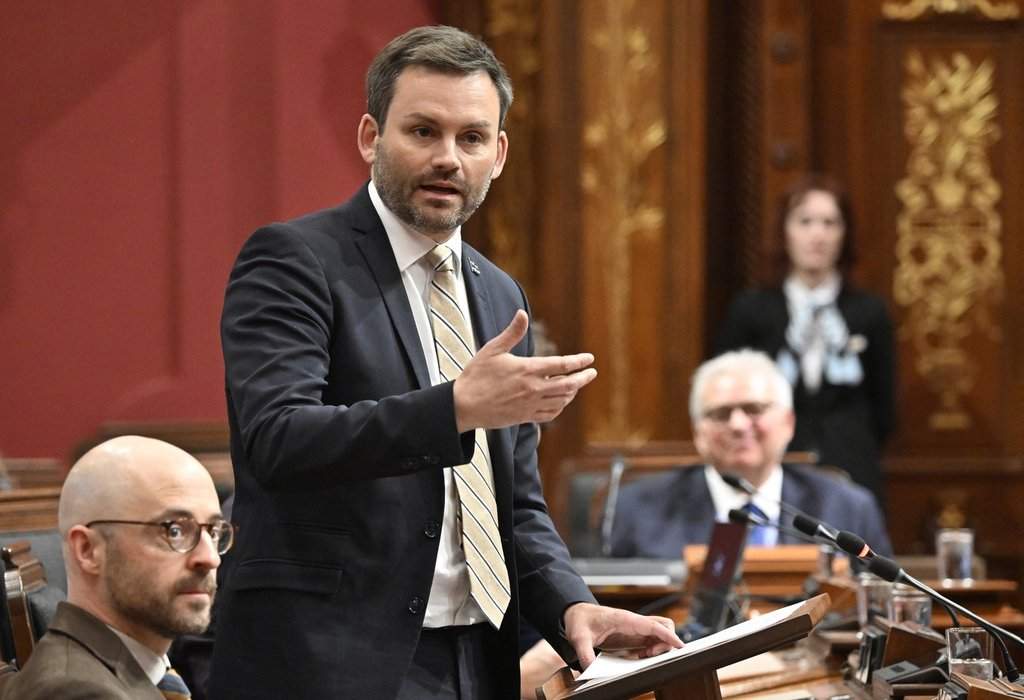
The Parti Québécois is threatening to withdraw Quebec from the federal government's proposed high-speed rail network if the party wins the October provincial election.
The Parti Québécois is threatening to withdraw Quebec from the federal government's proposed high-speed rail network if the party wins the October provincial election.
In the last several months opposition has been growing regarding the proposed project to build a high-speed train that would link Québec City and Toronto, with stops in between.
It’s not that citizens opposed to the project are against high-speed rail — but more that they are concerned that the corporations involved are not accountable and not transparent, and that Canadians across the country will be left footing the bill for a high-speed rail system that is badly designed, environmentally unsu
In the last several months opposition has been growing regarding the proposed project to build a high-speed train that would link Québec City and Toronto, with stops in between.
It’s not that citizens opposed to the project are against high-speed rail — but more that they are concerned that the corporations involved are not accountable and not transparent, and that Canadians across the country will be left footing the bill for a high-speed rail system that is badly designed, environmentally unsustainable, and disruptive and economically damaging to agricultural communities and residents.
And while it is stated that Alto will be owned and managed by the federal government, who knows what the future will bring. Readers do not need to be reminded that the Carney government is planning on privatizing Canadian airports.
Once you take a look at the details, I would say those in opposition have thought through their list of grievances. We owe them a debt of gratitude, I think. While most of us might have been thinking that a high-speed rail system is an environmentally sound idea, Alto does not appear to be that at all.
The estimated $90 billion dollar project led by a consortium called Cadence has been holding limited consultations, but the process is seen to be opaque and not public or extensive. And to boot it could cost double or triple the estimated amount by the time it would be completed.
Both the National Farmers Union (NFU) and the Union des producteurs agricoles du Québec (UPA) organized and led a demonstration on Parliament Hill on Wednesday, June 9 — one of several protests in recent months. There are more actions to come.
An online Parliamentary petition which closed on May 28, has garnered close to a whopping 18,000 signatures.
In part that petition to the House of Commons states:
Whereas:
Bill C-15 includes provisions granting the federal government extraordinary powers to designate rail corridors and expedite approvals, potentially limiting full environmental review and meaningful consultation with affected landowners, municipalities, and communities;
The Alto high-speed rail project is estimated to cost approximately $90 billion, which would equate to roughly $9,000 per Canadian family of four, yet the project would serve only a small fraction of Canadians compared with other public transit or infrastructure investments, raising concerns about cost-effectiveness, fairness, and the prioritization of federal spending;
The proposed Alto high-speed rail project would require construction of new rail corridors through productive agricultural lands and rural communities, resulting in permanent land fragmentation, disruption of farm operations, and impacts on rural road access and emergency services;
Construction of new high-speed rail infrastructure would generate substantial upfront greenhouse gas emissions from carbon-intensive materials such as concrete and steel, emissions that may take decades to offset as passenger vehicles increasingly electrify and reduce transportation-related emissions;
The Ottawa–Montreal corridor is already served by multiple transportation options, raising questions about the relative public benefit of prioritizing this segment over improvements to existing rail infrastructure; and
Upgrading existing rail corridors to provide higher-frequency passenger service could expand capacity and reliability while minimizing environmental disturbance and community disruption.
We, the undersigned, Residents of Canada, call upon the House of Commons to decline to approve or advance provisions in Bill C-15 that grant extraordinary powers to expedite rail corridor approvals.
Cease further advancement of the Alto high-speed rail project; and
Redirect federal investment toward improving higher-frequency passenger rail service within existing corridors.
Both the UPA and the NFU oppose the Alto high-speed rail project which would affect agricultural communities. More than 500 farms could be impacted by expropriation or fragmentation of farms. And while the preservation of agricultural lands is important, these farmer-led organizations also cite issues related to the feasibility of the project more generally, its cost over both the short and long-term, the lack of serious public consultations and review of alternatives, and the project’s lack of sustainability overall. Both organizations note that they are not opposed to a high-speed rail project, but they are opposed to this project and how it is being managed.
For example, a full review of options with existing infrastructure has not been explored publicly. For years it was suggested that twinning the current tracks used by the Via Rail line could help solve current delays, sometimes lengthy delays, experienced by passenger traffic. Twinning would allow for more frequent Via Rail trains and help eliminate delays. Currently the rail line used by Via Rail is owned by Canadian National Railroad and so freight is given priority over passenger transportation with Via Rail all too-often stopped to allow CN cars passage.
The NFU media release notes that the project fails on a number of fronts: firstly the flawed structure of private/public enterprises led by a group of corporations called CADENCE, which also includes the re-branded corporation SNC Lavalin (one of the contractors on the much-maligned, unreliable and inefficient Ottawa ’O’ TraIn; secondly the cost of the project and the debt it will leave with Canadians for generations to come; and thirdly the lack of ridership for this type of limited rail transportation. The NFU is calling for a full, in-depth review of the project, along with consideration of more viable alternatives.
In is media release the NFU concludes:
“We have to start a mega-project of this scale and inter-generational impact with transparent decision-making, based on strong evidence that demonstrates how we are investing wisely in our common future. A democratic process will enable the most beneficial impacts: reducing inter-city car and air passengers; reducing GHG and carbon emissions; and delivering accessible, sustainable public transportation solutions that will benefit communities across the country. Alto HSR in its current form is none of those things. And committing to a 60-year project without proper foresight will rob from the next two generations the opportunity to deliver HSR in Canada—by building the wrong project in the wrong way, at the wrong time.”
L’union des agriculteurs du Québec (UPA) has been equally vocal in denouncing the ALTO project and calling for its halt for similar reasons as those outlined by the NFU.
This video provides a glimpse of tractor demonstrations held in February to protest the $90 billion dollar projects .
The farming community is not alone in opposing the high-speed rail project.
In late April at least a dozen mayors and reeves of eastern Ontario municipalities signed a letter opposing the project, calling for more transparency. These municipal representatives are calling for “the suspension of any further development plans” for the project.
The letter’s signees include:
John Logel, Mayor of Alnwick/Haldimand Township
Claire Kennelly, Mayor of Tyendinaga
Jim Harrison, Mayor of City of Quinte West
Arie Hoogenboom, Mayor of Rideau Lakes Township
John Wise, Mayor of Stone Mills Township
Ron Vandewal, Mayor of South Frontenac Township
Brant Burrow, Mayor of Elizabethtown-Kitley Township
Michael Cameron, Mayor of Merrickville-Wolford
Robin Jones, Mayor of the Village of Westport
Stephen Fournier, Reeve of Township of Drummond/North Elmsley
Karen Jennings, Reeve of Township of Montague
Corinna Smith-Gatcke, Mayor of Township of Leeds and the Thousand Islands
Other municipalities have also passed resolutions to not allow Alto access to public lands to scout or survey the area for pathways for the high-speed rail and have refused to sign non-disclosure agreements. To date The United Counties of Prescott-Russell as well as The Township of Champlain, the Nation Municipality, the Municipality of Casselman and the Township of Alfred and Plantagenet have all passed resolutions to oppose the Alto plan.
As word spreads about the cost, lack of sustainability and accountability, it’s likely that other parts of the country will also begin to ask questions. Afterall, at least two generations of Canadians will be left holding the tab for Alto should it proceed.
HALT! Alto is becoming a popular slogan with many across rural Ontario and Québec telling the consortium —Not so fast!!!

 Login
Login