History or social studies is one of the more popular school subjects, but it isn't for everyone. Thankfully, many TV shows and movies tell past events through entertaining narratives, leaving out the monotone lectures. However, anime has also provided many historical series, whether based on real events like The Elusive Samurai or merely set during a major period like 91 Days.
History or social studies is one of the more popular school subjects, but it isn't for everyone. Thankfully, many TV shows and movies tell past events through entertaining narratives, leaving out the monotone lectures. However, anime has also provided many historical series, whether based on real events like The Elusive Samurai or merely set during a major period like 91 Days.
Transforming iconic characters into delicious works of art.
Pokémon is a beloved franchise, and you’d be hard-pressed to find anyone in Japan who has not heard of it, even if they have never personally interacted with any of its media. Through collaborations with famous brands from all areas of the market, the cute and charming character designs can be seen in many places throughout the country.
Despite both being of Japanese origin, the combination of a 161-year-old traditional Japanese confe
Transforming iconic characters into delicious works of art.
Pokémon is a beloved franchise, and you’d be hard-pressed to find anyone in Japan who has not heard of it, even if they have never personally interacted with any of its media. Through collaborations with famous brands from all areas of the market, the cute and charming character designs can be seen in many places throughout the country.
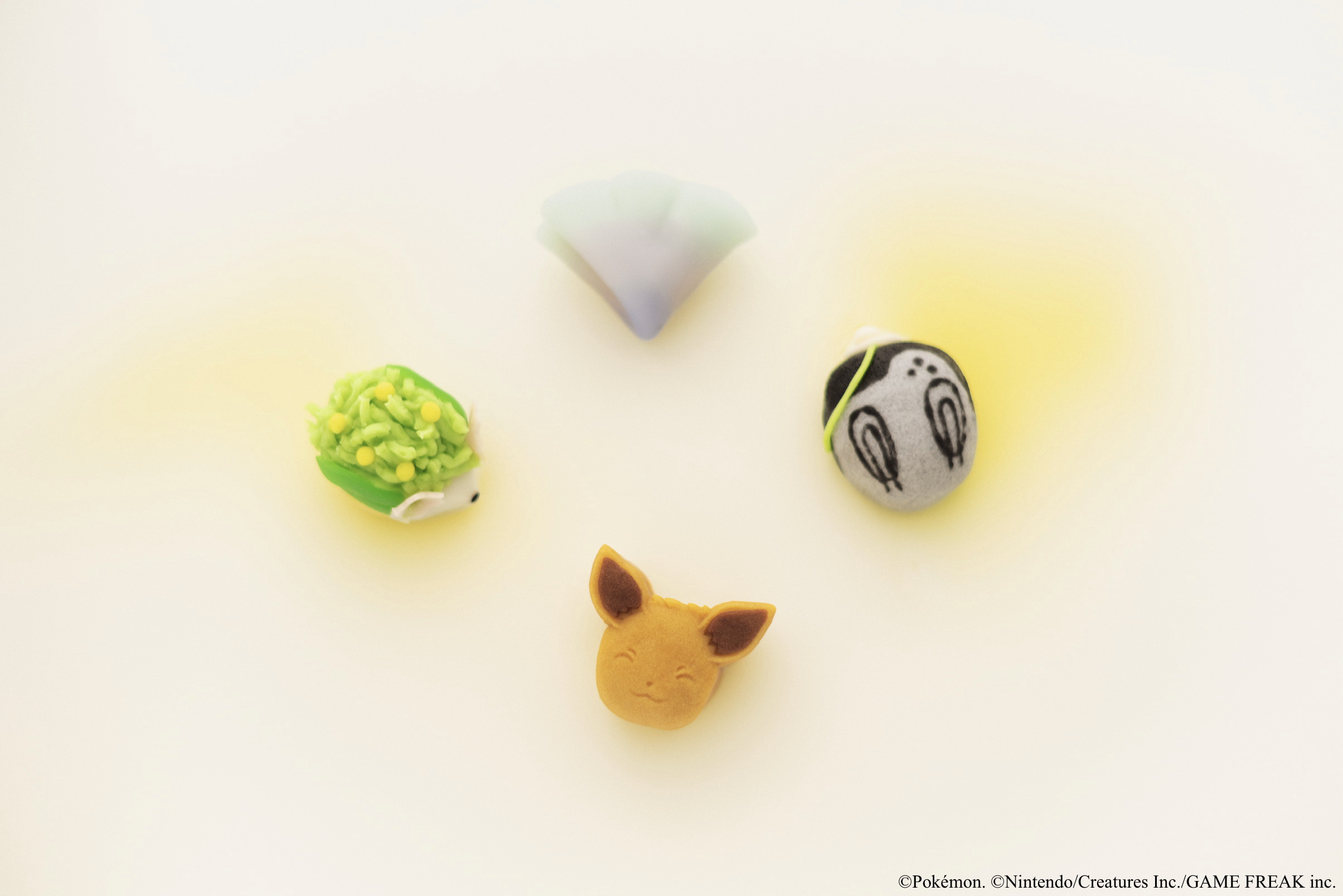
Despite both being of Japanese origin, the combination of a 161-year-old traditional Japanese confectionery maker and an electric mouse and its friends may not be the natural pairing for most people. However, over the last few years, the shop Shichijo Kanshundo has been releasing delightful treats that blend history with pop culture, and from May 11, they have expanded that lineup with another set of four Pokémon kyo-gashi (traditional Kyoto-style sweets).
The shop is renowned for its jonamagashi, which are handmade by craftsmen one by one. While these sweets, traditionally served during tea ceremonies, typically reflect the changing seasons or classical poetry, Shichijo Kanshundo is using their delicate artistry to bring Eevee and Poltchageist into the physical world.
The Eevee sweet is crafted using nerikiri, a traditional mixture of sweet white bean paste, starch syrup, and gyuhi (glutinous rice flour) that artisans sculpt by hand into intricate, soft shapes. Poltchageist is made as a jonyo manju, a light, fluffy steamed bun made with yam, sugar, and joyo-ko (fine rice flour).
These two Pokémon join two others that were previously released to form this new set of four: Shaymin (Land Forme) and Oricorio (Sensu Style). Shaymin is a kinton, made by crumbling white bean paste or nerikiri into a soboro (ground/crumb-like) state and applying it around a core of bean paste. Oricorio, on the other hand, is expressed using uiro, a Japanese sweet made by adding sugar and water to rice flour, among other ingredients, and steaming it until firm, which results in a chewy texture. The set costs 2,916 yen (US$18) and, since they’re made without unnecessary preservatives, are best enjoyed immediately.
Catching these sweets requires a little bit of extra planning, because the physical store in Kyoto only sells these sets on their special sales event on the seventh of every month, so starting June 7, visitors will be able to pick some up on the afternoon stroll through one of Kyoto’s most historic neighborhoods near Sanjusangendo Temple.
There is another method to get your hands on them earlier: you can order them online and receive them directly at your home, although they will be delivered frozen. However, that also means you don’t need to enjoy them all at once, and can take your time to savor the flavors over a period of 14 days from the date of shipment.
If you do happen to find yourself in the Higashiyama area in Kyoto on the seventh of a month, though, be sure to stop by the shop early. These limited-edition treats are a wonderful way to experience Kyoto’s traditional craftsmanship, even if you’re not a dedicated Pokémon fan.
Store information
Shichijo Kanshundo / 七條甘春堂
Address: Kyoto-fu, Higashiyama-ku, Shichijo-doori, Nishinomon-cho 551-banchi
京都市東山区七条通西の門町551番地
Open 9:00 a.m.–5:30 p.m.
Closed January 1 Website
Kabuki adaptation of Hayao Miyazaki Ghibli anime opens in Tokyo this summer.
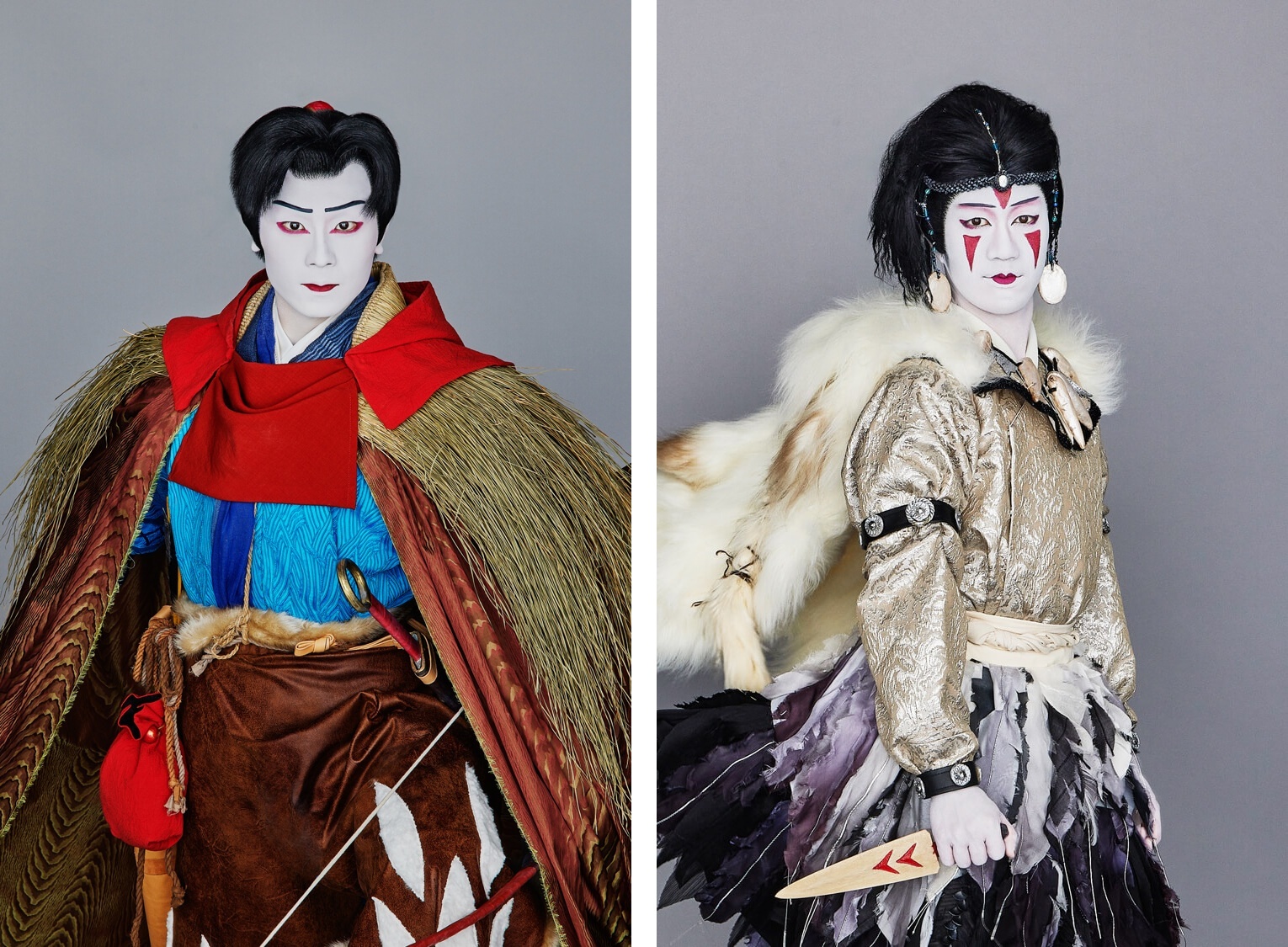
Princess Mononoke is one of the most celebrated anime films of all times, and with every frame bursting with Studio Ghibli’s distinct animation artistry, it’s hard enough to imagine what it would look like in live action, let alone as a kabuki play. That’s exactly what we’re getting, though, with the stage adaptation set to open in Tokyo this summer, and now we’ve got our first look at the main cast in costume.
The
Kabuki adaptation of Hayao Miyazaki Ghibli anime opens in Tokyo this summer.
Princess Mononoke is one of the most celebrated anime films of all times, and with every frame bursting with Studio Ghibli’s distinct animation artistry, it’s hard enough to imagine what it would look like in live action, let alone as a kabuki play. That’s exactly what we’re getting, though, with the stage adaptation set to open in Tokyo this summer, and now we’ve got our first look at the main cast in costume.
The production team has released a video preview that opens with actor Dango Ichikawa declaring “My name is Ashitaka” as he notches and arrow and draws back the string of the wandering prince’s bow.
He’s followed by a silent introduction of Kazutaro Nakamura as San, the monster princess herself.
As a complex tale of various factions searching for ways to survive, sometimes at each other’s expense, Princess Mononoke doesn’t have a traditional, clean-cut villain. Within the central conflict of the forest denizens versus the humans, though, the latter group is led by Lady Eboshi, who’ll be played by Manju Nakamura.
Given its feudal Japan setting, Princess Mononoke’s characters’ outfits make for an easier adaptation into kabuki costumes than, say the wardrobes of My Neighbor Totoro or Kiki’s Delivery Service would. Still, the designers have added touches of ornate flair here and there. Kabuki does, after all, have a tradition of bold aesthetics, and the costumes need to have a level of visual impact that can reach far past just the front row of the audience.
▼ Kabuki San’s skirt, for example, gets extra feathery elements that aren’t present in the anime design.
The Princess Mononoke kabuki play is scheduled to run from July 3 to August 23 at Tokyo’s Shinbashi Enbujo Theater. Tickets for most of the performances won’t be on sale until May 25, but there are a pair for which reservations can be made now too.
Characters are the heart and soul of any story, pushing the plot further while establishing themselves as integral aspects. However, characters do more than just drive a story; they also connect with the audience, whether good or bad, to evoke feelings. This personal connection with fans creates some of the most beloved characters, and anime, in particular, has a great deal of essential characters.
Characters are the heart and soul of any story, pushing the plot further while establishing themselves as integral aspects. However, characters do more than just drive a story; they also connect with the audience, whether good or bad, to evoke feelings. This personal connection with fans creates some of the most beloved characters, and anime, in particular, has a great deal of essential characters.
Ikebukuro Pokémon superstore and Pikachu dessert cafe won’t be reopening until nearly half a year after murder.
In late March, the Pokémon Center superstore in Tokyo’s Ikebukuro neighborhood, also known as the Pokémon Center Mega Tokyo, became the scene of a tragedy as a 21-year-old worker was stabbed and murdered. The store, as well as the Pikachu Sweets cafe located a short distance away within the same shopping center, were immediately closed down for an indefinite period of time, and a num
Ikebukuro Pokémon superstore and Pikachu dessert cafe won’t be reopening until nearly half a year after murder.
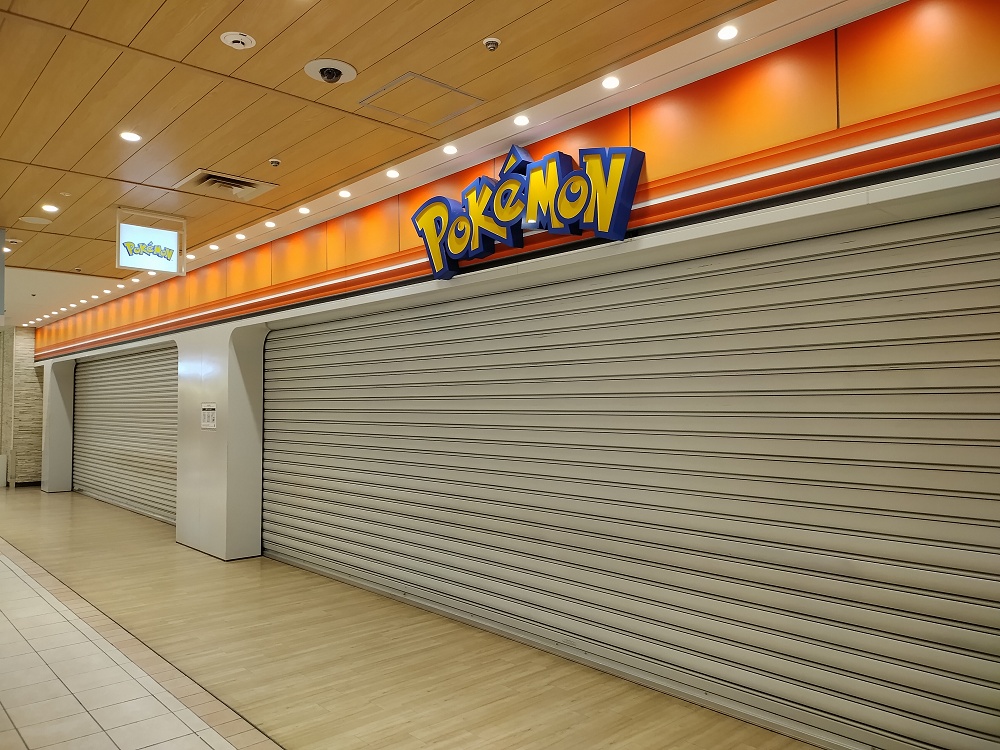
In late March, the Pokémon Center superstore in Tokyo’s Ikebukuro neighborhood, also known as the Pokémon Center Mega Tokyo, became the scene of a tragedy as a 21-year-old worker was stabbed and murdered. The store, as well as the Pikachu Sweets cafe located a short distance away within the same shopping center, were immediately closed down for an indefinite period of time, and a number of events scheduled for April were cancelled at all other branches of the Pokémon Center chain, which has locations across Japan.
Initially, it seemed as if the Ikebukuro Pokémon Center might be reopening in early May, to coincide with the resumption of in-store events as well as Japan’s Golden Week spring vacation period. Golden Week came and went with the store’s shutters still closed, however, and they’re going to remain shut for several months more, as the Pokémon Company has announced that the Ikebukuro Pokémon Center will not be reopening until “around September.” The same timetable has been announced for the reopening of the Pikachu Sweets cafe, which has also remained closed since the incident.
▼ Pikachu Sweets is located on the same floor of the Sunshine City shopping mall as the Ikebukuro Pokémon Center, with the two stores less than a minute’s walk away from each other, but there is no indication that either the victim or murderer was at the cafe on the day of the stabbing.
No statement has been made about whether there will be any changes to the stores’ physical layouts, admission procedures, or any other aspects of its operations. With the murderer of the victim being an ex-boyfriend who was stalking her, the stabbing hasn’t been perceived as a sign of violence related towards Pokémon Center employees or Pokémon fans themselves, but the stabbing was still a shocking demonstration of vulnerabilities in the store’s security protocols, and with Pokémon Centers regularly being packed with customers, many of them children, on weekends and holidays, the Pokémon Company is no doubt feeling a need to rethink and retool how it handles guest safety issues.
It’s a Gun-daruma!
Being a mecha anime, Gundam is very focused on the future. As a matter of fact, it’s so focused on the future that the franchise has made up multiple “Century” and “Era” names for its timelines, freeing it from the need to align its narratives with real-world history as its characters head out into space.
That doesn’t mean that the anime’s mobile suits can’t combine beautifully with traditional earthbound aesthetics, though, and as proof Gundam is partnering with a Fukushima
Being a mecha anime, Gundam is very focused on the future. As a matter of fact, it’s so focused on the future that the franchise has made up multiple “Century” and “Era” names for its timelines, freeing it from the need to align its narratives with real-world history as its characters head out into space.
That doesn’t mean that the anime’s mobile suits can’t combine beautifully with traditional earthbound aesthetics, though, and as proof Gundam is partnering with a Fukushima craftworks company that’s roughly 300 years old.
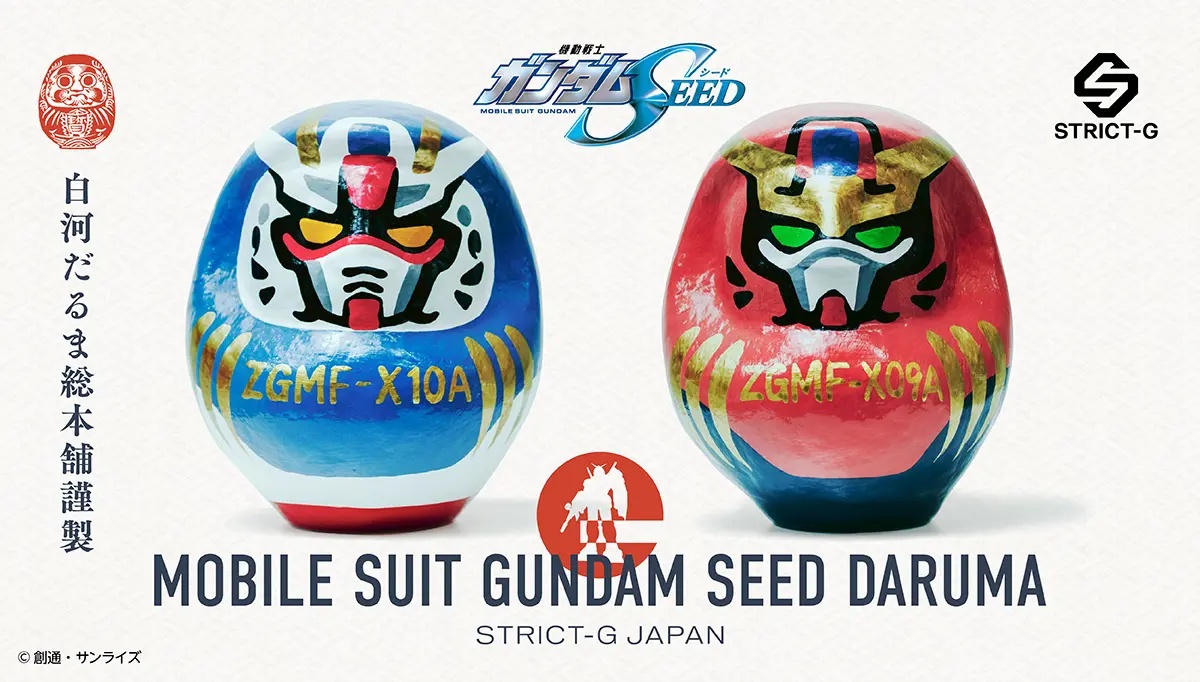
Fukushima Prefecture’s Shirakawa Daruma Sohonpo is one of those companies that’s been around for so long it can’t seem to pin down the exact year in which it was founded, but we know it was about three centuries ago. Now under the guidance of its 14th owner, Shirakawa Daruma Sohonpo’s artisans continue to carve and paint each and every one of their daruma dolls by hand, including their new ones based on Mobile Suit Gundam Seed’s ZGMF-X10A Freedom Gundam…
…and the ZGMF-X10A Freedom Gundam.
Daruma are made in many places in Japan, but the ones from the town of Shirakawa, where Shirakawa Daruma Sohonpo’s workshop is located, are especially prized. Because Fukushima has heavy snow in the winter, farmers had long periods when they couldn’t work their fields and had to stay indoors. With all that time on their hands, many families spent it honing their artistic skills, with some becoming such proficient craftsmen that they raised the bar for daruma quality in the community to a point where now the whole country recognizes them as among the very best.
Daruma dolls are considered auspicious signs of impending success, and ordinarily you’re supposed to paint in the pupil of one eye when you purchase or receive the doll, make a wish, and then paint in the other pupil when it comes true (or state your goal and paint in the other pupil when you achieve it, if you’re more existentially minded). Since Gundams don’t have pupils to begin with, that’s technically something you can do with these too, though that’d probably end up making them look a little closer to the super-deformed SD Gundam spinoffs than the original ZGMF-X10A and ZGMF-X10A.
The Gundam daruma come in two sizes, 15 and 8.5 centimeters (5.9 and 3.3 inches), with the larger ones priced at 4,950 yen (US$32) and the smaller ones at 3,300 yen. They’re also available in a set that gets you both mobile suit daruma (9,900 yen for the big ones and 6,600 yen for the smaller versions) plus a snazzy wooden box.
The Gundam daruma officially go on sale until August 1. Preorders are open now though through the Premium Bandai website here, giving us a way to secure a Gundam of our own to help cope with the anxiety about Tokyo being about to lose its life-sized Gundam statue.
Theme park prohibition strangely opens the door to a new kind of creative freedom.
When you visit Ghibli Park in Nagakute City, Aichi Prefecture, you’ll find a vast array of attractions, including life-sized buildings that look like they’ve jumped straight out of a Studio Ghibli film. However, if you research the park beforehand to see what the rooms inside these buildings look like, you’ll notice something else: there isn’t a wide variety of interior photos on social media.
That might sound
Theme park prohibition strangely opens the door to a new kind of creative freedom.
When you visit Ghibli Park in Nagakute City, Aichi Prefecture, you’ll find a vast array of attractions, including life-sized buildings that look like they’ve jumped straight out of a Studio Ghibli film. However, if you research the park beforehand to see what the rooms inside these buildings look like, you’ll notice something else: there isn’t a wide variety of interior photos on social media.
That might sound odd, given Ghibli’s worldwide fame and loyal fanbase, but the lack of photos doesn’t mean there’s no desire to share them online. Rather, it’s because photography is strictly prohibited inside most of the buildings. Instead, the park limits interior photos to the Becoming Characters in Memorable Ghibli Scenes exhibit inside Ghibli’s Grand Warehouse, where visitors can step into life-sized dioramas depicting 14 famous film scenes.
All of this came as a surprise to our Japanese-language reporter Saya Togashi when she visited the park for the first time recently. Unaware of the photography ban in the large majority of the buildings, her initial disappointment turned into an eye-opening experience both literally and figuratively, so she decided to share some thoughts on the ban and the surprising effect it had on her visit.
▼ Saya with her Ghibli Park entry band.
1. People don’t linger to take photos
The most obvious benefit to come from the ban is the fact that it prevents people from lingering too long in an area while trying to capture the perfect shot. Every exhibit presents a perfect photo opportunity, as each display creates an ideal backdrop that makes visitors look as though they’ve stepped into an anime world, and the attention to detail in the objects inside the buildings is so impressive that you could take hundreds of photos and it still wouldn’t be enough, which is why the ban feels necessary.
With so many small rooms inside, there isn’t much space to move around – even if one person stopped to take a picture it would cause a huge holdup for visitors. The photography ban ensures the crowds move smoothly through the exhibits, creating a more pleasant environment for everyone to enjoy what they’re seeing.
Another advantage is the absence of live video streamers. Even when they aren’t being intentionally disruptive, live streaming can cause anxiety for people nearby, as not everyone wants their face broadcast around the world without consent. In a country like Japan, where publishing identifiable photos of people without permission may violate privacy or image rights, the absence of cameras creates a sense of ease and safety that allows everyone to relax.
2. Visitors can concentrate on what’s in front of them
When you can’t take pictures, or when you don’t have your smartphone in your hand, something beautiful happens: you naturally start to focus on what’s in front of you. Though photography may be prohibited, visitors are allowed to touch many of the exhibits, engaging the sense of touch and creating a multi-sensory experience that benefits from full attention. This gesture of goodwill by the park, which prioritises the visitor experience over concerns about theft or damage, helps nurture an environment of care and respect that you might not find in other amusement parks.
In Mei and Satsuki’s House, for instance, opening a closet door reveals bedding and pyjamas belonging to the Kusakabe family, who star in the film My Neighbour Totoro. The dresser contains the father’s clothes, which carry a faint smell of mothballs. You can search for the stairs leading to the second floor, just like in the movie, and even find Mei’s hat. It’s a continuous stream of discoveries that gives you a great sense of satisfaction in finding things for yourself.
Without the scrutiny of a smartphone screen, our senses become sharper. The small size of Mei’s clothes and the way they feel in your hand, the creaking of the closet, the sense of everyday life emanating from the old dishes in the kitchen – these are now vividly etched into Saya’s memory as real lived experiences.
In the documentary Until Ghibli Park is Finished, director Goro Miyazaki told his staff, “It’s good to touch the house as much as possible, like refolding clothes as if you were actually living there.” That sense of bringing the house to life is clearly evident, and it allows visitors to appreciate just how impressive it is that Satsuki and Mei’s House is built to be fully functional, with features such as a wood-fired stove for boiling water and a hearth for cooking rice. If God is in the details, so is Studio Ghibli.
3. There are no spoilers
In this era where everyone is a photographer, any place and any event can be easily experienced virtually through the Internet. Although we might know there are things that can only be understood by being there and experiencing them firsthand, videos and images can have a huge impact on our perception.
At Ghibli Park, however, very little prior information is available beyond officially released details about the different rooms and exhibits. Since photography is prohibited indoors in many areas of the park, visitors experience the spaces with almost no spoilers beforehand.
Because you encounter the actual settings and objects without prior exposure, everything feels fresh and surprising. Saya felt this especially strongly in Howl’s Moving Castle, where she had goosebumps after stepping into the dimly lit castle from the bright outdoors. Once your eyes adjust, you’re overwhelmed by the sheer volume of cluttered everyday objects and magical items laid out in front of you, appearing just as it was in the movie.
Although it’s an area visitors can’t touch, Howl’s bedroom, meticulously recreated with small objects, sounds, lights, and movements, is a must-see. It’s truly moving to witness something you’ve only ever seen in the 2-D anime world come to life before your eyes, complete with weight, scent, and texture.
Sure, Ghibli Park might not have big rides with elaborate special effects or dazzling shows, but that’s actually its charm. The dedication to creating special spaces and the sheer scale of its construction surpasses those of many world-class theme parks, and it’s something you can sense in every area.
After visiting the park, Saya came to realise the merits and demerits of modern theme parks that rely on social media sharing. Keen to update their operational policies to keep pace with the times, theme parks are shifting from being places where visitors immerse themselves in carefully crafted worlds and becoming platforms for sharing experiences, primarily through social media.
Saya has felt the tide turn firsthand at Disney Resorts, where she used to attend the New Year’s Eve countdown event every year. Although getting tickets was always a bit of a struggle, once you were inside the park, you could easily enjoy all the events, like watching shows, enjoying limited-edition food and drinks, and buying New Year’s items, without the need for any special strategy or plan. Of course, there were lines, but as long as visitors waited patiently, they could achieve their theme park goals, especially as visitors wandered the grounds discovering things along the way.
However, one year things changed. Even immediately after opening, the shelves for New Year’s items were empty, special menu items were all sold out, and the atmosphere at events became tense, with staff shouting to control crowds as people scrambled to secure prime viewing spots. This was around the time when the social media culture of sharing one’s own experiences and the business of profiting from reselling began. It created a world of competition and anxiety, where people have to work harder to buy the things they want and experience the things they want to experience — things that once felt much simpler before the age of social media.
This isn’t necessarily a bad thing for the theme parks themselves; the spread of information on social media and the increased rarity of merchandise are simply the result of fans’ enthusiasm. However, it does have an impact on the visitor experience, and after visiting Ghibli Park, Saya walked away with her eyes opened to what can be possible when visitors are prioritised over financial profit. By creating sensory worlds that can’t be fully captured in photographs, Ghibli Park encourages visitors to engage with the world around them, fostering face-to-face communication and a sense of adventure that lies at the heart of every Ghibli film.
Totoro and friends want to keep you cool and smiling this summer with these traditional non-folding fans.
Summer presents a bit of a conundrum in Japan. On the one hand, it’s not a matter of if the weather will be hot and humid, but whether it’ll be extremely or just very hot and humid. At the same time, summer is full of festivals, fireworks shows, pop culture events, and even beautifully blossoming flowers, so there’s tons of fun to be had if you can find a way to cope with the heat.
And if
Totoro and friends want to keep you cool and smiling this summer with these traditional non-folding fans.
Summer presents a bit of a conundrum in Japan. On the one hand, it’s not a matter of if the weather will be hot and humid, but whether it’ll be extremely or just very hot and humid. At the same time, summer is full of festivals, fireworks shows, pop culture events, and even beautifully blossoming flowers, so there’s tons of fun to be had if you can find a way to cope with the heat.
And if you have a fun way to do so, all the better, right?
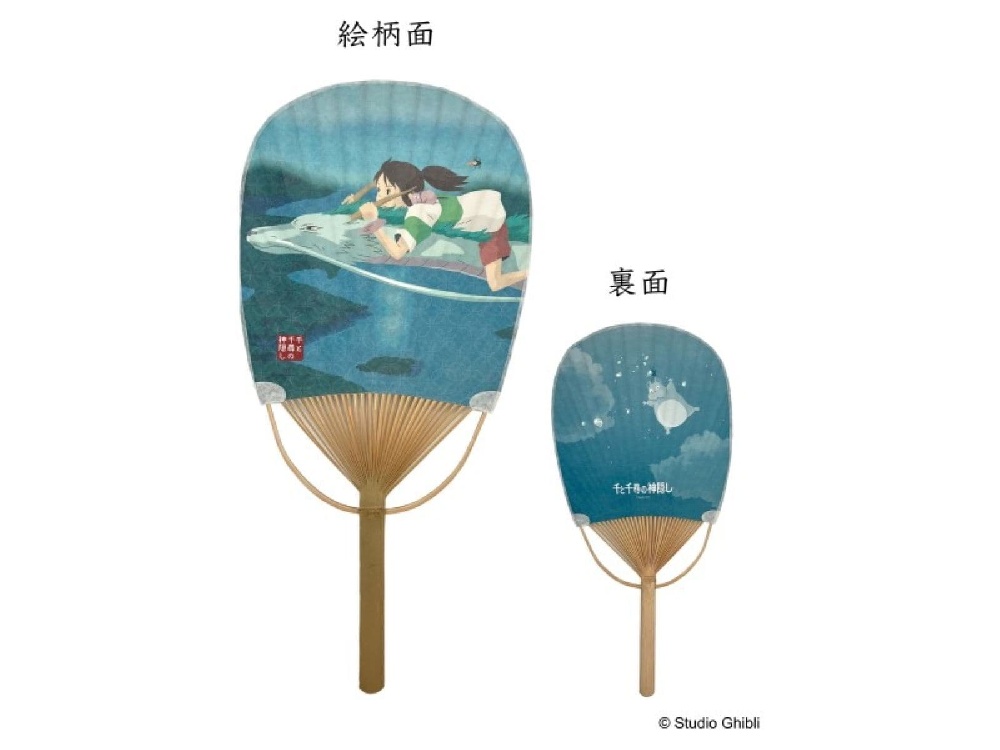
Filling that role nicely are these fans from Studio Ghibli specialty store Donguri Kyowakoku. This type of fan is called an uchiwa, and because they have an easy-to-grip handle, it’s easier to generate a cooling breeze with uchiwa than with than sensu (folding fans), making them a classical summer lifesaver.
The Ghibli uchiwa are made from bamboo frames and textured paper. A total of four designs are available, representing two of Ghibli’s greatest hits and with unique artwork on each side. On the fan above, we see Spirited Away’s Chihiro riding through the sky on Haku in his dragon form on the front, and when you flip the fan over, you can see Mouse Boh and Haedori having a somewhat less elegant flight.
Also here from Ghibli’s Oscar-winner is No Face, which is fitting since uchiwa are said to be shaped like koban, Japan’s traditional oval gold coins. The back of the No Face fan bares the kanji for Abura, as in the Aburaya bathhouse of the gods where most of the movie takes place, along with illustrations of some of the establishment’s more prominent patrons.
No Ghibli movie captures the vibes of a carefree summer day like My Neighbor Totoro, though, and so it’s also part of the lineup, with one of its designs featuring sisters Mei and Satsuki along with the Catbus.
▼ The back of the fan reveals that the Catbus leaves adorable pawprints behind as it scampers around the countryside.
And finally, the fourth fan shows a gathering of all three Totoros, big, medium. And small, with them dancing under fireworks and the kanji for matsuri (“festival”) on the back.
The fans are all 17 centimeters (6.7 inches) in width and 37 centimeters in length, with the exception of the Catbus uchiwa which is just a bit longer at 37.5 centimeters. The long handles make them easy to tuck into a tote bag or slide into the sash of a summer kimono, and since uchiwa don’t fold up, they also work great as interior decorations, since they’re essentially little mini posters that you can also use to make a breeze. All four of the fans are priced at 880 yen (US$5.70) and recently restocked at Donguri Kyowakou, with online orders available here.
Crunchyroll celebrated the 10th edition of its Anime Awards on Saturday in Tokyo, honoring this year’s winners, who were chosen from 73 million votes globally. Hosted by hosted by Sally Amaki and Jon Kabira, the 10th Crunchyroll Anime Awards selected the final season of My Hero Academia for Anime of the Year, which was presented […]
Crunchyroll celebrated the 10th edition of its Anime Awards on Saturday in Tokyo, honoring this year’s winners, who were chosen from 73 million votes globally. Hosted by hosted by Sally Amaki and Jon Kabira, the 10th Crunchyroll Anime Awards selected the final season of My Hero Academia for Anime of the Year, which was presented […]
My Neighbour Totoro is here to help you look and feel cool in traditional Japanese style.
With the weather heating up in Japan, people across the nation are reaching into their cupboards and bringing out their fans, cotton bedding, and other cooling items to help cope with the rising temperatures.
Those who like to stay cool in traditional Japanese style, however, will be reaching for items made with igusa, a soft rush grass that has been used here for centuries. Commonly used for tatami floo
My Neighbour Totoro is here to help you look and feel cool in traditional Japanese style.
With the weather heating up in Japan, people across the nation are reaching into their cupboards and bringing out their fans, cotton bedding, and other cooling items to help cope with the rising temperatures.
Those who like to stay cool in traditional Japanese style, however, will be reaching for items made with igusa, a soft rush grass that has been used here for centuries. Commonly used for tatami flooring, products made with igusa have an earthy scent, naturaldeodorisingeffects, and excellent moisture-regulating properties – when humidity levels are high, igusa absorbs excess moisture, and in dry environments, it slowly releases moisture, providing comfort without the use of air conditioning.
▼ The cooling, air-cleansing properties of igusa are part of what makes Japanese homes so special.
Igusa is a common element in traditional countryside homes where the old ways still hold strong, like the Kusakabe family home that features in the Studio Ghibli film My Neighbour Totoro. So it makes sense that Studio Ghibli would release its own series of igusa products, adorned with motifs and characters from the movie.
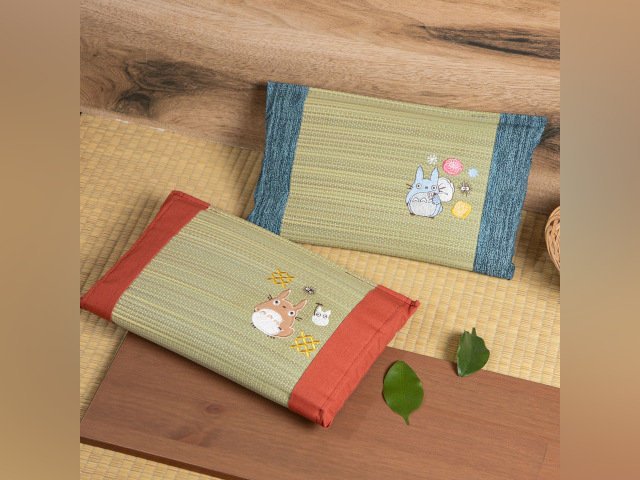
▼ The first item is the Igusa Seat Cushion, which comes in two gorgeous designs.
The cushions measure 40 centimetres (15.7 inches) in height and width, and are two centimetres thick, with a smooth surface that makes them very comfortable to sit on, even for long periods of time.
The first design, “Drop“, gives us a Soot Sprite, Small Totoro, and Medium Totoro, with a handful of sweets for added colour and cuteness.
The second design, “Retro Style“, adds a dash of retro colour to a Soot Sprite, a Small Totoro and a silhouette of the Large Totoro, accompanied by an auspicious traditional shippo pattern.
These two designs also feature on three other cushions, starting with the “Mini Flat Pillow” which is filled with breathable polyethylene pipes.
▼ Drop
▼ Retro Style
▼ Next up, we have the Bale Pillow, which is filled with low-rebound urethane chips.
These chips have excellent resistance against sagging, so the cushion is less prone to losing its shape, giving you just the right amount of neck support for summertime naps.
▼ The final cushion is the Candy Pillow, so-called as the rolled shape and ties on each end resemble a candy roll.
Filled with breathable polyethylene pipes, this pillow is less prone to heat buildup, making it another summer naptime essential.
For the ultimate nap, you can pair the pillows with an igusa rug, and there are two to choose from in the collection, both cutely named “Wagororo“.
Wagororo combines the word “wa” (“Japanese style”) with “gorogoro” (“to lounge around”), and that’s exactly what these mats are designed for.
▼ The rectangular mat comes in two sizes, 140 x 200 centimetres and 176 x 230 centimetres.
▼ The round mat is 176 centimetres in diameter.
Every item in the range is made with domestically sourced igusa, and protected with “Hiba Essence” extracted from Hiba trees in Aomori Prefecture, using a special process unique to the manufacturer. Hiba essence contains a natural substance called hinokitiol, which adds further antibacterial and deodorizing properties to each product.
According to stockists Donguri Kyowakoku, the scent of grass and the expressions of Totoro and his friends will help “soothe away the fatigue of everyday life”. That’s something we could definitely do with when Japan’s humidity starts zapping our energy levels, and the entire range is available to purchase now, at Donguri Kyowakoku stores in Japan and at the online store (links below).
About the Annecy Film Festival
Think Oscars but for Animation!
The Annecy International Animation Film Festival was created in 1960 and takes place at the beginning of June in the town of Annecy, France. Initially occurring every two years, the festival became an annual event in 1998. It is one of the four international animated film festivals sponsored by the Association Internationale du Film d’Animation (or ASIFA, the International Animated Film Association). The festival is a competit
The Annecy International Animation Film Festival was created in 1960 and takes place at the beginning of June in the town of Annecy, France. Initially occurring every two years, the festival became an annual event in 1998. It is one of the four international animated film festivals sponsored by the Association Internationale du Film d’Animation (or ASIFA, the International Animated Film Association). The festival is a competition between cartoon films of various techniques (animated drawings, cut-out papers, modeling clay, etc.) The competition is classified in various categories; feature films, short films, films produced for television and advertising, student films and films made for the internet.
The 2021 Annecy International Animated Film Festival begins on Monday, June 14 to Saturday, June 19, 2021.
Annecy Feature Film Selection
Flee
Photo Credit: Deadline
This is the true story of a man, Amin, on the verge of marriage that compels him to reveal his hidden past for the first time. A secret he has been hiding for over twenty years threatens to ruin the life he has built for himself. He recounts his dramatic journey as a child refugee from Afghanistan to Denmark.
Directed by: Jonas POHER RASMUSSEN Style: 2D Computer, live action Country: Denmark, France, Norway, Sweden
Hayop Ka! The Nimfa Dimaano Story ( You Animal! The Nimfa Dimaano Story)
Photo Credit: Annecy
Nimfa Dimaano, a perfume saleskitty, falls head over paws for Iñigo – a dashing dog about town. Trouble is, Nimfa still shares a shanty with her drab of a lover Roger – a mall janitor mongrel. Could this new dog in her life save Nimfa from her poor cat woes? In this animal world, amorous cats and dogs put their own spin on daytime soap opera.
After the great Battle of The Gods, when Jiang Ziya is about to be named the Leader of the Gods, he is sent to Earth for a momentary mistake and spurned by the world. Jiang Ziya must make a difficult choice between his heart and his destiny. In the end, he finds his real self and restores the relationship between Human, God and Demon.
Directed by: Wei LI, Teng CHENG Style: 2D / 3D Computer Country: China
Josee to Tora to Sakanatachi (Josee, the Tiger and the Fish)
Photo Credit: The Goggler
A young girl Josee, paraplegic from a very early age, lives in her own world between painting, books and her overflowing imagination. Tsuneo, in a marine biology faculty, would like to continue his studies in Mexico to be able to live his ultimate dream: to dive in tropical waters. For that, he needs money. Just then, a job literally falls into his lap when he collides with Josee.
Directed by: Kotaro Tamura Style: Anime Country: Japan
La Traversee (The Crossing)
Photo Credit: Maur Film
A small village looted in darkness, a family forced to flee. The two oldest children, Kyona and Adriel are quickly separated from their parents facing the road of exile alone. They embark on a heroic journey which takes them from childhood to adolescence in search of shelter, peace and the hope of finding refuge and their family. Crossing a continent torn apart by war and migrant persecution, these courageous siblings survive incredible challenges, before reaching a new world, free at last.
Directed by: Florence MIALHE Style: Paint on glass Country: Germany, France, Czech Republic
Lamya’s Poem
Photo Credit: Deadline
A young Syrian refugee girl finds a magical gateway to meet the great 13th century poet, Rumi, and helps him write the poem that 800 years later saves her life.
Directed by: Alex KRONEMER Style: 2D Computer Country: Canada, USA
Lion Dance Boy
Photo Credit: Annecy
By a fortunate coincidence, Juan is inspired and encouraged by a girl with the same name. Therefore, he decides to form a lion dance troupe with his friends, Cat and Dog, to break the constraints of reality and fight for themselves for once. It is a hilarious coming-of-age story about how they support each other through various hardships and eventually achieve their dreams.
Directed by: S. Hamilton Style: 3D Computer Country: China
Ma famille afghane (My Sunny Maad)
Photo Credit: Zippy Frames
When Herra, a young Czech woman, falls in love with Nazir, an Afghan, she has no idea what kind of life awaits her in post-Taliban Afghanistan, nor of the family she is about to integrate into. A liberal grandfather, an adopted child who is highly intelligent and Freshta, who would do anything to escape her husband’s violent grip.
Young Lubicchi and a man made of garbage, Poupelle live among the thick smoke from the chimneys of his isolated town. Lubicchi yearns to see the “stars” and to learn the truth his father always told him about.
Directed by: Yusuke HIROTA Style: 2D / 3D Computer Country: Japan
Rotzbub (Snotty Boy)
Photo Credit: Annecy
1960’s Siegheilkirchen, a small town in the Austrian hinterland is steeped in reactionary and ultra-Catholic attitudes. The son of a hard-working innkeeper and his wife, called Snotty Boy by all and sundry, is at odds with the narrow-minded confines of his home town. But his unstoppable talent for drawing gives him an outlet for his discontent.
Directed by: Marcus RosenMuller, Santiago LOPEZ JOVER Style: 3D Computer Country: Austria, Germany
The Ape Star
Photo Credit: Annecy
The eight-year-old orphan Jonna is longing for a mother. One day, an old car stops outside the orphanage and out steps a gorilla who picks Jonna for adoption. It soon becomes clear that they have more things in common than they initially thought.
Van, the former leader of a warrior corps who fight for their homeland, is captured and seized as a slave. One night, vicious mountain dogs attack, causing a mysterious plague. Van escapes the chaos, helping a young girl who he decides to raise. Meanwhile, a doctor seeks a cure for this disease.
Directed by: Masashi ANDO, Masayuki MIYAJI Style: 2D / 3D Computer / Anime Country: Japan
It’s time for the 2024 Golden Globe Awards, which will honor some of the year’s best movies and TV shows. The award show will be broadcast live on CBS on Sunday, Jan. 7 from 8 – 11 p.m. You can also stream the ceremony on Paramount+.
The 2024 Best Motion Picture Animated Movies Nominees
There are six nominees for the Best Motion Picture Animated Movies category, each with a unique style and innovative animation. My personal favorite is Spider-Man: Across the Spider-Verse, but The Boy and t
It’s time for the 2024 Golden Globe Awards, which will honor some of the year’s best movies and TV shows. The award show will be broadcast live on CBS on Sunday, Jan. 7 from 8 – 11 p.m. You can also stream the ceremony on Paramount+.
The 2024 Best Motion Picture Animated Movies Nominees
There are six nominees for the Best Motion Picture Animated Movies category, each with a unique style and innovative animation. My personal favorite is Spider-Man: Across the Spider-Verse, but The Boy and the Heron is also a strong contender.
The Boy and the Heron : The Winner
The Boy and the Heron is a coming-of-age drama directed by Hayao Miyazaki, one of the greatest living directors of animation. This 2D animation features a mythical heron that visits a young boy as he tries to make sense of the world around him.
Elemental
Dive into a world where Earth, Wind, and Fire live among one another but not together. This “COOL” movie by Disney discusses how cultures, or in this case, elements can work together and understand one another. This uniquely animated love story packs an emotional punch with great visual effects from Pixar.
Spider-Man: Across the Spider-Verse
Welcome to the Spider-verse! This movie is by far my favorite of the nominees! Spider-Man: Across the Spider-Verse is a thrilling animated movie that follows Miles Morales across multiple universes. It pays homage to many versions of the web-slinger’s appearance from comics to TV shows and has a stunning storyline. It’s my personal favorite of the nominees.
Suzume
Suzume is a visually stunning anime directed by Makoto Shinkai. The movie follows a 17-year-old girl named Suzume and a stranger she meets, who team up to prevent a series of disasters across Japan. The film was inspired by the director’s feelings about the 2011 Tohoku earthquake and tsunami and its devastating impact on the country.
The Super Mario Bros. Movie
The Super Mario Bros. Movie has become a hit with audiences of all ages, grossing over $1.3 billion. It incorporates many gaming and contemporary styles of animation from Illumination. The movie delivers a delightful origin story for Mario and Luigi, and its silly and memorable quotes make it a fun watch for everyone. I give it 4 stars out of 5.
WISH
Can Wish, the movie, make its dream come true and win a Golden Globe? The film marks the 100th anniversary of the Walt Disney Animation Studio and follows the story of Asha, a young woman who learns how to make her wishes come true. Although the animation is beautiful and the story is interesting, it’s not one of my favorite Disney movies. However, I did enjoy the references to the studio’s wishing star and some of the characters that have been featured throughout Disney’s history.

 Login
Login