Comcast NBCUniversal will invest £6B ($8.1B) in a new Universal theme park in the UK, its first in Europe. The UK’s Culture, Media & Sport department has officially revealed that the Universal United Kingdom Resort will begin construction in Bedfordshire soon, expected to complete by 2031, at which point it will aim to attract 8.5 […]
Comcast NBCUniversal will invest £6B ($8.1B) in a new Universal theme park in the UK, its first in Europe. The UK’s Culture, Media & Sport department has officially revealed that the Universal United Kingdom Resort will begin construction in Bedfordshire soon, expected to complete by 2031, at which point it will aim to attract 8.5 […]
Sample ramen pizza, alongside other limited-edition items to pick up, or just make your own treats.
Snacks in Japan come in all sorts of shapes and sizes, from ever-feuding mushrooms and bamboo shoots to make-your-own sweets, but one that I see fairly often in the hands of little children are packets of Baby Star Ramen. A popular snack made of deep-fried, crunchy, bite-sized pieces of instant noodles, Baby Star Ramen came about in 1959 when the founder of Oyatsu Company realized that the broke
Sample ramen pizza, alongside other limited-edition items to pick up, or just make your own treats.
Snacks in Japan come in all sorts of shapes and sizes, from ever-feuding mushrooms and bamboo shoots to make-your-own sweets, but one that I see fairly often in the hands of little children are packets of Baby Star Ramen. A popular snack made of deep-fried, crunchy, bite-sized pieces of instant noodles, Baby Star Ramen came about in 1959 when the founder of Oyatsu Company realized that the broken noodle fragments left at the bottom of instant noodle production lines could actually be seasoned and packaged up as a snack by themselves.
The Oyatsu Company factory is located in Tsu, Mie, and while factory tours are currently suspended, for those who want to dive into the world of Baby Star, right next door is Oyatsu Town, a theme park offering everything from a giant athletic course to making original Baby Star Ramen, as well as limited-edition food you can only eat there, resulting in an enjoyable experience for child and adult alike.
▼ Sadly, no factory tours are currently available.
Our Japanese-language reporter Natsuno Futon visited the theme park with her kids in tow during Golden Week, one of Japan’s busiest periods for travel and day excursions, so upon arriving and noting that same-day entry was limited until after lunch, it wasn’t too unexpected. So, Natsuno’s first recommendation for any future visit is to always reserve your entry tickets in advance, particularly if you plan to go on a weekend or holiday.
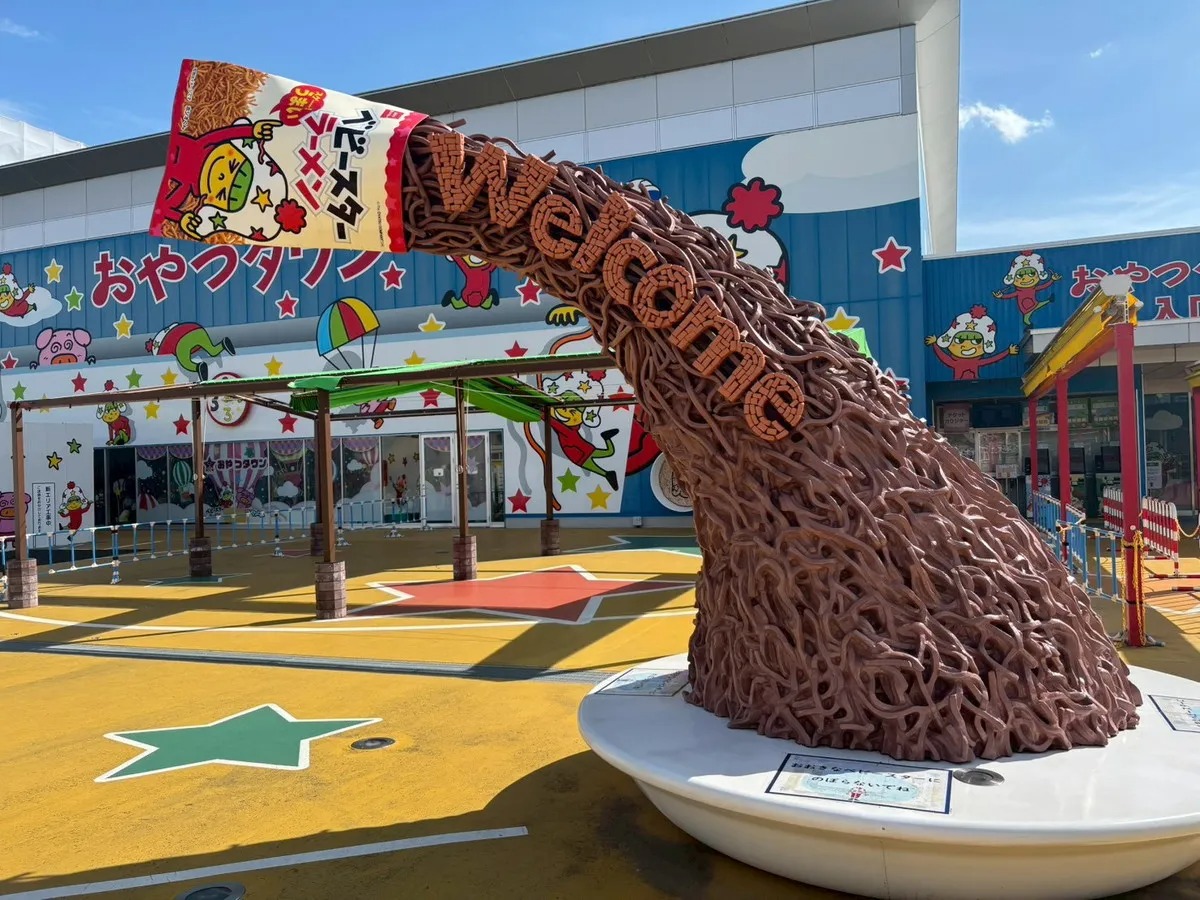
Arriving at the entrance, the first thing to welcome Natsuno and her family was a giant Baby Star photo spot, appearing as if Baby Star was flowing like a waterfall, along with a spot where you could get inside a Butamen cup, Oyatsu Company’s line of instant cup noodles, adorned with designs of Hoshio-kun, the Baby Star Ramen mascot.
Peak season entry is 2,500 yen (US$15.70) for adults, whereas it drops down to 2,200 yen during the Regular days, and 1,600 yen for the Value days.
It’s best to check the company website for absolute clarity, but the general rule seems to be Saturday through Monday is Regular, Tuesday through Friday is Value, and national holidays like Golden Week in May and Obon in August are Peak.
▼ Natsuno couldn’t help but take one last look at the factory, as she really enjoys factory tours, but it sadly wasn’t to be.
Stepping inside, Natsuno was greeted with the company’s history spread out on the floor, designed almost like a board game.
It was quite interesting to learn that the name change to Oyatsu Company was an unexpectedly recent development.
▼ Not at all spoken through the pitch-black sunglasses of denial: 1993 is still very recent.
Proceeding further inwards, a giant athletic area appears, teeming with the Golden Week crowd of people.
While as an adult, Natsuno tends to curb her childhood playfulness and instead let her children loose to gallivant through play areas, she couldn’t quite restrain herself from wanting to join in on the fun. Looking around, she could even see many adults playing there quite seriously, so she embraced her inner child and entered the play equipment.
Among them, what was particularly enjoyable was the Hoshio-kun Giant Slide, which gets quite a bit of speed.
▼ They’re even considerate enough to provide wrap-around skirts to make sliding even more speedy.
The Super Giant Butamen-kun Adventure and Giant Jungle Gym are also extremely fun.
Since you walk on the net, the stimulation to the soles of your feet is amazing, nearing the level where you might mistake it for a minor piece of health equipment.
▼ Natsuno is still a child at heart, she promises.
The most popular one, though, is the giant athletic course consisting of three whole floors, which are divided by height; the first floor is for small children, but the second and third floors offer up more of a challenge.
Natsuno ventured up to the third floor together with her children but had to retire halfway through for a very specific reason: her sweaty hands.
It’s a little difficult to see in the image below, but this is a course where you have to move forward while moving around the outside of orange bars that bulge outward.
With hands that get particularly sweaty, Natsuno could just foresee herself slipping off due to them. Yet, because she wanted to show her children an inspirational figure that takes on challenges even in the face of adversity, plus it was too frustrating to just give up, she attempted it a second time and cleared it safely. However, she later heard from her children, “since we were moving ahead of you, we couldn’t see you.” Sad though she was, she still felt a sense of accomplishment, so it wasn’t all bad.
▼ There is even a section of the park dedicated to interactive digital content that kids can have fun with.
Next, the family moved on to the experience of making Baby Star at Hoshio-kun Kitchen, where you can make your very own original Baby Star Ramen.
For an additional 1,000 yen each to the park entrance fee, the children challenged the “My Special Baby Star,” where you can choose your favorite flavor from several types, season it yourself, and then have the staff bake it for you in the oven.
Natsuno had reserved in advance, but there seemed to be sufficient availability that you could even reserve on the day itself.
After completing the ramen, you put stickers on the original container, though her children instead opted to put on only a few, saving the rest for later to add to their sticker collection albums.
The family came away from the experience with the children beaming with happiness and proud faces for their new creations.
However, being hungry, they decided to swing by Baby Star Dining, where you can savor original foods using Baby Star, such as Baby Star Katsu Curry.
Among them all, Natsuno can personally recommend the pizza, particularly the limited-time Pink Butamen Gratin Pizza, being a lot more authentic than expected.
It’s baked in a pizza oven, so you get that classic pizza base texture, and the pink coloring is added via beetroot instead of food coloring.
The appearance certainly has quite the impact, referencing Butamen and its pig mascot, but the taste has no unexpected quirks and is extremely delicious.
▼ The Ramen Pizza was also full of ingredients and highly satisfying.
Of course, you can eat freshly-fried Baby Star Ramen.
At the gift shop Oyatsu Marche, limited-edition products and character goods are lined up, with Natsuno being drawn to all of the Butamen goods. He just has such a charming presence…
Natsuno also discovered Baby Star limited to Oyatsu Town, this time purchasing the Spiny Lobster Flavor (850 yen for a pack of six), and found it to have a very strong shrimp taste, both rich and delicious.
There was also a cute, little steel suitcase-like container that you could stuff your favorite Baby Star flavors into for just 1,700 yen.
Before walking through the doors, Natsuno had assumed she would be entering a facility designed just for children, but she ended up, even as an adult, enjoying it with all her might.
In the end, from their 10:30 a.m. start, they stayed fully until the closing time at 5:00 p.m., staying more than six hours. With the addition of a new area opening in Spring 2027, there will be even more to get lost in, although prospective visitors should take note that the park will be closed from January 12, 2027, to prepare for this new opening.
Whether you visit with kids or not, it’s all but guaranteed you’ll have a great time exploring Oyatsu Town, just remember to book in advance on the weekends and holidays.
Theme park prohibition strangely opens the door to a new kind of creative freedom.
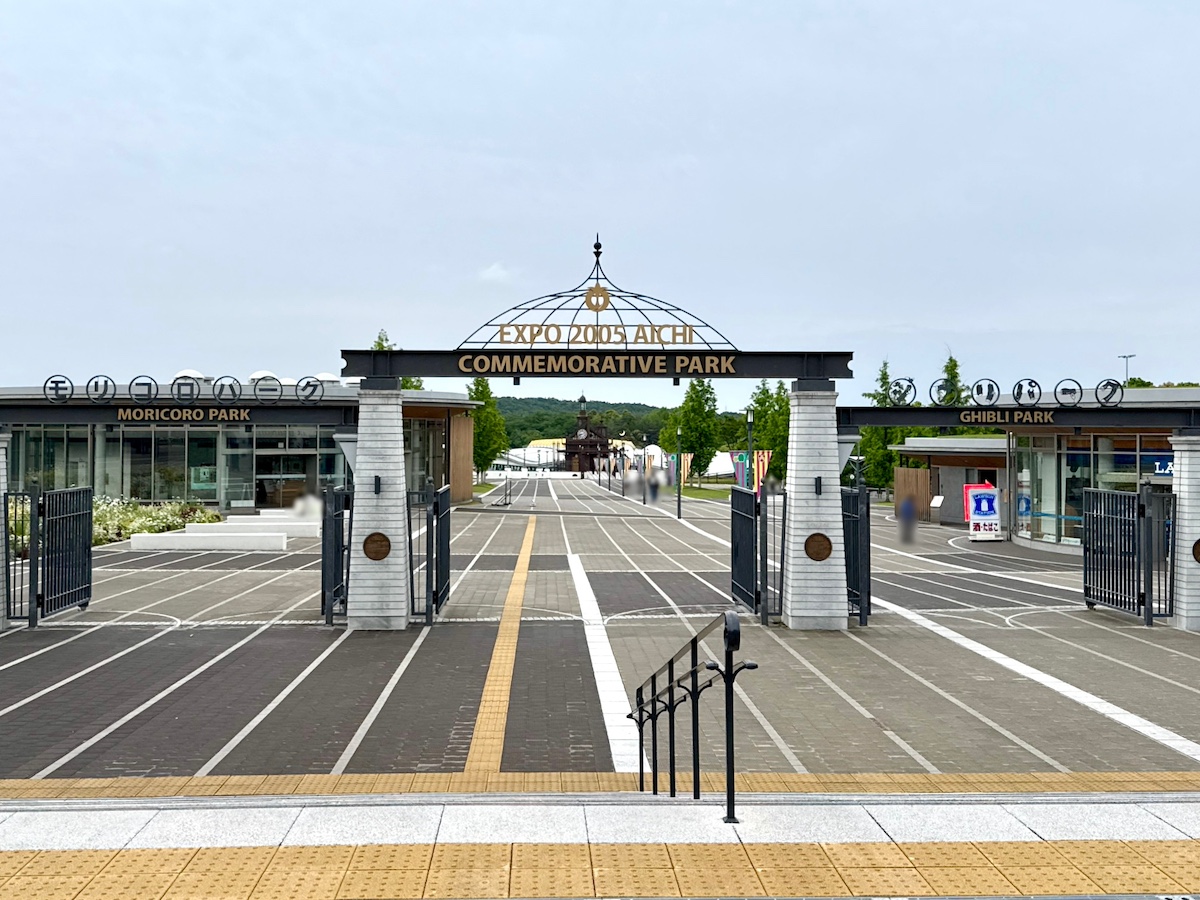
When you visit Ghibli Park in Nagakute City, Aichi Prefecture, you’ll find a vast array of attractions, including life-sized buildings that look like they’ve jumped straight out of a Studio Ghibli film. However, if you research the park beforehand to see what the rooms inside these buildings look like, you’ll notice something else: there isn’t a wide variety of interior photos on social media.
That might sound
Theme park prohibition strangely opens the door to a new kind of creative freedom.
When you visit Ghibli Park in Nagakute City, Aichi Prefecture, you’ll find a vast array of attractions, including life-sized buildings that look like they’ve jumped straight out of a Studio Ghibli film. However, if you research the park beforehand to see what the rooms inside these buildings look like, you’ll notice something else: there isn’t a wide variety of interior photos on social media.
That might sound odd, given Ghibli’s worldwide fame and loyal fanbase, but the lack of photos doesn’t mean there’s no desire to share them online. Rather, it’s because photography is strictly prohibited inside most of the buildings. Instead, the park limits interior photos to the Becoming Characters in Memorable Ghibli Scenes exhibit inside Ghibli’s Grand Warehouse, where visitors can step into life-sized dioramas depicting 14 famous film scenes.
All of this came as a surprise to our Japanese-language reporter Saya Togashi when she visited the park for the first time recently. Unaware of the photography ban in the large majority of the buildings, her initial disappointment turned into an eye-opening experience both literally and figuratively, so she decided to share some thoughts on the ban and the surprising effect it had on her visit.
▼ Saya with her Ghibli Park entry band.
1. People don’t linger to take photos
The most obvious benefit to come from the ban is the fact that it prevents people from lingering too long in an area while trying to capture the perfect shot. Every exhibit presents a perfect photo opportunity, as each display creates an ideal backdrop that makes visitors look as though they’ve stepped into an anime world, and the attention to detail in the objects inside the buildings is so impressive that you could take hundreds of photos and it still wouldn’t be enough, which is why the ban feels necessary.
With so many small rooms inside, there isn’t much space to move around – even if one person stopped to take a picture it would cause a huge holdup for visitors. The photography ban ensures the crowds move smoothly through the exhibits, creating a more pleasant environment for everyone to enjoy what they’re seeing.
Another advantage is the absence of live video streamers. Even when they aren’t being intentionally disruptive, live streaming can cause anxiety for people nearby, as not everyone wants their face broadcast around the world without consent. In a country like Japan, where publishing identifiable photos of people without permission may violate privacy or image rights, the absence of cameras creates a sense of ease and safety that allows everyone to relax.
2. Visitors can concentrate on what’s in front of them
When you can’t take pictures, or when you don’t have your smartphone in your hand, something beautiful happens: you naturally start to focus on what’s in front of you. Though photography may be prohibited, visitors are allowed to touch many of the exhibits, engaging the sense of touch and creating a multi-sensory experience that benefits from full attention. This gesture of goodwill by the park, which prioritises the visitor experience over concerns about theft or damage, helps nurture an environment of care and respect that you might not find in other amusement parks.
In Mei and Satsuki’s House, for instance, opening a closet door reveals bedding and pyjamas belonging to the Kusakabe family, who star in the film My Neighbour Totoro. The dresser contains the father’s clothes, which carry a faint smell of mothballs. You can search for the stairs leading to the second floor, just like in the movie, and even find Mei’s hat. It’s a continuous stream of discoveries that gives you a great sense of satisfaction in finding things for yourself.
Without the scrutiny of a smartphone screen, our senses become sharper. The small size of Mei’s clothes and the way they feel in your hand, the creaking of the closet, the sense of everyday life emanating from the old dishes in the kitchen – these are now vividly etched into Saya’s memory as real lived experiences.
In the documentary Until Ghibli Park is Finished, director Goro Miyazaki told his staff, “It’s good to touch the house as much as possible, like refolding clothes as if you were actually living there.” That sense of bringing the house to life is clearly evident, and it allows visitors to appreciate just how impressive it is that Satsuki and Mei’s House is built to be fully functional, with features such as a wood-fired stove for boiling water and a hearth for cooking rice. If God is in the details, so is Studio Ghibli.
3. There are no spoilers
In this era where everyone is a photographer, any place and any event can be easily experienced virtually through the Internet. Although we might know there are things that can only be understood by being there and experiencing them firsthand, videos and images can have a huge impact on our perception.
At Ghibli Park, however, very little prior information is available beyond officially released details about the different rooms and exhibits. Since photography is prohibited indoors in many areas of the park, visitors experience the spaces with almost no spoilers beforehand.
Because you encounter the actual settings and objects without prior exposure, everything feels fresh and surprising. Saya felt this especially strongly in Howl’s Moving Castle, where she had goosebumps after stepping into the dimly lit castle from the bright outdoors. Once your eyes adjust, you’re overwhelmed by the sheer volume of cluttered everyday objects and magical items laid out in front of you, appearing just as it was in the movie.
Although it’s an area visitors can’t touch, Howl’s bedroom, meticulously recreated with small objects, sounds, lights, and movements, is a must-see. It’s truly moving to witness something you’ve only ever seen in the 2-D anime world come to life before your eyes, complete with weight, scent, and texture.
Sure, Ghibli Park might not have big rides with elaborate special effects or dazzling shows, but that’s actually its charm. The dedication to creating special spaces and the sheer scale of its construction surpasses those of many world-class theme parks, and it’s something you can sense in every area.
After visiting the park, Saya came to realise the merits and demerits of modern theme parks that rely on social media sharing. Keen to update their operational policies to keep pace with the times, theme parks are shifting from being places where visitors immerse themselves in carefully crafted worlds and becoming platforms for sharing experiences, primarily through social media.
Saya has felt the tide turn firsthand at Disney Resorts, where she used to attend the New Year’s Eve countdown event every year. Although getting tickets was always a bit of a struggle, once you were inside the park, you could easily enjoy all the events, like watching shows, enjoying limited-edition food and drinks, and buying New Year’s items, without the need for any special strategy or plan. Of course, there were lines, but as long as visitors waited patiently, they could achieve their theme park goals, especially as visitors wandered the grounds discovering things along the way.
However, one year things changed. Even immediately after opening, the shelves for New Year’s items were empty, special menu items were all sold out, and the atmosphere at events became tense, with staff shouting to control crowds as people scrambled to secure prime viewing spots. This was around the time when the social media culture of sharing one’s own experiences and the business of profiting from reselling began. It created a world of competition and anxiety, where people have to work harder to buy the things they want and experience the things they want to experience — things that once felt much simpler before the age of social media.
This isn’t necessarily a bad thing for the theme parks themselves; the spread of information on social media and the increased rarity of merchandise are simply the result of fans’ enthusiasm. However, it does have an impact on the visitor experience, and after visiting Ghibli Park, Saya walked away with her eyes opened to what can be possible when visitors are prioritised over financial profit. By creating sensory worlds that can’t be fully captured in photographs, Ghibli Park encourages visitors to engage with the world around them, fostering face-to-face communication and a sense of adventure that lies at the heart of every Ghibli film.

 Login
Login