Ministry of Economy, Trade and Industry conducts study to estimate damage to producers of anime and other Japanese media.
With Japanese entertainment media growing in popularity around the world, the Japanese government’s Ministry of Economy, Trade and Industry is also growing more concerned about the effects of media piracy overseas. In its latest study of the situation, the ministry claims that damage from piracy has been rapidly increasing, but one of its proposed countermeasures might not
Ministry of Economy, Trade and Industry conducts study to estimate damage to producers of anime and other Japanese media.
With Japanese entertainment media growing in popularity around the world, the Japanese government’s Ministry of Economy, Trade and Industry is also growing more concerned about the effects of media piracy overseas. In its latest study of the situation, the ministry claims that damage from piracy has been rapidly increasing, but one of its proposed countermeasures might not really do much to solve the problem.
For its study, the ministry conducted surveys in six foreign countries, including the U.S. and China, regarding “content piracy,” “content” here being a loose term used for entertainment media including anime and digital manga. Based on the results of the surveys, the ministry estimates that 5.7 trillion yen (US$37 billion) worth of Japanese content was pirated overseas in 2025, roughly three times the amount estimated for 2022, the previous iteration of the ministry’s study.
For the 2025 investigation, the ministry also added a new category, estimating the amount of pirated “character goods” that were sold online outside of Japan, such as knockoff and unlicensed figures, posters, plushies, and the like. For this category, the ministry arrived at an estimate of 4.7 trillion yen, brining its total figure for pirated content and knockoff merch to 10.4 trillion yen.
The ministry is framing this as the amount of “damage” caused to the legitimate Japanese media/merchandising industry, which invites consideration of whether pirated media always directly correlates to lost sales revenue. Those of a more lenient viewpoint could argue that if someone pirates content which they weren’t going to pay for anyway, no actual damage has been done, and similar logic could be applied to pirating of Japanese content not available in the country of the pirating party. On the other hand, it’s naive to think that no one is pirating content they would have paid for in the absence of an illicit way to get it for free, and with such a significant amount of Japanese entertainment media now being distributed in major foreign markets in a fairly timely matter, it’d be disingenuous to try to frame piracy as strictly an issue of availability either.
As such, while the actual damage to Japanese rightsholders is likely less than the full 10.4 trillion yen that the Ministry of Economy, Trade and Industry is claiming, it’s also not like there are no negative effects from piracy, and so it’s not surprising that the Japanese government would want to look for ways to address the problem.
However, one of the ideas being floated by the researchers is to promote the use of AI in production to lower costs and secure profits. In addition to sidestepping the root causes of piracy (insufficient legal enforcement and/or local availability), a reliance on lower costs also ignores that a major reason Japanese content, particularly anime, has become so popular around the world is that many foreign fans see it as having a mix of high quality and unique narratives, neither of which are things that AI is particularly good at producing. Leaning on the technology as a method by which to address piracy could end up as a sort of monkey’s paw if, by eroding what makes Japanese entertainment content attractive to audiences in the first place, AI simply turns Japanese-made media into something that’s not worth watching.
Special sweets designed to satisfy your sweet tooth and cool you off in the summer heat.
This year is Pokémon’s 30th anniversary, and the franchise is celebrating in style at the Grand Hyatt Tokyo, with the hotel offering amazing Pokémon-themed rooms including one with 30 Pikachu plushies to keep guests company during their stay. But what if you’ve already got a place to sleep in Tokyo? Does that mean you have to miss out on the collaboration’s fun?
Not at all, because the Grand Hyatt Tokyo’s
Special sweets designed to satisfy your sweet tooth and cool you off in the summer heat.
This year is Pokémon’s 30th anniversary, and the franchise is celebrating in style at the Grand Hyatt Tokyo, with the hotel offering amazing Pokémon-themed rooms including one with 30 Pikachu plushies to keep guests company during their stay. But what if you’ve already got a place to sleep in Tokyo? Does that mean you have to miss out on the collaboration’s fun?
Not at all, because the Grand Hyatt Tokyo’s restaurants are also part of the party, and they’re offering both sweet and savory Pokémon-themed eats all summer long!
Starting things off is the Sora Tobu Pikachu (“Pikachu in the Sky”) Gourmet Burger Set, with a Pikachu-yellow bun, the Hyatt’s original barbecue sauce, and jalapeno pickles. It’s accompanied by curry powder French fries and chilled corn soup, and to drink you get a “Pikachu soda,” which looks to be an ice cream float with boba-style tapioca balls too.
The Pikachu burger is available in the hotel’s Oak Door steakhouse restaurant, but just like wild Pokémon appear in different parts of their regions, there are other Pikachus at the Hyatt’s Fiorentina cafe, which is adding a Sora Tobu Pikachu Summer Parfait to its menu.
Since this is a parfait to be enjoyed during one of Japan’s notoriously hot and humid summers, this dessert bypasses heavy chocolate or caramel sauces. Instead, the key ingredients are mascarpone mousse, peach gelatin infused with butterfly pea, and coconut gelatin, for visuals evocative of a bright blue sky and puffy clouds. The “balloons” that are carrying Pikachu on this flight are actually orbs of frozen mousse in mango, orange, pistachio, blueberry, and raspberry flavors.
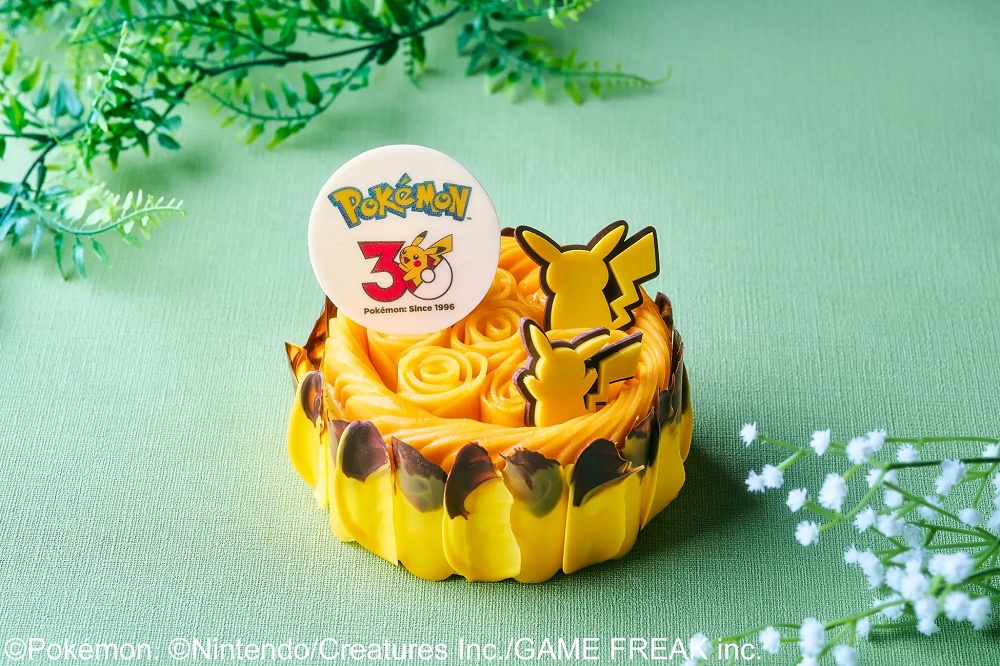
And there’s still one more place to score some Pokémon treats. Head to the Hyatt’s Fiorentina Pastry Boutique and you can pick up a Pokémon 30th Anniversary Mango Cake.
This fancy cake has layers of mango and coconut jelly inside almond sponge cake, topped with mango mouse and a bouquet’s worth of mango slices arranged in the shape of roses. But even with all those floral flourishes, fans’ eyes will be drawn to the pair of Pikachu chocolates.
For those looking for permanent reminders of their Pokémon sweets sessions, Fiorentina can also supply Grand Adventure Sweets Trunk Cases, with Pikachu mango cookies, Eevee coffee chocolate cookies, and Gen-1 starter trio chocolates in a bundle with a special tote bag and lunchbox-style case.
…or Grand Adventure Baton Chocolate sets, with an assortment of gourmet chocolates and the tote.
▼ The cookies and starter trio chocolates can also be purchased by themselves, if you’ve already got your carrying equipment needs sorted.
As for pricing, the intricate decadence of the Pokémon 30th Anniversary Mango Cake puts it at 12,600 yen (US$81). The Pikachu burger set, meanwhile, is 6,600 yen, and the parfait 3,520. The Sweets Trunk Case and Baton Chocolate sets are 7,500 and 6,800 yen, respectively. The by-themselves chocolates are 2,200 yen, and Pikachu and Eevee cookie boxes are 1,200 each.
The Pokémon/Grand Hyatt Tokyo collaboration runs from June 20 to August 31, but reservations can already be made for the burger, parfait, and cake through the hotel’s website. Reservations are highly recommended for the burger and parfait, as they’re limited to quantities of 20 each daily, and reservations of at least three days in advance are required to purchase the Pikachu cake.
Goodbye (again), Gundam.
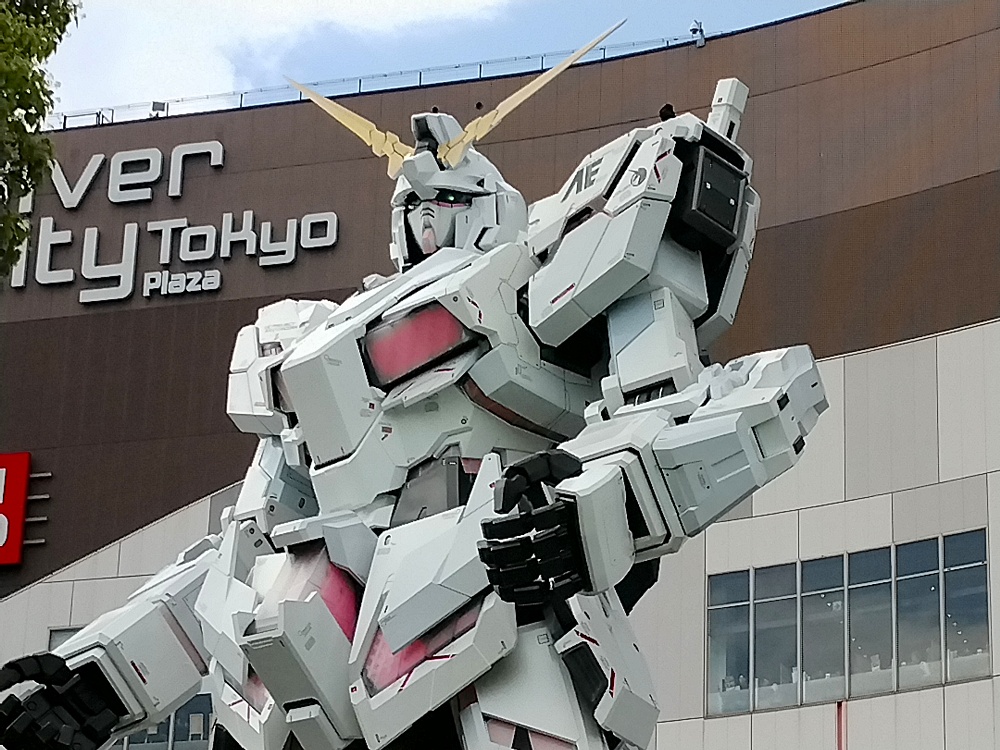
Seeing Tokyo’s life-size Gundam statue is an amazing experience, but also surreal one. Sure, Japan is the land of anime and all, but even then, a 19.7-meter (64.6-foot) tall mecha feels like something too awesome to be standing outside of the Diver City entertainment complex in the Odaiba district.
And sadly, it’s not going to be standing there much longer.
Both the official Gundam franchise website and the site for Tokyo’s life-size Unicorn Gundam statue have posted
Seeing Tokyo’s life-size Gundam statue is an amazing experience, but also surreal one. Sure, Japan is the land of anime and all, but even then, a 19.7-meter (64.6-foot) tall mecha feels like something too awesome to be standing outside of the Diver City entertainment complex in the Odaiba district.
And sadly, it’s not going to be standing there much longer.
Both the official Gundam franchise website and the site for Tokyo’s life-size Unicorn Gundam statue have posted notices that the 1:1-scale recreation of the RX-0 Unicorn Gundam will be removed. They’re not giving fans much advance notice to make one last visit either (or one first visit, if you haven’t been able to fit Tokyo into your travel plans yet), as the Unicorn Gundam will be gone at “the end of August.”
It’s a sad turn of events for what has become both a symbol of the neighborhood and a mecha mecca for anime fans from around the globe. The Unicorn Gundam was completed in September of 2017, meaning that it won’t quite make it to a full 9 years. I went to go see the big guy as soon as I could, and on my most recent visit just this month, the Unicorn was still looking great, as you can see in the photos in this article.
Gundam rights-holder Bandai hasn’t said why the Unicorn Gundam is being removed, and with it still drawing huge crowds, to the statue itself and to the two Gundam specialty stores inside Diver City, the decision comes as a shock to many fans.
The blow of the Unicorn Gundam’s departure is softened by Bandai’s promise that it will be starting a project it calls the “Gundam Landmark Concept,” creating a new Gundam facility/attraction that “fans from all over the world will want to come visit.” No further details have been released yet, but with Yokohama’s moving life-size Gundam having been sent off in the spring of 2024 to Osaka for the Expo 2025 world’s fair, the removal of the Unicorn Gundam will leave the Tokyo area with no life-size Gundams at all.
That seems like a vacuum Bandai would want to fill as quickly as it can, and this actually isn’t the first time for Odaiba to lose a life-size Gundam, either. Prior to the Unicorn Gundam’s installation, a life-size version of the original RX-78-2 Gundam stood in the same spot for several years, until it was removed in March of 2017, followed by a Gundam-less period of roughly six months before the Unicorn Gundam, was completed.
So hopefully this doesn’t mean Tokyo will be saying goodbye for good to Gundam so much as goodbye to this particular Gundam, and then hello to a new one. Still, there’s been no official word that a replacement mecha is one the way, and while Bandai says it will have special events to send the Unicorn Gundam off in style, there’s very little time to waste if you want to see it.
Totoro and friends want to keep you cool and smiling this summer with these traditional non-folding fans.
Summer presents a bit of a conundrum in Japan. On the one hand, it’s not a matter of if the weather will be hot and humid, but whether it’ll be extremely or just very hot and humid. At the same time, summer is full of festivals, fireworks shows, pop culture events, and even beautifully blossoming flowers, so there’s tons of fun to be had if you can find a way to cope with the heat.
And if
Totoro and friends want to keep you cool and smiling this summer with these traditional non-folding fans.
Summer presents a bit of a conundrum in Japan. On the one hand, it’s not a matter of if the weather will be hot and humid, but whether it’ll be extremely or just very hot and humid. At the same time, summer is full of festivals, fireworks shows, pop culture events, and even beautifully blossoming flowers, so there’s tons of fun to be had if you can find a way to cope with the heat.
And if you have a fun way to do so, all the better, right?
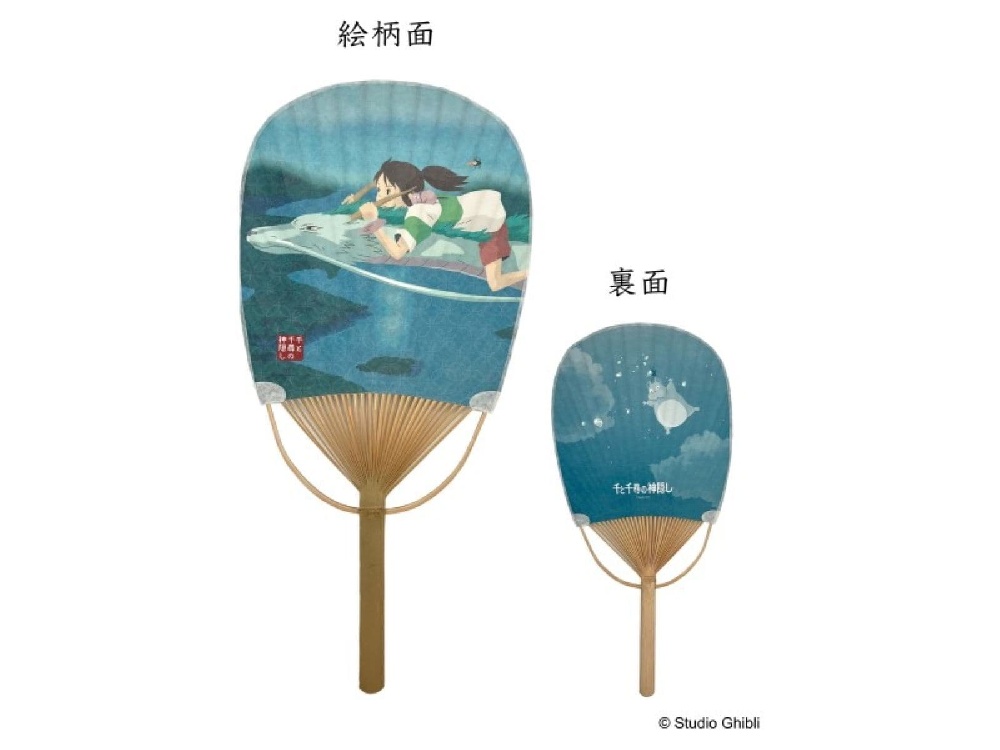
Filling that role nicely are these fans from Studio Ghibli specialty store Donguri Kyowakoku. This type of fan is called an uchiwa, and because they have an easy-to-grip handle, it’s easier to generate a cooling breeze with uchiwa than with than sensu (folding fans), making them a classical summer lifesaver.
The Ghibli uchiwa are made from bamboo frames and textured paper. A total of four designs are available, representing two of Ghibli’s greatest hits and with unique artwork on each side. On the fan above, we see Spirited Away’s Chihiro riding through the sky on Haku in his dragon form on the front, and when you flip the fan over, you can see Mouse Boh and Haedori having a somewhat less elegant flight.
Also here from Ghibli’s Oscar-winner is No Face, which is fitting since uchiwa are said to be shaped like koban, Japan’s traditional oval gold coins. The back of the No Face fan bares the kanji for Abura, as in the Aburaya bathhouse of the gods where most of the movie takes place, along with illustrations of some of the establishment’s more prominent patrons.
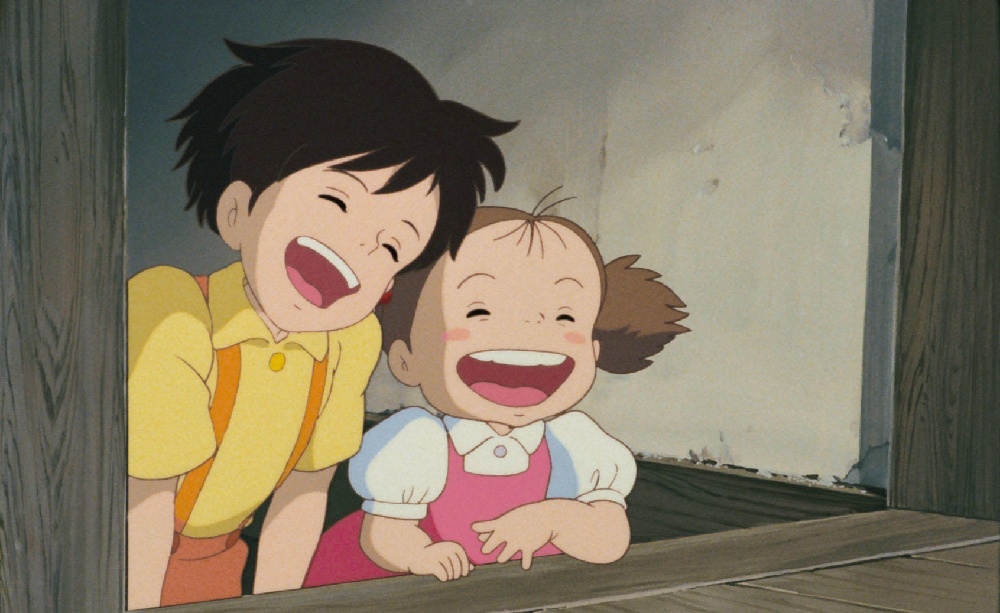
No Ghibli movie captures the vibes of a carefree summer day like My Neighbor Totoro, though, and so it’s also part of the lineup, with one of its designs featuring sisters Mei and Satsuki along with the Catbus.
▼ The back of the fan reveals that the Catbus leaves adorable pawprints behind as it scampers around the countryside.
And finally, the fourth fan shows a gathering of all three Totoros, big, medium. And small, with them dancing under fireworks and the kanji for matsuri (“festival”) on the back.
The fans are all 17 centimeters (6.7 inches) in width and 37 centimeters in length, with the exception of the Catbus uchiwa which is just a bit longer at 37.5 centimeters. The long handles make them easy to tuck into a tote bag or slide into the sash of a summer kimono, and since uchiwa don’t fold up, they also work great as interior decorations, since they’re essentially little mini posters that you can also use to make a breeze. All four of the fans are priced at 880 yen (US$5.70) and recently restocked at Donguri Kyowakou, with online orders available here.
Theme park prohibition strangely opens the door to a new kind of creative freedom.
When you visit Ghibli Park in Nagakute City, Aichi Prefecture, you’ll find a vast array of attractions, including life-sized buildings that look like they’ve jumped straight out of a Studio Ghibli film. However, if you research the park beforehand to see what the rooms inside these buildings look like, you’ll notice something else: there isn’t a wide variety of interior photos on social media.
That might sound
Theme park prohibition strangely opens the door to a new kind of creative freedom.
When you visit Ghibli Park in Nagakute City, Aichi Prefecture, you’ll find a vast array of attractions, including life-sized buildings that look like they’ve jumped straight out of a Studio Ghibli film. However, if you research the park beforehand to see what the rooms inside these buildings look like, you’ll notice something else: there isn’t a wide variety of interior photos on social media.
That might sound odd, given Ghibli’s worldwide fame and loyal fanbase, but the lack of photos doesn’t mean there’s no desire to share them online. Rather, it’s because photography is strictly prohibited inside most of the buildings. Instead, the park limits interior photos to the Becoming Characters in Memorable Ghibli Scenes exhibit inside Ghibli’s Grand Warehouse, where visitors can step into life-sized dioramas depicting 14 famous film scenes.
All of this came as a surprise to our Japanese-language reporter Saya Togashi when she visited the park for the first time recently. Unaware of the photography ban in the large majority of the buildings, her initial disappointment turned into an eye-opening experience both literally and figuratively, so she decided to share some thoughts on the ban and the surprising effect it had on her visit.
▼ Saya with her Ghibli Park entry band.
1. People don’t linger to take photos
The most obvious benefit to come from the ban is the fact that it prevents people from lingering too long in an area while trying to capture the perfect shot. Every exhibit presents a perfect photo opportunity, as each display creates an ideal backdrop that makes visitors look as though they’ve stepped into an anime world, and the attention to detail in the objects inside the buildings is so impressive that you could take hundreds of photos and it still wouldn’t be enough, which is why the ban feels necessary.
With so many small rooms inside, there isn’t much space to move around – even if one person stopped to take a picture it would cause a huge holdup for visitors. The photography ban ensures the crowds move smoothly through the exhibits, creating a more pleasant environment for everyone to enjoy what they’re seeing.
Another advantage is the absence of live video streamers. Even when they aren’t being intentionally disruptive, live streaming can cause anxiety for people nearby, as not everyone wants their face broadcast around the world without consent. In a country like Japan, where publishing identifiable photos of people without permission may violate privacy or image rights, the absence of cameras creates a sense of ease and safety that allows everyone to relax.
2. Visitors can concentrate on what’s in front of them
When you can’t take pictures, or when you don’t have your smartphone in your hand, something beautiful happens: you naturally start to focus on what’s in front of you. Though photography may be prohibited, visitors are allowed to touch many of the exhibits, engaging the sense of touch and creating a multi-sensory experience that benefits from full attention. This gesture of goodwill by the park, which prioritises the visitor experience over concerns about theft or damage, helps nurture an environment of care and respect that you might not find in other amusement parks.
In Mei and Satsuki’s House, for instance, opening a closet door reveals bedding and pyjamas belonging to the Kusakabe family, who star in the film My Neighbour Totoro. The dresser contains the father’s clothes, which carry a faint smell of mothballs. You can search for the stairs leading to the second floor, just like in the movie, and even find Mei’s hat. It’s a continuous stream of discoveries that gives you a great sense of satisfaction in finding things for yourself.
Without the scrutiny of a smartphone screen, our senses become sharper. The small size of Mei’s clothes and the way they feel in your hand, the creaking of the closet, the sense of everyday life emanating from the old dishes in the kitchen – these are now vividly etched into Saya’s memory as real lived experiences.
In the documentary Until Ghibli Park is Finished, director Goro Miyazaki told his staff, “It’s good to touch the house as much as possible, like refolding clothes as if you were actually living there.” That sense of bringing the house to life is clearly evident, and it allows visitors to appreciate just how impressive it is that Satsuki and Mei’s House is built to be fully functional, with features such as a wood-fired stove for boiling water and a hearth for cooking rice. If God is in the details, so is Studio Ghibli.
3. There are no spoilers
In this era where everyone is a photographer, any place and any event can be easily experienced virtually through the Internet. Although we might know there are things that can only be understood by being there and experiencing them firsthand, videos and images can have a huge impact on our perception.
At Ghibli Park, however, very little prior information is available beyond officially released details about the different rooms and exhibits. Since photography is prohibited indoors in many areas of the park, visitors experience the spaces with almost no spoilers beforehand.
Because you encounter the actual settings and objects without prior exposure, everything feels fresh and surprising. Saya felt this especially strongly in Howl’s Moving Castle, where she had goosebumps after stepping into the dimly lit castle from the bright outdoors. Once your eyes adjust, you’re overwhelmed by the sheer volume of cluttered everyday objects and magical items laid out in front of you, appearing just as it was in the movie.
Although it’s an area visitors can’t touch, Howl’s bedroom, meticulously recreated with small objects, sounds, lights, and movements, is a must-see. It’s truly moving to witness something you’ve only ever seen in the 2-D anime world come to life before your eyes, complete with weight, scent, and texture.
Sure, Ghibli Park might not have big rides with elaborate special effects or dazzling shows, but that’s actually its charm. The dedication to creating special spaces and the sheer scale of its construction surpasses those of many world-class theme parks, and it’s something you can sense in every area.
After visiting the park, Saya came to realise the merits and demerits of modern theme parks that rely on social media sharing. Keen to update their operational policies to keep pace with the times, theme parks are shifting from being places where visitors immerse themselves in carefully crafted worlds and becoming platforms for sharing experiences, primarily through social media.
Saya has felt the tide turn firsthand at Disney Resorts, where she used to attend the New Year’s Eve countdown event every year. Although getting tickets was always a bit of a struggle, once you were inside the park, you could easily enjoy all the events, like watching shows, enjoying limited-edition food and drinks, and buying New Year’s items, without the need for any special strategy or plan. Of course, there were lines, but as long as visitors waited patiently, they could achieve their theme park goals, especially as visitors wandered the grounds discovering things along the way.
However, one year things changed. Even immediately after opening, the shelves for New Year’s items were empty, special menu items were all sold out, and the atmosphere at events became tense, with staff shouting to control crowds as people scrambled to secure prime viewing spots. This was around the time when the social media culture of sharing one’s own experiences and the business of profiting from reselling began. It created a world of competition and anxiety, where people have to work harder to buy the things they want and experience the things they want to experience — things that once felt much simpler before the age of social media.
This isn’t necessarily a bad thing for the theme parks themselves; the spread of information on social media and the increased rarity of merchandise are simply the result of fans’ enthusiasm. However, it does have an impact on the visitor experience, and after visiting Ghibli Park, Saya walked away with her eyes opened to what can be possible when visitors are prioritised over financial profit. By creating sensory worlds that can’t be fully captured in photographs, Ghibli Park encourages visitors to engage with the world around them, fostering face-to-face communication and a sense of adventure that lies at the heart of every Ghibli film.
Kabuki adaptation of Hayao Miyazaki Ghibli anime opens in Tokyo this summer.
Princess Mononoke is one of the most celebrated anime films of all times, and with every frame bursting with Studio Ghibli’s distinct animation artistry, it’s hard enough to imagine what it would look like in live action, let alone as a kabuki play. That’s exactly what we’re getting, though, with the stage adaptation set to open in Tokyo this summer, and now we’ve got our first look at the main cast in costume.
The
Kabuki adaptation of Hayao Miyazaki Ghibli anime opens in Tokyo this summer.
Princess Mononoke is one of the most celebrated anime films of all times, and with every frame bursting with Studio Ghibli’s distinct animation artistry, it’s hard enough to imagine what it would look like in live action, let alone as a kabuki play. That’s exactly what we’re getting, though, with the stage adaptation set to open in Tokyo this summer, and now we’ve got our first look at the main cast in costume.
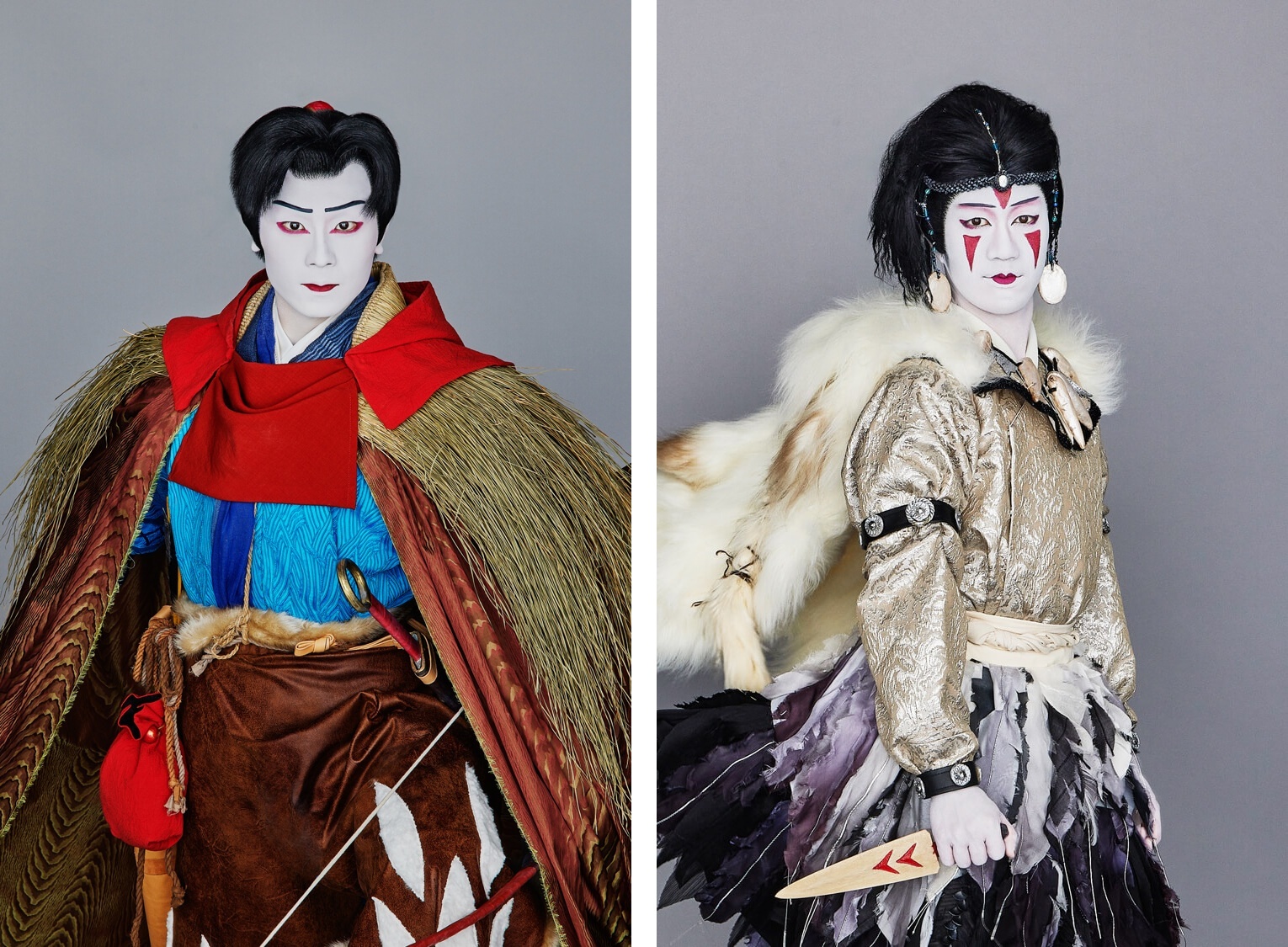
The production team has released a video preview that opens with actor Dango Ichikawa declaring “My name is Ashitaka” as he notches and arrow and draws back the string of the wandering prince’s bow.
He’s followed by a silent introduction of Kazutaro Nakamura as San, the monster princess herself.
As a complex tale of various factions searching for ways to survive, sometimes at each other’s expense, Princess Mononoke doesn’t have a traditional, clean-cut villain. Within the central conflict of the forest denizens versus the humans, though, the latter group is led by Lady Eboshi, who’ll be played by Manju Nakamura.
Given its feudal Japan setting, Princess Mononoke’s characters’ outfits make for an easier adaptation into kabuki costumes than, say the wardrobes of My Neighbor Totoro or Kiki’s Delivery Service would. Still, the designers have added touches of ornate flair here and there. Kabuki does, after all, have a tradition of bold aesthetics, and the costumes need to have a level of visual impact that can reach far past just the front row of the audience.
▼ Kabuki San’s skirt, for example, gets extra feathery elements that aren’t present in the anime design.
The Princess Mononoke kabuki play is scheduled to run from July 3 to August 23 at Tokyo’s Shinbashi Enbujo Theater. Tickets for most of the performances won’t be on sale until May 25, but there are a pair for which reservations can be made now too.
Famed anime house isn’t worried about losing relevancy by limiting access to its films.
Studio Ghibli has a reputation for preferring to do things the old-fashioned way, and so fans weren’t really shocked when the famed anime production house was initially reluctant to licensing its works for online streaming. The studio eventually softened its stance, striking deals with HBO Max in 2019 and Netflix the following year, and while the Netflix agreement has since expired, HBO Max still offers the
Famed anime house isn’t worried about losing relevancy by limiting access to its films.
Studio Ghibli has a reputation for preferring to do things the old-fashioned way, and so fans weren’t really shocked when the famed anime production house was initially reluctant to licensing its works for online streaming. The studio eventually softened its stance, striking deals with HBO Max in 2019 and Netflix the following year, and while the Netflix agreement has since expired, HBO Max still offers the Ghibli catalog for streaming…but not if you’re in Japan.
On-demand online streaming may not dominate the video entertainment landscape in Japan to quite the same extent as it does in many other countries, but things are moving in that direction, especially with Japan’s physical media rental stores fading away at an accelerating pace. It’s getting to the point where one could question whether Ghibli’s attitude about making its anime available for streaming in Japan has gone from being quaintly old-fashioned to detrimentally outdated. That was the sentiment one attendee alluded to at a regular press conference held by Hiroyuki Fukuda, president of Japanese television broadcaster Nippon TV, which acquired Studio Ghibli as a subsidiary in 2023. At the press conference, held on May 25, the attendee asked Fukuda:
“Ghibli’s works remain unavailable for streaming within Japan, which limits their audiences…Concerns have been raised that without opportunities to view these titles, some of them may become forgotten [by the public], so is there any chance of Ghibli’s anime becoming available for streaming on your company’s Hulu service?”
As alluded to in the question, Hulu Japan is a subsidiary of Nippon TV, which would make it the natural, and theoretically easiest to negotiate with, online host of the Ghibli catalog. Users shouldn’t go typing “Ghibli” into the Hulu Japan search box just yet, though, nor that of any other streaming service in Japan, as Fukuda answered that there are no plans to put Ghibli’s films online, because Nippon TV and Studio Ghibli want to preserve the relevance of the TV broadcasts of Ghibli anime.
“Presently, Studio Ghibli and Nippon TV are of the shared belief that we want to preserve the specialness of Ghibli’s films appearing on broadcast TV through our Friday Roadshow program. We are of course aware of the various requests for and different opinions regarding streaming, and this is a matter we intend to continue discussing moving forward.”
Friday Roadshow, or Kinyo Roadshow in Japanese, is Nippon TV’s Friday night movie block, in which it shows a different classic, popular, or family-oriented film each week. Ghibli anime are featured several times per year, with mega-hits like Totoro often saved for dates during summer or other vacation seasons, becoming appointment television for fans.
▼ Hurry home, Chihiro! Friday Roadshow is about to start!
Still, not every Ghibli anime airs every year, and even those that do usually do so only once annually. Nippon TV and Ghibli aren’t currently worried about that lessening the relevance of the studio’s films, though. In his press conference response, Fukuda went on to say that permanent facilities like the Ghibli Museum in Tokyo and the Ghibli Park theme park near Nagoya help build interest and excitement for Ghibli’s anime, as do celebratory events like Ghibli’s art exhibitions that travel around the country. Though Fukuda didn’t mention them, Ghibli’s kabuki stage play adaptations, like the one for Nausicaa of the Valley of the Wind and the upcoming one for Princess Mononoke, also help to spark interest in their source material, and even if there’s no Friday Roadshow broadcast of them in the near future, Ghibli’s anime are always readily available for purchase on physical media in Japan.
Occasional overseas events and London’s My Neighbor Totoro stage play notwithstanding, the average overseas Ghibli fan has far less access to these kinds of Ghibli touchpoints than fans in Japan do, which in turn makes easier access to the anime movies themselves, though online distribution, a greater necessity outside Japan, which would explain why Ghibli has come around to the idea of streaming its works in foreign countries. And the day may come when Ghibli shrugs its shoulders and says “OK” for streaming inside Japan too. Nippon TV and the studio aren’t at that point just yet, though, and Fukuda’s treatment of Ghibli as a partner, as opposed to just a subsidiary, in the matter is probably a wise call, considering how committed Ghibli is to presenting its creations in the way it feels best conveys their vision.
Ikebukuro Pokémon superstore and Pikachu dessert cafe won’t be reopening until nearly half a year after murder.
In late March, the Pokémon Center superstore in Tokyo’s Ikebukuro neighborhood, also known as the Pokémon Center Mega Tokyo, became the scene of a tragedy as a 21-year-old worker was stabbed and murdered. The store, as well as the Pikachu Sweets cafe located a short distance away within the same shopping center, were immediately closed down for an indefinite period of time, and a num
Ikebukuro Pokémon superstore and Pikachu dessert cafe won’t be reopening until nearly half a year after murder.
In late March, the Pokémon Center superstore in Tokyo’s Ikebukuro neighborhood, also known as the Pokémon Center Mega Tokyo, became the scene of a tragedy as a 21-year-old worker was stabbed and murdered. The store, as well as the Pikachu Sweets cafe located a short distance away within the same shopping center, were immediately closed down for an indefinite period of time, and a number of events scheduled for April were cancelled at all other branches of the Pokémon Center chain, which has locations across Japan.
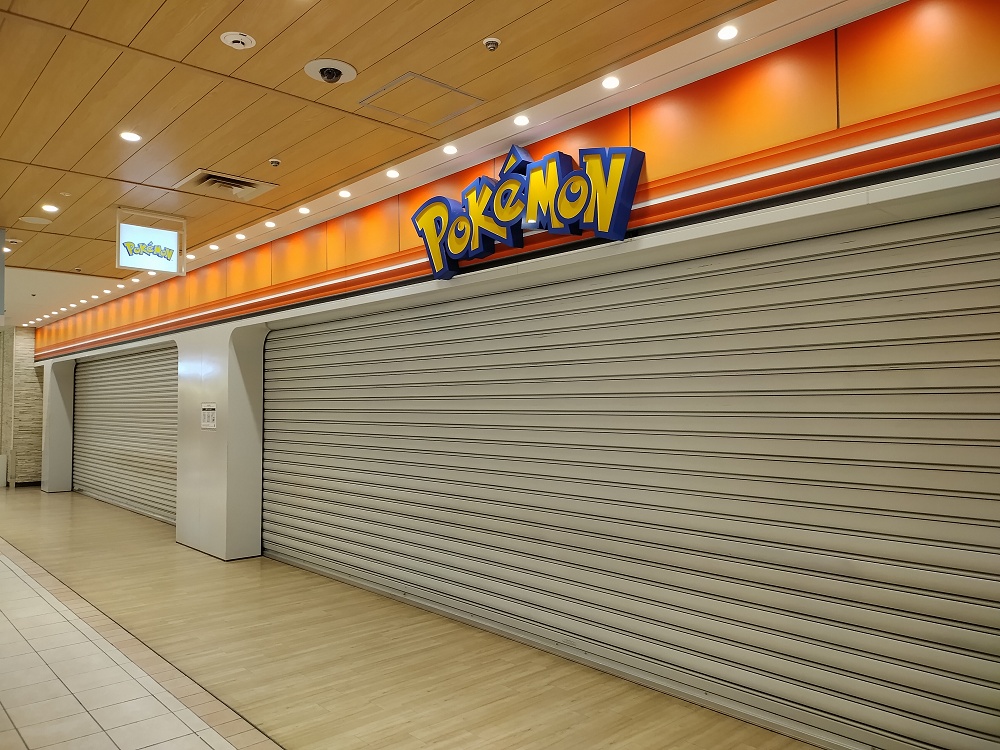
Initially, it seemed as if the Ikebukuro Pokémon Center might be reopening in early May, to coincide with the resumption of in-store events as well as Japan’s Golden Week spring vacation period. Golden Week came and went with the store’s shutters still closed, however, and they’re going to remain shut for several months more, as the Pokémon Company has announced that the Ikebukuro Pokémon Center will not be reopening until “around September.” The same timetable has been announced for the reopening of the Pikachu Sweets cafe, which has also remained closed since the incident.
▼ Pikachu Sweets is located on the same floor of the Sunshine City shopping mall as the Ikebukuro Pokémon Center, with the two stores less than a minute’s walk away from each other, but there is no indication that either the victim or murderer was at the cafe on the day of the stabbing.
No statement has been made about whether there will be any changes to the stores’ physical layouts, admission procedures, or any other aspects of its operations. With the murderer of the victim being an ex-boyfriend who was stalking her, the stabbing hasn’t been perceived as a sign of violence related towards Pokémon Center employees or Pokémon fans themselves, but the stabbing was still a shocking demonstration of vulnerabilities in the store’s security protocols, and with Pokémon Centers regularly being packed with customers, many of them children, on weekends and holidays, the Pokémon Company is no doubt feeling a need to rethink and retool how it handles guest safety issues.
A new line of decorative mini figures made from gold pay homage to pioneering manga artist Osamu Tezuka’s massive influence on anime and manga.
U-Treasure, a Japanese jewelry brand that frequently partners with pop culture franchises for fun but classy keepsakes, is now taking preorders for the first three pieces in a new collaborative series paying homage to manga legend Osamu Tezuka.
The Osamu Tezuka World Gold Collection celebrates the 80th anniversary of the God of Manga‘s 1946 debut manga
A new line of decorative mini figures made from gold pay homage to pioneering manga artist Osamu Tezuka’s massive influence on anime and manga.
U-Treasure, a Japanese jewelry brand that frequently partners with pop culture franchises for fun but classy keepsakes, is now taking preorders for the first three pieces in a new collaborative series paying homage to manga legend Osamu Tezuka.
The Osamu Tezuka World Gold Collection celebrates the 80th anniversary of the God of Manga‘s 1946 debut manga The Diary of Ma-chan (a four-panel newspaper comic strip). Tezuka continued to churn out classic works of manga for the rest of his life that revolutionized the genre and Japanese popular culture forevermore.
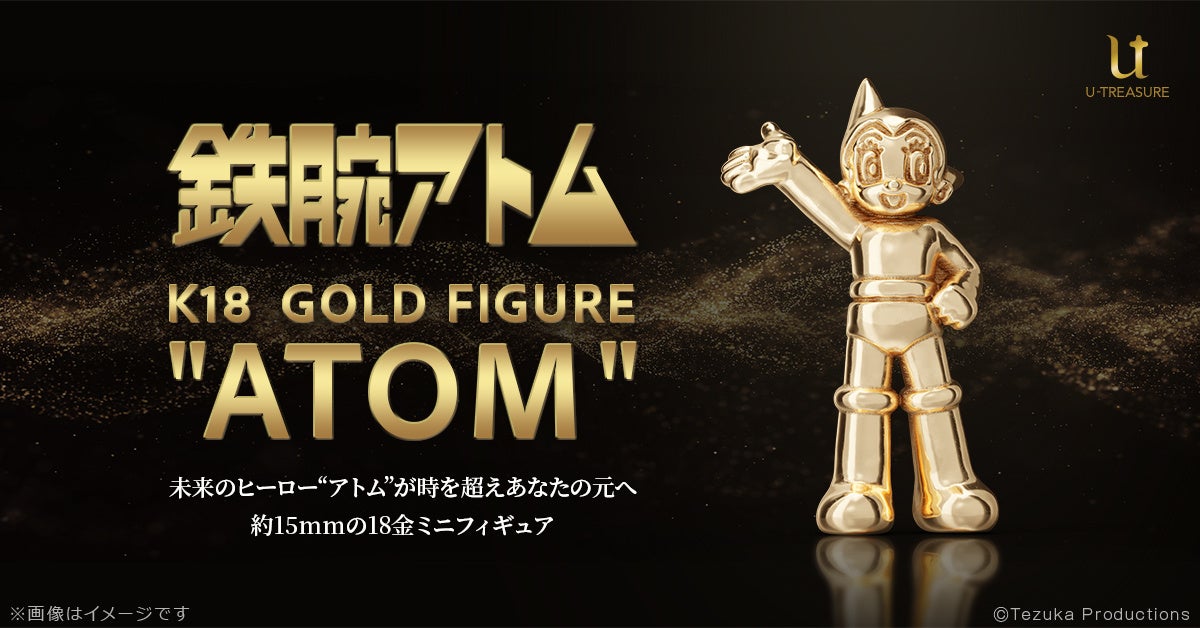
The standout piece of U-Treasure’s trio of offerings is undoubtedly the miniature figure of Tetsuwan Atom, better known as Astro Boy to English-speaking audiences. Tezuka’s original Astro Boy manga was serialized from 1952-1968, inspiring a groundbreaking 1963 TV series that is considered to be the first-ever serialized Japanese TV anime. Countless adaptations and collaborations have been produced since.
▼ Astro Boy, the robot boy whom we can thank for modern manga and anime
Costing 121,000 yen (US$760), the figure is crafted from 18-karat yellow gold and stands only 15 millimeters (0.59 inches) tall.
Nevertheless, it’s a faithful creation of the character, with Tezuka’s trademark large eyes and Astro Boy’s pointy, distinctive hairstyle.
The figure comes specially packaged in a black box inscribed with “Osamu Tezuka World” and “Testsuwan Atom” in gold, retro-style font.
Precisely because of its small size, it’s an elegant trinket that will upgrade any desk or shelf without taking up too much space.
While Astro Boy is undoubtedly the most recognizable of the new pieces, the two other characters in this release also hold a space place in Tezuka’s legacy. First, the 9-millimeter-tall Hyoutantsugi is a gourd-like character that was originally inspired by a doodle made by Tezuka’s younger sister. It became a visual gag that randomly appears in almost all of his works.
Second, the 12-millimeter-tall Buddha captures the likeness of Tezuka’s rendition of the life of Siddhartha Gautama in his 1972-1983 eponymously titled masterpiece.
▼ Buddha miniature gold figure (220,000 yen)
All three miniature figures are available for preorder between May 20 and June 22 on U-Treasure’s online shop and at U-Treasure Concept Stores Ikebukuro in Tokyo and Shinsaibashi in Osaka (location information here).
New tie-up with hit anime comes with anti-scalper strategy.
Fast food and anime figures are two of the reliable simple sources of joy in life, and yet there was some trepidation about combining the two of them as McDonald’s Japan launched a collaboration with the Chiikawa franchise last week. Chiikawa Happy Meals went on sale on May 15, but there was worry that the promotion would be marred by the same sort of ugly behavior from scalpers that’s taken place in some of the chain’s previous high-
New tie-up with hit anime comes with anti-scalper strategy.
Fast food and anime figures are two of the reliable simple sources of joy in life, and yet there was some trepidation about combining the two of them as McDonald’s Japan launched a collaboration with the Chiikawa franchise last week. Chiikawa Happy Meals went on sale on May 15, but there was worry that the promotion would be marred by the same sort of ugly behavior from scalpers that’s taken place in some of the chain’s previous high-profile partnerships.
And you know what? The rules seemed to achieve their purpose, at least at the branch where we got our four Chiikawa Happy Meals. There were no massive lines, no one walking out with a dozen orders just for themselves, and no one just taking their toys and leaving uneaten food on the restaurant counter or littered on the street outside.
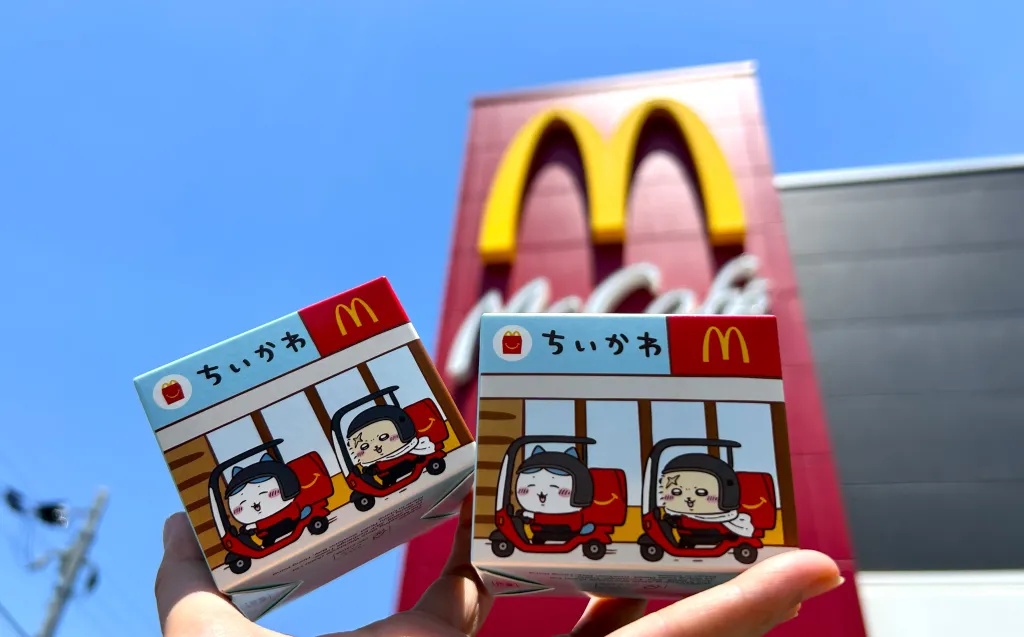
Each Happy Meal comes with one of four figures of the Chiikawa cast dressed in McDonald’s uniforms, so we ordered four meals, keeping our fingers crossed that we’d be lucky enough to get the full set.
▼ We got ourselves two Chicken McNugget Happy Meals and two cheeseburger ones, each priced at 540 yen (US$3.50), so we were pretty much set for lunches for the next few days.
And to our great joy, as we opened up the four figure boxes one by one, each of them had a different figure waiting for us inside!
Not only are they adorable, there’s even a bit of inspiration from Chiikawa lore in their designs. For example, Rakko, seen on the far right in the photo above, is depicted in the Chiikawa manga and anime as owning a car and being a skilled driver, so he’s dressed in the uniform of a McDonald’s Japan delivery person, as is Hachiware.
Also part of our set of four is Kuri-Manju (second from the lest in the above photo), the alcohol-loving character with a head shaped like a chestnut dumpling (Chiikawa can be a very unique franchise). Perhaps due to his regularly inebriated condition, Kuri-Manju is not part of the delivery team, and is instead dressed in the uniform of a McCafe by Barista crew member, in charge of McDonald’s Japan’s fancier dessert and beverage subdivision, which sometimes even has its own order counter inside the restaurant. Finally, there’s Chiikawa, who, fittingly for the series’ protagonist, is dressed in a McDonald’s manager’s uniform.
Each of the figures is about eight centimeters (3.1 inches) tall, compact enough to easily find space for on a shelf or your desk, but big enough to still provide a palpable Chiikawa aura.
▼ McDonald’s figures are quite a bit bigger than the ones beef bowl chain Matsuya gave out in their most recent Chiikawa collaboration, as you can see here.
In addition, the figures have holes on the bottom so that you can use them as pencil/pen toppers too.
As is becoming increasingly common with Japanese Happy Meals, McDonald’s is releasing its Chiikawa ones in two waves, with the first lasting until May 28, then a new set of four figures coming in as a second batch from May 29 to June 11, and hopefully the anti-scalping strategies continue to be effective in round two.
Can you please pass the soy sauce, No Face?
Explicit exposition has never really been Studio Ghibli’s thing, but even by their standards, No Face’s character arc is an impressive case. Without saying a single word of dialogue, we watch the Spirited Away scene-stealer go from covetous to considerate over the course of the film, learning that there’s more to life than a cycle of gorging and coercing people with regurgitated pricy baubles.
By the time the movie ends, No Face has become a sympathe
Explicit exposition has never really been Studio Ghibli’s thing, but even by their standards, No Face’s character arc is an impressive case. Without saying a single word of dialogue, we watch the Spirited Away scene-stealer go from covetous to considerate over the course of the film, learning that there’s more to life than a cycle of gorging and coercing people with regurgitated pricy baubles.
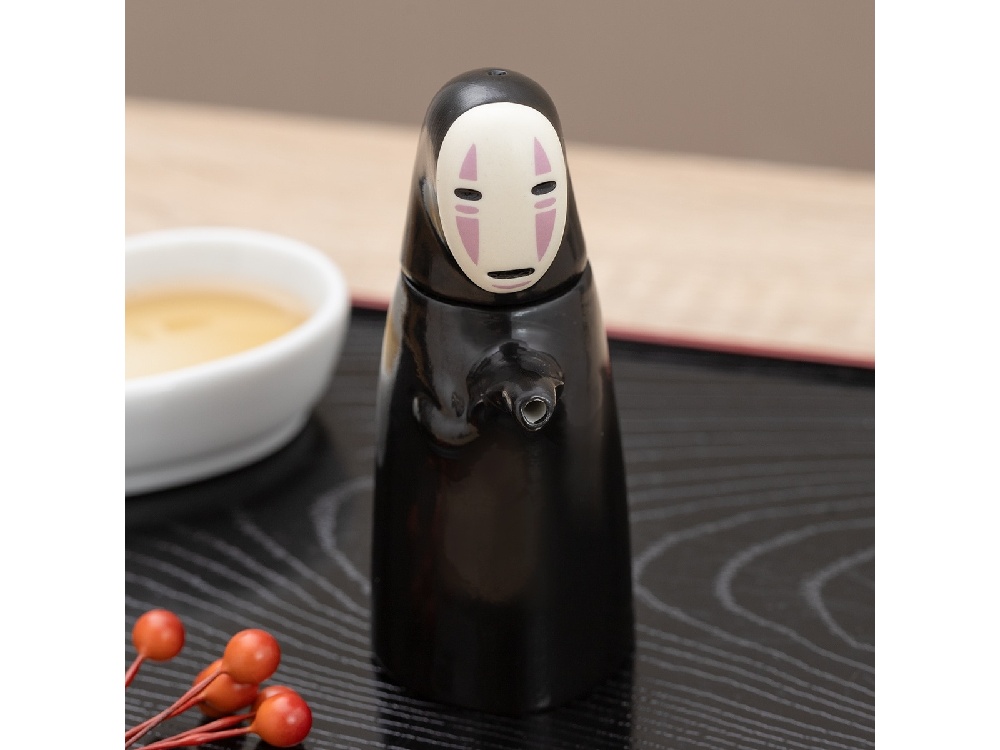
By the time the movie ends, No Face has become a sympathetic, even heartwarming character, and his new life as a generous, helpful sort can continue in your kitchen in the form of a cute and classy No Face soy sauce dispenser.
The porcelain bottle stands 10.8 centimeters (4.3 inches) tall, with its glaze catching the light in a hazy way evocative of the indistinct nature of No Face’s physical form within the anime.
Instead of pouring from the very top of the bottle, the soy sauce comes out of No Face’s extended arm, which is crafted to bring to mind his on-screen posing.
A silicone seal helps keep the connection between the two parts of the bottle snug and secure, and separating them also makes for easy cleaning of the inside.
While this is technically classified as a soy sauce dispenser by Ghibli specialty shop Donguri Kyowakoku, you could use it to hold whatever liquid you want (although the modest diameter of the opening means that thick condiments or lotions probably won’t flow too easily through it). And if your diet isn’t all that saucy, there’s always the option of using the bottle for decorative purposes like a very unique anime figure.
While the No Face soy sauce dish shown in the above photo is sold out, the soy sauce dispenser is back at Donguri Kyowakoku following a recent restock, and can be ordered through the chain’s online store here, priced at 2,640 yen (US$17). Just be careful not to spill any sauce on your new Totoro necktie.
Transforming iconic characters into delicious works of art.
Pokémon is a beloved franchise, and you’d be hard-pressed to find anyone in Japan who has not heard of it, even if they have never personally interacted with any of its media. Through collaborations with famous brands from all areas of the market, the cute and charming character designs can be seen in many places throughout the country.
Despite both being of Japanese origin, the combination of a 161-year-old traditional Japanese confe
Transforming iconic characters into delicious works of art.
Pokémon is a beloved franchise, and you’d be hard-pressed to find anyone in Japan who has not heard of it, even if they have never personally interacted with any of its media. Through collaborations with famous brands from all areas of the market, the cute and charming character designs can be seen in many places throughout the country.
Despite both being of Japanese origin, the combination of a 161-year-old traditional Japanese confectionery maker and an electric mouse and its friends may not be the natural pairing for most people. However, over the last few years, the shop Shichijo Kanshundo has been releasing delightful treats that blend history with pop culture, and from May 11, they have expanded that lineup with another set of four Pokémon kyo-gashi (traditional Kyoto-style sweets).
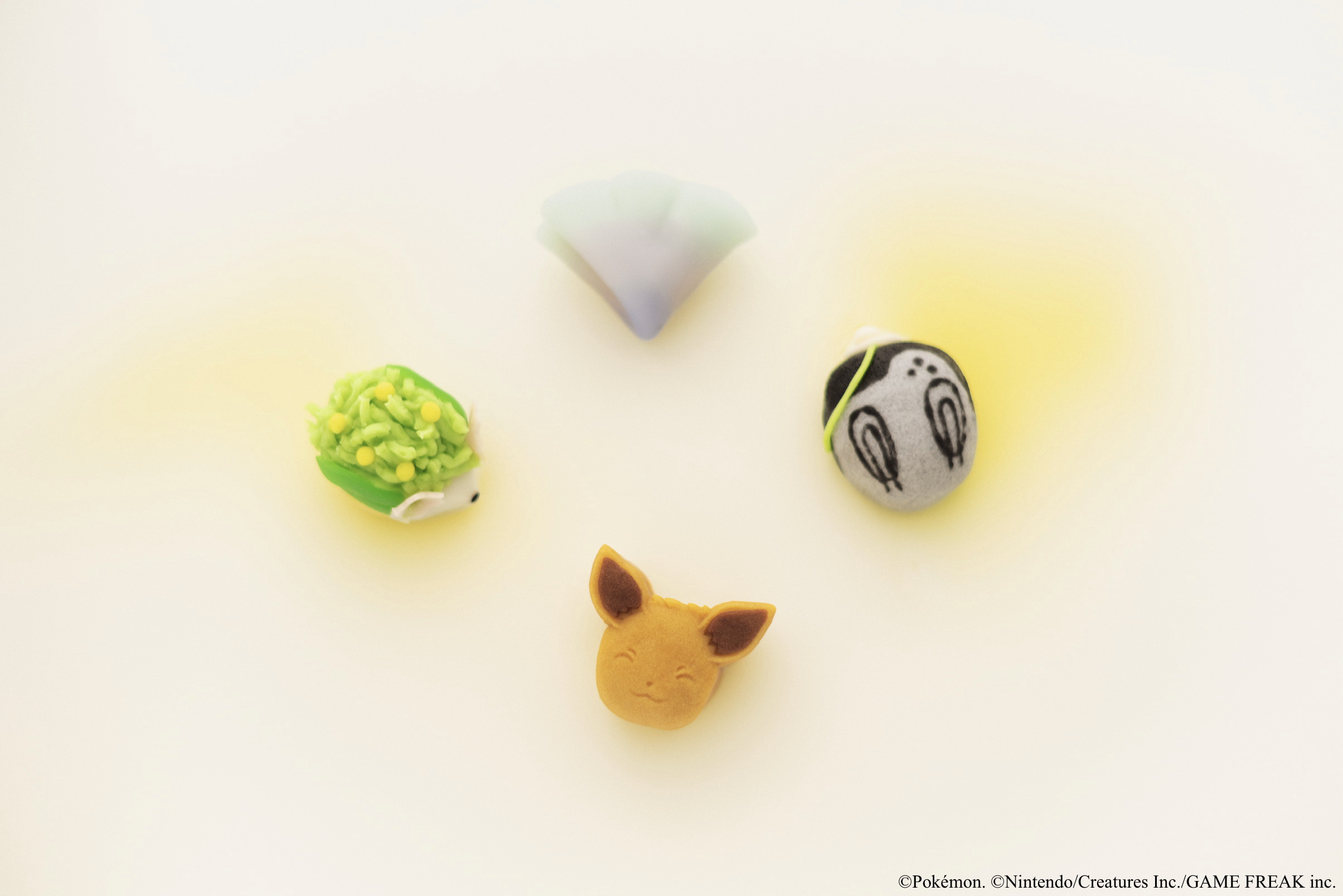
The shop is renowned for its jonamagashi, which are handmade by craftsmen one by one. While these sweets, traditionally served during tea ceremonies, typically reflect the changing seasons or classical poetry, Shichijo Kanshundo is using their delicate artistry to bring Eevee and Poltchageist into the physical world.
The Eevee sweet is crafted using nerikiri, a traditional mixture of sweet white bean paste, starch syrup, and gyuhi (glutinous rice flour) that artisans sculpt by hand into intricate, soft shapes. Poltchageist is made as a jonyo manju, a light, fluffy steamed bun made with yam, sugar, and joyo-ko (fine rice flour).
These two Pokémon join two others that were previously released to form this new set of four: Shaymin (Land Forme) and Oricorio (Sensu Style). Shaymin is a kinton, made by crumbling white bean paste or nerikiri into a soboro (ground/crumb-like) state and applying it around a core of bean paste. Oricorio, on the other hand, is expressed using uiro, a Japanese sweet made by adding sugar and water to rice flour, among other ingredients, and steaming it until firm, which results in a chewy texture. The set costs 2,916 yen (US$18) and, since they’re made without unnecessary preservatives, are best enjoyed immediately.
Catching these sweets requires a little bit of extra planning, because the physical store in Kyoto only sells these sets on their special sales event on the seventh of every month, so starting June 7, visitors will be able to pick some up on the afternoon stroll through one of Kyoto’s most historic neighborhoods near Sanjusangendo Temple.
There is another method to get your hands on them earlier: you can order them online and receive them directly at your home, although they will be delivered frozen. However, that also means you don’t need to enjoy them all at once, and can take your time to savor the flavors over a period of 14 days from the date of shipment.
If you do happen to find yourself in the Higashiyama area in Kyoto on the seventh of a month, though, be sure to stop by the shop early. These limited-edition treats are a wonderful way to experience Kyoto’s traditional craftsmanship, even if you’re not a dedicated Pokémon fan.
Store information
Shichijo Kanshundo / 七條甘春堂
Address: Kyoto-fu, Higashiyama-ku, Shichijo-doori, Nishinomon-cho 551-banchi
京都市東山区七条通西の門町551番地
Open 9:00 a.m.–5:30 p.m.
Closed January 1 Website

 Login
Login