Normal view

  • ✇SoraNews24 Japan
  • The top 12 incomprehensible school rules, as chosen by high school students Oona McGee
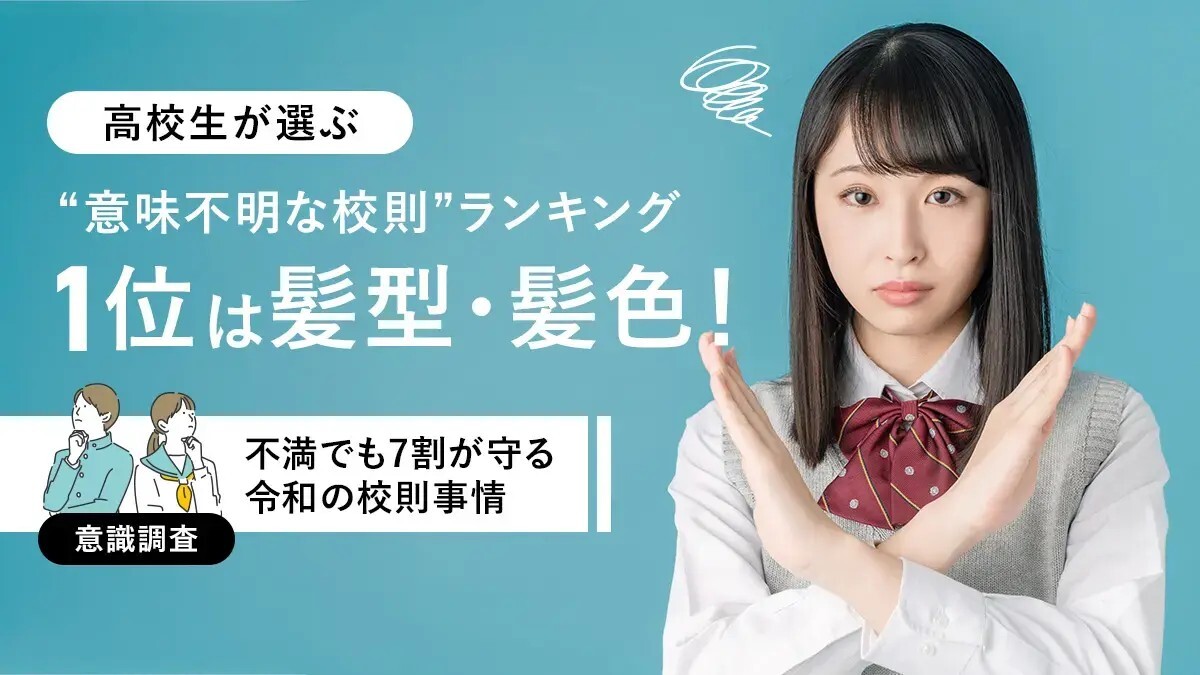
    Plus some surprising extra requirements, like having to say “thank you” at least 10 times a day.  Every school in Japan has its own set of rules, and while many of these guidelines are perfectly understandable, there are some that are baffling, to say the least. This topic of nonsensical school rules was recently explored by Jukusen, one of Japan’s largest online directory and comparison platforms for cram schools, in a survey that targeted 104 high school students nationwide. More than half (
     

The top 12 incomprehensible school rules, as chosen by high school students

16 May 2026 at 13:00

Plus some surprising extra requirements, like having to say “thank you” at least 10 times a day. 

Every school in Japan has its own set of rules, and while many of these guidelines are perfectly understandable, there are some that are baffling, to say the least.

This topic of nonsensical school rules was recently explored by Jukusen, one of Japan’s largest online directory and comparison platforms for cram schools, in a survey that targeted 104 high school students nationwide.

More than half (56.7 percent) of the respondents said there were rules at their school that they did not agree with, and out of these, about 70 percent said they hadn’t been given an explanation as to why those rules are necessary.

So what were the rules that made no sense to students? Let’s take a look at the top 12 responses below – totals exceed 100 percent as students were allowed to give multiple responses – starting with a brief rundown from 12 to six.

12. No stopping anywhere on the way home after school (27.9 percent)
11. Limits on the number of keychains students can carry (30.8 percent)
10. Ban on sunscreen and lip balm (31.7 percent)
9. Restrictions on winter clothing such as coats and scarves (34.6 percent)
8. Restrictions on sweaters and cardigans (34.6 percent)
7. Rules specifying the type and colour of school bags (34.6 percent)
6. Restrictions on underwear colour (36.5 percent)

▼ The question put to students for the survey was: “Which school rules honestly make no sense to you?

Taking a closer look at the top five revealed the following results:

5. Restrictions on smartphones (36.5 percent)

Many respondents accepted bans during class but thought prohibitions during breaks or school events were unreasonable as students want to communicate and take photos at those times.

4. Restrictions on the colour, length, and design of socks (39.4 percent)

Students questioned why schools sought to regulate such a minor detail, saying it felt pointless to regulate tiny fashion issues.

3. Restrictions on how to wear the uniform (42.3 percent)

Students complained that uniform rules were excessively detailed and inconsistently enforced, with one student saying she was pulled up by teachers for folding up the waist of her skirt, even though she was only doing it as it was uncomfortably loose.

▼ Low socks and a high skirt is a no-no at schools.

2. Ban on eyebrow grooming (48.1 percent)

Students argued that not being allowed to care for your eyebrows actually makes people look less presentable. They also expressed concern for people who feel insecure about their brows, as they’re not allowed to tend to them.

1. Restrictions on hairstyles and hair colour (54.8 percent)

Students strongly questioned why schools regulate hair at all, with many saying they felt these rules weren’t in line with the times as they prioritise conformity over individuality.

The survey also revealed some unusual rules that exist at some schools:

  • On graduation day, girls must wear tights of 80 denier or higher
  • Students are required to say “thank you” at least 10 times a day within the school
  • Bans on establishing a light music club

While “light music” originally referred to lighter orchestral pieces, it now involves popular music like punk, rock and J-Pop, and some schools fear these clubs might “increase the number of delinquent and misbehaving students”.

Though students are quick to complain about these “incomprehensible” school rules, saying they have little to do with academic performance, in the end, they mostly put up with them, with approximately 70 percent of current respondents indicating that they abide by the rules despite their dissatisfaction.

The remaining 30 percent are likely plucking an eyebrow hair every now and then, and holding out hope for their school to rethink some of its requirements. With some schools now easing up on black-only hair rules and abolishing underwear checks, change may very well be on the horizon.

Source: Press release
Featured image: Press release
Insert images: Press release, Pakutaso (1, 2, 3)

● Want to hear about SoraNews24’s latest articles as soon as they’re published? Follow us on Facebook and Twitter!
  • ✇SoraNews24 Japan
  • Japanese high school closes its cafeteria, replaces it with a 7-Eleven convenience store Oona McGee
    The first time a 7-Eleven has opened inside a high school in Japan. 7-Eleven opened a new branch in Japan on 1 June, at a site so unusual it made nationwide news. This new store can be found inside Kochi Chuo High School in Kochi Prefecture, taking over the site of the school’s former cafeteria. ▼ Kochi Chuo High School This is the first time a 7-Eleven store has been opened inside a high school in Japan, and it carries around 1,200 products inside its 100 square-metre (1,080 square
     

Japanese high school closes its cafeteria, replaces it with a 7-Eleven convenience store

5 June 2026 at 15:00

The first time a 7-Eleven has opened inside a high school in Japan.

7-Eleven opened a new branch in Japan on 1 June, at a site so unusual it made nationwide news. This new store can be found inside Kochi Chuo High School in Kochi Prefecture, taking over the site of the school’s former cafeteria.

▼ Kochi Chuo High School

This is the first time a 7-Eleven store has been opened inside a high school in Japan, and it carries around 1,200 products inside its 100 square-metre (1,080 square foot) shop space. The chain says this is one of the company’s new “compact stores“, a format that the company has been expanding nationwide to meet the needs of businesses and institutions with limited space and specific demand.

Kochi Chuo ticks both boxes in terms of space and demand, but the reason behind its need for a convenience store isn’t an entirely happy one. As a private school with boarding facilities, which isn’t uncommon in rural areas like Kochi, securing three meals a day for its dormitory residents, which make up around a third of the 700 enrolled, is a high priority. However, in late February, the cafeteria’s operator informed the school that it would be difficult to continue operations due to rising costs and labor shortages, and although they attempted to find an alternative operator they were unable to find one.

In early April, the school officially decided to open a convenience store, citing its ability to provide stable meals, and the cafeteria closed on 13 May. Though the cafeteria’s operators provided students with packed lunches until the opening of the 7-Eleven on 1 June, some parents who’d enrolled their students in April without knowing about the closure expressed anger at the decision, while others had concerns about the change to students’ diets.

▼ Having easy access to ice cream when you’re a teenager is a dangerous prospect.

According to the school, opening a 7-Eleven was the best solution under the circumstances, especially in light of a significant decline in student numbers due to Japan’s falling birthrate, and current financial restructuring that includes raising tuition fees and introducing charges for school bus services to reduce deficits.

While some parents have criticised the closure of the cafeteria and the lack of advance notice, the convenience store has been well received by many students. The new 7-Eleven uses a QR-code-based purchasing system that allows students to buy items without waiting at a traditional checkout counter, and dormitory residents will also receive 30,000 yen (US$187.58) worth of points that can be used at the store.

▼ This news report shows the inside of the store, which is said to be around 25-50 percent smaller than a regular branch.

Operating hours are from 7:00 a.m. to 7:30 p.m., and use is limited to students and select school-related personnel. At the school’s request, the store offers freshly prepared fried foods and aims to provide a stable supply of lunches, drinks, stationery and other daily necessities.

Principal Tomoyuki Tsutsumi says the school plans to work with club advisors and 7-Eleven to help students maintain balanced diets as they become more reliant on convenience-store meals. The school is also considering a guide with nutritional information and meal recommendations, while expanding dormitory cooking facilities to support students who wish to prepare some of their own food, with basketball club members already cooking rice for themselves in a large rice cooker three times a day.

The transition from traditional cafeteria to modern convenience store hasn’t been without its hiccups, but the school, whose motto is “Self-reliance and Independence”, aims to improve the selection of products in response to the needs of students and their parents, who have been invited to share opinions and requests through questionnaire forms.

The new 7-Eleven opens the door for other schools to follow in the footsteps of Kochi Chuo, and with the chain keen to work with schools to cater to their individual needs, it might even provide new opportunities for students to develop and commercialise their own products, like these students did with their carrot dorayaki.

Sources: Yahoo! News via Kinisoku, Yomiuri, Kochi Sansan Television
Featured image: Pakutaso
Insert images: Pakutaso (1, 2

● Want to hear about SoraNews24’s latest articles as soon as they’re published? Follow us on Facebook and Twitter!

❌
Subscriptions