Normal view

New Directions in Mapping Ice Sheet Fabrics and Flow

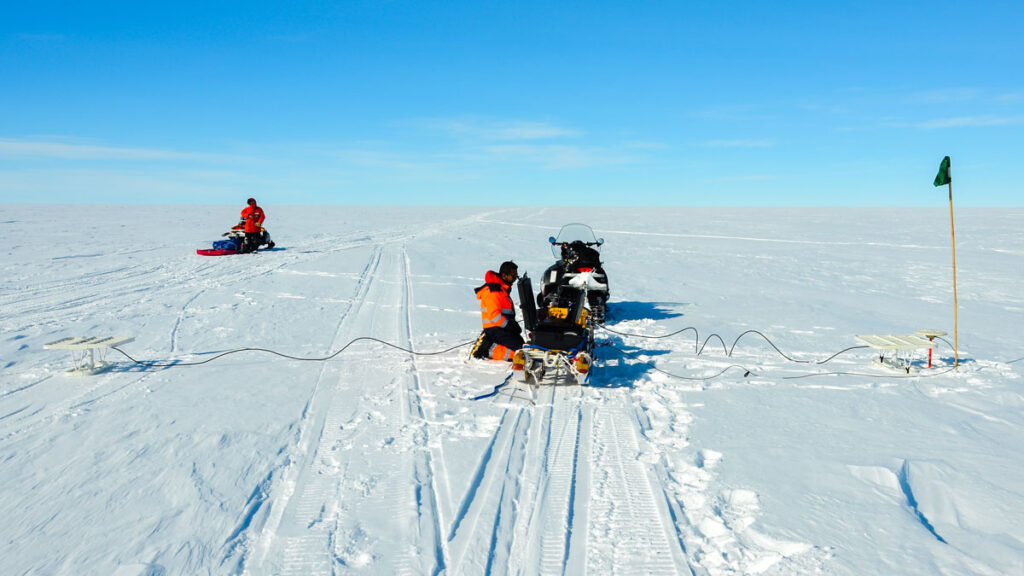
Amid a wide open expanse of snow-covered ice sheet under a blue sky, a researcher crouches beside scientific equipment set atop a sled behind a snowmobile.

The retreat of glaciers and ice sheets is expected to have widespread impacts on communities around the world because of its effect on sea levels. Already, the global average sea level is more than 10 centimeters higher than it was just 3 decades ago; and the rate of rise is increasing, contributing to increased storm surges and flooding, lost infrastructure and community lands, and more.

Recent reports on the instability of Antarctica’s Thwaites Glacier, for example, have focused attention on how accelerating ice flow can lead to ice sheet collapse and rising sea levels.

Recent reports on the instability of Antarctica’s Thwaites Glacier, for example, have focused attention on how accelerating ice flow can lead to ice sheet collapse and rising sea levels. Yet there is still substantial uncertainty about how quickly Thwaites and other glaciers will lose ice, in part because we don’t fully understand the myriad processes that contribute to their mass balance.

Earth’s ice sheets accumulate ice through snowfall and lose mass through a mix of surface ablation, iceberg calving, and melting at their interface with the ocean. Glacial ice flows under its own weight, and the rate at which it flows to coastal areas is a primary control on ice sheet mass loss.

Flow rates depend on how much resistance an ice sheet encounters at its interface with the ground (e.g., whether it is frozen to its substrate) and on its effective viscosity, a measure of how strongly it resists deformation. The viscosity of ice, in turn, varies based on properties including temperature, crystal size and orientation, and impurity content.

Some properties within and beneath ice sheets that affect how they flow are anisotropic, meaning they vary by direction. For example, roughness in some directions at the ice bed can facilitate ice sliding more effectively than roughness in other directions, similar to the way a properly oriented corrugated metal roof allows snow to slide off. Several forms of anisotropy within ice also affect how ice flows from land to ocean (Figure 1).

Cross-sectional illustration of an ice sheet flowing toward the ocean with different sources anisotropy in ice fabric labeled. Aircraft- and ground-based radar sources are also shown, and an inset illustrates the concept of ice fabric.
Fig. 1. Anisotropy in glaciers and ice sheets has various sources, including from ice fabric and other properties within the ice (englacial) or at the ice-bed interface. Many forms of anisotropy in glacial ice can be measured with radar. Credit: Adapted from Hills et al., 2025, https://doi.org/10.1029/2024RG000842, CC BY 4.0

Measuring anisotropic properties is key to better understanding how quickly changes at the edges of the Greenland and Antarctic ice sheets will lead to sea level rise. Recent advances in ice-penetrating radar technology and in processing radar data are revolutionizing how we observe directionally varying ice sheet properties, paving the way for projections of mass changes that account for previously neglected processes.

Crystal Fabric: Memory and Modulator of Ice Flow

Fabric, the orientation of crystals composing ice, is the best studied and arguably most important of anisotropic ice sheet properties. As ice deforms, for example, by stretching horizontally as it flows toward the coast, its millimeter-scale crystals are reoriented (Figure 1).

Fabric thus contains a memory of past flow. Simultaneously, fabric influences flow because ice crystals are about 3 orders of magnitude easier to shear in some directions than others—similar to how stacked playing cards slide easily against each other when held along their edges but resist motion when pinched top to bottom.

Over the past 20 years, radar polarimetry has matured into a quicker and easier alternative means for inferring fabric.

The potential importance of fabric on large-scale ice flow has long been recognized, but a shortage of observations has made it difficult to quantify and validate its effect in ice sheet models. Until recently, fabric could be measured only directly in ice cores or inferred through seismic soundings. These methods provide highly detailed information about how fabric develops but are expensive, logistically taxing, and provide information only about sparse point locations.

Over the past 20 years, though, radar polarimetry has matured into a quicker and easier alternative means for inferring fabric, enabling observations at the scale of entire glaciers and providing new constraints on how fabric influences ice sheet flow.

How Radar Reveals Fabric

Ice-penetrating radar instruments emit electromagnetic energy as radio frequency waves. These waves reflect off interfaces within and beneath glacial ice, including transitions in ice chemistry and the contact surface between the ice sheet and the ground or water below. The properties of the reflected waves are then measured when they return to the radar. Just as fabric leads to anisotropic ice deformation, it also introduces directional dependence in the measured electrical properties.

The speed of a radar wave through an ice crystal is approximately 1% faster if the wave is polarized across the crystal’s principal (c) axis rather than aligned with it. Though small, this difference can compound enough that it causes measurable changes in returned radar signals.

In a typical radar survey over anisotropic ice, waves with different polarizations travel at slightly different speeds (Figure 2). The times that return signals arrive back at the receiver thus vary directionally, a difference that can be identified using polarimetric radars that transmit and receive radio waves at multiple orientations.

Cross-sectional illustration showing two sinusoidal waves, polarized in different directions, traveling down through a narrow, tall column of ice.

Fig. 2. Propagation of polarized radio waves through anisotropic ice reveals structural variations with depth because waves aligned across the prevailing ice fabric (represented by the ball, in which darker shading indicates a greater concentration of c axes) travel faster than waves aligned with the fabric. The phase delay increases as the effect of the anisotropy accumulates with depth. Credit: Adapted from Hills et al., 2025, https://doi.org/10.1029/2024RG000842, CC BY 4.0

Fabric’s effect on radar signal travel times accumulates through an ice column, so it is more prominent in thicker ice with stronger horizontal fabric (i.e., the ice crystals are more consistently aligned). In such cases, differences in travel times between polarizations can be measured even by standard radars.

When fabric is weaker or ice is thinner, the offset is smaller and detectable only by systems that can identify the phases of radar returns—that is, the exact positions of the returned waves in their oscillation cycle. Even small wave speed differences from weak fabrics accumulate into measurable phase shifts between polarizations, which can be used to determine the consistency of crystal alignment and the predominant crystal orientation.

Small differences in fabric through an ice column can also change the strength, or amplitude, of returned signals. This amplitude difference offers an independent way to identify fabric orientation and its depth variation.

Polarimetric radar has been widely applied in cryospheric science in recent years largely due to the advent of low-cost systems that can measure signal phases. For example, the popular Autonomous phase-sensitive Radio Echo Sounder (ApRES) is a lightweight, ground-based system that can be used to infer ice fabric at single points down to 2 kilometers deep. In the past decade, polarimetric ApRES systems have revealed ice flow histories, including changes in flow directions, of key glaciers over the past few millennia. These measurements offer windows into how ice sheets responded to previous climate variations.

A red, triangular-shaped sled containing radar equipment is towed across an expansive ice sheet.
A mobile, quad-polarimetric radar is dragged by snowmobile over the surface of Müller Ice Cap on Axel Heiberg Island in Nunavut, Canada, in May 2023. Credit: David Lilien

The next generation of polarimetric radars go beyond one-point-at-a-time stationary soundings, offering full polarimetry capabilities on moving platforms. These systems may soon allow scientists to map directional ice properties at the scale of entire ice sheets.

Insights into Fast-Flowing Ice Fabric

The growing number of radar studies conducted near sites where ice cores have been collected, which allow fabric to be investigated up close, has provided validation and bolstered confidence that fabric can be inferred accurately from its effects on radar. Researchers now infer fabric from radar in more dynamic areas, such as Thwaites Glacier, Whillans Ice Stream, and the Northeast Greenland Ice Stream (NEGIS), where ice fabrics change over short spatial scales and where drilling ice cores is logistically difficult. Airborne radar surveys are particularly effective in these settings because they can efficiently map fabric variations across large, fast-moving areas.

Observations of strong fabrics in fast-flowing regions suggest that fabric is an important control on ice viscosity, although its implications for ice flow are just beginning to be explored. For example, at Rutford Ice Stream in Antarctica, ApRES data indicate that fabric causes sharp changes in viscosity in different directions with depth, a complexity not captured by current ice flow models.

A combination of airborne and ground-based radar shows that the fabric of the NEGIS varies substantially across the ice stream, which facilitates horizontal shear that allows faster and more cohesive flow in the middle of the ice stream while simultaneously stiffening this ice against along-flow stretching. These viscosity variations may alter how quickly coastal changes, such as increased melt due to climate warming, influence inland ice flow.

Aerial view of a glacial ice tongue following through a valley between rocky sides.
Scientists have studied ice sheet mass balance at glacier-mounted stations along the renowned “K-transect” near Kangerlussuaq in southwestern Greenland since the early 1990s. This image shows a view up the transect in April 2025. Polarimetric radar offers another tool with which to study ice flow here and at other locations on the ice sheets. Credit: Tamara Gerber

The emerging consensus from radar observations and recent progress in fabric modeling is that ice fabric can soften ice stream shear margins by a factor of 10. In other words, the fabric tends to develop in a way that greatly reduces the ice’s effective viscosity at lateral boundaries between fast-flowing and slower-flowing ice, which enables the ice to deform more easily at the margins. The agreement between observations and process-scale modeling highlights fabric as a major, but largely ignored, control on ice flow that may affect estimates of how ice dynamics will contribute to future sea level rise.

Beyond Fabric

Most polarimetric radar studies so far have focused on fabric, but other ice characteristics can cause directional effects too. For instance, bubbles trapped in ice have dramatically different properties than ice itself. Ice deformation can bring bubbles into alignment, such that they affect radar waves differently in different directions.

Likewise, ice at its melting point can contain liquid water along boundaries between crystals, and if those pockets of water are aligned in one direction, they can also affect radar returns. Each of these properties has important influences on ice flow, but their implications are yet to be explored.

Another source of anisotropy is the bottom boundary of the ice sheet. This interface can be rougher in some directions than others, though the roughness is typically aligned with the prevailing ice flow direction or the direction of meltwater trapped within the ice.

Polarimetric radar can measure directionally dependent properties of ice sheet bases at a finer scale than radar profiling can. Such work is leading to new insights into glacier geomorphology, interactions of ice shelf bottoms with the underlying ocean, and how ice slides over substrate surfaces. Rates and extents of sub-ice-shelf melt and basal sliding are widely recognized as key controls on the future of the ice sheets.

Expanding Horizons: Large-Scale and Planetary Applications

Radar polarimetry has already transformed our understanding of ice fabric, revealing much about how crystal alignment modulates the flow of Earth’s ice sheets and filling critical gaps between the handful of direct measurements from ice cores. As polarimetric techniques mature, their applications are expanding.

Researchers are moving from studying isolated profiles of ice fabric to mapping it across whole basins, a key shift for validating bespoke models of fabric and its effects on flow. These models are also rapidly developing to include additional physical processes (e.g., migration recrystallization) and key simplifications (e.g., reducing directionally varying viscosity to a single number) that allow them to interface more easily with—and be incorporated into—large-scale models used for projecting sea level rise.

Techniques pioneered for measuring ice on Earth may also prove useful elsewhere in the solar system.

Techniques pioneered for measuring ice on Earth may also prove useful elsewhere in the solar system. Orbital radar sounders have already probed Mars’s ice masses, and the icy shell of Jupiter’s moon Europa will soon be surveyed by single-polarization radars aboard NASA’s Europa Clipper and the European Space Agency’s Jupiter Icy Moons Explorer (JUICE). These radars might be useful for polarimetry at some locations on Europa, which could reveal past and present motion of ice features and answer fundamental questions about the moon. Whether Europa’s shell flows, for example, may be key to whether its subsurface ocean can harbor life.

As polarimetric radar systems become routine tools for glaciologists and as similar instruments begin operating on spacecraft exploring icy worlds, a technique once limited to a few isolated core sites on Earth could be poised to transform our understanding of ice across the solar system.

Author Information

David Lilien (dlilien@iu.edu), Indiana University Bloomington; T. J. Young, University of St Andrews, Fife, Scotland; Benjamin Hills, Colorado School of Mines, Golden; Tamara Gerber, Université de Lausanne, Lausanne, Switzerland; and Matthew Siegfried, Colorado School of Mines, Golden

Citation: Lilien, D., T. J. Young, B. Hills, T. Gerber, and M. Siegfried (2026), New directions in mapping ice sheet fabrics and flow, Eos, 107, https://doi.org/10.1029/2026EO260154. Published on 14 May 2026.
Text © 2026. The authors. CC BY-NC-ND 3.0
Except where otherwise noted, images are subject to copyright. Any reuse without express permission from the copyright owner is prohibited.
  • ✇Colossal
  • Goran Konjevod Transforms Paper into Elegantly Organic Origami Vessels Kate Mothes
    If it weren’t for being so lightweight and crisp in their facets, Goran Konjevod’s elegant vases could at first glance be mistaken for thin porcelain. Crafted instead from precisely folded paper, the works tap into the relationship between—and associations with—material, form, and function. His meticulous origami compositions combine organic forms with nuanced hues and gradients, creating a sense of visual heft and presence from thin, gauzy material. Konjevod’s work was recently included i
     

Goran Konjevod Transforms Paper into Elegantly Organic Origami Vessels

22 March 2026 at 15:12
Goran Konjevod Transforms Paper into Elegantly Organic Origami Vessels

If it weren’t for being so lightweight and crisp in their facets, Goran Konjevod’s elegant vases could at first glance be mistaken for thin porcelain. Crafted instead from precisely folded paper, the works tap into the relationship between—and associations with—material, form, and function. His meticulous origami compositions combine organic forms with nuanced hues and gradients, creating a sense of visual heft and presence from thin, gauzy material.

Konjevod’s work was recently included in Art of the Fold at ACCI Gallery, and “Grey Curves Vase” and “Artist’s Palette Vase” will be part of an exhibition titled The Craft of Paper: Contemporary Takes on Tradition this August at the Robert C. Williams Museum of Papermaking in Atlanta. See more on Instagram.

An origami paper vase with a wide lip on top and a white-to-indigo gradient
“Sea Vase”
Small vases
An origami paper vase
“Takeuchi-inspired Vase”
An origami paper vase made with dark red paper, with a wavy texture
“Crimson Dream Vessel”
An origami paper vase with a wide base and narrow top, with uneven rim details around the body
“Inverted Vase”
Small vases
An origami paper vase
“Indigo Mottle Vase”
The base of an origami paper vase
Base detail of “Indigo Mottle Vase”
An origami paper vase in gray paper with a wavy, ripple effect
“Grey Curves Vase”
An origami paper vase with a blue-magenta gradient
“Twisted Pleat Vase”

Do stories and artists like this matter to you? Become a Colossal Member today and support independent arts publishing for as little as $7 per month. The article Goran Konjevod Transforms Paper into Elegantly Organic Origami Vessels appeared first on Colossal.

1942 BT-13A Valiant N79VV EM35 USAAF 42-89379

16 June 2026 at 01:16

chris murkin posted a photo:

1942 BT-13A Valiant N79VV EM35 USAAF 42-89379

1942 BT-13A Valiant N79VV EM35 USAAF 42-89379
Valiant was an American World War II trainer built by Vultee Aircraft
Photo taken at EAA Airventure Wittman Regional Airport Oshkosh Wisconsin USA July 2024
DAG_4621

  • ✇Paper Flower Patterns - Lia Griffith
  • Cardstock Potted Fern Plant Lia Griffith
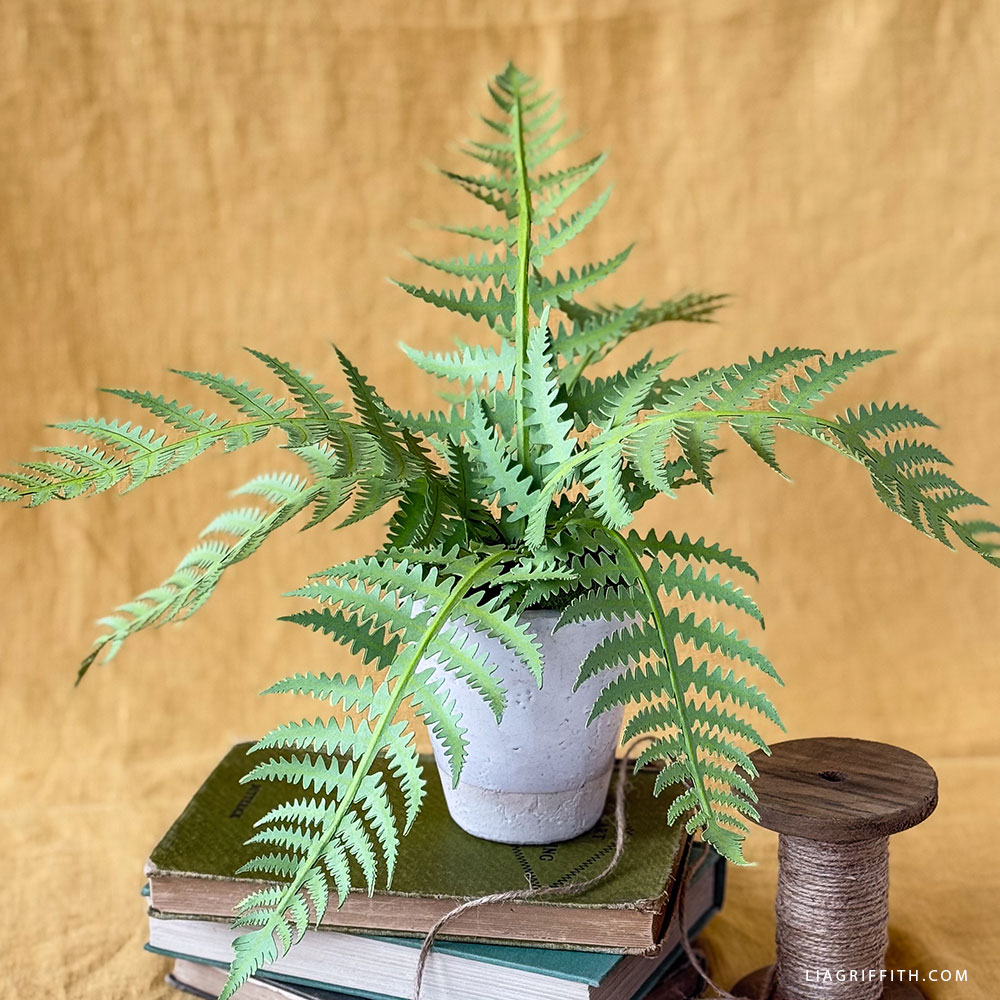
    Not every gorgeous green plant needs sunlight and water to look its best. Some plants simply need a sharp pair of scissors, a bit of patience, and a curling tool to really shine. Our Cardstock Potted Fern Plant brings that fresh botanical look indoors—no soil or bugs required. The post Cardstock Potted Fern Plant appeared first on Lia Griffith.
     

Cardstock Potted Fern Plant

Not every gorgeous green plant needs sunlight and water to look its best. Some plants simply need a sharp pair of scissors, a bit of patience, and a curling tool to really shine. Our Cardstock Potted Fern Plant brings that fresh botanical look indoors—no soil or bugs required.

The post Cardstock Potted Fern Plant appeared first on Lia Griffith.

  • ✇Colossal
  • Vibrant Sea Creatures Spring to Life in Lisa Stevens’ Textured Sculptures Kate Mothes
    Spikes, fans, florets, waves, and other characteristics of marine creatures continue to shape the work of Lisa Stevens. The Bristol-based artist’s vibrant practice revolves around ceramic sculptures inspired by sea urchins, coral, nudibranchs, and other underwater organisms. Each piece is unique, with numerous colorful glazes and textures, and they often take on a fantastical quality, incorporating hybrid features that conjure associations with celestial objects, anatomy, and other facets of
     

Vibrant Sea Creatures Spring to Life in Lisa Stevens’ Textured Sculptures

22 April 2026 at 15:30
Vibrant Sea Creatures Spring to Life in Lisa Stevens’ Textured Sculptures

Spikes, fans, florets, waves, and other characteristics of marine creatures continue to shape the work of Lisa Stevens. The Bristol-based artist’s vibrant practice revolves around ceramic sculptures inspired by sea urchins, coral, nudibranchs, and other underwater organisms. Each piece is unique, with numerous colorful glazes and textures, and they often take on a fantastical quality, incorporating hybrid features that conjure associations with celestial objects, anatomy, and other facets of nature.

Find more on Stevens’ Instagram, plus watch clay sculpting tutorials on YouTube.

a colorful, nudibranch-inspired ceramic sculpture by Lisa Stevens
a pair of colorful, nudibranch-inspired ceramic sculptures by Lisa Stevens
a coral-inspired, colorful ceramic sculpture by Lisa Stevens
a selection of coral-inspired, colorful ceramic sculptures by Lisa Stevens
a coral-inspired, colorful ceramic sculpture by Lisa Stevens
a selection of coral-inspired, colorful ceramic sculptures by Lisa Stevens
a coral-inspired, colorful ceramic sculpture by Lisa Stevens

Do stories and artists like this matter to you? Become a Colossal Member today and support independent arts publishing for as little as $7 per month. The article Vibrant Sea Creatures Spring to Life in Lisa Stevens’ Textured Sculptures appeared first on Colossal.

  • ✇Antiques and Vintage - flickr
  • 20260324-HISTORIA AVIACION 001-NB012-2K Manuel Gual
    Manuel Gual posted a photo: A Cinematic Journey Through the History of Aviation Description: A wide cinematic collection celebrating the evolution of aviation, from fragile early biplanes and daring pioneer pilots to flying boats, wartime fighters, classic airliners, supersonic icons, stealth aircraft, and futuristic aerospace designs. The series combines golden hour light, dramatic skies, ocean crossings, misty runways, military silhouettes, retro travel atmosphere, and science fiction con
     

20260324-HISTORIA AVIACION 001-NB012-2K

Manuel Gual posted a photo:

20260324-HISTORIA AVIACION 001-NB012-2K

A Cinematic Journey Through the History of Aviation

Description:
A wide cinematic collection celebrating the evolution of aviation, from fragile early biplanes and daring pioneer pilots to flying boats, wartime fighters, classic airliners, supersonic icons, stealth aircraft, and futuristic aerospace designs. The series combines golden hour light, dramatic skies, ocean crossings, misty runways, military silhouettes, retro travel atmosphere, and science fiction concepts to create a visual timeline of flight as both engineering achievement and human dream.

These images have been generated by Artificial Intelligence.

  • ✇Antiques and Vintage - flickr
  • 20260324-HISTORIA AVIACION 001-MJ003-2K Manuel Gual
    Manuel Gual posted a photo: A Cinematic Journey Through the History of Aviation Description: A wide cinematic collection celebrating the evolution of aviation, from fragile early biplanes and daring pioneer pilots to flying boats, wartime fighters, classic airliners, supersonic icons, stealth aircraft, and futuristic aerospace designs. The series combines golden hour light, dramatic skies, ocean crossings, misty runways, military silhouettes, retro travel atmosphere, and science fiction con
     

20260324-HISTORIA AVIACION 001-MJ003-2K

Manuel Gual posted a photo:

20260324-HISTORIA AVIACION 001-MJ003-2K

A Cinematic Journey Through the History of Aviation

Description:
A wide cinematic collection celebrating the evolution of aviation, from fragile early biplanes and daring pioneer pilots to flying boats, wartime fighters, classic airliners, supersonic icons, stealth aircraft, and futuristic aerospace designs. The series combines golden hour light, dramatic skies, ocean crossings, misty runways, military silhouettes, retro travel atmosphere, and science fiction concepts to create a visual timeline of flight as both engineering achievement and human dream.

These images have been generated by Artificial Intelligence.

  • ✇Colossal
  • Ornamental Carpets Release Wild Animals in Debbie Lawson’s Provocative Sculptures Kate Mothes
    Debbie Lawson is known for her large-scale sculptures of life-size animals cloaked in ornamental carpets. Starting with an armature of wire mesh, masking tape, and Jesmonite resin, she meticulously cuts and tucks Persian carpet around every limb, building a surface that looks unbroken. As if the animals have materialized from within the textiles and are temporarily frozen in a stage of metamorphosis, we encounter them on the verge of making a move. In the artist’s solo exhibition, In a Cow
     

Ornamental Carpets Release Wild Animals in Debbie Lawson’s Provocative Sculptures

13 May 2026 at 13:57
Ornamental Carpets Release Wild Animals in Debbie Lawson’s Provocative Sculptures

Debbie Lawson is known for her large-scale sculptures of life-size animals cloaked in ornamental carpets. Starting with an armature of wire mesh, masking tape, and Jesmonite resin, she meticulously cuts and tucks Persian carpet around every limb, building a surface that looks unbroken. As if the animals have materialized from within the textiles and are temporarily frozen in a stage of metamorphosis, we encounter them on the verge of making a move.

In the artist’s solo exhibition, In a Cowslip’s Bell I Lie at Sargent’s Daughters, she provokes “questions about the relationships between decoration and nature, craft and camouflage,” the gallery says. The title is a line from Shakespeare’s The Tempest, when the spirit Ariel sings about freedom and the carefree, even charmed connection to nature following his release from forced servitude to the sorcerer Prospero. Several of the works seen here, including “Wild Dog Sundown,” “Red Eagle,” and “Black Cougar,” are included in the show.

a detail of a large wall sculpture by Debbie Lawson made from ornamental woven carpet, with the silhouette of a dog lounging on the top of a small table in the center of it
“Wild Dog Sundown” (2025), carpet and mixed media, 92 1/2 x 61 3/4 x 24 3/4 inches

Lawson draws on the lineage of nature motifs in art, especially wildlife. She alludes to “the natural and animal forms hidden within decorative forms and patterns, from the frescoes of Pompeii to French Rococo moldings to Venetian stone carvings—the designs of William Morris and even the New York Public Library’s lions,” says a statement. Think clawfoot tubs, heraldic animals carved into hearths and other decorative interior elements, and the more modern form-meets-function works of Les Lalannes, which often incorporate birds and mammals into designs for benches and lamps.

The dialogue between art and decor parallels inherent tensions between interiors and the outside world—refinement and domesticity versus nature or indeed, the wilderness. Lawson also thinks about the gendered history of home life and craft, which has long been been associated with “women’s work.” This is deeply personal for the artist, as textile- and art-making go back generations in both her family and her hometown of Dundee, Scotland. She says, “I’m also thinking about women, including some of my near ancestors, so often confined by the constraints of the patriarchal society in which they/we lived, trapped in the daily grind and unable to pursue their own considerable creative talents or fully inhabit the world.”

Lawson’s camouflaged animals manifest from the backgrounds of carpets, emphasizing emergence itself. As these wild animals—leopards, cougars, bears, and more—are more clearly defined, they don’t break free from their patterns. Rather, they are indelibly characterized by the textile and can be clearly recognized for their unique individual traits. It’s not unlike how craft, especially textiles that were historically relegated to domestic settings and considered at least a notch or two below “high art,” has intently disrupted the art canon in recent decades.

In a Cowslip’s Bell I Lie continues through May 30 in New York. See more on Lawson’s Instagram.

a large wall sculpture by Debbie Lawson made from ornamental woven carpet, with the silhouette of an eagle flying out of the center
“Red Eagle” (2026), carpet, steel, and mixed media, 116 1/8 x 78 3/4 x 21 5/8 inches
a detail of a large wall sculpture by Debbie Lawson made from ornamental woven carpet, with a silhouette of a leopard walking in the center of it
“Arabian Leopard” (2024), carpet and mixed media, 63 x 90 1/2 x 13 3/4 inches
a sculpture by Debbie Lawson of a cougar covered in ornamental woven carpet
“Black Cougar” (2025), carpet and mixed media, 70 7/8 x 29 1/8 x 13 3/8 inches
a sculpture by Debbie Lawson of a monkey seated on a stool, covered in ornamental woven carpet
“Prospero” (2026), carpet and mixed media, 52 x 19 3/4 x 18 1/2 inches
a sculpture by Debbie Lawson of an alligator, coated in the pattern of an ornamental carpet, merging with the carpet itself
“Alligator” (2025), carpet and mixed media, 30 x 43 x 16 inches
a detail of a floor sculpture by Debbie Lawson of an alligator coated in the pattern of an ornamental carpet
Detail of “Alligator”
a detail of a large wall sculpture by Debbie Lawson made from ornamental woven carpet, with a silhouette of small elephant standing on the top of a small table in the center of it
“Red Cougar” (2025), carpet, table, and mixed media, 90 1/2 x 63 x 31 7/8 inches
a sculpture by Debbie Lawson of a leopard covered in ornamental woven carpet
“Gold Cougar” (2026), carpet and mixed media, 70 7/8 x 28 3/4 x 9 1/2 inches

Do stories and artists like this matter to you? Become a Colossal Member today and support independent arts publishing for as little as $7 per month. The article Ornamental Carpets Release Wild Animals in Debbie Lawson’s Provocative Sculptures appeared first on Colossal.

The Pilot 88 Is a Limited Edition Wotancraft Messenger Designed by Chris Niccolls

21 May 2026 at 13:15

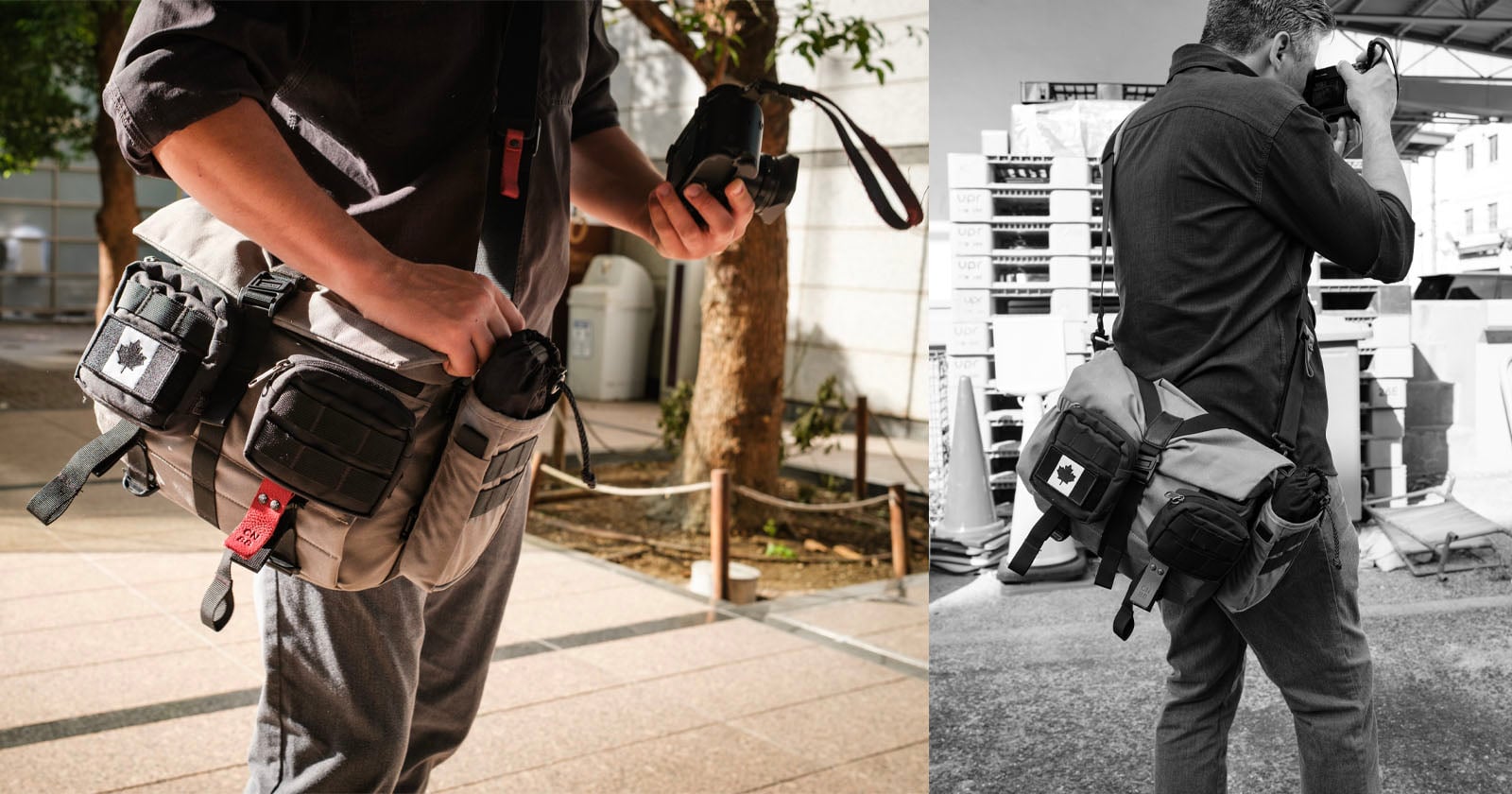
A man holding a camera wears a crossbody camera bag with multiple pouches and accessories attached, standing outdoors in both color and black-and-white images.

Wotancraft, Chris Niccolls, and PetaPixel have announced a limited, special edition of the Pilot messenger camera bag. After almost a year of development, the Chris Niccolls x Wotancraft Special Edition Pilot 88 features a unique size and tailored adjustments that are ideal for a traveling photographer.

[Read More]

  • ✇Paper Flower Patterns - Lia Griffith
  • Crepe Paper Lilac Love Tulips Video Workshop Lia
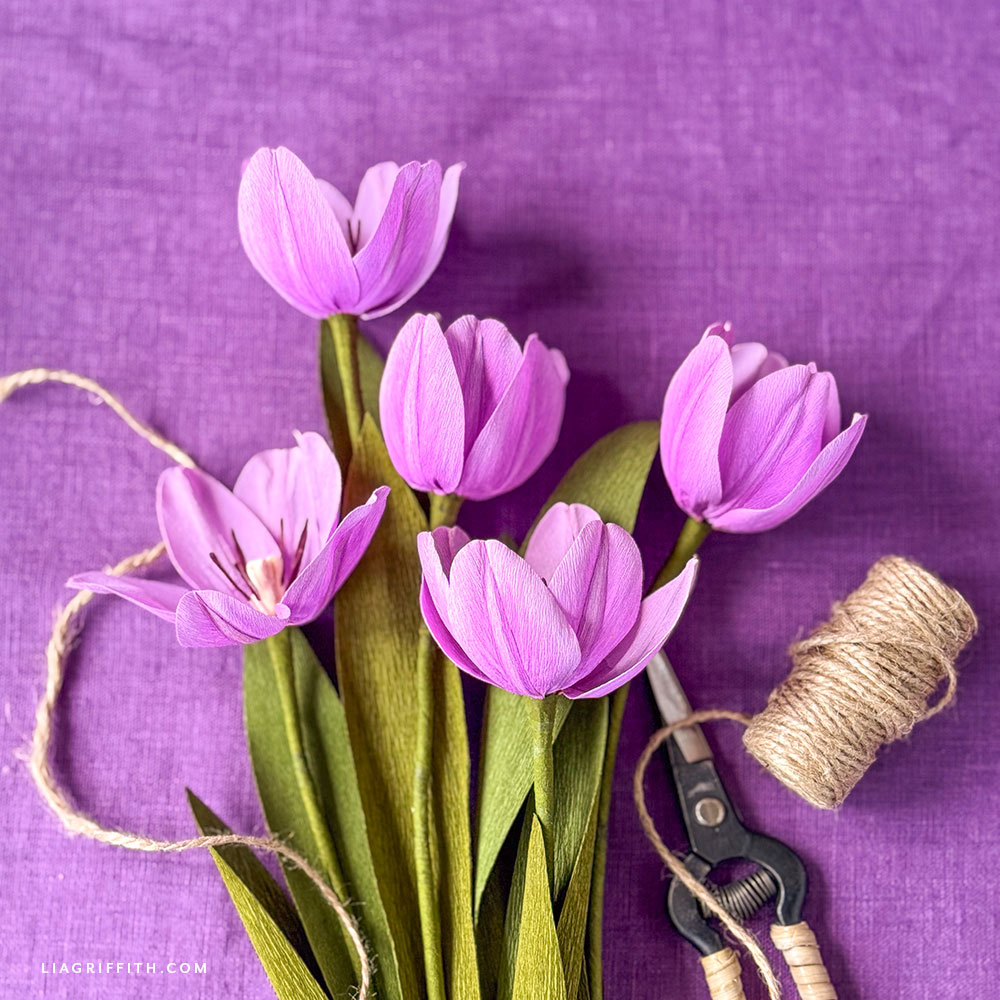
    What happens when you blend the soft romance of lilac tones with the clean, graceful lines of a tulip? You get a truly beautiful spring showpiece that brings a bit of seasonal allure to your space. Our Crepe Paper Lilac Love Tulips Video Workshop explores the beauty of nature's springtime palette, guiding you along as you create a bloom that feels both classic and unexpected. The post Crepe Paper Lilac Love Tulips Video Workshop appeared first on Lia Griffith.
     

Crepe Paper Lilac Love Tulips Video Workshop

By: Lia
1 April 2026 at 07:16

What happens when you blend the soft romance of lilac tones with the clean, graceful lines of a tulip? You get a truly beautiful spring showpiece that brings a bit of seasonal allure to your space. Our Crepe Paper Lilac Love Tulips Video Workshop explores the beauty of nature's springtime palette, guiding you along as you create a bloom that feels both classic and unexpected.

The post Crepe Paper Lilac Love Tulips Video Workshop appeared first on Lia Griffith.

  • ✇Antiques and Vintage - flickr
  • 20260405-EBANISTERIA JAPONESA-NB007-2K Manuel Gual
    Manuel Gual posted a photo: The Quiet Discipline of Japanese Woodworking: A Traditional Joinery Workshop Description Inside a serene Japanese woodworking studio, the images reveal the slow, precise, and deeply tactile world of traditional cabinetmaking. Soft natural light filters through shoji screens, illuminating aged wooden workbenches, hand planes, chisels, saws, measuring tools, stacked timber, polished drawers, iron hardware, and carefully assembled joinery. The atmosphere is calm an
     

20260405-EBANISTERIA JAPONESA-NB007-2K

15 June 2026 at 07:12

Manuel Gual posted a photo:

20260405-EBANISTERIA JAPONESA-NB007-2K

The Quiet Discipline of Japanese Woodworking: A Traditional Joinery Workshop

Description

Inside a serene Japanese woodworking studio, the images reveal the slow, precise, and deeply tactile world of traditional cabinetmaking. Soft natural light filters through shoji screens, illuminating aged wooden workbenches, hand planes, chisels, saws, measuring tools, stacked timber, polished drawers, iron hardware, and carefully assembled joinery. The atmosphere is calm and contemplative, shaped by patience, repetition, and respect for material.

The series follows the full rhythm of artisanal creation: selecting and preparing raw boards, drawing measured plans by hand, sharpening blades on a wet stone, cutting and carving joints, planing long ribbons of wood from a board, assembling drawers and cabinets, fitting metal handles, brushing lacquer, polishing surfaces, and finally presenting finished tansu-style furniture in a quiet tatami room. Every scene emphasizes craftsmanship over speed, touch over machinery, and inherited knowledge over industrial production.

The visual language combines documentary realism with a refined cinematic sensibility. Warm wood tones, indigo work garments, soft diffused daylight, shallow depth of field, sawdust, wood grain, worn tools, and traditional Japanese interiors create an intimate portrait of a craft that feels timeless. The images celebrate not only furniture making, but also the philosophy behind it: restraint, precision, durability, balance, and beauty found in useful objects.

This collection is ideal for themes related to Japanese culture, traditional carpentry, handmade furniture, heritage crafts, sustainable design, woodworking, wabi sabi aesthetics, slow craftsmanship, interior design, and the quiet dignity of manual labor.

The images have been generated by Artificial Intelligence.

❌
Subscriptions