 Login
LoginFamily Can’t Agree on Wallpaper
31 May 2026 at 04:12


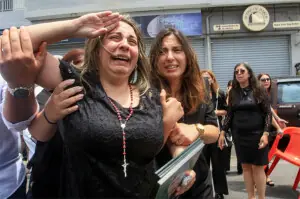

• Woman, child among 12 killed in attacks on Zifta, Tyre
• Beirut counts 3,491 Israeli strikes since April 17; fresh bombardment damages Unesco heritage site
• Hezbollah denies contact with Trump
BEIRUT: An Israeli strike on southern Lebanon killed 12 people on Monday as Lebanese Defence Minister Michel Menassa revealed Israel has carried out nearly 3,500 air strikes since a US-brokered ceasefire took effect in April.
The Lebanese health ministry said the dawn raid on the town of Zifta in the Nabatieh district resulted in seven deaths, including a Syrian child and a woman, and wounded eight others.
Meanwhile, an Israeli strike on Tyre in southern Lebanon on Monday killed five people and wounded eight, the health ministry said, as Israel said it would continue strikes despite Iranian threats.
“An Israeli enemy raid on the city of Tyre, near the Red Cross centre, resulted in five martyrs and eight wounded, four of whom were Red Cross paramedics,” the ministry said in a statement.
The continuing violence underscores the fragility of the ceasefire that came into effect on April 17.
Nearly 3,500 Israeli attacks
During a cabinet meeting on Monday, Menassa said that between April 17 and June 7, Israel conducted 3,491 air strikes, 407 controlled demolitions and six razing operations, flattening entire villages in southernmost Lebanon.
PM Nawaf Salam said the escalation has caused additional waves of displacement. More than 1 million people have been displaced and over 3,600 killed since Hezbollah drew Lebanon into the conflict on March 2 with rocket fire at Israel to avenge the US-Israeli killing of Iran’s supreme leader.
The heavy bombardment in Tyre also damaged a Unesco World Heritage site. Ali Badawi, the culture ministry’s regional director of archaeological sites for south Lebanon, said Sunday’s bombardment had “the worst impact” on Tyre’s ancient areas since the war began. “The amount of debris and damage at the site is high,” Badawi said. “Some archaeological artefacts were damaged when rubble fell on them, as debris fell over a large area, impacting a large number of elements at the site — columns, capitals, column bases, mosaics.”
Tyre’s ruins include Roman baths, a second-century triumphal arch and a hippodrome. Lebanese Culture Minister Ghassan Salame appealed to protect the sites, charging that Israel “does not respect” the Hague Convention on the Protection of Cultural Property.
‘No contact with Trump’
Amid the ongoing conflict, a senior Hezbollah official denied statements from US President Donald Trump suggesting the two sides had communicated.
Senior Hezbollah official Mahmud Qomati said in written remarks that “there has been no direct contact between President Trump and Hezbollah officials”.
Trump told reporters last Wednesday that “we actually spoke with Hezbollah for the first time, ever,” and later claimed he had a “very good call” with the group through highly placed representatives.
Published in Dawn, June 9th, 2026
THREE parallel events now underway or recently held carry the potential in varying measure to reset India’s destiny, in all likelihood for the better. From a bird’s eye view, the field looks set for a change. The fact that Germany lost the election for the first time in 40 years for a non-permanent member’s seat at the UN Security Council offers stark lessons for the Modi government to ponder.
Germany turned Palestine averse and cosied up to Israel, much like Narendra Modi’s India, with Chancellor Friedrich Merz in the saddle. The UN defeat is being linked to Merz’s embrace of Benjamin Netanyahu. British Prime Minister Keir Starmer’s future is also under a cloud, his ties with the Zionist lobby being a key factor. Ergo: Israel’s chums are being globally isolated.
India’s proximity to Israel was nudged by right-wing ideologues to counter Russian prime minister Yevgeny Primakov’s 1998 doctrine to form the Russia-India-China group as a stabilising force in a post-USSR Global South. The Western countermeasures included America’s ‘pivot to the east’, dragging India into the Quad. But when the RIC went on to become BRICS, a ‘West Asian Quad’ was conceived including India, Israel, the UAE and the US. The faint outlines of the outcome of the Iran war are threatening to end India’s entanglement with both Quads. And the German debacle at the UN is the writing on the wall.
Potentially, also crucial for the country’s future is the internet-spawned Cockroach Janta Party, which launched its first street protests in New Delhi over the weekend. The party minted into an untested force after a senior judge insulted unemployed youth as cockroaches. The ‘cockroaches’ have given a tart reply to the judiciary, but they’re also demanding the resignation of Modi’s education minister, hitherto an unthinkable prospect.
The third albeit widely underplayed event is the fractious INDIA opposition group seeking to get its act together. Twenty-three parties, including Mamata Banerjee’s Trinamool Congress were holding a make-or-break meeting on Monday (June 8) under the Congress party’s stewardship. All three events have the heft to cause tremors in the Modi establishment. Some say the jolt could be more rattling to him than he experienced in 12 years of unbridled power.
Questions have surfaced over the Cockroach lot with insinuations that the cluster of motivated urban youth is supported by the Hindutva order to vent the steam gathering from months of a crippling economic crisis, not all of which is linked to the Iran war. There is also the issue of an overtly corrupt administration keeling over with criminal incompetence amid lacerating acts of omission and commission.
Hundreds of thousands of school-leaving students and admission-seeking medical college aspirants have been grievously harmed by leaked papers and erring tabulation mechanisms. The Cockroach party has sought probity in judiciary, education and the nexus between business and the media, but its critics have sought to portray the group as left oriented with some of them belonging to this or that communist party.
Another suggestion is that they are an extension of the Aam Aadmi Party, a ploy to shift the focus from the improving chances of opposition unity. It’s a fact that AAP came out of the India Against Corruption campaign of 2011 in which the RSS played a backroom role to successfully undermine the Manmohan Singh government.
There’s no need to spread fear of those such as the Cockroach party before they do something wrong.
While the AAP’s birth pangs indeed created the grounds for the coronation of Narendra Modi as prime minister in May 2014, it is equally a fact that AAP was applauded the following year as the sheet anchor that stalled the BJP juggernaut in Delhi. Before this, the Modi wave had easily evicted Congress governments in Maharashtra and Haryana polls. And there was no AAP in Maharashtra to blame the defeat on, although in Haryana it did cut some votes.
The AAP subsequently propagated a soft temple-hopping Hindutva, in which Arvind Kejriwal scrupulously avoided standing with Muslims when they were under attack from the BJP and the police in 2020. But if he or the Cockroach group can yet consciously or unwittingly help stall the rightward, obscurantist drift the Modi government has set India on, it would make Deng Xiaoping’s spirit burst into a smile. “It doesn’t matter whether a cat is white or black, as long as it catches mice.” Deng’s dictum applies to anybody who would rescue India from its current trauma. And there’s no need to spread fear of those such as the Cockroach party before they do something wrong.
But let’s not get too swayed also by the shouts of youth power or the roar of something called Gen Z. As far as one could see, it was the youth that demolished the Babri Masjid with their raw sinews. It’s the youth that goes about lynching and harassing innocent citizens in the name of religion. Of course, on the other side, it’s the youth that’s languishing in Modi’s prisons, if they are not out on strictly monitored bail terms, for fighting for a just and equal society in a democratic system that doesn’t discriminate between citizens. Think Umar Khalid.
There’s a youth component in almost every political party. The mighty US is split between youthful Zionists and their youthful adversaries. When I looked up Gen Z on a search engine, an option pointed to Gen Ziaul Haq! I think the idea of Gen Z or Gen Alpha etc is conjured to obscure the reality of universal class struggle, and in India’s of its defining caste identity.
A few donning cockroach masks at the Delhi rally were seen carrying portraits of Bhimrao Ambedkar thereby putting Dalit politics at the centre. But again, hasn’t everyone used Ambedkar’s portraits to lure support? Finally, while Deng’s point is priceless, a useful caution in T.S. Elliott’s line says: “Youth is cruel and has no remorse. It smiles at situations which it cannot see.” A fair point to ponder.
The writer is Dawn’s correspondent in Delhi.
Published in Dawn, June 9th, 2026
THE budget is here and the government has rarely looked happier. For a change, the budget-related press conferences were held by confident ministers, eager to answer questions. They pointed out that the petrol levy had not been increased (there were rumours to this effect) earlier. They boasted (rightly so) about the reduction in income tax rates for the salaried class, which included the reporters and anchors whose questions they were facing. And they also pointed out the incentives given to part of the industry. They spoke again and again about their efforts to provide some relief to different sections while still being in an IMF programme.
Indeed, the expectations were so low thanks to the previous years of heavy taxation that critics and commentators are conceding that the government has been able to carve out fiscal space for some concessions in the budget exercise — so far.
I say so far because changes may be made as the document makes its way through parliament over the next two weeks. The committees overseeing it may suggest changes as the government has to make sure its allies remain on board. And more importantly, news reports indicate that the IMF approval for some of the proposals is yet to come.
But despite the good news, the budget even in its current shape makes it clear the government, like its predecessors, has continued with some of its bad habits. Once again, real estate has emerged as the sector which will get concessions to provide a ‘kick’ to the economy. It is fascinating how in most ivory tower discussions, real estate is the big bad villain in the Pakistan economy but the moment a government, any government, is working on ways to grow the economy, it always zeroes in on real estate. Clearly, economists know nothing — especially not about the 40 industries that are directly linked to real estate and will grow the moment people buy plots and start constructing houses.
The budget makes it clear the government has continued with some of its bad habits.
Another bad habit afflicting every government is the generosity with which increments are given to the vast bureaucratic machine. This budget too has done the same. Salary increments are officially said to be a mere seven per cent but, in reality, the number goes higher, according to media reports. And some of the salary increases cannot even be mentioned publicly.
But even those who can find no fault with the tax relief or the decision to claw back resources from the provinces cannot praise the budget for being one that will stop the decline and help the shift to sustainable growth. The word that I have learnt from the commentary on the budget this year is ‘transformative’; this is not a transformative budget. The government may have made the best of a bad situation but there is little evidence of the kind of growth that is needed for a society and population of Pakistan’s size: yesterday’s crisis is still there today and will be there tomorrow.
How much of this will be discussed in detail is unclear, for there are but two weeks for a debate in parliament. And the debates on television appear as free as the media is.
In other words, there is little likelihood of the kind of growth and expansion that is needed to provide employment and economic mobility to a growing populace. A populace that is also far from healthy and well educated because of the little that Pakistan invests in these fields.
What will this mean domestically? Economists and other experts are best placed to answer the question, but what some of us economic illiterates fear is that the young, unemployed and resentful populace will continue to push back against the state. At places, it will be in the shape of militancy, at others, an angry, alienated and sullen citizenry, and in still others, a population waiting for another chance to protest. This is not a sweeping statement. Time and again, people have written on the link between the youth bulge, the socioeconomic changes in recent decades in Pakistan and the politics that is now pressuring its traditional form.
From the emergence of the PTM in parts of KP to the long-running insurgency in Balochistan to the continuing support for the PTI and even the protests rocking Kashmir at the moment, many of these movements or forms of pushback are being led by the educated and the middle class. Additionally, the support for these phenomena is primarily coming from similar groups.
These are parties/movements/struggles that are essentially interested in demanding or negotiating for more rights — economic and political — from the state. This much is clear if one goes through their demands rather than simply focusing on how the latter are made and the rigidity with which some approach the idea of negotiations. Both the manner in which the groups are negotiating and their inability to be flexible stem from their lack of trust in the state/status quo. For many of them, for a number of reasons, the state has become a bad-faith actor.
And because the state is not willing to ‘transform’ the economy, it is using heavy-handed tactics, such as blatant election rigging and violence. This has been the hallmark of the past few years and there is little evidence that it will change anytime soon. From this perspective, this budget is neither ‘good’ nor desirable. It simply indicates that the state and the ruling elite will continue to suppress the people at large and beat them into submission. This is not about a budgeting exercise but a larger and long-running battle between the people and the state. It is hard to tell when it will end.
The writer is a journalist.
Published in Dawn, June 16th, 2026
THE electoral process in Gilgit-Baltistan has concluded peacefully, despite initial concerns arising from the violent protests that erupted after the US and Israeli strikes on Iran.
In contrast, developments in Pakistani Kashmir are concerning, particularly as the region approaches elections scheduled for July 27. The GB case was managed with a combination of political engagement and coercive measures. Kashmir, however, has emerged as a poorly managed case in which dialogue and political processes were eventually suspended, and the state relied on coercive measures.
Though both peripheral regions are part of a similar constitutional framework, Kashmir is exceptionally sensitive, both geopolitically and strategically. Handling political disputes in such a region requires utmost vigilance, patience and care. The ongoing confrontation surrounding the Jammu Kashmir Joint Awami Action Committee illustrates how the failure of political management can quickly turn a constitutional issue into a broader crisis.
The central demand of the JAAC concerns the 12 seats reserved for refugees from Indian-occupied Jammu and Kashmir who settled in mainland Pakistan after 1947. Local Kashmiris and the JAAC argue that these seats distort local democracy because the voters for these constituencies do not actually reside in Azad Kashmir.
Although none of the mainstream political parties in Pakistan or AJK support the JAAC’s stance that the 12 refugee seats be abolished, the demand has public support. During negotiations between the government and the JAAC, these seats remained the principal stumbling block. The federal government’s negotiating team included representatives from both coalition partners, the PML-N and the PPP, both of which opposed abolition.
The situation became even more complicated when the AJK Supreme Court, in its opinion on a presidential reference, validated the government’s position. The court rejected the politics of street protests and linked any legislative changes to the elected assembly, effectively ruling that the newly elected House would decide the future of these seats.
Despite insisting that the dispute be resolved through democratic means, the government effectively abandoned dialogue, and instead, banned the JAAC this month, a move that escalated tensions. The JAAC’s long march continues, and dozens of casualties among protesters and law enforcement personnel have already been reported.
If there is political will to find a solution, numerous options can be explored.
The JAAC leadership appears convinced that neither the government nor the establishment intends to abolish the disputed seats, and that negotiations would yield little beyond assurances and promises. Interestingly, voters associated with the 12 refugee seats, many of whom are settled in different parts of mainland Pakistan, have not demonstrated strong opposition to the proposal to abolish these seats. This has further emboldened the JAAC, as has support from the Kashmiri diaspora, segments of which are politically aligned with the PTI.
Renewed protests in AJK have once again energised the Kashmiri diaspora, a development that has caused consternation in officialdom. There is also a perception within the government that India is attempting to exploit the unrest and internationalise the issue.
A question worth asking is whether an alternative arrangement can satisfactorily address the dispute. Suppose the government abolished the refugee seats while allowing Kashmiris residing in Pakistan to register as voters in the AJK constituencies or districts from which they or their ancestors originally migrated. Would such a mechanism help resolve the issue?
This may appear to be a simplistic proposition, but the broader point remains: if there is political will to find a solution, numerous options can be explored. A mindset that treats coercion as the only available instrument of governance inevitably complicates political disputes rather than resolving them.
There is also a perception within power circles that since the government managed to suppress dissent associated with movements such as the Pashtun Tahafuz Movement (PTM), Baloch Yakjehti Committee (BYC) and Haq Do Tehreek (HDT), it can similarly control the situation in Kashmir. This assumption deserves serious reconsideration.
Bans, arrests and terrorism-related charges may temporarily suppress mobilisation, but they rarely eliminate underlying grievances. The resentment remains alive beneath the surface. It persists in Balochistan and the tribal districts of KP and is likely to persist in AJK as well, even if the JAAC is eventually crushed.
But would such an outcome truly constitute a success for the state? If similar movements continue to re-emerge, the state will remain under constant pressure, compelled to invest ever greater resources in strengthening security infrastructure.
Yet increased securitisation often produces greater insecurity for both state and society and increases the gap between them, thus generating feelings of alienation among citizens who begin to see themselves not as rights-bearing members of a political community but merely as subjects of state authority. In many ways, the JAAC, BYC, PTM and HDT reflect manifestations of this broader alienation, even though their agendas differ significantly.
The PTM and BYC primarily articulate demands related to fundamental human rights, whereas the JAAC, HDT and even the action committees that have periodically emerged in GB focus largely on economic and constitutional rights. Yet beneath these diverse demands lies a common grievance: the perception that a powerful elite seeks to govern peripheral regions without adequately addressing their political aspirations and sense of citizenship.
State institutions often aggravate public grievances through poorly crafted counter-narrative strategies. Instead of using social and mainstream media to facilitate constructive and inclusive debate, segments of these platforms are mobilised to delegitimise dissenting communities. Such approaches deepen mistrust rather than build national cohesion.
The AJK protests provide a recent example. A segment of social media discourse began stigmatising Kashmiris, portraying them as ‘parasites’ and as an ungrateful population that had disproportionately benefited from the state. This approach will not resolve matters.
The contrast between GB and Kashmir offers an important lesson. Peripheral regions do not seek perpetual confrontation; they seek recognition, participation, and dignity within the political order. Ignoring these aspirations may produce temporary calm, but it rarely delivers lasting stability.
The writer is a security analyst.
Published in Dawn, June 14th, 2026

• Targets entire family of viruses, animal-borne strains; aims to thwart future pandemics; initial-phase trials of 39 participants succeeded; larger efficacy studies loom
• Experts hail move as ‘pivotal leap’ for humanity
• Approach could end need for regular flu vaccine updates
A “FUNDAMENTALLY new” vaccine designed entirely by artificial intelligence has been tested in people for the first time, in what researchers at the University of Cambridge describe as a potential breakthrough in the effort to prevent future pandemics, BBC reported.
This experimental approach seeks to establish immunity against a broad range of viruses, including all known coronaviruses, rather than targeting a single circulating strain.
Traditional vaccine development typically relies on a currently circulating viral strain. However, certain viruses are adept at mutating, causing conventional vaccines to lose efficacy quickly. This is why seasonal flu and Covid shots require regular updates.
“We’re always behind,” Professor Jonathan Heeney of Cambridge told the BBC, noting his team’s goal is to reverse this dynamic. “What we’re trying to do is get ahead of the curve.”
The researchers claim it is the first time a vaccine’s key component has been designed entirely by AI and then trialled in people.
To achieve this, researchers compiled genetic codes — the biological instruction manuals — from coronaviruses documented by global surveillance programs. An AI system analysed these sequences to design a “super-antigen.” Antigens are essential components of vaccines that train the immune system to attack foreign invaders.
This super-antigen trains the immune system to defend against the entire family of viruses, providing immunity even if viruses mutate or a new infection jumps from animals to humans.
The technology is “surprising all of us”, Heeney said, adding it is “amazing what we can do with it for the good of humanity”.
“This is about making vaccines that protect us, not just from today’s viruses, but protect us from what can cause the next outbreak or disease,” Heeney said. “This is a fundamental shift in how we prepare for pandemics.”
Initial trials involving 39 participants assessed safety. A subsequent study of approximately 200 individuals will test how effectively the vaccine stimulates the immune system.
Findings published in the Journal of Infection indicated that the impact on the immune system was “modest,” yet the results continue to generate excitement.
Prof Saul Faust of the University of Southampton, who led some of the trial work, said the AI-driven approach “definitely has potential” and described it as “really exciting”.
“What’s really interesting is the technology is an awful lot better at designing vaccines for potential pandemics when viruses are changing,” he said.
While coronavirus research remains in early stages, the team is leveraging the technology to develop vaccines for other ailments. According to the report, they are conducting animal research into a universal seasonal flu vaccine to eliminate the need for annual updates. They are also developing a vaccine for the H5N1 bird flu.
Researchers are also exploring inoculations for viral hemorrhagic fevers, including Ebola species. The BBC highlighted that the ongoing outbreak in the Democratic Republic of Congo is caused by an Ebola species currently lacking a targeted vaccine.
Professor Andy Pollard, director of the Oxford Vaccine Group, who was not involved in the Cambridge study, told the outlet that the methodology is producing compelling evidence. “It’s fascinating data, and people wouldn’t have predicted they’d be able to generate these immune responses,” Pollard said.
Pollard cautioned that human trials will determine success, as human immune systems differ from those of laboratory mice. Broadly, Pollard characterised AI as a “game changer” for vaccine research, predicting it will accelerate development and “save lives”.
Professor Marian Knight, scientific director for the National Institute for Health and Care Research, described the trial as a “pivotal leap forward in our ability to deliver broad, lasting viral protection”.
“Another British science success story, this is a great example of how we can bring our research expertise together with AI to deliver new treatments,” UK’s Science Minister Lord Vallance said. “With the first human trials showing positive results, this work could help speed up the rollout of vaccines to benefit people all over the world for the long term.”
Published in Dawn, June 6th, 2026
• Economic Survey shows major targets missed as Aurangzeb claims resilience amid three major shocks
• Says budget to offer incentives for agriculture, housing
• Over Rs900bn to be diverted for Centre’s strategic needs
• Centralised tax system, retailer model to be announced
• Oil price impact to continue next year
• Current account deficit falls to $252m; remittances may reach $41-42bn by year-end
• Fiscal deficit falls to 0.7pc of GDP; debt-to-GDP ratio drops to 68.5pc
• FBR recovers Rs94bn through digitisation, AI audits
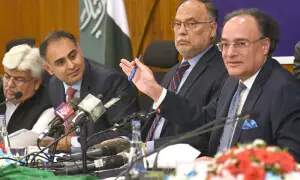
ISLAMABAD: The freeze on provincial development programmes, expected to generate more than Rs900 billion in additional resources for the Centre’s strategic needs, will continue for a specific period beyond one year, Finance Minister Muhammad Aurangzeb said on Wednesday as he unveiled the Pakistan Economic Survey 2025-26, which showed missed targets across major economic sectors in the outgoing fiscal year.
Reviewing the economic report card, the minister said the economy grew by 3.7 per cent this year — almost the same as the 3.6pc reported at this stage last year, later revised down to 3.2pc — reflecting resilience and economic stability in the face of three major exogenous shocks: global trade and tariff challenges at the beginning of the fiscal year, floods in Pakistan and, finally, regional war-related pressures.
Aurangzeb, who was flanked by the ministers for planning and information, the minister of state for finance and the railways minister, said he would explain in detail in his budget speech the mechanism for utilisation of additional resources secured from the provinces through the development freeze.
Asked whether the understanding outside the National Finance Commission, formalised at the National Economic Council meeting a day earlier, was permanent or limited to one year, he said the arrangement would be for a specific period beyond one year.
The finance minister appreciated the Khyber Pakhtunkhwa government and the “impressive engagement” with Chief Minister Sohail Afridi during the NEC meeting on Tuesday. He also valued the contribution of Muzzammil Aslam, saying the IMF programme was not only an agreement of the finance ministry or the Centre but of the entire country.
The minister said the government would offer special incentives for agricultural productivity and the housing sector in the budget on Friday (today) and provide end-user interest rates in single digits for 10 years.
He said the trade policy for the auto sector had already been announced for five years to provide a forward-looking vision because domestic investment had to pick up before foreign investment could follow.
The minister said discussions with the IMF were progressing positively. He declined to comment on relief for the salaried class, saying the prime minister had given clear instructions on the sectors that needed to be focused on, including salaried individuals and documented businesses.
He said a new taxation operating model for retailers and a “faceless” tax system — a digital and centralised system involving no contact between officials and taxpayers — would also be announced in the budget.
Responding to a question on the contingency plan in case the Iran crisis prolonged, the minister said the oil import bill had an impact on Pakistan’s external account. He said the oil bill had increased by about $1bn in April and later dropped to about $500 million in May as government policies with regard to taxation took shape.
He said the impact of oil prices on energy would continue over the next year and the government had a contingency plan in mind.
Missed targets
Aurangzeb said the economic recovery was broad-based this year, with 3.7pc growth — the highest in the last three years — supported by 2.89pc growth in agriculture, 3.5pc in industry and 4.09pc in services.
Except for services, all targets were missed. The targets had been set at 4.2pc for GDP growth, 4.5pc for agriculture, 4.3pc for industry and 4pc for services. Large-scale manufacturing, he said, increased the most in the last four years to 6.1pc, while 16 out of 22 sectors showed positive trends.
The investment-to-GDP ratio came in at 14.38pc against a target of 14.7pc, while the national savings-to-GDP ratio stood at 14.13pc against a target of 14.3pc. The minister said not only investment and savings ratios, but also the revenue-to-GDP ratio remained low and should be in the “high teens”.
The minister said growth was on its way to the target at the start of the year, when only trade uncertainty was in the field, but two subsequent floods in August-September and the regional war in March tested Pakistan’s resilience. Still, Pakistan kept its journey from stability to growth on track, he said.
However, he said the reality was that Pakistan still had a long way to go and must stay the course of reforms and fiscal discipline.
He said the size of the economy increased by 11pc to a record Rs126.87 trillion from Rs114.04tr last year, while per capita income improved to $1,901 in the outgoing fiscal year from $1,751 in FY25, reflecting improved economic activity and income growth.
The finance minister said the current account deficit dropped to just $252m in the first 10 months of the year, down from $17.4bn in FY22, as remittances reached $4.25bn a month in May — the highest in the country’s history — and were well on their way to reaching $41bn to $42bn by year-end against a target of $39bn.
Exports faced challenges and were down by 5pc, mainly because of a $1.5bn decline in rice and sugar exports. Foreign exchange reserves held by the State Bank had already crossed $17.1bn and would touch $18bn to provide three months of import cover, a respectable level recognised globally, he said.
He said the fiscal deficit at 0.7pc of GDP in the first nine months was the best performance in decades and had come down from a peak of 8.4pc in FY22. This helped the primary balance reach 3.2pc of GDP in nine months, down from a 3.1pc primary deficit in FY22.
The minister said the debt-to-GDP ratio had fallen to 68.5pc this year, down from 75.2pc in FY23 and 70.7pc in FY24, meaning that debt sustainability was also improving.
The minister said FBR revenue collection increased by more than 10pc this year, adding that the revenue agency recovered Rs60bn in additional revenue from the cement and sugar sectors through digitisation and another Rs34bn through artificial intelligence-based audits of 800 high-risk cases. This would be expanded to other sectors in the next budget.
He said he welcomed criticism over a new scheme for traders but noted that 3m to 4m small traders were outside the tax net and a start had to be made somewhere.
Responding to a question on why the success stories he cited had not benefited the common man or led to higher growth, the minister said growth could be achieved in three months by pumping liquidity into the system, but that would not be sustainable, as past experience had shown.
Published in Dawn, June 12th, 2026
“The good physician treats the disease; the great physician treats the patient who has the disease” — Sir William Osler (1849-1919)
IN 1986, Carlo Petrini founded the ‘slow food’ movement in Italy to counteract the so-called ‘fast food’, by promoting local food cultures, traditional cooking and sustainable farming. Inspired by this, the concept of ‘slow medicine’ took birth: a patient-centred approach to healthcare that prioritises time, listening, and comprehensive care over rapid, high-tech, intensive interventions. It emphasises quality, the patient’s context and shared decision-making to avoid hurried, unnecessary, harmful treatments.
There is no doubt that modern medicine is revolutionising healthcare. In emergency situations diagnoses are generated in minutes. Imaging technologies are replacing exploratory surgery. Algorithms now identify patterns invisible to the human eye. This advancement has saved countless lives. Yet amid this relentless drive for efficiency, questions are emerging: what do we lose in this fast-paced medicine?
Most health challenges are the result of an imbalance in our lives, and most quick-fix solutions actually exacerbate these imbalances. The slow medicine approach focuses on identifying the root cause of our health challenges, creating a thoughtful, step-by-step and long-term response to restore balance in our lives, because good care requires time, attention, and reflection. It reminds us that patients are not just a set of signs and symptoms to be fixed, but individuals whose illnesses are embedded in social, psychological and cultural contexts.
For countries like Pakistan, slow medicine is particularly relevant.
Slow medicine is built on three principles: careful deliberation before intervention; minimal necessary treatment rather than maximal possible treatment; and respect for the patient’s lived experience and values. It asks physicians to pause and think before acting. In medicine, as in life, acting quickly is not always acting wisely.
The concept has gained attention in response to the global problem of overdiagnosis, overtreatment and rising costs of healthcare. As diagnostic tools become more sensitive, medicine increasingly detects abnormalities that may never cause harm. Small lesions, borderline results and incidental findings often mean further tests and interventions, leading to unnecessary physical, psychological and financial stress. Slow medicine offers a different approach. It suggests that not every abnormal result or every symptom requires a battery of tests and immediate action. Observation, patience, context and careful history-taking can be more valuable in many situations.
Although the principles of slow medicine can be applied to any clinical interaction, there are at least four areas where they are most relevant. Chronic diseases such as diabetes, hypertension and cardiovascular disease evolve over years, shaped by lifestyle, environment and stress. Managing them effectively requires careful and thoughtful history-taking, a good doctor-patient relationship, continuity of care and gradual adjustment. Understanding why the condition exists in the first place is more important than simply making changes to the prescription.
Secondly, mental health conditions such as depression, anxiety and trauma are closely related to relationships and social contexts. In healthcare systems like Pakistan, mental health consultations are brief, fragmented and heavily reliant on medications. Very few psychiatric consultations end without a prescription. Yet psychological healing often depends on something more essential: being listened to and understood — things that cannot be rushed.
Geriatric care is another area. Older patients frequently have multiple conditions, medications and vulnerabilities. Aggressive interventions may prolong life but at the cost of dignity and comfort. Slow medicine shifts the question from ‘what more can we do?’ to ‘what is worth doing?’ In many cases, less intervention results in better quality of life.
End-of-life care perhaps represents the most profound expression of slow medicine philosophy. The goal is no longer cure but care: relief of pain and suffering, preserving dignity, and respecting patients’ and family’s wishes. This requires patience, tolerance and time and cannot be rushed.
For countries like Pakistan, slow medicine is particularly relevant. Many of the country’s health problems are shaped by societal conditions: poverty, unemployment, rampant inflation, political uncertainty, violence, etc leading to medicalisation of social distress. Patients and physicians both get trapped in seeing these problems through the biomedical lens, ie, quick assessment in which patients’ complaints are addressed through various lab and radiology tests, followed by medicines, while the root cause of their complaints are hardly ever asked about or addressed. Doctors are neither trained nor feel comfortable enquiring about social factors as most wonder that even if they inquire about them what can they can do about it. No wonder the burden of almost all conditions — communicable and non-communicable — is extremely high in Pakistan.
Ultimately, slow medicine is not about rejecting urgency where it is necessary — emergencies demand rapid action, and modern medicine excels in such moments. It is about recognising that much of healthcare does not occur in emergencies. It unfolds over time — in chronic illness, in mental health, in ageing and in recovery. In these areas, haste can do more harm than good.
At its heart, slow medicine is a reminder of what medicine has always aspired to be: not just a technical but a human one — one that demands not only scientific advancement, but also wisdom, humility, compassion and humanity. It asks clinicians to see beyond the scan, the lab report and the prescription pad, and to engage with the person behind the patient. It reminds us that the true practice of medicine is in caring for people.
In 1953, Sir Robert Hutchison wrote A physician’s prayer: “From inability to let well alone; from too much zeal for the new and contempt for what is old; from putting knowledge before wisdom, science before art, and cleverness before common sense; from treating patients as cases; and from making the cure of the disease more grievous than the endurance of the same, Good Lord, deliver us.”
More than 70 years later, his prophetic words remain strikingly relevant to modern medicine.
The writer is professor emeritus, psychiatry, Aga Khan University.
Published in Dawn, June 6th, 2026
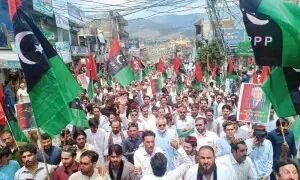
GILGIT: The PPP is all set to form a government in Gilgit-Baltistan after it gained 11 out of 24 seats in the Gilgit-Baltistan Legislative Assembly, according to unofficial results (Forms-47) of the June 7 elections.
As per Forms-47 issued by returning officers from 24 constituencies, the PPP bagged 11 seats, with the PML-N trailing with six seats. The candidates backed by the PTI won two seats, and its ally MWM was victorious in one seat. The independent candidates secured four seats.
In a post on X in the early hours of Monday, Bilawal Bhutto-Zardari declared victory, saying the PPP had become the “single largest party” in the region.
“The Pakistan Peoples Party is emerging as the single largest party and we will be attempting to form government. I am grateful to the people for their trust and congratulations to Jiyalas on their victory,” said Bhutto-Zardari, whose party had alleged rigging during the polling.
Recount ordered
On Monday, the Election Commission of Gilgit-Baltistan ordered a recount in two constituencies and re-polling in a few polling stations in GBA-16, Diamer.
The recount order came after independent candidate Safdar Ali Shirazi and PPP candidate Nazir Ahmed Advocate formally requested a recount of votes in GBA-20 (Ghizer-II), alleging irregularities during the counting process.
Acting on the request, the returning officer ordered a recount, which is scheduled to take place today. The commission also ordered a recount in GBA-3, Gilgit.
The Election Commission also ordered a re-poll at three polling stations in GBA-16 (Diamer-II).
Victorious candidates
PPP regional president Amjad Hussain won from GBA-1 (Gilgit), while former chief minister Hafiz Hafeezur Rehman of PML-N won from GBA-2 (Gilgit). PTI-backed independent Sohail Abbas won from GBA-3 (Gilgit).
In Hunza, PTI-backed independent Naik Nam Karim won from GBA-6. In Nagar, Muhammad Ali Akhtar of PPP won from GBA-4 and Zulfiqar Ali Murad of PPP won from GBA-5.
In Skardu, Syed Tauqeer Mehdi of PPP won from GBA-7, Fida Muhammad Nashad of PPP from GBA-9, Nasir Ali Khan of PPP from GBA-10, and Mohammad Kazim Mesum of MWM from GBA-8.
In Kharmang district, Iqbal Hassan of PPP won from GBA-11. In Shigar district, Imran Nadeem of PPP won from GBA-12. In Astore district, Rana Farman Ali and Rana Muhammad Farooq won from GBA-13 and GBA-14, respectively.
In Diamer, Kifayatur Rehman of PML-N won from GBA-18, independent candidate Dilpazir Khan won from GBA-15, Ataullah of PPP from GBA-16, and Mohammad Naseem of PPP from GBA-17. In Ghizer, Syed Jalal of PPP won from GBA-19, Abdul Jahan of PML-N won from GBA-20, and independent candidate Aman Ali won from GBA-21 (Yasin).
Published in Dawn, June 9th, 2026

Doodle: Live Wallpapers | F-Droid
Doodle is an open-source Android app that provides colorful live wallpapers with auto dark mode and power-efficient animations.
https://f-droid.org/en/packages/xyz.zedler.patrick.doodle/
This is very Pleasant and Soothing.
#android #wallpaper #opensource #freebee #apk
Dear Junaid Hafeez,
We are writing to reassure you that, although we sentenced you to death nearly seven years ago, you should take some solace in the fact that we have never hanged anyone convicted of blasphemy.
You might ask, if we don’t intend to carry out the sentence, why for the past six years are we not listening to your appeal? Why are we denying you your day in the court? A day on which a judge can overturn your sentence and release you. Or go through the evidence against you and confirm your punishment, so that you can file another appeal and then another and, finally, when your death sentence is confirmed by the highest court in the land, you can file a last mercy petition.
You have been waiting for 13 years to find out what it is that we intend to do with you. You might argue that, if you had committed second degree murder, got caught and convicted, with some good behaviour, you would be nearing the end of your sentence now.
But you didn’t kill anyone, you didn’t commit treason, you hatched no plans to overthrow the government, you didn’t challenge the authority of any institution. Instead, you read books, you talked about books, you wanted to live a bookish life, you went to a classroom, you were accused of blasphemy, you were sentenced to death. There may be a tacit promise by the state that you’ll not see the gallows, but we’ll also deny you the opportunity to prove your innocence and go home.
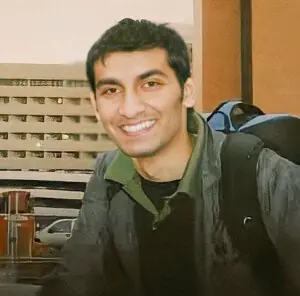
Junaid Hafeez has been in jail on blasphemy charges since 2013. His appeal against his 2019 death sentence is pending in the Lahore High Court since 2020. May 18 was supposed to be yet another date for his hearing, which passed by without his appeal being heard
You might think that in the 13 years (do you still count days or are you counting years now?) you have been behind bars, the world has forgotten you. But your name does appear on human rights organisations’ annual reports, your picture does come up on our social media memories.
It has even been suggested that Junaid Hafeez gets more attention than hundreds of other victims of our slow justice, because it’s easy to identify with him. He is every working class parent’s dream boy, who tops every board exam, gets into Pakistan’s top medical college and, midway through his medical education, decides to pursue a life of letters, gets a Fulbright fellowship, returns home and continues to teach and learn. Here’s the kind of boy we always say is the bright future of this country.
There are many others who get far less attention than you. There are hundreds waiting trials, more than 50 who have been sentenced to death, their appeals not heard for years, sometimes for 10 sometimes for 20 years. In order to give you some hope, we might have given you Zafar Bhatti’s example, a medicine salesman who spent 14 years in jail on blasphemy charges. Last year, he finally had his day in court, and he was freed.
Freed. After keeping him in jail for 14 years, we declared that he was innocent. He went home. He died after three days. Three days of freedom after 14 years of captivity for a crime that never happened.
Our judicial system is often blamed for being an impossibly slow grind, and for being extremely reluctant to take up the appeals of those convicted on blasphemy charges. It seems as if opening the case file of a blasphemy convict will constitute blasphemy itself.
We can’t judge our judges too harshly for not wanting to listen to these appeals. Let’s not name names but lawyers, a judge, a minister and a governor have been assassinated trying to get the likes of you out of prison.
Since judges have to deal with murderers and terrorists, they are promised life-time police protection. Although they are courageous enough to convict and then preside over the appeals of dangerous criminals, they are wary of having a blasphemy convict in their court.
“They know our society, they know our system, why would they trust it?” says your lawyer Asad Jamal. He also points out that the door to a hall on the premises of Lahore High Court Bar Association is named Baab-i-Khatm-i-Nabuwwat [Door of the Seal of the Prophets]. “Here’s a daily reminder to the judges of the times and places we live in.”
We can assure you though that times are changing. In the past one year, there’s been a spate of bails, acquittals and people have got what we call ‘relief’. A woman who was snared into a blasphemy trap after playing a game of PUBG was acquitted after five years of imprisonment. Last year, Anwar Kenneth, accused of blasphemy and sentenced to death, was acquitted after spending 23 years in jail.
After keeping him in jail all this time, we realised that he wasn’t mentally fit to stand a trial. Lawyers remind us that many of those accused of blasphemy have mental health issues. It’s difficult to prove in the court, as the psychiatrists who can testify for them are scared and either wouldn’t appear or want to remain anonymous.
Since we insist on keeping you alive and locked, we must give you some hope, however flimsy. Those who made blasphemy the central plank of their politics, and threatened generals and judges and politicians, have been silenced for now. We sometimes fear that your acquittal might poke those monsters we have put to sleep. Or people who decide such things still suspect that these monsters might be unshackled to liven up our political circus.
In 2013, the year you went to jail, in India, they hanged Afzal Guru, a Kashmiri citizen accused of terrorism in India. The Indian Supreme Court said in its judgment that “the collective conscience of society will only be satisfied if capital punishment is awarded to the offender.”
There’s no collective conscience here that needs to be satisfied. There are no hordes baying for your blood, only occasional voices pleading mercy, invoking your lost youth, your talent, your promise. You are a minor speck on our conscience because some of us are allowed to read books and write them and pursue our PhDs, but we can’t grant you the same privileges.
Many political analysts tell us that, if you are released tomorrow, no roads will be blocked in protest, no rallies will be held, the country will not burn, nobody will set fire to a tyre even. You are not being kept in a jail to satisfy our nation’s conscience. You are not allowed your day in the court because then we’ll have to face that conscience and decide.
Your current lawyer, Mr Saiful Malook, obviously frustrated at not getting your appeal heard, reminds us of the constitutional guarantee that citizens shall not be discriminated against on the basis of caste or colour or religion. But he is not naïve and knows that this is not how our society and justice system works. He simply pleads for equality of the condemned.
“The courts are listening to appeals filed in 2023 by those accused of multiple murders and even sentenced to death,” he says. “Junaid’s appeal is from 2020 — why isn’t his appeal being heard? Even if we can’t treat all citizens equally, at least those sentenced to death should be treated equally.”
What if judges are not scared for their safety but reluctant because of their faith? What if they don’t even want to touch a case file containing blasphemies, even if fabricated?
Islamabad-based lawyer Talha Rehman, who represents more than 60 people accused of blasphemy, says that if the judges are of the view that blasphemy laws are effective, then why are they reluctant to help implement them?
“The least they can do is hear the appeals,” he says, “and, if they feel the punishment is justified, they should confirm it, so that the accused can move to the next appeal.”
Dear Junaid, as you count your days and years and wait for your day in court, we reiterate that we have never hanged anyone accused of and convicted of blasphemy. But we’ll fit a noose around your neck every morning and take it off every night. So that our conscience doesn’t bother us in our sleep.
The writer is a novelist, essayist and journalist. His latest novel is Rebel English Academy
Published in Dawn, EOS, May 31st, 2026

JillyBeanSSF posted a photo:
Sindy: "Trendsetters" Vintage UK Children's Magazine Paper Doll (Marvel Comics LTD.) 1986
*Appeared In: Sindy, "Every Girl's Best Friend!" UK Magazine Issue No. 27 - October 18 (Marvel Comics LTD.) 1986
JillyBean's "FLAT CHICKS" The World of Paper Dolls
