Despite its name, the Canadian Tuxedo is a distinctly American look. The denim-on-denim getup dates back to the 1950s, when Bing Crosby sported a full Levi’s ensemble while in Vancouver, setting a sartorial trend that continues today.
The national mythology woven into this utilitarian material is also the focus of Brooklyn-based Nick Doyle, who layers denim atop denim into large wall sculptures. From a pair of aviators reflecting puffy clouds to a vast Rocky Mountain landscape framed by br
Despite its name, the Canadian Tuxedo is a distinctly American look. The denim-on-denim getup dates back to the 1950s, when Bing Crosby sported a full Levi’s ensemble while in Vancouver, setting a sartorial trend that continues today.
The national mythology woven into this utilitarian material is also the focus of Brooklyn-based Nick Doyle, who layers denim atop denim into large wall sculptures. From a pair of aviators reflecting puffy clouds to a vast Rocky Mountain landscape framed by brick, the works evoke a sort of nostalgic road trip west, as if chasing a big break, and ultimately, realizing the American dream.
“First Come the Dreamers” (2026), bleached and collaged denim on panel, 25 x 72 inches
For Doyle, denim is a poignant, loaded metaphor for much of American culture and history. The material has roots in chattel slavery, when people enslaved in the South were dyeing cotton with indigo. There’s also its association with the brusque masculinity of James Dean and cowboy ruggedness, itself an extension of the gold rush and Manifest Destiny. The fabric, in many ways, is a stand-in for the contradictions, hypocrisies, and unreachable desires so bound up in American life.
While researching the visual language of Americana in 2018, Doyle came upon a roll of denim discarded by a fashion designer moving out of his building. “At the time, I had no money, so I was making work out of material I found in the garbage or at my local hardware store,” he shares. “As I was pulling [the roll] out of the trash, I noticed a network of ideas connecting in my brain… I felt the material reflected the historical complexities I was seeing in my research, as well as being reflected in my own familial history.”
This encounter was one of those providential moments that set off an enduring fascination. In his solo exhibition Collective Hallucinations, on view at Perrotin, Doyle presents the latest of his denim sculptures, including stylized cacti, landscapes cordoned off by chainlink fences, and more mystical objects like tarot cards and a life-sized fortune teller’s shop.
“Innocent Industry” (2026), bleached and collaged denim on panel, 72 x 64 inches
The show contains myriad symbols of American exceptionalism and individualism, presented in the heritage fabric of the nation. Doyle shares:
Over the last few years, my conception of American mythology has only become more complex… I think in a lot of ways what we’re experiencing now is a breakdown of these mythologies. They are in direct conflict with the current political reality, yet they are summoned as if it is business as usual. The world’s image of America has changed, but our country’s nostalgia for itself is making us late to the party. There’s tragedy in vanity.
Collective Hallucinations presents these unrealized dreams and confrontations in varying shades of blue, rendering what appears to be individual moments as simply different washes of the same story.
In addition to his practice, Doyle will soon open the second iteration of a kink bar called Human Resources at Basel Social Club and is working toward a fall exhibition of paper collages and prints at Pace. If you’re in New York, Collective Hallucinations runs through May 30. Otherwise, find more on Instagram.
“Here We Go Round the Prickly Pear Bush” (2026), bleached and collaged denim on panel, 48 x 26 inches“The Clouds” (2026), bleached denim on panel, 24 x 18 inches“Plastic Eden” (2026), bleached and collaged denim on panel, 68 x 42 inches“Black Market Bodies” (2026), bleached and collaged denim on panel, 36 x 64 inches
WASHINGTON, June 6 — The United States announced Friday its approval of a US$1.98 billion (RM7.98 billion) arms sale to Kuwait, one of the Gulf countries hit by Iranian strikes during the Middle East war.In a statement, the US State Department said it would allow purchases of counter-drone technology from defence company Anduril, which was founded by a supporter of President Donald Trump.“This proposed sale will support the foreign policy and national security ob
WASHINGTON, June 6 — The United States announced Friday its approval of a US$1.98 billion (RM7.98 billion) arms sale to Kuwait, one of the Gulf countries hit by Iranian strikes during the Middle East war.
In a statement, the US State Department said it would allow purchases of counter-drone technology from defence company Anduril, which was founded by a supporter of President Donald Trump.
“This proposed sale will support the foreign policy and national security objectives of the United States by improving the security of a major non-Nato ally that has been an important force for political stability and economic progress in the Middle East,” the statement said.
Earlier this week, Kuwait officials “condemned Iranian aggression” when a drone strike on its international airport killed one person and injured 63 others.
Tehran denied involvement in the attack, saying it was “an error in the American Patriot systems,” referring to a US anti-missile battery.
The attacks came despite the April 8 ceasefire that paused the war sparked by the February 28 US-Israeli bombing of Iran, and has largely held despite sporadic exchanges of fire. — AFP
United States federal prosecutors announced today that they had indicted Raúl Castro, the former President of Cuba and brother of Cuban revolutionary leader Fidel Castro, over the downing of two civilian planes in 1996.
The U.S. Justice Department has accused Castro, who was defense minister at the time of the incident, of ordering the Cuban Air Force to shoot down the planes.
The move ramps up pressure on the island, which Washington has subjected to a near-total oil blockade since Janua
United States federal prosecutors announced today that they had indicted Raúl Castro, the former President of Cuba and brother of Cuban revolutionary leader Fidel Castro, over the downing of two civilian planes in 1996.
The U.S. Justice Department has accused Castro, who was defense minister at the time of the incident, of ordering the Cuban Air Force to shoot down the planes.
The move ramps up pressure on the island, which Washington has subjected to a near-total oil blockade since January, and raises concerns that the U.S. is preparing an operation similar to the one that removed Nicolás Maduro from Venezuela earlier this year.
Today’s charges relate to the killing of four members of the Miami-based Cuban dissident group Hermanos Al Rescate (Brothers to the Rescue), who were operating the planes when they were shot down on February 24, 1996. Three were American citizens and one was a U.S. resident.
According to acting U.S. Attorney-General Todd Blance, Castro has been formally charged with conspiring to kill U.S. nationals.
The issue of whether or not the planes were shot down in Cuban or international airspace is still a matter of debate.
Florida’s Attorney-General had announced in March that a state investigation into Raúl Castro’s involvement would be reopened, a move which was endorsed by many Republican politicians, including Florida Senator Rick Scott.
Tensions between the U.S. and Cuba have been rising precipitously, as the North American superpower has enforced a near-total oil blockade on the island, ratcheted up punitive sanctions targeting Cuban officials and demanded in ongoing negotiations between the two countries that the current Cuban President Miguel Díaz-Canel step down.
Some have likened the charges brought against Castro to those directed at former Venezuelan President Nicolás Maduro before his capture earlier this year. Maduro was charged with drug trafficking in the U.S. in 2020, an accusation which served as justification for his forced removal from power by the U.S. military.
It remains to be seen whether the charges against Castro will result in a similar U.S. operation in Cuba.
PARIS, June 6 — The 2026 Fifa World Cup will inject billions of dollars into host economies, driven by a massive consumption surge that will benefit sectors as varied as tourism to retail and athletic wear, according to analysts.The iconic tournament, scheduled for June 11 to July 19 and set to be the largest soccer event ever, could power consumer spending at a time when broader demand remains fragile.The first three-nation World Cup (WC) — spanning the United
PARIS, June 6 — The 2026 Fifa World Cup will inject billions of dollars into host economies, driven by a massive consumption surge that will benefit sectors as varied as tourism to retail and athletic wear, according to analysts.
The iconic tournament, scheduled for June 11 to July 19 and set to be the largest soccer event ever, could power consumer spending at a time when broader demand remains fragile.
The first three-nation World Cup (WC) — spanning the United States, Canada and Mexico — is expected to boost global GDP by roughly US$41 billion, according to Fifa’s socioeconomic impact analysis, conducted with the World Trade Organization(WTO).
Here is a look at stocks and sectors that brokerages expect to benefit from the once-in-four-years event:
Hotel operators
B. Riley estimates a total of 13.1 million visitors to the World Cup, including ticketed and non-ticketed attendees, generating 21.3 million room nights booked in hotels across online travel platforms.
Analysts said US hotel operators Marriott, Hilton and Hyatt as well as online travel platforms Airbnb, Booking Holdings and Expedia are poised to benefit from the event.
Marriott sees the World Cup-driven momentum to continue in the third quarter. Airbnb expects hosts in the New York-New Jersey area, Boston and Los Angeles to earn the most during the tournament.
Airlines
Goldman Sachs believes the WC could be a ‘net positive’ for US airlines.
“June is typically a seasonally lower inbound leisure and corporate travel period, with a meaningful amount of peak July/August outbound travel season occurring after the WC is over,” Goldman said.
A sharp rise in jet fuel prices due to the war with Iran, however, has forced US airline operators to hike fares that are pushing budget-conscious Americans to delay or cancel summer trips.
Beer stocks
More than 1 billion pints of beer will likely be consumed globally during the season, giving a 0.3 per cent lift to the industry in terms of volumes, according to Jefferies. Improvements are expected in markets such as US, Mexico, Brazil and China.
“After five successive years of volatility, beer should be better in 2026,” Jefferies analysts said.
The tournament also sits at a favourable intersection of timing and geography. Roughly 75 per cent of matches will be played in the US while 84 per cent of the matches involving participating countries are in the beer-drinking-friendly time zones, the analysts added.
Bernstein, Goldman and Jefferies expect Corona beer-maker Anheuser-Busch InBev, the official beer sponsor for the WC, to be the key beneficiary. Heineken, the world’s second-largest brewer, is also expected to get a boost, helped by its exposure to Latin America and Europe.
US retail and sportswear
Goldman estimates a surge in merchandise demand from fans to push up sales at Dick’s Sporting Goods and Academy Sports.
Sportswear brands such as Adidas, Puma and Nike can benefit through increased brand visibility and marketing exposure during the World Cup, analysts said.
Goldman noted that Adidas, the official sponsor of the match ball, has kit sponsorship deals with several teams, positioning it to benefit from a global exposure during the event.
Food, restaurants and delivery
Citi said traditional grocers such as Albertsons and Kroger, along with bigger retailers including Walmart and Target, are likely to benefit from higher household spending during the WC.
Restaurant demand is also expected to rise, supported by tourism and group-viewings. This could lift McDonald’s, Domino’s Pizza, Wingstop and Chipotle, along with food distributors such as Performance Food Group, US Foods and Sysco.
Media and digital platforms
“We expect the 2026 men’s World Cup to generate the highest US advertising revenue in the event’s history,” Deutsche Bank analysts said.
Morgan Stanley said the tournament could generate about US$300-$400 million in advertising revenue for Fox, which holds the English-language broadcast rights. Deutsche Bank pointed to Comcast-owned Telemundo, which has the Spanish-language rights, as another beneficiary.
Internet companies such as Alphabet’s YouTube and Meta Platforms’ Instagram could get a lift from increased user activity, Citi said.
Betting operators
Deutsche Bank expects online sports-betting firms Flutter Entertainment and DraftKings to relatively outperform, as World Cup-driven betting is likely to boost overall wagering volumes.
Macquarie forecast global wagers exceeding US$50 billion — nearly $0.5 billion per match — for the tournament, compared to over US$35 billion for the previous edition in 2022. — Reuters
The presidents of Brazil, Luiz Inácio Lula da Silva, and the United States, Donald Trump, held a meeting of close to three hours at the White House on Thursday in which both leaders declared an end to one of the most severe bilateral crises in two centuries of relations between the two largest economies in the Americas. The encounter, formalized as a working meeting, unfolded in a climate of personal fluency and allowed for the agreement to establish bilateral channels t
The presidents of Brazil, Luiz Inácio Lula da Silva, and the United States, Donald Trump, held a meeting of close to three hours at the White House on Thursday in which both leaders declared an end to one of the most severe bilateral crises in two centuries of relations between the two largest economies in the Americas. The encounter, formalized as a working meeting, unfolded in a climate of personal fluency and allowed for the agreement to establish bilateral channels to address commercial, security, and regional cooperation matters.
Brazilian President Luiz Inácio Lula da Silva was received on Thursday by his American counterpart Donald Trump at the White House, in his first official visit to Washington since his return to power in 2023 and the second face-to-face meeting between the two leaders, following a brief 45-minute encounter on the sidelines of the ASEAN summit in Kuala Lumpur last October. The meeting, formalized as a working session rather than a state visit, seeks to consolidate the frag
Brazilian President Luiz Inácio Lula da Silva was received on Thursday by his American counterpart Donald Trump at the White House, in his first official visit to Washington since his return to power in 2023 and the second face-to-face meeting between the two leaders, following a brief 45-minute encounter on the sidelines of the ASEAN summit in Kuala Lumpur last October. The meeting, formalized as a working session rather than a state visit, seeks to consolidate the fragile bilateral truce reached after one of the most severe diplomatic crises in two centuries of relations between the two most populous democracies in the Americas.
Source: Water Resources Research
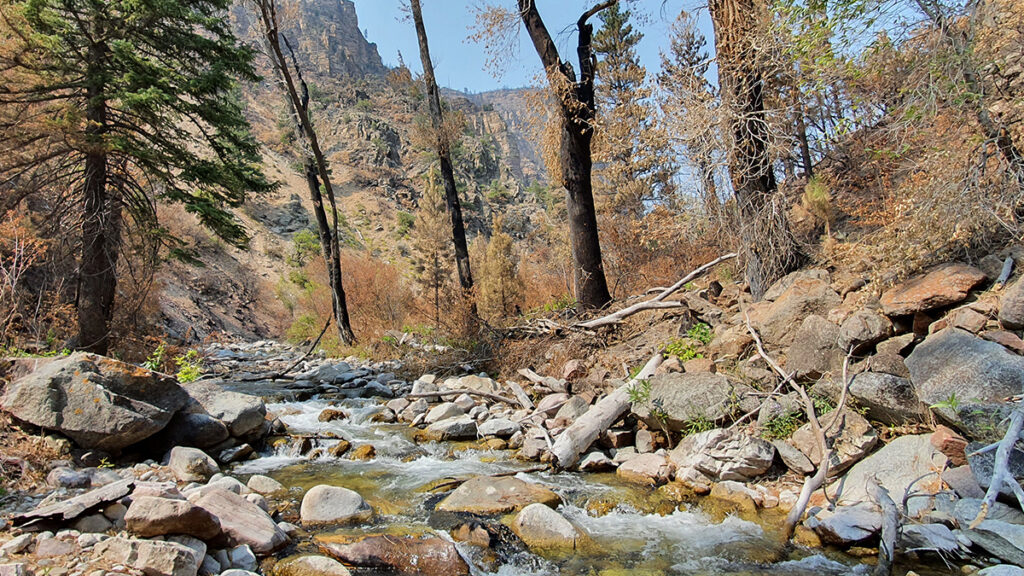
Wildfires can increase flooding risks in and downstream of burned areas by removing vegetation and disturbing hydrologic processes. As the climate changes, the severity of both wildfires and heavy rainfall events is increasing, meaning flooding is likely to become more severe in the near future. Better understanding how, and by how much, wildfires change flood risk is important for disaster and infrastructure planning for communities around the country.
Ca
Wildfires can increase flooding risks in and downstream of burned areas by removing vegetation and disturbing hydrologic processes. As the climate changes, the severity of both wildfires and heavy rainfall events is increasing, meaning flooding is likely to become more severe in the near future. Better understanding how, and by how much, wildfires change flood risk is important for disaster and infrastructure planning for communities around the country.
To make the most of the limited data on flooding in the years following wildfires, the researchers created a paired-storms framework: They identified postfire peak flows (PFPFs), defined as the five highest peak flows within 3 years of a wildfire across seven watersheds. Then, for each precipitation event causing a PFPF, they looked for storms with similar characteristics (or paired storms) that occurred before the wildfire. Storm characteristics used for pairing included the season in which the storm occurred, recent precipitation, and precipitation depth, duration, and peak intensity.
The researchers found significantly elevated peak flows after wildfires in many cases, underlining the risks to communities following wildfires and validating their approach for use elsewhere.
Altogether, the authors found 26 PFPF events, including 20 with paired storms occurring before wildfires. For 75% of the postfire storms, their peak flows were 2 or more times greater than prefire peak flows. PFPFs were most likely to happen in the first year after a wildfire and typically occurred following storms that were centered upstream of the watershed centroid, were uniform in shape, and fully covered the watershed and burned area, the authors reported. They also found some evidence that the first storm in the year immediately following a fire has a higher-than-expected chance of producing a PFPF.
Future work could look more deeply at the characteristics of storms occurring over burned areas, such as storm direction and watershed recovery, and could apply the automated methods to more burned watersheds and storm events to enhance the robustness of the work, the authors say. (Water Resources Research, https://doi.org/10.1029/2025WR040693, 2026)
Source: Earth’s Future
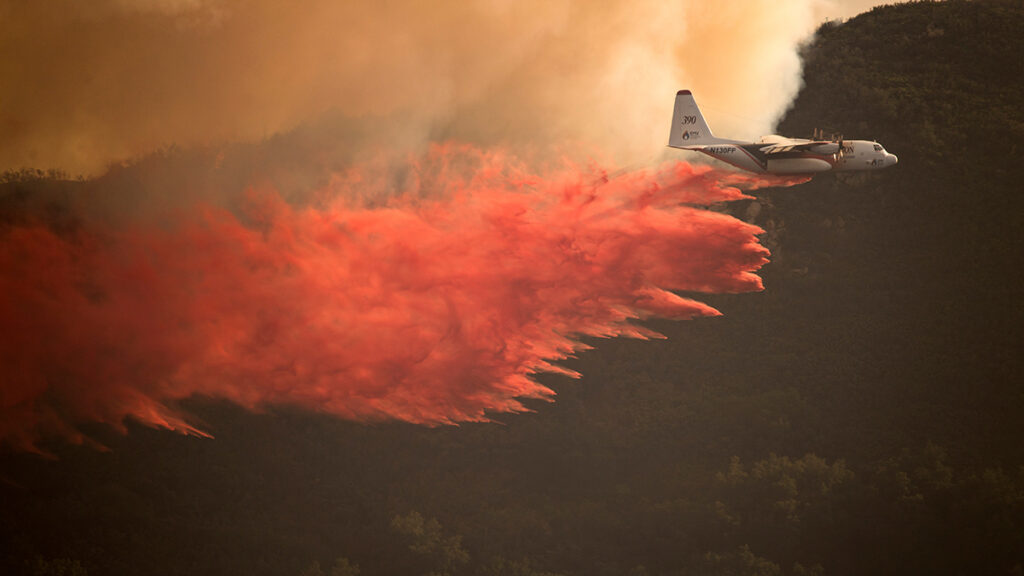
Hotter, drier conditions in the western United States have led to a rise in wildfire activity that has damaged or destroyed infrastructure, natural ecosystems, and entire towns across the region. As fires grow larger and more destructive, the cost of managing them rises as well.
Fire management agencies in the United States have been feeling the pressure. Between 2014 and 2023, fire management agencies across all levels of government experienced a 131% increase in t
Hotter, drier conditions in the western United States have led to a rise in wildfire activity that has damaged or destroyed infrastructure, natural ecosystems, and entire towns across the region. As fires grow larger and more destructive, the cost of managing them rises as well.
Fire management agencies in the United States have been feeling the pressure. Between 2014 and 2023, fire management agencies across all levels of government experienced a 131% increase in total area burned and a 268% increase in total fire spending adjusted for inflation compared to the period between 1985 and 1994.
Today, federal agencies like the Department of the Interior (DOI) and the U.S. Department of Agriculture Forest Service (USFS) continue to invest in aiding states and managing hazardous fuel growth on public land, as well as suppressing active fires. Policymakers and federal agencies alike must decide how to manage limited budgets while protecting people, property, and natural resources.
Prestemon et al. built statistical models based on historical data to examine the potential increase in spending by the DOI and the USFS between now and 2100. Their models link wildfire activity to climate variables such as temperature and water vapor deficit and then connect fire activity to suppression costs. To capture a range of possible future conditions on federal lands, the study predicts 10 fire and suppression spending scenarios by applying five different climate models to two different warming pathways (the moderate Representative Concentration Pathways (RCP) 4.5 scenario and the high-emissions RCP 8.5 scenario).
The results varied by region and scenario, but each of the 10 scenarios suggested a rise in area burned as well as inflation-adjusted fire suppression spending, with higher fire activity translating to higher costs. Projected changes in DOI and USFS land burned increased 80% by mid-century and 208% by late century.
By the middle of the century, both agencies are projected to see spending increases: about 0.65% per year for DOI spending and about 0.87% per year for USFS spending from 2020 to 2100. Although uncertainty increased with time and outcomes varied across climate models and warming pathways, the largest increases in both cost and wildfire activity were consistently projected for the northwestern United States. (Earth’s Future, https://doi.org/10.1029/2025EF007985, 2026).
Citation: Owen, R. (2026), As wildfires increase in the West, so does suppression spending, Eos, 107, https://doi.org/10.1029/2026EO260187. Published on 10 June 2026.
On 31 March 2026, the U.S. Department of Agriculture announced the closure of 57 of its 77 U.S. Forest Service research facilities. The scientific community’s response was warranted: Save the science, restore the funding, protect the researchers.
All of that is correct. But it misses a structural problem inherent in agency governance, one that will recur at every reorganization until the Earth science community builds an instrument to prevent it.
In massive reorganizations like the ones f
All of that is correct. But it misses a structural problem inherent in agency governance, one that will recur at every reorganization until the Earth science community builds an instrument to prevent it.
In massive reorganizations like the ones federal agencies are currently experiencing, the threat to long-term research facilities is not primarily a lack of funding. The true threat is an oversight of administrative architecture. There appears to be no general federal requirement to have a successor stewardship plan in place before reducing the output or outreach of a long-term research facility—or closing it entirely.
The Physical Archive Is Not a Digital File
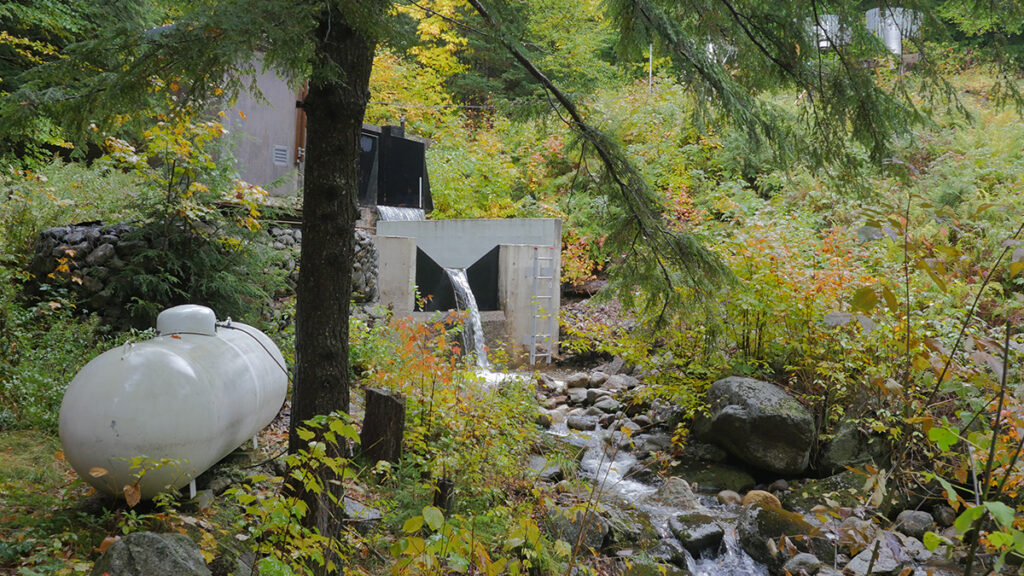
Hubbard Brook Experimental Forest in New Hampshire was among the sites under review during the Forest Service restructuring but has since received a public reprieve. The future of Bartlett Experimental Forest, also in New Hampshire, remains unresolved. The governance problem, however, extends beyond either site.
Hubbard Brook’s physical archive holds more than 60,000 barcoded and cataloged samples: water, soils, plant material, and physical cores spanning 7 decades of continuous collection and stored under active environmental controls in a dedicated building on site.
These samples cannot be digitized. They cannot be migrated to a remote server, backed up to cloud storage, or emailed to a university partner. The samples require a functioning building, active temperature management, and a named human steward responsible for their integrity.
The physical archive at Hubbard Brook holds more than 60,000 barcoded and cataloged samples stretching back to the founding of the facility in 1955. Credit: Anthony Veltri
The archive includes core samples of trees dating to long before the experimental forest was established, and the archive maintains each as a managed scientific record with continuity of custody. Credit: Anthony Veltri
Core samples like these document the watershed at Hubbard Brook and anchor long-term understanding of system processes. Credit: Anthony Veltri
The archive at Hubbard Brook is impressive, but a governed record is defined by continuity, provenance, and stewardship, not by the number of observations it contains: Data volume is not data value. A 70-year unbroken record of watershed chemistry, maintained by named stewards who documented what they were measuring and why, is a governed product. Without that stewardship and physical anchor, volume can become noise.
The failure to maintain archives like this is likely not malicious; it is an example of administrative indifference or perhaps a lack of awareness or understanding. Environmental controls, for example, get zeroed out of a budget line item, and nobody notices until the temperature in the facility drifts. By then, the sample record has degraded in ways that cannot be reversed.
This Is Not a Hubbard Brook Problem
Many physical archives, calibration sites, and long-duration sampling programs operate without a formal requirement for stewardship continuity.
Hubbard Brook is the most visible instance of a pattern—the lack of a successor stewardship plan—that runs across the entire 84-site federal Experimental Forests, Ranges, and Watersheds network. The March order that identified Bartlett Experimental Forest and 56 other research facilities across 31 states for closure was executed without a mandatory requirement to identify successor stewards for what gets left behind.
Nor is the pattern unique to experimental forests. The Long Term Ecological Research network spans 28 core sites. AmeriFlux includes more than 500 monitoring locations across North America.
Throughout all these systems, many physical archives, calibration sites, and long-duration sampling programs operate without a formal requirement for stewardship continuity under agency reorganization.
What We Stand to Lose
Long-term physical archives provide scientists and other stakeholders the ability to ask future questions of past reality. Nobody collecting water samples at Hubbard Brook in 1963 was thinking about PFAS (per- and polyfluoroalkyl substances), for instance, but the baseline its site samples provide is why we can track the chemicals today. The same continuous record was central to the regulatory science behind the Clean Air Act amendments of 1990.
Archival value compounds silently and becomes visible only when someone needs it.
Archival value compounds silently for decades and becomes visible only when someone needs it.
When these archives fail, the loss is not historical. It is operational. Regulatory agencies rely on long-baseline records to determine whether interventions are working. Without a continuous physical reference, observed changes cannot be distinguished from measurement drift, instrumentation bias, or natural variability. The results are policy decisions made without a defensible scientific baseline.
Federal investment in continuous collection at a site like Hubbard Brook runs to tens of millions of dollars over decades. That investment is not recoverable once continuity is broken.
Unlike a paused research grant, a degraded physical archive cannot be restarted. You can photograph a sample, but you cannot rerun its chemistry 40 years from now if the physical sample has degraded.
In 2017, a double mechanical failure at the University of Alberta destroyed 12.8% of the Canadian Ice Core Archive over a single weekend, permanently erasing records dating back 12,000 years. That incident was accidental. A mechanical malfunction is a failure of equipment. Administrative disposal without a named successor steward is a failure of governance. One arrives without warning. The other can be prevented.
The Community Already Knows How to Do This
The Earth observation community has already built the governance model we need. We are not yet applying it to long-term ecological research infrastructure.
GRUAN, the Global Climate Observing System (GCOS) Reference Upper-Air Network, operates under the World Meteorological Organization and GCOS, with explicit named stewardship obligations. Upper-air observations—measurements of temperature, humidity, and wind through the atmosphere—are foundational inputs to weather forecasting and climate monitoring. Each GRUAN station has a designated principal investigator with a documented succession obligation.
ICOS, the Integrated Carbon Observation System operating across Europe, applies the same logic to terrestrial ecosystem observations through formal site-level stewardship agreements and named succession requirements.
In the United States, the National Ecological Observatory Network is funded by the National Science Foundation (NSF) and operated by Battelle, a science and technology nonprofit, under a contract that includes explicit data continuity obligations.
These systems did not emerge by accident. They were explicitly designed to solve a known failure mode: Distributed observational networks cannot maintain their own calibration integrity without a separately governed reference layer. That design decision is documented, enforced, and funded. The absence of an equivalent requirement in long-term ecological research infrastructure is not a technical limitation. It is a governance omission.
The pattern is consistent across every network that has solved this problem: Named continuity obligations must be written into the governance structure before the need becomes acute.
The Governance Instrument
The best outcome is the continued, uninterrupted operation of facilities like Hubbard Brook.
Any federal agency action that would reduce operational support for a long-term research facility should require a formal continuity plan before the action takes effect.
If reductions move forward, however, the proposed fix is specific and not novel: Any federal agency action that would reduce or eliminate operational support for a long-term research facility should require a formal continuity plan before the action takes effect. That plan must name a successor steward for each active long-term dataset and for each physical archive under active environmental control.
In practice this means specificity: the name and institutional affiliation of the successor, a funded maintenance budget sufficient to sustain environmental controls and sample integrity, documented protocols for custody transfer, and a timeline for uninterrupted handoff. The plan must demonstrate that the successor steward has the operational capacity and funded mandate to preserve the archive’s physical integrity and continuity.
This instrument prepares plant samples collected at Hubbard Brook using standardized methods. Consistent preparation is what makes results comparable across time and labs and why continued stewardship is so important. Credit: Anthony Veltri
The default should be continued stewardship by the responsible federal entity. If a change in custody is legally permitted and genuinely unavoidable, any successor steward, whether another federal unit, a university partner, a consortium, or another entity, must have a funded mandate, demonstrated technical capacity, enforceable continuity obligations, and the ability to maintain the archive without interruption.
Protocol demands that if the agency cannot name a viable successor steward, the agency cannot execute the closure. This requirement does not prohibit closure; it prohibits closure without continuity of custody.
The instrument requiring a research facility to have a formal continuity plan should be applied not on a site-by-site basis, but uniformly across networks. A limitation narrowly written to protect a named facility invites the agency to execute the same administrative disposal at adjacent sites while technically complying with the specific requirement. The governance is structurally sound only if it applies across the network.
How This Actually Happens
The pathways that would make such an instrument possible already exist.
Agencies can impose continuity requirements through policy directives, appropriations language, or funding conditions. The federal Office of Science and Technology Policy and the Office of Management and Budget have coordinated interagency data management guidance before, and a directive requiring named successor stewardship before any facility reduction does not require legislation. Sen. Jeanne Shaheen (D-NH) has already secured fiscal year 2026 language directing the Forest Service to prioritize staffing at long-standing experimental forests; attaching successor stewardship language is the logical next step. NSF, the Department of Energy, and NOAA could require stewardship continuity guarantees from partner agencies as a condition of incorporating facility data into federally funded continental-scale products.
Scientists recognize that agencies reorganize and funding for facilities can be downgraded. That is why preserving a continued record of any long-term research facility must be part of the facility’s governance structure from the outset. Credit: Anthony Veltri
What is missing is the requirement itself—and the strategic initiative to establish it. The Earth science community has the standing, the documented models, and the mechanisms to close those gaps.
This is not an argument against reorganization. Agencies reorganize. Budgets shift. Research priorities evolve.
The argument is that reorganization cannot be permitted to destroy multigenerational scientific infrastructure through administrative indifference when a specific, enforceable governance requirement can prevent it. The Earth observation community built GRUAN because it recognized that no federation of climate datasets can be a substitute for a governed anchor point. Long-term ecological research infrastructure needs the same recognition applied to the administrative layer that governs its continuity.
The scientific enterprise already knows how to do this. The governance has not caught up yet.
Author Information
Anthony Veltri (anthony@anthonyveltri.com) is an independent practitioner and former physical scientist and senior policy analyst with the USDA Forest Service Washington Office, where he worked on enterprise architecture and governance in federal programs, including those supporting scientific research.
Citation: Veltri, A. (2026), The governance gap threatening long-term ecological archives, Eos, 107, https://doi.org/10.1029/2026EO260172. Published on 27 May 2026.
This article does not represent the opinion of AGU, Eos, or any of its affiliates. It is solely the opinion of the author(s).
Research & Developments is a blog for brief updates that provide context for the flurry of news regarding law and policy changes that impact science and scientists today.
More U.S. scientists are running for state and federal office in the U.S. midterm elections than ever before, Nature reports. Scientist-candidates represent an array of parties, although most profiled in Nature identify as Democrats.
314 Action, an organization focused on getting Democrats with scientific backgro
Research & Developments is a blog for brief updates that provide context for the flurry of news regarding law and policy changes that impact science and scientists today.
More U.S. scientists are running for state and federal office in the U.S. midterm elections than ever before, Nature reports. Scientist-candidates represent an array of parties, although most profiled in Nature identify as Democrats.
314 Action, an organization focused on getting Democrats with scientific backgrounds elected to public office, offers financial support and training to candidates who apply for it. This year, the organization told Nature, they’ve received nearly three times as many applications as usual.
Sam Wang, a neuroscientist at Princeton and director of the Princeton Gerrymandering Project, is running to represent New Jersey’s 12th Congressional District.
“Usually, scientists stick with a specialized field,” Wang, a Democrat, wrote in an opinion for The Daily Princetonian. “However, I am deeply unhappy with how unequally power is divided in our society. So I have used my statistical abilities to level one part of democracy’s playing field: by repairing unfair elections.”
Why Now?
This year, Democratic candidates appear to be motivated by cuts to federal science programs, grants, and agencies, Nature reports, while Republican candidates like Jeff Wilson, who is running to represent the 13th district of Illinois, cite the pursuit of energy independence. Third-party scientist-candidates have also run, and scientists are entering local and municipal arenas, too.
Specifically, with the recent repeal of the Endangerment Finding, loosened restrictions on pollution, and plans to break up the National Center for Atmospheric Research, some candidates and their supporters think science needs a more prominent position in public policy.
The rise in scientist candidates may also be part of an ongoing trend. More than 200 STEM professionals ran for office in the 2024 election, as Eos reported in October 2024.
“There are a lot of people who believe that science can help us live better lives and that science really does need to be front and center when we’re making public policy,” Jess Phoenix, a volcanologist, science advocate, and former Democratic candidate for the U.S. House of Representatives told Eos at the time.
In March, thousands of people attended Stand Up for Science rallies across the country to protest the misuse of science in federal policy and extensive staffing and funding cuts to scientific agencies. Since President Trump took office in 2025, more than 10,000 PhD-level scientists have left the federal workforce, Science reported in January.
Pew research data shows that public trust in scientists has declined since the COVID-19 pandemic, but it has seen modest improvements since 2023. The latest poll, released in January, found that 77% of adults in the United States have a great deal or a fair amount of confidence in scientists to act in the public’s best interest, compared to 73% in 2023. The percentage is consistently higher among Democrats than Republicans: 90% versus 65%, in 2026. In contrast, only 27% of respondents reported at least a fair amount of confidence in elected officials.
“The last thing I want [is] to become a politician,” wrote one Redditor in response to the Nature story. “But at this rate I may not have a choice if current politicians keep screwing it up.”
These updates are made possible through information from the scientific community. Do you have a story about how changes in law or policy are affecting scientists or research? Send us a tip at eos@agu.org.
 Login
Login