The happy-face spider (Theridion grallator) is famous for the particularly cheery looking patterns on top of its abdomen. Ecologists in Hawaii first described the tiny, vibrantly green arachnids in 1900, and have long assumed them to be unique to the islands. However, an unexpected encounter thousands of miles away recently surprised researchers combing through the forested slopes of the Himalayan mountains.
According to their study published in the journal Evolutionary Systematics, there is
The happy-face spider (Theridion grallator) is famous for the particularly cheery looking patterns on top of its abdomen. Ecologists in Hawaii first described the tiny, vibrantly green arachnids in 1900, and have long assumed them to be unique to the islands. However, an unexpected encounter thousands of miles away recently surprised researchers combing through the forested slopes of the Himalayan mountains.
According to their study published in the journal Evolutionary Systematics, there is at least one more smiley spider species in the world. Of course, such a discovery deserves an equally appropriate name. Without further ado, it’s time to meet the Himalayan happy-face spider (Theridion himalayana).
Mature male (left) and female (right) of Theridion himalayana sp. nov. Credit: Devi Priyadarshini and Ashirwad Tripathy.
The meetup began in 2023 during an expedition in the northern state of Uttarakhand, a region home to many animals that remain unknown to science. Researchers from India’s Forest Research Institute and the Regional Museum of Natural History intended to catalogue ant biodiversity at the foot of the Himalayan mountains, but they kept getting distracted by the insects’ eight-legged neighbors.
“My co-author [Ashirwad Tripathy] kept sending me spiders from high altitude regions for identification,” Regional Museum of Natural History biologist Devi Priyadarshini said in a statement.
Priyadarshini recalled on “one fine day,” her colleague sent a photo of an arachnid clinging to a Daphniphyllum leaf. That was when she “froze in shock.”
“I had seen the Hawaiian spider during my master’s program…I knew instantly we had a jackpot because of its striking resemblance,” explained Priyadarshini.
Over the next few months, Tripathy continued to document every similar spider he saw during his survey. While each of the 32 examples clearly belonged to the same species, they all showcased an array of smiley dot-and-stripe coloration patterns (known as morphs) on their bodies. Once in the lab, the team conducted a DNA analysis of their specimens and discovered about an 8.5 percent genetic variation from the Hawaiian happy-face spider. This confirmed it evolved completely independent of the almost identical island spiders, thus earning the name Theridion himalayana.
“The name [Theridion] Himalayana was decided as the species name because we both wanted to pay our respects to the mighty Himalaya mountain ranges, which have been standing tall not just guarding our country but also holding a plethora of biodiversity within them,” added Tripathy.
Although the green coloration obviously helps both spiders blend into the surrounding vegetation, the exact reason for their back patterns remains unclear. Priyadarshini said this question is “definitely indicative of a deeper genetic mystery” that deserves further investigation. However, another shared trait is even stranger. Both species have a fondness for ginger plants, even though ginger isn’t native to Hawaii.
“How did the [Hawaiian] spiders choose an invasive species and ginger exactly?” wondered Priyadarshini, who theorized T. himalayan may be an “elder cousin” of T. grallator.“Although this sounds like a tall claim now, it will be our further scope of work to establish any missing links,” she said.
Some researchers have found that excessive AI use can produce a phenomenon they call “AI brain fry.” | Getty Images
If you’ve ever used an online patient portal to message your doctor in the middle of the night, you won’t be surprised to learn that responding to those messages takes an increasingly big bite out of clinicians’ workdays.
So in recent years, hospitals have begun adopting an AI tool that can draft responses for them. The tool was supposed to make a time-consuming task go m
Some researchers have found that excessive AI use can produce a phenomenon they call “AI brain fry.” | Getty Images
If you’ve ever used an online patient portal to message your doctor in the middle of the night, you won’t be surprised to learn that responding to those messages takes an increasingly big bite out of clinicians’ workdays.
So in recent years, hospitals have begun adopting an AI tool that can draft responses for them.The tool was supposed to make a time-consuming task go more quickly and smoothly, said Philip Barrison, an MD-PhD student at the University of Michigan Medical School who studies AI in healthcare.
Instead, the tool has given doctors and nurses a new to-do list. First they have to read the AI-generated response and decide if it “is actually something that they think they would say,” Barrison said. Humans are suggestible, and looking at something and deciding whether you would have thought of it on your own is a cognitively complex task.
Even if the message looks correct, the clinician still needs to “edit it to the point where they think it’s acceptable” to send to a patient, Barrison said. The AI tool introduces a totally new set of complicated judgment calls into what used to be a relatively straightforward process. As a result, many clinicians have chosen not to use it at all.
They’re fortunate to have the choice. Buoyed by expectations of cost savings and skyrocketing productivity, companies are increasingly asking (and sometimes requiring) employees to use AI to make their work more efficient. Meta, for example, last year instructed some workers to use AI to “go 5X faster by eliminating the frictions that slow us down.” The CEO of Shopify told employees they’d need to prove they “cannot get what they want done using AI” before the company would approve new hires. Some companies are even evaluating or ranking employees based on how much they use AI tools.
Workers in some sectors have found major time savings from AI. But for others, the tools just change the work rather than making it faster. Workers might be spending less time writing patient portal messages, for example, but more time editing the releases the AI tool writes.
At best, this mismatch between employer expectations and employee reality can be an annoyance. In other cases, however, it can result in workers being laid off for failing to meet unrealistic efficiency demands. Some critics say the overzealous adoption of AI in high-stakes settings like healthcare even puts people’s lives at risk. Now workers, unions, and experts are increasingly calling for guardrails to protect employees from inflated expectations around AI — and customers, students, patients, and the general public from mistakes that can happen when managers put AI adoption above all else.
The hidden costs of AI use
Corporations are increasingly presenting employees with a choice: Use AI to be more productive or “you’re going to be automated out of a job,” said Aiha Nguyen, director of the labor futures program at the research organization Data & Society.
But the effects of AI on productivity aren’t as straightforward as some CEOs have claimed. In one 2025 study, software developers believed AI made them faster, but in fact they took 19 percent longer to complete tasks. (The researchers tried to repeat the experiment this year but had trouble recruiting developers who would agree to work without AI.) And in a recent survey of 5,000 white-collar workers, 40 percent of rank-and-file employees said AI saved them no time at all.
Workers across heavily AI-exposed fields point to hidden timesucks that come with using the technology. Julie, an art teacher, wrote in a response to a Vox reader survey that her school’s administrators routinely suggest using AI for lesson-planning, emails, and progress report comments. She’s tried AI-generated lesson plans, but they don’t account for the fact that kids may work through an activity at different speeds.
“First, I am checking what AI suggests, then I am editing them. Why add a step I can accomplish on my own?”
Julie, an art teacher who wrote in response to a Vox reader survey
“First, I am checking what AI suggests, then I am editing them,” she said. “Why add a step I can accomplish on my own?”
For an employee at an East Coast communications agency, an internal AI tool was supposed to speed up the process of drafting press releases and other documents about the pharmaceutical industry.
“The goal is, I think, to be able to plug and chug into this machine and be able to turn a lot of materials around a lot quicker than we already do,” said the employee, who asked to remain anonymous for fear of career repercussions.
But when the employee tried to use it for basic research, it made too many mistakes. Double-checking its work erased any time savings. When the employee tried using it for communications with clients, its people-pleasing tendencies became a problem, as the tool put a “weird happy spin” even on messages warning of bad news.
“Part of the reason we take a human speed to turn things around is because there is so much nuance behind everything that we do,” the employee told me. “AI is just not going to be able to catch it.”
It’s not just that AI makes errors. With the advent of agentic AI, workers are increasingly being asked to edit and oversee the output of multiple AI tools, a new kind of work that can have unexpected costs.
One recent study of 1,488 workers across industries, for example, found that excessive oversight of AI agents could lead to what the researchers called “AI brain fry,” a kind of cognitive fatigue. “Participants described a ‘buzzing’ feeling or a mental fog with difficulty focusing, slower decision-making, and headaches,” the researchers wrote in Harvard Business Review. Brain fry was also associated with an increased number of errors and an increased desire to quit one’s job.
The researchers also found that while using one or two AI tools increased productivity, adding additional tools produced diminishing returns, and after four tools, productivity actually declined.
What workers really want from AI
Despite such findings, companies continue to pressure employees to use AI, and to cite AI investment as a rationale for layoffs, even as companies that try to link staff reductions to AI adoption tend to struggle on the stock market.
Some workers and organizations, however, are beginning to push back. National Nurses United, the country’s largest nurses’ union, has criticized the use of AI tools in hospitals to estimate staffing needs or to recommend treatment protocols for patients.
There’s no guarantee that these tools will take into account a patient’s individual profile, including underlying medical conditions, the way human clinicians can, Cathy Kennedy, the union’s president, told me. AI is supposed to “help us do our work more efficiently, but at the end of the day, it makes it even more burdensome,” she said.
Hospitals need to evaluate, with nurses at the table, whether AI tools really work as advertised, Kennedy said. “We have to stop — we have to go back and really see if this is truly doing what it needs to do,” she said.
The same is true across industries, Barrison, the healthcare researcher, told me. “Organizations need to be prepared to say when, if they were seeking a return on investment, if they were seeking value in a technology — how do you define what that value is? And if there’s not value there anymore, how do you turn it off?”
Some workers have found ways that AI actually helps them do their work — just not the ones management expected. Julie, the art teacher, likes to use Claude to learn more about topics she’s less familiar with, like kiln-firing ceramics.
Meanwhile, researchers have found that AI can actually reduce employee burnout, if it’s used to complete tasks employees find burdensome. “Everybody in every job has a list of things that they procrastinate on,” said Julie Bedard, a managing director and partner at Boston Consulting Group who led the AI brain fry study. “Those are the places I get, unsurprisingly, a lot of enthusiasm to try AI with.”
But employers won’t find out what those burdensome tasks are unless they listen to rank-and-file employees. “Worker standards and worker rights should continue to be at the heart of all of this,” Nguyen said, “rather than just focusing too much on the AI.”
Texas Attorney General Ken Paxton speaks to supporters on May 26, 2026, in Plano, Texas. | Amanda McCoy/Fort Worth Star-Telegram/Tribune News Service via Getty Images
Now that Ken Paxton, the conservative attorney general of Texas, has defeated incumbent John Cornyn for the Republican Senate nomination, we may see something unusual in modern American elections: a theological throwdown.
In a closely watched and competitive race, Paxton will be facing off against James Talarico, a Presbyt
Texas Attorney General Ken Paxton speaks to supporters on May 26, 2026, in Plano, Texas. | Amanda McCoy/Fort Worth Star-Telegram/Tribune News Service via Getty Images
Now that Ken Paxton, the conservative attorney general of Texas, has defeated incumbent John Cornyn for the Republican Senate nomination, we may see something unusual in modern American elections: a theological throwdown.
In a closely watched and competitive race, Paxton will be facing off against James Talarico, a Presbyterian seminarian and the Democratic nominee. The race is now set to be a battle between two very different worldviews about the role of Christianity.
That Democrats are even able to hold up their end of such a debate is unusual in a political moment when “Christian” has come to be synonymous with “right-wing.” Talarico has been trying to change that narrative — now he gets to face off against a flawed Republican with a more typical evangelical message.
Key takeaways
The US Senate race in Texas is set: Republican Ken Paxton will face off against Democrat James Talarico.
It’s going to be a closely watched race: Talarico isn’t pushing a traditional anti-Donald Trump message, instead talking about his faith, the billionaire class, and corruption. Paxton, meanwhile, is weighed down by personal, political, and legal scandals.
But the race is also a proxy war for two questions about religion in American politics today: what “Christianity” means, and if personal behavior matters.
Talarico earned significant media attention in his primary for the progressive tilt of his Christian faith — one of forgiveness, love, and righteous anger against the wealthy and powerful. Yet he’s also been ridiculed by the religious right as a false prophet: a Christian in name only who launders left-wing social views through faith, supports abortion, and once argued that God is nonbinary.
Meanwhile, Paxton’s nomination sets up an interesting foil: He’s a formerly impeached and indicted politician in the middle of a divorce his wife sought “on biblical grounds.” And he has championed a right-wing brand of Christian politics, embracing the “Christian nationalist” movement’s efforts to break down the walls between church and state, while fending off bipartisan attacks on his personal morals.
This larger cultural struggle over who gets to claim Christian identity and what Christianity should stand for in 21st-century America will be front and center in the race. It will test the limits of persuasion for a liberal Christian trying to win over disaffected Republicans with different political and theological views, and the limits of partisan loyalty for a conservative Christian trying to keep them in his camp despite bipartisan concerns about his ethics.
Christian authoritarianism versus a Christianity of radical love
A Presbyterian seminarian, Talarico comes from a more politically liberal tradition than Paxton’s Southern Baptist background. His particular branch of mainline Protestantism, the Presbyterian Church (USA), has been derided by critics on the right as “woke” and theologically heretical for its embrace of same-sex marriage, ordination of women, and welcoming stance for transgender congregants.
Talarico has centered the concept of “radical love” in his political identity and campaign platform: He wants to heal political divisions, welcome Americans who aren’t typically Democrats to his campaign, and move beyond anger toward any one person (like President Donald Trump or Paxton) toward a forward-looking agenda that goes after oligarchs, the political establishment, and the “corrupt” elite.
“In my faith, love is the strongest force in the universe,” he said at a campaign rally in February. And to justify his righteous anger, he argues that “you can’t stand for faith and then warp and weaponize religion to hurt our neighbors.”
Talarico has explicitlycontrasted his faith with “Christian nationalism,” arguing that right-wing religious leaders are aligning with Trump in order to institute “theocracy.”
Paxton is solidly in the Christian nationalist camp. Generally, Christian nationalists oppose the separation of church and state; seek to make Christianity the official religion of the state; call for Biblical morality to determine the law; and argue that the United States has God’s unique blessing among other nations.
Paxton has made a name for himself as a proponent of an aggressive form of religious liberty, arguing not just that the state should pull back and cede space to the faithful, but that the state should actively promote a specific version of Christian ethics and morality. He supported efforts to bring Christian prayer and Scripture into public schools, to set aside time for Bible readings and prayers, and to display the Ten Commandments on public property.
“In Texas classrooms, we want the Word of God opened, the Ten Commandments displayed, and prayers lifted up,” Paxton said in a September statement calling on students to recite the Lord’s Prayer in class. “Our nation was founded on the rock of Biblical Truth, and I will not stand by while the far-left attempts to push our country into the sinking sand.”
Talarico has defended secular government, while also trying to turn the theological conversation to economic concerns. “These politicians want a Christian nation, unless it means providing healthcare to the sick or funding food assistance for the hungry or raising the minimum wage for the poor,” he said on The Ezra Klein Show. “And so, it seems like they want to base our laws on the Bible until they read the words of Jesus.”
While marrying progressive politics and Christian themes might win over the Democratic base, Republicans are already challenging him aggressively on social issues — especially abortion and LGBT rights — where they believe their platform is more in touch with their state’s longtime rightward bent.
NEW AD: James Talarico is a threat to everything we hold dear.
— Attorney General Ken Paxton (@KenPaxtonTX) May 27, 2026
But Talarico also could try to peel off voters with another argument steeped in religious principles: that Paxton is not living out the Christian values he claims to support.
Paxton creates a test of what Christians should tolerate
The Paxton-Talarico race is partly a referendum on what Christians will tolerate as Christian-like behavior.
Talarico has a squeaky clean image: a former teacher, pastor-in-training, and activist concerned with social justice. Paxton looks more like Trump: accused of adultery by his wife (hence the “biblical grounds” for their divorce), charged with securities fraud (he later settled the case without admitting guilt), and impeached by the Republican-dominated Texas state house over bribery and corruption allegations (then acquitted in his trial).
Sen. Cornyn elevated all these accusations against him. “Ken Paxton has the ethics of a strip club owner,” one of his ads read. “Texas moms: Would you want your daughters to marry a man like Ken Paxton?” And Cornyn proudly highlighted that Paxton’s own pastor had joined his re-election campaign as an adviser before the run-off.
Talarico seems likely to redouble these efforts: He’s called Paxton “morally unfit” for office. “He’ll lie to you with a straight face. He’s failed the character test. He’s the most corrupt Attorney General of our lifetime, and he puts the interests of himself over the laws of Texas,” Talarico said Tuesday night, citing some of the statements made by Republican critics of Paxton.
In this regard, the race is an extension of a long-running argument within the religious right about Trump, whose endorsement of Paxton sealed his primary victory. The president has long been embraced by social conservatives who have argued that, despite his own moral flaws, he can still deliver anti-abortion policies, appoint judges who share their views of religious freedom, and give an evangelical protestant form of Christianity a privileged space in public life.
Even among Paxton’s religious critics on the right, these issues have led to splits. National Review’s Jeffrey Blehar argued Paxton was “odious,” but Talarico was “morally worse” because he espoused ideas that Blehar believed were wrong and immoral under the guise of faith. In doing so, Blehar rebutted the New York Times’ evangelical columnist David French, who praised Talarico as “one of the few openly Christian politicians in the United States who acts like a Christian,” even as he condemned his positions on issues like abortion.
Paxton has relied on testimonials from his family to rebut personal attacks, and he’s likely to try to refocus the race on the greater work he can accomplish for Christian conservatives. In declaring victory Tuesday night, he framed the coming election as the “beginning of the fight to preserve every value we hold dear.”
The two versions of Christianity represented by Talarico and Paxton may be like two ships passing in the night if you’re looking to compare and debate theologies. But the race is one of the most high-profile recent examples of Democrats trying to reclaim the politics of faith — and Republicans rarely have had such a flawed interlocutor to rebut them.
Ⓜ Mathilde De Cyriac posted a photo:
This Saturday, June 6 at 2:00 PM SLT, a techno set from DJ Plastics and hypnotic techno from DJ Kastor, an experience you could only call divine.
Leave your binary body behind and dissolve into the mesh that wraps around us all at VICE Nights Club. We'll be waiting for you on the dance floor!@ maps.secondlife.com/secondlife/Quesada/47/44/3873
[UX] Unorthodox Moskii Curls
maps.secondlife.com/secondlife/Orchid/156/92/754
Pretty Damage PixelPop Mobile
This Saturday, June 6 at 2:00 PM SLT, a techno set from DJ Plastics and hypnotic techno from DJ Kastor, an experience you could only call divine.
Leave your binary body behind and dissolve into the mesh that wraps around us all at VICE Nights Club. We'll be waiting for you on the dance floor!@ maps.secondlife.com/secondlife/Quesada/47/44/3873
Bees have been plentiful and active in our garden all summer, though almost always moving too quickly for me to photograph. But the other day, when I had my camera conveniently in hand, I noticed that high up on the now-very tall sunflowers, bees were moving ever so slowly. I watched through my telephoto lens […]
Bees have been plentiful and active in our garden all summer, though almost always moving too quickly for me to photograph. But the other day, when I had my camera conveniently in hand, I noticed that high up on the now-very tall sunflowers, bees were moving ever so slowly. I watched through my telephoto lens […]
Wildlife experts in Georgia are urging locals to keep on the lookout for any four-foot-long lizards wandering around the Peach State. As its name implies, the Argentine black and white tegu (Salvator merianae) isn’t native to the United States, and it’s quickly becoming a nuisance.
Although the black and white tegu resembles many monitor lizard species, they are actually only distantly related to the reptiles. The speckled omnivores can weigh upwards of 10 pounds, largely thanks to a diet tha
Wildlife experts in Georgia are urging locals to keep on the lookout for any four-foot-long lizards wandering around the Peach State. As its name implies, the Argentine black and white tegu (Salvator merianae) isn’t native to the United States, and it’s quickly becoming a nuisance.
Although the black and white tegu resembles many monitor lizard species, they are actually only distantly related to the reptiles. The speckled omnivores can weigh upwards of 10 pounds, largely thanks to a diet that regularly includes eggs, small animals, fruits, and vegetables. They are also extremely prolific animals, with a single female capable of producing around 35 eggs every year. These typically hatch during the summer between June and July, meaning many in Georgia have a decent chance of spotting a tegu in the near future.
It’s still unclear how the tegus were first introduced into the state, although illegal releases by exotic pet owners are the most likely explanation. Georgia’s Department of Natural Resources (DNR) first responded to reports of the rogue reptiles in 2018, with sightings spreading ever since. Tegus are currently particularly concentrated in southeastern Georgia’s Toombs and Tattnall counties, but experts fear a lack of predators means the lizard population could soon explode without concerted conservation efforts. As non-native “wild” species, trapping and hunting tegus is legal in Georgia throughout the year.
That said, the DNR still cautions hunters against coming into direct contact with the reptiles. Although not particularly aggressive or dangerous, tegus may carry exotic parasites as well as harmful bacteria including salmonella. Experts encourage people to instead contact the DNR if they see one of the lizards, either by emailing gainvasives@dnr.ga.gov or calling (478) 994-1438.
Unfortunately, Georgia isn’t the only state contending with an unwanted tegu problem. According to an ongoing mapping project from the U.S. Geological Survey and Georgia Southern University, residents across Florida, Alabama, South Carolina, and Texas have also reported sightings in recent years.
A treasure trove of prehistoric squirrel poop is painting a picture of a lost world. Some of the oldest DNA ever discovered and sequenced lies deep inside these ancient rodent droppings. That fossilized poop (or coprolite) is full of 700,000-year-old environmental DNA from numerous plants, insects, microbes, and large mammals that once lived in Canada’s Yukon, many of which are long gone. A study published today in the journal Nature Communications describes the findings.
Researchers analyzed
A treasure trove of prehistoric squirrel poop is painting a picture of a lost world. Some of the oldest DNA ever discovered and sequenced lies deep inside these ancient rodent droppings. That fossilized poop (or coprolite) is full of 700,000-year-old environmental DNA from numerous plants, insects, microbes, and large mammals that once lived in Canada’s Yukon, many of which are long gone. A study published today in the journal Nature Communications describes the findings.
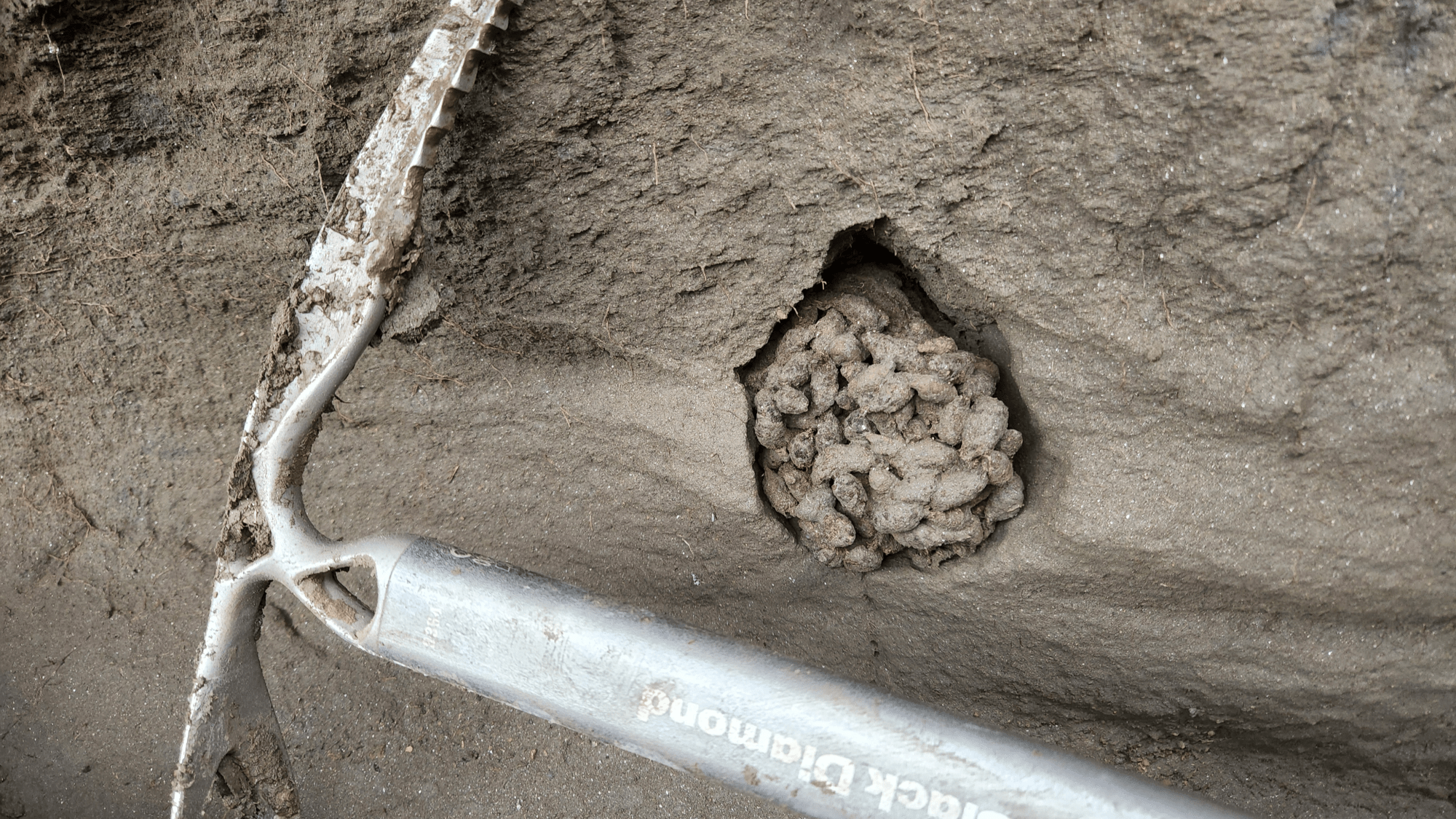
Researchers analyzed permafrost samples collected from ground squirrel burrows that span several glacial periods and can remain frozen and sealed for thousands of years. Image:Government of Yukon.
A rodent time capsule
Arctic ground squirrels (Urocitellus parryii) are still alive today. They are widely found within Beringia, a region spanning the Yukon in Canada and Alaska in the United States. They are opportunistic feeders that eat a wide variety of plants, fungi, and insects. They will also eat meat, including dead flesh, whale meat, and even other rodents. They can also hibernate for up to seven months. Their wide diet and long-term hibernation in frozen burrows have helped create a detailed biological record of their environment.
“I’ve been describing them as acting a bit like tiny Arctic pack rats,” Tyler Murchie, a study co-author and McMaster University biomolecular archaeologist, tells Popular Science. “These squirrels are interesting both because of what they collected from the environment and because of their own evolutionary histories and how they adapted to the far north during previous glacial periods.”
The proof is in the poop
In the study, Murchie and his team analyzed 13 Arctic ground squirrel coprolite samples from the central Yukon. This research took place on the territory of the Tr’ondëk Hwëch’in First Nation and was conducted with permission.
Compared to bones or sediments, fossilized feces like these coprolites are not used as often for DNA analysis since they can degrade more easily. However, the ground squirrel burrows in Arctic regions can remain frozen and sealed for thousands of years, preserving genetic material in the poop. The ground squirrel burrows here span several glacial periods, and the organic material inside can remain frozen and sealed for thousands of years. The samples in this study date back 30,000 to approximately 700,000 years ago and the biomolecules from ancient animals can be preserved in the coprolites.
“Ancient squirrel poop was one of those ideas that sounded a bit ridiculous at first,” says Murchie. “Scott [Cocker, a study co-author] and I did it initially in part for fun and out of curiosity, not knowing what to expect. But scientifically, it made a lot of sense that these sorts of remains would be really information dense given how dense the burrows can be with macro-remains and given that they’ve been frozen continually for millenia. The squirrels were basically collecting pieces of the landscape and storing them in frozen burrows.”
To tell that something is coprolite, context matters. The scientists didn’t find a random poop pellet here or there, but found the droppings as part of a greater burrow system.
“They are small pellets, roughly rabbit-dropping sized, and they look like dried or fossilized fecal pellets rather than random sediment clumps or plant fragments,” Murchie explains. “When you’re working with them though, they very much seem like frozen poop. When we subsample them and go to digest a portion to extract DNA, it smells like poop. So the organics are all still in there.”
Inside of these DNA samples they not only found smaller organisms like plants and microbes, but larger animals—woolly mammoths (Mammuthus primigenius), American cheetahs (Miracinonyx), horses (Equus), steppe bison (Bison priscus), and more. The team was able to reconstruct 18 mitochondrial genomes from the poop samples, including 12 ground squirrels, one hare, two bison, and three horses.
An artist’s reconstruction of Pleistocene Yukon, showing Arctic ground squirrels scavenging meat and foraging on plants within the mammoth-steppe ecosystem. Ancient DNA from their preserved burrows and faeces reveals this complex food web—where even small rodents fed on megafauna like mammoths. Image: Mercedes Minck/Hakai Institute.
A humbling timeline
The team also found a previously unknown genetic diversity among Arctic ground squirrels, including one lineage that dates back 700,000 years. While this squirrel does not live in the Yukon, its relatives can be found in western Siberia.
“There’s something humbling in the timescale. Some of these samples are older than our species. Homo sapiens in our modern anatomical form are usually placed at around 300,000 years ago, and our oldest sample is roughly 700,000 years old,” says Murchie. “So these squirrels were living, collecting, eating, caching, and leaving behind these tiny biological archives long before humans like us existed.”
The team acknowledges that some of the DNA may have been picked up from the coprolite’s surface at a later time and species identification may be affected by incomplete genetic reference databases for animals that lived so long ago. However, these findings show that permafrost coprolites can be part of a high-resolution snapshot of prehistoric environments and complement more typical findings like bones and teeth.
“Science is sometimes at its best when it takes something ordinary, weird, or even funny, and shows that it contains a much larger story,” says Murchie. “In this case, squirrel poop can turn out to be a window into deep time, climate change, extinction, evolution, and ecosystems that no longer exist.”

 Login
Login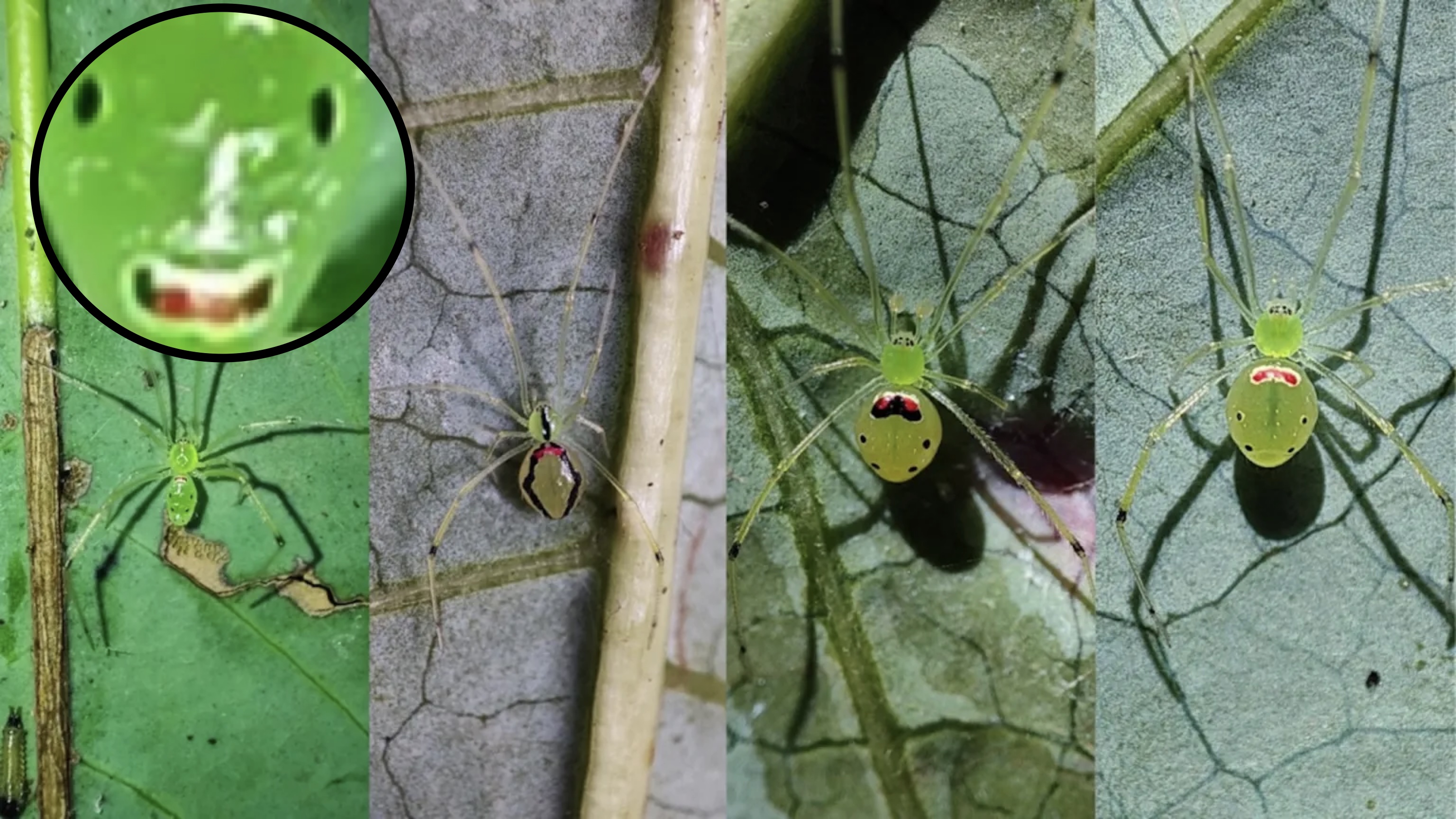


:max_bytes(150000):strip_icc():format(jpeg)/marieangela-queeny-king-elijah-blue-allman-Alphabet-Soup-Grown-Ups-Book-Launch-Party-2013-040925-26b4f7b30fb54f91a72254bb83362b75.jpg)