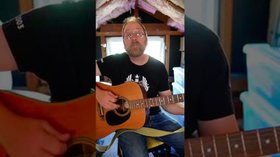
Mustafa
Mustafa is a Sudanese-Canadian hip-hop and folk artist. Mustafa has used his musical platform to condemn genocide.
Mustafa.
After writing an open letter urging former Canadian Prime Minister Justin Trudeau to show support for Gaza, Mustafa organized two Artists for Aid benefit concerts. Ticket sale proceeds from the first concert went to Human Concern International, a Canadian organization that provides humanitarian aid to Gaza and Sudan. The second concert raised money for War
Mustafa is a Sudanese-Canadian hip-hop and folk artist. Mustafa has used his musical platform to condemn genocide.
Mustafa.
After writing an open letter urging former Canadian Prime Minister Justin Trudeau to show support for Gaza, Mustafa organized two Artists for Aid benefit concerts. Ticket sale proceeds from the first concert went to Human Concern International, a Canadian organization that provides humanitarian aid to Gaza and Sudan. The second concert raised money for War Child UK’s work in Gaza and Sudan.
“In the last few years I visited both my homeland, Sudan, & Palestine. My visit to both had a principal intention, to connect with artist communities, with young organizers — for parallels of sorrow and hope and faith,” he said in his message announcing the first Artists for Aid.
“The violence in both nations seized the dream. Here it is revived for me in some way. The intention remains, on this evening we give our voices to make room for theirs.”
Nemahsis
Nehmasis.
Palestinian-Canadian artist Nemahsis had her recording contract terminated in October of 2023 after she shared pro-Palestinian content on social media. She spent the next few months trying to find a label to distribute her debut album. The only offer that she received fell through.
Nemahsis and her team then made the decision to release two singles, “you wore it better” and “stick of gum” independently. The “Stick of Gum” music video was filmed in her family’s hometown of Jericho, Palestine.
“We want to show Palestine in a light that has never been seen,” she said to Q’s Tom Power about the “Stick of Gum” music video. “Some people didn’t even know Palestine existed until October, and now we want to show them in a way where we’re humanized again.”
Leith Ross
Leith Ross is a Winnipeg-based singer-songwriter who is originally from Manotick, a neighbourhood in Ontario just south of Ottawa, that they described as “conservative and cut-off” to NME. Ross’ 2020 project Motherwell explored their feelings about identity, belonging and coming out as trans non-binary.
Leith Ross.
Their 2023 debut album, To Learn, was inspired by the safe community they found in Winnipeg after isolating years in Toronto as a student at Humber Polytechnic (then called Humber College). Ross’ passion for community carried over to their 2025 album I Can See The Future, particularly the album’s title track.
“It refers to this depth of understanding about the world that then allows you to believe that the world is good or will be good,” they said to The Line of Best Fit. “And, maybe, that belief extends to you as an individual knowing that you are doing your best and that you deserve to live and continue to try to do your best.”
Debby Friday
Debby Friday is a Toronto-based Nigerian-Canadian electronic artist who uses music to tackle the nuances of being both Black and 2SLGBTQIA+.
Debby Friday.
She spent most of her childhood moving around Montreal and shared in an interview with RANGEthat the city’s grit and social intermingling have shaped her context.
In an interview with Loud And Quiet, she said that her music is aggressive because she exists in a world that is aggressive towards her Black and 2SLGBTQIA+ identities and her body.
“There is a whole stigma around being an angry queer black woman. I’m just really tired of it, it’s very un-nuanced,” she said. “The energy I have in my music is about not being afraid to embody that confrontation.”
Although Friday feels the weight of the realities of oppression, she still feels the need to challenge it by not conforming to society’s rules about what a Black woman should act or sound like.
“Change is a violent force. It doesn’t often happen quietly or nicely. It’s what brought the universe into being, it’s what allows society to progress. It’s an aggressive force,” she said to Loud And Quiet.
“The energy I have in my music is about not being afraid to embody that aggression. The things that come up in our cultural artefacts are just a reflection of what is going on in our collective consciousness. I’m aggressive about changing the world, I’m not going to apologise for that.”
CEC
CEC is a Winnipeg-based artist whose music blends genre (R&B and jazz) and language (English and Spanish).
CEC.
Their passion for helping underrepresented artists inspired them to create The Clubhouse alongside Canadian indie-pop artist Lana Winterhalt. The Clubhouse is a studio and community hub in Winnipeg that provides training for women and 2SLGBTQIA+ people.
In 2025, CEC was chosen as one of seven producers for the Women in the Studio National Accelerator hosted by Music Publishers Canada. The program helps Canadian women and non-binary producers with their branding, financial literacy and technical skills.
When talking to The Manitoban about the program’s uniqueness, CEC acknowledged how difficult it is to find producers and engineers that aren’t men.“It’s really interesting and important that there are programs like this every year that happen, to specifically train women and non-binary people,” they said to The Manitoban. “Every year, there’s a new cohort of six or seven professionally trained producers that come out of it.”
Not only did Taylor Swift make a surprise appearance at the world premiere of “Toy Story 5” on Tuesday night in Los Angeles, but she also performed after the screening. Taking to the stage, Swift played the piano while singing “I Knew It, I Knew You,” her new song on the “Toy Story 5” soundtrack. […]
Not only did Taylor Swift make a surprise appearance at the world premiere of “Toy Story 5” on Tuesday night in Los Angeles, but she also performed after the screening. Taking to the stage, Swift played the piano while singing “I Knew It, I Knew You,” her new song on the “Toy Story 5” soundtrack. […]
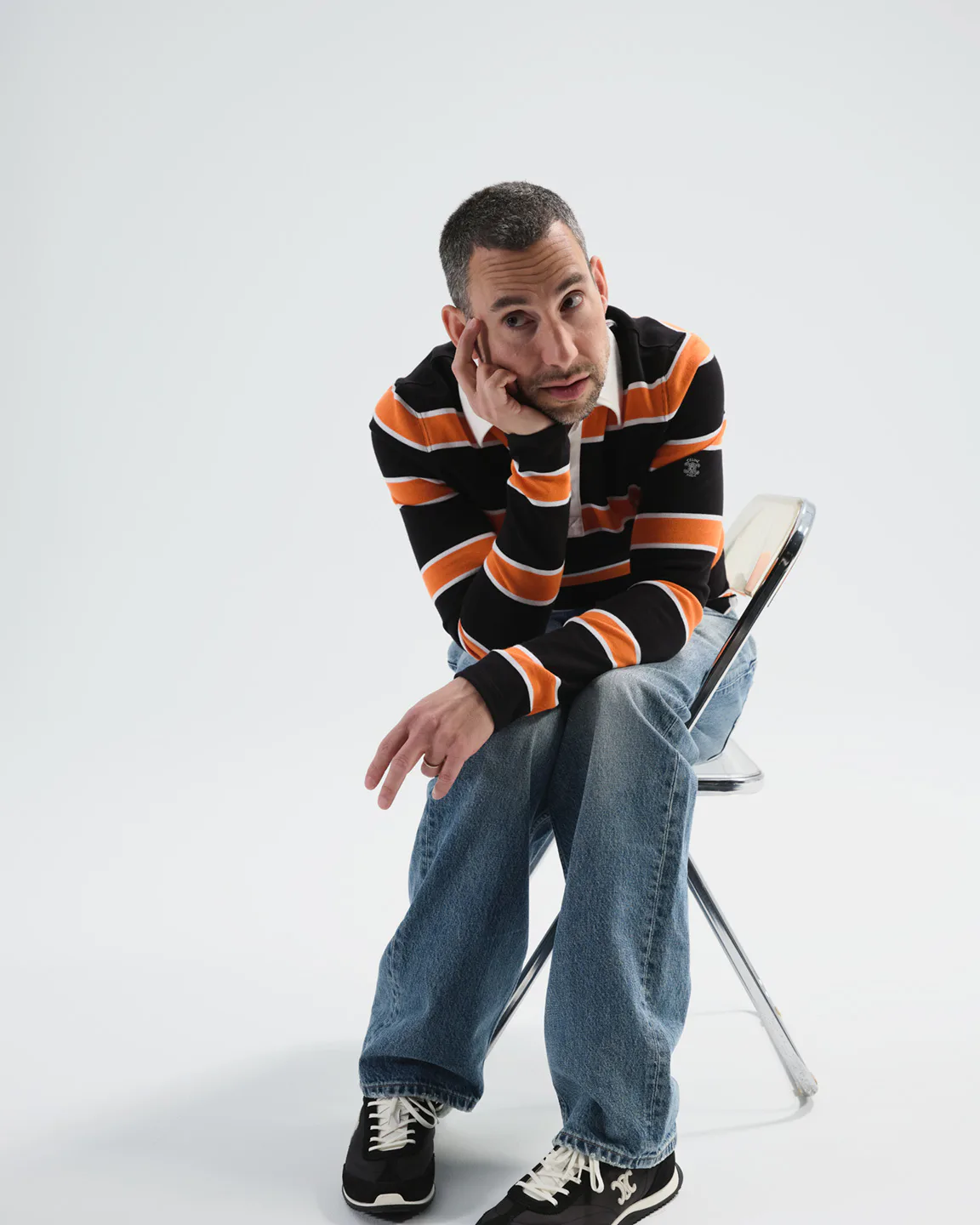
Jack Antonoff wears a Celine shirt, jeans, and sneakers. After many years of playing in the indie music scene as the lead guitarist of the band Fun., you had your breakout moment in 2011 with the song “We Are Young.” Thirteen Grammys later, you’re now associated with the sound of a generation, producing and writing for artists like Taylor Swift, Lana Del Rey, and Kendrick Lamar. Do you ever think about your influence on culture?It’s really hard to think about. I don’t want to be a part of cultur
Jack Antonoff wears a Celine shirt, jeans, and sneakers.
After many years of playing in the indie music scene as the lead guitarist of the band Fun., you had your breakout moment in 2011 with the song “We Are Young.” Thirteen Grammys later, you’re now associated with the sound of a generation, producing and writing for artists like Taylor Swift, Lana Del Rey, and Kendrick Lamar. Do you ever think about your influence on culture?
It’s really hard to think about. I don’t want to be a part of culture—I want to have my own culture. I want to move culture in the directions that I feel necessary. It’s what I’ve done since I was 15. I say, “This is what I think is the shit,” and then I go do that.
This month, you’re releasing Everyone for Ten Minutes, your fifth studio album with Bleachers, the rock band you formed in 2013. What’s the title referencing?
The whole world right now is this endless gallery of people talking who have no knowledge or intentionality. I was sending myself a song when I saw that “Everyone for 10 Minutes” feature on AirDrop, and I thought, How interesting, the machine knows there have to be protections in place for who you let in. The album is about love and loss, but the lens this time is things I really want to leave behind.
Your song “Dirty Wedding Dress,” about your and Margaret Qualley’s wedding, touches on this.
The lyric is “Only my people can see me / Only my people come in.” At our wedding, there were people taking pictures outside the venue, and a big scene, but we closed the door. We’re all gonna live, we’re all gonna die. I don’t want to spend my time on the temporary thoughts or feelings of a dissolving culture.
Prada shirt and pants.
Why do you think culture is dissolving?
The biggest lie of our time is that community exists on the Internet. I went to a very typical high school in New Jersey, where it looked like Abercrombie had vomited on the place. Freshman year, I remember seeing this one guy, Pete, wearing a shirt of a band I liked, and I gravitated toward him. We would go to shows and meet up with other people who felt like us. That’s how I see the world, and that’s how I see being an artist.
Loneliness is a theme that runs through your music, from albums you’ve produced, like Swift’s Folklore and Midnights, to your own work in Bleachers.
I’m always in touch with the lonely part of myself. The lonely are a beautiful group of people. We get some of our greatest art and wisdom from the lonely.
The first two songs on the album, “Sideways” and “The Van,” are about your memories of being 15. Why start there?
A lot of people got to know me publicly in my late 20s, and that’s a funny time in your life. When you get known for different things, you can feel really seen, but you can also feel like other parts of yourself get erased. That’s where I got the line “Shouted hello bastards / As we left our ancestors.” For my whole lineage—an Eastern European, Holocaust-surviving immigrant story—the theme was just to get safe, get a house, earn a wage, have a family. But at 15, I left [that path]. You make decisions you don’t even think twice about, but they set you on a complicated course.
The Row sweater, shirt, pants and shoes.
You described working on Kendrick Lamar’s latest album, GNX, as being part of a “secret society.”
You know you’re doing the right thing when you’re supposed to be somewhere at 2, and you get there at 1:30. There was nothing we made—and we made a lot of music—that didn’t completely touch my heart. When I’m working with people, I get really obsessive about where they’re at, what it’s like to be them, and then trying to take all that and put it into something that you can hit play on. I don’t think in terms of genre. Great is great.
You and Lana Del Rey started working together in 2018 and have made three albums together. How does a collaboration stay alive for so long?
I never expect to work with people over and over. You just get called back to each other or not. With me and her, it’s just “Where are you? Maybe let’s catch a day.” We caught three days in New Orleans randomly, and that’s when we did [her single] “White Feather Hawk Tail Deer Hunter.”
Where is pop music heading?
I think pop music will become way more organic, and anything that is very algorithmic will probably get swallowed by AI—honestly, as it should. What survives will be a more direct expression of hearing or feeling someone in the room. People are screaming and crying for that because they can’t take another second of their humanity being reduced to something getting their attention.
Photo assistants: Jeremiah Cumberbatch, Ricardo Lara; digital technician: David Gannon; fashion assistant: Juje Hsiung.
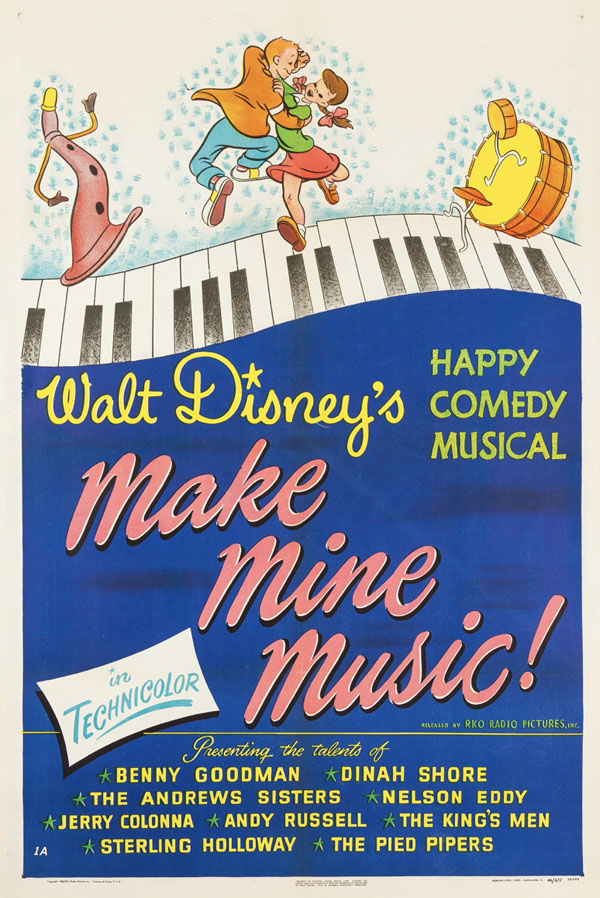
When Make Mine Music opened in 1946, The New York Post called it “…a veritable vaudeville show, a three-ring circus, and grand opera thrown together into one technical masterpiece.”
It may be the best description for this film made during a difficult time for Walt Disney and his Studio. Between an animators’ strike, and America’s involvement in World War II, production at the Studio had been a challenge during most of the 1940s.
Walt kept animation production going during this period by producin
When Make Mine Music opened in 1946, The New York Post called it “…a veritable vaudeville show, a three-ring circus, and grand opera thrown together into one technical masterpiece.”
It may be the best description for this film made during a difficult time for Walt Disney and his Studio. Between an animators’ strike, and America’s involvement in World War II, production at the Studio had been a challenge during most of the 1940s.
Walt kept animation production going during this period by producing lower-budgeted, easy-to-execute films, known as “package films,” which didn’t have a traditional plot but instead were a series of short subjects strung together during a feature-length running time.
One of these was Make Mine Music, with a common theme among the segments being that each was set to a particular piece of music. As each is so vastly different, the Post’s description of the film is appropriate.
The film plays with the Fantasia formula, opening like a concert complete with a program that reads: “Make Mine Music: A Musical Fantasy.”
From here, the film segues to the first section of the film, “The Martins and the Coys” (billed on the program as “A Rustic Ballad”), narrated by the singing group The King’s Men, as it tells the musical tale of two feuding mountain families.
After this, the Ken Darby Chorus performs the title song, “Blue Bayou.” The slow-paced music features accompanying visuals of a nighttime bayou as a bird takes flight, in a sequence that reuses animation intended for a sequel to 1940’s Fantasia, originally intended to accompany the musical composition “Clair de lune.”
Next up is Benny Goodman and his Orchestra with “All the Cats Join in.” Two “hepcat bobbysoxer” teens of the decade dance to the upbeat music as they get ready for a date, with animation introduced by a pencil that draws images that come to life.
Singer Andy Russell performs the next segment, “Without You,” a ballad, with sad, surreal images that transition into views of lonely woods and nighttime stars.
The following segment is one of the film’s most famous, “Casey at the Bat,” narrated as a “Musical Recital” by comedian Jerry Colonna, in his over-the-top style, as a re-telling of the “baseball poem” by author Ernest Thayer about the Mudville team and their star player. This segment was released later in 1946 as a stand-alone short subject and even spawned a sequel with Casey Bats Again, in 1954.
Singer Dinah Shore sings “Two Silhouettes,” the next segment, a “Ballade Ballet” featuring two ballet dancers in rotoscoped silhouette animation, performing in front of a stylized backdrop and assisted by two cherubic figures.
Next is arguably the most popular segment, “Peter and the Wolf,” narrated by the familiar, comforting voice of Disney stalwart Sterling Holloway, from the famous musical composition by conductor Sergei Prokofiev. This segment (sans narration) was also created to be an additional component to Disney’s Fantasia.
Set in Russia, the segment tells the tale of young Peter and his friends Sascha, a bird, Sonia the duck, and Ivan the cat, who venture off into the woods to hunt a wolf. A different musical instrument represents each character, with a distinct theme.
“Peter and the Wolf” was such a substantial segment that it has been shown on its own several times and even released as a record album (paired with “The Sorcerer’s Apprentice” on the flip side).
“Peter and the Wolf” is followed by another Benny Goodman number, “Since You’ve Been Gone,” which provides the backdrop for a march of anthropomorphized musical instruments.
The Andrews Sisters then perform the musical narration for “Johnny Fedora and Alice Blue Bonnet,” a sweet story of two hats who fall in love after meeting in a department store window.
The concluding segment is baritone singer Nelson Eddy and the story of “The Whale Who Wanted to Sing at the Met,” about a whale named Willie with incredible operatic talents and dreams. He is hunted by a music conductor who believes that the whale has swallowed an opera singer.
Although it contains a sad ending, this segment includes beautiful, lush animation, particularly where Willie sings as Pagliacci the Clown, and full opportunity is taken for sight gags involving the size and scale of Willie.
Directed by Jack Kinney, Clyde Geronimi, Hamilton Luske, Joshua Meador, and Robert Cormack, Make Mine Music features animation by Disney Legends Ward Kimball, Ollie Johnston, and Eric Larson, among others.
The artists balance the different styles. There’s the entertaining, overly caricatured design of “Casey,” with the main character’s jut-jaw, and a player who touches the base with his giant handlebar mustache. This is offset by scenes with such images in “Without You,” which play out like rain cascading down a window.
Make Mine Music has been shown on The Disney Channel and released on home video in 2000 (with “The Martins and the Coys” removed due to violence and gunplay concerns), and on Blu-ray in 2021, but as of this writing, the film is still not available on Disney+ (although it is available on Amazon Prime).
Make Mine Music had its premiere in New York City on April 20, 1946, and went into general release on August 15. As the film now celebrates 80 years, it’s the perfect time to revisit this “vaudeville show, three-ring circus, and grand opera” from a unique era in Disney history.
Originally released on my iphone album (2010) and later released this gameboy version (2015).
lyrics:
Is this a date or am I walking on a Möbius Strip?
Cause one minute y'r cool, the next you flip
You've always gotta make everything so dramatic
Simply talking to you requires use of higher mathematics
Come down to this
Your loose lips have sunk a thousand ships
And I heard somebody finally beat you at this
Must of been some sort of subgenius
I kiss the moon, when I think about you
It's all I know
lyrics:
Is this a date or am I walking on a Möbius Strip?
Cause one minute y'r cool, the next you flip
You've always gotta make everything so dramatic
Simply talking to you requires use of higher mathematics
Come down to this
Your loose lips have sunk a thousand ships
And I heard somebody finally beat you at this
Must of been some sort of subgenius
I kiss the moon, when I think about you
It's all I know how to do
I took my cues from you and then you took 'em back
Now there's nothing else to loose you took it all
I want it back.
 Login
Login

:max_bytes(150000):strip_icc():format(jpeg)/blake-shelton-luke-bryan-021026-d5341672942c4a99a2c8a5ea8b8178a1.jpg)


:max_bytes(150000):strip_icc():format(jpeg)/Mick-Jagger-attends-2026-the-New-York-City-Ballet-Spring-Gala-060126-cc648a4bf2db497a8af092c14d18014a.jpg)

:max_bytes(150000):strip_icc():format(jpeg)/kim-kardashian-north-west-061326-4a12edc6b8d8487ea0d52617e62eea59.jpg)
:max_bytes(150000):strip_icc():format(jpeg)/Ariana-Grande-Justin-Long-060126-3d24c178ad1a40faaa463378c3adaf39.jpg)

:max_bytes(150000):strip_icc():format(jpeg)/jon-bon-jovi-wife-and-kids-33rd-Annual-Rock--Roll-Hall-of-Fame-Induction-Ceremony-060326-67e555e5a8c24481ae79eb9d200fe996.jpg)
:max_bytes(150000):strip_icc():format(jpeg)/Taylor-Swift-throwback-NBAEastern-Conference-Finals-060626-5b299299f0ea4275994ac7055c8e37bc.jpg)

 When Make Mine Music opened in 1946, The New York Post called it “…a veritable vaudeville show, a three-ring circus, and grand opera thrown together into one technical masterpiece.”
 After this, the Ken Darby Chorus performs the title song, “Blue Bayou.” The slow-paced music features accompanying visuals of a nighttime bayou as a bird takes flight, in a sequence that reuses animation intended for a sequel to 1940’s Fantasia, originally intended to accompany the musical composition “Clair de lune.”
 Set in Russia, the segment tells the tale of young Peter and his friends Sascha, a bird, Sonia the duck, and Ivan the cat, who venture off into the woods to hunt a wolf. A different musical instrument represents each character, with a distinct theme.
 Directed by Jack Kinney, Clyde Geronimi, Hamilton Luske, Joshua Meador, and Robert Cormack, Make Mine Music features animation by Disney Legends Ward Kimball, Ollie Johnston, and Eric Larson, among others.