Clockwise from top left, looks from: Isabel Marant, Chanel, Gucci, Dolce & Gabbana, 7 for All Mankind, Saint Laurent, Valentino, Tom Ford. Center: Elizabeth Taylor in 'Butterfield 8.': Courtesy of Isabel Marant; Courtesy of Chanel; Courtesy of Gucci; Courtesy of Dolce & Gabbana; Courtesy of 7 For All Mankind; Courtesy of Saint Laurent; Courtesy of Valentino; Courtesy of Tom Ford. Center: George Rinhart/Corbis via Getty Images.There is absolutely no reason for a walk of shame—that hungove
Clockwise from top left, looks from: Isabel Marant, Chanel, Gucci, Dolce & Gabbana, 7 for All Mankind, Saint Laurent, Valentino, Tom Ford. Center: Elizabeth Taylor in 'Butterfield 8.': Courtesy of Isabel Marant; Courtesy of Chanel; Courtesy of Gucci; Courtesy of Dolce & Gabbana; Courtesy of 7 For All Mankind; Courtesy of Saint Laurent; Courtesy of Valentino; Courtesy of Tom Ford. Center: George Rinhart/Corbis via Getty Images.
There is absolutely no reason for a walk of shame—that hungover, postcoital strut home—not to be chic. In fact, the art of looking effortlessly stylish while feeling sexually spent has a long and prestigious lineage. It was perfected many decades ago by the old-school Hollywood divas. Look at the buxom Elizabeth Taylor, who played the flirtatious girl-about-town Gloria Wandrous in the 1960 movie Butterfield 8. She wakes up picture-perfect in her paramour’s expansive apartment, her shimmering blue eyeshadow still sprinkled onto her lids. She lazily searches for a cigarette, beelines to the sink to brush and gargle with scotch, then finally leaves her one-night stand, deftly throwing the fattest fur in Manhattan over her slinky slipdress.
On the latest runways, it looked as though designers were obsessed with outfits that could go from dinner to boudoir to morning sidewalks without missing a beat. A sultry vixen at Valentino wore lingerie under a long, slender shearling coat. Saint Laurent paired an engulfing fur with tights as pants. There were clubbing-till-dawn denim microminis at Prada and a tiny black censor bar as a top at Courrèges. And don’t forget Chanel: A long, luscious red wine leather coat covered a beaded fishnet dress. The look is on TV too. Ryan Murphy’s Love Story took creative liberties to explain the lore behind Carolyn Bessette Kennedy’s famous outfit of an askew white men’s dress shirt tucked into a high-waist black skirt. In the Hulu-verse, she had slept over at John F. Kennedy Jr.’s TriBeCa loft and needed something to wear to work the next day.
The reality of most walks of shame is hardly as glamorous. They usually involve crusted eyes, coagulated foundation caked into the cracks of a dehydrated forehead, and the steamy emanation of vodka from every pore. Some even suggest that this once-ubiquitous rite of passage is becoming increasingly rare: Gen Z is reportedly having less sex than their predecessors, and according to a recent survey, 48 percent of them are virgins. All the while, apps have sterilized dating. These days, getting to know someone is like interviewing them for a life insurance policy. Plus, no one is guzzling martinis anymore; they measure out peptides or gulp down mounds of probiotics.
Perhaps that is why the catwalk version of hobbling in heels after a night of under-the-influence, raucous lovemaking has never felt so good. Why wouldn’t we want to look as if we’ve just emerged from under a lover’s covers instead of waking up in sweatpants after a night of swiping on our phones alone in bed? According to sex and dating writer Karley Sciortino, the walk-of-shame aesthetic is yet another form of generational nostalgia. The look is “romanticizing and being jealous of a period of time that was just inherently more spontaneous and messy,” she explains. Sciortino knows of what she speaks: In the heyday of mid-aughts indie sleaze, she was a bombshell carousing around downtown Manhattan and Williamsburg. “When I was in my 20s, I had never heard of a skincare routine, and I was using Sharpies as eyeliner,” she says. “We would go out, get drunk, and not be documenting anything.”
Maybe that’s it—we want sexual freedom! No, not in the sense of Gloria Steinem second-wave feminism, but in an emancipation from cameras and social media chronicling every kiss, fall, and mistake kind of way. Looking as if you’ve been caught proudly slinking home at sunrise is, at least, slouching toward that freedom. It’s channeling Madonna in the David Fincher–directed “Bad Girl” music video from 1993. In it, she plays a publishing executive who has a just-in-case nipped-waist Alaïa jacket, fresh in a dry cleaning bag, hanging in her office closet for those mornings after. A look like that “transforms what should be, in theory, ‘shameful’ into something that’s playful,” says Sciortino. “There’s a ‘fuck you’ to it that is powerful and attractive.” Fuck you? Hey, at least someone is getting some, even if it’s only clothes-deep.
Top image, left, clockwise from top: Courtesy of Isabel Marant; Courtesy of Chanel; Courtesy of Gucci; Courtesy of Dolce & Gabbana; Courtesy of 7 For All Mankind; Courtesy of Saint Laurent; Courtesy of Valentino; Courtesy of Tom Ford. Center: George Rinhart/Corbis via Getty Images.
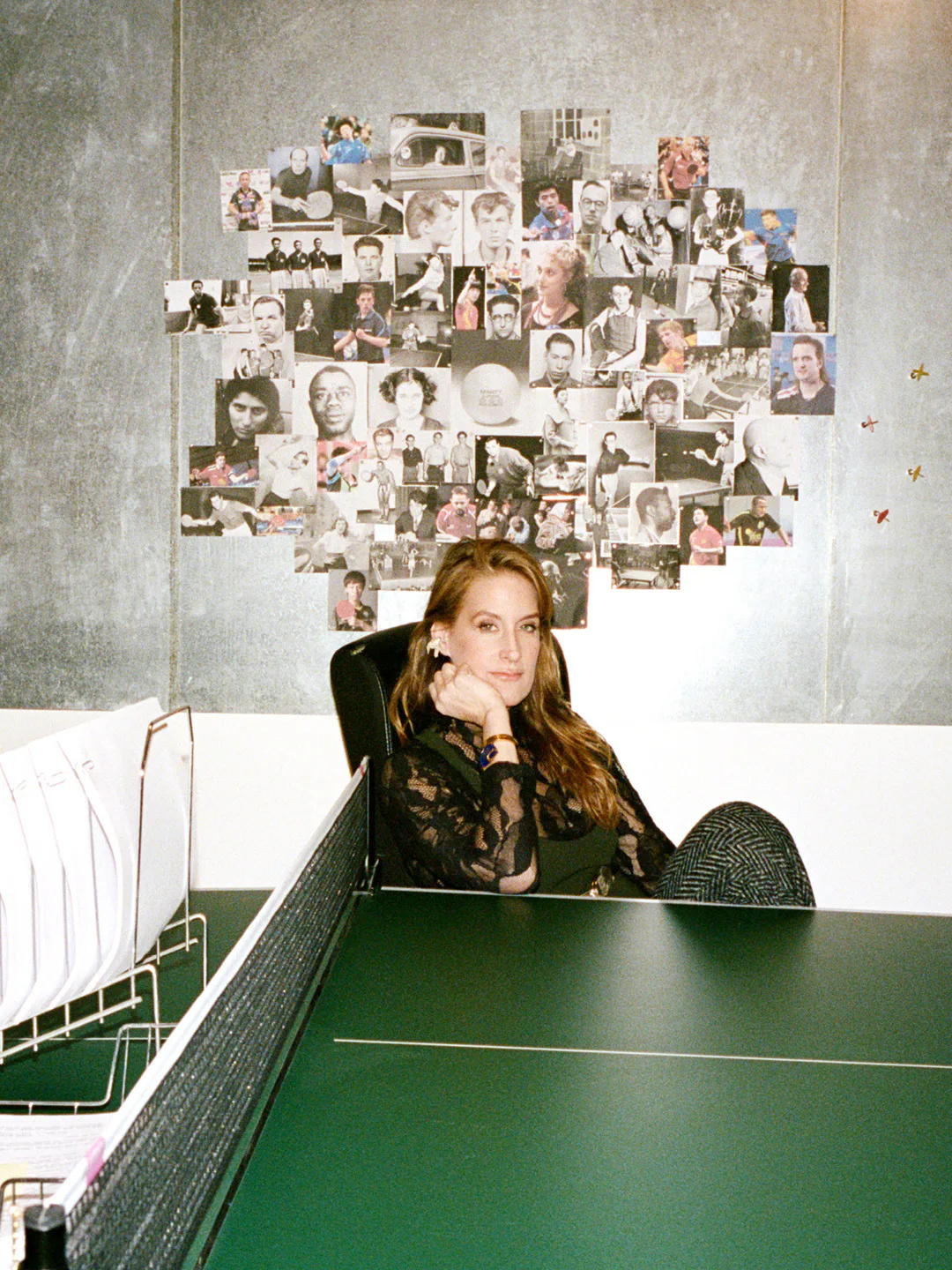
Jennifer Venditti wears her own clothing.Several decades before Jennifer Venditti became one of the most in-demand casting directors in Hollywood—a woman known for her uncanny ability to pick a potential scene-stealer out of the crowd at, say, a nerd-packed anime convention or an acne-blighted high school cafeteria—she orchestrated her own casting, at a Midwestern shopping mall. It was the dawn of the ’90s, and Venditti, who grew up in St. Paul, Minnesota, was a student at Chicago’s Internationa
Several decades before Jennifer Venditti became one of the most in-demand casting directors in Hollywood—a woman known for her uncanny ability to pick a potential scene-stealer out of the crowd at, say, a nerd-packed anime convention or an acne-blighted high school cafeteria—she orchestrated her own casting, at a Midwestern shopping mall. It was the dawn of the ’90s, and Venditti, who grew up in St. Paul, Minnesota, was a student at Chicago’s International Academy of Merchandising and Design when she heard that one of her idols, the designer Anna Sui, would be making a local in-store appearance. With her boyfriend in tow and her résumé in hand, Venditti dressed herself (and her man, who happened to be a model) in the most eye-catching vintage she could get her hands on—“I was really obsessed with the whole grunge thing,” she says—and headed to the event, where she waited for her moment. Sure enough, Sui approached. “She liked what we were wearing,” Venditti remembers. Over the course of a quick conversation, Venditti expressed her desire to land a summer internship in the New York fashion world. Sui instructed her to fax her résumé to Keeble Cavaco & Duka, one of the top fashion PR and production firms (now known as KCD), and within weeks Venditti was working under the agency’s runway producer, Nian Fish, on a Calvin Klein show. She dressed models backstage and spent hours with the brand’s head of show production, the soon-to-be Carolyn Bessette Kennedy. She never made it back to school in Chicago.
After two years at KCD, where she did “a little bit of everything” but ultimately concentrated on casting, Venditti left to assist the stylist Lori Goldstein. It was, in many ways, a dream job. “I was traveling around the world with all the top photographers, doing stuff with Madonna and Annie Leibovitz,” she says. But she eventually got frustrated by what she saw as the industry’s closed-minded lack of creativity when it came to models. “It was rules and dogma and trends: Someone’s saying this is what it is, and then everyone else is doing their version of that. First it was Brazilian beauty, then Belgian beauty.…” One day, she was working on a magazine cover shoot, and “I just looked around and thought, I can’t do this anymore.” She decided to start her own agency, hoping to encourage a more expansive definition of beauty through street casting.
An image from “Coal Country,” a W story from August 1998 photographed by Peter Lindbergh and cast by Venditti.
Her timing was spot-on. With the supermodel era winding down and reality TV on the rise, stylists and photographers were realizing that so-called regular people (who were more often not actually “regular” but in some way unusual looking) could be an especially compelling addition to fashion shoots. One of the first to embrace the idea was W’s creative director at the time, Dennis Freedman, who hired Venditti to cast some of the magazine’s most elaborate fashion stories. Whereas today “we have the street through Instagram,” says Venditti, in those pre–social media days, street casting involved marathons of pavement-pounding. She combed Brazilian favelas in search of interesting faces for a story by Philip-Lorca diCorcia and scoured Penn State for a David Sims portfolio set at the school. Her most memorable trip, she says, was to Appalachia, where she befriended a young mother of five named Melissa and cast her in the 1998 Peter Lindbergh story “Coal Country.” “The magazine sent me all over the world with a Polaroid, and I just got to explore,” Venditti remembers. “Dennis never even gave me guidelines. It was just, ‘Find what you think is beautiful, what you think is interesting.’ ”
Top: Adam Sandler in Uncut Gems. Courtesy of A24. Middle: A still from Billy the Kid, directed and produced by Venditti. Courtesy of Oscilloscope Laboratories. Bottom: Timothée Chalamet (center) in Marty Supreme. Courtesy of A24.
A casting trip to Maine in 2006 led to her film career. There, she struck up a conversation at a high school lunch table with a 15-year-old social outlier named Billy Price, whom his classmates described as “a total weirdo.” Venditti was entranced by his unfiltered honesty and off-kilter outlook and decided to make a documentary about him. “I wanted to experience the world through his eyes,” she says. Billy the Kid was released in 2007, and, Venditti says, “I started getting calls from, like, Spike Jonze and Ryan Gosling. Everyone was kind of just like, ‘I love the way you see the world. Will you populate my world like that?’ ”
Venditti’s most serendipitous connection came via a screening of the doc at the South by Southwest festival, in Austin, Texas, where she noticed two brothers playing pool. “I thought they were so cute, and I think I tried to scout them,” she says, laughing. It turns out they were the then-unknown auteurs Josh and Benny Safdie, with whom she’s now worked on multiple films, including the duo’s Uncut Gems in 2019 and Josh’s Marty Supreme in 2025, for which Venditti was nominated for the inaugural Oscar in the category of casting.
Jennifer Venditti wears her own clothing and Celine shoes.
Finding actors for a film or television show, says Venditti—who’s also known for her work on the HBO series Euphoria—is very different from casting a fashion shoot. For still photography, “you just look for a face, photograph the face, and then you get their contact info.” With a movie, “you have to get a performance out of them.” The first step, she says, is building trust with a person, which she does over the course of several in-depth, interview-esque conversations. When she’s dealing with nonactors, the idea isn’t to determine whether they can act, but “to see if there’s anything from their own life that they can bring to the role,” she says. “My whole thing is, I’m trying to create the cinema of life.” Most of all, she says, she’s looking for a compelling, magnetic singularity that might be described as “star quality,” but that she calls simply “authenticity.” The ability to spot it has been the key to her success. “The strongest tool that I have is instinct,” she says. “I can just kind of feel, This person has ‘it.’ I can literally feel it in my body.”
Hair by Junya Nakashima for Oribe at Streeters; makeup by Romy Soleimani at eArtists; fashion assistant: Sofia Prochilo; makeup assistant: Jackie Piccola.
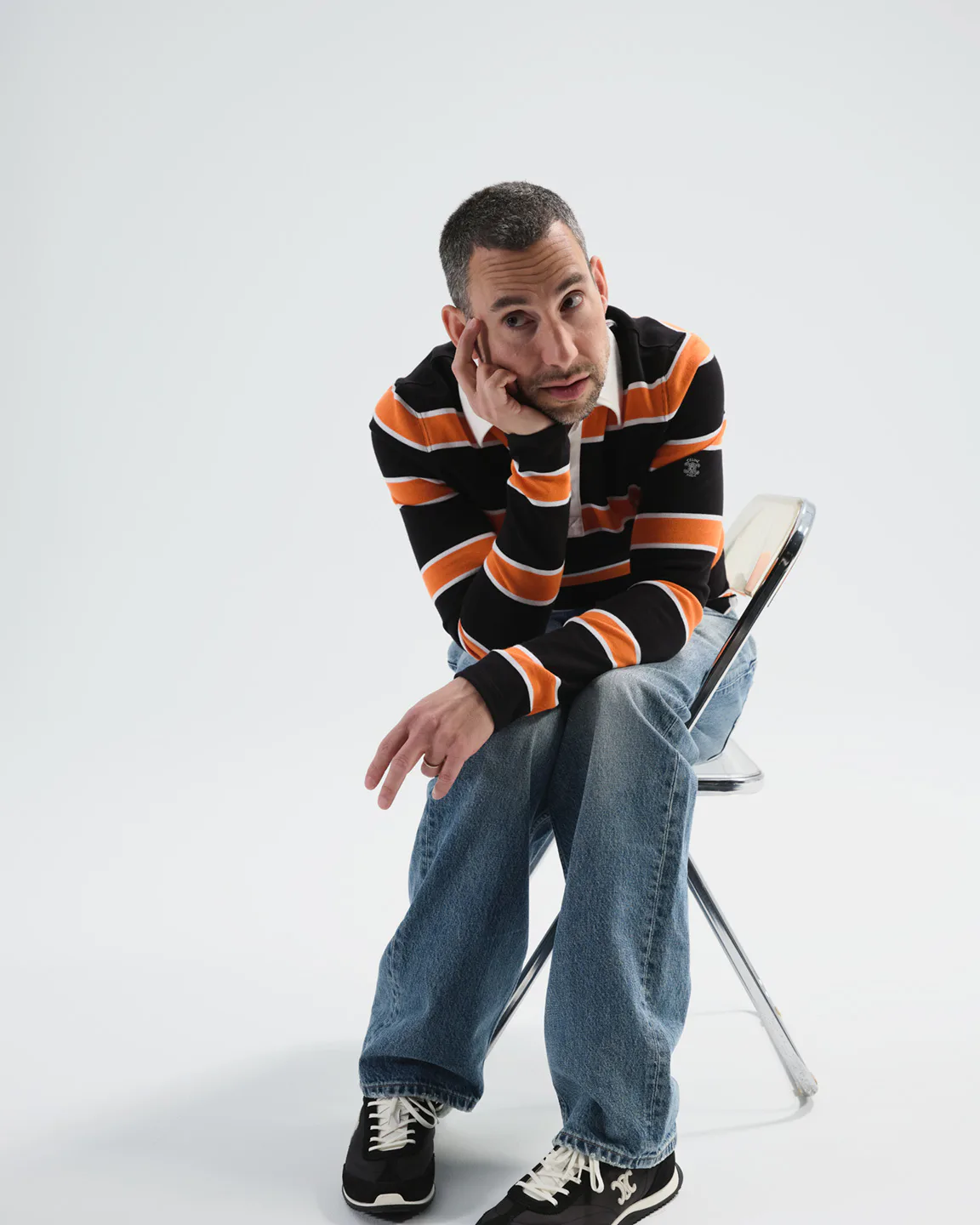
Jack Antonoff wears a Celine shirt, jeans, and sneakers. After many years of playing in the indie music scene as the lead guitarist of the band Fun., you had your breakout moment in 2011 with the song “We Are Young.” Thirteen Grammys later, you’re now associated with the sound of a generation, producing and writing for artists like Taylor Swift, Lana Del Rey, and Kendrick Lamar. Do you ever think about your influence on culture?It’s really hard to think about. I don’t want to be a part of cultur
Jack Antonoff wears a Celine shirt, jeans, and sneakers.
After many years of playing in the indie music scene as the lead guitarist of the band Fun., you had your breakout moment in 2011 with the song “We Are Young.” Thirteen Grammys later, you’re now associated with the sound of a generation, producing and writing for artists like Taylor Swift, Lana Del Rey, and Kendrick Lamar. Do you ever think about your influence on culture?
It’s really hard to think about. I don’t want to be a part of culture—I want to have my own culture. I want to move culture in the directions that I feel necessary. It’s what I’ve done since I was 15. I say, “This is what I think is the shit,” and then I go do that.
This month, you’re releasing Everyone for Ten Minutes, your fifth studio album with Bleachers, the rock band you formed in 2013. What’s the title referencing?
The whole world right now is this endless gallery of people talking who have no knowledge or intentionality. I was sending myself a song when I saw that “Everyone for 10 Minutes” feature on AirDrop, and I thought, How interesting, the machine knows there have to be protections in place for who you let in. The album is about love and loss, but the lens this time is things I really want to leave behind.
Your song “Dirty Wedding Dress,” about your and Margaret Qualley’s wedding, touches on this.
The lyric is “Only my people can see me / Only my people come in.” At our wedding, there were people taking pictures outside the venue, and a big scene, but we closed the door. We’re all gonna live, we’re all gonna die. I don’t want to spend my time on the temporary thoughts or feelings of a dissolving culture.
Prada shirt and pants.
Why do you think culture is dissolving?
The biggest lie of our time is that community exists on the Internet. I went to a very typical high school in New Jersey, where it looked like Abercrombie had vomited on the place. Freshman year, I remember seeing this one guy, Pete, wearing a shirt of a band I liked, and I gravitated toward him. We would go to shows and meet up with other people who felt like us. That’s how I see the world, and that’s how I see being an artist.
Loneliness is a theme that runs through your music, from albums you’ve produced, like Swift’s Folklore and Midnights, to your own work in Bleachers.
I’m always in touch with the lonely part of myself. The lonely are a beautiful group of people. We get some of our greatest art and wisdom from the lonely.
The first two songs on the album, “Sideways” and “The Van,” are about your memories of being 15. Why start there?
A lot of people got to know me publicly in my late 20s, and that’s a funny time in your life. When you get known for different things, you can feel really seen, but you can also feel like other parts of yourself get erased. That’s where I got the line “Shouted hello bastards / As we left our ancestors.” For my whole lineage—an Eastern European, Holocaust-surviving immigrant story—the theme was just to get safe, get a house, earn a wage, have a family. But at 15, I left [that path]. You make decisions you don’t even think twice about, but they set you on a complicated course.
The Row sweater, shirt, pants and shoes.
You described working on Kendrick Lamar’s latest album, GNX, as being part of a “secret society.”
You know you’re doing the right thing when you’re supposed to be somewhere at 2, and you get there at 1:30. There was nothing we made—and we made a lot of music—that didn’t completely touch my heart. When I’m working with people, I get really obsessive about where they’re at, what it’s like to be them, and then trying to take all that and put it into something that you can hit play on. I don’t think in terms of genre. Great is great.
You and Lana Del Rey started working together in 2018 and have made three albums together. How does a collaboration stay alive for so long?
I never expect to work with people over and over. You just get called back to each other or not. With me and her, it’s just “Where are you? Maybe let’s catch a day.” We caught three days in New Orleans randomly, and that’s when we did [her single] “White Feather Hawk Tail Deer Hunter.”
Where is pop music heading?
I think pop music will become way more organic, and anything that is very algorithmic will probably get swallowed by AI—honestly, as it should. What survives will be a more direct expression of hearing or feeling someone in the room. People are screaming and crying for that because they can’t take another second of their humanity being reduced to something getting their attention.
Photo assistants: Jeremiah Cumberbatch, Ricardo Lara; digital technician: David Gannon; fashion assistant: Juje Hsiung.
Boucheron’s Untamed necklace (center) reimagines the brand’s 1879 Question Mark design as something wilder—its fluid form overtaken by unruly diamond-set ivy.In 1879, the legendary French jeweler Frédéric Boucheron designed a necklace without a clasp. Effortlessly slipped around the neck in a single swoop, it formed an asymmetrical curve resembling a question mark. It was a stunning bauble that represented a design revolution—one that, nearly a century and a half later, Boucheron creative direct
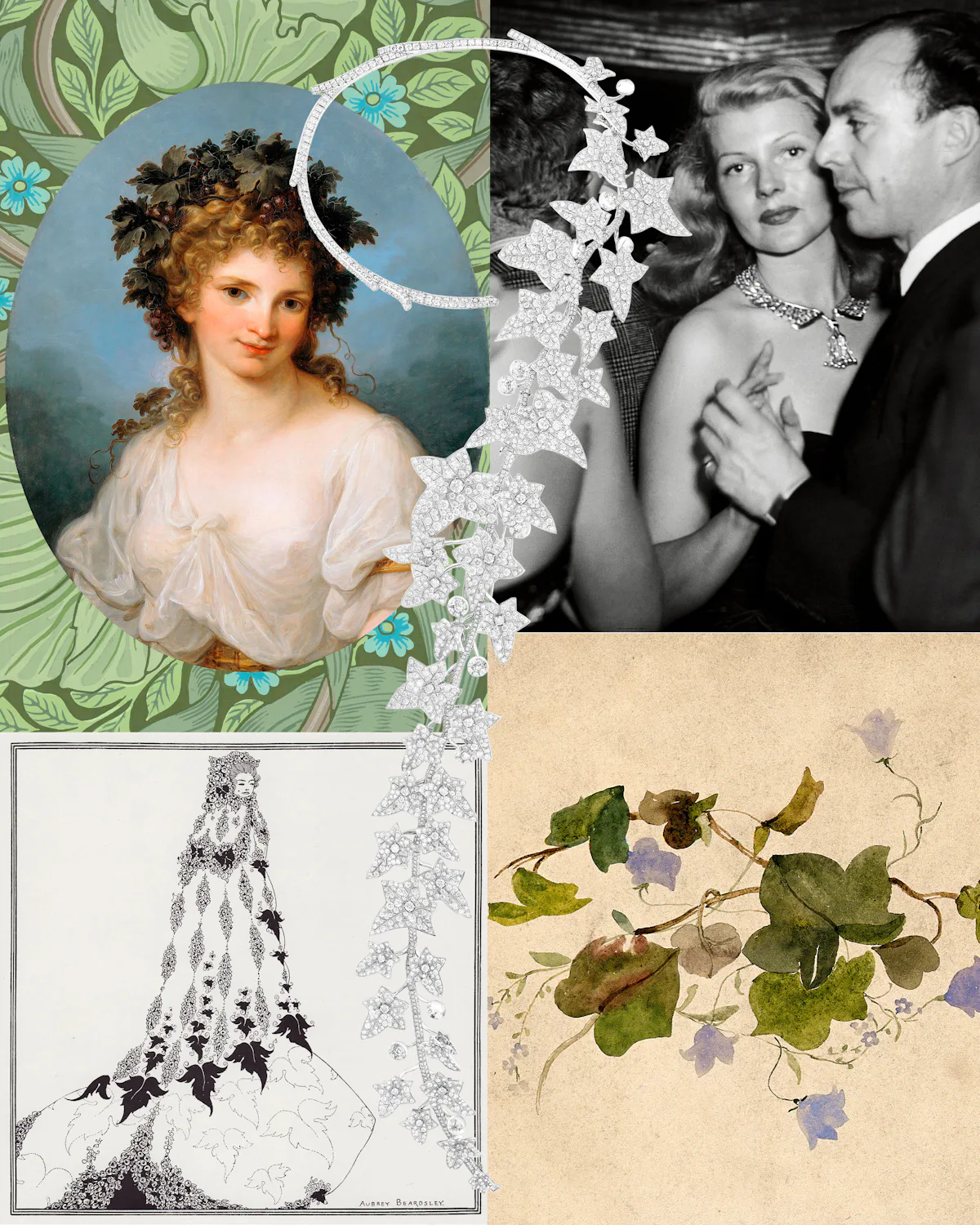
Boucheron’s Untamed necklace (center) reimagines the brand’s 1879 Question Mark design as something wilder—its fluid form overtaken by unruly diamond-set ivy.
In 1879, the legendary French jeweler Frédéric Boucheron designed a necklace without a clasp. Effortlessly slipped around the neck in a single swoop, it formed an asymmetrical curve resembling a question mark. It was a stunning bauble that represented a design revolution—one that, nearly a century and a half later, Boucheron creative director Claire Choisne is updating with the Untamed, an exquisite diamond-set ivy necklace in white gold.
The original piece—officially known as the Point d’Interrogation, or Question Mark—was radical less for its materials than for its mechanics. At a time when women still required assistance fastening heavy, rigid jewelry pieces, Boucheron proposed a fluid, organic design. “He believed that jewelry should follow the body, not the other way around,” Choisne says. His system of fine, almost imperceptible articulations remains intact in her reinterpretation, but Choisne introduces a more tensile line, sharpening the historic silhouette without disturbing its architecture.
Boucheron’s Question Mark necklace, 1884. | Courtesy of Boucheron.
She describes her latest high jewelry collection as a portrait of Frédéric Boucheron told through four major pieces. Omitting the Question Mark would have been unthinkable to her. “I could not talk about Boucheron without paying homage to his very first icon,” she says. “I would have loved inventing it.” Her version was also inspired by an 1879 archival sketch that depicted ivy climbing far beyond the collarbone, a piece Boucheron couldn’t fabricate in his time due to its complexity.
Ivy is a telling choice. While many of Boucheron’s contemporaries favored noble blossoms rendered in idealized forms, he was drawn to something more persistent and less polite. Ivy twists, climbs, and asserts itself against whatever surface it meets. In Choisne’s hands, it trails downward in round-cut diamonds and rock crystal fruits, each stem mounted leaf by leaf and calibrated to the millimeter to achieve equilibrium. The Untamed, which required 2,600 hours of work, preserves the audacity of the piece that inspired it—the absence of a clasp, the asymmetry—while “celebrating nature as it is,” as Choisne puts it.
If the 19th-century innovation of the Question Mark lay in freeing women from needing assistance, its 21st-century evolution is about adaptability. The exaggerated length creates a new proportion—instead of sitting neatly at the base of the throat, the ivy descends along the torso, elongating the wearer’s figure. Additionally, sections of the necklace can detach, becoming a collar, a brooch, and a hair ornament. Choisne speaks of her work as something responsive to circumstance. “High jewelry should no longer be viewed as static, but as a true companion in daily life,” she says. A revolutionary approach indeed.
Lead image clockwise from top left: William Morris wallpaper from 1877 with self-portrait as Bacchante, by Angelica Kauffmann, 1780s, GraphicaArtis/Getty Images and Fine Art Images/Heritage Images/Getty Images; Boucheron’s Untamed necklace, Courtesy of Boucheron; Rita Hayworth, wearing Boucheron’s Col Claudine necklace, with Prince Aly Khan in Paris, 1948, Serge DE SAZO/Gamma-Rapho via Getty Images; an illustration of blue flowers and ivy leaves, circa 1899, Heritage Art/Heritage Images via Getty Images; a sketch of a ballet costume from 1895, Shirley Markham Collection/Heritage Images via Getty Images.
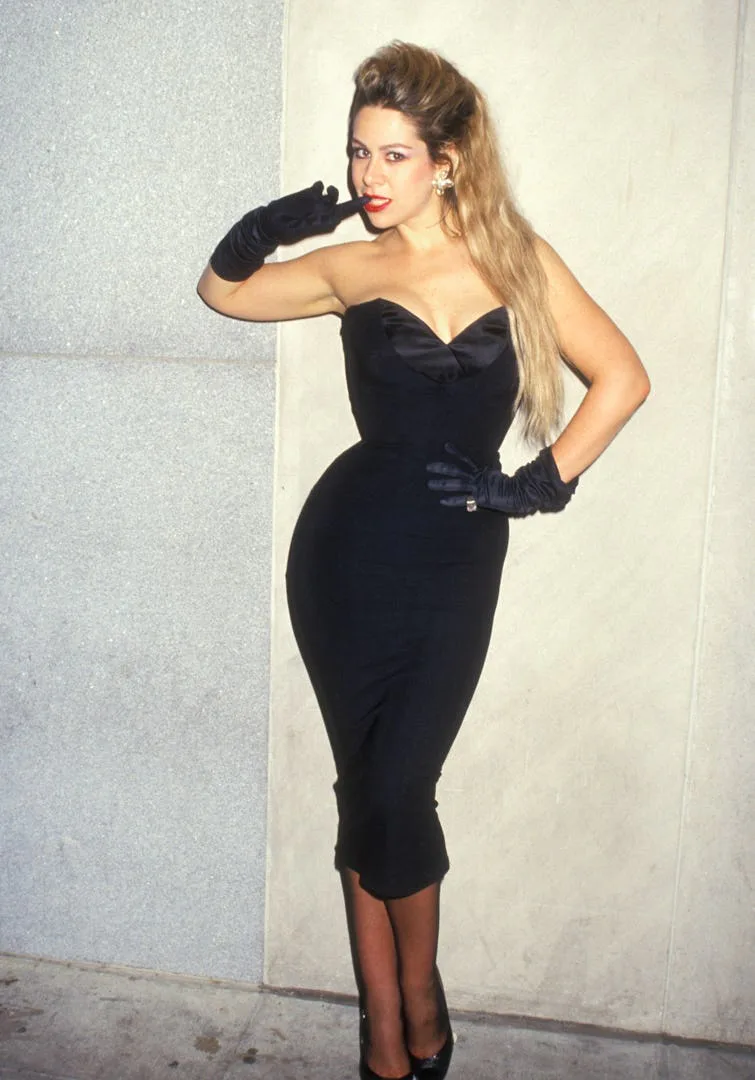
Growing up in Tampa, Florida, with David Bowie posters on her wall, Dianne Brill sensed she didn’t quite fit in. Around 1980, she discovered a store with a basement full of never-worn clothing from the 1940s. She bought it all, then lugged the “body bags’ ” worth of vintage to New York City to sell at Patricia Field’s Lower East Side boutique and at Trash & Vaudeville. “I sat there with empty bags and a handful of cash, and I thought, I guess I’ll move here,” says Brill. “Within six months,
Growing up in Tampa, Florida, with David Bowie posters on her wall, Dianne Brill sensed she didn’t quite fit in. Around 1980, she discovered a store with a basement full of never-worn clothing from the 1940s. She bought it all, then lugged the “body bags’ ” worth of vintage to New York City to sell at Patricia Field’s Lower East Side boutique and at Trash & Vaudeville. “I sat there with empty bags and a handful of cash, and I thought, I guess I’ll move here,” says Brill. “Within six months, I started going to Studio 54, Mudd Club, and then finally Danceteria.” A regular on the 1980s downtown club scene, Brill became a muse to Andy Warhol, who declared her the “Queen of the Night.” Her superpower, as Warhol once noted, was that she “makes nobodies feel like somebodies with the big hellos she gives to everybody.” Brill “wasn’t into drugs, and I didn’t get into a downtrodden thing. I got into people who were nice,” she explains. Her brains helped turn her It girl persona into businesses—a menswear label, a cosmetics line, and TV gigs. After decamping to Europe, where she raised her three children, Brill returned to New York City permanently in 2022. While she isn’t keen on the version of New York “where people stand in line forever just to get something they saw on Instagram that day,” she still finds the city full of possibilities. “You can always reinvent yourself.”
Brill attending a soirée at the Museum of Modern Art, in New York City, in 1987. | Ron Galella, Ltd./Ron Galella Collection via Getty Images
Omnipresent on New York’s downtown scene throughout the 1980s and early ’90s, Brill is often credited for establishing the “famous for being famous” playbook long before Paris Hilton or Kim Kardashian. Her nightlife adventures were chronicled in gossip columns and magazines. She once had a New York Times reporter follow her around to five parties in the span of a few hours—a normal weeknight for her. Promoters would fly her all over the world, from London to Vienna to Milan, to host events. “It sounds like jet-setting, but it’s not like when your dad owns the jet. It was accessible and cool,” says Brill. “Also, rents were $300, so we could all create, travel, make, do, and take risks every day.”
Brill at her first modeling job, in Tampa, at age 17. | Dianne Brill Archives
“It’s wonderful to be raised in a place that’s beautiful,” says Brill of Tampa, where she and her three brothers grew up. “Even being in a Publix parking lot, it would be sunny and then the sky would be purple, orange, and red.” Her mother, who was born in Britain and raised in Havana, was a journalist who kept a collection of newspapers and Interview magazines. Her father, a snazzy dresser, informed Brill’s love of fashion. Her Florida upbringing prepared her for New York nightlife in unexpected ways. “There’s a little Florida scam in you. You can handle the shit that comes your way. You don’t freeze like a deer in the headlights. You get going.”
Dianne Brill Archives
By her teenage years, she was ready to leave the Sunshine State. “I could see that I didn’t fit in,” she says. “If you get laughed at for wearing a black turtleneck, a knee-length fitted skirt, and cha-cha heels, and you know you look cool, you realize you’re the right girl in the wrong place.”
Outlaw parties were held in illegal locations, like abandoned subway stations; invitations spread through answering machine messages and word of mouth. These events “could last for five minutes and the police would shut them down, or it could be hours.” Brill often went out with Warhol. “Andy was a matchmaker. He was always trying to get me to date Jean-Michel,” says Brill. “Andy was a very loyal friend, and, contrary to popular belief, he wasn’t this terror. He was very kind to me.”
Brill with (from left) designer Betsey Johnson and writer Fran Lebowitz at Brill’s 1986 birthday dinner, at the Japanese-French fusion restaurant Café Seiyoken. | Dianne Brill Archives
Fran Lebowitz “is a New York Yoda. Everything that comes out of her mouth, even when she’s speaking casually, is just noteworthy and brilliant,” says Brill. “She’s not really in nightlife anymore. I usually run into her at some random place during the day, like a grocery store.”
“Keith [Haring] and I were in the same building—611 Broadway. I had my atelier there, on the sixth floor; Details magazine was below me, and Keith was above me. It was like Andy Warhol’s Factory, except we all had businesses,” says Brill. “I loved Keith not the way adults love each other—I loved him as if we were both kids.”
Brill with Dolly Parton. | Dianne Brill Archives
Steve Rubell, the co-owner of Studio 54, “first introduced me to Dolly Parton at the Palladium,” explains Brill. “In the ’80s, to be larger than life, you literally had to be larger than life, and we both were. Here, we had both slimmed down, but it was still body-ody-ody. She is not fake. With all that stuff on the outside, she is the most authentic, present person you’ll ever meet.”
Brill with Grace Jones, whom she met through the club scene, in 1989. | Roxanne Lowit
“She’s authentic,” says Brill of Grace Jones. “The way she looks and the way she presents herself is very similar to Andy [Warhol]. Grace is still around and touring, and she’s not five hours late like she was before. She’s an hour late.” Last summer, Page Six reported that the two had partied together at the Roof at Public Hotel, on the Lower East Side, well into the night.
Ted Blackbrow/ANL/Shutterstock
In 1989, “I was called ‘the Shape of the Decade,’ ” says Brill. “I was basically the same size as all the other girls, but I had boobs and a butt and a very small waist.” Adel Rootstein, who was considered the world’s premiere mannequin maker, made models in Brill’s likeness. “It was a big deal. The last time they had done that was with Twiggy in the ’60s. I toured with these mannequins around the world. I did every television show you can imagine.”
Brill with Campbell at Nell’s in 1987. | Patrick McMullan/Getty Images
To a certain set, Nell Campbell may be best known as the top-hatted Columbia in The Rocky Horror Picture Show, but to New York’s cultural elite, she was the co-proprietor of Nell’s, the 14th Street nightclub that regularly mixed club kids, celebrities, and intellectuals. “I sat down at a table one night with Norman Mailer, Bret Easton Ellis, Jay McInerney, Cher, Liberace, and Nell. These kinds of things would happen all the time,” says Brill. “You would never go out casually. You would be dressed thinking tonight’s going to be the best night of your life.”
From left: Roxanne Lowit; Foc Kan/WireImage
In the early ’80s, Brill married Danceteria co-owner Rudolf Piper, and together they hatched a plan to get Thierry Mugler’s attention at a dinner in New York. “We did a slow dance, and I made sure to be in front of him so he would see me. I knew that Mugler [above left] was a dancer—I’m not, but I’m sexy when I’m dancing,” says Brill. “That night, his right hand, Alix Malka, came to me and said, ‘We would love to talk to you about being in the next show.’ I thought I would just lose my mind. All those nights you’re sitting in your room in Tampa feeling like no one gets you, then you come to your place, and not only do you belong, but you’re so welcomed—all your little-kid dreams can come true.” Brill once walked a Mugler show just months after giving birth to her first child, Keenan (above right). “Naomi, Linda, and Cindy were kissing Keenan backstage. He’s a hunky six-foot-two charming man now.”
Brill with the fashion editor Hamish Bowles at a party in Paris, circa 1993. | Roxanne Lowit
“Hamish [Bowles] has grown up to be such a legend, but honestly, he was a legend from the moment he arrived in New York,” says Brill. “I ran into him a couple years ago, and it was like running into the same guy.” For this party, Brill chose a custom Mugler bustier and trenchcoat she had originally worn on the runway in Tokyo. “I felt like the Queen of Everything.”
THIERRY ORBAN/Sygma via Getty Images
Brill’s first Mugler show was his spring 1988 “African Summer” collection, for which she walked the runway as the bride. “He loved my look—he loved my body very much. He celebrated it like a dream. But he said, ‘There’s something I would love to improve…you need an inch in your leg,’ ” says Brill. “He had custom stilettos made for me that discreetly added to my height. It was just an inch more that made me, in his perception, the perfect woman.”
PAT/ARNAL/Gamma-Rapho via Getty Images
Mugler’s 1990s couture shows were legendary. They included supermodels, actors, club kids, porn stars, and musical performances by the likes of James Brown, who took to the runway at the 1995 fall show (above). Brill was one of Mugler’s favorite runway models. The spring 1992 show brought her to tears. “I walked off the stage, and there were Naomi, Cindy, Christy—all the girls. Everyone took a beat and applauded for me,” she recalls. “I was crying. They had to touch me up before the next passage.”
Foc Kan/WireImage
Early on, Brill caught the attention of Jean Paul Gaultier (right) and was cast in his spring 1989 show. “Mugler and Gaultier, they’re both tall, both French, both super fucking hunks. Gorgeous men. Outrageously talented, free minds, open to everything, hungry for everything: giving, taking, creating.”
Dianne Brill Archives
In 1989, Brill attended Bartsch’s Love Ball with Patricia Field (left) and Debbie Harry (center). The HIV/AIDS fundraiser brought downtown’s cool kids into contact with Harlem’s ballroom and voguing scenes for the first time. The trio was brought in to help judge a portion of the competition. “Madonna came and saw, and then she did her song ‘Vogue.’ ”
JONATHON ZIEGLER/Patrick McMullan via Getty Images
In the late ’90s, Brill left New York for Europe with her second husband, Peter Völkle. She was busy raising her children—son Keenan and daughters Celan and Eden—and starting her self-titled cosmetics brand, but New York was always on her mind. She returned often, including for a 2010 birthday party, pictured above, hosted by Susanne Bartsch (center) and attended by Amanda Lepore (right). “I’m an Aries. I love a birthday!”
Dianne Brill Archives
Brill says you shouldn’t fan out around celebrities. “With your friends who are known, you don’t want to do too much of that because they get freaked out and start to feel paranoid.” Still, she couldn’t help herself when it came to Sex and the City’s Kim Cattrall. “I remember telling her that she was a new Marilyn. The character she created will last way past her years. I wanted her to know.” Above: Brill hung out with Cattrall (in gold) on a night out on the Upper East Side in late 2025, along with actor Maya Hawke (front) and Swiping America star Reagan Baker (in red).
Brill knows RuPaul’s Drag Race judge Michelle Visage and the show’s executive producers Randy Barbato and Fenton Bailey from the ’80s club scene. “It’s a wonderful experience to still have friends you’ve known from your roots. These guys are big cultural icons, but they’re still the same, just more sophisticated.” She was a natural choice to judge Drag Race’s 2023 German spin-off.
Ye Fan
“I was living in Europe for a long time. I had another life with a wonderful man, and I had three incredible kids, who are now adults and incredibly cool. But after some years, I realized I had to leave the relationship and come back to the city,” says Brill. In 2022, she finally returned to New York. “At the moment, I’m working on a show called Mz. Brill’s 10. I found 10 really specific people who, in my heart, are the artists I’ve been looking for.” She’s pictured with her friend Michael Zayas (center) and the DJ duo the Muses at her 66th birthday party, at the Soho Grand Hotel.
Dianne Brill Archives
Since returning to New York City, Brill has made it her mission to surround herself with fellow creative souls, including the Muses (right). Of course, she’s still out and about on the party scene. “I’m pro–New York. Even walking home from a party, you’re just in your thoughts and it’s nice. People are coming and going, and you go, ‘Oh my God, I can’t believe I live in this beautiful city.’ You feel a part of it, this kind of wonderful belonging.”
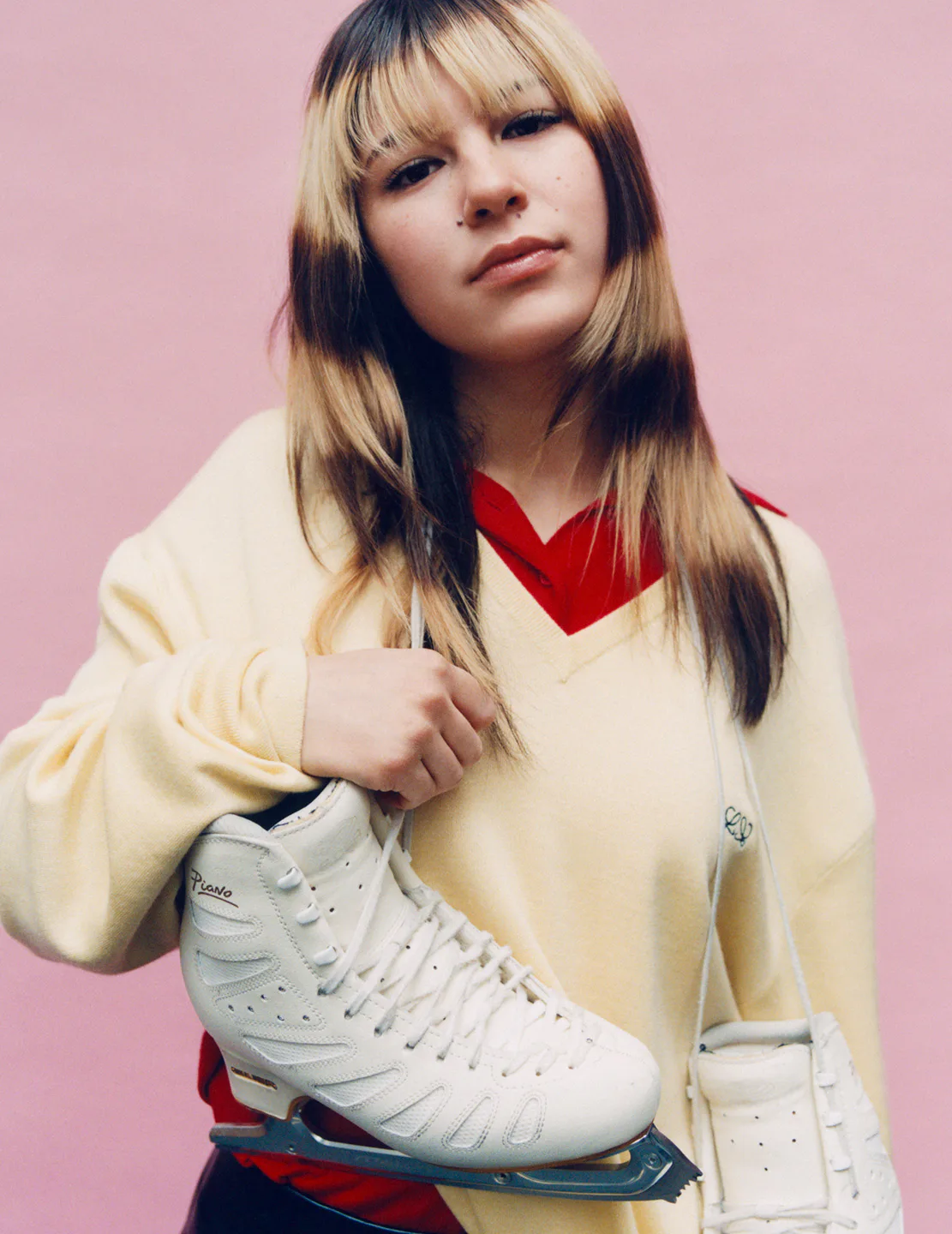
Alysa Liu wears Loewe sweaters and shorts throughout.On a Monday afternoon in March, Alysa Liu navigated the corridors surrounding the ice rink at Rockefeller Center with her skates anchoring her five-foot-three frame. Tilting her ankles slightly outward, she stomped across the terrazzo floors. In her wake, bystanders broke into spontaneous applause. It was the kind of involuntary reaction reserved for freed political prisoners, first responders, and, as it turned out, a punky-haired sports star
Alysa Liu wears Loewe sweaters and shorts throughout.
On a Monday afternoon in March, Alysa Liu navigated the corridors surrounding the ice rink at Rockefeller Center with her skates anchoring her five-foot-three frame. Tilting her ankles slightly outward, she stomped across the terrazzo floors. In her wake, bystanders broke into spontaneous applause. It was the kind of involuntary reaction reserved for freed political prisoners, first responders, and, as it turned out, a punky-haired sports star who had just become the first American woman to win Olympic figure skating gold in 24 years.
Minutes earlier, an overzealous fan had attempted to ambush Liu in the locker room. The day before, she’d had her first brush with the paparazzi. “Initially, I thought it was funny. And then today it happened again—less funny,” she said. “They were kind of shady. They roasted me.” But just as the 20-year-old sensation had appeared inured to pressure in Milan while racking up a winning score of 226.79, her personal best, Liu was once again largely unfazed by the followers who have now become a feature of her daily life.
“I actually don’t want to be famous,” Liu told me matter-of-factly. Seated on a nondescript sofa in a private office tucked away from curious onlookers, she had changed out of her work uniform and into sweatpants and Uggs. She joked that her mane, dyed in a pattern resembling that of a ring-tailed lemur, had been that way “since birth.” Flashing a smile to reveal her mouth piercing, a small horseshoe-shaped barbell that hangs over her two front teeth, she added: “Unfortunately, the things I like to do are just going to make me famous.”
Indeed, being responsible for one of the most unlikely comebacks in the history of the Winter Games has proven more dizzying than any triple-triple. Since February, she has tasted an edible gold medal made of Lucky Charms with Al Roker on the Today show (a bowl of the cereal’s colorful marshmallows is currently her profile picture on Instagram, where her followers have jumped from a few hundred thousand to more than 8 million since the Olympics); sat front row at Nicolas Ghesquière’s fall/winter 2026 show for Louis Vuitton in Paris, clad in a brown denim jacket and matching baggy jeans; and presented Taylor Swift with the Artist of the Year award at the iHeartRadio Music Awards. The New York Times crowned her “the new face of her sport,” adding that her “effervescence intoxicates arenas, wafts through screens, and infects millions of viewers.”
But it goes further than that. More than just a trending figure skater, Liu has emerged as a new kind of pop culture figure entirely: an iconoclast who has won over the worlds of dance, music, fashion, and art by simply being herself. “I just have so many ideas I want to get out there,” she said. “Podium finishes aren’t really part of that.”
Liu is the eldest of five children, raised in Oakland, California, by their single father, Arthur Liu, a lawyer who built his family through anonymous egg donors and surrogacy. He started her at figure skating when she was 5, hoping to make her into a medalist. At 12, Liu became the youngest American to land a triple Axel in international competition; at 13, the youngest U.S. champion in the history of competitive skating; and at 14, the first American in women’s figure skating ever to land a quadruple Lutz.
She participated in the 2022 Olympics, but didn’t win any individual medals; burned out from the athletic grind, she quit at age 16. “Literally, my whole life was just skating and scores. If I fell, life was over. If I took one day off, it was over,” she said. “I was always in fight-or-flight mode when I was a kid.” She spent the next few years hiking Everest base camp; attending UCLA, where she majored in psychology while taking a few film classes; and, crucially, finding her calling outside of competing. At the end of that year, she self-pierced her frenulum.
When she returned to competition, in 2024, she did so entirely on her own terms. “I was like, ‘You tell me to change, I’m quitting again,’ ” she said of the officials who bristled at her feral-kawaii look, a sharp break from the steely status quo set by traditional ice princesses. “Why would I change my hair for you?” That self-assurance has since produced the so-called Alysa Liu Effect, a continuous scroll of videos in which people revisit sports after having quit them.
When a contact in the tournament world suggested Liu listen to Donna Summer’s “MacArthur Park Suite,” something clicked immediately. “I was like: I can dance to this,” she said. An iconic photograph shot during Liu’s Olympic free skate captures her rapturous Biellmann finish, the move in which she reaches back, grabs the blade of her skate, and pulls it overhead until her body forms an almost impossibly elongated teardrop shape while spinning. The image is nearly abstract, the gold costume whirling outward as if worn by an after-dark reveler lost in the music at Studio 54. Never mind that she didn’t know who Donna Summer was. After her performance, the 1978 song hit No. 1 on Billboard’s Dance Digital Song Sales chart. Now Liu’s favorite track is “I Feel Love.”
Liu collaborated on the dresses she wore at the Olympics with the designer Lisa McKinnon. The gold competition look—built around an asymmetrical shoulder cut, drenched in crystals, with a turtleneck-choker silhouette—was conceived to read “very disco, very sparkly, lots of movement,” Liu said. The number registered across the cultural spectrum. Barbra Streisand, who recorded with Summer the 1979 duet “No More Tears (Enough Is Enough),” posted it on her Instagram; Sports Illustrated’s Swimsuit issue featured a gold bathing suit by the Blonds that paid homage to Liu’s free-skating fashion.
For her exhibition program, set to PinkPantheress and Zara Larsson’s “Stateside” (which also skyrocketed to the top of the charts), Liu wore a puff of pinstripes that drew on J-pop theatrics. She improvised the choker from a scrap of fabric. “I love pinstripes, but in crystal, because I’m a figure skater,” Liu said. The buns in her hair were color-coded to match the Olympic rings.
She traces her performance instincts back to her childhood spent studying the masters of compressed, high-impact visual spectacle. “Ever since I was, like, 3 years old, I’ve loved watching music videos by Lady Gaga, Michael Jackson, and Britney Spears,” she said. She almost went to school for film, which explains in part why her costumes and choreography have such cinematic flair. On YouTube, her layback spins and open-arm landings rack up views commensurate with those of the tracks they’re performed to. In March, Liu worked with the Oscar-nominated costume designer and stylist Miyako Bellizzi, a fellow Bay Area native, on looks for her post-Olympics New York City press tour.
“I think everything has a little bit of art in it,” she said, gently thrusting her piercing with her tongue as she considered her next leap forward. Still, she added, “someone could teach me how to sew so I can make everything on my own.”
Hair by Tamara McNaughton for Bumble and Bumble at R3-MGMT; makeup by Yumi Lee for Armani Beauty at Streeters. Photo Assistants: Nick Thomsen, John Griffith; Retouching: Vingt-Six; Fashion Assistant: Isabel Choi; Special Thanks to The Rink at Rockefeller Center.
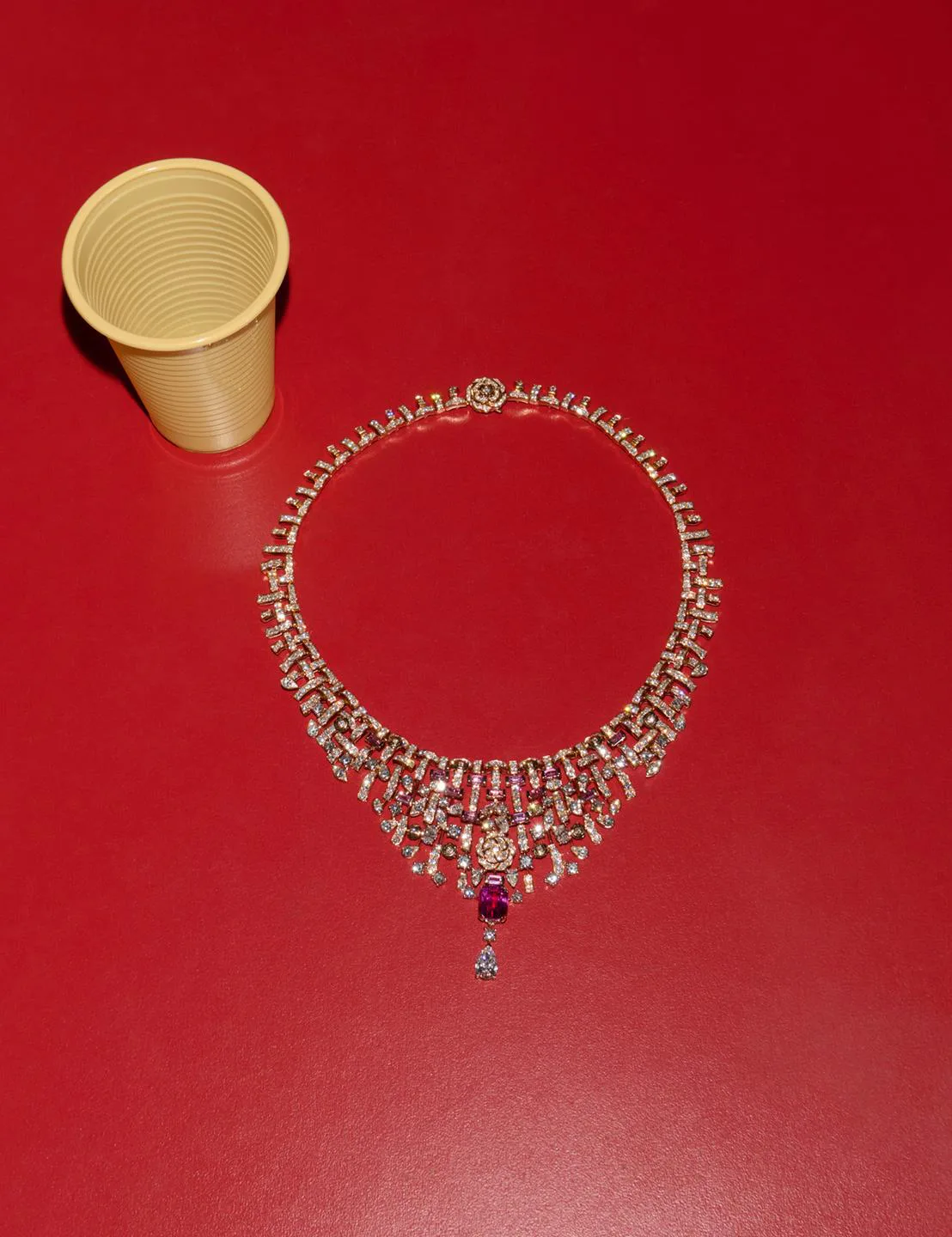
Dior High Jewelry necklace.Chanel High Jewelry necklace.Boucheron High Jewelry necklace.Tiffany & Co. ring.Bulgari High Jewelry bracelet.Cartier High Jewelry ring.Chopard Haute Joaillerie necklace.Van Cleef & Arpels earrings.De Beers London necklace.Graff High Jewelry necklace.De Beers London necklace.Set design by Marine Armandin at Lambert-Lambert.Studio Manager: Charlotte Sobral Pinto; Lighting Assistant: Pierre-Olivier Guillet; Digital Technician: Bianca Vigni; Production Assistant:
Dior High Jewelry necklace.Chanel High Jewelry necklace.Boucheron High Jewelry necklace.Tiffany & Co. ring.Bulgari High Jewelry bracelet.Cartier High Jewelry ring.Chopard Haute Joaillerie necklace.Van Cleef & Arpels earrings.De Beers London necklace.Graff High Jewelry necklace.De Beers London necklace.
Set design by Marine Armandin at Lambert-Lambert.
Studio Manager: Charlotte Sobral Pinto; Lighting Assistant: Pierre-Olivier Guillet; Digital Technician: Bianca Vigni; Production Assistant: Rianna Murray; Retouching: Forme Studio.
At first glance, indie rock in recent times appeared to be on life support.Fan pages for the AI folk-rock band the Velvet Sundown flooded TikTok. Recommendation engines churned out playlists for everything from “helping you pass a kidney stone” to “watching a commercial for an allergy medicine.” The last true indie artist to win the Grammy for album of the year was Arcade Fire, for The Suburbs, in 2011. But recently, a cohort of indie acts—from singer-songwriters Lucy Dacus and Nate Amos to band
At first glance, indie rock in recent times appeared to be on life support.
Fan pages for the AI folk-rock band the Velvet Sundown flooded TikTok. Recommendation engines churned out playlists for everything from “helping you pass a kidney stone” to “watching a commercial for an allergy medicine.” The last true indie artist to win the Grammy for album of the year was Arcade Fire, for The Suburbs, in 2011. But recently, a cohort of indie acts—from singer-songwriters Lucy Dacus and Nate Amos to bands like Momma and Chanel Beads—has been presenting an improbably fresh picture of music’s left-of-center scene, one that evokes the generational breakthrough of ’00s bands like the Strokes, Yeah Yeah Yeahs, and Interpol.
“Indie” is a mercurial term, perhaps best understood as music that exists slightly outside the mainstream and embodies peculiarity over polish. Even the most committed purists have lost count of the genre’s revivals. Since punk, indie has mutated from the DIY drama of Buzzcocks and Hüsker Dü to the alt-frequencies of Sonic Youth and Pavement to the freak-folk flamboyance of Animal Collective and Joanna Newsom.
“Every so often, a generation of bands discovers the Velvet Underground, Television, Suicide, and Talking Heads and tries to write their own version,” said Ronen Givony, author of Us v. Them: The Age of Indie Music and a Decade in New York (2004–2014). What makes this cycle different is that the infrastructure that once sustained independence has been replaced by paywalls and playlists. It’s a far cry from the early-aughts peak, when file-sharing spread the music, blogs boosted scrappy bands, and corporations like Red Bull underwrote shows. Even Jay-Z and Beyoncé caught Grizzly Bear at the Williamsburg Waterfront. “For an indie artist to break through now,” Givony said, “they’re almost doing it with one arm tied behind their back.”
If attention is the scarcest resource in the streaming economy, Lucy Dacus has stood out by doing less. “We’re not meant to understand everything all at once,” she said. “You can only frame one idea.” Forever Is a Feeling, which came out last March, is only her fourth album in 10 years. Boygenius—her supergroup with Phoebe Bridgers and Julien Baker—dropped their debut album in 2023, toured arenas, and walked away as a Grammy-winning band. “I’m making art selfishly, to understand myself,” Dacus said. “If people don’t like it, that’s their business. If they do, that’s also their business.”
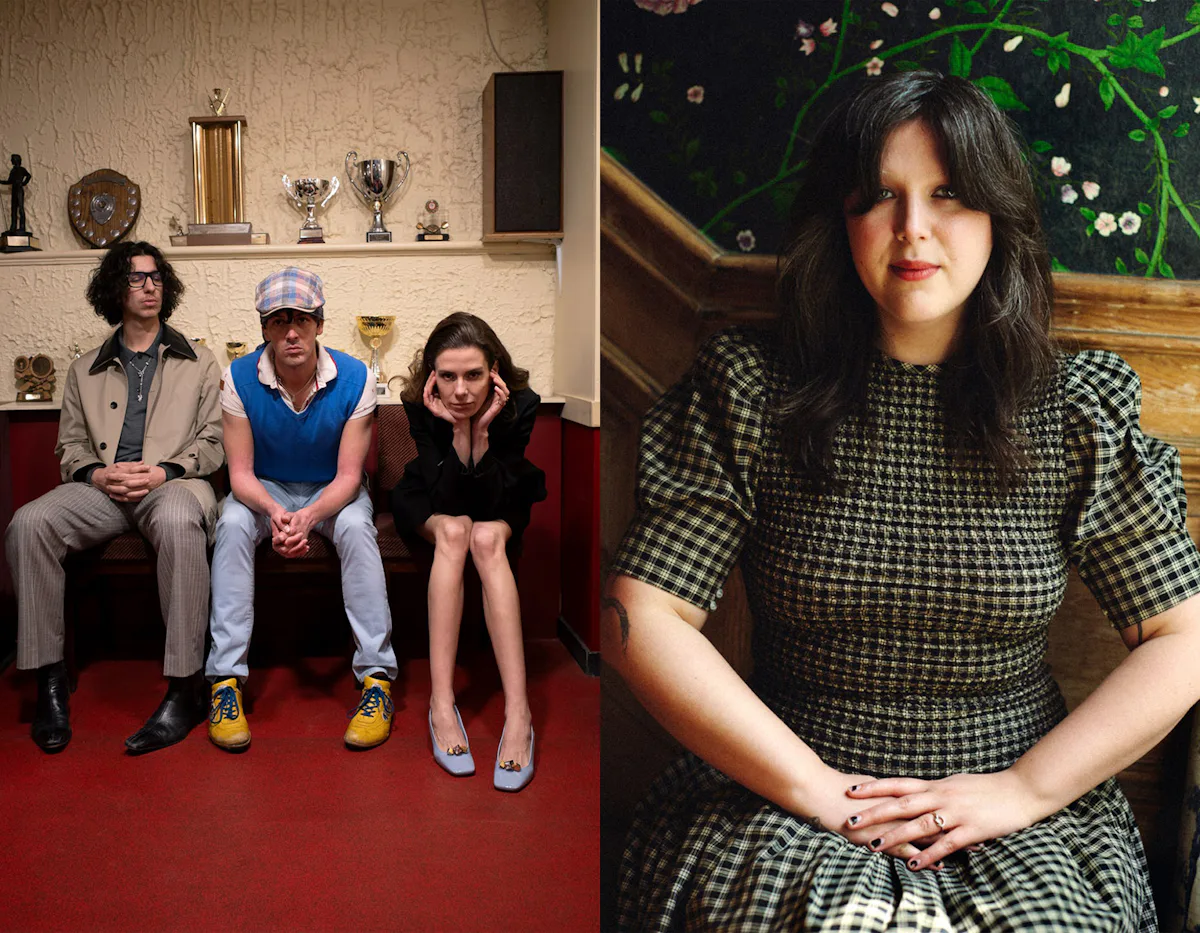
Lucy Dacus
Lucy Dacus wears a Tanner Fletcher dress. | Lucy Dacus photographed by Molly Matalon; styled by Devin Hershey.
At a recent set in the National Gallery of Ireland, she sang “Modigliani”—a love song about seeing a partner beyond their persona, which Dacus has said is about Baker. Deliberate, with a touch of tremble, her voice echoed through the empty halls, allowing the lyric “You will never be famous to me” to feel romantic, precisely because it was raw. “I don’t know if I would succeed doing it a different way,” she said.
To audiences, that reserve reads as a guarantee that what you’re getting is real because she made it for herself. “I’m not gonna pander to my fans,” she said. “That would feel like a death sentence. I feel sweetly toward my fans. We all chose to be in the same room. Them showing up is such a gift. I’m not entitled to their attention.”
Nate Amos operates with similar self-awareness, albeit with the obsessive tinkering of a mad scientist. Water From Your Eyes, his performance art–rock project with Rachel Brown, has opened for Interpol in Mexico City. With his solo project, This Is Lorelei, Amos endlessly remixes and revisits his extensive back catalog. “The goal is for a song to exist outside of any one version of itself,” he said. His 2024 album, Box for Buddy, Box for Star, mixes irony and openness in songs that land like a gut punch. The compositions proved sturdy enough to function like standards. Alt-country crooner MJ Lenderman transformed one hyperpop-punk track into a retro-country dirge. Geese frontman Cameron Winter performed a grand piano version of “Where’s Your Love Now” on his solo tour. A super deluxe edition of the album, released in April, features guest takes on Amos’s Bandcamp bedroom pop by 10 different acts—among them Fantasy of a Broken Heart and Jeff Tweedy, Power Snatch, Waxahatchee, and Momma. “There’s a secondary gratification when a song survives surgery,” Amos said.
This Is Lorelei
Nate Amos wears a Zadig & Voltaire jacket and sweater; Balenciaga pants. | Nate Amos photographed by Nolan Zangas; styled by Tori López.
If Dacus, 31, and Amos, 35, represent indie’s new sincerity, Momma might just be the genre’s poppiest architects. On a recent afternoon, singer-guitarists Etta Friedman and Allegra Weingarten, a pair of late-20-somethings who met in high school outside of Los Angeles, sat at the bar of Forgtmenot, a neighborhood pub in New York’s Chinatown. Weingarten’s cherry-dyed hair matched the spicy watermelon margaritas they had ordered. Behind them, the walls were plastered with vintage concert flyers and other downtown ephemera.
The band, which also features bassist and producer Aron Kobayashi Ritch and drummer Preston Fulks, is often grouped with the gritty ’90s sounds of Veruca Salt or Liz Phair. But Weingarten and Friedman also acknowledge a more mainstream influence: the mid-2000s power-pop-punk of Avril Lavigne, Ashlee Simpson, Hilary Duff, and Disney-era Miley Cyrus. “Those Hannah Montana songs are expertly crafted,” Weingarten said. “There’s a real skill to writing something catchy and timeless.”
That prowess is the secret sauce of Welcome to My Blue Sky, Momma’s fourth album. By beefing up the pop-punk gloss with fuzzy neo-grunge textures, Momma turns guitar-driven escapism into catchy earworms. The New York Times declared the lead single, “I Want You (Fever),” one of the best songs of 2025, and said it was the shoegaze answer to Robyn’s “Call Your Girlfriend.”
Momma
From left: Aron Kobayashi Ritch wears The Row sweater; Commission shirt; Dolce & Gabbana jeans. Etta Friedman wears a Zadig & Voltaire jacket; Leset tank top; Our Legacy jeans. Preston Fulks wears a Calvin Klein T-shirt; The Society Archive cap. Allegra Weingarten wears a 6397 sweater; Isabel Marant pants. | Momma photographed by Huy Luong; styled by Tori López.
The band had just returned from a run through Japan and Australia. In Tokyo, a fan showed up at their hotel to deliver a gift. Friedman recalled that in Sydney crowds went “so fucking hard” for the album’s scream-along hooks: “Australia feels like the farthest place in the world, so to have a bunch of people be that hyped felt crazy.” During a night off at a Sydney karaoke bar, Friedman and Weingarten fronted a live band to perform Tenacious D’s “Tribute,” a song about a demon who threatens to eat a band’s soul unless they play the best song in the world.
These days, making music can feel like a similar Faustian bargain. “We’re not impressed with indie rock right now,” Weingarten said. “We find it to be very algorithmic.” She illustrated the point with an anecdote about hearing Momma play on “some female indie rock” Pandora station at a hair salon. “At first I was like, Woo, okay, fun!” she said. But as the playlist droned on, all the songs sounded the same. She promised herself right then and there that “whatever we do, whether it’s well received or poorly received, I want it to be controversial,” even if that causes “people to hate the next thing we do.” Friedman agreed: “You can’t keep feeding the formula. Maybe we need to just do whatever the fuck we want.”
In a landscape that rewards predictability, other artists are also keeping rock’s rebel spirit alive through disruption. The London trio Bar Italia—Nina Cristante, Sam Fenton, and Jezmi Tarik Fehmi—trade linear storytelling for voyeuristic snapshots. Testing an outside producer for their upcoming album is an intentional act of instability. “We’ve made three or four albums in a certain way,” Fenton said. “It’s almost more exciting that it could go horribly wrong.” Imperfection also guides Chanel Beads, the project of Shane Lavers. On the band’s debut album, Your Day Will Come, digital distortions and archival sound collages suggest subversive counter-programming to an era in which new music rapidly disappears from the Spotify Top 50. “It’s not really a debate or decision when making music,” Lavers said. “It’s more like planting something, and whatever fruit grows is what you have to eat.”
Bar Italia
From left: Jezmi Tarik Fehmi wears a Burberry coat, shirt, and pants. Sam Fenton wears his own clothing and accessories. Nina Cristante wears a Louis Vuitton coat and shoes. | Bar Italia photographed by Clare Shilland; styled by Ryan Wohlgemut.
Chanel Beads
Shane Lavers wears a Louis Vuitton Men’s jacket, shirt, and T-shirt; Commission jeans; Falke socks; Lemaire shoes. | Chanel Beads photographed by Nolan Zangas; styled by Tori López
The Philadelphia quartet Mannequin Pussy—singer Marisa “Missy” Dabice, synth guitarist Maxine Steen, drummer Kaleen Reading, and bassist Colins “Bear” Regisford—have had to literally fight not to let streaming platforms define their existence. Searching their name on TikTok once yielded no results, but when they typed “Mannequin Cock,” their music appeared. The platform wasn’t policing obscenity, they concluded—it was policing femininity. Asking Amazon’s Alexa to play Mannequin Pussy caused the device to shut off entirely. Eventually, the tech-bro powers that be backed down and algorithms were reprogrammed so that, as Dabice put it, “the only type of ‘pussy’ that can be searched on TikTok is ‘Mannequin.’ ”
Mannequin Pussy
Clockwise from left: Kaleen Reading wears a Collina Strada T-shirt and pants. Marisa “Missy” Dabice wears a Dolce & Gabbana skirt. Colins “Bear” Regisford wears a vintage T-shirt from Corner807, Los Angeles. Maxine Steen wears a Collina Strada T-shirt, pants, and belt. | Mannequin Pussy photographed by Molly Matalon; styled by Devin Hershey.
Their lyrics also flout conventions: “Not a single motherfucker who has tried to lock me up / Could get the collar round my neck or find one that’s big enough,” Dabice growls on the track “Loud Bark,” from the band’s most recent release, I Got Heaven. Pitchfork declared the record a “mouthy, messy” masterpiece. Mannequin Pussy didn’t adapt to the streaming era so much as win it over on their own terms. Like the rest of indie’s new guard, they’re making the industry accommodate them, rather than the other way around.
Mannequin Pussy and Lucy Dacus: Hair by Gregg Lennon Jr. for Oribe at The Only Agency; makeup by Nick Lennon for Prada Beauty at The Only Agency; production: Suki Smith Studios; producer: Julia Steeger; fashion assistants: Anabelle Hernández, Eric Jackson Chen; hair assistant: Emily Blair; makeup assistant: Luna Vela; tailor: Jackie Martirosyan at Susie’s Custom Designs.
Bar Italia: Hair by Kei Terada for Ouai at Julian Watson Agency; makeup by Erin Green for VIOLETTE FR at Artlist Paris; photo assistant: Rory Cole; hair assistant: Takumi Horiwaki; makeup assistant: Hanna Fee Friedrich.
Chanel Beads: Grooming by Ginger Leigh Ryan for Make Up for Ever; photo assistant: Diego Salcedo; fashion assistant: Isabel Choi; special thanks to Flux Studios.
This Is Lorelei: Grooming by Kazu Katahira for Oribe at Forward Artists; photo assistant: Lux Nguyen; fashion assistant: Isabel Choi; grooming assistant: Rio Kinoshita.
Momma: Hair by Ginger Leigh Ryan for Bumble and Bumble; makeup by Mical Klip for Sofie Pavitt Skincare; photo assistant: Huy Vu; fashion assistants: Isabel Choi, Sofia Prochilo; makeup assistant: Mason Harper; special thanks to Forgtmenot.
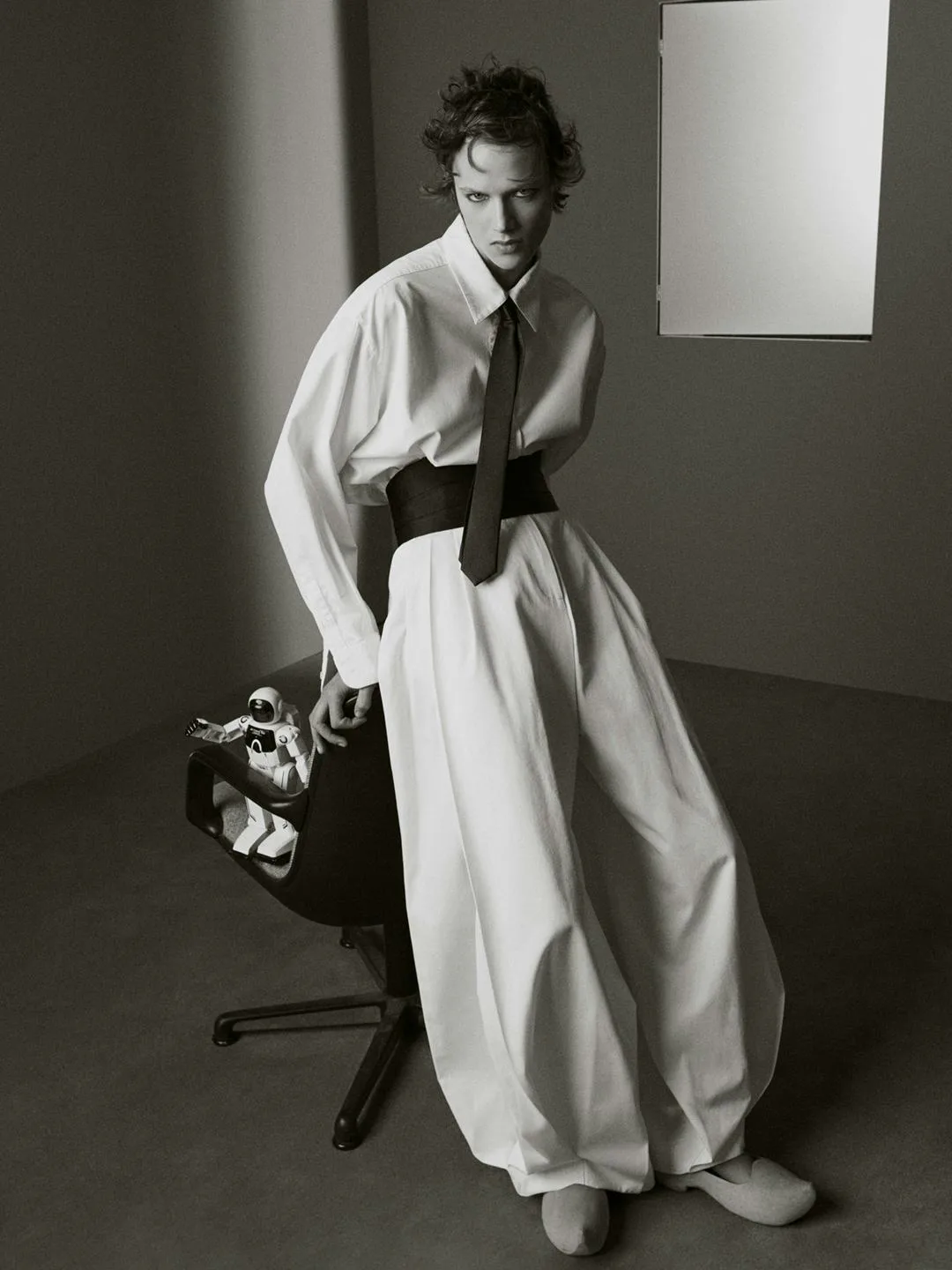
Noor Khan wears The Row shirt and pants; Charvet cummerbund; shoes from Académie du Bal Costumé, Paris; stylist’s own tie.Khan wears Dior top, pants, belt, and shoes.Khan wears The Row tank tops and skirt; Charvet cummerbund; Church’s shoes.Khan wears Chanel jacket and skirt; Church’s shoes.Khan wears Prada shirt, pants, and shoes.Khan wears Marc Jacobs jacket, top, skirt, and shoes.Khan wears Louis Vuitton dress, pants, and shoes.Khan wears Prada jacket and dress.Khan wears Dior Haute Coutu
Noor Khan wears The Row shirt and pants; Charvet cummerbund; shoes from Académie du Bal Costumé, Paris; stylist’s own tie.Khan wears Dior top, pants, belt, and shoes.Khan wears The Row tank tops and skirt; Charvet cummerbund; Church’s shoes.Khan wears Chanel jacket and skirt; Church’s shoes.Khan wears Prada shirt, pants, and shoes.Khan wears Marc Jacobs jacket, top, skirt, and shoes.Khan wears Louis Vuitton dress, pants, and shoes.Khan wears Prada jacket and dress.Khan wears Dior Haute Couture sweater and pants with attached skirt; Church’s shoes.Khan wears Dior jacket, shirt, pants, and shoes.
Hair by Damien Boissinot at Art + Commerce; makeup by Francelle Daly at Bryant Artists; manicure by Marie Rosa for Dior. Model: Noor Khan at Next NY. Casting by Ashley Brokaw Casting. Set design by Alexander Bock.
Produced by Endorphyn; executive Producer: Guillaume Rasquier; Producer: Emanuela Polo; Line Producer: Magali Mennessier; Lighting Director: Margaux Jouanneau; Light Assistants: Jakub Fulin, Charles Hardouin; Digital Technician: Nicolas Fallet; Digital Technician assistant: Kiara Chhahira; Postproduction: D-Factory; Production Assistants: Benjamin Cayzac, Simon Rihouey; Studio Assistant: Quentin Dewilde; Fashion Assistants: Bianca Parisotto, Annica Sidebrand; Hair Assistant: Tomohiro Inotsume; Makeup Assistant: Madrona Redhawk; Tailor: Bravan Nunes.
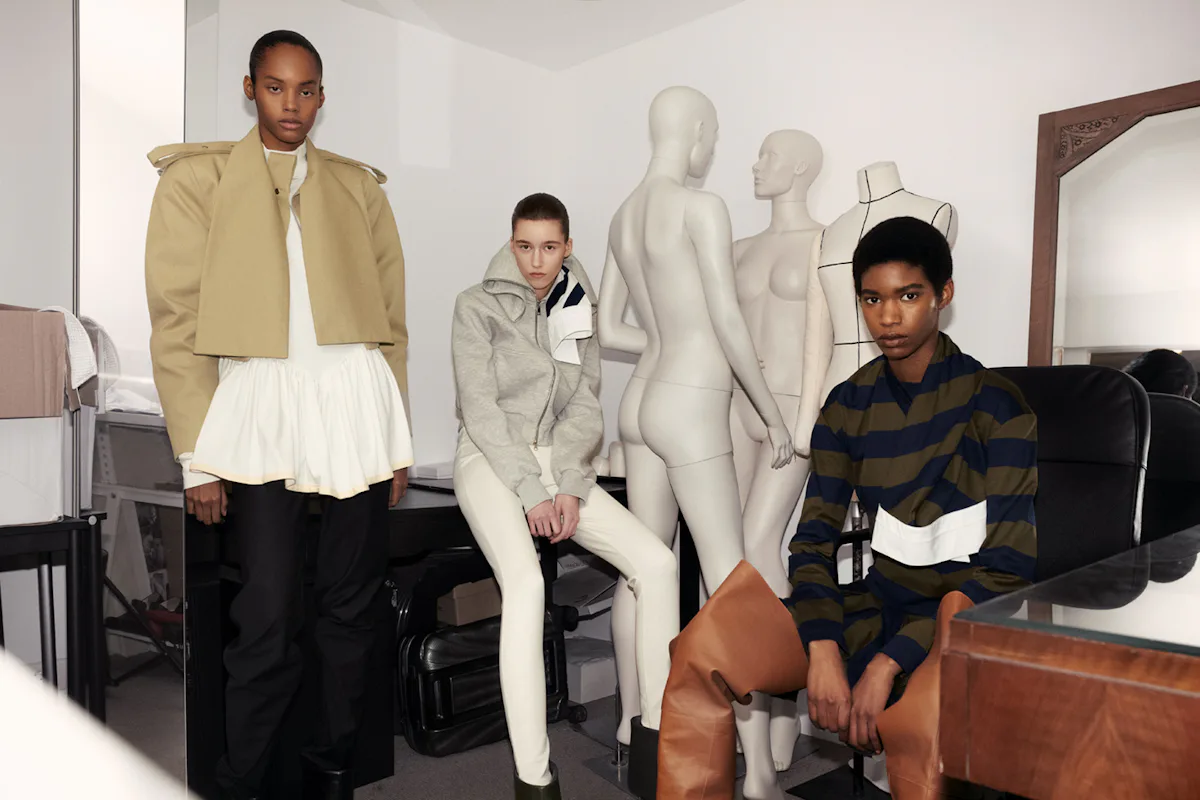
From left: Models Sabryna Oliveira, Kaat Van Herbruggen, and Yuliana Perez wear Fidan Novruzova clothing and boots (throughout).As a student at Central Saint Martins, in London, Fidan Novruzova expected to start her career by joining a Parisian heritage house. Her 2019 thesis collection was a portfolio for potential employers featuring retro-futuristic looks reminiscent of The Jetsons: skirts with stiffened hems that appeared permanently windblown; tops with cartoonishly sharp shoulders; and hea
From left: Models Sabryna Oliveira, Kaat Van Herbruggen, and Yuliana Perez wear Fidan Novruzova clothing and boots (throughout).
As a student at Central Saint Martins, in London, Fidan Novruzova expected to start her career by joining a Parisian heritage house. Her 2019 thesis collection was a portfolio for potential employers featuring retro-futuristic looks reminiscent of The Jetsons: skirts with stiffened hems that appeared permanently windblown; tops with cartoonishly sharp shoulders; and heavy knee-high “Havva” boots with a sculptural square toe. But soon after she presented it, requests from store buyers and private customers started pouring in—including one from Bella Hadid, who bought the boots over Instagram. A year after graduating—and with just a Burberry internship as professional experience—Novruzova officially launched her label.
Bella Hadid in Novruzova’s Havva boots. | Robert Kamau/GC Images/Getty Images
In March, Novruzova, who is 31, presented her 11th collection, for fall 2026, at a cocktail party in her Paris showroom. She was inspired by the 20th-century Polish painter Tamara de Lempicka’s saturated palette of scarlets, emeralds, and teals, and by the way the artist projected herself onto her subjects. “Her paintings were about the affluent women and socialites of the 1920s, but they all look like her,” explains Novruzova. Lempicka’s process felt familiar to her. “You have women around you who inspire you—your muses—but at the same time, it’s still about what you want to wear yourself.” She has a penchant for jackets, and presented drop-waist trenches, tuxedo-lapel leather bombers, and boleros with stiff architectural collars. There were also riding trousers tucked into over-the-knee iterations of the Havva boot, and polo shirts with collars so exaggerated they almost resembled capes. Although her designs still have the experimental, futuristic feel of those from her college days, now “every piece is something that can be incorporated into a modern woman’s wardrobe,” she says.
Fidan Novruzova in Paris.
Novruzova grew up in Chisinau, the capital of Moldova, with Azerbaijani parents. Moldova isn’t exactly known as a high-fashion hub, but Novruzova spent much of her late teens on the Internet, where she discovered the work of Azzedine Alaïa and Yohji Yamamoto. Although she’s the only person in her family to work in a creative field, she says her mother instilled in her “the importance of dressing well,” and her heritage often figures into her work. The brand’s initial logo was a pomegranate, an emblem of prosperity across the South Caucasus, and her first collection was inspired by 1970s Azerbaijani starlets. Early on, she designed a dress made of raffia crocheted to look like wild rue, drawing on a west Asian folk belief passed down through her mother and grandmother: Burning the plant with salt while praying wards off the evil eye.
Kaat Van Herbruggen.
Novruzova’s designs start with materials, not sketches. She sources fabric from Italy and leather from a tannery in Istanbul, but her production remains rooted in Chisinau, which she visits often. She still works with the same family of shoemakers who produced the original Havva boot for her graduate collection; their studio is just minutes away from her parents’ house. Like many young designers, Novruzova is concerned about sustainability. For her, a sustainable brand doesn’t simply work with deadstock and upcycled fabrics, but focuses on designs that last. “The versatility of the clothes is what matters,” says Novruzova. “They should feel relevant over time.” When we met, she wore a black velvet jacket with a mandarin collar from the brand’s fall 2024 collection, as well as ballet flats from spring of that year, both of which still felt current.
Sabryna Oliveira and Yuliana Perez.
Six years in, Novruzova’s brand is steadily growing. In 2024, she was a semifinalist for the LVMH Prize, making her the first Moldovan designer ever to get nominated. She’s expanding her brand’s footwear offerings, which currently consist of seasonal iterations of her Havva boot. Last year, she had her first major collaboration, working with Asics to turn its Gel-Cumulus 16 into a fashionable but still functional sneaker. (Imagine a running shoe with tassels and oversize tongues crossed with a classic men’s brogue.) Her only brief for the future: something “different,” she says. “I’m loyal to my aesthetic, but what’s important for me is to never put myself in a box.”
Hair by Tosh at Artlist Paris; Makeup by Elena Bettanello at Julian Watson; Models: Kaat Van Herbruggen at Noah Mgmt; Sabryna Oliveira at Oui Management; Yuliana Perez at Silent Models; Casting by Ashley Brokaw; On-Set Producer: Louise Akani; Photo Assistant: Matheus Agudelo; Digital Technician: Andreas Strunz; Retouching: Split Peas; Fashion Assistant: Lisa Fulchignoni; Hair Assistant: Lucile Bertrand; Makeup Assistant: Flavie Terracol.
Ida Heiner wears Akris jacket and skirt.Balenciaga coat.Loewe coat and pants.Ferragamo coat; Hermès bikini bottom.Bottega Veneta trenchcoat; vintage swimsuit from Insitu, Paris.Givenchy by Sarah Burton jacket and pants.Zadig & Voltaire pants; stylist’s own gloves.Dolce & Gabbana trenchcoat; Jil Sander shoes; stylist’s own bikini bottom.Miu Miu jacket, skirt, and sunglasses.Celine coat; Hermès bikini bottom.Gucci coat; stylist’s own bikini bottom.McQueen coat.Dolce & Gabbana trenchcoat.
Hair by Lucas Wilson for Oribe at Day One; makeup by Lilly Pollan for Westman Atelier at Frank Reps; manicure by Michelle Tran. Model: Ida Heiner at Women Management. Casting by Ashley Brokaw Casting. Set design by Spencer Vrooman.
Production: Connect The Dots; Executive Producer: Wes Olson; Producer: Jane Oh; Production Manager: Nicole Morra; Photo Assistants: Bailey Beckstead, Annabel Snoxall; Postproduction: Studio RM; Production Coordinator: Olivia Roper-Caldbeck; Production Assistants: Tchad Cousins, Danielle Rouleau, Fiona Tagliente; Fashion Assistant: Antonina Getmanova; Tailor: Susie Kourinan.

 Login
Login