Normal view

  • ✇Vox
  • The best thing Democrats can do for the climate: Stop talking about it Ariana Aspuru · Sean Rameswaram
    Green New Deal supporters in front of the US Capitol on February 6, 2024. | Celal Gunes/Anadolu via Getty Images With a little over five months until the midterm elections, Democrats in Washington and on the campaign trail are trying to show voters they care about cost-of-living issues.  To make that pitch, some parts of the party’s usual message may be going by the wayside. That includes the conversation about combating climate change. Once a pillar of the Democratic agenda, it may now
     

The best thing Democrats can do for the climate: Stop talking about it

22 May 2026 at 11:00
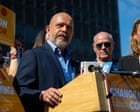
People hold signs outside the US Capitol, including one with white text on a green background reading “Jobs, justice, climate action, Green New Deal.”
Green New Deal supporters in front of the US Capitol on February 6, 2024. | Celal Gunes/Anadolu via Getty Images

With a little over five months until the midterm elections, Democrats in Washington and on the campaign trail are trying to show voters they care about cost-of-living issues. 

To make that pitch, some parts of the party’s usual message may be going by the wayside. That includes the conversation about combating climate change. Once a pillar of the Democratic agenda, it may now be fading into the background. According to Matt Huber, a professor of geography and the environment at Syracuse University and the author of Climate Change as Class War, Democrats, and the climate, might be better off for it. 

Huber, who recently wrote an essay for the New York Times titled “Democrats Don’t Have to Campaign on Climate Change Anymore,” spoke with Today, Explained co-host Sean Rameswaram about why Democratic candidates can and should de-center climate change from their platforms and streamline their campaigns on affordability issues. 

Below is an excerpt of their conversation, edited for length and clarity. There’s much more in the full podcast, so listen to Today, Explained wherever you get podcasts, including Apple Podcasts, Pandora, and Spotify.

What made you want to write this appeal to Democrats to essentially shut up about climate change right now?

I try to argue that it’s the end of a 20-year period in Democratic Party politics where a lot of Democrats were thinking that climate would be this urgent issue that could galvanize this mass majoritarian coalition around green jobs. 

What I’ve come to in the last few years is that I’m just not sure that rhetorically centering the climate crisis as the impetus of this kind of politics is actually going to be effective in building that power, building that majority. Most Americans don’t really prioritize this as an urgent issue, and they prioritize other cost-of-living issues much more.

When did fighting climate change become such a core issue for the Democratic Party? 

2006, which was 20 years ago, was a big flashpoint where Al Gore’s An Inconvenient Truth was released. And that did coalesce in the zeitgeist with a massive financial crisis a couple of years later. 

There was a lot of feeling, just like in the Great Depression, that there had to be this mass jobs program, public investment program, and that climate change actually provided the urgency and impetus to center around that kind of large scale investment program and it could create jobs and appeal to these more economic concerns.

When the Green New Deal became a big deal, spread by Rep. Alexandria Ocasio-Cortez and others, I think they too were thinking it would actually be a more effective politics in the context of a large-scale economic crisis like the original New Deal was. 

“To win and to campaign, they’re realizing that talking about the apocalyptic existential nature of the climate crisis is not going to really inspire and motivate people to support them.”

Unfortunately for them, I think we never really entered that kind of crisis since the Green New Deal politics took off. We did have a recession, but it was this Covid recession that was a strange kind of economic shutdown and not the kind of crisis that called for this big jobs program.

That label,“Green New Deal,” became so polarizing. And it was a strategy to make it so, obviously. Do you think anything like that kind of messaging is just bunk now?

I’m really sad [about it]. I was a big Green New Deal stan, if I can use that word. I really loved this broad vision and a positive vision. I think a lot of climate politics can be pretty doomer-ist. 

It did go wrong, though. I think when Alexandria Ocasio-Cortez announced the House resolution on a Green New Deal in 2019, she did this media blitz around it and she released this FAQ document — or her office released this very bizarre FAQ document — with the sort of media blitz about the Green New Deal. And in the document it had some very stream of consciousness language about how we’re not quite ready to ban farting cows and airplanes.  

Of course, as you would expect, that language got taken up by the Fox News culture war machine and almost immediately the Green New Deal became “We’re going to ban hamburgers. We’re going to ban air travel.”

What was supposed to be this broad-based majoritarian politics that could appeal to working-class people became yet another kind of polarized culture war issue, unfortunately.

Biden clearly realizes he can’t use this Green New Deal marketing to get this kind of legislation through Congress. But he does get this kind of legislation through Congress, weirdly called the Inflation Reduction Act.

Here we are in 2026 and no one ever talks about [the IRA], even though when they were doing it, they said it was the most consequential environmental legislation in American history. How did that happen?

In many ways the Inflation Reduction Act was based on this Green New Deal idea that jobs and investments in the green economy will lead to material benefits and help win back some of these working-class voters who had been shifting to Trumpism. 

Of course, a lot of these investments were very long term. The style of policymaking that has been in vogue for a while in the Democratic Party is to incentivize these investments through tax credits, which means you’re incentivizing the private sector to do a lot of the building of these projects. I cite a study in the piece that found, basically, when you survey communities where these investments are going, they actually didn’t identify it with a political project coming from Biden. They just associated it with the private firm that is investing. 

Meanwhile, inflation is really hammering the working class and the cost of living is skyrocketing as the number one issue voters care about. The Biden administration was saying that the economy was actually really good. If you look at unemployment, if you look at GDP numbers, everything’s going great. And so you really had no answer for the core material cost-of-living concerns that really shaped the 2024 election. 

Of course, with Trump in office, they’ve repealed a good portion of that legislation. Emissions in 2025 in the United States went up, which is very depressing. It was a real disaster on a number of fronts.

You write in your opinion piece in the Times about how we’re already seeing Democrats shift away from climate change. Where do you see it specifically?

You can see a lot of working-class candidates that are union members that are fighting for this progressive agenda of taxing the rich, public investments, Medicare-for-All. But they are steering clear from the climate issue. And if they are talking about climate change, they’re linking it directly to cost-of-living issues like energy affordability. To win and to campaign, they’re realizing that talking about the apocalyptic existential nature of the climate crisis is not going to really inspire and motivate people to support them. 

I profiled someone named Sam Forstag in Montana. And he is a smoke jumper — someone that literally parachutes out of planes to fight forest fires in the west. Because he’s a government employee, he is a union member too, and he is fighting on this kind of working-class agenda. Bernie Sanders and AOC have endorsed him. I profile an iron worker in Oklahoma. A flight attendant in Minnesota. Some of their websites literally don’t mention climate change at all, and if they do, it’s just very brief and links it to energy affordability jobs, things like this. 

That’s a real shift. These are exactly the types of candidates that I would say five or six years ago would’ve been the central messengers of this kind of Green New Deal message of unions, jobs, blue-collar workers that are going to kind of build the energy transition. These would be the kind of workers that’d be front and center, but they’re not, and I think that’s telling. 

One thing I mention in the piece is Zohran Mamdani, who ran a very successful campaign. But there’s been reporting showing that he barely talked about climate change in his campaign. And that’s after he had really been a climate activist in the Democratic Socialists of America and ran on climate change and public power in his assembly campaign in 2020. The whole affordability message, I think, came out of his campaign and people realizing that’s a way to build a mass coalition. And that’s a way to win. 

As someone who’s written the books, who’s done the research, who’s a college professor talking about these issues, how much does it break your heart that this is where we’re at, that you have to write an opinion piece in the New York Times that tells politicians that they need to Trojan horse climate issues into their platforms?

It doesn’t really break my heart. It actually reinforces what the Climate Change as Class War book was arguing, which is that the climate challenge is really a question of power.

I mentioned in the book four years ago that it’s convenient that the sectors we need to decarbonize are energy, transport, things like housing. These are end-of-month concerns for working-class people. So if we can kind of build a decarbonization agenda around those sectors, we can link climate to those working-class needs. 

Since the book, I’ve become less convinced that shouting about the climate crisis as this existential threat is going to be the central motivating impetus of that kind of politics. Why not just focus directly on those material needs? Once you build the power, you figure out how to really make those investments and build towards decarbonization.

  • ✇Vox
  • The Texas Senate candidates have two radically different visions of Christianity Christian Paz
    Texas Attorney General Ken Paxton speaks to supporters on May 26, 2026, in Plano, Texas. | Amanda McCoy/Fort Worth Star-Telegram/Tribune News Service via Getty Images Now that Ken Paxton, the conservative attorney general of Texas, has defeated incumbent John Cornyn for the Republican Senate nomination, we may see something unusual in modern American elections: a theological throwdown. In a closely watched and competitive race, Paxton will be facing off against James Talarico, a Presbyt
     

The Texas Senate candidates have two radically different visions of Christianity

27 May 2026 at 23:15
Texas Attorney General Ken Paxton speaks to supporters at a rally.
Texas Attorney General Ken Paxton speaks to supporters on May 26, 2026, in Plano, Texas. | Amanda McCoy/Fort Worth Star-Telegram/Tribune News Service via Getty Images

Now that Ken Paxton, the conservative attorney general of Texas, has defeated incumbent John Cornyn for the Republican Senate nomination, we may see something unusual in modern American elections: a theological throwdown.

In a closely watched and competitive race, Paxton will be facing off against James Talarico, a Presbyterian seminarian and the Democratic nominee. The race is now set to be a battle between two very different worldviews about the role of Christianity.

That Democrats are even able to hold up their end of such a debate is unusual in a political moment when “Christian” has come to be synonymous with “right-wing.” Talarico has been trying to change that narrative — now he gets to face off against a flawed Republican with a more typical evangelical message.

Key takeaways

  • The US Senate race in Texas is set: Republican Ken Paxton will face off against Democrat James Talarico.
  • It’s going to be a closely watched race: Talarico isn’t pushing a traditional anti-Donald Trump message, instead talking about his faith, the billionaire class, and corruption. Paxton, meanwhile, is weighed down by personal, political, and legal scandals.
  • But the race is also a proxy war for two questions about religion in American politics today: what “Christianity” means, and if personal behavior matters.

Talarico earned significant media attention in his primary for the progressive tilt of his Christian faith — one of forgiveness, love, and righteous anger against the wealthy and powerful. Yet he’s also been ridiculed by the religious right as a false prophet: a Christian in name only who launders left-wing social views through faith, supports abortion, and once argued that God is nonbinary. 

Meanwhile, Paxton’s nomination sets up an interesting foil: He’s a formerly impeached and indicted politician in the middle of a divorce his wife sought “on biblical grounds.” And he has championed a right-wing brand of Christian politics, embracing the “Christian nationalist” movement’s efforts to break down the walls between church and state, while fending off bipartisan attacks on his personal morals. 

This larger cultural struggle over who gets to claim Christian identity and what Christianity should stand for in 21st-century America will be front and center in the race. It will test the limits of persuasion for a liberal Christian trying to win over disaffected Republicans with different political and theological views, and the limits of partisan loyalty for a conservative Christian trying to keep them in his camp despite bipartisan concerns about his ethics. 

Christian authoritarianism versus a Christianity of radical love

A Presbyterian seminarian, Talarico comes from a more politically liberal tradition than Paxton’s Southern Baptist background. His particular branch of mainline Protestantism, the Presbyterian Church (USA), has been derided by critics on the right as “woke” and theologically heretical for its embrace of same-sex marriage, ordination of women, and welcoming stance for transgender congregants. 

Talarico has centered the concept of “radical love” in his political identity and campaign platform: He wants to heal political divisions, welcome Americans who aren’t typically Democrats to his campaign, and move beyond anger toward any one person (like President Donald Trump or Paxton) toward a forward-looking agenda that goes after oligarchs, the political establishment, and the “corrupt” elite.

“In my faith, love is the strongest force in the universe,” he said at a campaign rally in February. And to justify his righteous anger, he argues that “you can’t stand for faith and then warp and weaponize religion to hurt our neighbors.”

Talarico has explicitly contrasted his faith with “Christian nationalism,” arguing that right-wing religious leaders are aligning with Trump in order to institute “theocracy.”

Paxton is solidly in the Christian nationalist camp. Generally, Christian nationalists oppose the separation of church and state; seek to make Christianity the official religion of the state; call for Biblical morality to determine the law; and argue that the United States has God’s unique blessing among other nations. 

Paxton has made a name for himself as a proponent of an aggressive form of religious liberty, arguing not just that the state should pull back and cede space to the faithful, but that the state should actively promote a specific version of Christian ethics and morality. He supported efforts to bring Christian prayer and Scripture into public schools, to set aside time for Bible readings and prayers, and to display the Ten Commandments on public property.

“In Texas classrooms, we want the Word of God opened, the Ten Commandments displayed, and prayers lifted up,” Paxton said in a September statement calling on students to recite the Lord’s Prayer in class. “Our nation was founded on the rock of Biblical Truth, and I will not stand by while the far-left attempts to push our country into the sinking sand.”

Talarico has defended secular government, while also trying to turn the theological conversation to economic concerns. “These politicians want a Christian nation, unless it means providing healthcare to the sick or funding food assistance for the hungry or raising the minimum wage for the poor,” he said on The Ezra Klein Show. “And so, it seems like they want to base our laws on the Bible until they read the words of Jesus.”

While marrying progressive politics and Christian themes might win over the Democratic base, Republicans are already challenging him aggressively on social issues — especially abortion and LGBT rights — where they believe their platform is more in touch with their state’s longtime rightward bent. 

NEW AD: James Talarico is a threat to everything we hold dear.
 
This is Texas, and we will fight to protect it. pic.twitter.com/7bI9jti6Gz

— Attorney General Ken Paxton (@KenPaxtonTX) May 27, 2026

But Talarico also could try to peel off voters with another argument steeped in religious principles: that Paxton is not living out the Christian values he claims to support. 

Paxton creates a test of what Christians should tolerate

The Paxton-Talarico race is partly a referendum on what Christians will tolerate as Christian-like behavior.

Talarico has a squeaky clean image: a former teacher, pastor-in-training, and activist concerned with social justice. Paxton looks more like Trump: accused of adultery by his wife (hence the “biblical grounds” for their divorce), charged with securities fraud (he later settled the case without admitting guilt), and impeached by the Republican-dominated Texas state house over bribery and corruption allegations (then acquitted in his trial).

Sen. Cornyn elevated all these accusations against him. “Ken Paxton has the ethics of a strip club owner,” one of his ads read. “Texas moms: Would you want your daughters to marry a man like Ken Paxton?” And Cornyn proudly highlighted that Paxton’s own pastor had joined his re-election campaign as an adviser before the run-off.

Talarico seems likely to redouble these efforts: He’s called Paxton “morally unfit” for office. “He’ll lie to you with a straight face. He’s failed the character test. He’s the most corrupt Attorney General of our lifetime, and he puts the interests of himself over the laws of Texas,” Talarico said Tuesday night, citing some of the statements made by Republican critics of Paxton.

In this regard, the race is an extension of a long-running argument within the religious right about Trump, whose endorsement of Paxton sealed his primary victory. The president has long been embraced by social conservatives who have argued that, despite his own moral flaws, he can still deliver anti-abortion policies, appoint judges who share their views of religious freedom, and give an evangelical protestant form of Christianity a privileged space in public life.

Even among Paxton’s religious critics on the right, these issues have led to splits. National Review’s Jeffrey Blehar argued Paxton was “odious,” but Talarico was “morally worse” because he espoused ideas that Blehar believed were wrong and immoral under the guise of faith. In doing so, Blehar rebutted the New York Times’ evangelical columnist David French, who praised Talarico as “one of the few openly Christian politicians in the United States who acts like a Christian,” even as he condemned his positions on issues like abortion.

Paxton has relied on testimonials from his family to rebut personal attacks, and he’s likely to try to refocus the race on the greater work he can accomplish for Christian conservatives. In declaring victory Tuesday night, he framed the coming election as the “beginning of the fight to preserve every value we hold dear.”

The two versions of Christianity represented by Talarico and Paxton may be like two ships passing in the night if you’re looking to compare and debate theologies. But the race is one of the most high-profile recent examples of Democrats trying to reclaim the politics of faith — and Republicans rarely have had such a flawed interlocutor to rebut them.

  • ✇Vox
  • The Supreme Court’s new decision tilting the midterms toward Republicans, explained Ian Millhiser
    Republican Justices Samuel Alito, Clarence Thomas, and Brett Kavanaugh. | Chip Somodevilla/Getty Images Here’s a familiar story. On Tuesday night, the Supreme Court handed down a decision that will almost certainly give the Republican Party an additional seat in the US House of Representatives. Not all of the justices disclosed how they voted, but the decision appears to have come down 6-3 along partisan lines — that is, the six Republican justices voted to give the GOP another House sea
     

The Supreme Court’s new decision tilting the midterms toward Republicans, explained

3 June 2026 at 18:15
Alito, Thomas, and Kavanaugh laughing
Republican Justices Samuel Alito, Clarence Thomas, and Brett Kavanaugh. | Chip Somodevilla/Getty Images

Here’s a familiar story. On Tuesday night, the Supreme Court handed down a decision that will almost certainly give the Republican Party an additional seat in the US House of Representatives. Not all of the justices disclosed how they voted, but the decision appears to have come down 6-3 along partisan lines — that is, the six Republican justices voted to give the GOP another House seat, while the Court’s three Democrats dissented.

In fairness, the GOP justices’ most recent decision in Allen v. Milligan fits a broader pattern in this Supreme Court’s gerrymandering cases that can be explained without accusing those Republican justices of deciding election cases solely on the basis of partisanship. The Court has spent the past seven years dismantling all federal safeguards against gerrymandering

Allen fits this pattern. On its face, the Republican justices’ brief opinion in the case is just the next iterative step toward a legal regime where states can draw maps however they want, regardless of whether those maps are drawn to favor one political party, or whether they are drawn to lock nonwhite voters out of power.

But the Republican justices’ new decision stands out because, while the Allen opinion is consistent with the Court’s broader trend toward redistricting anarchy, its actual legal arguments are inconsistent with things the same justices said as recently as one month ago. The decision is also inconsistent with previous orders that the Court’s Republican majority handed down in the Allen case itself.

If you want the full rundown of all of these inconsistencies, go read Justice Sonia Sotomayor’s dissent in this most recent decision. There are so many of them that it is hard to escape the conclusion that the Court’s Republicans aren’t being honest about their true motivations. The simplest explanation for Tuesday night’s decision is that the Court’s Republican majority is bending the rules because they want the Republican Party to hold a majority in the House.

The decision in Allen breaks a rule that the Supreme Court announced one month ago

At the end of April, the Court’s Republican majority handed down Louisiana v. Callais, which completed a project that at least one member of that majority began more than four decades ago.

In 1982, President Ronald Reagan signed legislation expanding the Voting Rights Act, the federal law barring race discrimination in elections. Among other things, the 1982 amendment established that many state election laws that have a negative impact on nonwhite voters are illegal, even if the plaintiff challenging that law cannot prove that the law was enacted with racist intent

When this bill was being debated in Congress, however, there was a conservative faction within the Reagan administration that opposed it, and which unsuccessfully urged Reagan to veto it. Future Chief Justice John Roberts was a member of this faction, and as a fairly junior lawyer wound up doing much of the granular work that is often assigned to young attorneys. Among other things, Roberts wrote about two dozen memos opposing the 1982 amendment, and he drafted speeches and talking points for senior lawyers who also opposed it.

Although Roberts’ faction failed in 1982, Roberts held onto his grudge against the Reagan amendments to the VRA, and his faction eventually took over the Republican Party. All six of the Court’s Republicans joined Callais, which repealed the 1982 amendment and imposed a new rule requiring voting rights plaintiffs challenging a gerrymandered map to show that state lawmakers acted with racist intent.

Under Callais, a plaintiff bringing such a challenge may only prevail “when the circumstances give rise to a strong inference that intentional discrimination occurred.”

In the Allen case, however, a three-judge panel that included two Trump-appointed judges determined that “we cannot understand [Alabama’s new congressional maps] as anything other than an intentional effort to dilute Black Alabamians’ voting strength.” The panel reached that conclusion in an astonishingly thorough 571-page opinion handed down in 2023. After Callais, the Supreme Court ordered that panel to reconsider its ruling, and the panel did not change its mind — concluding again that Alabama engaged in intentional race discrimination.

Among other things, the panel pointed out that the 2023 Alabama law drawing the new maps achieved its racial goals by holding together a majority-white area of the state known as the Gulf Coast, while dividing a Black-majority region known as the Black Belt. Incredibly, the 2023 state law said that the Gulf Coast “shall be kept together to the fullest extent possible,” in part because Alabama lawmakers wanted to preserve its “distinct culture stemming from its French and Spanish colonial heritage.”

The state legislature, in other words, wrote into the statute itself that it wished to preserve a European American region of the state’s ability to elect its preferred representative, while the same law also broke up an African American region of Alabama. If that doesn’t give rise to a strong inference that intentional discrimination occurred, nothing does.

The Republican justices’ latest opinion in Allen, meanwhile, is only four pages long. And it spends only a single sentence responding to the hundreds of pages of evidence the lower court compiled, which shows that Alabama engaged in intentional race discrimination. According to the Republican justices, the lower court “did not heed the presumption of legislative good faith” that judges are supposed to apply to state lawmakers who are accused of race discrimination.

So, to summarize, just over one month after the Court’s Republicans declared in Callais that racial gerrymandering plaintiffs could still prevail if they can show that a state’s legislature engaged in intentional race discrimination, those same Republicans appear to have abandoned that rule. And the upshot is that the Republican Party gets an extra seat in the US House.

The GOP justices’ Allen opinion isn’t even consistent with their previous decisions in the same case

As Sotomayor explains in her dissent, there are several other examples of the Republican justices taking one position in previous decisions, then abandoning them in order to hand a victory to Alabama Republicans.

The most galling is that, in Callais, the Republican justices explicitly stated that “we have not overruled Allen,” a reference to the Supreme Court’s 2023 ruling in this very same case, where the Court struck down Alabama’s maps and ordered it to draw new ones. It’s now clear that the Republican justices were lying when they said that in Callais. The Court’s 2023 ruling in Allen held that Alabama must draw maps with at least two Black congressional districts, while its 2026 ruling in Allen holds that Alabama does not need to do so after Callais. So Callais overruled the 2023 opinion in Allen.

Sotomayor also spends much of her opinion warning that the Court’s latest Allen decision is likely to cause “chaos” in Alabama’s upcoming congressional election, because the primaries in that election are supposed to take place on August 11, leaving the state with very little time to complete the time-consuming task of going through each voter’s record to make sure they are assigned to the correct district.

According to Sotomayor, after a federal district court first struck down an earlier version of Alabama’s maps in 2022, the state told the Supreme Court that it needed to block that decision because the district court handed it down four months before a primary election, and “four months was not enough time to change congressional maps.” Sotomayor’s Republican colleagues appear to have agreed with that claim. Indeed, when the Court agreed to block the 2022 decision, two justices warned that the lower court’s order “would require heroic efforts by . . . state and local authorities in the next few weeks—and even heroic efforts likely would not be enough to avoid chaos and confusion.” 

So, when a lower court handed down a decision that would have benefited the Democratic Party by requiring Alabama to draw a map that would elect an additional Black Democrat, the Republican justices appear to have concluded that four months wasn’t enough time for Alabama to comply with that decision. Now, however, those same justices have decided that the state can pull off the same “heroic efforts” in just two months.

In fairness, the Court’s Republicans have occasionally ruled against their political party when that party presents particularly weak arguments. In 2020, for example, the Supreme Court famously rejected President Donald Trump’s attempt to overturn his loss to former President Joe Biden. 

As I wrote at the time, handing a victory to Trump would have required herculean efforts by the justices, because Biden won by a wide enough margin that the Court would have needed to overturn the election results in three different states. That was too much even for this Supreme Court.

But this is still the same Supreme Court which held in 2024 that Trump is allowed to use the powers of the presidency to commit crimes. So the Republican justices are willing to do extraordinary favors for their political party and its leadership, even if they don’t do the GOP’s bidding in literally every case that comes before them.

It is safe to say, in other words, that the Republican justices are putting a thumb on the scales of the 2026 midterms. That’s not the same thing as putting a one-ton sack of concrete on those scales. But the most reasonable explanation for the GOP justices’ behavior is that they want to give an advantage to the Republican Party and are willing to contradict their own past decisions in order to do so.

  • ✇The Guardian World news
  • Republican Steve Hilton advances in tight California governor’s race Robert Mackey
    Former UK political operative endorsed by Trump will face off against Democrat Xavier Becerra in November electionRepublican Steve Hilton, the former UK political operative turned Fox News personality, has advanced to the November general election in the race to become California’s next governor, facing off against Democrat Xavier Becerra, a former congressman, state attorney general and US health secretary.Hilton’s success, a remarkable achievement for a recent immigrant, came after he was endo
     

Republican Steve Hilton advances in tight California governor’s race

10 June 2026 at 02:01

Former UK political operative endorsed by Trump will face off against Democrat Xavier Becerra in November election

Republican Steve Hilton, the former UK political operative turned Fox News personality, has advanced to the November general election in the race to become California’s next governor, facing off against Democrat Xavier Becerra, a former congressman, state attorney general and US health secretary.

Hilton’s success, a remarkable achievement for a recent immigrant, came after he was endorsed by Donald Trump.

Continue reading...

© Photograph: Benjamin Hanson/AP

© Photograph: Benjamin Hanson/AP

© Photograph: Benjamin Hanson/AP

  • ✇Vox
  • What just happened in California? Christian Paz
    Los Angeles mayoral candidate Spencer Pratt arrives at his election night party with wife Heidi Montag at Don Antonio's Mexican restaurant on June 2, 2026, in Los Angeles. | Ronaldo Bolaños/Los Angeles Times via Getty Images Millions of ballots are still being counted in California, where the primary results for the state’s two marquee races for governor and mayor of Los Angeles remain uncalled as of Wednesday afternoon.  That’s on top of a handful of congressional and local races — a s
     

What just happened in California?

3 June 2026 at 22:15
Los Angeles mayoral candidate Spencer Pratt arrives at his election night party with wife Heidi Montag at Don Antonio's Mexican restaurant on June 2, 2026, in Los Angeles. | Ronaldo Bolaños/Los Angeles Times via Getty Images

Millions of ballots are still being counted in California, where the primary results for the state’s two marquee races for governor and mayor of Los Angeles remain uncalled as of Wednesday afternoon. 

That’s on top of a handful of congressional and local races — a slow process that is typical for the Golden State because of how counties count votes and the generous deadline for receiving ballots (they must be postmarked by Election Day, but can arrive at vote-counting centers days later). 

The race brought significant attention to California’s “jungle primary” system, where the top two candidates advance regardless of party. Democrats worried earlier in the governor’s race that their own field was so large and closely divided that two Republican candidates might make the cutoff.

As things stand, at least one Democrat will advance in both races: Former Biden Health and Human Services Secretary and former California Attorney General Xavier Becerra looks likely to move onto the gubernatorial election in November, while incumbent Los Angeles Mayor Karen Bass will advance to a run-off — the first sitting LA mayor since 2005 to not win reelection outright.

Who they will face is the big open question: Republican former Fox News host Steve Hilton is leading the gubernatorial race at the moment, and may prevent an all-Democratic contest later this year. Bass, meanwhile, faces challenges from a lefty city council member, Nithya Raman, and the Republican former reality TV star Spencer Pratt, whose insurgent campaign has remade the city contest. 

The slow procedure for counting votes isn’t the only reason this is taking so long, though. Voters were reluctant to rally around a single candidate in either the governor or mayoral contest — contributing to slow ballot returns with many expressing unease with their choices and with the Democratic-dominated government. There’s a sense of deep voter frustration: at Trump, at the status quo, at homelessness, and incumbents. Yet despite it all, the state might just get more of the same. 

To better understand where Californians are coming from, I turned to Dan Walters, a columnist at CalMatters and veteran chronicler of the state’s politics. Our conversation has been edited for length and clarity.

This has felt like the longest and messiest gubernatorial election in recent California memory. How did we end up here, and is it really that historic?

It was so different because there was never a pre-campaign frontrunner. There’s a stage before the official campaign launches where potential candidates are kind of testing the waters. That never happened here. Everybody was asking around, Who’s going to run? 

We got this deal where Kamala Harris stood around for what, a month, two months, making up her mind. And then there were others who thought about it, Rob Bonta, the state attorney general, Alex Padilla, one of our US senators — they eventually both said, “No, we don’t want to run.” Eleni Kounalakis, the lieutenant governor, also announced she was going to run, and then she dropped out. 

All this stuff was going on, and we didn’t really even know who was running until basically the campaign got started earlier this year.

Has this ever happened before in California? This void of leadership?

I’ve covered governor’s elections here for 50 years, and I’ve never seen anything like it. Nobody else has ever seen anything like that too, for the governorship of the nation’s largest state. There seemed to be more people reluctant to run. Maybe they wanted to run, for whatever reason, but maybe they just figured governing California is so difficult. I mean, why would Alex Padilla give up a lifetime seat in the US Senate?

But the main overriding thing [is] there was never a natural frontrunner. Eight years ago, we knew Gavin Newsom was going to be running for governor. It was clear from the very beginning. We didn’t have that this year. And that kind of set everything off. And so finally we have a field of 61 people running, 10 whom you’d call serious candidates — that unfolded. Then, former congressman Eric Swalwell became the leading Democratic candidate at one point in early April. And then, within a few days, he was out of it after he was accused of sexual harassment and resigned from Congress.

That ends up helping Xavier Becerra, who was down at about 4 percent in the polls at that point in early April. And he became, essentially, the candidate of what you might call a Democratic establishment. Voters either went to him or held back and he leaped up, and it wound up being just him and Tom Steyer, who was spending $200 million mostly attacking Becerra at the end.

It also seemed to me like it was voters almost running to the safest choice — like 2020 when everyone seemed to coalesce around Biden.

Some people called Becerra California’s Biden — a safe bet, in other words. People wanted something known, something safe. Look, there’s a lot of angst out there about inflation and cost of living, gas prices, housing prices, that sort of thing. And I think people are kind of leery of somebody who comes along like Steyer and says, “I’ll fix it!”

And this wasn’t like in past moments of Democratic scrapping, where you’re looking for a sign from above, and intervention from a figure like Barack Obama or Nancy Pelosi?

Right, there was nothing like that. It just didn’t happen. So it was just a bizarre, very strange campaign.

Is it something about the job of governor that makes it so undesirable? Is it the state of the state? Are there structural issues that make it difficult to run or govern?

We have a lot of what I would call existential issues — things that will really affect how California goes in the future. You’ve got water supply issues, you’ve got homelessness, you’ve got a chronic budget deficit, you’ve got low education performance. There’s just no end of these things that need resolution but haven’t been resolved. And they’re going to be all lying there on the desk where the next governor takes over next January. Right off the bat, they got a lot to deal with. And you see Gavin Newsom for all of his supposed energy and engagement, and everything has not really dealt very well with these existential issues.

Is it fair to blame candidates and campaigns when these structural issues exist?

There’s definitely something to the structure — it is unwieldy when you’re dealing with complex issues because it takes a high degree of agreement, of consensus, because the American system of government is a series of hurdles.

Committees, chambers of the legislature, the floor, the governor — every one of those hurdles, you have to get through all of them. And if you miss just one, you failed. And so it’s fundamentally a negative process. It’s set up to make it difficult to make policy. Consensus with all the stakeholders — business, labor, trial lawyers, environmentalists, consumer protection advocates — it’s extremely difficult and perhaps impossible to actually effectively govern California. You have to come in with very limited promises, deliver on those promises, but to do that, you have to ignore all the larger, more complicated existential issues.

How much of this can we blame on the top-two primary system (the two candidates with the most votes advance to a general, regardless of party affiliation)?

The top-two system was forced on both of the parties by a budget deal involving Arnold Schwarzenegger back in 2009. He forced the legislature basically to put it on the ballot in 2010, and it passed. The Democratic leadership never wanted it. The Republican leadership never wanted it. And after the scare that the Democrats had this year about the possibility of a freeze-out by having two Republicans finish one, two, I think there’s a lot of sentiment among the Democrats to do away with it.

In Los Angeles, Mayor Karen Bass has seemed to deflect some of the blame from voters and opponents on the fact that she has pretty limited powers: She likes to remind people that she can’t have the police arrest ICE agents, has no control over schools or public health because that falls to the county, and she couldn’t control the weather when wildfires destroyed whole neighborhoods last year; Xavier Becerra did the same thing too on the trail, when he talked about issues caused by Trump.

That’s a whole other bag of something. Karen Bass is definitely in trouble. If you’re an incumbent mayor and you can’t get 50 percent in the primary, that means that most of the voters are against you, and so she has to really worry about what might happen in November.

She would probably win against Nithya Raman — Los Angeles is liberal but not leftist — but Pratt, that’s a wild card, man. He represents the angst of Los Angeles. There’s a lot of anger in Los Angeles over the fires and over the aftermath of the fires and the response and the reconstruction. Karen Bass really didn’t do herself any good on how she handled that whole thing, and it’s coming back to haunt her, and she may pay the price on it.

Pratt’s had very clever AI-generated ads and certainly a lot of enthusiasm. I think Bass defeats Raman, but I think with Pratt, she’s got a potential problem here because he’s struck something in the voters in Los Angeles, their unhappiness with the status quo on homelessness, crime, and the fires.

What else can we say about the results of other races in the state so far? What can we make of Tom Steyer’s spending?

We obviously still have votes to be counted, but I can say it looks like Democratic voters kind of rejected the more progressive wing of their party. Steyer had camped out as Bernie Sanders’s best friend in California. He was going full populist on single-payer healthcare, taxing billionaires, breaking up monopolies, everything, the entire agenda of the progressive wing of the Democratic Party. He adopted that as his platform, and it didn’t get him that far — plus he spent $200 million.

I wouldn’t say this is exactly a backlash against the progressive movement, but it may reflect this post-2024 feeling within the party that they had gotten themselves identified as being too “woke.” In fact, Gavin Newsom said that not too long ago, he said that he thought the Democratic Party had gotten too far left, and needed to become more “normal.”

There’s definitely a misconception that California is a woke leftist paradise. You’re saying that’s wrong?

The results that we saw from yesterday kind of hint at that. The more progressive candidate running for Nancy Pelosi’s seat over in San Francisco didn’t do well, Steyer didn’t do well, it appears. I’m not certain yet that the left-wing candidate for mayor down in Los Angeles didn’t do well. 

Not a backlash, but a sense that “no, we really don’t want to go that way.” Becerra is a very ordinary, “don’t rock the boat” Democratic politician. He’s by no means a left-winger. And in fact, if you look at the voting results…the Latino population of California, which is the largest ethnic group, isn’t very left-wing. If you look in the legislature and you start looking at the range of Democrats in the legislature, those on the moderate side tend to be Latino and Black, whereas progressives all seem to be white liberals. So California is not as progressive as it’s often portrayed in the national media. 

And there are a lot of Republicans in California — a quarter of the registered voters.

  • ✇Vox
  • Why Democrats can’t sell America on “democracy” Astead Herndon
    President Joe Biden and Vice President Kamala Harris attend the inauguration ceremony before Donald Trump is sworn in as the 47th president on January 20, 2025. | Saul Loeb/Pool/AFP via Getty Images The Democrats’ call for Americans to “protect democracy” from candidate Donald Trump fell flat in the 2024 presidential election. Over and over, President Joe Biden and Vice President Kamala Harris said that Trump and other Republicans represented an existential threat to the political system
     

Why Democrats can’t sell America on “democracy”

30 May 2026 at 11:30
Joe Biden, wearing a navy suit with a blue tie, and Kamal Harris, wearing black, sit side-by-side.
President Joe Biden and Vice President Kamala Harris attend the inauguration ceremony before Donald Trump is sworn in as the 47th president on January 20, 2025. | Saul Loeb/Pool/AFP via Getty Images

The Democrats’ call for Americans to “protect democracy” from candidate Donald Trump fell flat in the 2024 presidential election. Over and over, President Joe Biden and Vice President Kamala Harris said that Trump and other Republicans represented an existential threat to the political system, calling out things like Project 2025 and the extreme anti-immigration aims of aides like Stephen Miller, and predicting a more authoritarian second term if Trump were to be reelected.

More than a year into Trump’s second term, we should acknowledge that they were right.

Trump has drastically expanded his executive authority, targeted his enemies using the traditionally apolitical Justice Department, marginalized Congress in the build up to another war in the Middle East, and engaged in a midcycle redistricting effort meant to win the midterm elections before they begin. 

In short, Trump is behaving less like a democratically elected leader — and more like an authoritarian — than ever. At the same time, the Democrats’ “save democracy” message seems to have hit a brick wall, and issues like tackling affordability and the cost of living are rising on the priority list. I don’t think that’s because Americans don’t care about democracy. I think it’s because they want to see the system improved, not just protected.

More than 60 percent of Americans are unsatisfied with democracy as-is, per Gallup polling. And all across the country, I hear the desire for more creativity from both parties in proposing solutions to the major issues driving our politics, as well as a call to improve democracy by making it more responsive to everyday people. So much of the current malaise is driven by an electorate that feels without agency, written out of the process in selecting the president (the Electoral College), in Congress (gerrymandering), or in the Supreme Court (lifelong terms).

So this week on the America, Actually podcast, I talked with Amy Walter, publisher and editor-in-chief of the Cook Political Report, about the state of Trump’s redistricting efforts and ways we can “improve” democracy, not just protect it.

Here’s three things she pointed out:

1) The primary process has been corrupted

Walter argues that the primary system — created over a century ago to wrest nominations away from party bosses in smoke-filled rooms — has a new kind of dysfunction. “The primary process has become as corrupted as it was back then,” she told, pointing to a flood of outside money “attached either to an issue or a corporate interest,” and a primary electorate that skews “very far left or right.” 

Her proposed fix: a single national primary day — rather than months of state-by-state primaries — with an open ballot, where “every voter is allowed to vote. … You don’t have to be a Democrat or a Republican.” It won’t solve everything, she concedes, “but it at least addresses one of the major problems.”

2) Gerrymandering could erase majority-minority districts

The Supreme Court’s decision in Louisiana v. Callais weakening Section 2 of the Voting Rights Act has, by Walter’s count, handed Republicans something like a four-to-six-seat advantage in the redistricting wars. In the short term, maps in Tennessee, Louisiana, and Alabama “basically took three Black-majority districts, two of which were represented by Black members of Congress, and made them safely Republican.” (Though Alabama’s new map is still being litigated.)

But the longer-term threat is bipartisan: She warns the same logic could push Democrats to break up their own majority-Black and majority-Hispanic seats in order to spread those voters into more winnable districts. 

“How far will Democrats be willing to go to expand their advantage in states where they have majority Black or majority Hispanic seats?” she asked — a “real messy” conundrum where both parties may decide minority representation isn’t the priority.

3) Not all reforms work

Reforms alone don’t cure the malaise, Walter cautioned, pointing to California as the cautionary tale. The state has a wish list of electoral reforms — open top-two primaries, easy registration, mail-in voting, ballot initiatives — but as Walters says, “It doesn’t mean that the state is governed better.”

The incentive structure itself is broken, she says: A member of Congress who “keeps your head down and gets stuff done” gets nothing; instead, it “benefits those who make the most noise, do the most damage, refuse to do any sort of compromising.” Until that changes, she told me, “you can create all the reforms you want, but if people feel like the system is broken, they’re not going to participate.”

As always, there’s much more in the full show, so listen to America, Actually wherever you get your podcasts or watch it on Vox’s YouTube channel.

  • ✇The Guardian World news
  • Trump-backed Pamela Evette and Alan Wilson head to runoff in South Carolina GOP governor race George Chidi
    Lieutenant governor and attorney general advance but result signals decisive defeat for controversial Nancy MaceDonald Trump-backed Pamela Evette, South Carolina’s lieutenant governor, and Alan Wilson, the state’s attorney general, have advanced to a runoff in a competitive race to represent the Republican party in South Carolina’s gubernatorial election.The winner of the Republican primary is favored to win the closely watched general election, given South Carolina’s conservative tilt, although
     

Trump-backed Pamela Evette and Alan Wilson head to runoff in South Carolina GOP governor race

10 June 2026 at 01:49

Lieutenant governor and attorney general advance but result signals decisive defeat for controversial Nancy Mace

Donald Trump-backed Pamela Evette, South Carolina’s lieutenant governor, and Alan Wilson, the state’s attorney general, have advanced to a runoff in a competitive race to represent the Republican party in South Carolina’s gubernatorial election.

The winner of the Republican primary is favored to win the closely watched general election, given South Carolina’s conservative tilt, although Democrats are hoping to ride a wave of progressive enthusiasm to make political gains across the ticket.

Continue reading...

© Photograph: Meg Kinnard/AP

© Photograph: Meg Kinnard/AP

© Photograph: Meg Kinnard/AP

  • ✇Vox
  • How Virginia Democrats are coping with their redistricting defeat Astead Herndon
    Virginia Gov. Abigail Spanberger delivers the Democratic response to President Donald Trump's State of the Union address on February 24, 2026, in Williamsburg, Virginia. | Mike Kropf/Getty Images Virginia’s plan to redraw its congressional maps to create as many as four new Democratic seats is dead, struck down by the state supreme court. Its impact on Virginia politics, though, is still being felt — and nowhere more visibly than in Virginia’s First District.  The district, which covers
     

How Virginia Democrats are coping with their redistricting defeat

6 June 2026 at 12:00
Abigail Spanberger, flanked by American flags, speaks into two microphones on a podium with the Virginia seal.
Virginia Gov. Abigail Spanberger delivers the Democratic response to President Donald Trump's State of the Union address on February 24, 2026, in Williamsburg, Virginia. | Mike Kropf/Getty Images

Virginia’s plan to redraw its congressional maps to create as many as four new Democratic seats is dead, struck down by the state supreme court. Its impact on Virginia politics, though, is still being felt — and nowhere more visibly than in Virginia’s First District. 

The district, which covers much of Virginia’s coastline and includes parts of the Richmond suburbs, is one of the few in the country that is actually competitive, and it’s been thrown into chaos due to the ongoing gerrymandering wars that have consumed the 2026 midterm cycle. 

To learn more, I traveled there last month for the latest episode of Vox’s video podcast, America, Actually.

Originally, Virginians voted to redraw their maps to be more favorable to Democrats in response to Republican efforts to do the same in Missouri, Texas, and elsewhere. But a court effort threw out that result, restoring the state’s original maps and sowing uncertainty for candidates and volunteers who had been advocating for the change.

Even more, Virginia has become a place where the underlying tensions in the gerrymandering battle have begun to bubble up to the surface. Newly elected Virginia Gov. Abigail Spanberger’s approval rating has taken a hit since endorsing the Democrats’ campaign to draw new maps, and she recently admonished House Minority Leader Hakeem Jeffries against pursuing his “maximum warfare, everywhere, all the time” strategy when it comes to redistricting. (The phrase, as Jeffries has noted, isn’t original to him: It’s also how the Trump camp described its own redistricting efforts.)

“It is outrageously premature of us to be talking about any sort of redistricting or map changing effort when we have to win the most consequential midterms of my lifetime this November,” Spanberger told the New York Times in May.

On our trip to Virginia’s First District, America, Actually spoke with Democratic volunteers who had organized for the referendum and were now pivoting to selecting a primary candidate. We also attended a candidate forum at the Libbie Mill Library in Richmond, Virginia, where several candidates vying to be the Democratic nominee in the district made their pitches to voters. 

At events like this, it’s easier to see how the party’s message for the midterms is taking shape. Here are three takeaways: 

1) Redistricting exhaustion is real

I understand the pickle Spanberger is in. Democrats organized, knocked doors, and convinced voters to embrace a redistricting effort that many people were uncomfortable with — and then watched a court erase it. Katie Sitterson, an Indivisible Virginia volunteer we talked to in Virginia’s First, described the morale hit as taking “the air out of your sails.” 

When I asked whether it had dampened volunteer enthusiasm, she put it bluntly: “People start to feel like, ‘What does it matter?’ I tried, and we’re doing all these things, and we even voted, and we used our voice, and it still didn’t work.” She said the reversal confirms the exact “lack of agency” voters already feel — and makes it that much harder to keep people in the fight for a full year.

I think that explains some of Spanberger’s resistance to Jeffries’ strategy. The “all warfare, all the time” move is something that excites the base — valuable in a midterm or national primary. Picking and choosing your spots to expend political capital is more important in purple areas like Virginia’s First or in statewide elections.

2) “Woke” isn’t dead

The short period where Democrats leaned into social justice language during the 2020 election seems to have passed. But at the Indivisible candidate forum in Richmond, there were lots of medical masks being worn, an open embrace of identity politics, and candidates leaning in. 

“I always say that joy is the best resistance we have,” one candidate told attendees. “Hope is not a dirty word.” Another introduced himself as “a child of immigrants,” and a third described herself as “unapologetically progressive…who doesn’t take any corporate money.”

These days, “wokeness” has become sort of a punchline in elite Democratic circles, as more and more politicians run away from the progressive message of 2020. But those are values people legitimately believe in and will re-emerge as a point of tension in a national Democratic primary.

3) Democrats have a message

If “affordability” was the buzzword of the 2025 elections thanks to New York City Mayor Zohran Mamdani, I think “corruption” is emerging as the same thing for 2026, driven by a reaction to President Donald Trump’s actions and elevated by leading national politicians like Sen. Jon Ossoff (D-GA). But what’s most clear in these House races is that many candidates don’t see affordability and corruption as separate issues, but as linked ideas. Basically: Things are getting more expensive for you as Trump is grifting in the White House.

Here’s how Tim Cywinski, one of the Democrats running in Virginia’s First, put it: “From my experience with everyday people — Republican, Democrat, left, right, everyone between — it’s all about affordability and corruption.” He said the connection doesn’t require explaining insider trading or crypto: “You don’t have to know the nuances of the stock market. You just see that they are getting wealthier, while at the same time everybody else is getting…it’s harder to live. Life shouldn’t be this unaffordable. And if you say, ‘Yes, it’s because of them, but also at the same time, they’re enriching themselves,’ that drives people crazy. And for them, it doesn’t matter who they voted for in the last election.”

That sweet spot was Cywinski’s focus — pointing out that prices are rising for most Americans as Trump puts a seeming “for-sale sign in front of the White House.” Candidates think that contrast can not only motivate Democrats to turn out, but peel off enough independents and Trump voters to win a district like Virginia’s First. 

As always, there’s much more in the full show, so listen to America, Actually wherever you get your podcasts or watch it on Vox’s YouTube channel.

Who is Steve Hilton, the Briton who could become California’s next governor?

Hilton has worn many hats since he arrived in the US 14 years ago, and now faces steep odds of defeating Democratic Xavier Becerra in November

After years of working in the background of Conservative party politics in Britain, Steve Hilton has passed the first major test as his own front man: clinching a spot in the November run-off to become California’s next governor.

The outcome was far from a given under California’s open primary system, which rewards the top two vote winners regardless of party, and the particular challenge of running as a Republican in one of the most solidly blue states in the country.

Continue reading...

© Photograph: Rich Pedroncelli/AP

© Photograph: Rich Pedroncelli/AP

© Photograph: Rich Pedroncelli/AP

  • ✇Vox
  • Alabama’s new congressional maps do the one thing the Supreme Court still forbids Ian Millhiser
    Justice Clarence Thomas, face-palming. | Chip Somodevilla/Pool/AFP via Getty Images Allen v. Milligan, an Alabama redistricting case that is now before the Supreme Court for the third time, is a face-palm, wrapped in a head-desk, wrapped in some of the most incompetent legislative draftsmanship that has ever been presented to the justices. If Alabama Republicans have any sense, they will fire all of their lawyers. About a month ago, the Supreme Court decided Louisiana v. Callais, guttin
     

Alabama’s new congressional maps do the one thing the Supreme Court still forbids

2 June 2026 at 15:35
Justice Clarence Thomas, face-palming
Justice Clarence Thomas, face-palming. | Chip Somodevilla/Pool/AFP via Getty Images

Allen v. Milligan, an Alabama redistricting case that is now before the Supreme Court for the third time, is a face-palm, wrapped in a head-desk, wrapped in some of the most incompetent legislative draftsmanship that has ever been presented to the justices. If Alabama Republicans have any sense, they will fire all of their lawyers.

About a month ago, the Supreme Court decided Louisiana v. Callais, gutting the federal Voting Rights Act’s safeguards against legislative maps that lock voters of color out of power in the process. Callais effectively repealed a 1982 amendment to the VRA, which prohibited many state laws that have a negative impact of nonwhite voters, even if those laws were not drawn with racist intent.

After Callais, a plaintiff challenging a state’s legislative maps on racial grounds may only prevail “when the circumstances give rise to a strong inference that intentional discrimination occurred.”

As a practical matter, this is a very difficult bar for voting rights plaintiffs to overcome. Lawyers and judges are not mind readers. And state lawmakers normally aren’t foolish enough to state openly that they drew a particular map in a particular way because they wanted to maximize white power and minimize the voting power of nonwhite voters.

And yet, Alabama’s Republican-controlled legislature managed to enact congressional redistricting legislation that openly praises the European American character of much of the state.

Allen turns on congressional maps that the state enacted in a 2023 law, but which have never actually been used in an election. Much of the case turns on the law’s disparate treatment of two regions in the state: the Gulf Coast region of Alabama, and the state’s Black Belt.

While the Black Belt is actually named after the dark-colored soil in that region, it has a high African American population because many enslaved people were brought to the Black Belt prior to the Civil War. The Gulf Coast region, meanwhile, is predominantly white. As a lower court decision that struck down the 2023 maps explains, those maps keep “the Gulf Coast whole,” while simultaneously splitting the Black Belt in a way that shunts many of its Black voters into a majority-white district.

The mere fact that Alabama cracked up the Black Belt while keeping the Gulf Coast intact does not endanger its maps, at least under Callais. The decision is very favorable to gerrymandering, and permits states to draw maps that diminish Black representation so long as the state claims that it is doing so to dilute the votes of Democrats.

But here’s the rub: The 2023 law doesn’t just preserve the white-majority Gulf Coast region intact; it also praises the “shared culture” of that region which stems “from its French and Spanish colonial heritage.” France and Spain, of course, are European countries made up predominantly of white people.

The state legislature, in other words, didn’t just give the Gulf Coast more favorable treatment than it did the Black Belt. It explicitly referenced the Gulf Coast’s shared European culture when it did so. That sure gives rise to a strong inference that intentional discrimination occurred!

Will that be enough to persuade this Supreme Court to rule against Alabama’s maps? Who knows? The Court’s most recent gerrymandering decisions appear designed to permit states to draw whatever maps they want, without any federal judicial oversight whatsoever. And a decision in favor of Alabama’s 2023 maps would also benefit the Republican Party.

Six of the Supreme Court’s nine seats are held by Republicans.

But, even after Callais, one of the few things that states should not be allowed to do is draw maps for the explicit purpose of favoring European Americans, while simultaneously disfavoring African Americans. And yet Alabama’s maps may not be able to clear even this very low bar.

❌
Subscriptions