Well, perhaps.It’s clearly a good thing that we defeated the Nazis and thwarted Japan’s imperialism, and the famous raising of the flag on Mount Suribachi is an iconic image of how America rallied in that time of crisis.However, we shouldn’t forget that, while we rallied on the battlefield, we had also rallied on the home […]
Well, perhaps.It’s clearly a good thing that we defeated the Nazis and thwarted Japan’s imperialism, and the famous raising of the flag on Mount Suribachi is an iconic image of how America rallied in that time of crisis.However, we shouldn’t forget that, while we rallied on the battlefield, we had also rallied on the home […]
Sweet breads are one of the most comforting parts of Easter baking. This collection of 15 Easter Sweet Bread Recipes brings together some of my favorite recipes from my kitchen – recipes I love making for family and sharing during the spring season.
Inside this collection you’ll find a mix of traditional European Easter breads and soft, bakery-style treats that fill the house with the smell of warm dough, butter, and spices. There are classics like Romanian Pasca, rich and festive, perfect fo
Sweet breads are one of the most comforting parts of Easter baking. This collection of 15 Easter Sweet Bread Recipes brings together some of my favorite recipes from my kitchen – recipes I love making for family and sharing during the spring season.
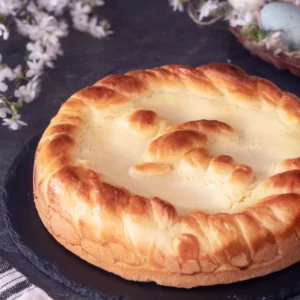
Inside this collection you’ll find a mix of traditional European Easter breads and soft, bakery-style treats that fill the house with the smell of warm dough, butter, and spices. There are classics like Romanian Pasca, rich and festive, perfect for the Easter table. You’ll also find beautifully spiced Chocolate Hot Cross Buns, Easy Panettone, soft and fluffy Wool Roll Bread, elegant Estonian Kringle, and Poppy Seed Babka that feels like a true celebration bake.
I also included several sweet rolls that are simple to make but special enough for a holiday breakfast or brunch. Some recipes are traditional, others are modern favorites, but all of them are recipes I’ve tested, baked, and shared with my readers over the years.
These breads are meant to be enjoyed slowly, served warm, shared with family, or baked ahead for Easter morning. If you love enriched doughs, braided breads, or soft cinnamon-style rolls, this collection offers something cozy and festive to bake during the Easter season.
Pasca is a traditional Romanian Easter bread that is typically made during Holy Week and served on Easter Sunday. It is a rich, sweet bread with a mixture of cheese, eggs, and raisin filling. The bread is usually round and is often decorated with a cross.
Panettone is the ultimate Italian holiday treat, soft, fluffy, and bursting with sweet, citrusy flavor. With this Easy Panettone recipe, you can make your own panettone at home without any stress. It is perfect for breakfast, dessert, or gifting to loved ones.
This delightful Poppy Seed Babka is a beloved pastry enjoyed in various countries around the world. It features a fluffy dough filled with a generous amount of poppy seed meringue filling. It is a perfect addition to your holiday table or for pairing with your morning cup of coffee or afternoon tea.
This Cinnamon Wool Roll Bread is a delightful treat perfect for holidays or for whenever craving something sweet. It combines the comforting flavors of cinnamon with the soft, fluffy texture of freshly baked sweet bread.
Chocolate Chunk Hot Cross Buns – with raisins, spices and lots and lots of chocolate inside. These buns are soft, light, very flavorful and chocolaty, some of the chocolate chunks get melted while baking which is awesome.
These Lemon Custard Rose Sweet Rolls are a mouthwatering pastry treat that combines the flavor of lemon with the sweet creaminess of custard, all wrapped up in a soft, fluffy, rose-shaped bun. These sweet rolls are perfect for breakfast, brunch, or any time you're craving something sweet and indulgent.
This Orange Nutella Babka is a really delicious version of traditional Babka, rich, nutty and chocolaty, abounding in citrus flavor. It is by far one of the best Babka you can ever prepare.
These Chocolate Brioches with their crispy exterior and buttery, soft, chocolatey interior are a fantastic treat either for breakfast alongside a cup of coffee or milk or simply as a snack all day round.
If you like bread recipes these knots are a must-try for you. Making these beautiful dough knots is much easier than it looks. Easy rich yeast dough, filled with your favorite filling, cut into strips and tied into knots. There’s no room for mistakes, every knot is perfect in its way. Soft and fluffy dough bursting with flavor perfectly served warm right after taking them out of the oven.
Treat yourself to a heavenly delight with these twisted cinnamon rolls. Picture warm, fluffy rolls, each swirled with fragrant cinnamon and kissed with a touch of buttery goodness. They're twisted into beautiful, small knots and baked in a muffin tin, adding an extra touch of elegance and charm.
These Blueberry Cream Cheese Buns are a delightful treat that combines soft, fluffy dough with sweet blueberries and creamy cheese filling. They are perfect for breakfast, a snack, or even dessert. They pair wonderfully with a cup of coffee or tea, making them an ideal choice for a cozy morning or a special afternoon treat.
Who could resist homemade cinnamon rolls? Rich and fluffy, with their soft, buttery interior they are irresistible. You can hardly stop to only one roll.
If you love strawberry and lemon combinations you are at the right place. These No Yeast Eggless Strawberry Rolls with Lemon Cream Cheese Icing are a great summer treat that everybody will adore. They look simply amazing and totally irresistible.
The recipe for Nutella Pull Apart Bread is very easy. The bread is irresistible with its soft interior which becomes even more tempting when filled with Nutella. Serve it warm, right after taking it out of the oven, alongside some cold milk. Will be for sure a memorable treat for everybody.
I hope this collection inspires you to bake something special for your Easter table. Sweet breads have a beautiful way of bringing people together.
If you try one of these recipes, I would truly love to see it! Feel free to share your bakes and tag me on Instagram so I can admire your creations. Seeing your breads come to life in your kitchens is always the most rewarding part of sharing these recipes. Happy Easter baking!
Companies that understand the high-stakes legislative negotiations in Washington and build coalitions with diverse economic classes are positioning themselves ahead of the next wave of policy-driven opportunity.
Companies that understand the high-stakes legislative negotiations in Washington and build coalitions with diverse economic classes are positioning themselves ahead of the next wave of policy-driven opportunity.
The Tony-nominated musical Two Strangers (Carry a Cake Across New York) will tour North America beginning in the fall of 2027, producers announced today, launching at Providence Performing Arts Center in Providence, Rhode Island, before continuing onto cities across the U.S. and Canada. Additional tour stops and casting will be announced at a later date. […]
The Tony-nominated musical Two Strangers (Carry a Cake Across New York) will tour North America beginning in the fall of 2027, producers announced today, launching at Providence Performing Arts Center in Providence, Rhode Island, before continuing onto cities across the U.S. and Canada. Additional tour stops and casting will be announced at a later date. […]
Research & Developments is a blog for brief updates that provide context for the flurry of news that impacts science and scientists today.
Sand is the most exploited solid natural resource on Earth. It has been integrated into how we build homes, roads, buildings, and bridges as well as how we protect coastal infrastructure from rising seas. Sand underpins nearly every aspect of modern infrastructure and economics, plays crucial roles in supporting ecosystem biodiversity, and literal
Research & Developments is a blog for brief updates that provide context for the flurry of news that impacts science and scientists today.
Sand is the most exploited solid natural resource on Earth. It has been integrated into how we build homes, roads, buildings, and bridges as well as how we protect coastal infrastructure from rising seas. Sand underpins nearly every aspect of modern infrastructure and economics, plays crucial roles in supporting ecosystem biodiversity, and literally shores up rivers and coasts.
A new report from the United Nations Environment Programme (UNEP) found that we are using 50 billion metric tons (50 trillion kilograms) of sand per year. As global development and industrialization expand, demand for sand in the building sector is expected to rise 45% by the year 2060, outpacing current efforts to sustainably harvest it. The report’s authors urge countries to establish sand as a strategic national asset and develop policies for sustainable extraction.
“Sand is sometimes referred as the unrecognized hero of development, but its essential role in sustaining the natural services on which we depend is even more overlooked,” Pascal Peduzzi, director of the UNEP Global Resource Information Database Geneva, said in a press release about the report. “Sand is our first line of defence against sea level rise, storm surges, and salination of coastal aquifers—all hazards exacerbated by climate change.”
Sand Wanted: Dead or Alive
Dead sand, or sand that has been extracted from its natural environment, is a key component in building materials like concrete and asphalt. Communities around the world use sand in water filtration systems, providing clean water for drinking and agricultural use. And although a transition to clean energy sources is necessary to curb the effects of climate change, many of those sources also depend on sand: solar panels require glass made from high-purity silica sand, and wind turbines, hydroelectric dams, and nuclear power plants all require concrete.
Mangroves, one of the most important coastal trees, can grow in sand. Credit: Diego Parra
Sand also plays a critical role in natural ecosystems. It is home to a wide array of critters from crabs, sharks, and turtles to microorganisms like bacteria and fungi. It supports the growth of corals, mangroves, and seagrasses that in turn support even more marine creatures. It is a key component of healthy soil and aids in surface drainage. It guides river evolution and acts as flood buffer and storm barrier. It also provides local economic benefits via tourism.
These are among the values of sand when it is left alone and unused, called “alive” sand. The UN report notes that these benefits are typically of greater value over time than if sand is dredged and used. But because these benefits are hard to see, they are often overlooked when nations calculate the value of their sand resources.
A Sustainable Sand Future
Despite sand’s importance whether dead or alive, the report notes that few countries have established sand as a strategic national asset or have developed strategies for sustainable extraction. At the current pace, humans are extracting sand from the natural environment at a faster pace than it is being replenished by geologic processes.
What’s more, the UNEP’s Marine Sand Watch tool shows that about half of sand dredging companies are operating within marine protected areas, accounting for about 15% of the volume of dredged sand. This practice, the report notes, is potentially trading in sand’s long-term benefits for short-term gains.
The UN report recommends a few actions to protect the long-term availability of sand as a natural resource, including:
Recognizing sand as strategic national asset, establishing national inventories, and creating long-term regional planning groups that consider sand as an essential resource for resilience;
Establishing circularity and recycling of building materials, especially in areas of conflict and natural disasters;
Strengthening environmental protection practices, and codifying international frameworks to strengthen accountability along the supply chain, including increased transparency about extraction; and
Integrating sand-related biodiversity and social risks into financial decisionmaking and governance.
“Over-reliance on short-term economic metrics risks obscuring, and further impacting, the geological and ecological processes that take centuries to form and may not be restored once critical thresholds are crossed,” the report states. “What is hardest to measure may be precisely what sustains both nature and human societies over the long term. The challenge ahead is not only to manage extraction, but to recognise and balance the full spectrum of sand’s values.”
These updates are made possible through information from the scientific community. Do you have a story about science or scientists? Send us a tip at eos@agu.org.
KUALA LUMPUR, June 16 — Bodycare is increasingly becoming a key part of self-care routines as consumers look beyond facial skincare and place greater emphasis on overall skin health and wellbeing.Tapping into this growing trend, beauty brand Sol de Janeiro has introduced Body Badalada, a new vitamin-infused body lotion designed to deliver lightweight hydration while incorporating the brand’s signature Cheirosa 62 fragrance.The launch reflects a wider shift in the
KUALA LUMPUR, June 16 — Bodycare is increasingly becoming a key part of self-care routines as consumers look beyond facial skincare and place greater emphasis on overall skin health and wellbeing.
Tapping into this growing trend, beauty brand Sol de Janeiro has introduced Body Badalada, a new vitamin-infused body lotion designed to deliver lightweight hydration while incorporating the brand’s signature Cheirosa 62 fragrance.
The launch reflects a wider shift in the beauty industry, where bodycare products are evolving from basic moisturisers into formulations that combine skincare-inspired ingredients with sensory experiences.
According to Sol de Janeiro, Body Badalada is formulated with Brazilian sugarcane, a natural source of glycolic acid, a seven-hyaluronic acid blend aimed at supporting moisture retention, and Brazil nut oil, which is rich in vitamin E and essential fatty acids.
The lightweight lotion is designed to provide up to 24 hours of hydration while absorbing quickly into the skin, offering an alternative to heavier body creams often associated with intensive moisturising products.
The product is scented with the brand’s popular Cheirosa 62 fragrance, featuring notes of pistachio, salted caramel and vanilla, a scent profile that has become one of Sol de Janeiro’s most recognisable signatures.
As fragrance layering and bodycare rituals continue to gain popularity among beauty consumers, the brand is also encouraging users to pair the lotion with its Brazilian 4 Play Moisturizing Shower Cream-Gel and Cheirosa 62 Perfume Mist as part of a complete routine.
Body Badalada is priced at RM128 for a 400ml bottle and is available through Sephora Malaysia stores and online.
There are over 283 million cars cruising the United States, and over 90 percent of them are still guzzling gas. Apart from the obvious environmental problems, fuel prices also continue to skyrocket thanks to the ongoing war in Iran. The average price for gas is currently around 33 percent higher than it was before the crisis, and there is little sign that those numbers are going down anytime soon.
The strain is forcing many drives to reconsider how they get around—and they’re getting creative
There are over 283 million cars cruising the United States, and over 90 percent of them are still guzzling gas. Apart from the obvious environmental problems, fuel prices also continue to skyrocket thanks to the ongoing war in Iran. The average price for gas is currently around 33 percent higher than it was before the crisis, and there is little sign that those numbers are going down anytime soon.
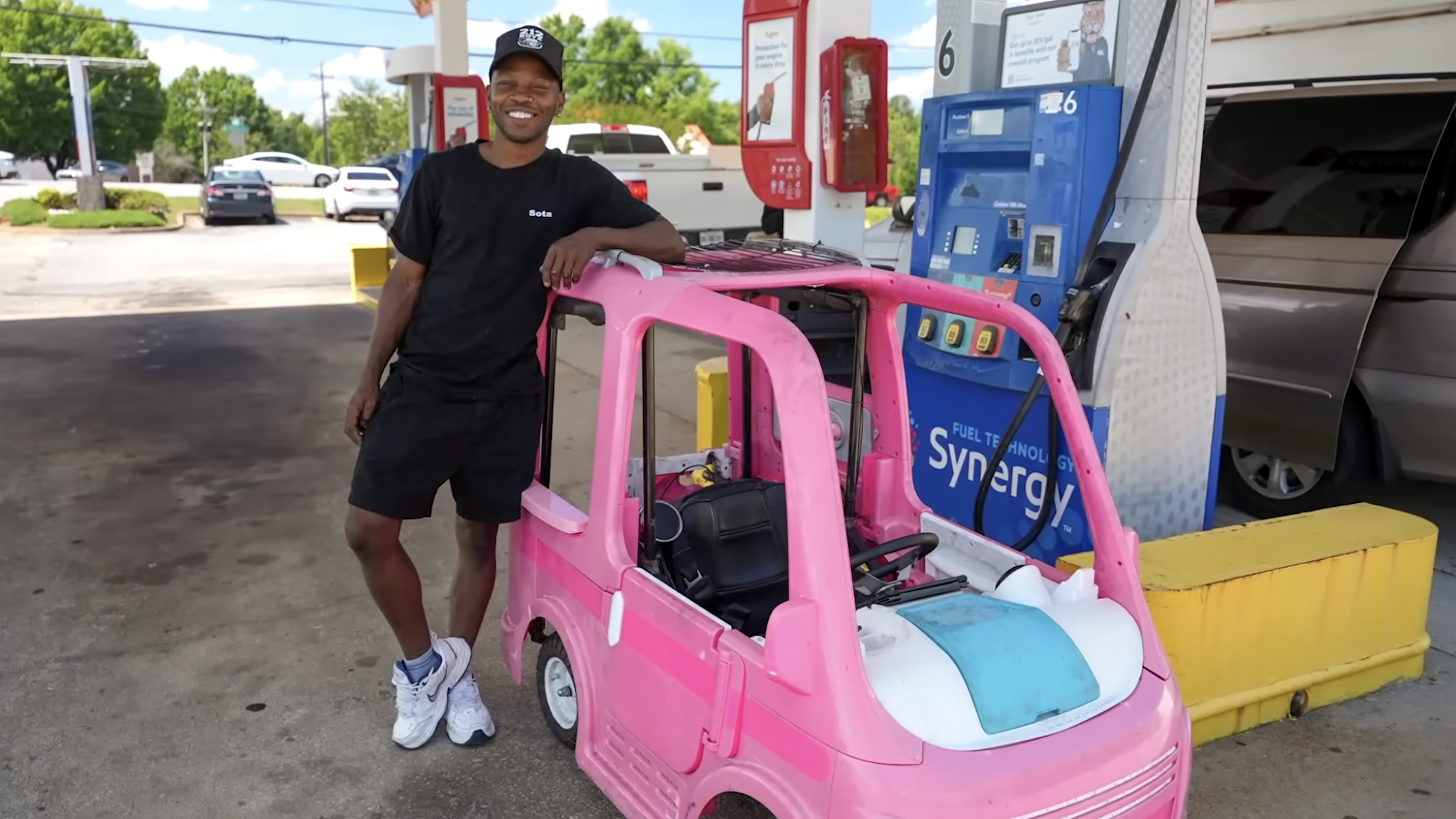
The strain is forcing many drives to reconsider how they get around—and they’re getting creative with it. In Georgia, a 30-year-old handyman is showing everyone how to properly adapt to uncertain times. According to a recent Reuters profile, Mali Hightower has retrofitted a discarded, bright pink Power Wheels Barbie Dream Camper with a two-gallon, one-piston engine for his shorter commuting needs.
“I drive this when I can,” Hightower said on May 19.
To get it going, a driver simply pulls the rip cord that’s attached to the former power washer engine. At less than four-feet-tall, the Dream Camper may not be the most comfortable ride for a full-grown adult,but it’s definitely cheaper. Hightower likely still prefers driving his 1996 Mercedes-Benz convertible, but with a full tank costing him around $90 right now, he’s more than willing to use his Power Wheels alternative for errands like grocery runs.
While somewhat surreal to see at a gas pump, the DIY solution underscores a more important issue: the need for more people to divest from fossil fuel rides in favor of public transportation and electric vehicles (EVs). Unfortunately, that’s easier said than done for many people. The U.S. is dramatically underfunded when it comes to options like commuter bus routes and trains, while EVs are still out of many people’s price ranges. The Dream Barbie Camper may be one-of-a-kind right now, but there’s a good chance that similar, intentionally constructed alternatives are on the way. At least those will be able to comfortably fit the driver.

 Login
Login