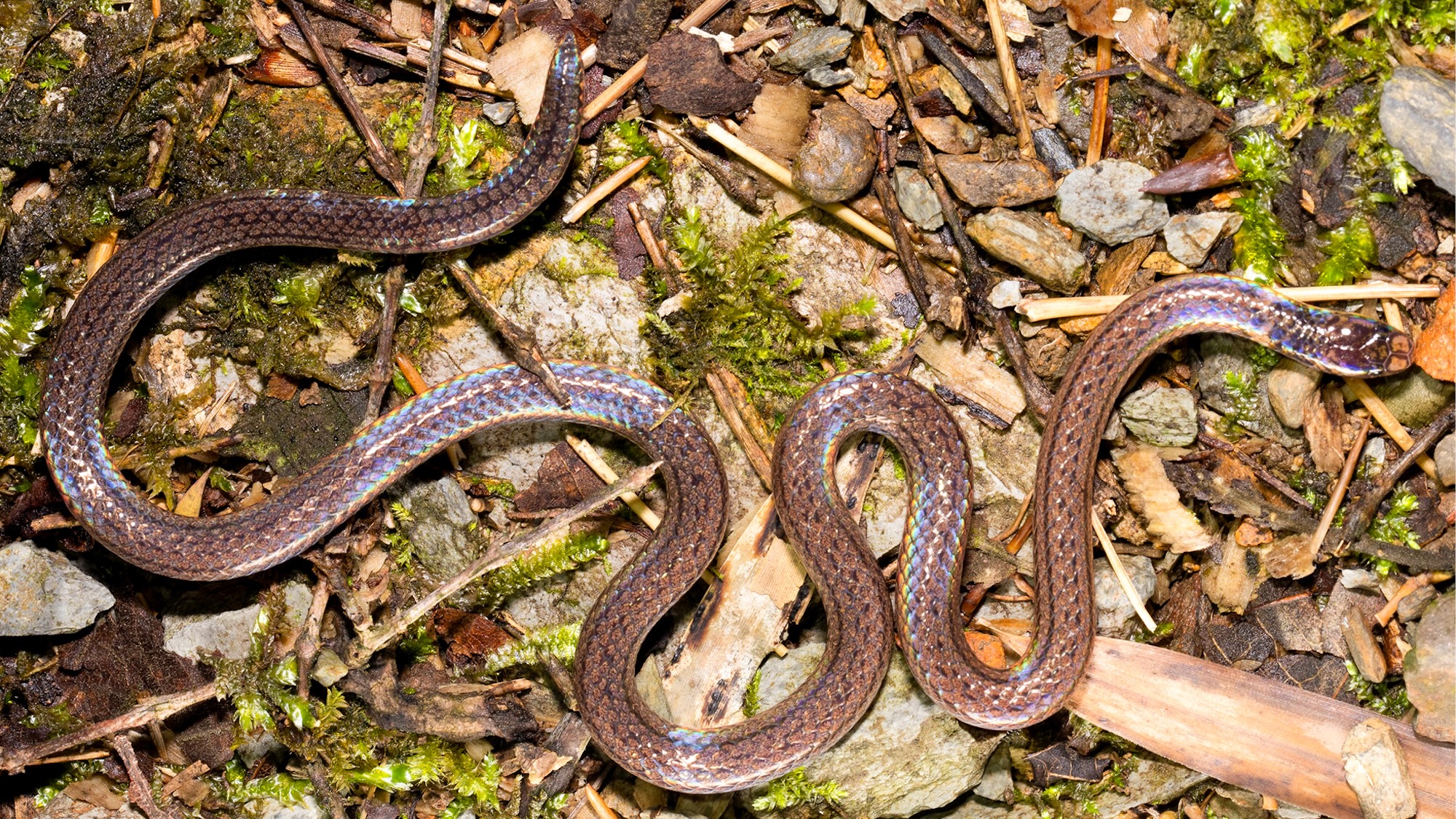
Only around 600 of the nearly 4,000 known snake species are venomous. The recently discovered Guangxi reed snake (Calamaria incredibilis) in China is not one of those species, but its alternative defense mechanism is strange enough to keep most predators at bay. According to a study recently published in the journal Zoosystematics and Evolution by biologists at the Natural History Museum of Guangxi, C. incredibilis wields its wide, stubby tail like a second head to scare away potential threats.
Only around 600 of the nearly 4,000 known snake species are venomous. The recently discovered Guangxi reed snake (Calamaria incredibilis) in China is not one of those species, but its alternative defense mechanism is strange enough to keep most predators at bay. According to a study recently published in the journal Zoosystematics and Evolution by biologists at the Natural History Museum of Guangxi, C. incredibilis wields its wide, stubby tail like a second head to scare away potential threats.
Researchers first spotted the Guangxi reed snake during a biodiversity study in China’s Huaping National Nature Reserve near the nation’s southern border with Vietnam. The mostly nocturnal, non-venomous serpent grows to about eight-inches-long, and is identifiable by its small brown scales and seven darker stripes. Largely docile, it prefers to hide away between rocks and underneath leaves, and prefers a diet of insect larvae and earthworms.
Although largely timid, the Guangxi reed snake has evolved a strategy to bluff its way out of dangerous situations. Whenever it feels threatened, the reptile raises its tail off the ground and begins waving it like an additional head. The tail even features similar markings to those seen on the snake’s head, which adds to the overall realism.
As People recently noted, the reed snake is far from the first new snake species discovered in 2026. Earlier this year, researchers identified both a vibrantly turquoise pit viper and a flying snake in a Cambodian cave alongside previously unknown geckos, millipedes, and microsnails.
The study’s authors explained the Guangxi reed snake “highlights the underestimated diversity” in the reptile’s larger family, as well as underscores the region’s role as an “ important hotspot” of unique animals.
Regular coffee drinkers know there is a big difference between a brew’s aroma and its taste. A cup may smell warm and full-bodied only to leave you with a lingering bitterness behind the first sip. Researchers have long known a coffee’s potentially acrid flavor profile is dictated at a molecular level thanks to your tongue’s taste receptors, but how that occurs has remained a mystery. Now, a team at the University of North Carolina at Chapel Hill has the answer thanks to precise imaging technolo
Regular coffee drinkers know there is a big difference between a brew’s aroma and its taste. A cup may smell warm and full-bodied only to leave you with a lingering bitterness behind the first sip. Researchers have long known a coffee’s potentially acrid flavor profile is dictated at a molecular level thanks to your tongue’s taste receptors, but how that occurs has remained a mystery. Now, a team at the University of North Carolina at Chapel Hill has the answer thanks to precise imaging technology—and their findings may have much wider ramifications beyond the coffee pot.
The details were published in the journal Nature Structure & Molecular Biology, and focuses on TAS2R43, one of our 26 different bitter taste receptors. These mechanisms are expressed throughout the human body, and likely evolved to guard the species against toxic substances as well as helping regulate our metabolisms.
“Bitter taste receptors are thought to be important for detecting toxins, pathogens, and harmful bacteria in the airways, gut, skin, and organs, initiating immune responses, clearing pathogens, regulating immune cells, influencing hormone secretion, and aiding digestion,” explained study co-author and molecular biologist Bryan Roth.
Scientists first determined the microscopic structure of TAS2R43 a few years ago, but until Roth’s team, no one had analyzed how it responds to bitter compounds. To accomplish this, researchers relied on a technique called cryogenic electron microscopy (cryo-EM). This method involves flash-freezing biological molecules, then employing electrons to generate highly detailed 3D images of their overall shape. Roth and his colleagues recorded how TAS2R43 receptors responded to coffee’s bitter elements including caffeine and mozambioside, then compared those to the reaction of other receptors.
“In this work, we solved the structures of TAS2R43 bound to bitter compounds and showed, in molecular detail, how this receptor detects bitter molecules,” said molecular biologist and study co-author Yoojoong Kim.
Researchers now have a molecular framework for creating future compounds that intentionally control how someone experiences bitterness in drugs or foods. Aside from finally understanding how taste receptors like TAS2R43 physically respond to bitter molecules, the discoveries could also help develop new medical treatments.
“In the long term, this could help guide the development of new therapeutic strategies for diseases involving airway defense, gut function, inflammation, or host responses to microbes,” Kim added.
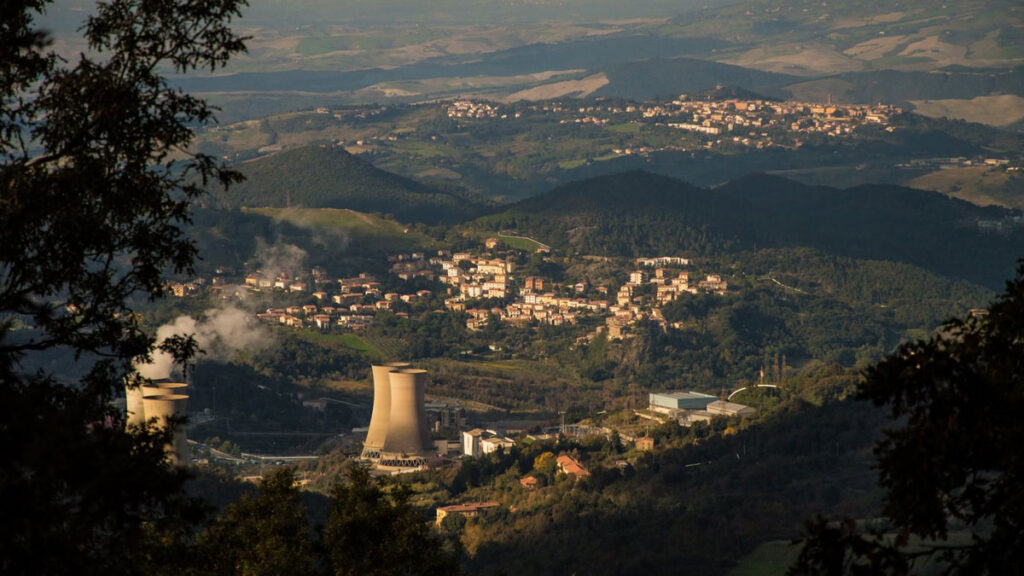
It’s long been clear that Italy’s Larderello region is supplied with abundant heat from Earth’s interior. The area, located in the center of Tuscany, is home to the world’s very first geothermal power plant and once bore the nickname “Devil’s Valley” for the steam vents that dot the rolling landscape.
The source of all of that heat has never been clear because the region has little volcanic activity. But now, new research points to the existence of a massive reservoir of magma, thousands of
It’s long been clear that Italy’s Larderello region is supplied with abundant heat from Earth’s interior. The area, located in the center of Tuscany, is home to the world’s very first geothermal power plant and once bore the nickname “Devil’s Valley” for the steam vents that dot the rolling landscape.
The source of all of that heat has never been clear because the region has little volcanic activity. But now, new research points to the existence of a massive reservoir of magma, thousands of cubic kilometers in volume, hiding beneath Larderello.
“It’s beautiful to think that in a few hundred thousand years, we might find a supervolcano in there.”
The reservoir was discovered by University of Geneva geophysicist Matteo Lupi and his colleagues using a relatively new technique called ambient noise tomography (ANT). With ANT, the researchers peered deeper beneath the crust in the region, discovering anomalies that pointed to large volumes of magma.
The reservoir sits about 10 kilometers beneath the surface and is around 20 kilometers in diameter, the authors reported in a paper published in CommunicationsEarth and Environment. Those dimensions make the reservoir comparable in size to those underlying so-called supervolcanoes like Yellowstone and Toba, though Lupi said there’s no apparent danger of an eruption anytime soon.
“I don’t think that, in human time frames, we should change the way we perceive the area,” he said. “Nevertheless, it’s beautiful to think that in a few hundred thousand years, we might find a supervolcano in there as well.”
Listening for Magma
Previous studies had posited the existence of large amounts of magma somewhere beneath Tuscany but never provided definitive evidence. A borehole project that concluded in 2018 revealed sudden temperature increases several kilometers down. Other studies using seismic vibrations to infer the structure of the crust in the region hinted at the presence of magma.
Lupi, along with colleagues in Italy, has been working to expand the use of ANT in Tuscany and elsewhere to make new and better images of structures deep underground. The technique involves using a network of seismometers to pick up on surface waves traveling through Earth that record a kind of background noise created by wind, ocean waves, and other subtle forces. Then, statistical algorithms help scientists find relevant seismic signals amid the static.
“Surface waves are sensitive to the shear properties of the rock,” said Brandon Schmandt, a geophysicist at Rice University who wasn’t affiliated with the research. “If you heat something or introduce a little melt, the shear properties weaken a lot. And so it’s a good way to find a big magma reservoir [in Earth’s crust].”
Using more than 60 seismometers spread across Tuscany and islands just offshore, Lupi and his team cross correlated surface wave data to produce a map of seismic velocities beneath Larderello. That map contains a large blob where seismic signals travel markedly slower than in other places. Those speeds align with a body of partially melted rock, Lupi said, surrounded by a region of slightly cooler and more solid “crystal mush.”
The researchers estimate the reservoir is about 5,000 cubic kilometers in volume, with molten rock making up about 80% of its innermost contents and about 20% of the surrounding crystal region.
A Missing Supervolcano?
The magma reservoir’s existence provides an explanation for the abundant geothermal activity in the Larderello region while simultaneously raising another question. The quantity of magma discovered could fuel a massive eruption on the scale of other supervolcanoes worldwide—yet no supervolcano exists in Tuscany.
Why Tuscany doesn’t host a caldera similar to Yellowstone in the United States is still an open question. There are several nonexclusive possibilities for the lack of eruptivity, said Federico Farina, a geologist and professor of geochemistry at the University of Milan who was also an author of the study. The magma under Larderello might be drier and therefore less eruptive, or it could have been produced, and therefore intruded into the crust, more slowly. Additionally, the structure of the crust in the region could have helped to trap the magma and prevent it from getting out.
Another clue to the region’s geological history comes from dating zircons, small crystals formed when magma cools and hardens. Farina has found zircons with different ages very close to each other in the rock matrix, which he said indicates a long-lived system where magma moves through different reservoirs as it cools. He said these zircons may also enable the researchers to model the size of the reservoir and better understand the speed and amount of magma accumulation there.
More to Come
Discovering so much magma underneath Tuscany is a surprise, but Lupi thinks it’s likely to be far from the only large magma reservoir hiding beneath a volcanically quiet region. He noted that research he carried out in the Andes around a decade ago also suggested, though not conclusively, the existence of a large, hidden magma reservoir. That experience was, in part, what convinced him to use ANT’s deep imaging capabilities elsewhere.
“This is good momentum to encourage people to look at it from a magmatic system standpoint and not just focus on the vents at the surface.”
Schmandt agreed that large reservoirs are likely to exist in other places even when there’s little for human eyes to see. “This is good momentum in that direction to encourage people to look at it from a magmatic system standpoint and not just focus on the vents at the surface,” he said.
Lupi may not have to go far to discover his next massive pool of molten rock. He said his data indicated there may be another reservoir buried under nearby Mount Amiata that’s twice as big as the one beneath Larderello. That area was just at the edge of their seismometer network, meaning the team couldn’t fully resolve it.
Citation: Scharping, N. (2026), Scientists find thousands of cubic kilometers of magma hiding beneath Tuscany, Eos, 107, https://doi.org/10.1029/2026EO260157. Published on 18 May 2026.
Source: Community Science
Heat, air pollution, and flooding can affect a city and the health of city residents. Yet few cities have a comprehensive network of weather stations providing accurate measurements of rainfall, humidity, and air temperature across different neighborhoods. Some of this information can be filled in by community members’ personal weather stations, like those connected through Weather Underground. But because of a lack of sensors and inconsistencies in data collection,
Heat, air pollution, and flooding can affect a city and the health of city residents. Yet few cities have a comprehensive network of weather stations providing accurate measurements of rainfall, humidity, and air temperature across different neighborhoods. Some of this information can be filled in by community members’ personal weather stations, like those connected through Weather Underground. But because of a lack of sensors and inconsistencies in data collection, these types of community networks are often not reliable on their own. Furthermore, most personal weather stations are located in higher-income neighborhoods, with very few in lower-income, underserved neighborhoods.
The same is true in Baltimore, where personal weather stations are more prevalent in higher-income, majority-white neighborhoods around and stretching north from the Inner Harbor but are lacking in lower-income and majority-Black neighborhoods to the west and east. Furthermore, only one National Weather Service sensor is present in the city itself, in the Inner Harbor, and another sensor is located about 12 kilometers (8 miles) away at Baltimore/Washington International Airport.
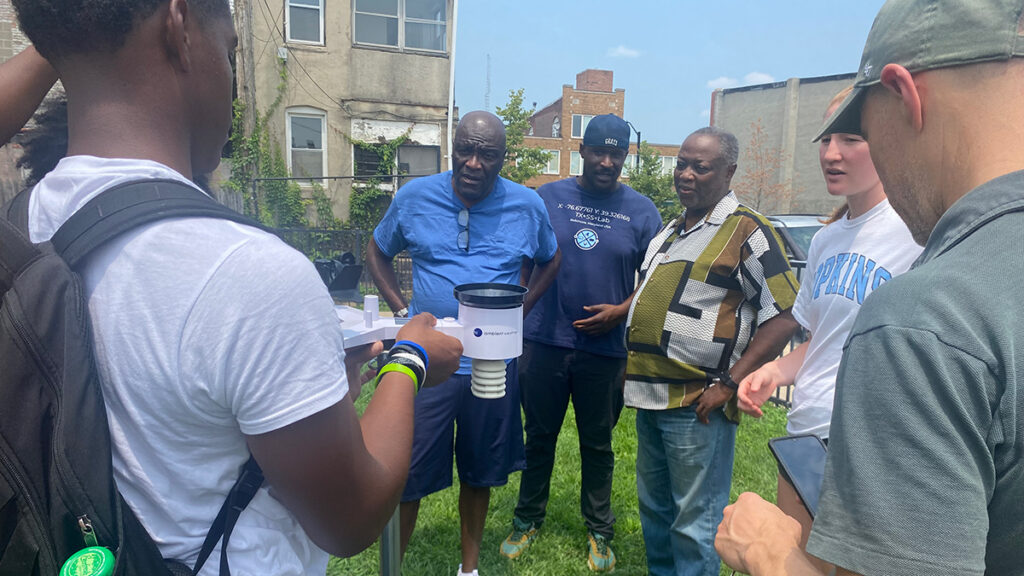
Waugh et al. describe a partnership between universities, state agencies, and Baltimore residents to build the Baltimore Community Weather Network (BCWN) that addresses the missing data coverage around the city. Unlike the patchwork of personal weather stations, community members participating in the BCWN are from underserved areas in the city and are actively involved in data collection and interpretation.
Weather stations are placed in open spaces to avoid obstacles like buildings or trees affecting measurements of temperature, rainfall, or wind. This careful placement is designed to ensure that the data collected are as close as possible to the conditions experienced by actual residents.
BCWN sites are carefully monitored and managed by community members. Baltimore residents are actively involved in data collection, weather station management, and decisionmaking with scientists and local organizations to help promote engagement, education, and community empowerment.
Because Baltimore is not the only U.S. city that has historically lacked accurate weather data coverage, the BCWN system could be applied to other locations—or even used to monitor other environmental exposures, such as air pollution, the authors say. (Community Science, https://doi.org/10.1029/2025CSJ000154, 2026)
Citation: Owen, R. (2026), Fixing Baltimore’s unequal weather data coverage, Eos, 107, https://doi.org/10.1029/2026EO260108. Published on 13 April 2026.
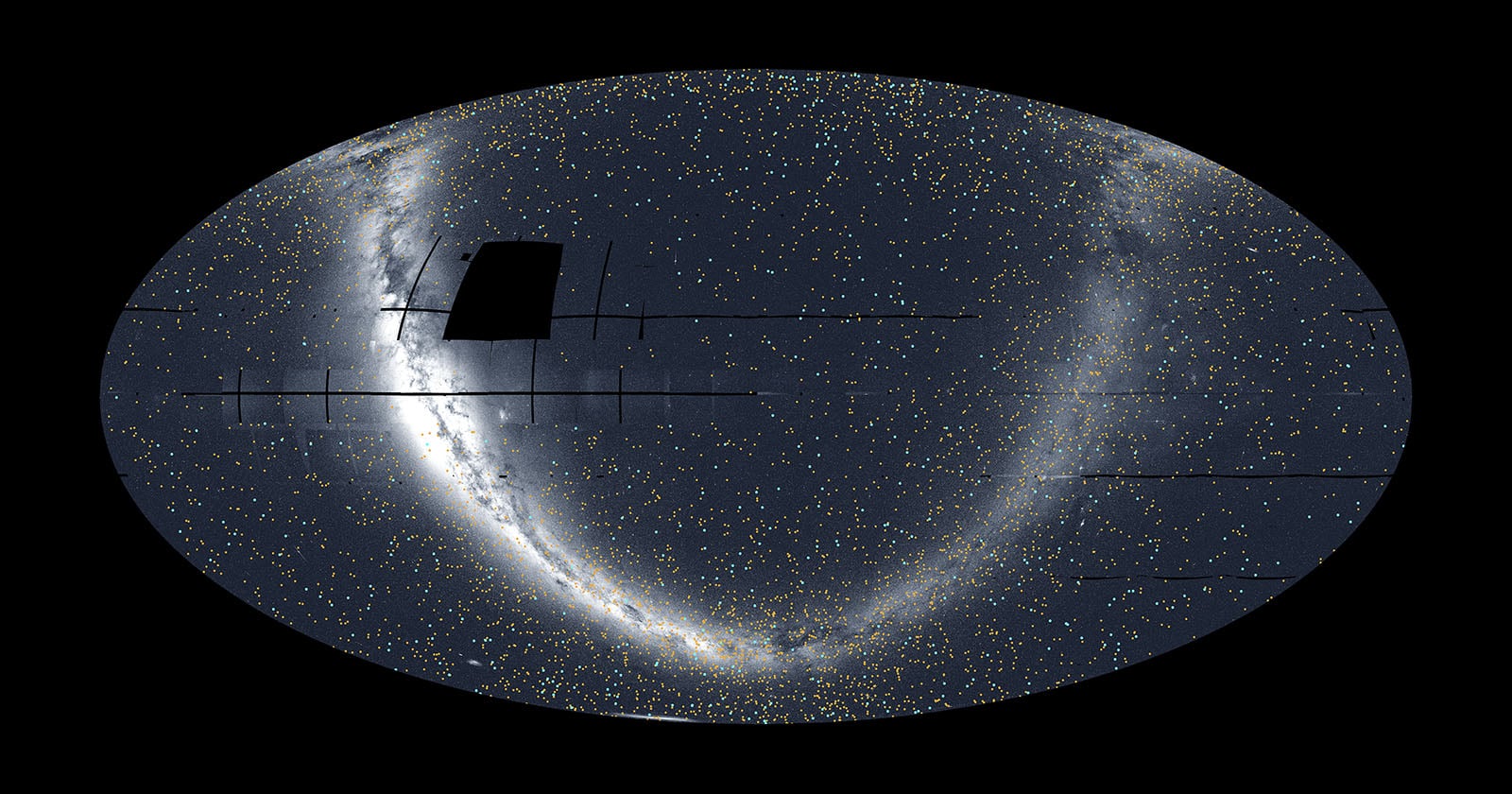
NASA's Transiting Exoplanet Survey Satellite (TESS) has released a new mosaic that offers its most complete view of the night sky yet. Captured over eight years, the all-sky mosaic includes 679 confirmed, newly discovered exoplanets and nearly 5,200 candidate exoplanets.
[Read More]
NASA's Transiting Exoplanet Survey Satellite (TESS) has released a new mosaic that offers its most complete view of the night sky yet. Captured over eight years, the all-sky mosaic includes 679 confirmed, newly discovered exoplanets and nearly 5,200 candidate exoplanets.
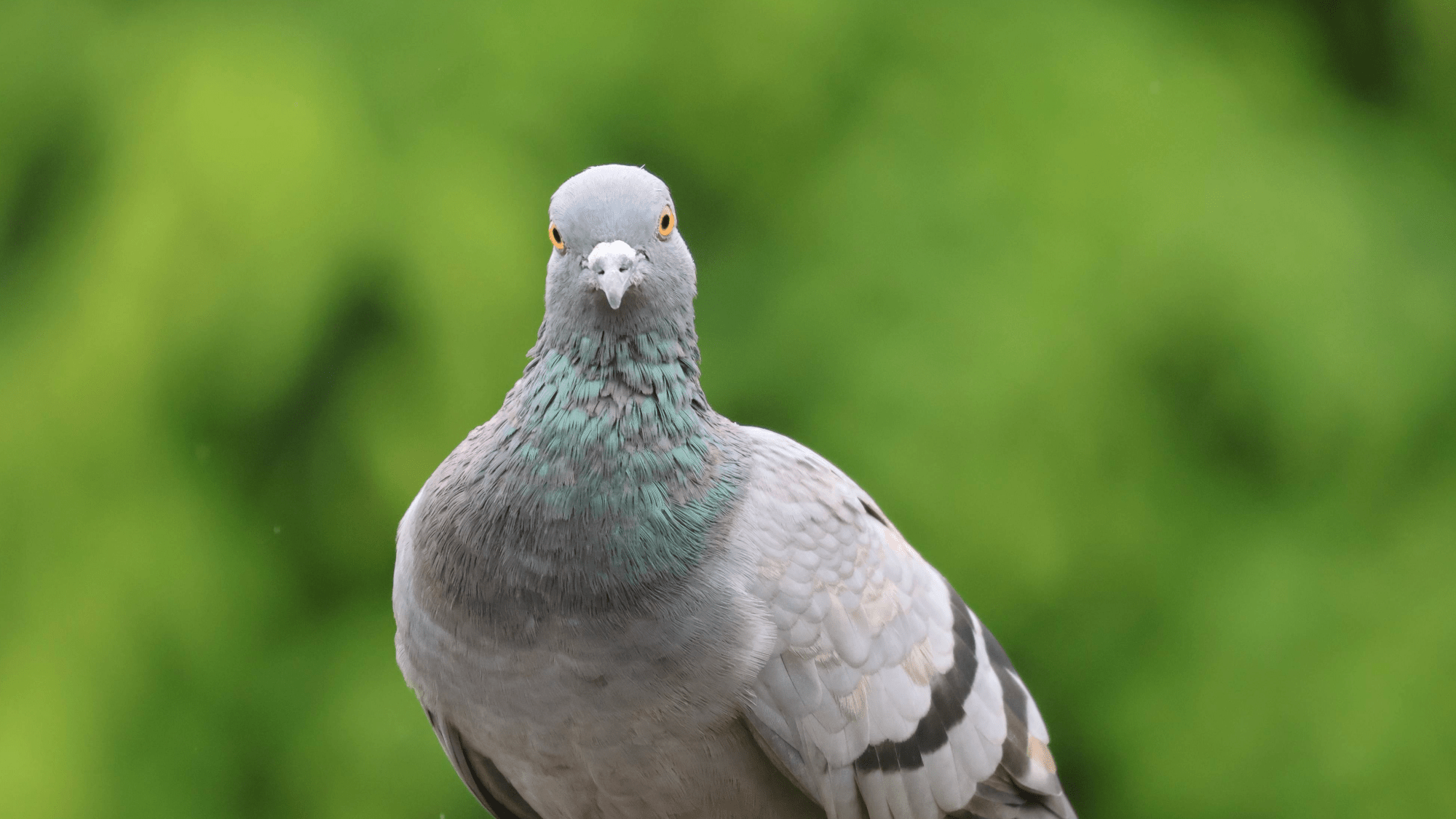
For decades, scientists have known that Earth’s magnetic field helps migratory birds and homing pigeons navigate. Just how our feathered friends sense the invisible sphere around the Earth, however, has been less clear.
At least part of the answer appears to be hiding inside a seemingly random organ. Immune cells inside pigeon livers called macrophages are sensitive to the planet’s magnetic field. These cells function like an internal compass, according to a new study published today in the
For decades, scientists have known that Earth’s magnetic field helps migratory birds and homing pigeons navigate. Just how our feathered friends sense the invisible sphere around the Earth, however, has been less clear.
At least part of the answer appears to be hiding inside a seemingly random organ. Immune cells inside pigeon livers called macrophages are sensitive to the planet’s magnetic field. These cells function like an internal compass, according to a new study published today in the journal Science.
Macrophages destroy old red blood cells, which makes them accumulate iron. The iron makes the macrophages superparamagnetic, a kind of magnetism that takes place in particular nanoparticles. The nanoparticles can then be magnetized if a magnetic field is applied to them.
“When pigeons fly, the nanoparticles align with the magnetic field and become ‘magnetized,’” Clivia Lisowski, a co-author of the study and a post-doctoral researcher in Immunology at the University of Bonn, tells Popular Science. “Like that, pigeons can sense Earth’s magnetic field.”
Electron microscopy image of pigeon liver tissue shows hepatic macrophage (blue) in contact with nerve fiber (yellow), which enables them to transmit (“magnetic”) information to the pigeon brain. Image: Lisowski et al. (2026) Science.
To understand how these particles help the pigeons navigate, Lisowski and her team tracked down where magnetic cells are in pigeons’ bodies. Because the liver and spleen store significant quantities of iron, researchers thought these might be good candidate organs. The liver had a significantly stronger magnetic response than any of the other tissues in the study, according to study co-author Ulf Wiedwald, an expert in nanoscience at the University of Duisburg-Essen in Germany,
From there they homed in on macrophages, and put these important immune cells to the test. They studied pigeons that were trained to fly back to their aviary in Konstanz, Germany, from over 12.4 miles away. Pigeons whose macrophages had been removed got lost when the weather was overcast. But when the sun was out, the pigeons reached the aviary, probably with the aid of solar cues.
The findings show how the birds employ magnetic sensing to find their way, as well as the sun’s orientation.
“Our study has implications for both the immune research landscape as well as for research on animal navigation or magnetoreception, respectively. For animal navigation it’s a new concept of how animals sense/perceive Earth’s magnetic field,” Lisowski says. “We think that this ferrimagnetic mechanism can actually explain how birds migrating at night, or sharks or bats or other animals migrating in dark environments can perceive Earth´s magnetic field.”
The team also found that the iron-rich macrophages are close to nerve fibers, indicating that magnetic information can get to the brain via this route. Ultimately, this shows how important interdisciplinary research, involving immunologists, behavioral biologists, and physicists, carries significance for more than just birds.
As for the immune system, Lisowski explains that to accomplish its different fuctions—such as defending our bodies from pathogens and healing wounds—it has to sense the environment.
“Our finding that the immune system can also sense the Earth´s magnetic field is a complete new layer in this concept of ‘immuno-sensation’ and opens the door to new research,” Lisowski explains.
Editors’ Highlights are summaries of recent papers by AGU’s journal editors.
Source: Water Resources Research
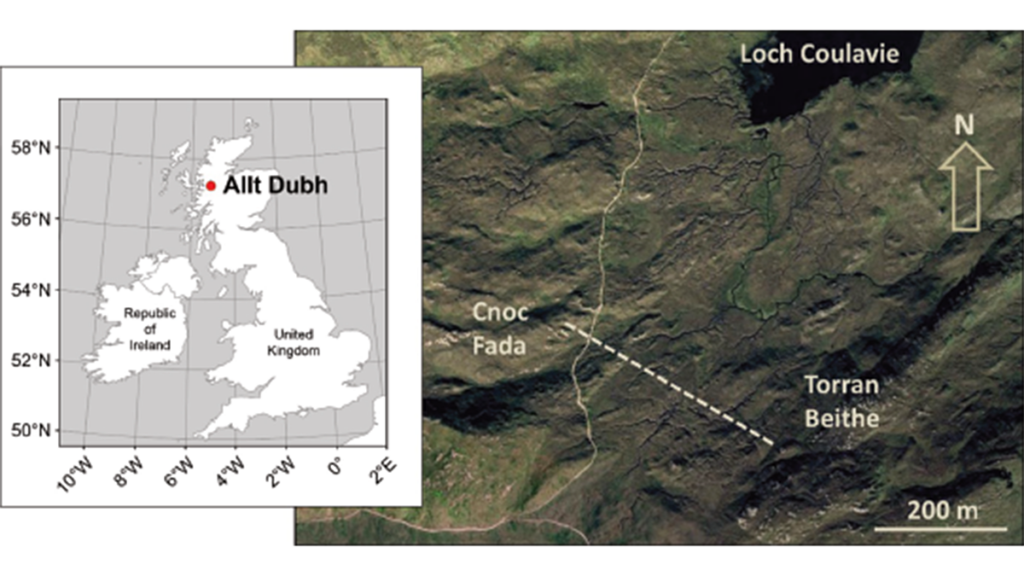
Recent studies have shown the climatic envelope for blanket bog peatlands to be contracting, yet questions remain about what will happen to existing peatlands as they pass outside of this shrinking bioclimatic envelope.
DigiBog, a process-based model, accurately predicts peat depth in an area of very complex topography. This presents a significant advancement in modeling peat d
Recent studies have shown the climatic envelope for blanket bog peatlands to be contracting, yet questions remain about what will happen to existing peatlands as they pass outside of this shrinking bioclimatic envelope.
DigiBog, a process-based model, accurately predicts peat depth in an area of very complex topography. This presents a significant advancement in modeling peat depth in areas with complex terrain. The implications of peat expanding at a faster rate on the relatively dry and steeper slopes, compared to the wetter basins, is contrary to the current thinking.
Despite being at the edge of the future climatic envelope for blanket bog, under all climate scenarios, the site continues accumulating peat until 2100, with the greatest accumulation occurring under the moderate Representative Concentration Pathway (RCP) 4.5 scenario.
While peat thickness generally depends on wetness, wetness does not fully explain accumulation patterns in blanket bogs, with some very wet areas having only shallow peat accumulation.
Tom Winter’s conceptual model proposed that wetland vulnerability to climate change depends on wetness and the position within the hydrological landscape. Baird et al. [2026] does indeed show peat depth to have moderate to strong correlations with wetness. However, greater recent peat accumulation, and predicted future accumulation, is away from basins which contradicts Winter’s “wetter is better” and may be partially explained by the ability of peatlands themselves to engineer and alter landscape wetness.
Overall, ecohydrological models that are process-based are better than simple bioclimatic models for assessing future peatland carbon, when accounting for accumulation rates and spatial patterns.
Citation: Baird, A. J., Young, D. M., Ramirez, J. A., Gill, P. J., Morris, P. J., Peleg, N., et al.(2026). Assessing the response of blanket peatlands to climate change using the DigiBog model and winter’s concept of the “hydrologic landscape”. Water Resources Research, 62, e2025WR042050. https://doi.org/10.1029/2025WR042050
—Paul Whitfield, Associate Editor, Water Resources Research, with input from Joshua Ratcliffe
What’s the weirdest thing you learned this week? Well, whatever it is, we promise you’ll have an even weirder answer if you listen to Popular Science’s hit podcast. The Weirdest Thing I Learned This Week hits Spotify, YouTube, Apple, and everywhere else you listen to podcasts every-other Wednesday morning. It’s your new favorite source for the strangest science-adjacent facts, figures, and Wikipedia spirals the editors of Popular Science can muster. If you like the stories in this post, we guara
What’s the weirdest thing you learned this week? Well, whatever it is, we promise you’ll have an even weirder answer if you listen to Popular Science’s hit podcast. The Weirdest Thing I Learned This Week hits Spotify, YouTube, Apple, and everywhere else you listen to podcasts every-other Wednesday morning. It’s your new favorite source for the strangest science-adjacent facts, figures, and Wikipedia spirals the editors of Popular Science can muster. If you like the stories in this post, we guarantee you’ll love the show.
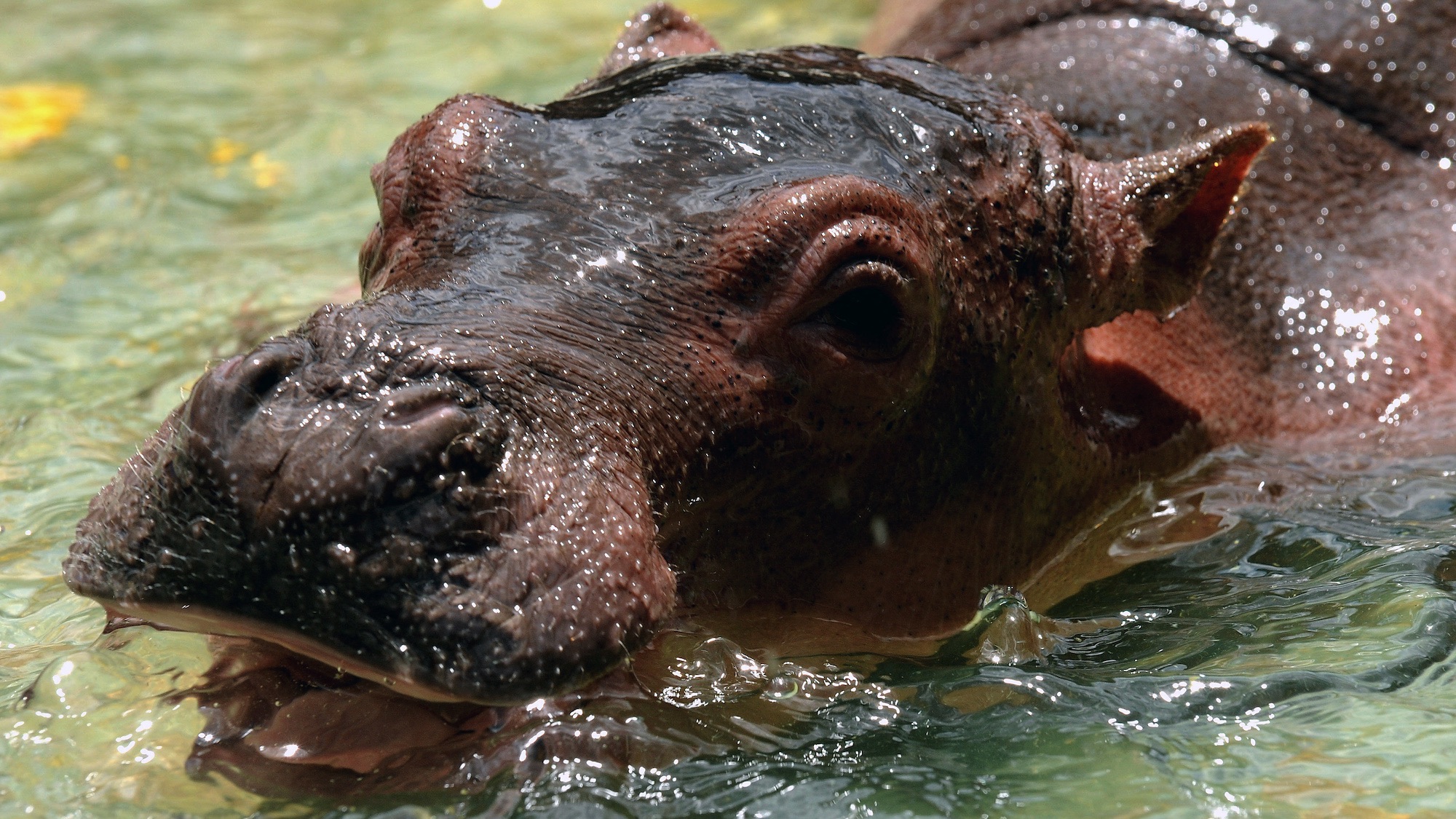
FACT: There’s more than one way to sterilize a hippo, but there’s no easy way to sterilize a hippo
This is not for lack of trying. Like, seriously: The government really, really tried to avoid killing any hippos. But the years-long effort to sterilize these animals has largely failed, and researchers say we’re running out of time to avoid a population too large to deal with. That got me wondering… what makes it so difficult to sterilize a hippo?
As you’ll learn in this week’s episode, sterilizing a hippo surgically is a difficult, dangerous, and expensive endeavor. And while chemical castration (AKA shooting hippos with birth control darts) might sound simpler, it’s… still difficult, dangerous, and expensive.
For a hippo palate cleanser, I also dive into the herculean effort made to save Fiona the hippo a few years back, which required milking a hippo (a feat never before attempted!) and replicating hippo milk.
FACT: John Steinbeck took part in a failed deep-sea drilling expedition
Featuring Ben Lillie (the co-founder of Caveat, our favorite venue in NYC!)
This week’s episode features special guest Ben Lillie, otherwise known as the keeper of our favorite place to do Weirdest Thing live shows! He spun a yarn about Project Mohole, a failed deep-sea drilling expedition that took place back in the 1960s. The expedition featured a surprising crew member: John Steinbeck, who covered the endeavor for LIFE Magazine in… very Steinbeck-ian fashion.
Pilates is a super trendy workout modality right now, and it’s gotten a reputation for being pretty elitist. But Joseph Pilates—yes, he was a real guy, and his name was Pilates—didn’t set out to create a workout that looked good on the ‘gram. He didn’t even set out to create a workout that people would spend loads of money on. The former circus performer actually dreamed up the exercises that would become pilates while interned in a prison camp. You can learn more about the reformer’s journey from janky hospital bed to sleek boutique workout equipment in this week’s episode, or by checking out this article I wrote about the history of Pilates.
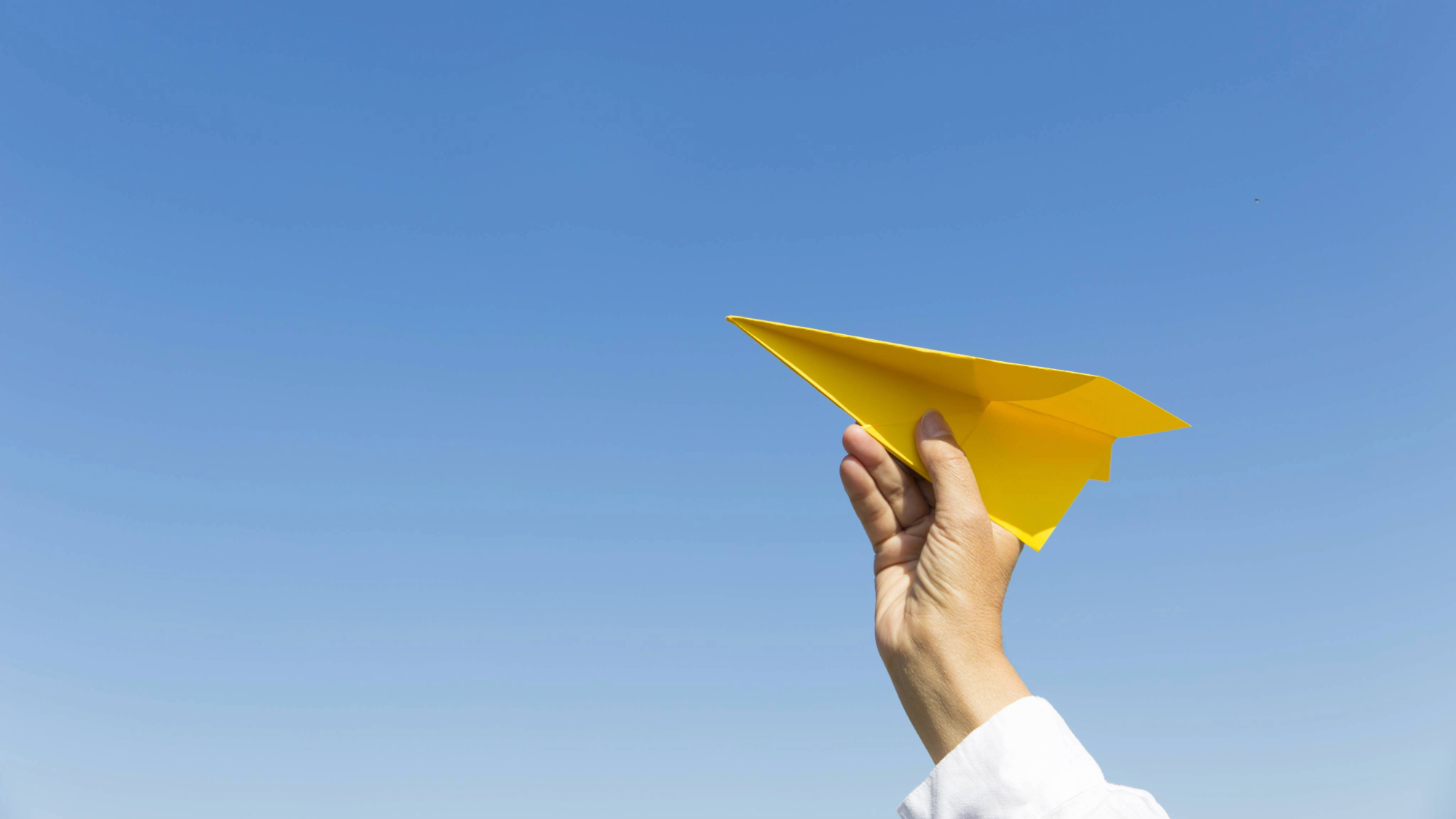
While a holiday weekend has come and gone, May 26 is not without a cause for celebration. It’s National Paper Airplane Day!
The annual day commemorates the homemade aeronautical toy that has fascinated (and frustrated the less crafty) children and adults for generations. According to National Day, the practice of constructing paper planes is sometimes called aerogami, after origami, the Japanese art of folding paper. Building paper planes that can soar through the air like a bird is believed
While a holiday weekend has come and gone, May 26 is not without a cause for celebration. It’s National Paper Airplane Day!
The annual day commemorates the homemade aeronautical toy that has fascinated (and frustrated the less crafty) children and adults for generations. According to National Day, the practice of constructing paper planes is sometimes called aerogami, after origami, the Japanese art of folding paper. Building paper planes that can soar through the air like a bird is believed to have originated in ancient China, where paper was invented around 105 CE. However, the art of folding it into an airplane may have been perfected in Japan, as it is similar to origami.
Here in the United States, instructions for folding the Basic Dart were included in a children’s book published in 1859, so it is safe to say kids and adults alike have been making them for over 167 years. The term paper airplane was then coined in 1907 and replaced paper dart as the dominant term by the 1950s. In 2022, Kim Kyu Tae nabbed the Guinness World Record for the Longest Paper Airplane Throw Ever with a flight of 252.6 feet. According to Guiness World Records, the longest time flying a paper aircraft is 31.2 seconds and was achieved by Rao Chongyi and a team in China in February.
If you’re inspired to create the world’s best paper airplane, we have you covered. You can also look to the great minds at NASA for inspiration. After all, the first letter “A” in NASA stands for aeronautics. Their step-by-step NASA Space Crafts tutorial will not only help you make a colorful paper airplane, but also NASA’s X-57 Maxwell and the X-59 Quiet SuperSonic Technology.
May your National Paper Airplane Day be free of paper cuts.
We’ve all seen the movies. Scientists gear up to chase tornadoes across the Oklahoma plains, competing with each other to get there first. But is the reality of storm chasing anything like the movies? In a new episode of Popular Science’s Ask Us Anything podcast, we ask real life storm chaser, Cyrena Arnold, to untangle fact from fiction and break down what it’s really like to go speeding after tornadoes.
Ask Us Anything answers your most outlandish, mind-burning questions—from the every
We’ve all seen the movies. Scientists gear up to chase tornadoes across the Oklahoma plains, competing with each other to get there first. But is the reality of storm chasing anything like the movies? In a new episode of Popular Science’s Ask Us Anything podcast, we ask real life storm chaser, Cyrena Arnold, to untangle fact from fiction and break down what it’s really like to go speeding after tornadoes.
Sarah Durn: It’s a balmy Saturday afternoon in Kansas, and you’re driving along a wide open road. You glance in the rear view mirror and your heart skips a beat. Huge, black storm clouds are building in the sky behind you. Lightning flashes. Thunder rumbles. On the radio, an alert blares. A tornado has been spotted not far away.
As you drive as fast as you can away from the storm, a caravan of 10 SUVs whizzes by. What the heck are they doing? Why would anyone drive towards a tornado?
Little do you know, that caravan is packed with hardened storm chasers, just like Helen Hunt’s character in the 1996 classic film Twister. But is real storm chasing anything like the movies?
Laura Baisas: And hello, I’m news editor Laura Baisis.
SD: Here at Popular Science, we can’t stop thinking about all the world’s strangest questions, and this week, we have a special interview episode of Ask Us Anything delving into all things storm chasing. Woo-hoo. What is it? Who does it? And is it anything like the movies? Laura, you actually interviewed real-life storm chaser and meteorologist Cyrena Arnold for this episode.
LB: I did. Cyrena is the absolute coolest.
SD: Ah, I wanna go storm chasing with her so bad.
LB: Kinda do and kinda don’t. Kind of a little afraid of it, but also if I’m gonna go storm chasing with anybody, I think a seasoned meteorologist is kind of the perfect person to go with.
SD: Yeah, I don’t know. I might get too scared, but the idea of it seems fun.
LB: The idea of it’s great. Sounds great on paper.
SD: Sounds great. And you also wrote a story for Popular Science all about storm chasers, so before we get into your interview with Cyrena, let’s lay a bit of groundwork here. Can you tell us what exactly is storm chasing?
LB: So it’s a term that’s evolved quite a bit over the years, but Hollywood tornado movies basically get a lot of it right.
In general, storm chasing means tracking a severe thunderstorm where a tornado is likely to form.
SD: So badass. So where do chasers typically go to track these storms?
LB: It varies, but tornadoes primarily happen here in the United States.
SD: Really, you don’t get tornadoes elsewhere?
LB: You do. While tornadoes happen in China, Canada, and even Australia, nowhere has tornadoes like the good old U.S. of A.
We have by far the most frequent tornadoes, as well as the most dangerous storms.
SD: I don’t know if that’s an award you want.
LB: No.
SD: And when and where do most of these tornadoes happen in the U.S.?
LB: So it can vary a bit. Peak tornado season for the Southern Plains, so that’s Texas, Oklahoma, and Kansas, is from May into early June.
On the Gulf Coast, it’s earlier in the spring, and in the Northern Plains and Upper Midwest—so think North and South Dakota, Nebraska, Iowa, Minnesota—tornado season is more June and July.
SD: And what are chasers actually doing when they go out?
LB: So that’s cool. That all depends on the specific chaser. For a lot of hobby storm chasers, it’s all about getting that great picture or video of a tornado.
SD: Kinda like Glenn Powell’s character in Twisters?
LB: Exactly. So then you have storm chasers with more of a meteorology background. These chasers can collect really important data on these storms, so things like wind speed, direction, precipitation. All of this helps weather forecasters get on-the-ground data that even the most advanced radar might not see.
SD: Okay, so it’s a little more like Daisy Edgar-Jones’s character in Twisters, or Helen Hunt’s character in the original film.
LB: Exactly.
SD: And I imagine the fact that these real-life storm chasers can report things that radars can’t see is really important, right?
LB: Absolutely. Storm chasers in the field can radio back in to the National Weather Service about what they’re seeing, and from there, the Weather Service can issue potentially life-saving warnings.
SD: Wow, so storm chasers are actually saving lives.
LB: Absolutely, and that’s not something I necessarily even realized until I spoke with Cyrena and she talked about how important that is. Storm chasers are able to be the eyes and ears on the ground and help keep people safe.
SD: No pressure.
LB: Yeah, yeah. None whatsoever.
Now, before we get into my interview with real-life storm chaser Cyrena Arnold, we want to hear from you. What questions are rotating around in your brain? Submit your question by clicking the “Ask Us” link at popsci.com/ask. Again, that’s popsci.com/ask, and click the “Ask Us” link.
SD: We’ll be right back with Laura’s interview with a real storm chaser, after this quick break.
LB: And welcome back. Today, we have a very special guest interview. With us is Cyrena Arnold, a meteorologist, author, and host of the Storm Front Freaks podcast. She’s currently based in New Hampshire, where she is the director of product marketing at Atmospheric G2, and importantly, has 20 years of chasing storms.
Cyrena, thank you so much for joining.
Cyrena Arnold: Yeah, you’re welcome.
LB: So first, tell me, how did you get into storm chasing?
CA: Ah, that’s a very good question, and how I got into storm chasing was accidentally storm chasing. So I was born in the southern Caribbean where they don’t even get hurricanes, where the weather is really nice.
And when I was five, we moved to Denver, Colorado, or a suburb of Denver, and all of a sudden one day there was this thunderstorm, and I’d never seen a thunderstorm before, and then there’s hail, and I’d never seen hail before, and there was lightning, and I hadn’t seen that, and then a funnel cloud formed.
LB: Ah.
CA: And it formed a tornado, and the tornado just went across this big field, and I so vividly remember standing in the doorway of my house, looking out at that and going, “Wow.” That’s, that’s cool.
And a switch flipped in me when that happened. And so I just, I just loved weather, and I have really dedicated my entire life to it, you know, all of my education and every science fair project and everything like that.
So I knew I wanted to study severe weather. I knew I wanted to go to the University of Oklahoma, and when you’re out there at the meteorology school. It was wonderful. My first big storm chase was Cordell, Oklahoma, October 9th of 2001, where we saw seven tornadoes. One was a F3 tornado.
LB: Wow.
CA: And that’s the beginning.
LB: And one thing I think, like, me, myself, and anybody that watches some sort of a sci-fi or some sort of fictional take on a very real thing has to wonder: What do the actual scientists think about this portrayal? So can you tell me, what do you think about the Twister films specifically? Are they at all accurate?
CA: Yes and no.
LB: Right.
CA: There are some things about them that are super accurate.
LB: Mm-hmm.
CA: And there are some things about them that are not. I think the, for me, the funniest thing is how successful they are in storm chasing. They make it seem so easy.
LB: Right.
CA: You, you know, we’re out, oh, we’re gonna get in the car, and you drive 30 minutes, and there’s a tornado, and there’s another tornado, and, and no. No. No, no, no, no. The, the real story—
LB: Hmm…
CA: —is that you see a tornado on average about one out of every 10 of your storm chases.
SD: Wow.
CA: So you have a very low percentage rate. And then in order to do that, you’ve gotta forecast this right. You’ve gotta set yourself up in the right place. You’re possibly driving hundreds of miles, and you’re putting in a tremendous amount of time for a couple seconds.
Most tornadoes are very short-lived. They’re small, and there are some bigger ones, but you spend a lot of time and work to be successful, and I’ll go entire years and not see one. That’s probably one of the biggest things is that they just make it look so easy and, and so simple, and it’s not. Some other things that they get right or wrong, there’s always, like, a rivalry, right?
Yeah. Like in Twister, you know, it was Jo and, you know, Jonas and, and they fought. And, in the Twisters movie, same thing, right? You know, these competitive chase teams. This is a hobby that has some of the greatest camaraderie out there, and if you don’t believe me check out a gas station any time you see a whole bunch of storm chasers there.
They’re not fighting in the parking lot. They’re doing stuff together, looking at weather models together. They’re taking pictures together, laughing, joking, playing, like, football together. This is a like, a group thing. And I know when we’re out there with the Storm Front Freaks, we’ll see people that we’ve interviewed on our podcast and that we know and talk to, and you, like, run up to these people and give them hugs and high fives.
You know? You know these people, and we have this common bond.
LB: Yeah.
CA: So there is a lot more camaraderie in it, and very, very little competition.
LB: What about some things if it’s like your group, where you’re going out there and you’re, you’re not necessarily doing pictures and video, you’re doing more research and data.
How is that portrayed in the movies, that side of it?
CA: Yeah. It’s funny because in the movies it seems like everyone’s out there for research purposes. And that’s really cool, and in the 1980s and ’90s, that was absolutely true. Most of the people who went storm chasing were meteorologists. It was for scientific purposes, stuff like that.
Today because of those movies, they’ve made it a lot more popular where a vast majority of the storm chasers that are out there now have absolutely no meteorological credentials. And that’s totally cool. That’s fine as long as you go through a lot of training education, ’cause this is still an, this is an incredibly dangerous thing to be doing.
You can’t just walk out your front door and say, “I’m gonna go chase a tornado today,” or you’re gonna get yourself hurt. So most of the people who are out there are hobbyists. They do it for fun. They’ve taken a lot of chaser education courses and talked with other chasers, and a lot of those people who are doing it for fun or into photography.
They, maybe they want a picture of a tornado. Maybe they want really great storm structure. There are still researchers out there. There are still research projects. You have mobile radar on wheels teams out there with remote mesonet sites, so cars or stations you can move to have weather sensors on the ground, and they are collecting data, and we are still trying to understand how tornadoes form.
And that’s a part of it as well. And then you have the small sliver, fraction of a percent of, let’s just call them YouTuber using yahoos or stuff like that like wanna try to touch a tornado and bring you as close to it as possible, but that’s a real small sliver, so—
LB: Okay.
CA: —storm chasing is an incredibly wide spectrum of what’s out there, and, and I’d say a vast majority of them are out there to witness the beauty of nature and actually don’t have any degree or credentials or education in meteorology at all.
LB: And you mentioned the danger. How dangerous is it really?
CA: That can vary. If you wanna stay back from the storms, and you’re wanting to get storm structure, you wanna see the mammatus, and you wanna see the anvil. Maybe you’re far enough back you can see, like, an overshooting top. That’s, that’s pretty good.
LB: Yeah.
CA: You’ll find yourself okay there. But the hazards aren’t just the tornado. The hazards are downbursts. The hazards are lightning. The hazards are hail. The hazards are flooding, flash flooding. Water and flooding kills more people in weather than all of the different weather perils combined.
LB: Wow.
CA: So flooding is incredibly dangerous.
But if you have properly educated yourself, you understand the storm structure and where these different things are located and understand storm motion and dynamics and thermodynamics—
LB: Mm-hmm …
CA: —it can be done in a relatively safe way.
LB: Have you ever been caught up in a situation that you’ve thought, “Maybe I shouldn’t have gotten myself into this,” or, you know, any, um, dangerous storms?
CA: Absolutely. Absolutely. Uh, I got caught one time in a wet microburst of a storm structure that I didn’t understand, and I have never felt wind and rain like that in my life. I was stuck inside my truck. I couldn’t see anything. It was rocking like I was in a hurricane, and the bed liner in the back of my truck was bowing from how much wind was going through there.
I thought it was gonna pop out and go flying away. My ears popped from this wet microburst. It was crazy.
LB: Mm-hmm. Wow.
CA: I remember when this happened, I was like, “I’ve messed up. This is not a safe place.” I’ve been way too close to lightning. When you’re out storm chasing, that’s just inevitable as well.
So I got a car stuck in the mud one time because the mud out there is a special kind of mud that when it gets wet, that turns into the slickest stuff you’ve ever seen, and unless you have four-wheel drive, you’re not getting out of it. Learned that the hard way, and while running to safety, almost got hit by lightning.
I’ve chased tornadoes at night, ’cause I thought that would be fun, and then I realized I couldn’t see anything. So in, in my early days, in my college days, I’ve made a ton of mistakes, and I’m really lucky to say that I, you know, I learned from all of those experiences.
LB: Do you have… I, I know that this might be like asking, you know, what’s your fav- who’s your favorite kid, but do you have a favorite chase?
CA: Ooh. There was a storm in Clovis, New Mexico May of 2003 that was probably the angriest storm I’ve ever seen, and it was actually, it’s funny, we called her Tina because it was the day we chased her was either the day of or the day after Tina Turner passed away. And you know, and she was a, like, powerhouse, right?
And so this storm was just ferocious. And so we called her Tina, and so I’ll always remember Storm Tina. It had inflow winds blowing into the storm at, like, 67 miles an hour sustained. This thing was just sucking up air from the lower atmosphere and throwing it up high like I had never seen in a storm before.
The teals and the green colors you saw inside the storm from the hail that it was producing in the places that I didn’t wanna be were incredible. This storm was just, it was angry, and it was ferocious.
There’s also a storm, God, in the early 2000s. I was in, like, Okarche, Oklahoma, and this one, I, was hilarious ’cause we have our old-school video cameras. We’re filming it. We know we’re in the right area. We’re looking at the storm structure. The sirens in the town go off, which gives you goosebumps, and when you’re a storm chaser, is one of the coolest sounds in the world. If you’re living there, that’s terrifying. And we’re looking for it, looking for it, and we, you know, kind of, kind of finally see it at the end, but then we gotta drive away and get to safety.
We go back and watch our video that night, and with the resolution of the video camera, the contrast was better, and there was a funnel and a tornado in front of us the whole time, and we couldn’t see it because of—
LB: Whoa …
CA: —the way the light was and the brightness and the contrast. We were in, like, just this weirdest place.
LB: Just the whole time, it was there? Just—
CA: The whole time, yep.
LB: Hanging out.
CA: Just hanging out, had no idea, and so it was, yeah, and that one was, that, like, that’s just one that, uh, me and, and my friends from college, we just look back at and laugh. Like, to this day, we’re still like, “Oh, yep, you know? That Okarche day, man.”
LB: So when you’re actually out there, how is that whole team setup and dynamic different than it is in the movies?
CA: The movies are funny ’cause it’s almost like there’s the set day. Yeah. Where, where all of a sudden, hey, on the calendar, oh my God, it’s May 1st, tornado season is, is opening. You know, and that’s not how it is at all.
There are opportunities where chasers can get together. There’s storm chasing conferences. They usually happen in the off-season in, like, February, which is nice. But with a changing climate too, we have changing storm times, and we’re actually seeing Tornado Alley shift further east, and the seasons are longer.
We’re seeing it fall more into, uh, February, March in, in the southeastern parts of the U.S.. So people just start showing up, and you start chasing on their own. And once you really start getting into the severe season, yeah, you meet up, and you see other people when you’re out there, and in the gas station parking lots, people are there, and you see each other and can hang out for a bit while you’re staging and waiting for storm initiation or whatever.
But it’s not like they show in the movies where it’s like, “Oh my God, everyone mark your calendar for this day and we’re all gonna meet at this gas station in this small Oklahoma town.” It doesn’t work that way at all, and there’s days you can have a line of storms that form from Texas through the Dakotas, and so storm chasers just spread out all along across that line naturally, and it’s just a very natural sort of process. That’s not as scheduled and not as quick and easy as they make it look in the movies.
LB: There you go. Last question, but I love to ask scientists this one, whether it be from movie, TV, comic books, books, favorite fictional scientist?
CA: Miss Frizzle. Does she count?
LB: Oh, 100%. She, she definitely has a PhD, but is also teaching elementary school as a scientist, yes.
CA: You know she’s a teacher—
LB: Mm-hmm.
CA: But man, Miss Frizzle embodies everything about science, the curiosity, the willing to learn, making mistakes and trying again, and also, like, rocking outfits.
LB: Yes.
CA: Like, really cool science-y dresses and stuff while doing it, and making science fun, and I think that is awesome. I am so … I’m game. That’s great. Sign me up. She’s amazing.
LB: Cyrena, thank you so much for joining us. Now, if people wanna find you on the internet, where should they look?
CA: Everything for me is at wxcyrena, and Cyrena is spelled really unusually. Thank you, Mom and Dad. Love you so much. It’s C-Y-R-E-N-A, so W-X-C-Y-R-E-N-A on all the social media platforms.
My website, everything is at wxcyrena. And find me. Find me on social media. We’re gonna be talking about the storm chase while we’re out doing it, so check in and see what’s going on there. And we were just talking about Miss Frizzle. She’s one of my favorite people, and I am trying to be her, I think, more and more every day.
I’ve written three children’s books about weather, too, and so you can find those through the links in trying to find me. I have The Weather Story, The Hurricane Story, and The Tornado Story, which are factual books, real meteorology, but in a nice, lyrical, easy to understand way for kids, and it’s just so important to me that science communication and science education piece is a cornerstone of what I do, so go check those out, too, if you’re looking me up.
LB: Awesome. Well, thank you, and good luck chasing.
CA: Thank you. I hope you find some wonderful, what we, other people call terrible, weather.
SD: What an interview. Now I really wanna go storm chasing with her.
LB: I know. I’m more convinced now.
And that’s it for this episode, but don’t worry, we’ve got more episodes of Ask Us Anything live in our feed right now. Follow or subscribe to Ask Us Anything by Popular Science wherever you enjoy your podcasts.
And if you like our show, leave a rating and review.
SD: Our producer is Alan Haburchak. This week’s episode was based on an article written for Popular Science by Laura Baisis.
LB: Thank you, team. Thank you, meteorologists and storm chasers, and thanks everyone for listening.
SD: And one more time, if you want something you’ve always wondered about explained on a future episode, go to popsci.com/ask and click the “Ask Us” link.
Until next time, keep the questions coming, and listen to those storm warnings.
Flying cows, SUVs soaring through the air like toys, quaint towns that are virtually wiped off the map. Hollywood certainly makes the very real world of chasing tornadoes appear exciting on the big screen. And yet the reality of storm chasing is actually slower, less competitive, more methodical, and not nearly as deadly as Twister or Twisters make it appear.
“My whole setup for a single chase is longer than most tornado movies are,” meteorologist and storm chaser Cyrena Arnold tells Popular
Flying cows, SUVs soaring through the air like toys, quaint towns that are virtually wiped off the map. Hollywood certainly makes the very real world of chasing tornadoes appear exciting on the big screen. And yet the reality of storm chasing is actually slower, less competitive, more methodical, and not nearly as deadly as Twister or Twisters make it appear.
“My whole setup for a single chase is longer than most tornado movies are,” meteorologist and storm chaser Cyrena Arnold tells Popular Science.
Every spring and summer, thousands of meteorologists like Arnold, alongside hobbyists and weather tourists alike, chase tornadoes. Roughly 5,000 people from around the world travel to the Great Plains to chase storms every year. On the ground, it’s a mixture of exhilaration, solid planning, teamwork, and some difficult math. It’s also the chance to make a major real-life impact.
“Being able to see something and call it into the National Weather Service and have them issue a warning based upon it is probably the coolest thing ever. Because you may have just saved lives.”
On May 24, 2023, storm chaser Cyrena Arnold encountered one of the angriest storms she had ever experienced in Tucumcari, New Mexico. The teal colors come from the large hail falling inside the storm, and inflow winds were 50 to 70+ mph. It produced multiple tornadoes and wreaked havoc in the area. Image: Cyrena Arnold
What is storm chasing?
While the answer may seem obvious, the true definition of storm chasing has evolved over the years, as more hobbyists are going out in search of tornadoes—hobbyists not all that different from Glen Powell’s Tyler Owens in Twisters.
For some, the whole point may be “trying to get as close to touching it as humanly possible without dying,” says Arnold. Others want to see the power of nature up close and snap photographs of its raw beauty.
From a scientific standpoint, storm chasers can collect important data on storms, including wind speed, direction, and precipitation. They can also help weather forecasters get on-the-ground data that even the most advanced radar might not see.
A meteorologist looking at a radar can understand that there might be a tornado in one spot or a severe thunderstorm with rotating clouds ready to spawn a tornado somewhere else. But radar coverage still isn’t perfect, nor does it tell the whole story of what’s happening on the ground. Enter storm chasers. They’re the folks, on the ground, relaying exactly what they see.
“Storm spotters [another term for chasers] are actually a very critical part of that warning piece. We can be the eyes and ears on the ground for the National Weather Service, whether you’re a meteorologist or not,” says Arnold, who has over 20 years of storm chasing experience.
To stay safe while chasing storms, meteorologists like Arnold always need an exit plan. This storm with rotating wall clouds rolled through Clovis, New Mexico, in May of 2023. Image: Cyrena Arnold
The real art of storm chasing
There is a lot of camaraderie among storm chasers and it is not as competitive as the movies make it seem. This is important, as safe storm chasing always involves sharing data and teamwork. Rival teams stealing each other’s research as depicted in Twister is more for the movie drama.
It is impossible to drive, navigate, and watch the forecast all at once. Arnold is her team’s driver, partly because she is a self-proclaimed gear head, but she also gets car sick and would have trouble looking at forecast models and GPS while the car is moving.
Once a team figures out when they are going to go out based on what forecasting models are saying, they will continue to track changes and listen to local forecasts constantly. The goal is to pinpoint exactly where the team ought to be, in order to spot a tornado. And that is no easy task, akin to finding a needle in a haystack.
“Maybe I know things are going to blow up in east Kansas, but east Kansas is a really big place,” Arnold explains. “So I need to know where I should be, down to what town I want to be [in].”
This evening storm in Elida, New Mexico, on May 26, 2023, was stationary for almost three hours and included over two inch diameter hail and pouring rain, resulting in a lot of damage and flooding in the area. Image: Cyrena Arnold
Chasers will also look at signals coming from the atmosphere, like cloud formations, that can indicate where a storm might emerge. Tornadoes typically form in cumulonimbus clouds. These massive, dense, towering clouds are associated with severe weather, including hail, heavy rain, thunder, lightning, and tornadoes
“I am looking to be downstream of storms, just slightly where they initiate,” Arnold explains. This way, she can watch how the entire storm progresses, not just the tornado.
“Where [tornadoes] initiate you get these towering cumulus clouds that start to grow and form,” she says.
Chasers must also do the “boring” yet necessary steps in advance of the storm—charge cameras and batteries, gas up the car, eat a good meal, and consider what’s on your feet when looking at the sky.
“I know this sounds like a really weird one, but you don’t go storm chasing in flip flops,” Arnold says.
Arnold is her team’s driver and stays in communication with other teams on the road via radio. Image: Cyrena Arnold
The perfect storm
One of the biggest misconceptions about storm chasing is that you will see a tornado every time you go out on a chase.
“Your ratio is about one to 10. So, for every 10 storms you chase, you’ll probably find one,” Arnold explains. Since all tornadoes originate from severe thunderstorms, sometimes chasers will end up collecting data on these powerful thunderstorms. While not quite as dramatic, this can still help meteorologists improve their forecasts, as thunderstorms can lead to dangerous flooding and winds even if they don’t spawn a single tornado. Still, following a tornado is still the prize of the day.
That said, if all of the variables align and you are in the right place at the right time, it’s time to watch. For some, that means analyzing the meteorological data coming in. Others are snapping photos and keeping the team safe from any flying debris.
As the storm progresses, chasers will also look to see where it’s moving or if other storms are popping up nearby. Arnold says they’ll continue to move a few miles here and there in “very small changes, like a chessboard.”
With all of that debris and rain, it’s also crucial for navigators to get a sense of how road networks are affected.
“In places like the middle of nowhere Kansas, roads turn to the slickest, gooiest, nastiest mud you’ve ever seen and you will get stuck,” says Arnold. “So, understanding how the road conditions are changed is important for our exit strategies.”
A storm slowly travels south toward Clovis, New Mexico. Inflow winds were incredibly strong and Arnold saw the storm produce a brief tornado shortly after this photo was taken. Image: Cyrena Arnold.
If a storm shifts direction, understanding the road conditions is critical for that exit plan. While storm paths can be unpredictable, the majority move from west to east due to the jetstream. This powerful “air river” moves storm systems from west to east across land and oceans due to how the Earth rotates around the sun.
Most of the time, simply driving south is an easy escape route if a team needs to get out of the way fast. Unlike hurricanes, which span vast areas, tornado paths are more narrow and it is easier to get out of its way.
Storm chasing is not nearly as deadly as the movies make it out to be. While the exact number is debated, only a handful of people have died while storm chasing. In 2013, storm chaser and meteorologist Tim Samaras, his storm chaser partner Carl Young, and son Paul Samaras were killed near El Reno, Oklahoma. First responders found Tim Samaras inside of his car with his seat belt still on, while Paul Samaras and Young were pulled from the car by a tornado.
No flying cows, but hail the size of DVDs
During one particularly strong storm outbreak in southwest Texas in May 2024, Cyrena and her storm chasing crew experienced a whole new category of hail during an EF3 tornado. The Enhanced Fujita (EF) scale measures a tornado’s wind speed and its related damage. An EF3 tornado, like this one Cyrena and her team were chasing, have winds between 136 and 165 miles per hour.
“We were between Midland and Odessa, and they put the largest hail warning they’ve ever had on a storm ever for DVD sized hail,” Arnold recalls. “It was the first time they had ever used that comparison and not something like ping pong, golf ball, or quarter.”
There was plenty of warning that this massive hail was coming and the team was able to get out of harm’s way. Arnold and other meteorologists tell stories like these on the podcast she runs with a team of meteorologists called The Stormfront Freaks
Still, even in the face of danger, storm chasing is a valuable public safety resource. It also gives weather geeks and hobbyists a front-row seat to the wonders of nature.
“You get out there and you feel so small. You feel so insignificant and seeing what Mother Nature is capable of is just incredible,” says Arnold.
In Ask Us Anything, Popular Science answers your most outlandish, mind-burning questions, from the everyday things you’ve always wondered to the bizarre things you never thought to ask. Have something you’ve always wanted to know? Ask us.
Research & Developments is a blog for brief updates that provide context for the flurry of news regarding law and policy changes that impact science and scientists today.
The National Science Foundation (NSF) has eliminated its postdoctoral fellowship funding for Earth scientists.
On the NSF website, the opportunity is listed as “archived.” This first came to the attention of Eos this week, although a Redditor had posted about the opportunity being archived as far back as March.
Research & Developments is a blog for brief updates that provide context for the flurry of news regarding law and policy changes that impact science and scientists today.
The National Science Foundation (NSF) has eliminated its postdoctoral fellowship funding for Earth scientists.
On the NSF website, the opportunity is listed as “archived.” This first came to the attention of Eos this week, although a Redditor had posted about the opportunity being archived as far back as March.
“What do you do when the most powerful people in the country just decide that your field shouldn’t exist anymore?” asked one Earth scientist on Bluesky.
“So, what are we doing now that we’re just not going to have new grants in GEO?” asked another.
According to the last program solicitation, posted in October 2024, the program generally awarded about $2.78 million each year, funding 8 to 10 postdoctoral fellowships. Proposals could be related to any of the disciplines within the scope of NSF’s Division of Earth Sciences (EAR), part of the NSF Directorate for Geosciences (NSF GEO).
The NSF announced an “organizational realignment” in December 2025. As part of the agencywide reorganization, GEO gained new leadership in February 2026. Joydip Kundu, the new NSF GEO Directorate Head, first joined NSF GEO in July 2025 as the agency’s deputy assistance director, coming from the NSF Directorate for Computer and Information Science and Engineering. He previously worked for the White House Office of Management and Budget (under President Obama) and the University of Maryland. Like Kundu, NSF’s new deputy directorate heads also came from within the agency.
When contacted about the archived opportunity, an NSF spokesperson confirmed to Eos that “The EAR postdoc fellowship solicitation has been archived and will not have a competition this fall. NSF regularly evaluates its portfolio of funding opportunities and will continue to explore funding opportunities for early career geoscientists.”
NSF continues to offer fellowship opportunities to postdoctoral researchers in the fields of engineering, entrepreneurial research, mathematics and physical sciences. Fellowships to postdocs in biology are available only if they involve the use of artificial intelligence.
These updates are made possible through information from the scientific community. Do you have a story about how changes in law or policy are affecting scientists or research? Send us a tip at eos@agu.org.

 Login
Login