 Login
LoginFound Kodachrome Slide
13 June 2026 at 07:03




JUNE 13 — In the case of Haris Fatillah bin Mohd Ibrahim v Suruhanjaya Pilihan Raya Malaysia [2017], Haris Fatillah (Appellant) had made an application to the Election Commission of Malaysia (Respondent) for the relevant information (Information) pertaining to the proposed delimitation of Parliamentary and State Constituencies (Delimitation Exercise) to be supplied to the Appellant. The respondent had failed and or neglected to supply the Information to the Appellant.
Consequently, the Appellant commenced an action in the High Court by way of Originating Summons (OS) against the Respondent. In the OS, the Appellant averred that he was a registered voter in the parliamentary constituency of Petaling Jaya Selatan (P105) and the state constituency of the State Legislative Assembly of Bukit Gasing.
By the OS, the Appellant sought for declaratory reliefs or declarations, among others:
(a) that all affected persons had the right to all information in relation to changes made to parliamentary and state constituencies where these people were registered voters;
(b) that the Information included the recommendations or proposed recommendations, map or maps of the constituency, voting areas and the reasons for the proposed changes including all relevant documents used in support and/or justification of the proposed changes;
(c) that all the affected persons be conferred with the right to the Information in the form which would enable all the affected persons to make effective representations pertaining to the recommendations under Section 5 of the Thirteenth Schedule of the Federal Constitution; and
(d) that the Information, including the publication of the information in digital form available via the Respondent’s web page or copies of the same, be made available to the affected persons, whether living in Malaysia or outside Malaysia at nominal costs, to enable the affected persons to make effective representations within the time provided by Section 4(b) of the Thirteenth Schedule of the Federal Constitution.
The OS was filed by the Appellant pursuant to Order 15 rule 16 of the Rules of Court 2012 (ROC). The High Court had dismissed the OS on the ground that the Appellant had no locus standi and that the reliefs sought in the OS, if granted, would have the effect of declaring the Respondent to do something which the Respondent was not required to do under the Federal Constitution.
Dissatisfied with the High Court’s decision, the Appellant appealed to the Court of Appeal. The issues for determination were whether the Appellant had the requisite locus standi to bring the proceedings and whether the application for the declarations sought in the OS ought to be granted.
In dismissing the appeal and affirming the High Court’s decision, the Court of Appeal ruled, among others, that in the OS, the Appellant had merely identified himself as a registered voter of the respective parliamentary and state constituencies. The Appellant had not pleaded that there was any interference with his public right such that it also interfered with his private right or that he had suffered some special damage peculiar to himself from such interference.
Nowhere in his cause papers did the Appellant identify a controversy or a ripe issue between himself and the Respondent or that his constitutional right had been infringed.
Clearly, there was no controversy between the Appellant and the Respondent, whether of the facts or in law.
The Appellant’s action was flawed and without merit. It was seeking a ‘clocked declaration’ – that is, a declaration for a collateral purpose or with improper motive.
Central to the decision was whether the Appellant had the requisite locus standi to bring the action against the Respondent.
Judge of Court of Appeal Zamani A Rahim (as he then was) said:
“The issue of locus standi is a threshold issue to be decided as to whether the Appellant can institute and maintain any action, be it a private matter or a public interest litigation.
“The Appellant seeks a series of declarations in relation to the review of the division of the Federation and the States into constituencies (delimitation of parliamentary/state constituencies) to be undertaken by the Respondent.
“The Respondent contends that the Appellant lacks locus standi to come to court for the reliefs prayed for as there is no controversy between the Appellant and the Respondent as the Appellant’s right has not been affected.
“The most important feature of a declaratory judgment is that it is a discretionary remedy and as such, the court must carefully consider the circumstances and terms upon which the relief is sought.”
According to the learned judge, the discretion should be exercised ‘sparingly’, ‘with care and jealousy’ and ‘with extreme caution’. The expressions themselves may give little guidance, but what has been established in a long line of decisions is that the party seeking declaratory reliefs must first show to the court that he has the necessary locus standi or standing in that he has a proper or tangible interest to seek the declarations.
In other words, a real or genuine interest.
The above explains why the High Court on Friday (June 12) dismissed a challenge by Ipoh mother M. Indira Gandhi and 13 others against state laws that allow children under age 18 to be converted to Islam without both parents’ consent.
Court of Appeal Judge Aliza Sulaiman, who was a High Court Judge when this case was heard, said that all 14 of them had failed to show they have locus standi, meaning the legal standing, to pursue their court challenge.
The learned judge also said they had failed to show that they have a “real or genuine interest” in the matter.
* This is the personal opinion of the writer or publication and does not necessarily represent the views of Malay Mail.

ShutterNut... posted a photo:
Please be aware... Photos are purely for entertainment. I am no expert. Titles are from recognition - what I was told - or a quick search. Polite comments or corrections are welcome.

Brazilian President Luiz Inácio Lula da Silva was received on Thursday by his American counterpart Donald Trump at the White House, in his first official visit to Washington since his return to power in 2023 and the second face-to-face meeting between the two leaders, following a brief 45-minute encounter on the sidelines of the ASEAN summit in Kuala Lumpur last October. The meeting, formalized as a working session rather than a state visit, seeks to consolidate the fragile bilateral truce reached after one of the most severe diplomatic crises in two centuries of relations between the two most populous democracies in the Americas.

On 31 March 2026, the U.S. Department of Agriculture announced the closure of 57 of its 77 U.S. Forest Service research facilities. The scientific community’s response was warranted: Save the science, restore the funding, protect the researchers.
All of that is correct. But it misses a structural problem inherent in agency governance, one that will recur at every reorganization until the Earth science community builds an instrument to prevent it.
In massive reorganizations like the ones federal agencies are currently experiencing, the threat to long-term research facilities is not primarily a lack of funding. The true threat is an oversight of administrative architecture. There appears to be no general federal requirement to have a successor stewardship plan in place before reducing the output or outreach of a long-term research facility—or closing it entirely.
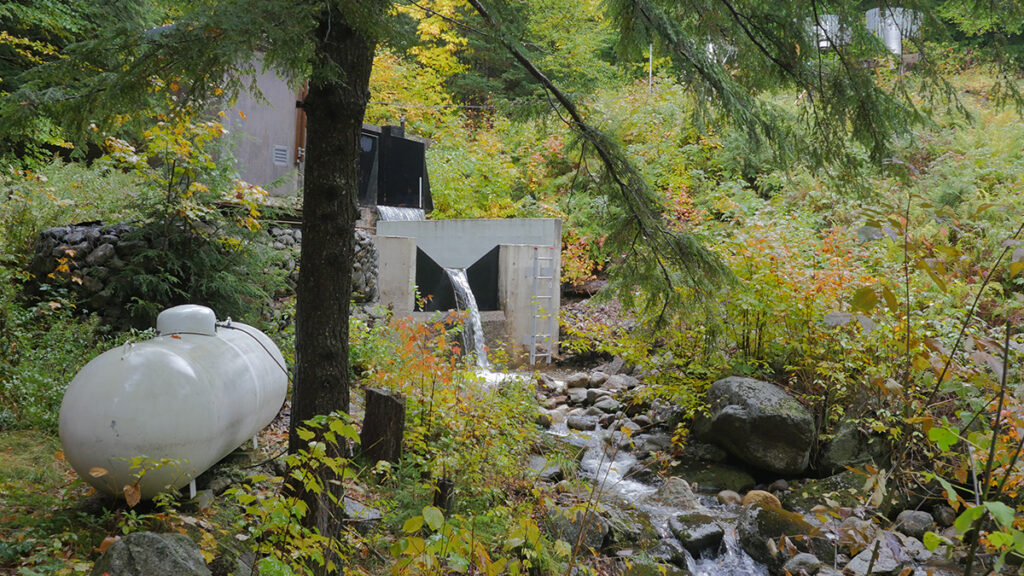
Hubbard Brook Experimental Forest in New Hampshire was among the sites under review during the Forest Service restructuring but has since received a public reprieve. The future of Bartlett Experimental Forest, also in New Hampshire, remains unresolved. The governance problem, however, extends beyond either site.
Hubbard Brook’s physical archive holds more than 60,000 barcoded and cataloged samples: water, soils, plant material, and physical cores spanning 7 decades of continuous collection and stored under active environmental controls in a dedicated building on site.
These samples cannot be digitized. They cannot be migrated to a remote server, backed up to cloud storage, or emailed to a university partner. The samples require a functioning building, active temperature management, and a named human steward responsible for their integrity.
The archive at Hubbard Brook is impressive, but a governed record is defined by continuity, provenance, and stewardship, not by the number of observations it contains: Data volume is not data value. A 70-year unbroken record of watershed chemistry, maintained by named stewards who documented what they were measuring and why, is a governed product. Without that stewardship and physical anchor, volume can become noise.
The failure to maintain archives like this is likely not malicious; it is an example of administrative indifference or perhaps a lack of awareness or understanding. Environmental controls, for example, get zeroed out of a budget line item, and nobody notices until the temperature in the facility drifts. By then, the sample record has degraded in ways that cannot be reversed.
Many physical archives, calibration sites, and long-duration sampling programs operate without a formal requirement for stewardship continuity.
Hubbard Brook is the most visible instance of a pattern—the lack of a successor stewardship plan—that runs across the entire 84-site federal Experimental Forests, Ranges, and Watersheds network. The March order that identified Bartlett Experimental Forest and 56 other research facilities across 31 states for closure was executed without a mandatory requirement to identify successor stewards for what gets left behind.
Nor is the pattern unique to experimental forests. The Long Term Ecological Research network spans 28 core sites. AmeriFlux includes more than 500 monitoring locations across North America.
Throughout all these systems, many physical archives, calibration sites, and long-duration sampling programs operate without a formal requirement for stewardship continuity under agency reorganization.
Long-term physical archives provide scientists and other stakeholders the ability to ask future questions of past reality. Nobody collecting water samples at Hubbard Brook in 1963 was thinking about PFAS (per- and polyfluoroalkyl substances), for instance, but the baseline its site samples provide is why we can track the chemicals today. The same continuous record was central to the regulatory science behind the Clean Air Act amendments of 1990.
Archival value compounds silently and becomes visible only when someone needs it.
Archival value compounds silently for decades and becomes visible only when someone needs it.
When these archives fail, the loss is not historical. It is operational. Regulatory agencies rely on long-baseline records to determine whether interventions are working. Without a continuous physical reference, observed changes cannot be distinguished from measurement drift, instrumentation bias, or natural variability. The results are policy decisions made without a defensible scientific baseline.
Federal investment in continuous collection at a site like Hubbard Brook runs to tens of millions of dollars over decades. That investment is not recoverable once continuity is broken.
Unlike a paused research grant, a degraded physical archive cannot be restarted. You can photograph a sample, but you cannot rerun its chemistry 40 years from now if the physical sample has degraded.
In 2017, a double mechanical failure at the University of Alberta destroyed 12.8% of the Canadian Ice Core Archive over a single weekend, permanently erasing records dating back 12,000 years. That incident was accidental. A mechanical malfunction is a failure of equipment. Administrative disposal without a named successor steward is a failure of governance. One arrives without warning. The other can be prevented.
The Earth observation community has already built the governance model we need. We are not yet applying it to long-term ecological research infrastructure.
GRUAN, the Global Climate Observing System (GCOS) Reference Upper-Air Network, operates under the World Meteorological Organization and GCOS, with explicit named stewardship obligations. Upper-air observations—measurements of temperature, humidity, and wind through the atmosphere—are foundational inputs to weather forecasting and climate monitoring. Each GRUAN station has a designated principal investigator with a documented succession obligation.
ICOS, the Integrated Carbon Observation System operating across Europe, applies the same logic to terrestrial ecosystem observations through formal site-level stewardship agreements and named succession requirements.
In the United States, the National Ecological Observatory Network is funded by the National Science Foundation (NSF) and operated by Battelle, a science and technology nonprofit, under a contract that includes explicit data continuity obligations.
These systems did not emerge by accident. They were explicitly designed to solve a known failure mode: Distributed observational networks cannot maintain their own calibration integrity without a separately governed reference layer. That design decision is documented, enforced, and funded. The absence of an equivalent requirement in long-term ecological research infrastructure is not a technical limitation. It is a governance omission.
The pattern is consistent across every network that has solved this problem: Named continuity obligations must be written into the governance structure before the need becomes acute.
The best outcome is the continued, uninterrupted operation of facilities like Hubbard Brook.
Any federal agency action that would reduce operational support for a long-term research facility should require a formal continuity plan before the action takes effect.
If reductions move forward, however, the proposed fix is specific and not novel: Any federal agency action that would reduce or eliminate operational support for a long-term research facility should require a formal continuity plan before the action takes effect. That plan must name a successor steward for each active long-term dataset and for each physical archive under active environmental control.
In practice this means specificity: the name and institutional affiliation of the successor, a funded maintenance budget sufficient to sustain environmental controls and sample integrity, documented protocols for custody transfer, and a timeline for uninterrupted handoff. The plan must demonstrate that the successor steward has the operational capacity and funded mandate to preserve the archive’s physical integrity and continuity.
The default should be continued stewardship by the responsible federal entity. If a change in custody is legally permitted and genuinely unavoidable, any successor steward, whether another federal unit, a university partner, a consortium, or another entity, must have a funded mandate, demonstrated technical capacity, enforceable continuity obligations, and the ability to maintain the archive without interruption.
Protocol demands that if the agency cannot name a viable successor steward, the agency cannot execute the closure. This requirement does not prohibit closure; it prohibits closure without continuity of custody.
The instrument requiring a research facility to have a formal continuity plan should be applied not on a site-by-site basis, but uniformly across networks. A limitation narrowly written to protect a named facility invites the agency to execute the same administrative disposal at adjacent sites while technically complying with the specific requirement. The governance is structurally sound only if it applies across the network.
The pathways that would make such an instrument possible already exist.
Agencies can impose continuity requirements through policy directives, appropriations language, or funding conditions. The federal Office of Science and Technology Policy and the Office of Management and Budget have coordinated interagency data management guidance before, and a directive requiring named successor stewardship before any facility reduction does not require legislation. Sen. Jeanne Shaheen (D-NH) has already secured fiscal year 2026 language directing the Forest Service to prioritize staffing at long-standing experimental forests; attaching successor stewardship language is the logical next step. NSF, the Department of Energy, and NOAA could require stewardship continuity guarantees from partner agencies as a condition of incorporating facility data into federally funded continental-scale products.
What is missing is the requirement itself—and the strategic initiative to establish it. The Earth science community has the standing, the documented models, and the mechanisms to close those gaps.
This is not an argument against reorganization. Agencies reorganize. Budgets shift. Research priorities evolve.
The argument is that reorganization cannot be permitted to destroy multigenerational scientific infrastructure through administrative indifference when a specific, enforceable governance requirement can prevent it. The Earth observation community built GRUAN because it recognized that no federation of climate datasets can be a substitute for a governed anchor point. Long-term ecological research infrastructure needs the same recognition applied to the administrative layer that governs its continuity.
The scientific enterprise already knows how to do this. The governance has not caught up yet.
Anthony Veltri (anthony@anthonyveltri.com) is an independent practitioner and former physical scientist and senior policy analyst with the USDA Forest Service Washington Office, where he worked on enterprise architecture and governance in federal programs, including those supporting scientific research.

WASHINGTON, June 6 — The United States announced Friday its approval of a US$1.98 billion (RM7.98 billion) arms sale to Kuwait, one of the Gulf countries hit by Iranian strikes during the Middle East war.
In a statement, the US State Department said it would allow purchases of counter-drone technology from defence company Anduril, which was founded by a supporter of President Donald Trump.
“This proposed sale will support the foreign policy and national security objectives of the United States by improving the security of a major non-Nato ally that has been an important force for political stability and economic progress in the Middle East,” the statement said.
Earlier this week, Kuwait officials “condemned Iranian aggression” when a drone strike on its international airport killed one person and injured 63 others.
Tehran denied involvement in the attack, saying it was “an error in the American Patriot systems,” referring to a US anti-missile battery.
The attacks came despite the April 8 ceasefire that paused the war sparked by the February 28 US-Israeli bombing of Iran, and has largely held despite sporadic exchanges of fire. — AFP

ShutterNut... posted a photo:
Please be aware... Photos are purely for entertainment. I am no expert. Titles are from recognition - what I was told - or a quick search. Polite comments or corrections are welcome.


A wonderful new paper on the huge Tracy Arm landslide and tsunami will have profound but challenging implications for the management of risk in an age of increased tourism and rapid climate change.
The journal Science has published an excellent new paper (Shugar et al. 2026) that examines the extraordinary 10 August 2025 landslide and tsunami at Tracy Arm fjord in Alaska. The paper is open access, so you can read it for yourself (it is very accessible), and there has been a plethora of media coverage (quite rightly).
I wrote about this event at the time and in the aftermath, but Shugar et al. (2026) is the authorative source. There is little for me to add to the science, but AGU Eos has a really excellent write up and explainer that I thoroughly recommend.
That large landslides occur in fjords is not a surprise, and that they can generate enormous displacement waves is also not news. We know that landslide occurrence in these environments in general is increasing, and specifically so in Alaska. However, this paper is the most comprehensive and systematic analysis of such an event, and it has shown the remarkable threat that these events can generate. The tsunami created by this landslide had a 481 metre run-up; it is remarkable that there were no fatalities. If a large cruise ship had been in the area, with passengers being ferried ashore on small boats and exploring the shoreline, the consequences would have been catastrophic. It is unsurprising then that cruise companies are now amending their itineraries.
The USGS released the image below of the aftermath of the landslide and tsunami – scale is hard to understand in such images, but the crown of the landslide is over 1,000 metres above the level of the fjord, and the landslide had a subaerial volume of over 63 million cubic metres.
Shugar et al. (2026) has a brief section that examines the implications of this event, and of the understanding that it provides of the hazards posed by very large landslides in fjord settings. These are locations with extensive human activity – local communities, trade, fishing and tourism. There is some evidence that these landsldies are more likely to occur in the spring and summer months, when human occupation is higher. Our resilience to a tsunami wave that starts off being hundreds of metres high is low.
A case in point lies in Milford Sound in New Zealand, where (for example) an earthquake on the Alpine Fault has the potential to trigger a large landslide that could result in a major tsunami. Milford Sound is an extremely popular tourism location. Should such an event occur, and mass fatalities result, there is no doubt that the public inquiry would find that the societal risk was known and that it was probably unacceptable. However, to ban tourism, including cruise ships, in this area would carry heavy risks in its own right – it would profoundly impact the vital tourist economy of the area, on which many livelihoods depend. This is a substantial risk in its own right, and of course politics plays a major part too. Balancing these risks is a major challenge for any society.
Some hope is offered by the fact that this landslide showed substantial precursory seismic activity, which might represent a route to providing a warning for at least some of these rock slope failures. But research in this area is immature at the moment, and of course there will be no warning for a landslide triggered by a major earthquake.
So, the landslide at Tracy Arm fjord presents us with a host of major challenges, but it also represents a big step forward in our understanding of these events. Well done to Dan and his colleagues for another brilliant paper. I shall watch the debate with great interest.
Reference
Shugar et al. 2026. A 481-meter-high landslide-tsunami in a cruise ship–frequented Alaska fjord. Science, eaec3187. DOI:10.1126/science.aec3187
More U.S. scientists are running for state and federal office in the U.S. midterm elections than ever before, Nature reports. Scientist-candidates represent an array of parties, although most profiled in Nature identify as Democrats.
314 Action, an organization focused on getting Democrats with scientific backgrounds elected to public office, offers financial support and training to candidates who apply for it. This year, the organization told Nature, they’ve received nearly three times as many applications as usual.
Sam Wang, a neuroscientist at Princeton and director of the Princeton Gerrymandering Project, is running to represent New Jersey’s 12th Congressional District.
“Usually, scientists stick with a specialized field,” Wang, a Democrat, wrote in an opinion for The Daily Princetonian. “However, I am deeply unhappy with how unequally power is divided in our society. So I have used my statistical abilities to level one part of democracy’s playing field: by repairing unfair elections.”
This year, Democratic candidates appear to be motivated by cuts to federal science programs, grants, and agencies, Nature reports, while Republican candidates like Jeff Wilson, who is running to represent the 13th district of Illinois, cite the pursuit of energy independence. Third-party scientist-candidates have also run, and scientists are entering local and municipal arenas, too.
Specifically, with the recent repeal of the Endangerment Finding, loosened restrictions on pollution, and plans to break up the National Center for Atmospheric Research, some candidates and their supporters think science needs a more prominent position in public policy.
The rise in scientist candidates may also be part of an ongoing trend. More than 200 STEM professionals ran for office in the 2024 election, as Eos reported in October 2024.
“There are a lot of people who believe that science can help us live better lives and that science really does need to be front and center when we’re making public policy,” Jess Phoenix, a volcanologist, science advocate, and former Democratic candidate for the U.S. House of Representatives told Eos at the time.
In March, thousands of people attended Stand Up for Science rallies across the country to protest the misuse of science in federal policy and extensive staffing and funding cuts to scientific agencies. Since President Trump took office in 2025, more than 10,000 PhD-level scientists have left the federal workforce, Science reported in January.
Pew research data shows that public trust in scientists has declined since the COVID-19 pandemic, but it has seen modest improvements since 2023. The latest poll, released in January, found that 77% of adults in the United States have a great deal or a fair amount of confidence in scientists to act in the public’s best interest, compared to 73% in 2023. The percentage is consistently higher among Democrats than Republicans: 90% versus 65%, in 2026. In contrast, only 27% of respondents reported at least a fair amount of confidence in elected officials.
“The last thing I want [is] to become a politician,” wrote one Redditor in response to the Nature story. “But at this rate I may not have a choice if current politicians keep screwing it up.”
—Emily Gardner (@emfurd.bsky.social), Associate Editor
