Normal view

How ‘The Flaws’, An Absurdist Comedy Series In Which Barely Anyone Speaks, Beat The Competition At Seriencamp: “We Thought Dialogue Was The Hardest Part, So Let’s Leave Out The Dialogue”

9 June 2026 at 07:00
When Bastien Reiber and his Das Manko Collective started planning a TV show, they decided they would do away with the difficult part. The resulting ZDF series, The Flaws, is incredibly light on dialogue but heavy on slapstick, poignant humor and heart. Inspired by the likes of Charlie Chaplin, Peter Sellers and iconic German comedian […]

  • ✇The Daily Cartoonist
  • No Laughing Matter? – Introduction D. D. Degg
    In “No Laughing Matter?” parts One and Two we see governments repressing cartoons that humiliate their particular political idealism and institutions crumbling under pressure to not publish satire of political, ideological, or religious stripes. (Most extreme is the Charlie Hebdo massacre.)The practice of suppressing cartoons goes back hundreds of years – I was about to […]
     

No Laughing Matter? – Introduction

24 May 2026 at 10:26
In “No Laughing Matter?” parts One and Two we see governments repressing cartoons that humiliate their particular political idealism and institutions crumbling under pressure to not publish satire of political, ideological, or religious stripes. (Most extreme is the Charlie Hebdo massacre.)The practice of suppressing cartoons goes back hundreds of years – I was about to […]

  • ✇SoraNews24 Japan
  • Japanese government postpones proposals to restrict real estate purchases by foreigners Casey Baseel
    Rising security and economic tensions prompting consideration of new rules to make it harder for foreigners to buy property in Japan. In December, Japan’s Liberal Democratic Party announced its intent to introduce legislation to add new restrictions to the ability of foreigners to purchase real estate in Japan. In March, a government expert panel began holding meetings to discuss possible changes legal changes in order to address the economic and security concerns being voiced by proponents of
     

Japanese government postpones proposals to restrict real estate purchases by foreigners

3 June 2026 at 03:00

Rising security and economic tensions prompting consideration of new rules to make it harder for foreigners to buy property in Japan.

In December, Japan’s Liberal Democratic Party announced its intent to introduce legislation to add new restrictions to the ability of foreigners to purchase real estate in Japan. In March, a government expert panel began holding meetings to discuss possible changes legal changes in order to address the economic and security concerns being voiced by proponents of increased regulation, with the aim of making a proposal by the end of the currently ongoing parliamentary session, which is scheduled to end in midsummer.

That timetable is now getting shifted back, as the panel is now saying that it is postponing any possible recommended bans on foreigners purchasing property until this coming fall.

The push for tighter restrictions reflects two growing concerns among a vocal portion of the Japanese population. The first is espionage threats from foreign countries, with China the most commonly perceived potential perpetrator. Under the current laws, foreign nationals buying real estate within close proximity to Japan Self-Defense Force bases, nuclear power plants, and other facilities deemed to be sensitive sites from a national security standpoint must disclose their nationality and declare the purchase to the Japanese government. Among the ideas being considered by the panel are installing a framework where instead of simply declaring such purchases, the buyer would have to apply for a license to complete the transaction, granting the government a form of veto power to stop the sale.

Real estate purchases by foreigners have also been attracting increased negative attention in Japan for economic reasons. While Japan’s total population is shrinking, it’s also becoming more concentrated. Instances of foreign buyers purchasing condominium buildings in high-demand areas and aggressively raising rents beyond what the current residents can bear, turning individual condo units into short-term rentals for ill-mannered tourists, or purchasing tracts of land for disruptively large redevelopment projects may still represent only a portion of real estate transactions in Japan, but when they do happen the public and policymakers definitely notice.

Unfortunately, there’s a third group of people who could get caught up in any wide-ranging ban on foreigners buying property: law-abiding foreign residents of Japan who simply want to purchase a place to live. Hopefully the panel will realize and remember that not every foreigner looking to buy real estate in Japan is a spy or speculator, and will leave a path for home ownership open to them within whatever recommendations it makes in the fall.

Source: Yomiuri Shimbun via Jin, Japan Times (1, 2)
Top image: Pakutaso
● Want to hear about SoraNews24’s latest articles as soon as they’re published? Follow us on Facebook and Twitter!

  • ✇The Daily Cartoonist
  • CSotD: Electric Dreamers Mike Peterson
    The UK is joining Australia and several other nations in restricting Internet use by kids under16. The most common restrictions are on user-to-user platforms like Facebook, Snapchat and others, though this site provides more specific information on how various countries have set up their bans.Clearly, Blower sees it as a performative act by PM Keir […]
     

CSotD: Electric Dreamers

20 June 2026 at 11:54
The UK is joining Australia and several other nations in restricting Internet use by kids under16. The most common restrictions are on user-to-user platforms like Facebook, Snapchat and others, though this site provides more specific information on how various countries have set up their bans.Clearly, Blower sees it as a performative act by PM Keir […]

  • ✇Malay Mail - All
  • Decision of High Court on unilateral child conversion laws in six states explained — Hafiz Hassan
    JUNE 13 — In the case of Haris Fatillah bin Mohd Ibrahim v Suruhanjaya Pilihan Raya Malaysia [2017], Haris Fatillah (Appellant) had made an application to the Election Commission of Malaysia (Respondent) for the relevant information (Information) pertaining to the proposed delimitation of Parliamentary and State Constituencies (Delimitation Exercise) to be supplied to the Appellant. The respondent had failed and or neglected to supply the Information to the Appel
     

Decision of High Court on unilateral child conversion laws in six states explained — Hafiz Hassan

13 June 2026 at 01:44

Malay Mail

JUNE 13 — In the case of Haris Fatillah bin Mohd Ibrahim v Suruhanjaya Pilihan Raya Malaysia [2017], Haris Fatillah (Appellant) had made an application to the Election Commission of Malaysia (Respondent) for the relevant information (Information) pertaining to the proposed delimitation of Parliamentary and State Constituencies (Delimitation Exercise) to be supplied to the Appellant. The respondent had failed and or neglected to supply the Information to the Appellant.

Consequently, the Appellant commenced an action in the High Court by way of Originating Summons (OS) against the Respondent. In the OS, the Appellant averred that he was a registered voter in the parliamentary constituency of Petaling Jaya Selatan (P105) and the state constituency of the State Legislative Assembly of Bukit Gasing.

By the OS, the Appellant sought for declaratory reliefs or declarations, among others:

(a) that all affected persons had the right to all information in relation to changes made to parliamentary and state constituencies where these people were registered voters;

(b) that the Information included the recommendations or proposed recommendations, map or maps of the constituency, voting areas and the reasons for the proposed changes including all relevant documents used in support and/or justification of the proposed changes;

(c) that all the affected persons be conferred with the right to the Information in the form which would enable all the affected persons to make effective representations pertaining to the recommendations under Section 5 of the Thirteenth Schedule of the Federal Constitution; and

(d) that the Information, including the publication of the information in digital form available via the Respondent’s web page or copies of the same, be made available to the affected persons, whether living in Malaysia or outside Malaysia at nominal costs, to enable the affected persons to make effective representations within the time provided by Section 4(b) of the Thirteenth Schedule of the Federal Constitution.

The author argues that the doctrine of ‘locus standi’ remains a critical threshold in Malaysian public interest litigation. — Pexels pic

The OS was filed by the Appellant pursuant to Order 15 rule 16 of the Rules of Court 2012 (ROC). The High Court had dismissed the OS on the ground that the Appellant had no locus standi and that the reliefs sought in the OS, if granted, would have the effect of declaring the Respondent to do something which the Respondent was not required to do under the Federal Constitution.

Dissatisfied with the High Court’s decision, the Appellant appealed to the Court of Appeal. The issues for determination were whether the Appellant had the requisite locus standi to bring the proceedings and whether the application for the declarations sought in the OS ought to be granted.

In dismissing the appeal and affirming the High Court’s decision, the Court of Appeal ruled, among others, that in the OS, the Appellant had merely identified himself as a registered voter of the respective parliamentary and state constituencies. The Appellant had not pleaded that there was any interference with his public right such that it also interfered with his private right or that he had suffered some special damage peculiar to himself from such interference.

Nowhere in his cause papers did the Appellant identify a controversy or a ripe issue between himself and the Respondent or that his constitutional right had been infringed.

Clearly, there was no controversy between the Appellant and the Respondent, whether of the facts or in law.

The Appellant’s action was flawed and without merit. It was seeking a ‘clocked declaration’ – that is, a declaration for a collateral purpose or with improper motive.

Central to the decision was whether the Appellant had the requisite locus standi to bring the action against the Respondent.

Judge of Court of Appeal Zamani A Rahim (as he then was) said:

“The issue of locus standi is a threshold issue to be decided as to whether the Appellant can institute and maintain any action, be it a private matter or a public interest litigation.

“The Appellant seeks a series of declarations in relation to the review of the division of the Federation and the States into constituencies (delimitation of parliamentary/state constituencies) to be undertaken by the Respondent.

“The Respondent contends that the Appellant lacks locus standi to come to court for the reliefs prayed for as there is no controversy between the Appellant and the Respondent as the Appellant’s right has not been affected.

 “The most important feature of a declaratory judgment is that it is a discretionary remedy and as such, the court must carefully consider the circumstances and terms upon which the relief is sought.”

According to the learned judge, the discretion should be exercised ‘sparingly’, ‘with care and jealousy’ and ‘with extreme caution’. The expressions themselves may give little guidance, but what has been established in a long line of decisions is that the party seeking declaratory reliefs must first show to the court that he has the necessary locus standi or standing in that he has a proper or tangible interest to seek the declarations.

In other words, a real or genuine interest.

The above explains why the High Court on Friday (June 12) dismissed a challenge by Ipoh mother M. Indira Gandhi and 13 others against state laws that allow children under age 18 to be converted to Islam without both parents’ consent.

Court of Appeal Judge Aliza Sulaiman, who was a High Court Judge when this case was heard, said that all 14 of them had failed to show they have locus standi, meaning the legal standing, to pursue their court challenge.

The learned judge also said they had failed to show that they have a “real or genuine interest” in the matter.

* This is the personal opinion of the writer or publication and does not necessarily represent the views of Malay Mail.

Nga Kor Ming says 4,000 litterbugs now paying fines while sweeping Kuala Lumpur streets for free

6 June 2026 at 06:30

Malay Mail

KUALA LUMPUR, June 6 — As of today, over 4,000 litterbugs have been caught so far, said Housing and Local Government (KPKT) minister Nga Kor Ming. 

Nga said that the Kuala Lumpur City Hall (DBKL) now has 4,000 free social workers to help clean up the streets of KL. 

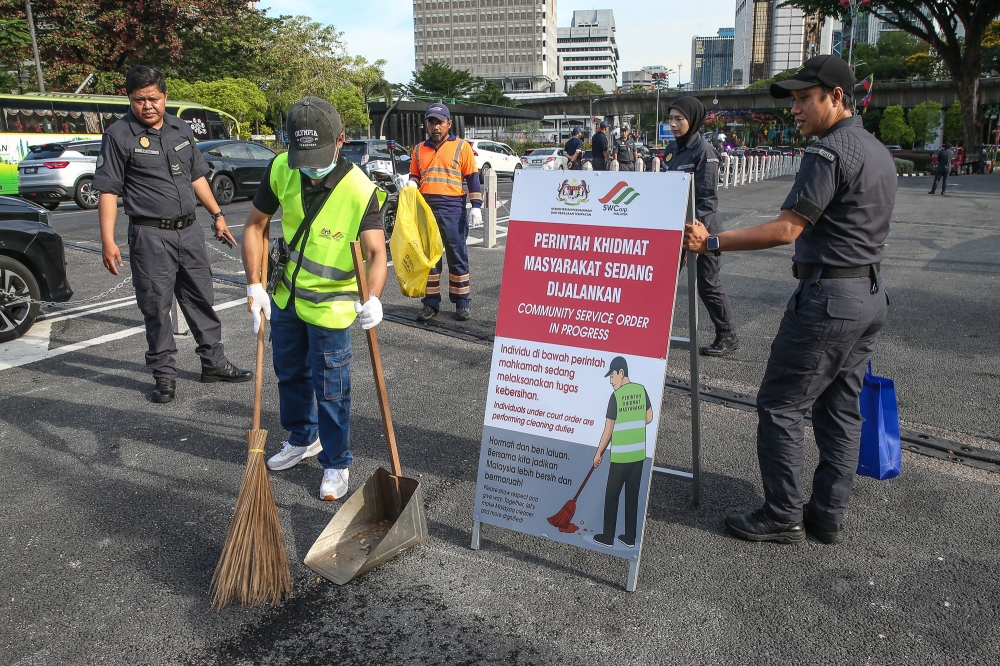
This comes following major updates to the anti littering laws, where the government has introduced heavy fines of up to RM2,000 and mandatory community service orders (up to 12 hours) for minor offences like tossing cigarette butts, plastic bottles, or spitting in public. 

“We now have 4,000 free social workers who will help us and DBKL sweep the streets for free. 

“And they also have to pay us a RM2,000 fine at the same time,” Nga said. 

Aside from working together with DBKL to stamp out litterbugs while also making the City Centre cleaner, Nga also pointed out that KL will be safer now, especially with the rollout of thousands of facial recognition and high definition closed circuit television (CCTV) cameras around the city. 

“KL is going to have not 1,000 but 10,000 facial recognition and high definition CCTV. It will be just like in Shanghai and Beijing. 

“There will no longer be any cases of snatching or stealing because the CCTV installed by DBKL can recognise your face and the Royal Malaysia Police will be waiting for you,” he said. 

Previously in May, Minister in the Prime Minister’s Department (Federal Territories) Hannah Yeoh and Kuala Lumpur Mayor Datuk Seri Fadlun Mak Ujud revealed the installation of 10,000 AI powered CCTV. These units are outfitted with high resolution sensors and facial recognition technology, allowing for real time coordination.

  • ✇SoraNews24 Japan
  • New littering fine now being enforced in some of Tokyo’s most heavily touristed areas Casey Baseel
    Littering in Shibuya will get you a fine that must be paid on the spot. Last Monday wasn’t just the start of June, it was the start of a new littering fine in Tokyo. As of June 1, if officials spot someone throwing trash on the ground in some of the city’s most heavily touristed areas, they can issue a citation with a penalty of 2,000 yen (US$13). This new rule is enforceable in Shibuya, and not only around Shibuya Station, the famous Shibuya Scramble intersection, Hachiko dog statue plaza, an
     

New littering fine now being enforced in some of Tokyo’s most heavily touristed areas

2 June 2026 at 15:00

Littering in Shibuya will get you a fine that must be paid on the spot.

Last Monday wasn’t just the start of June, it was the start of a new littering fine in Tokyo. As of June 1, if officials spot someone throwing trash on the ground in some of the city’s most heavily touristed areas, they can issue a citation with a penalty of 2,000 yen (US$13).

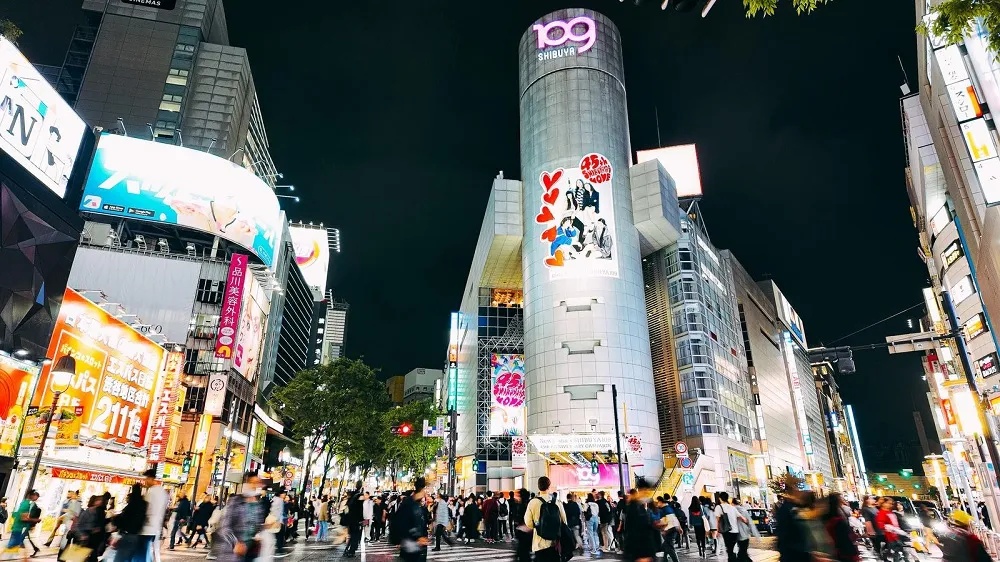
This new rule is enforceable in Shibuya, and not only around Shibuya Station, the famous Shibuya Scramble intersection, Hachiko dog statue plaza, and Center-gai shopping/restaurant street. The littering ban is for all of Shibuya Ward, which also includes the neighborhoods of Harajuku, Ebisu, and Yoyogi, among others. As a result, that littering is now a finable offense on the trendy and high-end fashion meccas of Takeshita Street and Omotesando and the pedestrian approach to Meiji Shrine too. Moreover, the law states that the fine is enforceable on both public and private property within Shibuya Ward, and while leaving an empty candy wrapper at your friend’s apartment isn’t going to get you in trouble with the law, that aspect does mean that fines can be collected from those caught littering within shopping centers, train stations, and other such spaces.

▼ Takeshita Street

To enforce the littering ban, Shibuya Ward has a team of approximately 50 roving inspectors. It’s unclear whether they’ll be a permanent dedicated anti-littering squad or if watching out for litterbugs is one of multiple public safety/order duties they perform while in the field, but the Shibuya administration does say it will have anti-litter inspectors in action 24 hours a day.

Unlike Japan’s recently introduced bicycle safety infractions, fines for littering in Shibuya Ward will be collected on the spot by the inspector. This aspect of the system may have been put in place to address perceptions that a disproportionate amount of litter in the area comes from foreign tourists, and to prevent them from being able to leave the country while still having unpaid fines. Payment can be made in cash or through cashless methods such as credit cards.

In addition, Shibuya Ward has also begun requiring convenience stores, takeout food/beverage sellers, and vending machine operators to provide trash receptacles, with fines of 50,000 yen for non-compliance. In a Shibuya Ward study conducted in 2025, 97 percent of inspected fast food restaurants and 80 percent of cafes were found to already have trash cans available, but those numbers dropped to 50 percent for food trucks and 47 percent for take-out beverage sellers.

However, the aim of the trash receptacle requirement is for food/beverage sellers to contribute to the proper handling of trash generated by their business operations, which could complicate finding a place to throw away your specific type of trash. For example, vending machine trash receptacles in Japan tend to be exclusively for recyclables of the materials used in the containers of the drinks that the machine sells, so if you’ve got, say, a paper bag from Krispy Kreme, the vending machine trash can isn’t going to help you. Likewise, with most Japanese people not being big on eating/drinking while walking, trash can capacity is likely to be relative to the amount of customers that particular place itself expects to have, so if you roll up to a drink stand with a family meal’s worth of fast-food containers from someplace else, they might not be able to accommodate you. Because of that, it’s probably still a good idea to be prepared to hang onto any trash you generate while in Shibuya until you get back home or to your hotel, since the ward is clearly looking to keep its streets cleaner.

Source: Shibuya Ward, Mainichi Shimbun via Yahoo! Japan News via Hachima Kiko, Tokyo MX
Top image: Pakutaso
Insert images: Pakutaso
● Want to hear about SoraNews24’s latest articles as soon as they’re published? Follow us on Facebook and Twitter!

  • ✇Latin America Reports
  • Colombia bans Female Genital Mutilation in landmark law Alfie Pannell
    Colombia’s Senate passed a bill prohibiting Female Genital Mutilation (FGM) today after a long battle by women’s rights activists. The ‘Law on Girls Without Mutilation’ passed unanimously in the final session of congress and just requires presidential approval to come into effect. Colombia is the last country in the Americas where FGM is still practiced, a ritual that is linked to the Embera Indigenous community. Between January 2024 and March 2026, the government registered 98 cases
     

Colombia bans Female Genital Mutilation in landmark law

10 June 2026 at 23:26

Colombia’s Senate passed a bill prohibiting Female Genital Mutilation (FGM) today after a long battle by women’s rights activists.

The ‘Law on Girls Without Mutilation’ passed unanimously in the final session of congress and just requires presidential approval to come into effect.

Colombia is the last country in the Americas where FGM is still practiced, a ritual that is linked to the Embera Indigenous community.

Between January 2024 and March 2026, the government registered 98 cases of girls being subjected to FGM, which is defined by the World Health Organization (WHO) as “procedures that involve partial or total removal of the external female genitalia, or other injury to the female genital organs for non-medical reasons.” The WHO estimates that 230 million women worldwide are victims of FGM, the vast majority living in Africa.

The procedure poses risks such as bleeding, infection, extreme pain and death. The existence of FGM in Colombia was not known until 2007, when two Embera girls died after being mutilated.

The law was authored by lower house representatives Jennifer Pedraza, Alexandra Vásquez, and Carolina Giraldo, as well as Senator Angélica Lozano.

The legislation was developed in consultation with academics, social organizations, and women from the Embera community.

“As such, it takes a preventive and cultural approach—rather than a punitive one—with the aim of
protecting victims and potential victims of this practice, which occurs primarily
among newborn girls,” said a press release following the bill’s passing.

Featured image description: Carolina Giraldo, Jennifer Pedraza, and Alexandra Vásquez smile after the bill’s passing.

Image credit: Courtesy of Jennifer Pedraza

The post Colombia bans Female Genital Mutilation in landmark law appeared first on Latin America Reports.

❌
Subscriptions