Normal view

  • ✇W Magazine
  • The Most Memorable Met Gala Looks of All Time, From Kate Moss to Kim Kardashian W Staff
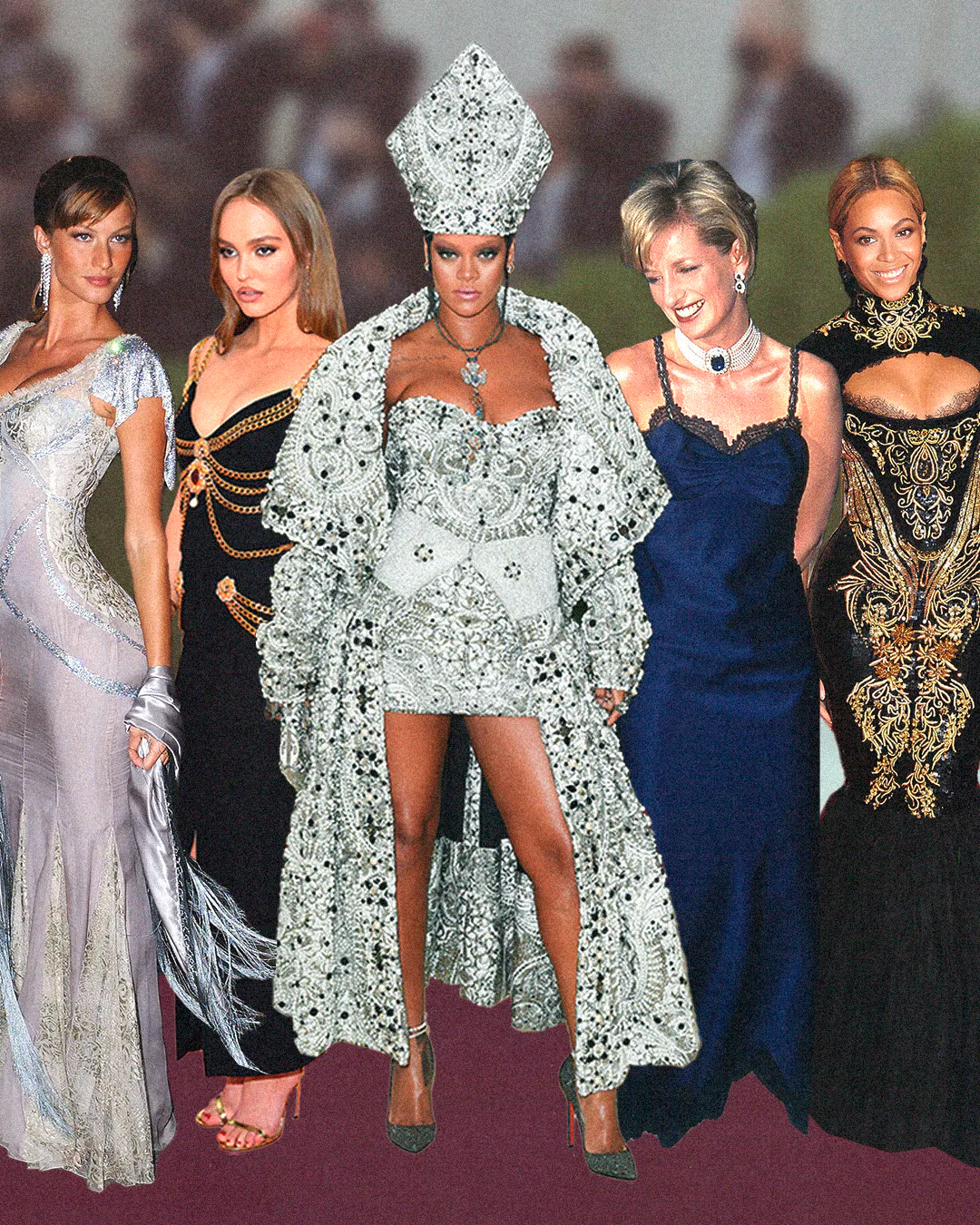
    Images courtesy of Getty. Collage by Ashley PeñaThere are many Met Gala looks that we will never forget—Beyoncé in the original naked dress, Kim Kardashian wearing Thierry Mugler, basically every one of Rihanna’s appearances—but long before any of those women even attended the event for the first time, models, actors, and socialites were making their mark on the museum steps. At this point, the Met Gala has been around for quite awhile, so it’s easy to forget some of the looks from 25-plus years
     

The Most Memorable Met Gala Looks of All Time, From Kate Moss to Kim Kardashian

30 April 2026 at 20:20
Images courtesy of Getty. Collage by Ashley Peña

There are many Met Gala looks that we will never forget—Beyoncé in the original naked dress, Kim Kardashian wearing Thierry Mugler, basically every one of Rihanna’s appearances—but long before any of those women even attended the event for the first time, models, actors, and socialites were making their mark on the museum steps.

At this point, the Met Gala has been around for quite awhile, so it’s easy to forget some of the looks from 25-plus years ago that would have blown up on social media if they had a chance. Here, look back at the most memorable looks in Met Gala history, from Princess Diana in 1996 all the way to Rihanna’s 2025 Met steps baby bump reveal.

Princess Diana in Dior

Patrick McMullan/Patrick McMullan/Getty Images

At the “Christian Dior” Met Gala in 1996.

Caroline Kennedy in Carolina Herrera

Fairchild Archive/Penske Media/Getty Images

With her husband, Ed Schlossberg, at the “Jacqueline Kennedy: The White House Years” Met Gala in 2001.

Lee Radziwill in Armani

WWD/Penske Media/Getty Images

At the “Jacqueline Kennedy: The White House Years” Met Gala in 2001.

Iman in Calvin Klein

Evan Agostini/Getty Images Entertainment/Getty Images

With her husband, David Bowie, at the “Goddess: The Classical Mode” Met Gala in 2003.

Gisele Bündchen in Dolce & Gabbana

Mark Mainz/Getty Images Entertainment/Getty Images

At the “Goddess: The Classical Mode” Met Gala in 2003.

Linda Evangelista in Jean Paul Gaultier

Evan Agostini/Getty Images Entertainment/Getty Images

At the “Dangerous Liaisons: Fashion and Furniture in the 18th Century” Met Gala in 2004.

Karolina Kurkova in Viktor & Rolf

Evan Agostini/Getty Images Entertainment/Getty Images

At “The House of Chanel” Met Gala in 2005.

Alexander McQueen and Sarah Jessica Parker in Alexander McQueen

WWD/Penske Media/Getty Images

At the “AngloMania: Tradition and Transgression in British Fashion” Met Gala in 2006.

Cate Blanchett in Balenciaga

Patrick McMullan/Patrick McMullan/Getty Images

At the “Poiret: King of Fashion” Met Gala in 2007.

Amber Valletta in Atelier Versace

Patrick McMullan/Patrick McMullan/Getty Images

At the “Superheroes: Fashion And Fantasy” Met Gala in 2008.

Christina Ricci in Givenchy

Patrick McMullan/Patrick McMullan/Getty Images

At the “Superheroes: Fashion and Fantasy” Met Gala in 2008.

Kate Moss in Marc Jacobs With a Stephen Jones Turban

Fairchild Archive/Penske Media/Getty Images

At the “Model As Muse: Embodying Fashion” Met Gala in 2009.

Doutzen Kroes in Zan Posen

WWD/Penske Media/Getty Images

At the “American Woman: Fashioning a National Identity” Met Gala in 2010.

Jennifer Lopez in Zuhair Murad

Patrick McMullan/Patrick McMullan/Getty Images

At the “American Woman: Fashioning a National Identity” Met Gala in 2010.

Kirsten Dunst in Rodarte

Fairchild Archive/Penske Media/Getty Images

At the “American Woman: Fashioning a National Identity” Met Gala in 2010.

Beyoncé in Emilio Pucci

Dimitrios Kambouris/FilmMagic/Getty Images

At the “Alexander McQueen: Savage Beauty” Met Gala in 2011.

Tom Brady & Gisele Büdchen in Alexander McQueen

Kevin Mazur/WireImage/Getty Images

At the “Alexander McQueen: Savage Beauty” in 2011.

Daphne Guiness in Alexander McQueen

Stephen Lovekin/Getty Images Entertainment/Getty Images

At the “Alexander McQueen: Savage Beauty” Met Gala in 2011.

Miranda Kerr in Marchesa

Kevin Mazur/WireImage/Getty Images

At the “Alexander McQueen: Savage Beauty” Met Gala in 2011.

Florence Welch in Alexander McQueen

Kevin Mazur/WireImage/Getty Images

At the “Schiaparelli and Prada: Impossible Conversations” Met Gala in 2012

Diane Kruger in Prada

Dimitrios Kambouris/Getty Images Entertainment/Getty Images

At the “Schiaparelli And Prada: Impossible Conversations” Met Gala in 2012

Chloë Sevigny in Miu Miu

Larry Busacca/Getty Images Entertainment/Getty Images

At the “Schiaparelli And Prada: Impossible Conversations” Met Gala in 2012.

Anne Hathaway in Valentino

Rabbani and Solimene Photography/WireImage/Getty Images

At the “PUNK: Chaos to Couture” Met Gala in 2013.

Sarah Jessica Parker in Giles Deacon with a Philip Treacy Headpiece

Jennifer Graylock/FilmMagic/Getty Images

At the Costume Institute Gala for the “PUNK: Chaos to Couture” Met Gala in 2013.

Ashley Olsen in Vintage Dior Couture

Karwai Tang/FilmMagic/Getty Images

At the “PUNK: Chaos to Couture” Met Gala in 2013.

Dita Von Teese in Zac Posen

Axelle/Bauer-Griffin/FilmMagic/Getty Images

At “Charles James: Beyond Fashion” Met Gala in 2014.

Lupita Nyong’o in Prada

George Pimentel/WireImage/Getty Images

At “Charles James: Beyond Fashion” Met Gala in 2014.

Monica Bellucci in Dolce & Gabbana

George Pimentel/WireImage/Getty Images

At “Charles James: Beyond Fashion” Met Gala in 2014.

Rihanna in Guo Pei

Lars Niki/Corbis via Getty Images

At the “China: Through the Looking Glass” Met Gala in 2015.

Beyoncé in Givenchy

Lars Niki/Corbis Entertainment/Getty Images

At the “China: Through the Looking Glass” Met Gala in 2015.

Solange Knowles in Giles Deacon

Andrew H. Walker/Getty Images Entertainment/Getty Images

At the “China: Through The Looking Glass” Met Gala in 2015.

Kate Hudson in Michael Kors

Axelle/Bauer-Griffin/FilmMagic/Getty Images

At the “China: Through The Looking Glass” Met Gala in 2015.

Anne Hathaway in Ralph Lauren

TIMOTHY A. CLARY/AFP/Getty Images

At the “China: Through The Looking Glass” Met Gala in 2015.

Amal Clooney in Maison Margiela

George Pimentel/WireImage/Getty Images

At the “China: Through The Looking Glass” Met Gala in 2015.

Claire Danes in Zac Posen

Karwai Tang/WireImage/Getty Images

At the “Manus x Machina: Fashion In An Age Of Technology” Met Gala in 2016.

Rihanna in Comme des Garçons

Karwai Tang/WireImage/Getty Images

At the “Rei Kawakubo/Comme des Garcons: Art Of The In-Between” Met Gala 2017.

Cara Delevigne in Chanel

Theo Wargo/Getty Images Entertainment/Getty Images

At the “Rei Kawakubo/Comme des Garcons: Art Of The In-Between” Met Gala 2017.

Jennifer Lopez in Valentino

Karwai Tang/WireImage/Getty Images

At the “Rei Kawakubo/Comme des Garcons: Art Of The In-Between” Met Gala 2017.

Zendaya in Versace

Taylor Hill/Getty Images Entertainment/Getty Images

At the “Heavenly Bodies: Fashion & The Catholic Imagination” Met Gala in 2018.

Rihanna in Maison Margiela

Theo Wargo/Getty Images Entertainment/Getty Images

At the “Heavenly Bodies: Fashion & The Catholic Imagination” Met Gala in 2018.

Blake Lively in Versace

Jackson Lee/Getty Images Entertainment/Getty Images

At the “Heavenly Bodies: Fashion & The Catholic Imagination” Met Gala in 2018.

Gigi Hadid in Versace

Rabbani and Solimene Photography/Getty Images Entertainment/Getty Images

At the “Heavenly Bodies: Fashion & The Catholic Imagination” Met Gala in 2018.

Ariana Grande in Vera Wang

Jackson Lee/Getty Images Entertainment/Getty Images

At the “Heavenly Bodies: Fashion & The Catholic Imagination” Met Gala in 2018.

Kim Kardashian in Thierry Mugler

Karwai Tang/Getty Images Entertainment/Getty Images

At the “Camp: Notes on Fashion” Met Gala in 2019.

Zendaya in Tommy Hilfiger

Karwai Tang/Getty Images Entertainment/Getty Images

At the “Camp: Notes on Fashion” Met Gala in 2019.

Cardi B in Thom Browne

Neilson Barnard/Getty Images Entertainment/Getty Images

At the “Camp: Notes on Fashion” Met Gala in 2019.

Lady Gaga in Brandon Maxwell

Dimitrios Kambouris/Getty Images Entertainment/Getty Images

At the “Camp: Notes on Fashion” Met Gala in 2019.

Lily-Rose Depp in Vintage Chanel

Dimitrios Kambouris/Getty Images Entertainment/Getty Images

At the “Camp: Notes on Fashion” Met Gala in 2019.

Jared Leto in Gucci

Jamie McCarthy/Getty Images Entertainment/Getty Images

At the “Camp: Notes on Fashion” Met Gala in 2019.

Kim Kardashian in Balenciaga

ANGELA WEISS/AFP/Getty Images

At the "In America: A Lexicon of Fashion" Met Gala in 2021.

Kaia Gerber in Oscar de la Renta

Taylor Hill/WireImage/Getty Images

At the "In America: A Lexicon of Fashion" Met Gala in 2021.

Iman in Harris Reed

Mike Coppola/Getty Images Entertainment/Getty Images

At the "In America: A Lexicon of Fashion" Met Gala in 2021.

Zoë Kravitz in Saint Laurent

Taylor Hill/WireImage/Getty Images

At the "In America: A Lexicon of Fashion" Met Gala in 2021.

Blake Lively in Atelier Versace

Kevin Mazur/MG22/Getty Images Entertainment/Getty Images

At the “In America: An Anthology of Fashion” Met Gala in 2022.

Quannah Chasinghorse in Prabal Gurung and Antelope Women Designs jewelry

Gotham/Getty Images Entertainment/Getty Images

At the “In America: An Anthology of Fashion” Met Gala in 2022.

Lizzo in Thom Browne

Gotham/Getty Images Entertainment/Getty Images

At the “In America: An Anthology of Fashion” Met Gala in 2022.

Emma Corrin in Miu Miu

Gotham/Getty Images Entertainment/Getty Images

At the “In America: An Anthology of Fashion” Met Gala in 2022.

Rosalía in Givenchy

Kevin Mazur/MG22/Getty Images Entertainment/Getty Images

At the “In America: An Anthology of Fashion” Met Gala in 2022.

Dua Lipa in Chanel

Taylor Hill/Getty Images Entertainment/Getty Images

At the “Karl Lagerfeld: A Line Of Beauty” Met Gala in 2023.

Rihanna and A$AP Rocky in Valentino and Gucci

Taylor Hill/Getty Images Entertainment/Getty Images

At the “Karl Lagerfeld: A Line Of Beauty” Met Gala in 2023.

Penelope Cruz in Chanel

Jeff Kravitz/FilmMagic/Getty Images

At the “Karl Lagerfeld: A Line Of Beauty” Met Gala in 2023.

Bad Bunny in Jacquemus

Sean Zanni/Patrick McMullan/Getty Images

At the “Karl Lagerfeld: A Line Of Beauty” Met Gala in 2023.

Nicole Kidman in Chanel

Michael Buckner/Variety/Getty Images

At the “Karl Lagerfeld: A Line Of Beauty” Met Gala in 2023.

Tyla in Balmain

Dia Dipasupil/Getty Images Entertainment/Getty Images

At the “Sleeping Beauties: Reawakening Fashion” Met Gala in 2024.

Zendaya in Maison Margiela

Jeff Kravitz/FilmMagic/Getty Images

At the “Sleeping Beauties: Reawakening Fashion” Met Gala in 2024.

Rihanna in Marc Jacobs

Matt Crossick - PA Images/PA Images/Getty Images

At the “Superfine: Tailoring Black Style” Met Gala in 2025.
Lauryn Hill in Stella McCartney

Cindy Ord/MG25/Getty Images Entertainment/Getty Images

At the “Superfine: Tailoring Black Style” Met Gala in 2025.

Teyana Taylor in Ruth E. Carter

Udo Salters/Patrick McMullan/Getty Images

At the “Superfine: Tailoring Black Style” Met Gala in 2025.
  • ✇National Herald
  • How do you trust the CBSE test results? A.J. Prabal
    In early 2026, the Central Board of Secondary Education (CBSE) embarked on what it claimed was a revolutionary upgrade of India’s examination system: the On-Screen Marking (OSM) protocol. The promise was alluring—standardised marking, quicker results, transparency, elimination of manual errors and the convenience of remote evaluation.Yet, this ‘brave new experiment’ went horribly wrong.OSM was announced on 9 February, barely a week before the class 12 board exams began on 17 February. It was dep
     

How do you trust the CBSE test results?

29 May 2026 at 05:24

In early 2026, the Central Board of Secondary Education (CBSE) embarked on what it claimed was a revolutionary upgrade of India’s examination system: the On-Screen Marking (OSM) protocol. The promise was alluring—standardised marking, quicker results, transparency, elimination of manual errors and the convenience of remote evaluation.

Yet, this ‘brave new experiment’ went horribly wrong.

OSM was announced on 9 February, barely a week before the class 12 board exams began on 17 February. It was deployed on 3 March, when evaluation began. ‘Pariksha pe charcha’—Prime Minister Narendra Modi’s annual interaction with examinees, teachers and parents—was aired nationally on 9 February. Surely no coincidence. (Not a peep out of the PM since, despite complaints from students and teachers, and demands to scrap the results that were declared on 13 May 2026.)

The pressing question is: why such a rush to introduce an all-new marking system?

Had the CBSE taken time to pilot-test the system or phase in the rollout, initial glitches—if that’s what these were—and security flaws could have been detected and fixed. Rushed implementation meant insufficient system testing leading to portal crashes, login failures, slow-loading user interfaces and poor scan quality. Some answer sheets went missing or were blurred; supplementary sheets were lost or wrongly linked.

An estimated 25,000-30,000 teachers participated in the marking, but many reported that training was limited to a few hurried webinars and mock evaluations. Some evaluators said they got less than a week’s worth of dry runs, others that the process continued till the day before results were announced. Evaluators had to juggle marking with their regular teaching and administrative responsibilities, including Booth Level Officer duties in poll-bound states! Multitasking under surveillance was stressful and compromised the quality of assessment, with many evaluators reporting screen fatigue.

As Prof. Anita Rampal, educationist and former dean, faculty of education, Delhi University, said in a panel discussion, “We cannot replace human agency and cognitive processes… with something completely mindless. You don’t scroll an answer sheet and then mark it in a linear manner. Also, people are conscious they are being monitored. The camera is there. If someone took longer, they said they got a phone call. Why is this evaluator taking so long on this question? We are not robots and we shouldn’t be turning humans into robots.”

The CBSE’s claims that OSM would sharply reduce demands for verification and re-evaluation now sound like a bad joke. A record 4 lakh examinees—four times higher than last year—applied for re-evaluation, unhappy with scores and pipeline chaos that led to massive distress for students and teachers alike. 

The CBSE’s assurance that digital logs would enhance transparency and traceability, by recording who marked what and when, ignored a more important question: is the system secure? The ease with which it was hacked has thrown the entire marking process into doubt, raising all sorts of uncomfortable questions. Who insisted on transitioning to this new system in such a hurry? How was the vendor picked? Were there bad actors at play? How does the CBSE vouch for the sanctity of these results?

*

While many universities and education boards have indeed digitised evaluation, none made the shift so hurriedly or on such a massive scale. Most largescale deployment occurs after years of pilot testing, capacity building, contingency planning and strengthening of infrastructure.

The UK’s AQA (Assessment and Qualifications Alliance), for example, evaluates 13 lakh students through OSM, with 60,000 trained evaluators—double the number CBSE engaged for a far larger cohort. CBSE’s rushed effort, with ill-equipped evaluators and unstable IT infrastructure, was a recipe for disaster. 

Its choice of technology vendor is also suspect. Coempt Edutech (formerly Globarena Tech) was awarded the contract in August 2025, giving it less than six months to develop, test, train and deploy a mission-critical system.

Opposition leaders, including LoP (Lok Sabha) Rahul Gandhi, have highlighted the company’s tainted record. In 2019, the evaluation for Telangana’s intermediate public examination was outsourced to Globarena. Marking errors, including being marked absent for the exam, led to a tragic number of suicides. 

Given this vendor’s track, one wonders about the integrity of the due diligence exercise—on technical, security and ethical grounds. CBSE has not disclosed the selection or bidding criteria, who the other bidders were and why a tainted vendor was picked over the others, if any were in the fray. 

The delayed and sketchy commencement of evaluator training is another red flag. If the contract was awarded in August 2025, why did training begin in early 2026?

*

CBSE found itself with more egg on its face after a 19-year-old student, Nisarga Adhikary from Siliguri, West Bengal, hacked into the OSM portal on 25 February 2026. “I got curious,” he said, speaking to <Moneycontrol>. “They had rolled out a new portal (http://cbse.onmark.co.in) for digital evaluation of copies. I started looking around and found the domain. Teachers were already using it and there were videos about it online.”

He examined the website’s publicly accessible JavaScript files and located the master password through a simple keyboard search: Ctrl+F. What he found inside was, in his own words, ‘horrible’. 

In a public blogpost, the teenager flagged five critical vulnerabilities ‘from authentication bypass to full account takeover’:

  1. Anyone could log in as an examiner using publicly obtainable school codes and a master password ‘leaked in the front-end’

  2. OTP validation was reduced to ‘pure theatre’ with the ‘secret’ given directly to the browser

  3. No ‘route guards’ made it a ‘walk-in’, so you could access any internal page with no authentication at all

  4. Since no current password was ever verified, you could change it to any new password you liked

  5. A catastrophic vulnerability at the architectural level—Insecure Direct Object Reference—meant anybody could take over any examiner’s account, view assigned answer papers, and alter marks

‘At the scale of a national board exam,’ Nisarga wrote, ‘the integrity implications speak for themselves.’

When he reported the vulnerabilities to CERT-In (Computer Emergency Response Team-India) that very day, they asked for details and video proof and assured him that it was taking up the issue with CBSE. While some flaws pointed out by him were indeed fixed, others were not addressed at all.

In May, Nisarga discovered another vulnerability that exposed usernames, passwords and bank details of evaluators. Once again, he reported the issue to CERT-In. This time, he received only an email acknowledgement. 

On 26 May, the Internet Freedom Foundation (IFF) posted on <X>, ‘When a national board exam system can be hacked this easily, the question is no longer just cybersecurity. It becomes a question of fairness, trust and the future of millions of students.’ The IFF has written to the secretary, department of school education and literacy and the director-general, CERT-In. It has sought a ministerial investigation into the CBSE’s procurement, deployment and operation of the OSM portal, a review of the contract with the vendor and his liability, immediate remedial measures including a forensic review of the evaluation of class 12 results and an independent public audit and publication of its findings.

CBSE was so deeply in denial, it initially denied that the portal was live, that Nisarga had hacked a dummy site. When he pointed out that the domain was shared in official CBSE communications to students, the portal was quietly retired.

Why is CBSE silent on vendor behind ‘On-Screen Marking’ system?
  • ✇National Herald
  • Delhi’s worsening summer air linked to degraded Aravallis, rising desert dust: Experts NH Digital
    Delhi’s air quality index (AQI) continuing to hover in the low-to-mid 200s during peak summer months has alarmed environmental experts, who say such pollution levels were once largely associated with winter smog rather than hot-weather conditions.On some days, the AQI has also touched the 300 mark, prompting concerns over what experts describe as an unusual and worrying shift in Delhi’s pollution pattern.Meteorological and environmental experts attribute the trend largely to dust storms originat
     

Delhi’s worsening summer air linked to degraded Aravallis, rising desert dust: Experts

28 May 2026 at 09:20

Delhi’s air quality index (AQI) continuing to hover in the low-to-mid 200s during peak summer months has alarmed environmental experts, who say such pollution levels were once largely associated with winter smog rather than hot-weather conditions.

On some days, the AQI has also touched the 300 mark, prompting concerns over what experts describe as an unusual and worrying shift in Delhi’s pollution pattern.

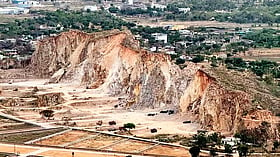
Meteorological and environmental experts attribute the trend largely to dust storms originating in the deserts and semi-arid regions of Rajasthan, carried by strong hot winds across northwest India. According to experts, the impact of these dust-laden winds was historically mitigated by the Aravalli mountain range, which acted as a natural barrier for centuries.

However, decades of mining, quarrying, deforestation and encroachment have weakened the Aravallis significantly, allowing desert dust to move towards the National Capital Region with far less obstruction.

“The Aravalli hills — both the long continuous ranges as well as the hundreds of smaller hills — play a critical role in controlling the spread of sand from the western Thar desert,” forest analyst Chetan Agarwal told Hindustan Times.

“The hills typically slow down winds from the west, which shed their sandy loads on the western flanks and these sands form sandy obstacle dunes,” he said.

Experts say the degradation of the Aravalli ecosystem has accelerated in recent years due to rapid urbanisation and extractive activities.

A recent study conducted jointly by researchers from the Jindal School of Environment and Sustainability (JSES) and the Indian Institute of Technology (IIT) Kharagpur found that built-up areas in the Aravalli region expanded by 53 per cent between 2017 and 2024 — an increase of nearly 2,644 square kilometres.

The study noted that much of this expansion came at the expense of croplands and rangelands, altering the ecological balance of the region.

When the findings were published in March, the dean of JSES at OP Jindal Global University had warned that mining activities — particularly those involving lead-zinc, marble, sandstone and industrial minerals — were exerting significant pressure on the Aravalli landscape.

The report highlighted the large number of active mining leases in the region and said these operations were causing “geomorphic disturbance”, weakening the hills’ ability to function as natural barriers against desertification and dust movement.

Environmentalists have long argued that unchecked degradation of the Aravallis could intensify dust pollution, reduce groundwater recharge and worsen heat conditions across northern India.

The current summer pollution levels, experts say, may now be an early indication of those long-feared consequences becoming visible in Delhi’s atmosphere.

Illegal mining can cause irreversible damage: SC to set up expert panel on Aravallis
  • ✇National Herald
  • Mamata questions security, hospital handling after attack on Abhishek NH Political Bureau
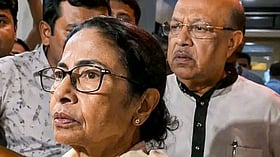
    Trinamool Congress (TMC) supremo and former West Bengal chief minister Mamata Banerjee on Saturday raised serious questions over the security arrangements surrounding the attack on party MP Abhishek Banerjee and alleged interference in the medical treatment he received afterwards.Addressing reporters, Banerjee said the incident was not merely an assault on a political leader but an attack on a democratically elected public representative.Questioning the circumstances under which Abhishek was dis
     

Mamata questions security, hospital handling after attack on Abhishek

31 May 2026 at 04:11

Trinamool Congress (TMC) supremo and former West Bengal chief minister Mamata Banerjee on Saturday raised serious questions over the security arrangements surrounding the attack on party MP Abhishek Banerjee and alleged interference in the medical treatment he received afterwards.

Addressing reporters, Banerjee said the incident was not merely an assault on a political leader but an attack on a democratically elected public representative.

Questioning the circumstances under which Abhishek was discharged from hospital, she asked why doctors initially deemed observation and medical investigations necessary if there was no need for treatment.

"If there was genuinely no need for hospitalisation, why was he first taken to the ITU, kept under observation for nearly two hours, and advised to undergo multiple medical tests and scans?" she asked.

According to Mamata Banerjee, Abhishek remained under medical supervision from around 8.15 pm to nearly 11 pm before being discharged.

She said doctors who examined him found multiple injuries and advised urgent diagnostic tests.

RULERS BECAME KILLERS- shame on you BJP https://t.co/DHNsnDAc9a

— Mamata Banerjee (@MamataOfficial) May 30, 2026

"The doctors who examined him observed multiple injuries and advised urgent medical investigations. According to the medical assessment, he sustained multiple blunt injuries to the face, back, chest and neck," she said.

The TMC chief added that doctors recommended X-rays and scans to rule out fractures, internal bleeding and possible damage to internal organs.

Banerjee also claimed the consequences could have been far more severe.

"I have been informed that had a helmet not been placed on his head at the crucial moment, the consequences could have been fatal," she said.

She alleged that Abhishek suffered injuries to his chest and ribs during stone-pelting and physical assault.

Turning her attention to the administration, Banerjee questioned how such an incident could occur despite police being informed in advance about Abhishek's visit.

"The police had prior information regarding the visit of Abhishek; despite that, questions remain regarding security arrangements," she said.

She further alleged that outsiders had been brought in to engineer violence and disrupt the programme.

The former chief minister also expressed concern over reports that pressure may have been exerted on doctors and hospital authorities regarding treatment decisions.

"The most disturbing aspect of today's developments is the allegation that pressure was exerted on doctors and hospital authorities regarding the treatment of an injured patient," she said.

Banerjee asserted that decisions on admission, discharge and treatment should remain solely in the hands of medical professionals and not be influenced by any external authority.

She said the TMC had decided to continue Abhishek Banerjee's treatment under the supervision of trusted doctors and family physicians, noting that he has a pre-existing eye-related medical condition that makes a comprehensive assessment of his injuries particularly important.

Stressing that political differences must never descend into violence, Banerjee said democracy should be guided by public support and debate, not intimidation.

"Politics should be fought politically. The answer to political differences cannot be violence, intimidation, weapons, or fear."

The TMC supremo also revealed that several opposition leaders, including Congress leader Rahul Gandhi, Samajwadi Party chief Akhilesh Yadav and Rajya Sabha MP Kapil Sibal, had reached out to express concern over the incident.

Reaffirming the party's resolve, Banerjee said the TMC would continue its political programmes and public outreach activities without fear.

"We will continue our scheduled programmes and public outreach activities. We will not be intimidated."

With PTI inputs

  • ✇The Daily Cartoonist
  • Cartoonists Carnival D. D. Degg
    With John Rose and Tom Heintjes, Jim Keefe and L.K. Hanson, Mo Willems and Jerry Craft, Pat Rosenkranz and Don Donahue, Charlotte Beach and Ivan Ehlers. John Rose and Tom Heintjes On Stage A really late notice that if you are at Heroes Con or near Charlotte N.C. tomorrow try get to the panel featuring […]
     

Cartoonists Carnival

13 June 2026 at 00:07
With John Rose and Tom Heintjes, Jim Keefe and L.K. Hanson, Mo Willems and Jerry Craft, Pat Rosenkranz and Don Donahue, Charlotte Beach and Ivan Ehlers. John Rose and Tom Heintjes On Stage A really late notice that if you are at Heroes Con or near Charlotte N.C. tomorrow try get to the panel featuring […]

Capital cuisine: Three Beijing restaurants bringing China’s regional cuisines to Beijing’s fine dining tables

11 June 2026 at 00:35

Malay Mail

BEIJING, June 11 — Beijing does not immediately strike one as a culinary destination. 

The buildings are towers of glass and steel, the roads wide enough to lose yourself in, and the scale of the city is designed for movement. 

It is a capital in the most literal sense — built for business, not pleasure.

Almost everyone I met on this trip had come from somewhere else. Our guide was from Nanjing. A chef from Henan. A waiter from Fujian. 

It is a city that has always drawn people in from the vast interior of the country, and they bring their food with them: their ingredients, their techniques, their memories of home.

In a handful of restaurants across the capital, a more deliberate version of that same story unfolds. 

Three chefs in three restaurants across Beijing make a serious, meticulous argument for regional Chinese cuisine — not just Beijing’s own, but Cantonese, Sichuanese, and a reimagined version of the capital’s culinary tradition itself. 

The restaurants have Michelin stars and are among Asia’s 50 Best. The cooking is precise, refined, and deeply personal. 

Taken together, they amount to something that feels brand new, yet rooted in the same traditions.

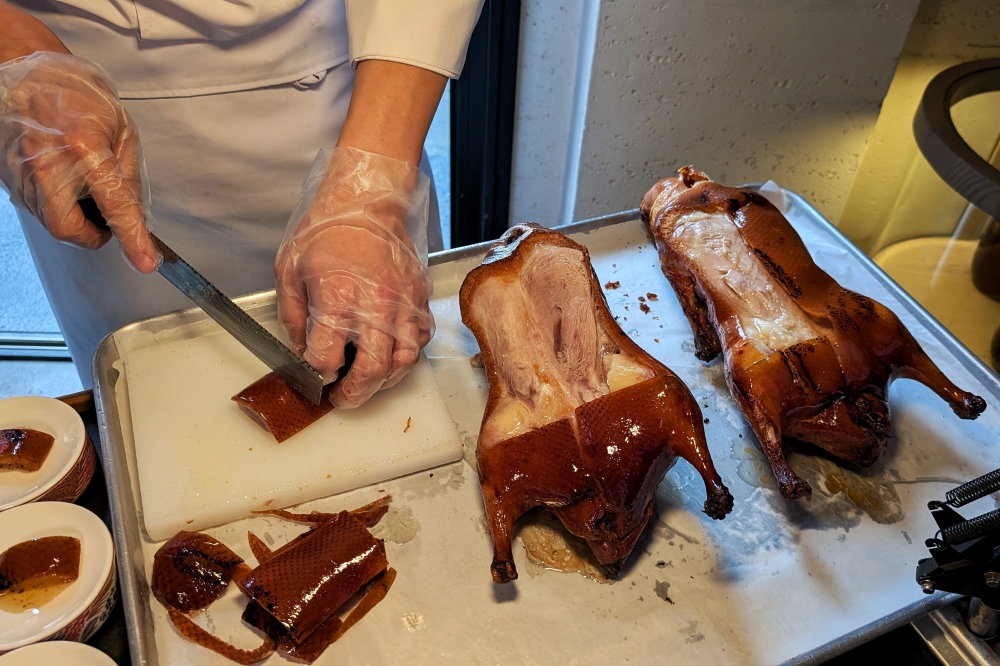
Historically, ducks were marked with sugar syrup in case of a swap during roasting. Today, Mansion Cuisine by Jingyan encourages guests to write messages on their ducks before roasting (left). Traditional Peking-style grilled lamb, served with a sesame biscuit (right). — Picture by Ethan Lau

Mansion Cuisine by Jingyan

Chef Duan Yu calls his cooking “New Beijing Cuisine”, which is the centrepiece at the Michelin-starred Mansion Cuisine by Jingyan, the crown jewel of his Jingyu Catering Group of restaurants. 

Housed in a remodelled siheyuan courtyard near the Lama Temple, the restaurant utilises a modern approach to traditional imperial Beijing cuisine.

Among the dishes that stood out: sea cucumber dressed in a dark, glossy sauce derived from Tianfuhao pork knuckle, 天福号酱肘子, a condiment tracing its history over 280 years to a Shandong shopkeeper who set up in Beijing during the Qing dynasty. 

The sea cucumber itself is firm and springy, nothing like the soft, slippery texture that is more prevalent here.

The Peking duck came three ways: first, a thin slice with cliff honey and black truffle, then carved into the traditional 108 slices to preserve the lacquered skin and served with erbajiang, 二八酱, a classic Beijing peanut and sesame paste condiment, and finally, the rest of the duck wok-fried with salt and pepper, and with chillies and scallions.

Peking-style hotpot, also known as shuanyangrou, or instant-boiled mutton, is a pillar of traditional Beijing cuisine. 

Lamb from Inner Mongolia is used at Jingyan, with thin slices interwoven with strips of cartilage for a snappy, almost crunchy resistance, cooked quickly in a clear broth with goji berries, and served with two sauces: the first a traditional sesame paste, the second with sand onion, also from Inner Mongolia. 

The same cut of lamb is later grilled with onions and coriander and served between sesame biscuits.

Anpu-style poached chicken at The House of Dynasties looks very similar to the white cut chicken we are used to here in Malaysia, but bears a few key differences (left). Instead of soy sauce, oyster brine is used to season the wok-fried beef slices (right). — Picture by Ethan Lau

The House of Dynasties

For most Malaysians — especially those based in Kuala Lumpur — Cantonese food is no mystery. 

So of the three restaurants, this was the one I expected to feel most at home in. 

And I did, for the most part. But there were moments where the food diverged from anything I knew, and those turned out to be the most interesting moments of the meal.

Chef Justin Tan is from Zhanjiang, a small coastal city in Guangdong whose culinary identity is distinct even within Cantonese cooking. 

He made history when T’ang Court at The Langham Shanghai became the first restaurant in mainland China to receive three Michelin stars, in the inaugural 2016 Michelin Guide Shanghai. 

Now at Rosewood Beijing’s The House of Dynasties, a restaurant inspired by Dream of the Red Chamber, a classic of Chinese literature, his hometown keeps surfacing on the plate.

The Anpu-style poached chicken rice was the clearest illustration of the distance between what I knew and what I was eating. 

The flavour was extraordinarily pure — clean, unadulterated chicken, without the familiar presence of scallion and ginger. 

The chicken itself was denser and firmer, none of the slippery, supple texture we are used to here, though the skin had a lovely smooth quality to it. 

The Zhanjiang-style fried lobster arrived buried under fermented black beans and garlic, the meat startlingly firm, deeply savoury and impossible to stop eating.

But the dish that left the biggest impression was the simplest: wok-fried beef. 

Chef Tan explained that instead of soy sauce, he uses oyster brine — made in-house, one step before it’s reduced all the way down to oyster sauce — for its pure, savoury, briny flavour, showcasing Zhanjiang’s famous oysters.

The husband-and-wife-offal pieces are tingly, spicy and texturally stimulating (left). Steamed Wagyu beef from Shandong with celtuce and Chinese celery, a remarkably refreshing summer Sichuan dish (right). — Picture by Ethan Lau

Chef 1996

This was the restaurant I was most looking forward to. I had seen Fuchsia Dunlop — the writer who is arguably the most authoritative voice on Sichuan cuisine in the English language — visit and share her experience on Instagram, and that was enough. 

Here in Malaysia, Sichuan food is having a moment, but it arrives mostly through its loudest exports: the mala hotpot, the numbing heat, the communal spectacle of it. 

What I encountered at Chef 1996 was something else entirely.

Chef Dee Liang’s restaurant is private rooms only, situated in an industrial part of Chaoyang. 

Like with Chef Duan and his restaurant group, Chef 1996 is the showpiece of the Meizhou Dongpo empire, which has over 100 locations in both China and the United States. 

The restaurant’s name is a reference to the year Chef Dee and her husband opened the first location. 

It opened in 2023 and by 2026 had entered Asia’s 50 Best Restaurants at No. 52 — the first Sichuan restaurant ever to do so.

The fuqi feipian — husband and wife offal pieces, beef tongue and tripe in spicy numbing oil — was the dish I had been fixating on since seeing it on Dunlop’s Instagram, and it delivered. 

The numbing heat was less a wall of sensation than a tingle, like little needles dancing across the tongue, the spice precise and almost delicate.

But the dish that genuinely surprised me was the steamed Shandong Wagyu beef with celtuce and Chinese celery, served with an erjingtiao pepper sauce. 

Incredibly fresh and summery, light in a way I had not associated with Sichuan cooking at all — a complete dismantling of my narrow perception of what the cuisine could be. 

The familiar heat returned with the braised topmouth culter, a freshwater fish served with rice jelly, pickled chillies and pickled ginger, layering soft, pillowy textures with sharp, tangy spice.

Mansion Cuisine by Jingyan

22 Jianchang Hutong, 

Dongcheng, Beijing.

Open daily, 11.30am-2pm, 5.30-10pm

Tel: +86 10 8663 2999

http://www.jingyu2020.com/h-col-118.html

Instagram: @jingyan_beijing

The House of Dynasties

4F, Rosewood Hotel, 

Jing Guang Centre, Hujialou, 

1 Chaoyangmenwai Street, 

Chaoyang, Beijing.

Open daily, 11.30am-2.30pm, 5.30-10pm

Tel: +86 10 6536 0066

https://www.rosewoodhotels.com/en/beijing/dining/the-house-of-dynasties

Chef 1996

4A Jiangtaiwa, 

Xinghuo East Road, 

Chaoyang, Beijing.

Open daily 11am-2pm, 4.30-11pm

Tel: +86 135 2150 9321

https://chef1996.com/

Instagram: @chef1996restaurant

* Follow us on Instagram @eatdrinkmm for more food gems.

* Follow Ethan Lau on Instagram @eatenlau for more musings on food and occasionally self-deprecating humour.

California sues Trump administration to block DHS 'holding facility' construction

10 June 2026 at 21:30
California is suing the Trump administration in a bid to block the construction of an Immigration and Customs Enforcement (ICE) facility in Santa Clara County, arguing the federal government has not followed proper administrative and environmental procedures. The complaint, filed Wednesday in the Northern District of California, asks a federal judge to stop the Department...

  • ✇National Herald
  • Eight tourists killed after vehicle falls into gorge in Maharashtra’s Raigad NH Digital
    At least eight people were killed after a tourist vehicle travelling from the Konkan region to Satara plunged into a deep valley in Maharashtra’s Raigad district on Monday, officials said.The accident took place at Ambenali Ghat when the vehicle reportedly lost control and fell nearly 1,000–1,500 feet into a gorge in the hilly terrain, triggering a large-scale rescue operation.Rescue teams said operations have been severely hampered due to the steep slopes, rocky terrain and the depth of the gor
     

Eight tourists killed after vehicle falls into gorge in Maharashtra’s Raigad

25 May 2026 at 07:11

At least eight people were killed after a tourist vehicle travelling from the Konkan region to Satara plunged into a deep valley in Maharashtra’s Raigad district on Monday, officials said.

The accident took place at Ambenali Ghat when the vehicle reportedly lost control and fell nearly 1,000–1,500 feet into a gorge in the hilly terrain, triggering a large-scale rescue operation.

Rescue teams said operations have been severely hampered due to the steep slopes, rocky terrain and the depth of the gorge. So far, two bodies have been recovered and sent for post-mortem, while efforts continue to locate the remaining victims.

Maharashtra chief minister Devendra Fadnavis expressed grief over the tragedy and confirmed that multiple rescue teams, including NDRF personnel, have been deployed.

रायगड जिल्ह्यातील आंबेनळी घाटात झालेल्या एका दुर्दैवी अपघातात 8 जणांचा मृत्यू झाल्याची घटना अतिशय दुःखद आहे. मी त्यांना भावपूर्ण श्रद्धांजली अर्पण करतो. त्यांच्या कुटुंबियांच्या दुःखात आम्ही सहभागी आहोत.
हे 8 मित्र फिरायला गेले असता त्यांचे वाहन दरीत 1500 फूट खाली कोसळले.…

— Devendra Fadnavis (@Dev_Fadnavis) May 25, 2026

“The tragic incident in which 8 people lost their lives in a fatal accident at Ambenali Ghat in Raigad district is extremely heartbreaking. I pay my heartfelt tribute to them,” Fadnavis said in a post on X.

He said the victims were travelling together when the vehicle plunged into the valley, adding that the bodies were scattered across difficult terrain.

“The district administration has formed five teams, each comprising seven personnel. Rescue efforts are being carried out on a war footing. So far, three bodies have been recovered,” he added.

Officials said teams from police, local administration, disaster response forces and voluntary groups are jointly conducting search and recovery operations using ropes and specialised mountaineering equipment.

The identities of the deceased are yet to be officially confirmed.

In a separate incident earlier in the day, six people were killed and 26 injured in a multi-vehicle crash on the Mumbai–Agra Highway in Dhule district, highlighting a tragic day of road accidents in Maharashtra.

The Dhule accident occurred at Laling Ghat when a dumper truck collided with another vehicle, followed by a passenger bus losing control and ramming into the crash site, officials said.

With IANS inputs

  • ✇W Magazine
  • Jodie Comer Puts A Dark, Lacy Spin on Naked Dressing Aaron Royce
    Manoli Figetakis/WireImage/Getty ImagesJodie Comer’s all-black streak continues. Following her last outings in head-to-toe leather at Paris Fashion week and the British Fashion Awards, the actor returned to the fashion circuit this week in a slick black leather coat and thong heels while promoting her latest film, The Death of Robin Hood. Last night, she added to that dark repertoire with a distinctly daring dress, which also leaned into the recent “naked dressing” revival.During The Death of Ro
     

Jodie Comer Puts A Dark, Lacy Spin on Naked Dressing

11 June 2026 at 16:40
Manoli Figetakis/WireImage/Getty Images

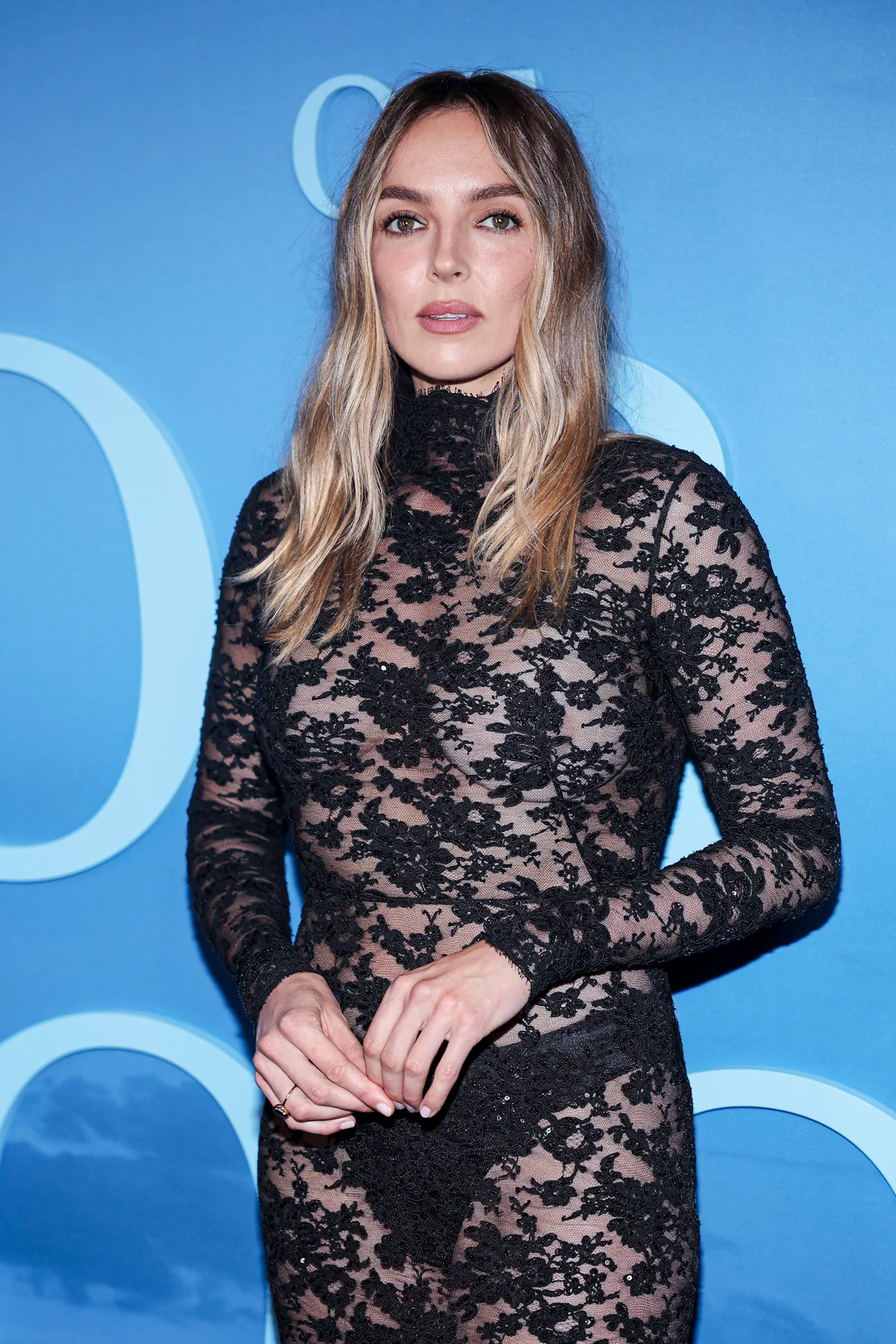
Jodie Comer’s all-black streak continues. Following her last outings in head-to-toe leather at Paris Fashion week and the British Fashion Awards, the actor returned to the fashion circuit this week in a slick black leather coat and thong heels while promoting her latest film, The Death of Robin Hood. Last night, she added to that dark repertoire with a distinctly daring dress, which also leaned into the recent “naked dressing” revival.

During The Death of Robin Hood’s world premiere in New York City, Comer stepped out in a sharp black gown crafted entirely from intricate floral lace. Her Givenchy by Sarah Burton design featured a high neckline, long sleeves, and floor-length hem, bringing the risqué, see-through piece a distinctly formal shape. Embroidered matching sequins brought the style, simply layered over a pair of black briefs, a dash of sparkling glamour.

John Nacion/Variety/Getty Images

Comer placed further emphasis on her dress’s dynamic texture with minimal accents, only consisting of black slingback Jimmy Choo sandals and her own diamond wedding ring. A nude manicure, lightly tousled hairstyle, and glossy mauve lipstick effortlessly completed her ensemble. The same styling move’s been utilized throughout other “naked dressing” looks of the 2020s, which highlight the wearer’s figure through lace, mesh, and sheer fabrics to create an illusion of nudity. This year, the movement’s grown through a myriad of silhouettes and styles, from Gwyneth Paltrow’s sheer Oscars pants, Jennifer Lawrence’s floral-embroidered Golden Globes dress, and Teyana Taylor’s painting-inspired gown at the SAG Awards—plus the see-through looks Anne Hathaway donned while promoting Mother Mary this spring.

Stephanie Augello/Getty Images Entertainment/Getty Images

While proving a sharp departure from Comer’s regular fashion fare, her transparent dress also upheld the presence of black lace on the red carpet. Through the decades, stars have often gravitated towards the romantic, elegant material to make a sultry statement at formal events. Most recently, Emily Ratajkowski, Kylie Jenner, and Kendall Jenner all wore black lace dresses in a range of silhouettes to the Vanity Fair Oscars party, preceded by instances like Hannah Waddingham’s corseted Suzanne Neville dress at the 2024 Golden Globes and Dakota Johnson’s barely-there Gucci gown at last fall’s Kering Foundation “Caring For Women” event. And, of course, who could forget Britney Spears’ black lace Dolce & Gabbana minidress at the 2001 VMA’s?

Comer’s attire proved the black lace dress isn’t going anywhere, while still continuing her penchant for dynamic silhouettes. Whether she chooses leather, lace, or another fabrication entirely, the star’s next red carpet look is sure to keep us guessing.

❌
Subscriptions