 Login
LoginSpirit of Wartime Sherwood 1940s
26 May 2026 at 19:29


If you’ve ever used an online patient portal to message your doctor in the middle of the night, you won’t be surprised to learn that responding to those messages takes an increasingly big bite out of clinicians’ workdays.
So in recent years, hospitals have begun adopting an AI tool that can draft responses for them. The tool was supposed to make a time-consuming task go more quickly and smoothly, said Philip Barrison, an MD-PhD student at the University of Michigan Medical School who studies AI in healthcare.
Instead, the tool has given doctors and nurses a new to-do list. First they have to read the AI-generated response and decide if it “is actually something that they think they would say,” Barrison said. Humans are suggestible, and looking at something and deciding whether you would have thought of it on your own is a cognitively complex task.
Even if the message looks correct, the clinician still needs to “edit it to the point where they think it’s acceptable” to send to a patient, Barrison said. The AI tool introduces a totally new set of complicated judgment calls into what used to be a relatively straightforward process. As a result, many clinicians have chosen not to use it at all.
They’re fortunate to have the choice. Buoyed by expectations of cost savings and skyrocketing productivity, companies are increasingly asking (and sometimes requiring) employees to use AI to make their work more efficient. Meta, for example, last year instructed some workers to use AI to “go 5X faster by eliminating the frictions that slow us down.” The CEO of Shopify told employees they’d need to prove they “cannot get what they want done using AI” before the company would approve new hires. Some companies are even evaluating or ranking employees based on how much they use AI tools.
Workers in some sectors have found major time savings from AI. But for others, the tools just change the work rather than making it faster. Workers might be spending less time writing patient portal messages, for example, but more time editing the releases the AI tool writes.
At best, this mismatch between employer expectations and employee reality can be an annoyance. In other cases, however, it can result in workers being laid off for failing to meet unrealistic efficiency demands. Some critics say the overzealous adoption of AI in high-stakes settings like healthcare even puts people’s lives at risk. Now workers, unions, and experts are increasingly calling for guardrails to protect employees from inflated expectations around AI — and customers, students, patients, and the general public from mistakes that can happen when managers put AI adoption above all else.
Corporations are increasingly presenting employees with a choice: Use AI to be more productive or “you’re going to be automated out of a job,” said Aiha Nguyen, director of the labor futures program at the research organization Data & Society.
But the effects of AI on productivity aren’t as straightforward as some CEOs have claimed. In one 2025 study, software developers believed AI made them faster, but in fact they took 19 percent longer to complete tasks. (The researchers tried to repeat the experiment this year but had trouble recruiting developers who would agree to work without AI.) And in a recent survey of 5,000 white-collar workers, 40 percent of rank-and-file employees said AI saved them no time at all.
Workers across heavily AI-exposed fields point to hidden timesucks that come with using the technology. Julie, an art teacher, wrote in a response to a Vox reader survey that her school’s administrators routinely suggest using AI for lesson-planning, emails, and progress report comments. She’s tried AI-generated lesson plans, but they don’t account for the fact that kids may work through an activity at different speeds.
“First, I am checking what AI suggests, then I am editing them. Why add a step I can accomplish on my own?”
Julie, an art teacher who wrote in response to a Vox reader survey
“First, I am checking what AI suggests, then I am editing them,” she said. “Why add a step I can accomplish on my own?”
For an employee at an East Coast communications agency, an internal AI tool was supposed to speed up the process of drafting press releases and other documents about the pharmaceutical industry.
“The goal is, I think, to be able to plug and chug into this machine and be able to turn a lot of materials around a lot quicker than we already do,” said the employee, who asked to remain anonymous for fear of career repercussions.
But when the employee tried to use it for basic research, it made too many mistakes. Double-checking its work erased any time savings. When the employee tried using it for communications with clients, its people-pleasing tendencies became a problem, as the tool put a “weird happy spin” even on messages warning of bad news.
“Part of the reason we take a human speed to turn things around is because there is so much nuance behind everything that we do,” the employee told me. “AI is just not going to be able to catch it.”
It’s not just that AI makes errors. With the advent of agentic AI, workers are increasingly being asked to edit and oversee the output of multiple AI tools, a new kind of work that can have unexpected costs.
One recent study of 1,488 workers across industries, for example, found that excessive oversight of AI agents could lead to what the researchers called “AI brain fry,” a kind of cognitive fatigue. “Participants described a ‘buzzing’ feeling or a mental fog with difficulty focusing, slower decision-making, and headaches,” the researchers wrote in Harvard Business Review. Brain fry was also associated with an increased number of errors and an increased desire to quit one’s job.
The researchers also found that while using one or two AI tools increased productivity, adding additional tools produced diminishing returns, and after four tools, productivity actually declined.
Despite such findings, companies continue to pressure employees to use AI, and to cite AI investment as a rationale for layoffs, even as companies that try to link staff reductions to AI adoption tend to struggle on the stock market.
Some workers and organizations, however, are beginning to push back. National Nurses United, the country’s largest nurses’ union, has criticized the use of AI tools in hospitals to estimate staffing needs or to recommend treatment protocols for patients.
There’s no guarantee that these tools will take into account a patient’s individual profile, including underlying medical conditions, the way human clinicians can, Cathy Kennedy, the union’s president, told me. AI is supposed to “help us do our work more efficiently, but at the end of the day, it makes it even more burdensome,” she said.
Hospitals need to evaluate, with nurses at the table, whether AI tools really work as advertised, Kennedy said. “We have to stop — we have to go back and really see if this is truly doing what it needs to do,” she said.
The same is true across industries, Barrison, the healthcare researcher, told me. “Organizations need to be prepared to say when, if they were seeking a return on investment, if they were seeking value in a technology — how do you define what that value is? And if there’s not value there anymore, how do you turn it off?”
Some workers have found ways that AI actually helps them do their work — just not the ones management expected. Julie, the art teacher, likes to use Claude to learn more about topics she’s less familiar with, like kiln-firing ceramics.
Meanwhile, researchers have found that AI can actually reduce employee burnout, if it’s used to complete tasks employees find burdensome. “Everybody in every job has a list of things that they procrastinate on,” said Julie Bedard, a managing director and partner at Boston Consulting Group who led the AI brain fry study. “Those are the places I get, unsurprisingly, a lot of enthusiasm to try AI with.”
But employers won’t find out what those burdensome tasks are unless they listen to rank-and-file employees. “Worker standards and worker rights should continue to be at the heart of all of this,” Nguyen said, “rather than just focusing too much on the AI.”

Four-ton Paige, brought in as surprise for attenders, made gushing debut after governor finished keynote speech
An African elephant weighing roughly 4 tons that was brought to the Texas Republican party’s annual convention to excite attenders ended up drawing widespread attention for the wrong reasons after she urinated on the convention floor and became the focus of animal welfare concerns.
Inside the George R Brown convention center in Houston on Friday, attenders had been told to prepare for a “larger-than-life surprise” after governor Greg Abbott finished his keynote speech. Organizers also displayed a message asking people to keep the aisles clear.
Continue reading...
© Photograph: Houston Chronicle/Hearst Newspapers/Getty Images
© Photograph: Houston Chronicle/Hearst Newspapers/Getty Images
© Photograph: Houston Chronicle/Hearst Newspapers/Getty Images

This lovely crochet Hexagon Rainbow Newborn Blanket pattern was given to me by one of our community members, Vicki Brandt. This pattern could be used in many different colour combinations to match any nursery. I chose the rainbow theme because I needed a blanket for a Rainbow Baby when I was crocheting this one. This blanket could […]
The post Crochet Hexagon Rainbow Newborn Blanket + Tutorial appeared first on The Crochet Crowd.


For the first time in the 21st century, the United States has approved a new sunscreen ingredient. Well, new to us.
It’s called bemotrizinol, also known as BEMT, and it’s been available in Europe and Asia for years. But the peculiar way that sunscreen is regulated in the United States — as an over-the-counter drug rather than a cosmetic — had long prevented it from coming to American store shelves.
In 2020, however, Congress ordered the Food and Drug Administration (FDA) to overhaul its sunscreen approval process, and in 2024, DSM Nutritionals, which manufactures a bemotrizinol-based sunscreen, asked the FDA for approval. After a review of relevant safety and efficacy data, bemotrizinol has become the first new sunscreen ingredient to be approved for sale in the US since the late 1990s. The Environmental Working Group, which has lobbied for bemotrizinol’s approval since 2019, called its approval “a monumental victory for health and wellness.”
Dr. Adewole Adamson, who is a dermatologist and assistant professor of internal medicine at the University of Texas at Austin, agreed that this is a win for consumers. “We haven’t been able to really have any innovation in US-based sunscreens since last millennium,” he told me.
Sunscreen use has ticked downward in the US, at the same time that concerns about sunscreen seeping into your body and causing adverse health effects have risen. BEMT’s boosters hope it can change that trend by promising broad protection, a more aesthetically appealing application, and less risk of it permeating your skin.
Sunscreen is already complicated, as Vox’s Allie Volpe covered in her 7 burning questions about sunscreen explainer. Now there’s a new ingredient to consider. Here’s what you should know.
The sun emits a spectrum of ultraviolet rays, including two types — UVA and UVB — that can burn your skin if you are exposed for too long without protection.
That is why experts advise consumers to make sure they are buying “broad spectrum” sunscreen, which means it provides protection against both kinds of UV rays. Those products usually combine several different agents (or “filters”) that protect against different parts of that spectrum.
“Some filters only cover part of the spectrum, so you have to combine a bunch of them in order to get that broad-based coverage,” Adamson said.
Sunscreens are either “mineral” or “chemical.” Both types are equally effective if used correctly, assuming they have the same sun protection factor, or SPF, but each come with their own trade-offs. Mineral sunscreens leave unsightly white residue, while chemical sunscreens have faced widespread safety concerns in recent years.
The major shift came in 2019, when the FDA announced an overhaul in its safety assessment of some of the most popular sunscreen ingredients, sparking a backlash against chemical sunscreen in particular. The agency said that the two ingredients primarily used in mineral sunscreens — zinc oxide and titanium dioxide — were generally regarded as safe for human use. Two ingredients (aminobenzoic acid and trolamine salicylate) were said to be unsafe, and more than a half-dozen other ingredients used in chemical sunscreens were left a question mark due to “insufficient data.” New research soon followed that suggested that the ingredients in chemical sunscreens could seep into your blood and body in concerning concentrations, raising the specter of uncertain long-term health effects.
In response to the new findings and the doubts they raised about such a widely used product, anti-sunscreen advocacy spread, bolstered by the broader wellness and MAHA movements. As the Washington Post described, some people online boasted of stopping their sunscreen use — despite its clear effectiveness in preventing skin cancer, which kills thousands of people in the US every year — and promoted DIY formulas featuring, for example, oil and butter. (They do not confer the same protection.) Some influencers have even argued for the health benefits of more sun exposure.
One consumer analysis found that the percentage of Americans who believed sunscreen is toxic grew from 17 percent in 2021 to 24 percent in 2025. And, at the same time, the share of people who reporting using sunscreen at all has slightly declined.
Into that messy context comes a new sunscreen ingredient.
A big part of what makes bemotrizinol appealing is that it provides protection against both types of dangerous ultraviolet rays on its own. And not only does it provide that broad level of protection, Adamson said, but it could also be more “cosmetically elegant,” as he put it. It won’t leave those white streaks that mineral sunscreens do, which could encourage more people to actually put it on.
The shift toward mineral sunscreen in the wake of the chemical sunscreen panic has brought one unfortunate side effect: that white film on the skin of beachgoers and baseball game fans across the country. If you have ever applied zinc-centric sunscreen, you probably know the look (and that heavy feeling of the cream on the skin).
Chemical sunscreens can be annoying for people with sensitive skin, but by and large, people seem to prefer those products because they look better when wearing them. BEMT could make it easier for manufacturers to produce sunscreens that provide that broad level of coverage while being aesthetically more pleasing.
The other hope is that bemotrizinol products will ameliorate some of the safety concerns that have driven sunscreen skepticism since 2019, when the one-two punch of the FDA’s announcement that most ingredients had “insufficient” data to judge their safety, followed by a worrying study, damaged the reputation of chemical sunscreens for the better part of a decade.
Our political wellness landscape has shifted: new leaders, shady science, contradictory advice, broken trust, and overwhelming systems. How is anyone supposed to make sense of it all? Vox’s senior correspondent Dylan Scott has been on the health beat for a long time, and every week, he’ll wade into sticky debates, answer fair questions, and contextualize what’s happening in American healthcare policy. Sign up here.
The study, published in JAMA in May 2019, showed several popular chemical sunscreen ingredients appeared to penetrate a user’s body in volumes sufficient enough that they should trigger new safety studies. The authors noted that some of the ingredients had previously been found in human breast milk and other bodily fluids. The findings raised real concerns, thus the FDA’s policy shift — but those concerns also took on a life of their own in the health and wellness social media ecosystem, stoking doubts about sunscreen overall.
“That freaked everyone out. And everyone was like, ‘I don’t want to do chemical sunscreens. They’re terrible. They’re getting [in] your blood. They’re endocrine disruptors.’ All of that kind of fearmongering,” Adamson said. “This ingredient doesn’t seem to do that.”
He pointed me to preliminary evidence from clinical trials that indicates BEMT does not generally lead to the same kind of concentration in human plasma. The drug has already been in use in other countries for decades and has accrued a strong safety record. But the FDA’s policy of regulating sunscreen as an over-the-counter drug, rather than as a cosmetic, sets a higher standard for approval, which meant that it took more than 25 years for BEMT to finally cross the Atlantic from Europe to the US.
DSM Nutritionals will have exclusive rights for 18 months to sell their proprietary BEMT formulation Parsol Shield in the United States; after that, other companies will be able to sell sunscreens with it in them too. Going forward, consumers can check for bemotrizinol or BEMT on the ingredients list.
Whether or not you opt for BEMT, here is the thing to keep in mind about protection when you’re buying this or any sunscreen: SPF, or sun protection factor. Experts say that the ideal is between SPF 30 and SPF 50, which blocks 98 percent of the sun’s rays. Just remember that SPF above 50 adds minimal additional protection, and doesn’t mean you can spend longer in the sun without reapplying.
Advocates hope BEMT can revive people’s faith in sunscreen which, despite the recent controversies, remains a lifesaving product. Skin cancer is still the most commonly diagnosed cancer in the United States, with more than 200,000 new cases expected this year. “American consumers deserve access to the best available sun protection,” Alexa Friedman, senior scientist at EWG, said in a statement. “Today they’re finally getting closer to it.”

The first time a 7-Eleven has opened inside a high school in Japan.
7-Eleven opened a new branch in Japan on 1 June, at a site so unusual it made nationwide news. This new store can be found inside Kochi Chuo High School in Kochi Prefecture, taking over the site of the school’s former cafeteria.
▼ Kochi Chuo High School
This is the first time a 7-Eleven store has been opened inside a high school in Japan, and it carries around 1,200 products inside its 100 square-metre (1,080 square foot) shop space. The chain says this is one of the company’s new “compact stores“, a format that the company has been expanding nationwide to meet the needs of businesses and institutions with limited space and specific demand.
Kochi Chuo ticks both boxes in terms of space and demand, but the reason behind its need for a convenience store isn’t an entirely happy one. As a private school with boarding facilities, which isn’t uncommon in rural areas like Kochi, securing three meals a day for its dormitory residents, which make up around a third of the 700 enrolled, is a high priority. However, in late February, the cafeteria’s operator informed the school that it would be difficult to continue operations due to rising costs and labor shortages, and although they attempted to find an alternative operator they were unable to find one.
In early April, the school officially decided to open a convenience store, citing its ability to provide stable meals, and the cafeteria closed on 13 May. Though the cafeteria’s operators provided students with packed lunches until the opening of the 7-Eleven on 1 June, some parents who’d enrolled their students in April without knowing about the closure expressed anger at the decision, while others had concerns about the change to students’ diets.
▼ Having easy access to ice cream when you’re a teenager is a dangerous prospect.
According to the school, opening a 7-Eleven was the best solution under the circumstances, especially in light of a significant decline in student numbers due to Japan’s falling birthrate, and current financial restructuring that includes raising tuition fees and introducing charges for school bus services to reduce deficits.
While some parents have criticised the closure of the cafeteria and the lack of advance notice, the convenience store has been well received by many students. The new 7-Eleven uses a QR-code-based purchasing system that allows students to buy items without waiting at a traditional checkout counter, and dormitory residents will also receive 30,000 yen (US$187.58) worth of points that can be used at the store.
▼ This news report shows the inside of the store, which is said to be around 25-50 percent smaller than a regular branch.
Operating hours are from 7:00 a.m. to 7:30 p.m., and use is limited to students and select school-related personnel. At the school’s request, the store offers freshly prepared fried foods and aims to provide a stable supply of lunches, drinks, stationery and other daily necessities.
Principal Tomoyuki Tsutsumi says the school plans to work with club advisors and 7-Eleven to help students maintain balanced diets as they become more reliant on convenience-store meals. The school is also considering a guide with nutritional information and meal recommendations, while expanding dormitory cooking facilities to support students who wish to prepare some of their own food, with basketball club members already cooking rice for themselves in a large rice cooker three times a day.
The transition from traditional cafeteria to modern convenience store hasn’t been without its hiccups, but the school, whose motto is “Self-reliance and Independence”, aims to improve the selection of products in response to the needs of students and their parents, who have been invited to share opinions and requests through questionnaire forms.
The new 7-Eleven opens the door for other schools to follow in the footsteps of Kochi Chuo, and with the chain keen to work with schools to cater to their individual needs, it might even provide new opportunities for students to develop and commercialise their own products, like these students did with their carrot dorayaki.
Sources: Yahoo! News via Kinisoku, Yomiuri, Kochi Sansan Television
Featured image: Pakutaso
Insert images: Pakutaso (1, 2)
● Want to hear about SoraNews24’s latest articles as soon as they’re published? Follow us on Facebook and Twitter!
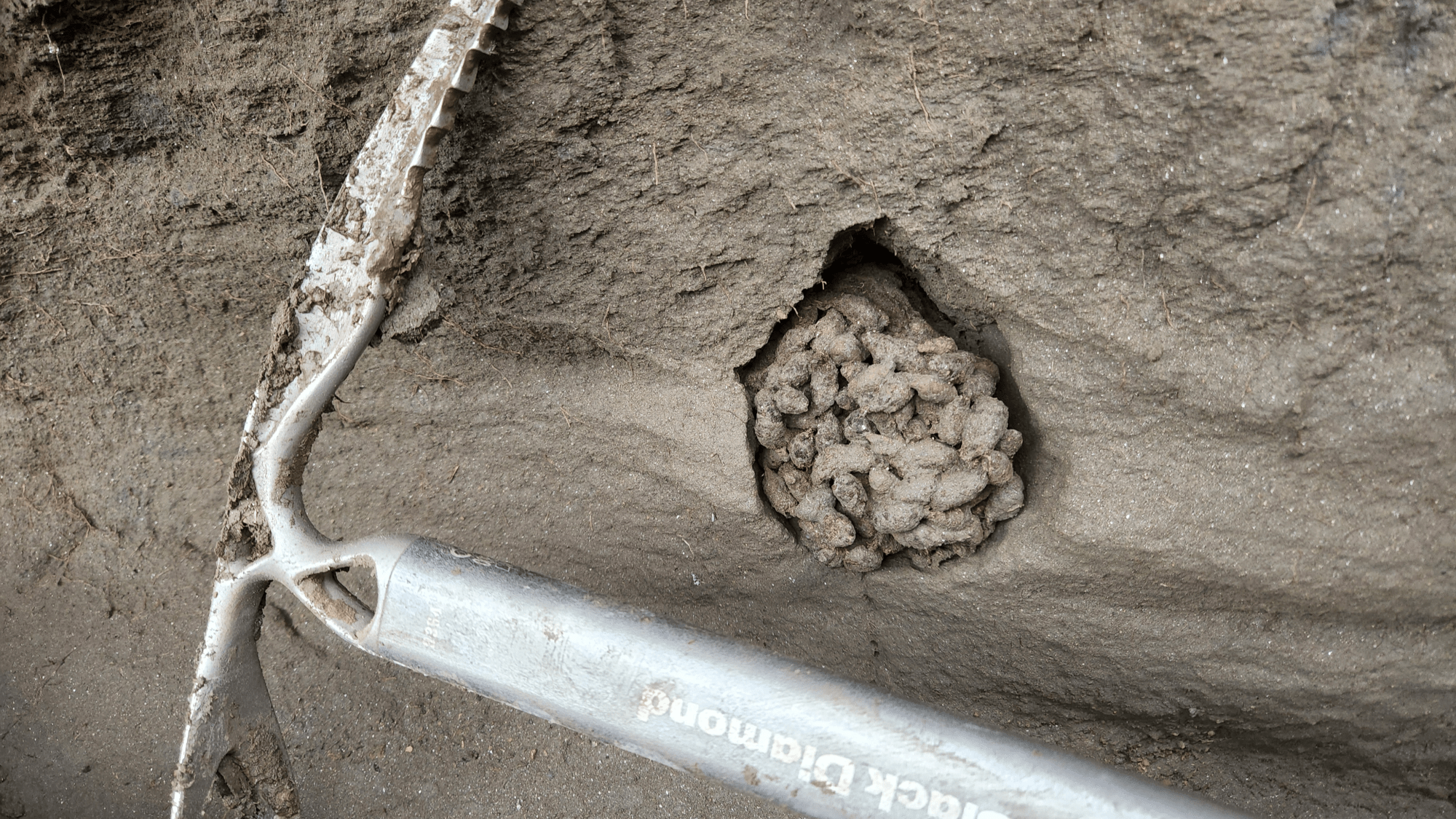
A treasure trove of prehistoric squirrel poop is painting a picture of a lost world. Some of the oldest DNA ever discovered and sequenced lies deep inside these ancient rodent droppings. That fossilized poop (or coprolite) is full of 700,000-year-old environmental DNA from numerous plants, insects, microbes, and large mammals that once lived in Canada’s Yukon, many of which are long gone. A study published today in the journal Nature Communications describes the findings.
Arctic ground squirrels (Urocitellus parryii) are still alive today. They are widely found within Beringia, a region spanning the Yukon in Canada and Alaska in the United States. They are opportunistic feeders that eat a wide variety of plants, fungi, and insects. They will also eat meat, including dead flesh, whale meat, and even other rodents. They can also hibernate for up to seven months. Their wide diet and long-term hibernation in frozen burrows have helped create a detailed biological record of their environment.
“I’ve been describing them as acting a bit like tiny Arctic pack rats,” Tyler Murchie, a study co-author and McMaster University biomolecular archaeologist, tells Popular Science. “These squirrels are interesting both because of what they collected from the environment and because of their own evolutionary histories and how they adapted to the far north during previous glacial periods.”
In the study, Murchie and his team analyzed 13 Arctic ground squirrel coprolite samples from the central Yukon. This research took place on the territory of the Tr’ondëk Hwëch’in First Nation and was conducted with permission.
Compared to bones or sediments, fossilized feces like these coprolites are not used as often for DNA analysis since they can degrade more easily. However, the ground squirrel burrows in Arctic regions can remain frozen and sealed for thousands of years, preserving genetic material in the poop. The ground squirrel burrows here span several glacial periods, and the organic material inside can remain frozen and sealed for thousands of years. The samples in this study date back 30,000 to approximately 700,000 years ago and the biomolecules from ancient animals can be preserved in the coprolites.
“Ancient squirrel poop was one of those ideas that sounded a bit ridiculous at first,” says Murchie. “Scott [Cocker, a study co-author] and I did it initially in part for fun and out of curiosity, not knowing what to expect. But scientifically, it made a lot of sense that these sorts of remains would be really information dense given how dense the burrows can be with macro-remains and given that they’ve been frozen continually for millenia. The squirrels were basically collecting pieces of the landscape and storing them in frozen burrows.”
To tell that something is coprolite, context matters. The scientists didn’t find a random poop pellet here or there, but found the droppings as part of a greater burrow system.
“They are small pellets, roughly rabbit-dropping sized, and they look like dried or fossilized fecal pellets rather than random sediment clumps or plant fragments,” Murchie explains. “When you’re working with them though, they very much seem like frozen poop. When we subsample them and go to digest a portion to extract DNA, it smells like poop. So the organics are all still in there.”
Inside of these DNA samples they not only found smaller organisms like plants and microbes, but larger animals—woolly mammoths (Mammuthus primigenius), American cheetahs (Miracinonyx), horses (Equus), steppe bison (Bison priscus), and more. The team was able to reconstruct 18 mitochondrial genomes from the poop samples, including 12 ground squirrels, one hare, two bison, and three horses.
The team also found a previously unknown genetic diversity among Arctic ground squirrels, including one lineage that dates back 700,000 years. While this squirrel does not live in the Yukon, its relatives can be found in western Siberia.
“There’s something humbling in the timescale. Some of these samples are older than our species. Homo sapiens in our modern anatomical form are usually placed at around 300,000 years ago, and our oldest sample is roughly 700,000 years old,” says Murchie. “So these squirrels were living, collecting, eating, caching, and leaving behind these tiny biological archives long before humans like us existed.”
The team acknowledges that some of the DNA may have been picked up from the coprolite’s surface at a later time and species identification may be affected by incomplete genetic reference databases for animals that lived so long ago. However, these findings show that permafrost coprolites can be part of a high-resolution snapshot of prehistoric environments and complement more typical findings like bones and teeth.
“Science is sometimes at its best when it takes something ordinary, weird, or even funny, and shows that it contains a much larger story,” says Murchie. “In this case, squirrel poop can turn out to be a window into deep time, climate change, extinction, evolution, and ecosystems that no longer exist.”
The post 700,000-year-old squirrel poop helps scientist recreate an ancient world appeared first on Popular Science.
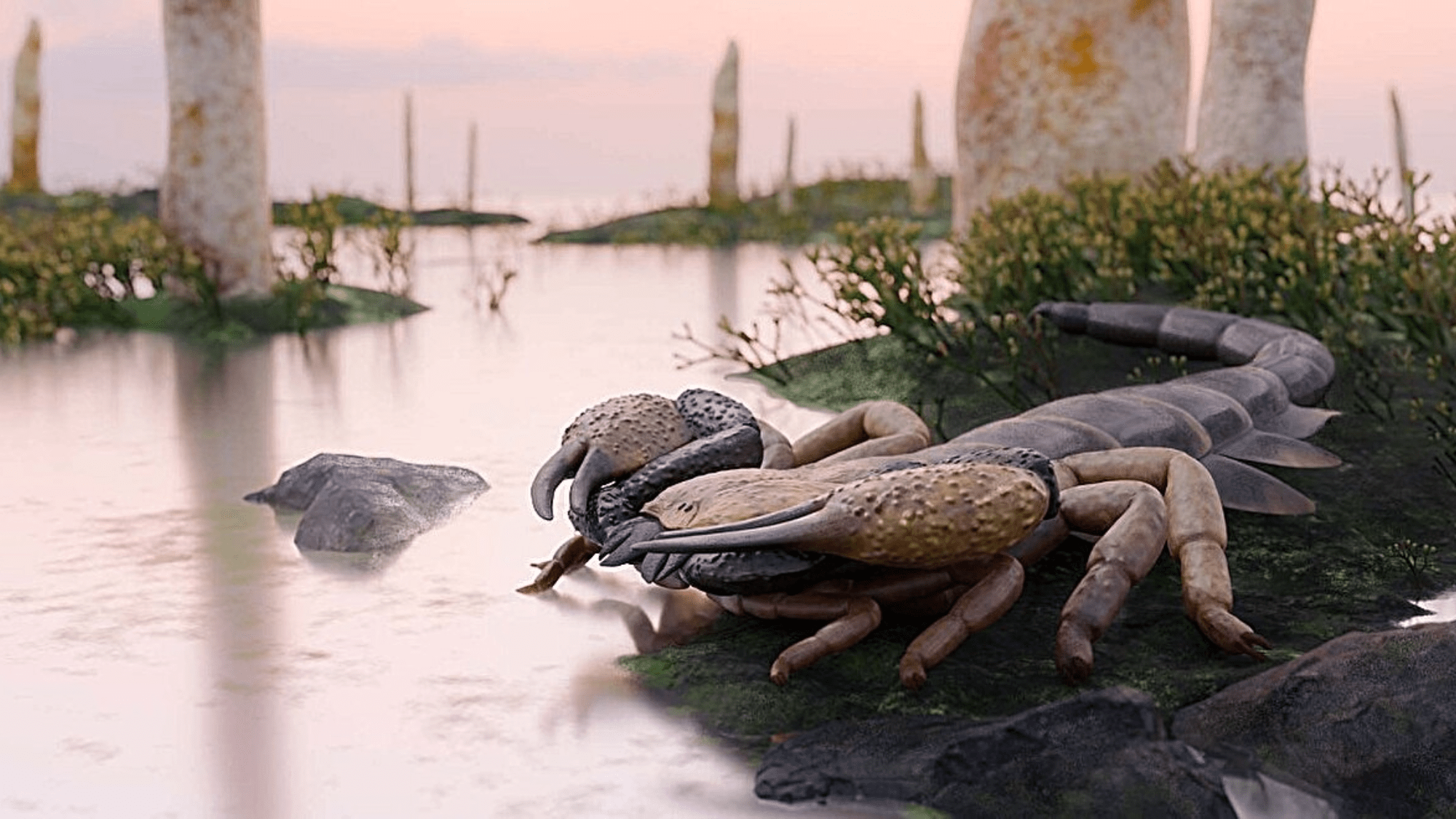
Giant scorpions the size of a baseball bat with pincers the size of a pencil once stalked what is now England and Wales. Praearcturus gigas is believed to be the largest scorpion to ever roam the Earth, and was discovered from fossils that have been tucked away in London’s Natural History Museum for more than 150 years. The findings are detailed in a study published in the journal Palaeontology.
Praearcturus gigas stalked the region’s floodplains about 415 million years ago, during the Early Devonian. Small plants and fungi had only recently begun to spread, and more complex land ecosystems like forests did not exist yet.
“When we think of giant arthropods, people often picture Carboniferous rainforests with giant millipedes or dragonfly-like insects from later in Earth’s history,” Dr. Richard J. Howard, a study co-author and the Curator of Fossil Arthropods at the Natural History Museum, said in a statement. “But Praearcturus lived at least 50 million years earlier, well before the evolution of trees, when life on land was only just getting started.”
Howard and the team believe that Praearcturus’ enormous size indicates that they had very little competition from other large predators roaming around. Praearcturus might have grown to three-feet-long with six-inch pincers simply because there weren’t any other large animals nearby, so it could dominate its environment in a way that wouldn’t be possible years down the road.
Praearcturus gigas was first scientifically decided in 1871. Scientists originally thought it was some kind of giant crustacean, similar to a woodlouse. The fossils were very fragmented, and lacked key features (such as a tail) that help classify it. To get a better picture, the team compared their fossils with some more well-preserved specimens found in 1972 and 2010.
“Praearcturus has puzzled us palaeontologists for more than a century,” added Dr. Russell Garwood, a study co-author and palaeontologist at The University of Manchester. “By bringing together material from several collections and using cutting edge imaging techniques, we’ve been able to build a clearer picture of the animal than was previously possible, which is really exciting.”
The fossils hint that this giant scorpion may have lived in the water some of the time. Some specimens have flap-like structures on the abdomen that are similar to those found in modern crustaceans like lobsters. These flaps suggest Praearcturus may have been capable of moving between water and land. Their place in the wider arachnid fossil record shows that most scorpions are unusually abundant in rocks dating back to this time period, compared with other arachnid species. This supports the idea that Praearcturus may have lived in freshwater environments, where they are more likely to survive as fossils. Excitingly, it shows that Praearcturus lived at a pivotal moment in our planet’s history, when animals were first experimenting with living life outside the oceans.
“The boundary between land and sea was much less defined at this time,” said Dr. Greg Edgecombe, a study co-author and Natural History Museum researcher. “Praearcturus gives us a fascinating glimpse into how early animals adapted to these changing environments. It may even represent a lineage that returned to the water after earlier ancestors had already begun living on land.”
According to the team, a breakthrough like this shows how important discoveries are still being made from museum collections. It also challenges assumptions about why prehistoric arthropods reached such enormous sizes. Instead of being driven solely by environmental factors like oxygen levels, a lack of competition, and other ecological opportunities may have played a crucial role.
“Confirming that this animal is a scorpion fundamentally changes our understanding of how and when these creatures evolved to such extraordinary sizes,” said Howard.
The post World’s biggest scorpions were the size of baseball bats appeared first on Popular Science.
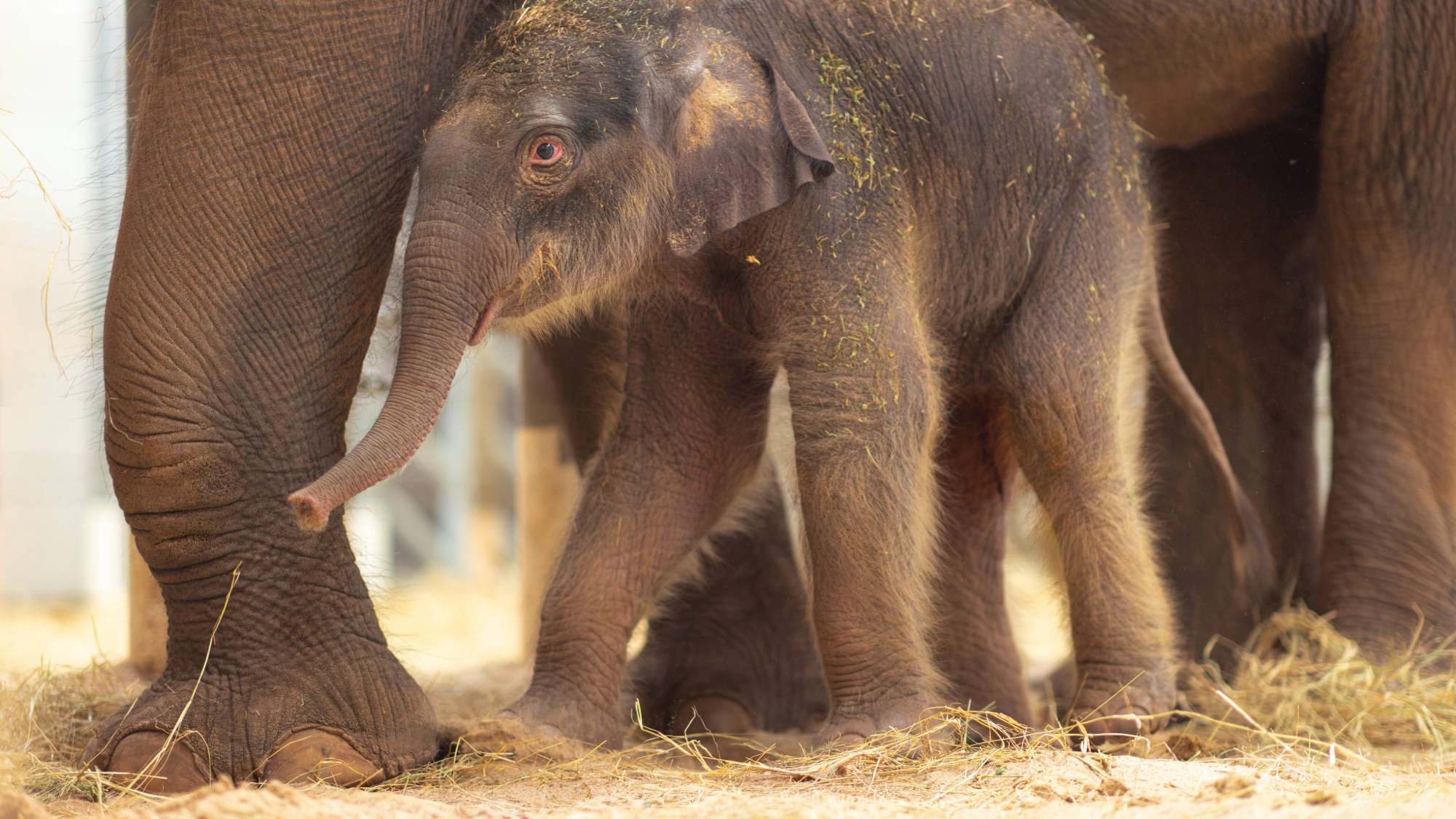
On April 1, Texas’ Fort Worth Zoo welcomed a 285-pound baby into the world. It wasn’t an April Fool’s joke—the newborn was a healthy male Asian elephant (Elephas maximus) calf, and he represents the newest member of a four-generation Fort Worth elephant family.
Elephants are currently the largest terrestrial animals on earth, and they consist of three species: the Asian elephant, African savannah elephant (Loxodonta africana), and African forest elephant (Loxodonta cyclotis). Asian elephants are a bit smaller than the other two species. On average, they weigh between 6,000 and 12,000 pounds and usually are six to 12 feet tall at the shoulder. Today they exist in limited areas in India and Southeast Asia, and they are classified as endangered in the IUCN Red List, with a decreasing population.
Fort Worth Zoo’s calf is 36 inches tall and is the offspring of father Romeo and mother Bluebell, whose prenatal care included weekly blood tests, regular physical examinations, and sonograms. He has one full sibling, Travis, and two half-siblings, Lady Bird and Brazos.
Keeping with the Texas-theme naming tradition, the new calf has been dubbed Sam Houston after the politician of the same name. Houston who was a veteran of the War of 1812 and an important figure in the Texas Revolution (1834–1836). He also played a significant role in helping Texas become part of the United States. While the historic figure’s first name was Sam (Samuel), and last name was Houston, it’s a double name for the young elephant.
“Given his remarkable size – the largest calf in Zoo history – it felt only fitting to honor one of Texas’ most iconic figures, Sam Houston,” according to a statement. “Like his namesake, the Zoo’s Sam Houston (yes, it’s a double name) represents strength, and a lasting legacy, joining a four-generation elephant family that reflects the rich heritage and enduring spirit of Texas.”
Sam Houston got down to business right after birth. He was on his feet within six minutes of popping out, steering his trunk competently almost right away, and nursing within an hour. Sam Houston made his public debut May 7th after spending weeks bonding with his mother and becoming familiar with his environment—including being near other members of the herd—away from prying eyes. However, zoo visitors can only see Sam Houston from 11 a.m. to 2 p.m., because afternoon naps are imperative to the baby’s wellbeing and development.
“Asian elephants are endangered, with fewer than 40,000 individuals remaining in the wild, and their populations continue to decline,” Ramona Bass, chairman of the Fort Worth Zoo Board of Directors, said in the statement. “Each birth is a step forward, reflecting decades of dedicated care and specialized expertise. As part of the natural world, we play a critical role in their future – and through continued research and innovation, including the Zoo’s CARES Lab, we’re helping ensure Asian elephants thrive for generations to come, right here in Fort Worth, Texas.”
The post Meet Sam Houston, the new baby Asian elephant appeared first on Popular Science.
