The remains of an ancient dingo is shining new light on deep relationships between Australia’s First Nations and the wild dogs. Barkindji ancestors deliberately cared for and buried the dingo along the Baaka (Darling River) about 800 miles west of Sydney.
The dingo is known as garli in Barkindji language and they lived alongside the Barkindji as part of the community. While burying the dog, the Barkindji took great care in building a midden, or a spot to place organic material. The people li
The remains of an ancient dingo is shining new light on deep relationships between Australia’s First Nations and the wild dogs. Barkindji ancestors deliberately cared for and buried the dingo along the Baaka (Darling River) about 800 miles west of Sydney.
The dingo is known as garli in Barkindji language and they lived alongside the Barkindji as part of the community. While burying the dog, the Barkindji took great care in building a midden, or a spot to place organic material. The people living there continued to bring river mussel shells to the midden for hundreds of years after the dingo’s death. Archaeologists believe that this marks the first time this type of post-death feeding ritual has been scientifically documented. The findings are detailed in a study published today in the journal Australian Archeology.
The garli skeleton site before excavation, Kinchega National Park. Image: Dr. Amy Way, Australian Museum.
“While Barkindji people have always known about this cultural practice, this discovery is really powerful because it provides new details on the depth of that relationship between Barkindji people and dingoes,” study co-author Dr. Amy Way, an archaeologist at the Australia Museum and university, said in a statement. “If garli were buried with the same care and respect we see for human ancestors, including mothers and elders, it tells us these animals were profoundly valued and loved.”
The burial site was first identified in 2020 by Barkindji Elder Uncle Badger Bates and National Parks and Wildlife Service (NPWS) archaeologist Dan Witter within a road cutting as erosion exposed the skeleton. Barkindji custodian Dave Doyleand and Elder Barb Quayle worked alongside the team during the analysis and excavation requested by the Menindee Aboriginal Elders Council. Elderlders guided the care of the remains throughout the research, including smoking ceremonies at the beginning of the excavation to honor their departed ancestor.
The male dingo was deliberately buried sometime between 963 and 916 years ago within a midden along the river. It was about four to seven years old, and his heavily worn teeth suggest a long life spent hunting.
Interestingly, the dingo had several healed injuries, including a broken lower leg and broken ribs. Based on the injuries, the dog may have been kicked by a kangaroo while hunting. This shows that the dingo likely survived with prolonged care by the Barkindji people.
“This confirms these traditions were much more widespread than we once thought,” added study co-author Dr. Loukas Koungoulos, a postdoctoral fellow at the University of Western Australia and research associate at the Australian Museum. “Dingoes like this garli weren’t simply tolerated around camps. They were tamed, lived with people and were embedded in daily life.”
Return to Country of the garli, which can be seen lying on paperbark on the table. Left to Right: Dr Amy Way, Aunty Cheryl Blore, Aunty Patsy Quayle, Uncle Badger Bates, Dr Sam Player, Dr Rebecca Jones, Aunty Evelyn Bates, Dr Loukas Koungoulos, Dave Doyle and Aunty Barb Quayle. CREDIT: Australian Museum.
When the dingo died, he was buried in a midden that appears to have been built right before the burial or at the same time People kept adding to it for hundreds of years after death. Barkindji Elders say that these ongoing additions formed part of a “feeding” ritual that honored the dog as an ancestor and that the site was maintained across multiple generations. After the analysis, the dingo’s remains were returned to Country. In Indigenous contexts, the word Country is capitalized to include the physical land and deep spiritual, cultural, and social dimensions of the area that are integral to identity and heritage.
“This research reinforces what Barkindji people have always known,” Dr Way said. “These relationships with animals, ancestors and Country were deep, deliberate and ongoing.”
A religious sign held up above fans outside of the stadium before a football game between Penn State and University of Michigan on October 19, 2019, in University Park, Pennsylvania. | Brett Carlsen/Getty Images
In case you didn’t notice, the Antichrist is back.
All right, forgive the hyperbole — this biblical agent of Satan hasn’t actually returned to lead a rebellion against God before Christ’s second coming. But in the year of our Lord 2026, a curious surge in chatter about this hera
A religious sign held up above fans outside of the stadium before a football game between Penn State and University of Michigan on October 19, 2019, in University Park, Pennsylvania. | Brett Carlsen/Getty Images
In case you didn’t notice, the Antichrist is back.
All right, forgive the hyperbole — this biblical agent of Satan hasn’t actually returned to lead a rebellion against God before Christ’s second coming. But in the year of our Lord 2026, a curious surge in chatter about this herald of the apocalypse seems to be underway.
A number of far-right dissidents, from Marjorie Taylor Greene to Nick Fuentes, are asking questions about whether President Donald Trump is more than he seems. “Could this be the Antichrist?” Tucker Carlson asked on his podcast. “Well, who knows?” It didn’t help when Trump posted an AI-slop image of himself as the Messiah, which he later claimed was meant to be a doctor. “Not saying Trump is the Antichrist,” conservative Rod Dreher told the Wall Street Journal. “But he’s radiating the spirit of Antichrist, no question.”
The antichrist talk is also taking off in the politics-adjacent tech world in a different context, where Palantir founder and conservative tech billionaire Peter Thiel has been leading a series of closed-door lectures on the Antichrist (and garnering the disapproving attention of the Vatican). In a wild coincidence, his hypothetical Antichrist appears to be anti-tech people who annoy him.
Key takeaways
The Antichrist or antichrist figures have long been a fixture in the minds of religious Americans and secular culture. This biblical figure is supposed to precede Jesus Christ’s second coming, near the end times.
Historically, many figures have been called antichrists, from the Middle Ages to modern times. There tend to be preexisting societal conditions that accompany these perennial panics.
We may be living through one now (as some on the right refer to Trump as such), but there are unique aspects to the modern American obsession with antichrists.
It’s the most the end times have saturated our political culture since the aughts, when the new millennium brought an explosion of renewed interest, spurred on by the apocalyptic Left Behind novels and related Christian media depicting a “realistic” modern Antichrist. Later on, former President Barack Obama became a fixation of related theories on the religious right depicting him as the Antichrist.
Scholars and experts on biblical writing and apocalyptic history say there’s a long history of perceived antichrist figures popping upin moments of collective crisis or despair in the western world. And there are certain traits that tend to supercharge these narratives — the presence of war (especially in the Middle East), economic or public health crises, political or societal instability, and the appearance of an unusually charismatic leader.
Needless to say, we were probably due for a revival.
Yet just like in past periods of panic and perturbation over the centuries, there’s a lot of uncertainty in these discussions over who or what the Antichrist is, when this figure is to return, or even if this biblical character is supposed to be a real thing.
So it’s a good time to ask: Where did the idea of the Antichrist come from in the first place? How does it tend to manifest in politics? And what is it about our current moment that’s driving such renewed interest in the concept?
The biblical roots of the Antichrist
It’s probably helpful to start off with actually defining what the Antichrist is, and what the signs are that believers in his arrival are looking for.
Definitions vary across various Christian denominations and traditions, but they are rooted in the interpretation of a relatively small number of biblical passages that either use this term explicitly or get linked to the same figure.
Surprisingly, the term “antichrist” only appears five times in the New Testament. These explicit mentions in the letters of the disciple John refer to “deceivers” who come to confuse Christians by denying Jesus Christ’s divinity and preaching other heresies. Scripture suggests that there can be (and have been) multiple antichrists, whose aim is to derail the faithful from achieving salvation.
Whether this is a symbolic or literal figure depends on Christian traditions, and how close you link these passages to references to other beasts and deceivers written about in other parts of the New Testament. For example: The apostle Paul writes of a “man of lawlessness” in his second letter to the Thessalonians, who “will oppose and will exalt himself over everything that is called God or is worshiped, so that he sets himself up in God’s temple, proclaiming himself to be God.”
Then you have horror-movie, apocalyptic visions from the Book of Revelations about the chaotic period before the second coming of Christ, which includes reference toa seven-headed “beast coming out of the sea,” who bears a fatal wound, “but the fatal wound had been healed.” This beast is empowered by a dragon, understood to be Satan, and the people of the world stand in awe and worship this beast, asking “Who is like the beast? Who can wage war against it?”
Catholics and mainline Protestants have less literal interpretations of these passages.
Many mainline Protestant denominations teach that these figures are more symbolic manifestations of unholy traits and un-Christianlike beliefs and behavior, not an actual being who is due to appear at some point in the future.
Catholics are called to view the “antichrist” as a period of intense prosecution, testing of the church, and the rise of false prophets; “a final trial” before Christ returns in which believers face a “supreme religious deception” and are faced with a choice to believe in a “pseudo-messianism by which man glorifies himself in place of God and of his Messiah” or stay true to their faith.
But the Catholic Church also cautions against believing claims that an antichrist figure is imminently coming. And the explicit characters in the Bible have been understood by many scholars to be references to Roman leaders who persecuted Christians during early church history.
More fundamentalist and evangelical believers, however, view all these textual clues as actual signposts and steps in the process toward the apocalypse and Christ’s return. That’s been the main entry point for the Antichrist’s place in American culture.
The long history of the Antichrist in the Western imagination
Because of the detail and color of these symbols and characters in the Bible, it has been enticing for believers and readers to draw firm connections between the text and the real world.
“They read the Bible like it’s a secret code book, and that if they can unlock the code, then they can understand what’s going to happen in the end times,” Matthew A. Sutton, a historian of American apocalypticism at Washington State University, told me. “It’s a very modern way to read the Bible compared to what you would’ve seen through much of church history.”
“So wars, political changes, religious revolutions, and the rise and fall of empires — these sorts of political and religious events can create a moment.”
Brett Whalen, assistant professor of history at the University of North Carolina at Chapel Hill
Sutton and other historians differentiate between the modern (and by that they mean in the last century) antichrist discourse and historical beliefs. But there tend to be some preconditions necessary for this chatter to rise that go back even further in time: war in the Middle East, the rise of charismatic or terrifying leaders, and environmental, political, or economic catastrophe.
For example, the turn of the first millennium was one of the earliest surges in interest in the figure of the Antichrist, given explicit references in the Bible to thousand-year periods (as in Christ’s thousand-year kingdom on Earth, from the Book of Revelations) and the violent and unstable nature of life in the early Middle Ages, Brett Whalen, an assistant professor of history at the University of North Carolina at Chapel Hill, told me. In the same century, the First Crusade sparked another of these waves, as crusaders captured Jerusalem from Islamic rule. And the Middle Ages were rife with antichrist talk, primarily by critics of the papacy.
“You can always call the pope ‘Antichrist,’” Whalen said. “Historically, they’re probably the No. 1 candidate for being Antichrist, or kings or emperors. You had a limited cast.”
Various secular rulers have been labeled as such too: Frederick II, a Holy Roman emperor around the turn of the 12th century, was called Antichrist by the pope with whom he regularly feuded. The Muslim sultan Saladin, who retook Jerusalem around this time, was similarly described as such.
“Martin Luther was called Antichrist when the Protestant Reformation happened,”Whalen said.“So wars, political changes, religious revolutions, and the rise and fall of empires — these sorts of political and religious events can create a moment.”
What makes modern iterations of the Antichrist different
So how did these historical waves of antichrist panic lead us to Donald Trump and Peter Thiel?
Blame America, in this case. In the modern era, antichrists became democratized, as US-based evangelical movements picked up steam, literal readings of the Bible spread, and end-times theories were solidified.
“Obsessing over everyday news and trying to align that with biblical prophecy — that is a modern American phenomenon,” Sutton told me. “And by modern, that begins in the 1880s, 1890s, and that really is what gives birth to fundamentalism, [another] uniquely American phenomenon. And then fundamentalism morphs into today’s evangelicalism.”
Certainly, the news seemed to confirm their suspicions: Even for secular Americans, it’s easy to feel like a particular moment is a time of struggle, or that we’re headed toward some violent catharsis, or are being engulfed by a personality cult.
And the 20th century, marked by two World Wars, the rise and fall of new totalitarian governments, and the threat of nuclear annihilation, was especially fertile ground for this kind of thinking.Figures like Mussolini, Hitler, and Stalin were all labeled Antichrists; President Franklin D. Roosevelt also faced accusations.
In the postwar period, the establishment of the state of Israel in 1948 was another crucial development in today’s antichrist theology. Many of the apocalyptic biblical stories center on the Holy Land, the return of Jewish people to it, and a period of tribulation for them; there, this antichrist figure will allow the Jewish people to rebuild a temple, then betray them, demand worship, and assemble global armies under his command for a final battle in the valley of Armageddon (which historically is located in the Jezreel Valley in northern Israel).
Now, these narratives have become central to dispensationalist evangelical theology: Israel’s unity and existence must be preserved in order for these phases to take shape, and for the eventual rapture to occur. Consequently, “anything that involves Israel or the Middle East is going to trigger speculation” of end-times prophesies, Sutton said, especially when there’s instability or war in the region.
These literal biblical interpretations also suggest a period of global domination by the Antichrist — governments submit to this figure and turn over their armies to him.
“Part of what has driven concerns about the Antichrist is the idea that they’re going to sacrifice American sovereignty through a global organization,” Sutton said. “And so this is why religious conservatives are so suspicious of groups like NATO and especially the United Nations, because they believe ultimately we’re moving towards one world government, and it’s the Antichrist. He’s going to prevail over that one world.”
Combined with the expectation thatthe antichrist figure will be a charismatic leader, you get the more recent panics: Saddam Hussein faced antichrist allegations during the Gulf War. Hillary Clinton was called the Antichrist. But nobody drew more scrutiny in recent times than Barack Obama, whose meteoric political rise on a message of greater international cooperation and outreach to the Muslim world made him a magnet for antichrist talk.
This speculation broke into the mainstream in 2008, when some Democrats accused former Sen. John McCain’s presidential campaign of deliberately referencing it with a web video mocking Obama’s celebrity by depicting him as a Moses-like religious figure.
The McCain campaign denied it was a dogwhistle, but the discussion around the topic grew so heated that Tim LaHaye and Jerry Jenkins, co-authors of the Left Behind novels about the Antichrist, stepped in to publicly reassure their Christian readers that Obama was not the figure they had in mind.
Which brings us to 2026. The latest panics fit neatly into these traditions: Peter Thiel’s antichrist lectures seem to boil down to a fear over technological stagnation and growing opposition to artificial intelligence. He warns that efforts to regulate AI, in the name of fighting some future existential risk, could bring about the conditions for a central power to seize global authoritarian control — the Antichrist.
Sutton, who has written about these lectures before, argues that it’s not the most novel approach, but it is dangerous: “Dressing political theory in apocalyptic robes carries risks. When powerful actors reframe ordinary policy debates such as about guardrails for AI as a battle against the antichrist, they raise anxieties, delegitimize compromise and insinuate that democratic deliberation is spiritually suspect.”
The recent Trump panic, however, is a bit of an inversion: Trump is typically championed by the same right-wing religious figures who are most attuned to literal interpretations of the Antichrist and the end times. It’s surprising that figures like Carlson and Fuentes would break the seal on this front. But, historically speaking, Trump also fits the mold of prior antichrist hunts: He is surely a charismatic leader; he’s launched civilizational wars in the Middle East; he’s survived assassination attempts, mimicking the fatal, but healed, wound of the beast of Revelations; and he’s blasphemed and used the trappings of religion to advance his personal brand.
But to focus on any one person or movement as antichrist is to miss the broader point, Robert Fuller, a religious studies professor at Bradley University, told me. The concept, applied politically, risks taking an already polarized time and raising the stakes of elections and policy debates even further.
“This image sustains a crisis mentality,” Fuller said. “It summons out hatred and resentment that can fuel long-term grudges. It makes compromise unthinkable since no one compromises with the devil. It justifies hatred and violence, recasting these traits as virtues.”
In that vein, it’s inevitable that antichrist narratives persist; such a flexible idea can adapt regardless of century. It’s likely we’ll see many recurring returns of the Antichrist, at least until the world does actually end.
Researchers are developing a bespoke AI-powered camera platform to help zookeepers and staff monitor the health and well-being of their animals.
[Read More]
Even though many parts of the northeastern United States have seen surges of summer temperatures, it’s technically still spring in the Northern Hemisphere, which means many animals are having babies.
That’s true also at Yellowstone National Park, which is home to everything from moose and black bears to river otters and gophers. In a recent social media post, the popular park highlighted some particularly adorable young’uns, including a young bison, black bear, yellow-bellied marmot, three b
Even though many parts of the northeastern United States have seen surges of summer temperatures, it’s technically still spring in the Northern Hemisphere, which means many animals are having babies.
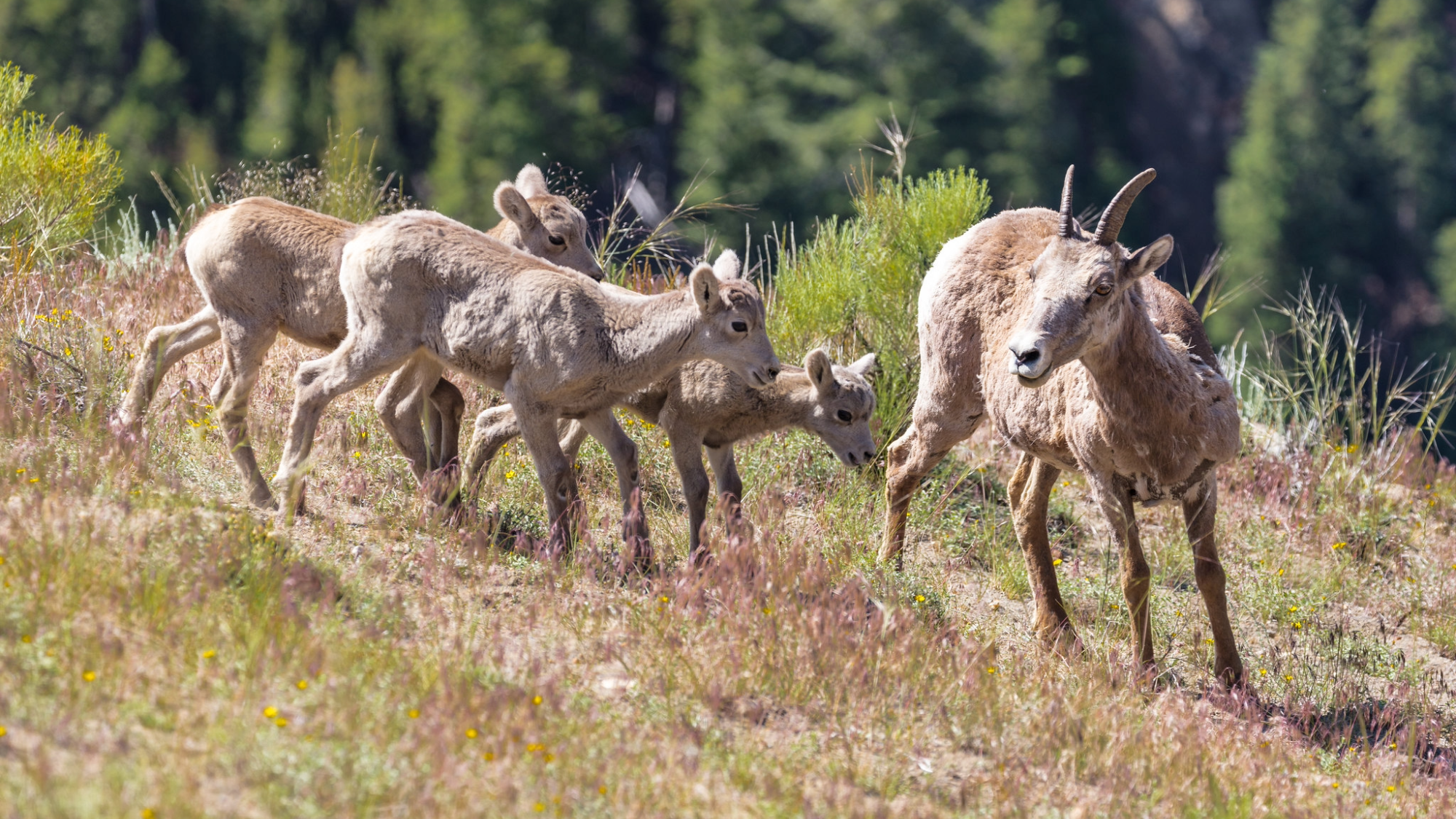
That’s true also at Yellowstone National Park, which is home to everything from moose and black bears to river otters and gophers. In a recent social media post, the popular park highlighted some particularly adorable young’uns, including a young bison, black bear, yellow-bellied marmot, three bighorn sheep, an elk, and two pronghorns.
All of Yellowstone National park is considered bear country. Image: NPS.
“As cute and fuzzy as they are, remember to give wildlife room and use a zoom,” the park wrote. “Always maintain a distance of at least 100 yards (91 m) away from bears, wolves, and cougars and at least 25 yards (23 m) away from all other animals, including bison and elk. Get a closer look by using binoculars, a spotting scope, or zoom lens.”
As always, listen to Yellowstone park rangers on this for your own well-being. However, if you run into a baby animal on its own in a more suburban or urban setting, it may be best to get involved. For example, acting quickly is best with baby opossums (Didelphis virginiana) and baby squirrels.
Yellow-bellied marmots are one of Yellowstone’s largest rodents. Image: NPS.
Opossums are pretty lousy mothers. It’s typically not possible to reunite baby opossums with their mothers, because when they fall off her back, she usually continues on her way without them. If you find one or more opossum babies by themselves, call a wildlife hospital or a licensed wildlife rehabber.
As for baby squirrels, they sometimes fall out of their nests. If you find one and 12 hours later the mother hasn’t come to get it yet, pick it up and call a wildlife rehabilitator, New England Wildlife Center Program Founder Greg Mertz has previously told Popular Science. A video by the same wildlife center has a hilariously wacky but serious tip: try to get a baby squirrel back to its mother by elevating it in a basket (to keep predators away) and playing baby squirrel noises from YouTube (to attract the squirrel mom).
Known for his stunning photos of wildlife and landscapes, as well as co-founding SeaLegacy alongside fellow conservationist and photographer Cristina Mittermeier, Paul Nicklen has traveled the globe to not only highlight our planet’s phenomenal biodiversity but also to shed light on its increasing vulnerabilities due to the ongoing climate crisis.
Nicklen’s most ambitious project yet gathers myriad images from a career exploring the corners of the earth for more than three decades. Forthco
Known for his stunning photos of wildlife and landscapes, as well as co-founding SeaLegacy alongside fellow conservationist and photographer Cristina Mittermeier, Paul Nicklen has traveled the globe to not only highlight our planet’s phenomenal biodiversity but also to shed light on its increasing vulnerabilities due to the ongoing climate crisis.
Nicklen’s most ambitious project yet gathers myriad images from a career exploring the corners of the earth for more than three decades. Forthcoming from Hemeria, Reverence marks the most comprehensive collection of his work to date. The book features 160 photographs, including some of Nicklen’s most enduring images alongside others previously unpublished.
From the root-like system of the Colorado River delta to narwhals feeding on cod in the Arctic Bay off Baffin Island, Nicklen’s photos illuminate the vast and resilient beauty of the natural world. “Reverence is what we feel in the silent presence of a whale beneath the ice, in the fierce gaze of a polar bear, in the timeless dance of ocean and light,” says a statement. “It is what the natural world evokes when we stop long enough to truly see it.”
Reverence is slated for release on July 28, which is also World Conservation Day, and pre-orders are open now.
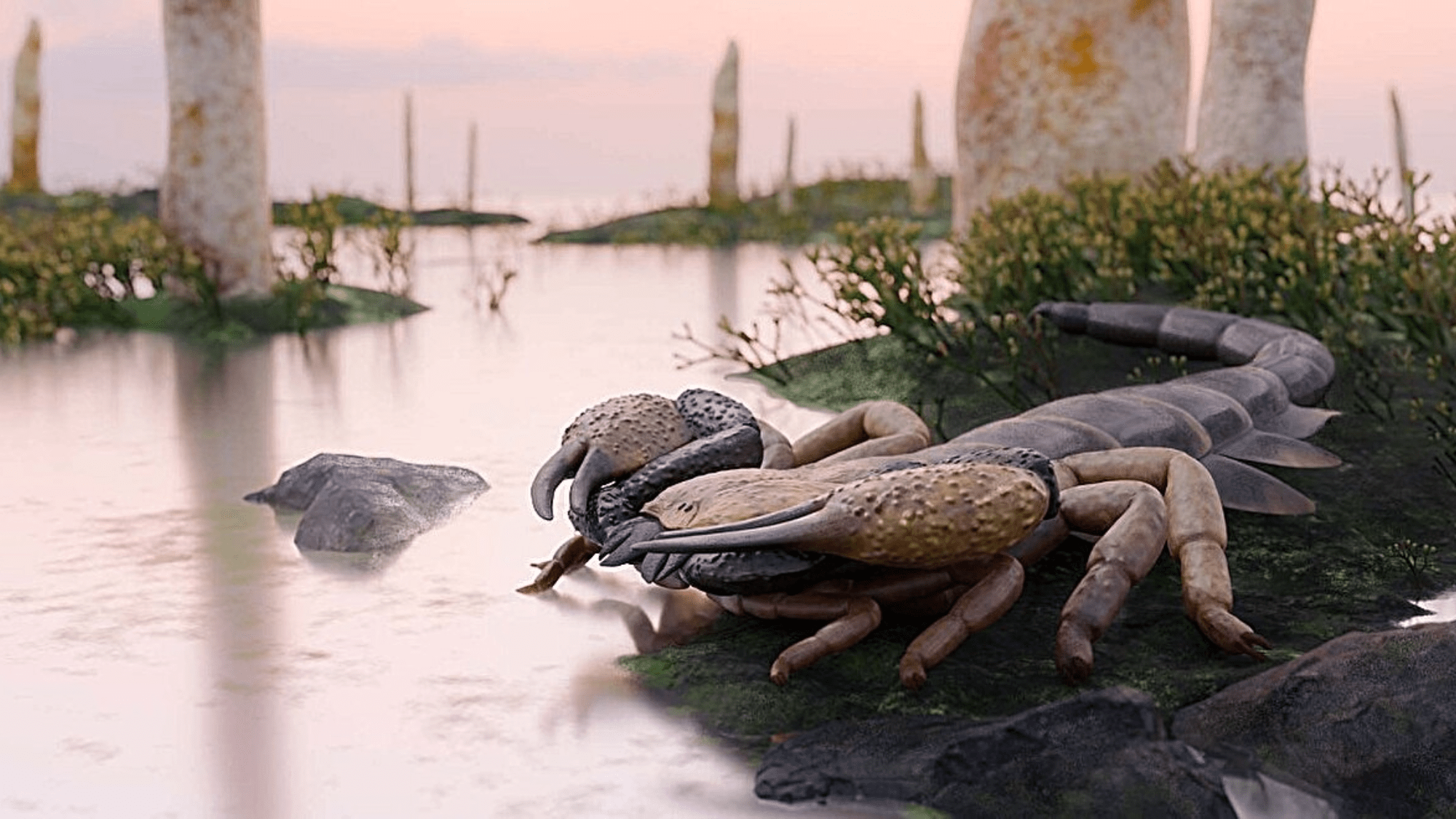
Giant scorpions the size of a baseball bat with pincers the size of a pencil once stalked what is now England and Wales. Praearcturus gigas is believed to be the largest scorpion to ever roam the Earth, and was discovered from fossils that have been tucked away in London’s Natural History Museum for more than 150 years. The findings are detailed in a study published in the journal Palaeontology.
Praearcturus gigas stalked the region’s floodplains about 415 million years ago, during the Early
Giant scorpions the size of a baseball bat with pincers the size of a pencil once stalked what is now England and Wales. Praearcturus gigas is believed to be the largest scorpion to ever roam the Earth, and was discovered from fossils that have been tucked away in London’s Natural History Museum for more than 150 years. The findings are detailed in a study published in the journal Palaeontology.
Praearcturus gigas stalked the region’s floodplains about 415 million years ago, during the Early Devonian. Small plants and fungi had only recently begun to spread, and more complex land ecosystems like forests did not exist yet.
“When we think of giant arthropods, people often picture Carboniferous rainforests with giant millipedes or dragonfly-like insects from later in Earth’s history,” Dr. Richard J. Howard, a study co-author and the Curator of Fossil Arthropods at the Natural History Museum, said in a statement. “But Praearcturus lived at least 50 million years earlier, well before the evolution of trees, when life on land was only just getting started.”
Howard and the team believe that Praearcturus’ enormous size indicates that they had very little competition from other large predators roaming around. Praearcturus might have grown to three-feet-long with six-inch pincers simply because there weren’t any other large animals nearby, so it could dominate its environment in a way that wouldn’t be possible years down the road.
Praearcturus gigas was first scientifically decided in 1871. Scientists originally thought it was some kind of giant crustacean, similar to a woodlouse. The fossils were very fragmented, and lacked key features (such as a tail) that help classify it. To get a better picture, the team compared their fossils with some more well-preserved specimens found in 1972 and 2010.
“Praearcturus has puzzled us palaeontologists for more than a century,” added Dr. Russell Garwood, a study co-author and palaeontologist at The University of Manchester. “By bringing together material from several collections and using cutting edge imaging techniques, we’ve been able to build a clearer picture of the animal than was previously possible, which is really exciting.”
The fossils hint that this giant scorpion may have lived in the water some of the time. Some specimens have flap-like structures on the abdomen that are similar to those found in modern crustaceans like lobsters. These flaps suggest Praearcturus may have been capable of moving between water and land. Their place in the wider arachnid fossil record shows that most scorpions are unusually abundant in rocks dating back to this time period, compared with other arachnid species. This supports the idea that Praearcturus may have lived in freshwater environments, where they are more likely to survive as fossils. Excitingly, it shows that Praearcturus lived at a pivotal moment in our planet’s history, when animals were first experimenting with living life outside the oceans.
Pincer of scorpion (about the size of today’s largest scorpion). Image: Natural History Museum.
“The boundary between land and sea was much less defined at this time,” said Dr. Greg Edgecombe, a study co-author and Natural History Museum researcher. “Praearcturus gives us a fascinating glimpse into how early animals adapted to these changing environments. It may even represent a lineage that returned to the water after earlier ancestors had already begun living on land.”
According to the team, a breakthrough like this shows how important discoveries are still being made from museum collections. It also challenges assumptions about why prehistoric arthropods reached such enormous sizes. Instead of being driven solely by environmental factors like oxygen levels, a lack of competition, and other ecological opportunities may have played a crucial role.
“Confirming that this animal is a scorpion fundamentally changes our understanding of how and when these creatures evolved to such extraordinary sizes,” said Howard.
While swimmers and boaters don’t have to fear sharks or giant squid in the Great Lakes watershed, invasive fish the size of large dogs lurk in the freshwater. Invasive carp have wreaked havoc on the ecosystem for over a century, but officials have hit a milestone worth celebrating in the fight against these mega fish.
In the past 15 years, wildlife officials have removed 50 million pounds of invasive carp from the Illinois River. That’s equivalent to roughly 5,000 elephants. The removal is p
While swimmers and boaters don’t have to fear sharks or giant squid in the Great Lakes watershed, invasive fish the size of large dogs lurk in the freshwater. Invasive carp have wreaked havoc on the ecosystem for over a century, but officials have hit a milestone worth celebrating in the fight against these mega fish.
In the past 15 years, wildlife officials have removed 50 million pounds of invasive carp from the Illinois River. That’s equivalent to roughly 5,000 elephants. The removal is part of a broader and coordinated effort to protect the rivers and lakes from this non native species.
Why are carp a problem?
Currently, four species of invasive carp cause harm in the Great Lakes and beyond—bighead carp (Hypophthalmichthys nobilis), silver carp (Hypophthalmichthys molitrix), black carp (Mylopharyngodon piceus), and grass carp (Ctenopharyngodon idella).
According to the Great Lakes Fishery Commission, all four species were imported to North America to help with pest control in aquaculture facilities in the 1970s. The carp escaped confinement in only 10 years, and have spread to the Mississippi River basin and other large rivers, including the Missouri and Illinois.
Each of the four invasive carp species can weigh more than 100 pounds and grow to four feet from tip to tail. Bighead carp and silver carp generally feed on the tiny plankton in the water, while grass carp eats rooted plants in shallow water, and black carp feed primarily on mollusks and snails.
“They consume so much food and can exist in such great numbers that they can really reduce the amount of [resources] for resident species of fish,” Peter Alsip, an ecologist with the NOAA Great Lakes Environmental Research Lab told Popular Science in 2024. “They can have indirect effects on the whole ecosystem because [silver carp] are consuming phytoplankton and zooplankton, which are essentially the base of the food web.”
Once inside a watershed, they can reproduce rapidly and compete with native fish species for resources. In areas where invasive carp are abundant, they have harmed other fish species and interfered with commercial and recreational fishing, according to the United States Fish & Wildlife Service (USFWS). They can also pose a danger to humans, as the giant fish can jump out of the lake and hit unsuspecting boaters.
What is being done to stop them?
Carp eradication measures have been active for over 100 years. These efforts include targeted mass removal efforts, developing barriers to block or impede their movement, and ongoing monitoring.
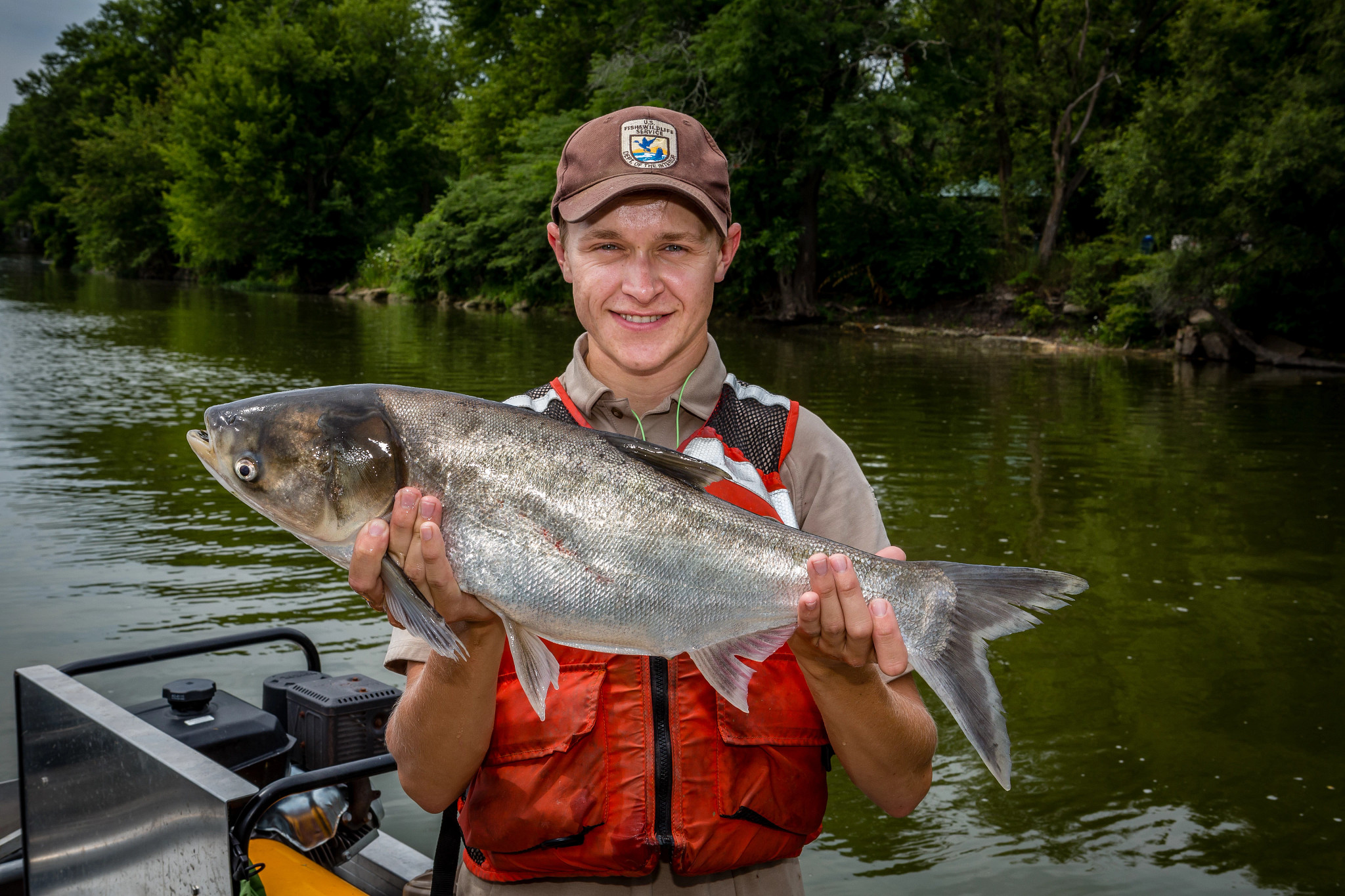
Cap being culled in the Illinois River. Image: Illinois Department of Natural Resources.
The 50 million pounds of fish removed from the Illinois River were part of a program focusing on the northern part of the river about 50 miles from Lake Michigan. The removal project is designed to suppress the mostly adult populations of carp living in the area, by limiting their ability to reproduce and reduce their migration upstream towards the Electric Dispersal Barrier System. Located about 37 miles from Lake Michigan, this electric barrier is designed to deter their movement through the Chicago area. It is one of the main tools wildlife officials are using to keep them from further entering the Great Lakes through the Illinois River. Another program in the Illinois River offers fish harvest incentives to commercial fishers in the river’s lower 240 miles.
“The more invasive carp we remove, the more we reduce their harmful impacts and the risk of them reaching Lake Michigan,” the USFWS wrote on Facebook. “Thanks to these and other efforts to monitor our waters and prevent the spread of invasive carp, Illinois and more than two dozen partners are safeguarding some of our most prized native fisheries, and the Great Lakes regional economy.”
The official start of summer is days away, and after a particularly long and cold winter in parts of the United States, many are ready to enjoy the outdoors again without risking frostbite. Warm weather comes with another type of bite, however. One that comes with an unwanted guest attached to your body.
Along with mosquitos and flies, ticks are among our most disliked arachnids. However, their infamy comes with a lot of myths, and with tick season in full swing, it’s important to straighten
The official start of summer is days away, and after a particularly long and cold winter in parts of the United States, many are ready to enjoy the outdoors again without risking frostbite. Warm weather comes with another type of bite, however. One that comes with an unwanted guest attached to your body.
Along with mosquitos and flies, ticks are among our most disliked arachnids. However, their infamy comes with a lot of myths, and with tick season in full swing, it’s important to straighten out a few misconceptions.
False: Ticks can fly
If you’ve heard that ticks can fly and/or jump, you’ll be relieved to know that they can’t. In fact, their legs are pretty unimpressive appendages, according to Escher Cattle, an entomologist at the Regional Government of Cape Cod.
“They have some pretty good grabbers on their front legs and their other legs are pretty decent as well, but really all a tick has the equipment to do is walk around and grab stuff,” Cattle tells Popular Science. They’re not muscular like those of grasshoppers, for example. As for locomotion more generally, ticks don’t have wings, nor are they aerodynamic. As such, they’re also “not physically geared to be dropping out of trees like some kind of paratrooper.”
While a tick might attach onto an animal that takes it up into a tree and then fall, the chances that the skydiving arachnids will land on you is infinitesimal, Cattle says. In fact, ticks generally exist beneath an elevation of at most three feet.
The way a tick actually attaches to a host is by climbing to the top of a plant, sticking its arms out, and waiting for something alive to brush by—a behavior called questing. It does so after sensing chemical cues of something warm, moving, and blood-filled.
Deer ticks are found in the eastern half of North America. Image: CDC/ James Gathany; William L. Nicholson, Ph.D.
False: Opossums help remove ticks by eating them
Speaking of blood-filled things, one tick myth that Cattle is sorry to dispel is one that paints opossums as tick-eating machines. You may have read that opossums are good to have around because they eat lots of ticks. This popular notion is founded on the results of a study in which researchers put ticks on opossums, among other animals, to investigate how these animals reacted to the pest.
Because the team wasn’t seeing any ticks dropping off the opossums, they assumed the mammals were eating them all. As of now, there is no direct evidence known to researchers of opossums eating any ticks.
One similar belief is that birds such as turkeys and guinea fowl eat ticks. While that’s true, they also carry them around, so having one in your backyard doesn’t automatically mean you’ll have less ticks.
True: They can carry disease
What isn’t a myth, though, is that ticks can be vectors of disease. These include Rocky Mountain spotted fever, tularemia, ehrlichiosis, and most infamously, Lyme disease.
The good news is that you can decrease your chances of catching the disease from a tick bite if you remove the tick within 24 hours. But sometimes, tick bites go unnoticed, so it’s important to check yourself when you come back indoors during warm weather.
Ticks are shockingly cold-resistant, but they usually keep to themselves during the colder seasons. They still can come back out as soon as the sun starts shining—including on those randomly very hot February days.
True: A ‘dorky’ look helps prevent tick bites
If you do find a tick, don’t try to burn or suffocate it off your skin. Use a trusty pair of tweezers, grip it near the mouth parts, and pull it off. If anything gets left behind, your skin will naturally push it out with some time. If you’re not sure how long the tick has been on you, you should contact your doctor.
As for tick bite prevention, “I know it looks kind of dorky, but tucking your pants into your socks is a really good tip. Making it so that there are barriers between ticks and your skin as much as possible is extremely good as a strategy,” explains Cattle, who also teaches about tick-borne disease prevention for Cape Cod Cooperative Extension.
Tucking long pants into socks creates a good barrier between ticks and your skin. Image: Delaware Department of Natural Resources and Environmental Control.
You can also apply a synthetic pesticide called permethrin on their clothes and insect repellant on any exposed skin.
Ticks are “very good at what they do,” he concludes, but “I think adopting just a couple habits at a time really makes a difference.”
Update June 9 9:47 a.m. EDT : This story incorrectly identified ticks as insects. They are arachnids.
For starters, radical openness is important because, according to Fromm, the basic premise of love is freedom.
Editor’s note, June 14, 8 am ET: We’re bringing you some of our best-loved Your Mileage May Vary columns while Sigal Samuel is on parental leave. The one below originally published on June 8, 2025.
This unconventional advice column offers you a unique framework for thinking through moral dilemmas. It’s based on value pluralism: the idea that each of us has multiple values that
For starters, radical openness is important because, according to Fromm, the basic premise of love is freedom.
Editor’s note, June 14, 8 am ET: We’re bringing you some of our best-loved Your Mileage May Vary columns while Sigal Samuel is on parental leave. The one below originally published on June 8, 2025.
This unconventional advice column offers you a unique framework for thinking through moral dilemmas. It’s based on value pluralism: the idea that each of us has multiple values that are equally valid but that often conflict with each other. Stay tuned for more original Your Mileage May Vary columns coming in June. In the meantime, submit your own question here.
My husband and I have a good relationship. We’re both committed to personal growth and continual learning and have developed very strong communication skills. A couple of years ago we were exposed to some friends with an open marriage and had our own conversations about ethical non-monogamy. At first, neither of us were interested.
Now, my husband is interested and currently is attracted to a colleague who is also into him. She’s married and has no idea that he and I talk about all of their interactions. He doesn’t know what her relationship agreements are with her husband.
I’m not currently interested in ethical non-monogamy. I see things in our relationship that I’d like to work on together with my husband. I want more of his attention and energy, to be frank. I don’t want his attention and energy being funneled into another relationship. I don’t have moral issues with ethical non-monogamy, I just don’t actually see any value-add for me right now. The cost-benefit analysis leaves me saying “not now.”
My husband admitted that he’s hoping I will have a change of mind. I don’t want to force his hand, although I am continuing to say very clearly what I want in my relationship. How do we reach a compromise? If he cuts ties with this woman, he has resentment towards me. If he continues to pursue something with her, I feel disrespected, and while I don’t want to leave him I would feel the need to do something.
Dear Monogamously Married,
I want to start by commending you for two things. First, for your openness to discussing and exploring all this with your husband. Second, for your insistence on clearly stating what you actually want — and don’t want.
I think Erich Fromm, the 20th-century German philosopher and psychologist, would back me up in saying that you’d do well to hold tight to both those qualities. For starters, radical openness is important because, according to Fromm, the basic premise of love is freedom. He writes:
Love is a passionate affirmation of its “object.” That means that love is not an “affect” but an active striving, the aim of which is the happiness, development, and freedom of its “object.”
In other words, love is not a feeling. It’s work, and the work of love is to fully support the flourishing of the person you love. That can be scary — what if the person discovers that they’re actually happier with somebody else? — which is why Fromm specifies that only someone with a strong self “which can stand alone and bear solitude” will be up for the job. He continues:
This passionate affirmation is not possible if one’s own self is crippled, since genuine affirmation is always rooted in strength. The person whose self is thwarted can only love in an ambivalent way; that is, with the strong part of his self he can love, with the crippled part he must hate.
Have a question you want answered in the next Your Mileage May Vary column?
Fill out this anonymous form! Newsletter subscribers will get my column before anyone else does and their questions will be prioritized for future editions. Sign up here!
So far, it might sound like Fromm is saying that to be a good lover is to be a doormat: You just have to do whatever’s best for the other person, even if it screws you over. But his view is very much the opposite.
In fact, Fromm cautions us against both “masochistic love” and “sadistic love.” In the first, you give up your self and sacrifice your needs in order to become submerged in another person. In the second, you try to exert power over the other person. Both of these are rooted in “a deep anxiety and an inability to stand alone,” writes Fromm; whether by dissolving yourself into them or by controlling them, you’re trying to make it impossible for the other person to abandon you. Both approaches are “pseudo-love.”
So although Fromm doesn’t want you to try to control your partner, and although he suggests that the philosophical ideal is for you to passionately affirm your partner’s freedom, he’s not advising you to do that if, for you, that will mean masochism.
If you’re not up for ethical non-monogamy — if you feel, like many people, that the idea of giving your partner free rein is too big a threat to your relationship or your own well-being — then pretending otherwise is not real love. It’s just masochistic self-annihilation.
I’m personally partial to Fromm’s non-possessive approach to love. But I equally appreciate his point that the philosophical ideal could become a practical bloodbath if it doesn’t work for the actual humans involved. I think the question, then, is this: Do you think it’s possible for you to get to a place where you genuinely feel ready for and interested in ethical non-monogamy?
It sounds like you’re intellectually open to the idea, and given that you said you’re committed to personal growth and continual learning, non-monogamy could offer you some benefits; lots of people who practice it say that part of its appeal lies in the growth it catalyzes. And if practicing non-monogamy makes you and/or your husband more fulfilled, it could enrich your relationship and deepen your appreciation for each other.
But right now, you’ve got a problem: Your husband is pushing on your boundaries by flirting with a woman even after you’ve expressed that you don’t want him pursuing something with her. And you already feel like he isn’t giving you enough attention and energy, so the prospect of having to divvy up those resources with another woman feels threatening. Fair!
Notice, though, that that isn’t a worry about non-monogamy per se — it’s a worry about the state of your current monogamous relationship.
In a marriage, what partners typically want is to feel emotionally secure. But that comes from how consistently and lovingly we show up for and attune to one another, not from the relationship structure. A monogamous marriage may give us some feeling of security, but it’s obviously no guarantee; some people cheat, some get divorced, and some stay loyally married while neglecting their partner emotionally.
“Monogamy can serve as a stand-in for actual secure attachment,” writes therapist Jessica Fern in Polysecure, a book on how to build healthy non-monogamous relationships. She urges readers to take an honest look at any relationship insecurities or dissatisfactions that are being disguised by monogamy, and work with partners to strengthen the emotional experience of the relationship.
Since you feel that your husband isn’t giving you enough attention and energy, be sure to talk to him about it. Explain that it doesn’t feel safe for you to open up the relationship without him doing more to be fully present with you and to make you feel understood and precious. See if he starts implementing these skills more reliably.
In the meantime, while you two are trying to reset your relationship, it’s absolutely reasonable to ask him to cool it with the colleague he’s attracted to; he doesn’t have to cut ties with her entirely (and may not be able to if they work together), but he can certainly avoid feeding the flames with flirtation. Right now, the fantasy of her is a distraction from the work he needs to be doing to improve the reality of your marriage. He should understand why a healthy practice of ethical non-monogamy can’t emerge from a situation where he’s pushing things too far with someone else before you’ve agreed to change the terms of your relationship (and if he doesn’t, have him read Polysecure!).
It’s probably a good idea for you to each do your own inner work, too. Fern, like Fromm, insists that if we want to be capable of a secure attachment with someone else, we need to cultivate that within ourselves. That means being aware of our feelings, desires, and needs, and knowing how to tend to them. Understanding your attachment style can help with this; for example, if you’re anxiously attached and you very often reach out to your partner for reassurance, you can practice spending time alone.
After taking some time to work on these interpersonal and intrapersonal skills, come back together to discuss how you’re feeling. Do you feel more receptive to opening up the relationship? Do you think it would add more than it would subtract?
If the answer is “yes” or “maybe,” you can create a temporary relationship structure — or “vessel,” as Fern calls it — to help you ease into non-monogamy. One option is to adopt a staggered approach to dating, where one partner (typically the more hesitant one) starts dating new people first, and the other partner starts after a predetermined amount of time. Another option is to try a months-long experiment where both partners initially engage in certain romantic or sexual experiences that are less triggering to each other, then assess what worked and what didn’t, and go from there.
If the answer is “no” — if you’re not receptive to opening up your relationship — then by all means say that! Given you’ll have sincerely done the work to explore whether non-monogamy works for you, your husband doesn’t get to resent you. He can be sad, he can be disappointed, and he can choose to leave if the outcome is intolerable to him. But he’ll have to respect you, and what’s more important, you’ll have to respect yourself.
Bonus: What I’m reading
This week’s question prompted me to go back to the famous psychologist Abraham Maslow, who was influenced by Fromm. Maslow spoke of two kinds of love: Deficit-Love and Being-Love. The former is about trying to satiate your own needs, while the latter is about giving without expecting something in return. Maslow characterizes Being-Love as an almost spiritual experience, likening it to “the perfect love of their God that some mystics have described.”
In addition to Polysecure, which has become something of a poly bible in the past few years, I recommend reading What Love Is and What It Could Be, written by the philosopher Carrie Jenkins. I appreciated Jenkins’s functionalist take on romantic love: She explains that we’ve constructed the idea of romantic love a certain way in order to serve a certain function (structuring society into nuclear family units), but we can absolutely revise it if we want.
Many people are already revising the traditional view of romantic love. As a piece in Wired documents, millennials and Gen Z are increasingly forming non-hierarchal relationships with multiple partners and friends. This is often referred to as “relationship anarchy,” a term coined in 2006 by writer Andie Nordgren, who said it “questions the idea that love is a limited resource that can only be real if restricted to a couple.”
High above Big Bear Lake in southern California, a pair of eaglets’ eyesight is coming into focus. Sandy and Luna, the 2026 chicks of internet-famous bald eagles Jackie and Shadow, now boast vision abilities nearly equal to that of adult birds.
According the Friends of Big Bear Valley (FOBBV), the non-profit organization responsible for the 24/7 live cam, the bald eagle chicks can now track objects like squirrels and airplanes in the distance. Viewers can spot Sandy and Luna bobbing their hea
High above Big Bear Lake in southern California, a pair of eaglets’ eyesight is coming into focus. Sandy and Luna, the 2026 chicks of internet-famous bald eagles Jackie and Shadow, now boast vision abilities nearly equal to that of adult birds.
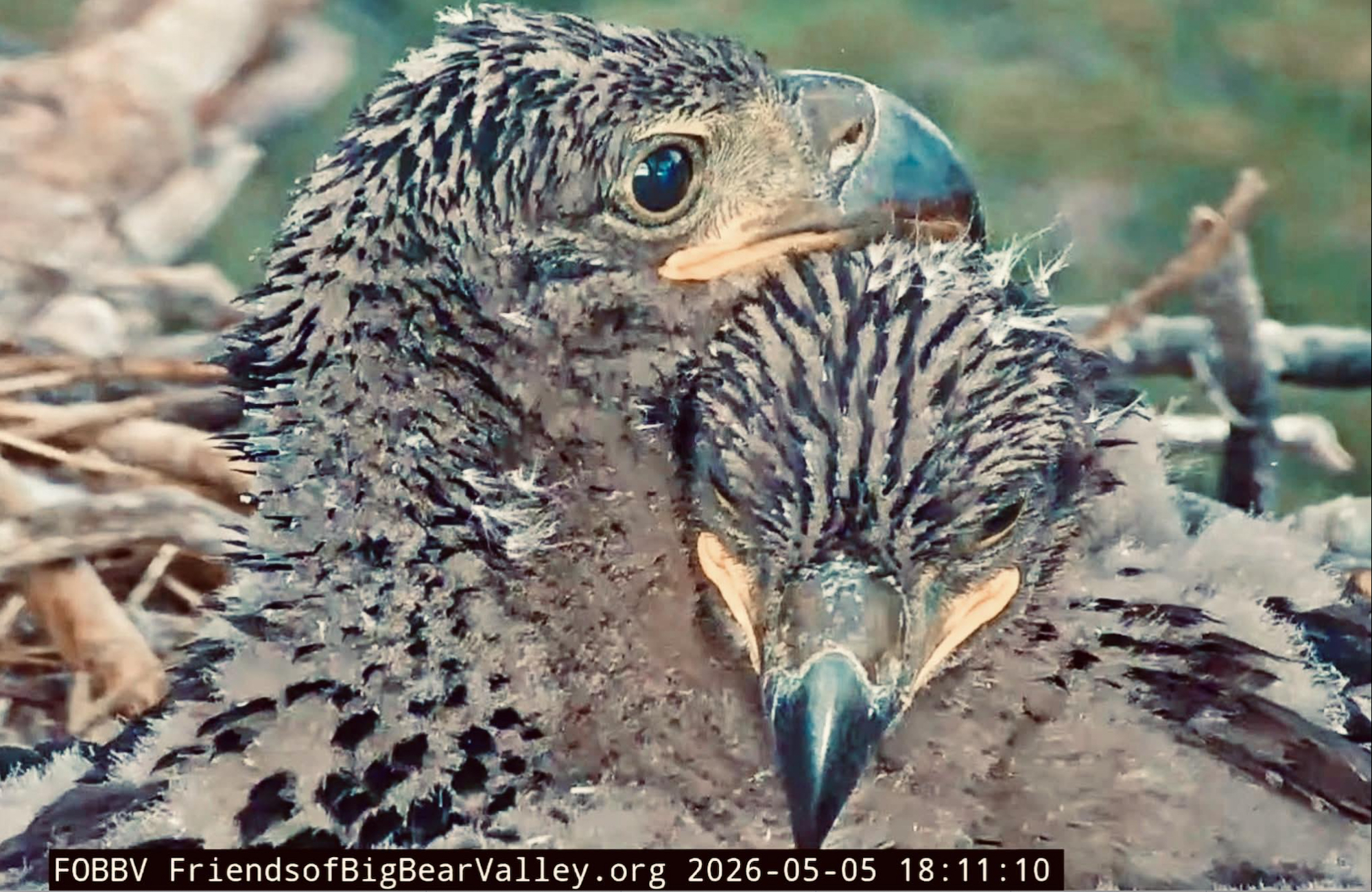
According the Friends of Big Bear Valley (FOBBV), the non-profit organization responsible for the 24/7 live cam, the bald eagle chicks can now track objects like squirrels and airplanes in the distance. Viewers can spot Sandy and Luna bobbing their heads as they watch things move. “This ‘bobbing’ helps them calculate the exact distance and speed of moving objects,” FOBBV explains.
This vision maturation typically occurs around 35 days old. The physical changes to their eyes take a bit longer—about five years. You’ll notice that Sandy and Luna have black-looking eyes while their parents’ eyes appear as a lighter, creamy yellow. The eyes lighten as they age, evolving from extremely dark brown to a lighter brown to a creamy brown to yellow.
A lot will change for Sandy and Luna. Images: FOBBV
Maturing eyesight isn’t the only physical change the chicks have undergone. At around 35 days old, eaglets’ leg bones also harden. So while their feet remain comically large, their leg bones have reached their full length, allowing Sandy and Luna to walk around the nest with more confidence in their steps.
It’s been another roller coaster nesting season for Jackie and Shadow, a pair of internet-famous bald eagle parents living in San Bernardino National Forest in Southern California. After two of their eggs were destroyed by ravens in January, Jackie and Shadow laid two new eggs that have successfully hatched.
Chick 1 hatched on April 4 at 9:33 p.m. PDT, while Chick 2 followed on April 5 at 8:30 a.m. Their large nest in Big Bear Valley east of Los Angeles is livestreamed 24 hours a day by nonprofit Friends of Big Bear Valley (FOBBV) and has captivated millions.
On May 1, FOBBV announced the chicks’ names: Sandy and Luna.
Before leaving the nest, the chicks face threats from other birds of prey, including hawks, ravens, other eagles, and owls. Inclement weather can also present challenges for the chicks. In 2025, a March snowstorm resulted in the death of one of Jackie and Shadow’s three chicks.
During fledging, only 70 percent of eaglets survive. One of the greatest threats is from cars that can injure or kill the birds while they scavenge for food on roadkill.
Who are Jackie and Shadow?
The pair first got together in 2018 and successfully raised chicks in 2019 and 2022. However, their eggs failed to hatch in 2023 and 2024. Only 50 percent of eagle eggs successfully hatch, so this pair has already beaten the odds.
What happened to Jackie and Shadow’s 2025 eaglets?
In 2025, Jackie laid three eggs that all hatched in early March. On March 13, a strong snowstorm dumped up to two feet of snow and battered the nest with strong winds. Only two of the chicks were visible on the live cam when the storm passed by the next morning. FOBBV later confirmed the passing of one of the chicks. The two surviving chicks were later named Sunny and Gizmo after 54,000 names were submitted by fans.
What happens after chicks fledge?
Young eagles usually fledge–or leave the nest and fly–when they can flatten their wings and have feathers capable of flight. This typically occurs when the birds hit 10 to 14 weeks of age. Males also tend to take their first flight a little sooner than females.
According to FOBBV, fledglings from Southern California have been spotted as far south as Baja California, as far north as British Columbia, and as far east as Yellowstone National Park.
About 70 percent of bald eagles survive the fledgling stage. FOBBV does not tag their eagles, so it’s not possible to follow the chicks’ journeys after they flee the nest.
While every bumble bee colony has a queen, the process for becoming that queen bee may be a bit more democratic than monarchical. The worker bees appear to select which baby will be queen one day, according to a new study published in the journal Insect Biochemistry and Molecular Biology.
The key to this selection process lies in the juvenile hormone. This hormone in insects is responsible for their development, molting, and eventual reproduction. When the team gave the juvenile hormone to wo
While every bumble bee colony has a queen, the process for becoming that queen bee may be a bit more democratic than monarchical. The worker bees appear to select which baby will be queen one day, according to a new study published in the journal Insect Biochemistry and Molecular Biology.
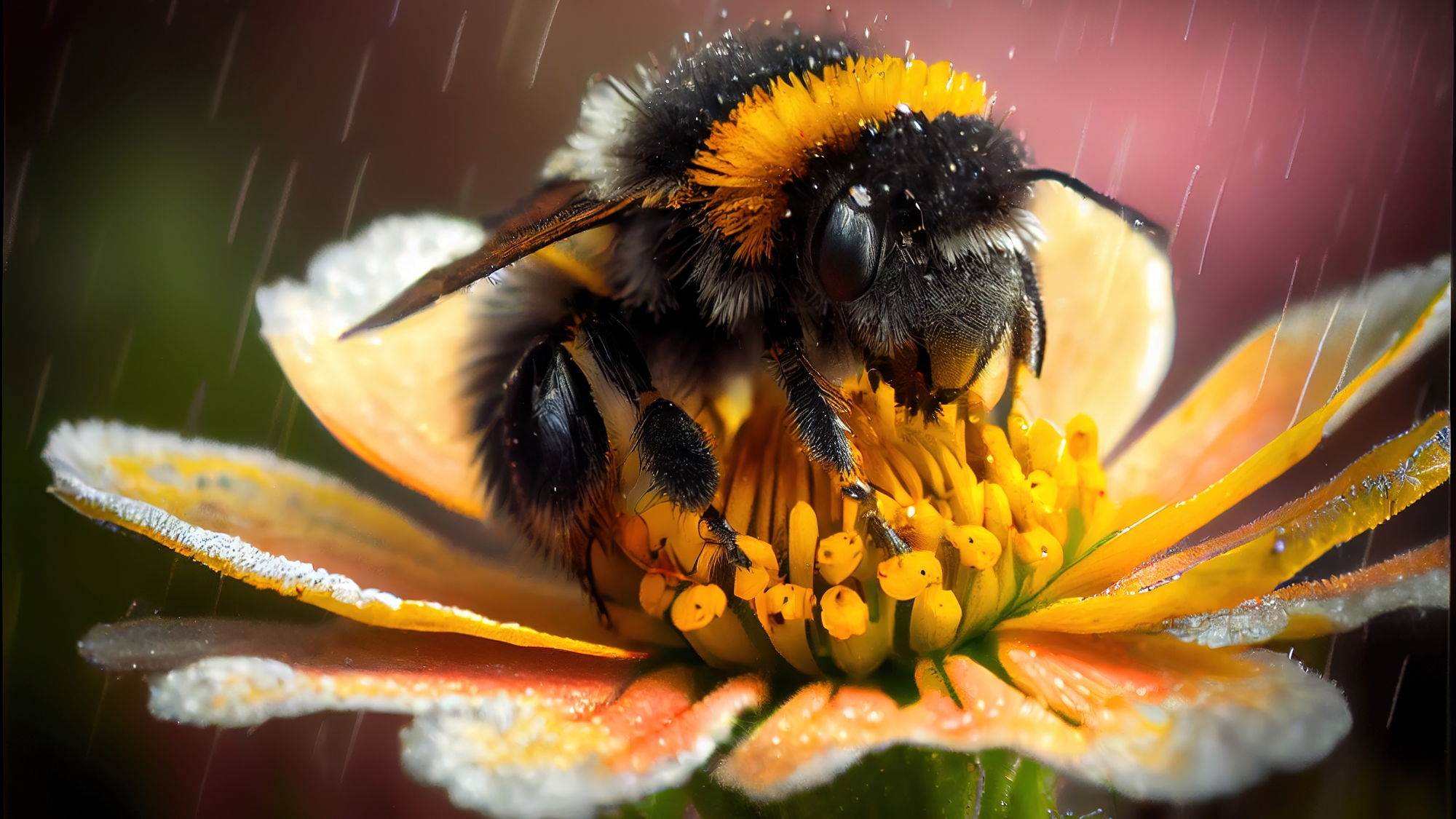
The key to this selection process lies in the juvenile hormone. This hormone in insects is responsible for their development, molting, and eventual reproduction. When the team gave the juvenile hormone to worker bees, they passed it along to all of the larvae in the colony through feeding. The more juvenile hormone the larvae received, the more likely they were to become queen.
According to the team, this is the first study to show that bumble bee caste is determined by the workers and shifts our understanding of bee colony dynamics. Instead of a top-down hierarchy, the colony appears to be a more decentralized system, where the caregivers and workers can alter the future of baby bees.
Less like Mean Girls?
Understanding the fate of the bee larvae is key to understanding their social behavior. Their whole system relies on a division of reproductive labor—some females will reproduce, while the others help.
“Since all these females share the same DNA, it’s a striking example of how the same genotype can produce very different forms,” Etya Amsalem, a study co-author and entomologist at Penn State, said in a statement. “It’s also a practical question since bumble bees are important for pollination, so knowing how to produce queens could improve commercial breeding and management.”
In addition to their different social roles, queen bees and worker bees are also very different physically. Bumblebee queens are larger, live longer lives, and will reproduce. Worker bees are smaller in stature and do not reproduce or live as long.
While it was clear that hormones were involved in how workers determine the queen, the exact mechanisms behind it were more vague.
“A single female egg in bumblebees holds the blueprint for two completely different life paths: the giant, reproductive queen or the small, sterile worker,” added study co-author and postdoctoral researcher Seyed Ali Modarres Hasani. “We wanted to understand what triggers the change in the female life trajectory, when does it happen and who controls the process.”
A matter of hormones
In the study, the team used three worker bees and a cluster of larvae. They applied juvenile hormone at different doses and times, and administered it either to workers or directly to larvae. They then traced the hormone’s movement, measuring larval mass and recording which individuals became queens or workers.
“Every colony will produce many new queens at the end of the season,” Amsalem said. “These queens will leave the colony, mate and go into winter diapause, and then each queen will start a new colony in the next spring. In that sense, producing as many queens—and males—at the end of the season is the ultimate purpose of the colony.”
When the juvenile hormone was applied directly to the larvae, not only did they not turn into queens, but the worker bees ended up eliminating most of these larvae.
When the workers were treated with the juvenile hormone, they put it into the food that they make for the larvae. These larvae then ingested the hormone, and were heavier and much more likely to become queens.
“We also determined that larvae are only sensitive to this hormone on days seven and eight of their development,” Hasani said. “By tracing the juvenile hormone, we saw that the workers pass the hormone into the food they make from nectar and pollen.”
Queen development and the colony’s future
These results suggest that queen production is linked to how the colony progresses through the summer’s warmer months until it eventually collapses in the fall.
“Bumblebee workers do not reproduce when the colony is young, but they can activate their ovaries and produce males as the colony ages, which causes an increase in juvenile hormone levels,” Amsalem said. “As a result, over time, they feed larvae more of the hormone. When enough workers do this simultaneously, usually towards the end of the season, larvae receive doses that are high enough during the critical window to develop into queens.”
These results could help improve bee colony management at a hormonal level, explain how complex insect societies evolve, and how hormonal signals interact to shape colony structure.
Our world exists in vibrant color, but seeing it in black and white can be moving. The Exposure One Awards celebrate monochrome beauty.
In this year’s One Shot Photo Contest, photographers from 82 countries submitted images for consideration.
“Sassy, an Insistent Whale”Credit: Tristin Sheen / Exposure One Awards
“The 2026 One Shot Photo Contest challenges photographers to distill their craft, perspective, and storytelling into a single, definitive image,” a statement read. “A disting
Our world exists in vibrant color, but seeing it in black and white can be moving. The Exposure One Awards celebrate monochrome beauty.
In this year’s One Shot Photo Contest, photographers from 82 countries submitted images for consideration.
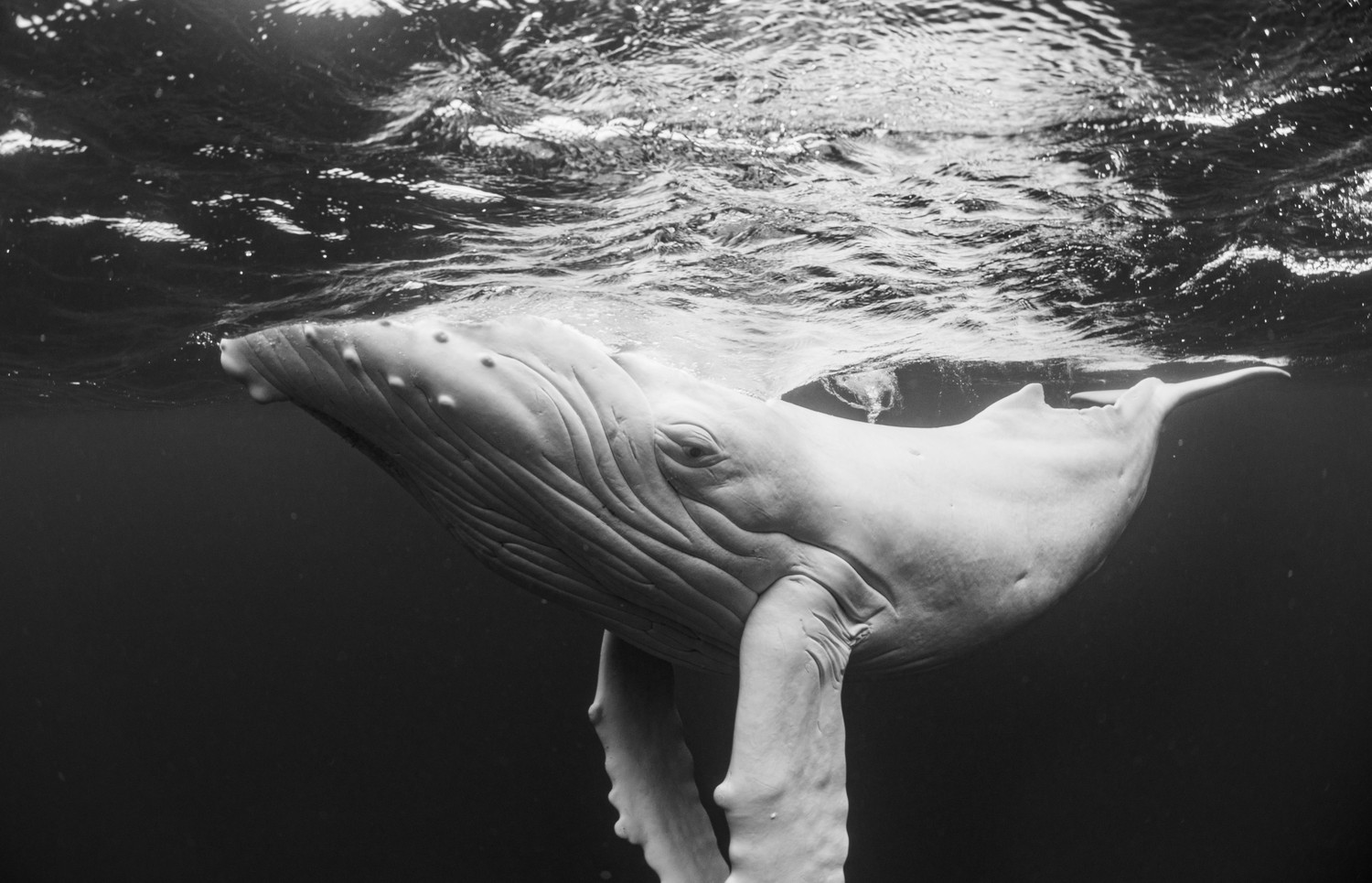
“Sassy, an Insistent Whale” Credit: Tristin Sheen / Exposure One Awards
“The 2026 One Shot Photo Contest challenges photographers to distill their craft, perspective, and storytelling into a single, definitive image,” a statement read. “A distinguished jury evaluated submissions across multiple categories, ultimately recognizing a select group of photographers whose work exemplifies the power and precision of the single frame.”
Judges from Leica Gallery LA, Aperture, Vogue, SFMoMA, and others selected the 2026 honorees.
“Rio No.7” Credit: Willy Paul / Exposure One Awards“Smoking the Cows” Early morning with the Abore tribe. This young girls stand with the cattle as the sunrises and sun beams travel thru the smoke. Smoking the cows helps repel insects and gives the cattle a sense of calm. The Abore treasure their cows and take very good care of them. Credit: Cydny B Waters / Exposure One Awards“Hard Luck” The image is from Sumatra, the moment the contestant fell and lost control of the two cows during the race. Credit: Sameerah Abbas / Exposure One Awards“Air Superiority” The Hammerhead was no match for the Osprey claw. Credit: Scott Joshua Dere / Exposure One Awards“Between Wings” A Buddhist monk stands outside the Shwedagon Pagoda, his gaze framed by wings. Credit: Mateo Borrero / Exposure One Awards“Defensive” Credit: Arne Bivrin / Exposure One Awards“Signals in the Storm” A sequence of black and white photographs made where light meets pressure. Storm, surf, and mountain layers resolve into structure and tone. The work is about endurance, the small human signal set against the larger movement of nature. Credit: John Martinotti / Exposure One Awards“Textures in Motion” Flamingos fly over Lake Magadi in Kenya’s Rift Valley. Credit: Lori Dove / Exposure One Awards“Holman Bronc Real Bird” ‘Indian Relay Rider’Holman from Lodge Grass Montana at the World Championship Sheridan Wyoming Credit: Aengus MacNeil / Exposure One Awards

 Login
Login