 Login
LoginFound Kodachrome Slide
4 June 2026 at 09:59




KUALA LUMPUR, June 6 — His Majesty Sultan Ibrahim, King of Malaysia, has decreed that there should be no delay in gazetting Kuala Lumpur’s green spaces and flood retention ponds, Federal Territories Minister Hannah Yeoh said today.
The matter was raised during Yeoh’s recent audience with the Yang di-Pertuan Agong at Istana Negara, where she also briefed His Majesty on reform initiatives being undertaken by her ministry and Kuala Lumpur City Hall (DBKL).
“The Yang di-Pertuan Agong decreed that we must not delay the decision on the gazetting of areas such as green zones and flood retention ponds, because these are areas of public interest.
“We must expedite it.
“That is why the task force we established is highly crucial for us to protect all these public spaces, as well as for the safety of our senior citizens,” Yeoh told reporters after launching the KL Architecture Festival’s Tropical Fruit Pavilion in Titiwangsa here today.
The issue of flood retention ponds has come under scrutiny following reports that a Malaysian Anti-Corruption Commission (MACC) investigation found several key flood mitigation sites in Kuala Lumpur, including in Jinjang and Batu, had received protection approvals in 1998, but were never formally gazetted.
As a result, the land remained ungazetted for nearly two decades before a land working committee revoked the 1998 approvals in 2015 and alienated about 80 acres of flood retention land to private developers for mixed-use residential projects.
Separately, Yeoh said Kuala Lumpur already has sufficient infrastructure and that the current focus is on improving and revitalising public recreational spaces, particularly for families.
Among the measures introduced is the extension of operating hours at 10 major public parks in the capital, including Titiwangsa Lake Gardens and Perdana Botanical Gardens.
“We are moving the opening time forward from 6am to 5.30am.
“Furthermore, on Fridays and Saturdays, we are extending the closing time from 10pm until 12.30am.
“This is because we want these families to have a healthy environment where they can go out and enjoy time together,” she said.

CamShaw74 posted a photo:
Event: Festival of 1000 Classic Cars
Location: Cholmondeley Castle, Cheshire, England
Camera: Canon AE-1 Program
Lens(s): Canon FD 35-70mm f/3.5-f/4.5
Film: Agfa Vista 200 - Expired 2017
Shot ISO: 125
Light Meter: Camera
Exposure: 1/125 & 'A' on lens
Lighting: Sunny
Mounting: Hand-held
Firing: Shutter button
Developer: Bellini C-41 Kit
Scanner: Epson V800
Post: Adobe Lightroom & Photoshop (dust removal)
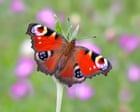
More than 20,000 votes cast in Butterfly Conservation’s poll of 60 native species to find nation’s favourite for first time
The votes are in on Britain’s favourite butterfly, and it is one of the most ubiquitous yet spectacular backyard beauties that has flown to victory.
With its lavender, yellow and maroon eye spots and luscious rusty red and black colouration, the peacock butterfly is both beautiful and commonplace, flying throughout spring, summer and autumn in all corners of the British Isles.
Continue reading...
© Photograph: Mark Seal/Butterfly Conservation/PA
© Photograph: Mark Seal/Butterfly Conservation/PA
© Photograph: Mark Seal/Butterfly Conservation/PA


By Tim Pit Hok-yau
Last month, the Office of the Ombudsman released its long-awaited investigation into the Hong Kong government’s work in combating animal cruelty.
The report was prompted by a series of horrifying abuse cases which, in the Ombudsman’s own words, “amount to a deliberate trampling on the dignity of life and run wholly contrary to the very conscience of a civilised society.”
The investigation focuses primarily on the failures of the Agriculture, Fisheries and Conservation Department (AFCD), which is responsible for animal management and welfare.
Among the key findings are the AFCD’s inefficient investigations and insufficient prosecutions. Out of 1,633 reports of suspected animal cruelty from 2020 to June 2025, only six prosecutions were brought – a striking, though not new, statistic.
The AFCD responded to the Ombudsman, saying that the majority of reports it received pertained to noise or nuisance complaints rather than cruelty. However, media reports on animal cruelty, including a recent shocking case of a 14-year-old student sharing online photos and videos of cat abuse, may suggest otherwise.
Other problems highlighted by the Ombudsman’s report include weak enforcement powers; inconsistent case handling; poor internal monitoring and staff training; delayed reform of the Prevention of Cruelty to Animals Ordinance (Cap. 169), first promised in 2019; and alarmingly low penalties for illegal animal traps, which currently carry a maximum fine of HK$50,000 with no provision for imprisonment.
These are important findings, and the Ombudsman deserves credit for highlighting institutional deficiencies that animal advocates have raised for years.
But while the report has identified some of the government’s major failures, it also reveals a deeper problem: Hong Kong’s approach to animal welfare remains fundamentally reactive rather than preventive, with most suggestions focusing on punishment, not prevention.
Worse still, the report overlooks many of the structural and everyday forms of animal plight that are normalised across the city. This article, then, intends to address these blind spots.
The most glaring limitation of the investigative report concerns its ambivalence over nudging the government to implement a “duty of care.”
While the Ombudsman acknowledges that the government has struggled to reach consensus on this proposal, it stops short of urging its adoption. This hesitation matters.
A duty of care would fundamentally shift existing animal law from punishing cruelty after suffering occurs to preventing suffering in the first place. Without such a framework, Hong Kong continues to operate on an outdated logic: authorities intervene only after visible injury, starvation, or death.
If a cat falls from an unprotected high-rise window, or a dog is chronically confined in a tiny flat with little exercise or social contact, the current legal framework can hardly intervene until obvious harm has already occurred.
With a duty of care, caregivers would be legally required to provide appropriate food, shelter, veterinary care, and living conditions that meet animals’ physical and behavioural needs safely. In other common law jurisdictions, including the UK and Australia, duty of care provisions have already become a cornerstone of animal protection.
Undoubtedly, one of the report’s recommendations is to “further strengthen outreach and education in schools, helping students and young people build an awareness of animal protection from childhood.”
This is a fantastic recommendation for preventing animal cruelty, but it remains frustratingly vague. What kind of education are we talking about?
If Hong Kong genuinely wants to cultivate respect for animals, it must first confront contradictions in the current education system.
Attending a local secondary school, I still remember many science classes where animal dissection was presented as a normal part of learning, from dissecting ox eyes to hearing classmates describe experiments on mice.
These activities are still recommended by the Education Bureau’s Biology Curriculum and Assessment Guide, although the government also expects secondary school students to “learn about how humans can live in harmony with animals and show respect for all living things” in the very same subject.
Not only do such laboratory practices risk reinforcing a worldview in which animals exist primarily as instruments for human use, but the pedagogical value of animal dissection has been convincingly challenged by a large corpus of research.
Yet, the issue is perhaps just one of the many voids in our education system that should help enhance animal well-being and stop the everyday exploitation of animals. Learning about veganism, the intersection between animal exploitation and other social problems, conservation, and other elements of animal education are equally important.
Humane education should equip citizens with the ability to locate the many practices of cruelty against animals in Hong Kong, many of which the Ombudsman’s report says nothing about.
For instance, there have been repeated controversies surrounding captive animals at Ocean Park; animal deaths at the Hong Kong Zoological and Botanical Gardens; and the racing industry operated by the Hong Kong Jockey Club, where horses routinely suffer injuries and fatalities caused by running at maximal speed, lax whipping rules, and a hot climate.
Of course, the development projects and human activities that disrupt animals’ habitats should not be ignored. Just think of how Chinese white dolphins have lost their habitat because of reclamation or been injured because of high-speed ferries’ propeller blades, to name just one example.
Whether one supports these institutions and projects or not, it is difficult to argue that they fall outside the conversation on animal welfare.
The government’s poor animal management policies in urban areas are another major omission in the Ombudsman’s investigation. The report rightly condemns illegal animal traps but ignores government-led practices that also cause suffering, including the wild boar culling operations.
It also neglects ineffective regulation of religious animal release practices, which often disrupt ecosystems and harm the very animals being “saved” because more often than not, they are not released into suitable habitats.
If Hong Kong truly wants to become a “civilised” city that respects life, then animal welfare cannot be confined to criminal prosecutions of isolated abuse cases. It must also confront the legal, educational, economic, and cultural systems that normalise animal suffering in everyday life and prevent it from happening in the first place.
Another step that must be taken to safeguard animals’ well-being is to ask a harder question: What kinds of relationships do we, as a city, continue to build with the animals who live among us?
As philosopher Martha Nussbaum reminds us, animal justice should not be measured simply by the absence of cruelty, but by whether animals can actualise the capabilities essential to their flourishing.
For dogs, that includes play, movement, and social bonding. For dolphins, it means the ability to hunt, communicate, and live within their natural habitat. Survival alone is not welfare; a decent life is.
The Ombudsman’s report is an important step. But it should not be mistaken for an ultimate solution. Rather, it should remind us that there is always more that we – as policymakers, educators, and citizens – must do.
Tim Pit Hok-yau is research lead for the Hong Kong Animal Law and Protection Organisation.
| HKFP is an impartial platform & does not necessarily share the views of opinion writers or advertisers. HKFP presents a diversity of views & regularly invites figures across the political spectrum to write for us. Press freedom is guaranteed under the Basic Law, security law, Bill of Rights and Chinese constitution. Opinion pieces aim to constructively point out errors or defects in the government, law or policies, or aim to suggest ideas or alterations via legal means without an intention of hatred, discontent or hostility against the authorities or other communities. |

