As photographers know, light is extremely important. And for outdoor photographers, nothing affects the quality of light quite like the weather. Photographer Matthew Raifman wanted to build a weather app for people like him, photographers who want to know not just what the weather forecast is, but whether or not the conditions will be any good for photography. Enter Atmos for Weather & Photo, also known as Atmos.
Research & Developments is a blog for brief updates that provide context for the flurry of news that impacts science and scientists today.
This week, a parade of scientists will spend 50 hours straight speaking about the importance of weather and climate research in the United States.
Now in its second year, the Weather & Climate Livestream will feature hundreds of scientists describing their work and why it matters. Last year’s event, which lasted 100 hours, saw more than 180,000 views and led to 30,000 phone calls to Congress to #SaveAmericasForecasts.
“The first aspect of it is just communicating science,” said Haley Crim, a climate literacy researcher at MIT and the founder of Climateliteracy.earth. “The second half of it is to inspire people to call their representatives in support of funding for climate and weather science, and science more broadly.”
Last year, Crim was an “avid watcher” of the livestream, so she was happy to help when a friend asked her to pitch in for the second iteration. But it’s also more personal this year, as she has since lost her position as a contractor with NOAA.
“It has a whole new meaning now, this year,” she said.
The livestream begins at 4 p.m. ET on Monday, 1 June, ending at 6 p.m. ET on Wednesday, 3 June. Speakers include meteorologist Jeff Masters and climate scientists Adam Sobel of Columbia University and Kim Cobb of Brown University. AGU President Brandon Jones and president-elect Benjamin Zaitchik will also speak from 2 p.m. to 2:40 p.m. ET on Wednesday, 3 June.
Science Under Attack
Since Donald Trump began his second presidential term in 2025, federal science funding has faced extensive cuts, with more proposed. In June 2025, for instance, a budget document proposed eliminating NOAA’s Office of Oceanic and Atmospheric Research. In December 2025, the administration announced plans to break up the National Center for Atmospheric Research.
“This is really a full-frontal attack on climate science.”
“This is really a full-frontal attack on climate science,” said Andrew Williams, a climate scientist at Scripps Institution of Oceanography who is helping to organize the livestream and will speak during it.
He added that even though Congress pushed back against the most drastic cuts proposed last year, leaving key science program budgets mostly intact, many agencies haven’t yet seen the money they’ve been granted in the budget. For instance, according to the organization Grant Witness, 112 grants have been awarded in the NSF Directorate for Geosciences so far this year, compared with 948 in total in Fiscal Year (FY) 2025. The average total number of grants awarded between FY21 and FY24 was 1,418.
Both Crim and Williams said they hope the livestream provides the public with a better understanding of how climate and weather research affects us all, from allowing for timely evacuation warnings to affecting insurance rates. Williams offered the example of the Geophysical Fluid Dynamics Laboratory, a federally funded NOAA research lab that would be eliminated under the president’s proposed FY2027 budget.
“It builds the engine of the U.S. weather forecasting model, which is what tells you day to day what the weather is going to be,” he said. “We’ve all been able to take for granted that these things are happening because the U.S. has for decades, for 60 or 70 years, had strong and stable federal funding for weather and climate science.”
These updates are made possible through information from the scientific community. Do you have a story about science or scientists? Send us a tip at eos@agu.org.
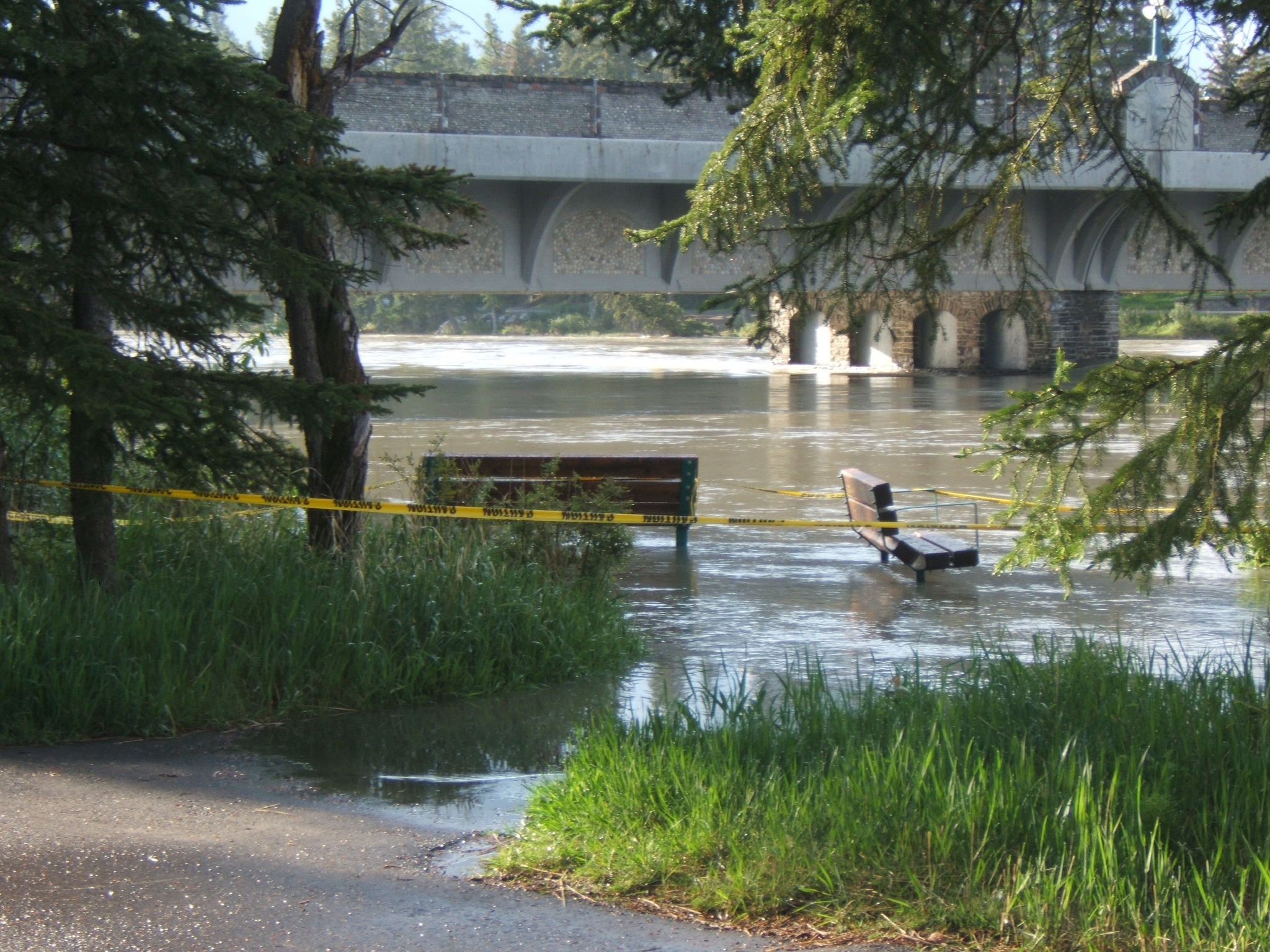
Rising waters, caused by unseasonably warm temperatures, has prompted a high streamflow advisory to be issued for the Bow River in Banff National Park.
In November 2025, Cyclone Senyar generated extreme rainfall in parts of Sumatra, Indonesia, triggering thousands of landslides. Our new paper in the journal Current Biology demonstrates that these landslides might have a devastating impact on a critically endangered population of Tapanuli orangutan.
In my line of work, we often focus on the landslide impacts on the landscape, on human lives and on infrastructure. We rarely consider the impacts on th eanimal population. This is certainly a weakness that the Cyclone Senyar event brings to focus.
Part of the area devastated by the landslides is that slopes around the Batang Toru rover, an area of forest that is home to a rare species of orangutang. These great apes, Pongo tapanuliensis, live in a habitat known as the West Block of Tapanuli. There are only 800 individuals left in the wild, a situation that is highly precarious. The loss of even a small number of adults could tip the species towards extinction.
I was a part of a consortium of scientists that considered the landslide impacts of Cyclone Senyar on the habitat of these orangutangs. The results have just been published in the journal Current Biology (Meijaard et al. 2026) – the paper is open access and published under a creative commons license.
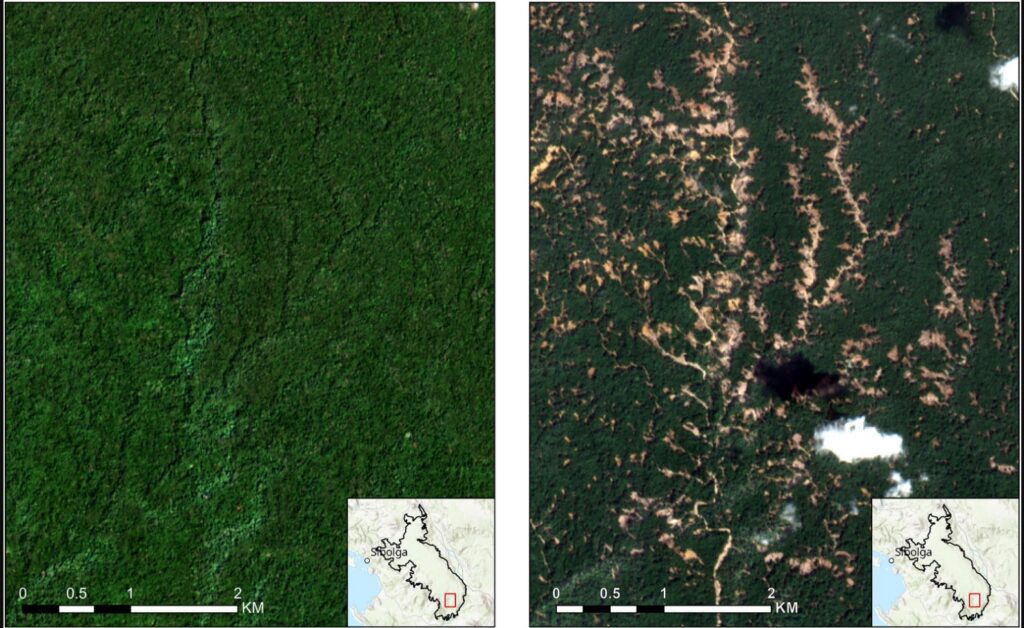
This image, from the paper, shows the landslide impacts of Cyclone Senyar:-
Before and after satellite imagery of the impacts of Cyclone Senyar. From: Meijaard et al. (2026).
In the study area of 71,161 hectares, the mapping indicates that there were 50, 185 individual landslides, covering a surface area of 8,303 hectares. This is about 11% of the forested area. We then estimate the likely loss of the orangutang population, which is likely to be in the range of 18-120 individuals, with a central estimate of 58 individuals. This is likely to have been a devastating loss for this highly endangered population.
This level of habitat loss might also be placing a severe pressure on the remaining population, so further fatalities are very possible through, for example, reduced food availability.
The intensity of the rainfall was almost certainly supercharged by climate change. The impacts of Cyclone Senyar are being replicated widely – and of course we are now in the northern hemisphere tropical cyclone season again.
Our paper makes some policy recommendations for this population of orangutans. First, the government of Indonesia needs to permanently protect this area of forest against mining , palm oil and hydropower developments. Ideally, the protected area should be expanded. Second, Indonesia needs support for biodiversity-recovery, hazard forecasting and ecological restoration planning.
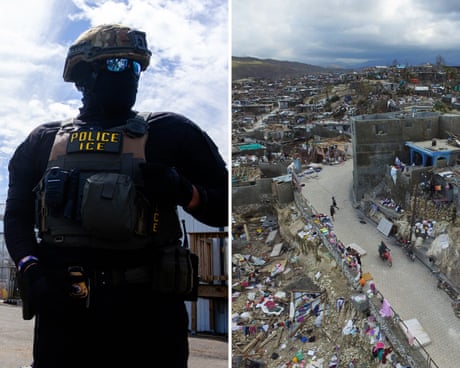
Donald Trump’s immigration crackdown is largely targeting people from the countries most vulnerable to displacement from climate-driven disasters, a Guardian analysis shows.
As the Trump administration pushes policies to boost planet-heating fossil fuels, millions of people are being forced to flee their homelands due to storms, floods and droughts worsened by the climate crisis.
Source: Journal of Geophysical Research: Atmospheres
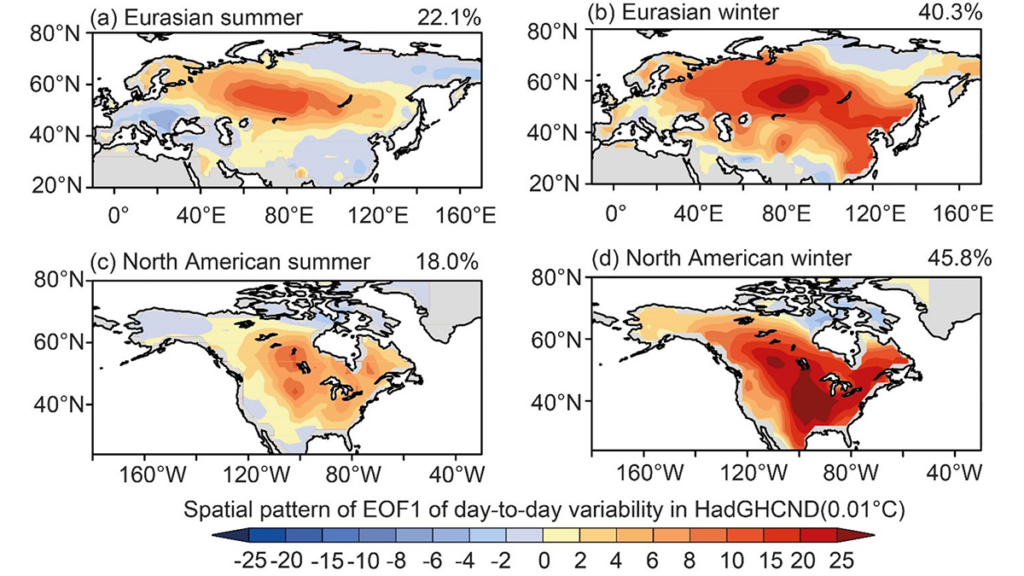
Abrupt temperature swings between consecutive days, referred to as day-to-day temperature variability, have far-reaching impacts on human health, ecosystems, and economic activity. However, how these fluctuations vary from year to year, and what drives them, has remained unclear.
Using observations, reanalysis, and CMIP6 simulations from 1961 to 2014, Liu and Fu [2026] identify a coherent large-scale pattern of variability across Eurasia and North America. This variability is primarily driven by the north–south movement of warm and cold air masses.
The dominant drivers also vary by season: large-scale meteorological patterns prevail in winter, whereas local land–atmosphere feedbacks become more influential in summer. Together, these processes reshape temperature gradients and modulate storm activity and broader weather systems.
Overall, the findings provide new insights into the mechanisms of temperature variability and offer a scientific basis for improving seasonal climate risk prediction and adaptation strategies.
Citation: Liu, Q., & Fu, C. (2026). Interannual variations in the day-to-day temperature variability in the northern hemisphere and possible causalities. Journal of Geophysical Research: Atmospheres, 131, e2025JD045754. https://doi.org/10.1029/2025JD045754
Hong Kong authorities have deployed powerful machines known as “water-pumping dragons” to clear flooding after the city’s northern territories were hit by heavy rainfall overnight.
The Drainage Services Department deploys a powerful machine known as the “water-pumping dragon” to clear flooding on May 20, 2026. Photo: Drainage Services Department, via Facebook.
The Drainage Services Department said on social media early on Thursday that its teams had cleared seven instances of flooding in the northern part of the New Territories using the devices, which authorities procured from mainland China last year due to more frequent extreme downpours.
The Observatory issued the red rainstorm warning at 2.40am due to heavy rain in the city’s border areas near Shenzhen, especially in Sheung Shui, Ta Kwu Ling, and Sha Tau Kok. A special landslide warning was also issued.
The rainstorm signal was downgraded to amber at 5.15am and eventually cancelled at 9.30am. The weather services warned of the risk of river flooding.
The heavy rain was associated with “upper-air disturbances… persistently affecting the vicinity of the Pearl River Estuary,” the Observatory said on Thursday.
“Locally, more than 50 millimetres of rainfall were recorded over widespread areas this morning, and rainfall even exceeded 100 millimetres over many parts of the New Territories,” it added.
The flooding was concentrated in Sheung Shui and Fanling, while the Shek Kong Airfield Road was also affected, according to the Drainage Services Department.
An emergency control centre was activated at 9.45pm on Wednesday, and 90 response teams were deployed to inspect and clear flooding, the department said.
Images and videos of severe flooding went viral on social media platforms. Clips posted on Threads show floodwater entering a bus in Ping Che and a taxi trapped on the road.
Screenshot of a video shows floodwater entering a bus in Ping Che in Hong Kong in the early hours of May 20, 2026. Photo: t_tsuntsun, via Threads.
Screenshot of a video shows a taxi trapped in floodwater in Ping Che, Hong Kong, in the early hours of May 20, 2026. Photo: t_tsuntsun, via Threads.
Last year, after the city hoisted the black rainstorm warning four times within a week, a former Observatory official warned that extreme weather would become more frequent due to the climate crisis.
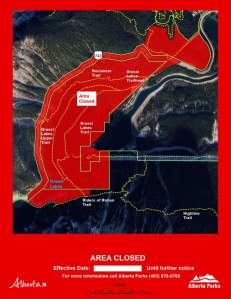
Alberta Parks has shut down a large area around a series of popular hiking trails just west of Canmore because of the dangers caused by a recent rockslide.
 Login
Login