Reading view

Why the IPCC Seems Poised to Eliminate Its Most Extreme Emissions Scenario
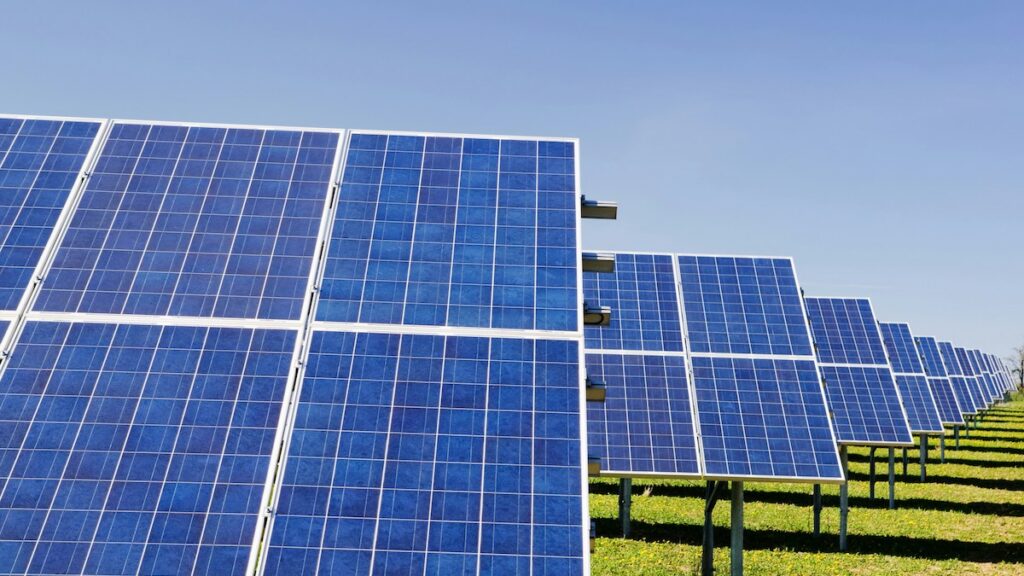
An array of solar panels on a field under a blue sky.

Research & Developments is a blog for brief updates that provide context for the flurry of news that impacts science and scientists today.

The Intergovernmental Panel on Climate Change (IPCC), the United Nations body whose mission is to “provide governments at all levels with scientific information that they can use to develop climate policies” will likely update the emissions and land use scenarios used in the models it considers in its bellwether assessment reports.

The IPCC has used these scenarios, known as Shared Socioeconomic Pathways (SSPs) or Representative Concentration Pathways (RCPs), in its two most recent assessment reports (AR), AR5 released in 2014 and AR6 released in 2023. The upcoming AR7 will be informed by a new set of scenarios, as described in a paper published last month in Geoscientific Model Development.

The paper is drawing widespread attention—both within the scientific community and in wider discourse—for its statement regarding one current scenario that has become familiar to anyone following climate science and policy. The scientists said the emissions levels associated with the most extreme, worst-case scenario, SSP5-8.5 (and its predecessor, RCP8.5), “have become implausible.”

Even President Donald Trump weighed in with a post on Truth Social on 17 May, where he wrote “GOOD RIDDANCE,” and “the United Nations TOP Climate Committee just admitted that its own projections (RCP8.5) were WRONG! WRONG! WRONG!”

But as scientists have pointed out for years, RCP8.5 was never meant to represent a likely emissions scenario or a forecast of humanity’s future. Some scientists questioned whether it’s even possible for RCP8.5 to play out in real life. 

RCP8.5 is one of four hypothetical emissions scenarios developed in 2011 for climate modeling experiments. When RCP8.5 was created, it was meant to represent a “very high baseline emission scenario” that would warm the world nearly 5°C (9°F) compared with preindustrial temperatures by 2100. Parallel scenarios (SSPs) were presented in 2017. SSP5-8.5 is the worst-case scenario in that framework, representing a world in which fossil fuels are widely exploited and more of the world adopts energy-intensive lifestyles alongside the warming projected by RCP8.5. 

“The scenarios we create today are different than the scenarios we created 15 years ago, because the world is different today than 15 years ago.”

The authors of the new paper wrote that “trends in the costs of renewables, the emergence of climate policy and recent emissions trends” justify the implausibility of the highest-emissions scenarios such as RCP8.5 and SSP5-8.5. 

For scientists, the idea of dropping these scenarios is neither new nor controversial. As three climate scientists (Zeke Hausfather of Berkeley Earth, Glen Peters of the CICERO Center for International Climate Research, and Piers Forster at the University of Leeds) wrote in a blog post: “[RCP8.5] was never a likely outcome even in a world that did not address climate change; rather it was always intended to represent a worst case scenario that pushed fossil fuel expansion to the max.”

The new scenarios presented in Geoscientific Model Development include a high-emissions scenario in which clean energy policy is rolled back, and the world warms about 3.5°C (6.3°F) by 2100—still a level at which humanity can expect very severe impacts, from worsening weather extremes to rapidly rising sea levels.

The IPCC’s likely elimination of RCP8.5, even if it was never a plausible scenario, is a small sign of improvement in global climate change mitigation efforts, Hausfather, Peters, and Forster wrote: “Rapid declines in clean energy costs have bent the curve of future emissions downward, with new scenarios designed to reflect current policies notably lower than most baseline scenarios in the literature.”

“Of course, we still have a long way to go to get emissions down to (net) zero and stabilize global temperatures,” they noted.

The new paper captures the difficult road ahead for climate action: The new scenarios are based on a reduced projection for the increase in emissions, not for the overall amount of emissions—those are still increasing. Unlike before, none of the new emissions scenarios keep the world below 1.5°C (2.7°F) of warming, the limit originally set by the Paris Agreement in 2016. That’s no surprise to scientists, who suggest Earth is already in the 20-year period in which warming will formally surpass this benchmark. 

“The scenarios we create today are different than the scenarios we created 15 years ago, because the world is different today than 15 years ago,” Hausfather told the Washington Post.

—Grace van Deelen (@gvd.bsky.social), Staff Writer

These updates are made possible through information from the scientific community. Do you have a story about science or scientists? Send us a tip at eos@agu.org.

A photo of a hand holding a copy of an issue of Eos appears in a circle over a field of blue along with the Eos logo and the following text: Support Eos’s mission to broadly share science news and research. Below the text is a darker blue button that reads “donate today.”
Text © 2026. AGU. CC BY-NC-ND 3.0
Except where otherwise noted, images are subject to copyright. Any reuse without express permission from the copyright owner is prohibited.
  •  

United Nations negotiates with US to allow fuel into Cuba

The United Nations (UN) has entered into formal negotiations with the United States regarding the entry of fuel supplies to Cuba amid acute fuel shortages caused by a U.S. oil blockade, said Francisco Pichón, the permanent representative of the UN to Cuba.

Members of the UN Office for the Coordination of Humanitarian Affairs and the Trump administration are discussing ways “to ensure that fuel can be accessed for humanitarian purposes,” according to Pichón.

The UN representative clarified that those fuel supplies would be used for “emergency response operations” and to protect the access of “vulnerable people and groups” to “vital services”. 

The recent U.S. oil blockade on oil has led to a growing nationwide humanitarian crisis: many regions are facing prolonged power outages, hospitals are facing increasing pressure as life-saving treatments are disrupted, and the economy is crumbling as schools and workplaces reduce their operational hours. 

The U.S. campaign of economic pressure is widely seen as an attempt to force the Cuban regime into collapse or make its leader grant political concessions to Washington. Senior Republicans in the U.S. have repeatedly suggested that some form of regime change in Cuba is imminent.

During the Shield of the Americas Summit on Saturday, President Trump promised that “great change” was coming to Cuba and its “bad regime that has been bad for a long time.” 

On Monday, President Trump reiterated his warning, claiming that Cuba may soon face either a “friendly” or “unfriendly” takeover by the U.S. 

Republican U.S. Senator Lindsey Graham also told Fox News on Sunday that “the liberation of Cuba is upon us. It’s just a matter of time now.” 

Although there are reports that an economic deal between Washington and Havana could soon be announced, the “unfriendly” option remains a possibility. The U.S. administration’s strikes on Iran or its operation to capture Venezuelan President Nicolás Maduro could serve as templates for a potential military operation against Cuba.

Read more: U.S. Reportedly Closing In On Economic Deal With Cuba

Ricardo Torres, a Cuban economist and research fellow at the Center for Latin American and Latino Studies at American University, spoke to Latin America Reports about the current Cuban crisis and the various iterations of regime change that could occur as a result.

“Whatever emotional and material reserves [Cuban] people once had are now largely exhausted … if the United States strictly enforces the oil embargo, a negotiated solution will likely become inevitable, given the limited support Cuba is receiving from its allies,” the economist said. 

Venezuela, Cuba’s erstwhile closest regional ally, has stopped supplying the island with oil since the capture of President Nicolás Maduro by U.S. forces and in early March an oil tanker bound for the island from Russia – a traditional ally – reversed route under suspected U.S. pressure. 

Commenting on recent revelations about UN-U.S. negotiations, Torres pointed out that the discussions between the White House and the UN will likely be limited to “aid delivery” as opposed to opening an avenue for de-escalation. 

The U.S., he argued, “would [probably] favor a full [political] transition in Cuba” and an end to Communist party rule. Failing that, “they may be prepared to support a phased agreement that starts with building a more stable economic base and proceed from there,” the research fellow concluded. 

Featured Image: A horse-drawn cart in Cuba during the Cuban ‘Período Especial’, the term used to describe the Cuban economic struggles in the 1990s after the Soviet collapse. The scale of current fuel shortages in Cuba has not been seen since the ‘Período Especial’ 

Image Credit: Nick via Wikimedia Commons 

License: Creative Commons Licenses

The post United Nations negotiates with US to allow fuel into Cuba appeared first on Latin America Reports.

  •  

Trump targeting immigrants from countries hit most by climate shocks

A Guardian analysis reveals how most of 39 countries facing US entry restrictions are most vulnerable environmentally

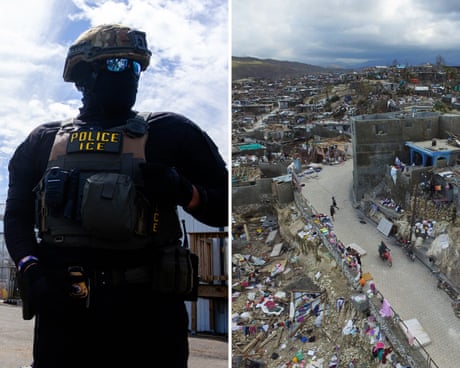
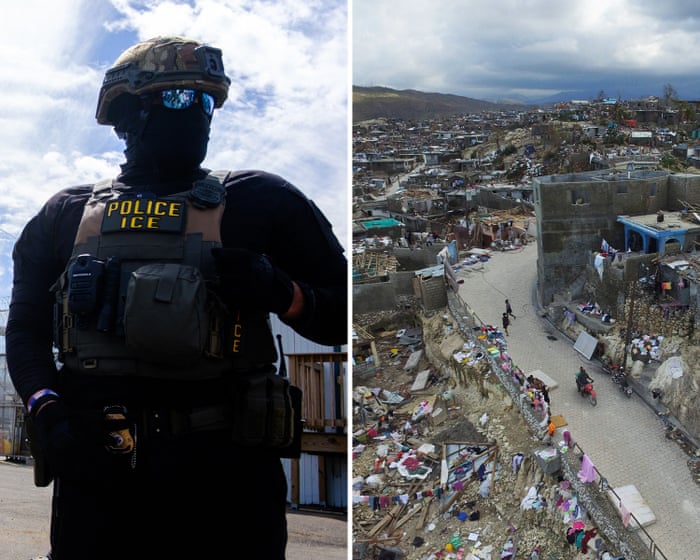
Donald Trump’s immigration crackdown is largely targeting people from the countries most vulnerable to displacement from climate-driven disasters, a Guardian analysis shows.

As the Trump administration pushes policies to boost planet-heating fossil fuels, millions of people are being forced to flee their homelands due to storms, floods and droughts worsened by the climate crisis.

Continue reading...

© Composite: The Guardian, AFP via Getty Images

© Composite: The Guardian, AFP via Getty Images

© Composite: The Guardian, AFP via Getty Images

  •  

2021 Toronto International Film Festival Animation Films (TIFF)

About Toronto International Film Festival (TIFF)

The Toronto International Film Festival is officially back! Also known as TIFF, is one of Canada’s and the world’s largest and well known film festivals. Located in downtown Toronto, the festival welcomes many filmmakers from around the world to show off their skills and talents.

These are the animated shorts and films that were shown during the Toronto International Film Festival (TIFF) for this 2021.

Angakusajuajug – The Shaman’s Apprentice

Photo Credit: TIFF

Director: Zacharias Kunuk
CANADA
21 minutes

About: A young shaman must face her first test-a trip underground to visit Kannaaluk, The One Below, who holds the answers to why a community member has become ill.

Anxious Body

Photo Credit: UniFrance

Director: Yoriko Mizushiri
France, Japan
6 minutes

About: Living things, artificial things, geometry shapes, and lines. When these different things encounter, a new direction is born.

Boobs

Photo Credit: Vimeo

Director: Marie Valade
Canada
8 minutes

About: A young woman drawn in ink is forced to deal with paper breasts appearing on her chest. She must quickly come to terms with these new strange things.

Charlotte

Photo Credit: TIFF

Director: Eric Warin, Tahir Rana
Canada, France, Belgium
92 minutes

About:

An account of German-Jewish artist Charlotte Salomon living in the south of France between 1941 and 1943.

Charlotte

Photo Credit: TIFF

Director: Zach Dorn
United States
13 minutes

About: A pop song transforms the lives of a folk singer and her family. 

DUST BATH

Photo Credit: TIFF

Director: Seth A Smith
Canada
2 minutes

About: A disquieting tale of a humble rooster facing the great questions of existence.

I Gotta Look Good for the Apocalypse

Photo Credit: UniFrance

Director: Ayce Kartal
France
6 minutes

About: March 2020. After China, the whole planet locks itself in. Our world, which we call real, is drained of what used to be its substance, and forms of digital life multiply, like these couples whose avatars share a common life in a virtual universe. But what if the crisis we are actually experiencing is not a pandemic, but an accelerated derealization of our lives?

Inu-Oh

Photo Credit: GKids, TIFF

Director: Masaaki Yuasa
Japan, China
98 minutes

About: Two boys marginalized by society in 14th-century Japan find power through dance and song, in Masaaki Yuasa’s animated tale about a disturbing curse.

Love, Dad

Photo Credit: TIFF

Director: Diana Cam Van Nguyen
Czech Republica, Slovakia
12 minutes

About: A short film about ties and gaps between a child and a parent. The author rediscovers letters her dad used to write her from prison. That love seems to be gone now. She decides to write back in hope to find the connection again. She puts in writing what could not be said: blaming him for family’s break-up but also trying to understand.

Meneath: The Hidden Island of Ethics

Photo Credit: TIFF

Director: Terril Calder
Canada
20 minutes

About: A stop-motion animation that charts a challenging journey for Baby Girl, a precocious Métis girl contemplating her path to Hell.

Soft Animals

Photo Credit: TIFF

Director: Renee Zhan
United Kingdom
3 minutes

About: Two ex-lovers bump into each other at a train station.

  •  

Israeli and Russian forces added to UN blacklist for sexual violence in conflict zones

An annual United Nations report documenting sexual violence in conflicts worldwide has included Israeli forces for the first time since the review began more than 15 years ago for their treatment of Palestinian detainees. Israel denies the accusations.

  •  

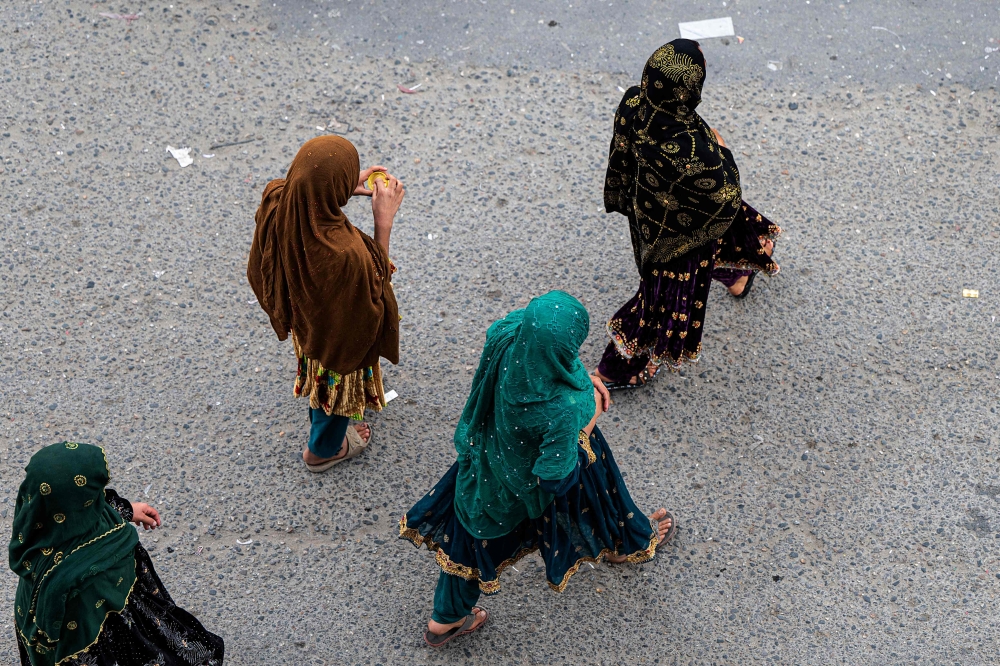
UN urges equal rights after Afghan Taliban arrest at least 21 women over dress code violations

Malay Mail

KABUL, June 8 — The United Nations mission in Afghanistan has expressed concern over the arrest and detention of women in a western province for allegedly failing to comply with “dress requirements” and urged Taliban authorities to treat all people equally.

The United Nations Assistance Mission in Afghanistan (Unama) did not specify how many women had been affected, though local media reported last week that at least 21 women and girls were detained in Herat province.

The Afghan Taliban did not respond to Reuters request for comment.

“Unama is concerned over multiple arrests and detentions of women in Herat... for alleged non-compliance with dress requirements, which raises serious human rights concerns,” Unama said in a post on X late on Sunday.

“We remind the de facto authorities that all people have the right to freedom of movement and that all persons, both women and men, are entitled to equality before the law,” it said.

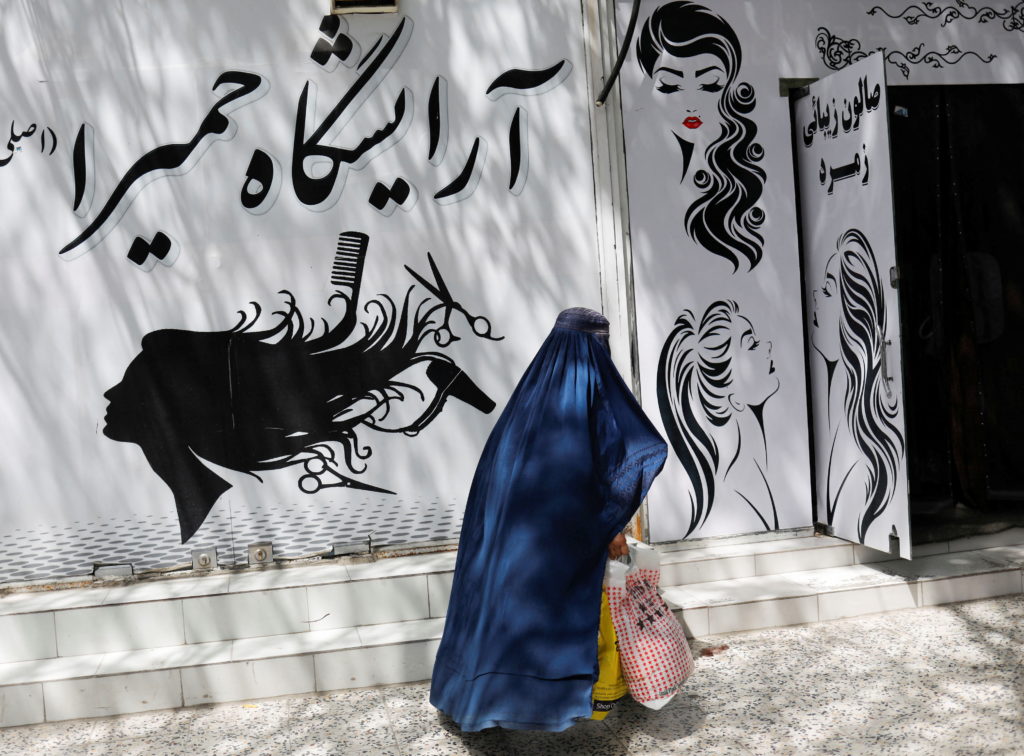
The reported detentions follow a Taliban directive issued last week prohibiting women from appearing in public without what authorities described as a “proper hijab,” according to local media.

The directive warned that women who failed to comply with the dress code — including those showing their faces or wearing makeup — would face punitive measures, the reports said. Reuters was unable to independently verify the directive.

Since seizing power in Kabul in 2021, the Taliban has imposed sweeping restrictions on women and girls in the war-shattered country, including limits on access to education, employment and sport, drawing widespread international criticism.

A Unicef report released in April had warned the country was at risk of losing more than 25,000 female teachers and health workers by 2030 if restrictions on girls’ education and women’s employment remain in place.

The Taliban says it respects women’s rights in accordance with its interpretation of Islamic law. — Reuters


  •  

Academy Awards Student Winners For Animation (2022)

The Academy of Motion Picture Arts and Sciences has officially announced their winners of the 49th Student Academy Awards competition!
A total of 1,796 entries from 614 colleges and universities around the world were submitted.
Congratulations to the student winners below! 

Students Winners For Animation

Laika & Nemo

Photo Credit: IMDb

Names: Jan Gadermann and Sebastian Gadow
School: Konrad Wolf Film University of Babelsberg
Location: Germany
About:
Nemo looks different. Nobody else wears a diving suit and such a huge helmet. But then he meets Laika, an astronaut.

An Ostrich Told Me the World Is Fake and I Think I Believe It,

Photo Credit: Annecy Film Festival

Name: Lachlan Pendragon 
School: Griffith Film School
Location: Australia
About:
A young office worker uncovers the flaws in his stop-motion universe with the help of a mysterious talking ostrich.

The Seine’s Tears

Photo Credit: Youtube

Names:Yanis Belaid, Eliott Benard and Nicolas Mayeur
School: Pôle 3D Digital & Creative School
Location: France
About:
Algerian workers take to the streets in October of 1961 to protest the mandatory curfew imposed by the Police prefecture.

  •  
❌