Normal view

  • ✇Malay Mail - All
  • Italian astronaut Parmitano hopes to bring taste of Italy to Artemis III moon mission
    WASHINGTON, JUNE 10 — Italian astronaut Luca Parmitano is hoping to bring a taste of his homeland to the Artemis III mission he will pilot near Earth in 2027 to test two lunar modules.The menu for the Artemis II mission in April featured Texas brisket and tortillas for the Orion spacecraft’s crew—and a jar of Italian sweet treat Nutella was also seen floating by during a live broadcast from space.“I do expect something Italian to show up on the menu, and I don’t
     

Italian astronaut Parmitano hopes to bring taste of Italy to Artemis III moon mission

10 June 2026 at 01:02

Malay Mail

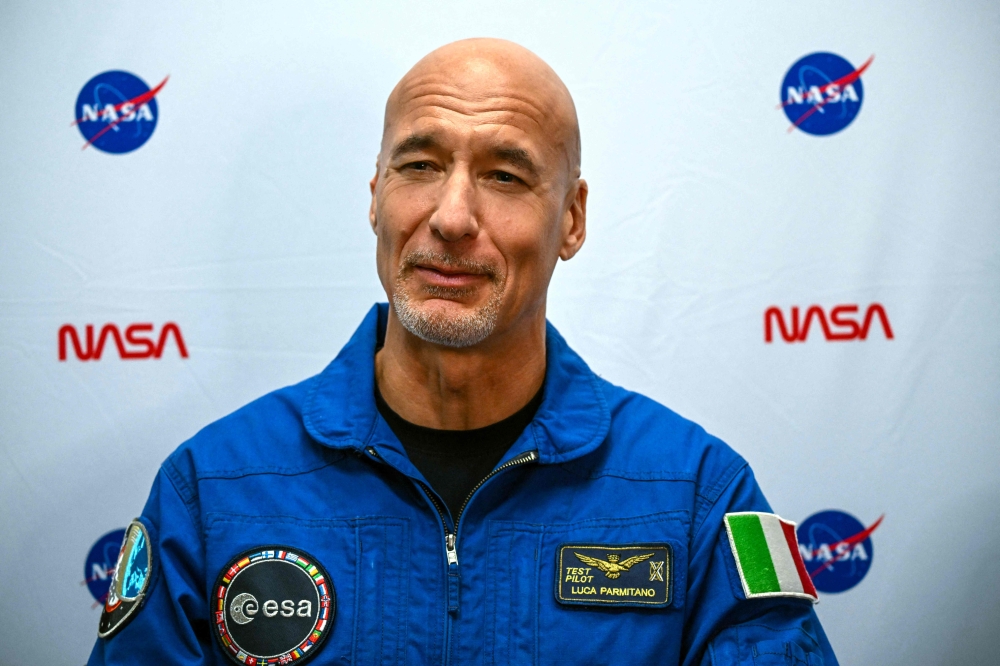
WASHINGTON, JUNE 10 — Italian astronaut Luca Parmitano is hoping to bring a taste of his homeland to the Artemis III mission he will pilot near Earth in 2027 to test two lunar modules.

The menu for the Artemis II mission in April featured Texas brisket and tortillas for the Orion spacecraft’s crew—and a jar of Italian sweet treat Nutella was also seen floating by during a live broadcast from space.

“I do expect something Italian to show up on the menu, and I don’t even have to bring it up because Italian food is a treasure of UNESCO,” Parmitano told AFP yesterday, adding “everybody wants some Italian food.”

That’s not all the former Italian Air Force colonel brings to the table.

Selected as an astronaut by the European Space Agency (ESA) in 2009, Parmitano has completed two missions aboard the International Space Station, where he completed complex spacewalks—including a near-fatal incident when his helmet began filling with water due to a failure in the suit’s cooling system.

Responsibility and humility 

As the mission’s lead pilot, Parmitano will share responsibility with commander Randy Bresnik.

“We are both test pilots, and the spacecraft needs a crew of 2 to fly it, so we share the responsibilities,” Parmitano said.

“I feel honored that I was chosen for this role,” he said. “It was unexpected because I didn’t know that it was in the run for that position.”

Parmitano, a 49-year-old father of two daughters, added that he is “also very humbled by the task in front of us. It’s a very complex mission.”

He proudly wears a uniform adorned with the Italian flag and the ESA’s patch, whom he calls “strong partners.”

“ When NASA chooses a European astronaut to be a pilot, (it) is sending a strong message that our leadership is understood, that our cooperation is valued, and that our technical expertise, both in our constructions, because Europe builds part of the spacecraft, but also our personnel, is solid,” he said.

Multicultural crew 

The crew will be rounded out by African American Andre Douglas and US astronaut of Salvadoran descent Frank Rubio.

Parmitano said he has known the mission’s commander “for my entire career,” but noted that for Douglas the mission will mark his first space flight.

“We immediately bonded as soon as we found out that we were assigned to this mission,” Parmitano said.

He welcomes the diversity in ages and backgrounds, saying it “just enriches the crew in general.” — AFP




  • ✇Popular Science
  • NASA satellite images show how a massive tsunami in Alaska changed the landscape forever Laura Baisas
    New satellite images are helping scientists understand a major tsunami that changed the landscape of a popular tourist destination in Alaska forever.  On August 10, 2025, a tsunami larger than the Eiffel Tower ripped through Tracy Arm fjord in southeast Alaska. The rapid retreat of the South Sawyer Glacier triggered a landslide that swept huge rocks down the picturesque waterway visited by millions aboard Alaskan cruises every summer. At least 64 million cubic meters of rock slid down the slo
     

NASA satellite images show how a massive tsunami in Alaska changed the landscape forever

12 May 2026 at 14:45

New satellite images are helping scientists understand a major tsunami that changed the landscape of a popular tourist destination in Alaska forever. 

On August 10, 2025, a tsunami larger than the Eiffel Tower ripped through Tracy Arm fjord in southeast Alaska. The rapid retreat of the South Sawyer Glacier triggered a landslide that swept huge rocks down the picturesque waterway visited by millions aboard Alaskan cruises every summer. At least 64 million cubic meters of rock slid down the slope of the glacier. The rocks created an enormous tsunami that stripped trees and other vegetation from the opposing fjord wall up to 1,578 feet above sea level. 

The NASA-USGS Landsat satellite images show the dramatic changes to the landscape. In one photo taken on July 26, 2025, the fjord is surrounded by green vegetation. 

a satellite image showing green vegetation on a fjord
The shores of Tracy Arm on July 26, 2025. Image: NASA Earth Observatory images by Michala Garrison, using Landsat data from the U.S. Geological Survey.

In the second image, taken nine days after the landslide on August 19, the fjord is dominated by a gray scar made by the cascading rock. 

a satellite image of a landslide
The shores of Tracy Arm on August 19, 2025. This image was taken after the tsunami and landslide. Image: NASA Earth Observatory images by Michala Garrison, using Landsat data from the U.S. Geological Survey.Image: NASA Earth Observatory images by Michala Garrison, using Landsat data from the U.S. Geological Survey.

“The bright landslide scar on the north side of the fjord is striking, as is the ‘bathtub’ ring around the fjord showing the areas where the forest was leveled by the tsunami,” said Dan Shugar, a geomorphologist at the University of Calgary.

Sawyer Island, located about 6 miles away from the landslide, also turned from green to brown. Only a few trees still stood at the island’s higher elevations.

Over the past several months, Shugar and his colleagues combined satellite, airborne, and ground-based observations with eyewitness accounts and simulations to build a complete story with how this historic event transformed. Their analysis was published May 6 in the journal Science.

Their analysis found that water continued to slosh around the fjord for more than one day. Geologists call this water-sloshing phenomenon a seiche. Both the landslide and resulting seiche produced seismic signals that were detected around the world and equivalent to a magnitude 5.4 earthquake.

a landslide scar
The landslide scar and the zone where vegetation was stripped by the resulting tsunami are both visible in this aerial photo of Tracy Arm and South Sawyer Glacier, captured on August 13, 2025. Image: U.S. Geological Survey/John Lyons

The Landsat images also show that the South Sawyer Glacier retreated significantly in less than a month. Typically, glacial retreat takes much longer. 

“Part of that occurred between the date of the first image and the date of the landslide,” Shugar said. “But part of it is from the landslide itself, which broke off a big chunk of the terminus of South Sawyer Glacier, resulting in a slurry of icebergs in the fjord.”

Fortunately, no one was injured in the event, largely because it occurred around 5:30 a.m. local time. The wave did sweep away some gear from a group of kayakers camping on Harbor Island near the fjord’s mouth. Passengers aboard a small cruise ship in neighboring Endicott Arm also reported swings in water levels and a strong current associated with the tsunami

In response to the event, at least six cruise lines have eliminated the Tracy Arm fjord from their itineraries for 2026 due to the hazards. The United States Geological Survey also warns that steep, mountainous landslide areas are “inherently unstable” and that the Tracy Arm fjord tsunami will likely continue to change the landscape.

The post NASA satellite images show how a massive tsunami in Alaska changed the landscape forever appeared first on Popular Science.

  • ✇Popular Science
  • It’s National Paper Airplane Day: How to make a NASA-approved plane Laura Baisas
    While a holiday weekend has come and gone, May 26 is not without a cause for celebration. It’s National Paper Airplane Day!  The annual day commemorates the homemade aeronautical toy that has fascinated (and frustrated the less crafty) children and adults for generations. According to National Day, the practice of constructing paper planes is sometimes called aerogami, after origami, the Japanese art of folding paper. Building paper planes that can soar through the air like a bird is believed
     

It’s National Paper Airplane Day: How to make a NASA-approved plane

26 May 2026 at 16:27

While a holiday weekend has come and gone, May 26 is not without a cause for celebration. It’s National Paper Airplane Day! 

The annual day commemorates the homemade aeronautical toy that has fascinated (and frustrated the less crafty) children and adults for generations. According to National Day, the practice of constructing paper planes is sometimes called aerogami, after origami, the Japanese art of folding paper. Building paper planes that can soar through the air like a bird is believed to have originated in ancient China, where paper was invented around 105 CE. However, the art of folding it into an airplane may have been perfected in Japan, as it is similar to origami.

Here in the United States, instructions for folding the Basic Dart were included in a children’s book published in 1859, so it is safe to say kids and adults alike have been making them for over 167 years. The term paper airplane was then coined in 1907 and replaced paper dart as the dominant term by the 1950s. In 2022, Kim Kyu Tae nabbed the Guinness World Record for the Longest Paper Airplane Throw Ever with a flight of 252.6 feet. According to Guiness World Records, the longest time flying a paper aircraft is 31.2 seconds and was achieved by Rao Chongyi and a team in China in February.  

If you’re inspired to create the world’s best paper airplane, we have you covered. You can also look to the great minds at NASA for inspiration. After all, the first letter “A” in NASA stands for aeronautics. Their step-by-step NASA Space Crafts tutorial will not only help you make a colorful paper airplane, but also NASA’s X-57 Maxwell and the X-59 Quiet SuperSonic Technology.

May your National Paper Airplane Day be free of paper cuts.

The post It’s National Paper Airplane Day: How to make a NASA-approved plane appeared first on Popular Science.

  • ✇Colossal
  • Artemis II Captures Spectacular Images of ‘Earthset’ from Deep Space Kate Mothes
    For the first time in more than 50 years, NASA launched a mission to the Moon. A lot has changed since 1972, when we last checked in on the enormous, rocky satellite, but there is much to learn—and revisit—when it comes to traveling through deep space and considering what, as NASA describes it, a “long-term return” to our lunar companion could look like. The Artemis II mission, which is currently underway and scheduled to last a total of 10 days, has also released some remarkable images of ou
     

Artemis II Captures Spectacular Images of ‘Earthset’ from Deep Space

8 April 2026 at 15:00
Artemis II Captures Spectacular Images of ‘Earthset’ from Deep Space

For the first time in more than 50 years, NASA launched a mission to the Moon. A lot has changed since 1972, when we last checked in on the enormous, rocky satellite, but there is much to learn—and revisit—when it comes to traveling through deep space and considering what, as NASA describes it, a “long-term return” to our lunar companion could look like. The Artemis II mission, which is currently underway and scheduled to last a total of 10 days, has also released some remarkable images of our home planet.

A striking image of the Earth “setting” behind the cratered Moon takes a truly unique view of our planet and prompts us to consider our perspective. It’s reminiscent of one of the most iconic photographs of all time, known as “Earthrise,” which was snapped by astronaut William Anders during the 1968 Apollo 8 mission—the first crewed trip to the Moon.

A photo taken during the Artemis II mission around the Moon, showing the Earth setting beyond
The Earth setting beyond the Moon

Artemis II is scheduled to return to Earth on the evening of April 10, when the crew will splash down into the Pacific Ocean off the California coast.

A detailed image of the texture of the Moon's surface, photographed during the Artemis II mission
The Moon’s cratered surface
A photo taken during the Artemis II mission around the Moon, showing the dark side of the moon with an aura of sunlight around it
The far side of the Moon

Do stories and artists like this matter to you? Become a Colossal Member today and support independent arts publishing for as little as $7 per month. The article Artemis II Captures Spectacular Images of ‘Earthset’ from Deep Space appeared first on Colossal.

  • ✇Malay Mail - All
  • Italian fashion house Prada suits up Nasa astronauts in space push
    NEW YORK, June 8 —  Italian fashion house Prada unveiled on Sunday the inner-layer garment set to be worn by Nasa astronauts heading to the moon, underscoring the brand’s push to be the first major luxury player to make inroads in the space industry.The body-hugging suit, created in collaboration with Houston-based space infrastructure developer Axiom Space, features ventilation tubes knitted into the garment.“We have really a broad spectrum of capability and kno
     

Italian fashion house Prada suits up Nasa astronauts in space push

8 June 2026 at 13:00

Malay Mail

NEW YORK, June 8 —  Italian fashion house Prada unveiled on Sunday the inner-layer garment set to be worn by Nasa astronauts heading to the moon, underscoring the brand’s push to be the first major luxury player to make inroads in the space industry.

The body-hugging suit, created in collaboration with Houston-based space infrastructure developer Axiom Space, features ventilation tubes knitted into the garment.

“We have really a broad spectrum of capability and know-how,” Lorenzo Bertelli, Prada’s chief marketing officer, said at an event at Prada’s Manhattan store, sitting beside a mannequin donning the new Liquid Cooling and Ventilation Garment.

Expertise for developing space exploration products “can come from lots of seemingly unrelated industries,” said Jonathan Cirtain, CEO of Axiom Space.

The new product follows Prada’s splashy foray into space fashion in 2024 with the unveiling of a spacesuit that is expected to be used for Nasa’s anticipated Artemis 4 moon landing in 2028.

Luxury brands have long drawn inspiration from space travel. But Prada has gone “beyond inspiration into an actual partnership” as the space exploration and tourism industries develop, said Thomai Serdari, a luxury brand strategist and marketing professor at New York University’s Stern School of Business.

Serdari pointed to two factors motivating Prada’s interest in the space industry: to gain access to affluent consumers who are contemplating space travel, and to align the brand with avant-garde thought. Companies from Jeff Bezos’ Blue Origin to Elon Musk’s SpaceX have leaned into space tourism for the wealthy.

The resumption of space exploration and human travel to the moon is “bound to attract a lot of eyeballs,” said Luca Solca, global head of luxury goods at Bernstein. Luxury brands need to stay relevant and visible, he said.

Prada’s push comes against a backdrop of a struggling luxury goods sector. After two years of contraction, the industry was showing signs of stabilization until the Iran war began at the end of February, disrupting travel and denting luxury spending far beyond the Middle East.

Will luxury peers follow?

Other fashion and apparel companies have jumped on the space bandwagon. Under Armour has partnered with spaceflight company Virgin Galactic to create space apparel, while Columbia Sportswear has worked with space exploration company Intuitive Machines on space fabric technology.

But it remains unclear whether other luxury players might follow Prada’s lead.

“In luxury, it is important to be the first to do something, to be a trend-setter,” Serdari said, noting that LVMH’s Louis Vuitton, Hermès and Chanel are all interested in space travel but that they would likely find new ways to make inroads.

“You will never see the upper crust of the luxury sector copying each other,” she added. — Reuters 

  • ✇Popular Science
  • For 6 days, NASA’s Mars rover battled a rock Andrew Paul
    Curiosity got itself stuck between a rock and hard place last month, but NASA says there’s no reason to fret about the intrepid Mars rover. On April 25, mission engineers were remotely piloting its robotic arm’s rotary-percussive drill into a Martian rock nicknamed Atacama. It’s a relatively routine task for Curiosity, which takes the samples and then pulverizes them into a powder for future onboard chemical analysis. But Atacama is no small stone. The hefty, 1.5-foot-wide geologic formation
     

For 6 days, NASA’s Mars rover battled a rock

7 May 2026 at 15:27

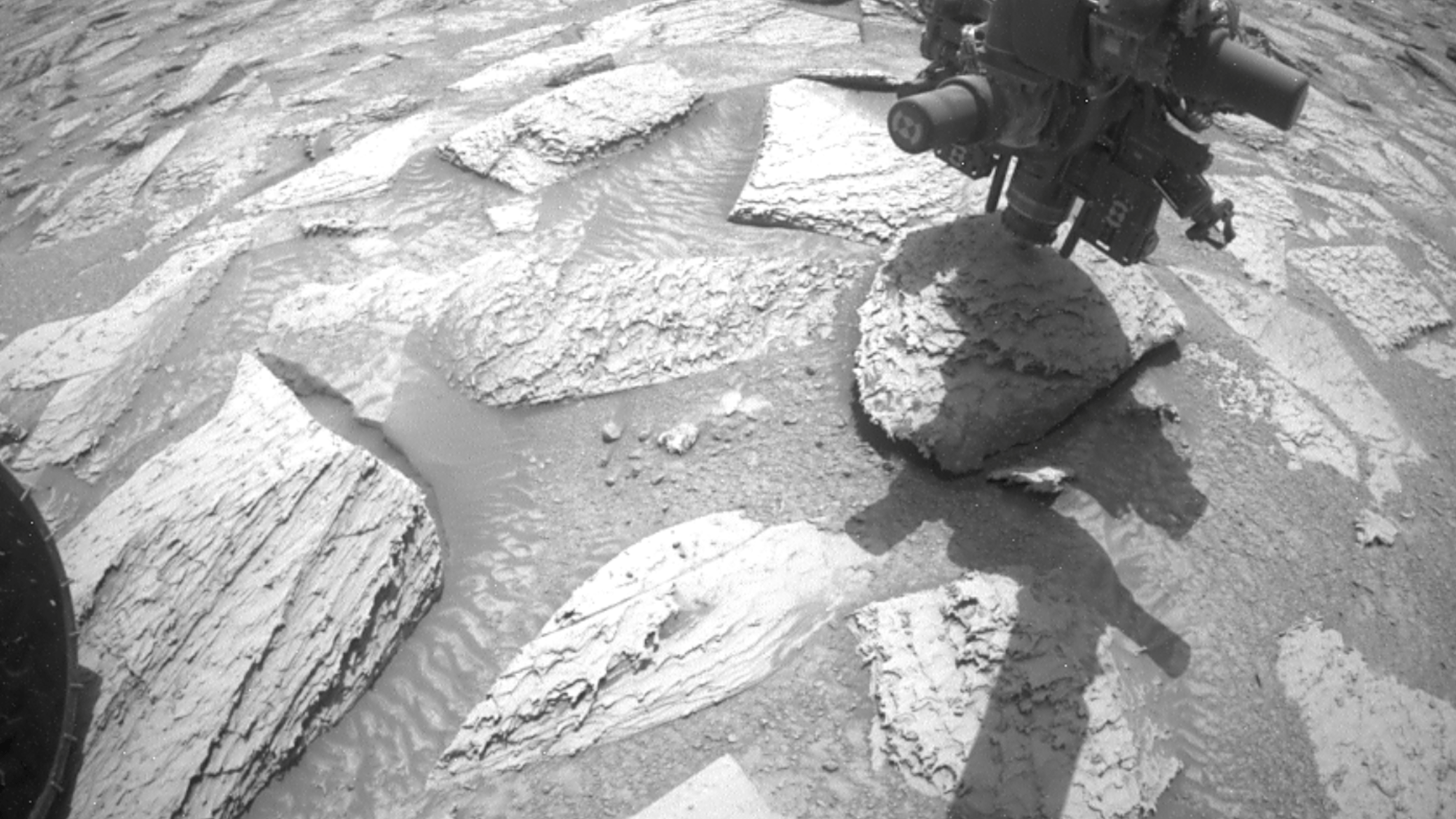
Curiosity got itself stuck between a rock and hard place last month, but NASA says there’s no reason to fret about the intrepid Mars rover. On April 25, mission engineers were remotely piloting its robotic arm’s rotary-percussive drill into a Martian rock nicknamed Atacama. It’s a relatively routine task for Curiosity, which takes the samples and then pulverizes them into a powder for future onboard chemical analysis.

But Atacama is no small stone. The hefty, 1.5-foot-wide geologic formation is about six inches thick and weighs about 28.6 pounds. So NASA engineers were understandably a bit worried when Curiosity attempted to retract its arm—and subsequently lifted the entire rock off the ground.

“Drilling has fractured or separated the upper layers of rocks in the past, but a rock has never remained attached to the drill sleeve,” the agency explained in a recent rundown.

While amusing to envision, the situation was no laughing matter for NASA’s engineers. The rover’s drill would be of little more use with a giant rock indefinitely attached to it. But even if controllers could detach Atacama from the rover, the force might damage the tool or the arm itself. Without those capabilities, Curiosity’s ongoing mission would be in serious jeopardy.

Mission specialists first tried the drilling version of “turning it off and on again,” by vibrating the tool. However, Atacama remained stubbornly stuck on Curiosity…for another four days. NASA then tried a new approach by reorienting the robotic arm and instructing the drill to vibrate one more time. Atacama managed to shake off a bit of sand that time, but little else.

Two more stressful days passed before NASA gave it a third try. Engineers tilted the drill slightly further, then rotated and vibrated the tool while also spinning its drill bit. The Curiosity team anticipated it may take multiple attempts to pull off the feat.But in this case, Atacama finally gave way almost immediately. The nearly weeklong ordeal culminated with the giant rock fracturing as it landed on the Martian ground.

So far, NASA hasn’t reported any lingering damage to the vehicle, meaning the rover is likely ready to continue exploring the Red Planet. As for Atacama, it seems the Martian rock learned a valuable lesson: Don’t mess with Curiosity.

The post For 6 days, NASA’s Mars rover battled a rock appeared first on Popular Science.

  • ✇Colossal
  • NASA Just Dropped More Than 12,000 Photos from the Artemis II Mission Kate Mothes
    When it comes to photo dumps, NASA has upped the ante. The organization has added thousands of snapshots from the Artemis II mission to the Gateway to Astronaut Photography of Earth archive. The album now holds 12,217 images by cosmic travelers Reid Wiseman, Victor Glover, Christina Koch, and Jeremy Hansen during their more than 250,000-mile, 10-day flyby mission around the moon. According to PetaPixel, a couple of Nikons and an iPhone 17 were the cameras of choice for the journey. And eve
     

NASA Just Dropped More Than 12,000 Photos from the Artemis II Mission

6 May 2026 at 14:42
NASA Just Dropped More Than 12,000 Photos from the Artemis II Mission

When it comes to photo dumps, NASA has upped the ante. The organization has added thousands of snapshots from the Artemis II mission to the Gateway to Astronaut Photography of Earth archive. The album now holds 12,217 images by cosmic travelers Reid Wiseman, Victor Glover, Christina Koch, and Jeremy Hansen during their more than 250,000-mile, 10-day flyby mission around the moon.

According to PetaPixel, a couple of Nikons and an iPhone 17 were the cameras of choice for the journey. And even though many of the thousands of recently uploaded images are very similar—some are even quite blurry—scrolling through them gives the impression of being seated right next to the “Moonfarers” as they marvel at Earth and its satellite and simply can’t put the camera down—just like we tend to snap way too many photos of a beautiful sunset.

The Earth seen through a window in the Orion module during the Artemis II mission

Some of the most impactful photos include the reflections of the astronauts’ hands and faces in the window of their vehicle, the Orion module. Juxtaposed with meticulously engineered equipment, the earth and moon seem somehow less abstracted from this unique vantage point, in which these orbs appear somehow more resonant and precious—and vulnerable.

Explore more of our favorites below, and learn about the Artemis II mission on NASA’s site.

A crescent-shaped view of the Earth, mostly obscured by shadow
The Moon seen through a window in the Orion module during the Artemis II mission
A total eclipse seen from the Orion module of the Artemis II mission
Stars seen through a window in the Orion module during the Artemis II mission
The Moon seen through a window in the Orion module during the Artemis II mission
The Earth "setting" behind the Moon, seen through a window in the Orion module during the Artemis II mission
The Earth seen through a window in the Orion module during the Artemis II mission
The Earth "setting" behind the Moon

Do stories and artists like this matter to you? Become a Colossal Member today and support independent arts publishing for as little as $7 per month. The article NASA Just Dropped More Than 12,000 Photos from the Artemis II Mission appeared first on Colossal.

  • ✇Popular Science
  • NASA wastewater system will turn human poop into plant food Mack DeGeurin
    NASA’s ambitious plan to put humans on the moon may hinge on the bathroom habits of a handful of University of North Dakota grad students. In the name of science, those researchers will test the limits of a mobile wastewater treatment system designed to convert human waste into plant nutrients and other sustainable materials. The trial will serve as a stress test of sorts, measuring how well the Divergent Deployable Wastewater Treatment Facility holds up to regular use and heavy loads in an envi
     

NASA wastewater system will turn human poop into plant food

5 June 2026 at 13:42

NASA’s ambitious plan to put humans on the moon may hinge on the bathroom habits of a handful of University of North Dakota grad students. In the name of science, those researchers will test the limits of a mobile wastewater treatment system designed to convert human waste into plant nutrients and other sustainable materials. The trial will serve as a stress test of sorts, measuring how well the Divergent Deployable Wastewater Treatment Facility holds up to regular use and heavy loads in an environment designed to mirror a lunar habitat. 

It’s not pretty work, but someone has to do it.

“The tests will help NASA evaluate real-world operation, crew training needs, system reliability, and how wastewater simulants compare with actual human metabolic waste in an analog mission environment,” Ali Alshami, University of North Dakota Chemical Engineering professor and test participant, said in a statement.

a gray trailer sits in a parking lot
The unassuming gray building could one day be an astronaut wastewater facility. Technicians prepared the Divergent Deployable Wastewater Treatment Facility for transport at NASA’s Kennedy Space Center in Florida on April 21, 2026. Image: NASA/Kim Shiflett  

Treated astronaut poop will feed lunar plants 

The mobile facility consists of three separate bioreactors, each tasked with handling a specific kind of waste. Feces, urine, and food waste are treated separately because each material contains different levels of salts, solids, carbon, nitrogen, and phosphorus. One reactor processes feces and food waste, converting it into nutrient-rich water that can feed plants. The other two handle urine and greywater from activities like showering and laundry, some of which can be filtered and recycled into  clean drinking water. From an astronauts’ perspective, the experience should feel pretty familiar to life onboard the International Space Station (ISS). They use the toilet as normal, and it automatically diverts waste at the source, routing each type to its corresponding bioreactor.

The whole process takes place in a mobile, 8.5-by-24-foot trailer. In addition to the bioreactors, the unit also houses a vertical garden maintained by the converted wastewater. The goal is to kill two birds with one stone: process waste efficiently and then use it to sustain lunar agriculture. Both are essential if astronauts want any shot at building longer-term habitats on the moon or even Mars. To that end, NASA has ambitions to start constructing a semi-permanent lunar structure or “moon base” by 2029.

Where no one has gone before 

Waste management in space has come a long way since the first moon missions. Back in the 1960s, NASA Apollo astronauts left behind 96 bags of human waste (filled with poop, urine, and vomit) on the lunar surface to save weight. Those bags are almost certainly still there. 

Thankfully, decades of research mean astronauts no longer have to relieve themselves into a bag, at least not most of the time. The most recent Artemis mission featured a fully functional space toilet, though it malfunctioned almost immediately after liftoff.

Recycling wastewater has also seen major improvements. NASA had a breakthrough in 2023 when its life support system aboard the ISS  managed to recover nearly 98 percent of all breath, sweater, and urine brought aboard by the crew. Future astronauts on prolonged spacewalks may also wear this Dune-inspired backpack that filters urine and sweat into drinking water in a single self-contained loop.

The post NASA wastewater system will turn human poop into plant food appeared first on Popular Science.

  • ✇Openclipart
  • Mars j4p4n
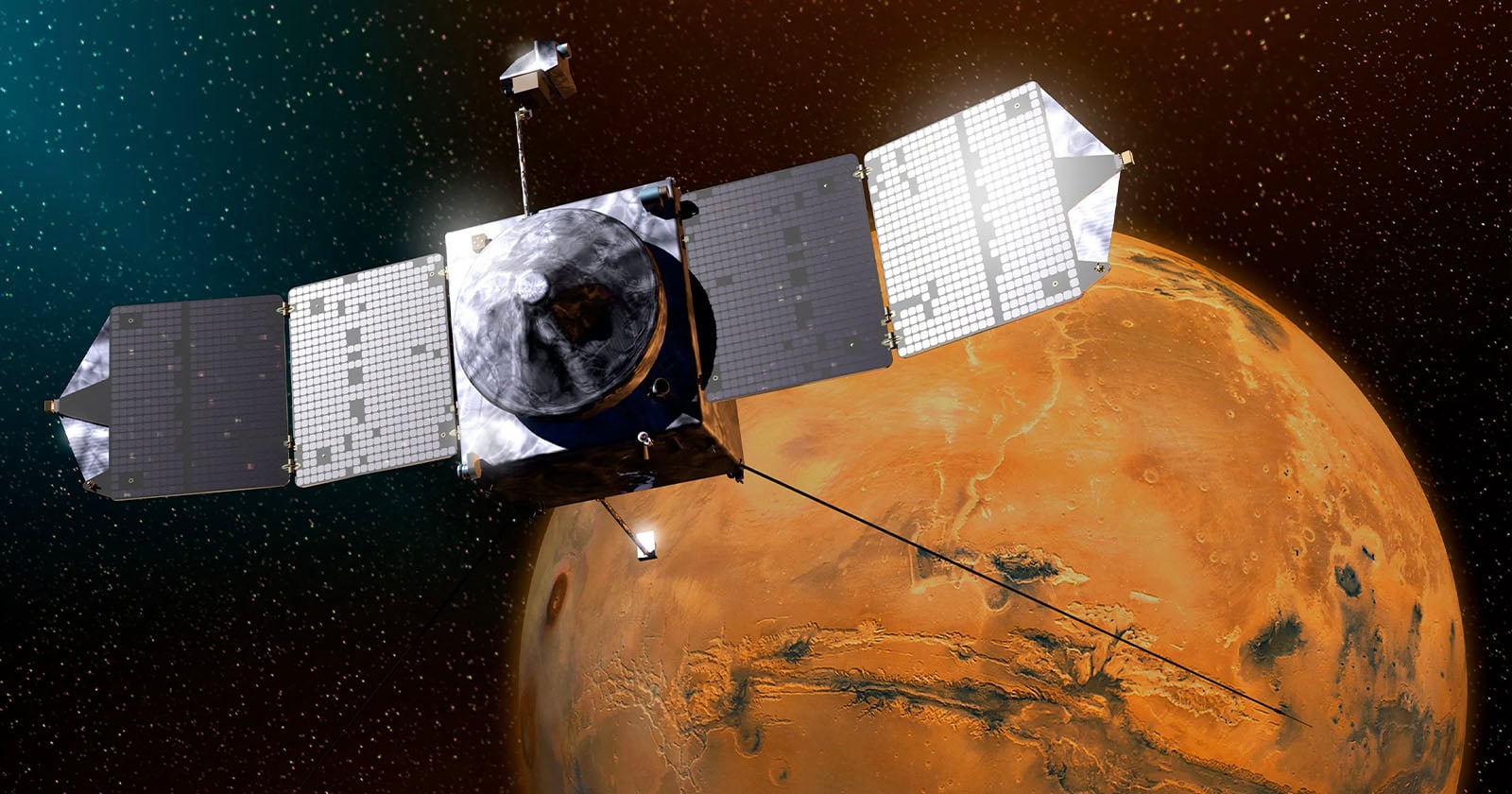
    This is a depiction of mars, based on a public domain 2003 photo by NASA <i>(incidentally the black background is separate from mars and can be removed if you want a transparent mars by itself)</i>
     
  • ✇Popular Science
  • ISS astronauts pose with fresh fruit in microgravity Andrew Paul
    Astronaut food has come a long way from the freeze dried packets aboard the Apollo missions. During their historic lunar fly-by in April, the Artemis II crew dined on beef brisket, mac and cheese, quiche, and a lot of tortillas. The same can be said for the hungry inhabitants of the International Space Station (ISS). With regularly scheduled restocks, the astronauts don’t have to worry as much about issues like shelf life. That means that even when nearly 250 miles above Earth, ISS residents can
     

ISS astronauts pose with fresh fruit in microgravity

14 May 2026 at 20:00

Astronaut food has come a long way from the freeze dried packets aboard the Apollo missions. During their historic lunar fly-by in April, the Artemis II crew dined on beef brisket, mac and cheese, quiche, and a lot of tortillas. The same can be said for the hungry inhabitants of the International Space Station (ISS). With regularly scheduled restocks, the astronauts don’t have to worry as much about issues like shelf life. That means that even when nearly 250 miles above Earth, ISS residents can still snack on fresh fruit and vegetables.

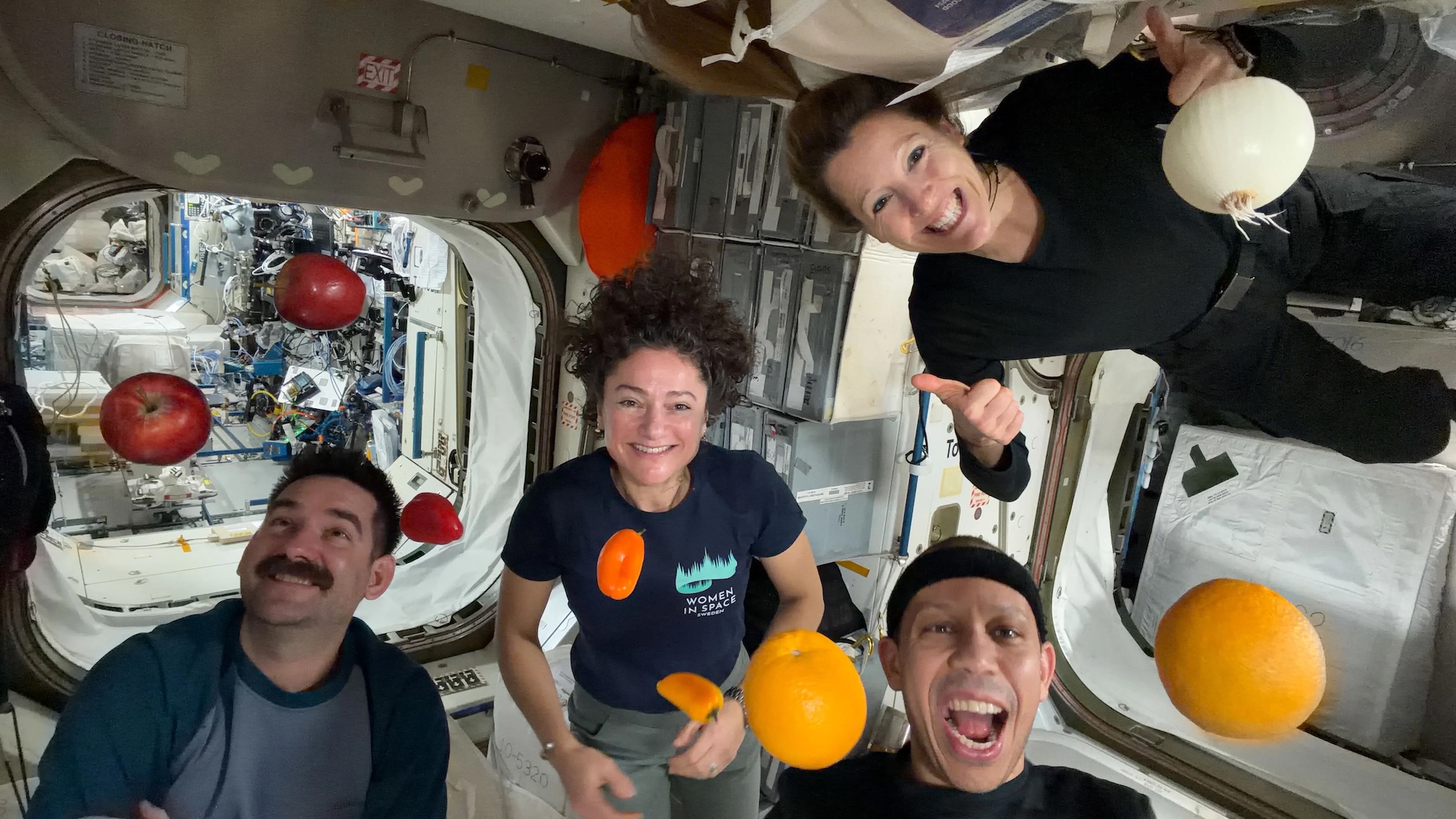
NASA highlighted one such astronaut grocery delivery in a photo released on May 14. Taken on April 19, astronauts Jack Hathaway, Jessica Meir, Chris Williams, and Sophie Adenot are seen in microgravity alongside what are presumably upcoming snacks like oranges, apples, peppers, and one conspicuous onion.

Food wasn’t the only precious cargo on the Cygnus XL spacecraft visit that month, however. In addition to the colorful produce, the ISS also received over 2,300 pounds of research hardware and science equipment. These materials encompass the tools the crew needs for their research on blood stem cells for cancer treatments and ways to strengthen astronaut gut health. The ISS is now also home to a new exercise machine, courtesy of the European Space Agency, as well as replacement nitrogen and oxygen tanks for spacesuits.

The post ISS astronauts pose with fresh fruit in microgravity appeared first on Popular Science.

  • ✇Eos
  • NASA Announces “Realignment” Toward Human Spaceflight Kimberly M. S. Cartier
    Research & Developments is a blog for brief updates that provide context for the flurry of news regarding law and policy changes that impact science and scientists today. Today, NASA announced an agencywide realignment that includes combining related mission directorates to sharpen the agency’s focus on human spaceflight. “This initiative reflects NASA’s extreme focus on executing the mission in direct support of the National Space Policy,” NASA Administrator Jared Isaacman said i
     

NASA Announces “Realignment” Toward Human Spaceflight

22 May 2026 at 17:37
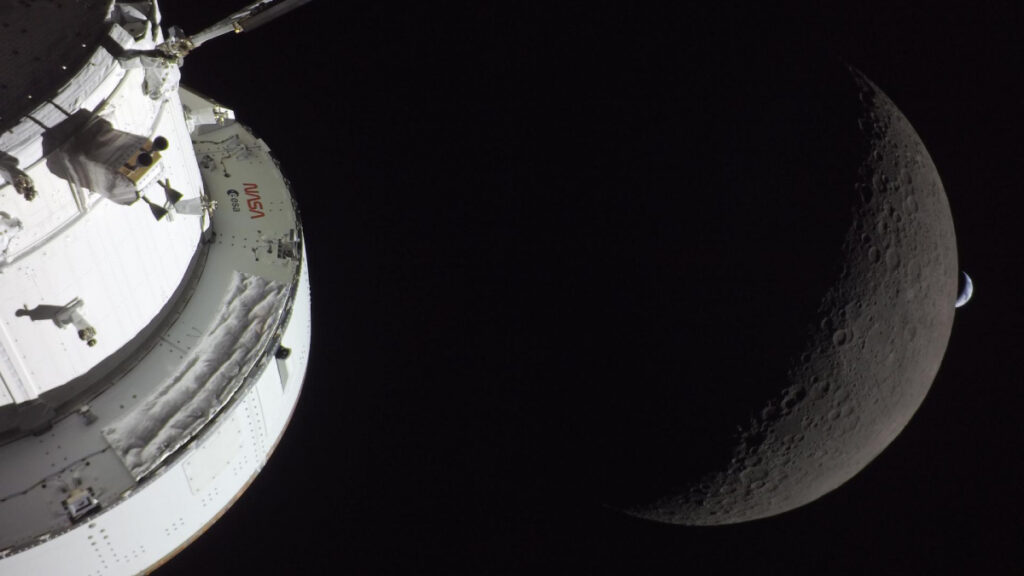
A photo of the Orion spacecraft in front of a crescent of the farside of the Moon, which is in front of a crescent of the Earth in the distance

Research & Developments is a blog for brief updates that provide context for the flurry of news regarding law and policy changes that impact science and scientists today.

Today, NASA announced an agencywide realignment that includes combining related mission directorates to sharpen the agency’s focus on human spaceflight.

“This initiative reflects NASA’s extreme focus on executing the mission in direct support of the National Space Policy,” NASA Administrator Jared Isaacman said in a press release about the realignment.

The National Space Policy refers to Executive Order 14369: Ensuring American Space Superiority, which was released by the Trump administration in December 2025. The order sets national priorities of returning Americans to the Moon, establishing a lunar base, developing a nuclear reactor in space, developing the commercial space economy, and enhancing the United States’ national security space architecture.

A dark Moon haloed by eclipsed sunlight, with several stars dotted all around.
NASA’s Artemis II crew captured this image of the Moon eclipsing the Sun during their flyby of the Moon on 6 April 2026. Credit: NASA

NASA’s six existing mission directorates will be slimmed down to four. Exploration Systems Development and Space Operations will be combined into a new Human Spaceflight Mission Directorate and will facilitate human spaceflight in low-Earth and lunar space environments. Aeronautics Research and Space Technology will be folded into a new Research and Technology Mission Directorate, tasked with researching and developing nuclear power and propulsion. The structure of the Science Mission Directorate (SMD) and Mission Support Directorate remain unchanged at the time of publication. All directorate leaders will now report directly to the NASA Administrator (Isaacman) to ensure that each remains focused on their directorate’s new mission.

“There will be no reduction in force, no program cancellations, no closures, but we will achieve cost savings through more efficient execution and taking an active role in delivering the outcomes the world has been waiting for from NASA,” Isaacman said.

More Efficient?

At first glance, it is hard to see how combining four mission directorates into two, refocusing the missions of each, and pushing for increased efficiency and cost reduction will not result in some loss of talent either through positions being eliminated or individuals finding themselves in jobs they do not want to hold.

In a letter to NASA employees, Isaacman went into more detail about the specifics of this realignment and described how it will shift the agency’s internal bureaucratic authority away from directorates and toward NASA’s field centers. Prior to this, centers like Goddard Space Flight Center in Greenbelt, Md., and Johnson Space Center in Houston would need to compete for funding that had been appropriated to directorates based on the programs or missions they were tasked with.

A NASA source based in Houston told Ars Technica that the competition for funding “has been an absolute disaster.”

This new realignment “will adjust the funding distribution, so Centers have the financial support needed to sustain the baseline critical capabilities independent of near-term mission assignment,” Isaacman stated. “This shift will allow Center Directors to focus on maintaining the infrastructure, workforce, and capabilities required for current and future missions.”

Isaacman was unclear about when these changes will take effect, and policy analysts are unsure whether the realignment will be recognized by Congress through its appropriations process. The most recent Fiscal Year 2027 appropriations bill for NASA, which advanced out of the House Committee on Commerce, Justice, and Science on 13 May, allocates funding for six mission directorates, not four. The Senate appropriations committee is expected to release its proposed budget for NASA in the coming weeks, and the two bills must still undergo a lengthy reconciliation process.

In fiscal year 2026, Congress broke with the president’s budgetary priorities for NASA and passed a budget that ignored several of the administration’s proposed financial and mission cuts. Whether Congress will do the same this year and maintain the prior breakdown of directorates will become clear in the coming months.

—Kimberly M. S. Cartier (@astrokimcartier.bsky.social), Staff Writer

These updates are made possible through information from the scientific community. Do you have a story about how changes in law or policy are affecting scientists or research? Send us a tip at eos@agu.org.

A photo of a hand holding a copy of an issue of Eos appears in a circle over a field of blue along with the Eos logo and the following text: Support Eos’s mission to broadly share science news and research. Below the text is a darker blue button that reads “donate today.”
Text © 2026. AGU. CC BY-NC-ND 3.0
Except where otherwise noted, images are subject to copyright. Any reuse without express permission from the copyright owner is prohibited.
❌
Subscriptions