Normal view

  • ✇Popular Science
  • 50 million pounds of invasive fish removed from Illinois River Laura Baisas
    While swimmers and boaters don’t have to fear sharks or giant squid in the Great Lakes watershed, invasive fish the size of large dogs lurk in the freshwater. Invasive carp have wreaked havoc on the ecosystem for over a century, but officials have hit a milestone worth celebrating in the fight against these mega fish.  In the past 15 years, wildlife officials have removed 50 million pounds of invasive carp from the Illinois River. That’s equivalent to roughly 5,000 elephants. The removal is p
     

50 million pounds of invasive fish removed from Illinois River

1 June 2026 at 16:02

While swimmers and boaters don’t have to fear sharks or giant squid in the Great Lakes watershed, invasive fish the size of large dogs lurk in the freshwater. Invasive carp have wreaked havoc on the ecosystem for over a century, but officials have hit a milestone worth celebrating in the fight against these mega fish. 

In the past 15 years, wildlife officials have removed 50 million pounds of invasive carp from the Illinois River. That’s equivalent to roughly 5,000 elephants. The removal is part of a broader and coordinated effort to protect the rivers and lakes from this non native species.

Why are carp a problem?

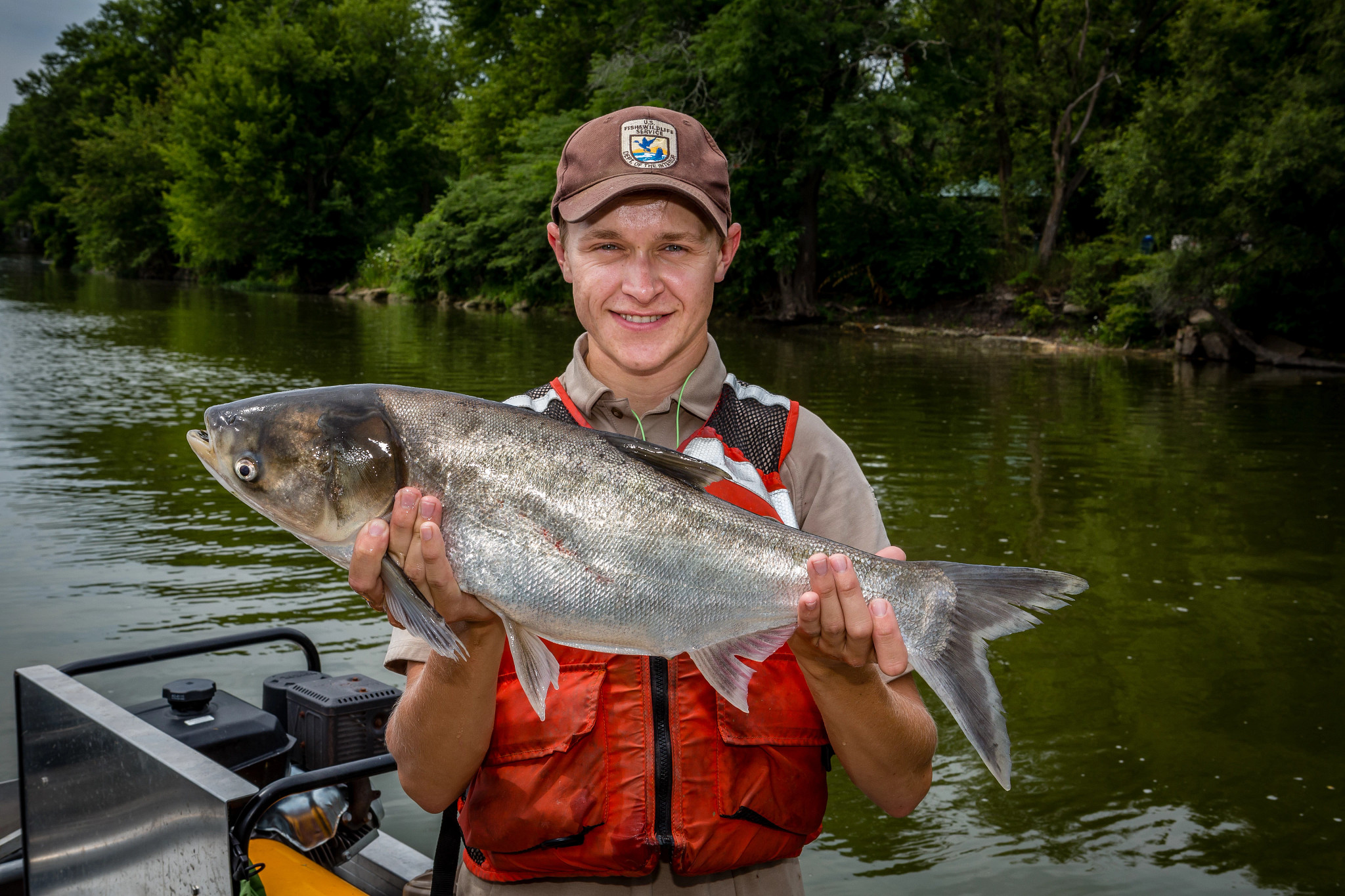
Currently, four species of invasive carp cause harm in the Great Lakes and beyond—bighead carp (Hypophthalmichthys nobilis), silver carp (Hypophthalmichthys molitrix), black carp (Mylopharyngodon piceus), and grass carp (Ctenopharyngodon idella). 

According to the Great Lakes Fishery Commission, all four species were imported to North America to help with pest control in aquaculture facilities in the 1970s. The carp escaped confinement in only 10 years, and have spread to the Mississippi River basin and other large rivers, including the Missouri and Illinois.

Each of the four invasive carp species can weigh more than 100 pounds and grow to four feet from tip to tail. Bighead carp and silver carp generally feed on the tiny plankton in the water, while grass carp eats rooted plants in shallow water, and black carp feed primarily on mollusks and snails. 

“They consume so much food and can exist in such great numbers that they can really reduce the amount of [resources] for resident species of fish,” Peter Alsip, an ecologist with the NOAA Great Lakes Environmental Research Lab told Popular Science in 2024. “They can have indirect effects on the whole ecosystem because [silver carp] are consuming phytoplankton and zooplankton, which are essentially the base of the food web.”

Once inside a watershed, they can reproduce rapidly and compete with native fish species for resources. In areas where invasive carp are abundant, they have harmed other fish species  and interfered with commercial and recreational fishing, according to the United States Fish & Wildlife Service (USFWS). They can also pose a danger to humans, as the giant fish can jump out of the lake and hit unsuspecting boaters.

What is being done to stop them?

Carp eradication measures have been active for over 100 years. These efforts include targeted mass removal efforts, developing barriers to block or impede their movement, and ongoing monitoring. 

carp in a large net
Cap being culled in the Illinois River. Image: Illinois Department of Natural Resources.

The 50 million pounds of fish removed from the Illinois River were part of a program focusing on the northern part of the river about 50 miles from Lake Michigan. The removal project is designed to suppress the mostly adult populations of carp living in the area, by limiting their ability to reproduce and reduce their migration upstream towards the Electric Dispersal Barrier System. Located about 37 miles from Lake Michigan, this electric barrier is designed to deter their movement through the Chicago area. It is one of the main tools wildlife officials are using to keep them from further entering the Great Lakes through the Illinois River. Another program in the Illinois River offers fish harvest incentives to commercial fishers in the river’s lower 240 miles. 

“The more invasive carp we remove, the more we reduce their harmful impacts and the risk of them reaching Lake Michigan,” the USFWS wrote on Facebook. “Thanks to these and other efforts to monitor our waters and prevent the spread of invasive carp, Illinois and more than two dozen partners are safeguarding some of our most prized native fisheries, and the Great Lakes regional economy.”

The post 50 million pounds of invasive fish removed from Illinois River appeared first on Popular Science.

  • ✇Popular Science
  • Mysterious giant sharks that outlived the dinosaurs lurking in Puget Sound Margherita Bassi
    Most sharks have five gill slits on either side. But Hexanchus griseus, a giant and mysterious shark species, has an even six gill slits. These fish, appropriately called the sixgill shark, live in both tropical and temperate waters around the world and can reach up to 14-feet-long. They’ve existed since before the dinosaurs, and yet marine biologists still don’t know very much about them.  One of the problems—for researchers, anyway—is that sixgills usually live in deep oceanic waters, at de
     

Mysterious giant sharks that outlived the dinosaurs lurking in Puget Sound

17 May 2026 at 14:13

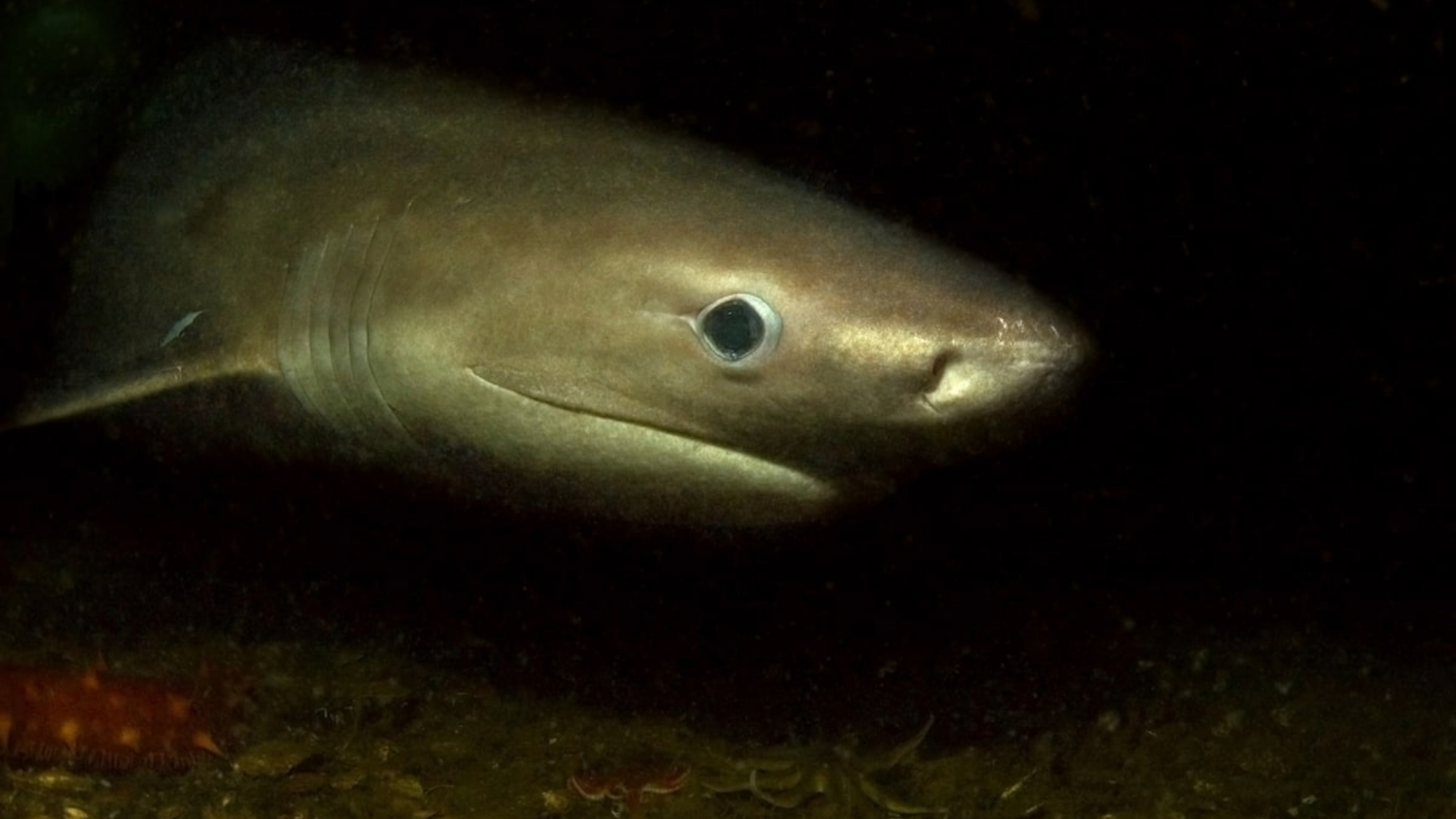
Most sharks have five gill slits on either side. But Hexanchus griseus, a giant and mysterious shark species, has an even six gill slits. These fish, appropriately called the sixgill shark, live in both tropical and temperate waters around the world and can reach up to 14-feet-long. They’ve existed since before the dinosaurs, and yet marine biologists still don’t know very much about them. 

One of the problems—for researchers, anyway—is that sixgills usually live in deep oceanic waters, at depths of up to 9,800 feet. It also doesn’t help that they usually favor extremely low-light environments. Among other reasons, these aspects make sixgills difficult to study.

a sixgill shark swimming
Sixgill sharks (Hexanchus griseus) are older than dinosaurs and are typically found in the deeper parts of the ocean. Image: Seattle Aquarium.

However, these ancient giants have been spotted in Washington State’s Puget Sound year-round, and in water as shallow as 20 feet. Scientists at Seattle Aquarium believe that female sixgills are giving birth in these waters, and new research by the aquarium demonstrates that they have birthing site fidelity. According to the aquarium, they appear to come back to the Salish Sea to give birth numerous times. 

Once the baby sharks—or pups—come into this world, Puget Sound turns into their nursery for some time, though researchers don’t know for how long. The young sixgills spend the summer and fall in more southern locations of the Salish Sea, and migrate more north in the winter and spring. They usually travel less than two miles a day, and frequently come up to shallow waters at dusk before going down into deeper waters at dawn, probably looking for prey. 

“We think these patterns repeat until they eventually depart for the open ocean. This consistency of movement and behavior reinforces the strength of our opportunity to study sixgill sharks in Puget Sound,” according to a statement from Seattle Aquarium. “Through our research, we hope to answer questions about the life history and ecology of sixgill sharks—including migration, growth rates and prey preferences.” 

The aquarium also aims to study previously unexamined physiological aspects of sixgills, and understand human influence. 

a woman in a blue jacked lowers a blue basket off the side of a boat with an orange buoy marked "aquarium research"
The team created a custom “cradle” to safely hold a shark while they work quickly to examine it. Image: Seattle Aquarium.

From May to September, Seattle Aquarium researchers and veterinarians will try to study the elusive species at three different locations in Puget Sound, going to each one once a month. There, the team will lift sharks to the surface, and either bring them onto the boat or keep them at the side of the vessel and flip them upside down. This position triggers a trance-like state in several shark species. Either way, the team will make sure that the sharks can breathe through all of those gills.

Once the sharks are secured, the team will examine them. They should be able to collect measurements, obtain tissue samples, take photos, and deploy wearable tags in only five to 10 minutes. The tags that will then supply information about movement, habitat use, and feeding ecology. The scientists will then return the sharks to the open water. 

“Our goal is to answer as many questions as possible,” Dani Escontrela, a researcher at the Seattle Aquarium, said in the statement. “We’re collaborating with agencies like the Washington Department of Fish & Wildlife, the Big Fish Lab at Oregon State University, Point Defiance Zoo & Aquarium and other researchers to fill gaps in expertise, all while keeping animal health and well-being our top priority.”

The post Mysterious giant sharks that outlived the dinosaurs lurking in Puget Sound appeared first on Popular Science.

  • ✇National Herald
  • 89 dead as fierce storm batters Uttar Pradesh; CM orders relief NH Digital
    At least 89 people were killed after powerful storms, heavy rain, hail and lightning battered several districts of Uttar Pradesh, uprooting trees and electricity poles, collapsing houses and leaving widespread destruction in their wake, according to the relief commissioner’s office.The state government said 53 people were injured, 114 livestock deaths were reported and 87 houses were damaged in the extreme weather that swept across the state on Wednesday.Chief minister Yogi Adityanath took cogni
     

89 dead as fierce storm batters Uttar Pradesh; CM orders relief

14 May 2026 at 03:38

At least 89 people were killed after powerful storms, heavy rain, hail and lightning battered several districts of Uttar Pradesh, uprooting trees and electricity poles, collapsing houses and leaving widespread destruction in their wake, according to the relief commissioner’s office.

The state government said 53 people were injured, 114 livestock deaths were reported and 87 houses were damaged in the extreme weather that swept across the state on Wednesday.

Chief minister Yogi Adityanath took cognisance of the large-scale loss of lives and property and directed officials to ensure relief reaches affected families within 24 hours.

Residents gather around a car crushed by a fallen tree in Prayagraj.

In a post on X, the relief commissioner’s office said, “Due to bad weather on May 13, including storms, rain, hailstorm and lightning, reports of 89 deaths, 53 injured persons, 114 livestock losses and damage to 87 houses have been received in the state.”

The office said Adityanath had instructed all divisional commissioners and district magistrates to verify incidents “with full sensitivity” and ensure immediate financial assistance and support for affected families.

Officials said the state administration was maintaining direct coordination with district authorities and releasing funds for relief operations.

The worst-hit districts included Prayagraj, Bhadohi and Fatehpur.

According to the Prayagraj district administration, seven deaths were reported from Handia, four from Phulpur, three from Soraon, two from Meja and one from Sadar due to storm- and rain-related incidents.

pic.twitter.com/bmpllgXmXE Several trees were uprooted and vehicles damaged as strong winds disrupted normal life across parts of the city.
Residents faced sudden weather chaos while authorities monitored the situation and cleared affected areas.#Prayagraj #DustStorm #UttarPradesh

— Priyasharma (@Priyash76573948) May 13, 2026

In Bhadohi, district officials said at least 16 people died in separate storm-related incidents. Additional District Magistrate Kunwar Virendra Kumar Maurya said extensive damage was reported across the district.

“Trees and electric poles were uprooted in several areas while many houses were damaged in the storm,” Maurya said.

Fatehpur Additional District Magistrate Avinash Tripathi said nine people were killed and 16 injured in the district.

“Eight people, including five women, died in Khaga tehsil, while another woman died after a house wall collapsed in Sadar tehsil,” he said.

In Pratapgarh, four people died in separate incidents involving collapsed walls, cemented sheds and lightning strikes.

Superintendent of Police Deepak Bhukar said 25-year-old Bhim Yadav died after being trapped under the debris of a collapsed cemented shed in Ojha Ka Purwa village under Lalganj Kotwali limits.

Bhukar said Bhushan Pandey (56) died after a wall collapsed in Sari Swami village under Baghrai police station area, while Shanti Devi (46) and Lal Bahadur (44) also lost their lives in separate storm-related incidents.

In Kanpur Dehat, a 19-year-old woman identified as Ruchi was killed after lightning struck a neem tree under which she had taken shelter with goats during heavy rain in Bhauthari village under Rasulabad area. Several goats also died in the incident, police said. A 60-year-old man standing nearby sustained injuries.

Additional District Magistrate Dushyant Kumar said local officials had been directed to submit reports on human and livestock losses so compensation could be processed under government norms.

In Deoria, Komal Yadav (62) and Ramnath Prasad (65) died in separate lightning strike incidents, while two others were injured.

In Sonbhadra, Madhav Singh (38) died after being trapped beneath a tree uprooted during the storm.

Adityanath also directed officials from the revenue and agriculture departments, along with insurance companies, to conduct a detailed survey of the damage and submit reports to the government to expedite compensation and rehabilitation measures.

With PTI inputs

  • ✇National Herald
  • ‘Ecological devastation in making’: Congress flags concerns over Great Nicobar project NH Political Bureau
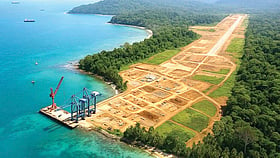
    The Congress on Sunday stepped up its attack on the Centre over the Great Nicobar Island development project, with senior leader Jairam Ramesh writing to environment minister Bhupender Yadav, warning that the project could “destroy” the island’s fragile ecosystem and urging a complete reassessment of its design.In his detailed letter, Ramesh said the environmental clearances granted were based on studies that were “grossly inadequate” and accused the process of making a “mockery of the Environme
     

‘Ecological devastation in making’: Congress flags concerns over Great Nicobar project

10 May 2026 at 09:05

The Congress on Sunday stepped up its attack on the Centre over the Great Nicobar Island development project, with senior leader Jairam Ramesh writing to environment minister Bhupender Yadav, warning that the project could “destroy” the island’s fragile ecosystem and urging a complete reassessment of its design.

In his detailed letter, Ramesh said the environmental clearances granted were based on studies that were “grossly inadequate” and accused the process of making a “mockery of the Environmental Impact Assessment (EIA) framework”.

“I wish to reiterate that the Great Nicobar Island’s biodiversity is globally unique… it is this unique ecosystem that will be destroyed by the project,” Ramesh wrote, calling for a pause and review of the plan.

He alleged that baseline studies were conducted over only a few days or weeks, falling short of mandatory multi-season assessments required under environmental norms.

Here is my latest letter to the Union Minister of Environment, Forests and Climate Change on the Great Nicobar Island Development Project pic.twitter.com/Has61V8PQB

— Jairam Ramesh (@Jairam_Ramesh) May 10, 2026

“These reports are an insult to science and make a mockery of the EIA process,” he said, adding that even official FAQs claiming “robust environmental safeguards” lacked supporting scientific backing.

Ramesh also rejected the government’s claim of compensatory afforestation, calling it “completely bogus”, and said security needs cited for the project could be met without causing ecological damage.

“Security experts have themselves written that the country’s essential security needs can be met without inflicting such ecological devastation,” he noted.

He further pointed to legal and procedural concerns, citing provisions under coastal regulation norms and past environment ministry guidelines mandating comprehensive multi-season studies for port projects.

Ramesh also referenced earlier judicial observations, including a 2023 National Green Tribunal (NGT) order that flagged “unanswered deficiencies” in environmental clearances and called for a High-Powered Committee review.

He questioned the Centre’s claim that the committee’s report was confidential, arguing it undermined transparency and accountability.

“When the original clearance process was in the public domain, how can a court-mandated reconsideration be kept confidential?” he asked.

The Congress leader said he would be willing to share official documents contradicting the government’s claims and reiterated that the issue was of “great and grave public importance”.

The Opposition party has intensified its criticism of the project in recent weeks, arguing that it threatens both ecological balance and tribal rights in the Andaman and Nicobar Islands, while the government maintains that the initiative is a strategic and sustainable development effort aligned with national interests.

With PTI inputs

Environmental impact should outweigh strategic interest in Great Nicobar project

Popular hiking area west of Canmore, Alta. closed because of rockslide danger

11 June 2026 at 23:30
Alberta Parks has shut down a large area around a series of popular hiking trails just west of Canmore because of the dangers caused by a recent rockslide.

Sheinbaum announces controversial plan to begin fracking to “strengthen national sovereignty”

10 April 2026 at 18:00

Medellín, Colombia – On Wednesday, Mexican President Claudia Sheinbaum announced plans to begin fracking in order to more than double the country’s natural gas production and “strengthen national sovereignty”. 

Despite Mexico possessing 141 billion cubic feet of unconventional gas reserves, the country has hardly extracted it, instead importing more than 70% of its natural gas from the United States, making it the world’s largest buyer of U.S. gas.

Sheinbaum’s announcement signals a U-turn in her party’s traditional opposition to fracking due to its deleterious environmental impacts.

Hydraulic fracturing, or fracking, is a method of extracting oil and natural gas by forcing water, sand, and chemicals into the ground to fracture deep rock formations and allow oil and gas to flow up to the surface. 

Fracking has long been controversial due to its environmental effects, such as causing earth tremors, air and water pollution, massive water consumption and increased greenhouse gas emissions.

However, in a press conference on Thursday, Sheinbaum, who is an energy and climate change scientist by profession, defended the plans to begin fracking, arguing that there are “new technologies which open the possibility of recycling water, that don’t use such powerful chemicals which are so hard to recycle”, therefore providing a sustainable alternative to traditional fracking practices. She emphasized that for all of her life, she has been “against traditional fracking.” 

Sheinbaum said that a technical committee will spend two months evaluating the feasibility of these new fracking technologies. 

The president’s announcement signals a departure from the historical rhetoric of her party, Morena. Andrés Manuel López Obrador, Sheinbaum’s predecessor and the founder of Morena, had previously attempted to impose a constitutional ban on the practice. 

The announcement will likely also prove unpopular with people who considered Sheinbaum’s previous position on fracking when voting for her; in February a spokesperson for the Mexican Alliance Against Fracking described a potential shift towards fracking as “a betrayal to those who voted for President Sheinbaum, who said fracking would not be carried out,” and suggested that the president was “only listening to the industry and fracking promoters,” according to El País. 

The spokesperson also highlighted the risks that fracking can have on indigenous communities, where it “fracture[s] the social fabric and create[s] risks for women.”

Although Sheinbaum recognizes that contracts with the U.S. for natural gas imports remain in place, the priority is to ensure energy stability in Mexico and reduce reliance on foreign powers in case of shortages caused by situations like the current war in the Middle East.

Featured image description: Claudia Sheinbaum in 2020

Featured image credit: Maritza Ríos via Wikimedia Commons

The post Sheinbaum announces controversial plan to begin fracking to “strengthen national sovereignty” appeared first on Latin America Reports.

Alberta pitches cheap natural gas for data center boom, at odds with Canada’s clean power aims

9 June 2026 at 16:39
The Alberta government's efforts to attract data centres by touting access to an abundant supply of cheap fossil fuels threatens to undermine Canada's clean power goals.

  • ✇The Guardian World news
  • Gee, whiz: elephant relieves itself on floor of Texas Republican convention Marina Dunbar
    Four-ton Paige, brought in as surprise for attenders, made gushing debut after governor finished keynote speechAn African elephant weighing roughly 4 tons that was brought to the Texas Republican party’s annual convention to excite attenders ended up drawing widespread attention for the wrong reasons after she urinated on the convention floor and became the focus of animal welfare concerns.Inside the George R Brown convention center in Houston on Friday, attenders had been told to prepare for a
     

Gee, whiz: elephant relieves itself on floor of Texas Republican convention

13 June 2026 at 17:16

Four-ton Paige, brought in as surprise for attenders, made gushing debut after governor finished keynote speech

An African elephant weighing roughly 4 tons that was brought to the Texas Republican party’s annual convention to excite attenders ended up drawing widespread attention for the wrong reasons after she urinated on the convention floor and became the focus of animal welfare concerns.

Inside the George R Brown convention center in Houston on Friday, attenders had been told to prepare for a “larger-than-life surprise” after governor Greg Abbott finished his keynote speech. Organizers also displayed a message asking people to keep the aisles clear.

Continue reading...

© Photograph: Houston Chronicle/Hearst Newspapers/Getty Images

© Photograph: Houston Chronicle/Hearst Newspapers/Getty Images

© Photograph: Houston Chronicle/Hearst Newspapers/Getty Images

  • ✇Popular Science
  • Seed-size sea slug looks like an everything bagel Margherita Bassi
    Small as a grain of rice, polka-dotted, and everything nice. These are some of the ingredients that come together to make Thecacera sesama, a newly identified species of sea slug, or nudibranch, found swimming in Taiwan. “Taiwanese divers call it ‘sesame’ in Chinese and it is also small like a sesame seed, hence the name,” researchers explain in a statement. Indeed, T. sesama is less than 0.12 inches long. The tiny bugger is also translucent and speckled black and yellow, and Ho-Yeung Chan “a
     

Seed-size sea slug looks like an everything bagel

26 May 2026 at 15:48

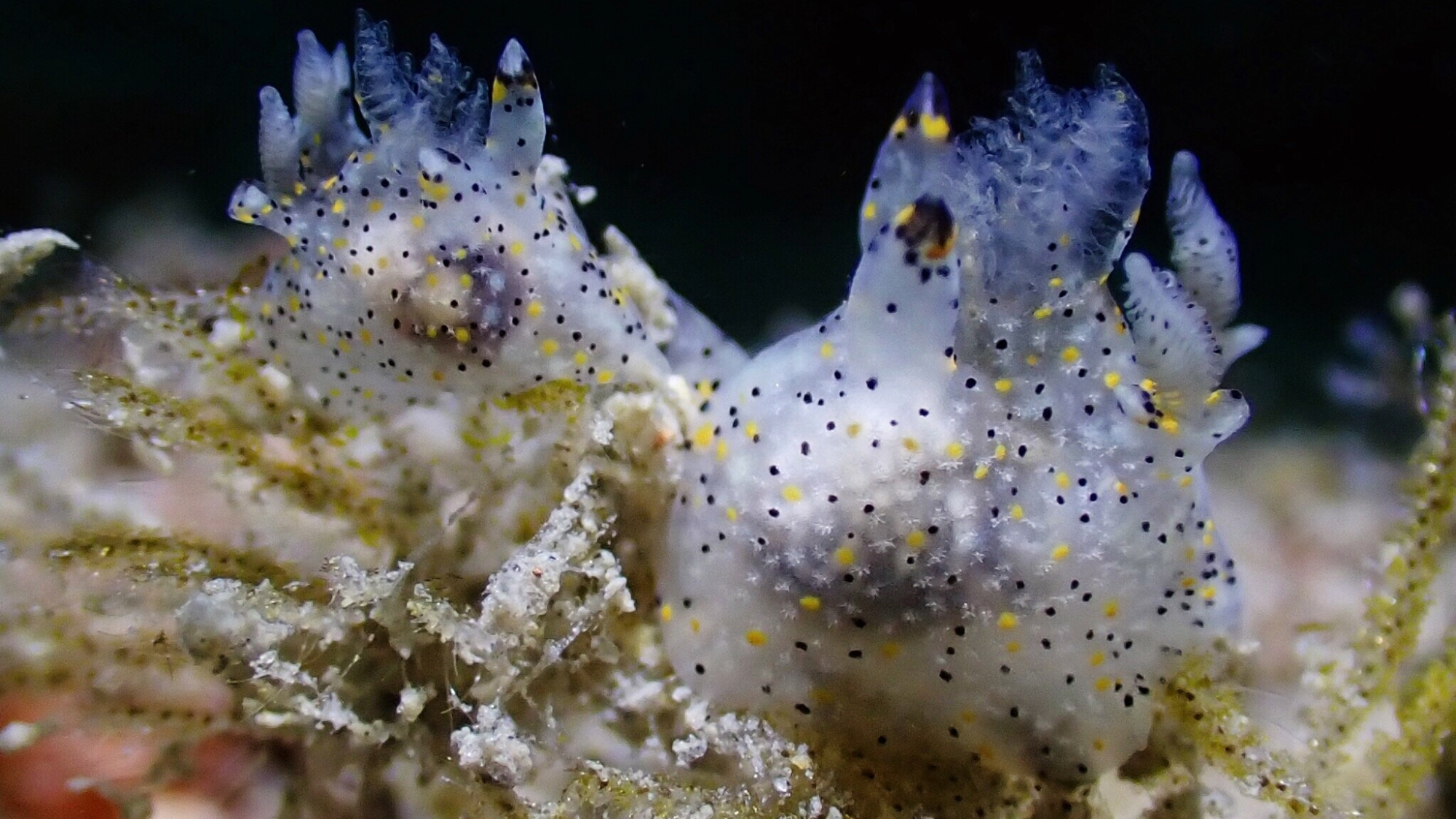
Small as a grain of rice, polka-dotted, and everything nice. These are some of the ingredients that come together to make Thecacera sesama, a newly identified species of sea slug, or nudibranch, found swimming in Taiwan.

“Taiwanese divers call it ‘sesame’ in Chinese and it is also small like a sesame seed, hence the name,” researchers explain in a statement. Indeed, T. sesama is less than 0.12 inches long. The tiny bugger is also translucent and speckled black and yellow, and Ho-Yeung Chan “accidentally discovered” it while diving in 2019. 

a sketch of a sea slug with black and yellow spots
A sketch of Thecacera sesama showing its appearance and morphological features. Image: Chen-Lu Lee.

Chan is a researcher at the National Taiwan Ocean University’s Institute of Marine Biology and Center of Excellence for the Oceans, but was an undergraduate student when he made the discovery. Chan didn’t realize he’d found a previously unknown species until after he’d spoken with sea slug identification expert Hsini Lin via Facebook. Chan is now lead author of a recently published ZooKeys study officially introducing T. sesama to the world. 

The new sea slug seems to enjoy a simple life. It displays just four main actions: feeding, searching, mating, and laying eggs on bryozoans. Also known as moss animals, bryozoans are a group of small aquatic invertebrates. The bryozoan that hosts T. sesama might also be a previously unknown species. 

a speckled sea slug swimming
Living specimens of Thecacera sesama. Image: Ho-Yeung Chan et al., 2026

While you might assume that the most difficult aspect of researching T. sesama is its miniscule size, the hardest part of the study for the team was the explosive weather of Taiwan’s Keelung coast. The island as a whole often has summer typhoons and large waves in the winter monsoon season, during which the sea is frequently colder than 60.8 degrees Fahrenheit. 

With these challenging conditions, researchers can only dive to investigate sea slugs for around a third of the year. The narrow window means that spotting the sesame-sized slugs is completely a toss-up.

“Nudibranchs are one of the key players in the marine food web,” the team explained. “They are extremely colourful and can be spotted on coral reef ecosystems. However, many nudibranchs are very small in size and are extremely difficult to spot underwater with the naked eye.”

Chan and colleagues believe that Taiwan’s marine environment is probably home to many other unknown tiny species. It remains to be seen what new strange creature will emerge from the island’s turbulent waters. 

The post Seed-size sea slug looks like an everything bagel appeared first on Popular Science.

  • ✇Popular Science
  • Even wild desert cats love catnip Margherita Bassi
    Cats are famously obsessed with catnip, but a recent social media post from the Bronx Zoo in New York City highlights that it’s not just bossy domestic felines that take an interest in the plant.  In the zoo’s video, a three-year-old female sand cat (Felis margarita) plays with a catnip-filled ball. Sand cats are the sole only species that live in the true desert. They can withstand both exceptional heat and cold, from 122 degrees Fahrenheit (50 degrees Celsius) to -13 degrees Fahrenheit (-25
     

Even wild desert cats love catnip

10 June 2026 at 21:45

Cats are famously obsessed with catnip, but a recent social media post from the Bronx Zoo in New York City highlights that it’s not just bossy domestic felines that take an interest in the plant. 

In the zoo’s video, a three-year-old female sand cat (Felis margarita) plays with a catnip-filled ball. Sand cats are the sole only species that live in the true desert. They can withstand both exceptional heat and cold, from 122 degrees Fahrenheit (50 degrees Celsius) to -13 degrees Fahrenheit (-25 degrees Celsius). They are found across northern Africa as well as southwest and central Asia.

“The keepers added catnip to this ball to give the sand cats a novel item to stimulate them physically and mentally. Cats respond to a chemical in catnip called nepetalactone,” according to the post. “Its primary function is to repel insects from the plant. Many cats, though not all, are highly attracted to it, and it is safe and non-toxic for them to enjoy.”

Catnip is part of the mint family. According to Jessica Moody, curator of primates and small mammals at the Wildlife Conservation Society (WCS), not all felid species have the same sensitivity to the plant. Moody tells Popular Science that sex and age also impact the response on an individual level. Bronx Zoo (part of the WCS) animal keepers frequently employ catnip, officially called Nepeta cataria, as well as other scents to incite natural behaviors such as investigation and play. 

It’s clearly working with this particular feline, whose species the IUCN Red List categorizes as a species of least concern. However, “it is difficult given their low population density and harsh environment to track true wild populations,” Moody explains. “Primary threats to the survival of sand cats in the wild include habitat loss and a decline in prey caused by human disturbances like livestock grazing.” 

The post Even wild desert cats love catnip appeared first on Popular Science.

  • ✇National Herald
  • IMD issues two-day severe heatwave alert for Delhi-NCR; rain likely from 29 May NH Digital
    Residents across Delhi-NCR are set to endure intense heatwave conditions over the next two days, with the India Meteorological Department (IMD) warning that maximum temperatures could soar to 45 degrees Celsius on Wednesday amid hot winds and rising humidity levels.The weather department has issued a “severe heatwave” alert for the region, forecasting strong surface winds during the afternoon and evening hours. Minimum temperatures are expected to remain around 28 degrees Celsius, while humidity
     

IMD issues two-day severe heatwave alert for Delhi-NCR; rain likely from 29 May

27 May 2026 at 06:15

Residents across Delhi-NCR are set to endure intense heatwave conditions over the next two days, with the India Meteorological Department (IMD) warning that maximum temperatures could soar to 45 degrees Celsius on Wednesday amid hot winds and rising humidity levels.

The weather department has issued a “severe heatwave” alert for the region, forecasting strong surface winds during the afternoon and evening hours. Minimum temperatures are expected to remain around 28 degrees Celsius, while humidity may fluctuate between 25 and 40 per cent, worsening discomfort levels.

Officials have advised people to avoid outdoor exposure during peak afternoon hours, stay hydrated and take precautions against direct sunlight as scorching conditions continue across the capital region.

However, relief from the oppressive heat is likely to begin from May 28, when thunderstorms and light rainfall are expected to hit parts of Delhi-NCR. The IMD said maximum temperatures may dip slightly to around 43 degrees Celsius on Wednesday before witnessing a sharp fall later in the week.

HEATWAVE WARNING ️

Heat wave to severe heat wave conditions likely to continue over Central & Northwest India during next 3-4 days; East & adjoining Peninsular India during next 2-3 days.

⚠️ Stay alert and take precautions:
Drink plenty of water
Avoid direct sunlight… pic.twitter.com/L3DqIcX5WN

— India Meteorological Department (@Indiametdept) May 26, 2026

According to the forecast, thunderstorms accompanied by rain, lightning and gusty winds reaching speeds of 50 to 60 kmph are likely during the afternoon and evening hours on May 28.

A more significant weather shift is expected on May 29, with temperatures predicted to plunge to nearly 36 degrees Celsius — almost nine degrees below current levels. Light rain, thunderstorms and squally winds of 40 to 50 kmph are expected to continue, bringing much-needed relief to residents battling the prolonged heat.

The IMD said similar weather conditions are likely to persist on 30 and 31 May, with cloudy skies and intermittent light rainfall expected across the region. Daytime temperatures during this period are forecast to hover between 35 and 36 degrees Celsius.

Weather experts said the sudden change is part of pre-monsoon activity affecting large parts of North, Central and East India, where strong winds, dust storms, lightning and rain have been reported in recent days.

By 1 June, weather conditions are expected to stabilise, with partly cloudy skies and temperatures gradually returning to near-normal levels.

With IANS inputs

❌
Subscriptions