A couple of fun items concerning Peter Kuper, who began contributing to The New Yorker in 2011. His book, Insectopolis: A Natural History is a Ohio Books Awards finalist in the category of nonfiction.
Theme park prohibition strangely opens the door to a new kind of creative freedom.
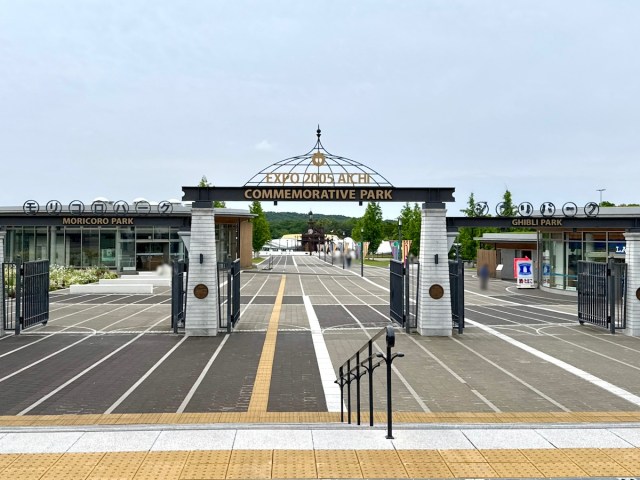
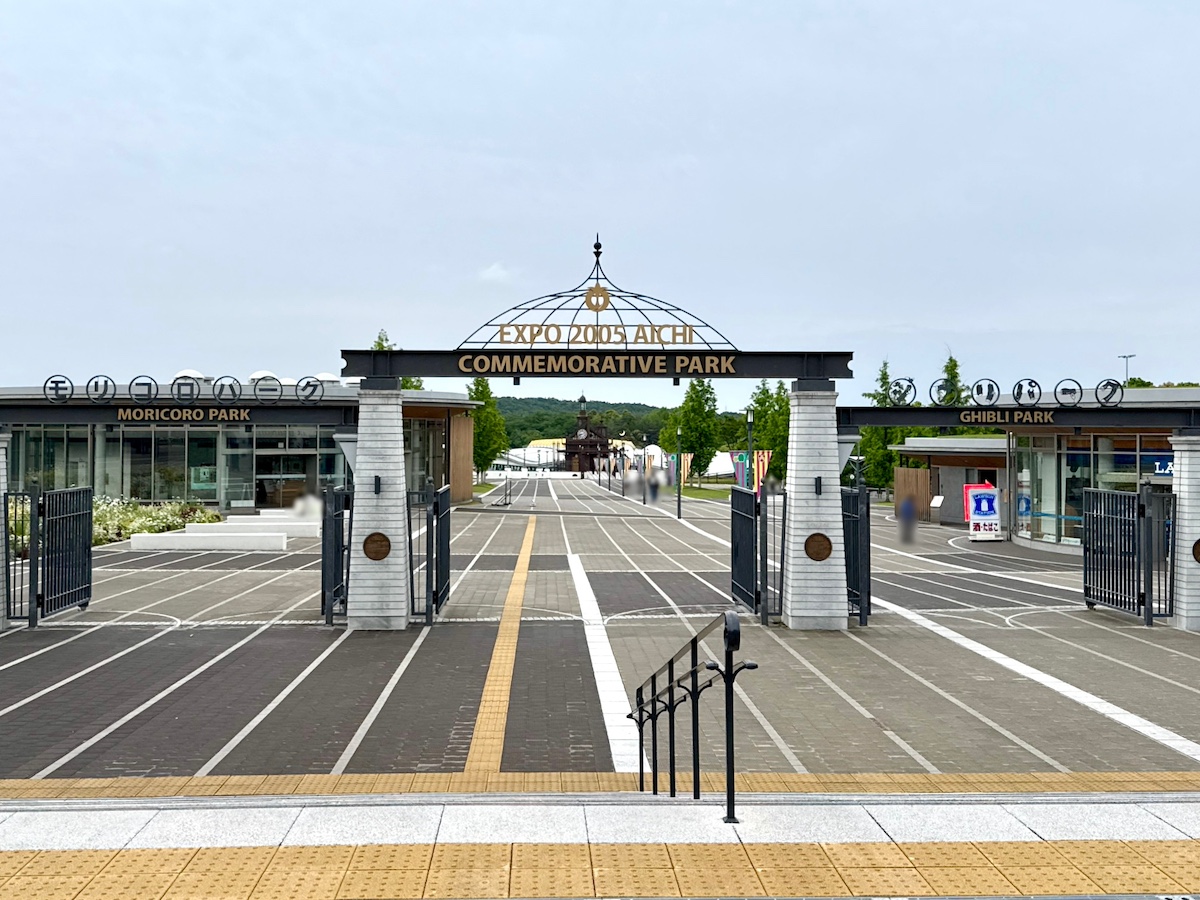
When you visit Ghibli Park in Nagakute City, Aichi Prefecture, you’ll find a vast array of attractions, including life-sized buildings that look like they’ve jumped straight out of a Studio Ghibli film. However, if you research the park beforehand to see what the rooms inside these buildings look like, you’ll notice something else: there isn’t a wide variety of interior photos on social media.
That might sound odd, given Ghibli’s worldwide fame and loyal fanbase, but the lack of photos doesn’t mean there’s no desire to share them online. Rather, it’s because photography is strictly prohibited inside most of the buildings. Instead, the park limits interior photos to the Becoming Characters in Memorable Ghibli Scenes exhibit inside Ghibli’s Grand Warehouse, where visitors can step into life-sized dioramas depicting 14 famous film scenes.
All of this came as a surprise to our Japanese-language reporter Saya Togashi when she visited the park for the first time recently. Unaware of the photography ban in the large majority of the buildings, her initial disappointment turned into an eye-opening experience both literally and figuratively, so she decided to share some thoughts on the ban and the surprising effect it had on her visit.
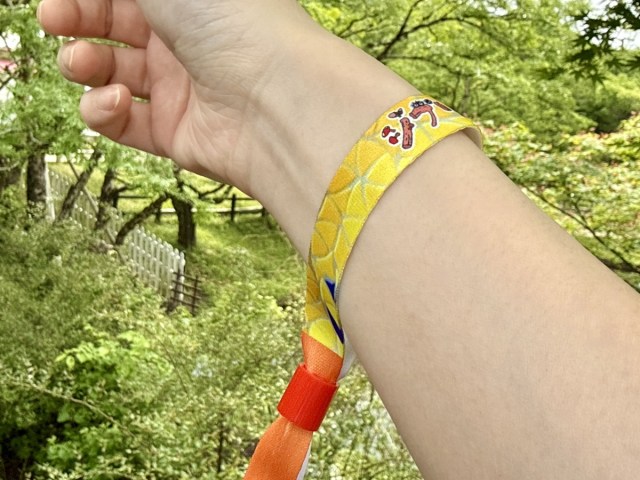
▼ Saya with her Ghibli Park entry band.
1. People don’t linger to take photos
The most obvious benefit to come from the ban is the fact that it prevents people from lingering too long in an area while trying to capture the perfect shot. Every exhibit presents a perfect photo opportunity, as each display creates an ideal backdrop that makes visitors look as though they’ve stepped into an anime world, and the attention to detail in the objects inside the buildings is so impressive that you could take hundreds of photos and it still wouldn’t be enough, which is why the ban feels necessary.
With so many small rooms inside, there isn’t much space to move around – even if one person stopped to take a picture it would cause a huge holdup for visitors. The photography ban ensures the crowds move smoothly through the exhibits, creating a more pleasant environment for everyone to enjoy what they’re seeing.
Another advantage is the absence of live video streamers. Even when they aren’t being intentionally disruptive, live streaming can cause anxiety for people nearby, as not everyone wants their face broadcast around the world without consent. In a country like Japan, where publishing identifiable photos of people without permission may violate privacy or image rights, the absence of cameras creates a sense of ease and safety that allows everyone to relax.
2. Visitors can concentrate on what’s in front of them
When you can’t take pictures, or when you don’t have your smartphone in your hand, something beautiful happens: you naturally start to focus on what’s in front of you. Though photography may be prohibited, visitors are allowed to touch many of the exhibits, engaging the sense of touch and creating a multi-sensory experience that benefits from full attention. This gesture of goodwill by the park, which prioritises the visitor experience over concerns about theft or damage, helps nurture an environment of care and respect that you might not find in other amusement parks.
In Mei and Satsuki’s House, for instance, opening a closet door reveals bedding and pyjamas belonging to the Kusakabe family, who star in the film My Neighbour Totoro. The dresser contains the father’s clothes, which carry a faint smell of mothballs. You can search for the stairs leading to the second floor, just like in the movie, and even find Mei’s hat. It’s a continuous stream of discoveries that gives you a great sense of satisfaction in finding things for yourself.
Without the scrutiny of a smartphone screen, our senses become sharper. The small size of Mei’s clothes and the way they feel in your hand, the creaking of the closet, the sense of everyday life emanating from the old dishes in the kitchen – these are now vividly etched into Saya’s memory as real lived experiences.
In the documentary Until Ghibli Park is Finished, director Goro Miyazaki told his staff, “It’s good to touch the house as much as possible, like refolding clothes as if you were actually living there.” That sense of bringing the house to life is clearly evident, and it allows visitors to appreciate just how impressive it is that Satsuki and Mei’s House is built to be fully functional, with features such as a wood-fired stove for boiling water and a hearth for cooking rice. If God is in the details, so is Studio Ghibli.
3. There are no spoilers
In this era where everyone is a photographer, any place and any event can be easily experienced virtually through the Internet. Although we might know there are things that can only be understood by being there and experiencing them firsthand, videos and images can have a huge impact on our perception.
At Ghibli Park, however, very little prior information is available beyond officially released details about the different rooms and exhibits. Since photography is prohibited indoors in many areas of the park, visitors experience the spaces with almost no spoilers beforehand.
Because you encounter the actual settings and objects without prior exposure, everything feels fresh and surprising. Saya felt this especially strongly in Howl’s Moving Castle, where she had goosebumps after stepping into the dimly lit castle from the bright outdoors. Once your eyes adjust, you’re overwhelmed by the sheer volume of cluttered everyday objects and magical items laid out in front of you, appearing just as it was in the movie.
Although it’s an area visitors can’t touch, Howl’s bedroom, meticulously recreated with small objects, sounds, lights, and movements, is a must-see. It’s truly moving to witness something you’ve only ever seen in the 2-D anime world come to life before your eyes, complete with weight, scent, and texture.
Sure, Ghibli Park might not have big rides with elaborate special effects or dazzling shows, but that’s actually its charm. The dedication to creating special spaces and the sheer scale of its construction surpasses those of many world-class theme parks, and it’s something you can sense in every area.
After visiting the park, Saya came to realise the merits and demerits of modern theme parks that rely on social media sharing. Keen to update their operational policies to keep pace with the times, theme parks are shifting from being places where visitors immerse themselves in carefully crafted worlds and becoming platforms for sharing experiences, primarily through social media.
Saya has felt the tide turn firsthand at Disney Resorts, where she used to attend the New Year’s Eve countdown event every year. Although getting tickets was always a bit of a struggle, once you were inside the park, you could easily enjoy all the events, like watching shows, enjoying limited-edition food and drinks, and buying New Year’s items, without the need for any special strategy or plan. Of course, there were lines, but as long as visitors waited patiently, they could achieve their theme park goals, especially as visitors wandered the grounds discovering things along the way.
However, one year things changed. Even immediately after opening, the shelves for New Year’s items were empty, special menu items were all sold out, and the atmosphere at events became tense, with staff shouting to control crowds as people scrambled to secure prime viewing spots. This was around the time when the social media culture of sharing one’s own experiences and the business of profiting from reselling began. It created a world of competition and anxiety, where people have to work harder to buy the things they want and experience the things they want to experience — things that once felt much simpler before the age of social media.
This isn’t necessarily a bad thing for the theme parks themselves; the spread of information on social media and the increased rarity of merchandise are simply the result of fans’ enthusiasm. However, it does have an impact on the visitor experience, and after visiting Ghibli Park, Saya walked away with her eyes opened to what can be possible when visitors are prioritised over financial profit. By creating sensory worlds that can’t be fully captured in photographs, Ghibli Park encourages visitors to engage with the world around them, fostering face-to-face communication and a sense of adventure that lies at the heart of every Ghibli film.
When Austin Bell first visited Hong Kong in 2017, he was struck by the chromatic vibrancy of its public basketball courts. Coming from the U.S., where these surfaces are often the neutral and uninteresting textures of asphalt and other materials, he was compelled to document the range of vivid color combinations, especially within the context of high-rise neighborhoods and urban infrastructure.
Bell set out to capture 2,549 outdoor basketball courts around Hong Kong—every single one there is in the region. The resulting series, SHOOTING HOOPS, not only highlights the physical courts but conveys a unique portrait of the region and the spaces where people can mingle. “To me, basketball courts are one of the most interesting subjects for aerial photography because they look so different from above than the ground,” Bell tells Colossal. “Their flatness and geometric design become an almost extraterrestrial tableau—like concrete crop circles.”
For such a densely populated place, Bell’s images are often devoid of people, giving the colorful scenes a subtle ghostly feel. Looking closely, though, you can often see passersby out and about, illustrating the abiding popularity of these urban recreation parks. “One of the newest ones is at a playground called Chung Sing, which is so named for the sound a bell makes, so the designers stylized the surrounding area with audio waveforms,” Bell says.
Bell captured the photos in 2019, trawling Google Maps’ satellite imagery and using his drone to explore spaces between buildings and trees. Over the course of 140 days of shooting during multiple visits, he took more than 40,000 photos. He often photographed from dawn to dusk, and it wasn’t unusual for him to shoot upwards of 100 courts in a day. Once, he meticulously planned a route and captured a mind-boggling 475 courts in a single day.
“The insane became mundane,” Bell says in a statement. “I had become an obsessive completist, unable to rest until I found every court in the city. My obsession was fueled by two desires: to show an unseen perspective of Hong Kong and to fully explore a city that I feel so captivated by.”
Find more on Bell’s Instagram, and purchase the photo book from his webshop.
Since 2018, Ontario’s nature protections have been repeatedly weakened. While a few stories such as the ongoing changes to Conservation Authorities or the Greenbelt scandal made headlines, dozens of major changes have flown under the radar, buried deep inside massive government bills. It has been a lot to track, even for us.
Today, Ontario Nature is releasing a comprehensive new resource: Tracked Changes: The Decline of Ontario’s Legal Protections for Nature since 2018. We tracked every single piece of legislation that weakened legal protections for nature and biodiversity from the first term of the current provincial government to today. We broke it all down in plain language, cutting through the legislative jargon to reveal exactly how our environmental laws have been rewritten.
Our review, detailed in the full report, catalogs the changes made bill-by-bill and schedule-by-schedule. Over the past seven years, key environmental laws, built over decades, have been systematically dismantled.
The Endangered Species Act (ESA) has been a primary target. Changes began with Bill 108 in 2019, which created a “Species at Risk Conservation Fund.” Critics called this a ‘pay-to-slay’ scheme, allowing proponents to pay a fee instead of being legally required to provide an “overall benefit” to the species they are harming. This process culminated in 2025 with Bill 5, which fundamentally rewrote the ESA to prioritize economic considerations over science-based recovery and even created a new law, the Species Conservation Act, to eventually replace it entirely.
Conservation Authorities (CAs), our frontline defenders against flooding and protectors of wetlands, have been substantially weakened. Bill 229 in 2020 forced CAs to issue permits for developments authorized by a Minister’s Zoning Order, even if those projects would be denied under their own standards for flood protection. The Auditor General criticized this move for shifting environmental decision-making from qualified professionals to political processes.
Public oversight and democratic accountability have been sidelined at every turn. The independent Environmental Commissioner of Ontario was eliminated in 2018 through Bill 57. The government has repeatedly circumvented the Environmental Bill of Rights, sometimes passing legislation before public comment periods on those very proposals have even closed, as happened with Bill 150 in 2023.
Few of these changes got the headlines they deserved. Nearly all of them were buried inside massive omnibus bills. These are bills that bundle dozens of changes into a single piece of legislation.
For example, Bill 5, the Protect Ontario by Unleashing our Economy Act, 2025, was a single bill that:
Cancelled environmental agreements for the Eagle’s Nest mine project and exempted the Chatham-Kent waste site from certain approvals.
Centralized mining authority in the Minister, enabling fast-tracked permits.
Removed public consultation rights for permits related to the Ontario Place redevelopment.
Established Special Economic Zones where selected projects can be exempted from provincial and local laws, including environmental protections.
This strategy of putting so much into a single bill ensures that major changes to environmental protections pass into law with little media coverage or public awareness. Our new resource cuts through this volume, separating each schedule so you can see exactly what changed and how.
These changes didn’t happen all at once, and taken together, they systematically dismantle many of Ontario’s most significant legal environmental protections.
This report is designed as a tool for advocates, journalists, and anyone who wants to understand what has happened to nature protections in Ontario over three terms of the current government. We hope this will make it easier for people to see the full picture and understand not only what laws have changed, but how these changes have circumvented democratic transparency.
"History cannot be faithfully told while excluding the experiences of communities whose contributions, struggles, and achievements form an important part of our Nation's story," the judge wrote.
A bold new structure has appeared in Cary Park in Cary, North Carolina: the latest sculptural pavilion by Marc Fornes / THEVERYMANY. The work is titled “L’Ile Folie,” which nods to the architectural tradition of the folly, a landscape feature that was all the rage with wealthy estate owners in the 18th and 19th centuries.
Often nostalgic and resembling ruined miniature castles or bucolic village buildings, follies were generally non-functional and conceived as pure decoration. Fornes, however, reimagines this practice with an eye toward the future rather than the past. The pavilion “gives this tradition a contemporary meaning: memorable, playful, and slightly surreal,” says a statement.
Fornes is known for creating high-tech structures made from thousands of individual facets, blurring the distinction between architecture and sculpture. Situated along a boardwalk and perched over a pond, the gleaming white pavilion invites visitors to pause and appreciate their natural surroundings from a contemporary landmark.
“Constructed from ultra-thin folded aluminum panels, each piece is digitally fabricated and precisely riveted into place,” says a statement. “There is no hidden frame; the skin is the structure. Thousands of perforations filter sunlight into delicate patterns, turning the canopy into an ever-changing atmosphere of shadow and shimmer.”
With varying degrees of hope, I commonly say that I’m going to find wild cats when I head into the wild with my camera. And so it was that I excitedly shared this cougar alert post from Waterton National Park just a few days before my arrival there. I never expected what happened next.
Here, Kitty, Kitty. Psspsspss.
On the eve of my first day in the park, during a wildlife drive, I lamented the lack of wildlife sightings. All of the park’s communications warn visitors to be prepared for encountering wildlife while hiking. One hundred yards into any trail is this warning sign.The massive 2017 Kenow Fire razed the dense forests, resulting in extensive sightlines. And yet.
Stuck in My Head
I passed by a small gathering of photographers with their big lenses pointed at a black bear high up on a slope. He was too far away, and, honestly, I’m beyond fortunate to be spoiled by previous, intimate bear encounters.
Black bear eating berries high up on the hillside
I’d come here to help reset my head. It’d been way too long since I’d been able to wander the wilderness in this way that feeds my soul, and there’s a lot of stress at home. I craved some forest bathing!
Here’s Your Sign
I was having a hard time shedding the stress. “I’ve lost my wildlife mojo,” I said to myself. The wild is responding to my negative energy, I thought as I rounded a bend to see the unmistakable long tail of a mountain lion crossing the road. A wild, North American mountain lion!!
First sighting – uncropped at 120mm!
I stopped in the road and activated my flashers while simultaneously grabbing my binoculars. I didn’t expect to locate the ghost cat, master of camouflage, in the low aspens and serviceberry bushes. But there he was. Standing broadside. This magnificent, muscular tomcat looking back at me.
I’ve spent a lot of time in mountain lion territory. I’ve seen tracks, scat, and sign. One delightful winter day, I heard a cougar calling to her kittens. I’m sure plenty of wild cats have seen me. But, until now, I’d never seen one in North America. Ghost cats!
I quickly exchanged the binoculars for my camera. The puma made some assessment of me and turned to pad up the burnt hillside. He moseyed, moving at a relaxed walk, stopping to look around, gently wagging the tip of that long feline tail, doing all the cat things. I reveled in this magical, solitary moment.
Imagine if these trees were green. He’d been gone.
As I watched him disappear and reappear through trees and brush, he crouched below a boulder and scrunched his ears out to the side. The stealthy cat pose. I thought he might be stalking a hare.
It was at this moment that I heard a car approaching. I am stopped in the lane of traffic below a blind curve. I started the car and crept forward with my eyes on the rear-view mirror. In the car behind me, one of the photographers I’d passed activated her flashers, and we both stopped.
I glassed and glassed the hillside but could not find the cougar. The person behind me had their big lens out the window, focused on the slope. I scanned the area where she was looking, astonished that she had found this elusive cat so quickly, when I’d been watching him and can’t find him. Only then do I realize that she’s photographing a black bear higher up the hillside to the left. To the right, a cinnamon-phase black bear is ambling along the hillside toward the other bear. This must be what caught the mountain lion’s attention, causing him to crouch. Bears and cats don’t play well together. I’m sure “my” cat is long gone now.
Still in Awe
When I got home, I checked the time stamps on my images. I spent almost five minutes with this elegant, wild cougar. FIVE MINUTES! A glimpse is a gift. I don’t even know what to call this—unreal, unbelievable, blessed, connection, becoming.
The image of that lion crossing the road when I first saw him is seared in my mind. Today, I’m the luckiest girl in the world.
If you’re interested in purchasing or licensing any images you see here, please email me at SNewenham at exploringnaturephotos.com, and I’ll make it happen.
Subscribe here to receive an email whenever a new blog posts.
I’d half expected the falls to be dry. It’s hardly rained in northwest Georgia this autumn. But nature always delights as she often reminds me. The tiered unnamed falls cascade in a soft veil to join the creek and meander among the fallen leaves. The low water level made for easy scrambling across narrow streams, allowing me to fully explore this beautiful gorge in solitude.
I’d parked at the north end of Sitton’s Gulch Trail in a quiet residential neighborhood instead of the busy Cloudland Canyon State Park lot. It’s a rolling uphill hike from here to the steps above the falls and an easy hike back. It turns out that was a blessing, as I’d lingered at the falls and dusk was quickly approaching as I tried to ignore scores of puffball mushrooms and striking leaves along my way to get to the car before the last of the light, which disappears earlier in the canyon bottoms.
It’s mid-November, and most of the leaves have fallen. Those still in the treetops twirl in the breeze, mimicking the gentle patter of a spring rain. I’m a half-mile from the parking lot when the full aroma of decaying leaves envelopes me and stops me in my tracks. I close my eyes and inhale deeply, savoring the nostalgia and peace of an eastern hardwood forest. My shoulders fall, and I’m instantly relaxed. It brings me back to barefoot summers full of exploration.
A couple of weeks ago, the falls were reportedly dry. Since then, there’s been some rain. And the snow flurries two days ago. I glimpsed a pool of water as I rounded a bend in the trail. What I’d thought was the sounds of rustling leaves was actually the gentle sound of water splashing down the boulder-strewn gulch! I’m elated!
I had an image in my head of the red maples in full color with the motion-blurred water falling behind them. It’s an image I missed on my last trip here, because I didn’t have my tripod. I had to hand-hold a long exposure, and all of the images turned out blurry.
I wanted a do-over, even though I know we can never visit the same river twice. Today, most of the red leaves are on the ground, leaving the ochres and golds aloft to sing the song of the season.
The creek widens as I move up the path; small cascades roll over rocks in miniature torrents. Just before the unnamed falls, the Sitton’s Gulch Creek is only a few feet wide, carrying leaves, eddying in pools, and spilling down the canyon.
Unnamed Tiered Falls
I lingered at the base of these falls for an hour, enthralled with the way the water moves and all of the leaf mosaics plastered on the rocks.
Climbing the wooden steps, I crossed the creek on a boardwalk at the lip of the falls. I took the short spur to Hemlock Falls. A viewing platform overlooks the ninety-foot waterfall.
Dusk is coming
Social trails descend steeply to the base of the falls, an area that would be pooled with water when the creek runs full. Today, it would be a safe scamper down. But. I’m three miles from my car and one-and-a-half hours from sunset. Next time. This canyon keeps calling me.
If you’re interested in purchasing or licensing any images you see here, please email me at SNewenham at exploringnaturephotos.com, and I’ll make it happen.
Subscribe here to receive an email whenever a new blog posts.
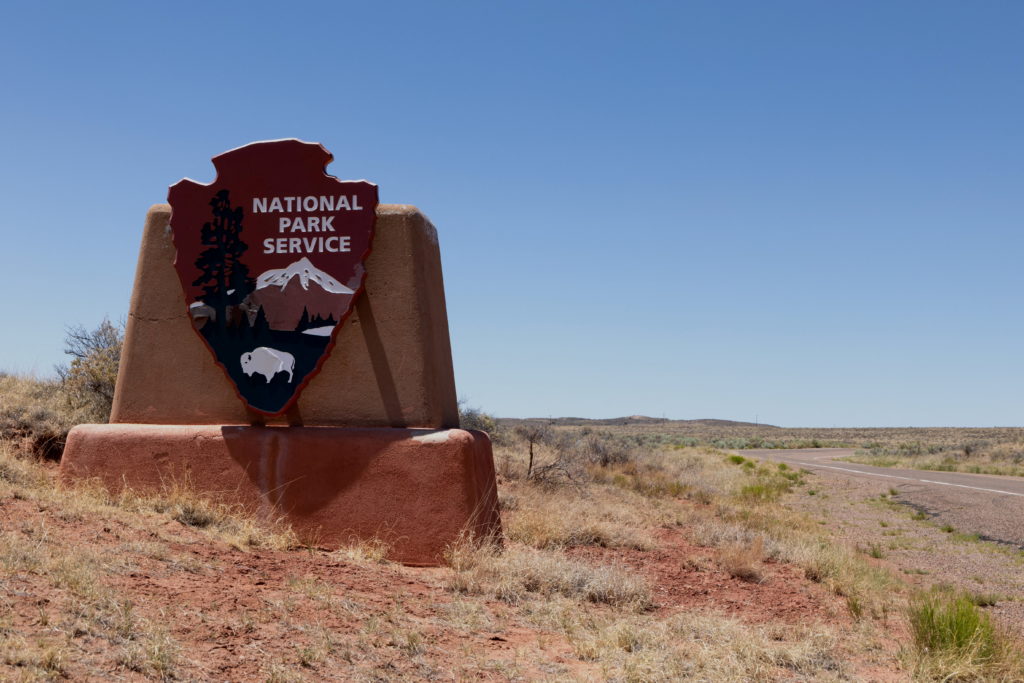
A federal judge in Massachusetts has ordered the Trump administration to reinstall displays it removed from National Parks sites over the past year as part of a crackdown on diversity, equity and inclusion (DEI) content and climate change information. A group of park advocacy organizations sued the Interior Department, National Park Service and its leaders...
Comcast NBCUniversal will invest £6B ($8.1B) in a new Universal theme park in the UK, its first in Europe. The UK’s Culture, Media & Sport department has officially revealed that the Universal United Kingdom Resort will begin construction in Bedfordshire soon, expected to complete by 2031, at which point it will aim to attract 8.5 […]
Universal Studios Japan made our Frieren fan cry, and she’s very OK with that.
The original concept for Universal Studios was to give theme park visitors a taste of Hollywood movie magic, but many of the biggest draws at Universal Studios Japan are its Japanese video game and anime partnerships. The latest entry into what’s collectively called Universal Cool Japan just kicked off and it gives fans a chance to step into, and walk around in, the world of fantasy anime Frieren: Beyond Journey’s End.
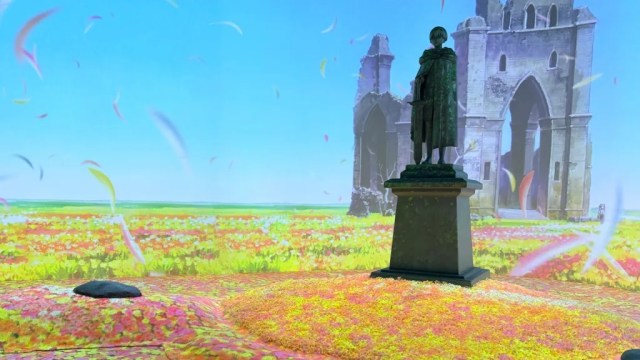
The main attraction of the collaboration is the Frieren: Beyond Journey’s End Story Walk: Journey of Remembrances. This is a walk-through environment in which you’ll retrace Frieren’s steps, visiting scenes and locations from the anime recreated through dynamic lighting, sounds effects, voices, and projection mapping. Aside from the titular heroine, you’ll encounter other members of the cast including her traveling companions Fern and Stark.
Our Japanese-language reporter and passionate Frieren fan Marie Morimoto recently took this journey and was thoroughly enchanted. Some of the scenes are funny, some are touching, and the final stop on the journey was so moving that she didn’t just get choked up, she actually shed some tears.
▼ Video preview for Frieren: Beyond Journey’s End Story Walk: Journey of Remembrances
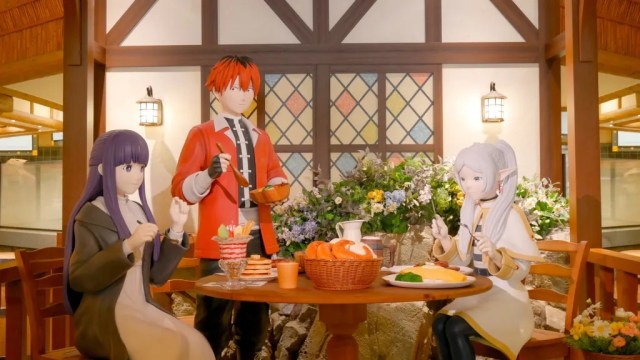
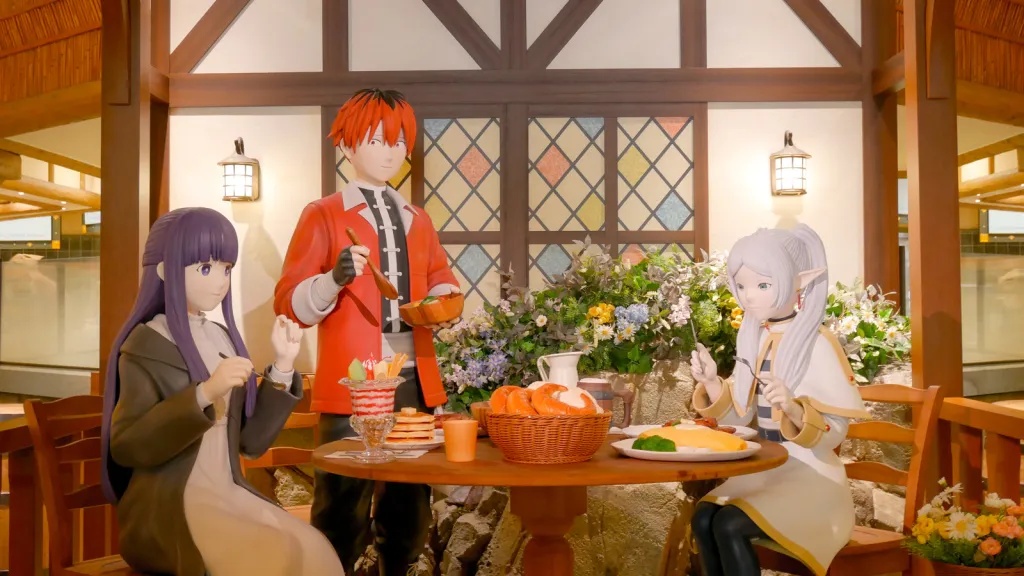
After Marie wiped the tears from her tears, though, it was time to attend to her stomach, so it was off to the Restaurant of Remembrances, as Universal Studios Japan’s Lost World restaurant has been renamed while it’s occupied by the Frieren franchise.
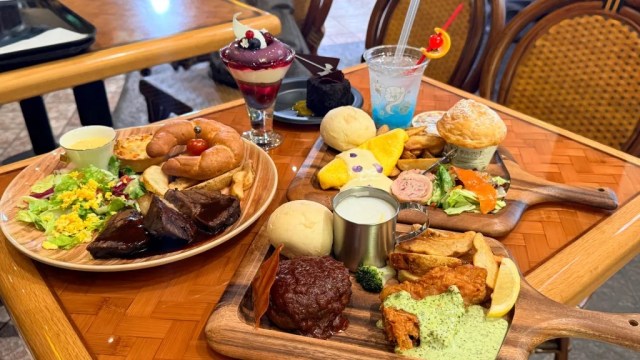
The vibe here is that of a fantasy tavern where adventurers can grab grub while reminiscing about their most recent adventure or planning their next. The menu includes such hearty fare as the Frieren Beef Plate with Red Wine Demi-glace Sauce, with, as Marie learned when she took a bite, features delightfully tender meat. There’s also an Eisen and Heiter Hamburger Steak and Fish and Chips Plate, and as a salute to Frieren’s soft spot for sweets, the Freiren Cherry and Blueberry Parfait, which includes an elegant butterfly-motif spoon to take home with you.
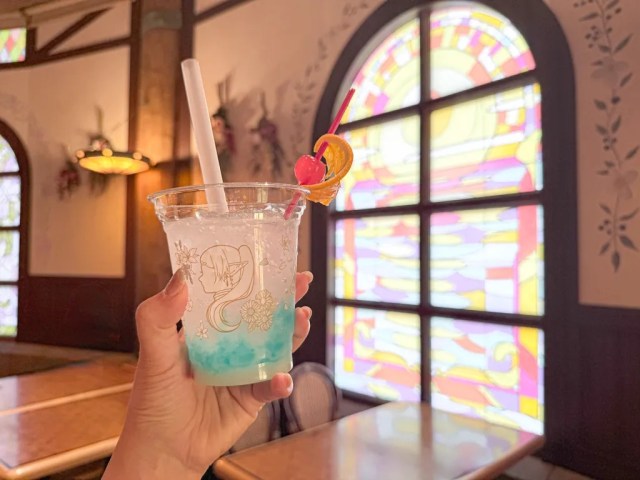
To drink, Marie opted for the Fragrant Flower Frieren White Soda. In Japan, the term “white soda” usually refers to a fizzy soft drink with a mildly sweet yogurt base (basically Calpis/Calpico, but from a different manufacturer), but the Frieren White Soda has a dash of sky blue color to, matching the hair color of the hero Himmel.
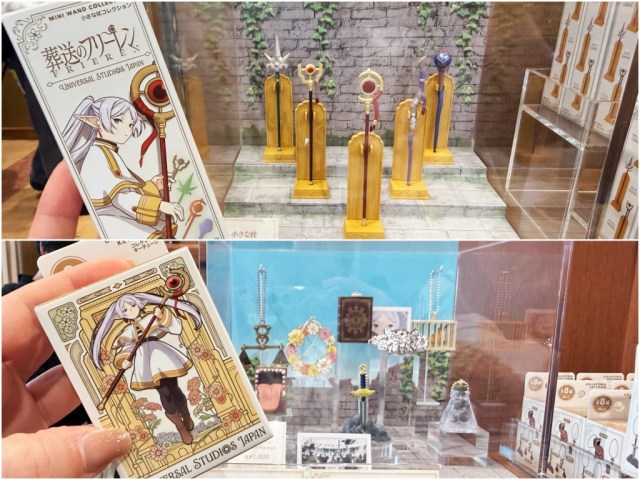
And of course, this wouldn’t be a proper collaboration without some special exclusive merch, would it? On that end, Universal Studios Japan has cute character hair bands with Frieren and Himmel plushies attached, and also plushie straps/key holders.
If you want to get more romantic, there’s a Pair Necklace so that you and your sweetheart can wear complementing accessories.
And there are also gacha/blind-box key chains and standee props.
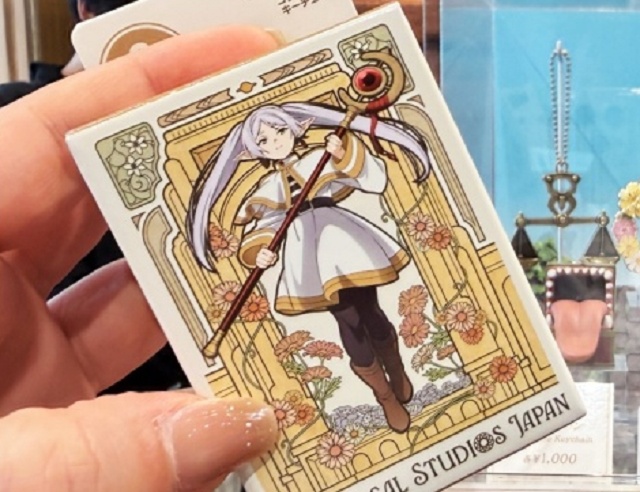
▼ Though we’d call magical rods of this length “staffs” in English, the box’s text calls them “wands,” and actually in fantasy anime/video games they’re pretty much both called tsue in Japanese.
▼ A cool design point on the collaboration’s key art illustration is that the gate behind Frieren is the entrance to Universal Studios Japan.
In addition to all this, the Frieren crew are also part of Universal Studio’s Hollywood Dream the Ride roller coaster, with one of the selectable audio tracks now being a tale of Frieren encountering some mythical feathered beasts.
Universal Studios Japan’s Frieren collaboration is going on now and continues until January 11.

 Login
Login











:max_bytes(150000):strip_icc():format(jpeg)/Tidal-Force-at-Hershey-Park-1-061126-081d6c72054f4e53ab4565f4849d5ae7.jpg "<p>Google Maps</p>")