Vietnam’s cybersecurity landscape has witnessed a notable shift in recent years. While the number of cyberattacks recorded in 2025 showed signs of decline, the proportion of organisations suffering actual damage rose to 52.3%. Cyberattacks increasingly target critical sectors, including banking, finance, energy, telecommunications, and government agencies.Experts recommend ‘five don’ts’ to protect personal dataParty building work prioritises clean, shared data in digital transformation pushHo Ch
Vietnam’s cybersecurity landscape has witnessed a notable shift in recent years. While the number of cyberattacks recorded in 2025 showed signs of decline, the proportion of organisations suffering actual damage rose to 52.3%. Cyberattacks increasingly target critical sectors, including banking, finance, energy, telecommunications, and government agencies.
With calls of American “resilience and unity” ahead of the country’s 250th birthday and chants of “USA, USA” from the the crowd of nearly 20,000 in a packed Madison Square Garden for Monday’s Game 3 of the NBA Finals, President Donald Trump learned how Knicks fans really felt about him. The erstwhile New York resident […]
With calls of American “resilience and unity” ahead of the country’s 250th birthday and chants of “USA, USA” from the the crowd of nearly 20,000 in a packed Madison Square Garden for Monday’s Game 3 of the NBA Finals, President Donald Trump learned how Knicks fans really felt about him. The erstwhile New York resident […]
Full disclosure. I used an AI tool and asked what a human being can do in one second? One second might feel like nothing but it is a fascinating unit of time, was the response. A human being can blink, take a breath, snap one’s fingers or speak a short word like ‘Hi’, it went on to inform. A human being’s heart can also beat once every second; or you can feel a flash of emotion, anger or irritation, surprise or joy. A human being can also notice a movement, hear a sound or identify a colour or f
Full disclosure. I used an AI tool and asked what a human being can do in one second? One second might feel like nothing but it is a fascinating unit of time, was the response. A human being can blink, take a breath, snap one’s fingers or speak a short word like ‘Hi’, it went on to inform. A human being’s heart can also beat once every second; or you can feel a flash of emotion, anger or irritation, surprise or joy. A human being can also notice a movement, hear a sound or identify a colour or form at a distance in that tiny blip of time.
However, a hummingbird can flap its wings 50 times in a second. A camera can capture an image. A computer can process millions of instructions and light can travel 300,000 kilometres or circle the earth 7.5 times. The earth itself moves 30 kilometres in a second along its orbit around the Sun.
In athletics, especially in sprinting, one second is massive — it can mean the difference between being a world champion and finishing last. The world’s fastest sprinter Usain Bolt’s 100m record of 9.59 seconds still stands. The current women’s 100m world record is 10.49 seconds, set by Florence Griffith Joyner (USA) in 1988. The Olympic record is 10.61 seconds, set by Elaine Thompson-Herah (Jamaica) at the Tokyo 2020 Games. Elite international male sprinters run the 100m in 9.5 to 10 seconds while female sprinters take a second more to cover the distance.
India’s two fastest sprinters are still not quite there yet. We are yet to break the 10-seconds barrier. In sprinting terms one second stands for 10 meters. Even 0.1 second’s difference can separate the athlete in the first place and the athlete who finishes fifth. The huge one-second gap is visible when one sees a 100m dash or sprint in slow motion. If Usain Bolt and Gurindervir Singh had run together and Bolt finished at 9.59 seconds and Gurvinder took 10.59 seconds, the Indian would reach the finishing line 10 meters behind Bolt.
International sprinters cover roughly 10–12 meters — about the length of a bus — in one speed at top speed. A difference of 0.1 second can put an athlete behind by one meter. Ten seconds would stretch the gap to 10 meters on the racing track.
The Internet puts it in perspective. The AI tool I used described vividly what that one second may look like.
· Runner A (Bolt at 9.58s): He’s already breaking the tape at the finishing line.
· Runner B (10.58s): At that exact moment, runner B is still about 10 meters behind, sprinting hard but nowhere near the line.
Those of us who have never been athletes and have never been a sprinter would find it hard to imagine the blood, tears and sweat that athletes and their trainers spend to run those 10-12 extra meters in one second. I tried but managed to cover far less than two meters in one second. Why don’t you try too?
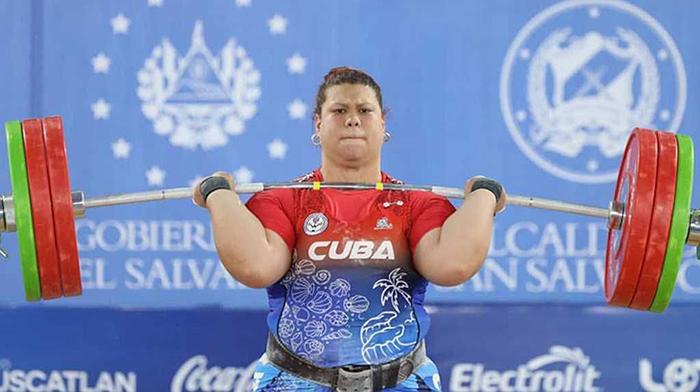
Olympic bronze medallist Sakshi Malik has strongly backed fellow wrestler Vinesh Phogat amid the ongoing row over her eligibility, urging Prime Minister Narendra Modi, Sports Minister Mansukh Mandaviya and the Wrestling Federation of India to allow her to compete and make an international comeback.Vinesh, who announced her retirement shortly after her dramatic disqualification from the Paris Olympics 2024, later reversed her decision after becoming a mother last year and has been attempting to r
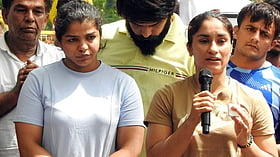
Olympic bronze medallist Sakshi Malik has strongly backed fellow wrestler Vinesh Phogat amid the ongoing row over her eligibility, urging Prime Minister Narendra Modi, Sports Minister Mansukh Mandaviya and the Wrestling Federation of India to allow her to compete and make an international comeback.
Vinesh, who announced her retirement shortly after her dramatic disqualification from the Paris Olympics 2024, later reversed her decision after becoming a mother last year and has been attempting to return to competitive wrestling after nearly 20 months away from the sport.
However, in a 15-page show-cause notice, the Wrestling Federation of India declared Vinesh “ineligible” to participate in sanctioned competitions until at least 26 June 2026. The decision effectively bars her from competing in the 2026 Senior Open Ranking Tournament in Gonda, Uttar Pradesh.
Backing Vinesh publicly, Sakshi appealed to authorities to permit the wrestler to take part in trials.
“I request my Prime Minister Narendra Modi, sports minister Mansukh Mandaviya, and the Wrestling Federation to take Vinesh’s trials so that she can also win medals for the country and make the country proud,” Sakshi said.
She further said Vinesh’s return could become an important example for women athletes balancing motherhood and professional sport.
“And to set such an example, so that women can play in their own country, even after becoming a mother, win medals and make the country proud,” she added.
Sakshi also criticised the federation’s handling of the issue, arguing that many international sports bodies actively support female athletes returning after childbirth.
“I can give many such examples where sports federations of other countries make rules easier for their players so that even after becoming a mother, women can play for the country and win medals,” she said in a video posted on social media.
“Whereas our federation implements such rules two days before so that Vinesh cannot make a comeback,” Sakshi alleged.
Despite being declared ineligible, Vinesh appeared at the Senior National Open Ranking Tournament in Gonda and maintained that both the International Testing Agency and the World Anti-Doping Agency had cleared her to return to competition from 1 January 2026.
The controversy has sparked wider debate within Indian sports over athlete welfare, federation transparency and support mechanisms for women athletes returning to elite competition after motherhood.
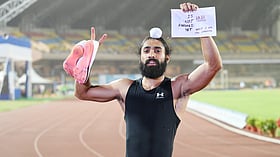
When the social media was celebrating the feat of sprinter Gurindervir Singh last weekend, a stray comment on the Facebook wall caught my eye: ‘What is there to celebrate as it’s nowhere near world standard?’ A comment which betrays a lack of awareness about the ground realities about Indian athletics – with Gurindervir being the first Indian sprinter to clock a sub-10.10 sec in history. It’s been two days since the Federation Cup athletics concluded at Birsa Munda Stadium in Ranchi, but the rip
When the social media was celebrating the feat of sprinter Gurindervir Singh last weekend, a stray comment on the Facebook wall caught my eye: ‘What is there to celebrate as it’s nowhere near world standard?’
A comment which betrays a lack of awareness about the ground realities about Indian athletics – with Gurindervir being the first Indian sprinter to clock a sub-10.10 sec in history.
It’s been two days since the Federation Cup athletics concluded at Birsa Munda Stadium in Ranchi, but the ripple effects of the turbaned runner’s feat alongwith Animesh Kujur – both elite athletes at the Reliance Athletics Foundation in Bhubaneshwar in Odisha – has become quite a talking point.
In a space of two days, the 100m national record had changed hands thrice among the duo as it raised the vision of either of them competing in the men’s final of Asian Games later this year in Nagoya.
Just ponder this: Gurvindervir, 25, from Jalandhar in Punjab lowered the national record with a timing of 10.17 sec in the heats but within minutes, Jharkhand’s Kujur blazed the track at 10.15 in a separate heat to break it.
The final on Saturday hence turned a highly anticipated affair but Gurindervir settled it with 10.09 sec, the first Indian to break the 10.10 sec barrier. Hence, three national records were created inside 24 hours – a rarity in a nation where a lot of aspiring Indian sprinters’ default choice is usually 400 metres.
Looking back, what does their achievement mean – apart from qualification for the Glasgow Commonwealth Games in July? The reality check is: the world record stands at 9.58 secs in the name of peerless Usain Bolt while Asia’s best-ever in 100m is 9.83 sec, achieved by China’s Su Bingtian at Tokyo 2020.
Gurindervir’s 10.09, in comparison, is not a final contender in the global stage alright but it’s a giant leap in a country where Adille Sumariwala’s 10.4 sec clocked in 1981 had stood as the best national time for decades.
Speaking after his landmark win on Saturday, Gurindervir – the man of the moment – revealed how he was advised by his childhood coaches to take up the quarter mile (400m) instead as ‘100m was not for Indians.’
If the perception about Indians being more suited for the 400m races came from a time-tested understanding that they did not have it in their DNA, it could have been also due to the fact that the Flying Sikh Milkha Singh missed out the bronze by a whisker in this event only in 1960 Rome Olympics.
There was, however, a significant breakthrough when in 2013, researchers from the Defence Institute of Physiology and Allied Sciences in Delhi published the first systematic study of sprint-related genes in Indian populations. They tested 598 Indian Army soldiers across four distinct ethnic groups — Rajputs, South Indians, Gorkhas and Ladakhis — and measured their ACTN3 profiles.
The finding was significant: there was no meaningful difference in the sprint gene’s distribution across these groups, and the overall Indian profile closely resembled that of Caucasian Europeans.
Is there hope then for the Indian sprinters to break the so called glass ceiling of a sub-10 mark? Time only can tell but then, it won’t be an exaggeration to say that the gap is narrowing and Gurindervir has now laid down an important marker.
The history of track & field is never short of examples where such barriers have been broken – the one that readily comes to mind being that of English runner Roger Bannister breaking the four-minute bar for 1500m.
When he ran 3:59.4 in 1954, the barrier had been deemed physiologically impossible since then. Within months, others had followed. The critical part about the co-existence of Gurindervir and Kujur is the common wisdom that athletes and swimmers do push each towards individual excellence. This could well see the ushering in of a sprint culture in the country - which had been missing.
Let’s keep our fingers crossed!
What does Gurindervir’s stunning 10.09 sec mean for Indian athletics?
“We just did receive an invitation from the White House, which we accepted,” said the NBA Champion New York Knicks owner James Dolan on WFAN this afternoon. Dolan also noted that “we still have to work out the details.” The announcement is news because only two of the past 10 NBA Champions have visited 1600 […]
“We just did receive an invitation from the White House, which we accepted,” said the NBA Champion New York Knicks owner James Dolan on WFAN this afternoon. Dolan also noted that “we still have to work out the details.” The announcement is news because only two of the past 10 NBA Champions have visited 1600 […]
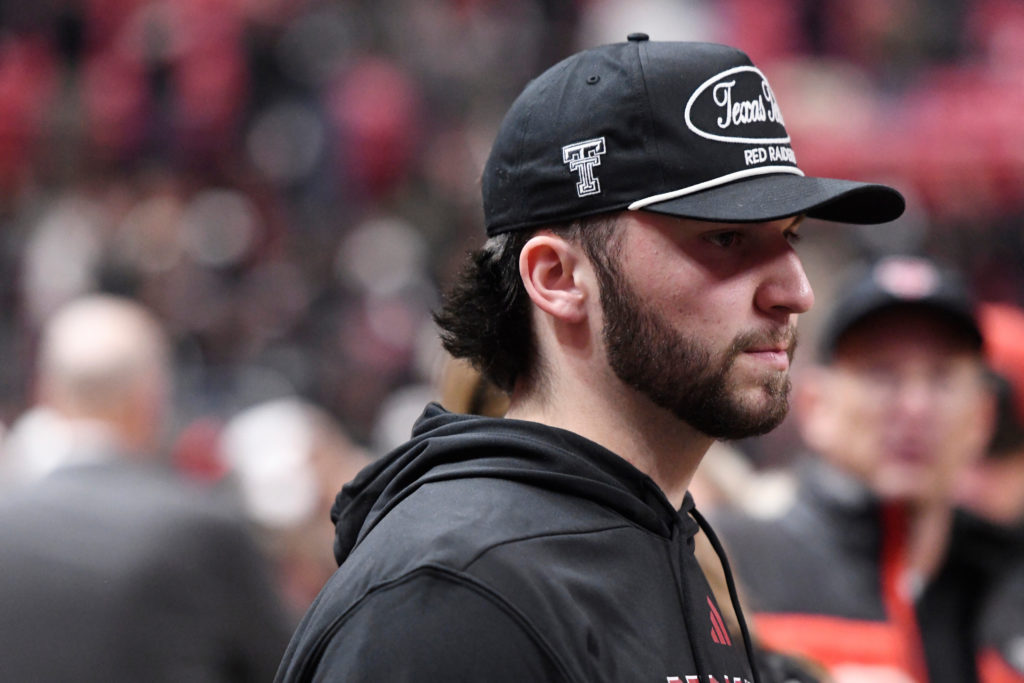
A judge's ruling in Texas is sending shockwaves through college sports. Texas Tech quarterback Brendan Sorsby, who wagered $90,000 on sports games, was banned from the sport. But he and the school appealed, arguing he has a gambling addiction and anxiety issues. The judge agreed, and Sorsby will most likely play this year. William Brangham discussed more with Danny Funt.
A judge's ruling in Texas is sending shockwaves through college sports. Texas Tech quarterback Brendan Sorsby, who wagered $90,000 on sports games, was banned from the sport. But he and the school appealed, arguing he has a gambling addiction and anxiety issues. The judge agreed, and Sorsby will most likely play this year. William Brangham discussed more with Danny Funt.
Tragedy has struck on the pitch of the 2026 World Cup.
During the June 18 match between Qatar and Canada—a host country of this year’s tournament alongside the United States and Mexico—Canadian...
Tragedy has struck on the pitch of the 2026 World Cup.
During the June 18 match between Qatar and Canada—a host country of this year’s tournament alongside the United States and Mexico—Canadian...
The drama over the lack of an official broadcaster for the FIFA World Cup in India, with less than a month to go for the world's largest football extravaganza, seems like a poor reflection on the country’s desire to be seen as a sporting nation. A visit to the FIFA website shows that more than 100 countries have finalised their broadcast deals with the world governing body, but India does not feature among them.With the days ticking by and the absence of any takers, the matter has now reached De
The drama over the lack of an official broadcaster for the FIFA World Cup in India, with less than a month to go for the world's largest football extravaganza, seems like a poor reflection on the country’s desire to be seen as a sporting nation. A visit to the FIFA website shows that more than 100 countries have finalised their broadcast deals with the world governing body, but India does not feature among them.
With the days ticking by and the absence of any takers, the matter has now reached Delhi High Court, which on 11 May issued a notice to Prasar Bharati over a plea seeking directions to ensure that the marquee event is broadcast in India, especially through free-to-air platforms like Doordarshan and DD Sports.
Advocate Avdhesh Bairwa had filed the writ petition under Article 226 of the Constitution, raising fears that millions of football fans in India could miss out on live telecast of the ‘greatest show on earth’.
There are reports that Prasar Bharati has held exploratory discussions with FIFA as a fallback option should commercial negotiations with private broadcasters fail, which may see a throwback to the days when only knockout matches were beamed on Doordarshan. The world governing body, which initially sought close to $100 million for the combined India media rights package for the 2026 and 2030 World Cups, is reported to have lowered it to the region of $35 million, but still there are no takers.
The world's biggest stage. An even bigger purpose. On July 19, the FIFA World Cup 2026™ Final Halftime Show is coming to New York New Jersey Stadium, featuring superstars @Madonna , @shakira , and @bts_bighit , curated by @coldplay ‘s Chris Martin!
JioStar, formed through the Reliance-Disney merger, reportedly offered around $20 million for the upcoming edition but the bid was rejected and the impasse continues. The question that is quietly doing the rounds is: while the broadcasters would certainly be looking at a return on investment (RoI), are the exorbitant price tags to acquire media rights for cricket properties like ICC events or the IPL coming in the way of someone like JioStar playing ball?
The answer is yes and no. Despite the Indian media rights landscape being dominated by cricket, Viacom 18 had acquired the rights for the 2022 FIFA World Cup in Qatar for a reported price tag of $60 million. JioCinema, which provided free live streaming in India on its mobile app and website, recorded more than 110 million digital viewers during the tournament, with the Argentina vs France final alone drawing 32 million viewers.
‘’The match timings in India are making a huge difference in terms of marketability unlike the Qatar edition. Most of the matches have kick-off times of 12.30 am, 3.30 am or 6.30 am, and this is making broadcasters wary,’’ a well known industry insider told National Herald.
While the argument holds, he also broke down why it’s quite challenging to monetise a football match. ‘’Any broadcaster depends on two avenues for revenue generation from a sporting event — commercials and subscription. While the match timings for this World Cup are inconvenient in our time zone, FIFA has certain restrictions against pop-up ads etc during a game. Hence, the only window is half-time, but viewers mostly take a break rather than listen to experts,’’ he observed. ‘’It’s also not very tenable to levy additional subscription charges when people already have Jio connections.’’
What has also not helped is that since the merger between Viacom18 and Disney Star, JioStar now controls a dominant share of India’s sports broadcasting ecosystem and enjoys almost near-monopoly leverage in rights discussions. There have been reports that Sony explored the possibility of bidding, but eventually decided against a formal offer.
Football fans live in hope that there could be a late compromise between FIFA and JioStar. Reacting to a query on the subject, All India Football Federation deputy secretary-general M. Satya Narayan said: ‘’See, the AIFF has no role in this but we feel India is too big a market for FIFA to finalise a plan without us on the radar. The hesitation on the part of the broadcasters could be because of timings but hopefully, there will be a solution soon so that the million of football fans here are not deprived.’’
Key regional broadcasters:
USA: Fox, Telemundo, Peacock, Universo
Canada: CTV, TSN, RDS
UK: ITVX
Sub-Saharan Africa: SuperSport
Australia: SBS
Germany: ARD, ZDF
India: No official broadcaster yet; negotiations ongoing with broadcasters like JioStar
Digital and Global
YouTube: Will air live match action, including the first 10 minutes of games as an appetizer, in addition to select full matches per a March 2026 deal
FIFA+: FIFA's direct-to-consumer platform is available for streaming

 Login
Login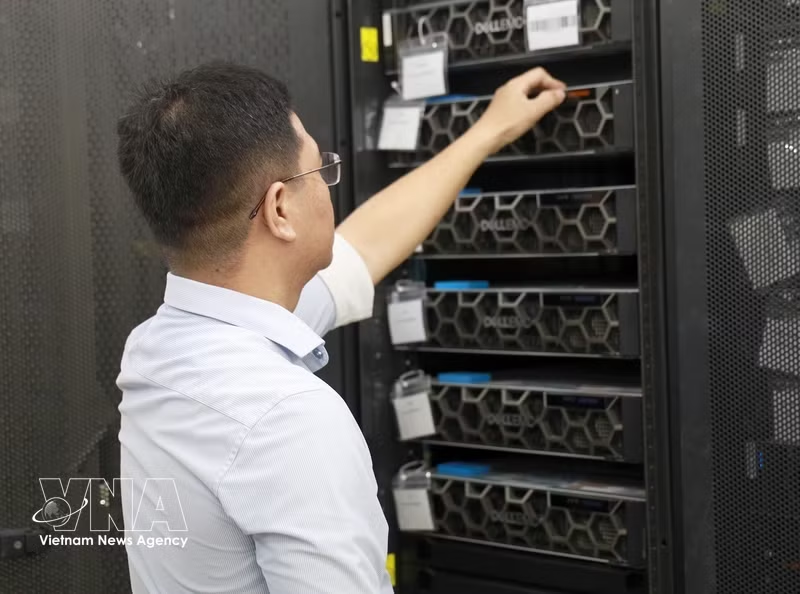


:max_bytes(150000):strip_icc():format(jpeg)/jena-sims-brooks-Koepka-060426-02993f22842d4f4a91527f026a1060f2.jpg)