Normal view

  • ✇Popular Science
  • World’s largest solar-powered aircraft crashes after losing power Andrew Paul
    The groundbreaking experimental aircraft known as Solar Impulse 2 has met an untimely end. According to a National Transportation Safety Board report, the completely solar-powered plane crashed into the Gulf of Mexico during an autonomous test flight on May 4. While there were no injuries or fatalities, the wreck of the Solar Impulse marks an unfortunate end for one of the most impressive and inspirational planes in aviation history. Solar Impulse was first conceptualized in 2003 by Bertrand
     

World’s largest solar-powered aircraft crashes after losing power

11 May 2026 at 15:46

The groundbreaking experimental aircraft known as Solar Impulse 2 has met an untimely end. According to a National Transportation Safety Board report, the completely solar-powered plane crashed into the Gulf of Mexico during an autonomous test flight on May 4. While there were no injuries or fatalities, the wreck of the Solar Impulse marks an unfortunate end for one of the most impressive and inspirational planes in aviation history.

Solar Impulse was first conceptualized in 2003 by Bertrand Piccard, the grandson of Swiss deep sea pioneer Auguste Piccard and the son of Jacque Piccard, the first person to reach the Mariana Trench. Piccard never intended the vehicle for commercial use, but instead envisioned it as a way to raise awareness for sustainable energy by building the first solar-powered plane capable of circumnavigating the globe. The first iteration, Solar Impulse 1, completed its inaugural test flight in 2009 followed by multiple additional trips over the next few years.

Construction on Solar Impulse 2 began in 2011. Even with a 232-foot wingspan that made it wider than a Boeing 747, the completely carbon-fiber frame ensured the plane only weighed about 5,100 lbs, making it about as heavy as a standard SUV. The 130-cubic-foot, nonpressurized cockpit included oxygen reserves and additional environmental equipment to enable a pilot to travel long distances at a maximum altitude of 39,000 feet. According to sUAS News, a total of 17,248 photovoltaic solar cells offered a peak power output of 66 kW to four electric motors and four lithium-ion batteries weighing nearly 1,400 lbs. Basic autopilot technology also allowed its sole occupant to sleep in 20 minute intervals.

Solar Impulse 2 made history in 2016 as the first fixed-wing, entirely solar-powered plane to circumnavigate the Earth. The feat was accomplished over the course of 16.5 months, with Piccard alternating piloting duties with Foundation co-founder André Borschberg and making 17 stops along the route. Solar Impulse 2 cruised at a ground speed between 31 and 62 mph, relying on the slower pace during evening portions of the trip.

In 2019, the Solar Impulse Foundation announced the sale of Solar Impulse 2 to Skydweller Aero for an undisclosed sum. The Spanish–American company’s plans were very different from the plane’s initial purpose. Instead of focusing on its solar capabilities, Skydweller hoped to pursue its military-related surveillance potentials, which included “carrying radar, electronic optics, telecommunications devices, telephone listening, and interception systems.”

After supplying numerous modifications, Solar Impulse 2 completed its first autonomous flight in Spain in 2023. The first entirely uncrewed, autonomous flight took place at Stennis International Airport near Bay St. Louis, Mississippi, the following year. At the time, Skydweller also confirmed its larger goal was to develop and supply a fleet of uncrewed, solar-powered planes capable of nonstop flight at latitudes between Miami (26°N) to Rio de Janeiro (23°S). These near-continuous operations would involve military and commercial contracts, allegedly at a much lower cost than current satellite options. The overhauled flagship aircraft reportedly crashed after losing power while flying over the Gulf of Mexico on May 4.

“We learned through social media about the crash of the Skydweller solar drone,” Piccard and Borschberg wrote in a statement provided to Popular Science. “The Solar Impulse team is saddened by the loss of an important technological flagship.”

Skydweller representatives did not respond to Popular Science at the time of writing. According to the Swiss news outlet SWI, part of Solar Impulse Foundation’s original sales contract with Skydweller stipulated the aircraft would eventually return to Switzerland for installation in the Swiss Museum of Transport in Lucerne.

“Very often when we speak of protection of the environment, it’s boring,” Piccard told Popular Science in 2013. “The first airplane [had] the technology of 2007. The second airplane [had] the technology of tomorrow.”

The post World’s largest solar-powered aircraft crashes after losing power appeared first on Popular Science.


Bringing Climate Research to New York City’s Classrooms

13 March 2026 at 14:06
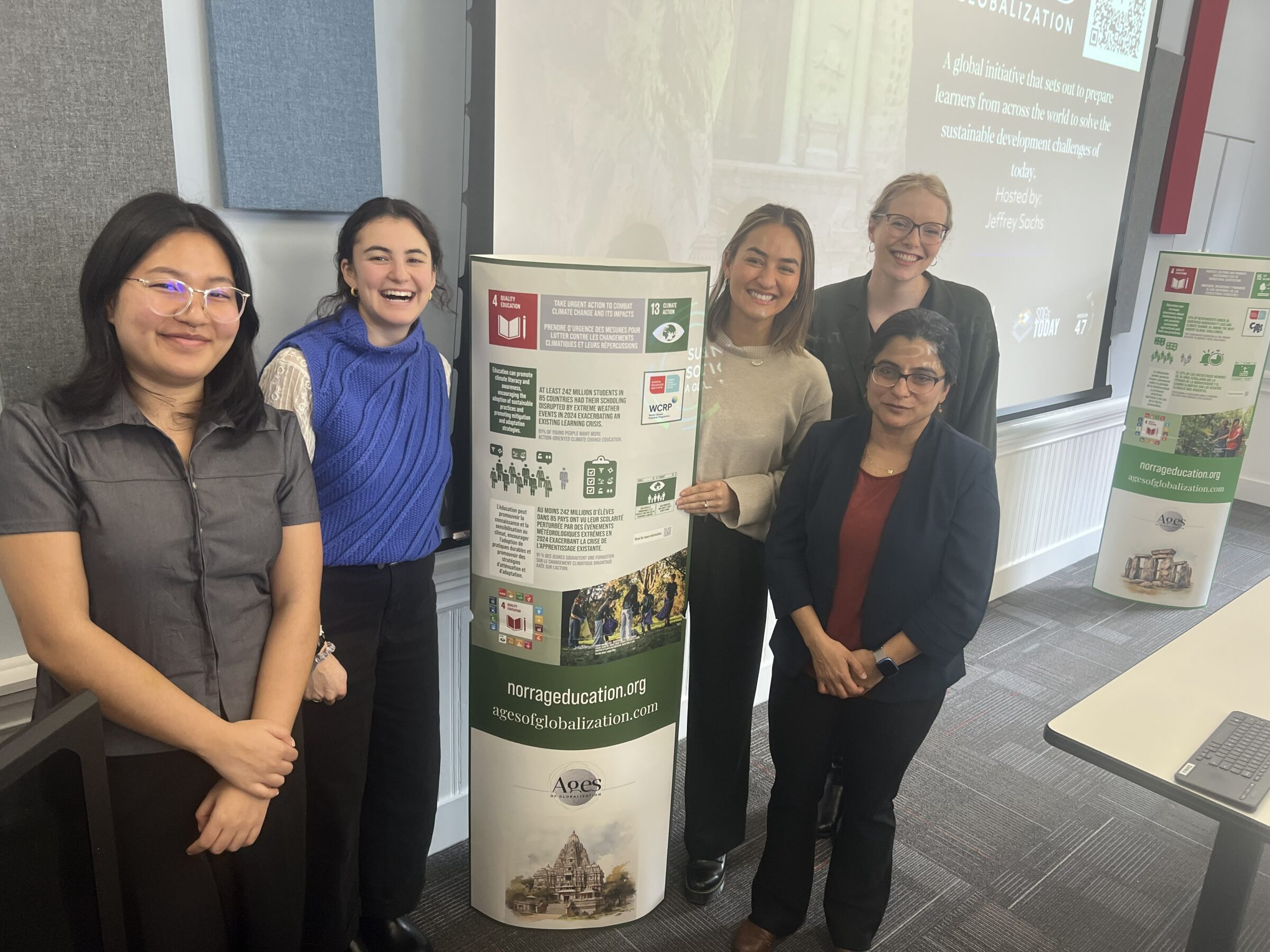
The NYC Mid-Winter Climate Institute brought together K-12 educators to identify meaningful entry points for climate education lessons in their classrooms and beyond.

Science for the Planet: Turning Waste Into Critical Materials

22 April 2026 at 15:41
Greeshma Gadikota and her team explore how materials that might otherwise be landfilled can be transformed into products needed for solar energy and other critical technologies.

  • ✇Colossal
  • Rachel Mentzer Transforms Discarded Cartons into Dusky Collagraphs Kate Mothes
    One of the most common sights in cities is birds perched on power lines, although it rarely elicits a second look. Starlings chortle, pigeons coo, and the occasional hawk perches on a pole to scan the ground for its next meal. And yet, as normal as this seems, there’s nothing natural about it. Instead of trees, these feathered creatures rely on whatever infrastructure is around them, from wires and pylons to fences and rooftops. For Ohio-based artist Rachel Mentzer, nature’s resilience is
     

Rachel Mentzer Transforms Discarded Cartons into Dusky Collagraphs

27 April 2026 at 14:07
Rachel Mentzer Transforms Discarded Cartons into Dusky Collagraphs

One of the most common sights in cities is birds perched on power lines, although it rarely elicits a second look. Starlings chortle, pigeons coo, and the occasional hawk perches on a pole to scan the ground for its next meal. And yet, as normal as this seems, there’s nothing natural about it. Instead of trees, these feathered creatures rely on whatever infrastructure is around them, from wires and pylons to fences and rooftops.

For Ohio-based artist Rachel Mentzer, nature’s resilience is central to a practice focused on sustainability and environmental renewal. Her work “invites viewers to reflect on the interplay between human activity and the natural world, emphasizing the adaptability and fragility of nature,” says a statement.

a collagraph print made in the outline of a small, flattened, cardboard carton with imagery of three hawks in the air, surrounded by smaller birds
“Flying Hawks”

Mentzer’s practice emphasizes collagraphy, an intaglio printmaking technique in which flattened materials—especially paper and card but also other items like leaves or acrylic surfaces—can be used to create a plate from which to make prints. She meticulously carves the delicate surfaces of found cartons with motifs of birds, trees, and energy infrastructure, then brushes them in polyurethane to preserve and prepare them for printing. Occasionally, she also employs chine collé, which uses delicate papers, to add colorful backgrounds.

The artist then coats the design with ink, wipes off the excess, and places the damp substrate into an etching press to transfer the image to a larger sheet of paper, producing the final piece. Thanks to the pressure of the transfer and the way the ink seeps into every handmade and incidental mark, the final print reveals a textural composition with crisp outlines. Birds and urban details alike are inextricable from the silhouette of a material that may have otherwise been destined for the landfill, summoning a constant reminder of the relationship between humans and nature.

Mentzer’s work was recently included in the Manhattan Graphics Center’s community print studio exhibition, and this summer, she’s looking forward to participating in the Suzanne Wilson Artist-in-Residence Program at Glen Arbor Arts Center in Michigan. See the artist’s process on her website, where you can also check if she will be at an art fair in your area throughout the spring and summer. See more on Instagram.

a collagraph print made in the outline of a small, flattened, cardboard carton with imagery of power lines and many birds in the air
“At the Flats”
a collagraph print made in the outline of a small, flattened, cardboard carton with imagery of an electrical pylon
“Pylon Birds”
a collagraph print made in the outline of a small, flattened, cardboard carton with imagery of a silhouetted, leafless tree with birds and a nest
“Golden Eagles”
a collagraph print made in the outline of a small, flattened, cardboard carton with imagery of a water tower and birds
“Still Standing”
a collagraph print made in the outline of three small, flattened, cardboard cartons with imagery of pelicans sitting on wooden posts
“Dockside Watch”
a collagraph print made in the outline of a small, flattened, cardboard carton with imagery of an electrical pylon and birds in the sky
“Skybound Over Steel”
a collagraph print made in the outline of a small, flattened, cardboard carton with imagery of a small songbird on a branch
“Magnolia Warbler”

Do stories and artists like this matter to you? Become a Colossal Member today and support independent arts publishing for as little as $7 per month. The article Rachel Mentzer Transforms Discarded Cartons into Dusky Collagraphs appeared first on Colossal.

Can Capitalism Solve the Climate Crisis? 

17 March 2026 at 20:00
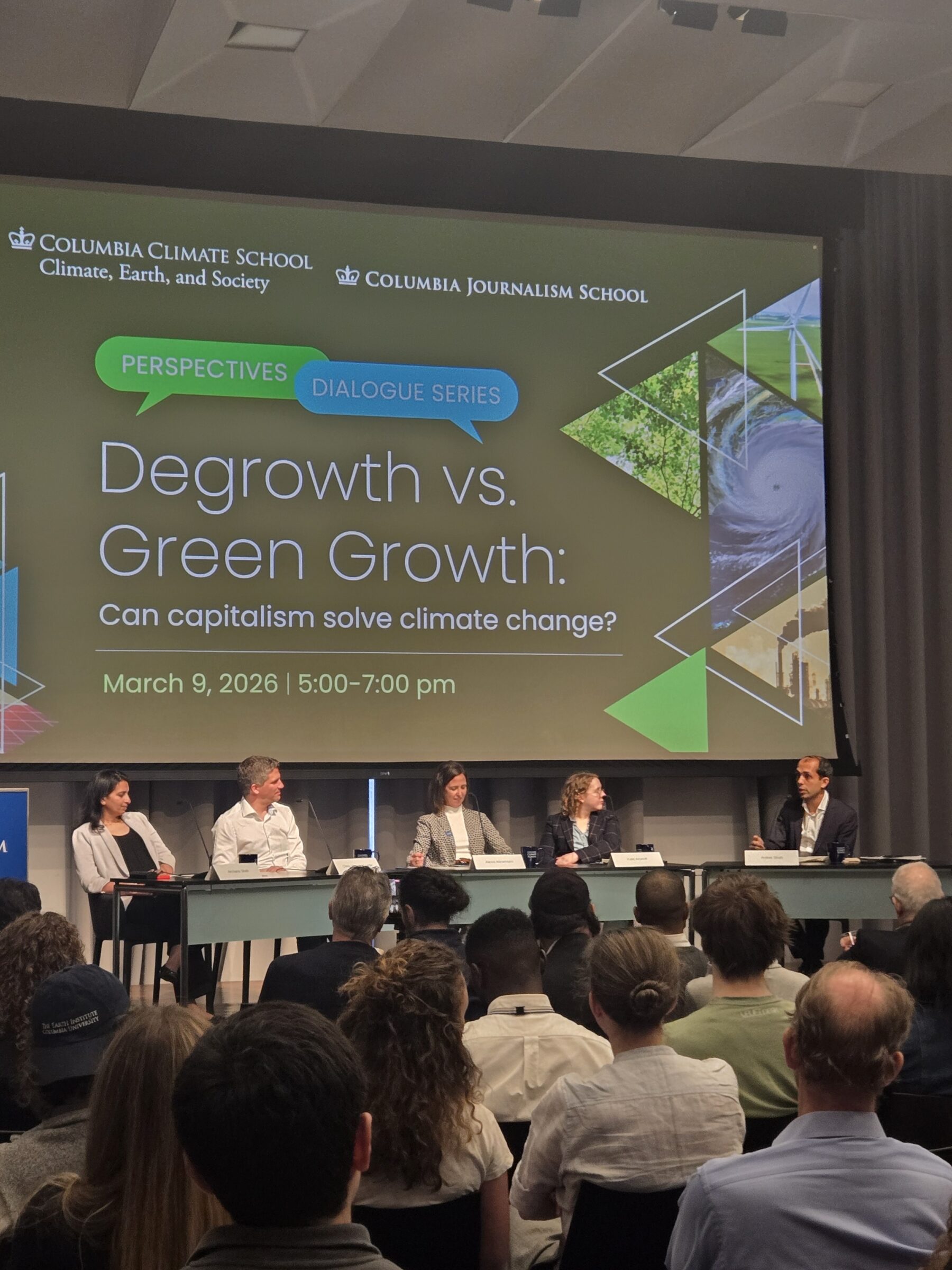
The inaugural Perspectives Dialogue Series event brought together prominent thinkers with diverse perspectives on capitalism and the role it could play in solving climate change.

  • ✇Popular Science
  • Want stronger concrete? Just add oysters. Andrew Paul
    Concrete is everywhere, and that’s a problem. Manufacturing the essential material accounts for around eight percent of annual global carbon dioxide emissions, making it one of the single biggest contributors to the climate crisis. Researchers are investigating all types of creative solutions to the issue, often by replacing ingredients with more eco-friendly alternatives. Recent propositions include adding coffee grounds, bacteria, and even recycled diapers into the mix.But engineers at Purd
     

Want stronger concrete? Just add oysters.

6 May 2026 at 20:01

Concrete is everywhere, and that’s a problem. Manufacturing the essential material accounts for around eight percent of annual global carbon dioxide emissions, making it one of the single biggest contributors to the climate crisis. Researchers are investigating all types of creative solutions to the issue, often by replacing ingredients with more eco-friendly alternatives.

Recent propositions include adding coffee grounds, bacteria, and even recycled diapers into the mix.But engineers at Purdue University in Indiana think the answer can already be found in the natural world. According to a study recently published in the journal Chemistry of Materials, one solution may be swapping out the cement for shellfish.

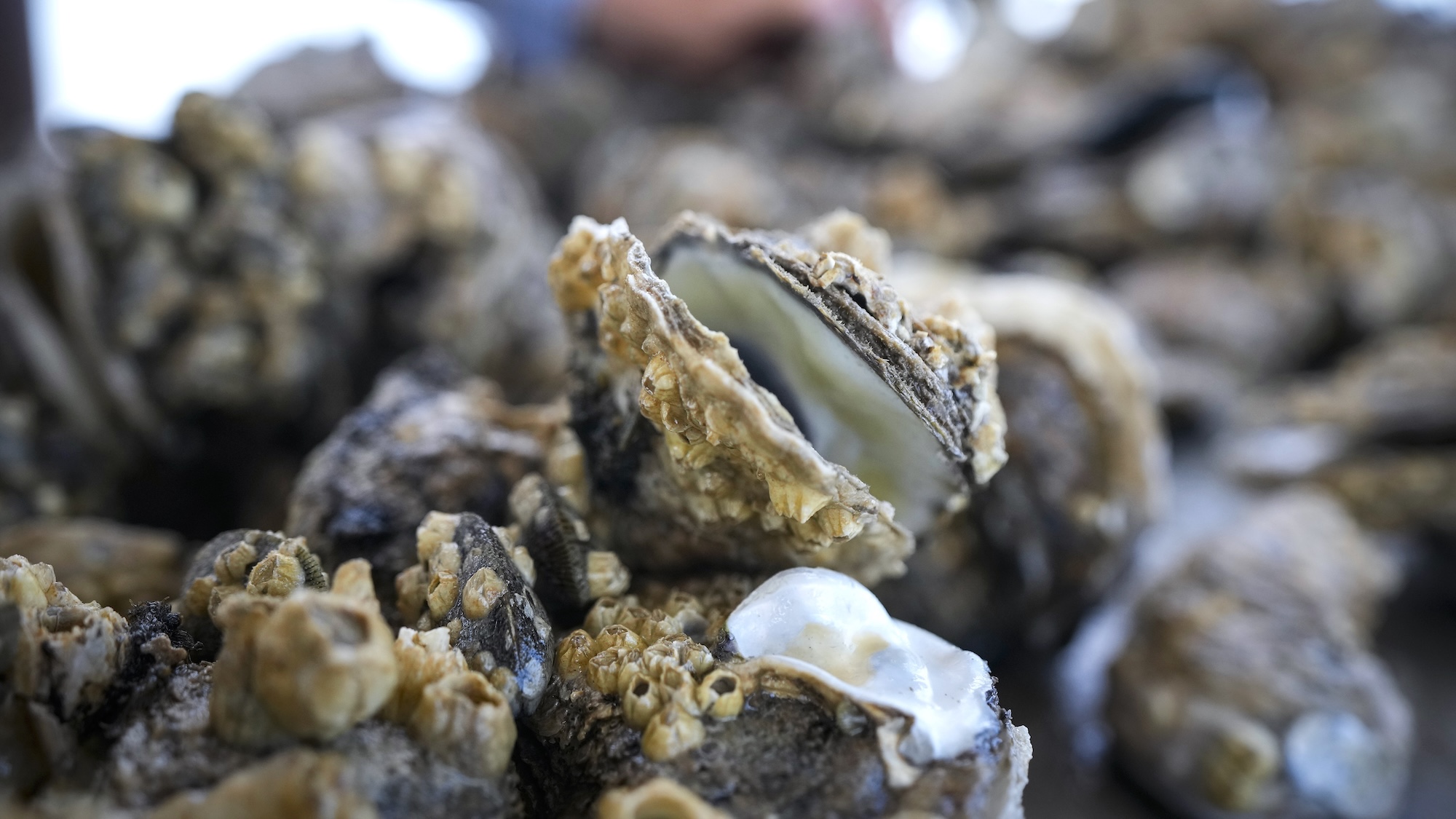
“Oysters generate a natural cement. They use this material for attaching to each other when building reef structures,” chemist and study co-author Jonathan Wilker explained in a recent university profile.

Wilker has spent years examining the biological properties of oyster cement in hopes of recreating the sturdy adhesive for other applications. They have since learned that the bivalves bind together by producing the inorganic compound calcium carbonate—basically chalk. While calcium carbonate isn’t usually adhesive by itself, oysters also produce a small amount of stickier organic materials like phosphorylated proteins. This allows the shellfish to fuse together, even when saturated in water.

After breaking down the chemical composition of oyster cement, Wilker’s team recreated it in a laboratory. They then collected a bunch of limestone bathroom tiles, since their calcium carbonate is virtually identical to oyster shells. From there, they glued stacks of tiles together using their artificial, biomimetic cement. In nearly every stress test, the tiles broke before the bond itself.

Confident in their faux-oyster cement’s abilities, Wilker and colleagues finally tried combining a polymer from their creation into commercially available concrete mix. In lab tests, their oyster-inspired concrete was 10 times stronger while doubling its compressive strength. On top of all that, it also took less time to cure.

Wilker’s team plans to continue testing their patent-pending recipe. He notes that it’s not simply stronger. It’s even more eco-friendly when compared to most adhesives on the market.

“Most of the adhesives that you see at the hardware store are made of organic compounds, derived from petroleum,” he said. “There is so much more that we can learn from nature.

The post Want stronger concrete? Just add oysters. appeared first on Popular Science.
  • ✇Colossal
  • Bubbles, Algae, and Plastics Go Haute Couture in ‘Iris van Herpen: Sculpting the Senses’ Kate Mothes
    Riding the coattails—or perhaps it would be more apt to say the gown trails—of the monumental retrospective exhibition in 2023 in Paris at the Musée des Arts Décoratifs, the Brooklyn Museum is about to open the striking new edition of Iris van Herpen: Sculpting the Senses. Building upon the previous presentation’s emphasis on the way fashion meets art, this show also includes recent collections like Sympoeisis, reaffirming Iris van Herpen’s one-of-a-kind approach to sustainable, sculptural co
     

Bubbles, Algae, and Plastics Go Haute Couture in ‘Iris van Herpen: Sculpting the Senses’

12 May 2026 at 14:52
Bubbles, Algae, and Plastics Go Haute Couture in ‘Iris van Herpen: Sculpting the Senses’

Riding the coattails—or perhaps it would be more apt to say the gown trails—of the monumental retrospective exhibition in 2023 in Paris at the Musée des Arts Décoratifs, the Brooklyn Museum is about to open the striking new edition of Iris van Herpen: Sculpting the Senses. Building upon the previous presentation’s emphasis on the way fashion meets art, this show also includes recent collections like Sympoeisis, reaffirming Iris van Herpen’s one-of-a-kind approach to sustainable, sculptural couture.

Van Herpen is known for her elaborate dresses that incorporate high-tech processes and materials, such as laser-cutting and Plexiglas, while also embracing the rhythms and patterns of biological and celestial realms. At this year’s Met Gala, for example, Olympic skier Eileen Gu arrived in a dress titled “Airu,” which was not only coated in plastic bubbles but also emitted real ones. In the “Living Algae” look from her 2025 Sympoeisis collection, van Herpen even incorporates real Pyrocystis lunula, a type of algae that forms a crescent shape and glows in the dark.

a model wears a blue, sculptural, high-tech dress by Iris Van Herpen
“Living Algae” look from the ‘Sympoiesis’ collection (2025), Pyrocystis lunula algae, nutrient gel, H2O, silicone, silk organza, and tulle. Collaborator: Chris Bellamy. Model: Stella Maxwell. Photo by Molly SJ Lowe

“Fascinated by the complexity of nature and the power of science, van Herpen transforms scientific concepts into visionary fashion,” says a statement. “Drawing from wide-ranging fields spanning mathematics, neuroscience, marine biology, paleontology, mycology, mineralogy, astronomy, and more, her haute couture designs seamlessly merge art, science, and technology—evoking the often unseen structures of nature, from coral reefs and branching systems of fungi to the vast patterns of planetary motion.”

Sculpting the Senses features more than 140 haute couture designs, plus the works of numerous artists like Kenny Nguyen, Wim Delvoye, Agostino Arrivabene, 目[Mé], Katsumata Chieko, Tara Donovan, and many others—several of whom have pieces in the Brooklyn Museum’s own collection. The experience is also complemented by a multi-sensory soundscape created by Dutch composer and music producer Salvador Breed.

The show opens on May 16 and continues through December 6 in Brooklyn. See more on van Herpen’s Instagram and YouTube.

a model wears a sculptural, high-tech dress by Iris Van Herpen
“Labyrinthine” dress from the ‘Sensory Seas’ collection (2020), glass organza, crepe, tulle, and Mylar, modeled by Cynthia Arrebola. Photo by David Ụzọchukwu
an installation view of a high-tech, elaborate dress on a mannequin in the exhibition 'Iris van Herpen: Sculpting the Senses,' in front of another artwork that looks like a wave frozen in space
Installation view of ‘Iris van Herpen: Sculpting the Senses,’ Brooklyn Museum, New York
a model wears a white, sculptural, high-tech dress by Iris Van Herpen
“Morphogenesis” dress from the ‘Sensory Seas’ collection (2020), laser-cut and screen-printed mesh, duchesse satin, and laser-cut Plexiglas, created in collaboration with Philip Beesley and modeled by Yue Han. Photo by David Ụzọchukwu
a model wears a white, sculptural, high-tech dress by Iris Van Herpen
“Loie” dress from the ‘Sympoiesis’ collection (2025), silk satin and resin, modeled by Akuol Deng Atem. Photo by Gio Staiano
an installation view of high-tech, elaborate dresses on mannequins in the exhibition 'Iris van Herpen: Sculpting the Senses'
Installation view of ‘Iris van Herpen: Sculpting the Senses,’ Brooklyn Museum, New York
a model wears a sculptural, high-tech dress by Iris Van Herpen
“Shift Souls” dress from the ‘Shift Souls’ collection (2019), laser-cut Komon Koubou textile, silk organza, and Mylar, modeled by Issa Lish. Photo © Sølve Sundsbø
an installation view of a high-tech, elaborate dress on a mannequin in the exhibition 'Iris van Herpen: Sculpting the Senses,' next to some other artworks
Installation view of ‘Iris van Herpen: Sculpting the Senses,’ Brooklyn Museum, New York

Do stories and artists like this matter to you? Become a Colossal Member today and support independent arts publishing for as little as $7 per month. The article Bubbles, Algae, and Plastics Go Haute Couture in ‘Iris van Herpen: Sculpting the Senses’ appeared first on Colossal.

  • ✇Popular Science
  • Glowing algae could power the lamps of the future Andrew Paul
    Bioluminescence is everywhere in nature, but it puts on its biggest light shows underwater. In the deepest regions of the oceans, as much as 90 percent of all living creatures may possess at least some ability to shimmer thanks to cellular chemical reactions. However, the ethereal displays aren’t limited to these deep, dark waters. The cold blue glow from bioluminescent algae like Pyrocystis lunula is occasionally visible atop waves for other organisms to see. Still, spotting these glimmers i
     

Glowing algae could power the lamps of the future

7 May 2026 at 20:01

Bioluminescence is everywhere in nature, but it puts on its biggest light shows underwater. In the deepest regions of the oceans, as much as 90 percent of all living creatures may possess at least some ability to shimmer thanks to cellular chemical reactions. However, the ethereal displays aren’t limited to these deep, dark waters. The cold blue glow from bioluminescent algae like Pyrocystis lunula is occasionally visible atop waves for other organisms to see.

Still, spotting these glimmers is difficult for the naked eye. P. lunula only shines for a few milliseconds at a time when agitated. However, those lights could hypothetically remain illuminated for much longer if certain chemical switches are flipped on in the algae. The possibilities would be vast—suddenly, harmless organisms could replace environmentally toxic chemicals used to produce artificial glows, and even cut back on electricity usage for lights.

“This project was a moonshot idea,” University of Colorado Boulder civil engineer Wil Srubar said in a recent profile. “I was curious if we could create a world in which we don’t use electricity but rather use biology to produce light.”

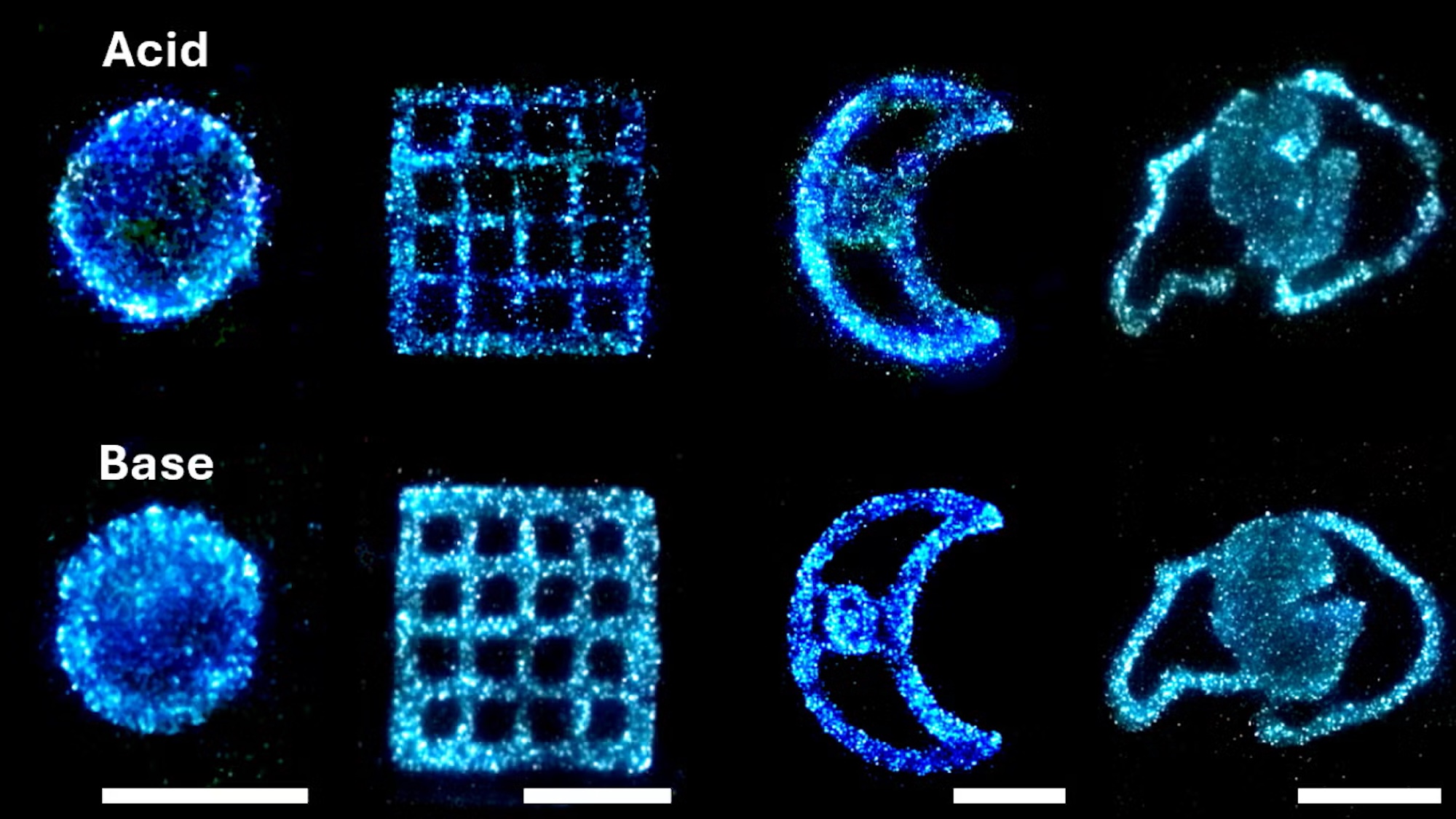
Drawing on previous research, Srubar and his colleagues assessed P. lunula’s bioluminescent response to basic and acidic compounds. They tested one acidic compound with a pH of 4 (similar to tomato juice) and a more basic compound with a pH of 10 (similar to hand soap).

Their results, published in the journal Science Advances, suggest algae could be part of a brighter, more sustainable future. In both cases, P. lunula began to shine. Acidic exposure made the algae glow brightly for up to 25 minutes, while the basic compound produced a shorter, more diffused light.

“It was a very exciting moment when we found the right chemical stimulant that allowed the light to stay on for a long time,” said engineer and study co-author Giulia Brachi. “This is the first time we have figured out how to sustain luminescence.”

The team took things even further from there. The engineers embedded the algae into various shaped objects made with naturally sourced, 3D-printed hydrogel. Because the acid and base solutions aren’t lethal to P. lunula, the organisms survived for weeks while constantly glowing. After four weeks, the acid-treated examples still retained 75 percent of their brightness.

According to the team, there are a range of uses for P. lunula. Autonomous robots and even space exploration equipment could produce battery-free light illuminated by the algae. If the algae responds to other chemicals, then it may show promise as a tool to test water quality or toxicity. What’s more, the photosynthetic algae doesn’t produce any carbon—it devours it.

“We’re storing carbon while we’re producing light, whereas conventionally, we emit carbon to light up spaces,” said Srubar. “This discovery really paves the way for engineering other living light materials and devices.”

The post Glowing algae could power the lamps of the future appeared first on Popular Science.

GM Doubles Down On Energy Business To Serve Data Center Electricity Demand

The carmaker scaled back electric vehicle plans, but is going all in on advanced batteries, including a new sodium-ion chemistry designed for large-scale power storage.

© General Motors

❌
Subscriptions