Normal view

  • ✇Popular Science
  • Fire dozers outfitted with NASA-made sensors help battle blazes Mack DeGeurin
    Dangerous, frontline firefighting jobs may get a bit safer thanks to new heat-sensing sensors designed by NASA. The sensors are made from commonly available household materials, and attach to the bulldozers firefighters use to clear vegetation and brush in a fire’s immediate path, triggering an alarm when temperatures reach extremely dangerous levels. Knowing when a fire is hot might sound obvious, but many new so-called fire dozers are being outfitted with enclosures to protect their operato
     

Fire dozers outfitted with NASA-made sensors help battle blazes

1 June 2026 at 14:13

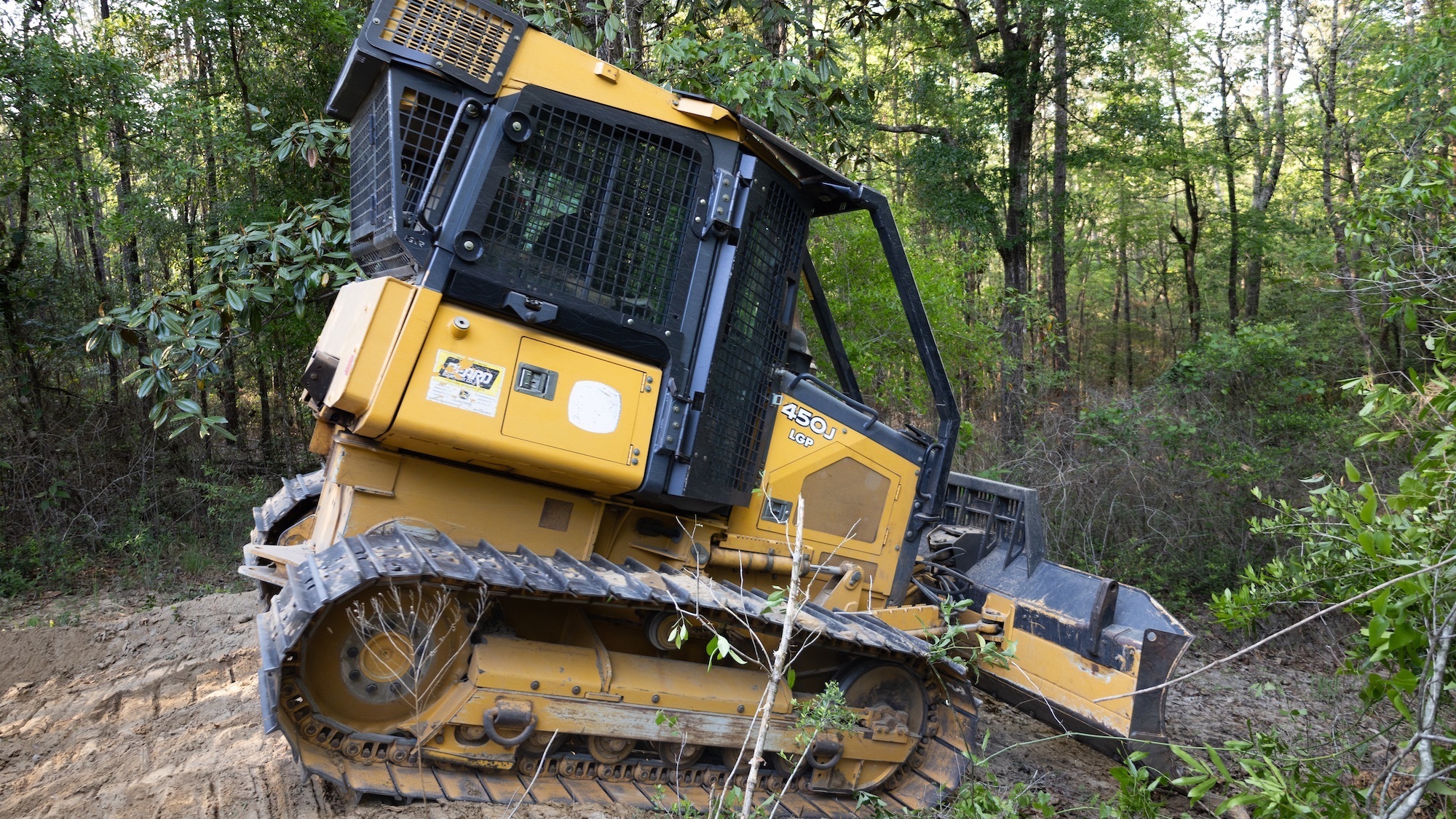
Dangerous, frontline firefighting jobs may get a bit safer thanks to new heat-sensing sensors designed by NASA. The sensors are made from commonly available household materials, and attach to the bulldozers firefighters use to clear vegetation and brush in a fire’s immediate path, triggering an alarm when temperatures reach extremely dangerous levels.

Knowing when a fire is hot might sound obvious, but many new so-called fire dozers are being outfitted with enclosures to protect their operators from the flames. That’s a welcome change, but it also reduces the operator’s ability to gauge the surrounding heat. These new sensors help solve that problem, protecting the driver and helping prevent the dozers from sustaining too much damage.

The sensor setup is simple by design. It consists of a standard thermocouple similar to those found in a home oven, which is then wired to an LED light in the dozer’s cabin. If the light starts blinking, it’s time to get out of Dodge. 

The entire system is powered by something that’s probably laying around your house: AA batteries. Using a simple power source like this is part of an attempt to make every aspect of the design affordable and accessible. University of Alabama, Huntsville research scientist Ryan Wade emphasized that point in a NASA blog post. He explained that during a recent trial installing the sensor in a fire dozer, his team realized that they were missing a part. Rather than waiting to hear back from NASA and having a custom piece shipped to them, they simply walked down the street to a hardware store and solved the problem.

a sensor with a red light being placed on a bullzoser
NASA Wildland Fires Program science integration manager Jennifer Fowler holds an LED light on the dashboard of a fire dozer belonging to the Alabama Forestry Commission (AFC). The LED light is connected to a thermal sensor mounted in the window of the dozer, which turns the light on when the radiant heat from a nearby fire reaches a dangerous threshold. FireSense scientists have been working with the AFC to develop and install these thermal sensors onto these dozers, which they showcased during a stakeholder event on April 23-24, 2026 at the Solon Dixon Forestry Education Center in Andalusia, Alabama. Image: NASA/Milan Loiacono.

“NASA’s expertise in this case comes not in the novelty of the instrument itself, but in figuring out how to solve the problem quickly and integrate that technology into their existing system,” Wade said.

That flexibility is what makes the approach so valuable for firefighters. Alabama Forestry Commission fire analyst Ethan Barrett says the devices so far work “exactly as intended.” In Alabama, at least, officials are planning to outfit their entire dozer fleet with the sensors. The sensor system was developed by NASA’s FireSense project, whose interest in it was twofold. The sensors will more immediately help firefighters on the ground as fire season approaches, but the data they collect will also prove invaluable for future research. By placing sensors in the dozers, NASA will gather reams of data about fire strength and intensity straight from the front lines.

The post Fire dozers outfitted with NASA-made sensors help battle blazes appeared first on Popular Science.

  • ✇The Daily Cartoonist
  • CSotD: Alas, It’s Monday Mike Peterson
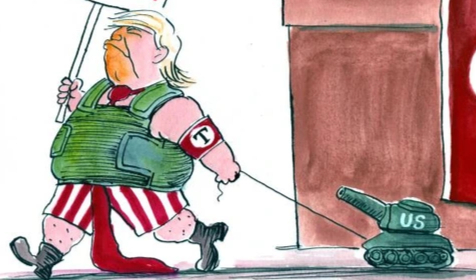
    Poor Volodya had to cut back the annual Victory Day Parade in Moscow this coming Saturday, reportedly because all the impressive arms and armor normally seen at that time are in Ukraine and can’t be spared, or, in some cases, made operative.But what are friends for? After a 90-minute phone call, his pal Donald announced […]
     

CSotD: Alas, It’s Monday

4 May 2026 at 10:44
Poor Volodya had to cut back the annual Victory Day Parade in Moscow this coming Saturday, reportedly because all the impressive arms and armor normally seen at that time are in Ukraine and can’t be spared, or, in some cases, made operative.But what are friends for? After a 90-minute phone call, his pal Donald announced […]

  • ✇Artsy Chicks Rule
  • Flipping Smalls Spring Style Nancy
    Hello sweet friends! How many days until spring? OH, TWO!! Yay!! I am so beyond ready. And so sick of the cold this year. However, I really hope we get an actual spring, ya know?? Considering we’ve already had 80’s, I’d say it’s not looking good. lol With that in mind, I’m sharing the perfect... The post Flipping Smalls Spring Style appeared first on Artsy Chicks Rule®.
     

Flipping Smalls Spring Style

By: Nancy
18 March 2026 at 08:00

Hello sweet friends! How many days until spring? OH, TWO!! Yay!! I am so beyond ready. And so sick of the cold this year. However, I really hope we get an actual spring, ya know?? Considering we’ve already had 80’s, I’d say it’s not looking good. lol With that in mind, I’m sharing the perfect...

The post Flipping Smalls Spring Style appeared first on Artsy Chicks Rule®.

Friends of a feather. #grickledoodle #spring #sunny #green #kermit #muppets…

21 May 2026 at 16:01

Friends of a feather. #grickledoodle #spring #sunny #green #kermit #muppets #yoda #hulk #cartoon #art #drawing #funny #humor

A cartoon illustration of Kermit, The Hulk, and Yoda all sitting under a tree enjoying a picnic. Caption reads "They spent many sunny afternoons talking through shared experiences and sometimes they didn't talk at all."
  • ✇Eos
  • How to Study Coastal Evolution Saima May Sidik
    Source: Earth’s Future Coastal landscapes are constantly being reshaped by natural forces, and as climate change causes more frequent storms and sea level rise, that change will only intensify. Because these areas are densely populated with homes, tourist destinations, and industries, understanding how and where the coast will change is a pressing issue. However, reliable predictions that lead to actionable knowledge are rare. Lentz et al. describe the state of knowledge regarding coastal
     

How to Study Coastal Evolution

15 April 2026 at 13:00
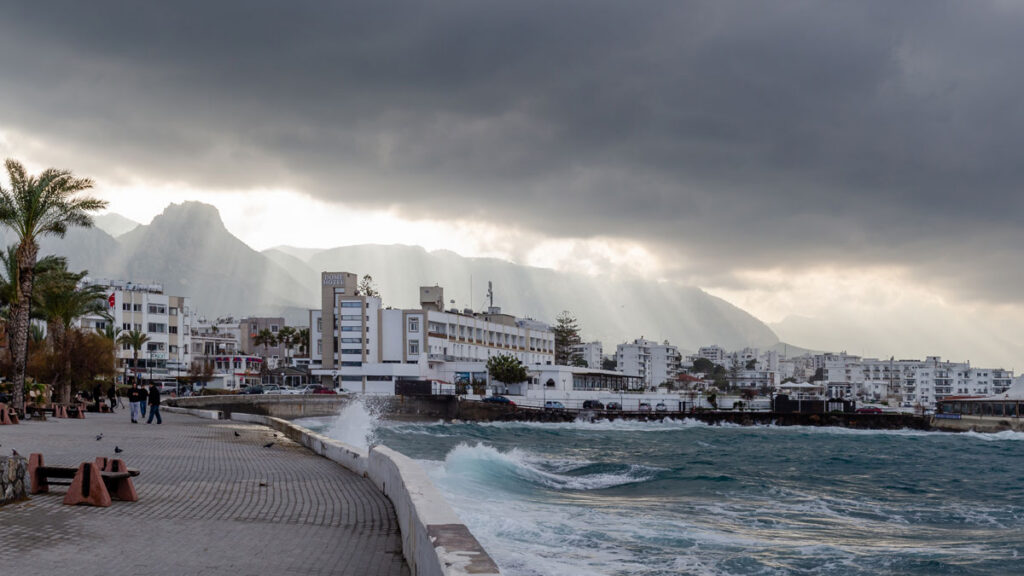
A dense urban development is seen on a shoreline. Ominous clouds herald the onset of a storm, and waves lap against the shore.
Source: Earth’s Future

Coastal landscapes are constantly being reshaped by natural forces, and as climate change causes more frequent storms and sea level rise, that change will only intensify. Because these areas are densely populated with homes, tourist destinations, and industries, understanding how and where the coast will change is a pressing issue. However, reliable predictions that lead to actionable knowledge are rare.

Lentz et al. describe the state of knowledge regarding coastal evolution, highlight gaps in scientists’ understanding, and describe opportunities for integrating information from various models, data sources, and end users.

Current coastal evolution predictions are often focused on too specific a location and are therefore hard to generalize or analyze too large a region and therefore lack detail, the authors say. In addition, it’s challenging for researchers to link the effects of acute events, such as storms, with long-term trends like sea level rise.

Improving these simulations will likely require combining many different types of models, including physics-based numerical models, models based on empirical measurements, and statistical models that include machine learning. To fully understand potential changes, the authors note that it is also essential to consider both coastal processes and human actions.

The researchers recommend several ways to improve consistency and collaboration in the field of coastal change forecasting. First, standardizing approaches and outcomes would make it easier to produce national-scale predictions. Right now, the variety of tools used across different locations makes it difficult for scientists to compare results and communicate effectively. They also emphasize the need for using coordinated research approaches. Stronger transdisciplinary collaboration, accompanied by essential training and support, would also enable scientists to make better predictions, the researchers say.

Comparing predictions to real-world observations of coastal landscape change could also help untangle this multifaceted challenge. By studying how coastlines have already changed, researchers can validate models and choose those that are performing best. Such comparisons require datasets that adequately capture coastal landscape change across both time and space. Remote sensing data and the use of artificial intelligence (AI) for data processing may help provide these improved datasets, the researchers suggest.

Engaging end users during the project planning process is also helpful because only end users truly know what kind of information they need to adapt to landscape change. Knowing how to engage end users can be difficult for physical scientists, but various tools and specialized personnel exist who can help coordinate these interactions, the authors say. (Earth’s Future, https://doi.org/10.1029/2024EF005833, 2026)

—Saima May Sidik (@saimamay.bsky.social), Science Writer

The logo for the United Nations Sustainable Development Goal 13 is at left. To its right is the following text: The research reported here supports Sustainable Development Goal 13. AGU is committed to supporting the United Nations 2030 Agenda for Sustainable Development, which provides a shared blueprint for peace and prosperity for people and the planet, now and into the future.
A photo of a telescope array appears in a circle over a field of blue along with the Eos logo and the following text: Support Eos’s mission to broadly share science news and research. Below the text is a darker blue button that reads “donate today.”
Citation: Sidik, S. M. (2026), How to study coastal evolution, Eos, 107, https://doi.org/10.1029/2026EO260115. Published on 15 April 2026.
Text © 2026. AGU. CC BY-NC-ND 3.0
Except where otherwise noted, images are subject to copyright. Any reuse without express permission from the copyright owner is prohibited.
  • ✇The Daily Cartoonist
  • CSotD: Rumors of Peace Mike Peterson
    Huck and Bramhall both cite the similarity of Neville Chamberlain’s futile attempt to end World War II before it had gone that far and Donald Trump’s announcement of the purported end of his adventure in Iran. Huck gets extra credit for connecting it to Orwell, given that Chamberlain felt he was telling the truth while […]
     

CSotD: Rumors of Peace

16 June 2026 at 11:23
Huck and Bramhall both cite the similarity of Neville Chamberlain’s futile attempt to end World War II before it had gone that far and Donald Trump’s announcement of the purported end of his adventure in Iran. Huck gets extra credit for connecting it to Orwell, given that Chamberlain felt he was telling the truth while […]

❌
Subscriptions