Japan’s Kansai region inspires some very bold baking in Shakey’s Japan’s ovens.
A while back, Shakey’s celebrated its 50th anniversary of arriving in Japan with a special selection of pizzas that it called the “American Pizza Tour.” But having passed the half-century mark in Japan now, the chain has seen some very tasty stuff in this country too, and brings us to Shakey’s newest creations, pizzas inspired by the culinary traditions of central Japan’s Kansai region.
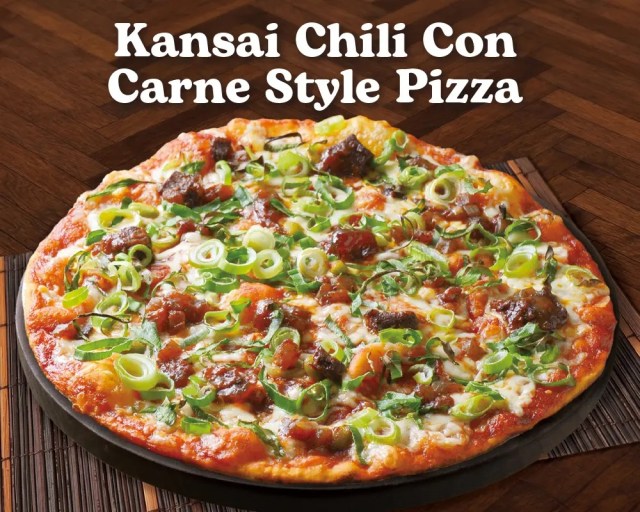
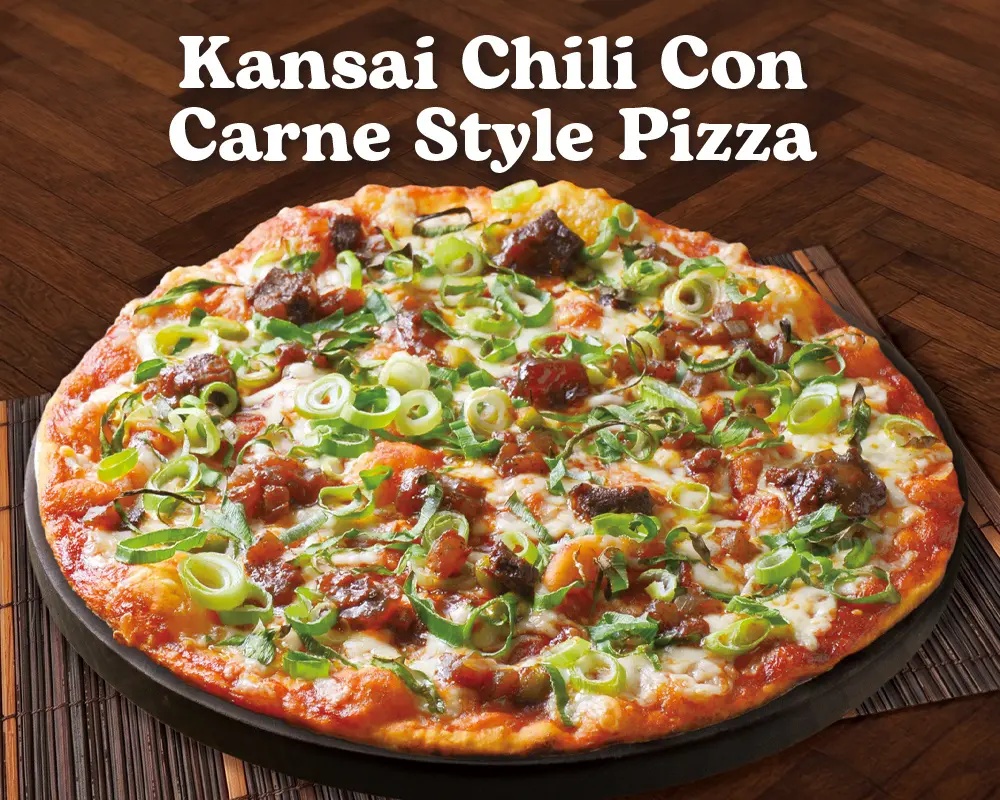
We start with the Kansai Chili Con Carne Style Pizza. The topping for this complex concept is sujikon, a dish popular in Kansai made by simmering gyusuji (beef tendon) and konnyaku (konjac gelatin) simmered in a soy sauce-based stock. The sauce here has a Kansai twist too, as it’s a mixture of tomato sauce and Doro Sauce, a thick savory Worcestershire-like sauce made in Kobe with a little spicy kick to it.
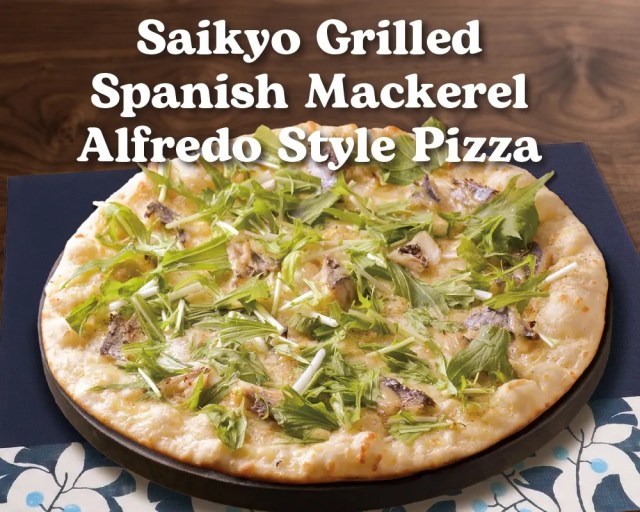
Next we have the Saikyo Grilled Spanish Mackerel Alfredo Style Pizza. Kyoto is also part of the Kansai region, and while history buffs love the city for its temples and shrines, foodies are especially fond of saikyoyaki, a Kyoto specialty of white miso-marintaed grilled fish. Sawara (Spanish mackerel) is the most commonly used type of fish for saikyoyaki, and so that’s what comes with this pizza, with its elegantly sweet notes accompanied by a buttery Alfredo sauce and crisp mizuna (Japanese mustard greens).
Dessert also comes courtesy of inspiration from Kyoto cuisine. Though not mentioned in the name of the Matcha and Strawberry Dessert Pizza, here Shakey’s is drawing from nama yatsuhashi, Kyoto’s representative confectionary of folded mochi with anko (sweet red beans) inside and often a dusting of cinnamon. This dessert pizza has a butter anko sauce and is topped with little balls of gyuhi (extra soft mochi) and strawberry pieces, with matcha powder and cinnamon which should deliver an intriguing mix of sweet, bitter, and tart sensations.
And finally, Shakey’s will be serving up Doro Sauce BBQ Spaghetti too, which should let you get an even more pronounced taste of the condiment than with the Kansai Chili Con Carne Style Pizza.
There’s no denying that the new pizzas are all very bold, pioneering innovations…but it’s also hard to deny that they’re pretty weird. Since Shakey’s Japan operates on a flat-fee, all-you-can-eat system, though, there’s no need to commit to ordering a whole pie, so you can try a single slice first, then go back for more if/when they win you over.
Shakey’s Japan Tour 2026 Kansai, as the new items’ stint is called, runs from now until August 31.
For most people doing long-haul domestic travel in Japan, the Shinkansen is their default method of getting from Point A to far-away Point B. However, sometimes it’s just as quick, if not quicker, to fly, especially if you’re starting at one end of the country and going all the way to the other.
In addition, while Shinkansen tickets are more or less constant in price, airfares fluctuate, so if you time your trip right, flying can be quicker and more economical than taking the train. Taking a plane starts to look like an even better option if you’re racking up frequent flyer miles…unless, that is, you’re a member of the yakuza, in which case trying to get frequent flyer miles can get you arrested.
On May 17, the Fukuoka Prefectural Police arrested Yuta Hirayama, a 42-year-old man from the town of Onojo, Fukuoka Prefecture. According to his arrest report, Hirayama has no officially designated job, but the police say he is a registered member of an organized crime syndicate that’s a subordinate group to the Kudo-kai, a Japanese mafia group based in Fukuoka.
Between June and November of 2023, Hirayama took nine domestic flights with a major Japanese airline, including flights between Fukuoka and Tokyo’s Haneda Airport to visit an acquaintance who was in prison in east Japan. In the process, he accrued 4,224 frequent flyer miles to an account registered in his name. However, the terms of service for the airline’s frequent flyer program includes a clause that members, by using the program, profess that they are not members of a criminal organization. Based on their assertion that Hirayama is a member of such a group, the police say that by using his account to accrue miles, he committed an act of fraud.
As we’ve discussed before, transactions and service contracts with no-yakuza clauses are common in Japan. It’s illegal, for example, for yakuza members to make mobile phone contracts or attend professional baseball games, as telecom providers and sports leagues don’t want to be associated with criminal organizations. Businesses are especially leery of having yakuza as members of loyalty programs that offer any sort of customer credit, since it could be construed as providing them with financial benefits. That’s why, for example, there are supermarket point programs with no-yakuza clauses, and with 4,224 miles within the frequent flyer program that Hirayama was a member of being exchangeable for 4,224 yen (US$27) in flight credit, the airline has a no-yakuza clause as well.
There is an additional wrinkle to this case, though, in that Hirayama had been a member of the frequent flyer program since 2013, but the airline only added its no-yakuza clause in 2022. As such, even if proven to be a member of a criminal organization, Hirayama’s initial entry into the program wasn’t fraudulent. However, the 2022 no-yakuza clause was ostensibly among the periodic terms of service updates that such programs require users to agree to when logging into their account, placing the legal responsibility on yakuza members to read through the new terms and withdraw from the program. So while many people simply scroll down to where they can click “OK” on such updates, if you’re a gangster, you really should read through them.
It’s unclear whether prosecutors will seek jail time for Hirayama, but if he is confirmed to be a yakuza member, his frequent flyer miles will be forfeited.
Avast, here not be free mooring, declares Kawasaki.
Even without much of a background in Japanese geography, I’m willing to bet that a lot of people would assume, correctly, that Kawasaki Ward is inside the city of Kawasaki. What far fewer people would be able to guess, though, is that inside Kawasaki Ward is a pirate ship.
And yet…
▼ Yarrr!!!
That 24.7-meter (81-foot) long vessel is the Anniversary Cruise. Okay, maybe not as intimidating a name as the Queen Anne’s Revenge or Night Rambler, but still a fitting-enough moniker for a party boat rentable for excursions in Tokyo Bay or the waters of the capital’s neighboring coastal prefectures of Kanagawa and Chiba. Or at least the Anniversary Cruise was available for rent, until its owners docked it in the Port of Kawasaki, directly to the south of Tokyo, in October of 2018.
Now, you might be thinking that the building it’s moored at looks like neither a pirates’ den nor a cruise office, and you’re right. That building behind it is the facility of Nihon Dust, a recycling and industrial waste management company. And if you’re surprised that a pleasure boat would be docked there, so too was Nihon Dust. Not only does Nihon Dust not rent out mooring space to other companies, extended mooring at that part of the canal is prohibited under the port’s regulations.
And yet, the Anniversary Cruise’s owners decided to park there anyway, apparently in the hope that no one would notice, or mind, a giant pirate ship that had suddenly appeared. Things, of course, did not turn out that way, and in November of 2018, Kawasaki City ordered the ship’s owners and operating company to remove the ship, but economic and legal issues hindered swift enforcement. So for nearly eight years, the Anniversary Cruise has remained abandoned in front of Nihon Dust.
You may have also noticed, though, that the Anniversary Cruise seems rather dramatically angled for a vessel that’s been sitting idle for close to a decade. On a day this past February when especially fierce winds were blowing, the ship tipped far enough that it began to take on water, and with the owners not in the mood to come by with a bilge pump, the listing is getting worse, as photos taken since then show that it’s partially sinking.
— toshibo|書籍『8月32日』|廃墟と写真 (@JIYUKENKYU_jp) June 15, 2026
Should the ship capsize and or/drift away from its mooring, it could severely disrupt shipping lanes and other port traffic, and so now Kawasaki City has decided that enough is enough, announcing on June 16 that it will begin demolition and removal of the Anniversary Cruise, scheduled to begin the next day. The process is projected to take approximately one month and cost roughly 33 million yen (US$209,000), an amount the city plans to charge the owners with covering.
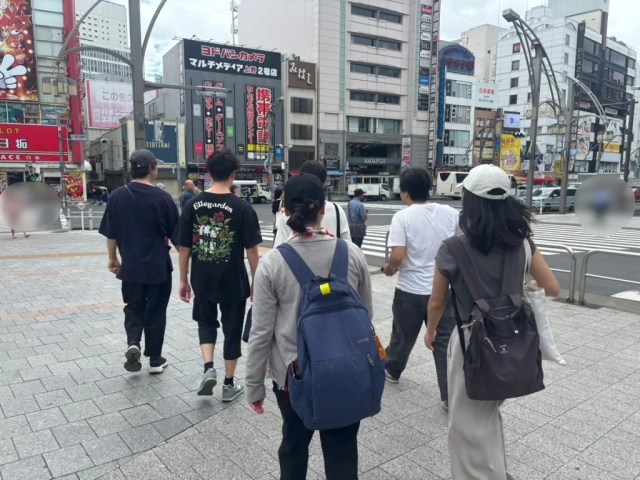
We strap on our shoes and head into downtown Tokyo for a philosophical conversation prompt and a walk with a whole bunch of people we’ve never met before.
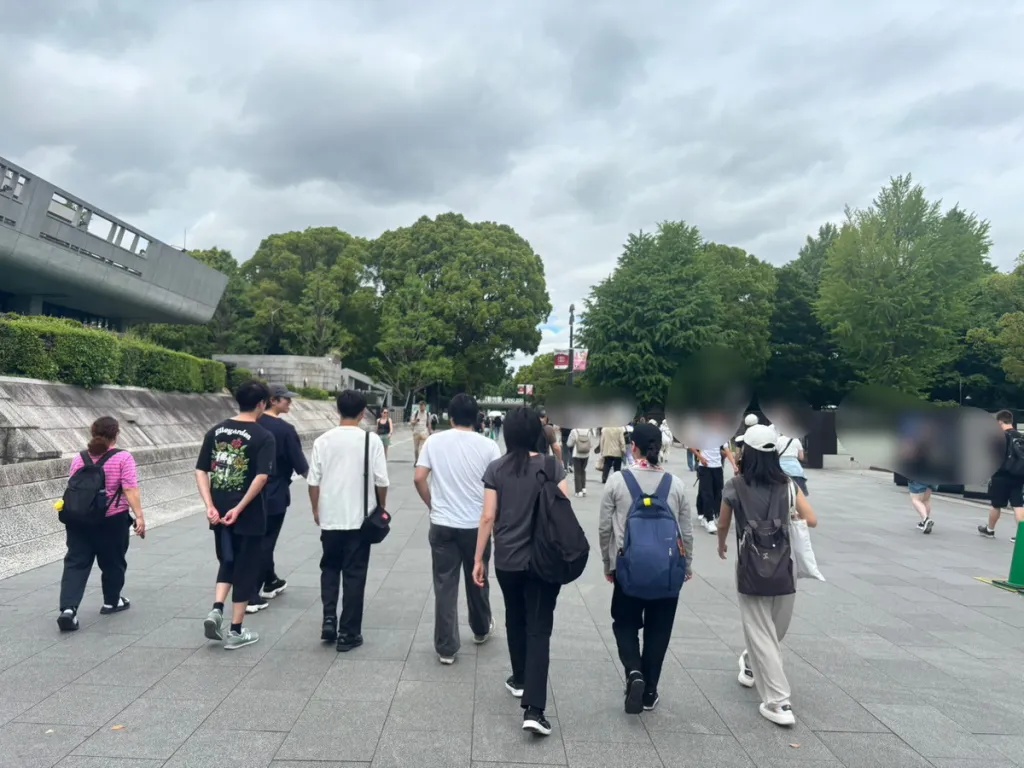
Japan is right in a special sweet spot right now weather-wise, where the chill of winter and allergy-triggering pollen of spring are gone, but the sweltering heat of summer hasn’t arrived just yet. That makes the conditions ideal for a nice walk with friends…or, as we experienced in downtown Tokyo, a nice walk with complete strangers.
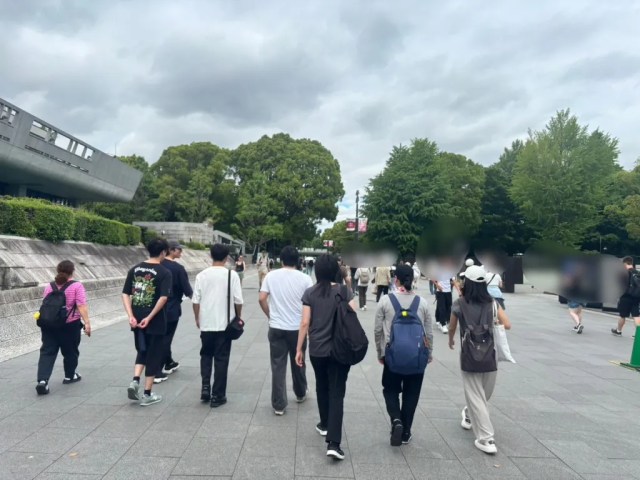
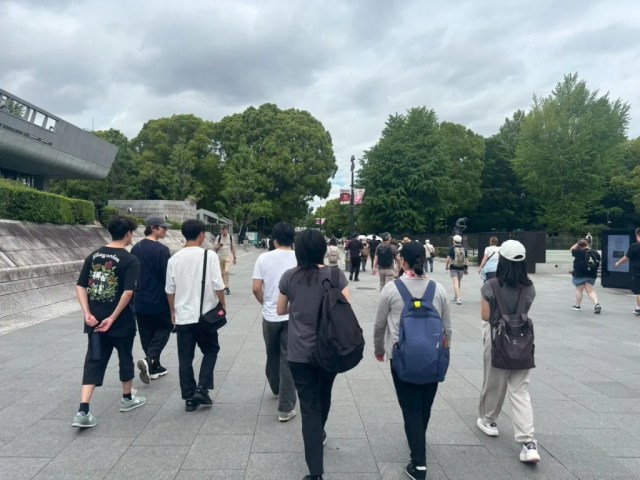
This unusual opportunity came to us thanks to Taiwamura Walking Club (or Taiwamura Sampo-bu, as they’re called in Japanese), an organization that puts together group walks by setting a time, meeting place, course, and a lightly philosophical topic to discuss as you stroll. For the session we joined, the group met at 10 a.m. outside Ueno Station, with an equal mix of men and women. There was a wide range of ages too, with the youngest being a 19-year-old college student and the oldest members old enough to be her parents.
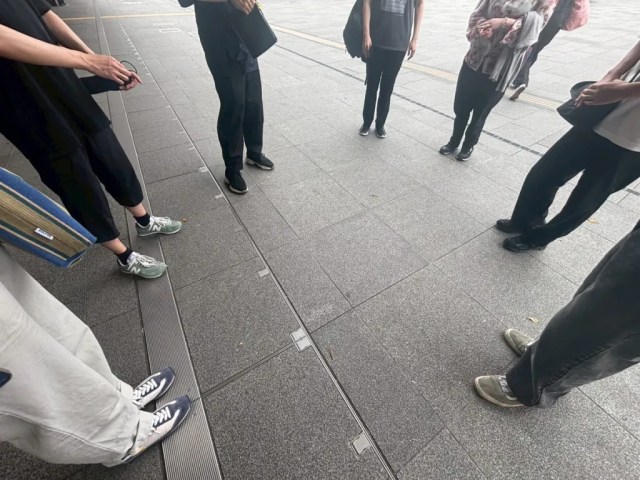
Taiwamura Walking Club usually limits the number of participants to 10 people or so, and after everyone arrived, the session started with a quick round of self-introductions. Then we were off and walking, with the Taiwamura Walking Club representative leading the way.
As mentioned above, every walk that Taiwamura Walking Club organizes has a conversational theme (taiwa is Japanese for “discussion,” after all). This isn’t a debate club, though, so the topics aren’t contentious or requiring of specialized knowledge. Instead, they’re relatable conversation prompts, and the one for our walk was “Why does loafing around the house make people feel guilty?”
As we soon learned, the combination of walking and talking is surprisingly clever. Because you’re on the move, there isn’t any of the pressure to keep up a constant stream of chatter like you might feel sitting down face-to-face at tables in a cafe or standing near somebody at a party. Walking the route that Taiwamura Walking Club prepares gives everyone a shared goal that helps keep occasional silences and pauses from feeling awkward, but the goal is simple enough that it doesn’t demand 100-percent of your concentration either, giving participants ample leftover mental capacity to talk with one another.
Again, because this isn’t a controlled debate, the conversations were very free-form. The official topic is really just a jumping-off point, and as we chatted with the other strangers-turned-companions, our conversation meandered into all sorts of other topics, whether work, other hobbies and interests, or daily life, before coming back to “Why does loafing around the house make people feel guilty?” and then flowing into yet other non-pre-planned topics.
Because of that, we didn’t arrive at any indisputable consensus answer to Taiwamura Walking Club’s question of the day, nor was that ever the hoped-for outcome in the first place. The group did land on a couple of plausible explanations for what causes feelings of guilt after being lazy at home, such as:
● It makes you aware of how much time you’ve spent looking at social media and watching online videos without any sense of purpose.
● It’s a passive, rather than creative, way to spend time.
● If you keep on loafing around until it gets to be late at night, you won’t get enough sleep and you’ll feel exhausted the next day.
In total, we spent about an hour walking, and in addition to a feeling of accomplishment at having gotten in some extra steps, we felt mentally refreshed after having had the opportunity to talk to so many new people in such a relaxed, communication-conducive environment.
We found Taiwamura Walking Club among the listings on Peatix, an online event and community activity platform that helps organizers connect with participants, and Taiwa also spreads the word about its walks on Kokucheese, another site with a similar purpose. Our walk came with a participation cost of 500 yen (US$3.25), but Taiwa has organized free walks too, and their mobile icebreaker sessions seem like a great way to meet new people in a low-stress, highly fun way.
Super Happy! Challenge gives us two unforgettable products that deserve a place in convenience store history.
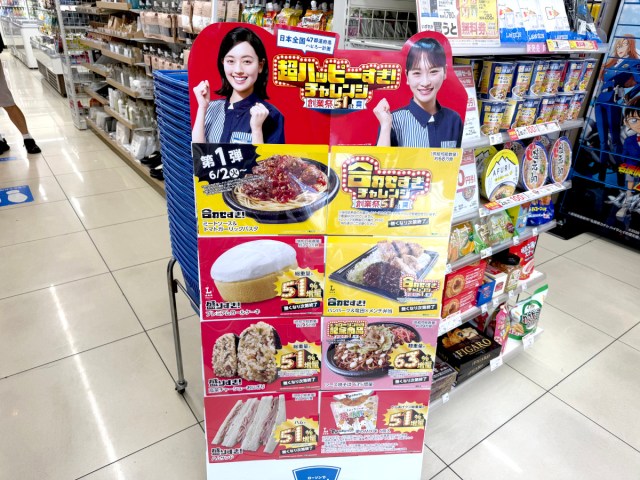
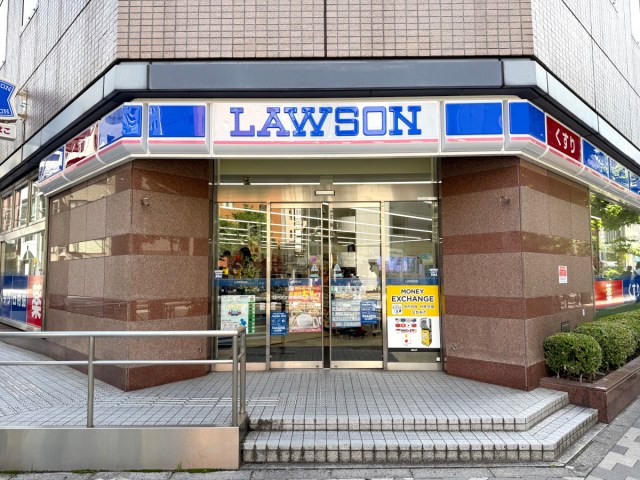
If you’re hungry and in the mood to try convenience store food, Lawson is the place to go right now as the chain is currently upsizing some of its most popular products for free.
▼ Popular items in the “Super Happy! Challenge” lineup include oversized versions of onigiri, sandwiches, and the Premium Roll Cake.
In amongst the offerings are two surprises we weren’t expecting, and rather than being happy to see them, we had a hunch they might be too extreme for anyone’s liking.
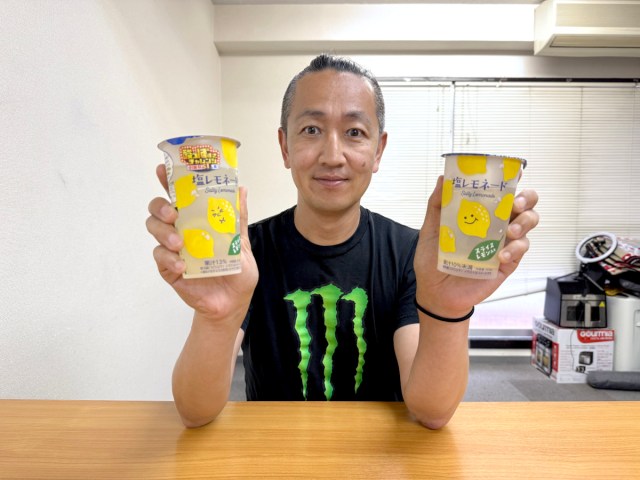
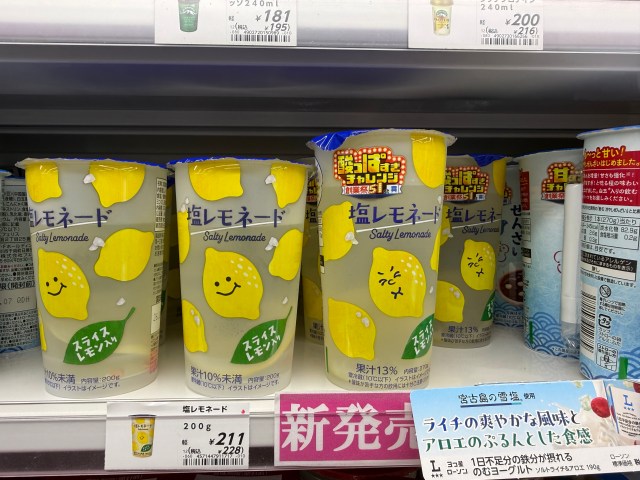
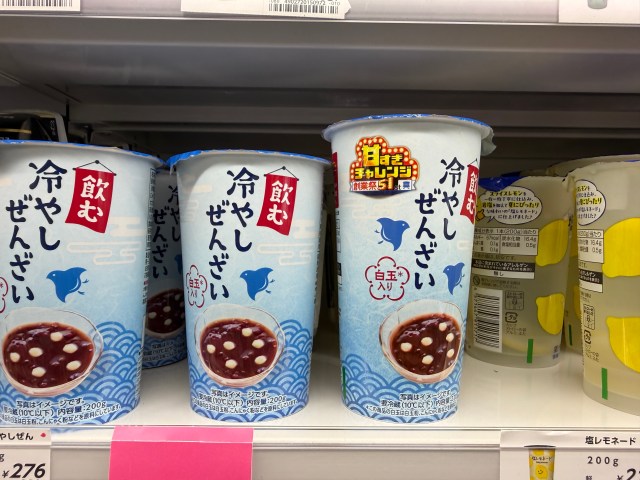
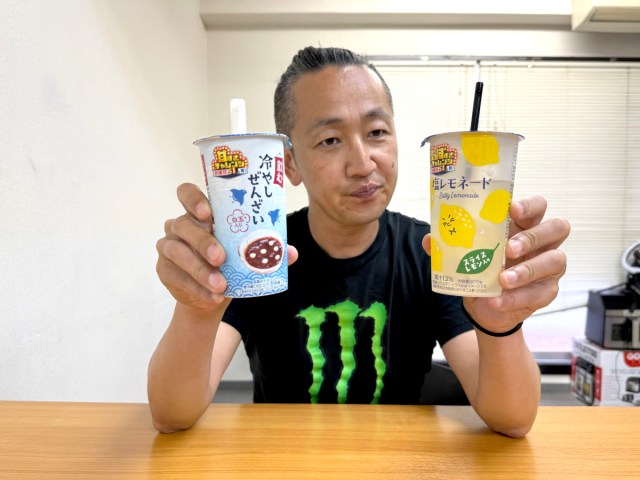
▼ The “Too Sour” Salted Lemonade (228 yen [US$1.43]) and the “Too Sweet” Drinkable Chilled Zenzai (298 yen).
According to Lawson’s official website, the Too Sour version of the chain’s Salted Lemonade contains twice as much lemon juice as the previous version, while the Too Sweet version of the Drinkable Chilled Zenzai is made with twice as much red bean paste as the original product.
▼ Zenzai is is a traditional Japanese sweet made from sweetened red beans and usually served with mochi (rice cakes).
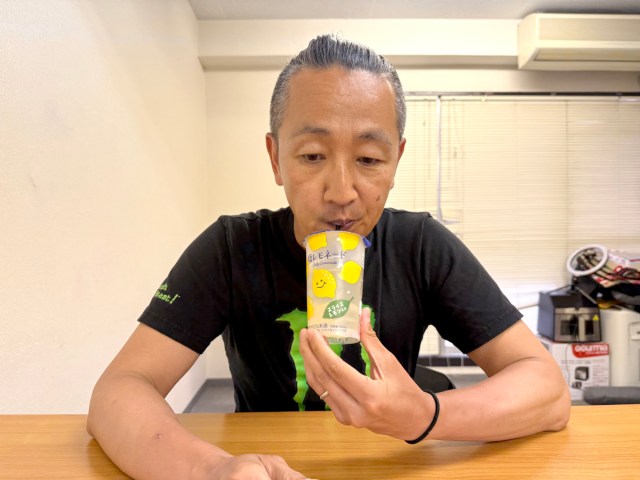
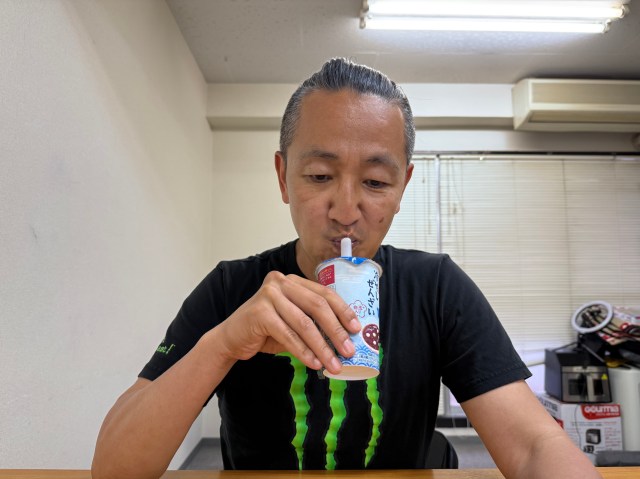
Reading the descriptions alone, it’s hard to tell just how extreme these drinks really are, so our reporter P.K. Sanjun bought both the regular and upsized versions of each for a taste test back in the office.
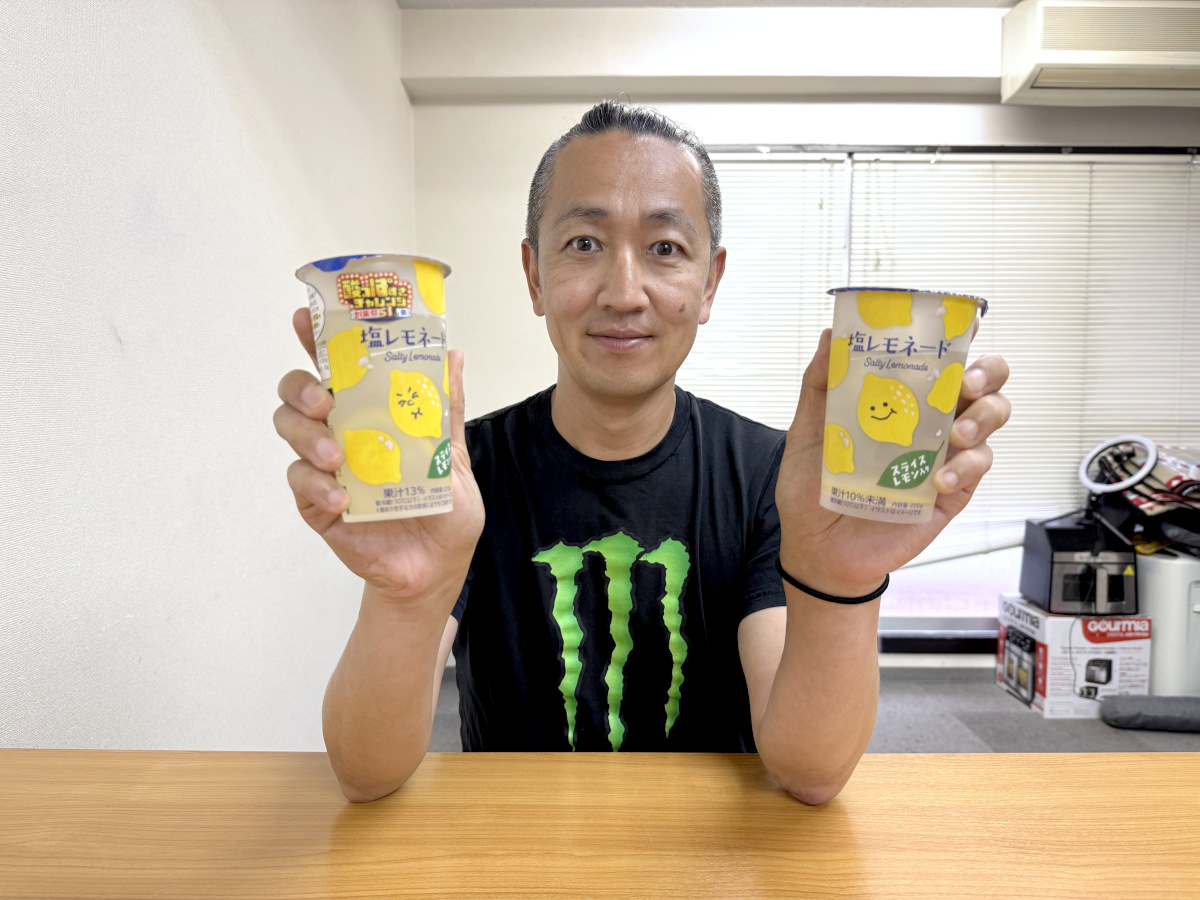
▼ Starting with the regular Salted Lemonade, it wasn’t especially sour – in fact, it tasted more like a lightly salted lemonade than anything intensely citrusy.
Then he took a sip of the Too Sour Salted Lemonade…
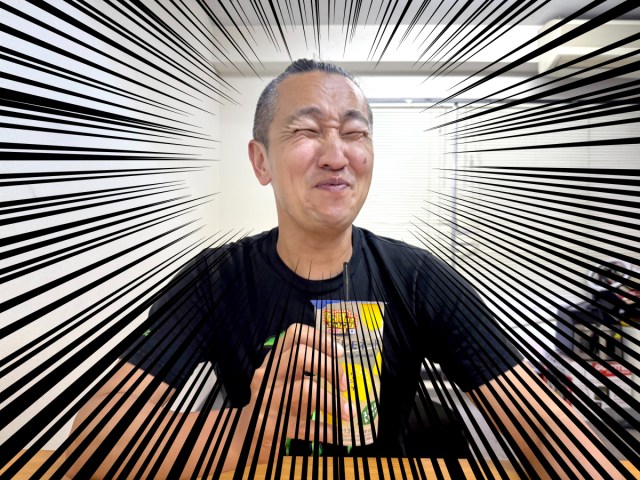
▼ Waaaaa!
P.K. could hardly get his words out, but when he finally unpuckered his lips he managed to say, “Wow. This stuff is unbelievable.“
It wasn’t just that it was more sour – the entire flavor profile felt completely different. To try and describe it, P.K. says it’s like tasting the difference between water and tea and then tasting the difference between water and cola, which is where the Too Sour Lemonade sits. The taste, texture and intensity is on a whole other scale compared to the regular version.
▼ It was so intense he couldn’t even finish the drink, so he moved on to the regular Drinkable Chilled Zenzai.
It had a pleasantly balanced sweetness that was fairly refined and P.K. had absolutely no complaints about the flavour. Then he took a sip of the Too Sweet Drinkable Chilled Zenzai…
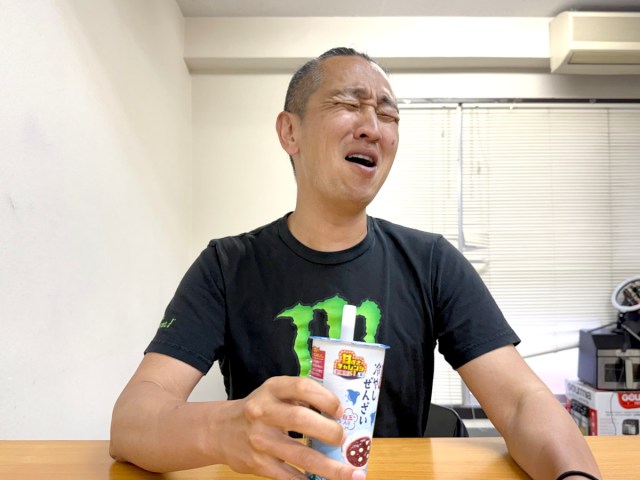
▼ Tooooooo sweeeeeet!!!!!!!!
The sweetness was absolutely relentless. It was the kind of sweetness that burns its way down your throat in an aggressive manner and it was so strong that P.K. dare not take another sip.
After trying the drinks, P.K. was surprised to find that in both cases, he actually preferred the original versions. They felt more balanced and, frankly, more enjoyable to drink.
▼ P.K. gives both of these two thumbs down.
Although the drinks themselves were too extreme for P.K.’s palate, he was impressed by Lawson’s marketing. In choosing to go overboard with the sourness and sweetness levels, this campaign serves to highlight just how good the original versions are. It also proves that you really can have too much of a good thing, and so sometimes, just sometimes, upsizing your favourite products or flavours may not be all it’s cracked up to be.
Everyone’s palate is different, though, so if you’d like to test yours against the extreme ends of the spectrum, the drinks will be on shelves for a limited four-week period from 2 June.
Unique attraction is a hidden retro gem in a suspended state, and it might soon disappear forever.
Japan is world-famous for top-class amusement parks, with USJ and Tokyo Disney Resorts being just two popular destinations that attract visitors. However, tucked away in quiet corners of the country, you’ll find lesser-known parks, slightly rusty and weatherworn, that are known as “B-grade attractions”.
So-named for their rundown appearance, these theme parks hold a lot of charm, standing like relics from a long-forgotten heyday, and we recently found one hidden on Mount Tsukuba in Ibaraki Prefecture.
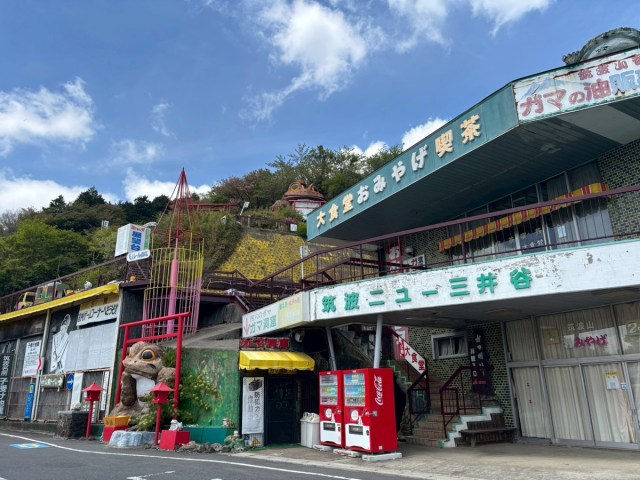
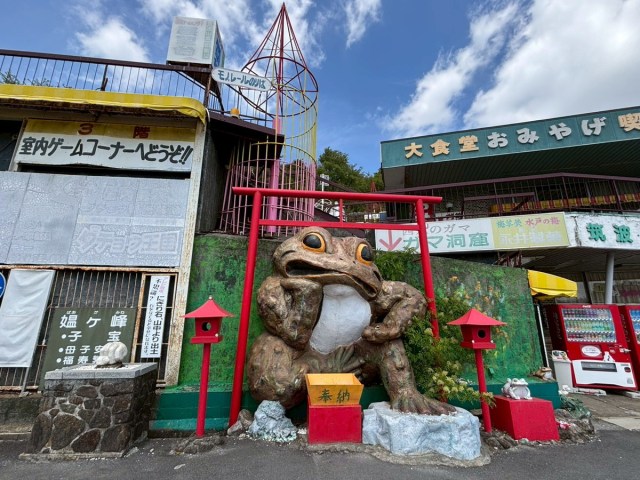
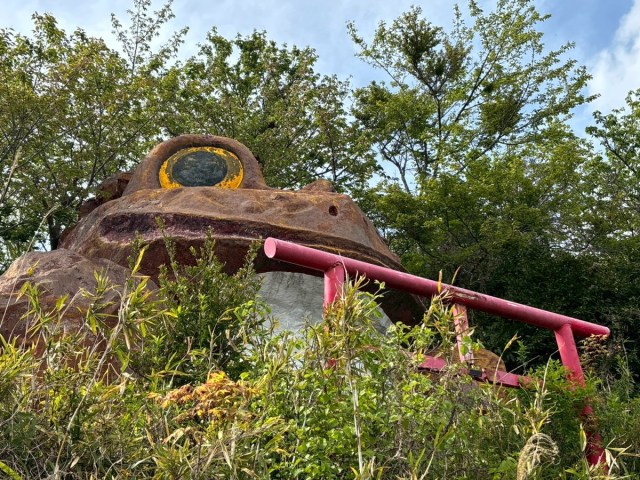
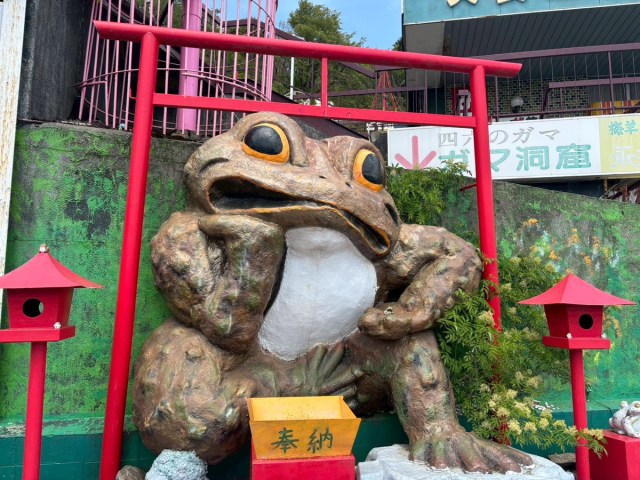
▼ We only stumbled upon it while hiking the mountain, when a giant toad statue loomed into view, alongside the words “Gama Land”.
With “gama”meaning “toad”, this theme park is dedicated to the amphibian, and it’s aptly located because according to folklore, toads living on the mountain possess mystical powers.
Originally, this attraction was built as part of the same tourism development zone near the Mount Tsukuba ropeway base. Part roadside stop and part amusement park, Gama Land became known for its giant toad statue and handmade-style cave exploration attraction, which acted like a quirky walk-through haunted house.
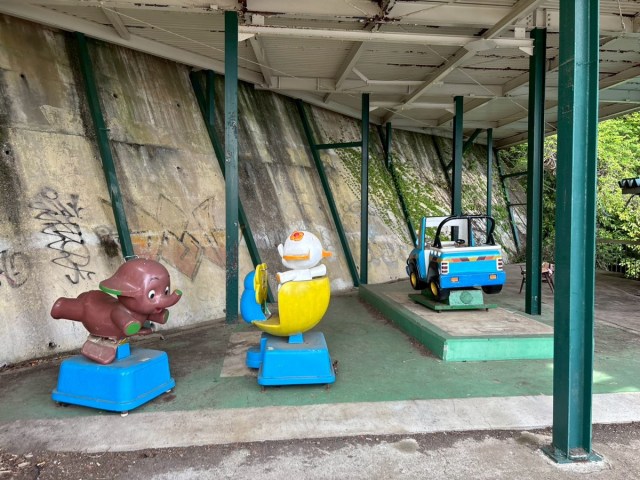
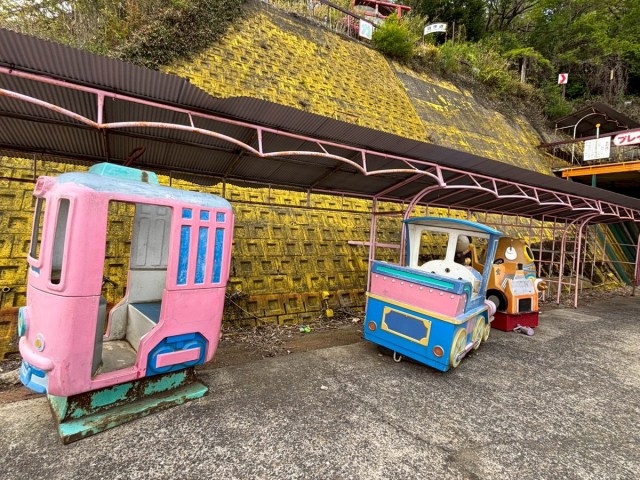
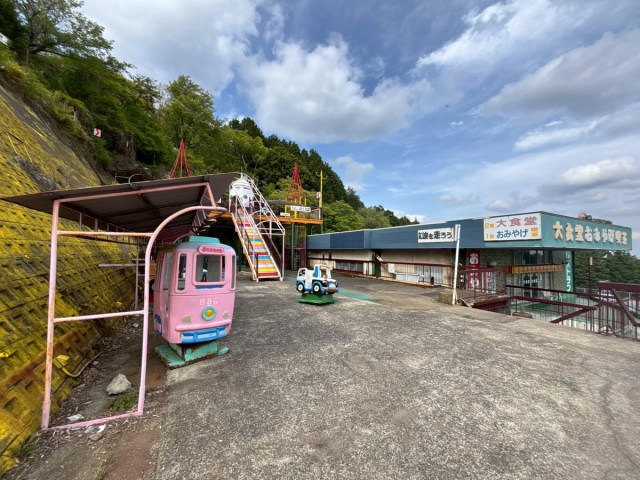
Venturing into the grounds, we discovered that sadly, Gama Land is officially closed. With the park no longer operating, there are no staff or visitors around, and the facilities are certainly showing their age.
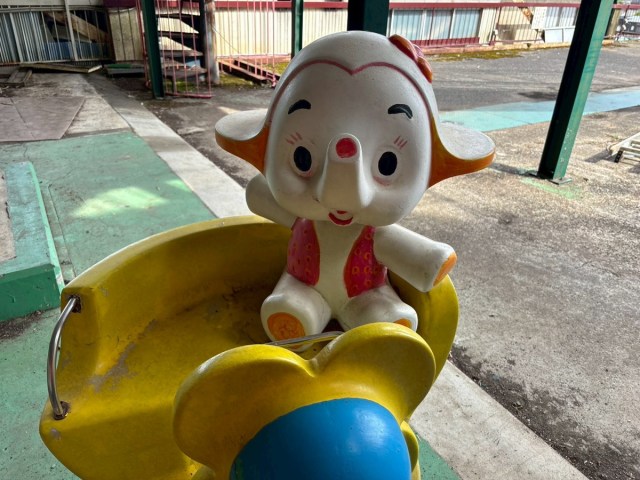
That doesn’t mean it’s totally in ruins, though, as the rides look like they could’ve been used just yesterday. It’s almost as if the park had been bustling with visitors one minute and then they’d all been suddenly spirited away, and as we walked around, this eerie sense of sudden abandonment grew more intense.
Feeling like end-of-world explorers walking through the mists of time, our only company was a giant toad, who watched over us with an unnerving perpetual stare.
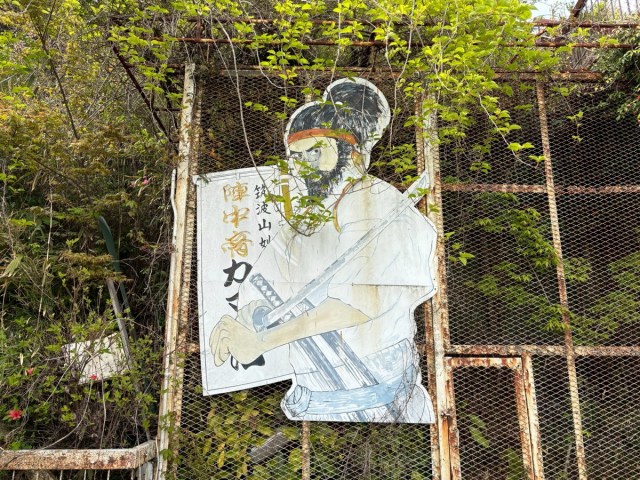
With the buildings and signage left largely unchanged, the place felt frozen in time, displaying all the hallmarks of a classic Japanese B-grade attraction.
In its heyday, Gama Land was said to be “B-grade at its absolute best”, and the highlight for visitors was Toad Cave.
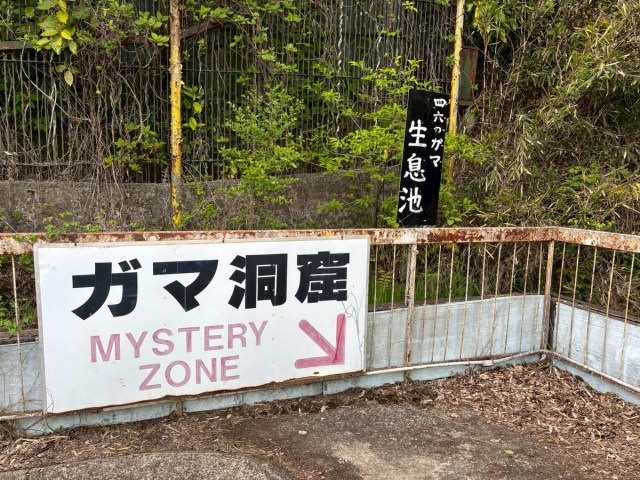
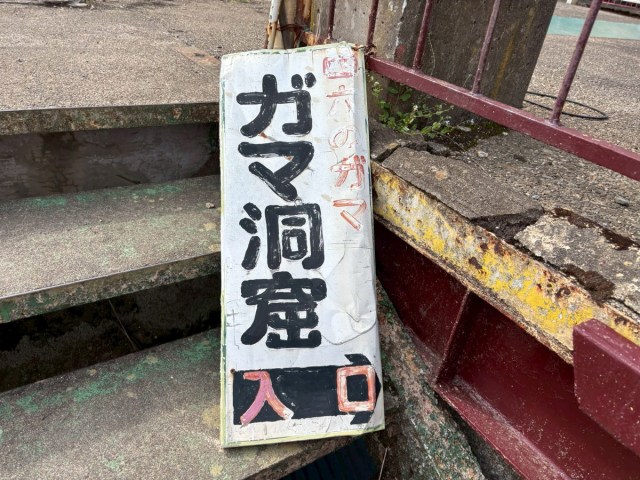
Though signs for the cave, dubbed a “Mystery Zone”, remained scattered throughout the park, we were sad to find it was now off-limits due to the park’s closure.
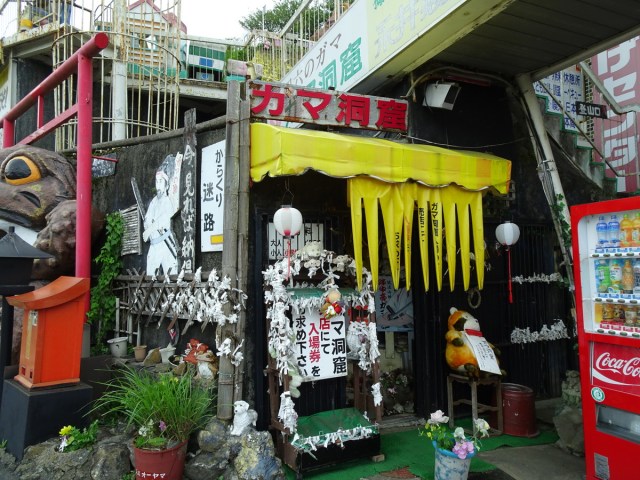
▼ Toad Cave, or “Gama Doukutsu” is written as “ガマ洞窟”
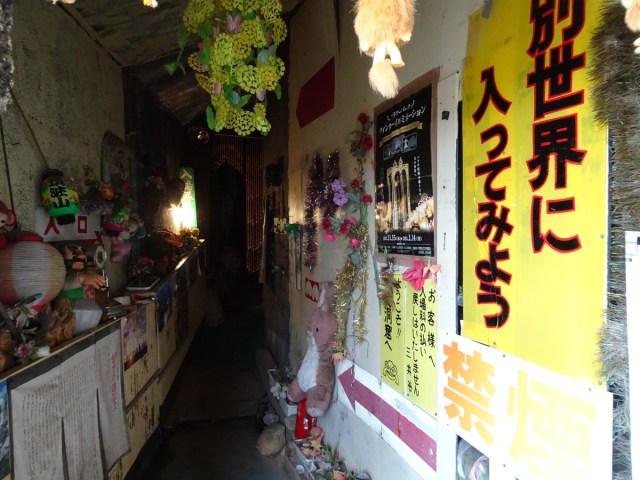
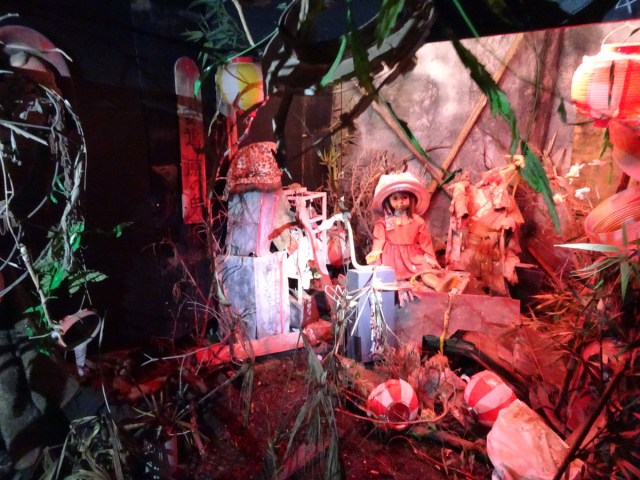
Luckily for us, we were in touch with someone who has a fondness for B-grade attractions, and they kindly shared photos of the cave from a previous visit, when the place was in operation.
▼ Filled with seemingly random exhibits, the cave had a wonderfully homemade feel.
According to our friend-in-the-know, the cave wasn’t so much scary as it was delightfully bizarre, displaying the kind of charm only a true B-grade attraction can offer.
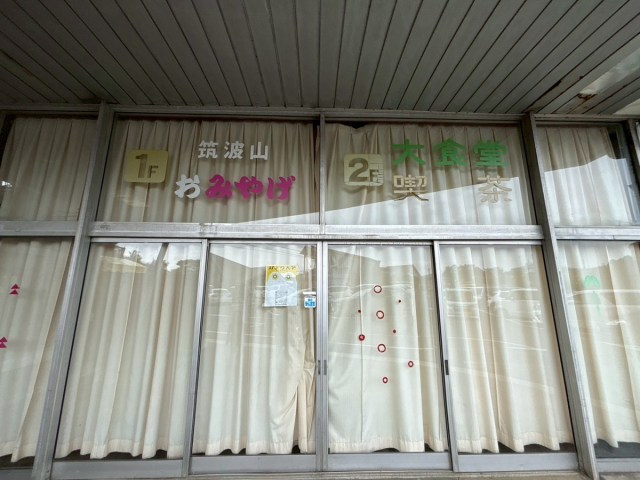
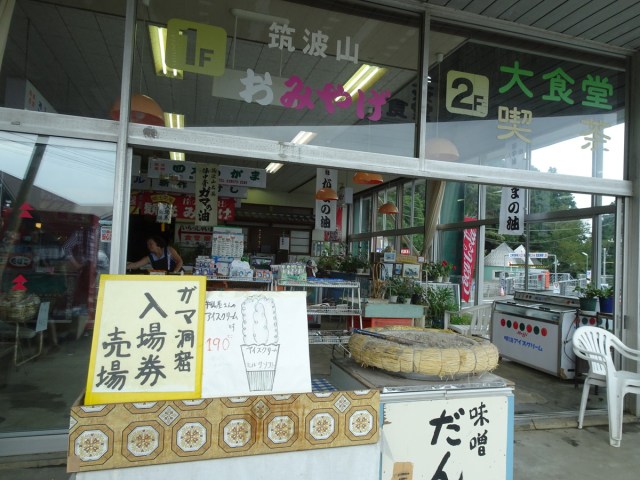
Tickets to the cave were sold at the main building, which housed a souvenir shop on the first floor and an eatery on the second.
Looking at the photos, and the signs of life the park once had, made us feel an even greater sense of affection for it. The overall vibe was always retro, with a warm, handmade feel, and it once had many more coin-operated rides up on the rooftop, giving it the feel of a small rooftop amusement area.
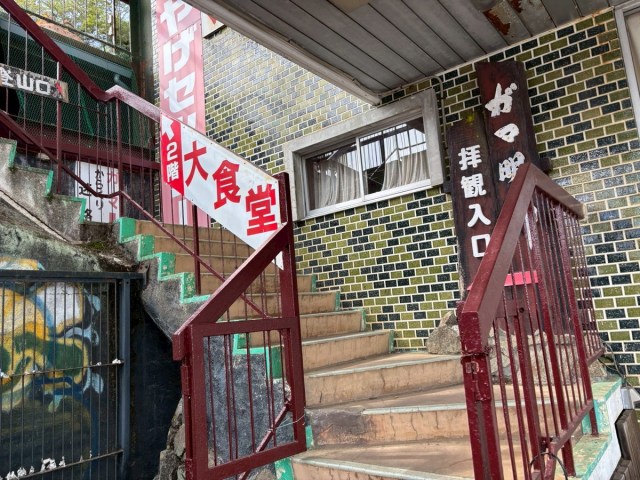
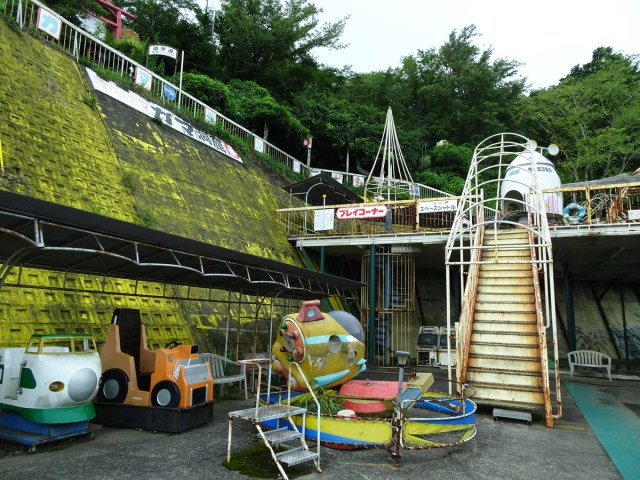
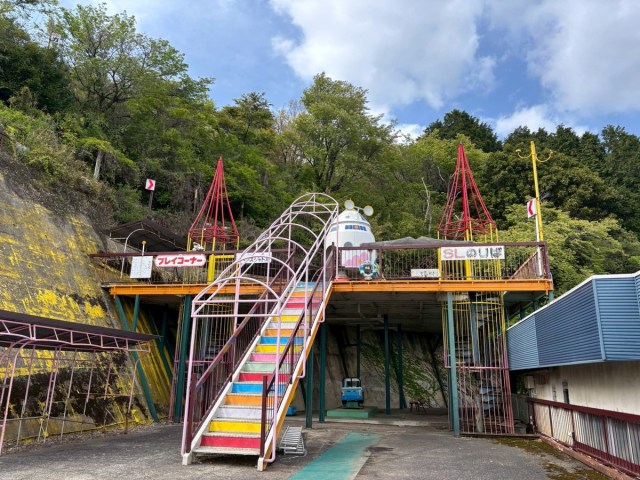
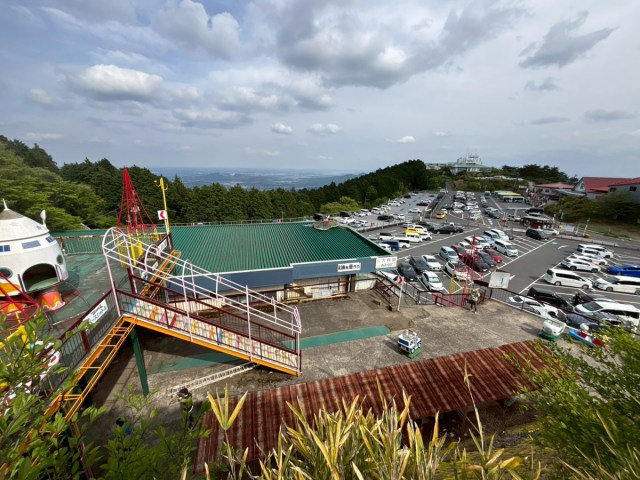
Interestingly, the park looked even more run-down when it was in operation – the photo above shows what it was like when open, while the photo below shows what it looks like today.
▼ The stairs are actually more colourful today than they were back then.
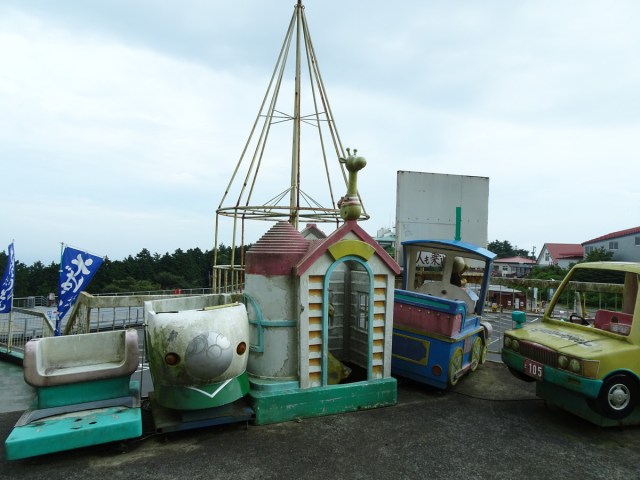
Some of the playground structures were shaped like robots and rockets, giving us a glimpse into a vision of the future as imagined by people of the past.
The more we saw of the park, the more mysterious it became, with every step making us wonder what stories the place could tell.
If we could travel back in time, we’d love to go back and visit this park to see what it was like in its heyday. It left so many questions unanswered, but that was part of its indelible charm.
Despite the closure, the wonders of the site won’t be totally lost to time, though, as there are plans to reopen it in 2027 as an all-new tourist hub with accommodations, dining, a sauna, and hands-on experiences. Though the amusement park itself takes up a relatively small patch of land, the parking area is vast, so it will be interesting to see how the area will be transformed next year.
▼ The redevelopment project is being led by Bando Taro, a restaurant group known for operating Japanese dining chains across the northern Kanto region.
The plan is to make use of the existing facilities while transforming the site into a tourism hub, and developers say they will preserve some of Gama Land’s original signage and facilities to preserve its retro character.
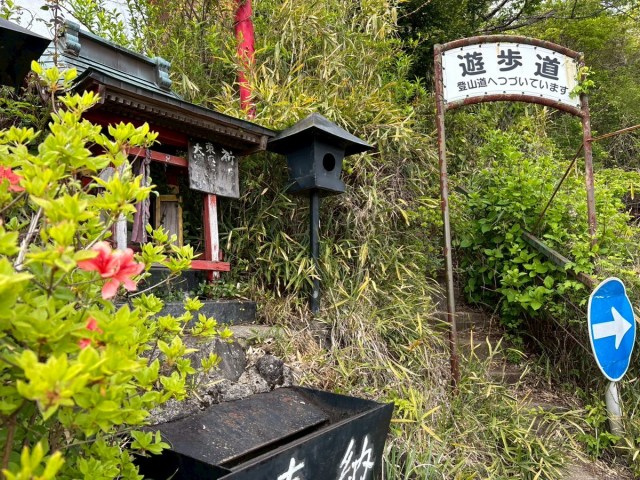
▼ Hopefully the giant toad and the torii gate, lamps and offertory box will be preserved for the enjoyment of future visitors.
Once redevelopment is complete, the facilities will likely be much more polished, and it may well become a lively new tourist spot that attracts many visitors. While that sort of revitalisation comes with many benefits for the community, there’s also a feeling that the park as it currently exists, in its uniquely atmospheric, half-suspended state, is something that can only be experienced now.
Neither a tourist attraction nor quite a ruin, the now-closed Gama Land is a strangely captivating, hard-to-define space. Though it’s still unclear what the place will look like when it reopens in its new form, we have high hopes that it will retain some of its indescribable charm so that the echoes of laughter from years past can continue to be heard well into the future.
Site Information
Gama Land / ガマランド
Address: Ibaraki-ken, Tsukuba-shi,Tsukuba Tsutsujigaoka
茨城県つくば市筑波つつじケ丘 Website (Instagram)
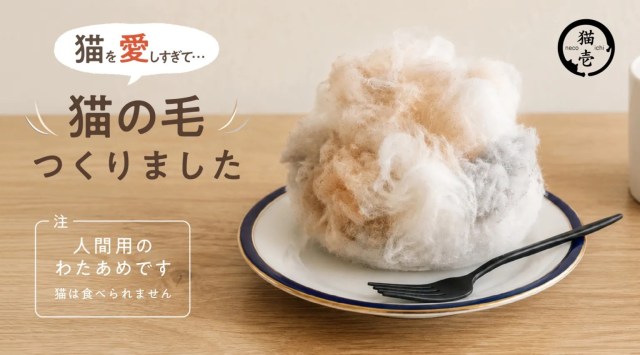
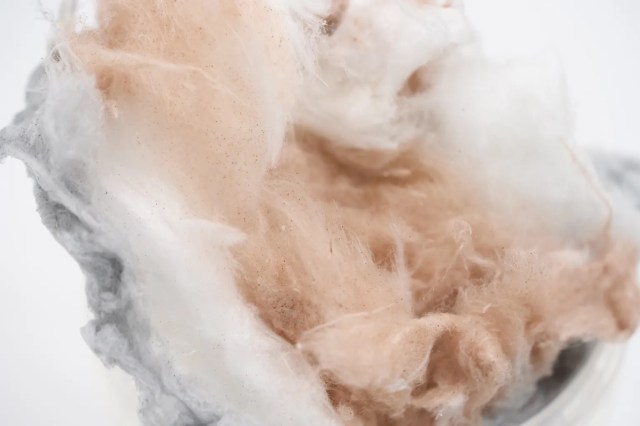
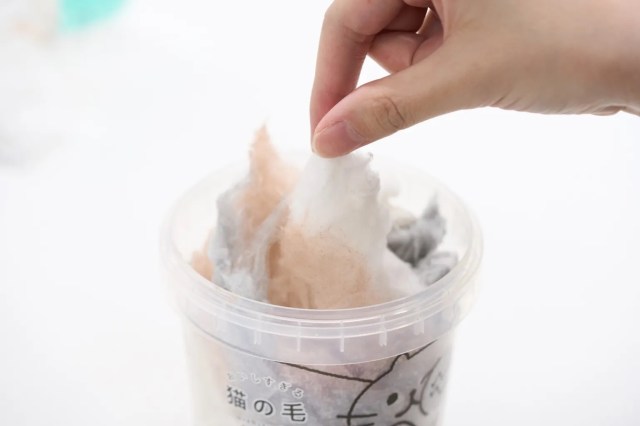
Known officially as “Delicious Cat Fur” by its creators, Necoichi, a company that specialises in cat products, this new offering is designed to look like something that’s been plucked from the back of a calico cat. The cat-like colouring and fluffy texture looks incredibly realistic, but you can breathe a sigh of relief as this “fur” is actually…
▼ … cotton candy!
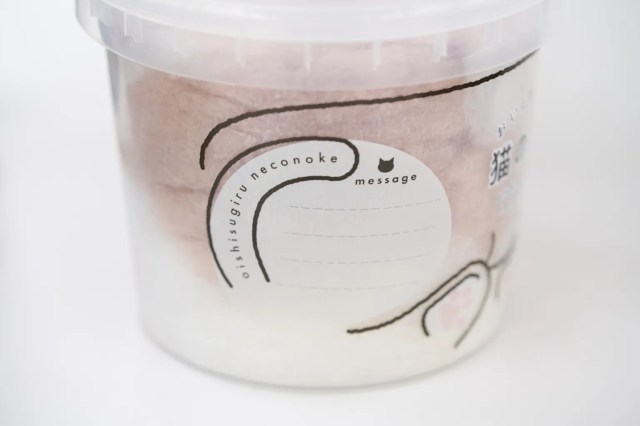
To be precise, this is said to be cotton candy for cat lovers, as it’s packed with beautiful details that “reflect a deep love for felines”. It’s such a fun and unique product that it’ll appeal to anyone with a fondness for cats, but if you’ve ever wanted to collect your pet’s fur and keep it in a container, or if you’ve ever liked a cat so much you’ve wanted to eat its fur, then this will tip the scales towards being a dream product. You can also share the love with a dedicated message section on the side for gift-giving.
▼ “Our dreams of eating cat fur are finally a reality!”
While the visuals are enough to put cat lovers into a tailspin, the product is also designed to be genuinely delicious. The cotton candy is said to melt lightly on the tongue, and hidden inside are popping candy pieces that crackle in your mouth as you eat it, creating a fun texture that comes with equally fun sound effects.
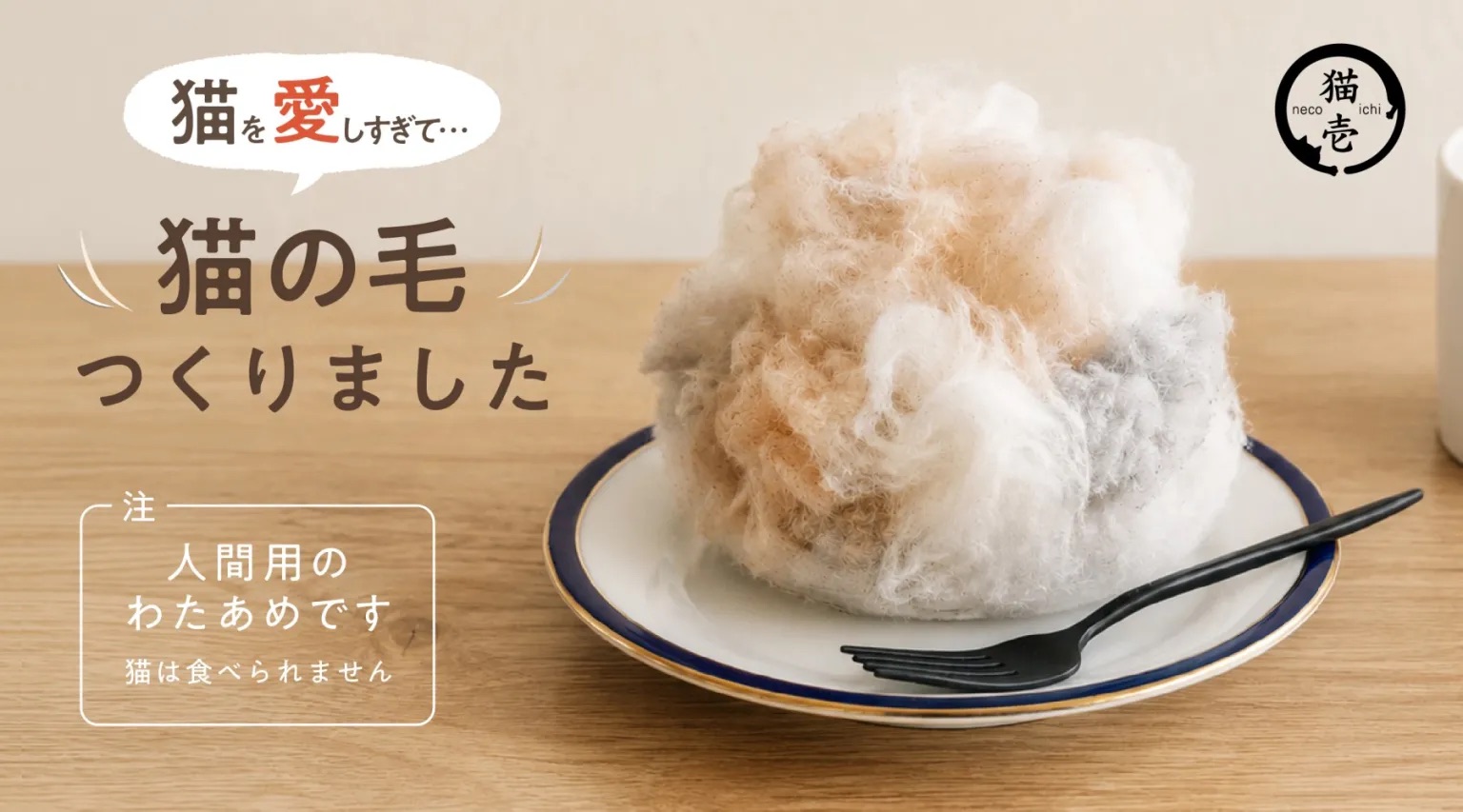
▼ The promo image for the product reads “We made cat hair”, alongside a speech bubble that says “We love cats too much…” and “This is cotton candy for humans. Cats can’t eat it” as a cautionary note.
With a sweet and sugary aroma, the Delicious Cat Fur is a multi-sensory experience that’ll engage more than just sight, hearing, smell, taste, and touch – it’ll engage your sense of imagination as well.
It’s surprisingly realistic for something made of sugar, and is sure to bring a smile to all sorts of cat lovers, from the casual admirer to the full-on feline enthusiast. Released on 30 May, the “Delicious Cat Fur” is available exclusively at the Necoichi Store at Yokohama’s Lalaport shopping centre, priced at 980 yen (US$6.11).
Animals & Monsters: Cute, Scary, and a Little Weird is the perfect exhibition for anyone who delights in art that doesn’t take itself too seriously.
This summer, once you’re done shopping in the trendy streets of Tokyo’s Harajuku district, you won’t have to go far to enjoy a little taste of high culture. In fact, there’s some conveniently located right in front of Tokyo Metro Meiji-Jingumae Station and just around the corner from JR Harajuku Station at the Ota Memorial Museum of Art, a preeminent museum of Japanese ukiyo-e woodblock prints and drawings. However, this repository is offering a fun twist in its upcoming exhibition that might leave you laughing in the gallery.
From June 23-August 23, the Animals & Monsters: Cute, Scary, and a Little Weird exhibition will have 140 works on display, approximately one-fifth of which are new to the museum’s collection. The event will also be split into two parts that will display entirely different works of art during each.
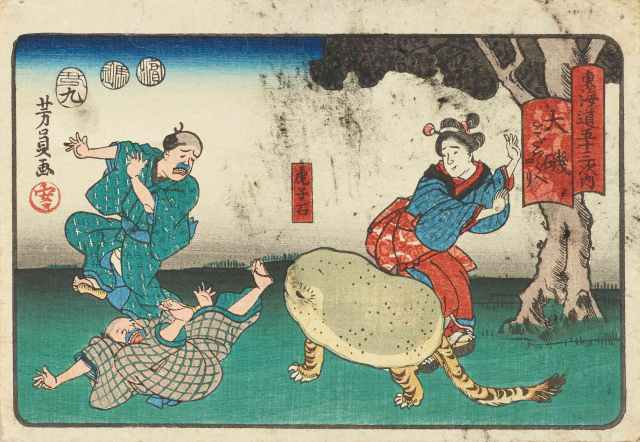
So what makes it “cute, scary, and a little weird,” you ask? It’s the fact that even master artisans from 200 years ago weren’t afraid to be a little bit silly with their craft. Take this print that’s part of Yoshikazu Utagawa’s Fifty-three Stations of the Tokaido series, for instance. At first glance, it appears to show some people being startled at a potato with a tail and legs (for the record, it’s actually a stone tiger–which still leaves us with lots of questions).
▼ “Fifty-three Stations of the Tokaido Road: Oiso” by Yoshikazu Utagawa
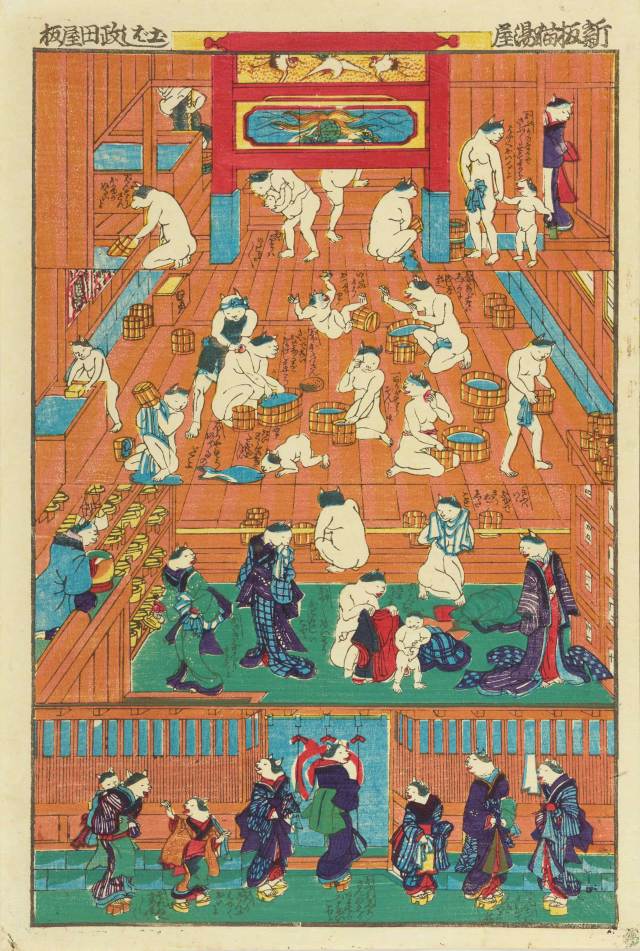
If anthropomorphized animals are more your thing, you’ll enjoy the series of cat-humans (human-cats?) going about daily life in a variety of settings such as at a public bathhouse. This print would make for an excellent addition to your bathroom with the ability to potentially disturb your guests.
▼ “Cats’ Bathhouse” by unknown artist
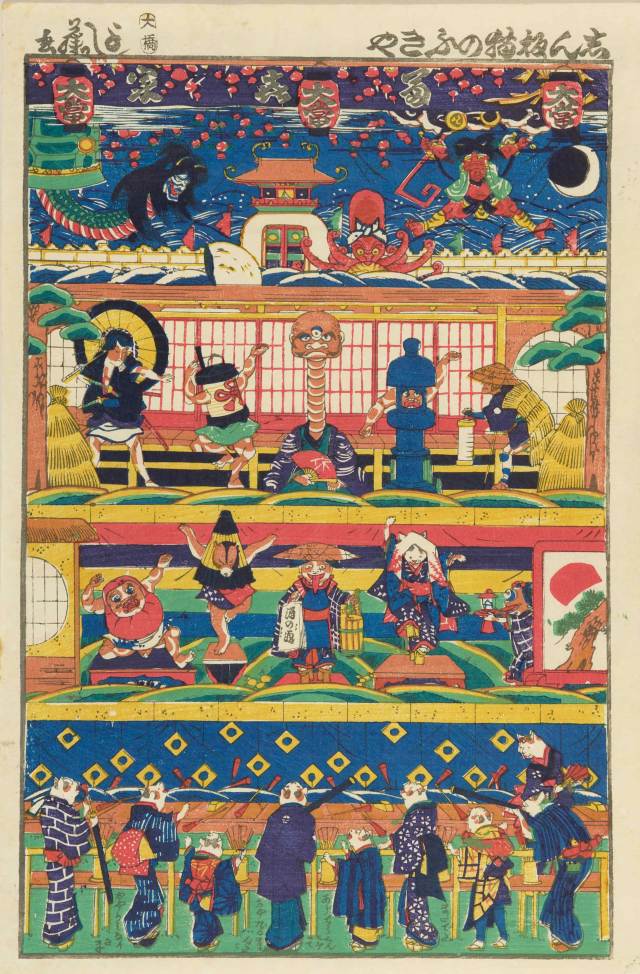
Meanwhile, these cats seem to have rented a property with a bunch of their Japanese yokai friends and are throwing an all-night rager.
▼ “Cats’ Blowdart Stand” by Yoshifuji Utagawa
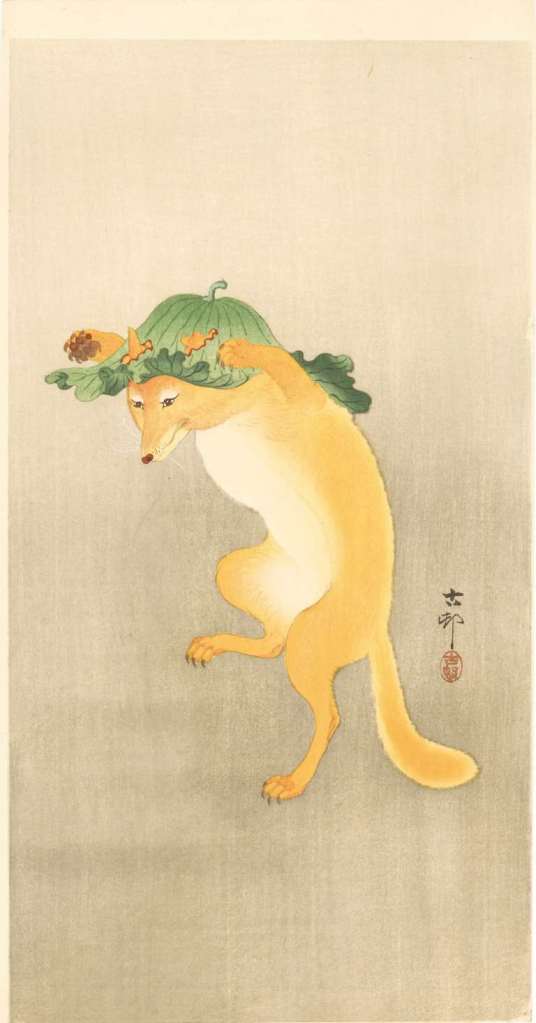
On the cuter side of things, there are plenty of prints of animals engaging in all kinds of antics. Take this fox that seems to be wearing the latest in cabbage couture and practicing the choreography to “Thriller.”
▼ “Dancing Fox” by Koson Ohara
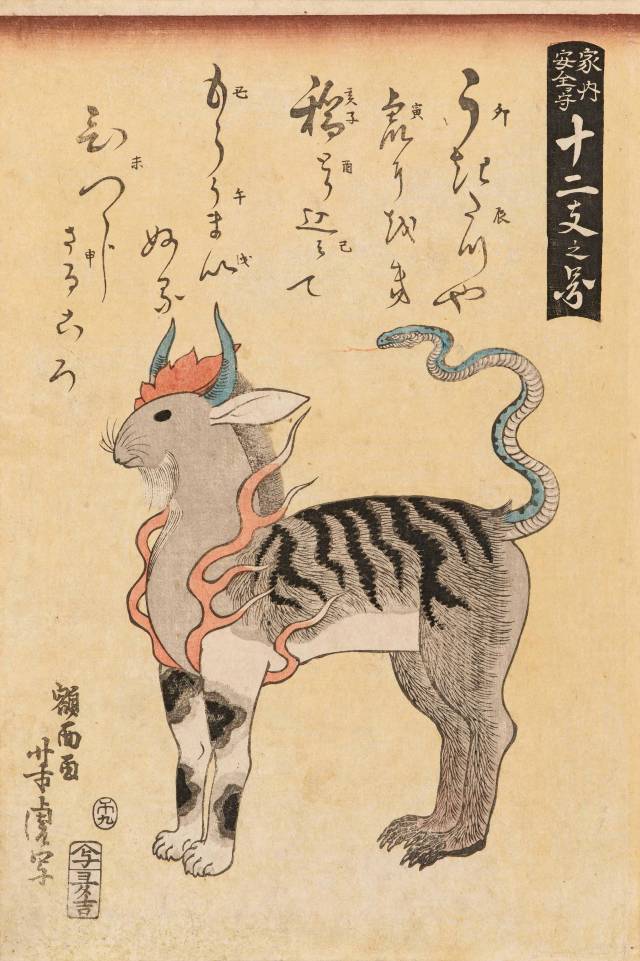
Moving into the realm of the bizarre, don’t be weirded out by this chimera of all 12 animals in the Chinese zodiac that’s supposed to bring good luck to the household. Good luck in getting people to give a name to this guy, that is…
(Hey, at least it doesn’t look like it’s about to say, “Ed…ward…”)
▼ “Twelve Animal Signs of Oriental Zodiac Gathering to Form One Animal” by Yoshitora Utagawa
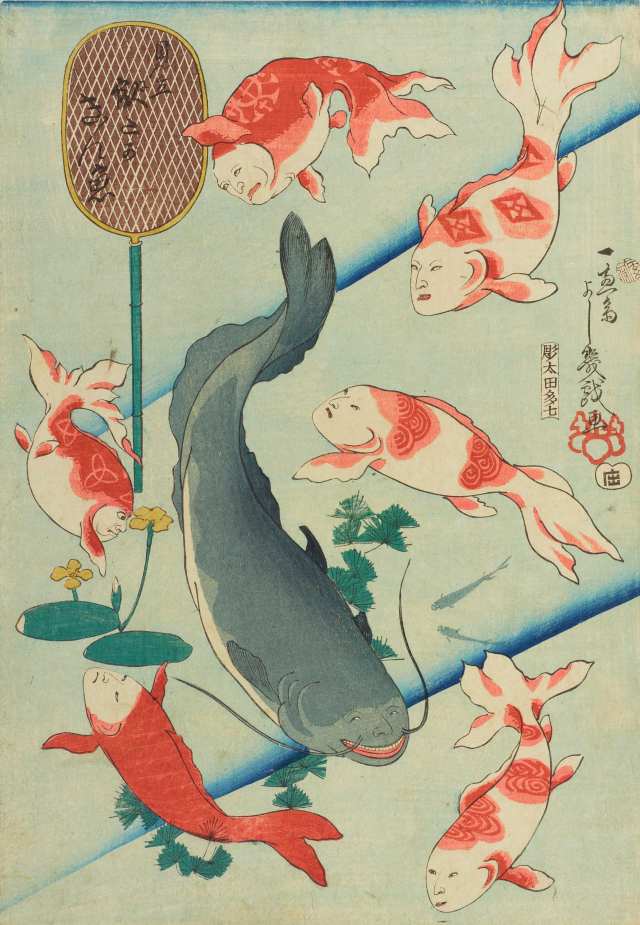
Finally, the jury’s still out on whether the below image is bizarre versus downright scary, but we’ll let you decide for yourselves. In all honesty, though, hopefully the museum will be selling merch with this print so that we can commemorate our visit to the real-life pond in Japan where human-faced fish are supposed to live with one.
▼ “Goldfish Resembling Kabuki Actors” by Yoshiiku Ochiai
Admission to the Ota Museum of Art is by cash only, at 1,200 yen (US$7.53) for adults and 800 yen for university and high school students.Junior high school students and younger enter for free, though you’ll have to be the judge of whether any kids you take with you will find the artwork to be hysterical or terrifying.
Exhibition information
Animals & Monsters: Cute, Scary, and a Little Weird / アニマル&モンスター かわいい・怖い・ちょっと変
Ota Memorial Museum of Art / 太田記念美術館
Address: Tokyo-to, Shibuya-ku, Jingumae 1-10-10
東京都渋谷区神宮前 1-10-10
Duration: June 23-August 23 (Part I: June 23-July 20, Part II: July 25-August 23)
Open: 10:30 a.m.-5:30 p.m. (last entry at 5 p.m.)
Closed: June 29, July 6, July 13, July 21-24, July 27, August 3, August 10, August 17 Website
A public restroom stall shock that had nothing to do with cleanliness.
Whether you’re looking for a Pokémon frappe, chocolate chip sandwich, or surprisingly high-quality T-shirt, Japan’s convenience stores have got you covered. As a matter of fact, it can start to become easy to become desensitized to the very wide variety of things you can find in a Japanese convenience store, but earlier this month a customer at one in the town of Shimonoseki, Yamaguchi Prefecture came across something that still managed to shock him, as the late-night shopper found a gun inside the shop.
Firearm ownership is heavily regulated in Japan, however, so the gun wasn’t something the store was selling, and it wasn’t out on the shelves between the boxes of Pocky and packs of melon bread either. Instead, the customer, who was at the store at around 12:35 a.m. on June 3, found the gun in the store’s bathroom. After he stepped into a stall, he noticed a belt hanging from a hook ordinarily meant for bags or coats. Attached to the belt was a holster, and inside the holster was a pistol.
We’ve often discussed how life in Japan isn’t like anime, but reality here is also very different from video games, and you generally won’t find weapons just lying about in real-life Japan like it’s an RPG. An odd exception, though, is bathrooms, which periodically turn into unintended armories when police officers use them and forget to take their guns with them once they’re done doing their bathroom business. That’s what happened in this case as well, with the firearm being traced back to a police officer with the Yamaguchi Prefectural Police who was on duty that night and had stopped by the convenience store roughly 40 minutes before the customer found his gun.
The customer informed the store staff about the forgotten weapon, and the store then contacted the policer to report its discovery. The officer has admitted to accidentally leaving his weapon behind, and the Yamaguchi police have pledged to reassert to all officers the importance of making sure they haven’t left their gun behind and unaccounted for when moving from one location to another.
Until recently, most police departments prohibited officers from making use of convenience stores while on duty and in uniform. With such regulations being eased, though, the frequency with which police firearms are brought into stores will likely continue to increase, so hopefully officers will remember to take them back out too.
Kayanoya’s Satoyama Cookies give you four flavors for a snack session unlike any other.
The other day, we found ourselves thinking “We want to eat some cookies.” In and of itself, that’s not at all an unusual condition for us to be in, but on this day we wanted specifically to eat some Kayanoya cookies.
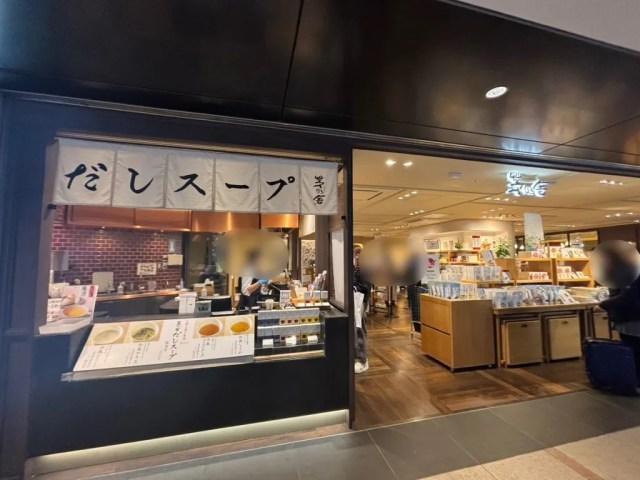
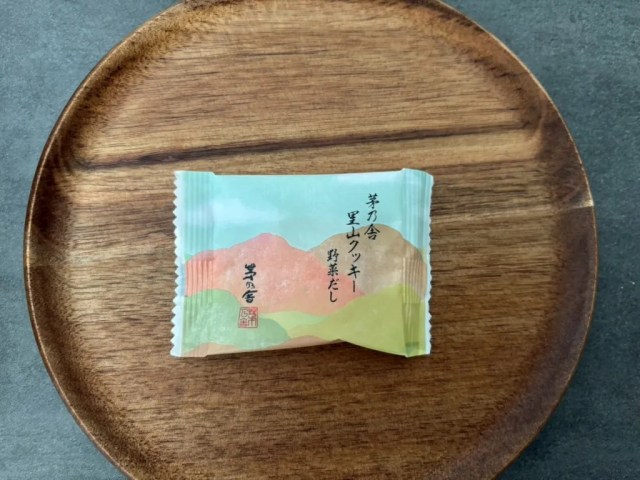
Kayanoya is a company that was founded all the way back in 1893, and as you might expect from that, they make use of some characteristically Japanese ingredients in their cookies, such as matcha green tea and black sesame. Kayanoya isn’t a dedicated confectioner, though. They’re primarily a producer of dashi, Japanese soup stock, and yes, they have dashi cookies too!
▼ Some Kayanoya shops even have a counter where you can get cups of piping hot dashi soup (だしスープ).
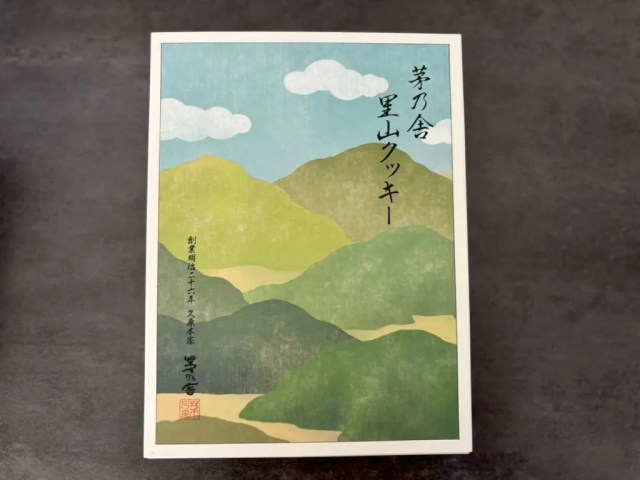
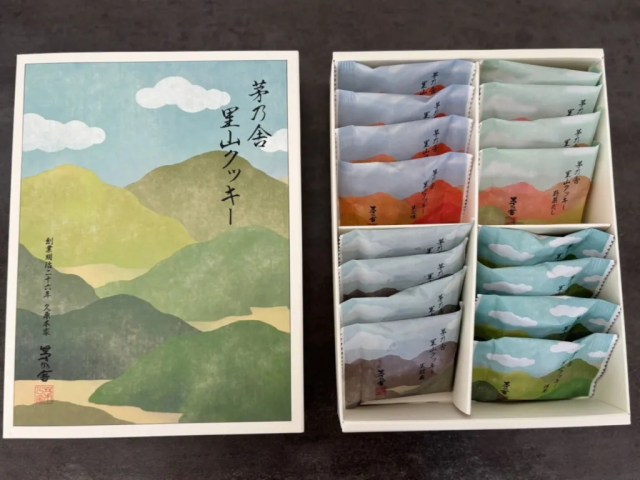
The dashi cookies are part of the four-flavor Satoyama Cookieset. Satoyama is a Japanese word referring to farmlands adjacent to foothills and forests, and that retro rural community aesthetic is present on the box lid.
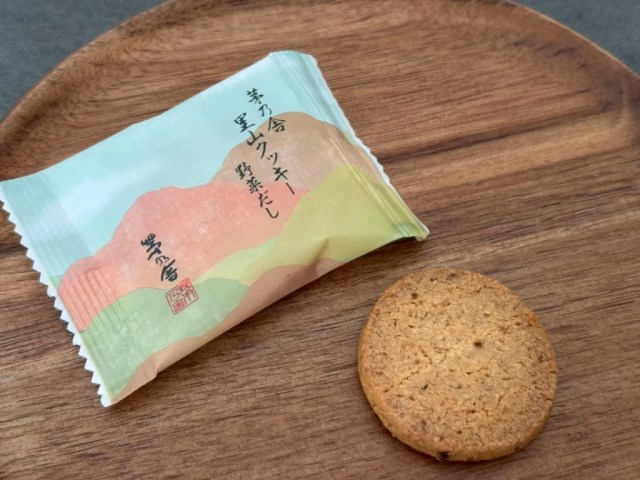
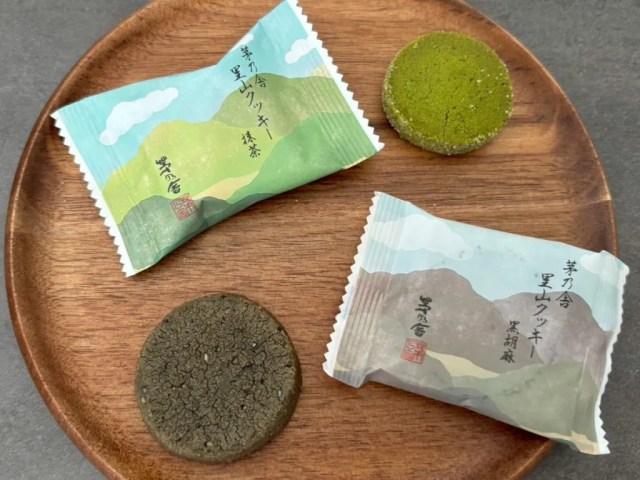
The 16 cookies inside are arranged neatly in their own little compartments, and we started our tasting with the matcha and black sesame cookies.
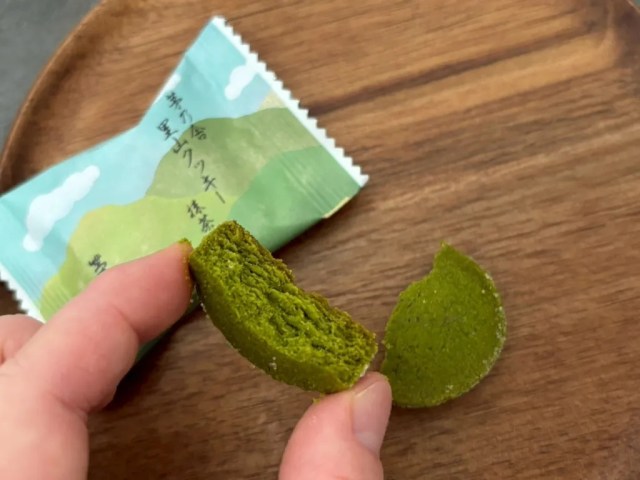
Fancy Japanese cookies tend to be crisp and a little crumbly in their texture, and that’s true of Kayanoya’s. Thankfully, they go easy on the sugar in the recipe, leaving the matcha and black sesame plenty of room to be the stars in their cookies’ flavor profiles, and they’re both delicious, in a sophisticated way.
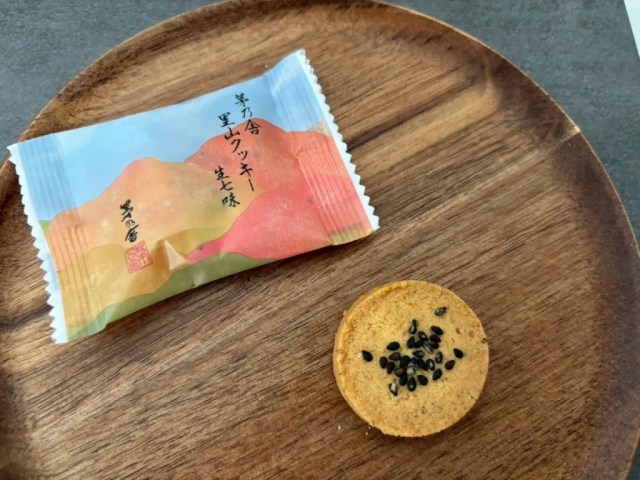
Now, though, it was time for things to start getting unusual, and even before we got to the dashi cookie, we had a shichimi one to try.
Shichimi is a piquant allspice whose name translates literally to “seven flavors.” The exact mix of ingredients varies from maker to maker, but red chili powder is always present, and sesame and sansho, an aromatic type of Japanese pepper with bitter notes, are also regularly members of the shichimi team.
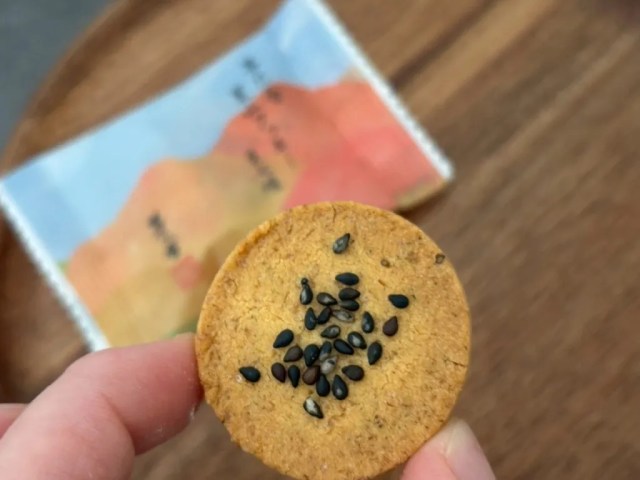
▼ Somewhat confusingly, Kayanoya’s shichimi cookies have black sesame sprinkled on top of them, while the black sesame cookies do not.
Since this is still a cookie, we wondered if Kayanoya would perhaps use just a touch of shichimi for a little spicy accent to an otherwise sweet flavor. But nope, just like with their matcha and black sesame cookies, the taste is crafted so that you really do taste shichimi more than anything else, and this is an honestly spicy cookie that little kids probably won’t enjoy, but adults with adventurous palates will.
And finally, we come to the dashi cookie.
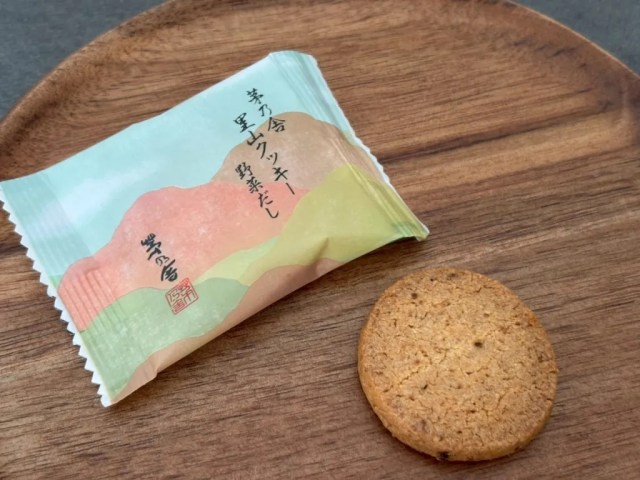
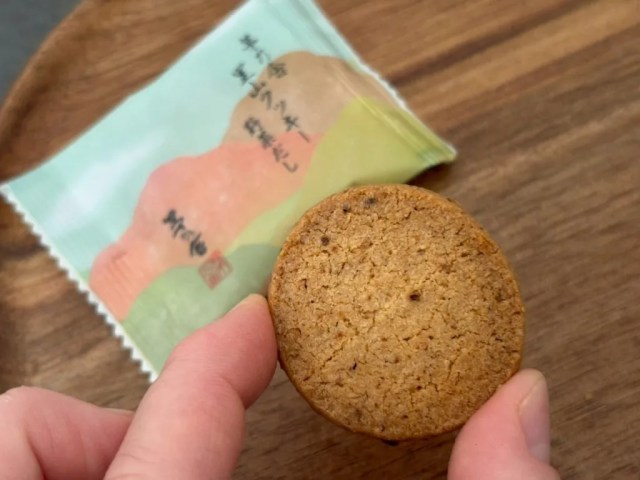
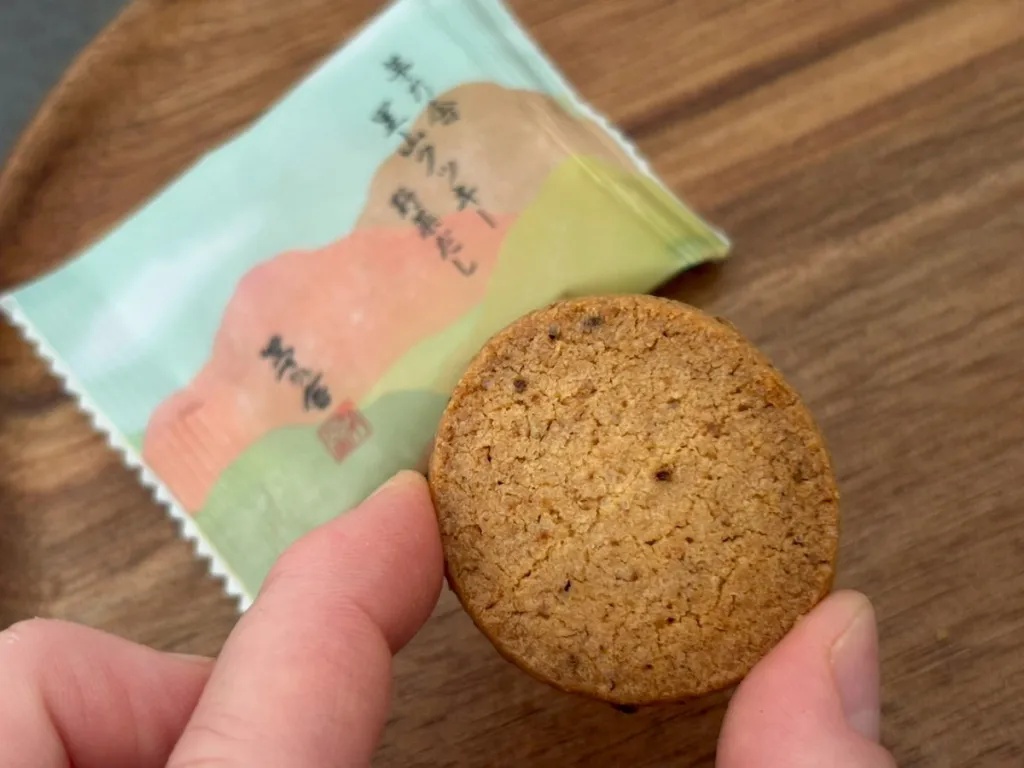
Dashi is a bit of a catchall culinary term, and most commonly indicates a type of fish broth that makes heavy use of bonito stock. However, while Kayanoya does make fish-based dashi, for their dashi cookies they instead use their vegetable dashi, which is fish-free and instead made with onion, carrot, cabbage, celery, and garlic.
By this point, we knew that the primary flavor of the vegetable dashi cookie was going to be dashi, but which of those five veggies would come to the forefront? We got our answer immediately, as we took a bite and immediately had the sensation of onion firing up our taste receptors.
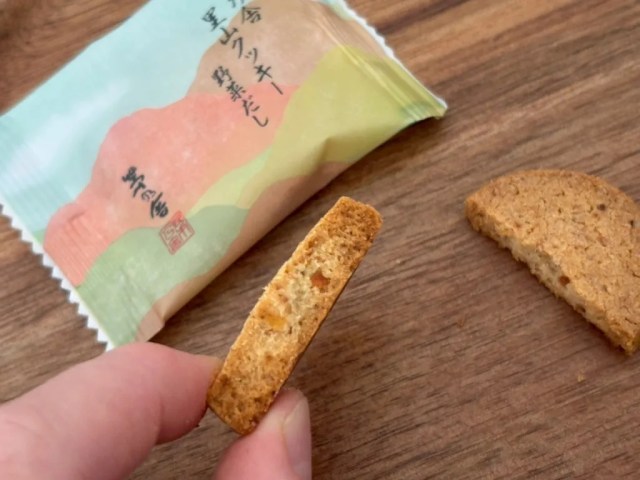
Now, “onion cookie” might sounds like a cruel prank you’d play on an unsuspecting person who’s craving something sweet, but since we knew ahead of time that it was going to taste like vegetable dashi, the flavor wasn’t bad at all. It actually reminded us of the consommé flavor that’s the standard for Japanese potato chips, except here the supporting flavor underneath it is the buttery baked cookie dough, not an oily fried chip.
With their combination of unique flavors and high quality, the Satoyama Cookie set (which is priced at 2,268 yen [US$15]) is proving to be a hit. It was actually all sold out when we first swung by a Kayanoya store to pick some up, but that was right before Mother’s Day so it was a prime gift-buying weekend, so they should be easier to find now.
We find out just how devilish and angelic these 100-yen surprises are.
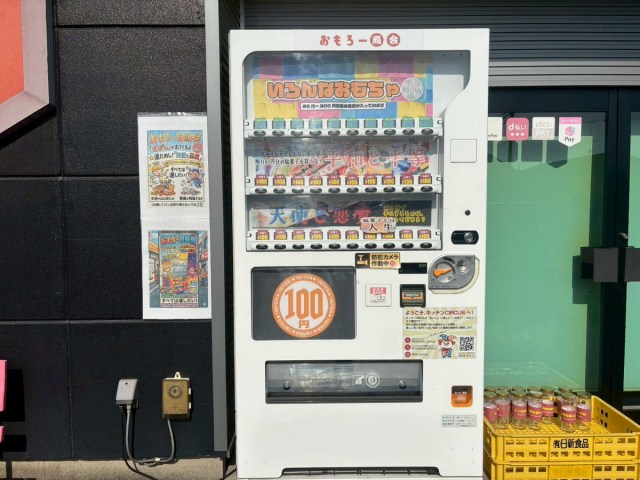
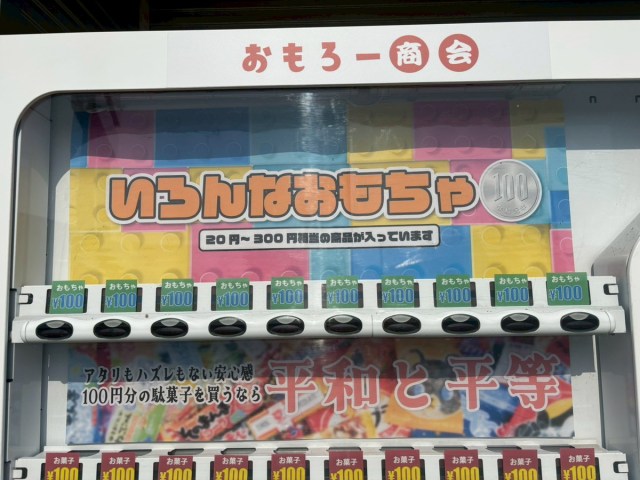
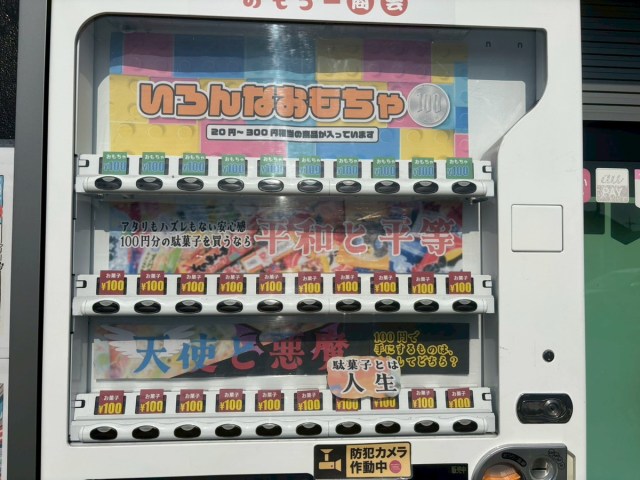
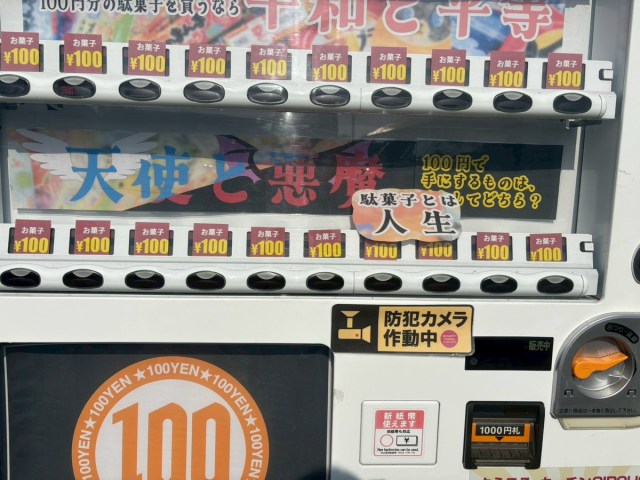
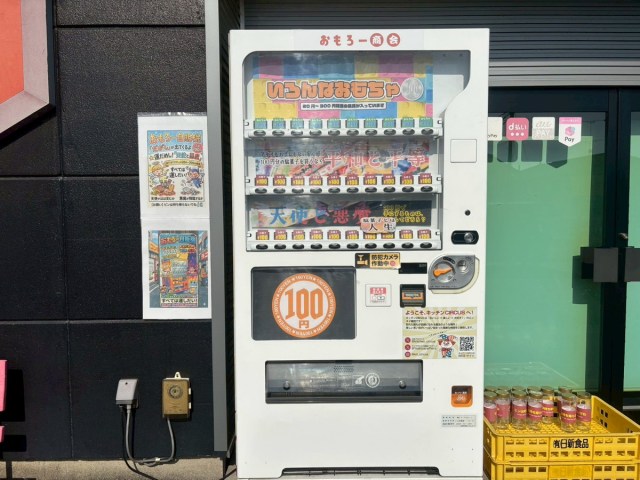
Our reporter Natsuno Futon was strolling the streets of OyamaCity in Tochigi Prefecture the other day when she came across an unusual vending machine. The first thing that caught her eye was the huge “100 yen” (US$0.63) sign on the front, but then, as she stepped closer, she became even more intrigued.
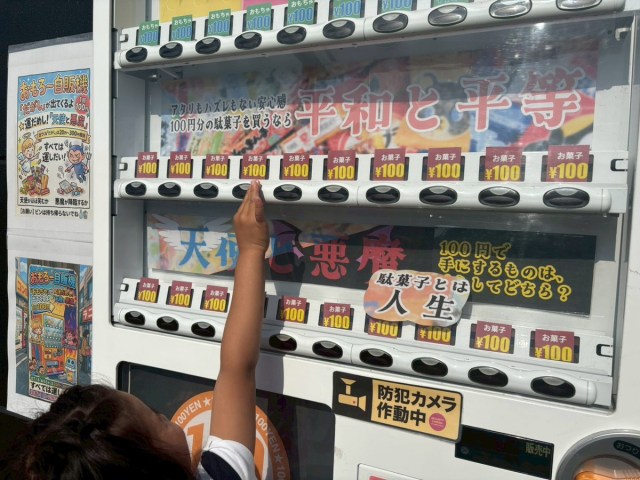
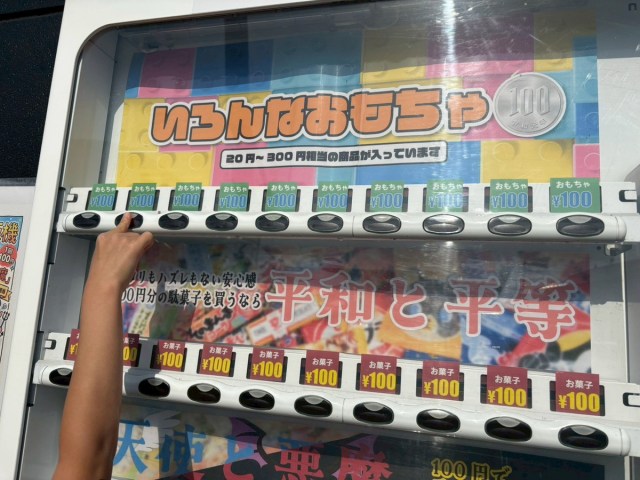
There, in the window display, were the words “いろんなおもちゃ” (“various toys“), and beneath them: “Contains items worth between 20 and 300 yen“.
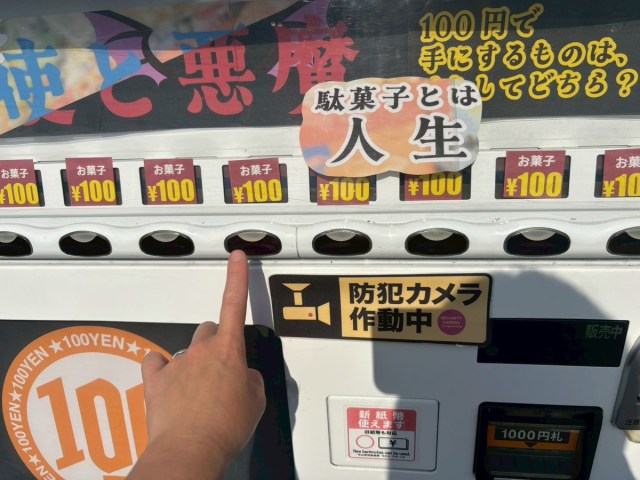
As her eyes moved down to scan the second row, she read the words: “平和と平等” (“Peace and Equality”) and then, on the third row, “天使と悪魔” (“Angels and Demons”).
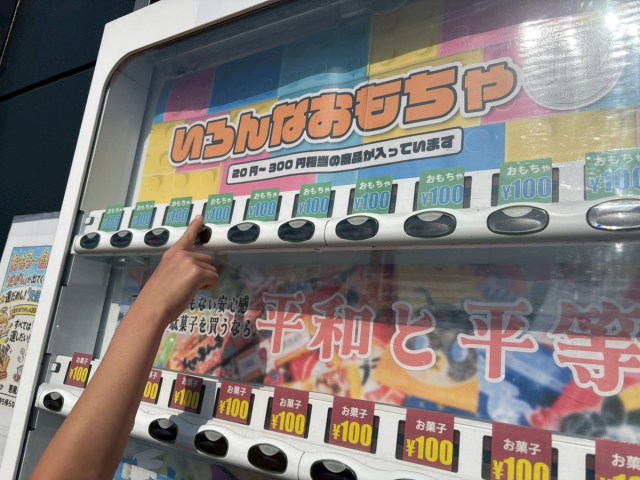
Natsuno had never encountered a vending machine stocked with Peace and Equality and Angels and Demons before, and neither had her children who were with her on this outing. Needless to say, her children were excited to find out what these mystery items were, so Natsuno found herself reaching into her pocket for some 100-yen coins.
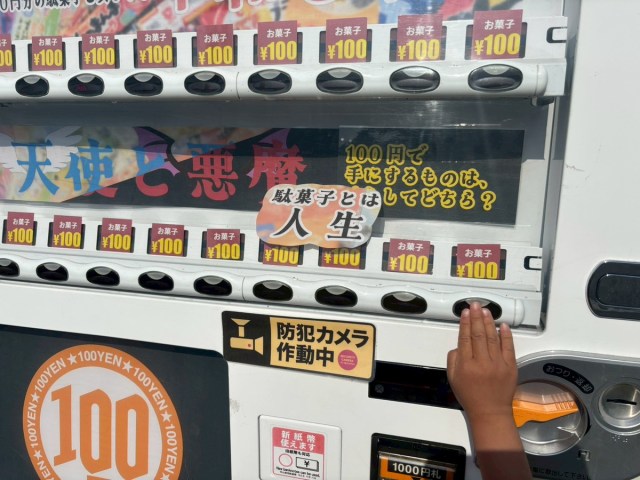
With a machine like this, part of the fun is randomly selecting a button to press, and her daughter started by pushing one of the buttons on the top row, which were marked “おもちゃ” (“toys“).
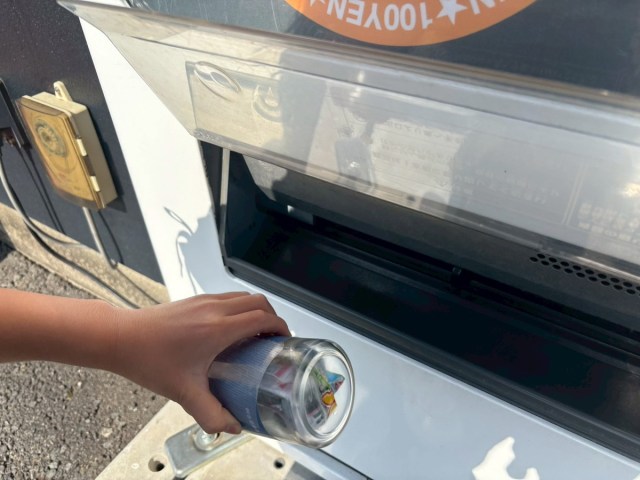
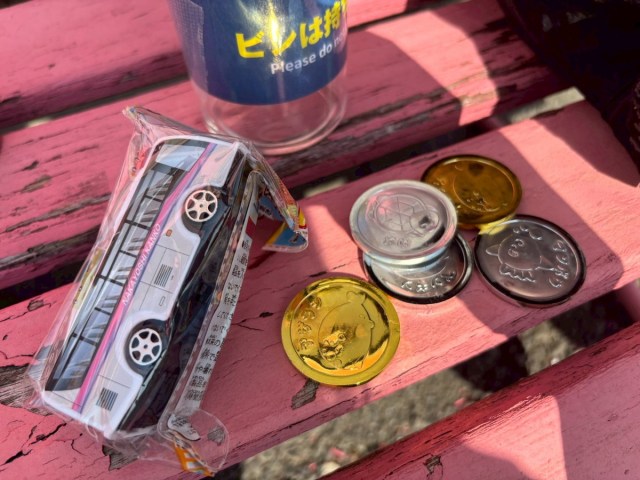
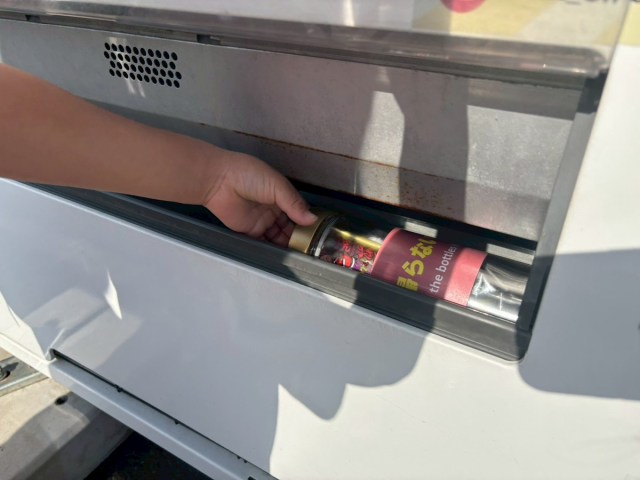
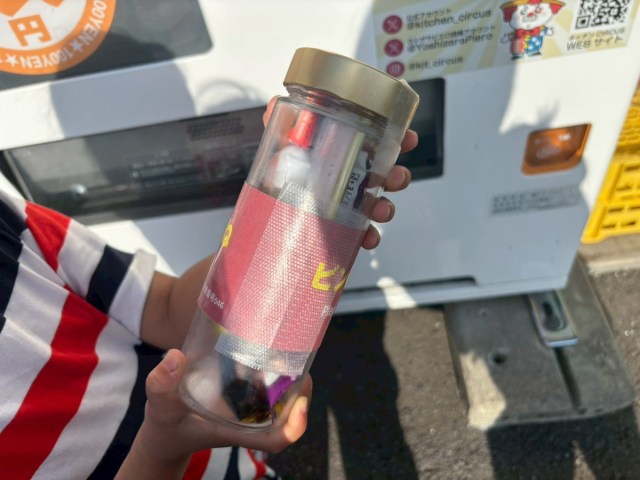
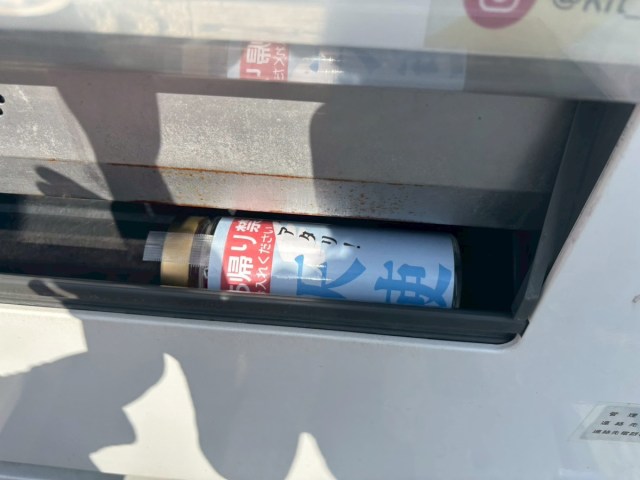
▼ A long cylinder immediately popped out into the tray at the bottom of the machine, and this is what came out of it.
A toy car and five toy coins. From Natsuno’s point-of-view, this was a bit of a disappointment, particularly as her daughter doesn’t have any interest in toy cars or fake coins.
▼ Hoping for something better, her daughter popped a real coin into the machine and pressed a button on the “Peace and Equality“row.
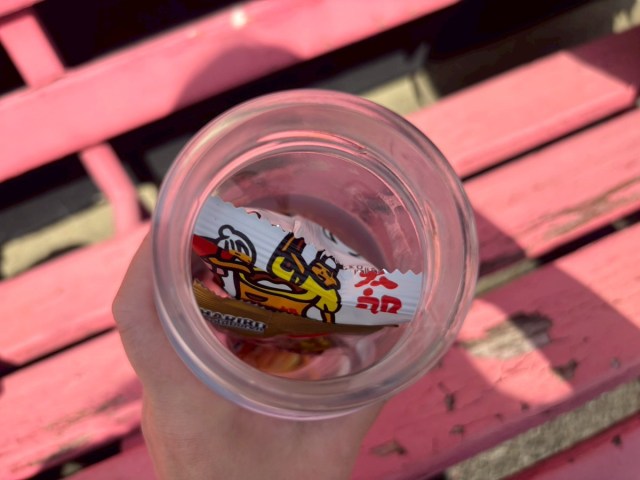
The buttons on the second and third rows read “お菓子” (“sweets“), so they knew this would be something edible. What that would be, however, remained a mystery until they popped the lid on the canister they received.
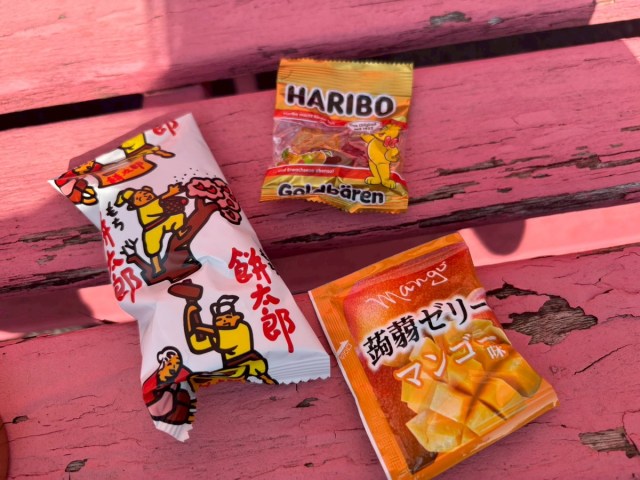
▼ Oh! That looks like Mochitaro.
Mochitaro is a classic Japanese “dagashi” (cheap snack) consisting of crunchy rice cracker chunks. It wasn’t the only thing in the canister, as it also contained some mango jelly and a small bag of Haribo gummy candies.
For 100 yen (US$0.63), this was a decent deal, and it gave Natsuno and her daughter hope that they might be able to encounter an angel on their next try.
▼ Time to press a button on the “Angels and Demons” row.
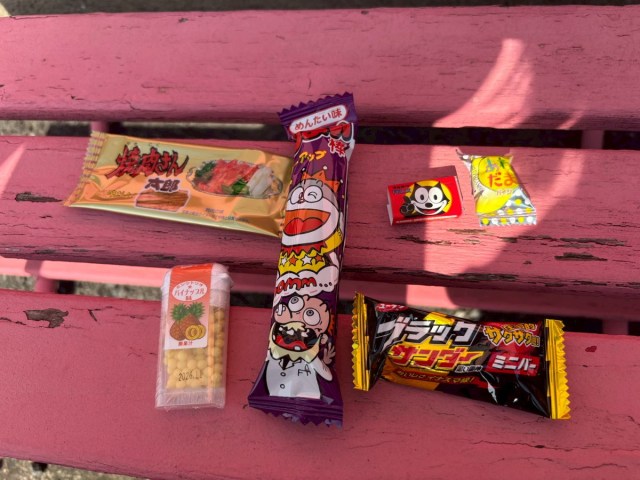
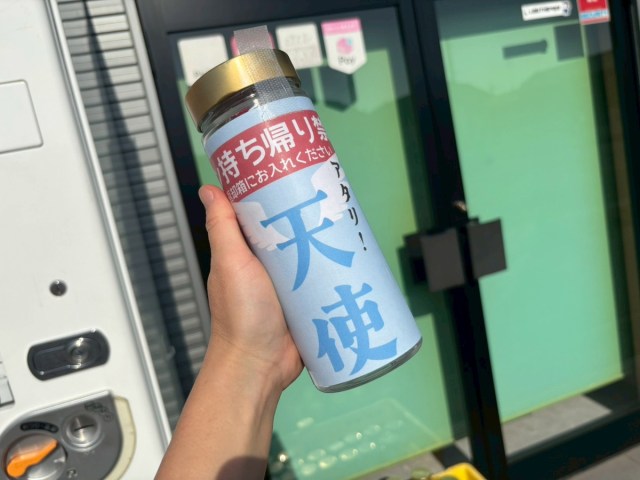
What came out, however, appeared to be neither an angel nor a demon, as the canister was ambiguous.
Even after looking inside, they weren’t sure whether they’d been visited by a demon or an angel, as they received six cheap candies that might’ve been worth around 100 yen. The dark hues on some of the packs, including the iconic Black Thunder chocolate, hinted at a devilish selection, but on the other hand, it was a pretty good deal.
▼ Curious to give it another try, Natsuno’s daughter pressed another button…
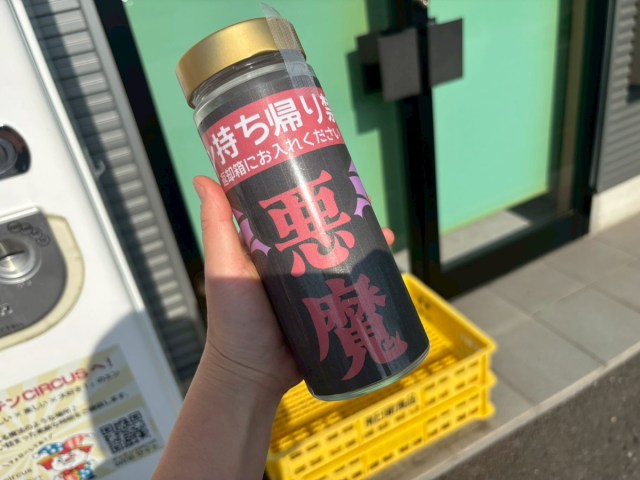
▼ …and out popped a canister with the word “Devil” printed on it in big red characters.
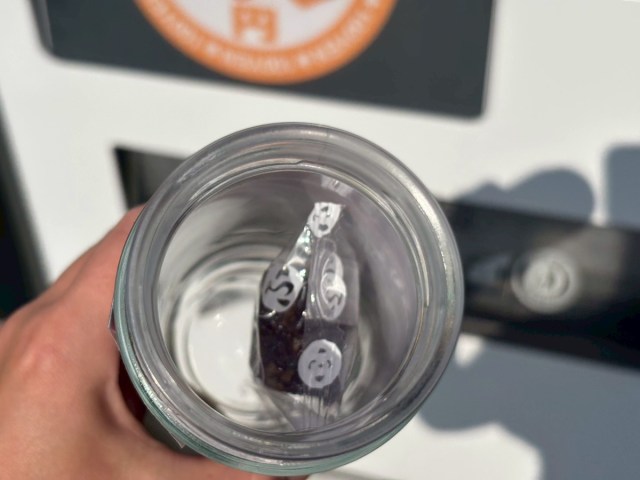
▼ What was inside?
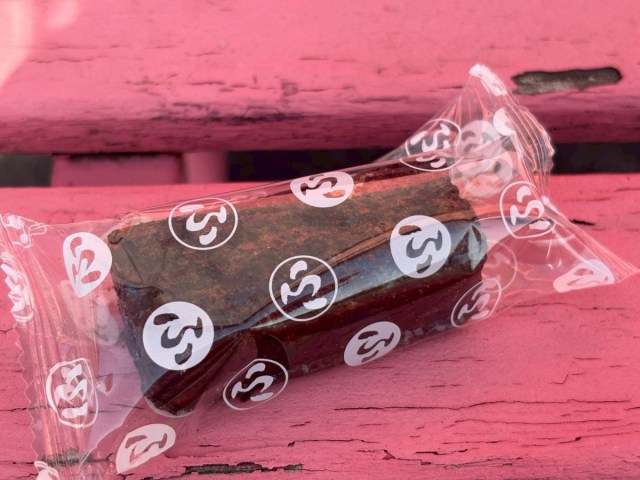
▼ One puffed wheat snack.
This was definitely devilish – paying 100 yen to receive just one cheap puffed rice snack was a merciless move, and now they were more determined than ever to meet an angel.
▼ One more try.
▼ Success!
The progression from ambiguous canister through to devil and then angel was such a great progression that Natsuno felt it was almost as if there was someone inside the machine, reading the atmosphere and doling out excitement in increasing levels.
▼ The word “アタリ!” (“win!“) was also printed on the canister, adding to the sense of joy.
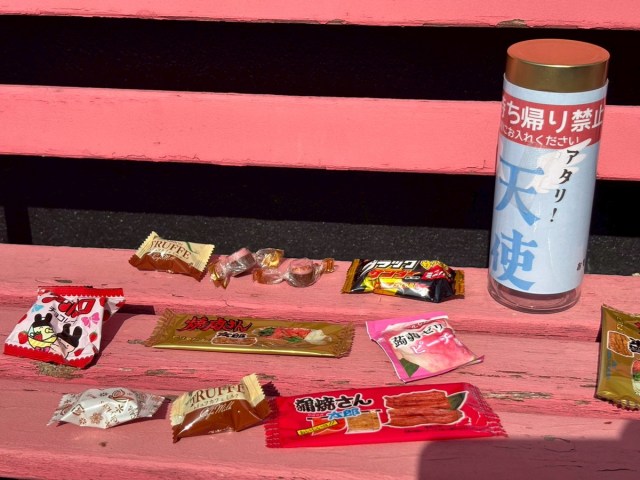
▼ So…let’s see what the angel delivered.
This was definitely a win, as it was the best result so far, with Natsuno estimating the total value to be more than 100 yen. Emboldened by this result, Natsuno and her daughter went for another try on the toy line, which seemed to present a better deal than the sweet options.
▼ If there’s a chance of winning something worth up to 300 yen, this is where they might get lucky.
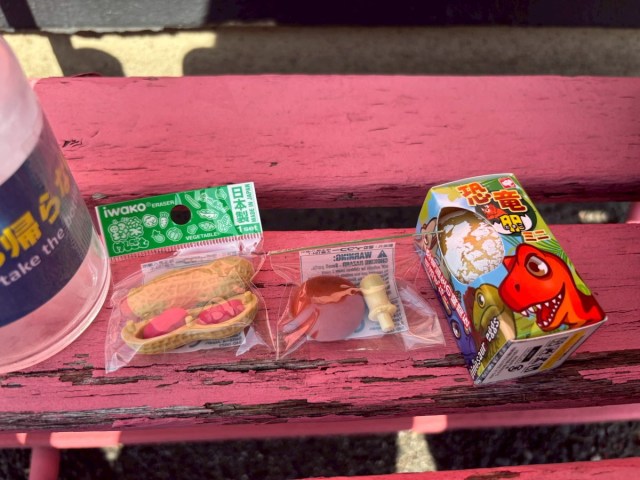
▼ They were rewarded with two fun erasers from respected company Iwako, and a dinosaur egg.
Natsuno figured this bundle was worth over 200 yen. It wasn’t bad, but to be honest, she wouldn’t say it was worth 300 yen.
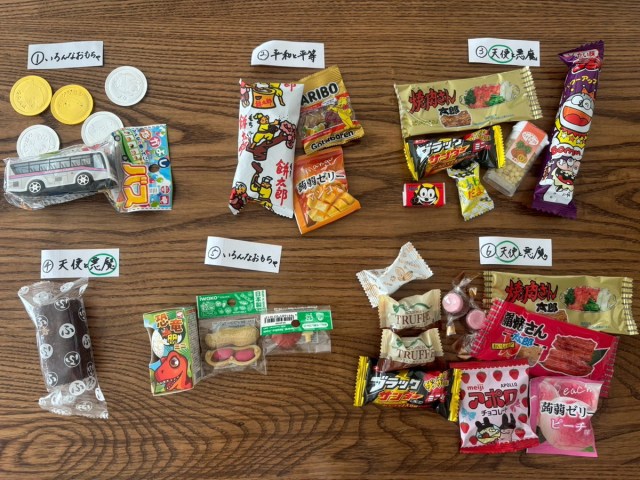
▼ After a total of six tries, here’s everything they received.
It may not have been a huge deal, but the real draw of the machine wasn’t a tangible product visible to the human eye. The real takeaway here was the fun and excitement of wondering what might come out of the machine, and that was worth way more than every deposit of 100 yen.
▼ There aren’t really any other places in the world where you can buy “peace and equality” for 100 yen.
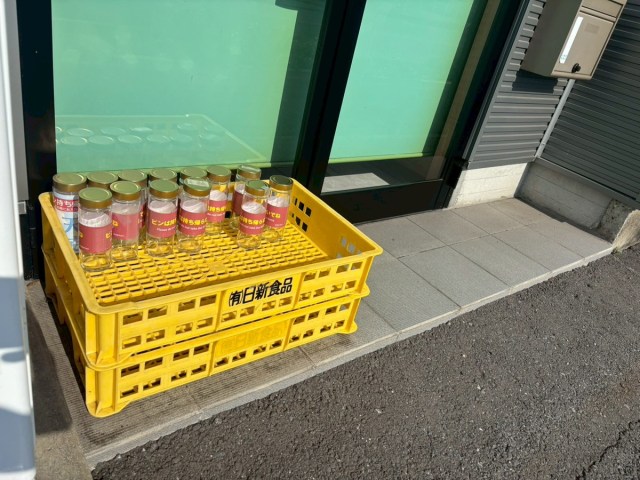
▼ Judging by the containers in the return spot for reuse, there weren’t many angels that day either, so they felt extra blessed to have received one.
If you’d like to try your luck at the vending machine, it’s located under a sign for “NPO Aoringo” on a black building that reads “Ad Promote Co., Ltd.”and we’ve included the address for you below.
Ad Promote operates and stocks these machines, and according to its online shop, “Omoro Shokai” (“Fun Trading Company”), the Omoro vending machines ceased operations in January this year. That means this machine, which we visited in May, is the last of its kind in the country, so if you’re like us and love visiting weird and unusual machines, this is a stop worth putting on your itinerary.
“Super Happy Too Much! Challenge” campaign has all the right ingredients for happiness.
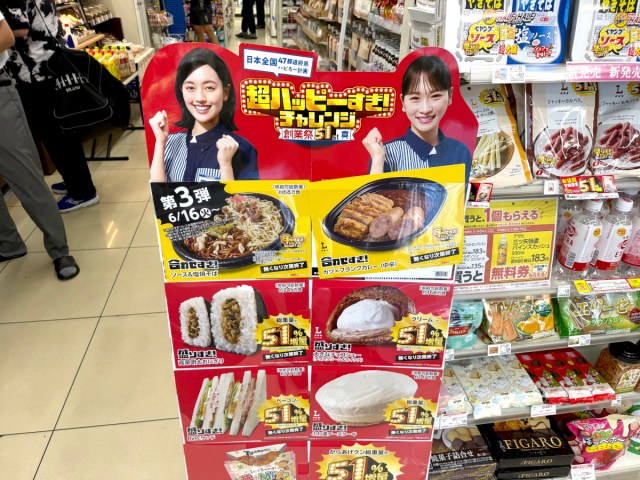
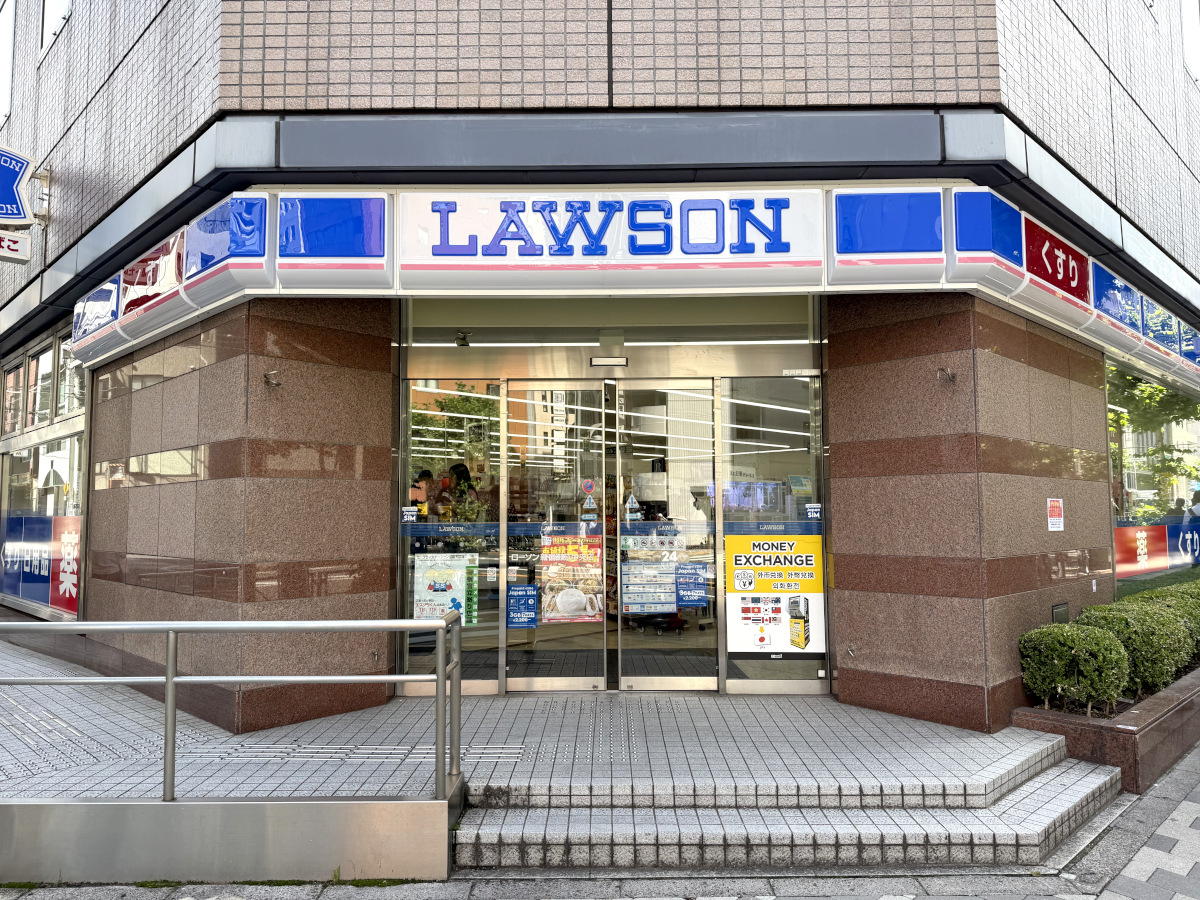
The month of June is a happy one at Lawson, or to be precise, a “Chou Happy Sugi”one, as that’s the name of the so-called “challenge” campaign currently being held at the chain for four weeks, which sees some of its most popular products getting the upsize treatment, at no extra cost to customers.
With a name that translates as “Super Happy Too Much! Challenge” or “Super Happy Overload! Challenge”, size is at the centre of the campaign, and with new lineups being released weekly, the week of 16 June saw a total of 13 new larger-than-usual products taking centre stage.
After perusing the new products in person, there were a few products that stood out, starting with the desserts, which are always a crowd pleaser.
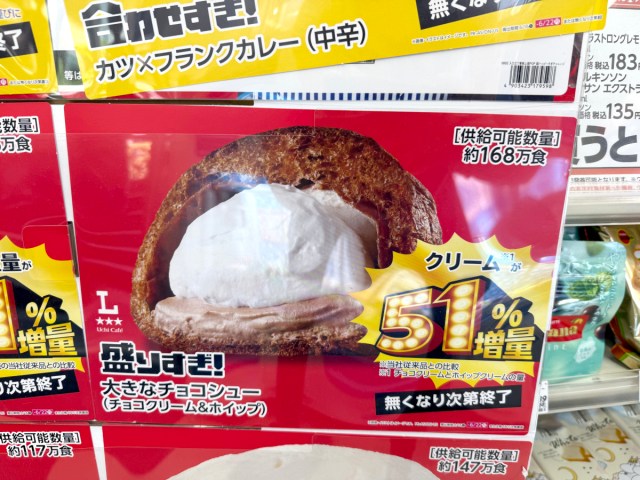
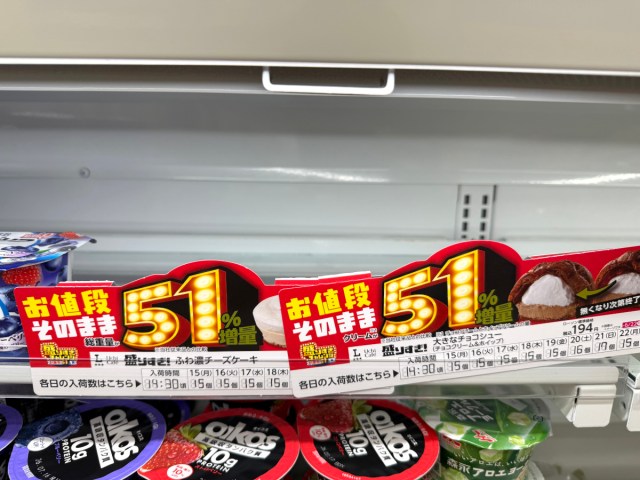
▼ “Too Much! Large Chocolate Cream Puff” (194 yen [US$1.35])
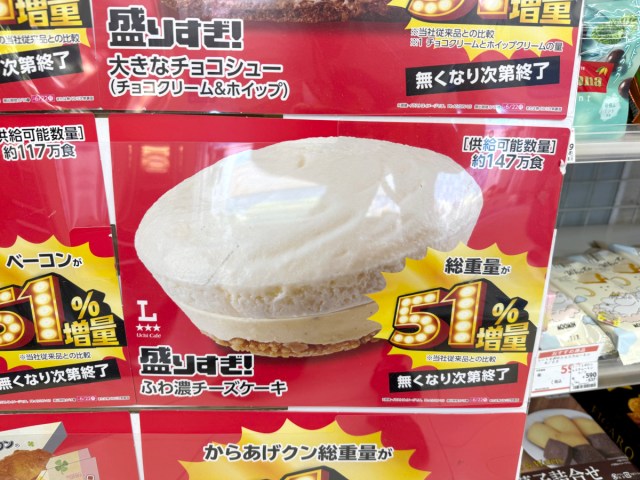
▼ “Too Much! Rich and Fluffy Cheesecake” (329 yen)
▼ However, in true form as crowd pleasers, both these desserts had sold out when we visited.
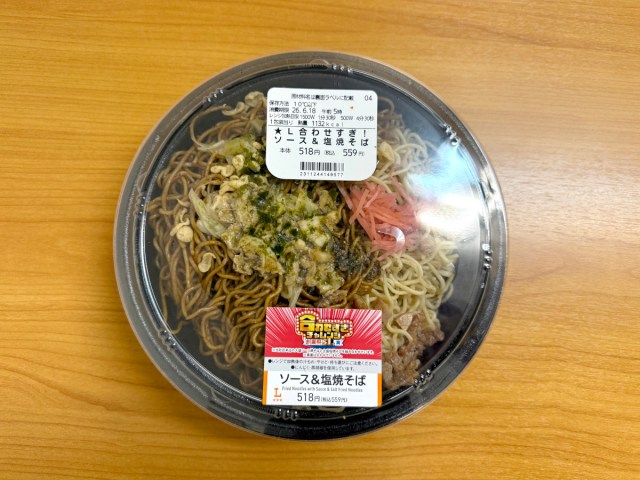
We didn’t mind too much, though, because there are two other star players in the bento section: “Too Much! Sauce & Salt Yakisoba” (559 yen) and the “Too Much! Katsu × Frankfurter Curry” (697 yen). We managed to pick both of them up and take them back to the office for a taste test.
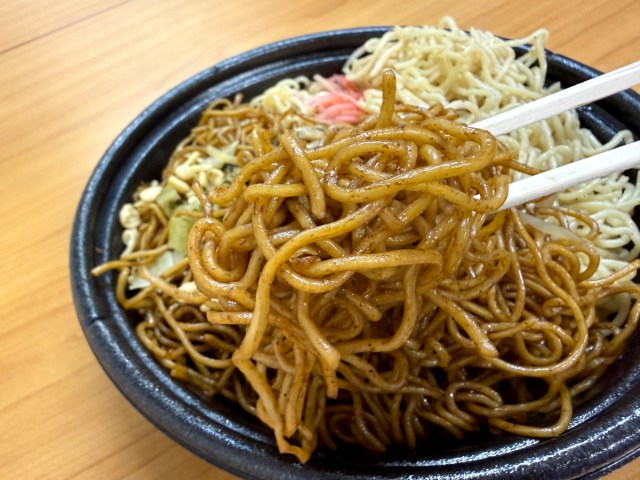
▼ Starting with the yakisoba, it displayed sauce yakisoba on one side and salt yakisoba on the other.
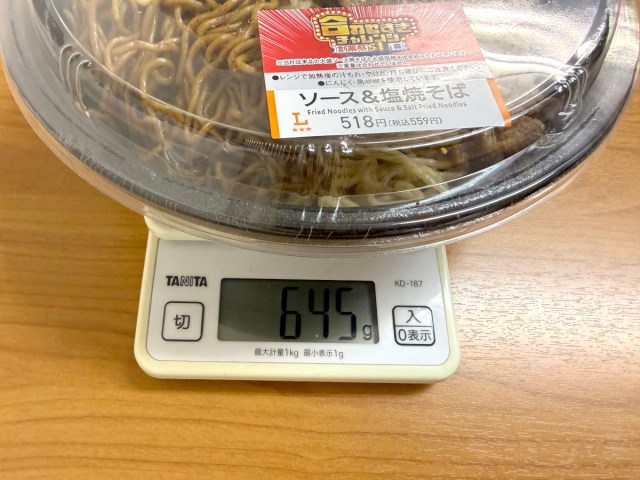
The beauty of this dish is that its size comes from combining two ordinarily separate types of yakisoba together. Being able to enjoy two meals in one dish is enough to make anyone super happy, and popping it on the scales revealed it weighed in at 645 grams (22.8 ounces), so we were getting good value for money.
Removing the lid allowed us to take in the true beauty of the two-variety yakisoba, and being able to enjoy a bite of each at varying moments throughout the meal made us want to cry out “Chou Super Happy!” Sure, it was a total carb overload, but for a special treat, it had all the right ingredients to make us super happy.
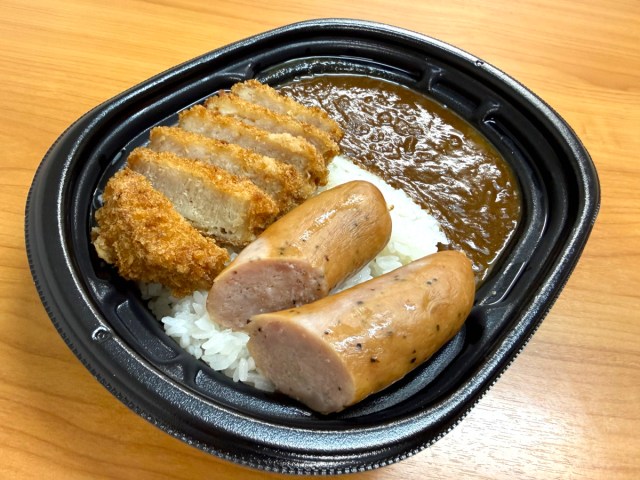
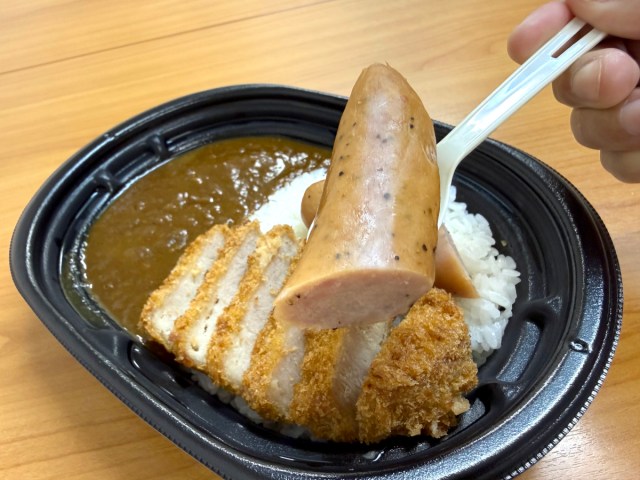
Even more satisfying than the yakisoba, however, was the “Too Much! Katsu × Frankfurter Curry”. Rather than doubling the serving of katsu (cutlet) curry, which we’ve seen in past mega-size promotions like this one, Lawson has decided to up the happiness factor by upsizing the meal with a frankfurter sausage instead.
While this might disappoint diehard fans of katsu curry, we actually loved the sausage element. It was impressive in both size and flavour, adding an extra air of decadence to the meal, and we particularly liked the way it gave us two different meaty ways to carry the curry to our taste buds.
As part of Lawson’s “Machikado Kitchen” range of instore cooked meals, the curry is relatively easy to get your hands on so you don’t have to worry too much about it selling out. If it isn’t on display, you can ask a staff member to prepare one for you, and if there’s stock available it shouldn’t be a problem, so it’s worth keeping that in mind when you visit.
Like all the other products in the Week 3 drop, it will only be available for a limited time though, so you’ll want to get in quick to join the super happy campaign. And if you have your heart set on trying one of the desserts, here’s an insider tip: the chain often restocks its products after midday, so that’s often the best time to visit.

 Login
Login