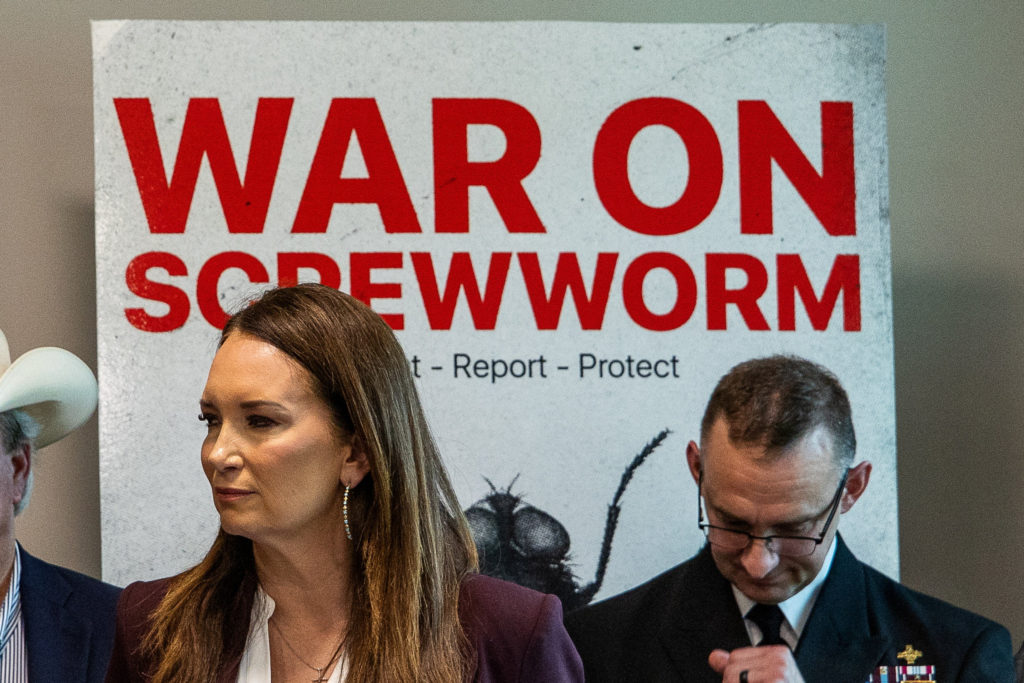
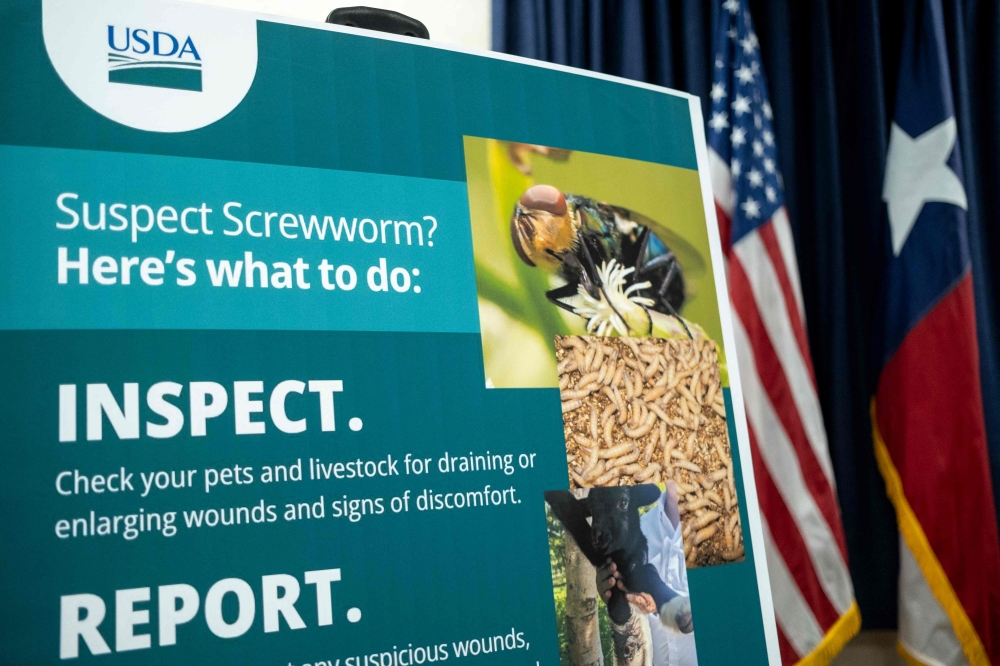
Screwworms are on their way to becoming a billion-dollar international problem but can be contained if ranchers are vigilant, watch their herds and other wildlife, and quickly treat any infestations, U.S. Agriculture Secretary Brooke Rollins said.
Revisit a classic episode of Sustainability In Your Ear. Mitch Ratcliffe talks with Jake Felser, chief technology officer at Freight Farms, about the company’s “complete farming system inside a box.” It’s a very big box that includes climate controls and monitoring systems to make farming easy for anyone to do. Freight Farms builds and delivers shipping containers converted into highly efficient hydroponic farms that use LED lighting to grow and deliver fresh produce year-round.
Jake discusses the cost of getting started, how many people are needed to run the farm, and how the built-in automation helps farmers plan a profitable business. Grocers, restaurants, communities, and small farms are using Freight Farms installations at 350 farms in 49 states and 32 countries. The company says most of its customers are new to agriculture and operate right in the urban and rural communities they serve.
Jake Felser, CTO at Freight Farms, visits Sustainability in Your Ear to talk about automated hydroponic gardening in shipping containers.
Growing and distributing vegetables locally is one of the most effective ways to lower our society’s carbon footprint. While agriculture contributes about 10% of the U.S. greenhouse gas emissions each year, the majority of that is from raising animals. By increasing our consumption of locally grown vegetables, we can improve local health and reduce overall emissions from transportation. It’s not easy to grow food in most cities using traditional methods. The introduction of container farms and vertical farming inside buildings can reshape food deserts and create economic opportunities.
"We love the farmers, we love everything about your state," President Donald Trump told his audience at a rally being held in a barn in Chippewa Falls, Wisconsin, on Friday.
WASHINGTON, June 6 — The US Department of Agriculture (USDA) said Friday it has detected a second case of a dangerous livestock pest whose flesh-eating larvae can kill cattle.
The new incidence of so-called New World screwworm (NWS) was detected in a calf in south Texas about 5.5 miles (10 km) from the first one, which was reported Thursday, the department said on X.
The outbreak has triggered a race to keep the pest from spreading.
The NWS fly was thought to be eradicated in the United States in 1966. But Florida experienced an outbreak in 2016 that primarily impacted deer and was eliminated the following year, according to the department.
The fly has remained present in South America, and in recent years has moved northward.
The first of these new cases, detected near the border with Mexico, has triggered alarm among ranchers, in particular those who raise cattle.
The flies lay their eggs in open wounds or mucous membranes of warm-blooded animals, where they hatch into larvae and feed on flesh. Left untreated, the infestation can be deadly, and the parasites can quickly spread.
The pest can also affect wild animals, pets and even people.
Texas has established a 12-mile (20-kilometre) quarantine zone, meaning all warm-blooded animals including pets must be inspected before leaving the zone.
The fly had been eradicated in the US thanks in large part by dropping millions of sterile flies to mate with wild females.
US officials said some four million sterile flies are now being released weekly from the sky, and that some four million more in the pupae stage were being deployed in ground release chambers.
A USDA study last year estimated a screwworm resurgence in Texas could cost the state’s economy US$1.8 billion (RM7.25 billion). — AFP
Bamboo may feel like an easy landscaping win because it’s a fast-growing privacy screen that can turn a plain yard into a lush retreat. But then a few shoots start popping up in random places all over your yard. Before long, they’re pushing through flower beds, lawns, and even neighboring yards. What looked like a landscaping dream can quickly become a problem.
Stories of runaway bamboo have gone viral online, with some homeowners spending thousands trying to remove it. So, is all bamboo invasive? Not exactly. Some species grow in slow, manageable clumps, while others spread aggressively underground through fast-growing stems. The key is to identify what kind of bamboo you’re dealing with and act before it takes over.
How to Identify the Type of Bamboo Growing in Your Yard
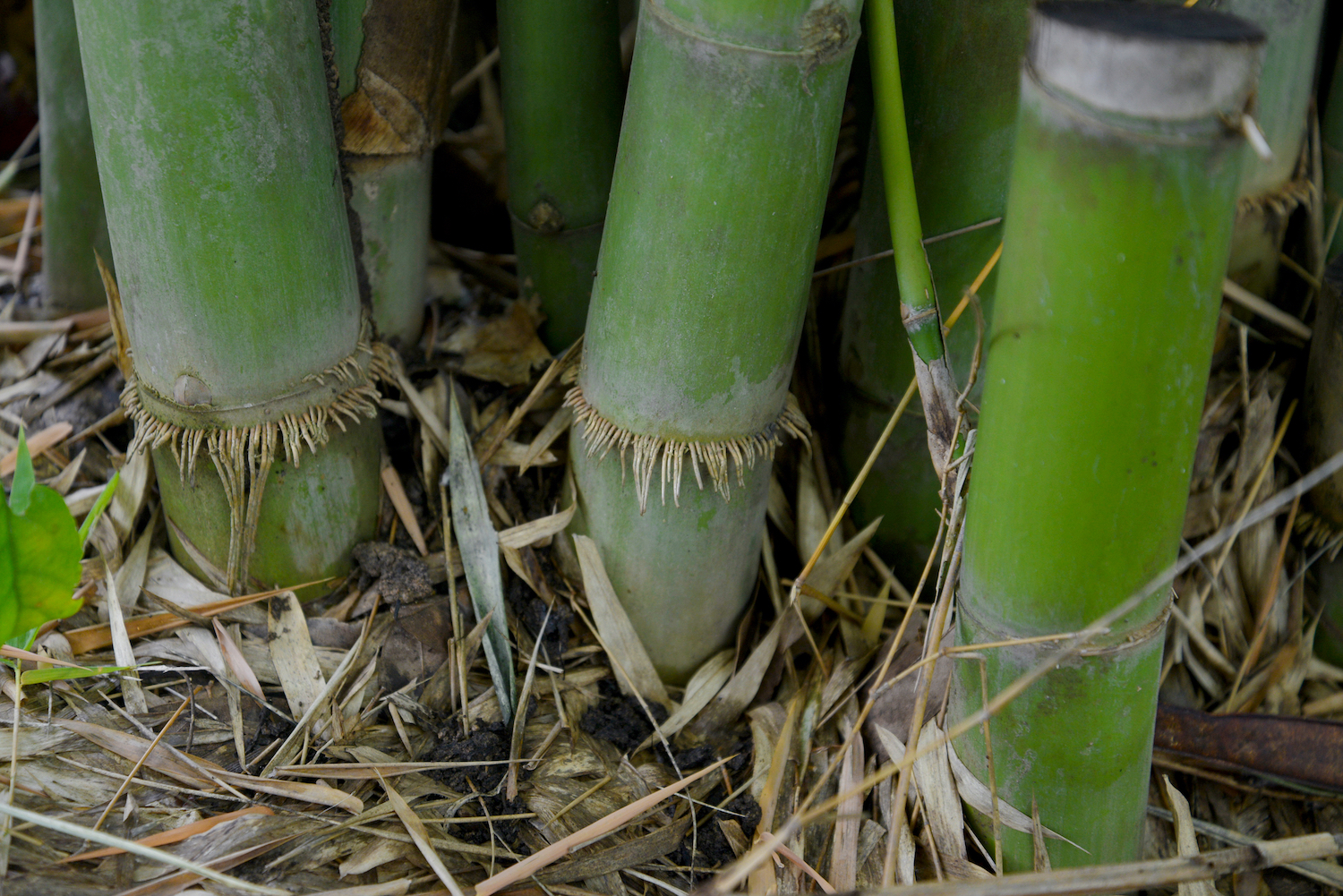
Not all bamboo behaves the same way. There are two main categories: running and clumping. Both are members of the grass family Poaceae, but unlike the soft turf grasses in your lawn, bamboo grows thick, woody stalks called culms. Species range from small, groundcover-like plants to towering varieties that reach nearly 100 feet in height.
Bamboo stalks are thick beasts. Image: Shutterstock DISGO99
Running bamboo
There are many species of running bamboo, but they all behave in a similar way: they spread aggressively underground through fast-moving rhizomes. The species that causes the most trouble for homeowners in the U.S., especially across the Southeast, is Phyllostachys aurea, better known as golden bamboo. It’s considered one of the most invasive bamboo species in North America.
Running bamboo rhizomes can travel surprisingly far from the original plant before sprouting new shoots. Those rhizomes store energy for the plant, which is why simply cutting down visible stalks rarely solves the problem. Left unmanaged, running bamboo can rapidly colonize your entire yard and neighborhood.
Clumping bamboo
There are also several species of clumping bamboo, though they tend to behave much differently from running varieties. One popular example is Fargesia robusta, which is often grown for its cold hardiness and more manageable growth habit. No matter the species, clumping bamboo generally grows slowly outward in tight clusters rather than spreading long distances underground.
That makes clumping bamboo easier to control and far less likely to become a neighborhood-wide problem. While it still spreads through rhizomes, the underground stems remain compact and close to the parent plant rather than racing across a yard.
Get Expert Advice
If you can not tell by visual cues alone, no worries. Take photos of shoots, leaves, and stalks, and contact your local county extension offices to help identify the species. Extension experts can often confirm the type. Although you can try using plant ID apps, keep in mind they aren’t always accurate; they can still be useful starting points.
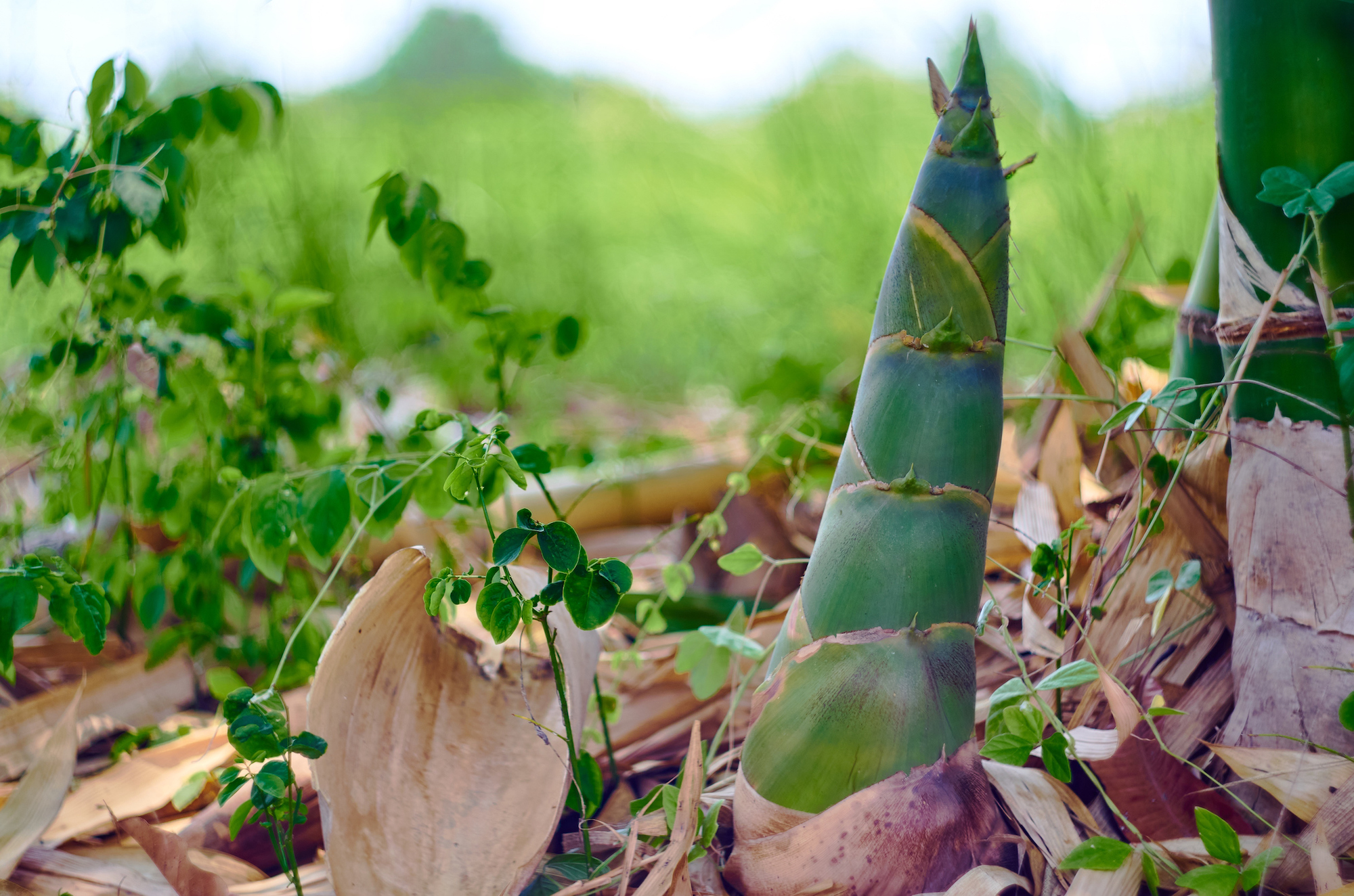
A bamboo shoot emerges from dirt. Should you panic? Not yet. Image: Getty Images Meta
Why Bamboo is so Difficult to Remove
What makes bamboo so frustrating to eliminate is its massive underground network of rhizomes, which fuels its growth. These root-like stems spread beneath the soil in multiple directions, storing energy and sending up new shoots far away from the original plant. In running bamboo species, that underground web can quietly expand for months before homeowners realize how far it has traveled.
What about just mowing it regularly or cutting it down? That may temporarily weaken the plant, but it can also trigger fresh shoots as the rhizomes tap into their stored energy reserves. That solution only works on the surface. Even small fragments left behind in the soil can regrow into entirely new plants.
In warmer regions like the Southeast United States, invasive bamboo has become such a persistent issue that some municipalities now regulate where it can be planted. Fully removing established bamboo often requires repeated digging, cutting, or chemical treatment over months or even years.
How to Remove Bamboo
If bamboo has started spreading through your yard, the good news is that you probably do not need heavy machinery immediately. The bad news is that waiting too long can turn a manageable project into a years-long battle. The right removal method depends on how large the infestation is, how long it has been growing, and how much labor you are willing to take on.
Method 1: Manual removal
This method works best for small or early infestations. The goal is to dig out as much of the underground rhizome network as possible by cutting down visible stalks and removing the thick stems beneath the soil.
The biggest advantage is that it does not require herbicides and can permanently eliminate smaller patches if done thoroughly. The downside is that it is extremely labor-intensive, and even small rhizome fragments left behind can resprout later. Because of that, manual removal requires ongoing monitoring. Homeowners need to check the area for months and quickly remove any new shoots before the bamboo has a chance to recover and spread again.
Method 2: Cutting and starving the plant
This method is best for long-term control and ongoing maintenance rather than quick removal. It works by repeatedly cutting down new shoots before they can grow leaves. Without leaves, the bamboo cannot photosynthesize efficiently, which slowly drains the energy stored in the underground rhizomes. The advantage is that it avoids herbicides and can weaken even large patches over time. The downside is that progress is slow and often requires multiple growing seasons. If you miss even a few cutting cycles, the bamboo can recover and continue spreading.
Method 3: Herbicide treatment
This method is best for large, established patches that have spread beyond easy digging. Glyphosate-based herbicides are commonly used because the plant can carry the chemical from actively growing leaves down into the underground rhizome system. The advantage is that herbicides can help weaken dense infestations that would be difficult to remove by hand alone. The downside is that complete removal usually requires repeated applications rather than a single treatment.
Chemical control also comes with tradeoffs. It is important to follow local regulations, avoid spraying near waterways, and consider the potential ecological impact before using herbicides as part of a removal strategy.
Method 4: Professional removal
This method is best for severe infestations, especially when established bamboo has spread beneath fences, patios, driveways, or neighboring properties. Professionals may use excavation equipment to remove large underground rhizome networks and install root barriers to help prevent the bamboo from returning. The biggest advantage is that it can fully address infestations that are too extensive for most homeowners to manage on their own. The downside is cost, as professional removal can quickly become expensive, particularly when excavation or property repairs are involved.
Cows are not necessarily known for their intelligence, but that less-than-stellar reputation is beginning to change. A 13-year-old pet cow in Austria named Veronika uses brooms to scratch her back, which qualifies as a form of tool use. Tool use is considered a general marker for intelligence in animals. The domestic cow species that live in close contact with humans are also highly social animals, another sign of intelligence.
New research finds that one domestic species of cow (Bos taurus taurus) can recognize humans and distinguish between them. The cows show a visual preference for new human faces and can match a known handler’s voice to their face. The findings are detailed in a small study published today in the journal PLOS One.
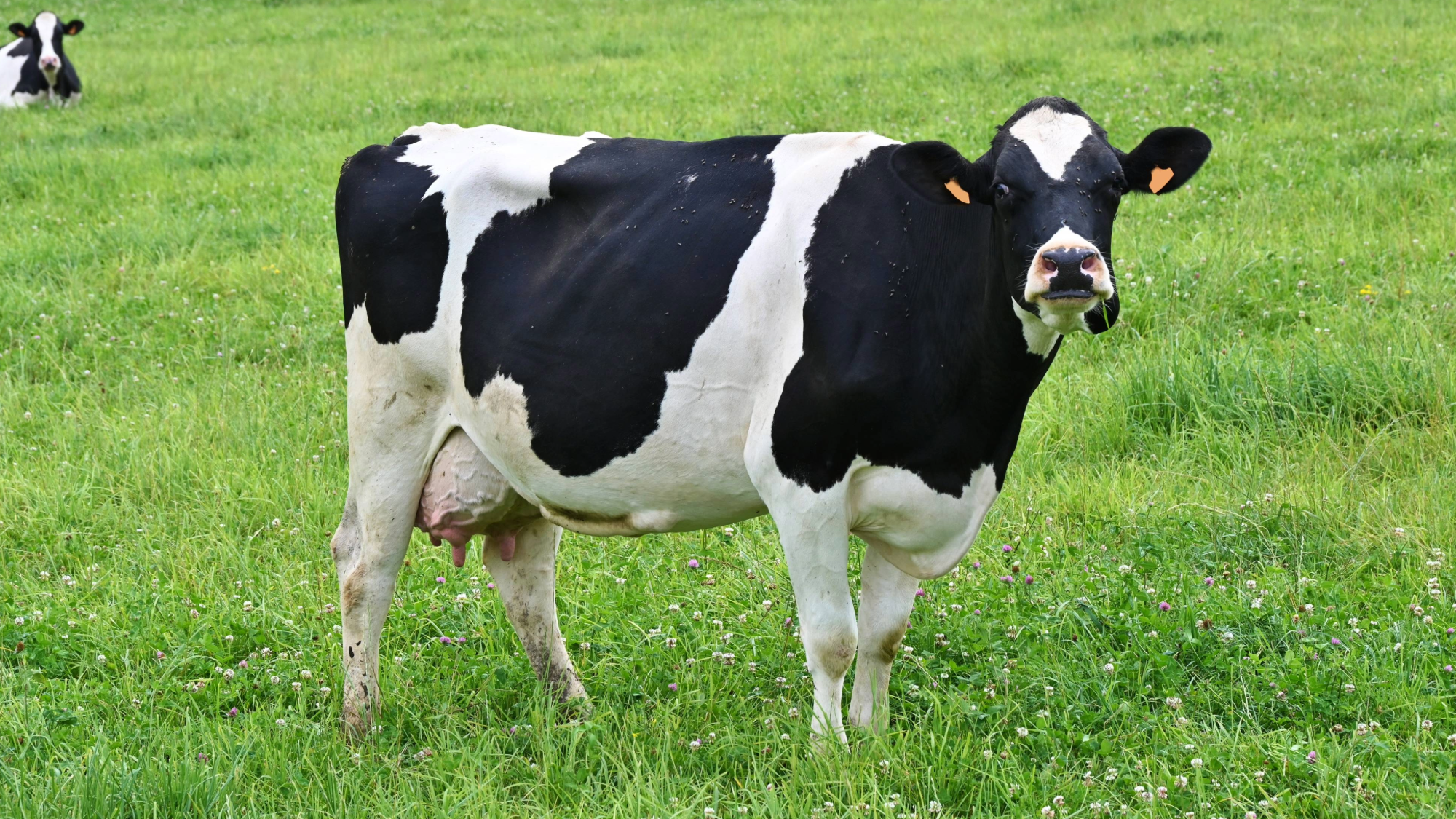
To see whether cows can discriminate between familiar and unfamiliar faces, the team collected data from 32 Prim’Holstein cows. This breed originated in Holland and is the most common dairy cow breed in France. In one single lactation, they can generate about 22,000 pounds of milk.
The team played videos of familiar and unfamiliar male faces with the sound off for the cows, and measured how long the animals looked at the video. Specifically, the team was looking for cross-modal recognition, or the cognitive ability to recognize objects presented in two different sensory settings.
They also played videos of both familiar and unfamiliar human faces, while broadcasting audio corresponding to one of the two men. Each man also said the same sentence. The team measured the animals’ heart rates as they watched the videos, to see if the bovines responded to the videos emotionally.
Experimental setup for visual preference and cross-modal tests. The cow was positioned centrally between two screens. Each screen showed a video of a person’s face: one familiar and one unfamiliar to the cow. During cross-modal tests, a speaker placed between the screens played the voice of one of the two individuals. Cameras recorded the cow’s behavioral responses throughout the test. Image: Amichaud et al., 2026, PLOS One, CC-BY 4.0
The cows were not afraid of the videos without sound and stared at the unfamiliar faces longer. According to the team, the staring shows that the animals can distinguish between an unknown and known face.
When researchers paired the videos with sound, the cows spent more time staring at the video when the voice matched the face. This shows that the cows can pair a face with the voice that they know. Captive big cats can also do this with their handlers.
Based on their heart rate, neither the familiar or unfamiliar voices appeared to affect the cows’ emotional response.
The team notes that a video and sound recording are not a full interaction with a human, but these results indicate that cows can tell the difference between familiar and unfamiliar people, and they can tell humans apart by face and voice. To better understand the animals and their welfare, future studies could examine how cows interact with specific people.
JUNE 1 — Malaysia’s agriculture sector faces a dual challenge: an ageing farming population and declining youth interest in agricultural careers. At the same time, there is a growing policy emphasis on food security, rural development, and youth entrepreneurship.
According to preliminary findings from the Department of Statistics Malaysia’s Agriculture Census 2024, the largest segment of Malaysian farmers is aged 60 or older. The farmers’ age profile reveals a concerning trend: 45.6 per cent are aged 60 or older, 32.3 per cent are aged 46 to 59, and only 22.2 per cent are aged 15 to 45.
Hence, the majority of senior citizens among individual farmers directly affect farm productivity and the nation’s ability to increase domestic production and sustain the agriculture sector as a whole.
In this context, intergenerational activities that connect elderly farmers or senior citizens with agricultural expertise to younger generations are not just desirable; they are strategically necessary. They offer a way to sustain agricultural knowledge, support active ageing, and cultivate a new generation of agripreneurs.
As aging farmers become less productive, it not only impacts farmers’ income but also threatens the long-term growth of the sector.
From a gerontology perspective, such activities align closely with the concept of active ageing, which emphasises continued participation, social engagement, and meaningful roles in later life. Elderly farmers possess decades of tacit knowledge about local soils, climate, cropping patterns, and informal market practices — knowledge that is easily lost if not transmitted.
Intergenerational programmes turn this knowledge into a social resource: elders become mentors, storytellers, and co-trainers, rather than being seen only as “retired” or “past their productive years”.
Malaysia’s agriculture sector faces a dual challenge: an ageing farming population and declining youth interest in agricultural careers. — Bernama pic
In Malaysia, while not many initiatives are specifically identified as “intergenerational farming programmes,” numerous current efforts incorporate significant intergenerational aspects or could easily be enhanced in that direction.
The Young Agropreneur Programme (Program Agropreneur Muda, PAM), spearheaded by the Ministry of Agriculture and Food Security, serves as a key illustration. It offers funding, training, and assistance to Malaysians — usually aged 18 to 40 — to develop sustainable businesses in the agrofood, livestock, fisheries, and agro-based sectors. Official reports indicate that thousands of young entrepreneurs have received support and show high business continuity rates, suggesting that the program has been somewhat successful in reducing obstacles for youth in agriculture.
Although PAM is mainly positioned as a youth and entrepreneurship programme, the manner in which training and support are provided inherently includes an intergenerational aspect. Technical and business instruction is frequently delivered by seasoned professionals, senior agronomists, and exemplary farmers, most of whom are older and possess extensive backgrounds in agriculture or agribusiness.
This fosters informal mentorship connections in which younger individuals acquire not only technical skills but also risk management, coping techniques, and insights into “what truly succeeds” in the community context. As successful PAM participants transition into mentors for newer cohorts, a dynamic cycle of “generational layering” emerges: yesterday’s youth agripreneur evolves into today’s knowledgeable “elder” in the agricultural ecosystem.
In addition to national programs, there are community-driven efforts that clearly position agriculture as a link between generations. The senior citizen activity centre, commonly referred to as Pusat Aktiviti Warga Emas (PAWE), can support the agriculture mentoring initiative that engages senior farmers in imparting their farming knowledge and techniques to local youth in the nearby community.
Urban and rural projects, such as youth-focused farms or community gardens, often use farming as a way to reduce the generation gap, pairing younger participants with older community members or retirees with farming or gardening experience. In these programmes, the learning is reciprocal: elders teach about traditional crops, sustainable practices, and local food culture, while youth contribute physical labour and digital skills such as social media promotion, basic e-commerce, or simple data tracking. Over time, these spaces can evolve into incubators for small agripreneur ventures — selling herbs, salad greens, or value-added products — rooted in intergenerational collaboration.
Intergenerational agriculture is also relevant to questions of social mobility and farm succession. Research on intergenerational mobility in Malaysia has shown that many children of farmers move into non-agricultural sectors, contributing to upward mobility but also raising questions about who will manage farms in the future.
Without structured pathways for land and knowledge transfer, ageing farmers may struggle to retire, while land becomes underutilised or fragmented. Intergenerational programmes can help mediate this transition — through mentorship arrangements, joint ventures between elders and youth agripreneurs, or community-based cooperative models — ensuring that both generations benefit. Such arrangements can improve older farmers’ financial security and psychological well-being, while giving young people a more secure foothold in agribusiness.
Viewed through the lens of social science, these experiences suggest several design principles for intergenerational agriculture in Malaysia:
First, roles should be genuinely reciprocal: older farmers are not token figures but recognised experts, and youth are not passive students but active partners bringing innovation and energy. Second, programmes should integrate agripreneurship components — such as marketing, value addition, and financial literacy — so that exposure to farming is explicitly linked to viable livelihood pathways. Third, attention to age-friendly environments and flexible schedules is crucial, especially for elderly participants with health or mobility constraints. Finally, symbolic recognition — certificates, public profiles, inclusion in policy dialogues—can reinforce the social value of older farmers’ contributions and make agricultural careers more visible and aspirational for youth.
In sum, Malaysia already possesses many of the ingredients for robust intergenerational agriculture: an ageing but knowledgeable cohort of farmers, policy momentum around youth agripreneurship, and community initiatives that use farming to build social connections. The next step is to intentionally design and frame these activities as intergenerational, making explicit their dual goals of sustaining agriculture and supporting healthy, meaningful ageing.
* The author is a Research Fellow at the Ungku Aziz Centre for Development Studies (UAC), Universiti Malaya and a part-time lecturer at Azman Hashim International Business School (AHIBS) UTM.
** This is the personal opinion of the writer or publication and does not necessarily represent the views of Malay Mail.
Will Runion’s 736-acre cattle and hay farm is tucked into a horseshoe bend of the Nolichucky River in northeast Tennessee. On the morning of Friday, September 27, 2024, he was in the middle of two big projects: building a riverfront campground on his land to bring in tourists and income, and cutting the last of the season’s hay. Hurricane Helene had been arcing up from Florida toward the Appalachian Mountains, carrying heavy rain, and the river was high. Even though the banks seemed to be holding, he decided to move some of his cows and equipment to higher ground.
But the river kept rising. At about 11 a.m., the brown water topped its banks. He and his fiancée, his son-in-law’s parents, and neighbors scrambled to salvage what farm equipment they could, but they were nearly trapped when the quickly expanding river flowed into a low-lying area behind where they were working, cutting them off from dry land.
By afternoon, the river had swollen to some 1,200 feet wide—nearly 10 times its usual size. It “looked just like a lake,” Runion said. Trees snapped in the swift current and neighbors’ barns, roofs, hay bales, and household debris swirled by. The water swallowed Runion’s hay equipment and sent the little white house he’d planned to use as the new campground’s office sailing across a field.
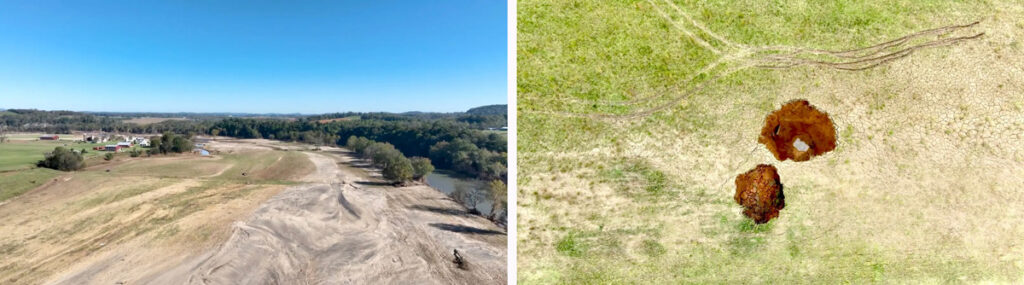
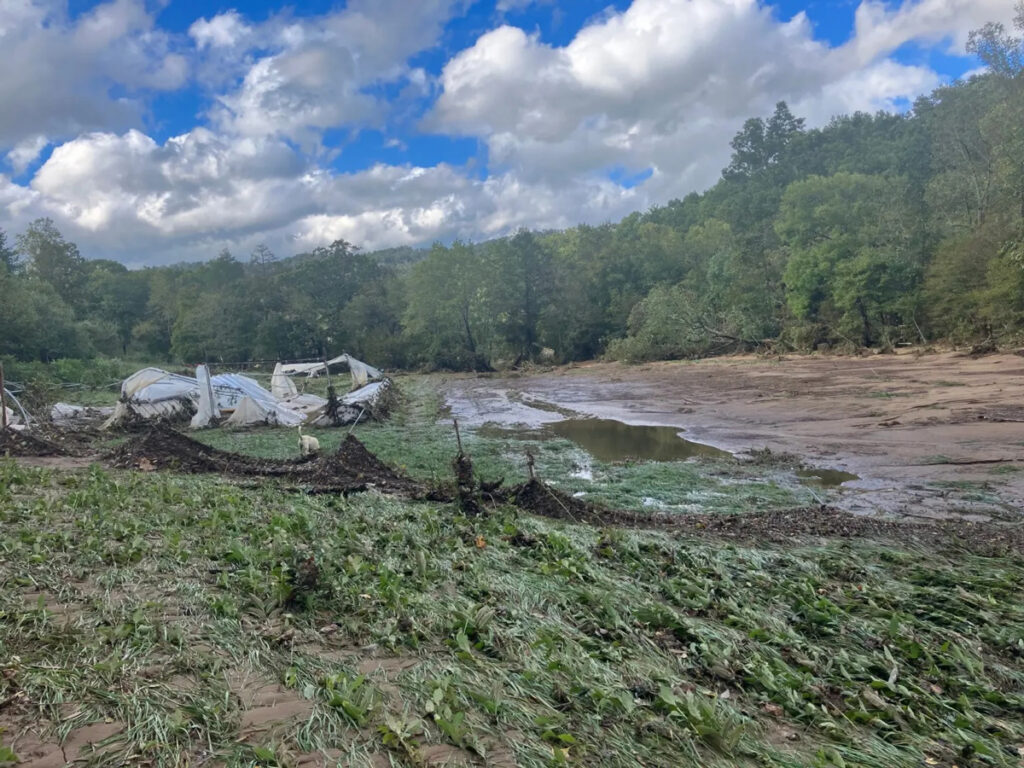
At around 8 p.m., the Nolichucky finally crested and started to recede. Runion found a third of his fields covered in debris, dead fish, and tomatoes from upstream vegetable growers. The flood had gouged two holes the size of football fields in his hay pastures, down to a depth of 12 feet. Other sections of the farm were buried in up to 8 feet of sand or silt.
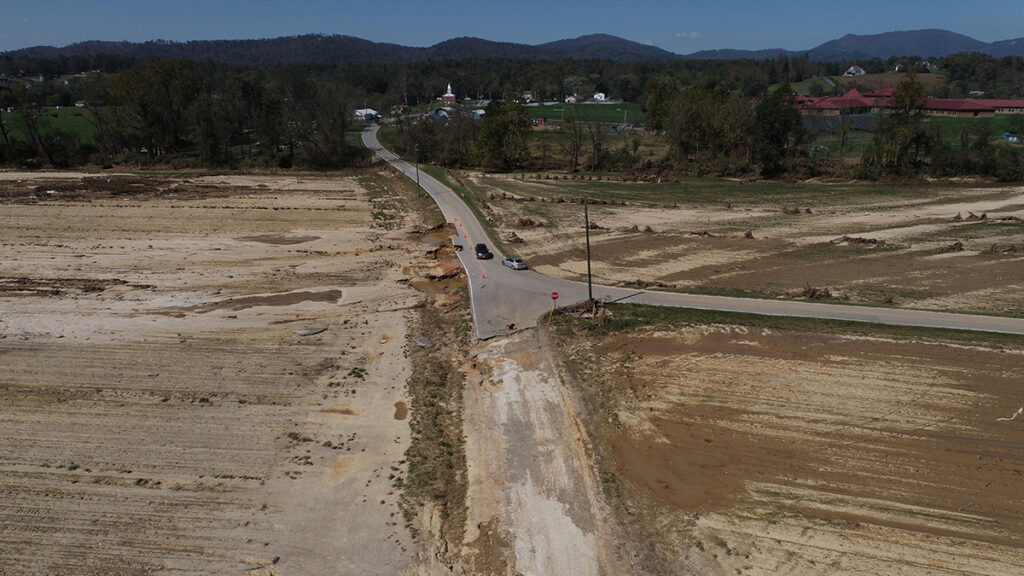
Flooding from Hurricane Helene brought massive damage to Will Runion’s farm, eroding the land in some places and washing up feet of sand on agricultural fields in other sections. Courtesy of Bryan LeBarre, via Grist
Helene dropped up to 30 inches of rain on southern Appalachia, causing historic flooding and landslides in parts of North Carolina, South Carolina, Tennessee, Georgia, Kentucky, and Virginia—a largely rural region where agriculture is a vital economic driver and cultural cornerstone. The mountains make it hard to spread out here, so farms tend to be small, and many growers use flood-prone bottomland because it is flat and fertile. But floods of this magnitude hadn’t hit here in generations. In North Carolina alone, Helene caused an estimated $4.9 billion in damage to the state’s agriculture sector. In Tennessee, agricultural losses were estimated at $1.3 billion. Thousands of farmers lost crops, tools, machinery, barns, buildings, animals, and fences.
“When you see 4 feet of sandy soils on top of your topsoil, you know that’s going to be a challenge. That was overwhelming.”
More than a year later, growers are also contending with the loss of something more vital, and more difficult to replace: their soil.
Runion knew immediately that his livelihood was ravaged. Without good soil, a farmer can’t farm. “When you see 4 feet of sandy soils on top of your topsoil, you know that’s going to be a challenge,” he said. “That was overwhelming.”
He sent drone footage of the damage to Forbes Walker, an environmental soil specialist with University of Tennessee Extension. “How do you fix this?” he asked.
“I don’t know,” Walker recalled thinking when he got Runion’s email. “How do we fix this?”
Over millennia, floods helped build the fertile land that farmers depend on. But today, climate change is driving more powerful and unpredictable storms. One study found that rainfall associated with Helene was 10 percent heavier due to man-made climate change. Research by the U.S. National Science Foundation suggests that what scientists call “100-year storms” will become three times more likely, and 20 percent more severe, over the next 50 years. What’s more, there’s little solid information about what happens to soil during a flood, or what to do when a farm’s soil is eroded or covered with material from elsewhere—its nutrients washed away and microbial communities disrupted. It’s a blind spot that is becoming more of a liability as storms like Helene become more common.
“None of us had ever seen anything like this before or responded to an emergency like that,” said Stephanie Kulesza, a nutrient and soil scientist at North Carolina State University. “And so we weren’t really prepared for recommendations to provide to producers.”
Soil can take thousands of years to form. Rock is weathered and slowly dissolves into smaller and smaller pieces. As dead leaves, animals, trees, and other plants decompose, they add organic matter and nutrients to the rock. Microorganisms establish themselves in the mix, driving nutrient cycling, aiding with decomposition, and stimulating plant growth; then worms and bugs, like beetles and ants, burrow in the mixture, aerating it. For soils to work well for agriculture, they need the right structure—airy enough to allow water to enter and move through, but not too quickly or too slowly—and sufficient biological and chemical richness, including nutrients like nitrogen, phosphorous, and potassium, to nourish crops.
Farmers use synthetic or natural fertilizers to ensure their soil has enough nutrients. They can also introduce practices like no-till—farming without plowing up the ground—to maintain the physical properties of their dirt. Topsoil, the rich, uppermost layer with the most available nutrients for crops, tends to make up less than a foot of the entire soil profile, but it’s crucial for agriculture.
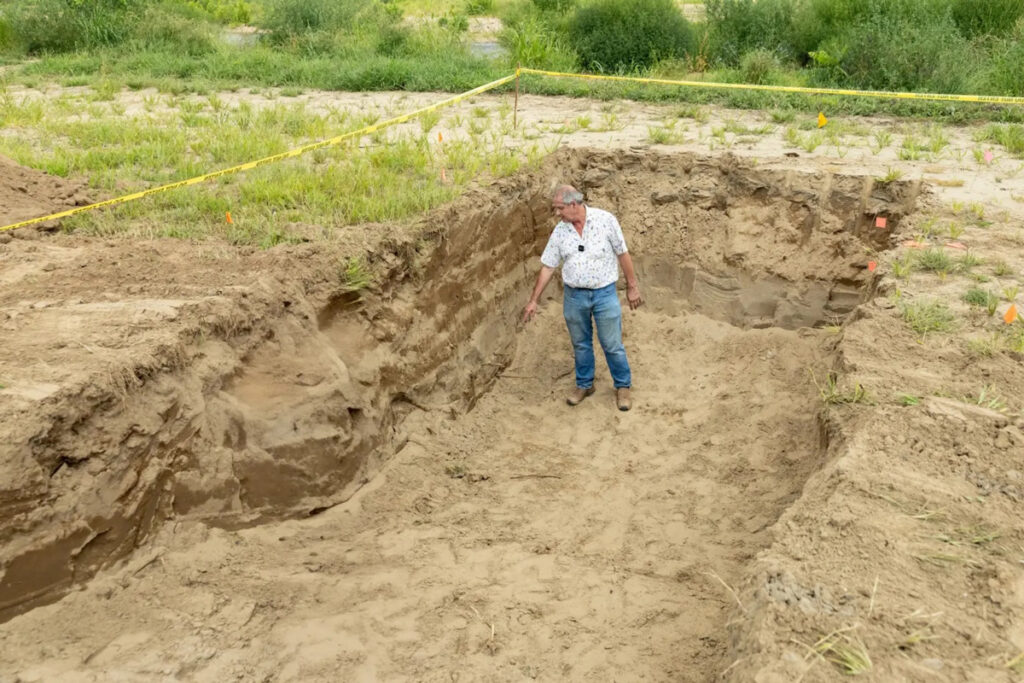
Soil scientist Forbes Walker visits Will Runion’s farm in 2025, examining the deep sandy deposits left behind by Hurricane Helene. Credit: Raffe Lazarian/University of Tennessee Institute of Agriculture via Grist
Helene’s floodwaters either washed away significant topsoil or deposited new sediment on top of it on thousands of farms. Some, including one of Runion’s neighbors, saw their fields stripped down to bedrock, or river rock. Runion and others woke to pastures blanketed by feet of sand or stone.
When topsoil is washed away, the necessary nutrients for growing go with it. And when topsoil is covered with sand, farmers can’t get to it. Both scenarios can significantly alter the land’s usability. Topsoil can take decades or centuries to develop, and sand lacks both organic matter and the physical structure to hold water and nutrients. “These aren’t soils yet,” said Kulesza of what Helene left on Runion’s and other farmers’ land. “They are in their infancy now. The clock has been reset.”
Runion had cared for his soils, working to eliminate weeds, adding fertilizer to keep nutrient levels ideal, and lime to control pH. “They were our way of life,” Runion said. “They were our income.”
After the storm, from October to April, he removed debris, bulldozed sand off his fields to get closer to the topsoil, filled holes, and graded uneven land. Crews from the Federal Emergency Management Agency removed and shredded downed trees. He applied for government relief and received close to $1 million in state and federal aid. Runion said he could have easily used all of that money replacing equipment and paying for cleanup labor, fertilizer, and fuel, but he’s trying to stretch the money as much as possible.
By June, it was time to mow the fields that hadn’t flooded. He managed to put up enough bales of hay to feed his herd of 125 cattle, but not enough to sell. In a normal year, hay sales made up about a third of the farm’s income. With months of work behind him and his flooded land still too sandy and generally depleted, he realized the recovery would be a slog.
Runion returned to work on the campground, which he hoped would diversify the family’s earnings. The longer-term plan included a music venue and some hiking trails, and to host weddings and corporate events. After the storm, finishing it took on new urgency. He chose a new spot, about 450 feet upland from the river, and began clearing enough land for 45 camping sites.
One environmental soil specialist described the academic literature on flood-damaged soils as “thin.”
Runion also prepared a parcel of land for Walker, the extension soil specialist, to run tests that could guide his recovery. Last November, soon after the one-year anniversary of Helene, Walker showed me around Runion’s farm.
Working with students, Walker established four experiments over about 300 test plots. He’s looking at how different soil amendments—hay, wood chips, poultry litter, and a charcoal called biochar, to help the soil hold water and fertilizer; and Triple 19, a common plant food with equal parts nitrogen, phosphorous, and potassium—affect the growth of wheat and fescue grasses.
When I visited, some of the plots remained mostly bare while, in others, tufts of green had sprouted. “We actually got some stuff to grow,” Walker said.
He described the academic literature on flood-damaged soils as “thin.” While some research and case studies exist on how agricultural soil recovers after a flood, there are few systematic investigations like the one Walker is conducting—on what works, and what does not—particularly in Appalachia, where floods of this magnitude have been historically rare.
When so-called atmospheric rivers spawned devastating floods in the Pacific Northwest and southwestern British Columbia in 2021, Aimé Messiga, a Canadian soil research scientist at the Agassiz Research and Development Centre, found a similar “scarcity of data.” He conducted a detailed review of the existing research and concluded that there was limited long-term monitoring, little understanding of how floods affect nutrients and microorganism communities in the soil, and uncertainties about what the actual impacts of floods on agriculture and crops are. Complicating everything is the variability between different farms, soils, and crops.
“You need decades of accumulated data in order to be able to predict what will happen. We don’t have those data.”
“You need decades of accumulated data in order to be able to predict what will happen,” Messiga said. “We don’t have those data.”
Today, some researchers are attempting to replicate flood conditions in labs to better understand, but field work is rare, Messiga said. There’s little money for it—and in the U.S., the Trump administration has cut funding for climate-related research. In addition, “many among us still look at these events as random,” Messiga said. “They’re not random. They will keep occurring.”
Since 1980, 45 flooding events have caused damages over $1 billion each in the U.S., with more than half of those occurring in the past 15 years. In 2024, flooding in the upper Midwest drowned crops. Repeat events in central California damaged agricultural operations from winter 2022 to spring 2023. Flooding along the Mississippi River in 2019 reduced crop planting by millions of acres. There also have been numerous smaller or more localized floods. One study found nearly 75,000 flash floods in the contiguous U.S. from 1996 to 2017, with increasing frequency in the past 22 years. Flooding frequency and strength is predicted to rise in the years to come due to climate change—a warmer atmosphere holds more moisture and leads to stronger rain events—and poor land-use management.
Scientists are also starting to study a new type of event, called “weather whiplash,” when sudden changes occur from one extreme to another, amplifying the effects of the disaster. In Texas in 2025, a flood came after prolonged drought, causing widespread destruction.
For farmers, the effects of flooding on soil may linger for years after the disaster. In 2011, the Missouri River flooded states in the Upper Midwest, including thousands of acres of farmland. Fields were swamped for months with up to 20 feet of water. When the water finally receded, those fields were covered with anywhere from 2 to 20 feet of sand; other fields had washed out holes up to 70 feet deep. It looked like the surface of the moon, said John Wilson, a now-retired educator and agricultural expert who served Burt County, Nebraska, which was particularly hard-hit. “It was just bare soil,” he said. “There was no crop residue whatsoever.”
Wilson led teams that sampled the soil and helped farmers build back. He found that levels of nitrogen and organic matter were low in flooded soils, and fertility suffered when farmers planted their crops. Over about five years, fertility generally improved, but not everywhere. “If you went out today and did a yield map, you could still tell exactly where the erosion was because those areas are not as productive,” Wilson said.
Yield is money for farmers, who already navigate thin margins and, often, years without any profit at all. North Carolina’s strategic plan for agriculture recently enumerated just how thin: Of the state’s “42,500 farms, only 8,000 produce annual gross sales that exceed $100,000 annually. The overwhelming majority … some 23,400, gross less than $10,000 in sales, with only around 40 percent of the farms in the state having a positive net income in 2022.”
As floods increasingly wreck farmland, more researchers are starting to focus on understanding the effects of the floods and how to address them. Most of that work is happening in Asia, Messiga said. But a study in coastal North Carolina, where hurricanes regularly land, found that after a storm there was less organic matter in the soil, including carbon, and a disruption of microbial activity and nutrient cycling. The ground also absorbed water less readily.
Coastal flooding is also driving saltwater into the soil of farmland, making it more saline and unable to sustain crops. A North Carolina State University team has been developing test kits for farmers to sample the salinity of their soils, as well as a set of recommendations for keeping their soil viable. Such local work is important because soils vary greatly from place to place, and findings are not often easily transferable.
Nicole DelCogliano’s farm near Asheville, North Carolina, was wiped out almost entirely by floods from Hurricane Helene in 2024. Courtesy of Nicole DelCogliano via Grist
For now, in the wake of Helene, farmers are relying largely on trial and error to build back what was lost. Nicole DelCogliano has been farming vegetables, flowers, and livestock with her husband on 50 acres on the South Toe River, near Asheville, North Carolina, for 25 years. Helene washed away her barn, tractor, and other infrastructure. Of her 6 acres of vegetable fields, one was covered with several feet of sand, another got a foot, and a third field suffered extensive erosion.
“Our entire operation was wiped out, essentially,” she said.
“It’s not something that can be fixed overnight. This is a long process.”
With the help of some friends with tractors, DelCogliano cleared her main field and spread compost and lime on everything. “There was a mix of guidance about what you should do, like should you disturb the soil, should you not?” she said. “At an instinctual level, we just felt like we got to get the soil covered, we got to get something in the ground.” They sowed rye, a dependable cool season grass, as a cover crop, to protect the soil from erosion and add nutrients.
Karen Blaedow, an agricultural educator in Henderson County, North Carolina, said farmers should expect to put in at least three years of cover cropping before they see results in their soil. “It’s not something that can be fixed overnight,” she said. “This is a long process.”
In the spring following the flood, DelCogliano spread various amendments on her least-damaged field, including compost, lime, biochar, and blood and bone meal, which provide nitrogen and phosphorus, respectively. After all that, she and her husband seeded crops.
Their new vegetables came in about two weeks later than normal, but the season was more productive than ever, even though they grew on just 4 instead of 6 acres—“which is pretty amazing,” she said. “When we first started harvesting crops [after Helene], we didn’t yet have power at the farm. I had to dig one of our sinks out of a bank and bleach it and clean it and drag it up to the new barn—that we barely got a roof on—to wash and pack for that first [farmers] market.”
She doesn’t really know what made the year so productive. They planted more intensively to account for the smaller acreage and were able to harness their years of expertise to restart their operation basically from scratch. She also attributes the relative health of her soil to years of organic practices. “We’re dirt farmers,” she said. “Our primary job is to tend the dirt. Because that’s the basis of everything.”
Some farmers who’ve seen good harvests may have gotten a little lucky. Rather than sand, floods dumped silt. Even Runion got silt deposits in one section of his farm. Unlike the sand, the silty layers carry nutrients and create a positive growing environment. “We have a producer we work with and he said it’s the most fertile soil that he’s had in decades,” said Emine Fidan, a biosystems engineering and soil science researcher at the University of Tennessee, who’s also working on Runion’s farm. “And he said it grew the sweetest corn he’s ever had. It was growing just beautifully.”
Runion didn’t plant anything until this past fall. He prepared about 65 acres of the 220 that were underwater. It was slow going; he used a disking machine to till his land but had to stop often to clear sticks and trash and to grade out low spots. He mixed in mulch and planted oats, wheat, and fescue. Walker drove me past one of the fields and it still looked sandy, the grasses just a pale green shadow on the tan land. Runion said the greenery was “struggling to have any vigor about it.” He won’t know for sure how well or poorly the grasses do until spring, their peak growing season.
He considered planting more acreage but decided to wait and see what he learned from Walker’s trials. “It’s a process, and the knowledge we’re gaining there will help on the whole rest of it, too,” Runion said.
This spring, Walker’s team will measure the biomass in each plot as well as the quality of the crop, including how much protein it has and its digestibility. They’ll also be evaluating the soil itself, including its ability to hold water, to determine if any of the treatments improved the structure of the sandy dirt.
One farmer thinks the hay he’ll get in the coming years will be lower-yielding, lower-quality, and will cost more to produce due to the extra prep time, new seeds, and fertilizers.
Preliminary results suggest that, in plots where they put down mulch, the grasses are growing better than in plots with other amendments. The woody debris is reducing erosion and seeds are germinating well and standing up in the rough matrix. Spreading this kind of mulch isn’t an obvious solution, Walker said: Wood chips are a carbon-rich material, but as they break down in the soil they consume nitrogen, which can lead to a deficiency for the crops. But this mulch had sat in piles and started to decompose before it was applied to Runion’s fields, which made it less likely to cause these problems.
Runion had asked FEMA to leave the piles of wood chips on his farm rather than remove them like they normally would. Walker is looking for solutions to the soil problem that not only work but are also accessible. Have a mountain of mulch? Put it to work. Have nearby chicken houses? Maybe their nitrogen-rich manure can help revive flooded fields. His hope is that his team’s research can provide some guidance to farmers who find themselves in similar situations in the future. “I think it will have broad implications for a number of different crops,” including vegetables, Walker said.
Meanwhile, Runion is coming to terms with his situation. He thinks the hay he’ll get in the coming years will be lower-yielding, lower-quality, and will cost more to produce due to the extra prep time, new seeds, and fertilizers. He used to sell a lot of square bales, which tend to contain high-quality grasses and fetch a higher price, but he doesn’t expect to be doing that for a while. He’d initially hoped to have his land back in shape in a year or two. “Now it’s a four- to five-year [plan], I think,” Runion said. “It has been frustrating, and exhausting, too.”
He’s still optimistic, though. On my visit, I watched him grade out the new campground in a large dump truck. Freshly exposed red soil lay open to the sky. He thinks he can get the campground open by late summer or early fall. Over time, he hopes, it will be a more lucrative, and more sustainable, source of income. “The farm is really beautiful,” Runion said. “It still has a lot to offer.”
Brazil, the world's largest coffee producer and exporter, shipped 8.4 million 60-kilogram bags between January and March 2026, a volume 21.2% below the same period in 2025, the Brazilian Coffee Exporters Council (Cecafé) reported on Monday. Export revenues also fell 13.6%, to US$3.371 billion.
World food commodity prices rose in March for the second month in a row, due largely to higher energy prices linked to the conflict escalation in the Near East, according to the latest benchmark measure released by the Food and Agriculture Organization of the United Nations (FAO).
For decades, many paleoarchaeologists believed Neanderthals went extinct largely because they just weren’t intelligent enough to compete with their Homo sapien relatives. However, mounting historical evidence suggests this was far from the case. The latest discovery to help the Neanderthal’s reputation ion? The ancient hominins knew when and how to safely snack on shellfish potentially thousands of years before their human descendants.
The findings published today in the Proceedings of the National Academy of Sciences focus on Neanderthals who lived at Los Aviones Cave in present-day Cartagena, Spain. Researchers discovered the remains of 115,000-year-old mollusks including gastropods and limpets that were clearly harvested as food. This contradicts past theories about Neanderthals, which suggested they had difficulty adapting to coastal environments and utilizing marine resources. What’s more, the Neanderthals here didn’t eat shellfish in large quantities all the time. Instead, they knew to make the most of them between November and April during the colder seasons.
Los Aviones Cave in Spain is a notable Neanderthal archaeological site. Credit: ICTA-UAB
“They consumed marine resources throughout the year, but with a very clear preference for winter and autumn months,” explained Asier García-Escárzaga, a study co-author and archaeologist at Spain’s Universitat Autònoma de Barcelona Institute of Environmental Science and Technology.
García-Escárzaga says this seasonal pattern often followed by more modern human populations in Europe wasn’t a coincidence. The winter reproduction cycle of many mollusks also results in higher amounts of meat as well as improved flavor and texture. Summer months increase health risks like toxic algae contamination or rapid spoiling.
But how did researchers determine exactly when these shellfish were harvested? It all has to do with the mollusks’ shell carbonate and their oxygen isotopic levels. This level fluctuates depending on seawater temperature and functions like a “prehistoric thermometer,” according to García-Escárzaga.
The findings reveal that Spain’s coastal Neanderthals relied on a diverse diet featuring high-quality oceanic proteins filled with Omega-3 and zinc, both of which aid in reproductive health and brain development. With that in mind, it’s entirely possible that humans’ closest evolutionary ancestors influenced our own love of shellfish.
“What we see at Los Aviones is a fully modern subsistence strategy,” García-Escárzaga and his colleagues wrote in their study.

 Login
Login





 Brazil, the world's largest coffee producer and exporter, shipped 8.4 million 60-kilogram bags between January and March 2026, a volume 21.2% below the same period in 2025, the Brazilian Coffee Exporters Council (Cecafé) reported on Monday. Export revenues also fell 13.6%, to US$3.371 billion.
 World food commodity prices rose in March for the second month in a row, due largely to higher energy prices linked to the conflict escalation in the Near East, according to the latest benchmark measure released by the Food and Agriculture Organization of the United Nations (FAO).