 Login
LoginOh I’ll get Exposure?!
18 August 2014 at 06:11





Manuel Gual posted a photo:
Modular Metal Engineering Models: Vintage Construction Kits, Gears, Bridges and Mechanical Assemblies
Description
A detailed visual series exploring the world of vintage modular metal construction systems, inspired by classic engineering kits, mechanical model building and technical drafting culture. The collection presents carefully arranged perforated metal strips, brass gears, axles, pulleys, bolts, nuts, brackets, wheels, bridge trusses, gearbox assemblies, cranes, vehicle chassis and miniature mechanical structures laid out across workshop tables, blueprint sheets and clean studio surfaces.
The images combine nostalgic industrial design with precision engineering aesthetics: aged metal textures, brushed steel surfaces, brass components, technical drawings, exploded assembly layouts and realistic workshop lighting. The series moves from organized component catalogues and close-up mechanical studies to fully assembled structures such as bridge modules, gearboxes, steering systems, pulley frames, cranes and vintage vehicle models.
The overall mood is technical, educational and tactile, evoking model engineering, mechanical invention, mid-century construction toys, industrial prototyping and hands-on craftsmanship. This set is suitable for themes related to engineering education, mechanical design, STEM learning, vintage technology, maker culture, workshop creativity, structural design and the beauty of functional metal components.
These images have been generated by Artificial Intelligence.

Amongst the plethora of different versions of the Leica M 35mm f/1.4 Summilux lenses, the “11873” model has garnered special attention. This double-aspherical design is famous for its lens character and classic glow at wider apertures. Of course, lens aficionados have driven the price of this original lens to astronomical values, which is where Light Lens Lab has stepped in.

One of the most enduring traditions in the U.S. is undoubtedly the state fair. The very first was held in Syracuse, New York, in 1841, and throughout the mid-19th century, states launched their own unique takes. Some of the largest and busiest, such as those in Minnesota, Iowa, and Wisconsin, have been running just about as long as the states have existed. And it’s no coincidence that some of the most well known and beloved events, which usually take place in the late summer or early autumn, represent the nation’s agricultural heartlands.
The exhibition State Fairs: Growing American Craft at the Smithsonian American Art Museum’s Renwick Gallery celebrates the unique crafts and customs of these annual festivals. From cows sculpted out of butter and 4-H contests to seed art and crazy foods, ingenuity is as much a part of the tradition as showcasing time-honored farming practices, rural culture, industry, and of course, arts and crafts.
The Minnesota State Fair is particularly well known for its seed art, which consists of tableaux made entirely of grains and seeds that are cultivated in the state. Artists often translate famous artworks using a variety of crops, and portraits of celebrities are another popular subject. When submitted for consideration, artists must supply a “legend card” that demonstrates which seeds they used.
The Renwick Gallery show highlights more than 240 objects and artworks, from elaborate contemporary jewelry pieces to historic quilts to a rhinestone rodeo outfit. A contemporary mixed-media resin necklace by artist and jewelry designer Morgan Hill celebrates treats and pastimes, while a geometric weaving by Agueda Martínez (1898-2000) highlights the extraordinary craft of Southwest tapestry blanket weaving.
Growing American Craft is the first large-scale survey of state fair creativity of its kind, representing 43 states and Tribal Nations. “Ribbon-winning artworks and engaging craft demonstrations illuminate the lives of the artists—their families, memories, honors, and struggles,” the museum says.
Part of the show’s aim is to highlight the pride, resilience, and inventiveness of rural communities, dashing stereotypes in the process and illuminating how fairgrounds are woven into the social fabric of the U.S. Visitors encounter a wide range of unique interpretations of state fair events, such as a pyramid of more than 700 glass jars of preserved fruits and vegetables by canner extraordinaire Rod Zeitler.
Crops themselves take center stage in many of the works, including an elaborate sweetgrass basket by South Carolinian artist Corey Alston, who draws on the Gullah Geechee basket traditions to weave remarkably imaginative designs. And Justin Favela has also reimagined the palatial Rubenstein Grand Salon into an immersive space titled “Capilla de Maiz (Maize Chapel).” The walls are fringed with gold and piñata corncobs, tapping into the role of maize in America throughout several millennia.
State Fairs: Growing American Craft continues through September 7 in Washington, D.C. The Smithsonian has also produced a beautiful catalogue to accompany the show, which you can find on Bookshop.
Do stories and artists like this matter to you? Become a Colossal Member today and support independent arts publishing for as little as $7 per month. The article ‘State Fairs: Growing American Craft’ Surveys Agriculture, Ingenuity, and Community appeared first on Colossal.
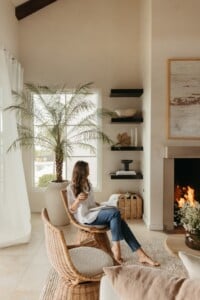
In uncertain, often overwhelming times, I’ve found solace in my houseplants. There’s a joy in tending to them—the ritual of watering, the slow unfurl of a new leaf, and the way a room softens in their presence. Over time, my home has filled with them.
But somewhere along the way, I realized: more plants didn’t necessarily mean a more beautiful space. Too many, placed without intention, and suddenly a living room starts to feel less like a sanctuary and more like a roadside nursery. What I was craving wasn’t more greenery—it was a sense of cohesion. A way to make my plants feel like part of the design, not an afterthought.
So I set out to understand how designers actually style plants at home. What I found, through conversations with San Francisco-based Little Trees owner Kathy Ho and Lindsay Pangborn, formerly a gardening expert at Bloomscape, is that the difference comes down to perspective. Plants aren’t just décor—they’re a design layer. And when you start to think about them that way, everything shifts: where you place them, how you group them, and how they shape the feeling of a room.

When you start to see plants as a design element—not just something to care for—the way you use them begins to change. It’s easy to slip into collecting mode. You find a plant you love, then another, then another—and before long, they’re scattered throughout your home with little thought for how they relate to one another.
Designers approach plants differently. Instead of asking Where can I fit this? they ask, What does this room need?
That shift—from accumulation to intention—creates a space that feels considered.
“Plants should complement your space and your lifestyle, not compete with it,” Pangborn says. In practice, that means thinking about plants the same way you would any other design element: in terms of scale, balance, and placement.
A single, well-placed plant can anchor a corner. A small grouping can create a focal point on a surface. Even negative space—what you choose not to fill—plays a role in how your plants are experienced.
Once you start thinking like a designer, the next step is editing—then arranging with intention. Instead of dispersing plants evenly throughout a room, focus on creating a few defined moments. Designers often group plants in twos or threes, treating them less like standalone objects and more like part of a vignette. The result feels grounded and cohesive, rather than scattered.
“Grouping plants can make a space feel more calm and considered,” says Ho. “It also makes care easier when plants with similar needs are placed together.”
Think of a cluster on a coffee table, a styled corner of a console, or a small trio anchoring a shelf. What matters isn’t the number of plants—it’s how they relate to one another and to the space around them.
Just as important: what you leave out. Giving each grouping room to breathe allows the eye to land, rather than constantly move.
One of the simplest ways to elevate your plant styling is to think vertically. When every plant sits at the same level—lined up on a windowsill or clustered at eye height—the effect can feel flat. Designers, instead, use plants to create movement throughout a space, guiding the eye up, down, and across the room.
Trailing plants are especially effective here. Placed on a high shelf, bookshelf, or cabinet, they soften hard lines and draw the eye upward as they grow. Hanging planters offer a similar effect, making use of often-overlooked ceiling space while adding a sense of lightness.
“Using vertical space is key, especially in smaller homes,” Pangborn notes. “It allows you to incorporate more greenery without sacrificing surface area.”
The goal isn’t to fill every level, but to create a sense of rhythm—something that feels layered and lived-in, rather than static. A taller plant on the floor, a cluster at mid-level, and something trailing above can be enough to shift the entire energy of a room.
One of the most common mistakes when decorating with plants is treating every empty spot as an opportunity to add one. But designers tend to approach it the opposite way. Instead of filling space, they use plants to resolve it.
That might look like placing a taller plant in an empty corner to soften a hard edge, or using a single, sculptural plant to anchor a blank wall. On the floor, especially, plants can create a sense of weight and presence—grounding the room in a way smaller accents can’t.
“Larger plants can make an immediate impact,” Pangborn says. “They help define a space and can bring balance to areas that feel unfinished.”
Just as important is what surrounds them. Giving a plant enough space—away from furniture, walls, or artwork—allows it to stand on its own without competing for attention.
A room doesn’t feel lush when every inch is filled. It feels lush when there’s contrast—between fullness and openness, presence and pause.
If you’re drawn to a home filled with plants, the key is to create contrast. A room full of greenery can feel rich and layered, but only when there’s variation. When every plant is similar in size, shape, or tone, the effect flattens. What designers do instead is mix elements deliberately: pairing something tall with something low, something structured with something soft, something bold with something more delicate.
“Combining plants with different leaf shapes and sizes keeps a space visually interesting,” Pangborn says. “It creates depth rather than repetition.”
Think of a broad-leaf plant set against something more airy, or a sculptural silhouette next to a trailing vine. These contrasts give the eye somewhere to move and a reason to linger.
The effect is what people often describe as a “lush” space, but what it really comes down to is composition. Not more plants, but better balance.
Even the most beautifully styled plants should support the way you actually live in your space. It’s easy to get caught up in how something looks—especially when it comes to plants, which can instantly transform a room. But if they’re difficult to care for, constantly in the way, or require more attention than you can realistically give, that sense of ease starts to disappear.
“Plants should complement your space and your lifestyle,” Pangborn notes. “They should never feel like a burden.”
That might mean grouping plants with similar care needs so your routine feels intuitive. Or choosing fewer, more impactful pieces that you can tend to consistently. It might even mean moving things around as your space (or your energy) shifts.
When you start to see plants as part of your home’s design, the entire approach softens. You edit more. You place with intention, and you let the space breathe.
In turn, your home begins to feel the way you wanted it to all along: lush, yes—but also calm, cohesive, and entirely your own.
This post was last updated on April 17, 2026, to include new insights.
The post Why Your Plants Make Your Home Feel Cluttered (and How to Fix It) appeared first on Camille Styles.
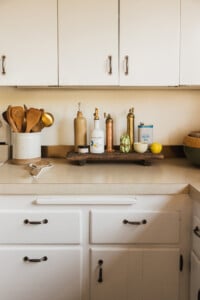
My biggest issue with the term junk drawer is the word junk. If something truly has no purpose, why are we storing it in valuable space in our kitchen, mudroom, or office? Now don’t get me wrong—I’m not saying everything in your junk drawer needs to be high quality or particularly valuable. What it does need to do, however, is serve a purpose.
When organizing any space in your home—from your fridge to your closet—every item should earn its keep. If you don’t wear those black pumps, donate them. If you keep buying that bag of spinach but never finish it, it might be time to re-evaluate. The items in your junk drawer should follow the same rule.
Once you stop thinking of it as a catch-all space and start thinking of it as a utility drawer with a purpose, it becomes much easier to keep organized. Below is my step-by-step system for organizing a junk drawer so it actually stays that way.
Rachel Rosenthal is an organizing expert and founder of Rachel and Company, a Washington, DC-based professional organizing firm. Since 2007, Rachel’s firm has worked with 3000+ clients and teamed up with prominent brands, including West Elm, Pottery Barn, The Container Store, and Four Seasons. Rachel’s expertise has been featured in 100+ publications, including Real Simple, Martha Stewart, House Beautiful, The Rachael Ray Show, and local NBC, ABC, and Fox morning shows. Rooted in the belief that organization can be achieved by all, Rachel emphasizes solutions that are easy to use and enhance a home’s existing aesthetic.
If you want the quick version, here’s the simple system I use:
Now let’s break down each step.
The biggest problem with a junk drawer is the catch-all mentality. We’ve been conditioned to toss items we don’t know what to do with into one drawer and deal with them later. That’s how you end up with drawers bursting at the seams and never being able to find the battery you know you have, or the matchbook you need when the power goes out.
Just like every other space in your home, your junk drawer should contain intentional categories. When every item has a place, the drawer becomes useful instead of chaotic. Changing your mindset from “junk drawer” to a drawer that holds categorized items with purpose is the first step in organizing it.
Yes, everything. I know the thought of it can make most of us wince, but the first step to organizing your junk drawer is to dump it all out. It’s the only way to see exactly what you’re working with. Once the drawer is empty, wipe it down so you’re starting with a clean slate.
Next, declutter the items you pulled out of the drawer. Some things will be obvious—like tossing trash or recycling old receipts. But don’t stop there. Write with each pen to make sure it works. Test batteries. Turn on flashlights. Check tape rolls. You might be surprised how many items in a junk drawer are actually broken or unusable. Think through which items you truly need in your home and which ones can be discarded or donated.
After decluttering, look at what remains and decide whether it actually belongs in this drawer.
For example:
Relocating items helps prevent your junk drawer from becoming a storage space for things that belong elsewhere.
Once you’ve decluttered and relocated items, you’ll be left with the things that truly belong in the drawer. Now it’s time to create categories.
For example:
Grouping items into categories makes it much easier to find what you need—and maintain the system over time.
Once you’ve identified your categories, measure your drawer so you can add organizers that fit. Some type of bins or drawer dividers is essential for junk drawer organization. Because these drawers often contain multiple categories, organizers prevent everything from sliding together into one big pile.
Measure the width, depth, and height of the drawer, then find organizers that fit your space and categories. Adjustable dividers, small bins, or modular trays all work well. Think of it like playing a little Tetris until everything fits perfectly.
Now comes the satisfying part—putting everything back. Place each category into its designated organizer or section. But before you close the drawer, take it one step further.
This step will be unique to your junk drawer, but consider sharpening pencils, folding the end of the tape over so it’s easy to grab, refilling a lighter, or pairing batteries by size. These small finishing touches make a big difference. Now everything in your junk drawer is ready to be used at a moment’s notice.
A well-organized junk drawer typically holds small, frequently used household items that don’t have another obvious home.
Some common items include:
The key is that every item serves a purpose and belongs to a category within the drawer.
If your junk drawer never seems to stay organized, one of these habits might be the reason.
Treating it like a catch-all.
A junk drawer should not be where random items go to disappear.
Keeping broken items.
Dead batteries, dried-out pens, and tangled cords create clutter quickly.
Not using drawer dividers.
Without organizers, everything slides into one chaotic pile.
Mixing too many categories.
Limiting the drawer to a few simple categories helps keep it functional.
Never editing the drawer.
A quick reset every few months keeps clutter from building up again.
Once your drawer is organized, a little maintenance will go a long way toward keeping it that way. A quick five-minute reset once a month can help prevent clutter from building up—use that time to toss broken items, test pens, or remove anything that’s found its way into the drawer without a real purpose. Try to return items to their designated sections after using them so categories stay intact, and be mindful about what you add back in. If something doesn’t serve a clear purpose, it likely doesn’t need to live there.
A junk drawer doesn’t need to be perfect, but with a simple system in place, it can stay functional, tidy, and easy to use.
Once your drawer is decluttered and categorized, the right organizers make all the difference. Drawer dividers, small bins, and modular trays keep items from shifting around and turning back into one big pile.
The right tools help ensure that every item in your drawer has a home—and stays there.
This post was last updated on March 22, 2026, to include new insights.
The post The Secret to Organizing a Junk Drawer (Hint: Stop Treating It Like One) appeared first on Camille Styles.

From factories and barrel-roofed buildings to gabled churches and towers, Charles Young’s sprawling yet diminutive city of paper models continues to grow. Known for his miniature constructions and animations that often double as three-dimensional color studies, the sculptor and animator highlights a wide range of architectural styles with an emphasis on color pairings.
Since 2020, Young has been making hundreds of miniature structures inspired by A Dictionary of Color Combinations by Japanese costume designer and painter Sanzo Wada (1883-1967). (There’s even a fun, interactive website based on the book.) So far, Young has completed 258 buildings from the first volume, which focuses on two-color combinations, and there are 90 to go. But he’s created a wide array of examples featuring multiple color combinations, too.
In June, Young will display 120 three-color paper sculptures at Galerie Handwerk in Munich. And in addition to the paper models, he also creates architecturally inspired sculptures from wood and woven cane, some of which are currently on display in Scotland at Kirkcudbright Galleries and MacLaurin Gallery. See more on Young’s Instagram and Tumblr.
Do stories and artists like this matter to you? Become a Colossal Member today and support independent arts publishing for as little as $7 per month. The article Explore a Growing City of Meticulously Crafted Miniature Paper Buildings by Charles Young appeared first on Colossal.

Have you ever looked at a photo and wondered, "What's with all the green and pink colors around high-contrast edges?" That's longitudinal, or axial, chromatic aberration. LoCA. It's common, very difficult to prevent optically and nearly as hard to remove during post-processing.
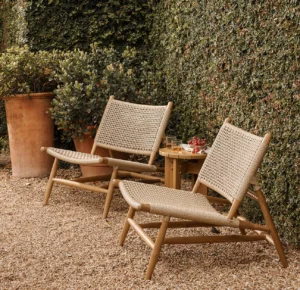
I’m moving at the end of the month, and while there’s plenty to figure out, one thing is already decided: outdoor furniture comes first. Al fresco season is here, and I plan to claim every early-morning coffee and late-afternoon aperitivo outside while I can. In Austin, that window is fleeting—so sofas and rugs can wait.
Even on the days I’m not hosting outside or lingering with a summer book on the porch, there’s something about an inviting patio that changes how a home feels. From the kitchen sink, it’s the view of planters, soft lighting, and a space that’s ready when you are. Lately, I’ve been deep in the search for patio sets, comfortable chairs, and small pieces that pull it all together—and the good news? Affordable outdoor furniture has come a long way.
Here’s the approach I keep coming back to: start with one anchor piece, then build around it. It’s the simplest way to create an outdoor space that feels layered, intentional, and actually lived in.
Ahead, the best affordable outdoor furniture—everything you need to create a space that looks elevated, feels effortless, and lives well all season.
Here’s the trick: not everything needs to be a splurge. But a few pieces should be. The ones that ground the space, hold it all together, and make even the simplest setup feel pulled together. Start here, then layer in the rest.
Most budget patio sets feel temporary—lightweight, overly matching, and easy to forget. These bring a little more presence: better materials, softer lines, and a look that lasts beyond one summer.
A good outdoor chair does two things: it makes you want to sit down, and it looks good even when you’re not. These do both.
From small bistro moments to long, family-style dinners, these tables set the tone—bringing a little more intention to every meal outdoors.
In smaller spaces, every piece has to earn its place. These do—pulling double (or triple) duty as side tables, plant stands, or extra surfaces when you need them, then tucking away just as easily.
Once the larger pieces are in place, this is where the magic happens. The finishing touches—planters, pillows, lanterns—add the warmth and texture that make a space feel truly your own.
An outdoor space only works if you can live in it. These are the pieces that make that possible—cooling shade, grounding textures, and lighting that extends the day just a little longer.
A few smart decisions can stretch your budget—and your furniture—much further.
Because the goal isn’t just to fill a space—it’s to create one you’ll actually want to spend time in.
This post was last updated on April 11, 2026, to include new insights.
The post The Best Affordable Outdoor Furniture That Looks Designer (But Isn’t) appeared first on Camille Styles.
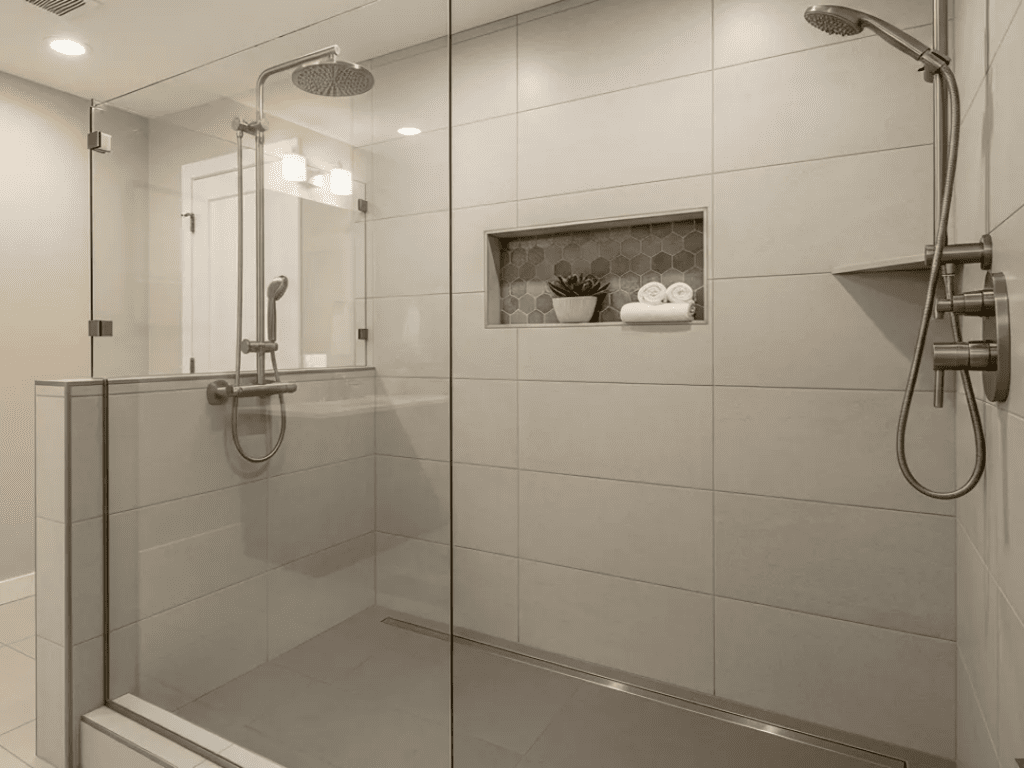
FRANKFORT, Ind. — Starling Construction LLC is promoting its bathroom remodeling services for Central Indiana homeowners who want cleaner layouts, updated finishes, improved storage, better lighting, and more functional daily-use spaces.
The company’s bathroom remodeling service is designed for homeowners dealing with older bathrooms, worn-out fixtures, limited storage, poor lighting, outdated tile, and layouts that no longer support the way the space is used. Starling Construction handles full bathroom remodels, new tile, updated vanities, improved lighting, better storage, and layout changes that make bathrooms easier to move through, easier to clean, and better suited for everyday routines.
Starling Construction’s bathroom remodeling process begins with a discussion of the homeowner’s vision, needs, priorities, budget, and existing space. The company then provides a straightforward quote and plan, including a clear scope of work, transparent pricing, and a practical timeline. During construction, the team focuses on craftsmanship, protecting surrounding areas, and leaving the finished bathroom clean and ready to use.
Bathroom remodeling remains an important part of the broader home-improvement market as homeowners continue investing in existing properties. The Joint Center for Housing Studies of Harvard University reports that its Remodeling Futures Program has studied home maintenance and improvement trends for more than three decades, and that the United States spends more than $600 billion annually on home maintenance and improvement. That spending reflects the ongoing need for repairs, upgrades, and functional improvements in homes of different ages and sizes.
“Bathrooms are some of the most-used rooms in a home, so small problems can become daily frustrations,” said a representative of Starling Construction. “Our goal is to help homeowners create bathrooms that are practical, comfortable, durable, and finished with care.”
Starling Construction emphasizes clean, functional layouts as a key benefit of a well-planned bathroom remodel. In many older bathrooms, limited floor space, poor fixture placement, inadequate lighting, and insufficient storage can make the room feel cramped or difficult to use. By improving flow, storage, lighting, and finish quality, the company helps homeowners create bathrooms that better support morning and evening routines, guest use, and long-term household needs.
The company also focuses on durable materials installed correctly. Bathroom spaces are exposed to moisture, frequent cleaning, daily foot traffic, and repeated use of plumbing fixtures, cabinetry, tile, and lighting. Proper installation is important for long-term performance, especially when projects include tile work, vanities, shower areas, flooring, fixtures, and lighting updates. Starling Construction’s service page emphasizes durable products, clean finishes, and workmanship that respects the homeowner’s time and property.
Bathroom updates can also support safety, comfort, and aging-in-place goals. AARP’s HomeFit guidance recommends bathroom improvements such as securely installed grab bars, nonslip bath mats, automatic night-lights, and other practical features that can make daily use safer and more comfortable. Its guide notes that grab bars should be securely installed to a solid wall surface rather than relying on towel bars or suction-cup grab bars, reinforcing the importance of thoughtful planning and proper installation in bathrooms.
Starling Construction serves homeowners who want to remodel without unnecessary confusion or pressure. The company’s bathroom remodeling page states that many projects can keep the existing layout while upgrading fixtures, tile, storage, and materials. For homeowners who need better flow or more space, the team can also help redesign the layout. If unexpected issues, such as hidden leaks or water damage, are uncovered, Starling Construction reviews the issue with the homeowner and provides options before proceeding.
The company’s approach is especially useful for homeowners who want a remodel that balances appearance and daily function. Updated tile, improved lighting, better storage, refreshed vanities, modern fixtures, and clean finishes can make the bathroom easier to use while also improving the overall feel of the home. For families, guests, and homeowners planning to stay in place, a well-built bathroom remodel can make a meaningful difference in daily comfort.
Customers who want to learn more can visit Starling Construction’s bathroom remodeling services in Central Indiana page for service details, process information, frequently asked questions, and quote options.
Starling Construction LLC is located at 1851 Washington Drive, Frankfort, IN 46041, by appointment only. The company can be reached by phone at (765) 237-9420 or by email at office@starlingconstruction-llc.com.
Starling Construction LLC provides remodeling and home-improvement services across Central Indiana. The company’s services include bathroom remodeling, kitchen remodeling, full-home remodeling, basement remodeling, home additions, garage additions, outdoor living projects, interior painting, shower and bath conversions, tile and flooring, custom cabinetry, small projects, handyman work, door and window installation or replacement, commercial remodeling, and aging-in-place remodeling. Starling Construction focuses on clear communication, straightforward planning, steady workmanship, and results built to last.
Starling Construction LLC
1851 Washington Drive
Frankfort, IN 46041
Phone: (765) 237-9420
Email: office@starlingconstruction-llc.com
The post Starling Construction Expands Bathroom Remodeling Services for Central Indiana Homeowners appeared first on Social Lifestyle Magazine.

In a distraction-free “dream lab,” Zendaya has carte blanche to create a new wardrobe in a short, stop-motion film written and directed by Spike Jonze. The advertisement, which announces a clothing line the actor co-created with apparel brand On, merges dance and playful optics as she maneuvers through some otherworldly trial and error.
You might also enjoy Jonze’s mind-melting dance video for Apple featuring FKA twigs.
Do stories and artists like this matter to you? Become a Colossal Member today and support independent arts publishing for as little as $7 per month. The article Zendaya Taps into the Creative Process in a Quirky Ad Directed by Spike Jonze appeared first on Colossal.
