Normal view

  • ✇Malay Mail - All
  • Airlines to fly more passengers but profits to halve in 2026, industry warns
    RIO DE JANEIRO, June 9 — Airlines expect to carry more passengers this year but earn only half as much profit as in 2025, as high fuel prices don’t appear to be fully deterring travel, according to projections published Sunday.The International Air Transport Association (IATA) predicted its 370 member airlines, which account for 85 per cent of global air traffic, will carry 5.1 billion passengers this year.That is up 2.4 per cent from 2025, when passenger traffic
     

Airlines to fly more passengers but profits to halve in 2026, industry warns

8 June 2026 at 23:00

Malay Mail

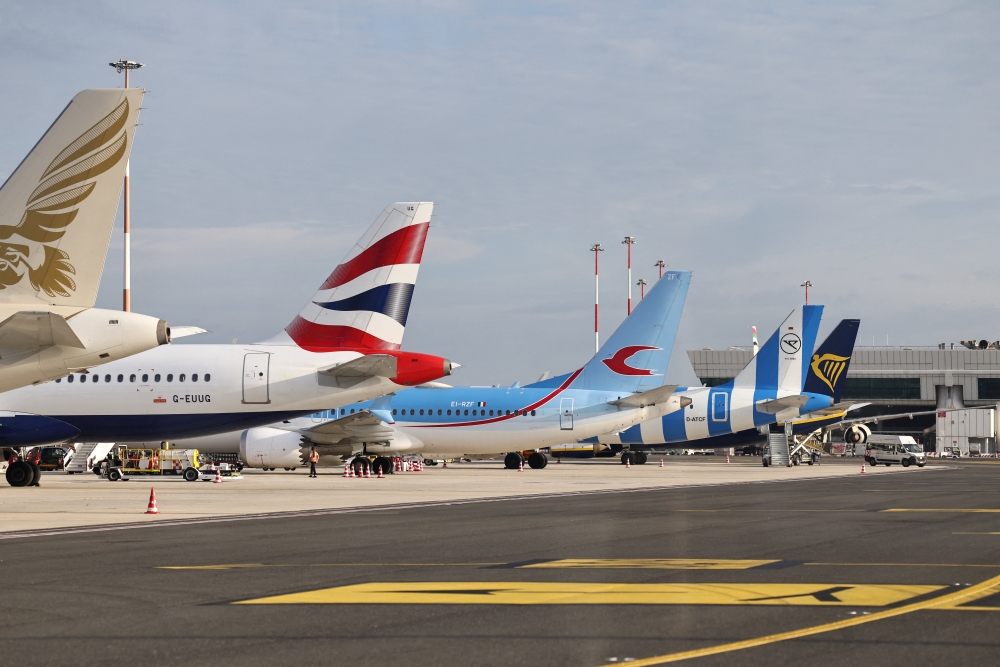
RIO DE JANEIRO, June 9 — Airlines expect to carry more passengers this year but earn only half as much profit as in 2025, as high fuel prices don’t appear to be fully deterring travel, according to projections published Sunday.

The International Air Transport Association (IATA) predicted its 370 member airlines, which account for 85 per cent of global air traffic, will carry 5.1 billion passengers this year.

That is up 2.4 per cent from 2025, when passenger traffic was estimated to have reached 4.98 billion. The four billion mark was surpassed in 2023.

Asked by reporters about the impact of the war in the Middle East compared to the Covid-19 pandemic in 2020-2021, IATA Director General Willie Walsh replied: “I don’t see this as a crisis.”

“You’re looking at an industry that is forecasting growth,” he said. “If you extract the impact of the Middle East, we’re looking at growth of 3.5 per cent.”

This growth, however, will be accompanied by profitability only half as strong as last year’s, while Middle Eastern airlines are expected to post losses.

“War-related disruptions in the Middle East and rising fuel costs have shifted the outlook for airlines to the worse,” Walsh said in a statement.

“Profits will shrink from US$45 billion (RM181.4 billion) in 2025 to US$23 billion this year. And margins will shrink from 4.2 per cent to 2.0 per cent,” he said, referring to the net margin.

According to IATA’s calculations, net profit is expected to be US$4.50 per passenger, half the 2025 figure.

“Under the circumstances, that shows resilience. But it won’t even buy you a hot dog at most of the Fifa World Cup venues and it does not leave much of a buffer should other costs or taxes start rising,” Walsh said in the statement.

‘Fuel price shock’ 

With fuel costs rising — and those increases being passed on in part through higher ticket prices — the revenue of IATA member airlines is expected to grow nine per cent this year, reaching US$1.165 trillion.

“Airlines are bearing the brunt of the fuel price shock. While air fares are rising, airlines are still absorbing part of the hike in their bottom lines,” the IATA said.

Profitability will vary across different regions of the world, according to the organization’s projections.

Middle Eastern airlines, which have traditionally had access to an abundant supply of fuel, are expected to face a difficult year, with net margins projected to turn negative.

For these airlines, including Emirates and Qatar Airways, “the immediate recovery path is likely to be driven more by pricing than by a rapid return of volumes,” the IATA said.

European airlines are expected to become the most profitable (3.1 per cent net margin), followed by those in North America (2.5 per cent) and Asia-Pacific (2.1 per cent).

Despite significant geopolitical uncertainty and the inability to predict the duration of the war, the IATA is not worried about demand. It noted that according to its calculations, the average airline ticket price had fallen 26 per cent over the past 10 years. — AFP 
  • ✇Eos
  • Oysters Clean Up More Nitrogen Pollution Than We Thought Lisa S. Gardiner
    After centuries of overharvesting and environmental degradation reduced the world’s oyster reefs by 85%, restoration is bringing the conglomerations of thick-shelled mollusks back to coastal waters. And their return may have more benefits than scientists realized, new research suggests. “Oysters build the foundation of an entire ecosystem.” Oysters were initially restored to boost depleted fisheries, according to Rachel Smith, a marine ecologist at the University of California, Santa Barb
     

Oysters Clean Up More Nitrogen Pollution Than We Thought

4 June 2026 at 12:47
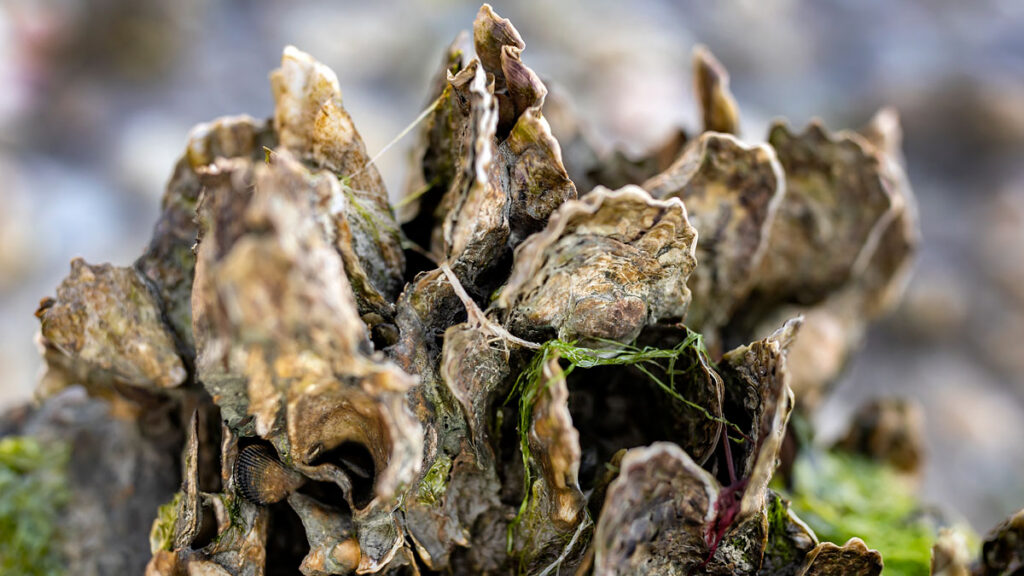
Close-up view of a cluster of living eastern oysters

After centuries of overharvesting and environmental degradation reduced the world’s oyster reefs by 85%, restoration is bringing the conglomerations of thick-shelled mollusks back to coastal waters. And their return may have more benefits than scientists realized, new research suggests.

“Oysters build the foundation of an entire ecosystem.”

Oysters were initially restored to boost depleted fisheries, according to Rachel Smith, a marine ecologist at the University of California, Santa Barbara. As oysters cement their shells together into reefs, they create habitats for myriad species, including fish. “Oysters build the foundation of an entire ecosystem,” Smith said.

These days, oyster reefs are restored for reasons extending beyond ecology, including to rid coastal water of excess nutrients such as nitrogen. This pollutant enters coastal waters when wastewater, sewage, and fertilizer wash into the sea.

Past studies of nitrogen removed by oyster reefs largely looked at denitrification, a process in which microbes transform organic nitrogen in dead oysters and their excrement into inert gas. If organic nitrogen evades these microbes, it can be buried in reefs, but measurements of this mechanism are few.

Two researchers stand atop an oyster reef that is exposed above water. They hold either side of a jackhammer that is pushing a metal tube into the reef to collect a core.
Researchers collected cores from 20 oyster reefs in coastal North Carolina. Credit: Antonio Rodriguez/Institute of Marine Sciences, UNC-Chapel Hill

“[Burial] is definitely much less explored,” said Smith.

A study published in PLoS One looked beyond denitrification and found significant amounts of nitrogen become sequestered within oyster reefs as they grow, offering evidence that restored oyster reefs actually remove far more nitrogen than we thought.

Before she started this research, Anne Margaret Smiley, lead author of the new paper and a biogeochemist at the University of North Carolina (UNC) at Chapel Hill, suspected that the amount of nitrogen buried in oyster reefs would be small because organisms at the surface transform so much of it, leaving little left to bury. She was pleasantly surprised by the results.

“We’ve been looking at denitrification all this time, and now we found out that [oysters themselves] are really good at doing this too,” she said. “What an amazing thing to know.”

In Search of Buried Nitrogen

To explore how nitrogen is buried over time, scientists turned to 20 oyster reefs in the Rachel Carson National Estuarine Research Reserve near Beaufort, N.C., that were restored nearly 3 decades ago by UNC scientists.

Using a jackhammer and metal pipe, they extracted cores from the oyster reefs in 2011. About 10 centimeters in diameter, the cores sampled the full thickness of each reef, which ranged from 10 to 55 centimeters. Shortly after they were collected, the cores were sectioned off into 5-centimeter increments, sealed, and stored in a walk-in freezer. In the years since, the samples have proved useful for studying oyster reef growth during sea level rise and how much carbon the reefs sequester and in other areas of research. Recently, Smiley measured the nitrogen levels in each of these 5-centimeter sections.

Below the top 10 centimeters or so, where microbes break down organic matter, nitrogen levels increased. Looking at all samples, Smiley found that on average, a square meter of reef buried more than 6 grams of nitrogen each year, which is similar to the rate of nitrogen transformed by denitrification at oyster reefs.

“The more they can build up and out, the more [nitrogen] they can bury underneath.”

However, there was a large range in the amount of nitrogen buried, between 1 and 15 grams of nitrogen per square meter. The variability, the researchers found, was related to where the different oyster reefs grew.

For oyster reefs in sand flats, those in intertidal areas (between high and low tide on a shore) buried more than twice as much nitrogen as subtidal reefs, on average. Intertidal reefs grow faster and so bury more nitrogen. “The more they can build up and out, the more [nitrogen] they can bury underneath,” said Smiley.

But intertidal reefs that fringed the edge of salt marshes buried less nitrogen than other intertidal reefs. “They’re not able to grow as quickly,” she said, speculating that sediment from the neighboring marshes may slow reef growth.

Put Your Money Where Your Mollusk Is

A scientist wades at the edge of an oyster reef exposed above water.
Intertidal oyster reefs, like this one in coastal North Carolina, are exposed above water at low tide. Credit: Johanna Rosman/Institute of Marine Sciences, UNC-Chapel Hill

North Carolina’s Department of Environmental Quality places the economic value of each kilogram of nitrogen removed from the environment at $26.39 (in 2024 dollars, which is about $28.50 in 2026). Using this figure, Smiley and her colleagues calculated that nitrogen removed from coastal waters and buried each year by a hectare of oyster reef has a value of $1,700 on average. This finding increases previous estimates of the value of oysters’ nitrogen removal services by 25% to 42%.

“A really valuable part of the study is not just taking those measurements, but then also translating that into valuation,” said Smith, who was not involved with the new study. The value of nitrogen burial can be added to oyster reef ecosystem services—the monetary value of benefits that humans gain from oyster reefs, such as clean water, food, and flood control. “[Buried nitrogen] is definitely an ecosystem service that I think is underappreciated,” she said.

Looking more broadly at the county that is home to the Rachel Carson Reserve, Smiley and her colleagues found that all the oyster reefs countywide bury about 120,000 kilograms of nitrogen each year—more than $3 million of value in the county’s shallow sounds and bays.

—Lisa S. Gardiner (@lisasgardiner.bsky.social), Science Writer

Citation: Gardiner, L. S. (2026), Oysters clean up more nitrogen pollution than we thought, Eos, 107, https://doi.org/10.1029/2026EO260182. Published on 4 June 2026.
Text © 2026. The authors. CC BY-NC-ND 3.0
Except where otherwise noted, images are subject to copyright. Any reuse without express permission from the copyright owner is prohibited.

Photographer Takes One in 1.7 Million Photo of Airplane Transiting the Sun

26 May 2026 at 11:35

A silhouette of an airplane flies directly in front of the glowing orange Sun, showing solar details like flares and sunspots against the bright background.

Astrophotographer Andrew McCarthy had to wait for six days and 1.7 million photos before nailing his latest masterpiece: a Boeing 737 transiting the Sun.

[Read More]

  • ✇Eos
  • Mangroves May Be Losing Their Grip on Carbon Storage as Sea Levels Rise Sarah Derouin
    Source: Earth’s Future Mangrove forests straddle the edge of land and sea along some tropical and subtropical coastlines. These trees and shrubs have distinctive tangles of roots that trap sediment and produce organic matter, forming dense soils and efficiently storing carbon. Though mangroves cover only 1% of Earth’s surface, they store a whopping 15% of global ocean carbon in their trapped soils. Their location along coastlines means mangroves are at the mercy of changing sea levels and
     

Mangroves May Be Losing Their Grip on Carbon Storage as Sea Levels Rise

5 June 2026 at 12:04
Sunlight streams through the canopy of a mangrove forest.
Source: Earth’s Future

Mangrove forests straddle the edge of land and sea along some tropical and subtropical coastlines. These trees and shrubs have distinctive tangles of roots that trap sediment and produce organic matter, forming dense soils and efficiently storing carbon. Though mangroves cover only 1% of Earth’s surface, they store a whopping 15% of global ocean carbon in their trapped soils.

Their location along coastlines means mangroves are at the mercy of changing sea levels and sediment availability. Rising sea levels can drown mangroves or push them landward. At the same time, sediment supplies, belowground root growth, and organic matter accumulation can help build up mangrove soils, allowing forests to keep pace with sea level rise. So over time, will mangroves keep locking carbon into their soils, or will they start losing it?

Iwantoro et al. created a new model that examines the links between coastal processes to investigate vegetation growth and carbon accumulation in mangrove forests.

The researchers modeled a simplified tidal embayment to explore how different rates of sea level rise and sediment supplies would affect the mangroves. In these experiments, they found that carbon accumulation can increase at specific locations as waters rise because the increased water can lead to more mangrove growth—a result that matches existing data. However, when looking at landscape scales, they found sea level rise generally reduces total carbon sequestration through mangrove loss and soil erosion. The results showed that rising sea levels can alter mangroves from carbon storage sinks to carbon emitters.

The findings demonstrate that local trends in carbon sequestration may not be representative of larger-scale outcomes in mangrove forests. The study shows that understanding coastal landscapes as an interconnected system is crucial to understanding how mangroves can respond to climate and human-induced pressures, the researchers say. However, new assessments and approaches are needed to better understand future mangrove vulnerabilities. (Earth’s Future, https://doi.org/10.1029/2025EF006984, 2026)

—Sarah Derouin (@sarahderouin.com), Science Writer

The logo for the United Nations Sustainable Development Goal 14 is at left. To its right is the following text: The research reported here supports Sustainable Development Goal 14. AGU is committed to supporting the United Nations 2030 Agenda for Sustainable Development, which provides a shared blueprint for peace and prosperity for people and the planet, now and into the future.
A photo of a telescope array appears in a circle over a field of blue along with the Eos logo and the following text: Support Eos’s mission to broadly share science news and research. Below the text is a darker blue button that reads “donate today.”
Citation: Derouin, S. (2026), Mangroves may be losing their grip on carbon storage as sea levels rise, Eos, 107, https://doi.org/10.1029/2026EO260144. Published on 5 June 2026.
Text © 2026. AGU. CC BY-NC-ND 3.0
Except where otherwise noted, images are subject to copyright. Any reuse without express permission from the copyright owner is prohibited.
  • ✇Eos
  • How to Study Coastal Evolution Saima May Sidik
    Source: Earth’s Future Coastal landscapes are constantly being reshaped by natural forces, and as climate change causes more frequent storms and sea level rise, that change will only intensify. Because these areas are densely populated with homes, tourist destinations, and industries, understanding how and where the coast will change is a pressing issue. However, reliable predictions that lead to actionable knowledge are rare. Lentz et al. describe the state of knowledge regarding coastal
     

How to Study Coastal Evolution

15 April 2026 at 13:00
A dense urban development is seen on a shoreline. Ominous clouds herald the onset of a storm, and waves lap against the shore.
Source: Earth’s Future

Coastal landscapes are constantly being reshaped by natural forces, and as climate change causes more frequent storms and sea level rise, that change will only intensify. Because these areas are densely populated with homes, tourist destinations, and industries, understanding how and where the coast will change is a pressing issue. However, reliable predictions that lead to actionable knowledge are rare.

Lentz et al. describe the state of knowledge regarding coastal evolution, highlight gaps in scientists’ understanding, and describe opportunities for integrating information from various models, data sources, and end users.

Current coastal evolution predictions are often focused on too specific a location and are therefore hard to generalize or analyze too large a region and therefore lack detail, the authors say. In addition, it’s challenging for researchers to link the effects of acute events, such as storms, with long-term trends like sea level rise.

Improving these simulations will likely require combining many different types of models, including physics-based numerical models, models based on empirical measurements, and statistical models that include machine learning. To fully understand potential changes, the authors note that it is also essential to consider both coastal processes and human actions.

The researchers recommend several ways to improve consistency and collaboration in the field of coastal change forecasting. First, standardizing approaches and outcomes would make it easier to produce national-scale predictions. Right now, the variety of tools used across different locations makes it difficult for scientists to compare results and communicate effectively. They also emphasize the need for using coordinated research approaches. Stronger transdisciplinary collaboration, accompanied by essential training and support, would also enable scientists to make better predictions, the researchers say.

Comparing predictions to real-world observations of coastal landscape change could also help untangle this multifaceted challenge. By studying how coastlines have already changed, researchers can validate models and choose those that are performing best. Such comparisons require datasets that adequately capture coastal landscape change across both time and space. Remote sensing data and the use of artificial intelligence (AI) for data processing may help provide these improved datasets, the researchers suggest.

Engaging end users during the project planning process is also helpful because only end users truly know what kind of information they need to adapt to landscape change. Knowing how to engage end users can be difficult for physical scientists, but various tools and specialized personnel exist who can help coordinate these interactions, the authors say. (Earth’s Future, https://doi.org/10.1029/2024EF005833, 2026)

—Saima May Sidik (@saimamay.bsky.social), Science Writer

The logo for the United Nations Sustainable Development Goal 13 is at left. To its right is the following text: The research reported here supports Sustainable Development Goal 13. AGU is committed to supporting the United Nations 2030 Agenda for Sustainable Development, which provides a shared blueprint for peace and prosperity for people and the planet, now and into the future.
A photo of a telescope array appears in a circle over a field of blue along with the Eos logo and the following text: Support Eos’s mission to broadly share science news and research. Below the text is a darker blue button that reads “donate today.”
Citation: Sidik, S. M. (2026), How to study coastal evolution, Eos, 107, https://doi.org/10.1029/2026EO260115. Published on 15 April 2026.
Text © 2026. AGU. CC BY-NC-ND 3.0
Except where otherwise noted, images are subject to copyright. Any reuse without express permission from the copyright owner is prohibited.

New study recommends 1 alcoholic drink per day. Its researchers want clearer U.S. guidelines on drinking

One of the officials involved in the study commissioned by Biden's Democratic administration accused Trump's Republican administration of "sidelining" the research — an allegation the Trump administration denies.

‘Waste of money!’: PAP Minister under fire for ‘showing off’ as he flies first class to Tokyo

12 June 2026 at 04:30

SINGAPORE: Singapore Health Minister Ong Ye Kung has found himself in the eye of controversy, after a seemingly innocuous photo he posted on social media triggered accusations of “showing off” and potentially “wasting taxpayers’ money”.

Mr Ong took to Facebook this week and posted a photo of himself on board an aeroplane, pointing to a movie playing on the screen at his seat. He wrote, “On my way to Tokyo for the 31st Nikkei Forum on Future of Asia. Finally get to watch Avatar 3.”

While the photo was likely meant to serve as a snapshot of his travels or perhaps merely a glimpse into his entertainment tastes, attention quickly shifted away from the movie and towards the cabin in which he was seated.

A number of online commenters claimed the photograph suggested Mr Ong was travelling in a first-class cabin, with some sharing images of Singapore Airlines’ first-class seats and highlighting what they said were similarities with the minister’s surroundings. Some even asked whether Mr Ong was “showing off.”

Some netizens posted photos of what first-class cabins on board Singapore Airlines (SIA) planes look like, pointing out the similarities between the photos.

Others online asked if taxpayer monies were used to fund the flight ticket, calling it a waste of money since first-class tickets on SIA flights cost thousands.

According to Simple Flying, standard retail rates for a single long-haul SIA flight “routinely hover in the five-figure range.”

The aviation website reported that one passenger recently paid $13,980 for a standard point-to-point journey without using loyalty points or promotional discounts. On some routes, round-trip fares can climb to around $17,000, while one-way tickets may cost roughly $10,000.

Simple Flying noted that purchasing a ticket in the airline’s ultra-premium cabin “is a massive financial commitment that naturally limits the passenger roster to elite circles.”

While the class of travel booked for the trip or whether the ticket was paid for using public funds remains unclear, the image has fuelled criticism across multiple forums on social media.

Some netizens focused on the apparent contrast between the luxury associated with first-class travel and the financial pressures many Singaporeans are facing.

“Watching Avatar from First Class is very immersive. Both are set in a world most Singaporeans will never visit,” one commenter quipped.

Another wrote sarcastically, “Nice to fly first class. I need to up my tax so all ministers can benefit.”

A separate commenter said, “Waaah. First class? Would have respected you more if you flew economy,” while another added, “It’s no shame to fly business.”

Several users also joked about the photograph itself, with one asking, “Is your finger trying to tell us that you’re flying first class…” while another simply remarked, “1st class hehehe lucky boy.”

Quite a number of the questions online had to do with whether public funds had been used to cover the cost of the journey.

“Who paid for his plane ticket?” one commenter asked. Another wrote, “Wow, your seat very big and nice, sir…how much gov spend on it? Is it people $ that pay for the flight?”

Others were more direct in their criticism. “He is showing off, telling the public that he is flying 1st class on tax-payer fund,” one netizen commented, while another said, “Want to show off you taking first class.”

A separate commenter remarked, “So flying first class wasting taxpayers’ money. Very classy. Point finger some more. Champion.”

Others questioned the political judgment behind posting a photo that appeared to reveal the class of travel.

“He is not smart. If I were him, I will not post anything that identifies the cabin class that I am sitting,” one commenter wrote, “But at the end of the flight, I will walk to the galley and take photo with the crew to thank them for their wonderful service, which I will post on my social media.”

Some said Mr Ong may get a scolding from his bosses, Prime Minister Lawrence Wong and Senior Minister Lee Hsien Loong, for inadvertently advancing the perception that the ruling party elite are “out of touch” with ordinary Singaporeans.

Comparing Mr Ong to his colleagues, one netizen said, “How can he make such a misstep when every minister trying to outdo each other in pretending to be humble.”

Another commenter posed a tongue-in-cheek question about first-class perks, writing: “A question: first class passenger get free-flow champagne, right? If yes, could they just request to free-flow champagne and distribute that to economy class passengers?”

Referring to the victory the ruling party saw at the polls last year, a commenter wrote: “PAP’s reply to any critics – ‘See, we are so humble, we could have flew on private jets!’’ 65% – nodded heads and said yes yes yes we agreed!!!”

This article (‘Waste of money!’: PAP Minister under fire for ‘showing off’ as he flies first class to Tokyo) first appeared on The Independent Singapore News.

  • ✇Hong Kong Free Press HKFP
  • Malaysia Airlines flight bursts tyre at Hong Kong airport; no injuries reported Hans Tse
    A Malaysia Airlines flight burst a tyre on Monday after aborting take-off at Hong Kong International Airport due to “technical issues,” but no injuries were reported. A burst tyre of Malaysia Airlines Flight MH79 at Hong Kong International Airport on May 11, 2026. Photo: Richard Hou, via Facebook. The Airport Authority (AA) said the tyre burst occurred at around 9.18am on Monday. Malaysia Airlines Flight MH79, bound for Kuala Lumpur, aborted taking off from the airport’s South Runwa
     

Malaysia Airlines flight bursts tyre at Hong Kong airport; no injuries reported

11 May 2026 at 12:10
This photo shows a burst tyre of Malaysia Airlines MH079 bound for Kuala Lumpur from Hong Kong, on May 11, 2026. Photo: Richard Hou, via Facebook.

A Malaysia Airlines flight burst a tyre on Monday after aborting take-off at Hong Kong International Airport due to “technical issues,” but no injuries were reported.

This photo shows a burst tyre of Malaysia Airlines MH079 bound for Kuala Lumpur from Hong Kong, on May 11, 2026. Photo: Richard Hou, via Facebook.
A burst tyre of Malaysia Airlines Flight MH79 at Hong Kong International Airport on May 11, 2026. Photo: Richard Hou, via Facebook.

The Airport Authority (AA) said the tyre burst occurred at around 9.18am on Monday.

Malaysia Airlines Flight MH79, bound for Kuala Lumpur, aborted taking off from the airport’s South Runway due to “technical issues,” the AA said.

“During deceleration, a tyre burst, and the aircraft veered off the runway and came to a stop on the taxiway.”

Following established procedures, the authority said, it arranged for a tow truck to remove the aircraft from the taxiway. “No injuries were reported,” it added.

Malaysia Airlines confirmed that the plane “discontinued take-off following a tyre-related issue.”

“The aircraft was safely brought to a stop in accordance with standard operating procedures. All passengers and crew are safe,” the company told HKFP in an emailed reply.

Photos circulating on social media show the burst tyre and several fire engines standing by next to the aircraft. One photo posted to Facebook shows an airport personnel member checking the burst tyre.

MH79 was originally scheduled to depart at 8.45am and arrive in Kuala Lumpur at 12.45pm. Flight-tracking site Flightradar24 shows that MH79 did not take off and returned to the ramp at the airport.

Flight information on Flightradar24 shows Malaysia Airlines flight MH79 did not take off on May 11, 2026, from Hong Kong International Airport. Photo: Screenshot, via Flightradar24.

Malaysia Airlines said it “deeply regrets” the incident and that it was working on rebooking passengers on alternative flights or carriers.

Following the incident, the airport’s South Runway was closed for a routine inspection, the AA said. “Meanwhile, other flights used the Centre Runway for take-off and airport operations were largely normal.”

The South Runway reopened shortly after 10am on Monday, the authority added.

  • ✇Malay Mail - All
  • Bersama urges Selangor to revoke non-Muslim worship guidelines, restart consultations Malay Mail
    KUALA LUMPUR, June 12 — Parti Bersama Malaysia (Bersama) today urged the Selangor government to withdraw newly approved guidelines governing non-Muslim houses of worship and restart consultations with religious groups and other stakeholders.The party, led by former ministers Rafizi Ramli and Nik Nazmi Nik Ahmad, also expressed solidarity with Petaling Jaya MP Lee Chean Chung, who recently raised concerns over the guidelines.“Several of the approved rules have rai
     

Bersama urges Selangor to revoke non-Muslim worship guidelines, restart consultations

12 June 2026 at 02:15

Malay Mail

KUALA LUMPUR, June 12 — Parti Bersama Malaysia (Bersama) today urged the Selangor government to withdraw newly approved guidelines governing non-Muslim houses of worship and restart consultations with religious groups and other stakeholders.

The party, led by former ministers Rafizi Ramli and Nik Nazmi Nik Ahmad, also expressed solidarity with Petaling Jaya MP Lee Chean Chung, who recently raised concerns over the guidelines.

“Several of the approved rules have raised concerns among Buddhists, Christians, Hindus, Sikhs and followers of other faiths,” Bersama said in a press statement.

The party said the guidelines, approved by the Selangor executive council last November, included restrictions on establishing non-Muslim houses of worship in commercial areas, limits on building heights, conditions restricting access to main roads, and a requirement of one house of worship for every 5,000 residents.

While the state government has said the guidelines have yet to be enforced, Bersama argued that they are already being used as a reference by local authorities responsible for approving and regulating applications.

“We believe such regulations should not be formulated solely through administrative processes based on recommendations from government departments that view the matter only from administrative and management perspectives,” it said.

Bersama said regulations involving houses of worship were highly sensitive and should be developed through broader public engagement rather than administrative decision-making alone.

The party also said local councillors should play a greater role in reflecting the needs of residents and allowing local considerations to shape decisions on places of worship.

“The Selangor government should return the matter to the Exco and first revoke the latest guidelines approved in November 2025, so that consultation and engagement with all relevant stakeholders can begin anew,” it said.

Bersama called for fresh consultations involving religious representatives, community leaders, NGOs and other stakeholders before any revised guidelines are tabled again for approval.


  • ✇Malay Mail - All
  • Thailand finally adopts ICAO power bank rules after airline fire scares Malay Mail
    BANGKOK, June 6 — Thailand’s aviation regulator has tightened rules on power banks on flights after a series of lithium-battery scares, more than two months after standards set by the International Civil Aviation Organisation (ICAO) took effect.The move follows the January 2025 Air Busan fire in South Korea, where early investigations suggested a power bank may have been involved, as well as Thai-linked incidents on Thai AirAsia in January 2024 and Bangkok Airway
     

Thailand finally adopts ICAO power bank rules after airline fire scares

6 June 2026 at 08:12

Malay Mail

BANGKOK, June 6 — Thailand’s aviation regulator has tightened rules on power banks on flights after a series of lithium-battery scares, more than two months after standards set by the International Civil Aviation Organisation (ICAO) took effect.

The move follows the January 2025 Air Busan fire in South Korea, where early investigations suggested a power bank may have been involved, as well as Thai-linked incidents on Thai AirAsia in January 2024 and Bangkok Airways in July 2025. 

The Civil Aviation Authority of Thailand said power banks must now be carried only in cabin baggage and are banned from checked luggage, The Bangkok Post reported this week.

It capped devices at 100 watt-hours, or 20,000 milliampere-hours, while power banks between 101Wh and 160Wh require airline approval.

Each passenger may carry no more than two lithium-battery power banks, and devices with unclear or missing capacity labels are not allowed on board.

Passengers are also barred from charging power banks or using them to charge phones or other devices during flights. 

Power banks must be kept within reach, such as in a seat pocket, under the seat in front or on the passenger, and cannot be stored in overhead lockers.

The safety logic is simple: a lithium battery fire in the hold is hard to detect, while a smoking battery in the cabin can be isolated, cooled and contained by trained crew.

The ICAO guidelines, set on March 27, limits passengers to two power banks each, besides barring them from recharging the devices during flights. 

That means Thailand took about 10 weeks, or 69 days, to turn the latest international safety practice into a local regulator rule.

But Thailand was not starting from zero, as Thai Airways had already announced similar power bank restrictions in early April based on ICAO requirements. 

Malaysia Airlines, Firefly and MASwings tightened power bank controls on April 1, 2025, requiring passengers to keep devices with them, barring overhead storage and banning the charging of power banks in flight. 

Malaysia-based budget carrier AirAsia also moved to require power banks to be kept in the cabin and within reach, while barring their in-flight use and charging. 

Malaysia had also put core lithium-battery flight limits into a regulator directive as far back as December 2015, showing that parts of Thailand’s new package reflect safety practice that has existed regionally for more than a decade. 

Singapore moved faster on the 2026 ICAO update, limiting passengers flying out of the island nation to two power banks from April 15.

Singapore Airlines and Scoot had already banned passengers from using or charging power banks in flight from April 1, 2025, after a series of battery-related cabin fire incidents. 

The common international baseline remains that power banks and spare lithium batteries should travel in the cabin, devices under 100Wh are generally allowed, 101Wh to 160Wh devices require airline approval, and higher-capacity units are banned from passenger baggage.

Thailand’s version is slightly stricter in practice because it states the standard limit as 20,000mAh, below the roughly 27,000mAh often treated as the 100Wh equivalent for typical 3.7-volt power banks.

For travellers, the message is blunt: bring no more than two clearly labelled power banks, keep them in hand luggage, do not put them overhead, do not use them in flight, and charge your phone before boarding.


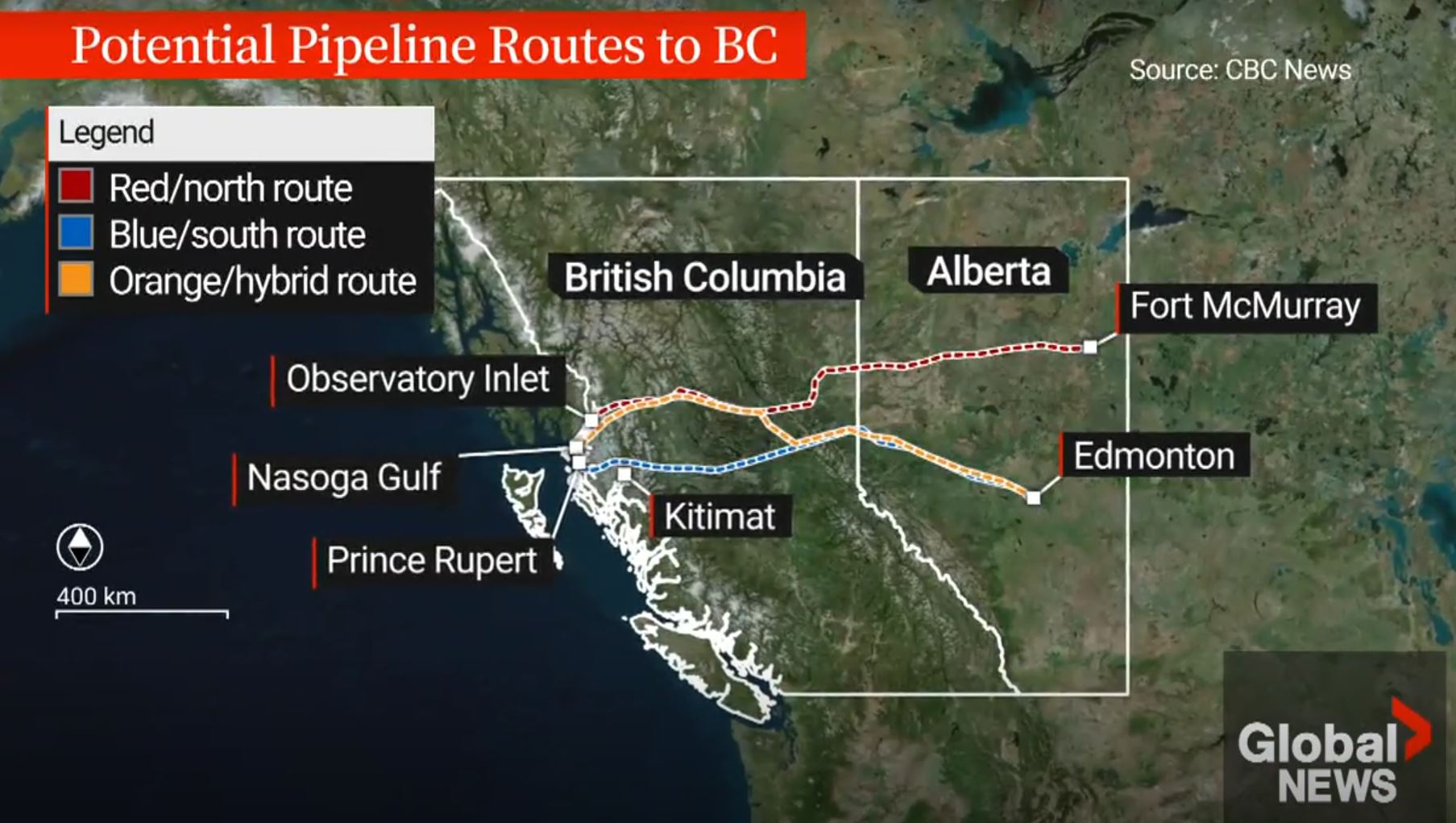
B.C. energy minister frustrated with communications over potential Alberta pipeline routes

10 June 2026 at 02:55
With less than a month before the Alberta government hopes to present a pipeline proposal to Ottawa, the B.C. government says it's being left out of the discussions.

❌
Subscriptions