New “one piece” sandwich looks set to be another sell-out hit for the popular chain.
On “Sandwich Day” on 13 March, 7-Eleven completely revamped its sandwiches in Japan, and among them appeared a new, generously filled single-serve range known as the “Yokubari Sando” (“Greedy Sandwich“). This so-called “one piece” sandwich aims to deliver an overwhelming sense of filling and satisfaction at an affordable price point, and the newest addition to the range, announced today, does just that, with a
New “one piece” sandwich looks set to be another sell-out hit for the popular chain.
On “Sandwich Day” on 13 March, 7-Eleven completely revamped its sandwiches in Japan, and among them appeared a new, generously filled single-serve range known as the “Yokubari Sando” (“Greedy Sandwich“). This so-called “one piece” sandwich aims to deliver an overwhelming sense of filling and satisfaction at an affordable price point, and the newest addition to the range, announced today, does just that, with a surprising filling to boot.
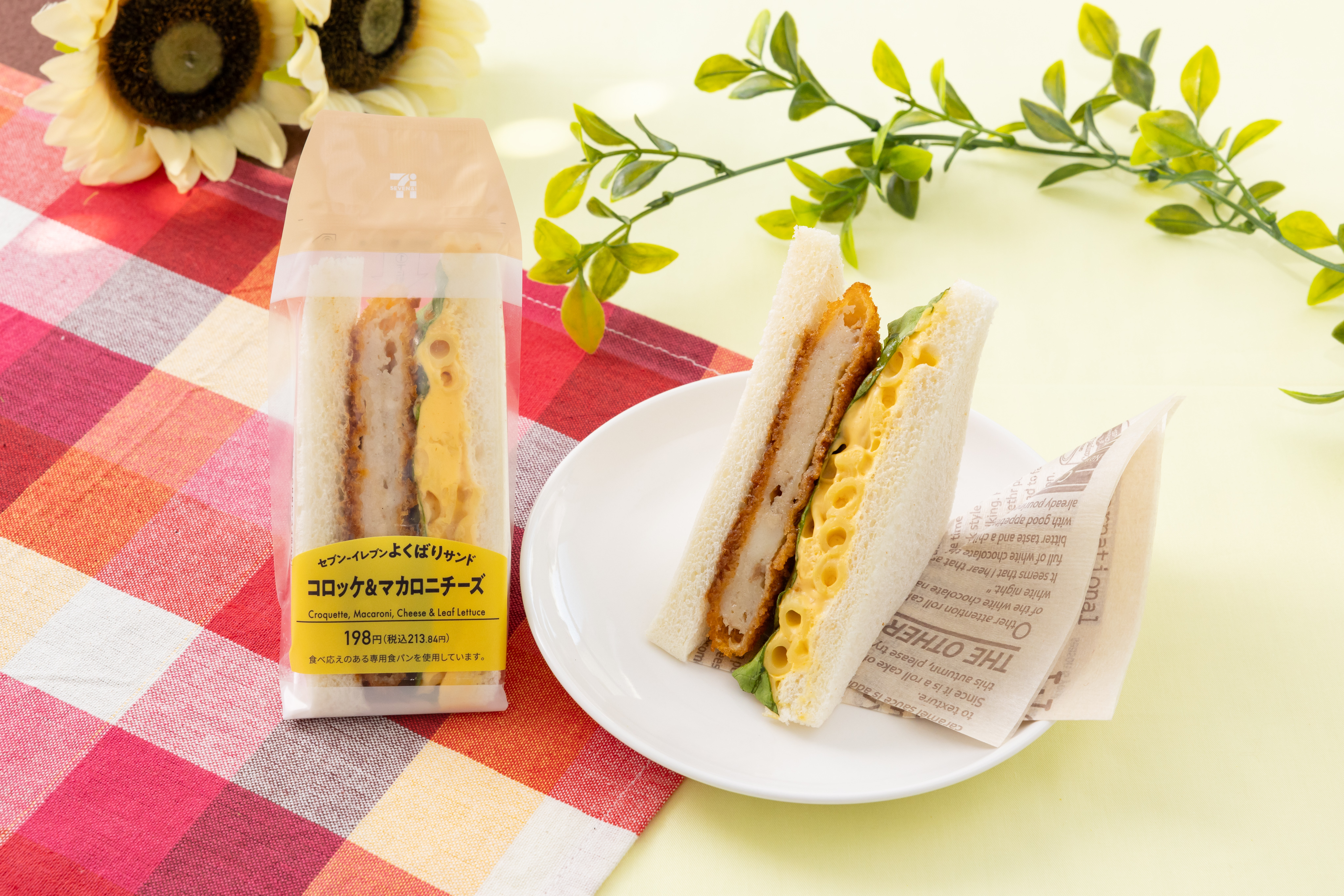
▼ Say hello to the Croquette & Macaroni Cheese.
Known as “Croquette, Macaroni Cheese & Leaf Lettuce” in English, this sandwich has been carefully designed to ensure you get all the fillings in every mouthful, from the first to the very last bite.
7-Eleven says it totally redesigned the shape of the croquette to suit the sandwich, developing a unique type of croquette that spreads all the way to the edges of the bread. With rich, creamy macaroni and cheese sandwiched inside, this pairing is said to create an exquisite combination that allows the texture and flavour of each ingredient to stand out, giving you an incredibly moreish and satisfying sandwich experience.
By selling sandwiches individually, instead of in pairs, the Greedy Sando line is able to deliver a much more generous filling, which is a genius marketing move by 7-Eleven, who faced criticism in the past for what many called its “paper tiger” sandwiches.
Judging by the immense popularity of the previously released Greedy Sando, which gave us colourful chocolate sprinkles and whipped cream, this new sandwich looks set to be a sell-out hit so keep an eye out for it at Seven-Eleven stores around Japan when it’s released on 27 May, priced at 214 yen (US$1.35).
Source, images: Press release ● Want to hear about SoraNews24’s latest articles as soon as they’re published? Follow us on Facebook and Twitter!
Sure, Starbucks knows how to make a good Frappucino, but do they have what it takes to make good gummies?
Starbucks is known around the world for being a coffeehouse chain that specialises in drinks like the Frappuccino, but here in Japan you can come across some other unique surprises. Right now, the biggest surprise of all is that the chain is branching out into the sweet world of gummies, with a new release called Fruit Gummy.
We came across this new discovery when we spotted the sweets n
Sure, Starbucks knows how to make a good Frappucino, but do they have what it takes to make good gummies?
Starbucks is known around the world for being a coffeehouse chain that specialises in drinks like the Frappuccino, but here in Japan you can come across some other unique surprises. Right now, the biggest surprise of all is that the chain is branching out into the sweet world of gummies, with a new release called Fruit Gummy.
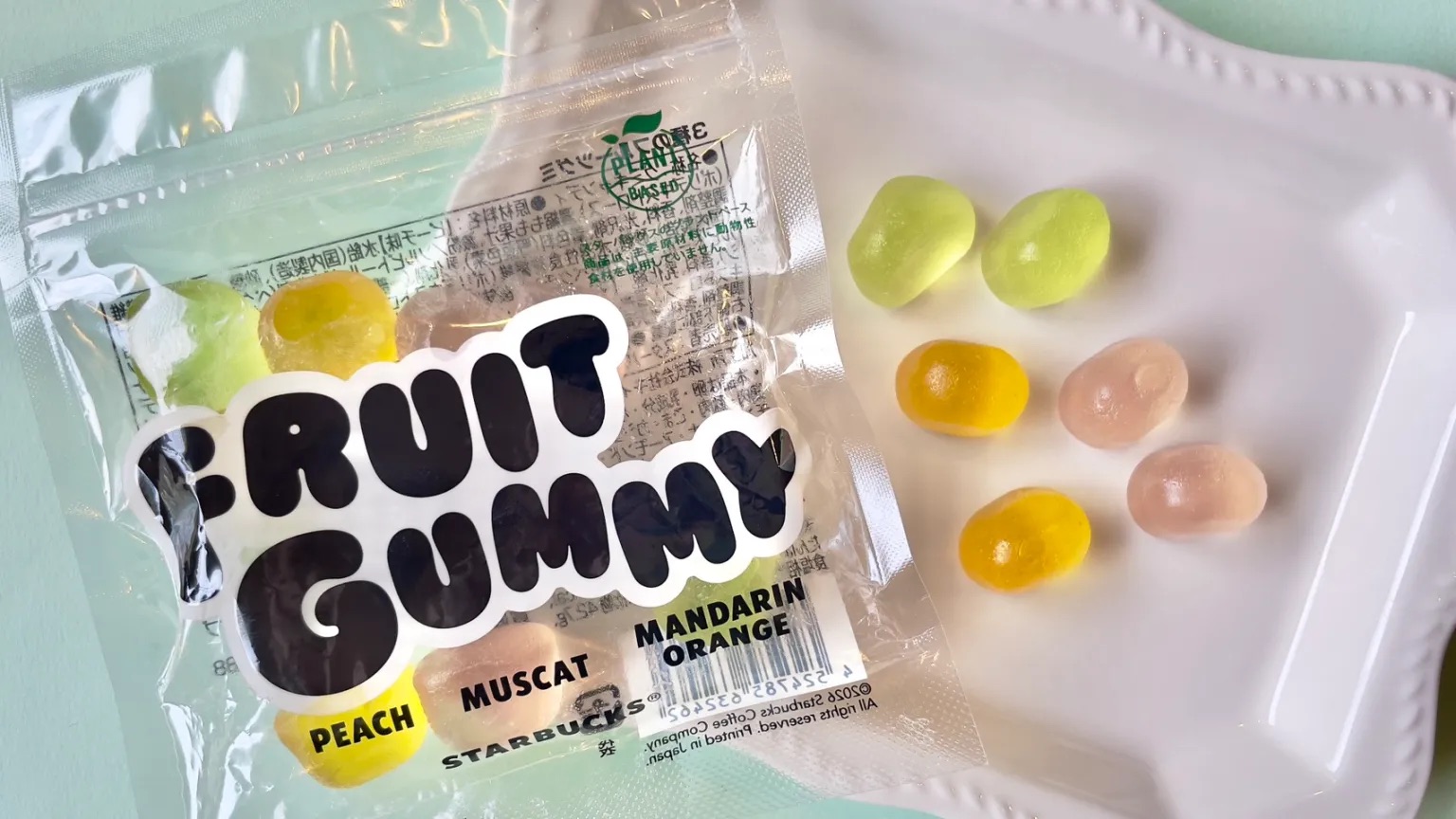
We came across this new discovery when we spotted the sweets next to the register on a recent Starbucks visit, with the simple graphic bubble font catching our eye. Upon closer inspection, we saw that these were plant-based gummies that don’t use animal ingredients, making them suitable for a wide range of customers.
Each pack contains three gummy flavours: muscat, mandarin orange, and peach. From the moment you open the package, you can smell the sweet smell of soft fruit, which is apt for Starbucks, given its history of whipping up delicious fruit-based beverages.
Placing them on a plate, we were able to appreciate the true beauty of the gummies. Glistening in the light like jewels with a soft sheen and semi-transparency, each gummy was well portioned, with just the right amount of give between the fingers.
With five-out-of-five stars for looks, we popped one of the gummies onto our tongue, instantly treating our taste buds to a fruity sweetness. Biting down on the soft gummy was a wonderfully satisfying experience as the texture was plumper and chewier than expected, giving us more time to enjoy the richness of the fruit.
After trying all three, our favourite was the mandarin, which had a subtle tartness that played against the fruity sweetness in a way that was both juicy and refreshing. The other two flavours erred more on the sweet side but were equally delicious, and with a total of 15 gummies in our pack for 270 yen (US$1.69), this was great value for money.
The small size makes them easy to pop into your bag for those times when you need a fruity boost, and we reckon they might actually go well with a bitter coffee, for added sweetness.
Whether you buy them for yourself or as a gift for a friend, these are high-quality gummies that’ll put a smile on your dial, and a clever reminder from Starbucks that they can do more than just Frappuccinos.
Why go to Starbucks when you can find hidden gems like this at a locally born chain?
Are you a Chokomintou supporter? If you are, then you will be gearing up for a very busy, and refreshing, summer in Japan, because Chokomintou means “Choco Mint Tou”, where “tou” (“political party”) humorously refers to the chocolate mint party, a faction despised by some and strongly supported by others.
Choc mint is certainly a divisive flavour combination, but here in Japan, where summers can be excruciatin
Why go to Starbucks when you can find hidden gems like this at a locally born chain?
Are you a Chokomintou supporter? If you are, then you will be gearing up for a very busy, and refreshing, summer in Japan, because Chokomintou means “Choco Mint Tou”, where “tou” (“political party”) humorously refers to the chocolate mint party, a faction despised by some and strongly supported by others.
Choc mint is certainly a divisive flavour combination, but here in Japan, where summers can be excruciatingly hot and brutal, it’s become immensely popular, so much so that “Chokomintou” quickly became a common term, with people proudly declaring their support for it.
This summer, those supporters are being treated to a whole slew of new treats, and one that’s currently causing a stir is the Chocolate Mint Shake from Japanese coffeehouse chain Tully’s.
This beverage is so thick it’s more like a drinkable ice cream than a shake, but what makes it even more special is the fact that you can request extra mint, making it one of the strongest mint-to-chocolate drinks on the market.
▼ The Chocolate Mint Shake retails for 790 yen (US$4.98).
The blue-green hues will immediately refresh your mind when you lay your eyes on the shake, and the pop of contrasting colour with the bright orange straw is another nice visual touch. The topping of chocolate shavings adds another accent in colour and, as it turns out, texture.
We ordered our shake with extra mint, and the resulting flavour was super minty, hitting the taste buds with an invigorating freshness. Thankfully, there was no “toothpaste-like” taste that’s sometimes evident in chocolate mint products – it was purely a fresh mint zing that paired beautifully with the chocolate, all wrapped up in a rich and creamy, ice cream-like texture. It was a delightful sensation, and the occasional crunch of the chocolate shavings added a nice surprise in between mouthfuls.
It was such an exquisite balance between mint and chocolate that we’d describe it as the golden ratio of choc mint. It’s by far the best chocolate mint product we’ve ever tasted, and so good it has the power to move a chocomintou fan to tears.
As a home-grown coffeehouse that tends to sit in the shadow of Starbucks, Tully’s is often coming out with unusual releases to stay in the competition. The Chocolate Mint Shake is a great example of that, and a good reminder that sometimes the best finds can be found in the shadows.
Trendy Korean snacks get a convenience store makeover, but is it a good thing?
Last year, 7-Eleven showcased some of Korea’s most famous food in a special limited-time campaign, and it proved to be so popular that Korean cuisine is back in the spotlight again, with a series called “Mashisso! Korea’s Top Recommended Gourmet Picks”.
This two-part series kicked off on 1 June, with a second batch of items released just over a week later, on 9 June. Out of all the “mashisso!” (“delicious!”) produc
Trendy Korean snacks get a convenience store makeover, but is it a good thing?
Last year, 7-Eleven showcased some of Korea’s most famous food in a special limited-time campaign, and it proved to be so popular that Korean cuisine is back in the spotlight again, with a series called “Mashisso! Korea’s Top Recommended Gourmet Picks”.
This two-part series kicked off on 1 June, with a second batch of items released just over a week later, on 9 June. Out of all the “mashisso!” (“delicious!”) products in this second release, there was one in particular that became a runaway hit with customers.
▼ Freshly Fried Gamja Cheese Balls
Gamja Cheese Balls are hugely popular in Korea, and they’re also a hit in Shin-Okubo, Tokyo’s Koreatown district. Curious to find out what a convenience store version would taste like, we stopped by 7-Eleven to give them a try, and we found them waiting for us in the hot display case next to the register, glistening in the golden light like delicious fried jewels.
After ordering a pack, staff handed us a warm pouch of three and we raced home to try them while they were still hot. Spearing one with the included toothpick, we took a bite and found that the outside was wonderfully crisp, while the inside was incredibly chewy and soft.
With “gamja” meaning “potato” in Korean, we’d initially expected the balls to have a fluffy, hearty, mashed potato-like texture, but the potato-infused dough turned out to be satisfyingly chewy, with a springy texture that made it irresistible. Inside, the saltiness of the gooey, melted cheese paired beautifully with the subtly sweet dough, creating a combination that was absolutely addictive.
Being freshly fried in-store is another bonus, as it ensures maximum enjoyment of the interplay between gooey and crispy textures. After polishing off our balls, we realised they would also work well with some added customisations, like a drizzle of honey for an extra sweet-and-salty kick.
At just 230 yen (US$1.44) per bag, these trendy Korean snacks are an easy treat to pick up at 7-Eleven, and in our opinion, they’re well worth a repeat purchase before they disappear on 16 June.
Plus some surprising extra requirements, like having to say “thank you” at least 10 times a day.
Every school in Japan has its own set of rules, and while many of these guidelines are perfectly understandable, there are some that are baffling, to say the least.
This topic of nonsensical school rules was recently explored by Jukusen, one of Japan’s largest online directory and comparison platforms for cram schools, in a survey that targeted 104 high school students nationwide.
More than half (
Plus some surprising extra requirements, like having to say “thank you” at least 10 times a day.
Every school in Japan has its own set of rules, and while many of these guidelines are perfectly understandable, there are some that are baffling, to say the least.
This topic of nonsensical school rules was recently explored by Jukusen, one of Japan’s largest online directory and comparison platforms for cram schools, in a survey that targeted 104 high school students nationwide.
More than half (56.7 percent) of the respondents said there were rules at their school that they did not agree with, and out of these, about 70 percent said they hadn’t been given an explanation as to why those rules are necessary.
So what were the rules that made no sense to students? Let’s take a look at the top 12 responses below – totals exceed 100 percent as students were allowed to give multiple responses – starting with a brief rundown from 12 to six.
12. No stopping anywhere on the way home after school (27.9 percent)
11. Limits on the number of keychains students can carry (30.8 percent)
10. Ban on sunscreen and lip balm (31.7 percent)
9. Restrictions on winter clothing such as coats and scarves (34.6 percent)
8. Restrictions on sweaters and cardigans (34.6 percent)
7. Rules specifying the type and colour of school bags (34.6 percent)
6. Restrictions on underwear colour (36.5 percent)
▼ The question put to students for the survey was: “Which school rules honestly make no sense to you?“
Taking a closer look at the top five revealed the following results:
5. Restrictions on smartphones (36.5 percent)
Many respondents accepted bans during class but thought prohibitions during breaks or school events were unreasonable as students want to communicate and take photos at those times.
4. Restrictions on the colour, length, and design of socks (39.4 percent)
Students questioned why schools sought to regulate such a minor detail, saying it felt pointless to regulate tiny fashion issues.
3. Restrictions on how to wear the uniform (42.3 percent)
Students complained that uniform rules were excessively detailed and inconsistently enforced, with one student saying she was pulled up by teachers for folding up the waist of her skirt, even though she was only doing it as it was uncomfortably loose.
▼ Low socks and a high skirt is a no-no at schools.
2. Ban on eyebrow grooming (48.1 percent)
Students argued that not being allowed to care for your eyebrows actually makes people look less presentable. They also expressed concern for people who feel insecure about their brows, as they’re not allowed to tend to them.
1. Restrictions on hairstyles and hair colour (54.8 percent)
Students strongly questioned why schools regulate hair at all, with many saying they felt these rules weren’t in line with the times as they prioritise conformity over individuality.
The survey also revealed some unusual rules that exist at some schools:
On graduation day, girls must wear tights of 80 denier or higher
Students are required to say “thank you” at least 10 times a day within the school
Bans on establishing a light music club
While “light music” originally referred to lighter orchestral pieces, it now involves popular music like punk, rock and J-Pop, and some schools fear these clubs might “increase the number of delinquent and misbehaving students”.
Though students are quick to complain about these “incomprehensible” school rules, saying they have little to do with academic performance, in the end, they mostly put up with them, with approximately 70 percent of current respondents indicating that they abide by the rules despite their dissatisfaction.
The remaining 30 percent are likely plucking an eyebrow hair every now and then, and holding out hope for their school to rethink some of its requirements. With some schools now easing up on black-only hair rules and abolishing underwear checks, change may very well be on the horizon.
Source: Press release
Featured image: Press release
Insert images: Press release, Pakutaso (1, 2, 3) ● Want to hear about SoraNews24’s latest articles as soon as they’re published? Follow us on Facebook and Twitter!
New fusion food looks set to become a hit on social media.
If you’re in Japan and find yourself in the mood for pizza, but with a hankering for sushi as well, there’s a new restaurant in Osaka ready to satisfy both those needs, all in one easy-to-eat slice.
Called Sushi Pizza, this new fusion food is the brainchild of Kaisen Monogatari, a sushi and izakaya restaurant in the city’s lively Dotonbori district. Osaka, and this district in particular, is bursting at the seams with so many places t
New fusion food looks set to become a hit on social media.
If you’re in Japan and find yourself in the mood for pizza, but with a hankering for sushi as well, there’s a new restaurant in Osaka ready to satisfy both those needs, all in one easy-to-eat slice.
Called Sushi Pizza, this new fusion food is the brainchild of Kaisen Monogatari, a sushi and izakaya restaurant in the city’s lively Dotonbori district. Osaka, and this district in particular, is bursting at the seams with so many places to eat that the word “kuidaore” or “eat yourself into ruin” is often used to describe it.
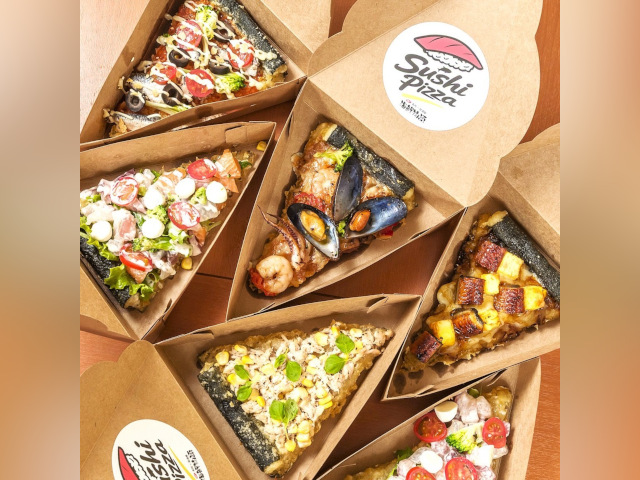
Released on 1 May, the Sushi Pizza features a crispy crust made from lightly fried seaweed and sushi rice, with a variety of seafood toppings to choose from.
Prices start at 1,078 yen (US$6.77) for the “Seafood Salad” or the “Oil Sardine” slice with sardines, olives, and tomatoes, and rise to 1,408 yen for the “Eel Butter” with eel, butter and egg and the “Chunky Seafood” containing shrimp, mussels, and squid tentacles.
The pizza is strong on visuals, making it perfect for attracting attention on social media, and the flavour is said to be equally impressive, with generous chunks of seafood and cheese delivering exciting contrasts in taste and texture.
Izakaya are often referred to as “Japanese taverns” in English, due to the fact that they serve up alcohol with a wide variety of small dishes designed to pair well with drinks. With Kaisen Monogatari specialising in seafood – the name literally translates as “seafood tale” – the sushi pizza is a novel way to showcase its expertise in the field, or should we say “waters”, while acting as an entry point for diving into more of its alluring offerings.
A slice of Sushi Pizza is a fun way to feast on seafood in the heart of Osaka, and it has all the ingredients to become a kaisen monogatari of your very own for you to recount to friends and family back home.
Restaurant information
Kaisen Monogatari Midosuji Store / 海鮮物語 御堂筋店
Address: Osaka-fu, Osaka-shi, Chuo-ku, Dotonbori, 1-10-7 Bonchi Building 4F
大阪府大阪市中央区道頓堀1-10-7 ぼんちビル 4F
Open 5 p.m.-11 p.m. Website
Source, images: Press release ● Want to hear about SoraNews24’s latest articles as soon as they’re published? Follow us on Facebook and Twitter!
Some might say you haven’t truly seen Japan if you haven’t colour hunted.
Recently, an activity called “colour hunting” has been gaining popularity in Japan. Simply put, it involves choosing a colour theme and then, while walking around town, taking photos of things that match that colour, before compiling them into a single image.
The results are remarkably mesmerising, but what’s even more interesting is the way it encourages you to notice details you wouldn’t have noticed otherwise, givin
Some might say you haven’t truly seen Japan if you haven’t colour hunted.
Recently, an activity called “colour hunting” has been gaining popularity in Japan. Simply put, it involves choosing a colour theme and then, while walking around town, taking photos of things that match that colour, before compiling them into a single image.
The results are remarkably mesmerising, but what’s even more interesting is the way it encourages you to notice details you wouldn’t have noticed otherwise, giving you a whole new perspective on your surroundings.
Always keen to try out a trend, we decided to conduct our very own colour hunt, both in a rural residential area and in the heart of Tokyo, to see what we could find. The theme we chose was yellow, and as we set out on our walk, which was a familiar one, it didn’t take long for us to spot things we’d never noticed before.
▼ Like the fittings on a metal barrier…
▼ … flowers growing by the side of the pavement…
▼…netting over garbage collection areas…
▼…and, of course, the road signs.
Moving further down the street and into the main hub of town, our eyes began to spy yellow in slightly more unusual places, like the cube of partially melted butter on the “butter chicken curry” banner outside an Indian restaurant.
▼ The yellow “prescription services” sign outside a local drugstore…
▼ …and the yellow on a pack of Calbee chips.
With our eyes now instinctively zoning in on shades of yellow, the sunny colour began to lift our mood. It also became something of a scavenger hunt, and after around an hour of walking, our prize was this composite image of all the yellow we’d seen.
The images actually painted a picture of quaint countryside life, and now we were ready to take things up a notch by colour hunting in the heart of Tokyo.
Walking around Shimbashi, it didn’t take long for our eyes to zone in on yellow, with this “Money Exchange” sign being our first find of the afternoon.
▼ We also spotted a large bee on a coin locker nearby.
This was already turning out better than expected, and our search for the sunny hue continued in earnest when we stopped to photograph a yellow lantern advertising Suntory whisky highballs.
▼ Crates of Hoppy, a beer-flavoured low-alcohol drink were also outside.
▼ And nearby, a branch of the Go Go Curry chain.
At this point, we were so honed in on yellow that people wearing the colour, or carrying yellow items, began to stand out as they attracted our gaze.
▼ When our eyes landed upon Sora-jiro doing a live weather forecast, we couldn’t help but smile.
▼ Sora-jiro is the mascot character for Nippon Television and its weather forecast.
Continuing on our stroll, we came across even more yellow sightings.
We began to realise just how well yellow works in attracting the eye, leading it to be used on a number of signs like the “advertising recruitment” ones on these coin lockers…
▼ …and this one, which reads “Last two buildings”.
Just as we thought we were done for the day, we came across these figures, which are actually designed to be used as seating benches.
Compiling our photos from Shimbashi, the look and feel was entirely different to our rural collection, capturing the finer details that give Tokyo its unique charm.
Hunting for the same colour in two different locations revealed an interesting contrast in subjects and mood – whereas the rural scenes mostly contained images of flowers and signs, in Tokyo there was more grit and extra variety, as objects and characters played a greater role. It was such a fun, eye-opening adventure that we’re now keen to hunt for more colours around town, and connect with all the hidden finds areas we would otherwise miss.
Getting more convenience store food for our yen is always a fun time, but this campaign is bordering on ridiculous.
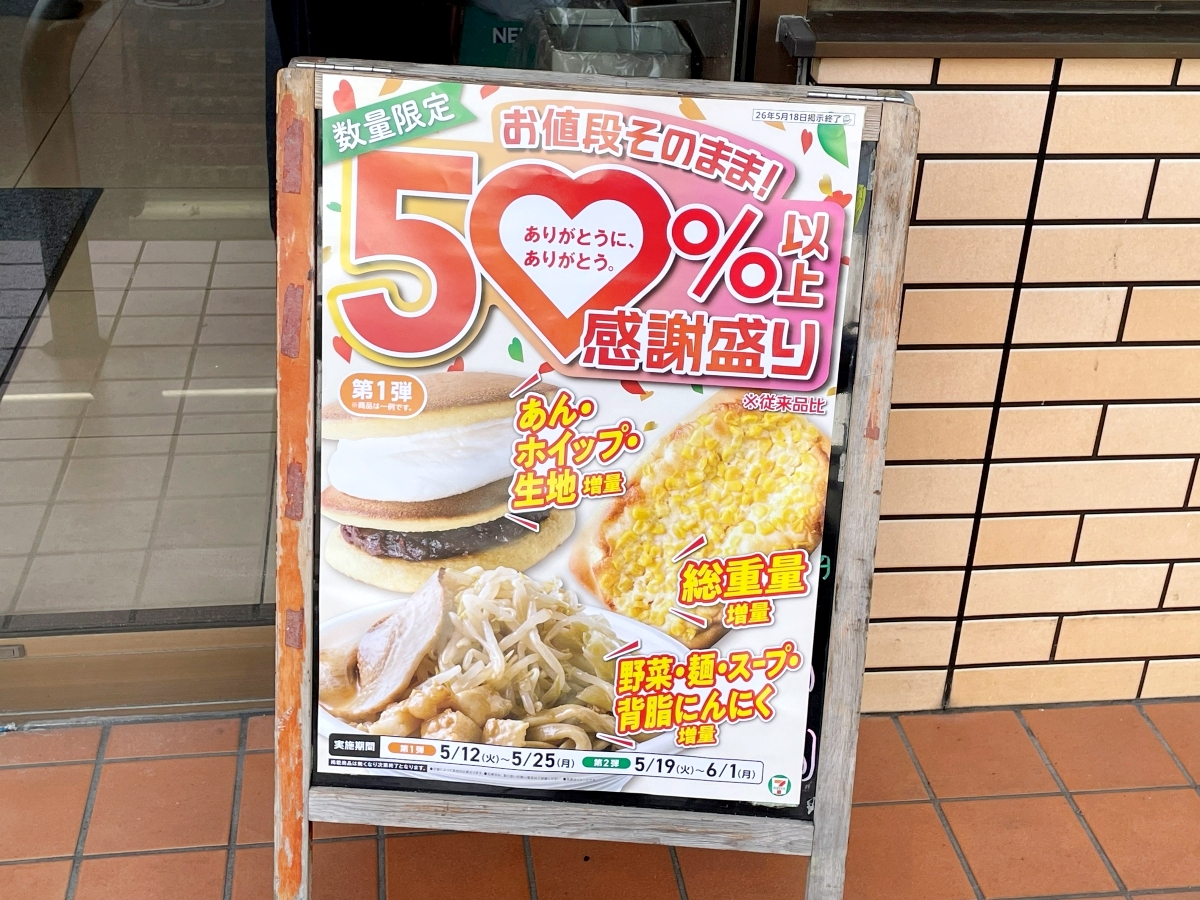
On 12 May, 7-Eleven Japan kicked off its its “Founding Anniversary Sale” by giving us over 50 percent more of some of our favourite products in the first phase of its so-called “Thank You Extra Large” series.
▼ We immediately visited our nearby 7-Eleven and managed to get our hands on four of the upsized products.
The products we procured were:
Corn & Mayonnaise (170.64 yen
Getting more convenience store food for our yen is always a fun time, but this campaign is bordering on ridiculous.
On 12 May, 7-Eleven Japan kicked off its its “Founding Anniversary Sale” by giving us over 50 percent more of some of our favourite products in the first phase of its so-called “Thank You Extra Large” series.
▼ We immediately visited our nearby 7-Eleven and managed to get our hands on four of the upsized products.
There are actually six products in the range, but despite visiting several stores to purchase the complete set, we were unable to find the following two items:
Flame-Grilled Pork Fried Rice (496.80 yen)
Fluffy Dorayaki with Red Bean Paste & Whipped Cream (213.84 yen)
This was probably a blessing in disguise, as the size of the four we had already looked like a lot of food. The ramen, in particular, produced under the supervision of award-wining Chiba-based ramen restaurant Chuka Soba Tomita., looked especially ginormous.
We decided to test this hefty beast first, popping it on the scales to reveal its true weight, which turned out to be…
▼… an astonishing 1,084 grams (2.4 pounds)!
As the container weighs about 23 grams, what we have here is more than a kilo of food, which is a great deal given that the price remains unchanged despite the 50-percent upsize. Although the pork fat is highlighted as an increased ingredient, it’s also said to have more vegetables, noodles, soup, and garlic, so we were curious to know how these extra ingredients would affect the taste.
▼ We popped it into the microwave, for 10 minutes at 500 watts, which is quite a long time for microwaveable food.
As it was heating, we felt slightly intimidated by the intense garlic smell that filled the room, and when we opened the lid we couldn’t quite believe the amount of food that lay before us.
The ingredients were so huge they made the container look tiny, and we began to wonder how we could eat our noodles without them spilling out everywhere.
Carefully lifting the char siu, we could see a huge pile of bean sprouts and cabbage beneath it, with the rest of the meal consisting of garlic, noodles, and pork fat.
With big noodle meals like this, locals make use of a special move called “tenchi gaeshi“, which literally translates as “heaven-and-earth flip“. This involves lifting the noodles from the bottom of the bowl and “flipping” them over the vegetables on top, to prevent them from getting soggy and to mix the broth, noodles, fat, sauce, and vegetables more evenly.
▼ Performing the “tenchi-gaeshi” mixing maneuver requires extra skill with this huge meal.
After carefully flipping heaven and earth, we were even more impressed at how much food was in the bowl, and when we took a sip of the broth, we were hit by the intensely powerful flavour of garlic and pork fat, which was absolutely delicious.
This was a high-quality meal, and the noodles were equally fantastic, providing just the right amount of chewiness to help round out the bold flavours.
The sheer volume was truly unbelievable, and nothing like what you’d normally see at a convenience store. It was so filling that by the end of the meal, we didn’t have any belly room for the other items we’d picked up.
▼ The vegetable sticks, with rice malt, miso and mayonnaise dip, would’ve been a nice way to cut through all the fat, but we just couldn’t fit them in.
The Egg Salad sandwich, or “THE Tamago” (“THE Egg”) as it’s called in Japanese, now contains three cut sandwiches instead of two, making it a great deal.
▼ And finally, the Corn & Mayonnaise bread has also been upsized, so it’s now almost twice as large as a smartphone.
The first phase of the campaign is scheduled to run from 12 May to 25 May, with the second phase bringing us a new line of upsized items from 19 May to 1 June. After receiving flack from customers who claimed that some convenience stores have been skimping on their offerings recently, there’s certainly no skimping with these campaign products, so hop in and try them while you can!
Find out if this exclusive drink has what it takes to combat a Japanese summer.
Some might say the best time to enjoy a Frappuccino is in the heat of summer, especially in Japan when the high humidity drains all your energy and has you searching for a much-needed boost. This summer, the chain is catering to that need with the Banana Affogato Frappuccino, which combines the pick-me-up powers of banana, with its natural sugars and healthy carbs, with the caffeine kick of espresso, for a refreshi
Find out if this exclusive drink has what it takes to combat a Japanese summer.
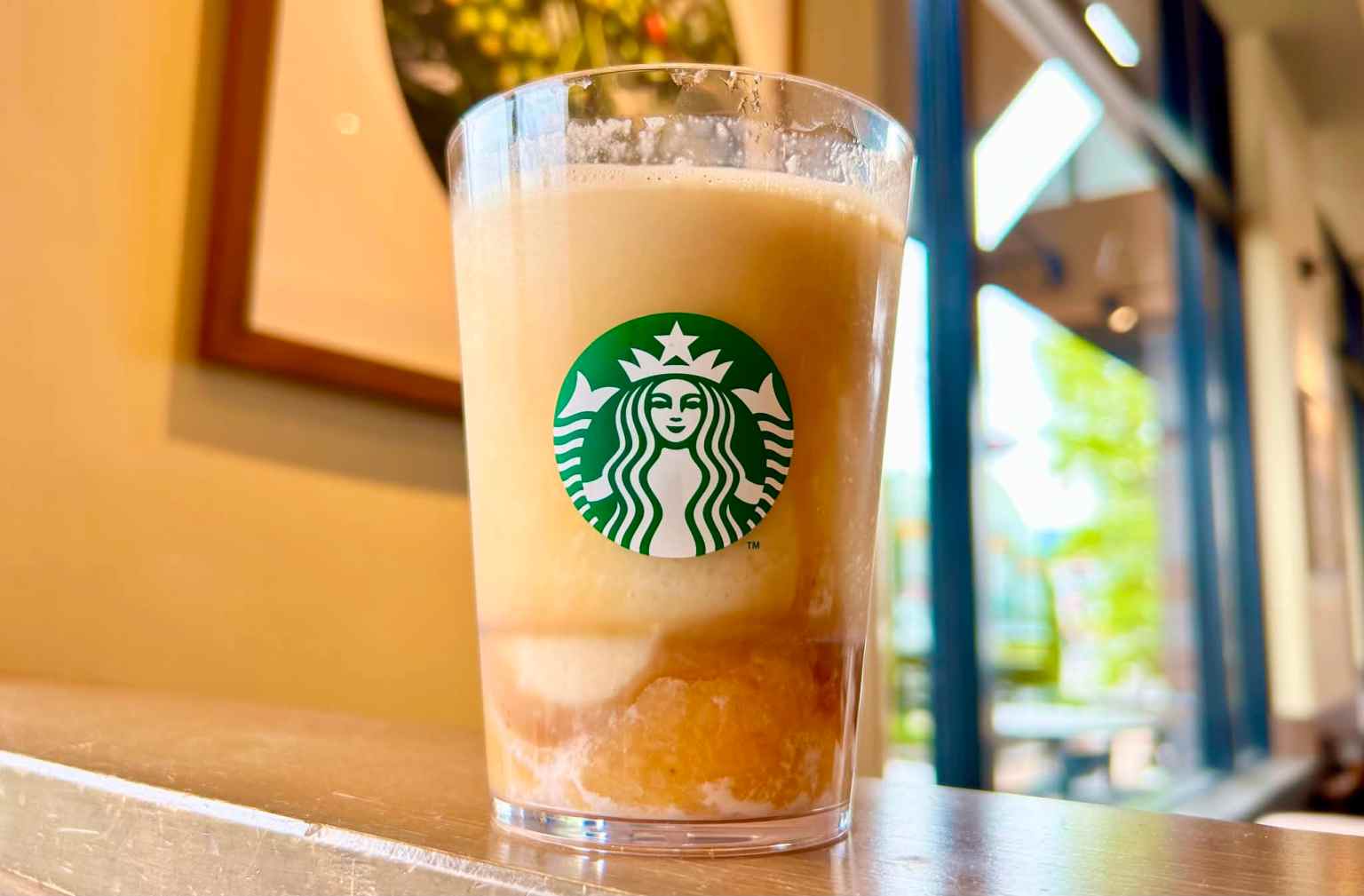
Some might say the best time to enjoy a Frappuccino is in the heat of summer, especially in Japan when the high humidity drains all your energy and has you searching for a much-needed boost. This summer, the chain is catering to that need with the Banana Affogato Frappuccino, which combines the pick-me-up powers of banana, with its natural sugars and healthy carbs, with the caffeine kick of espresso, for a refreshing hit of energy in one icy beverage.
With the days nearing summertime highs already, now is a great time to test the powers of the Frappuccino, so our reporter K. Masami headed out to try the new beverage when it was released on 27 May. As a fan of the chain’s existing Espresso Affogato Frappuccino, a popular menu staple that’s said to have inspired the banana version, Masami wanted to know what the fruit would bring to the new drink.
After placing her order, and following the barista’s recommendation to switch the regular milk in the drink to almond for an additional 55 yen (US$0.34), it didn’t take long for Masami to get her first look at the Frappuccino, and she immediately found she was unable to peel her eyes away from the base of the beverage.
The bottom of the glass was filled with plenty of banana pulp, and not only did it look delicious, it promised to benefit the environment too. That’s because the drink contains bananas that would have otherwise gone to waste, as they were considered substandard for the market due to skin blemishes and size issues. These superficial issues don’t affect the taste of the bananas, so enjoying them in drink form is a clever way to save them from landfill, and every sip will make you feel like you’re doing your bit for the environment.
Sitting atop the banana pulp is a blend of milk and banana powder, with a special espresso sauce made by combining an espresso shot and classic syrup. The syrup works to rein in the bitterness of the espresso, creating a harmonious blend of flavours.
Although Masami had initially been concerned that the espresso might overpower the taste of banana, she needn’t have worried. Upon tasting it, she found that the banana remained the star of the show throughout, largely due to the smooth banana pulp, which was packed with fruit flavour and had a delicious mouthfeel, making every sip a taste sensation.
The almond milk added an earthy note that Masami loved, and although the drink was well balanced, she recommends coffee lovers request an extra espresso shot, as the coffee flavour might seem a little too mild for those who like the bitterness of espresso. In fact, until 21 June, customers who request an espresso shot using the chain’s mobile ordering system will have the usual additional 55-yen fee waived, so it’s a good way to try the customisation.
For 700 yen, the new Banana Affogato Frappuccino gets the thumbs-up from Masami, who felt a jolt of energy coarse through her body after trying the drink. It hit the spot so well that she found herself realising it was exactly what her body had been craving on the hot and muggy day she enjoyed it, so keep an eye out for it when you need to restore your energy levels during the heat of summer.
We find out just how devilish and angelic these 100-yen surprises are.
Our reporter Natsuno Futon was strolling the streets of Oyama City in Tochigi Prefecture the other day when she came across an unusual vending machine. The first thing that caught her eye was the huge “100 yen” (US$0.63) sign on the front, but then, as she stepped closer, she became even more intrigued.
There, in the window display, were the words “いろんなおもちゃ” (“various toys“), and beneath them: “Contains items worth between
We find out just how devilish and angelic these 100-yen surprises are.
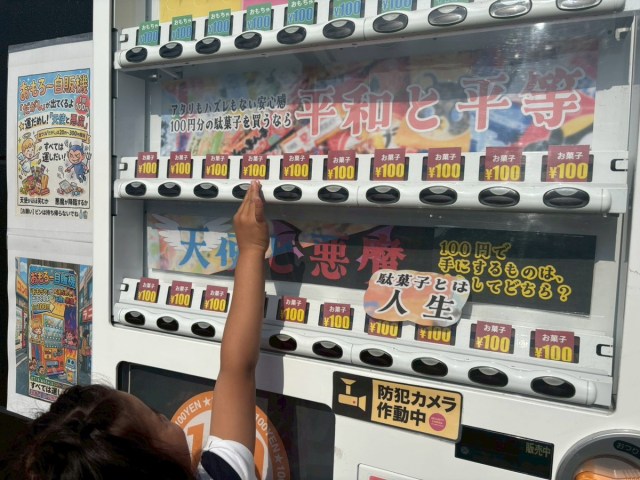
Our reporter Natsuno Futon was strolling the streets of OyamaCity in Tochigi Prefecture the other day when she came across an unusual vending machine. The first thing that caught her eye was the huge “100 yen” (US$0.63) sign on the front, but then, as she stepped closer, she became even more intrigued.
There, in the window display, were the words “いろんなおもちゃ” (“various toys“), and beneath them: “Contains items worth between 20 and 300 yen“.
As her eyes moved down to scan the second row, she read the words: “平和と平等” (“Peace and Equality”) and then, on the third row, “天使と悪魔” (“Angels and Demons”).
Natsuno had never encountered a vending machine stocked with Peace and Equality and Angels and Demons before, and neither had her children who were with her on this outing. Needless to say, her children were excited to find out what these mystery items were, so Natsuno found herself reaching into her pocket for some 100-yen coins.
With a machine like this, part of the fun is randomly selecting a button to press, and her daughter started by pushing one of the buttons on the top row, which were marked “おもちゃ” (“toys“).
▼ A long cylinder immediately popped out into the tray at the bottom of the machine, and this is what came out of it.
A toy car and five toy coins. From Natsuno’s point-of-view, this was a bit of a disappointment, particularly as her daughter doesn’t have any interest in toy cars or fake coins.
▼ Hoping for something better, her daughter popped a real coin into the machine and pressed a button on the “Peace and Equality“row.
The buttons on the second and third rows read “お菓子” (“sweets“), so they knew this would be something edible. What that would be, however, remained a mystery until they popped the lid on the canister they received.
▼ Oh! That looks like Mochitaro.
Mochitaro is a classic Japanese “dagashi” (cheap snack) consisting of crunchy rice cracker chunks. It wasn’t the only thing in the canister, as it also contained some mango jelly and a small bag of Haribo gummy candies.
For 100 yen (US$0.63), this was a decent deal, and it gave Natsuno and her daughter hope that they might be able to encounter an angel on their next try.
▼ Time to press a button on the “Angels and Demons” row.
What came out, however, appeared to be neither an angel nor a demon, as the canister was ambiguous.
Even after looking inside, they weren’t sure whether they’d been visited by a demon or an angel, as they received six cheap candies that might’ve been worth around 100 yen. The dark hues on some of the packs, including the iconic Black Thunder chocolate, hinted at a devilish selection, but on the other hand, it was a pretty good deal.
▼ Curious to give it another try, Natsuno’s daughter pressed another button…
▼ …and out popped a canister with the word “Devil” printed on it in big red characters.
▼ What was inside?
▼ One puffed wheat snack.
This was definitely devilish – paying 100 yen to receive just one cheap puffed rice snack was a merciless move, and now they were more determined than ever to meet an angel.
▼ One more try.
▼ Success!
The progression from ambiguous canister through to devil and then angel was such a great progression that Natsuno felt it was almost as if there was someone inside the machine, reading the atmosphere and doling out excitement in increasing levels.
▼ The word “アタリ!” (“win!“) was also printed on the canister, adding to the sense of joy.
▼ So…let’s see what the angel delivered.
This was definitely a win, as it was the best result so far, with Natsuno estimating the total value to be more than 100 yen. Emboldened by this result, Natsuno and her daughter went for another try on the toy line, which seemed to present a better deal than the sweet options.
▼ If there’s a chance of winning something worth up to 300 yen, this is where they might get lucky.
▼ They were rewarded with two fun erasers from respected company Iwako, and a dinosaur egg.
Natsuno figured this bundle was worth over 200 yen. It wasn’t bad, but to be honest, she wouldn’t say it was worth 300 yen.
▼ After a total of six tries, here’s everything they received.
It may not have been a huge deal, but the real draw of the machine wasn’t a tangible product visible to the human eye. The real takeaway here was the fun and excitement of wondering what might come out of the machine, and that was worth way more than every deposit of 100 yen.
▼ There aren’t really any other places in the world where you can buy “peace and equality” for 100 yen.
▼ Judging by the containers in the return spot for reuse, there weren’t many angels that day either, so they felt extra blessed to have received one.
If you’d like to try your luck at the vending machine, it’s located under a sign for “NPO Aoringo” on a black building that reads “Ad Promote Co., Ltd.”and we’ve included the address for you below.
Ad Promote operates and stocks these machines, and according to its online shop, “Omoro Shokai” (“Fun Trading Company”), the Omoro vending machines ceased operations in January this year. That means this machine, which we visited in May, is the last of its kind in the country, so if you’re like us and love visiting weird and unusual machines, this is a stop worth putting on your itinerary.
A brand new tea latte designed to lift your spirits this summer.
It’s been 20 years since Starbucks debuted its “Chilled Cup” series of drinks in Japan, ahead of any other country, and although there’s been a lot of limited-edition flavours in that time, one ingredient has always been missing: Muscat.
Associated in Japan with premium grapes such as Shine Muscat, the sweet, aromatic fruit has become a beloved seasonal flavour, making its arrival in the Chilled Cup series long overdue. This isn’
A brand new tea latte designed to lift your spirits this summer.
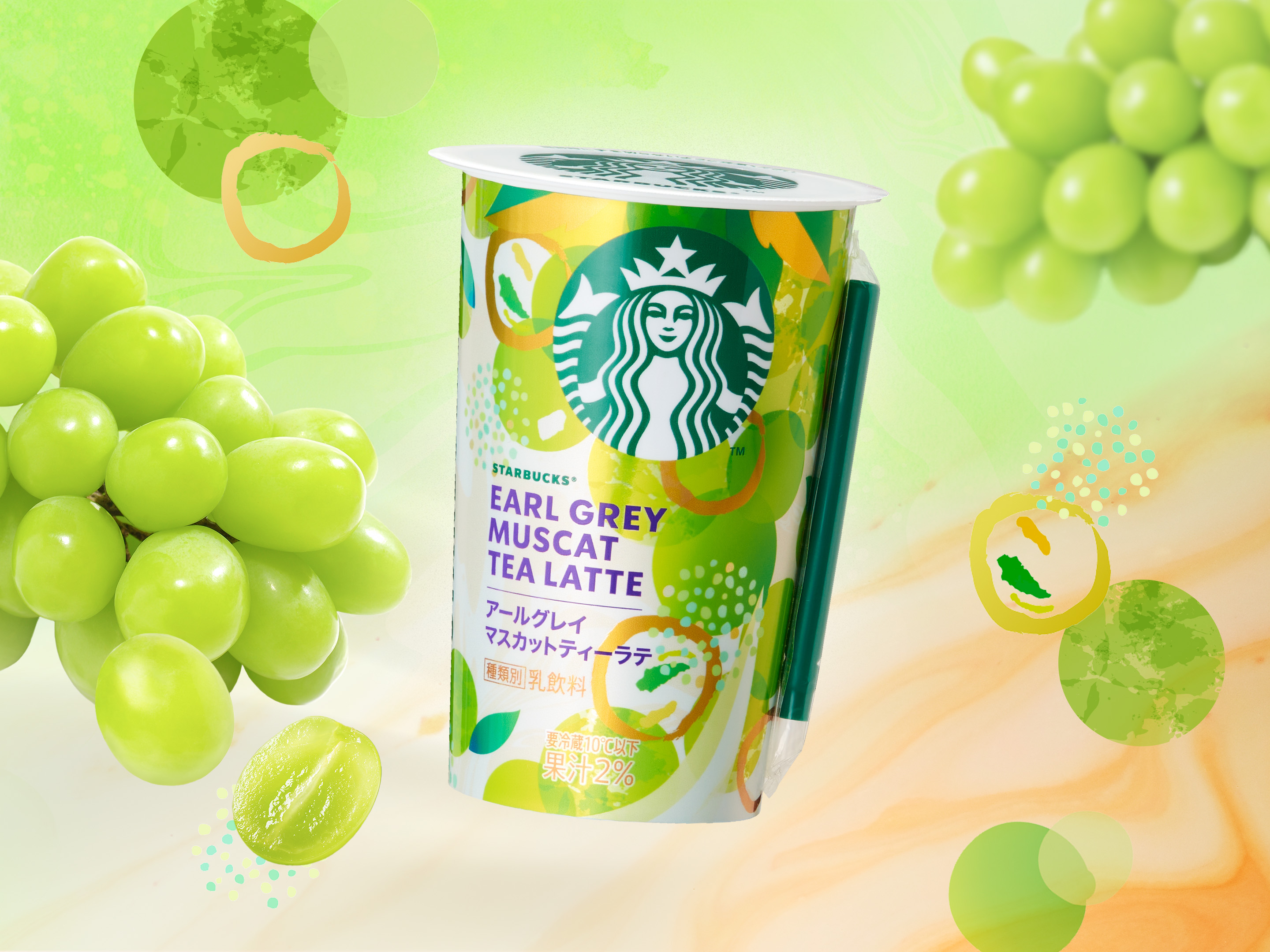
It’s been 20 years since Starbucks debuted its “Chilled Cup” series of drinks in Japan, ahead of any other country, and although there’s been a lot of limited-edition flavours in that time, one ingredient has always been missing: Muscat.
Associated in Japan with premium grapes such as Shine Muscat, the sweet, aromatic fruit has become a beloved seasonal flavour, making its arrival in the Chilled Cup series long overdue. This isn’t a solo arrival, though, as it’s partnered by earl grey to create a special tea latte designed to “lift your spirits” with its creamy yet refreshing flavour. By combining juicy Muscat grape juice and fresh milk with Earl Grey tea infused with the elegant aroma of bergamot, a perfect balance is achieved, delivering a teatime twist on the summery fruit flavour before the season gets into full swing.
While the drink can easily be drunk on its own, Starbucks says it will also pair particularly well with raisin butter sandwiches, as the muscat’s aromatic notes help to enhance the rich, deep flavour of raisins. When enjoyed together, the individual characteristics of the two types of grapes are enhanced, and the subtle saltiness of the butter cream adds a pleasant accent.
▼ Experience a new, nuanced flavour that you wouldn’t get from each treat on its own.
This pairing highlights the chain’s dedication to creating memorable moments full of novelty, excitement and surprise, which for many people is what summer is all about.
This fruity floral tea latte is an exciting blend of flavour we can’t wait to try, and each 200-millilitre (6.8-ounce) cup is set to retail for 230 yen (US$1.44) at retailers and 7-Eleven convenience stores nationwide.
Source, photos: Press release ● Want to hear about SoraNews24’s latest articles as soon as they’re published? Follow us on Facebook and Twitter!
Small but mighty, meet the new bag that’s captivating customers in Japan.
Mesh bags are one of this season’s hottest fashion accessories. Lightweight, stylish, and easy to match with almost any outfit, they’ve become a must-have item for summer. Now, Starbucks Japan has joined the trend with a new collection of mesh bags, and they’re already creating a buzz online.
The bags come in three styles: Large green (2,500 yen [US$15.66]) and Small Purple (2,000 yen), which are only available online,
Small but mighty, meet the new bag that’s captivating customers in Japan.
Mesh bags are one of this season’s hottest fashion accessories. Lightweight, stylish, and easy to match with almost any outfit, they’ve become a must-have item for summer. Now, Starbucks Japan has joined the trend with a new collection of mesh bags, and they’re already creating a buzz online.
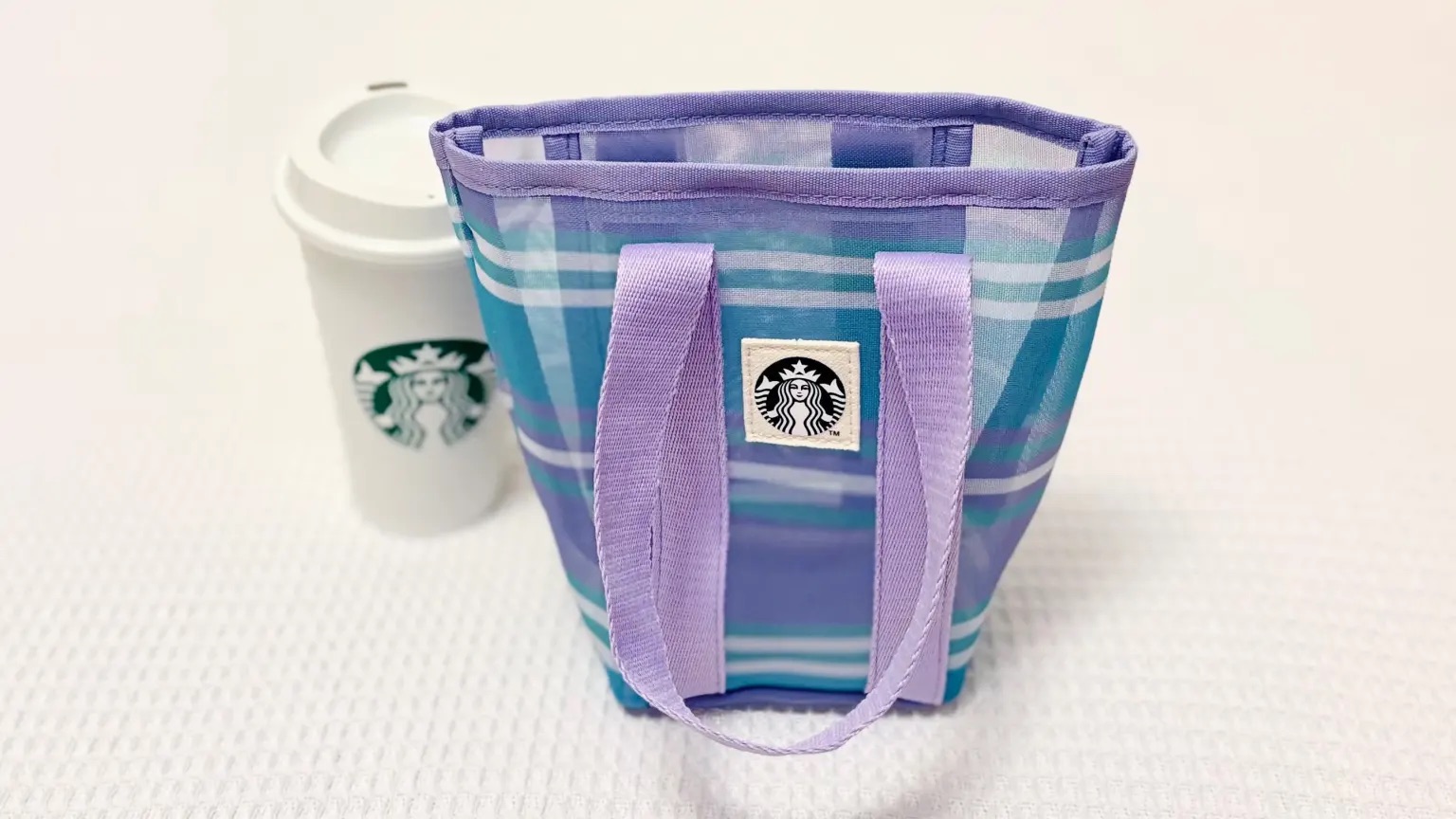
The bags come in three styles: Large green (2,500 yen [US$15.66]) and Small Purple (2,000 yen), which are only available online, and Small Green, which can be purchased in stores and online. We immediately fell in love with the Small Purple version and after ordering it we breathed a sigh of relief that we did, as it was marked “out of stock” soon after.
A few days after placing our order, the mesh bag arrived on our doorstep and it was even cuter than we’d expected. The soft purple colour gives it a stylish yet breezy look that’s perfect for summer, and the design feels both elegant and playful so it’s easy to see why the range has become so popular.
Measuring approximately 19 centimetres (7.5 inches) wide, 9.5 centimetres deep, and 19 centimetres high, the bag has a compact size that adds to its charm. Though it might appear small, the bag is mighty as it comes with an inner pocket and strong handles, making it surprisingly sturdy and practical.
Even with its compact design, we were able to fit all our summer essentials inside, including a wallet, handkerchief, fold-up umbrella, and sunglasses. It’s the perfect companion for quick errands, casual outings, or a day around town, and as you might expect from Starbucks, it’s also perfectly sized for drink-carrying. A reusable cup fits comfortably inside, and tumblers or water bottles fit without any problem, so the storage capacity is particularly impressive.
The look and design of each bag is an instant mood-lifter so it’s easy to understand why all three versions have become so popular. The online-exclusive bags have been selling out quickly, though, making them increasingly difficult to get. As of 1 June, Starbucks appears to be considering additional sales based on the number of customers registered for restock notifications, so if you’re interested, it may be worth registering your interest and keeping an eye out for restock notifications.

 Login
Login