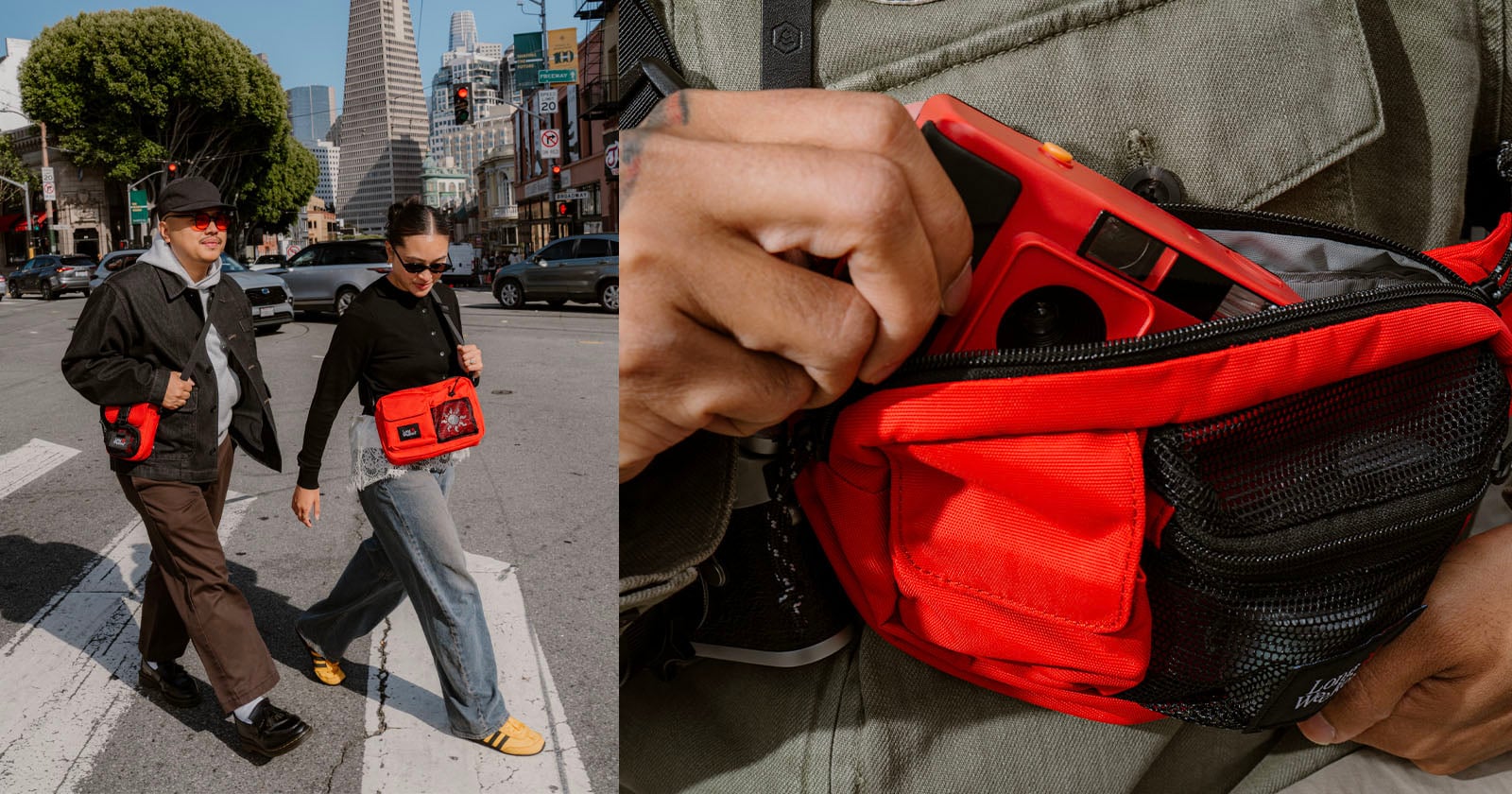
Moment is updating its Long Weekend camera bags and accessories with a bright, summer-themed color while adding a couple of new pieces to the line: a new crossbody camera pouch and a braided rope camera strap.
[Read More]
Moment is updating its Long Weekend camera bags and accessories with a bright, summer-themed color while adding a couple of new pieces to the line: a new crossbody camera pouch and a braided rope camera strap.
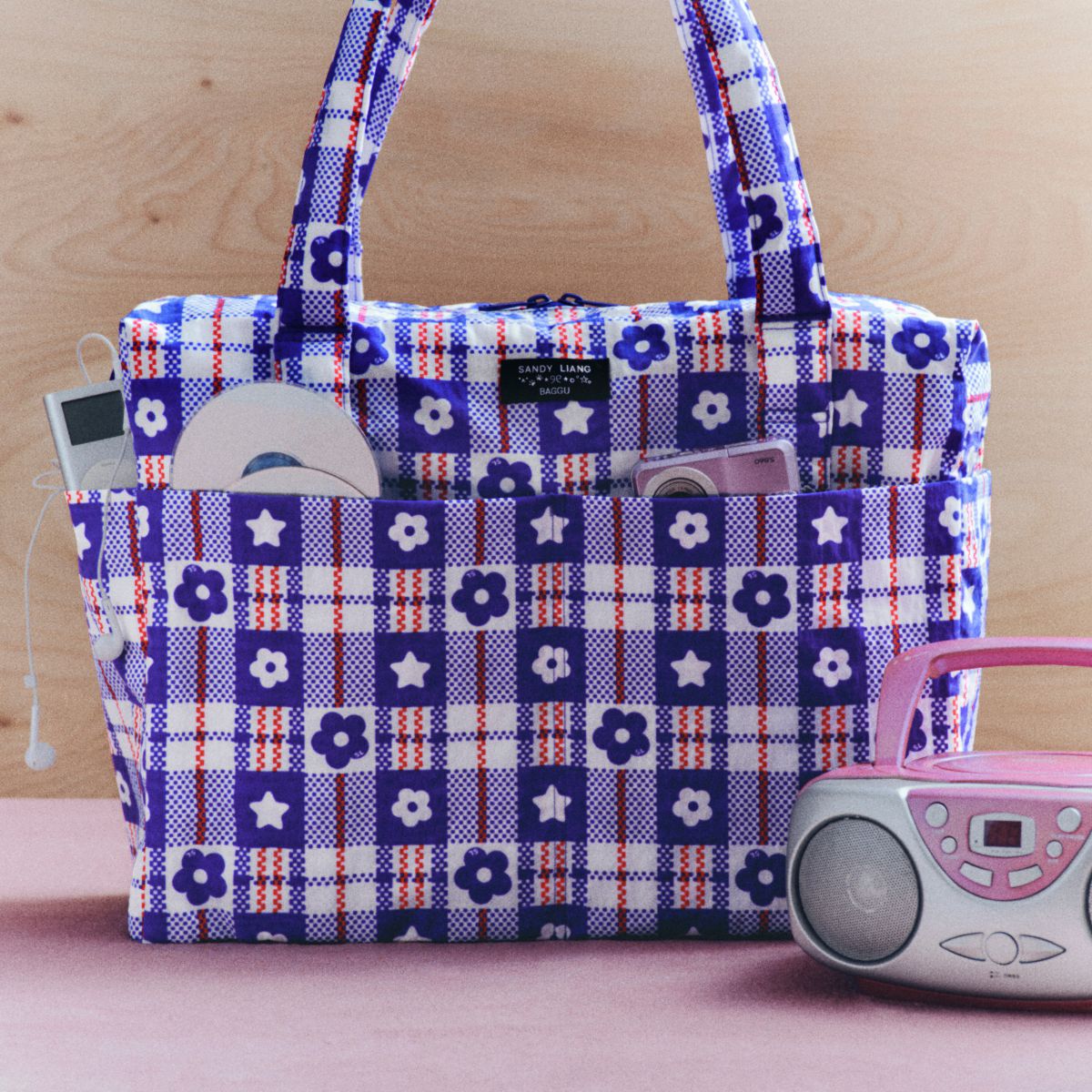
The moment we've all been waiting for is finally here! The second collaboration between Sandy Liang and Baggu is live. The collection features ten styles with the designer's iconic plaid patterns,...
The moment we've all been waiting for is finally here! The second collaboration between Sandy Liang and Baggu is live. The collection features ten styles with the designer's iconic plaid patterns,...
Michael Kors is making it very hard to resist grabbing a new bag right now, with a treasure trove of chic summer handbags to obsess over in their sale section.
Not only are the markdowns...
Michael Kors is making it very hard to resist grabbing a new bag right now, with a treasure trove of chic summer handbags to obsess over in their sale section.
Not only are the markdowns...
Summer plans have a way of multiplying, and somehow, so does the stuff we need to bring with us. Whether you're headed to the beach, navigating airport security, packing up for a road trip, or...
Summer plans have a way of multiplying, and somehow, so does the stuff we need to bring with us. Whether you're headed to the beach, navigating airport security, packing up for a road trip, or...
Luxury handbags don't often come with budget-friendly price tags, which is why Amazon's hidden Michael Kors sale is worth paying attention to. Ahead of Prime Day, the retailer is offering major...
Luxury handbags don't often come with budget-friendly price tags, which is why Amazon's hidden Michael Kors sale is worth paying attention to. Ahead of Prime Day, the retailer is offering major...
Small but mighty, meet the new bag that’s captivating customers in Japan.
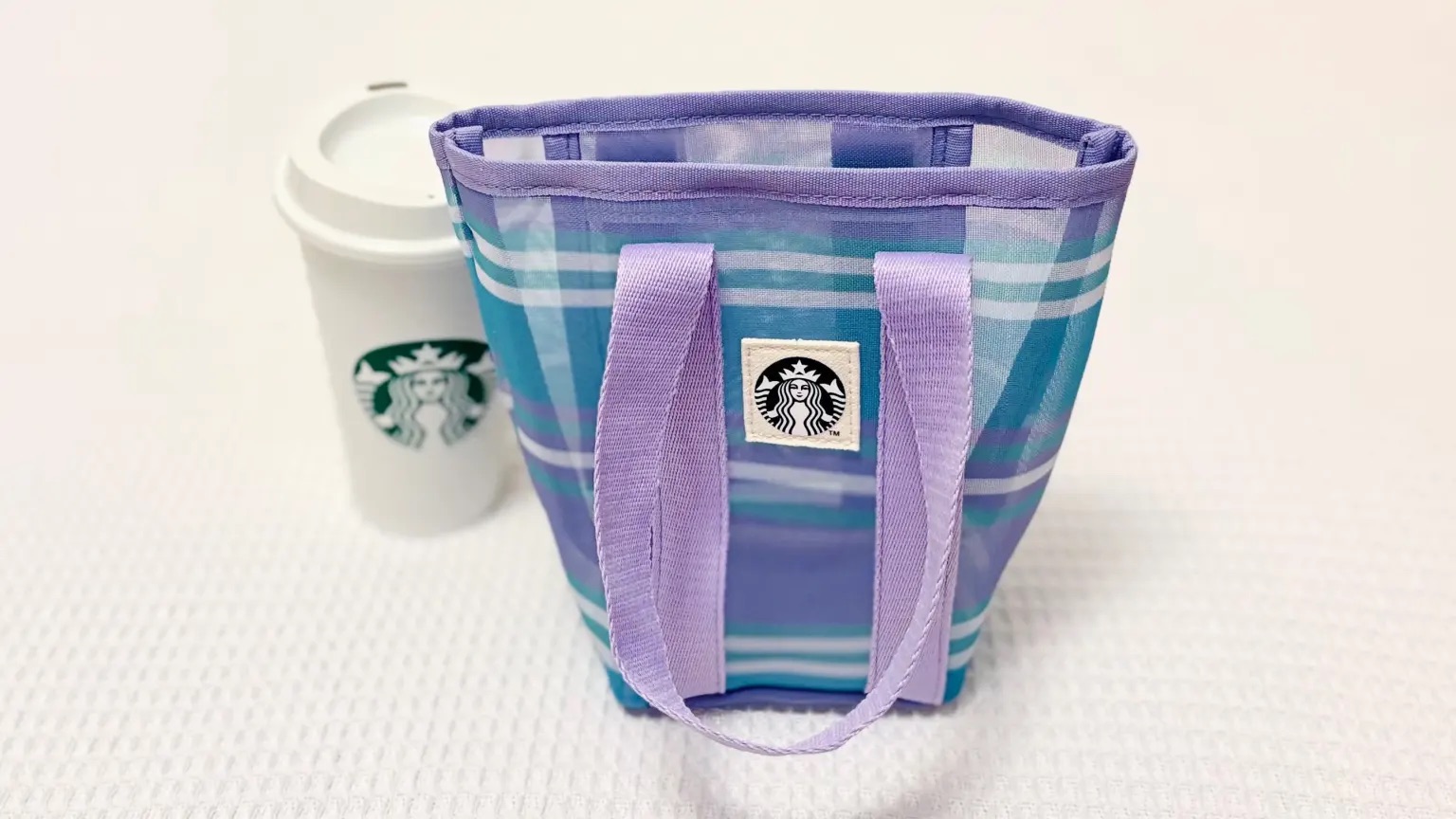
Mesh bags are one of this season’s hottest fashion accessories. Lightweight, stylish, and easy to match with almost any outfit, they’ve become a must-have item for summer. Now, Starbucks Japan has joined the trend with a new collection of mesh bags, and they’re already creating a buzz online.
The bags come in three styles: Large green (2,500 yen [US$15.66]) and Small Purple (2,000 yen), which are only available online,
Small but mighty, meet the new bag that’s captivating customers in Japan.
Mesh bags are one of this season’s hottest fashion accessories. Lightweight, stylish, and easy to match with almost any outfit, they’ve become a must-have item for summer. Now, Starbucks Japan has joined the trend with a new collection of mesh bags, and they’re already creating a buzz online.
The bags come in three styles: Large green (2,500 yen [US$15.66]) and Small Purple (2,000 yen), which are only available online, and Small Green, which can be purchased in stores and online. We immediately fell in love with the Small Purple version and after ordering it we breathed a sigh of relief that we did, as it was marked “out of stock” soon after.
A few days after placing our order, the mesh bag arrived on our doorstep and it was even cuter than we’d expected. The soft purple colour gives it a stylish yet breezy look that’s perfect for summer, and the design feels both elegant and playful so it’s easy to see why the range has become so popular.
Measuring approximately 19 centimetres (7.5 inches) wide, 9.5 centimetres deep, and 19 centimetres high, the bag has a compact size that adds to its charm. Though it might appear small, the bag is mighty as it comes with an inner pocket and strong handles, making it surprisingly sturdy and practical.
Even with its compact design, we were able to fit all our summer essentials inside, including a wallet, handkerchief, fold-up umbrella, and sunglasses. It’s the perfect companion for quick errands, casual outings, or a day around town, and as you might expect from Starbucks, it’s also perfectly sized for drink-carrying. A reusable cup fits comfortably inside, and tumblers or water bottles fit without any problem, so the storage capacity is particularly impressive.
The look and design of each bag is an instant mood-lifter so it’s easy to understand why all three versions have become so popular. The online-exclusive bags have been selling out quickly, though, making them increasingly difficult to get. As of 1 June, Starbucks appears to be considering additional sales based on the number of customers registered for restock notifications, so if you’re interested, it may be worth registering your interest and keeping an eye out for restock notifications.
Summertime means being outside, warm-weather adventures and traveling. And the last thing you want is to be getting weighed down with a massive, oversized bag. Instead, opt to keep it carefree...
Summertime means being outside, warm-weather adventures and traveling. And the last thing you want is to be getting weighed down with a massive, oversized bag. Instead, opt to keep it carefree...
Coach's Tabby bag is one of those bags you can turn to time and time again. It's always in style, endlessly versatile and instantly recognizable.
While we love their classic Tabby options, a few...
Coach's Tabby bag is one of those bags you can turn to time and time again. It's always in style, endlessly versatile and instantly recognizable.
While we love their classic Tabby options, a few...
June is officially here! We don't know about you, but we're rocking with rainbow this summer. Whether you're more of a butter yellow fanatic or a cherry red girl, there's a bag out there for you....
June is officially here! We don't know about you, but we're rocking with rainbow this summer. Whether you're more of a butter yellow fanatic or a cherry red girl, there's a bag out there for you....
The bag your potato chips come in is seven layers deep. Metalized polyester, a plastic coated with a thin layer of metal, keeps out light. Polyethylene, a common plastic, holds the seal. A printed film provides the label. An oxygen barrier, a layer that blocks oxygen, helps prevent spoilage. There’s another sealant (a layer that helps bond the package), another structural layer for strength, and a food-contact inner skin that directly touches the chips. Each of those layers solves a problem for
The bag your potato chips come in is seven layers deep. Metalized polyester, a plastic coated with a thin layer of metal, keeps out light. Polyethylene, a common plastic, holds the seal. A printed film provides the label. An oxygen barrier, a layer that blocks oxygen, helps prevent spoilage. There’s another sealant (a layer that helps bond the package), another structural layer for strength, and a food-contact inner skin that directly touches the chips. Each of those layers solves a problem for the manufacturer: preserving freshness, supporting branding, and extending shelf life. Together, these layers are a package no U.S. recycling system can recover for future use.
To put the potato chip bag problem in context, consider American packaging waste as a whole. Americans generated roughly 82.2 million tons of containers and packaging in 2018, about 28 percent of all municipal solid waste, according to the EPA’s most recent national accounting. Plastic packaging contributed more than 14.5 million tons of the total. Those figures are now seven years old. EPA has not issued an updated Facts and Figures report since, even as e-commerce shipments and single-serve formats keep multiplying the number of small, lightweight, hard-to-recycle packages moving through American homes.
The freshest picture comes from California, which is now doing what the federal government has stopped doing. CalRecycle’s SB 54 Material Characterization Study, conducted by Cascadia Consulting Group at 16 landfills in early 2025, found that about 8.5 million tons of single-use packaging and foodware were buried in California landfills in 2024, roughly 21 percent of everything the state landfilled that year. Plastic accounted for about 3.1 million tons of that covered material. Flexible and film plastics — the category that includes chip bags — turned up across all sampling sectors, from single-family curbside collection to commercial routes and self-haul loads. One state, one year, and the composite pouch is everywhere the waste auditors looked.
While composite pouches present a recycling challenge, some rigid plastics fare better. The rigid side of the plastic waste stream — PET water bottles, HDPE milk jugs, some polypropylene tubs — has a functioning recovery system. NAPCOR’s 2024 PET Recycling Report put the U.S. PET bottle collection rate at 30.2 percent; over 70 percent of bottles that reach a curbside bin actually are sorted, baled, and reprocessed into new material.
The situation shifts again when looking at flexible packaging specifically. Flexible bags, pouches, wrappers, and refill sacks that have quietly taken over the grocery aisle are a different story. The U.S. Plastics Pact’s most recent impact report reported a combined U.S. plastic packaging recycling rate of 13.3 percent. Flexibles within that number are a rounding error. Most estimates put flexible-packaging recycling in the United States below 2 percent.
Greenpeace’s 2022 assessment concluded that no type of U.S. plastic packaging meets the Ellen MacArthur Foundation’s definition of ‘recyclable,’ a 30 percent recycling rate across a region of 400 million people.
Why does the material resist recovery
Three things make flexible plastic packaging structurally hard to recycle:
Flexible plastic packaging is not made of a single resin but is often three to nine layers of different plastics and metals bonded together. Mechanical recycling requires a clean, mono-material feedstock, and these laminates cannot be separated into their constituent materials.
Flexible bags are too light for materials recovery facilities (MRFs) to sort effectively. They tangle in screens intended for separating paper from containers, and often jam equipment, prompting shutdowns for removal.
It has no domestic end market. Before China’s 2018 National Sword policy, a ban on imports of many types of foreign waste, much of the U.S. flexible-packaging stream was exported. That relief valve closed. Domestic reprocessing capacity (U.S.-based facilities to clean and reuse the material) for multi-layer flexibles has not been built because no private processor can make the economics work at the price a commodity market will pay for the bale (a compressed block of collected plastic packaging).
Composite film is what industry insiders call a “residual cost material”—meaning the combined cost of collecting, transporting, and processing it exceeds what any buyer will pay for the recovered commodity. The private market will not recycle it.
What store drop-off actually does
For a decade, the polite answer to “what do I do with this bag?” has been: take it to the front of your grocery store. The bins marked for plastic bags and film — operated by the Wrap Recycling Action Program (WRAP) and branded by retailers including Walmart, Kroger, and Target — accept clean polyethylene films: grocery bags, bread bags, dry-cleaning bags, produce bags, and some case-pack overwrap, but not chip bags and other packaging made with composites that combine plastics, paper, and metals.
Most of the polyethylene that does get captured at drop-off goes into composite lumber — Trex decking is the dominant end market, which is a form of downcycling rather than a closed-loop system. It’s a better outcome than landfill. It is also not what the word “recyclable” on the package implies.
Advanced recycling: real, overstated, and controversial
When mechanical recycling cannot process a feedstock, industry increasingly points to “advanced” or “chemical” recycling, which includes pyrolysis, gasification, and solvent-based depolymerization, as the solution for films and flexibles. The promise: break the polymer down to monomer or fuel-feedstock molecules that can be re-polymerized or combusted.
The promise is technically real, though many critics question its promised results. The scale is not yet. Most operating U.S. pyrolysis facilities produce pyrolysis oil sold as fuel, which, from a climate perspective, is combustion with extra steps. A 2023 NRDC analysis found most “advanced recycling” projects in the U.S. are either producing fuel rather than new plastic or operating at a pilot scale. Facilities designed for polymer-to-polymer chemical recycling, such as Eastman’s Kingsport, Tennessee, plant, and Alterra’s Akron facility, process a small fraction of national flexible-packaging generation.
Twenty-five states have now classified advanced recycling as “manufacturing” rather than waste management, easing permitting requirements and exempting the facilities from solid-waste oversight (regulatory supervision for handling waste). Environmental-justice advocates (groups focused on pollution impacts on vulnerable communities) argue the reclassification moves emissions and solid-residue handling out from under the permitting regime designed to protect fenceline communities (neighborhoods directly next to industrial sites). The argument is not settled.
The EPR turn
The meaningful change in the flexible-packaging story over the past eighteen months has not come from new recycling technology. It has come from policy: seven U.S. states now implement Extended Producer Responsibility laws for packaging.
Oregon’s program went operational on July 1, 2025, with the Circular Action Alliance serving as the producer responsibility organization (PRO) that manages the program, supported by roughly $200 million in producer funding for the first year. The state plans to build out 144 PRO-operated recycling collection centers across the state. Colorado, California, Minnesota, Maryland, Washington, and Maine are at various stages behind Oregon, with California’s SB 54 program — the most expansive of the group — scheduled to be fully activated in 2027.
What EPR changes, in plain terms, is that the producer — the brand that chose the seven-layer laminate for branding and shelf life reasons — now pays for the collection and recovery of the package after a consumer uses it. The fees are eco-modulated: simpler, mono-material, more-recyclable packaging pays less; hard-to-recycle multi-layer flexibles pay more. Over time, the fee differential is intended to push producers toward redesigning packaging.
Why we’re paying for the old ways
The externalities the household pays for without seeing them, from flexible packaging specifically:
Landfill tipping fees. At the Environmental Research & Education Foundation’s 2024 weighted-average U.S. tipping fee of $62.63 per ton, the flexible-packaging share of the ~14 million tons of plastic packaging generated annually represents hundreds of millions of dollars in direct municipal disposal cost funded through utility bills and solid-waste budgets.
MRF fire risk. Flexible packaging is the stream that most commonly carries lithium-ion batteries — from disposable vapes, earbud cases, and lithium cells — into the recycling system. Fire Rover’s 2024 annual review reported that publicly tracked MRF and transfer-station fires rose roughly 20 percent year over year, with total damage and operational impact estimated at $1.2 billion annually. Much of that cost is passed through to municipalities in the form of higher processing fees.
Marine and microplastic pollution. Lightweight flexible packaging is disproportionately represented in litter and marine-debris inventories because it is light enough to blow out of collection vehicles, bins, and landfills. Microplastic shedding from degrading film is a growing concern for surface waters and the food chain.
Incinerator air quality. When flexibles are combusted in waste-to-energy plants, the emissions include PM2.5 particles, hydrogen chloride from chlorinated layers, and metals from inks and lamination, which disproportionately fall on the communities that host those plants. Sixteen of the twenty largest U.S. incinerators operate in majority or above-average communities of color.
None of these costs appear on the grocery receipt. Yet, you’re paying these fees until EPR programs force producers to do so.
What You Can Do
For individuals and households, you can make these choices:
Buy the format that’s actually recyclable where you live. Rigid containers — a jar, a bottle, a tub — can be recycled; flexible pouches in most places cannot. When the product is available in both formats, the rigid is the better environmental choice, even when weight is accounted for.
Separate clean polyethylene film for store drop-off. Grocery bags, bread bags, dry-cleaning bags, produce bags, and case-pack overwrap are the films that the WRAP system actually handles. Anything with foil, zippers, or mixed layers should not go in the drop-off bin.
Do not put flexible packaging in your curbside bin. In most municipal systems, composite packaging is treated as contamination that reduces the value of the entire load.
At the community and policy level, you can get involved:
Support packaging EPR in your state. Seven states have laws; a dozen more have active bills. The programs work only when constituents push, and they push when the programs pass.
Ask brands directly. Eco-modulated EPR fees move producers toward better design only if producers perceive consumer pressure alongside the fee. Social-media and direct-contact campaigns targeting specific CPG brands have moved packaging decisions before and will again.
Be skeptical of “chemical recycling” claims. When a brand points to a pyrolysis partnership as evidence of circular packaging, ask which facility, what output, and at what scale relative to the package volume the brand puts into the market.
Packing for vacation means you're going to have to make some tough decisions, especially if you're only taking a carry-on. However, you definitely need to bring a purse that's chic but won't take...
Packing for vacation means you're going to have to make some tough decisions, especially if you're only taking a carry-on. However, you definitely need to bring a purse that's chic but won't take...

 Login
Login