Normal view

  • ✇Antiques and Vintage - flickr
  • 20260325-CERVEZA NEGRA 001-NB010-2K Manuel Gual
    Manuel Gual posted a photo: The Soul of the Stout: A Journey Through Traditional Pub Culture Description A cinematic and evocative photographic collection capturing the essence of traditional pub culture and the artistry of dark beer. From the warm, rain-slicked exterior of historic stone taverns to the precise craft of pouring the perfect pint, this series explores the deep textures and rich atmosphere of classic gathering spaces. Visual highlights include extreme macro shots of cascading
     

20260325-CERVEZA NEGRA 001-NB010-2K

Manuel Gual posted a photo:

20260325-CERVEZA NEGRA 001-NB010-2K

The Soul of the Stout: A Journey Through Traditional Pub Culture

Description
A cinematic and evocative photographic collection capturing the essence of traditional pub culture and the artistry of dark beer. From the warm, rain-slicked exterior of historic stone taverns to the precise craft of pouring the perfect pint, this series explores the deep textures and rich atmosphere of classic gathering spaces. Visual highlights include extreme macro shots of cascading nitrogen bubbles, the rich velvety texture of the creamy foam head, raw roasted malts held in weathered hands, and intimate moments shared under dim, candlelit interiors. The imagery seamlessly blends rustic wood elements, polished brass taps, and vibrant neon reflections to evoke a timeless sense of warmth, companionship, and brewing heritage.

Note: This entire photo series was conceptually designed and generated using Artificial Intelligence.

How Pakistan Turned Rare Access Into Diplomatic Currency In The U.S.-Iran Deal

Pakistan quietly brokered the U.S.-Iran pause that calmed the Strait of Hormuz. The reputational currency it just minted may outlast the oil move.

© Getty Images

‘The Voice of Hind Rajab’ Wins Battle Against Censorhip in India After Being Blocked Amid Fears Theatrical Release ‘Would Break Up the India-Israel Relationship’

3 June 2026 at 07:20
In a significant reversal, Kaouther Ben Hania’s Oscar-nominated feature “The Voice of Hind Rajab” has been cleared by India’s Central Board of Film Certification (CBFC) that had blocked the politically sensitive film’s release in March. After weeks of controversy in India over its initial censorship of the film – which tells the real story of […]

UFC Fighter Shouts “Michelle Obama Is A Man” After Winning Bout At White House

15 June 2026 at 03:40
UPDATE, 8:35 p.m. PT: One UFC fighter surprised the crowd at the White House, shouting “Michelle Obama is a man, am I right America.” Josh Hokit had just defeated Derrick Lewis in the fourth bout. He made the remarks in his post-match interview in the ring conducted by Joe Rogan. He also presented Donald Trump […]

  • ✇Colossal
  • Xiaoze Xie Preserves a Growing Collection of Banned Books in Porcelain Grace Ebert
    Censorship and book bans are on the rise worldwide, prompting growing concerns about access to information and free expression. Although this trajectory is increasingly worrisome, it isn’t new, as artist Xiaoze Xie reflects on his exhibition In the Name of the Book. Comprising paintings and life-sized porcelain sculptures, the show encompasses works made in the early 1990s through the present day, all of which reflect on the vital role books play in cultural, political, and social life. Xi
     

Xiaoze Xie Preserves a Growing Collection of Banned Books in Porcelain

30 March 2026 at 09:13
Xiaoze Xie Preserves a Growing Collection of Banned Books in Porcelain

Censorship and book bans are on the rise worldwide, prompting growing concerns about access to information and free expression. Although this trajectory is increasingly worrisome, it isn’t new, as artist Xiaoze Xie reflects on his exhibition In the Name of the Book.

Comprising paintings and life-sized porcelain sculptures, the show encompasses works made in the early 1990s through the present day, all of which reflect on the vital role books play in cultural, political, and social life. Xie’s practice is largely informed by his upbringing in China—he was born in Guangdong the same year as the Cultural Revolution— and in 1989, he witnessed the deadly Tiananmen Square protests. After moving to the U.S. in 1993, he began to incorporate this history and concerns about such restrictions into his works as a form of protest.

an open porcelain book that appears weathered with an illustrated scene
“The Forbidden Books Series: The Golden Lotus (Voyeurism); Banned as an obscene book in the 7th year of Qing Emperor Tongzhi’s reign (1868)” (2019), porcelain, 12 1/4 x 17 1/4 x 1 3/4 inches

Book banning, particularly in the U.S., can sometimes be framed as a novel issue, and part of Xie’s effectiveness is that he connects the rise in modern-day censorship to what occurred centuries before. The Forbidden Books Series interprets classic novels, plays, and more that were prohibited largely throughout the Qing Dynasty (1636-1912). Fiction like The Golden Lotus and Water Margin, for example, were charged with being sexually explicit and obscene, while the Chinese government barred the theatrical production The Peony Pavilion from leaving Shanghai for a New York performance in 1998 because of its “feudal, superstitious, and pornographic” qualities.

While these works are well-known cases of censorship, Xie points out that they’re just a sampling of a much larger problem. He writes:

Over the last 2,000 years, the books that have disappeared in China because of prohibition are countless. There is no trace of them anymore; all I have found is a small fraction. All of these old paper stacks, these silent books, consist of thoughts and discourses. These invisible and shapeless things and the stories behind them—the complicated contexts of philosophical, religious, political, historical, social, ethical, and racial issues—are gone. The history of banning books is a process of challenging repeated oppression and control, and challenging it again. It is alongside this back-and-forth repetition, I think, that history slowly marches on.

Preserving their likeness in porcelain with pages splayed out flat is an act of defiance for the artist, as he presents these otherwise concealed texts as permanently open for public consumption.

In the Name of the Book is on view through April 17 at Sapar Contemporary. Find more from the artist on Instagram.

an open porcelain book that appears weathered with an illustrated scene
“The Forbidden Book Series: Water Margin; Banned in the 24th year of Qing Emperor Daoguang’s reign and the 7th year of Qing Emperor Tongzhi’s reign as an obscene book” (2025), porcelain, painted in underglaze blue, two elements, 8 x 10 1/2 x 1 1/2 inches
an open porcelain book that appears weathered with an illustrated scene
“The Forbidden Books Series: The Peony Pavilion (Diagnose evil spirits); Banned in the 24th year of Qing Emperor Daoguang’s reign and the 7th year of Qing Emperor Tongzhi’s reign as an obscene book” (2024), porcelain, painted in underglaze blue, two elements, 10 7/8 x 11 7/8 x 3/4 inches
an open porcelain book that appears weathered with an illustrated scene on the left and text on the right
“The Forbidden Books Series: The Peony Pavilion (Coming Back to Life)” (2025), porcelain, painted in underglaze blue, two elements, 10 1/2 x 14 x 1 1/2 inches
an open porcelain book that appears weathered with text on the right
“The Forbidden Books Series: Qian Qianyi. Śūraṅgama Sūtra. Banned in 1770s during the Qianlong Reign/Qing Dynasty” (2025), porcelain, unglazed, 12 1/2 x 11 1/2 x 1 1/2 inches

Do stories and artists like this matter to you? Become a Colossal Member today and support independent arts publishing for as little as $7 per month. The article Xiaoze Xie Preserves a Growing Collection of Banned Books in Porcelain appeared first on Colossal.

  • ✇The Independent SG
  • Singapore breaks into global top 10 startup ecosystems index for the first time Jewel Stolarchuk
    SINGAPORE: Singapore has achieved a major milestone in the global startup landscape, entering the world’s top ten startup ecosystems for the first time, according to the Global Startup Ecosystem Index 2026 released by global startup ecosystem research centre StartupBlink. The annual index evaluates 1,500 cities and 100 countries worldwide, measuring startup ecosystem performance based on factors such as activity levels, ecosystem quality, business environment conditions, startup exits, company v
     

Singapore breaks into global top 10 startup ecosystems index for the first time

7 June 2026 at 06:03

SINGAPORE: Singapore has achieved a major milestone in the global startup landscape, entering the world’s top ten startup ecosystems for the first time, according to the Global Startup Ecosystem Index 2026 released by global startup ecosystem research centre StartupBlink.

The annual index evaluates 1,500 cities and 100 countries worldwide, measuring startup ecosystem performance based on factors such as activity levels, ecosystem quality, business environment conditions, startup exits, company valuations, corporate participation and innovation support.

The city of Singapore climbed into tenth place globally, securing a spot among the world’s leading startup hubs for the first time. The city ranked behind established innovation centres including the San Francisco Bay Area, New York, London, Los Angeles and Boston. It was also placed behind Beijing, Tel Aviv, Shanghai and Paris.

According to StartupBlink, Singapore recorded growth of 26.7 per cent, reflecting continued momentum in startup activity and the strength of its fintech sector. The city also achieved the distinction of ranking first globally for startup community activity and second worldwide in fintech.

The report highlighted the role of major corporations in supporting the ecosystem, naming Singtel, Crypto.com and SMRT Corporation among key participants. It also identified Airwallex, Ninja Van and Carousell as prominent startups contributing to the city’s startup landscape.

While Singapore reached a new milestone in the city rankings, Singapore’s national position remained unchanged. The country retained fourth place globally, supported by growth of 24.4 per cent and an ecosystem value of US$292.1 billion (S$375.44 billion).

StartupBlink noted that Singapore’s country ranking was broadly stable compared with the previous year, underlining the nation’s continued strength as one of the world’s leading startup destinations.

The report also shed light on broader trends across the Asia-Pacific region, where performance was mixed. Regional growth stood at 5.6 per cent, with overall results weighed down by a 7.9 per cent contraction in China. Both Beijing and Shanghai registered declines, although Hong Kong emerged as a notable bright spot with positive growth.

Elsewhere in Asia, India climbed to 21st place globally, driven by expansion in cities such as New Delhi and Hyderabad. Japan ranked 18th while South Korea placed 19th, with both countries benefiting from growth in secondary cities.

Taiwan entered the global top 20 country rankings for the first time, a performance StartupBlink attributed to the strength of its semiconductor ecosystem.

Australia also improved its standing, returning to the global top ten country rankings in ninth place on the back of growth in Sydney and Melbourne.

Beyond Asia-Pacific, the report found that Europe expanded by 7.3 per cent, a rate that remained below the global average. North America recorded stronger growth of 12.9 per cent, while the Middle East and Africa emerged as the fastest-growing region, posting an expansion rate of 20.2 per cent.

At the country level, the United States maintained its position as the world’s leading startup ecosystem, followed by the United Kingdom and Israel.

This article (Singapore breaks into global top 10 startup ecosystems index for the first time) first appeared on The Independent Singapore News.

  • ✇Lucy Bellwood
  • New Comic: The Scale of a Man Lucy Bellwood
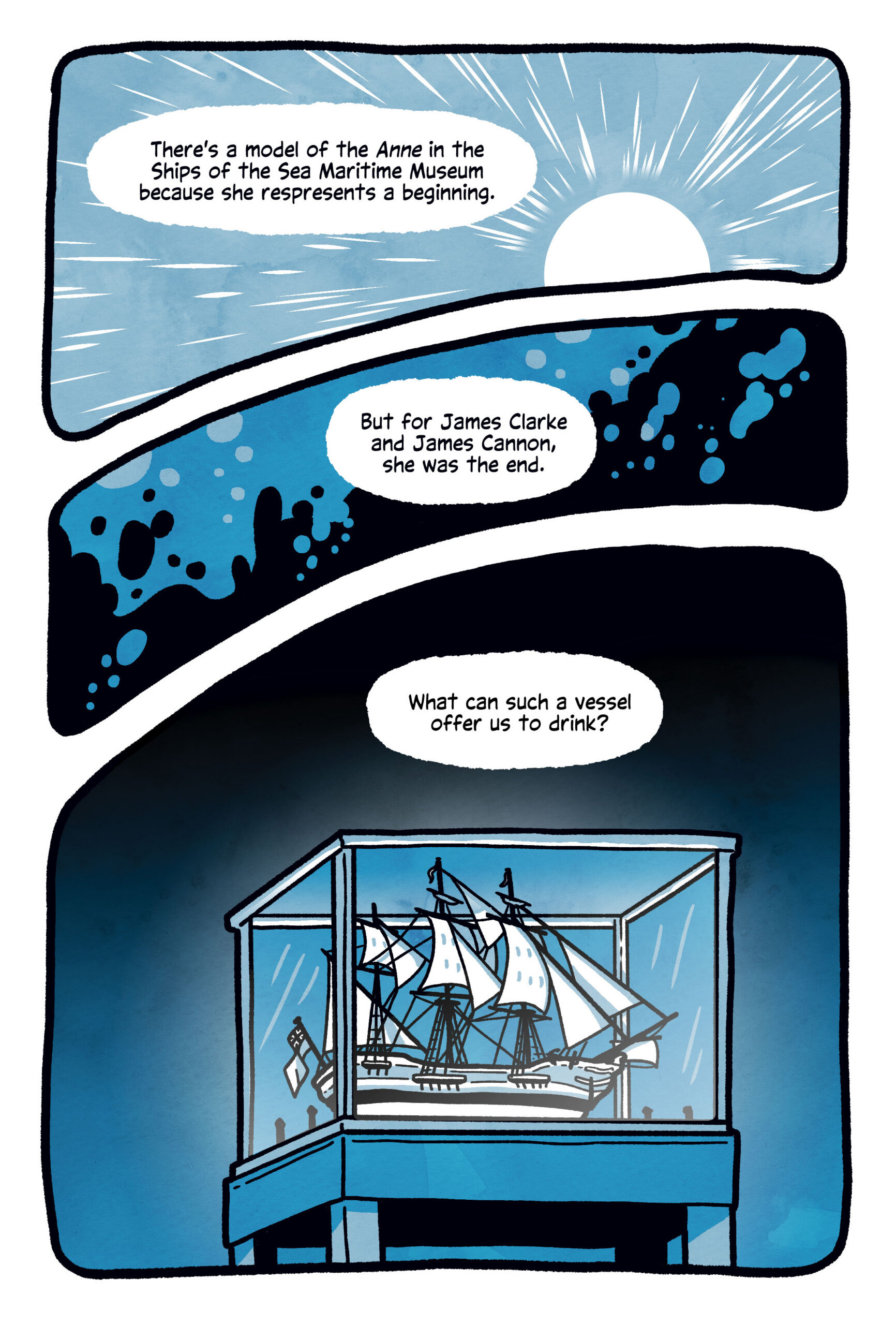
    Last year I got an email from Tania Sammons, a curator at Ships of the Sea Maritime Museum in Savannah, Georgia who had previously licensed my guide to sailors’ tattoos for a show. Her pitch was irresistible: an exhibition of comics based on model ships from their collection. Four cartoonists would be hired, assigned a vessel, then given six months to produce a short comic for publication in an anthology alongside an accompanying museum display. BELLWOOD CATNIP. It’s still amazing to me wh
     

New Comic: The Scale of a Man

29 April 2026 at 22:52

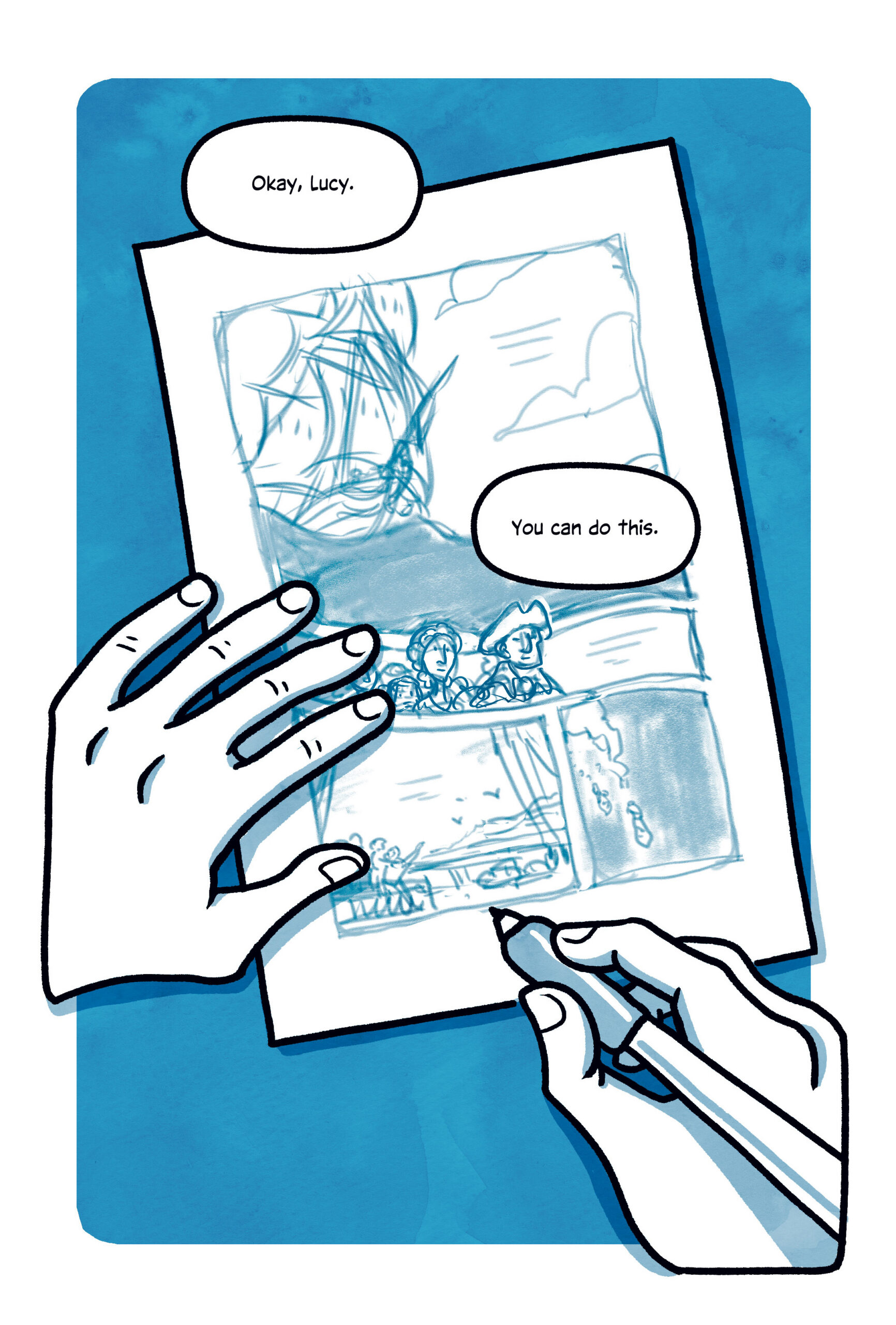
Last year I got an email from Tania Sammons, a curator at Ships of the Sea Maritime Museum in Savannah, Georgia who had previously licensed my guide to sailors’ tattoos for a show. Her pitch was irresistible: an exhibition of comics based on model ships from their collection. Four cartoonists would be hired, assigned a vessel, then given six months to produce a short comic for publication in an anthology alongside an accompanying museum display.

BELLWOOD CATNIP.

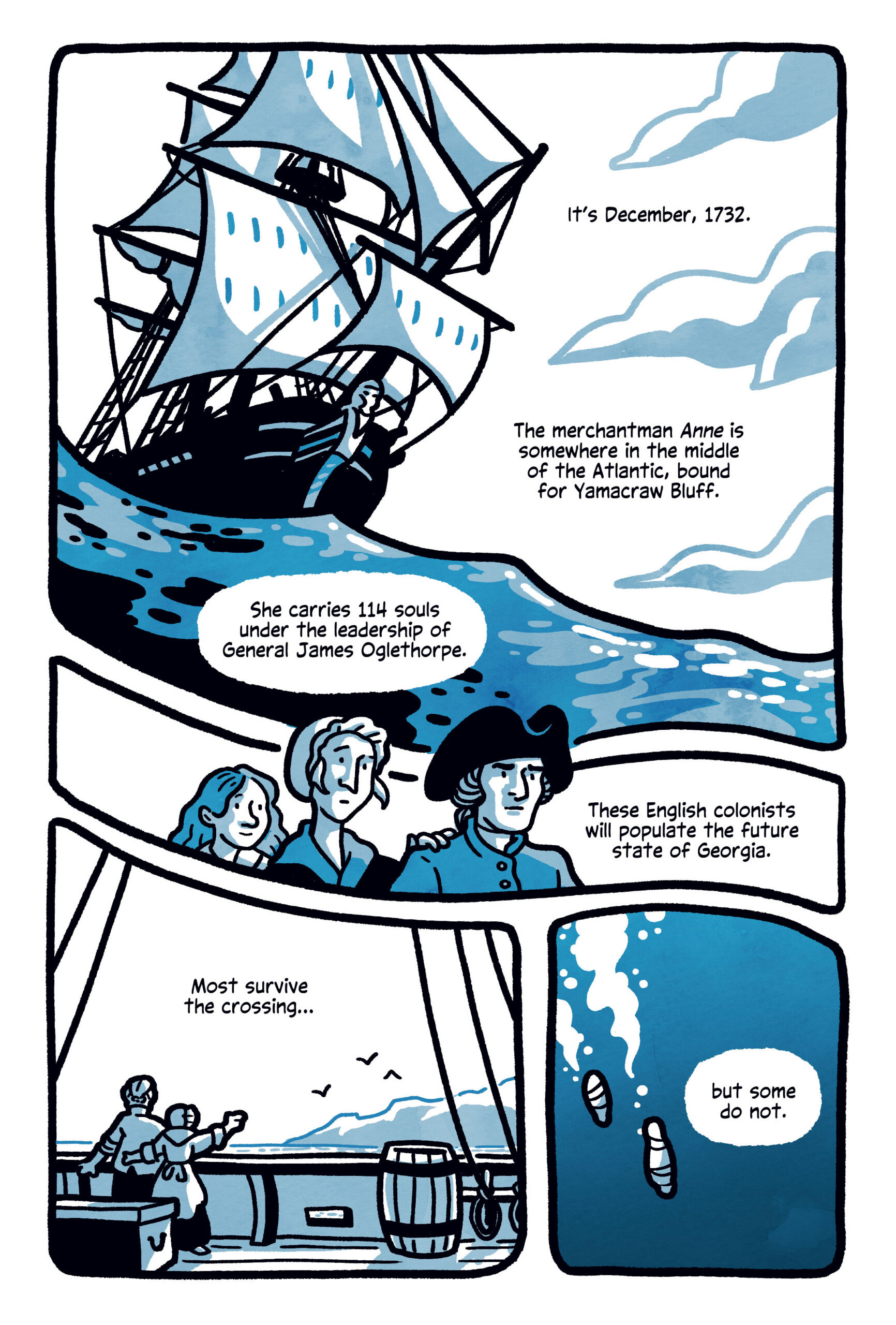
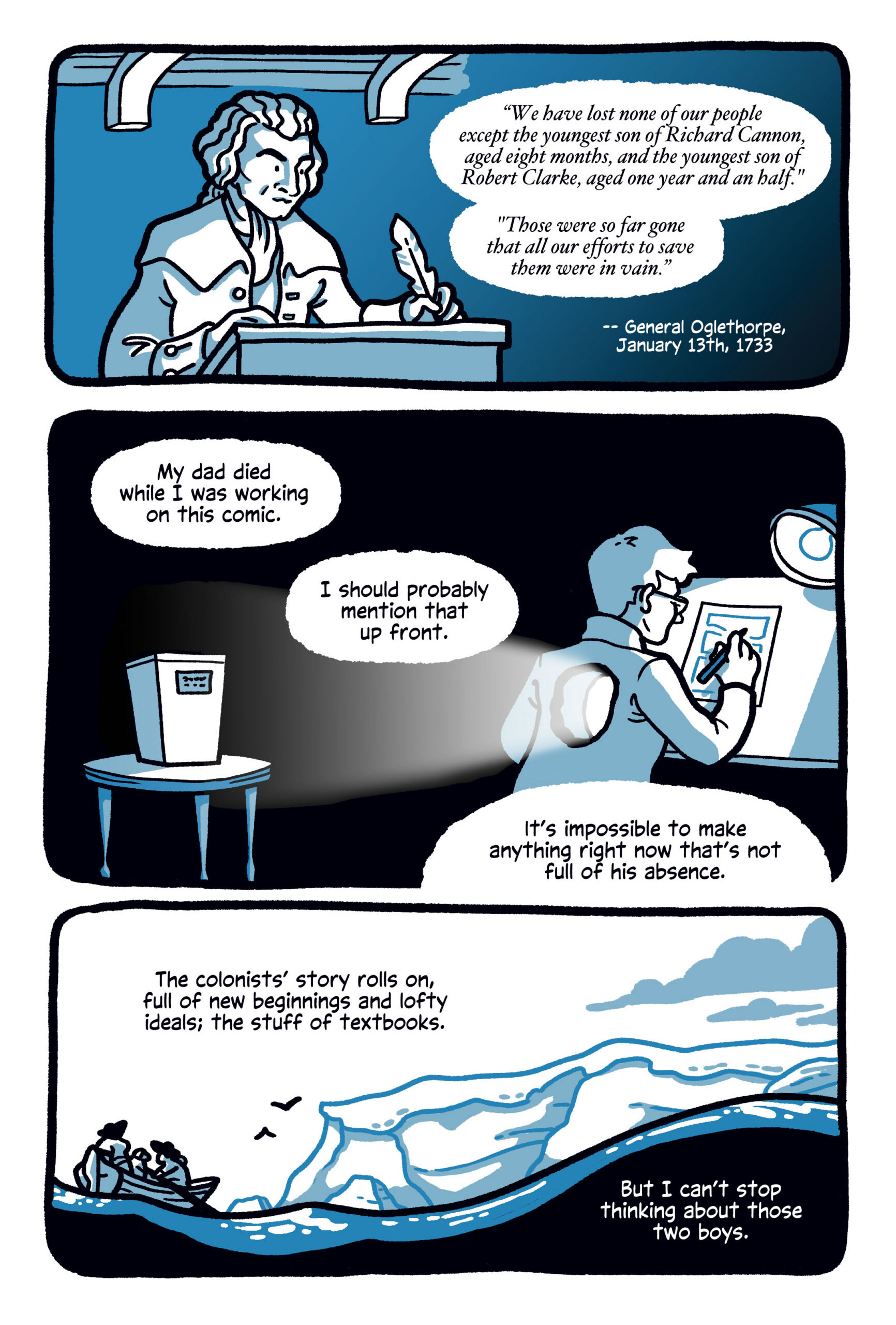
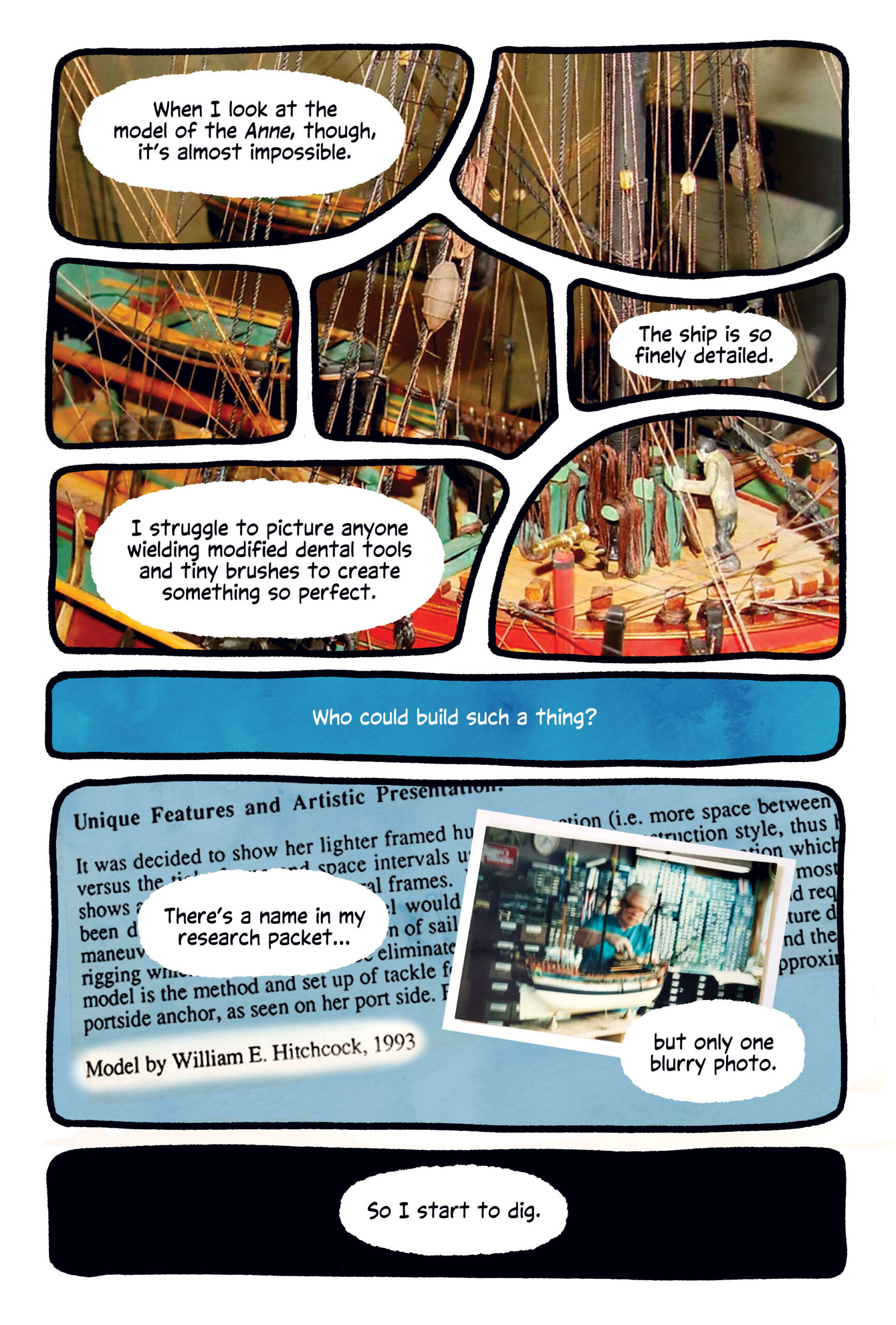
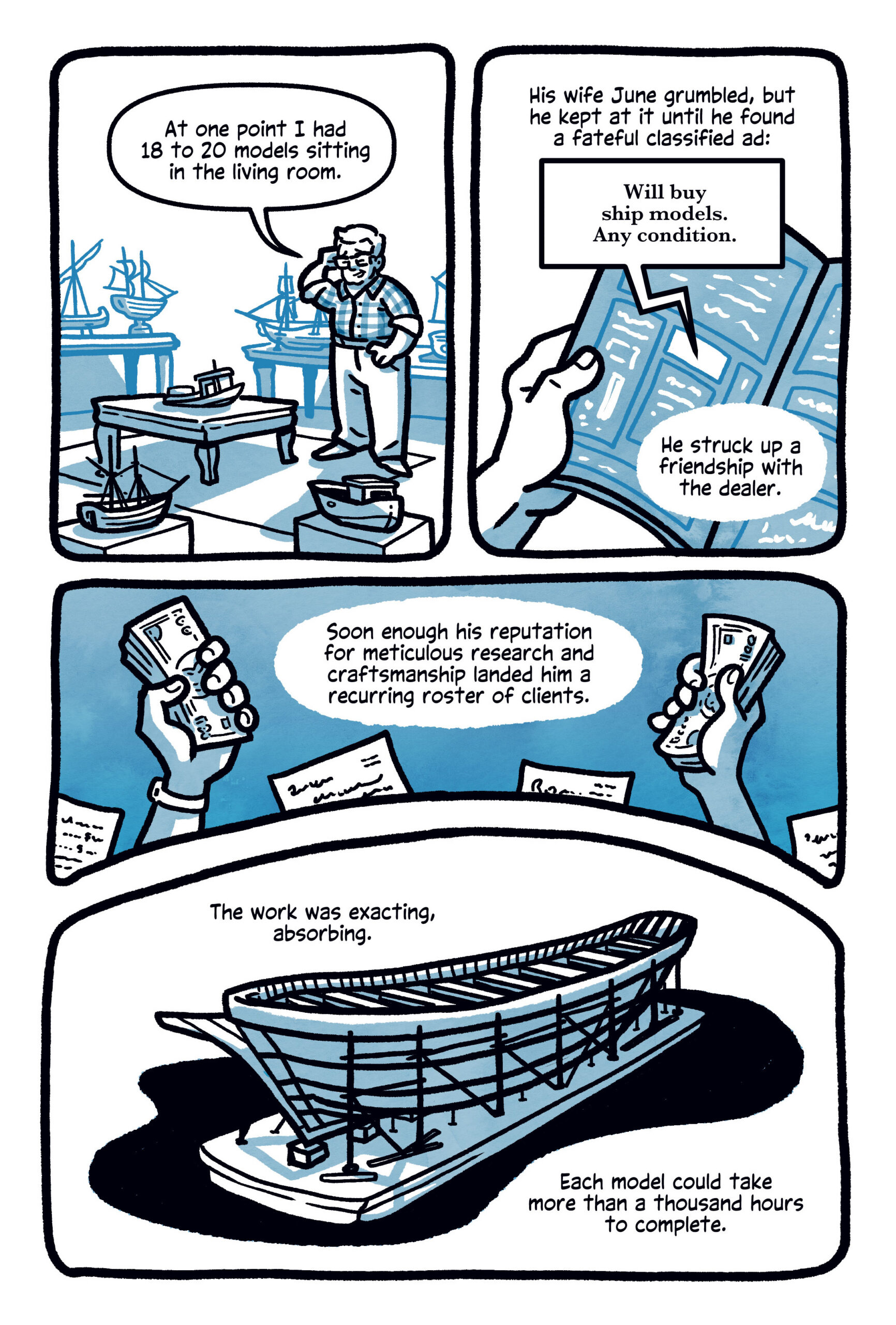
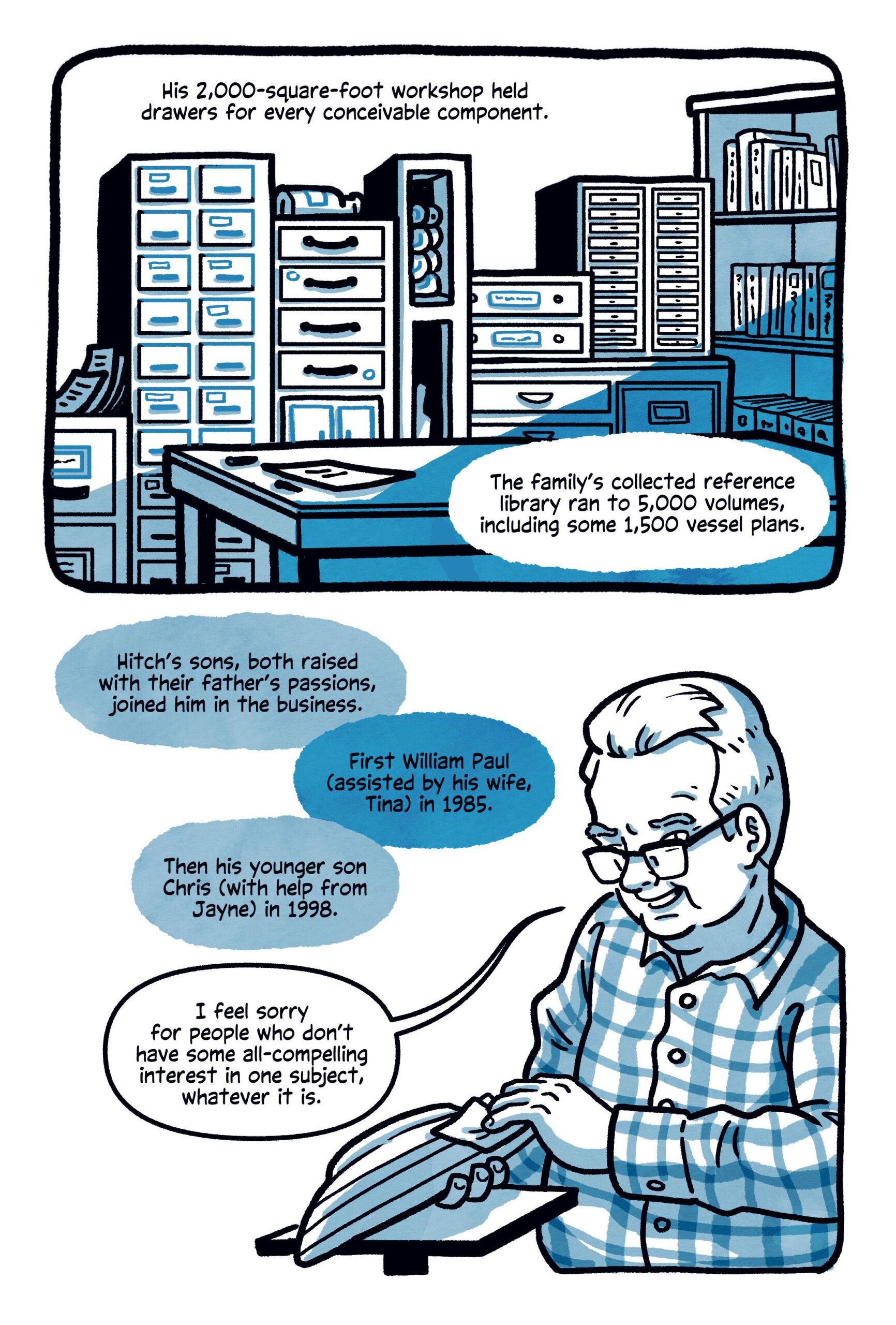
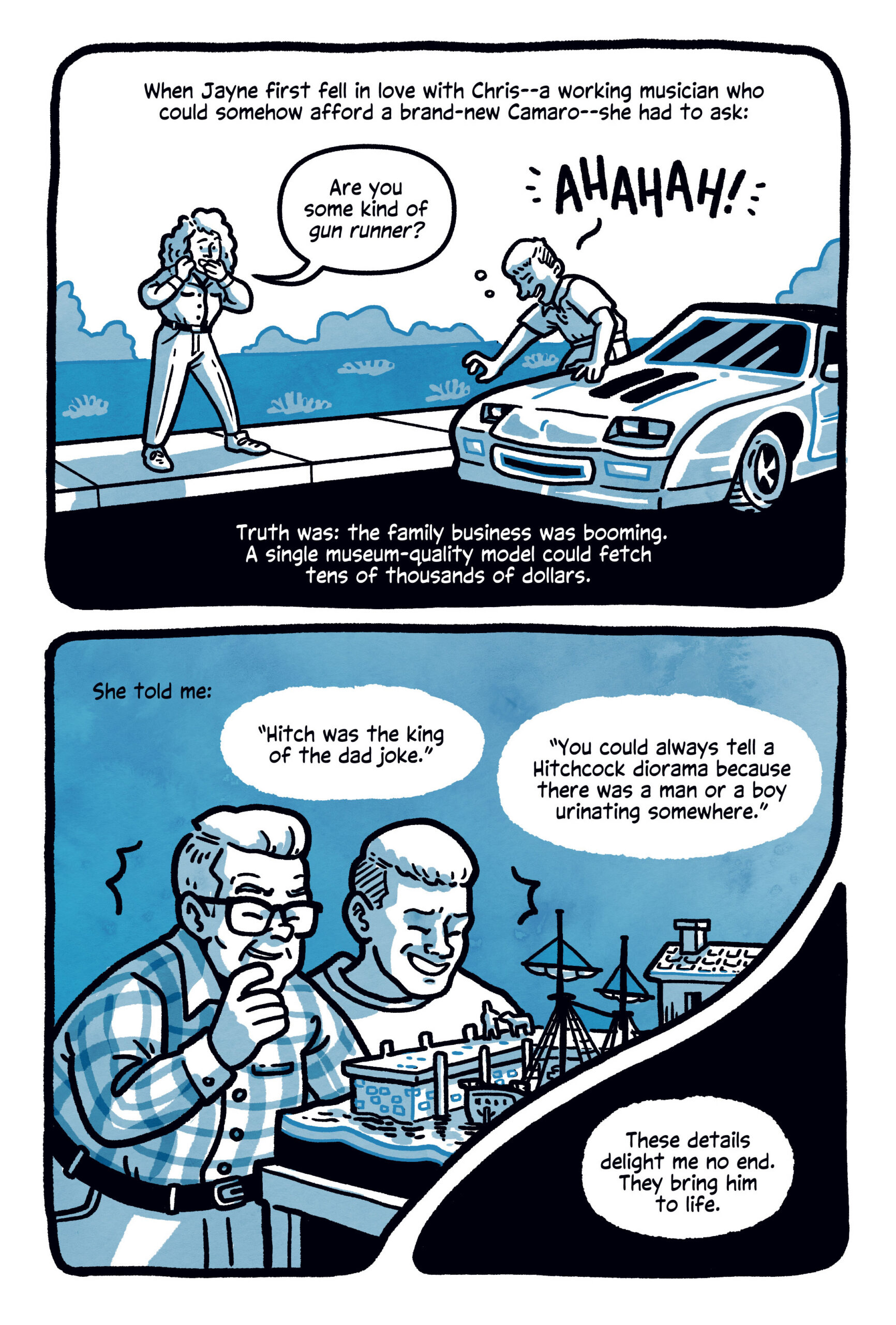
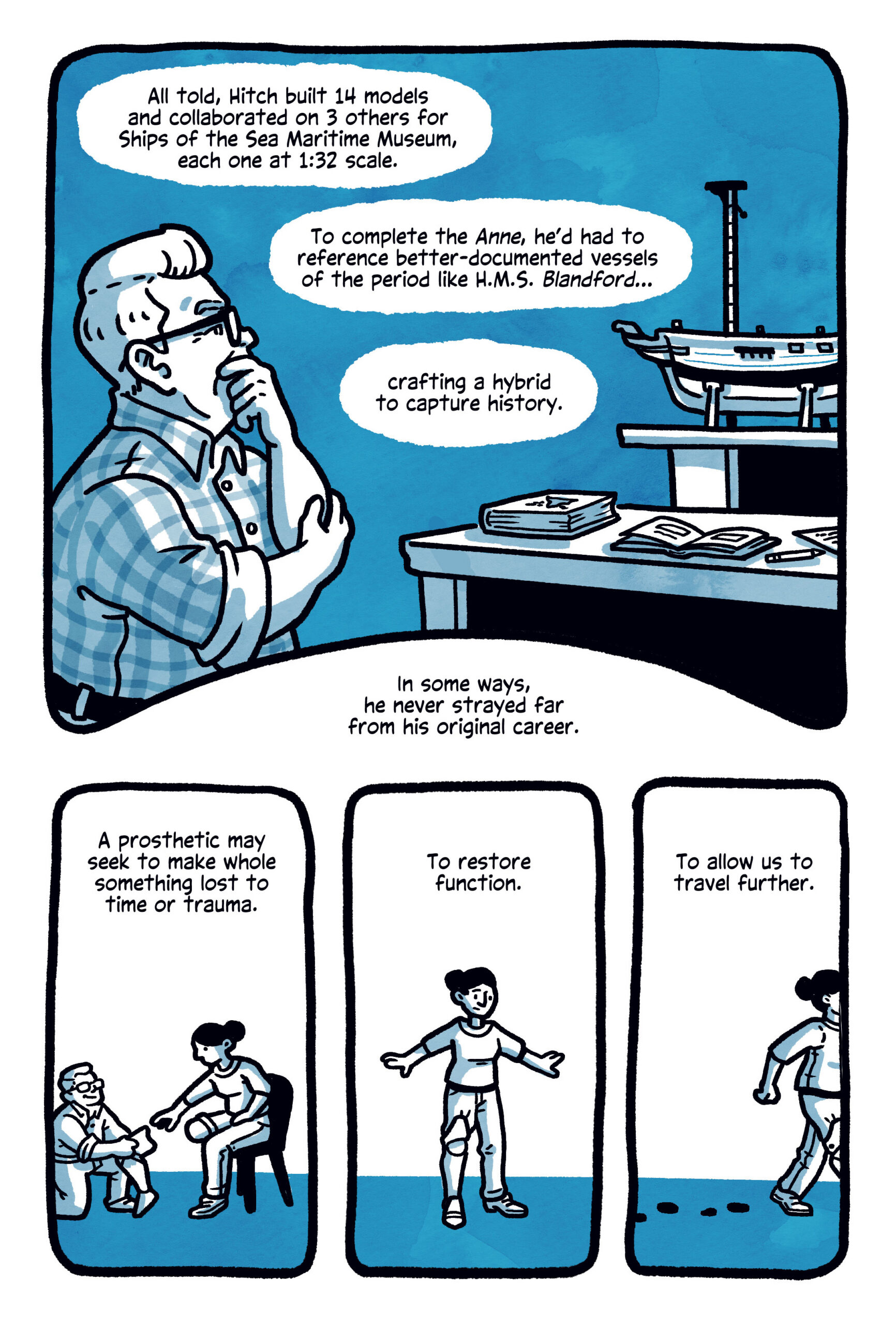
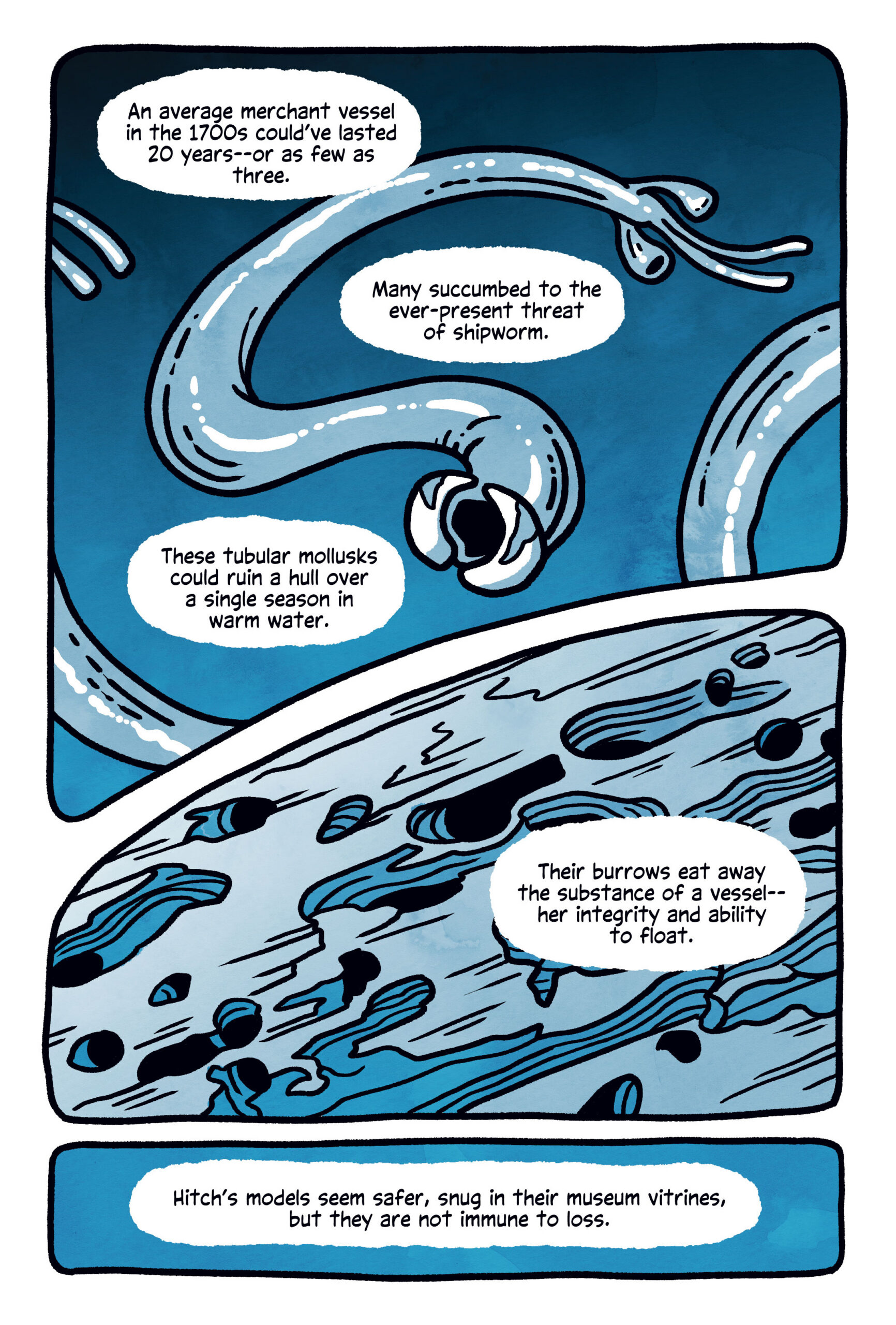
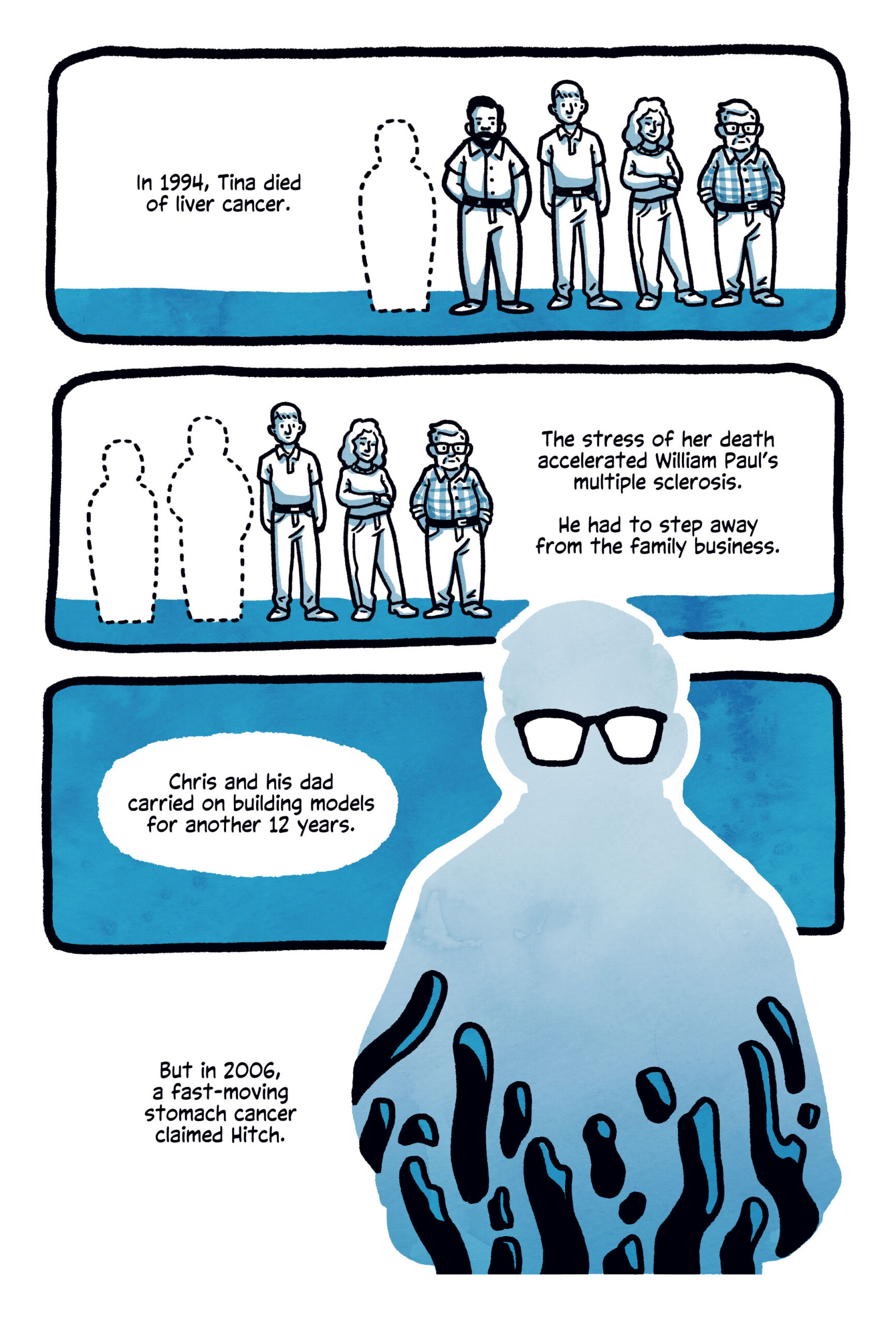
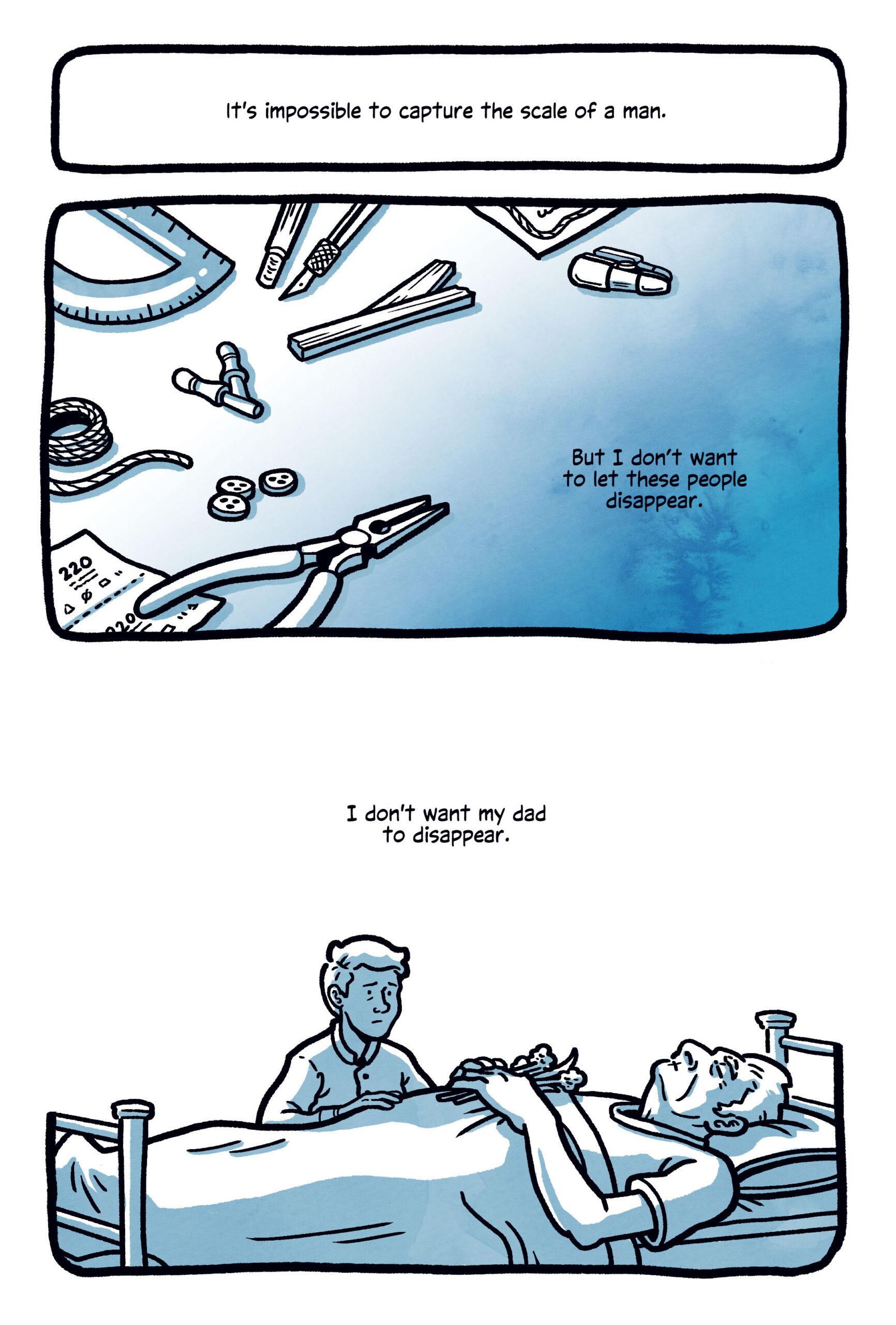
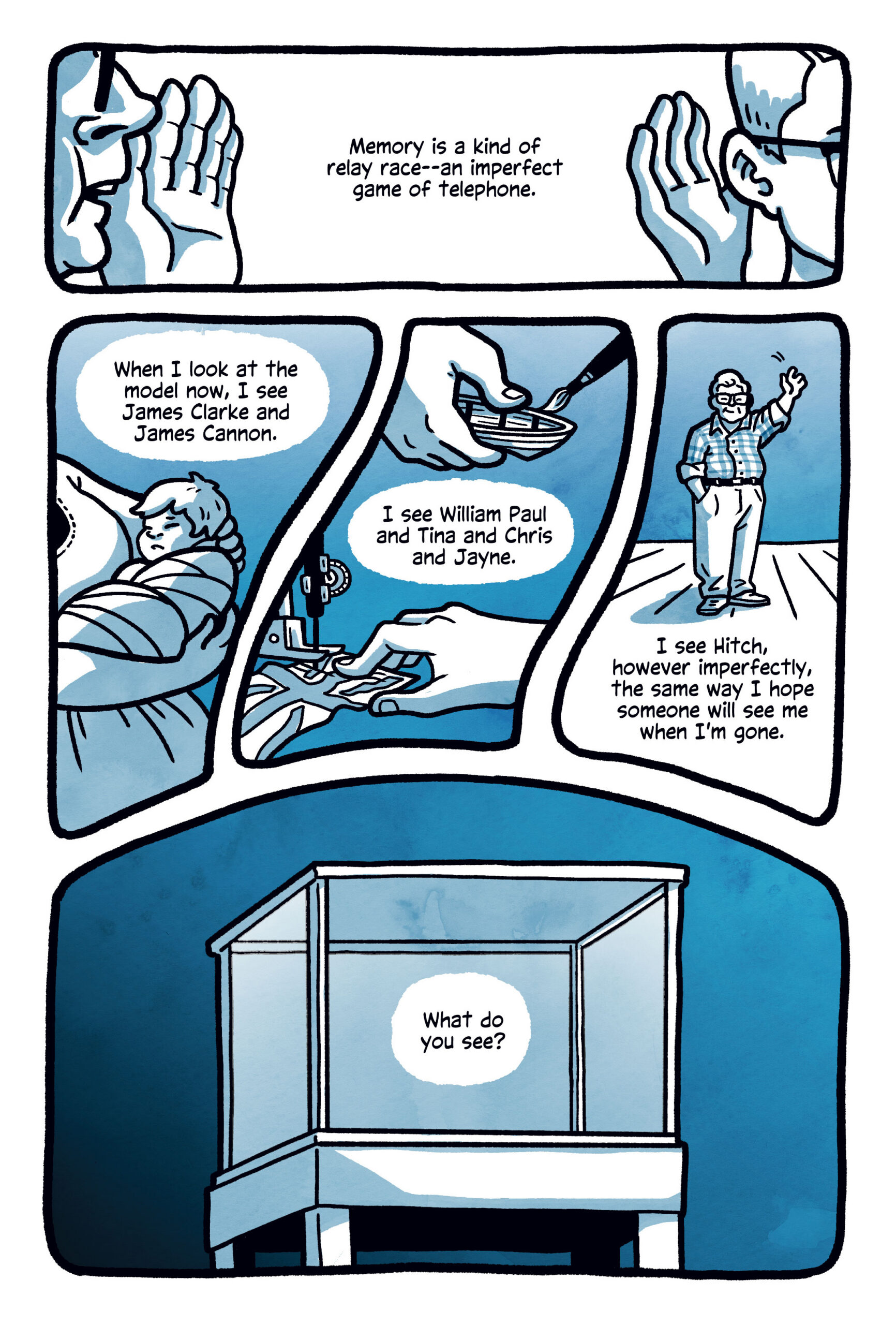
It’s still amazing to me when tailor-made opportunities like this land at my feet, even though I know there are only so many outspoken boat nuts in the comics world. I leapt at the chance and spent the second half of 2025 weaving together a variety of favorite themes (Le Guin’s Carrier Bag Theory of Fiction! Manguso’s cathedral architect! The Ship of Theseus!) to explore the legacy of the Anne, the vessel that carried the first colonists to Georgia in 1732. The story started in the realm of primary sources and historical nonfiction, but completely transformed in the aftermath of my dad’s death in July. By the time I was synthesizing all my notes in the fall of 2025, it had become a quest to give the extraordinary model maker behind most of the museum’s collection his due.

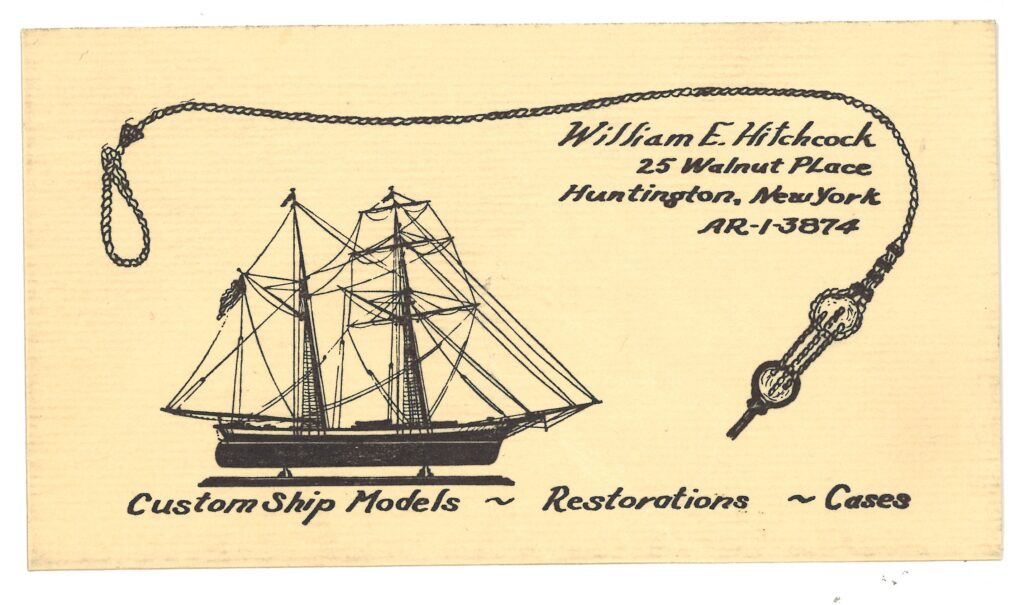
A business card on cream stock for William E. Hitchcock, advertising Custom ship models, restorations, and cases. A small topsail schooler and rigging motif grace the card's deisgn.

Drawn to the Sea, the exhibit collecting comics and process work by myself, Avery Hick, Rich King, and Sharon Norwood, finally opens this week! While I can’t attend the party in person, I’m very glad to be able to share my contribution online. The Scale of a Man took far more out of me than I expected, but in hindsight it makes perfect sense. I really hope you like it. (I’ve included some photos from the exhibit as well as my artist statement below. There’s also a brief essay about some the research here.)

Content Warning: this comic deals with suicide and parental mortality. Readers with trypophobia may want to skip pages 14 and 15.


Exhibition Preview:

Three bulletin boards showing Lucy's notes and process for developing the project on a gallery wall.
A display case showing a selection of model-making books from Hitchcock's collection.

Artist Statement:

I joined the crew of my first tall ship at seventeen. I know more than most the temptation to cast a vessel as the hero of the story, but it’s a lie. We name them, adorn them, and rely on them, but ultimately ships are tools enlivened by the people who use them. They encompass exploration and cultural exchange, escape and immigration, enslavement and genocide. Rather than flattening the ship into a hero, I want to examine the ship as a vessel in every sense of the word, one brimming with discoveries and losses alike. 

In her essay The Carrier Bag Theory of Fiction, Ursula K. Le Guin invites us to explore the implication of the container as the oldest human invention. What would it mean to acknowledge that we have carried sustenance and stories in baskets, nets, and bottles for far longer than we have centered narratives around a Hero’s Journey built on aggression and conquest? “It’s hard,” she admits, “to tell a really gripping tale of how I wrested a wild-oat seed from its husk, and then another, and then another, and then another, and then another—” but the essay encourages us to try.

Whether framing the hull of a ship or the panels of a story, we delineate the things we love. It is an affection that cannot be rushed. I was lucky enough to learn from many model ship builders in the course of creating this piece. Their generosity, enthusiasm, and expertise helped me appreciate what’s poured into each miniature vessel, and to recall something I need to keep close in my own practice: there is value in doing things that defy efficiency. These are fields where monotony walks hand in hand with craft. Some people throw their hands up and bemoan the death of such practices in the age of AI, but I believe we’re headed toward a resurgence in valuing the things machines cannot do.

There is nothing more human than dying. Steeped in my own grief at the loss of my father, I found my way into a story that took me places I couldn’t have foreseen. Early in the research process, I read that the colonists aboard the Anne slept below decks in suspended wooden cots—their similarity to coffins a reminder of how often such voyages become a passage to the underworld. Every journey requires a type of death. We leave behind our former selves, hoping to meet some new incarnation on the farther shore, but the past always comes with us in one guise or another. 

We don’t know what became of the Anne in the end; her own death, whatever that means for a vessel, went undocumented. Sometimes such losses are inevitable. But the containers we build, whether they be ships, comics, or museums, offer us a chance to see ourselves woven into the minutiae of the past. It is a form of immortality, one that relies on engagement, imagination, and tenderness, and it is always worth reaching for.

William Hitchcock at work beside a massive model ship on a workbench.

Drawn to the Sea opens at Ships of the Sea Maritime Museum in Savannah, Georgia on Friday, May 1st and runs through January 31st, 2027. Learn more about the exhibit and related programming here.

  • ✇Malay Mail - All
  • Intergenerational agriculture offers sustainable solutions — Sayed Mohammad Reza Yamani Sayed Umar
    JUNE 1 — Malaysia’s agriculture sector faces a dual challenge: an ageing farming population and declining youth interest in agricultural careers. At the same time, there is a growing policy emphasis on food security, rural development, and youth entrepreneurship. According to preliminary findings from the Department of Statistics Malaysia’s Agriculture Census 2024, the largest segment of Malaysian farmers is aged 60 or older. The farmers’ age profile reveals a co
     

Intergenerational agriculture offers sustainable solutions — Sayed Mohammad Reza Yamani Sayed Umar

1 June 2026 at 06:30

Malay Mail

JUNE 1 — Malaysia’s agriculture sector faces a dual challenge: an ageing farming population and declining youth interest in agricultural careers. At the same time, there is a growing policy emphasis on food security, rural development, and youth entrepreneurship. 

According to preliminary findings from the Department of Statistics Malaysia’s Agriculture Census 2024, the largest segment of Malaysian farmers is aged 60 or older. The farmers’ age profile reveals a concerning trend: 45.6 per cent are aged 60 or older, 32.3 per cent are aged 46 to 59, and only 22.2 per cent are aged 15 to 45. 

Hence, the majority of senior citizens among individual farmers directly affect farm productivity and the nation’s ability to increase domestic production and sustain the agriculture sector as a whole.

In this context, intergenerational activities that connect elderly farmers or senior citizens with agricultural expertise to younger generations are not just desirable; they are strategically necessary. They offer a way to sustain agricultural knowledge, support active ageing, and cultivate a new generation of agripreneurs.

As aging farmers become less productive, it not only impacts farmers’ income but also threatens the long-term growth of the sector. 

From a gerontology perspective, such activities align closely with the concept of active ageing, which emphasises continued participation, social engagement, and meaningful roles in later life. Elderly farmers possess decades of tacit knowledge about local soils, climate, cropping patterns, and informal market practices — knowledge that is easily lost if not transmitted. 

Intergenerational programmes turn this knowledge into a social resource: elders become mentors, storytellers, and co-trainers, rather than being seen only as “retired” or “past their productive years”.

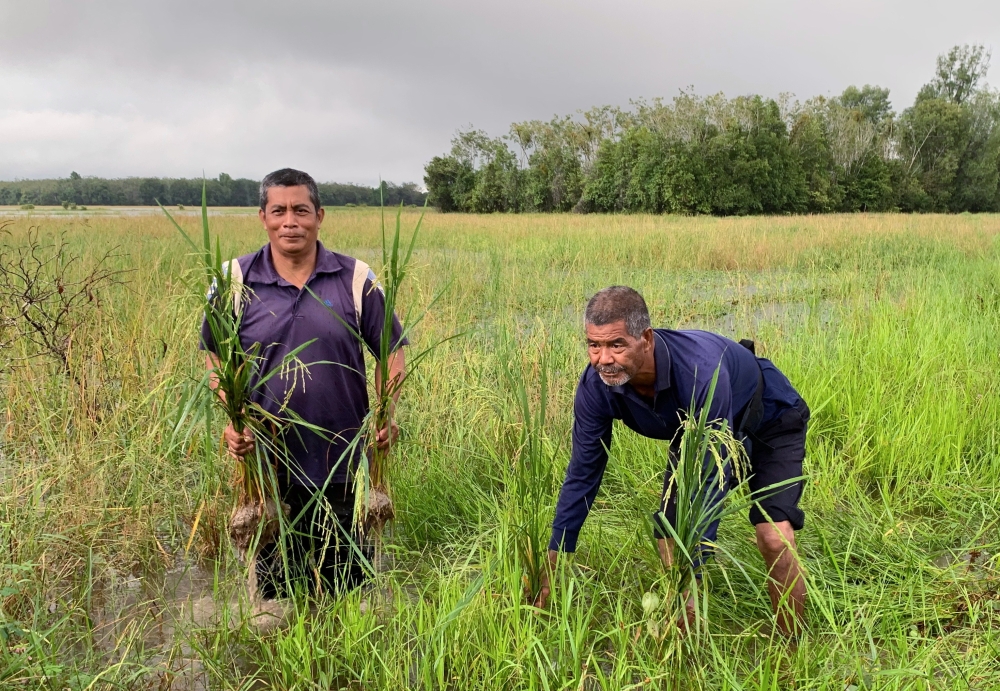
Malaysia’s agriculture sector faces a dual challenge: an ageing farming population and declining youth interest in agricultural careers. — Bernama pic

In Malaysia, while not many initiatives are specifically identified as “intergenerational farming programmes,” numerous current efforts incorporate significant intergenerational aspects or could easily be enhanced in that direction. 

The Young Agropreneur Programme (Program Agropreneur Muda, PAM), spearheaded by the Ministry of Agriculture and Food Security, serves as a key illustration. It offers funding, training, and assistance to Malaysians — usually aged 18 to 40 — to develop sustainable businesses in the agrofood, livestock, fisheries, and agro-based sectors. Official reports indicate that thousands of young entrepreneurs have received support and show high business continuity rates, suggesting that the program has been somewhat successful in reducing obstacles for youth in agriculture.

Although PAM is mainly positioned as a youth and entrepreneurship programme, the manner in which training and support are provided inherently includes an intergenerational aspect. Technical and business instruction is frequently delivered by seasoned professionals, senior agronomists, and exemplary farmers, most of whom are older and possess extensive backgrounds in agriculture or agribusiness. 

This fosters informal mentorship connections in which younger individuals acquire not only technical skills but also risk management, coping techniques, and insights into “what truly succeeds” in the community context. As successful PAM participants transition into mentors for newer cohorts, a dynamic cycle of “generational layering” emerges: yesterday’s youth agripreneur evolves into today’s knowledgeable “elder” in the agricultural ecosystem.

In addition to national programs, there are community-driven efforts that clearly position agriculture as a link between generations. The senior citizen activity centre, commonly referred to as Pusat Aktiviti Warga Emas (PAWE), can support the agriculture mentoring initiative that engages senior farmers in imparting their farming knowledge and techniques to local youth in the nearby community.

Urban and rural projects, such as youth-focused farms or community gardens, often use farming as a way to reduce the generation gap, pairing younger participants with older community members or retirees with farming or gardening experience. In these programmes, the learning is reciprocal: elders teach about traditional crops, sustainable practices, and local food culture, while youth contribute physical labour and digital skills such as social media promotion, basic e-commerce, or simple data tracking. Over time, these spaces can evolve into incubators for small agripreneur ventures — selling herbs, salad greens, or value-added products — rooted in intergenerational collaboration.

Intergenerational agriculture is also relevant to questions of social mobility and farm succession. Research on intergenerational mobility in Malaysia has shown that many children of farmers move into non-agricultural sectors, contributing to upward mobility but also raising questions about who will manage farms in the future. 

Without structured pathways for land and knowledge transfer, ageing farmers may struggle to retire, while land becomes underutilised or fragmented. Intergenerational programmes can help mediate this transition — through mentorship arrangements, joint ventures between elders and youth agripreneurs, or community-based cooperative models — ensuring that both generations benefit. Such arrangements can improve older farmers’ financial security and psychological well-being, while giving young people a more secure foothold in agribusiness.

Viewed through the lens of social science, these experiences suggest several design principles for intergenerational agriculture in Malaysia:

First, roles should be genuinely reciprocal: older farmers are not token figures but recognised experts, and youth are not passive students but active partners bringing innovation and energy. Second, programmes should integrate agripreneurship components — such as marketing, value addition, and financial literacy — so that exposure to farming is explicitly linked to viable livelihood pathways. Third, attention to age-friendly environments and flexible schedules is crucial, especially for elderly participants with health or mobility constraints. Finally, symbolic recognition — certificates, public profiles, inclusion in policy dialogues—can reinforce the social value of older farmers’ contributions and make agricultural careers more visible and aspirational for youth.

In sum, Malaysia already possesses many of the ingredients for robust intergenerational agriculture: an ageing but knowledgeable cohort of farmers, policy momentum around youth agripreneurship, and community initiatives that use farming to build social connections. The next step is to intentionally design and frame these activities as intergenerational, making explicit their dual goals of sustaining agriculture and supporting healthy, meaningful ageing.

* The author is a Research Fellow at the Ungku Aziz Centre for Development Studies (UAC), Universiti Malaya and a part-time lecturer at Azman Hashim International Business School (AHIBS) UTM.

** This is the personal opinion of the writer or publication and does not necessarily represent the views of Malay Mail.

  • ✇Malay Mail - All
  • Anwar to address Nikkei Forum, explore new investments in three-day visit to Japan
    TOKYO, June 7 — Prime Minister Datuk Seri Anwar Ibrahim will undertake an official visit to Japan from June 8 to 10 at the invitation of the Japanese government, according to the Foreign Affairs Ministry.He will be accompanied by Foreign Affairs Minister Datuk Seri Mohamad Hasan, Investment, Trade and Industry Minister Datuk Seri Johari Abdul Ghani, Entrepreneur and Cooperatives Development Minister Steven Sim Chee Keong and senior government officials.“The Prime
     

Anwar to address Nikkei Forum, explore new investments in three-day visit to Japan

7 June 2026 at 05:56

Malay Mail

TOKYO, June 7 — Prime Minister Datuk Seri Anwar Ibrahim will undertake an official visit to Japan from June 8 to 10 at the invitation of the Japanese government, according to the Foreign Affairs Ministry.

He will be accompanied by Foreign Affairs Minister Datuk Seri Mohamad Hasan, Investment, Trade and Industry Minister Datuk Seri Johari Abdul Ghani, Entrepreneur and Cooperatives Development Minister Steven Sim Chee Keong and senior government officials.

“The Prime Minister will be accorded an official welcoming ceremony, followed by a bilateral meeting with his counterpart, Prime Minister of Japan Sanae Takaichi,” the ministry, widely known as Wisma Putra, said in a statement today.

According to the ministry, the meeting will provide a pivotal opportunity for both leaders to review progress in bilateral relations and chart new avenues for cooperation following the elevation of Malaysia-Japan ties to a Comprehensive Strategic Partnership in December 2023.

Key areas of discussion are expected to include green technology, energy resilience and transition, environmental cooperation, defence and regional security, as well as higher education.

The two leaders will also exchange views on regional and international issues of mutual interest, the statement said.

During the visit, Anwar is scheduled to deliver a special lecture at Tokyo University and a keynote address at the 31st Nikkei Forum: Future of Asia, underscoring Malaysia’s commitment to strengthening ties and fostering dialogue with Japan and the wider region.

Recognising Japan’s enduring role as a major source of foreign direct investment and a key economic partner, Anwar will also participate in business roundtable sessions with Japanese industry leaders to explore new high-value investment opportunities in Malaysia.

Japan has remained one of Malaysia’s most important economic partners, ranking as the country’s fifth-largest trading partner globally since 2024.

In 2025, total bilateral trade amounted to RM142.96 billion (US$33.39 billion).

As of December 2025, a total of 2,872 manufacturing projects involving Japanese participation had been implemented in Malaysia, with investments reaching RM107.9 billion (US$31 billion).

According to Wisma Putra, these projects have generated 347,346 jobs. — Bernama

  • ✇Malay Mail - All
  • UK Labour turmoil deepens as Streeting signals possible challenge to Starmer
    LONDON, June 17 — Britain’s former health minister, Wes Streeting, said he would be prepared to trigger a Labour leadership contest to replace Keir Starmer as prime minister as soon as next week, urging a speedy end to the “uncertainty and paralysis”.Streeting, who has said he has the backing of the 81 Labour lawmakers needed to trigger a challenge, told BBC Newsnight late on Tuesday he thought a contest should be initiated sooner rather than later.But Starmer, s
     

UK Labour turmoil deepens as Streeting signals possible challenge to Starmer

17 June 2026 at 08:30

Malay Mail

LONDON, June 17 — Britain’s former health minister, Wes Streeting, said he would be prepared to trigger a Labour leadership contest to replace Keir Starmer as prime minister as soon as next week, urging a speedy end to the “uncertainty and paralysis”.

Streeting, who has said he has the backing of the 81 Labour lawmakers needed to trigger a challenge, told BBC Newsnight late on Tuesday he thought a contest should be initiated sooner rather than later.

But Starmer, speaking at the G7 summit in Evian, repeated on Wednesday that he would fight to stay in his job if a formal challenge was launched against his leadership.

“If there is a challenge, I intend to fight in any challenge to my leadership,” Starmer said.

“I don’t think there should be a challenge, because I think that is a bad thing for the country.”

The Labour Party is waiting to see if Andy Burnham, the Greater Manchester mayor, can win a local election in Makerfield on Thursday to return to parliament, where he would become the frontrunner in any challenge to Starmer.

Streeting, who quit last month in protest at the prime minister’s record, said he wanted Starmer to take “time to reflect over the weekend and I think we should see where we are then”.

“I would prefer the PM to take a decision on his own terms rather than leave it for me or Andy or anyone else to trigger a contest... We can’t carry on with this uncertainty and paralysis.”

In a further blow to Starmer’s authority, the highly respected defence minister, John Healey, resigned last week, accompanied by a scathing critique of Starmer’s record in allocating funds to increase defence spending. — Reuters 

❌
Subscriptions