Tokyo has asked Beijing to ensure its citizens’ safety after a stabbing in a Shanghai restaurant in which two Japanese were injured, Japan’s consulate in Shanghai told AFP Wednesday.
Shanghai skyline. Photo: Pexels.
It is the latest diplomatic point of friction as the two countries are embroiled in a stand-off triggered by Prime Minister Sanae Takaichi’s suggestion Tokyo might intervene militarily if Beijing were to invade Taiwan.
On Tuesday, Pudong district police said on social media
Tokyo has asked Beijing to ensure its citizens’ safety after a stabbing in a Shanghai restaurant in which two Japanese were injured, Japan’s consulate in Shanghai told AFP Wednesday.
Shanghai skyline. Photo: Pexels.
It is the latest diplomatic point of friction as the two countries are embroiled in a stand-off triggered by Prime Minister Sanae Takaichi’s suggestion Tokyo might intervene militarily if Beijing were to invade Taiwan.
On Tuesday, Pudong district police said on social media they had received a report that a man “was injuring people with a fruit knife in a restaurant”.
Police said the suspect, a 59-year-old surnamed Yang who was detained at the scene, had a history of mental illness.
Three people were taken to hospital, the statement said, with Japanese media later reporting two were Japanese.
Asked about the reports, the Japanese consulate in Shanghai confirmed two citizens had been hurt, adding they were receiving medical treatment.
Chinese and Japanese flags. Photos: Aboodi Vesakaran, Wikimedia Commons.
“The Government of Japan has requested the Chinese government to… clarify the facts and provide a clear explanation… (and) ensure the safety and security of Japanese nationals,” a spokesperson said in a statement.
Top government spokesperson Minoru Kihara later confirmed Tokyo had requested an explanation, adding that a consular alert had been sent out to all Japanese residents in China.
“The government will continue, while maintaining contact with the parties concerned, to provide all possible support from the standpoint of protecting Japanese nationals,” he said.
The restaurant reported to be the site of the attack, matching the police statement’s rough address, appeared calm on Wednesday.
An AFP reporter saw multiple people in grey suits, who appeared to be security, standing guard in the mall it was located in.
Police said that when Yang was detained, he had been “speaking incoherently and behaving erratically”.
AFP has contacted the Chinese ministry of foreign affairs for comment.
One of Japan’s most popular dessert mascots is set to go with you as you tap through ticket gates.
Last year, one of Japan’s many railway companies, JR East, announced that they would be retiring their iconic mascot character featured on their rechargeable prepaid transit card, Suica, much to the dismay of many of its fans. Meanwhile, JR Central, another rail company, has decided to celebrate the 15th anniversary of Nagoya’s beloved dessert Piyorin with a special release of its Toica card.
Des
One of Japan’s most popular dessert mascots is set to go with you as you tap through ticket gates.
Last year, one of Japan’s many railway companies, JR East, announced that they would be retiring their iconic mascot character featured on their rechargeable prepaid transit card, Suica, much to the dismay of many of its fans. Meanwhile, JR Central, another rail company, has decided to celebrate the 15th anniversary of Nagoya’s beloved dessert Piyorin with a special release of its Toica card.
Despite the similar sounding names, the massive JR (Japan Railways) network is split into independent regional companies that operate within their own territories. For example, JR East handles Tokyo and northern Japan, while JR Central manages the lines surrounding Nagoya and the central Tokai region. Unlike several countries where trains are state-run, Japan’s rail networks are entirely privately owned by companies such as these (though the JR network was previously the government-run Japanese National Railways from 1949 until 1987).
As a result of this regional division, each JR company issues its own transit card, commonly referred to as an IC card, for daily travel. Travelers arriving into Tokyo are usually introduced to the Suica (JR East) or Pasmo (Tokyo Metro and many other non-JR lines around Tokyo) cards that let them tap through ticket gates seamlessly. In the Central Japan region around Nagoya, the local equivalents are the Toica (JR Central) and Manaca (Nagoya Subway, Meitetsu, and other non-JR lines around Nagoya) cards.
While these cards are issued separately within their own regions and feature different mascots, which can lead some to travel around Japan collecting them, many of the cards are completely interoperable.
▼ I have a long way to go.
A Toica card purchased in Nagoya, for example, can be used on Tokyo subways, Kyoto buses, and at thousands of convenience stores nationwide.
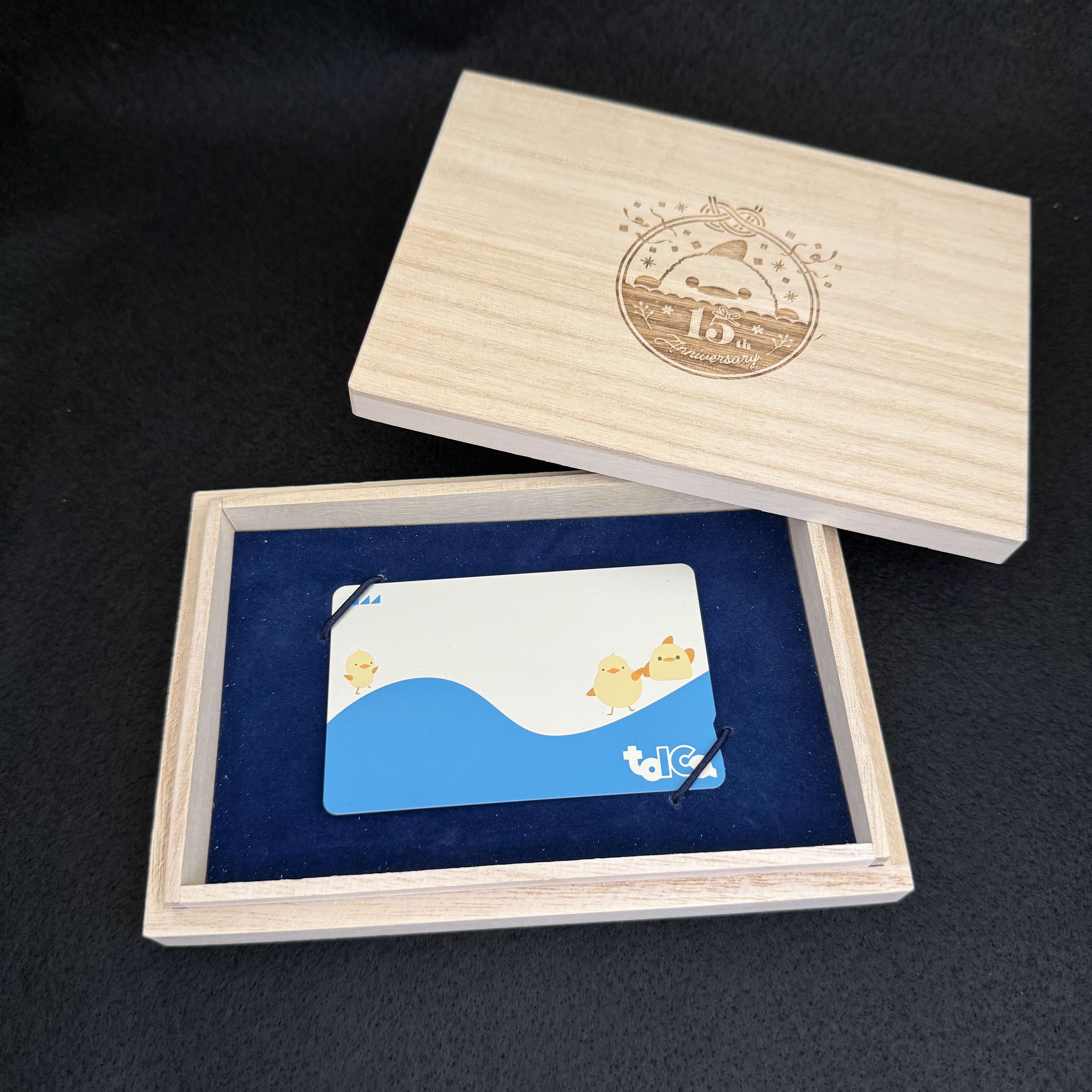
The commemorative Piyorin Toica card has the standard Toica chick mascots alongside Piyorin on the face of the card.
People looking to grab the new Piyorin Toica card will need to make their way to the region operated by JR Central (Nagoya and its surroundings) where it will begin being dispensed in late May 2026 from automatic ticket vending machines and customer service windows at major train stations. For those further away, sales will start at JR Tokai ticket windows at major Shinkansen stations along the Tokaido line from September 1, 2026. Smaller stations within the coverage area will also get access to the Piyorin card supply at this time. Each card will cost 2,000 yen (US$13), which includes 1,500 yen as a usable amount and a 500 yen deposit.
As part of the celebration JR Central released a special online-exclusive Piyorin Toica card in a paulownia wood storage box costing 4,980 yen. However, the 3,000 sets were completely sold out within a couple of days of its launch, attesting to Piyorin’s popularity.
If you’re expecting to go out tomorrow and pick up a Piyorin Toica, you might face some disappointment, as they’ll only start to be dispensed when current Toica card stocks run out, so the start date of the sales will vary depending on the station. Sales of the Piyorin cards will also end when they run out at each station, so there is definitely an element of luck to getting one, if the online sales are anything to go by. That being said, a Piyorin card is a great way to make a souvenir of your travels just a little bit sweeter.
China’s President Xi Jinping hailed an “invincible friendship” with Pyongyang on arrival in North Korea on Monday, his first trip abroad this year after hosting back-to-back summits in Beijing.
A man watches a television screen showing a news broadcast with file footage of the 2019 meeting between China’s President Xi Jinping and North Korean leader Kim Jong Un, at a train station in Seoul on June 8, 2026. Photo: Jung Yeon-je/AFP.
China, Washington’s chief geopolitical rival, has been Nor
China’s President Xi Jinping hailed an “invincible friendship” with Pyongyang on arrival in North Korea on Monday, his first trip abroad this year after hosting back-to-back summits in Beijing.
A man watches a television screen showing a news broadcast with file footage of the 2019 meeting between China’s President Xi Jinping and North Korean leader Kim Jong Un, at a train station in Seoul on June 8, 2026. Photo: Jung Yeon-je/AFP.
China, Washington’s chief geopolitical rival, has been North Korea’s main trading partner by far for decades and a key source of diplomatic and economic support for a country hit by multiple international sanctions.
Military officers lined a red carpet as an Air China plane carrying Xi arrived for his first visit since 2019, video from Xinhua showed.
North Korean leader Kim Jong Un and his wife Ri Sol-ju welcomed Xi, who was accompanied by his wife Peng Liyuan.
The two leaders shook hands, and children presented flowers to Xi and Peng, while a banner reading “We warmly welcome Comrade Xi Jinping” and hailing the two countries’ “unbreakable friendship” hung below Chinese and North Korean flags.
The White House said last month that Xi and Trump “confirmed their shared goal to denuclearise North Korea” during their summit in Beijing.
However, Kim’s powerful sister said on the eve of Xi’s arrival that North Korea’s nuclear weapons programme was “the line of no retreat”.
South Korea’s dovish President Lee Jae Myung said Monday Seoul should not give up on North Korea’s denuclearisation, adding that “North Korea is still producing nuclear material even at this very moment”.
South Korean President Lee Jae-myung attended an event on December 2, 2025. Photo: Lee Jae-myung, via Facebook.
Minseon Ku, a diplomacy professor at DePaul University, told AFP that “Beijing probably has accepted North Korea as a nuclear state”, but Xi “will probably tell Kim that China wants stability more than anything”.
China has “always prioritised stability and is currently having to manage its relations and differences with the US”, Ku said.
‘Irreversible’ nuclear state
Seong-Hyon Lee, a visiting scholar at the Harvard University Asia Center, also said Beijing is shifting towards “underwriting regime durability” rather than seeking to coerce North Korea into denuclearisation.
“China’s broader regional strategy benefits from a stable, heavily armed, and aligned buffer state that absorbs US and allied military bandwidth,” he told AFP.
North Korea has repeatedly declared itself an “irreversible” nuclear state since Kim and Trump’s 2019 summit collapsed over the scope of denuclearisation and sanctions relief.
Kim has also been emboldened by the war in Ukraine, securing critical support from Moscow after sending troops to fight alongside Russian forces.
Some analysts say the summit could be Xi’s way of countering Russia’s growing influence over North Korea, but DePaul’s Ku stressed that “overall, Moscow is not a major power like China”.
“Moscow-Pyongyang power relations are more equal than Beijing-Pyongyang; Moscow needs Kim for their war in Ukraine as much as Kim needs technology sharing and food from Russia,” she said.
Chinese President Xi Jinping (centre) flanked by Russian President Vladimir Putin and North Korean leader Kim Jong Un walks before the military parade marking China’s 80th anniversary of Victory Day at Tiananmen Square, Beijing, on September 3, 2025. Photo: The Kremlin.
In an article published on the front page of North Korea’s Rodong Sinmun, Xi pledged closer cooperation.
“No matter how the times change or how the international situation evolves, the traditional friendship between China and North Korea is always invincible,” Xi wrote.
Xi last met Kim in September, when he invited the North Korean leader and Putin to a military parade in Beijing marking the 80th anniversary of the end of World War II.
Military alliance
Jun Sang-gab, 65, a South Korean tour guide who lives near the inter-Korean border, said he hopes that “North Korea opens its economy” and follows China’s development model.
“If they (the North) establish themselves economically, there won’t be any incidents like armed unification or war” on the Korean peninsula, he told AFP.
Trump has made little progress on North Korea, especially on the nuclear front, despite his earlier high-profile summits with Kim.
North Korea is also the only country with an official, binding military alliance with China.
North Korea could also serve as a useful counterweight to US partners in the region, including South Korea and Japan, analysts said.
Long-frosty China-Japan ties have deteriorated since Prime Minister Sanae Takaichi, a security hawk, suggested last year that Tokyo might intervene militarily in any Chinese attempt to take self-ruled Taiwan.
“As China’s international standing rises, Beijing is likely seeking to draw Pyongyang more actively into its diplomatic orbit,” said Lim Eul-chul, a North Korea expert at Kyungnam University.
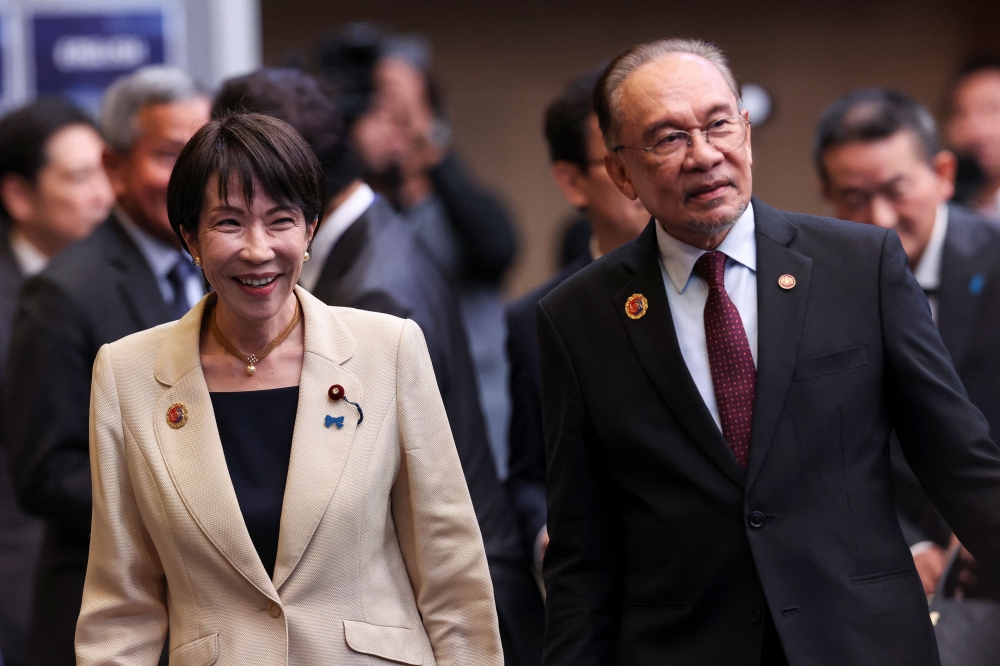
TOKYO, June 7 — Prime Minister Datuk Seri Anwar Ibrahim will undertake an official visit to Japan from June 8 to 10 at the invitation of the Japanese government, according to the Foreign Affairs Ministry.He will be accompanied by Foreign Affairs Minister Datuk Seri Mohamad Hasan, Investment, Trade and Industry Minister Datuk Seri Johari Abdul Ghani, Entrepreneur and Cooperatives Development Minister Steven Sim Chee Keong and senior government officials.“The Prime
TOKYO, June 7 — Prime Minister Datuk Seri Anwar Ibrahim will undertake an official visit to Japan from June 8 to 10 at the invitation of the Japanese government, according to the Foreign Affairs Ministry.
He will be accompanied by Foreign Affairs Minister Datuk Seri Mohamad Hasan, Investment, Trade and Industry Minister Datuk Seri Johari Abdul Ghani, Entrepreneur and Cooperatives Development Minister Steven Sim Chee Keong and senior government officials.
“The Prime Minister will be accorded an official welcoming ceremony, followed by a bilateral meeting with his counterpart, Prime Minister of Japan Sanae Takaichi,” the ministry, widely known as Wisma Putra, said in a statement today.
According to the ministry, the meeting will provide a pivotal opportunity for both leaders to review progress in bilateral relations and chart new avenues for cooperation following the elevation of Malaysia-Japan ties to a Comprehensive Strategic Partnership in December 2023.
Key areas of discussion are expected to include green technology, energy resilience and transition, environmental cooperation, defence and regional security, as well as higher education.
The two leaders will also exchange views on regional and international issues of mutual interest, the statement said.
During the visit, Anwar is scheduled to deliver a special lecture at Tokyo University and a keynote address at the 31st Nikkei Forum: Future of Asia, underscoring Malaysia’s commitment to strengthening ties and fostering dialogue with Japan and the wider region.
Recognising Japan’s enduring role as a major source of foreign direct investment and a key economic partner, Anwar will also participate in business roundtable sessions with Japanese industry leaders to explore new high-value investment opportunities in Malaysia.
Japan has remained one of Malaysia’s most important economic partners, ranking as the country’s fifth-largest trading partner globally since 2024.
In 2025, total bilateral trade amounted to RM142.96 billion (US$33.39 billion).
As of December 2025, a total of 2,872 manufacturing projects involving Japanese participation had been implemented in Malaysia, with investments reaching RM107.9 billion (US$31 billion).
According to Wisma Putra, these projects have generated 347,346 jobs. — Bernama
China expressed strong opposition on Friday to a decision by Japan and the Philippines to start maritime border negotiations, calling the talks “illegal” and claiming exclusive control over the waters concerned.
Philippine President Ferdinand Marcos Jr (left) and Japanese Prime Minister Sanae Takaichi at the Akasaka Palace Guest House in Tokyo on May 29. 2026. Photo: Bongbong Marcos, via Facebook.
The two island nations announced on Thursday they would start formal talks “to delimit the m
China expressed strong opposition on Friday to a decision by Japan and the Philippines to start maritime border negotiations, calling the talks “illegal” and claiming exclusive control over the waters concerned.
Philippine President Ferdinand Marcos Jr (left) and Japanese Prime Minister Sanae Takaichi at the Akasaka Palace Guest House in Tokyo on May 29. 2026. Photo: Bongbong Marcos, via Facebook.
The two island nations announced on Thursday they would start formal talks “to delimit the maritime boundary” of an economic zone and continental shelf between them, as Philippine President Ferdinand Marcos met Japanese Prime Minister Sanae Takaichi on a visit to Tokyo.
But Beijing again asserted on Friday that it has an “exclusive economic zone and continental shelf” in the waters to the east of Taiwan.
“China is strongly dissatisfied with and firmly opposed to this,” foreign ministry spokeswoman Mao Ning told a regular news conference when asked about the delimitation talks between Tokyo and Manila.
“China solemnly declares that the so-called delimitation negotiations between Japan and the Philippines are entirely illegal and invalid,” Mao said.
Beijing has “lodged solemn representations” with both countries, she added.
Manila and Tokyo’s shared grievances over Chinese maritime territorial claims have seen them draw increasingly close in recent years.
Japan and China are in territorial and economic disputes in the East China Sea, where coastguard ships from both sides routinely stage dangerous standoffs.
Beijing has meanwhile deployed navy and coast guard vessels in the South China Sea, in a bid to bar the Philippines from strategically important reefs and islands, leading to a string of confrontations.
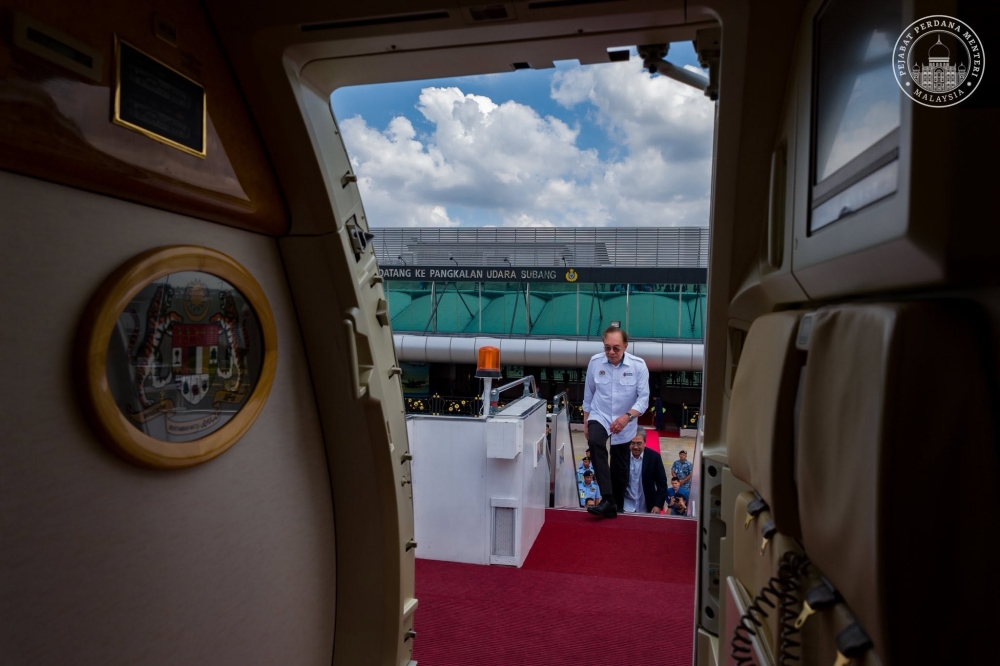
KUALA LUMPUR, June 8 — Prime Minister Datuk Seri Anwar Ibrahim departed for Tokyo today to lead the Malaysian delegation on the Madani Diplomacy mission to strengthen strategic cooperation and national energy security, as the world faces a global energy supply crisis.In a Facebook post, Anwar said that during the visit, he will hold a meeting with Japanese Prime Minister Sanae Takaichi to discuss the development of bilateral relations and to pioneer new Malaysia-
KUALA LUMPUR, June 8 — Prime Minister Datuk Seri Anwar Ibrahim departed for Tokyo today to lead the Malaysian delegation on the Madani Diplomacy mission to strengthen strategic cooperation and national energy security, as the world faces a global energy supply crisis.
In a Facebook post, Anwar said that during the visit, he will hold a meeting with Japanese Prime Minister Sanae Takaichi to discuss the development of bilateral relations and to pioneer new Malaysia-Japan cooperation, particularly in the fields of economy, investment and energy security.
The Prime Minister said that he will also deliver a keynote speech at the 31st Nikkei Forum: Future of Asia, as well as a special lecture at the University of Tokyo on the challenges and future of this region in an increasingly challenging global landscape.
“Pray that our mission runs smoothly and brings beneficial results for the people and the country,” he posted.
Yesterday, the Foreign Ministry in a statement announced that Anwar’s official visit to Japan will begin today until June 10 at the invitation of the Japanese government.
Japan continues to be one of Malaysia’s most important economic partners, ranking as the country’s fifth-largest trading partner in the world since 2024. — Bernama
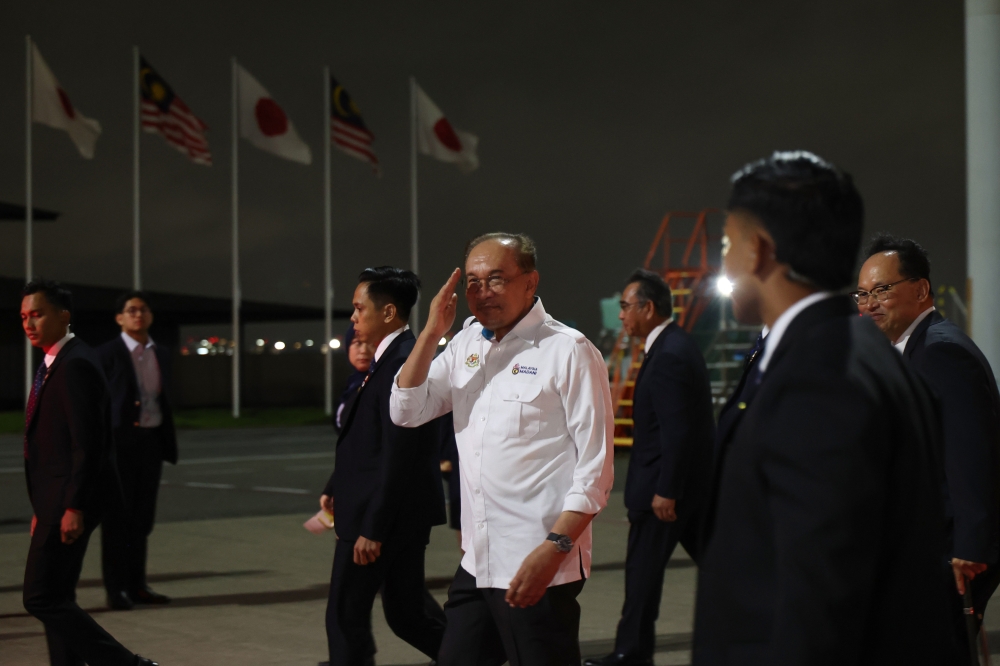
TOKYO, June 8 — Prime Minister Datuk Seri Anwar Ibrahim arrived here tonight for a three-day official visit to Japan, aimed at further strengthening bilateral ties and participating in the 31st Nikkei Forum.The aircraft carrying the Prime Minister touched down at Haneda International Airport at 8.20pm local time (7.20pm Malaysia time).Upon arrival, Anwar was received by Malaysia’s Ambassador to Japan Datuk Shahril Effendi Abd Ghany, Japanese Parliamentary Vice-Mi
TOKYO, June 8 — Prime Minister Datuk Seri Anwar Ibrahim arrived here tonight for a three-day official visit to Japan, aimed at further strengthening bilateral ties and participating in the 31st Nikkei Forum.
The aircraft carrying the Prime Minister touched down at Haneda International Airport at 8.20pm local time (7.20pm Malaysia time).
Upon arrival, Anwar was received by Malaysia’s Ambassador to Japan Datuk Shahril Effendi Abd Ghany, Japanese Parliamentary Vice-Minister of Foreign Affairs Tomoaki Shimada, Chief of Protocol Tadayuki Miyashita and Ambassador of Japan to Malaysia Noriyuki Shikata.
The visit is Anwar’s first official trip to Japan since assuming office as Malaysia’s 10th Prime Minister in November 2022, although he previously made two working visits in 2023 and 2024.
The Prime Minister’s busy itinerary begins on Tuesday at the University of Tokyo, where he is scheduled to deliver a special lecture titled “Humanity in a Human-Machine Civilisation”.
Anwar, who is also the Finance Minister, will later join a roundtable with 29 selected Japanese business leaders and hold meetings with several Japanese companies, including one-on-one sessions with representatives from six firms.
On Wednesday, the Prime Minister will attend the 31st Nikkei Forum, themed “Working Together for a More Resilient and Prosperous Asia”, where he is expected to deliver a keynote address titled “Navigating Strategic Uncertainty”.
Later that day, Anwar will be accorded an official welcoming ceremony at the Office of the Prime Minister of Japan, followed by a bilateral meeting with his Japanese counterpart, Sanae Takaichi.
The visit is expected to yield outcomes including four Memoranda of Cooperation and two Letters of Intent covering defence and regional security, healthcare, energy transition, environmental cooperation and education, as well as a Joint Statement under the Comprehensive Strategic Partnership framework.
Anwar is accompanied on the visit by Minister of Investment, Trade and Industry Datuk Seri Johari Abdul Ghani, Minister of Entrepreneur Development and Cooperatives Steven Sim Chee Keong and senior government officials.
The Prime Minister and his delegation are scheduled to depart for Malaysia on Wednesday afternoon. — Bernama
China accused Japan’s defence minister on Monday of spreading “baseless” claims and sowing confusion, a day after he took a veiled swipe at Beijing.
Defence Minister Shinjiro Koizumi had pledged on Sunday to keep strengthening Japan’s military and warned China was expanding its capabilities without sufficient transparency.
Japan’s Defence Minister Shinjiro Koizumi delivers a speech during the fifth plenary session of the 23rd Shangri-La Dialogue summit in Singapore on May 31, 2026. Photo:
China accused Japan’s defence minister on Monday of spreading “baseless” claims and sowing confusion, a day after he took a veiled swipe at Beijing.
Defence Minister Shinjiro Koizumi had pledged on Sunday to keep strengthening Japan’s military and warned China was expanding its capabilities without sufficient transparency.
Japan’s Defence Minister Shinjiro Koizumi delivers a speech during the fifth plenary session of the 23rd Shangri-La Dialogue summit in Singapore on May 31, 2026. Photo: The International Institute for Strategic Studies, via Flickr.
His comments follow a months-long diplomatic spat between the Asian rivals, which began when Prime Minister Sanae Takaichi suggested in November that Japan could intervene militarily if China attempted to seize Taiwan, the self-ruled island claimed by Beijing.
China’s foreign ministry said on Monday that Koizumi’s comments were “entirely baseless”.
“They appear pale and feeble in the face of a series of historical and legal facts and figures,” ministry spokesman Lin Jian told a news briefing.
“This Japanese official deliberately… attempts to turn the tables and sow confusion,” Lin said.
“Japan’s so-called dialogue is nothing but hypocrisy — a performance put on for appearances, devoid of any genuine sincerity,” he added.
Under Takaichi, Japan has quickened its pivot towards a more proactive defence policy, further shaking off — with US encouragement — a pacifist outlook, which has been in place since the end of World War II.
Koizumi made his comments at the annual IISS Shangri-La Dialogue in Singapore, saying China’s expanding military capabilities were “a matter of serious concern for Japan”.
Tokyo would “steadily build up its defence capabilities and make continuous updates with a high degree of transparency”, including in the fields of artificial intelligence, uncrewed systems as well as cyber and space defence, he said.
Beijing has frequently rebuked Tokyo for its pivot and said following a reckless policy of “new militarism” that could destabilise the region.
By Matthew Walsh
Japan’s defence minister took a veiled swipe at China on Sunday, pledging to keep strengthening the military despite Beijing’s criticism of Tokyo’s increasingly muscular security stance.
Japan’s Defence Minister Shinjiro Koizumi delivers a speech during the fifth plenary session of the 23rd Shangri-La Dialogue summit in Singapore on May 31, 2026. Photo: Mohd Rasfan/AFP.
Under Prime Minister Sanae Takaichi, Japan has quickened its pivot towards a more proactive defence
Japan’s defence minister took a veiled swipe at China on Sunday, pledging to keep strengthening the military despite Beijing’s criticism of Tokyo’s increasingly muscular security stance.
Japan’s Defence Minister Shinjiro Koizumi delivers a speech during the fifth plenary session of the 23rd Shangri-La Dialogue summit in Singapore on May 31, 2026. Photo: Mohd Rasfan/AFP.
Under Prime Minister Sanae Takaichi, Japan has quickened its pivot towards a more proactive defence policy, further shaking off — with US encouragement — its pacifist outlook in place since the end of World War II.
The change has drawn frequent rebukes from Beijing, which has accused Tokyo of following a reckless policy of “new militarism” that could destabilise the region.
Japanese Defence Minister Shinjiro Koizumi hit back on Sunday, saying “nothing could be further from the truth”.
“Think about it. There is a country that has a huge arsenal of nuclear weapons and strategic bombers,” Koizumi said at the annual Shangri-La Dialogue in Singapore.
“Japan has neither of such weapons. And yet, Japan is labelled (as) ‘new militarism’. Isn’t it strange?” he said, without mentioning China by name.
China is thought to possess hundreds of nuclear warheads and has been rapidly developing its military in recent years.
A diplomatic spat between the Asian rivals has been rumbling since Takaichi suggested in November that Japan might intervene militarily if China were to attempt to seize Taiwan, the self-ruled island that Beijing claims is part of its territory.
Japanese Prime Minister Sanae Takaichi attends an event on May 29, 2026. Photo: Sanae Takaichi, via X.
Koizumi said that China was expanding its military capabilities “without sufficient transparency” and that its military activities were “a matter of serious concern for Japan”.
Tokyo would “steadily build up its defence capabilities and make continuous updates with a high degree of transparency”, including in the fields of artificial intelligence, uncrewed systems as well as cyber and space defence, he said.
“Japan’s past as a peace-loving nation has been valued by the region and by international community. This fact will not be shaken by false claims, because it is a fact,” he said.
Maritime disputes
In a meeting with his Philippine counterpart Gilberto Teodoro, the two countries confirmed that Japan would aim to transfer Abukuma-class destroyers and TC-90 aircraft to the Southeast Asian nation during Japan’s fiscal year 2027, a Philippine statement said.
Manila has been eyeing the Abukuma-class vessels — which are being retired by Japan — for some time, with the military sending a contingent to examine them in 2025.
The countries have been deepening defence ties in the shadow of China’s naval ambitions, announcing that they will discuss intelligence sharing and open maritime border talks condemned by Beijing as an “illegal” violation of its expansive territorial claims.
Teodoro singled out Beijing’s activities in the South China Sea for criticism, saying Manila “will not sacrifice our territorial integrity and sovereignty because our constitution does not allow us”.
Philippines’ Secretary of National Defence Gilberto Teodoro delivers a speech as he attends the sixth plenary session of the 23rd Shangri-La Dialogue summit in Singapore on May 31, 2026. Photo: The International Institute for Strategic Studies, via Flickr.
“To do so would be to subvert the popular, democratic and free mandate that the people gave our political leaders, unlike some autocratic systems where the mandate comes from above, dictated down.”
Beijing claims almost the entire South China Sea despite an international ruling that its assertion has no legal basis.
As Teodoro spoke, China’s People’s Liberation Army Southern Theater Command issued a statement online saying it had “conducted combat readiness patrols” in the waters and airspace around Scarborough Shoal, the site of a years-long territorial dispute with the Philippines.
The patrols “serve as an effective countermeasure to cope with all sorts of rights-violation and provocative acts” around the shoal, “an inherent part of China’s territory”, the statement said.
The Shangri-La Dialogue is Asia’s top defence forum, bringing together security officials and experts from about 45 countries.
In contrast to Japan — and its ally the United States — China has sent a watered-down delegation that does not include its defence minister, Dong Jun, for the second year running.
Koizumi said he was “feeling sad that we were unable to have the opportunity to have a meeting this time”.
Japan fired surface-to-ship missiles and sank an old warship in waters between the Philippines and Taiwan as part of major military exercises that include US forces, angering China.
A Japan’s Type 88 surface-to-ship missile system is launched during the maritime strike of Balikatan exercise in Paoay, Ilocos Norte on May 6, 2026. Photo: Jam Sta Rosa/AFP.
Prime Minister Sanae Takaichi has accelerated Japan’s shift towards a more muscular defence policy, further casting off — with US encoura
Japan fired surface-to-ship missiles and sank an old warship in waters between the Philippines and Taiwan as part of major military exercises that include US forces, angering China.
A Japan’s Type 88 surface-to-ship missile system is launched during the maritime strike of Balikatan exercise in Paoay, Ilocos Norte on May 6, 2026. Photo: Jam Sta Rosa/AFP.
Prime Minister Sanae Takaichi has accelerated Japan’s shift towards a more muscular defence policy, further casting off — with US encouragement — Tokyo’s pacifist stance in place since the end of World War II.
The firing on Wednesday of two Type-88 missiles formed part of exercises in the Philippines between US, Australian, Filipino and Japanese troops as well as contingents from France, New Zealand and Canada.
Japanese and Philippine defence ministers observed the launch in the northern province of Ilocos Norte, some 400 kilometres (250 miles) from Taiwan, an AFP reporter at the scene said.
The two projectiles hit the target, a retired Philippines navy corvette, around 75 kilometres offshore in the South China Sea, causing it to sink, officials said.
The 19-day Balikatan exercises, meaning “shoulder-to-shoulder” and which wrap up Friday, have involved some 17,000 military personnel including Japanese combat troops for the first time.
Japanese Prime Minister Sanae Takaichi. Photo: Sanae Takaichi, via X.
Japan in recent years has moved to obtain “counterstrike” capabilities while hiking military spending and deepening security cooperation with regional allies including the Philippines.
Last month Takaichi’s government relaxed the country’s self-imposed rules to allow exports of lethal military hardware, seeking to grab a larger slice of the booming global market.
Last year Japan’s Mitsubishi Heavy Industries won a landmark order from the Australian navy — Takaichi was in Canberra this week — to supply 11 warships.
Missile drill angers China
Long-frosty China-Japan ties have worsened after Takaichi, seen as an arch-conservative and security hawk, suggested in November that Japan might intervene militarily in any Chinese attempt to take Taiwan.
China, which regards the democratic island as part of its territory and has not ruled out force to annex it, was furious over the comments, advising its citizens to avoid Japan and imposing trade restrictions.
Chinese foreign ministry spokesman Lin Jian during a press conference on March 20, 2026. Photo: China’s Ministry of Foreign Affairs.
On Wednesday Beijing lashed out at the missile test, calling it “another example of the Japanese right-wing forces’ push for accelerated remilitarisation of Japan.”
Foreign ministry spokesperson Lin Jian told a regular briefing that “not only has Japan, the aggressor, failed to deeply reflect on its historical crimes, it has even sent military forces overseas and fired offensive missiles under the pretext of security cooperation.”
Yee Kuang Heng, a professor in international security at the University of Tokyo, said that the missile test to sink a ship was “particularly significant as island defence is a shared concern of both Japan and the Philippines.”
Another important component was the participation of Japan’s Amphibious Rapid Deployment Brigade (ARDB) in counter-landing drills with US, Philippine and Canadian forces, Heng added.
“Balikatan 2026 also saw the maiden deployment of Japan’s ShinMaywa US-2 amphibious aircraft for air-sea rescue and medical procedures, especially important given the long sea lanes in the region,” Heng told AFP.
Theme park prohibition strangely opens the door to a new kind of creative freedom.
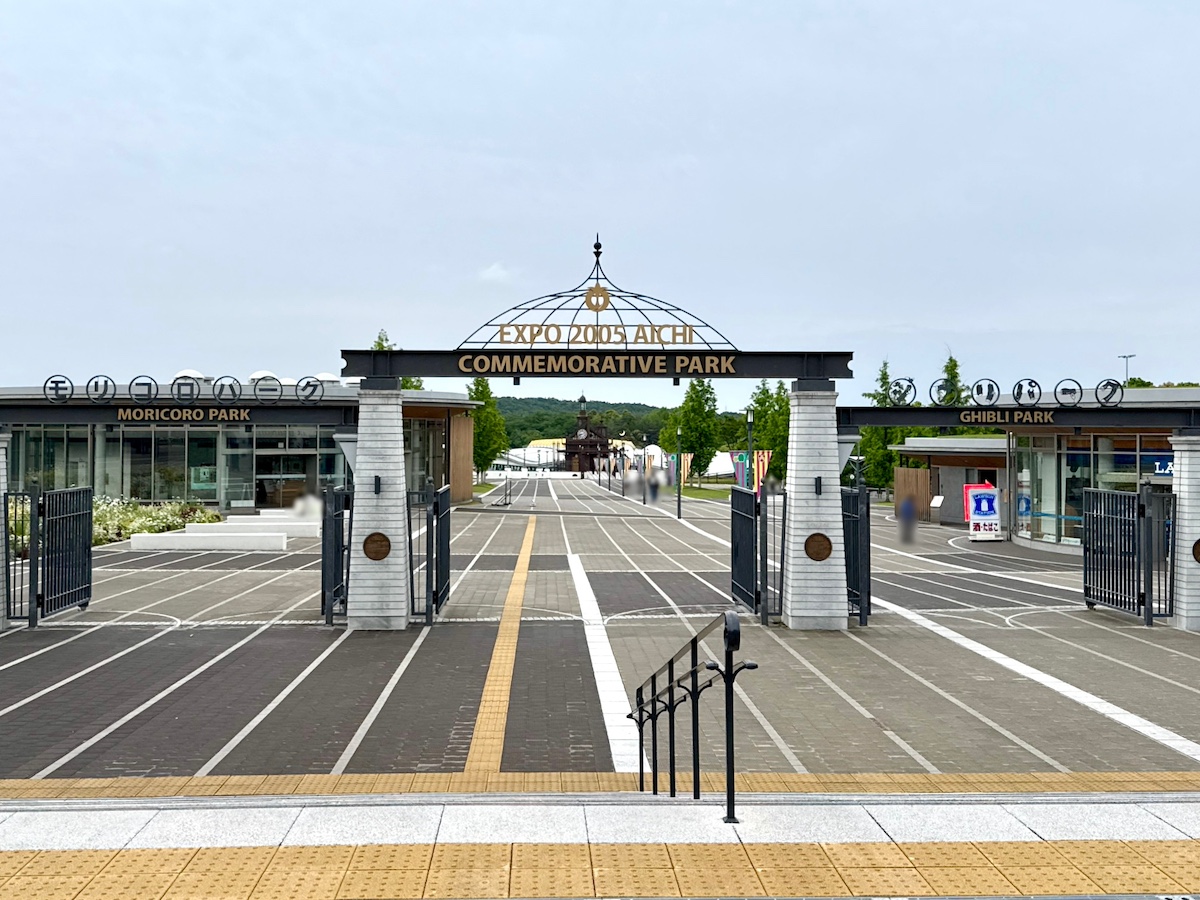
When you visit Ghibli Park in Nagakute City, Aichi Prefecture, you’ll find a vast array of attractions, including life-sized buildings that look like they’ve jumped straight out of a Studio Ghibli film. However, if you research the park beforehand to see what the rooms inside these buildings look like, you’ll notice something else: there isn’t a wide variety of interior photos on social media.
That might sound
Theme park prohibition strangely opens the door to a new kind of creative freedom.
When you visit Ghibli Park in Nagakute City, Aichi Prefecture, you’ll find a vast array of attractions, including life-sized buildings that look like they’ve jumped straight out of a Studio Ghibli film. However, if you research the park beforehand to see what the rooms inside these buildings look like, you’ll notice something else: there isn’t a wide variety of interior photos on social media.
That might sound odd, given Ghibli’s worldwide fame and loyal fanbase, but the lack of photos doesn’t mean there’s no desire to share them online. Rather, it’s because photography is strictly prohibited inside most of the buildings. Instead, the park limits interior photos to the Becoming Characters in Memorable Ghibli Scenes exhibit inside Ghibli’s Grand Warehouse, where visitors can step into life-sized dioramas depicting 14 famous film scenes.
All of this came as a surprise to our Japanese-language reporter Saya Togashi when she visited the park for the first time recently. Unaware of the photography ban in the large majority of the buildings, her initial disappointment turned into an eye-opening experience both literally and figuratively, so she decided to share some thoughts on the ban and the surprising effect it had on her visit.
▼ Saya with her Ghibli Park entry band.
1. People don’t linger to take photos
The most obvious benefit to come from the ban is the fact that it prevents people from lingering too long in an area while trying to capture the perfect shot. Every exhibit presents a perfect photo opportunity, as each display creates an ideal backdrop that makes visitors look as though they’ve stepped into an anime world, and the attention to detail in the objects inside the buildings is so impressive that you could take hundreds of photos and it still wouldn’t be enough, which is why the ban feels necessary.
With so many small rooms inside, there isn’t much space to move around – even if one person stopped to take a picture it would cause a huge holdup for visitors. The photography ban ensures the crowds move smoothly through the exhibits, creating a more pleasant environment for everyone to enjoy what they’re seeing.
Another advantage is the absence of live video streamers. Even when they aren’t being intentionally disruptive, live streaming can cause anxiety for people nearby, as not everyone wants their face broadcast around the world without consent. In a country like Japan, where publishing identifiable photos of people without permission may violate privacy or image rights, the absence of cameras creates a sense of ease and safety that allows everyone to relax.
2. Visitors can concentrate on what’s in front of them
When you can’t take pictures, or when you don’t have your smartphone in your hand, something beautiful happens: you naturally start to focus on what’s in front of you. Though photography may be prohibited, visitors are allowed to touch many of the exhibits, engaging the sense of touch and creating a multi-sensory experience that benefits from full attention. This gesture of goodwill by the park, which prioritises the visitor experience over concerns about theft or damage, helps nurture an environment of care and respect that you might not find in other amusement parks.
In Mei and Satsuki’s House, for instance, opening a closet door reveals bedding and pyjamas belonging to the Kusakabe family, who star in the film My Neighbour Totoro. The dresser contains the father’s clothes, which carry a faint smell of mothballs. You can search for the stairs leading to the second floor, just like in the movie, and even find Mei’s hat. It’s a continuous stream of discoveries that gives you a great sense of satisfaction in finding things for yourself.
Without the scrutiny of a smartphone screen, our senses become sharper. The small size of Mei’s clothes and the way they feel in your hand, the creaking of the closet, the sense of everyday life emanating from the old dishes in the kitchen – these are now vividly etched into Saya’s memory as real lived experiences.
In the documentary Until Ghibli Park is Finished, director Goro Miyazaki told his staff, “It’s good to touch the house as much as possible, like refolding clothes as if you were actually living there.” That sense of bringing the house to life is clearly evident, and it allows visitors to appreciate just how impressive it is that Satsuki and Mei’s House is built to be fully functional, with features such as a wood-fired stove for boiling water and a hearth for cooking rice. If God is in the details, so is Studio Ghibli.
3. There are no spoilers
In this era where everyone is a photographer, any place and any event can be easily experienced virtually through the Internet. Although we might know there are things that can only be understood by being there and experiencing them firsthand, videos and images can have a huge impact on our perception.
At Ghibli Park, however, very little prior information is available beyond officially released details about the different rooms and exhibits. Since photography is prohibited indoors in many areas of the park, visitors experience the spaces with almost no spoilers beforehand.
Because you encounter the actual settings and objects without prior exposure, everything feels fresh and surprising. Saya felt this especially strongly in Howl’s Moving Castle, where she had goosebumps after stepping into the dimly lit castle from the bright outdoors. Once your eyes adjust, you’re overwhelmed by the sheer volume of cluttered everyday objects and magical items laid out in front of you, appearing just as it was in the movie.
Although it’s an area visitors can’t touch, Howl’s bedroom, meticulously recreated with small objects, sounds, lights, and movements, is a must-see. It’s truly moving to witness something you’ve only ever seen in the 2-D anime world come to life before your eyes, complete with weight, scent, and texture.
Sure, Ghibli Park might not have big rides with elaborate special effects or dazzling shows, but that’s actually its charm. The dedication to creating special spaces and the sheer scale of its construction surpasses those of many world-class theme parks, and it’s something you can sense in every area.
After visiting the park, Saya came to realise the merits and demerits of modern theme parks that rely on social media sharing. Keen to update their operational policies to keep pace with the times, theme parks are shifting from being places where visitors immerse themselves in carefully crafted worlds and becoming platforms for sharing experiences, primarily through social media.
Saya has felt the tide turn firsthand at Disney Resorts, where she used to attend the New Year’s Eve countdown event every year. Although getting tickets was always a bit of a struggle, once you were inside the park, you could easily enjoy all the events, like watching shows, enjoying limited-edition food and drinks, and buying New Year’s items, without the need for any special strategy or plan. Of course, there were lines, but as long as visitors waited patiently, they could achieve their theme park goals, especially as visitors wandered the grounds discovering things along the way.
However, one year things changed. Even immediately after opening, the shelves for New Year’s items were empty, special menu items were all sold out, and the atmosphere at events became tense, with staff shouting to control crowds as people scrambled to secure prime viewing spots. This was around the time when the social media culture of sharing one’s own experiences and the business of profiting from reselling began. It created a world of competition and anxiety, where people have to work harder to buy the things they want and experience the things they want to experience — things that once felt much simpler before the age of social media.
This isn’t necessarily a bad thing for the theme parks themselves; the spread of information on social media and the increased rarity of merchandise are simply the result of fans’ enthusiasm. However, it does have an impact on the visitor experience, and after visiting Ghibli Park, Saya walked away with her eyes opened to what can be possible when visitors are prioritised over financial profit. By creating sensory worlds that can’t be fully captured in photographs, Ghibli Park encourages visitors to engage with the world around them, fostering face-to-face communication and a sense of adventure that lies at the heart of every Ghibli film.

 Login
Login