 Login
LoginSunset Magazine 1983-04 219
31 May 2026 at 06:46


 According to a report by Agência Brasil, industry specialists and oil-sector groups say what they describe as abusive fuel price increases in Brazil are not explained by international volatility alone. The report cites cases of gasoline being sold for R$9 a liter at some stations in São Paulo and links part of the distortion to the loss of state control over the distribution chain after the privatization of BR Distribuidora.
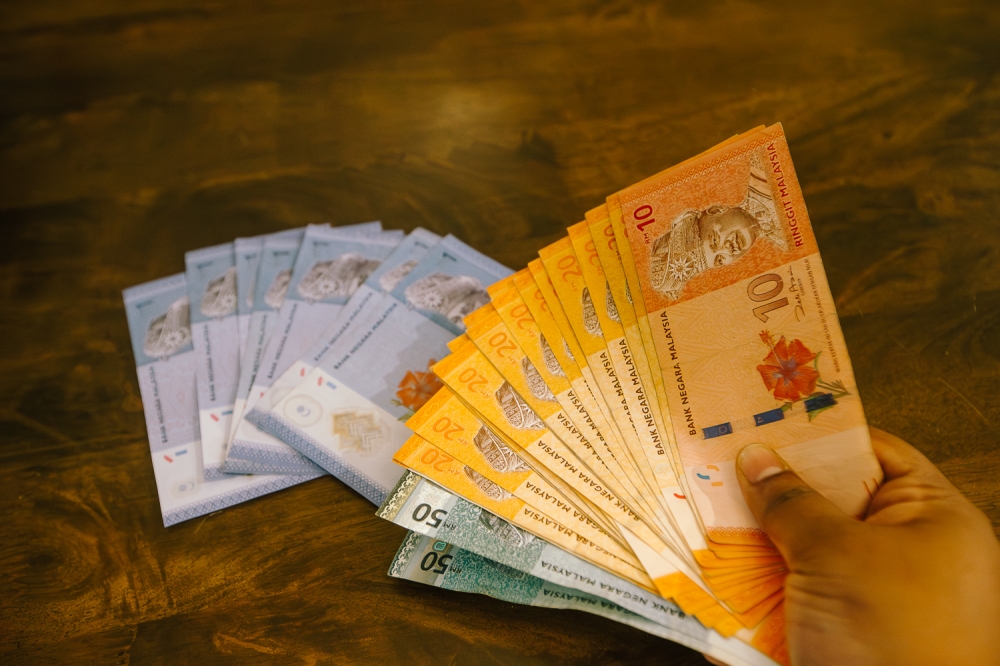
KUALA LUMPUR, June 8 — The ringgit ended lower against the US dollar today as stronger-than-expected United States (US) labour market data reinforced expectations that the US Federal Reserve would maintain its restrictive monetary policy stance, boosting demand for the greenback, an economist said.
At 6 pm, the local note depreciated to 4.0715/0760 against the US dollar from last Friday’s close of 4.0280/0320.
Bank Muamalat Malaysia Bhd chief economist Dr Mohd Afzanizam Abdul Rashid said the ringgit eased by 1.04 per cent against the US dollar, in tandem with most Asian currencies, which also traded lower against the greenback.
He said crude oil prices were also higher today due to the ongoing war between the US, Israel, and Iran, which will result in the closure of the Straits of Hormuz.
At the time of writing, the benchmark Brent crude oil increased 3.77 per cent to US$96.60 per barrel.
“A higher inflation rate going forward and how the global market would react to such macroeconomic conditions will be a key factor that will shape market sentiments.
“It appears that a higher benchmark interest rate seems to be the antidote for the currency, and this has led to cautious market sentiments,” he told Bernama.
Similar to its performance against the greenback, the ringgit also traded mostly lower against a basket of major currencies.
It depreciated against the British pound to 5.4249/4309 from 5.4233/4287 at the close last Friday, and slid against the Japanese yen to 2.5445/5475 from 2.5183/5209 last week, but turned slightly higher versus the euro at 4.6867/6919 from 4.6882/6928 previously.
The local currency also depreciated against regional peers.
It fell versus the Singapore dollar to 3.1577/1614 from 3.1390/1424 last Friday, and was down against the Thai baht at 12.3942/4128 from 12.3433/3605 previously.
It had also turned weaker against the Philippine peso to 6.60/6.61 from 6.55/6.56 last week, and eased against the Indonesian rupiah to 223.8/224.2 versus 223.3/223.6 previously. — Bernama


clgkhkrf54 posted a photo:
WPA Photographs of the Great Depression by Dorothea Lange. These images are on file at the Library of Congress under the 8 digit alpha-numeric code at the end of the file name. See: guides.loc.gov/migrant-mother

Travel back in time to hear the origin story of Algenesis, which started as two companies in one, a biotechnology innovator and footwear maker. Today, the company is a leading maker of bio-based plastics. In 2023, Algenesis had just begun making a new, sustainable material and found a clever way to prove its utility to get big companies to embrace it. Join the conversation hear why a shoe company was the best a practical application to prove the value of a plant-based, compostable bioplastic foam. Stephen Mayfield, a professor of Biology at UC San Diego and director of the California Center for Algae Biotechnology, invented Soleic, an algae-based rubbery foam material that can be used in footwear, surfboards, and other products in the place of petroleum-based polyurethane foam. He launched Algenesis, a biotechnology-based materials science company to commercialize Soleic.
Note: This article contains affiliate links that help fund our Recycling Directory, the most comprehensive in North America.
But shoe companies did not come running to use Soleic, which biodegrades completely in sea water and compost piles. Along with Algenisis president Tom Cooke, a footwear and apparel industry veteran who had worked for Reef and Vans, Steve launched Blueview Footwear, maker of the world’s first compostable shoe. Steve and Tom join me today to talk about the evolution of Algenesis and Blueview, as well as the many materials Soleic could replace across a variety of product categories. The companies have also developed compostable, plant-based fabrics and a bioplastic waterproofing technology that biodegrades into organic material in a home compost pile. You can learn more about Blueview Footwear at blueviewfootwear.com and its parent company Algenesis Materials at algenesismaterials.com.
Editor’s Note: This podcast originally aired on February 20, 2023.
The post Best of Sustainability In Your Ear: Algenesis & Blueview Launch the Algae-Based Polyurethane Industry appeared first on Earth911.

Even in the best case scenario, Canadians are set to pay $12 billion over the next 12 months due higher oil prices, a report by the Centre for future Work shows. Economist Jim Stanford said in the report that Canadians should fight the dominant narrative that these increased price pressures are a natural and inevitable side effect of the war in Iran.
“This is a lie intended to prevent Canadians from asking hard questions about why their living standards are being undermined by a far-off war that does not involve them,” he wrote in the report. “Prices for petroleum products have not shot up because of natural market forces. Events in the Persian Gulf are dramatically affecting our economy because of a policy choice, not laws of economic nature.”
The report projected that a lack of proper policy interventions will force Canadians to pay billions. The U.S. and Israel’s attacks on Iran led to the closing of the Strait of Hormuz which remains closed as of May 21.
Even if the Strait reopened immediately, Canadian consumers would pay an additional $12 billion over 12 months in direct higher fuel costs. If the Strait remains closed for three more months – approximately the amount of time it has been closed so far – Canadians would pay $30.6 billion in higher costs. Six more months, and Canadians pay $41.8 billion.
Canada is a net exporter of oil. As such, Stanford argues that Canadian oil prices don’t need to follow global trends too closely. However, these price shocks are occurring to line the pockets of big oil companies.
“They never waste a crisis,” Stanford said in an April webinar on oil prices. “Whatever the crisis of the moment is, it’s another reason to build a pipeline.”
Harnessing the profitability of the current crisis will increase profit margins for oil companies with devastating consequences for Canadian workers. In 2022, oil prices spiked in response to the Russian invasion of Ukraine. These price spikes were also criticized for being driven by profiteering rather than genuine market pressures.
In the subsequent years after the 2022 spike, the Bank of Canada raised interest rates to try and reign in inflation caused by higher oil prices. These measures pushed unemployment higher.
Labour and environmental groups are calling for a tax on the profits gleaned from rising oil prices to combat profiteering and serve the average Canadian. The Council of Canadians, 350.org Canada and the Alberta Federation of Labour have all called for a tax on oil companies’ war profits with the income being used to support Canadian households affected by the cost of living crisis.
Revenue from a tax on oil profits could also fund other forms of energy in Canada, Stanford noted in his report.
“Ultimately, the most certain way to reduce Canadians’ exposure to future volatility in oil prices will be to reduce the role of those products in the national energy system,” he wrote. “There are many reasons to support and accelerate the coming transition toward renewable and non-emitting sources of energy, including fulfilling Canada’s climate commitments and reducing energy costs. The consequences of the current oil price shock reinforce those motivations.”
The post Canadians could pay $12 billion over next 12 months in higher oil prices appeared first on rabble.ca.

The US-Iran conflict has propelled currencies from energy-exporting countries into the limelight, with windfall profits from exports of oil, gas and metals helping them to outperform the US dollar.

Amid rhetoric, market uncertainty and tit-for-tat exchanges, the two sides are still trying to find a way out of the impasse
Great news! Donald Trump has said the US and Iran are on the verge of a peace agreement. Oil prices are down, and the stock market is up. This comes only hours after Trump warned Iran was about to be struck “VERY HARD”, a threat that had sent oil prices up and stocks down.
It has been another ride on the Trump rollercoaster, keeping traders on edge, most of the world poorer, and people of the Middle East constantly whiplashing between fear and hope. But whether the ride veers up or down, the management always makes money.
Continue reading...
© Photograph: Kent Nishimura/AFP/Getty Images
© Photograph: Kent Nishimura/AFP/Getty Images
© Photograph: Kent Nishimura/AFP/Getty Images

Brazil's Federal Public Prosecutor's Office on Wednesday recommended that the Brazilian Institute of Environment (Ibama) not renew the environmental license of the country's only uranium mine, in operation since 1999, until the responsible company duly consults the quilombola communities potentially affected by the activity. The recommendation does not amount to a definitive closure of operations, but it does entail a suspension conditional on compliance with the requirement of prior consultation of the populations affected by the project, in line with the national and international norms in force.

A federal judge in Rio de Janeiro issued a preliminary injunction suspending the 12% crude oil export tax for five international companies operating in Brazil: Shell, TotalEnergies, Equinor, Repsol Sinopec and Petrogal. The ruling represents an initial court victory for the oil companies in their dispute with President Luiz Inácio Lula da Silva's government over a levy they consider unconstitutional.
