Cartoonist Anthony Haden-Guest sues socialite to get art back; NYC’s Museum of Modern Art to display their animation cels collection; the MAD King and the MAD Mascot; ASIFA-East Awards for 2026 includes the inaugural Cartoon Brew Award. Anthony Haden-Guest Sues to Get His Cartoons Back Peter Senzamici reports for The New York Post that cartoonist […]
Cartoonist Anthony Haden-Guest sues socialite to get art back; NYC’s Museum of Modern Art to display their animation cels collection; the MAD King and the MAD Mascot; ASIFA-East Awards for 2026 includes the inaugural Cartoon Brew Award. Anthony Haden-Guest Sues to Get His Cartoons Back Peter Senzamici reports for The New York Post that cartoonist […]
dannyhennesy posted a photo:
...I apologize for the messy room, but a battle agains time happens here every day in an attempt to make common matter in to gold...
Peace and Noise!
/ Mushroombrain the alchemist of art
Research & Developments is a blog for brief updates that provide context for the flurry of news that impacts science and scientists today.
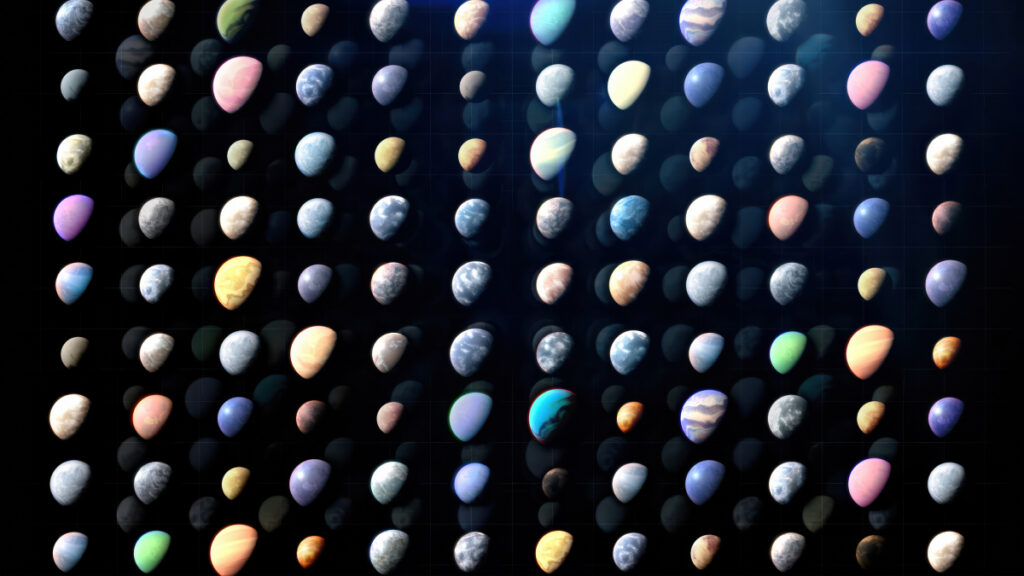
To date, astronomers have confirmed the existence of just under 6,300 exoplanets. New research could more than double that number, adding a potential 10,000 new planets in one fell swoop.
Yes, that’s right. A 1 with 4 zeros.
The T16 project has announced the discovery of 10,091 exoplanet candidates observed by NASA’s Transiting Exoplanet Sur
Research & Developments is a blog for brief updates that provide context for the flurry of news that impacts science and scientists today.
To date, astronomers have confirmed the existence of just under 6,300 exoplanets. New research could more than double that number, adding a potential 10,000 new planets in one fell swoop.
Yes, that’s right. A 1 with 4 zeros.
The T16 project has announced the discovery of 10,091 exoplanet candidates observed by NASA’s Transiting Exoplanet Survey Satellite (TESS). Since 2018, the all-sky survey has been monitoring more than 200,000 nearby stars using the transit method, which detects the faint dip in a star’s light when a planet crosses in front of it. Astronomers typically require 3 dips to be sure that what they’re seeing is actually a planet and not a one-off event such as an asteroid or comet in that distant star system.
The T16 project analyzed the light curves of more than 54 million stars observed during the first year of the TESS mission. The project’s analysis technique allowed it to search for planets around stars up to 16 times fainter than TESS typically searches, drastically increasing the field of discovery.
That’s more than were detected in the entirety of NASA’s Kepler mission and its follow-on K2.
Their pipeline detected 11,554 planet candidates. Of those, 1,052 of those had been detected previously and 411 only had one transit—not enough to confirm a planet.
That leaves 10,091 potential new planets. That’s more than were detected in the entirety of NASA’s Kepler mission and its follow-on K2 and more than double the existing planet candidates from TESS that await confirmation. These discoveries will be published in the Astrophysical Journal Supplement.
All of the new planet candidates orbit their stars quickly, with orbital periods between 12 hours and 27 days. Although most of the stars that TESS observes are smaller and cooler than the Sun, those close orbits likely mean that most of those planets are far too hot to be habitable.
The T16 project team confirmed the planet-hood of one of their candidates not using the transit method, but a different method that measures the gravitational tug a planet exerts on its host star. That planet, TIC 183374187, is hot and slightly larger than Jupiter.
The remaining 10,090 newly discovered planet candidates require additional verification to determine whether they truly are planets or not. But given the rigor of the team’s analysis and the requirement of at least 3 transits to even make this list, it’s likely that most of the new discoveries are indeed planets.
“Astronomers are a bit conservative when it comes to claims like this, and want to be sure they pass a bunch of tests to make sure everything was done correctly and these planets actually exist,” astronomer Phil Plait wrote in his Bad Astronomy Newsletter. “Having said that, the process the astronomers went through looks legit to me, and I would bet the majority of these new candidates are real. That’s amazing.”
These updates are made possible through information from the scientific community. Do you have a story about science or scientists? Send us a tip at eos@agu.org.
In ballpoint pen on found fragments of philosophical and historical texts, Habib Hajallie delves into the emotional realm of memory, connection, and loss. The Kent-based artist often celebrates Black cultural figures and beloved family members, along with examining his own personal experiences as a British man of Sierra Leonean and Lebanese heritage. In his current solo exhibition, Black & Blue at Larkin Durey, Hajallie grapples with the devastating stillbirth of his daughter and the “ind
In ballpoint pen on found fragments of philosophical and historical texts, Habib Hajallie delves into the emotional realm of memory, connection, and loss. The Kent-based artist often celebrates Black cultural figures and beloved family members, along with examining his own personal experiences as a British man of Sierra Leonean and Lebanese heritage. In his current solo exhibition, Black & Blue at Larkin Durey, Hajallie grapples with the devastating stillbirth of his daughter and the “indescribable emotions that sit beneath language,” says the gallery.
For this show, the artist deliberately switched from using black ballpoint ink to blue. As he made these works, Hajallie also reflected on the loss of his sister four years ago. Using antique maps and snippets of philosophical and sociological writings, he portrays subtle sides of what the gallery describes as “an altered sense of self.” Figures, including several self-portraits, exude feelings of despair, confusion, numbness, care, and the nuanced emotions that emerge in-between.
“Still Remain” (2026), ballpoint pen on antique texts, 11 3/8 x 16 1/2 inches
“While this series is concerned with the internal landscape of loss and what it means to endure a profoundly altered reality, each artwork has acted as an invaluable step towards healing,” the gallery says. “By drawing directly onto antique texts that explore morality, purpose, and transcendence, Hajallie’s personal pain enters into a wider conversation about finding meaning and the ways in which drawing can become a space of solace and catharsis.”
Black & Blue continues through May 22 in London. See more on the artist’s Instagram.
“A Refuge Among Reflections” (2026), ballpoint pen on antique texts, 33 1/8 x 23 1/4 inchesDetail of “A Refuge Among Reflections”“This Mind Hath Demolition Reached” (2025), ballpoint pen on antique texts, 11 3/4 x 16 1/2 inches“Nothing Else to Fear” (2026), ballpoint pen on antique texts, 33 1/8 x 23 1/4 inches“Arise and Walk Strongly and Fearlessly” (2026), ballpoint pen on antique texts, 33 1/8 x 23 1/4 inches
Neil Witte’s Ritual Pour events aim to showcase the art of beer through curated events that prove how you pour a beer really can affect flavor and aroma.
Neil Witte’s Ritual Pour events aim to showcase the art of beer through curated events that prove how you pour a beer really can affect flavor and aroma.
After six months of renovations and upgrades the Museum part of The Billy Ireland Cartoon Library & Museum will reopen Saturday May 23. Madeline Bradshaw for Ohio State University’s The Lantern reports: Ohio State’s Billy Ireland Cartoon Library & Museum, home to the world’s largest cartoon and comic collection, will turn a new page and […]
After six months of renovations and upgrades the Museum part of The Billy Ireland Cartoon Library & Museum will reopen Saturday May 23. Madeline Bradshaw for Ohio State University’s The Lantern reports: Ohio State’s Billy Ireland Cartoon Library & Museum, home to the world’s largest cartoon and comic collection, will turn a new page and […]
Rabbits and hares are often overlooked, even though they are a crucial part of our ecosystems serving as a key food source for many species and even an indicator of climate change.
“Poor rabbits. It’s the exact reason I started rehabbing them, because I felt sorry for them,” says Tallulah, founder of My Wildlife Rescue, the only authorized wildlife custodian in Ontario that specializes in rehabilitating neonatal and juvenile wild rabbits and hares. “Other animals have the ability to defend the
Rabbits and hares are often overlooked, even though they are a crucial part of our ecosystems serving as a key food source for many species and even an indicator of climate change.
“Poor rabbits. It’s the exact reason I started rehabbing them, because I felt sorry for them,” says Tallulah, founder of My Wildlife Rescue, the only authorized wildlife custodian in Ontario that specializes in rehabilitating neonatal and juvenile wild rabbits and hares. “Other animals have the ability to defend themselves.”
Tallulah, who opened her rescue in 2018, suggests there are two reasons that rabbits and hares are underrated animals: people see rabbits as common and often assume wild native rabbits and domestic rabbits are similar, so they lose interest in learning about wild ones. “Basically, they are just seen as common, and you can just get [a domestic] one in the store,” she says.
And unlike bears, lynx and wolves, “They aren’t charismatic megafauna…Humans like to learn about predators, I don’t know why, but it seems like something we can relate to,” Tallulah hypothesizes, “They are also very hard to study because they are small, quiet and active at dusk and dawn.”
Although largely understudied in Ontario, Tallulah argues that native rabbits and hares are sensitive indicators of climate change. Droughts, for example, can drastically reduce rabbit litters mid-summer, as extreme heat stresses mothers, limits food, and increases mortality among kits. “Last year, we had loads of babies in the spring, then nothing in the middle of the summer, and it picked up again in the fall,” says Tallulah, reflecting how a summer drought directly affects rabbit populations.
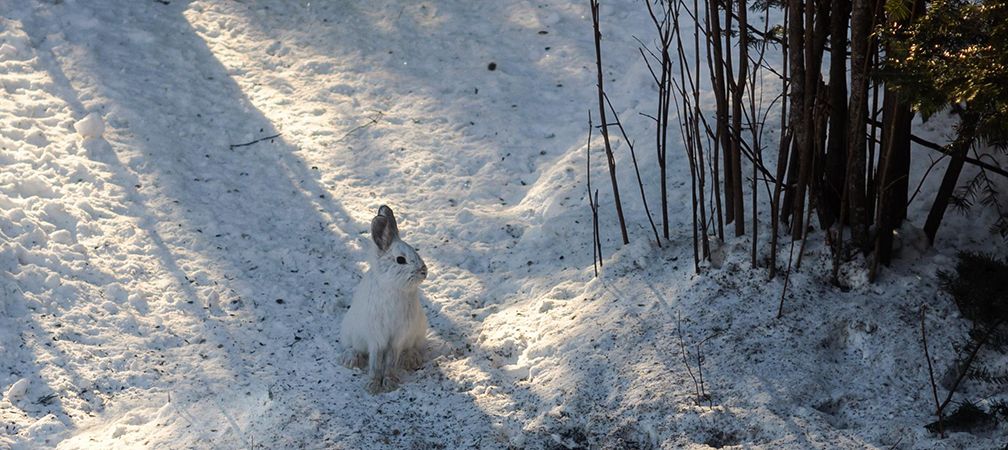
Snowshoe hares face another challenge: their fur changes colour based on day length, not snow cover. With winters arriving later and ending earlier, the white hares stand out against snowless ground, making them more vulnerable to predators. Changes in populations and survival rates of these animals reflect the broader impacts of shifting weather patterns.
Because wild rabbits and hares are often not seen as having economic value, rescues that care for them tend to receive limited public or government support and fewer donations. This is unfortunate, as species like the snowshoe hares form a crucial part of the food web. “They basically feed everybody. For example, the Canada lynx lives and dies by the cycle of the snowshoe hare. If there are very few hares, there will be very few lynx because that’s usually what they eat.”
At her Ottawa-based rescue, Tallulah cares for two of Ontario’s most common young rabbits (kits) and hares (leverets): Eastern cottontails and snowshoe hares. In total, Ontario is home to five species, including the white-tailed jackrabbit, Arctic hare in the far north, and the non-native European hare, which was introduced over a century ago but is rarely seen today. Chances are that the Eastern cottontail and snowshoe hare are the two you’ll most likely spot in the wild.
The Main Difference Between Rabbits and Hares
If you come across a young rabbit or hare, these key differences can help you identify them:
Rabbits are born blind, hairless, and completely helpless. They grow fur and open their eyes around seven to eight days old. Eastern cottontail rabbits build small nests, shallow indentations in the grass lined with fur and vegetation.
Hares are born with fur, with their eyes open, and are ready to move. Snowshoe hares do not burrow; instead, their leverets are born in the open. Within a day, the young start exploring and hiding, though they remain near the birthplace because the mother returns twice daily to feed them, similar to Eastern cottontails. Additionally, mature hares fur changes colour with seasons, helping them blend into their environment.
How to Help Rabbits and Hares
“Everybody can do something [to help rabbits and hares this spring],” says Tallulah. Here’s what she recommends:
Let grass grow the entire season, from early spring until late fall. Avoid mowing certain areas as tall grass provides food, cover and nesting spots. Mowing grass risks destroying nests and hurting or killing the kits and leverets.
For adult rabbits and hares living in the wild, provide clean water, not food. Never feed or attempt to tame wild rabbits and hares.
Plant native vegetation. Include extra vegetables in your garden for the rabbits instead of chasing them or letting pets harass them. “They don’t have a grocery store they can go to. Be kind,” says Tallulah.
Keep pets in check: Leash dogs and keep cats indoors or build a catio to protect wildlife.
Avoid rodenticides. Hire professionals that use humane ways to capture animals and keep harmful chemicals out of the food chain.
For wild rabbits and hares that need help, contact a wildlife centre that takes in rabbits. Tallulah also warns that domestic rabbits should never be released into the wild. Their bright colours make them easy targets for predators, and they lack the camouflage, instinct and hardiness of wild rabbits and hares. Additionally, they are too friendly towards humans and pets and the harsh climate is fatal for them. Released domestic rabbits often die quickly from starvation, predation or disease. Contact a rabbit rescue like https://rabbitrescue.ca/ or use this rabbit rescue resource page https://wabbitwiki.com/wiki/Ontario to rehome an unwanted pet.
Legal experts tell PEOPLE the dispute may come down to whether trust assets Nick Reiner claims became his before his parents' deaths can still be blocked under California's Slayer Statute
Legal experts tell PEOPLE the dispute may come down to whether trust assets Nick Reiner claims became his before his parents' deaths can still be blocked under California's Slayer Statute
Banks claims in the lawsuit that only 16 minutes of her three-and-a-half-hour interview were used in 'Reality Check: America's Next Top Model,' and that "accountability" was a major part of her conversation that wasn't featured
Banks claims in the lawsuit that only 16 minutes of her three-and-a-half-hour interview were used in 'Reality Check: America's Next Top Model,' and that "accountability" was a major part of her conversation that wasn't featured

 Login
Login


:max_bytes(150000):strip_icc():format(jpeg)/Julie-Chrisley-Todd-Chrisley-052726-f790ccc6b75a44f395cbfb3cbd6d268d.jpg)



:max_bytes(150000):strip_icc():format(jpeg)/nick-reiner-court-1-022326-725ede5a11de4bce823004d34df1a14a.jpg)
:max_bytes(150000):strip_icc():format(jpeg)/tyra-banks-franca-fund-gala-021726-aa39ca6e92b14d44b563b394a88eb18e.jpg)

