Normal view

JB High Court sentences man to 35 years jail, 12 whips of the cane for killing girlfriend, whose body was dumped by roadside in box

29 April 2026 at 12:19

Malay Mail

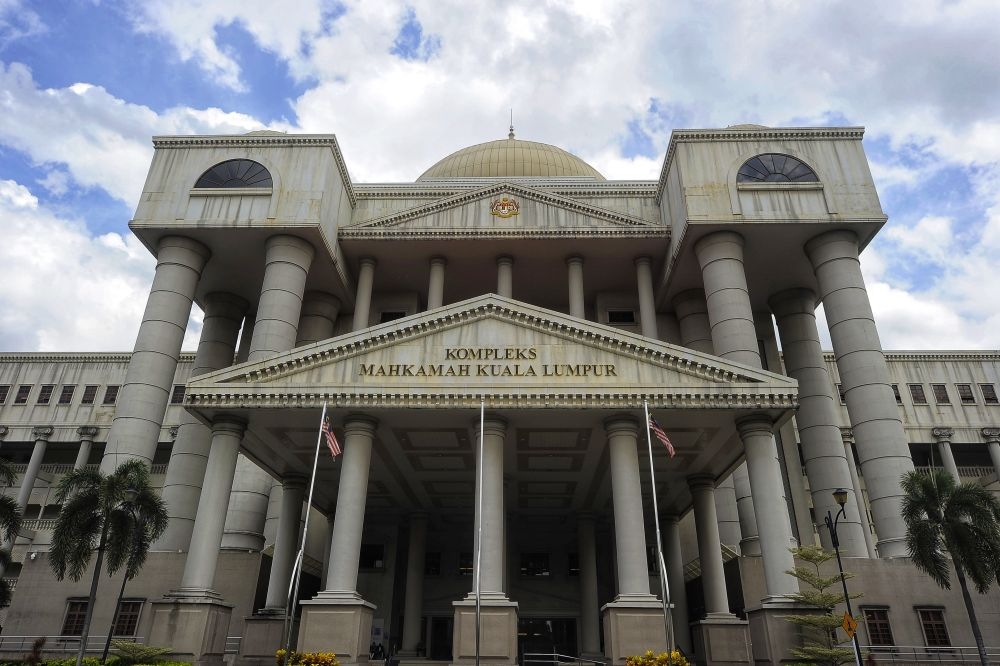
JOHOR BAHRU, April 29 — A 42-year-old former dental prosthetist was sentenced to 35 years in prison and 12 strokes of the cane by the High Court here today for killing his girlfriend about seven years ago.

Judge Atan Mustaffa Yussof Ahmad handed down the sentence to the accused Lim Siong Kim after finding that the defence had failed to raise any reasonable doubt against the prosecution’s case.

The court ordered for the accused’s prison sentence, imposed at the end of the defence case, to run from the date the accused was arrested, which was June 10, 2019.

In his judgment, the Atan Mustaffa said the accused was the last person seen with the victim, where her deoxyribonucleic acid (DNA) was also found in the accused’s denture workshop.

He said there was also a testimony from Lim’s friend who confirmed that he had helped the accused dispose of the box containing the victim’s body in Taman Setia Indah.

The accused himself had also guided authorities to the location where the box was dumped.

Based on the charge sheet, Lim is charged with the murder of 33-year-old Teo Kang Ling at No. 17-01, Jalan Setia Indah here at about 8am on June 3, 2019.

For the act, the accused was charged under Section 302 of the Penal Code for murder.

The prosecution was conducted by Deputy Public Prosecutor Lydia Salleh, while the accused was represented by counsels G. Ravi, Aida Hassan, Datin Freda Sabapathy and S. Saravanan.

Throughout the proceeding, a total of 12 prosecution witnesses were presented, while the defence presented two witnesses during their proceedings.

Based on the prosecution’s facts, the victim’s cause of death was from drowning due to obstruction of the respiratory tract.

On June 11, 2019, it was reported that a box containing a dead female body was found by the side of a road in the Taman Setia Indah industrial area here.

The discovery later led authorities to the case involving the disappearance of the woman involved, who was last contacted on May 29, 2019.

The woman, described as the accused’s girlfriend, was said to have been killed elsewhere, before her body was placed inside the box and kept.

However, when the victim’s body started to decompose and emitted a strong stench, the accused approached his friend to help him dump the box containing his lover’s remains.

Lim was then charged at the Magistrate’s Court here, on June 23, 2019 on charges of murder before the case was transferred to the High Court here for trial.


  • ✇Malay Mail - All
  • Why budget transparency is the fight of our time — Ahmad Ibrahim
    APRIL 29 — Let’s talk about the most powerful tool you’ve never seen: the national budget. In most developing economies, it’s often treated as a state secret, a technical document debated behind closed doors. But a groundbreaking new synthesis of global research, led by Sazzad Islam, reveals a seismic shift in opinion. The study, “A Systematic Review of Public Budgeting Strategies in Developing Economies,” isn’t just academic. It’s a blueprint for a revolution in
     

Why budget transparency is the fight of our time — Ahmad Ibrahim

29 April 2026 at 03:07

Malay Mail

APRIL 29 — Let’s talk about the most powerful tool you’ve never seen: the national budget. In most developing economies, it’s often treated as a state secret, a technical document debated behind closed doors. But a groundbreaking new synthesis of global research, led by Sazzad Islam, reveals a seismic shift in opinion. The study, “A Systematic Review of Public Budgeting Strategies in Developing Economies,” isn’t just academic. It’s a blueprint for a revolution in governance, proving that how money is planned and spent is the ultimate test of a government’s integrity and effectiveness. Are we there yet?

For decades, the story has been grim. Opaque budgeting fuels a vicious cycle: corruption siphons funds, misaligned spending widens inequality, and public trust evaporates. Citizens see crumbling schools and ghost hospitals while officials drive luxury cars. This isn’t just inefficiency; it’s a direct attack on development and democracy. But Islam’s review uncovers a potent antidote spreading across the Global South: strategic transparency. This isn't about just dumping complex PDFs online. It's about a fundamental redesign of the budgeting process with two powerful engines.

First, participatory budgeting. The research shows that when citizens are given real seats at the table — through town halls, citizen assemblies, and digital platforms — magic happens. Spending priorities shift from political vanity projects to tangible community needs: clean water, rural clinics, feeder roads. Porto Alegre, Brazil, pioneered this, but the model is now taking root from Kenya to Indonesia. It transforms the budget from an imposition into a social contract, building legitimacy and reducing conflict. We have to start looking at this.

Second, performance-based budgeting. This strategy moves beyond simply accounting for where money went to demanding proof of what it achieved. Instead of funding a “health department,” you fund “reduce maternal mortality by X per cent.” This data-driven approach, supported by independent audit bodies, creates an unbreakable chain of accountability. It empowers reformers within government to cut waste and rewards effective programs, making every dollar a measured investment in the public good.

The Ministry of Finance in Putrajaya. The author argues that transparent, participatory, and performance-based budgeting is essential for improving governance, reducing corruption, and strengthening public trust, and that Malaysia must reform its budget process to ensure accountability and equitable development. — Picture by Raymond Manuel

The findings are clear: these tools are not Western impositions. They are homegrown, context-sensitive solutions that share a common thread — they shine a light. Transparency disarms corrupt networks. Participation builds civic muscle. Performance data arms citizens with facts. 

Yet the greatest barrier isn’t technical; it’s political. These strategies redistribute power from closed, vested interests to the public. Their adoption requires courageous leadership and sustained pressure from civil society and media. International partners must move beyond demanding austerity to actively funding and championing these governance innovations.

The message from this comprehensive review is urgent and optimistic. The path to stability and equitable growth in developing economies doesn’t start with a new loan or a resource discovery. It starts with a ledger. By fighting for a budget that is open, inclusive, and results-focused, we aren’t just tweaking fiscal policy. 

We are building nations where governments are truly accountable to the people they serve. The budget, it turns out, is the most important political document in the world. It’s time we all started reading it. It is time for all countries to take heed of the analysis generated by the review.

Many call for Malaysia to also reform the budget process if we are to truly achieve sustainability and equitable growth. On the way forward, first, Malaysia must institute real parliamentary reform. This means a powerful, bi-partisan Public Accounts Committee (PAC), specialised budget committees, and sufficient time and resources for MPs to scrutinise estimates. The budget must be pulled apart in daylight. 

Second, we need a transparent and participatory pre-budget process. Public consultations, green and white papers, and independent impact assessments should be mandated, moving the process from the closed doors of the Treasury and political warlords into the public domain. 

Third, and most crucially, the country must begin a painful but necessary conversation about moving from a patronage-based to a needs-based and performance-based allocation system. This does not mean abandoning affirmative action, but rather subjecting it to the same tests of effectiveness, efficiency, and equity that any major public expenditure should face.

* Professor Datuk Ahmad Ibrahim is affiliated with the Tan Sri Omar Centre for STI Policy Studies at UCSI University and is an Adjunct Professor at the Ungku Aziz Centre for Development Studies, Universiti Malaya. He can be reached at ahmadibrahim@ucsiuniversity.edu.my 

** This is the personal opinion of the writer or publication and does not necessarily represent the views of Malay Mail.

Race to net-zero: The role and impact of nuclear power — Sheriffah Noor Khamseah Al-Idid Dato Syed Ahmad Idid

28 April 2026 at 07:25

Malay Mail

APRIL 28 — Destructions to homes, infrastructures, livelihood and lives have put climate action at the centre of discussions, planning and investments.

Pledges to reach net-zero

Carbon dioxide emissions have been increasing since the 1700s and escalated significantly since the 1970s resulting in climate change severe climate related events including global warming and severe and frequent floods.

Recognising the severity of climate change escalating into climate crisis and climate catastrophe, nations, government and businesses have pledge to reach net-zero, with majority targeting to reduce carbon emissions to net zero by 2050, some a little earlier and others a little later, striving to achieve the Paris Agreement target of preventing temperature rise to 1.5 degrees C and worst case 2.0°C by 2050.

The IPCC of the UNFCC Reports and Meetings at Conference of Parties (COP) to the United Nations Framework Convention on Climate Change which was first organised in 1995 (COP1), had since its first session (COP1) in 1995 and till subsequent IPCC Reports and COPs decades later, focussed solely on Renewable Energies role in climate change.

Nuclear power was previously not included in the conversation on climate change until IPCC AR4, subsequent Special Reports in 2018 and IPCC Sixth Assessment Report ( of Working Group III in 2022) and COP28 held in Dubai, UAE.

The author argues that nuclear power must be urgently integrated into Malaysia’s energy strategy to meet rising electricity demand and achieve net-zero targets, as global evidence shows it is a critical low-carbon solution alongside renewables. — Reuters pic

IPCC Sixth Assessment Report, International Energy Agency’s (IEA’s) World Energy Outlook and COP28 in UAE had ushered in a critical turning point for nuclear power 

IPCC Assessment Reports

i) IPCC Fourth Assessment Report (AR4) released in 2007

A sea change in climate discussions and planning was reflected in the Intergovernmental Panel on Climate Change’s Report by its Working Group III which had acknowledged the role of nuclear energy as a ‘key mitigation technology’, but said that safety, weapons proliferation and waste remain as constraints.

World Nuclear Association reported in May 2007 that the report concludes that there are mitigation options available that could be used to stabilise atmospheric greenhouse gas emissions. Stabilisation between 445 and 710 parts per million of CO2-eq would, the IPCC projects, result in a change in global gross domestic product ranging between a 3 per cent decrease and a small increase. 

The report notes that to achieve the lower stabilisation levels will require greater emphasis on low carbon energy sources “such as renewable energy and nuclear power.”

ii) IPCC Special Report on Climate Change released in 2018, outlining Nuclear Power’s Role in Climate Change

The World Nuclear Association (WNA) reported in 8 October 2018 that the IPCC has released a special report on the impacts of climate change. The Report concludes that achieving the 1.5°C goal will require global greenhouse gas emissions to start reducing almost immediately. This will require a faster switch to electricity for energy end use and for that greater electricity demand to be met by low-carbon generation, including nuclear. Nuclear generation increases, on average by around 2.5 times by 2050 in the 89 mitigation scenarios considered by the IPCC.

Achieving a rapid decarbonisation of the electricity sector will require, at first, deploying proven technology. The report recognises that the projected increase in nuclear generation can be realised through existing mature nuclear technology or through new options such as generation III/IV reactors and SMRs. Generation III reactors have already come into operation in several countries.

The report notes that, historically, ‘scalability and speed of scaling of nuclear plants have been high in many nations’, noting that France implemented a programme to rapidly get 80 per cent of its (electrical) power from nuclear. The report also notes that ‘comparative risk assessment shows health risks are low per unit of electricity production’ and land requirement is ‘lower than that of other power sources.’

The report states that nuclear economics have been improved in countries where the electricity system allows for reduced investment risks, the realisation of benefits from series build or through stable relations between regulators and industry. However, in some other countries market conditions have increased investment risks of high-capital expenditure technologies, such as nuclear. The report also notes that the current deployment pace of nuclear energy is constrained by ‘social acceptability’ in some countries.

iii) IPCC Sixth Assessment Report (AR6) released in 2001-2023

The IPCC had highlighted that during the sixth assessment cycle (October 2015 to July 2023) the IPCC produced the Sixth Assessment Report (AR6) with contributions by its three Working Groups and a Synthesis Report, three Special Reports, and a refinement to its latest Methodology Report, with the Working Group I of IPCC AR6 contribution released on August 9, 2021, the Working Group II and III contributions released on February 28 and April 4, 2022 respectively and the Synthesis Report released on March 20, 2023.

The IPCC Working Group III contribution, Climate Change 2022: Mitigation of Climate Change released on April 4, 2022 had advocated for a “broad-based approach to deploying energy sector mitigation options can reduce emissions over the next ten years and set the stage for still deeper reductions beyond 2030 and had also identified that “when switching to low-carbon energy sources — renewable sources, nuclear power, and fossil or bioenergy with CCS — electricity is expected to become a more pervasive energy carrier.”

In summary, the IPCC has identified nuclear power, in addition to renewable sources and fossil or bioenergy with CCS as key low carbon energy sources necessary to reduce carbon emission.

Conference of Parties (COP) to the United Nations Framework Convention on Climate Change (UNFCCC)

COP28 in Dubai, UAE in 2023 had ushered in a critical turning point for the nuclear industry as leaders from 25 countries had signed a pledge to triple nuclear capacity from nearly 400 GW to 1200 GW by 2025.

COP 29 in Baku Azaerbaijan and COP30 in Brazil had witness more countries signing this pledge; to tripling nuclear power by 2050; with six additional countries — El Salvador, Kazakhstan, Kenya, Kosovo, Nigeria, and Turkey — signed the declaration to triple global nuclear energy capacity by 2050 at COP29 which had brought the total number of signatories to 31 and with two additional countries Rwanda and Senegal as new signatories at COP30 which had brought the total number of signatories to 33.

And most recently at the second Nuclear Energy Summit in Paris, on March 10, 2026, China formally joined the international pledge to triple global nuclear energy capacity by 2050 bringing the total number of signatories to this pledge to 34.

With these global recognition by the IPCC, COP as well as Governments worldwide, thus it is testimony to the increasing important role of nuclear power in climate change mitigation.

Malaysia’s plans for Racing to Net Zero and its National Energy Transition Roadmap (NETR)

Recognising the paramount important of reaching net zero, the Government had introduced roadmaps and institutional changes to guide Malaysia’s transition to a clean energy system and a sustainable economy.

National Energy Transition Roadmap (NETR)

NETR developed by the Ministry of Economy was launched in 2023, with Phase 1 unveiled on July 27, 2023, and Phase 2 announced on August 29, 2023 and had identified six key energy transition levers to achieve net-zero emissions by 2050: Energy Efficiency (EE), Renewable Energy (RE), Hydrogen, Bioenergy, Green Mobility, and Carbon Capture, Utilisation, and Storage (CCUS).

Ministry of Energy Transition and Water Transformation (Petra)

Upon its creation on December 12, 2023, the Ministry of Energy Transition and Public Utilities was formed by a split from the previous Ministry of Natural Resources, Energy and Climate Change (NRECC) and On February 8, 2024, the ministry was renamed the Ministry of Energy Transition and Water Transformation (Petra).

Malaysia a hotspot for Data Centres

The Digital Gold rush spurred by the AI Revolution has resulted in the massive investments in/by Data Centres, in particular in specific locations of Johor and Kuala Lumpur Data Centre Asia had highlighted that as of 2025, Malaysia hosts a total of 125 operational data centres, according to Baxtel, distributed across various regions, with the majority located in Kuala Lumpur and Johor. Kuala Lumpur leads with 65 data centres, while Johor follows with 47.

Additionally, there are 18 data centres under construction in Kuala Lumpur and 15 in Johor, indicating ongoing growth in the sector.

Data Centres impacting energy demand and carbon emissions

The International Energy Agency (IEA) had reported that the rise of AI is accelerating the deployment of high-performance accelerated servers, leading to greater power density in data centres, and in 2024 electricity consumption from data centres is estimated to amount to around 415 terawatt hours (TWh), or about 1.5 per cent of global electricity consumption.

Precedence Research had spotlighted that the electricity consumption of data centres is set to grow rapidly, with a projected 945 TWh demand by 2030, contributing to 3 per cent of global electricity usage.

Additionally, IEA reported that data centres and data transmission networks are responsible for 1 per cent of energy-related GHG emissions.

The world cannot reach net-zero in time without nuclear power

At the Inaugural Nuclear Energy Summit 2023 in Brussels, Dr Birol Executive Director of the International Energy Agency (IEA) had remarked “The world cannot reach net zero in time without nuclear power”.

Additionally at the Singapore International Energy Week 2025 (2025) Dr Fatih had highlighted that nuclear power is undergoing a strong global comeback, driven by energy security concerns and rising demand from AI and electric vehicles.

Ms Sheriffah had the honour to meet His Excellency Dr Fatih Birol at Singapore International
Energy Week 2025 (SIEW 2025).
Ms Sheriffah had the honour to meet His Excellency Dr Fatih Birol at Singapore International Energy Week 2025 (SIEW 2025).

And at the International Conference on the Role of Nuclear Power in Climate Change, Dr Fatih had shared the prescription for Success for nuclear to effective contribute to net zero:

i) Continue Building Large proven reactors

ii) Extend the lifetime of present operating reactors

iii) Embrace in innovation such as Small Modular Reactors

Recommendations for Malaysia

In Malaysia’s quest to rise the wave of the AI revolution and supporting massive investments and new builds of data centres, the Government must be, and I am confident are already cognisant, of the fact that this will result in escalation in energy demand and increase in carbon emission which will impact and affect the nation’s energy transition pathways as well as climate and sustainable goals and target.

Thus, to ensure Malaysia races to net zero in time, I would like to offer the following recommendations to the Government:

1. Malaysia to shift from exploring and discussing about nuclear power to firmly deciding on diversifying the nation’s energy mix, investing first in large proven reactors to close the energy gap

2. NETR although initially developed by Ministry of Economy under previous Minister YB Rafizi Ramli must now be transferred to the Ministry of Energy Transition and Water Transformation (Petra) in view of this new Ministry’s role and mandate on Energy Transition

3. Malaysia to include Nuclear Power in Revised Updated NETR after Government makes a decision to Go Nuclear and further diversifying energy mix

4. After SMRs have proven to be cost effective and can be successfully built without issues, then Malaysia to decide on the choice of SMRS available, Russia’s Floating Nuclear Power Plant (FNPP) by Rosatom, China’s 125MWe Linglong One ACP-100 by China National Nuclear Corporation (CNNC), set to be the world’s first commercial on-shore SMR and expected to be commercialised by first half of 2026 or the western world’s 300MWe BWRX-300 developed by GE Vernova Hitachi especially to power Data centres which require smaller capacities. Larger nuclear power reactors would be suitable to power hyperscalers.

5. However a simultaneous extensive and effective public awareness and stakeholder Engagement programme must be initiated and conducted to assure public the justification and motivations for Malaysia investing in nuclear power and to ally their fears sharing safety mechanisms put in place to ensure safe operations of both large and small nuclear power reactors to diversity Malaysia’s energy mix for the benefit of the rakyat.

* Sheriffah Noor Khamseah Al-Idid Dato Syed Ahmad Idid is Consultant Nuclear Power, Venture Capital and Innovation.

** This is the personal opinion of the writer or publication and does not necessarily represent the views of Malay Mail.

Cancer care demands rising, Health Minister highlights shortage of oncologists despite workforce increase

27 April 2026 at 08:53

Malay Mail

KUALA LUMPUR, April 27 — Cancer remains the third leading cause of death in Malaysia, with about 40,000 new cases recorded annually, underscoring mounting pressure on the country’s healthcare system and workforce capacity.

Health Minister Datuk Seri Dr Dzulkefly Ahmad said the nation must confront the reality of an increasingly complex cancer burden, stressing that healthcare professionals, particularly oncologists, are central to sustaining an effective national response.

“We must be candid about the landscape we are facing. Cancer remains the third highest cause of death in Malaysia, with approximately 40,000 new cases reported each year.

“To meet this challenge, our workforce is our greatest asset,” he said when officiating the ‘Women in Oncology Forum: Giving Value, Gaining Impact’, here yesterday. 

Organised by Roche Malaysia, the inaugural forum brought together women oncologists nationwide to exchange perspectives on mentorship, leadership and professional development in cancer care.

Malaysia currently has about 84 oncologists nationwide, a 60 per cent increase since 2019, but the number remains insufficient to meet the rising and increasingly complex care demands.

Dzulkefly said the Health Ministry remains committed to a “whole-of-society” approach, acknowledging that government efforts alone are not enough to address such multifaceted healthcare challenges.

He pointed to the “Cancer Care Closer to Community” initiative, a collaboration with Roche Malaysia, as a key example of efforts to decentralise cancer care and improve access to treatment, particularly in underserved areas.

Beyond capacity challenges, Dzulkefly touched on the human dimensions of oncology, describing it as a demanding field that requires resilience, coordination and continuous learning.

He also highlighted the added pressures faced by women oncologists, who often balance professional responsibilities with personal commitments while continuing to deliver high-quality care.

“For many women in this field, these professional demands are often compounded by responsibilities beyond the workplace. Yet, you continue to show up with resilience, compassion and an unwavering commitment to your patients,” he said.

Also present were Roche Malaysia general manager Deepti Saraf and the Ministry of Health’s Deputy Director-General of Health (Research and Technical Support), Datuk Dr Nor Fariza Ngah. — Bernama

‘True face of the Ministry of Health workforce’: Minister salutes Semporna mobile team for mid-sea rescue (VIDEO)

26 April 2026 at 06:10

Malay Mail

KUALA LUMPUR, April 26 — Health Minister Datuk Seri Dzulkefly Ahmad today praised the Semporna Community Mobile Boat Clinic team for their swift and courageous rescue of two island residents whose boat capsized in Sabah waters last week.

The incident occurred on April 22 after the two residents had received treatment for non-communicable diseases and were heading home when their vessel overturned and sank, with both nearly losing their lives after suffering muscle cramps at sea.

“Mr Azalan (Boat Crew): Without hesitation, he immediately jumped into the sea to rescue the victims,” Dzulkefly said in a Facebook post.

He also gave a shout-out to the captain and two other members, whom he identified only by their personal names as Suaimi, Samsi and Ansu.

“With great skill, he ensured a life buoy was thrown accurately to the victims,” he said of Suaimi.

“Mr Samsi & Mr Ansu: They not only helped secure the victims’ safety, but also saved the boat itself because for residents here, a boat is their lifeline and source of income.

“This is the true face of the Ministry of Health workforce. The motto ‘We Are Ready to Help’ is not merely a slogan on paper, but a reflection of sacrifice shown through action, even when their own lives are at risk,” he added.

Dzulkefly said he felt both sadness and pride after watching footage of the rescue, describing the team’s actions as an example of dedication beyond the call of duty.

He also highlighted the determination of island residents who continue to brave rough seas in small boats to obtain medicine and treatment.

The minister said their resilience strengthened his commitment to ensure quality healthcare services continue reaching remote coastal areas and islands.

He also thanked the entire Semporna team, describing them as unsung heroes who serve with heart and courage.


  • ✇Malay Mail - All
  • MOH launches oral health drive, targets older adults to keep 20 teeth by 2030, says Dzulkefly
    KUALA SELANGOR, April 26 — The Ministry of Health (MOH) is targeting more than 50 per cent of senior citizens to retain at least 20 natural teeth by 2030, in line with the National Oral Health Strategic Plan 2022-2030.Health Minister Datuk Seri Dr Dzulkefly Ahmad said that based on the National Oral Health Survey of Adults (NOHSA) 2020, only 34.3 per cent of senior citizens have at least 20 natural teeth, while 13.9 per cent experience oral functional limitations
     

MOH launches oral health drive, targets older adults to keep 20 teeth by 2030, says Dzulkefly

26 April 2026 at 05:43

Malay Mail

KUALA SELANGOR, April 26 — The Ministry of Health (MOH) is targeting more than 50 per cent of senior citizens to retain at least 20 natural teeth by 2030, in line with the National Oral Health Strategic Plan 2022-2030.

Health Minister Datuk Seri Dr Dzulkefly Ahmad said that based on the National Oral Health Survey of Adults (NOHSA) 2020, only 34.3 per cent of senior citizens have at least 20 natural teeth, while 13.9 per cent experience oral functional limitations that affect their quality of life.

“Teeth are the gateway to the body. We want to ensure this gateway continues to function and protect against various risks, including infections and food-related issues, which are very important.

“I have stressed that there is no health without oral health, as it reflects the crucial role of dental health in maintaining overall well-being,” he said when met after launching the 6020 Campaign and the National-level Kembara Senyuman 2026 programme here today.

Dzulkefly said that to ensure the target is achieved, the ministry will roll out the Kembara Senyuman initiative nationwide, offering services such as denture provision directly to communities, care centres and rural areas.

He said efforts to ensure no one is left behind in accessing oral healthcare will include the use of 3D digital technology (3DDT) to produce high-quality dentures quickly.

He added that the initiative is among the government’s proactive measures in addressing the challenges of an ageing population, with the latest statistics showing that those aged 65 and above have reached 8.0 per cent of the population in 2025.

“Outreach programmes, or approaches that extend services to rural areas, are crucial to ensure no one is left behind, particularly among vulnerable or high-risk groups.

“We want to ensure that healthcare services and care continue to be delivered comprehensively, with a focus on senior citizens, the infirm, persons with disabilities, as well as those living in remote areas,” he said. — Bernama

  • ✇Malay Mail - All
  • Why our policy reversals need more than just guesswork — Ahmad Ibrahim
    APRIL 26 — Malaysia’s recent strides are undeniable. Economic indicators are promising, political calm offers a welcome respite, and education has rightly been placed at the forefront of the national agenda. Kudos to the Madani unity government. The launch of a new, comprehensive education blueprint signals ambition. Yet, a single decision within it — the restoration of high-stakes examinations for Primary 6 and Form 3 — has ignited a firestorm of debate. This co
     

Why our policy reversals need more than just guesswork — Ahmad Ibrahim

26 April 2026 at 05:38

Malay Mail

APRIL 26 — Malaysia’s recent strides are undeniable. Economic indicators are promising, political calm offers a welcome respite, and education has rightly been placed at the forefront of the national agenda. Kudos to the Madani unity government. The launch of a new, comprehensive education blueprint signals ambition. 

Yet, a single decision within it — the restoration of high-stakes examinations for Primary 6 and Form 3 — has ignited a firestorm of debate. This controversy is not merely about examinations; it is a symptom of a deeper, systemic ailment plaguing Malaysian governance: the chronic weakness in policy monitoring, evaluation, and transparent communication.

The government’s move to reinstate these exams is presented as a corrective, a return to rigour after years of a more holistic, assessment-heavy approach. However, the profound flaw lies in the admission, as noted by observers, that this pivot appears to be made “with no real data and evidence to suggest the no-exam system is not good.” This is governance by anecdote, not evidence. It risks replacing one system, whose full effects may not have been rigorously measured, with another based on perception or nostalgia. 

Did the previous policy fail to improve critical thinking? Did it worsen learning gaps? Was teacher training inadequate for its implementation? Without clear, publicly shared answers to these questions, the reversal seems arbitrary, undermining public trust and subjecting children to the whims of political cycles rather than pedagogical science. Many view this as unhealthy.

The author argues that Malaysia’s policy reversals — exemplified by the reinstatement of high-stakes school exams — highlight a deeper failure in evidence-based governance, and that the country urgently needs independent, transparent policy evaluation mechanisms to ensure decisions are guided by data rather than perception. — Unsplash pic

This education debate is a microcosm of a larger national challenge. Malaysia often excels at crafting sophisticated blueprints and launching well-intentioned policies. Where it repeatedly stumbles is in building a robust, independent, and transparent mechanism to ask the simple, vital questions: Is this working? For whom? At what cost? What needs to change? 

The absence of such a culture of continuous evaluation creates a policy vacuum. Success is claimed rhetorically, failures are buried, and the public is left in the dark. This leads to a disjointed cycle of launch, forget, and reactive U-turn, rather than one of launch, learn, and refine.

What is urgently required is a fundamental institutional shift. We need to normalise Independent Policy Auditing. Imagine a respected, non-partisan body — or a strengthened role for existing institutions like the Auditor-General’s Office or a parliamentary select committee — mandated to conduct and publish periodic, publicly accessible impact assessments of major national policies. This body would not merely track budget spending, but evaluate outcomes: Did the STEM promotion drive increase qualified graduates? Did the affordable housing scheme create sustainable communities? Did the no-exam policy reduce student anxiety without compromising foundational skills? Is the NIMP or NETR delivering on the promises of the blueprints?

Such a system would serve a dual purpose. First, it would empower evidence-based iteration. Policymakers could detect gaps and make mid-course corrections based on data, not dogma. If exams are restored, within two years we should know their effect on dropout rates, student well-being, and equity — and be prepared to adjust. Second, it would rebuild public trust through transparency. 

When findings — both positive and negative — are communicated plainly to all stakeholders (parents, teachers, industry, voters), policy becomes a shared national project, not a top-down decree. It transforms citizens from passive recipients into informed participants. This is a more scientific way of assessing policies.

The restoration of exams may yet prove to be the right decision. But without a system to prove it — or disprove it — we are condemned to repeat the same debates every few years. Malaysia’s current stability and economic momentum provide the perfect platform to institutionalise smarter governance. We must move beyond the cycle of “announce and abandon.” Let the education blueprint be the first policy whose journey is meticulously tracked, audited, and publicly debated. 

Our goal should not be to be merely right about exams, but to build a system that relentlessly pursues what works best for Malaysia’s future. The true test is not the one we give our students, but the one we now face in strengthening the foundations of our own governance. This way, there will be more continuity in the country’s many plans and blueprints.

* Professor Datuk Ahmad Ibrahim is affiliated with the Tan Sri Omar Centre for STI Policy Studies at UCSI University and is an Adjunct Professor at the Ungku Aziz Centre for Development Studies, Universiti Malaya. He can be reached at ahmadibrahim@ucsiuniversity.edu.my.  

** This is the personal opinion of the writer or publication and does not necessarily represent the views of Malay Mail.

❌