Exclusive: Economists say falling house prices are largely in the more expensive parts of Sydney and Melbourne’s markets and are less likely to affect first-time property ownersFears that first-time buyers with tiny deposits will find their mortgages are worth more than their homes may be assuaged by new data showing falling prices are concentrated in the top end of the Sydney and Melbourne property markets.Climbing inflation, interest rates and worries about the economic fallout from the Middle
Exclusive: Economists say falling house prices are largely in the more expensive parts of Sydney and Melbourne’s markets and are less likely to affect first-time property owners
Fears that first-time buyers with tiny deposits will find their mortgages are worth more than their homes may be assuaged by new data showing falling prices are concentrated in the top end of the Sydney and Melbourne property markets.
Climbing inflation, interest rates and worries about the economic fallout from the Middle East conflict have helped depress housing values in the country’s two biggest cities.
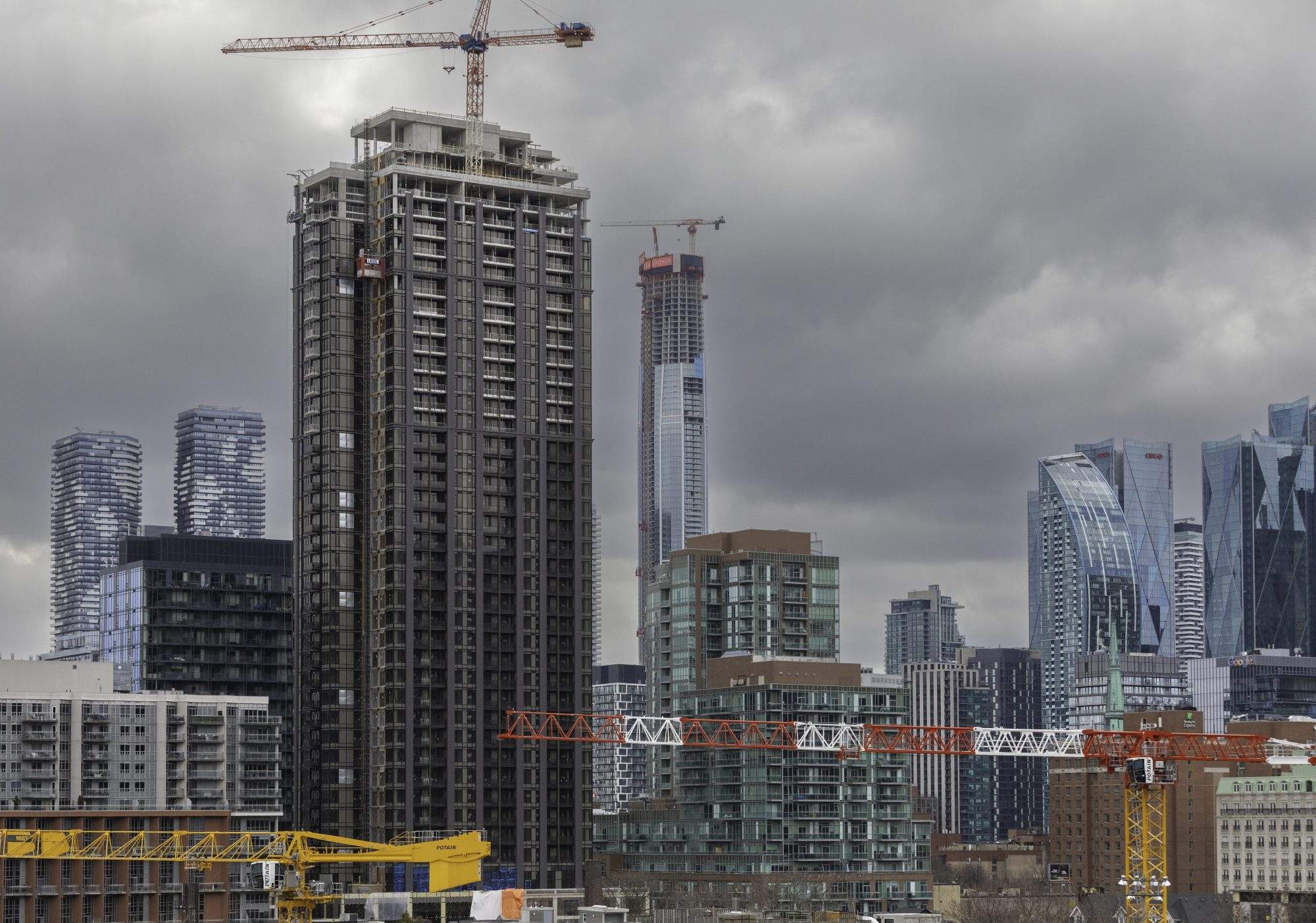
The Ford government is far away from its goal of building 1.5 million new homes by 2031, something the finance minister has admitted is a 'soft' target.
The Ford government is far away from its goal of building 1.5 million new homes by 2031, something the finance minister has admitted is a 'soft' target.
By Catherine Lai
Hong Kong resident Lisa Lau put on a costume drama as she settled on the bed that occupies much of her tiny apartment, trying to take her mind off a looming eviction.
Lisa Lau, 48, sits on her bed in her subdivided housing unit in Kowloon on April 30, 2026. Photo: Peter Parks/AFP.
Subdivided flats like Lau’s three-square-metre (32-square-feet) home — made by splitting up an apartment into smaller units — are being phased out after a law to regulate them came into effec
Hong Kong resident Lisa Lau put on a costume drama as she settled on the bed that occupies much of her tiny apartment, trying to take her mind off a looming eviction.
Lisa Lau, 48, sits on her bed in her subdivided housing unit in Kowloon on April 30, 2026. Photo: Peter Parks/AFP.
Subdivided flats like Lau’s three-square-metre (32-square-feet) home — made by splitting up an apartment into smaller units — are being phased out after a law to regulate them came into effect in March.
Chinese President Xi Jinping has ordered the wealthy finance hub to resolve housing woes that are the result of decades of pervasive inequality, an acute housing shortage and eye-watering rents.
The Hong Kong government has given owners who register under the new system until 2030 to renovate their subdivided flats, but some landlords have already issued eviction notices to their tenants.
“I’ll stay here day by day,” Lau, a 48-year-old welfare recipient who had received an eviction notice months ago, told AFP.
“I don’t know (where to go),” said Lau, who lives on the equivalent of about US$930 a month, of which US$330 go for rent.
“I’m scratching my head.”
Infographic showing the layout of a subdivided housing unit in Hong Kong. Graphic: John Saeki/Nicholas Shearman/AFP.
The new rules ban flats smaller than eight square metres (86 square feet) and mandate safety and hygiene standards, such as having at least one openable window, a sink and a toilet in an enclosed space.
Authorities estimate that more than 220,000 people in the city of 7.5 million live in so-called “shoebox” flats, around one-third of which need major renovation.
Lau’s cubicle is one of nine in a single unit, separated by thin wooden dividers, in a 60-year-old building in one of Hong Kong’s poorest neighbourhoods, Sham Shui Po.
With no kitchen, she makes soup or noodles in a rice cooker placed on the bed.
She uses a shared toilet and shower, and has taped a foam board across the bottom of her doorway to keep out rats and cockroaches.
Unaffordable housing
Despite the cramped conditions, Lau is reluctant to leave a familiar area where she has built a social network, and hopes her application for transitional housing nearby would be approved.
“As long as the landlord doesn’t come (to evict residents), we are so at peace, we are so comfortable,” she said.
The Housing Bureau said over 100 households had already moved out of Lau’s building, and that it was helping the 40 that are left to find suitable accommodation.
Sze Lai-shan, deputy director of the Society for Community Organisation (SoCO). File photo: Kyle Lam/HKFP.
The Society for Community Organisation, an NGO that works with underprivileged groups, said the reform could help alleviate some of the worst living environments in Hong Kong.
But more government housing is needed, especially in the central areas, said Sze Lai-shan, the group’s deputy director.
“Don’t expect these people who live in very small flats to move into the new basic housing units. They won’t be able to afford it,” she said.
“A lot of the poorest people will be very dependent on the government to resettle them.”
The charity knows of around 300 households threatened with forcible eviction from subdivided flats, with more expected to follow, according to Sze — far more than the 35 notices the government said it had received.
Some residents have moved into public or transitional housing, while others have moved into other substandard flats as a temporary measure, Sze added.
‘Coffin homes’
Liu Xiaoli, who faces eviction from her subdivided flat, works two part-time jobs as a cook and cleaner to make ends meet after her divorce, and supports her daughter and granddaughter in mainland China.
Liu Xiaoli, 63, looks out of her subdivided housing unit in Kowloon on April 30, 2026. Photo: Peter Parks/AFP.
“If the rent here or in other places goes up, I really can’t afford it,” the 63 year-old told AFP, adding that she was unable to find alternate accommodation nearby.
“I couldn’t find any (apartments) that meet the government’s requirements,” she said.
“Right now, I’m just delaying as much as I can.”
In response to AFP’s inquiry, the government said it had “significantly increased public housing supply” with an aim to produce around 196,000 units in the next five years, and sped up the process for residents on the waiting list for public housing.
These measures would contribute to “reduced demand” for subdivided units, keeping rents at bay, a Housing Bureau spokesperson said in a statement.
The new rules do not apply to notorious “coffin homes”, cubicles stacked on top of each other like bunk beds in shabby dormitories.
Wan Hon-cheung, 64, has been living in a plywood box about the size of a single bed for the last 10 years, and hopes the government will improve conditions for residents like him as well.
He often gets bitten by bedbugs and walks with a cane, making climbing up and down from his bed difficult.
“For us lower classes… this is reality, there’s nothing to complain about.”
Around 11,000 subdivided units have been registered under a grace period system that will give landlords three years to ensure their properties meet new government requirements for the city’s infamous substandard housing.
A subdivided unit in Tsim Sha Tsui in 2025. File photo: Kyle Lam/HKFP.
Victor Tai, the under secretary for housing, said on Tuesday in a briefing session with selected media outlets that as of Tuesday, around 3,000 flats – totaling 11,000 subdivided units – had been reg
Around 11,000 subdivided units have been registered under a grace period system that will give landlords three years to ensure their properties meet new government requirements for the city’s infamous substandard housing.
A subdivided unit in Tsim Sha Tsui in 2025. File photo: Kyle Lam/HKFP.
Victor Tai, the under secretary for housing, said on Tuesday in a briefing session with selected media outlets that as of Tuesday, around 3,000 flats – totaling 11,000 subdivided units – had been registered, NowTV reported.
Under the Basic Housing Units Ordinance, which came into effect in March, subdivided units are required to meet government-set living standards. These include a floor space of at least 86 square feet, a ceiling height of 2.3 metres, as well as a window and an individual toilet.
Units that pass those requirements will be known as “basic housing units.”
From now until February 2027, the government is allowing landlords to apply for a three-year grace period to give them time to get their subdivided units up to standard.
Elderly people live a subdivided flat on February 8. 2025. Photo: James Lee/HKFP.
Operators whose subdivided units already meet requirements have been able to apply for recognition as basic housing units since March 1. Tai said that so far, four applications have been made.
Renovations
The Housing Bureau said it had converted two subdivided units in Kowloon City into examples of basic housing units to guide subdivided unit operators on how to upgrade their flats.
Tai said the fee for renovating a substandard shoebox unit to meet requirements ranges from HK$25,000 to HK$50,000, while the cost for renovating an entire flat comprising several subdivided units is between HK$140,000 and HK$160,000, according to the Housing Bureau.
He said that for a three-unit model flat, the work involved removing the toilet of one of the units so that the space for another unit could be expanded, and then re-installing a new toilet.
In addition, installed toilet exhaust fans and routing drainage pipes to the outdoors were also fitted.
Under Secretary for Housing, Mr Victor Tai Sheung-shing. Photo: GovHK.
When asked by local media whether operators of subdivided units might transfer such costs to tenants, therefore increasing their rent, Tai said that would be up to the landlords.
The official said that just like with running any business, there are costs involved in operating subdivided units, but that he believed landlords could earn back those costs within a few months of converting the homes into basic housing units.
Subdivided unit operators are required to hire a registered surveyor or architect to certify that the flats meet the government’s requirements.
Earlier in March, the Hong Kong Institute of Surveyors estimated that operators will have to spend at least HK$15,000 to have a flat with up to four subdivided units certified.
Fatima Jabbe-Bio kept tenancy in Southwark despite living for much of year at presidential lodge in FreetownA social housing flat rented by Sierra Leone’s first lady has been seized by a London council.Southwark council confirmed it had repossessed the two-bedroom home in Walworth previously occupied by Fatima Jabbe-Bio, whose tenancy was reported by the Times last year. Continue reading...
Fatima Jabbe-Bio kept tenancy in Southwark despite living for much of year at presidential lodge in Freetown
A social housing flat rented by Sierra Leone’s first lady has been seized by a London council.
Southwark council confirmed it had repossessed the two-bedroom home in Walworth previously occupied by Fatima Jabbe-Bio, whose tenancy was reported by the Times last year.
SINGAPORE: Singaporeans hoping to collect their keys sooner may find some welcome news in this month’s Build-to-Order (BTO) exercise.
The Housing and Development Board (HDB) will launch 2,520 flats with waiting times of around three years or less as part of its June 2026 BTO exercise, according to an announcement made on June 7. The flats will be spread across three projects in Sembawang and Ang Mo Kio and account for more than a third of the roughly 6,900 units being offered this month.
For man
SINGAPORE: Singaporeans hoping to collect their keys sooner may find some welcome news in this month’s Build-to-Order (BTO) exercise.
The Housing and Development Board (HDB) will launch 2,520 flats with waiting times of around three years or less as part of its June 2026 BTO exercise, according to an announcement made on June 7. The flats will be spread across three projects in Sembawang and Ang Mo Kio and account for more than a third of the roughly 6,900 units being offered this month.
For many first-time buyers, waiting time remains one of the biggest concerns when applying for a new flat. While BTO projects typically take several years to complete, these developments aim to shorten the journey from application to key collection.
Faster access keys for buyers in Sembawang
The fastest project in the upcoming launch is Sembawang Portico, a Shorter Waiting Time (SWT) project with an estimated waiting time of two years and seven months. Located along Admiralty Lane and Sembawang Drive, it will offer 875 units ranging from 2-room Flexi to 5-room flats.
Housing and Development Board (HDB)
Artist’s impression of Sembawang Portico
Close behind is Sembawang Brook, another SWT project with a waiting time of two years and nine months. The development, bounded by Admiralty Street and Sungei Sembawang, will offer 1,160 units, including 3Gen flats designed for multi-generation families who wish to live together.
Housing and Development Board (HDB)
Artist’s impression of Sembawang Brook
According to HDB, both projects are located in the new Sembawang North estate and sit next to each other. Future residents can expect faster access to key amenities, including cooked-food outlets, childcare centres, a minimart, and bus services.
Under measures announced earlier this year by the Ministry of National Development, these amenities are expected to open around six months after the first residents collect their keys. The decision is intended to reduce the long-standing issue of residents moving into new estates before shops and services are ready.
The projects will also be near existing facilities such as Sun Plaza and Bukit Canberra, which offer sports, healthcare and community services.
Ang Mo Kio project offers a central location
The third shorter-wait project is Kebun Baru Ridge in Ang Mo Kio. The development will have 485 3- and 4-room flats, with an estimated waiting time of 3 years and 1 month.
Housing and Development Board (HDB)
Artist’s impression of Kebun Baru Ridge
Located along Ang Mo Kio Avenue 2, the project will include a minimart and an eating house. Residents will also be close to existing amenities such as Kebun Baru Market and Food Centre, Mayflower Shopping and Food Centre, and Ang Mo Kio Town Centre.
Public transport access is another draw, with Mayflower MRT station on the Thomson-East Coast Line just a short bus ride away.
Projects are completed faster because planning and construction work begin earlier
The agency works with other government bodies to identify suitable sites in advance and start preparation work before the flats are officially launched for sale. As a result, construction is already well underway by the time buyers book their units.
Apart from Sembawang Portico, Sembawang Brook and Kebun Baru Ridge, four other projects in Ang Mo Kio, Bishan, Bukit Merah, and Woodlands will also be launched in the June BTO sales exercise. HDB said more details, including the projects’ classification categories, will be released when the sales exercise begins.
A flat that arrives sooner can help young couples start families earlier and reduce the years spent in temporary housing. Efforts to shorten wait times while ensuring amenities arrive fast are likely to remain a key focus as Singapore continues to meet housing demand.
Crowds gather at sites across Belfast after Sudanese man charged with attempted murderFull report: Man seriously injured in Belfast stabbing Starmer describes as ‘sickening’Badenoch said, after the murder of Stephen Lawrence, it was right that people wanted to ensure this did not happen again.It led to the Macpherson report, she said.[It] wanted to put right what went wrong with policing in the 1990s.However, in attempting to do so, it also enshrined a principle which I believe is wrong that a r
Badenoch said, after the murder of Stephen Lawrence, it was right that people wanted to ensure this did not happen again.
It led to the Macpherson report, she said.
[It] wanted to put right what went wrong with policing in the 1990s.
However, in attempting to do so, it also enshrined a principle which I believe is wrong that a racist incident is racist if it is perceived as racist by the victim or any other person.
Equality law, properly designed, should protect us all in the same way. It should be a shield, not a sword.
It should protect people from discrimination. It should protect people from being treated differently because of their race, sex, religion, sexuality, disability or age.
SINGAPORE: Singapore will release land for 4,745 new private homes in the second half of 2026, bringing the total confirmed housing supply for the year to 9,320 units.
The announcement was made by Minister for National Development Chee Hong Tat in a Facebook post on June 3, as the government continues efforts to increase housing supply and meet demand.
Housing supply climbs to highest level in years
According to Mr Chee, the combined supply from the first and second halves of 2026 is more than 5
SINGAPORE: Singapore will release land for 4,745 new private homes in the second half of 2026, bringing the total confirmed housing supply for the year to 9,320 units.
The announcement was made by Minister for National Development Chee Hong Tat in a Facebook post on June 3, as the government continues efforts to increase housing supply and meet demand.
Housing supply climbs to highest level in years
According to Mr Chee, the combined supply from the first and second halves of 2026 is more than 50 per cent higher than the annual average of about 6,100 units released over the past decade.
The decision will increase Singapore’s private housing pipeline to around 61,000 units, including about 32,000 units expected to be available for sale within the next two years.
Demand for new homes remains healthy, with several recent launches seeing strong take-up rates.
Jurong Lake District set for next phase of growth
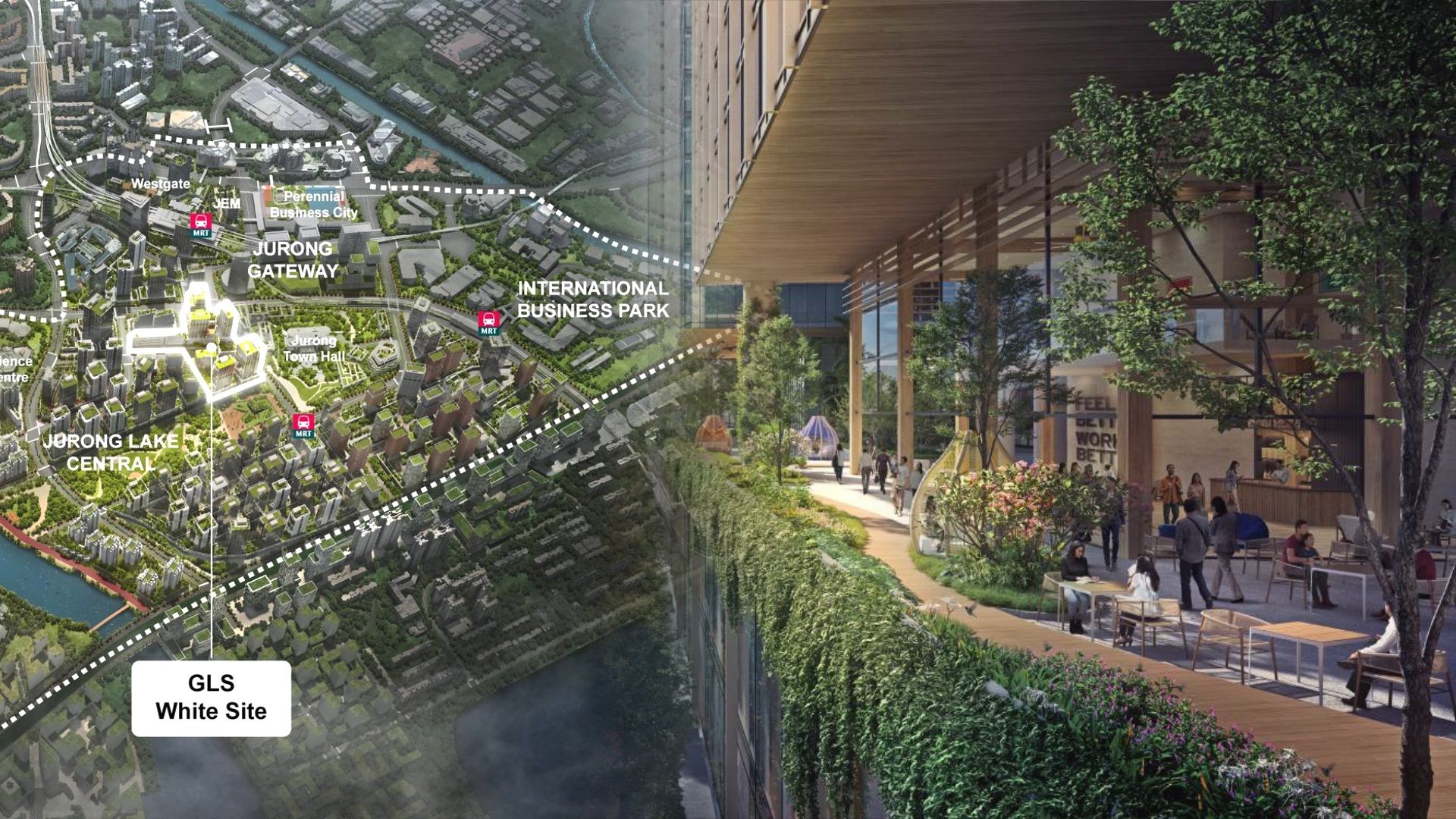
Beyond housing numbers, the government is also pressing ahead with plans to transform the Jurong Lake District into Singapore’s largest mixed-use business district outside the city centre.
Facebook @ Urban Redevelopment Authority
Singapore GLS: Land for over 4,700 new private homes will be released in second half of 2026; 9,320 units in total
A key part of that effort is the upcoming launch of the Town Hall Link white site for tender in July. The development could yield up to 1,200 homes alongside office space, retail outlets, food and beverage establishments, entertainment offerings and other complementary uses.
In his post, Mr Chee said Jurong Lake District has steadily grown into a hub that combines offices, homes, retail options, and healthcare facilities. He added that attractions such as the Jurong Lake Gardens and Science Centre have strengthened the district’s appeal as both a business and lifestyle destination.
New homes, jobs and amenities planned outside the city centre
The minister also pointed to future transport connectivity as a major advantage. By 2032, the district is expected to be served by four Mass Rapid Transit (MRT) lines, making it one of the best-connected areas outside the city centre.
According to a June 3 report by Channel NewsAsia (CNA), analysts believe the increase in supply is a sign of strong developer demand and healthy sales performance in recent residential projects.
Residential sites
Marina Gardens Lane
Orchard Boulevard
East Coast Road
De Souza Avenue
Tanjong Rhu Close
Berlayar Close
Holland Plain
Jurong East Avenue 1 (EC)
White sites
Town Hall Link
Facebook @ Urban Redevelopment Authority
Singapore GLS: Land for over 4,700 new private homes will be released in second half of 2026; 9,320 units in total
Mr Lee Sze Teck, senior director of data analytics at Huttons Asia, said several projects launched this year achieved sell-out rates above 90% during their opening weekends, prompting developers to seek new land opportunities.
Meanwhile, Mr Mohan Sandrasegeran, Head of Research and Data Analytics at Singapore Realtors Inc, described the Town Hall Link site as a significant step in the development of the Jurong Lake District. He said the project is a continued effort to bring homes, jobs and amenities closer together.
The latest land sales programme signals that the government is taking a long-term view of housing and urban planning. More homes may help ease supply concerns, but the bigger story lies in how Singapore is reshaping entire districts to reduce reliance on the traditional city centre.
As Jurong continues to grow, residents may find that living, working, and leisure activities increasingly take place closer to home rather than across the island.
Homes in Lancaster, California. | Sam Lafoca/Construction Photography/Avalon/Getty Images
The housing abundance movement has won more of the intellectual argument than anyone might have predicted a decade ago. Across much of American politics, even in Zohran Mamdani’s New York (listen, I love the guy), it is now at least possible to say out loud that we have too many pointless rules making it impossible to build enough housing. But that doesn’t settle the politically harder questions of…
Homes in Lancaster, California. | Sam Lafoca/Construction Photography/Avalon/Getty Images
The housingabundancemovement has won more of the intellectual argument than anyone might have predicted a decade ago. Across much of American politics, even in Zohran Mamdani’s New York (listen, I love the guy), it is now at least possible to say out loud that we have too many pointless rules making it impossible to build enough housing. But that doesn’t settle the politically harder questions of…where exactly should the housing go, and what should it look like?
There has often been disagreement among housing reformers on that point — or at least a difference in emphasis. Should advocates try to add homes in already vibrant urban and suburban areas, which would add density but run into a buzzsaw of zoning codes and angry neighbors? Or should the focus be building at the urban fringe, in the form of sprawl, where land is cheap and plentiful and obstacles to building are fewer?
Sign up here to explore the big, complicated problems the world faces and the most efficient ways to solve them.
These approaches, known respectively as infill and greenfield development, aren’t necessarily opposed; with America millions of homes short, most housing experts would say that we need both. But there are many reasons to prefer building in over building out. Building on top of or in between existing development reduces the toll on the environment and wildlife, minimizes commute times, and better supports compact, walkable, livable communities. And a recent report from the Pew Charitable Trusts’ housing policy initiative, the World Resources Institute, and the research firm ECOnorthwest advances another, less appreciated reason to favor infill: It could help keep your city solvent and maybe even keep your property taxes down.
How? The researchers simulated different future housing construction scenarios across 10 diverse states, including fast-growing ones like Arizona and Texas and slower-growing states like Pennsylvania. They then compared the public costs of essential services like roads and sewer lines for homes built within existing communities versus those built at the edge of cities.
Each home developed near jobs, shops, and transit, according to the report, would require upfront infrastructure expenses about $21,000 less on average than those added at the urban fringe, amounting to a one-third reduction in the cost of that infrastructure. (The categories used in the report are more complex than just an infill-versus-greenfield split, but for simplicity, I’ll use these terms as shorthand.)
The ongoing maintenance for all that infrastructure, meanwhile, added up to about 50 percent less on average for homes built within established communities, while communities developed this way would raise about 13 percent more in property taxes per acre on average because they have more households concentrated in the same land area.
Urban analysts have made variations of this observation manytimesbefore, and the logic is mostly basic geometry: Compact housing development allows cities to spend less per person on physical infrastructure like roads, and to spread the costs of that infrastructure across more households. Yet American land-use policy is set up to discourage precisely that kind of growth. As a result, we build many more single-family homes than apartments or condos, and increasingly in low-density areas outside of major population centers.
Meanwhile, the US is fast hitting fiscal limits — higher interest rates, an aging population, and amid it all, a nationwide revolt over property taxes. Fiscally efficient growth matters more than it has in a long time, and that might be the invitation we need to rethink America’s abiding instinct to grow ever outward.
Sprawl costs cities more, but it’s not everything
To understand how this works, it helps to picture it through real-world examples: Take the largely middle-class suburb of University Park, Illinois, which is home to about 681 people per square mile, and compare it to nearby Chicago, which is nearly 18 times as dense. That means University Park serves many fewer people per mile of road or foot of piping, providing a thinner tax base to pay for the infrastructure on which the community depends.
As Pew’s report notes: “Home construction in established areas relies primarily on existing infrastructure and often includes apartment buildings, duplexes, townhomes, and accessory dwelling units (ADUs), all of which require less infrastructure per unit than detached single-family homes.” While the report relies on modeling, its findings comport with moreempiricallygrounded research on the question.
Cheaper infrastructure, however, does not mean lower costs across the board. Arpit Gupta, an associate professor of finance at New York University Stern School of Business, has pointed out that physical infrastructure like roads, bridges, sewers, and water services makes up only a small share of local governments’ costs in the US. Social spending, on things like healthcare and education, are much more fiscally important. That’s one reason why even though the governments of blue cities like Chicago benefit from the economics of density, they are often costlier to build and live in, thanks to factors like higher public sector wages and more onerous environmental review and permitting processes.
Nevertheless, while a sprawling community may be able to shoulder the burdens of more extended infrastructure so long as it continues growing, should growth begin to stagnate, the costs of years of greenfield development can really start to hit. And in the US, one need not even venture outside the suburbs to see it. Earlier this year, I spoke with John Zeanah, the chief of development and infrastructure for Memphis, Tennessee, about what this pattern has meant for the city. “Memphis lived it firsthand,” he said. “There are significant costs associated with sprawl that ultimately are unsustainable.”
Many sprawling American cities — Houston, Dallas, Phoenix — are growing quickly in population, but there are also many others whose populations have stagnated or declined in recent decades and that are now burdened with figuring out what to do with an overly large geographic footprint. In the late 20th century, Memphis grew by literally annexing nearby unincorporated developments, but in recent years its population has been declining.
By 2015, compared to about 50 years prior, “the city’s land area grew by over 50 percent with virtually no population growth. This meant 50 percent more infrastructure to service and maintain,” Zeanah told me in an email. The costs of this go well beyond just hard physical infrastructure, Zeanah explained, extending to services like police, fire, and transit, all of which must serve a larger area than they would otherwise and need to be supported by a stagnant tax base.
Memphis is now trying to undo these mistakes. Its latest comprehensive plan, Zeanah wrote to me, recognizes that “the city’s most viable path was to concentrate investment in existing neighborhoods and corridors where land and infrastructure capacity was available, relative costs are lowest, and the return on public investment is highest.” In other words, exactly what Pew’s research points to.
Can we overcome the barriers to density?
The challenge is that American cities and suburbs hoping to make that philosophical change in how they grow — adding infill to already thriving neighborhoods rather than sprawling outward — face a gauntlet of regulatory and cultural barriers.
There are, of course, local zoning codes and parking minimums that bar dense home construction and have become a political albatross for cities trying to reform their approach to housing. There are NIMBYs who don’t want sudden changes to their proverbial neighborhood character and wish to push any development further afield. And municipalities also have structural incentives to grow outward, because it can be easier to find money for new infrastructure than for maintaining existing infrastructure. “Local jurisdictions can access funding for upfront infrastructure costs (from federal, state, and private sources) relatively easily but face limited options for paying for long-term maintenance, making greenfield development appear fiscally attractive in the short term,” Tushar Kansal, a senior officer for Pew’s housing policy initiative, said in an email.
Ultimately, fiscal sustainability may be a relatively minor argument in favor of building homes as infill in established neighborhoods, albeit one with particular salience at the moment, given the American cost of living crisis and anger about taxes. But the US remains a very rich country that can afford the material costs of sprawl and exclusionary zoning if we really want it.
The stronger case for infill is based not on fiscal thrift, but rather on human freedom, quality of life, and the bigger benefits to our economy of allowing population growth in our most prosperous cities. We should legalize more housing in places where people already live, because more people want to live there — and that alone should be enough.
Rents are continuing to drop in much of Canada, but with supply not fully keeping up with demand in places like Nova Scotia, not every province is seeing a decrease.
Rents are continuing to drop in much of Canada, but with supply not fully keeping up with demand in places like Nova Scotia, not every province is seeing a decrease.

 Login
Login