Normal view

Singapore-based design firm The Afternaut Group to design Bank of Singapore Centre co-working space

3 June 2026 at 13:30

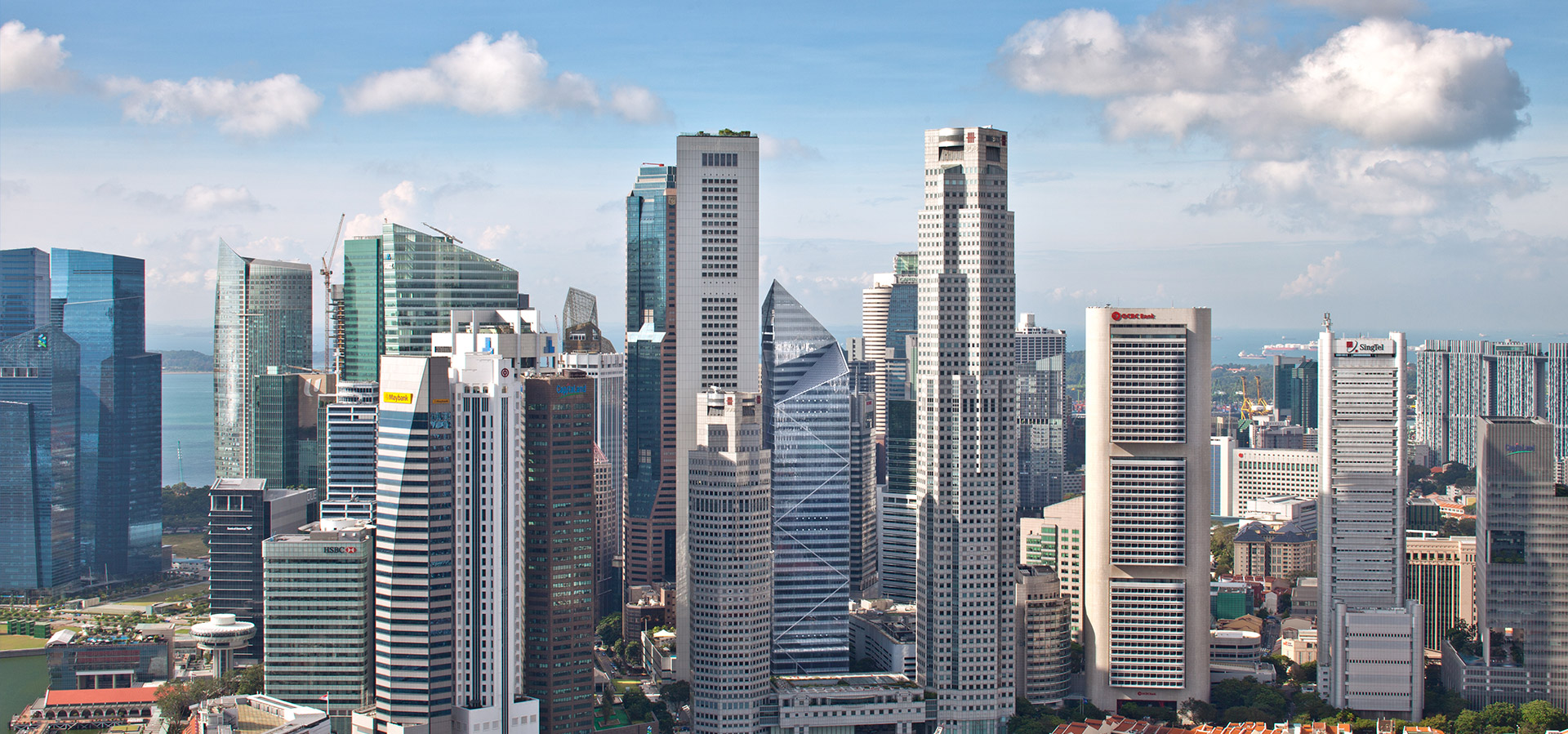
SINGAPORE: Singapore-based design firm The Afternaut Group was appointed by Arcc Spaces to design its newest co-working space at the Bank of Singapore Centre, 63 Market Street, set to open in July 2026.

It will occupy levels five, six, and seven of the Bank of Singapore Centre, covering about 25,782 square feet (sq ft) and accommodating more than 300 members.

In an announcement on Tuesday (June 2), the project was described as Singapore-headquartered Arcc Spaces’ “most design-forward project to date”. This marks the fifth collaboration between the two firms, including The Co. at Duxton and Arcc Spaces at One Marina Boulevard (OMB). 

The newest co-working space is centred on biophilia (love of life or nature) and the need for relief from screen-heavy, notification-dense workdays. The space is said to feature greenery both indoors and outdoors, a collection of unique experiences catering to different working modes, and nature-inspired elements designed to create a calming connection to nature.

Arcc Spaces CEO Justin Chen said, “Our work with The Afternaut Group has always been a genuine co-authorship and each project has evolved alongside how work itself has changed. In an age defined by AI and digital saturation, and coming out of years of remote work, people are seeking something different from their offices: real connection, presence, and a reason to commute. The Bank of Singapore Centre is designed precisely around that need.”

The Afternaut Group’s Design Principal, Gwen Tan, said, “Each project with Arcc Spaces has pushed us to find a different expression of how people connect to a workspace, from the soul and creativity of a shophouse, to the precision of a five-star hotel.”

She added that with the new project, they have decided to design inward, adding: “Spaces that slow you down, draw you into the materiality, and make the experience in an office well elevated. This is the type of exploration we find most meaningful, and the rendition of it highly anticipated.”

Earlier last month, The Edge Singapore initially reported that the co-working space would open in June, taking over the space formerly occupied by OCBC. /TISG

Read also: ‘Clean Singapore no more’: Uncle shares concern of irresponsible rubbish dumping in Geylang not because of property prices dropping but of dengue and rats

This article (Singapore-based design firm The Afternaut Group to design Bank of Singapore Centre co-working space) first appeared on The Independent Singapore News.

  • ✇The Independent SG
  • New parents opted for a S$1 million HDB over a condo — here’s why Mary Alavanza
    SINGAPORE: Home buyers in Singapore often face the dilemma of having to choose between a resale Housing and Development Board (HDB) flat or a condominium. Deciding becomes even more complex when life circumstances change and new priorities come into play. For first-time parents, the focus often shifts towards balancing the need for a more spacious home, spending within budget, and having the option to upgrade when other housing needs arise. A Singaporean couple in their 30s, who recently became
     

New parents opted for a S$1 million HDB over a condo — here’s why

12 June 2026 at 16:31

SINGAPORE: Home buyers in Singapore often face the dilemma of having to choose between a resale Housing and Development Board (HDB) flat or a condominium. Deciding becomes even more complex when life circumstances change and new priorities come into play.

For first-time parents, the focus often shifts towards balancing the need for a more spacious home, spending within budget, and having the option to upgrade when other housing needs arise.

A Singaporean couple in their 30s, who recently became first-time parents, faced the exact same dilemma. They originally planned to move from the two-bedroom condo unit they were renting to a three-bedroom condo while remaining in the Bedok area.

However, after reviewing their finances, immediate housing needs as they were expecting a newborn, and long-term property plans with Royston, a property agent and partner property consultant at Stacked, they ultimately decided to purchase a million-dollar resale HDB flat instead.

Why they chose not to upgrade to a condo just yet

As with many home buyers, affordability was one of their biggest considerations.

The Stacked case study, based on a consultation with Royston, noted that the couple had an initial budget of around S$1 million and wanted to avoid overstretching themselves financially after welcoming their newborn.

As first-time buyers, they were eligible to borrow up to 75% of a property’s purchase price. However, given that their combined income was above S$14,000, they were not eligible for an HDB Concessionary Loan and had to rely on a private bank loan instead.

Based on their income and cash flow, their maximum loan quantum was estimated at around S$1 million.

Given the couple’s budget and their aim to avoid overstretching themselves on monthly repayments, Royston said they could opt for an older resale flat, which tends to be priced lower than units that had just reached their Minimum Occupation Period (MOP), while still having more space.

This means, if they went for a two-bedroom condo priced at around S$1.8 million, they would have paid S$5,000 monthly, instead of just about S$3,200 over a 25-year tenure for a S$1 million HDB resale flat.

The couple eventually purchased a four-room, turned three-bedroom corner unit at Bedok South Horizon, a Build-To-Order (BTO) development launched during the November 2016 BTO exercise, for S$1.01 million on May 24. Two rooms in the unit had been merged by the previous owner to accommodate a walk-in closet. /TISG

Read also: Million-dollar HDB resale flats rose to 166 units in May after April dip

This article (New parents opted for a S$1 million HDB over a condo — here’s why) first appeared on The Independent Singapore News.

Singapore GLS: Land for over 4,700 new private homes will be released in second half of 2026; 9,320 units in total

5 June 2026 at 07:30

SINGAPORE: Singapore will release land for 4,745 new private homes in the second half of 2026, bringing the total confirmed housing supply for the year to 9,320 units.

The announcement was made by Minister for National Development Chee Hong Tat in a Facebook post on June 3, as the government continues efforts to increase housing supply and meet demand.

Housing supply climbs to highest level in years

According to Mr Chee, the combined supply from the first and second halves of 2026 is more than 50 per cent higher than the annual average of about 6,100 units released over the past decade.

The decision will increase Singapore’s private housing pipeline to around 61,000 units, including about 32,000 units expected to be available for sale within the next two years.

Demand for new homes remains healthy, with several recent launches seeing strong take-up rates.

Jurong Lake District set for next phase of growth

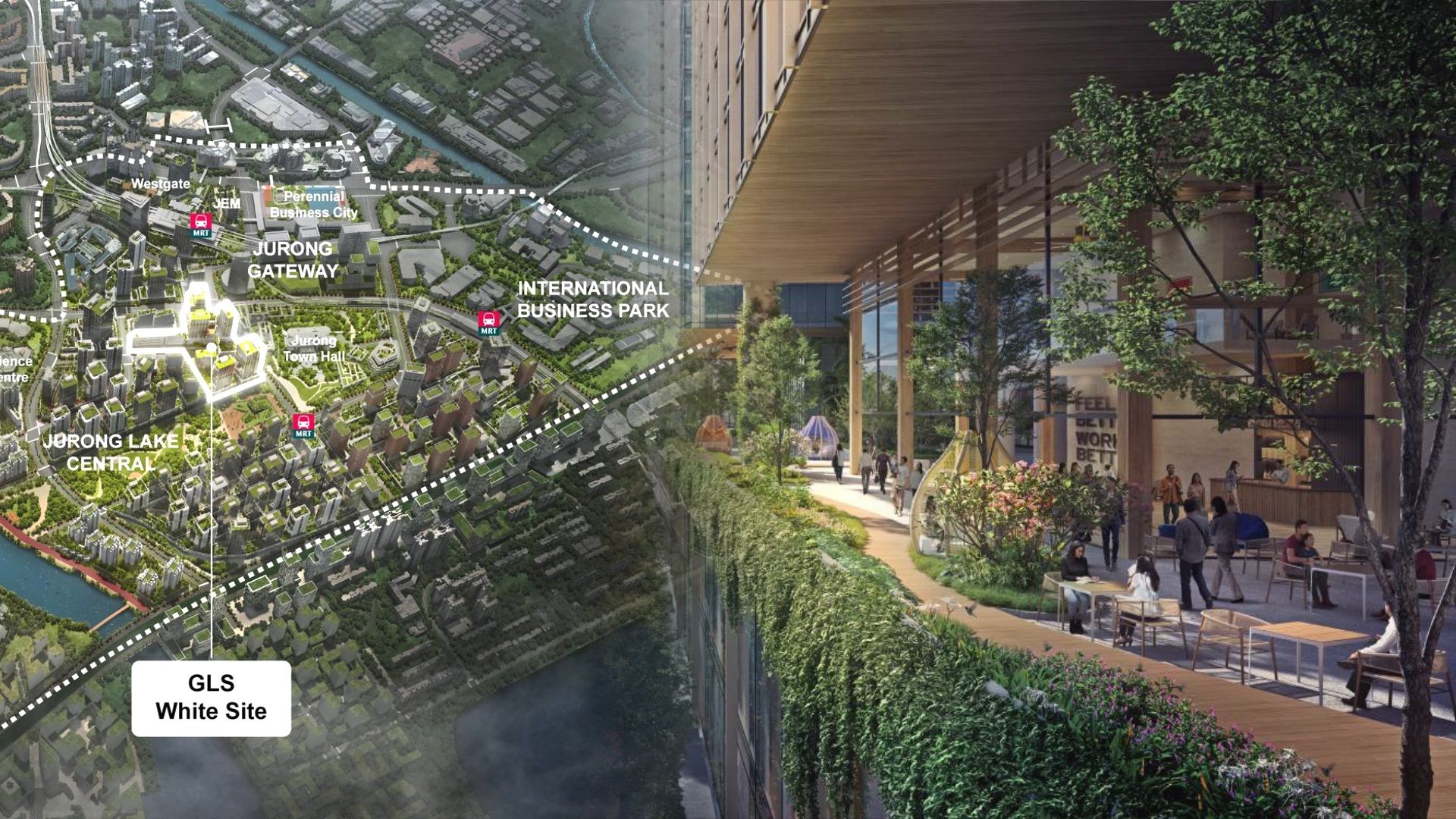
Beyond housing numbers, the government is also pressing ahead with plans to transform the Jurong Lake District into Singapore’s largest mixed-use business district outside the city centre.

Singapore GLS: Land for over 4,700 new private homes will be released in second half of 2026; 9,320 units in total
Facebook @ Urban Redevelopment Authority
Singapore GLS: Land for over 4,700 new private homes will be released in second half of 2026; 9,320 units in total

A key part of that effort is the upcoming launch of the Town Hall Link white site for tender in July. The development could yield up to 1,200 homes alongside office space, retail outlets, food and beverage establishments, entertainment offerings and other complementary uses.

In his post, Mr Chee said Jurong Lake District has steadily grown into a hub that combines offices, homes, retail options, and healthcare facilities. He added that attractions such as the Jurong Lake Gardens and Science Centre have strengthened the district’s appeal as both a business and lifestyle destination.

New homes, jobs and amenities planned outside the city centre

The minister also pointed to future transport connectivity as a major advantage. By 2032, the district is expected to be served by four Mass Rapid Transit (MRT) lines, making it one of the best-connected areas outside the city centre.

According to a June 3 report by Channel NewsAsia (CNA), analysts believe the increase in supply is a sign of strong developer demand and healthy sales performance in recent residential projects.

Residential sites

  • Marina Gardens Lane

  • Orchard Boulevard

  • East Coast Road

  • De Souza Avenue

  • Tanjong Rhu Close

  • Berlayar Close

  • Holland Plain

  • Jurong East Avenue 1 (EC)

White sites

  • Town Hall Link

Singapore GLS: Land for over 4,700 new private homes will be released in second half of 2026; 9,320 units in total
Facebook @ Urban Redevelopment Authority
Singapore GLS: Land for over 4,700 new private homes will be released in second half of 2026; 9,320 units in total

Mr Lee Sze Teck, senior director of data analytics at Huttons Asia, said several projects launched this year achieved sell-out rates above 90% during their opening weekends, prompting developers to seek new land opportunities.

Meanwhile, Mr Mohan Sandrasegeran, Head of Research and Data Analytics at Singapore Realtors Inc, described the Town Hall Link site as a significant step in the development of the Jurong Lake District. He said the project is a continued effort to bring homes, jobs and amenities closer together.

The latest land sales programme signals that the government is taking a long-term view of housing and urban planning. More homes may help ease supply concerns, but the bigger story lies in how Singapore is reshaping entire districts to reduce reliance on the traditional city centre.

As Jurong continues to grow, residents may find that living, working, and leisure activities increasingly take place closer to home rather than across the island.

This article (Singapore GLS: Land for over 4,700 new private homes will be released in second half of 2026; 9,320 units in total) first appeared on The Independent Singapore News.

  • ✇The Independent SG
  • Million-dollar HDB resale flats rose to 166 units in May after April dip Mary Alavanza
    SINGAPORE: The number of million-dollar Housing and Development Board (HDB) resale flat transactions rose to 166 units in May 2026 after a dip in April, when there were only 138 units transacted. According to Singapore Business Review, citing data from 99.co and SRX, which tracked HDB resale flats sold for at least S$1 million, the overall million-dollar resale units share was at 7.8%. Between May 2025 and May 2026, the number of million-dollar resale transactions ranged from 87 to 172 units per
     

Million-dollar HDB resale flats rose to 166 units in May after April dip

11 June 2026 at 10:30

SINGAPORE: The number of million-dollar Housing and Development Board (HDB) resale flat transactions rose to 166 units in May 2026 after a dip in April, when there were only 138 units transacted.

According to Singapore Business Review, citing data from 99.co and SRX, which tracked HDB resale flats sold for at least S$1 million, the overall million-dollar resale units share was at 7.8%.

Between May 2025 and May 2026, the number of million-dollar resale transactions ranged from 87 to 172 units per month.

There were 143 units transacted in May last year, followed by 132 in June, 169 in July and 141 in August. The figure rose to 172 in September before falling to 87 in October. It then increased to 120 in November and 145 in December.

This year, January recorded 146 transactions, before the figure fell to 122 in February, rose to 145 in March, and dipped again to 138 in April. The figure then rose to 166 transactions in May.

A five-room HDB flat at Pinnacle@Duxton recorded the highest transacted price for last month at S$1.63 million.

The unit, located at Block 1B Cantonment Road, spanning 1,130 square feet (sq ft), or about S$1,442 per square foot (psf), fetched a price 5.2% higher than the average resale price of five-room flats at Pinnacle@Duxton.

Meanwhile, Bukit Merah recorded the highest number of million-dollar resale flats at 22 units, followed by Toa Payoh and Queenstown with 21 units each.

Last month, a four-room HDB flat at Bukit Merah with only 45 years left on lease was sold for a record S$1.53 million. /TISG

Read also: Million-dollar HDB resale flats rise nearly 50% to over 1,500 in 2025

This article (Million-dollar HDB resale flats rose to 166 units in May after April dip) first appeared on The Independent Singapore News.

  • ✇Malay Mail - All
  • Rosmah lodges report over RM55m US property claim, police say viral account likely fake Malay Mail
    KUALA LUMPUR, June 15 — Datin Seri Rosmah Mansor has lodged a police report over viral allegations linking her to the purchase or financing of a luxury property in New Jersey, United States, reportedly valued at RM55 million (US$13 million), Inspector-General of Police Tan Sri Mohd Khalid Ismail said today.She has denied the claims, describing them as false and malicious, and said they were intended to tarnish her reputation, Harian Metro reported today.She also
     

Rosmah lodges report over RM55m US property claim, police say viral account likely fake

15 June 2026 at 08:31

Malay Mail

KUALA LUMPUR, June 15 — Datin Seri Rosmah Mansor has lodged a police report over viral allegations linking her to the purchase or financing of a luxury property in New Jersey, United States, reportedly valued at RM55 million (US$13 million), Inspector-General of Police Tan Sri Mohd Khalid Ismail said today.

She has denied the claims, describing them as false and malicious, and said they were intended to tarnish her reputation, Harian Metro reported today.

She also rejected allegations of involvement in shell companies, offshore financial structures, or links to individuals or entities mentioned in a viral video.

Tan Sri Mohd Khalid said preliminary investigations suggested the social media account behind the allegation was likely fake.

“Preliminary investigations found that the social media account spreading the allegation is believed to be fake,” he said at a press conference during the launch of the Perangi Scam: Two Teams, One Goal campaign here.

He said police had received three reports over the matter and had recorded statements from several relevant witnesses, with assistance from the Malaysian Communications and Multimedia Commission (MCMC).

Investigations are being carried out under Section 500 of the Penal Code, Section 233 of the Communications and Multimedia Act 1998, and Section 4(1) of the Sedition Act 1948.

Mohd Khalid also cautioned the public against spreading speculation or unverified claims, warning that it could interfere with investigations and complicate court proceedings.

HDB: 2,520 BTO flats with wait times of 3 years or less to be offered across 3 projects in Sembawang and Ang Mo Kio in June sales

9 June 2026 at 13:35

SINGAPORE: Singaporeans hoping to collect their keys sooner may find some welcome news in this month’s Build-to-Order (BTO) exercise.

The Housing and Development Board (HDB) will launch 2,520 flats with waiting times of around three years or less as part of its June 2026 BTO exercise, according to an announcement made on June 7. The flats will be spread across three projects in Sembawang and Ang Mo Kio and account for more than a third of the roughly 6,900 units being offered this month.

For many first-time buyers, waiting time remains one of the biggest concerns when applying for a new flat. While BTO projects typically take several years to complete, these developments aim to shorten the journey from application to key collection.

Faster access keys for buyers in Sembawang

The fastest project in the upcoming launch is Sembawang Portico, a Shorter Waiting Time (SWT) project with an estimated waiting time of two years and seven months. Located along Admiralty Lane and Sembawang Drive, it will offer 875 units ranging from 2-room Flexi to 5-room flats.

Sembawang Portico HDB BTO
Housing and Development Board (HDB)
Artist’s impression of Sembawang Portico

Close behind is Sembawang Brook, another SWT project with a waiting time of two years and nine months. The development, bounded by Admiralty Street and Sungei Sembawang, will offer 1,160 units, including 3Gen flats designed for multi-generation families who wish to live together.

Sembawang Brook HDB BTO
Housing and Development Board (HDB)
Artist’s impression of Sembawang Brook

According to HDB, both projects are located in the new Sembawang North estate and sit next to each other. Future residents can expect faster access to key amenities, including cooked-food outlets, childcare centres, a minimart, and bus services.

Under measures announced earlier this year by the Ministry of National Development, these amenities are expected to open around six months after the first residents collect their keys. The decision is intended to reduce the long-standing issue of residents moving into new estates before shops and services are ready.

The projects will also be near existing facilities such as Sun Plaza and Bukit Canberra, which offer sports, healthcare and community services.

Ang Mo Kio project offers a central location

The third shorter-wait project is Kebun Baru Ridge in Ang Mo Kio. The development will have 485 3- and 4-room flats, with an estimated waiting time of 3 years and 1 month.

Kebun Baru Ridge HDB BTO
Housing and Development Board (HDB)
Artist’s impression of Kebun Baru Ridge

Located along Ang Mo Kio Avenue 2, the project will include a minimart and an eating house. Residents will also be close to existing amenities such as Kebun Baru Market and Food Centre, Mayflower Shopping and Food Centre, and Ang Mo Kio Town Centre.

Public transport access is another draw, with Mayflower MRT station on the Thomson-East Coast Line just a short bus ride away.

Projects are completed faster because planning and construction work begin earlier

The agency works with other government bodies to identify suitable sites in advance and start preparation work before the flats are officially launched for sale. As a result, construction is already well underway by the time buyers book their units.

Apart from Sembawang Portico, Sembawang Brook and Kebun Baru Ridge, four other projects in Ang Mo Kio, Bishan, Bukit Merah, and Woodlands will also be launched in the June BTO sales exercise. HDB said more details, including the projects’ classification categories, will be released when the sales exercise begins.

A flat that arrives sooner can help young couples start families earlier and reduce the years spent in temporary housing. Efforts to shorten wait times while ensuring amenities arrive fast are likely to remain a key focus as Singapore continues to meet housing demand.

This article (HDB: 2,520 BTO flats with wait times of 3 years or less to be offered across 3 projects in Sembawang and Ang Mo Kio in June sales) first appeared on The Independent Singapore News.

  • ✇The Independent SG
  • Higher energy bills drive more Singapore developers to adopt greener building solutions Nick Karean
    SINGAPORE: Rising electricity bills are doing something years of sustainability campaigns struggled to achieve: convincing more private developers that green buildings make financial sense. Across Singapore, developers are increasingly adopting energy-saving designs, low-carbon materials and shared cooling systems. While environmental goals are always important, industry players say the change is now driven as much by cost savings as by sustainability targets. Developers are also moving beyond m
     

Higher energy bills drive more Singapore developers to adopt greener building solutions

14 June 2026 at 08:33

SINGAPORE: Rising electricity bills are doing something years of sustainability campaigns struggled to achieve: convincing more private developers that green buildings make financial sense.

Across Singapore, developers are increasingly adopting energy-saving designs, low-carbon materials and shared cooling systems. While environmental goals are always important, industry players say the change is now driven as much by cost savings as by sustainability targets.

Developers are also moving beyond minimum green building requirements as they seek to reduce operating expenses and attract buyers who value sustainable homes, offices, and commercial spaces. The trend comes as Singapore works towards its Green Building Masterplan, which aims for 80% of buildings to meet higher energy efficiency and sustainability standards by 2030, Channel NewsAsia (CNA) reports (June 10).

Sustainability starts at the design stage

One example is Geneo at Singapore Science Park, developed by CapitaLand Development. The first phase of the rejuvenation project spans five buildings across roughly 180,000 square metres.

Instead of treating each building as a separate development, the project was planned as a connected precinct where businesses, workers and visitors can share spaces and interact.

Jonathan Yap, Chief Executive Officer of CapitaLand Development, said that the company wanted to create an ecosystem rather than simply construct individual buildings.

A major feature is The Canopy, a 27-metre-tall communal space built using mass-engineered timber. The company estimates the structure cuts construction-related carbon emissions by up to 80% compared with steel and 60% compared with reinforced concrete.

The space also relies heavily on passive cooling. Shading, building orientation, and large, slow-moving fans help keep temperatures comfortable while reducing the need for air conditioning. According to Mr Yap, air-conditioning consumption is about 60% lower than in a fully air-conditioned space.

Cooling an entire district instead of just one building

The sustainability push is also happening on a larger scale. At Punggol Digital District, JTC Corporation has implemented a district cooling system that supplies chilled water to multiple buildings, including Punggol Coast MRT station, retail areas, business park developments and the Singapore Institute of Technology campus.

Instead of every building operating its own cooling equipment, cooling is produced centrally and distributed across the district.

David Tan, Assistant Chief Executive Officer of JTC Development Group, said the approach can reduce energy consumption by up to 30%. It also frees up rooftop and building space that would otherwise be occupied by cooling equipment, allowing more room for solar panels and other uses.

The district was planned with sustainability in mind even before construction began. Wind flow and solar radiation studies helped determine building placement to improve natural ventilation. More than 20,000 sensors now collect data on temperature, air quality and energy use to help optimise operations.

Green buildings are becoming a selling point

Industry observers say the discussion around sustainability has changed significantly over the past two decades.

Melvin Tan, Joint Managing Director of LAUD Architects and immediate past president of the Singapore Institute of Architects, said that rising energy costs have made energy efficiency a major business consideration. Buildings that use less energy are cheaper to operate and maintain over time.

Mr Tan noted that when Singapore’s Green Mark certification scheme was introduced in 2005, some developers saw it mainly as a compliance exercise. Today, many view it as a way to make properties more attractive to buyers and tenants.

While government projects must meet strict sustainability requirements, some private developers are voluntarily aiming higher. Mr Tan estimated that about 20% to 30% are pursuing standards beyond what regulations require because they see commercial value in doing so.

Buyers are increasingly interested in sustainable homes, offices and developments.

When going green becomes common sense

Environmental benefits have become increasingly important, and economics may be the stronger driver for gaining from them.

As energy prices stay elevated, efficient buildings are becoming easier to justify on a balance sheet. What was once marketed as a green choice is increasingly becoming a practical business decision.

Lower energy consumption is no longer just good for the environment. It is becoming good business for developers, architects and property buyers alike as well.

This article (Higher energy bills drive more Singapore developers to adopt greener building solutions) first appeared on The Independent Singapore News.

  • ✇Malay Mail - All
  • Rosmah denies role in alleged US$13m property deal, lodges police report over online claims Malay Mail
    KUALA LUMPUR, June 14 — Datin Seri Rosmah Mansor has denied allegations linking her and her family to an alleged US$13 million (RM53 million) property transaction, saying she had lodged a police report and would pursue legal action against those responsible for disseminating the claims online.In a statement issued today in response to videos circulating on social media, the wife of former prime minister Datuk Seri Najib Razak said she had no involvement, either d
     

Rosmah denies role in alleged US$13m property deal, lodges police report over online claims

14 June 2026 at 05:56

Malay Mail

KUALA LUMPUR, June 14 — Datin Seri Rosmah Mansor has denied allegations linking her and her family to an alleged US$13 million (RM53 million) property transaction, saying she had lodged a police report and would pursue legal action against those responsible for disseminating the claims online.

In a statement issued today in response to videos circulating on social media, the wife of former prime minister Datuk Seri Najib Razak said she had no involvement, either directly or indirectly, in the acquisition, transfer or ownership of any luxury property, including one allegedly valued at US$13 million.

She also rejected claims that she had used shell companies, offshore financial structures or intermediaries to facilitate transactions on behalf of her son-in-law or any other individual.

“The allegations purporting to implicate me in the use of shell companies, offshore financial structures, or associations with any of the individuals or entities named in these videos are wholly without foundation, utterly false, and maliciously fabricated,” the statement said.

Rosmah said the videos had harmed her family’s reputation.

She said a police report had been lodged on June 14 to enable authorities to investigate those responsible for creating and disseminating the material.

Rosmah added that she would cooperate fully with investigators.

She also called on social media platforms to remove the content and prevent its further circulation, arguing that the allegations amounted to defamation and malicious falsehood.

The statement further warned that legal action could be taken against individuals who had published, republished or continued to share the claims online.

“I hereby reserve all rights available to me at law, including the right to institute civil and pursue criminal proceedings against any individual or party who has published, republished, shared, or continues to disseminate these false and injurious allegations,” it said.

Rosmah urged both the public and media organisations to exercise restraint and avoid amplifying unverified information while investigations are ongoing.

The statement did not identify the individuals behind the videos or elaborate on the specific allegations beyond references to an alleged luxury property transaction and purported offshore arrangements.

  • ✇Social Lifestyle Magazine
  • Marbella’s Pull: Why International Buyers Keep Returning to the Same Market Livia Auatt
    There is a recurring pattern in the biographies of people who own property in Marbella. Many of them visited first as tourists, either on holiday or accompanying someone who owned property there. They enjoyed the experience. They started thinking about it. They came back. And eventually, sometimes after years of deliberation, they bought. This pattern reveals something important about how the Marbella property market actually works. It is not primarily a market of spreadsheet-driven investors
     

Marbella’s Pull: Why International Buyers Keep Returning to the Same Market

22 April 2026 at 06:48

There is a recurring pattern in the biographies of people who own property in Marbella. Many of them visited first as tourists, either on holiday or accompanying someone who owned property there. They enjoyed the experience. They started thinking about it. They came back. And eventually, sometimes after years of deliberation, they bought.

This pattern reveals something important about how the Marbella property market actually works. It is not primarily a market of spreadsheet-driven investors calculating cap rates and projected appreciation. It is a market of people who have experienced the place and want to own a piece of it. Understanding the lifestyle dimensions of this market is as important as understanding the financial ones for anyone trying to make sense of why Marbella maintains its gravitational pull decade after decade.

The Experience of Being There

What visitors consistently report about Marbella, and what distinguishes it from other European sun destinations, is the sense of being somewhere that works at a genuinely high level. The infrastructure functions. The hospitality is polished without being pretentious. The range of dining, leisure, and cultural options is broader and deeper than the town’s size would suggest. The climate is generous. And the combination of mountain backdrop and Mediterranean coastline creates a physical setting of real beauty that photographs well but is better experienced in person.

This quality of experience is not accidental. It is the product of decades of investment, both public and private, in the physical and service infrastructure of the town. Marbella has benefited from a virtuous cycle in which the concentration of wealthy international residents and visitors has attracted the businesses, restaurants, and services that those residents and visitors want, which in turn has attracted more of them.

The Social Fabric

One of the features of Marbella that is difficult to communicate in property listings but is among the most valued by those who live there is the social infrastructure. The town has a genuine year-round international community, not simply a summer influx of tourists who vanish in September. There are established networks of residents from across Europe, the Middle East, and elsewhere who have built lives in Marbella and who form the social environment that new arrivals enter.

For buyers who are relocating rather than simply purchasing a holiday property, this community dimension is often the deciding factor. Knowing that there is a ready-made social world to enter, that schools are established and well-regarded, and that the services and support networks necessary for comfortable daily life are in place reduces the friction of the transition considerably.

Crinoa Marbella has been operating in this environment long enough to understand the community dynamics as well as the property market, and they share this contextual knowledge freely with buyers who are navigating both dimensions of the decision.

Seasonal Rhythms

The experience of living in or visiting Marbella changes significantly across the seasons, and buyers benefit from understanding this variation before committing to a property whose appeal may be calibrated to a particular time of year.

July and August are the peak summer months, when the population swells dramatically, the restaurants and beach clubs operate at maximum intensity, and the area has the full beach resort energy that its international reputation is built on. The Golden Mile and Puerto Banus are lively to the point of being overwhelming for some visitors during this period.

Spring and autumn, by contrast, are many long-term residents’ favourite seasons. The temperatures are comfortable rather than hot, the crowds have thinned, and the town’s actual character, rather than its tourist-facing performance, becomes more accessible. October in particular has a loyal following among residents who regard it as the best month of the year.

Winter is mild by Northern European standards and genuinely liveable, with an active local scene, manageable traffic, and easy access to amenities that summer overcrowding can obscure. The outdoor pools may be too cool for swimming, but the walking, golf, dining, and social life continue without significant interruption.

According to Statista, Spain receives more than 80 million international visitors annually, making it one of the world’s most visited countries, and the Costa del Sol accounts for a significant share of those arrivals. This sustained visitor flow underpins both the lifestyle quality and the property values that make Marbella such a consistent destination for international buyers.

Making the Move

For buyers who have reached the point of translating their Marbella interest into an actual property search, the key is approaching the process with the same care and diligence they would bring to any significant acquisition, while also giving themselves the time to experience the market rather than simply study it from a distance.

Visiting different areas in different seasons, spending time in neighbourhoods that represent genuine lifestyle options rather than simply viewing specific properties, and building a relationship with a local team who can offer honest contextual guidance all contribute to a decision that is well-founded rather than simply well-intentioned.

For buyers ready to explore Marbella properties for sale, Crinoa offers the combination of market expertise, portfolio depth, and genuine client focus that makes that exploration productive. Contact their team today to begin the conversation.

The Investment Rationale Alongside the Lifestyle One

It would be incomplete to discuss the pull of Marbella purely in lifestyle terms without acknowledging that many buyers are also motivated, at least in part, by the investment case. The Marbella market has delivered meaningful long-term capital appreciation for buyers who entered at sensible valuations, and the structural factors that have supported that performance, international demand diversity, supply constraint, infrastructure quality, and fiscal incentives for non-resident ownership, remain in place. For buyers who combine a genuine lifestyle motivation with a rational assessment of the investment case, Marbella offers the relatively rare combination of a place they genuinely want to be and an asset that has a reasonable prospect of holding or growing its value over their ownership horizon. Crinoa’s team is ready to help buyers think through both dimensions of the decision and to find properties that serve both objectives well.

The post Marbella’s Pull: Why International Buyers Keep Returning to the Same Market appeared first on Social Lifestyle Magazine.

Anti-immigration protesters in Belfast set bins and vehicles on fire amid unrest over knife attack – live

Crowds gather at sites across Belfast after Sudanese man charged with attempted murder

Badenoch said, after the murder of Stephen Lawrence, it was right that people wanted to ensure this did not happen again.

It led to the Macpherson report, she said.

[It] wanted to put right what went wrong with policing in the 1990s.

However, in attempting to do so, it also enshrined a principle which I believe is wrong that a racist incident is racist if it is perceived as racist by the victim or any other person.

Equality law, properly designed, should protect us all in the same way. It should be a shield, not a sword.

It should protect people from discrimination. It should protect people from being treated differently because of their race, sex, religion, sexuality, disability or age.

Continue reading...

© Photograph: PA

© Photograph: PA

© Photograph: PA

  • ✇The Independent SG
  • Singapore’s $2.3b office attracts interest from international tycoons Jewel Stolarchuk
    SINGAPORE: One Raffles Place, one of the most recognisable office developments in Singapore’s central business district, has drawn interest from several potential buyers, according to sources who spoke to Bloomberg. The property, which is being marketed for more than $2.3 billion (US$1.8 billion), has attracted interest from a range of parties including father-and-son property investors Raj Kumar and Kishin RK, Malaysian developer IOI Properties Group Bhd and Singapore-based asset manager Capita
     

Singapore’s $2.3b office attracts interest from international tycoons

29 May 2026 at 13:42

SINGAPORE: One Raffles Place, one of the most recognisable office developments in Singapore’s central business district, has drawn interest from several potential buyers, according to sources who spoke to Bloomberg.

The property, which is being marketed for more than $2.3 billion (US$1.8 billion), has attracted interest from a range of parties including father-and-son property investors Raj Kumar and Kishin RK, Malaysian developer IOI Properties Group Bhd and Singapore-based asset manager CapitaLand Investment Ltd, Bloomberg reported.

Located in the heart of the financial district, One Raffles Place comprises two office towers and a retail mall. The development is among a growing number of commercial properties in Singapore drawing renewed attention as financing conditions improve and sellers show greater flexibility on pricing.

The majority stake in the complex is held by OUE REIT, which is backed by the Indonesian Riady family. The real estate investment trust owns 81.54 per cent of the property, while United Overseas Bank holds the remaining 18.46 per cent and occupies premises within the development.

In a February exchange filing, OUE REIT said it had begun an exercise with UOB to gauge market interest in the property.

A spokesperson for OUE REIT said the trust would decide on its next steps after evaluating the outcome of the exercise. UOB declined to comment, while representatives for RB Capital, the property firm linked to Raj Kumar and Kishin RK, also declined to comment. CapitaLand Investment and IOI Properties did not respond to requests for comment.

Despite the interest, market observers say the scale of the deal presents challenges. The asking price is considered substantial, making it difficult for a single buyer to complete the acquisition. Similar concerns have surfaced in relation to Marina One, another major city-centre asset that has been linked to a potential sale valued at around $5.7 billion.

Based on the valuation of OUE REIT’s stake at the end of 2025, One Raffles Place was valued at approximately $2.37 billion. The property offers 65,309 square metres, or about 702,980 square feet, of lettable space.

Some potential buyers are also said to be weighing the likelihood of additional redevelopment costs. While parts of the complex benefit from long-term leases stretching centuries into the future, much of the development dates back to the 1980s. One of the towers and a quarter of the retail space are held under long-duration leases, while the remaining tower and 75 per cent of the retail component have leases that expire by the 2080s, according to people familiar with the matter.

IOI Properties, controlled by Malaysian businessman Datuk Lee Yeow Seng, has been steadily expanding its footprint in Singapore through a series of acquisitions. Most recently, the company agreed to acquire Asia Square Tower 2 for $2.48 billion.

CapitaLand Investment, which is backed by Temasek Holdings, manages stakes across multiple REITs and private real estate funds.

Raj Kumar and Kishin RK, meanwhile, are linked to several firms including Royal Holdings and RB Capital, and oversee a property portfolio in Singapore that includes RB Capital Building, located beside One Raffles Place.

This article (Singapore’s $2.3b office attracts interest from international tycoons) first appeared on The Independent Singapore News.

‘I’m still paying for it’—Singaporean says wife’s wish to upgrade to condo has delayed retirement plans

7 June 2026 at 19:31

SINGAPORE: A Singaporean who thought he had finally escaped the grind after becoming debt-free says fulfilling his wife’s desire to upgrade from an HDB flat to a condominium has left him facing years of additional work instead of an earlier retirement.

In a post published on the Singapore Uncensored Facebook page, the man shared that he once believed that becoming debt-free was “the ultimate goal in life” and looked forward to enjoying a more relaxed future after years of paying off loans.

“I thought that once you got to that point, you could just relax and enjoy the rest of your life in peace,” he wrote.

According to the man, he and his wife finally reached that milestone after years of financial discipline and making their last debt payment. While he was eager to enjoy the financial freedom they had achieved, his wife had different plans.

“She wanted to upgrade our HDB to a condo,” he said, adding that he was initially puzzled by the idea.

His wife argued that a condominium would be a better investment and could appreciate in value over time. She also believed it would provide a better living environment and offer greater convenience due to its location.

Although he understood her reasoning, the prospect of taking on another large financial commitment left him uneasy. “I was scared to take on more debt, even if it was a good investment,” he wrote.

Eventually, he agreed to the upgrade. The couple purchased a condominium, which he described as costing “a mountain of cash.”

Years later, he said the property had indeed appreciated in value, but the financial burden remained significant. “Now that a few years have passed, I am still paying for it,” he wrote.

While acknowledging that the condominium’s value had risen, he lamented that the decision had extended his retirement timeline by several years. He said:

“Although one needs to make money for a better life, life is so short, I don’t want to sacrifice so much,” he said, adding that ageing had changed his perspective on money and time. When you’re old, you don’t have the same level of energy to play.”

The post concluded with the writer questioning whether the trade-off was worthwhile.

“You want to work till you die or spend money when you’re old AF,” he wrote.

The post quickly attracted comments from readers, many of whom debated whether owner-occupied property should be viewed as an investment at all.

One commenter argued that a primary residence should not be regarded as an investment unless it is eventually sold and replaced with a cheaper home.

“Your primary residence will never be an investment. It’s a liability. It only becomes an investment if you plan to sell it and buy a cheaper place to live, which is def not what is happening here,” the commenter wrote.

Others suggested that the writer had fallen into a common Singaporean mindset that prioritises property appreciation over financial freedom.

“Haha. She fell into the Singaporean trap,” one commenter said.

The commenter added that homeowners who focus solely on property gains may eventually have to sell and downgrade during retirement anyway.

“I did the math and then I decided. Cash is so much more powerful. And retiring at 55 with the cash flow that can further continue to grow is the best appreciation.”

Several commenters stressed that property is only one of many possible investment options.

“Real estate is not the only investment vehicle. Do your research diligently,” one person wrote.

The commenter also warned that homeowners could face significant difficulties if their financial circumstances changed unexpectedly.

“What if you lose your job or health? You will be stuck with a mortgage you cannot pay.”

Concerns about employment security featured prominently throughout the discussion, with several commenters linking mortgage risks to growing fears about job displacement.

One commenter argued, “If only one spouse is working to pay down the mortgage, that spouse should have the final say.”

The same commenter also cautioned that rapid technological changes could affect future employment prospects.

“Don’t forget AI is a job security worry, and there’s no guarantee selling the condo will not result in financial loss.”

Not everyone disagreed with the couple’s decision, however.

One commenter noted that upgrading to a condominium could be a reasonable strategy for households with stable incomes and excess cash that would otherwise remain uninvested.

“Assuming income is stable (some jobs are), it’s not a terrible idea. It does appreciate in value with time,” the commenter said.

The commenter added that the eventual appreciation could provide a larger retirement nest egg if the owners later chose to downsize.

The same commenter pointed out that investors have a range of options available, including “bonds, stocks, money market, property, annuity,” each with its own advantages and disadvantages.

Another commenter echoed concerns about employment risks, saying the greatest danger associated with a large mortgage is the possibility of losing a job.

“The biggest risk, in my opinion, is losing your job. If one or both of you lose your job, then the repayment is a big problem.”

The commenter added that “there is no job security anymore with AI rampaging.”

This article (‘I’m still paying for it’—Singaporean says wife’s wish to upgrade to condo has delayed retirement plans) first appeared on The Independent Singapore News.

❌
Subscriptions