America’s Top Architects: Anderson Studio Embraces The Scenic Challenge Of A South Carolina Barrier Island


© BRENNAN WESLEY


© BRENNAN WESLEY


© BRENNAN WESLEY


© BRENNAN WESLEY
:max_bytes(150000):strip_icc():format(jpeg)/meg-ryan-hamptons-home-0-061126-51cea42cf779486dba8db47aff3bd4a5.jpg)

© <p>Chad Salvador/WWD via Getty; Rise Media</p>


![]()
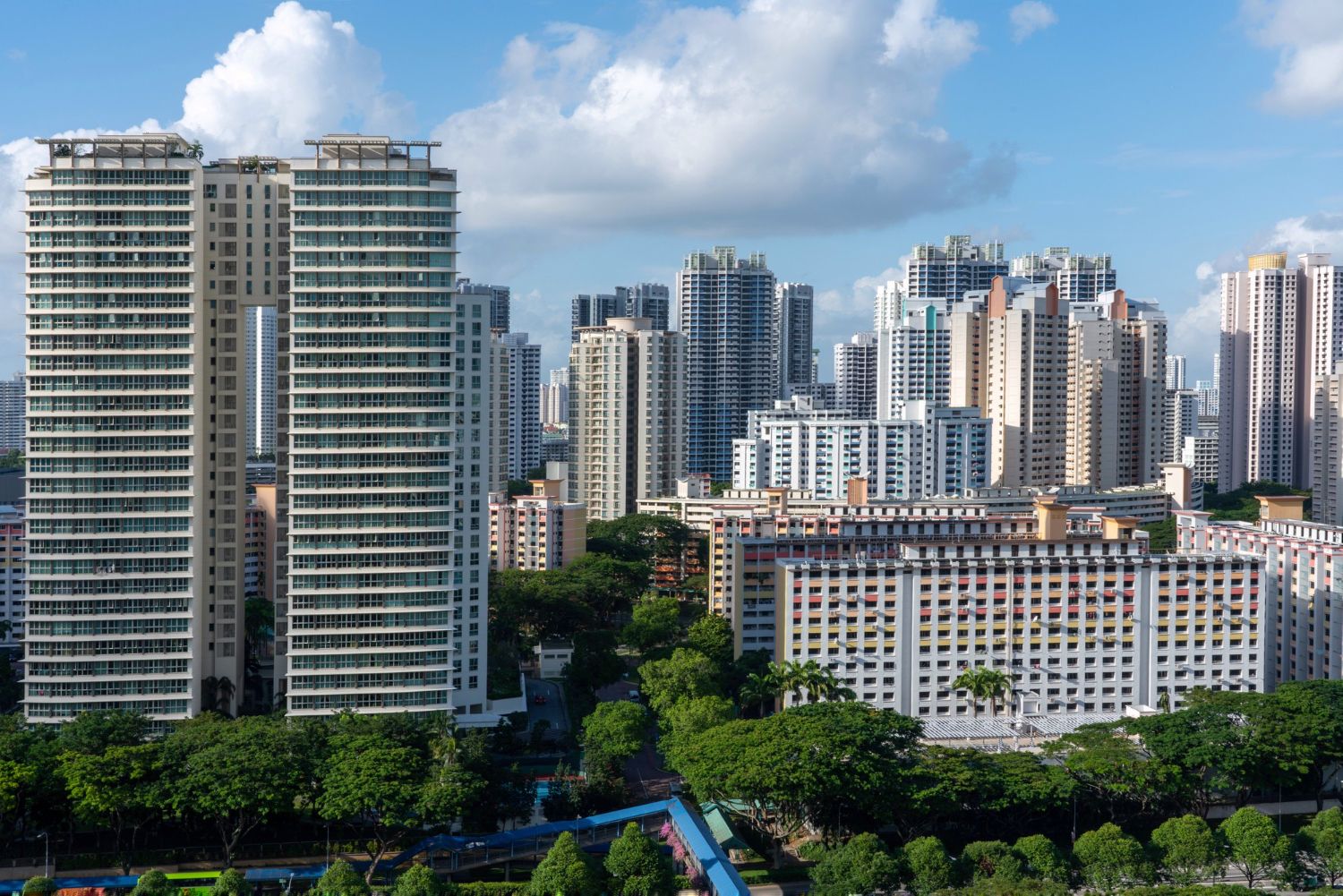
SINGAPORE: The number of million-dollar Housing and Development Board (HDB) resale flat transactions rose to 166 units in May 2026 after a dip in April, when there were only 138 units transacted.
According to Singapore Business Review, citing data from 99.co and SRX, which tracked HDB resale flats sold for at least S$1 million, the overall million-dollar resale units share was at 7.8%.
Between May 2025 and May 2026, the number of million-dollar resale transactions ranged from 87 to 172 units per month.
There were 143 units transacted in May last year, followed by 132 in June, 169 in July and 141 in August. The figure rose to 172 in September before falling to 87 in October. It then increased to 120 in November and 145 in December.
This year, January recorded 146 transactions, before the figure fell to 122 in February, rose to 145 in March, and dipped again to 138 in April. The figure then rose to 166 transactions in May.
A five-room HDB flat at Pinnacle@Duxton recorded the highest transacted price for last month at S$1.63 million.
The unit, located at Block 1B Cantonment Road, spanning 1,130 square feet (sq ft), or about S$1,442 per square foot (psf), fetched a price 5.2% higher than the average resale price of five-room flats at Pinnacle@Duxton.
Meanwhile, Bukit Merah recorded the highest number of million-dollar resale flats at 22 units, followed by Toa Payoh and Queenstown with 21 units each.
Last month, a four-room HDB flat at Bukit Merah with only 45 years left on lease was sold for a record S$1.53 million. /TISG
Read also: Million-dollar HDB resale flats rise nearly 50% to over 1,500 in 2025
This article (Million-dollar HDB resale flats rose to 166 units in May after April dip) first appeared on The Independent Singapore News.


![]()
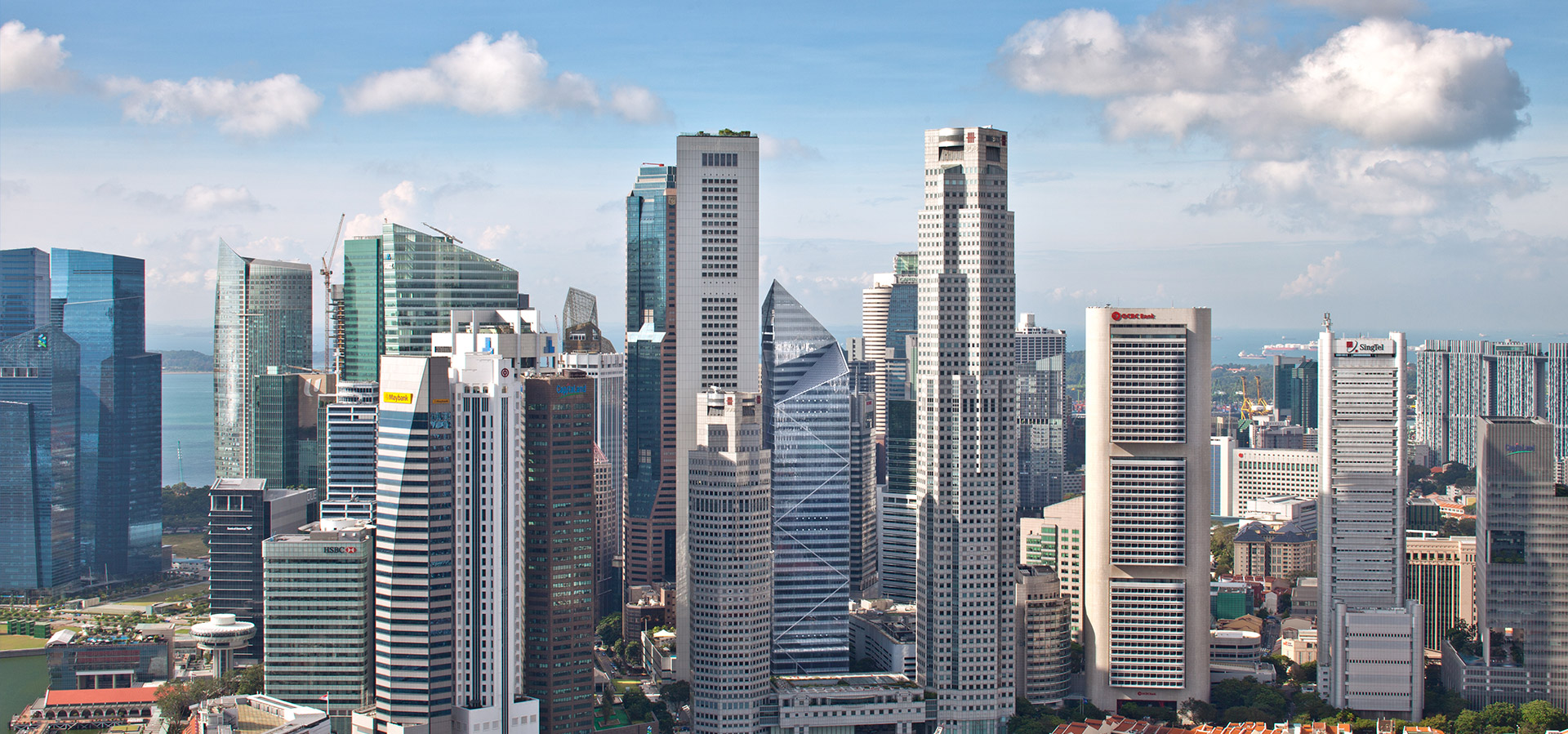
SINGAPORE: One Raffles Place, one of the most recognisable office developments in Singapore’s central business district, has drawn interest from several potential buyers, according to sources who spoke to Bloomberg.
The property, which is being marketed for more than $2.3 billion (US$1.8 billion), has attracted interest from a range of parties including father-and-son property investors Raj Kumar and Kishin RK, Malaysian developer IOI Properties Group Bhd and Singapore-based asset manager CapitaLand Investment Ltd, Bloomberg reported.
Located in the heart of the financial district, One Raffles Place comprises two office towers and a retail mall. The development is among a growing number of commercial properties in Singapore drawing renewed attention as financing conditions improve and sellers show greater flexibility on pricing.
The majority stake in the complex is held by OUE REIT, which is backed by the Indonesian Riady family. The real estate investment trust owns 81.54 per cent of the property, while United Overseas Bank holds the remaining 18.46 per cent and occupies premises within the development.
In a February exchange filing, OUE REIT said it had begun an exercise with UOB to gauge market interest in the property.
A spokesperson for OUE REIT said the trust would decide on its next steps after evaluating the outcome of the exercise. UOB declined to comment, while representatives for RB Capital, the property firm linked to Raj Kumar and Kishin RK, also declined to comment. CapitaLand Investment and IOI Properties did not respond to requests for comment.
Despite the interest, market observers say the scale of the deal presents challenges. The asking price is considered substantial, making it difficult for a single buyer to complete the acquisition. Similar concerns have surfaced in relation to Marina One, another major city-centre asset that has been linked to a potential sale valued at around $5.7 billion.
Based on the valuation of OUE REIT’s stake at the end of 2025, One Raffles Place was valued at approximately $2.37 billion. The property offers 65,309 square metres, or about 702,980 square feet, of lettable space.
Some potential buyers are also said to be weighing the likelihood of additional redevelopment costs. While parts of the complex benefit from long-term leases stretching centuries into the future, much of the development dates back to the 1980s. One of the towers and a quarter of the retail space are held under long-duration leases, while the remaining tower and 75 per cent of the retail component have leases that expire by the 2080s, according to people familiar with the matter.
IOI Properties, controlled by Malaysian businessman Datuk Lee Yeow Seng, has been steadily expanding its footprint in Singapore through a series of acquisitions. Most recently, the company agreed to acquire Asia Square Tower 2 for $2.48 billion.
CapitaLand Investment, which is backed by Temasek Holdings, manages stakes across multiple REITs and private real estate funds.
Raj Kumar and Kishin RK, meanwhile, are linked to several firms including Royal Holdings and RB Capital, and oversee a property portfolio in Singapore that includes RB Capital Building, located beside One Raffles Place.
This article (Singapore’s $2.3b office attracts interest from international tycoons) first appeared on The Independent Singapore News.


![]()
Rising security and economic tensions prompting consideration of new rules to make it harder for foreigners to buy property in Japan.
In December, Japan’s Liberal Democratic Party announced its intent to introduce legislation to add new restrictions to the ability of foreigners to purchase real estate in Japan. In March, a government expert panel began holding meetings to discuss possible changes legal changes in order to address the economic and security concerns being voiced by proponents of increased regulation, with the aim of making a proposal by the end of the currently ongoing parliamentary session, which is scheduled to end in midsummer.
That timetable is now getting shifted back, as the panel is now saying that it is postponing any possible recommended bans on foreigners purchasing property until this coming fall.
The push for tighter restrictions reflects two growing concerns among a vocal portion of the Japanese population. The first is espionage threats from foreign countries, with China the most commonly perceived potential perpetrator. Under the current laws, foreign nationals buying real estate within close proximity to Japan Self-Defense Force bases, nuclear power plants, and other facilities deemed to be sensitive sites from a national security standpoint must disclose their nationality and declare the purchase to the Japanese government. Among the ideas being considered by the panel are installing a framework where instead of simply declaring such purchases, the buyer would have to apply for a license to complete the transaction, granting the government a form of veto power to stop the sale.
Real estate purchases by foreigners have also been attracting increased negative attention in Japan for economic reasons. While Japan’s total population is shrinking, it’s also becoming more concentrated. Instances of foreign buyers purchasing condominium buildings in high-demand areas and aggressively raising rents beyond what the current residents can bear, turning individual condo units into short-term rentals for ill-mannered tourists, or purchasing tracts of land for disruptively large redevelopment projects may still represent only a portion of real estate transactions in Japan, but when they do happen the public and policymakers definitely notice.
Unfortunately, there’s a third group of people who could get caught up in any wide-ranging ban on foreigners buying property: law-abiding foreign residents of Japan who simply want to purchase a place to live. Hopefully the panel will realize and remember that not every foreigner looking to buy real estate in Japan is a spy or speculator, and will leave a path for home ownership open to them within whatever recommendations it makes in the fall.
Source: Yomiuri Shimbun via Jin, Japan Times (1, 2)
Top image: Pakutaso
● Want to hear about SoraNews24’s latest articles as soon as they’re published? Follow us on Facebook and Twitter!
There is a recurring pattern in the biographies of people who own property in Marbella. Many of them visited first as tourists, either on holiday or accompanying someone who owned property there. They enjoyed the experience. They started thinking about it. They came back. And eventually, sometimes after years of deliberation, they bought.
This pattern reveals something important about how the Marbella property market actually works. It is not primarily a market of spreadsheet-driven investors calculating cap rates and projected appreciation. It is a market of people who have experienced the place and want to own a piece of it. Understanding the lifestyle dimensions of this market is as important as understanding the financial ones for anyone trying to make sense of why Marbella maintains its gravitational pull decade after decade.
What visitors consistently report about Marbella, and what distinguishes it from other European sun destinations, is the sense of being somewhere that works at a genuinely high level. The infrastructure functions. The hospitality is polished without being pretentious. The range of dining, leisure, and cultural options is broader and deeper than the town’s size would suggest. The climate is generous. And the combination of mountain backdrop and Mediterranean coastline creates a physical setting of real beauty that photographs well but is better experienced in person.
This quality of experience is not accidental. It is the product of decades of investment, both public and private, in the physical and service infrastructure of the town. Marbella has benefited from a virtuous cycle in which the concentration of wealthy international residents and visitors has attracted the businesses, restaurants, and services that those residents and visitors want, which in turn has attracted more of them.
One of the features of Marbella that is difficult to communicate in property listings but is among the most valued by those who live there is the social infrastructure. The town has a genuine year-round international community, not simply a summer influx of tourists who vanish in September. There are established networks of residents from across Europe, the Middle East, and elsewhere who have built lives in Marbella and who form the social environment that new arrivals enter.
For buyers who are relocating rather than simply purchasing a holiday property, this community dimension is often the deciding factor. Knowing that there is a ready-made social world to enter, that schools are established and well-regarded, and that the services and support networks necessary for comfortable daily life are in place reduces the friction of the transition considerably.
Crinoa Marbella has been operating in this environment long enough to understand the community dynamics as well as the property market, and they share this contextual knowledge freely with buyers who are navigating both dimensions of the decision.
The experience of living in or visiting Marbella changes significantly across the seasons, and buyers benefit from understanding this variation before committing to a property whose appeal may be calibrated to a particular time of year.
July and August are the peak summer months, when the population swells dramatically, the restaurants and beach clubs operate at maximum intensity, and the area has the full beach resort energy that its international reputation is built on. The Golden Mile and Puerto Banus are lively to the point of being overwhelming for some visitors during this period.
Spring and autumn, by contrast, are many long-term residents’ favourite seasons. The temperatures are comfortable rather than hot, the crowds have thinned, and the town’s actual character, rather than its tourist-facing performance, becomes more accessible. October in particular has a loyal following among residents who regard it as the best month of the year.
Winter is mild by Northern European standards and genuinely liveable, with an active local scene, manageable traffic, and easy access to amenities that summer overcrowding can obscure. The outdoor pools may be too cool for swimming, but the walking, golf, dining, and social life continue without significant interruption.
According to Statista, Spain receives more than 80 million international visitors annually, making it one of the world’s most visited countries, and the Costa del Sol accounts for a significant share of those arrivals. This sustained visitor flow underpins both the lifestyle quality and the property values that make Marbella such a consistent destination for international buyers.
For buyers who have reached the point of translating their Marbella interest into an actual property search, the key is approaching the process with the same care and diligence they would bring to any significant acquisition, while also giving themselves the time to experience the market rather than simply study it from a distance.
Visiting different areas in different seasons, spending time in neighbourhoods that represent genuine lifestyle options rather than simply viewing specific properties, and building a relationship with a local team who can offer honest contextual guidance all contribute to a decision that is well-founded rather than simply well-intentioned.
For buyers ready to explore Marbella properties for sale, Crinoa offers the combination of market expertise, portfolio depth, and genuine client focus that makes that exploration productive. Contact their team today to begin the conversation.
It would be incomplete to discuss the pull of Marbella purely in lifestyle terms without acknowledging that many buyers are also motivated, at least in part, by the investment case. The Marbella market has delivered meaningful long-term capital appreciation for buyers who entered at sensible valuations, and the structural factors that have supported that performance, international demand diversity, supply constraint, infrastructure quality, and fiscal incentives for non-resident ownership, remain in place. For buyers who combine a genuine lifestyle motivation with a rational assessment of the investment case, Marbella offers the relatively rare combination of a place they genuinely want to be and an asset that has a reasonable prospect of holding or growing its value over their ownership horizon. Crinoa’s team is ready to help buyers think through both dimensions of the decision and to find properties that serve both objectives well.
The post Marbella’s Pull: Why International Buyers Keep Returning to the Same Market appeared first on Social Lifestyle Magazine.
Maintaining a comfortable home can be frustrating when different areas of your house experience uneven temperatures. Some rooms may feel too hot in summer or too cold in winter, while others are just right. Standard HVAC systems often struggle to balance these differences, leading to wasted energy, high utility bills, and constant adjustments. Homeowners may find themselves layering blankets, running extra fans, or constantly changing thermostats. These discomforts highlight the need for smarter heating and cooling solutions that adapt to each space individually.
For residents in Springfield, MO, Redeemed HVAC & Plumbing offers a tailored approach to home comfort through zoning systems. Our team of licensed technicians not only installs and services HVAC equipment but also customizes solutions that address the unique heating and cooling needs of every room. By partnering with Redeemed HVAC & Plumbing, homeowners gain access to expertise in ductwork, thermostats, and system optimization that ensures consistent comfort throughout the home.
Zoning systems divide a home into distinct areas or “zones,” each controlled independently. Unlike traditional HVAC systems that treat a house as a single space, zoning systems use multiple thermostats and motorized dampers within the ductwork. This allows temperature adjustments for each zone, ensuring personalized comfort. For instance, bedrooms can be cooler at night, while living areas remain warm. Properly installed zoning systems prevent overworking the HVAC unit, improve efficiency, and reduce wear and tear.
Additionally, zoning systems help homeowners manage seasonal temperature differences more effectively, reducing the need for constant thermostat adjustments. They can also address common hot or cold spots in older homes where insulation or design causes uneven heating or cooling. Finally, by giving precise control over each area, zoning systems create a more comfortable environment that adapts to different family routines and lifestyle needs.
Collaborating with a Springfield MO HVAC contractor like Redeemed HVAC & Plumbing brings specialized knowledge to your home. Our technicians evaluate the layout, insulation, and airflow patterns to design a zoning plan that maximizes efficiency. Beyond installation, they provide maintenance, troubleshooting, and upgrades, ensuring that each zone maintains optimal temperature control year-round. Homeowners benefit from reduced energy bills, longer equipment lifespan, and enhanced indoor air quality.
Additional benefits include:
Many homes can adopt zoning systems without a full HVAC replacement. Redeemed HVAC & Plumbing assesses current systems to determine compatibility, identifying whether modifications to ductwork, thermostats, or controls are necessary. Integration allows homeowners to retain their existing furnace or air conditioner while upgrading to more precise control. This approach minimizes upfront costs while still delivering significant comfort improvements.
Technicians carefully examine existing duct layouts to ensure proper airflow reaches each zone, making adjustments where needed to prevent hotspots or cold areas. They also evaluate thermostat and sensor placement to guarantee accurate temperature readings throughout the home.
Zoning systems can often be added to older HVAC units, extending our functionality and providing a flexible upgrade path that homeowners can expand over time. By targeting only the zones in use, the existing system experiences less strain, which improves energy efficiency and lowers utility costs. With professional integration, homeowners enjoy a seamless experience, controlling multiple zones from a single, easy-to-use interface.
A primary advantage of zoning systems is energy efficiency. By heating or cooling only the areas in use, homeowners reduce unnecessary energy consumption. For example, rooms that remain unoccupied for most of the day can have reduced airflow, leading to lower utility bills. Springfield, MO HVAC contractors understand local energy patterns and can recommend zoning schedules that align with daily routines. Over time, these adjustments translate into noticeable savings without compromising comfort.
Modern zoning systems often feature smart thermostats and mobile app controls, allowing users to adjust temperatures remotely. Redeemed HVAC & Plumbing ensures that these systems are configured for seamless operation. Homeowners can create schedules, monitor energy usage, and receive alerts for system maintenance. Advanced sensors also detect humidity levels and occupancy, further optimizing comfort and efficiency.
Installing a zoning system can present challenges, including uneven duct layouts or limited space for dampers. Springfield, MO, HVAC contractors bring experience in overcoming these obstacles through customized designs and innovative solutions. Redeemed HVAC & Plumbing addresses common issues such as inconsistent airflow, thermostat placement, and system compatibility. Our proactive approach ensures that each zone functions as intended, providing reliable comfort without frequent adjustments.
Zoning systems contribute to improved indoor air quality by allowing precise airflow management. By controlling ventilation in each zone, homeowners can reduce allergens, moisture buildup, and stagnant air pockets. Redeemed HVAC & Plumbing also integrates duct cleaning and air filtration services, ensuring that air distribution is not only comfortable but also clean and healthy. This dual focus on temperature and air quality elevates the overall living environment.
Regular maintenance is essential to keep zoning systems performing efficiently. Springfield, MO HVAC contractors provide inspection, cleaning, and calibration services to prevent malfunctions and prolong system life. Redeemed HVAC & Plumbing emphasizes preventative care, reducing the likelihood of costly repairs and extending equipment lifespan. Homeowners gain peace of mind knowing our investment continues to deliver reliable comfort for years.
A zoning system offers a transformative solution for homeowners struggling with uneven temperatures and high energy costs. By customizing each zone, leveraging smart technology, and maintaining optimal airflow, residents can enjoy consistent comfort throughout our home.
Redeemed HVAC & Plumbing combines local expertise, licensed professionals, and advanced HVAC solutions to deliver results that go beyond basic heating and cooling. For Springfield, MO residents seeking personalized comfort, energy efficiency, and improved indoor air quality, partnering with Redeemed HVAC & Plumbing ensures every room in the home feels just right.
The post Using Zoning Systems with a Springfield MO HVAC Contractor for Custom Comfort appeared first on Social Lifestyle Magazine.