Being a mecha anime, Gundam is very focused on the future. As a matter of fact, it’s so focused on the future that the franchise has made up multiple “Century” and “Era” names for its timelines, freeing it from the need to align its narratives with real-world history as its characters head out into space.
That doesn’t mean that the anime’s mobile suits can’t combine beautifully with traditional earthbound aesthetics, though, and as proof Gundam is partnering with a Fukushima craftworks company that’s roughly 300 years old.
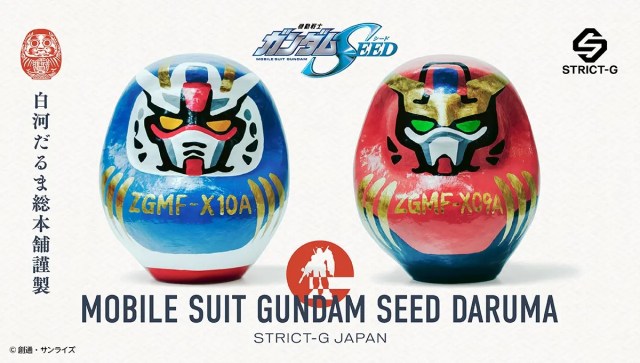
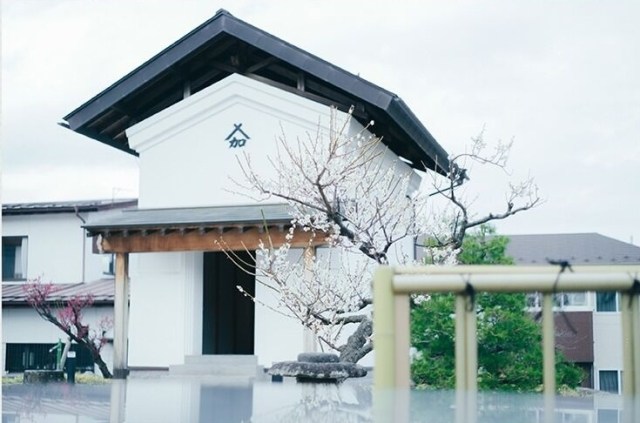
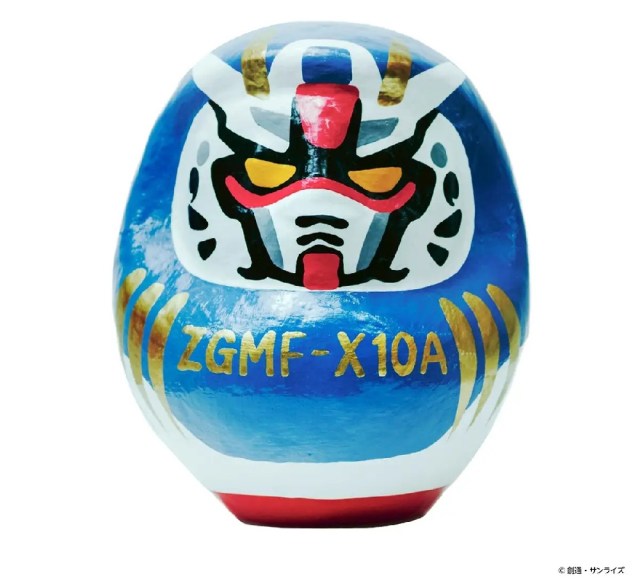
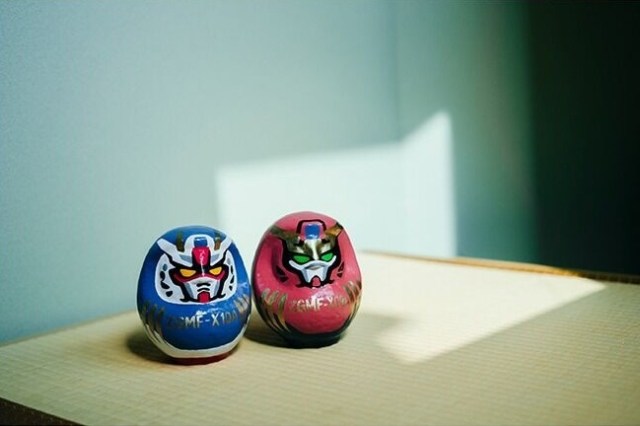
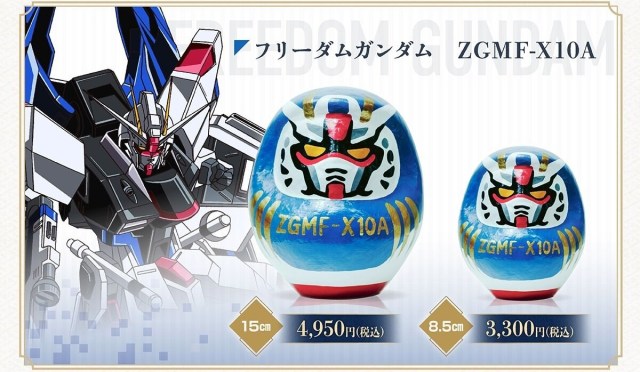
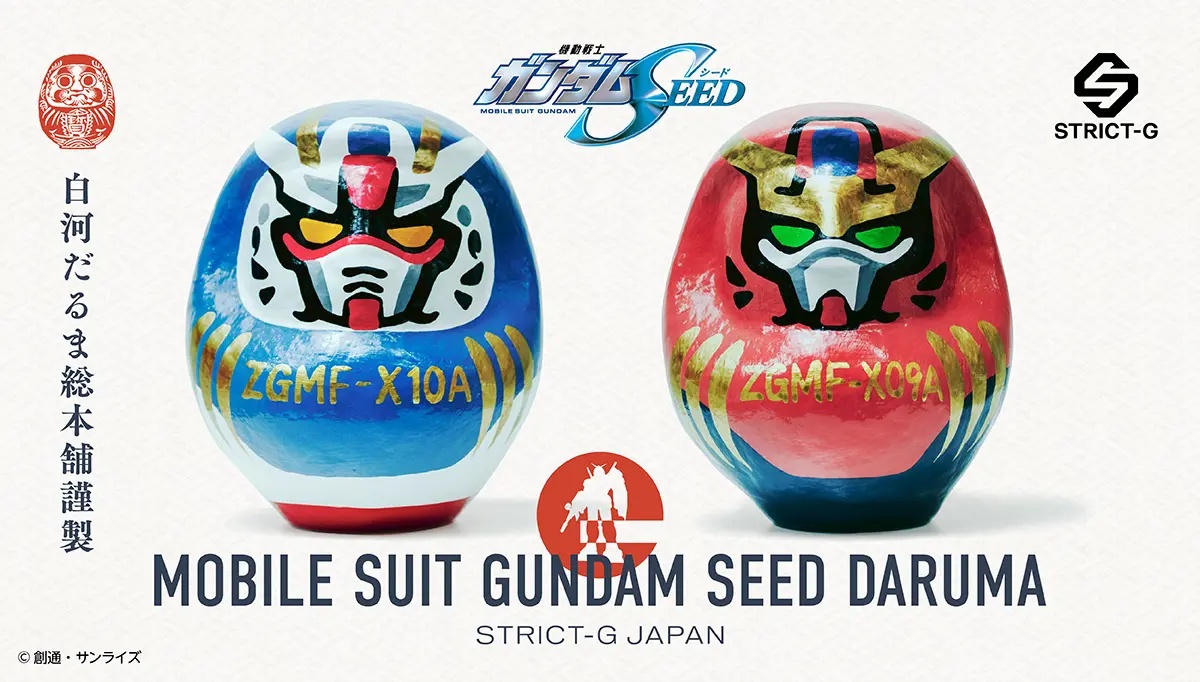
Fukushima Prefecture’s Shirakawa Daruma Sohonpo is one of those companies that’s been around for so long it can’t seem to pin down the exact year in which it was founded, but we know it was about three centuries ago. Now under the guidance of its 14th owner, Shirakawa Daruma Sohonpo’s artisans continue to carve and paint each and every one of their daruma dolls by hand, including their new ones based on Mobile Suit Gundam Seed’s ZGMF-X10A Freedom Gundam…
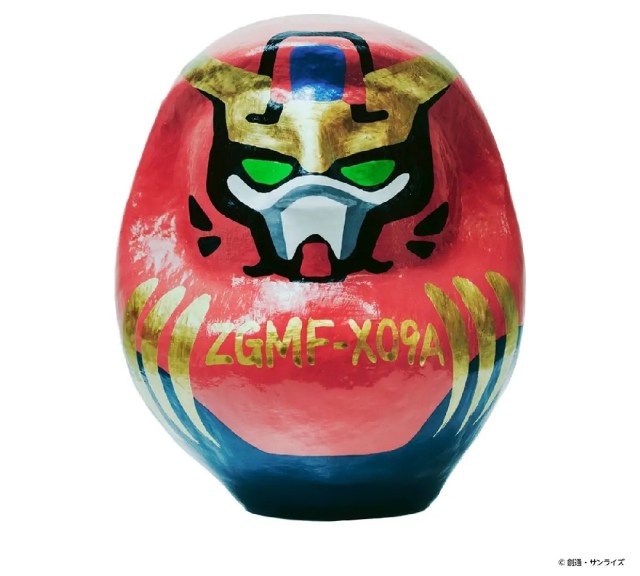
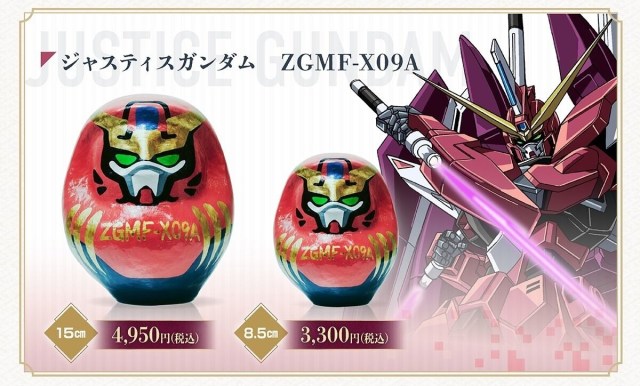
…and the ZGMF-X10A Freedom Gundam.
Daruma are made in many places in Japan, but the ones from the town of Shirakawa, where Shirakawa Daruma Sohonpo’s workshop is located, are especially prized. Because Fukushima has heavy snow in the winter, farmers had long periods when they couldn’t work their fields and had to stay indoors. With all that time on their hands, many families spent it honing their artistic skills, with some becoming such proficient craftsmen that they raised the bar for daruma quality in the community to a point where now the whole country recognizes them as among the very best.
Daruma dolls are considered auspicious signs of impending success, and ordinarily you’re supposed to paint in the pupil of one eye when you purchase or receive the doll, make a wish, and then paint in the other pupil when it comes true (or state your goal and paint in the other pupil when you achieve it, if you’re more existentially minded). Since Gundams don’t have pupils to begin with, that’s technically something you can do with these too, though that’d probably end up making them look a little closer to the super-deformed SD Gundam spinoffs than the original ZGMF-X10A and ZGMF-X10A.
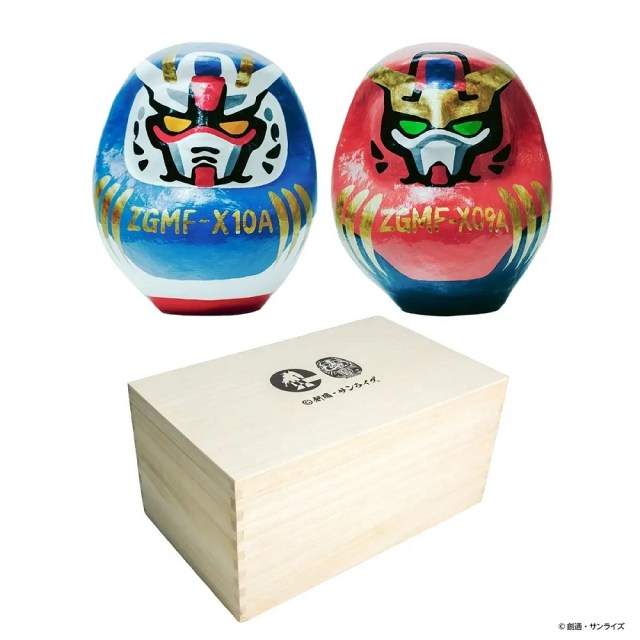
The Gundam daruma come in two sizes, 15 and 8.5 centimeters (5.9 and 3.3 inches), with the larger ones priced at 4,950 yen (US$32) and the smaller ones at 3,300 yen. They’re also available in a set that gets you both mobile suit daruma (9,900 yen for the big ones and 6,600 yen for the smaller versions) plus a snazzy wooden box.
The Gundam daruma officially go on sale until August 1. Preorders are open now though through the Premium Bandai website here, giving us a way to secure a Gundam of our own to help cope with the anxiety about Tokyo being about to lose its life-sized Gundam statue.
Some might say you haven’t truly seen Japan if you haven’t colour hunted.
Recently, an activity called “colour hunting” has been gaining popularity in Japan. Simply put, it involves choosing a colour theme and then, while walking around town, taking photos of things that match that colour, before compiling them into a single image.
The results are remarkably mesmerising, but what’s even more interesting is the way it encourages you to notice details you wouldn’t have noticed otherwise, giving you a whole new perspective on your surroundings.
Always keen to try out a trend, we decided to conduct our very own colour hunt, both in a rural residential area and in the heart of Tokyo, to see what we could find. The theme we chose was yellow, and as we set out on our walk, which was a familiar one, it didn’t take long for us to spot things we’d never noticed before.
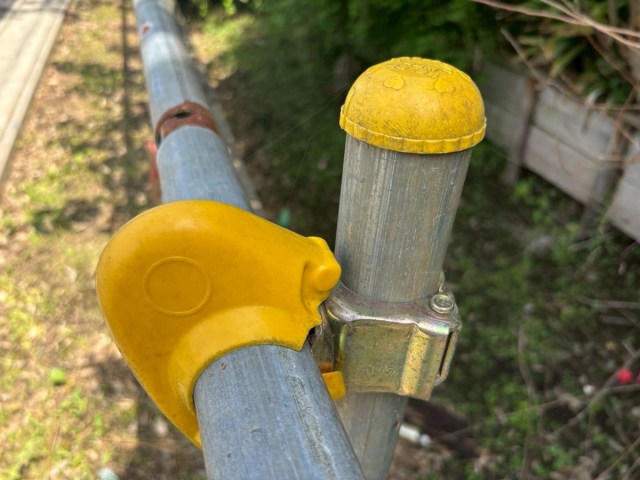
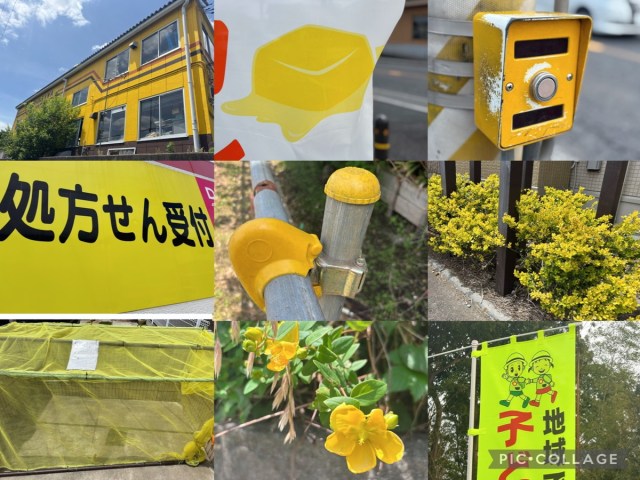
▼ Like the fittings on a metal barrier…
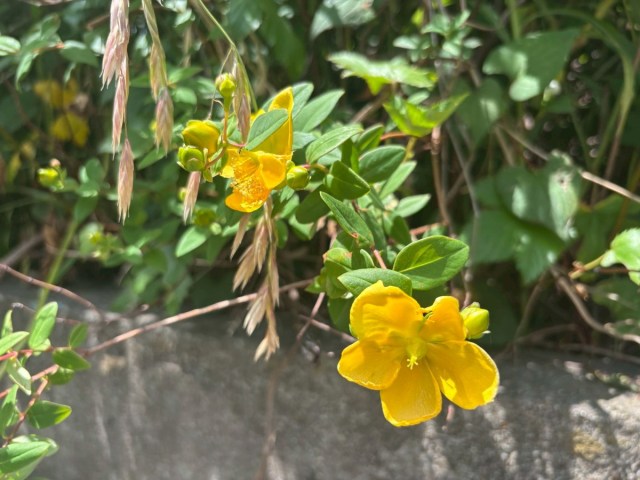
▼ … flowers growing by the side of the pavement…
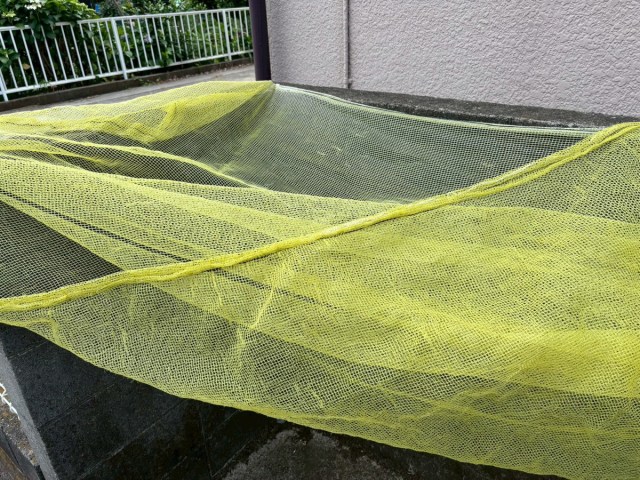
▼…netting over garbage collection areas…
▼…and, of course, the road signs.
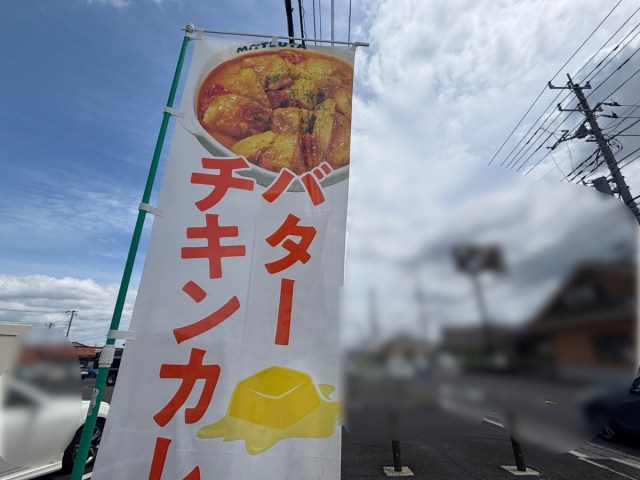
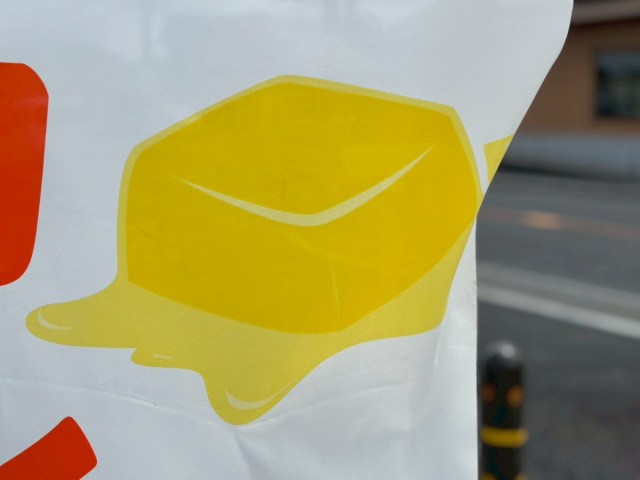
Moving further down the street and into the main hub of town, our eyes began to spy yellow in slightly more unusual places, like the cube of partially melted butter on the “butter chicken curry” banner outside an Indian restaurant.
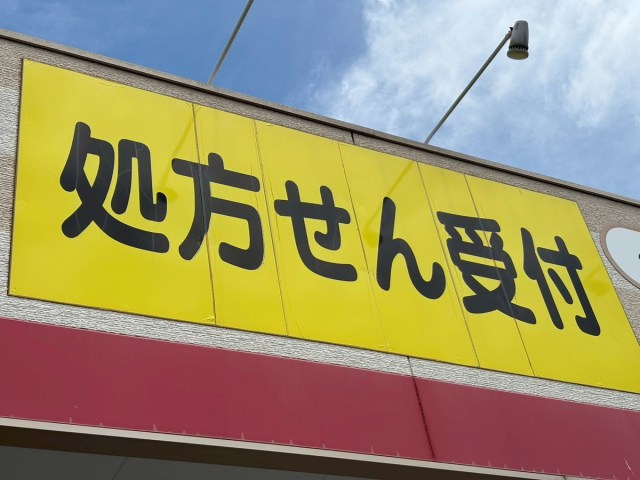
▼ The yellow “prescription services” sign outside a local drugstore…
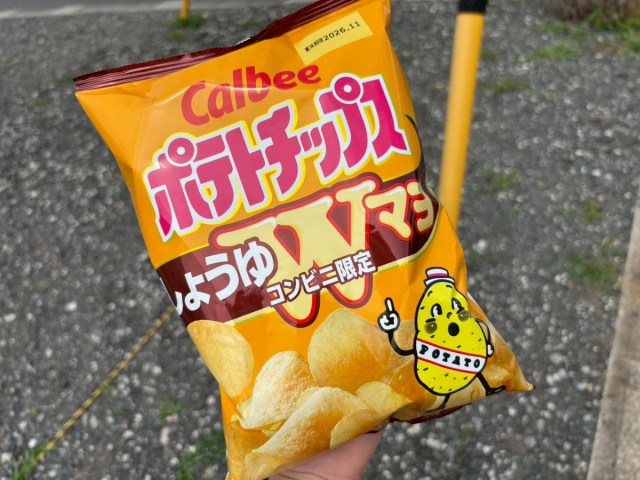
▼ …and the yellow on a pack of Calbee chips.
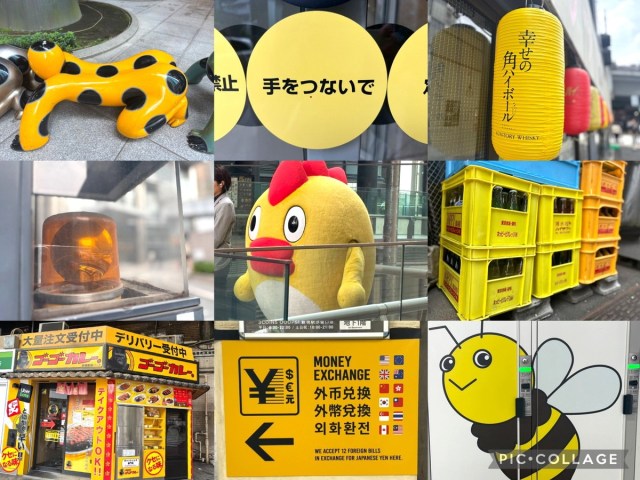
With our eyes now instinctively zoning in on shades of yellow, the sunny colour began to lift our mood. It also became something of a scavenger hunt, and after around an hour of walking, our prize was this composite image of all the yellow we’d seen.
The images actually painted a picture of quaint countryside life, and now we were ready to take things up a notch by colour hunting in the heart of Tokyo.
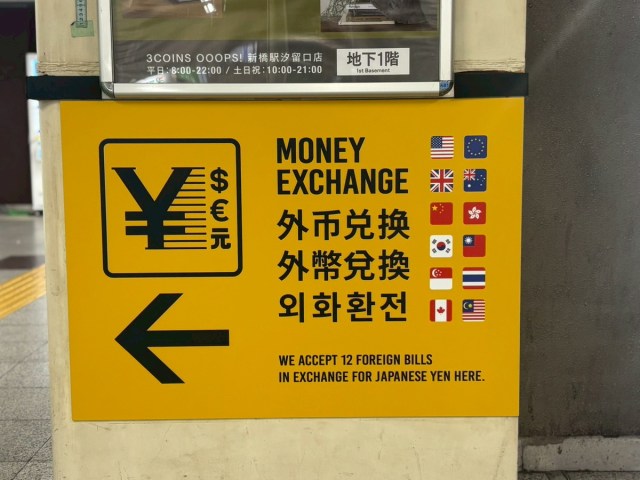
Walking around Shimbashi, it didn’t take long for our eyes to zone in on yellow, with this “Money Exchange” sign being our first find of the afternoon.
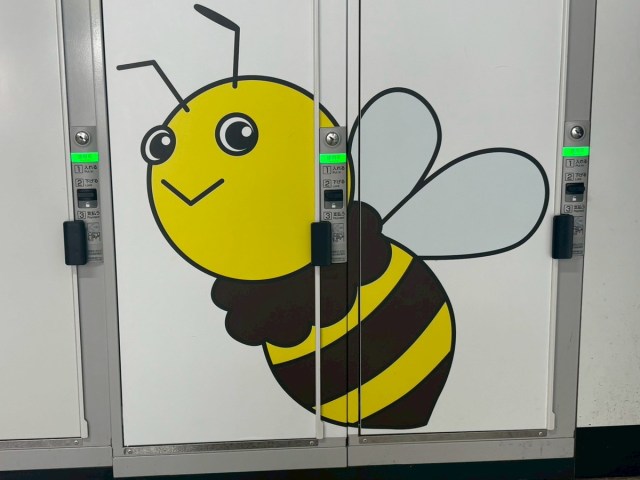
▼ We also spotted a large bee on a coin locker nearby.
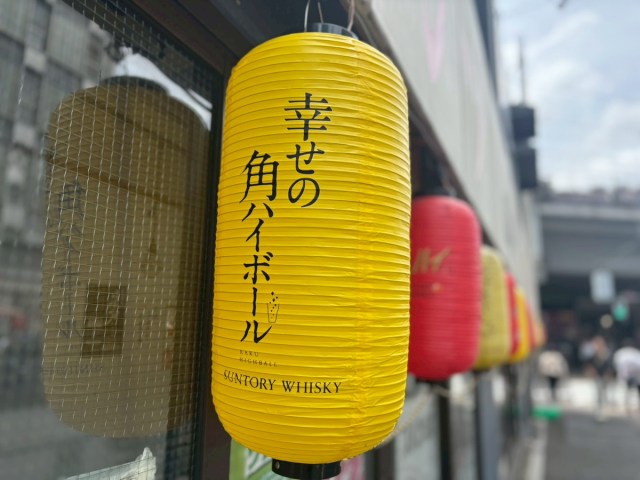
This was already turning out better than expected, and our search for the sunny hue continued in earnest when we stopped to photograph a yellow lantern advertising Suntory whisky highballs.
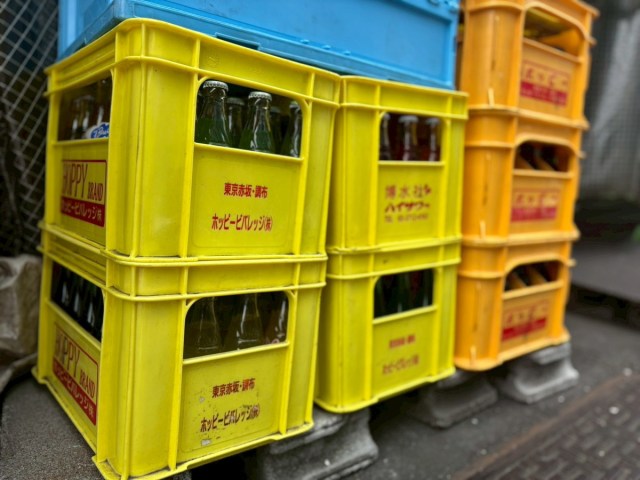
▼ Crates of Hoppy, a beer-flavoured low-alcohol drink were also outside.
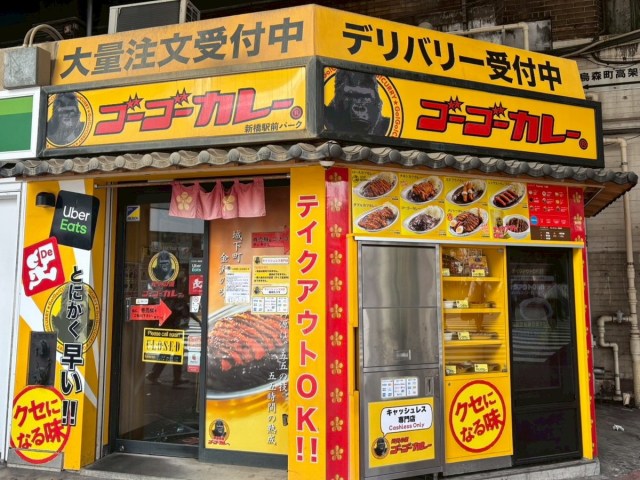
▼ And nearby, a branch of the Go Go Curry chain.
At this point, we were so honed in on yellow that people wearing the colour, or carrying yellow items, began to stand out as they attracted our gaze.
▼ When our eyes landed upon Sora-jiro doing a live weather forecast, we couldn’t help but smile.
▼ Sora-jiro is the mascot character for Nippon Television and its weather forecast.
Continuing on our stroll, we came across even more yellow sightings.
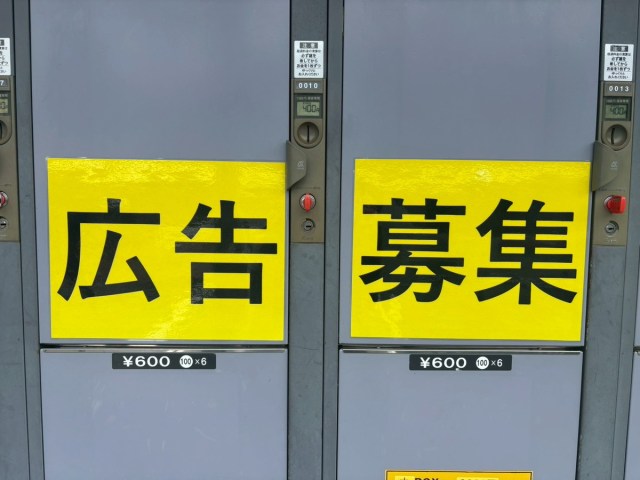
We began to realise just how well yellow works in attracting the eye, leading it to be used on a number of signs like the “advertising recruitment” ones on these coin lockers…
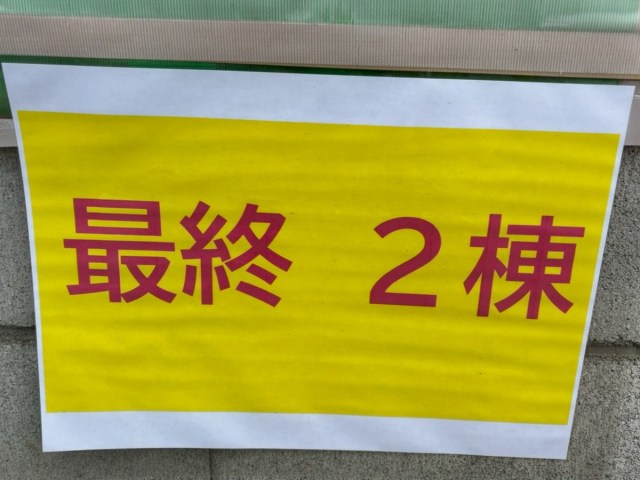
▼ …and this one, which reads “Last two buildings”.
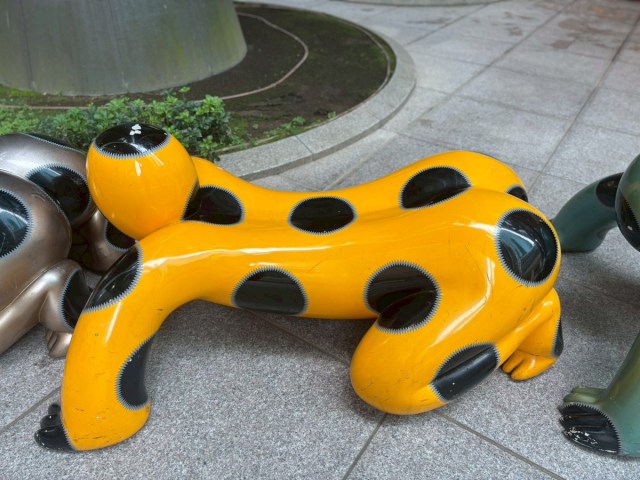
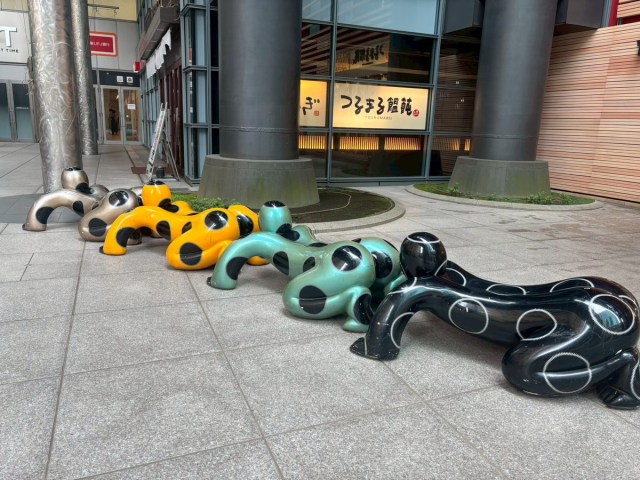
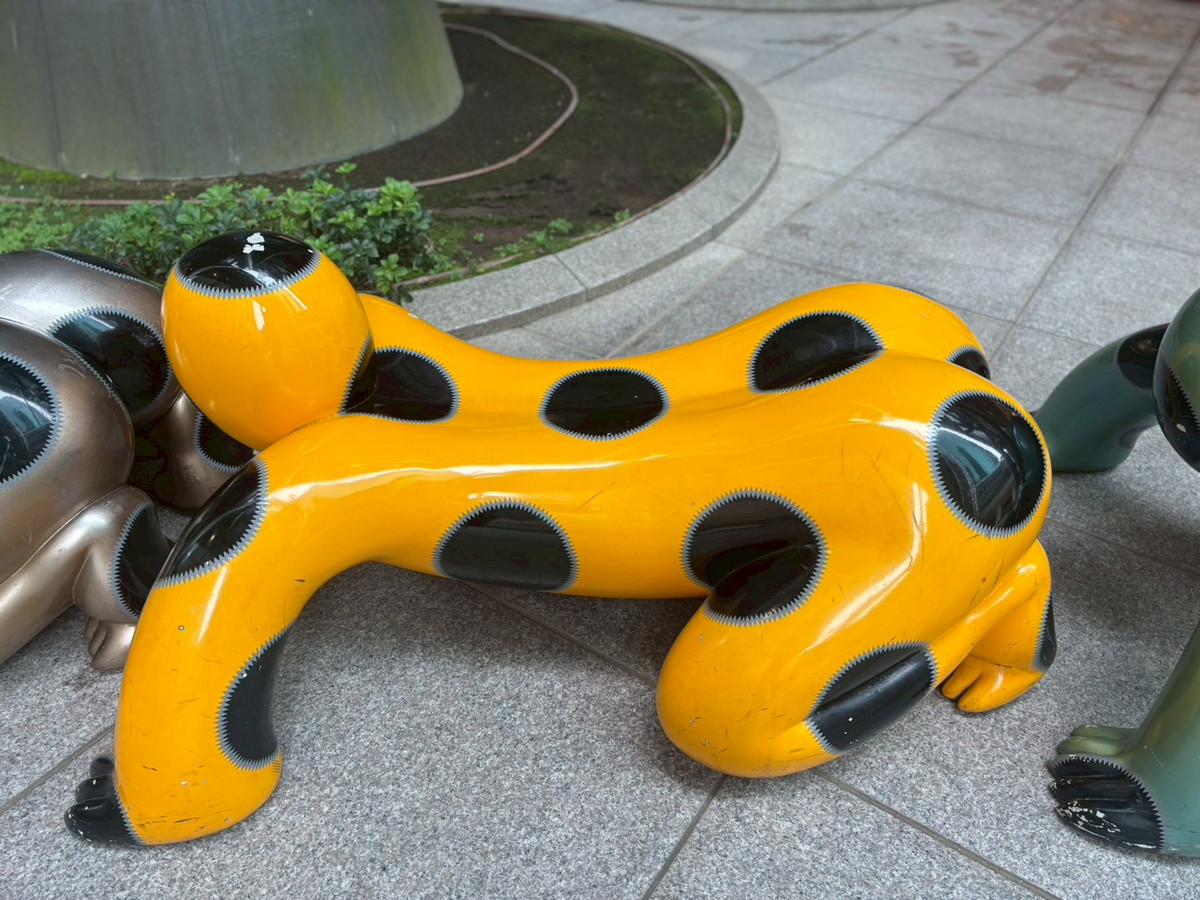
Just as we thought we were done for the day, we came across these figures, which are actually designed to be used as seating benches.
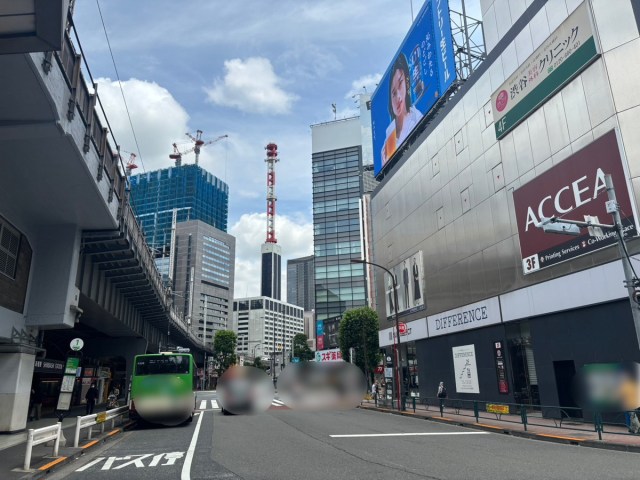
Compiling our photos from Shimbashi, the look and feel was entirely different to our rural collection, capturing the finer details that give Tokyo its unique charm.
Hunting for the same colour in two different locations revealed an interesting contrast in subjects and mood – whereas the rural scenes mostly contained images of flowers and signs, in Tokyo there was more grit and extra variety, as objects and characters played a greater role. It was such a fun, eye-opening adventure that we’re now keen to hunt for more colours around town, and connect with all the hidden finds areas we would otherwise miss.
Totoro and friends want to keep you cool and smiling this summer with these traditional non-folding fans.
Summer presents a bit of a conundrum in Japan. On the one hand, it’s not a matter of if the weather will be hot and humid, but whether it’ll be extremely or just very hot and humid. At the same time, summer is full of festivals, fireworks shows, pop culture events, and even beautifully blossoming flowers, so there’s tons of fun to be had if you can find a way to cope with the heat.
And if you have a fun way to do so, all the better, right?
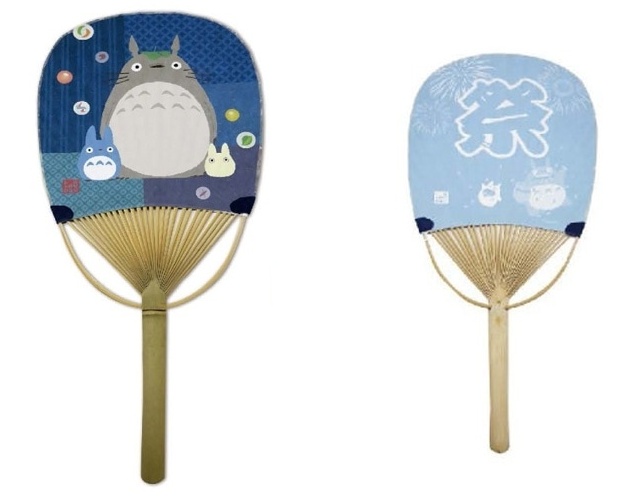
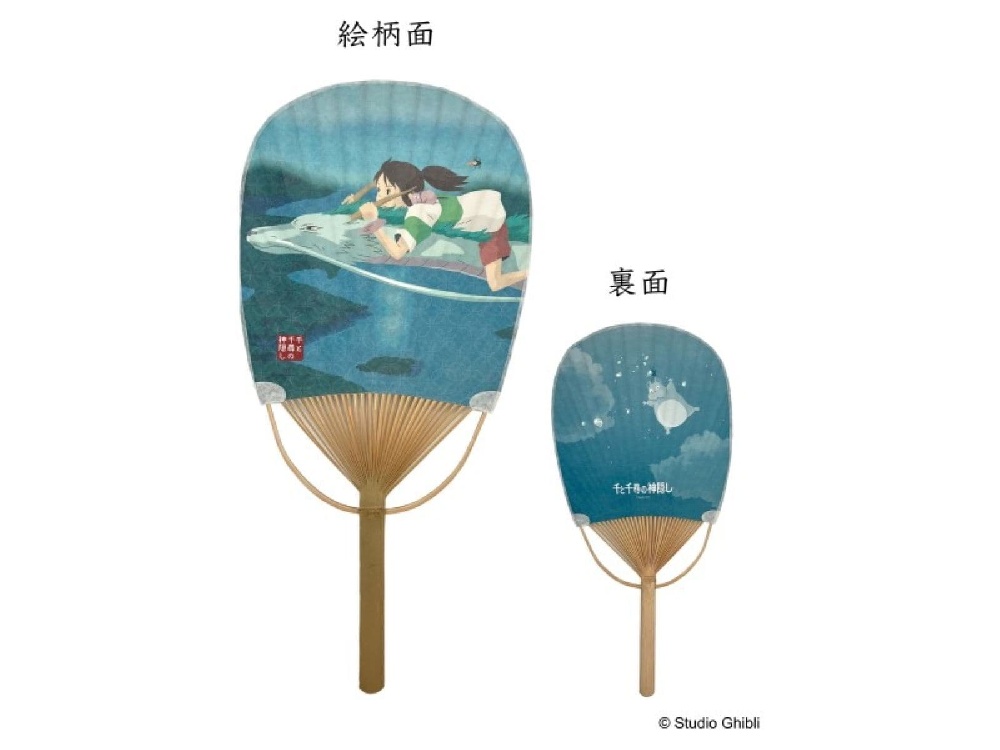
Filling that role nicely are these fans from Studio Ghibli specialty store Donguri Kyowakoku. This type of fan is called an uchiwa, and because they have an easy-to-grip handle, it’s easier to generate a cooling breeze with uchiwa than with than sensu (folding fans), making them a classical summer lifesaver.
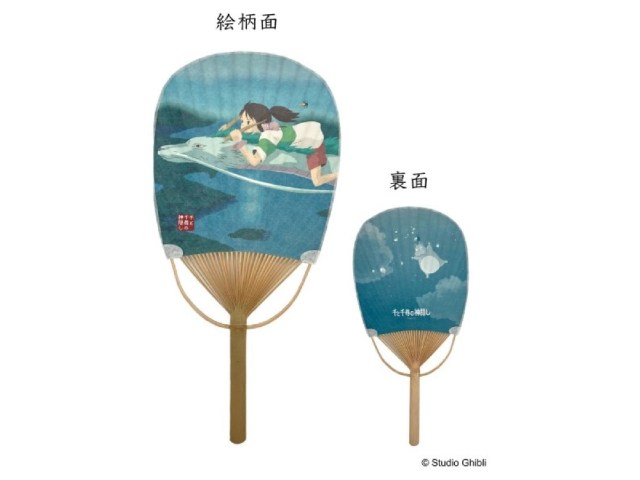
The Ghibli uchiwa are made from bamboo frames and textured paper. A total of four designs are available, representing two of Ghibli’s greatest hits and with unique artwork on each side. On the fan above, we see Spirited Away’s Chihiro riding through the sky on Haku in his dragon form on the front, and when you flip the fan over, you can see Mouse Boh and Haedori having a somewhat less elegant flight.
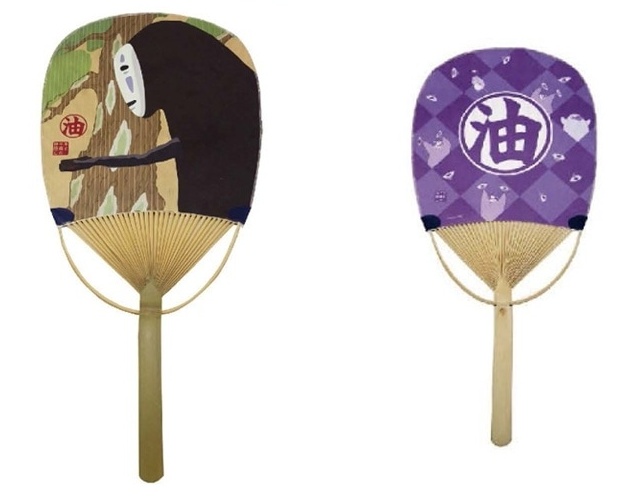
Also here from Ghibli’s Oscar-winner is No Face, which is fitting since uchiwa are said to be shaped like koban, Japan’s traditional oval gold coins. The back of the No Face fan bares the kanji for Abura, as in the Aburaya bathhouse of the gods where most of the movie takes place, along with illustrations of some of the establishment’s more prominent patrons.
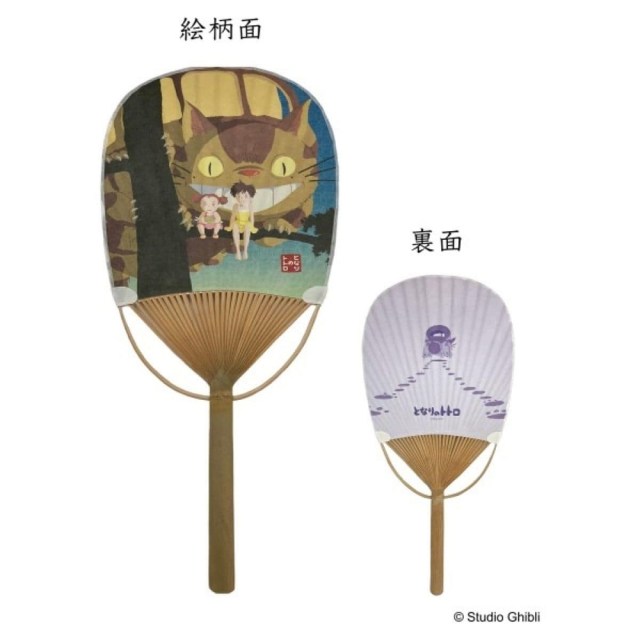
No Ghibli movie captures the vibes of a carefree summer day like My Neighbor Totoro, though, and so it’s also part of the lineup, with one of its designs featuring sisters Mei and Satsuki along with the Catbus.
▼ The back of the fan reveals that the Catbus leaves adorable pawprints behind as it scampers around the countryside.
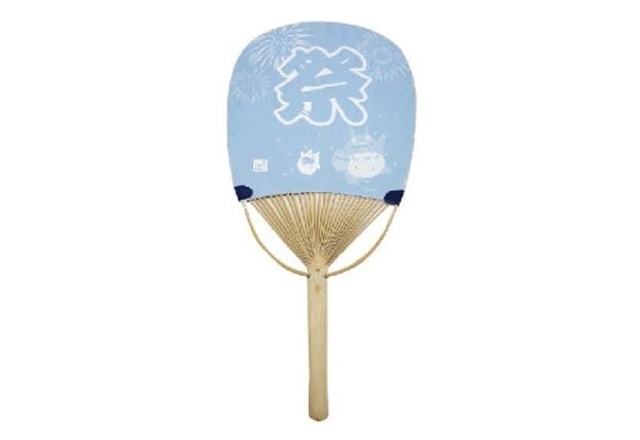
And finally, the fourth fan shows a gathering of all three Totoros, big, medium. And small, with them dancing under fireworks and the kanji for matsuri (“festival”) on the back.
The fans are all 17 centimeters (6.7 inches) in width and 37 centimeters in length, with the exception of the Catbus uchiwa which is just a bit longer at 37.5 centimeters. The long handles make them easy to tuck into a tote bag or slide into the sash of a summer kimono, and since uchiwa don’t fold up, they also work great as interior decorations, since they’re essentially little mini posters that you can also use to make a breeze. All four of the fans are priced at 880 yen (US$5.70) and recently restocked at Donguri Kyowakou, with online orders available here.
Japanese convenience store food, like you’ve never seen it before.
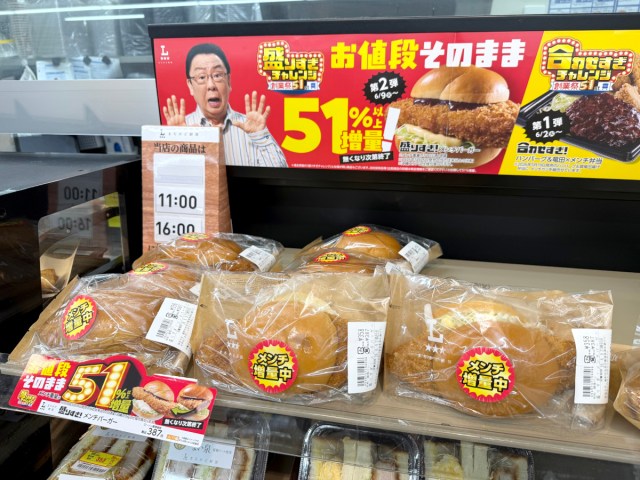
If you’re looking for value-for-money on your next convenience store run, then Lawson is the place to go right now, because the chain is holding a special “Super Happy Too Much! Challenge” campaign, where select products are being upsized for free.
This is the second week of the campaign, which brings us a new lineup of 10 larger-than-usual products, and the standouts for us turned out to be two products in the bread aisle.
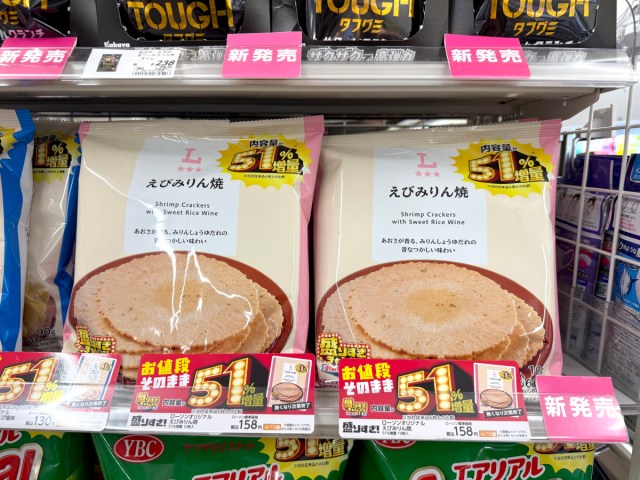
▼ The 51-percent upsized Shrimp Crackers with Sweet Rice Wine got a second look from us as well.
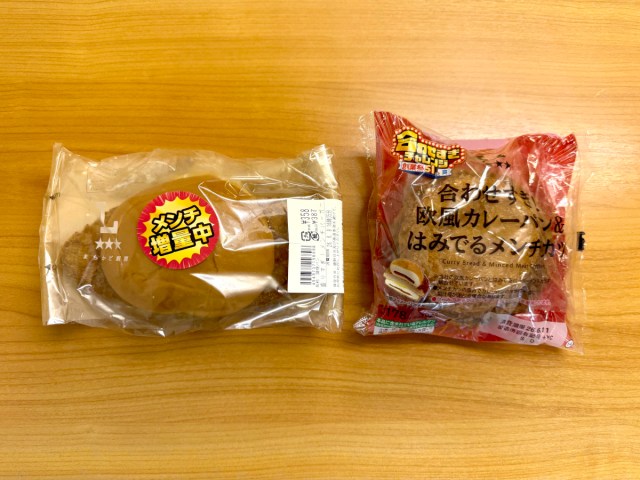
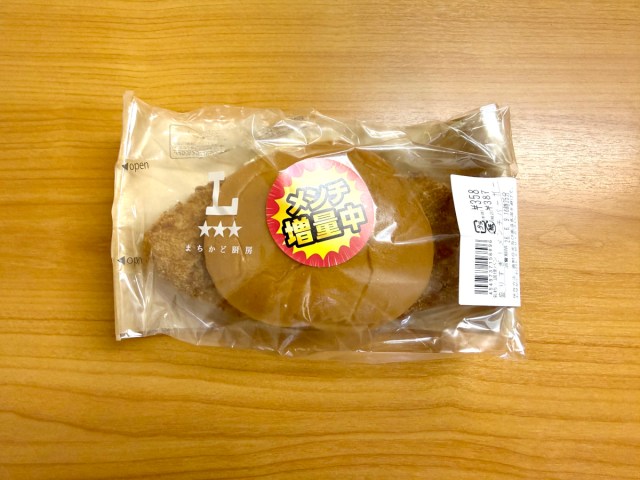
While we ended up bypassing the crackers, we couldn’t resist purchasing the Too Much! Menchi Burger (387 yen [US$2.41])…
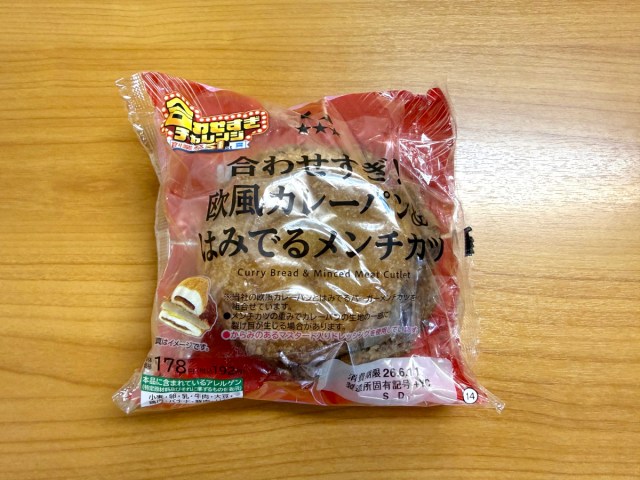
▼ … and the Curry Bread and Minced Meat Cutlet (192 yen).
These wildly inventive creations have been causing a buzz since they were released on 9 June, and when we saw them in person, we immediately understood why.
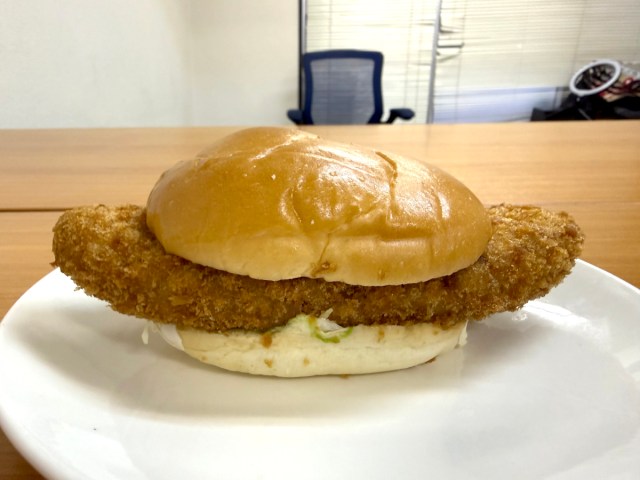
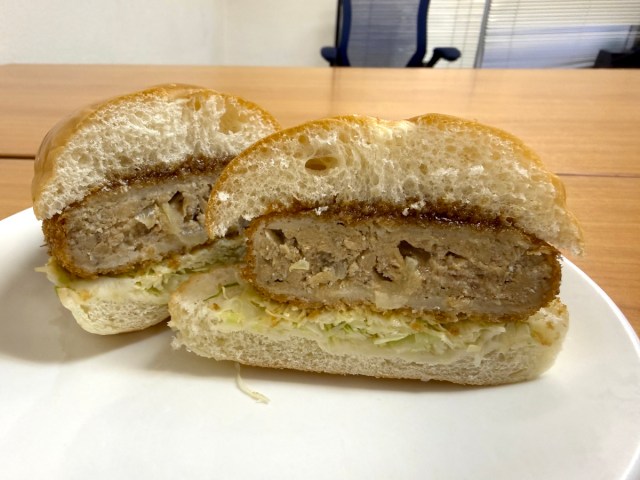
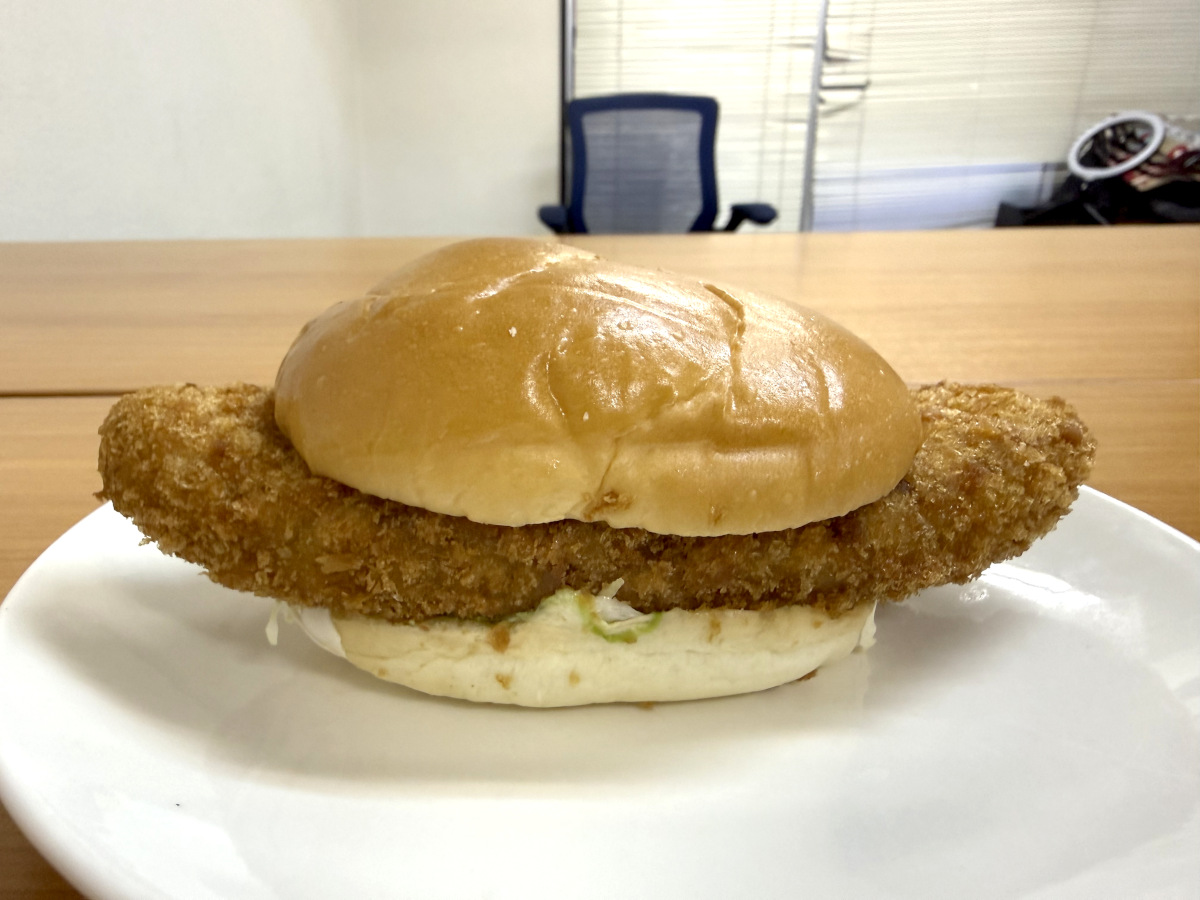
Firstly, the Too Much! Menchi Burger is visually stunning, as the weight of the menchi katsu (miced meat cutlet) has been increased by more than 51 percent compared to the regular version.
▼ The cutlet is now so big it juts out the sides like a meaty moustache.
While the menchi-to-bun ratio is now drastically outweighed, the taste remains outstanding. Since it’s prepared in-store, as part of Lawson’s “Machikado Kitchen” prepared food lineup, the menchi katsu comes out hot and crispy, with an irresistible, freshly fried crunch.
▼ The inside of the cutlet is plump and generous, with onion adding extra flavour to the juicy meat.
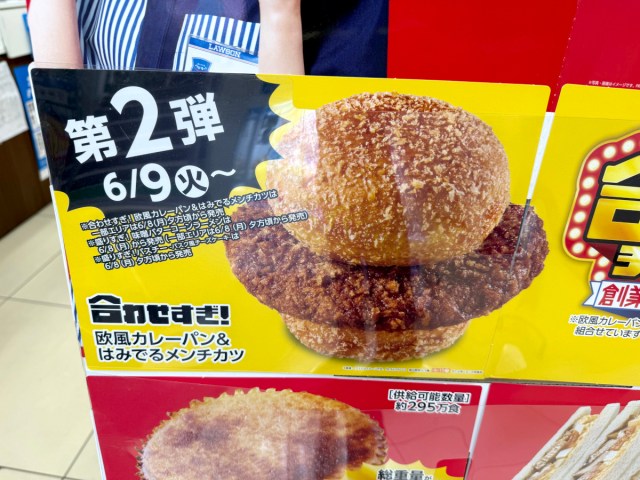
Next, we move on to the curry bread, which has a Japanese name that translates as: “Too Much Pairing! European-Style Curry Bread & Jutting-out Menchi Katsu“.
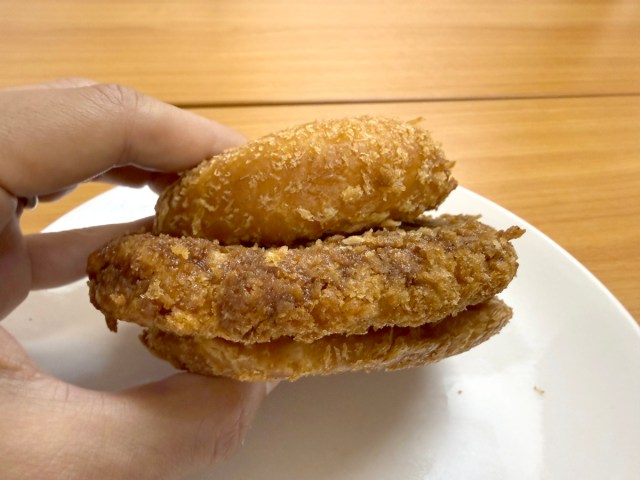
Curry bread, or “Kare Pan” as it’s known in Japanese, is usually served on its own, as a rounded morsel of battered, fried bread with a curry filling in the centre. This new product, however, changes everything we thought we knew about curry bread by using them as buns, and sandwiching a fried meat cutlet between them.
▼ A triple-fry burger, with a menchi katsu jutting out from the centre.
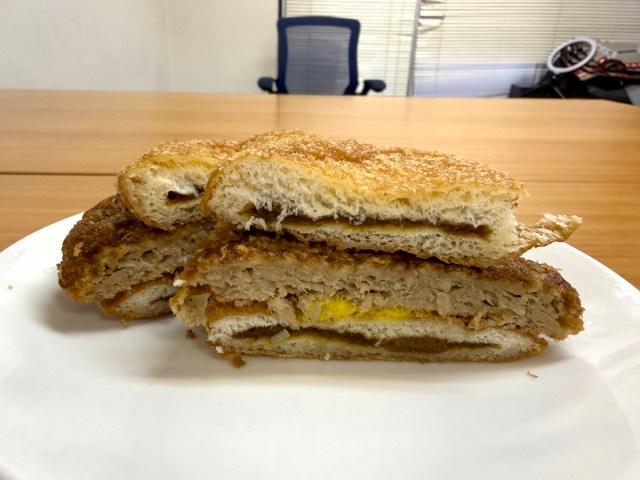
Despite the fry-heavy elements, this “burger” was actually less greasy than we thought it would be. Both the curry bread and the menchi katsu did have strong, distinctive flavors, though, so there were moments when we found ourselves thinking, “Wait, what exactly am I eating right now?” To be honest, the combination is so intense that it can leave your taste buds feeling a little overwhelmed as the two main ingredients compete for your attention, and it’s seriously filling so you might want to eat it in two sittings.
▼ The curry bread and cutlet were a full-on pairing, so it lived up to its name.
While Week One of the campaign went overboard with drinks that were extremely salty and extremely sweet, our choices for Week Two challenged our bellies and our preconceptions of what convenience store food can be.
We learned that too much menchi katsu can be well matched for a burger, while the too-much pairing of curry bread and menchi katsu can be too much for the taste buds. In the end, though, we were left with full bellies and a new appreciation for Lawson, who dared to take convenience store food to new realms with such bold, attention-grabbing creations.
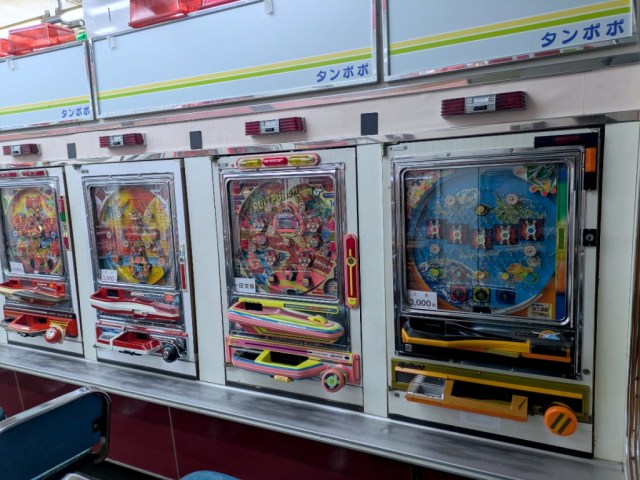
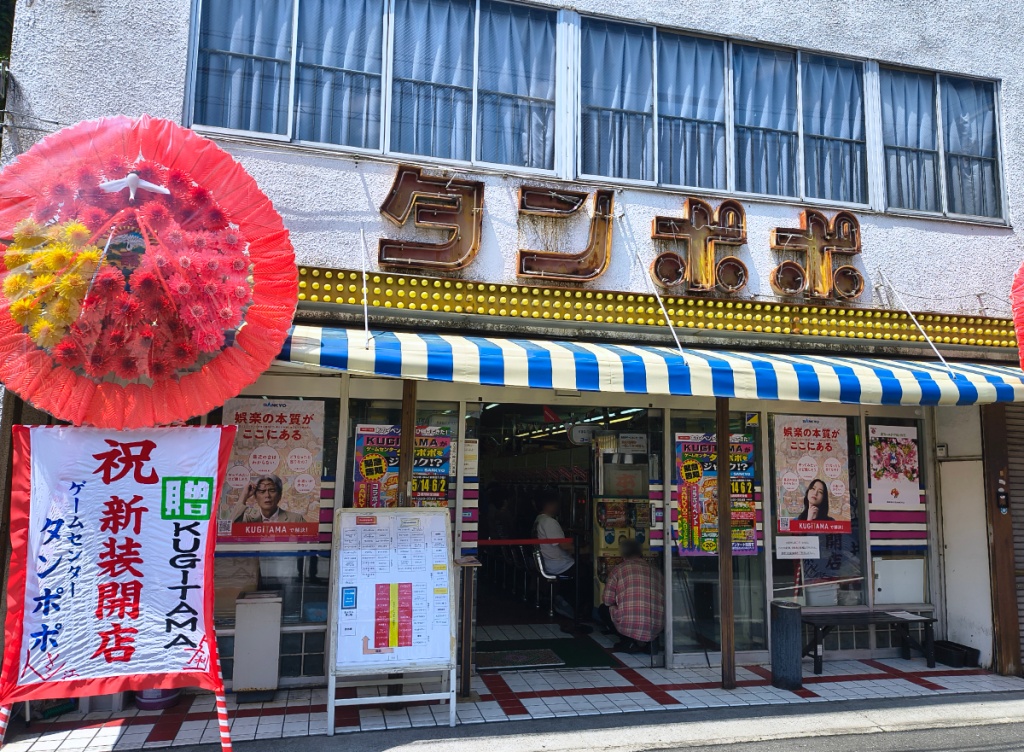
Tampopo is part pachinko parlor, part video game arcade, and part museum.
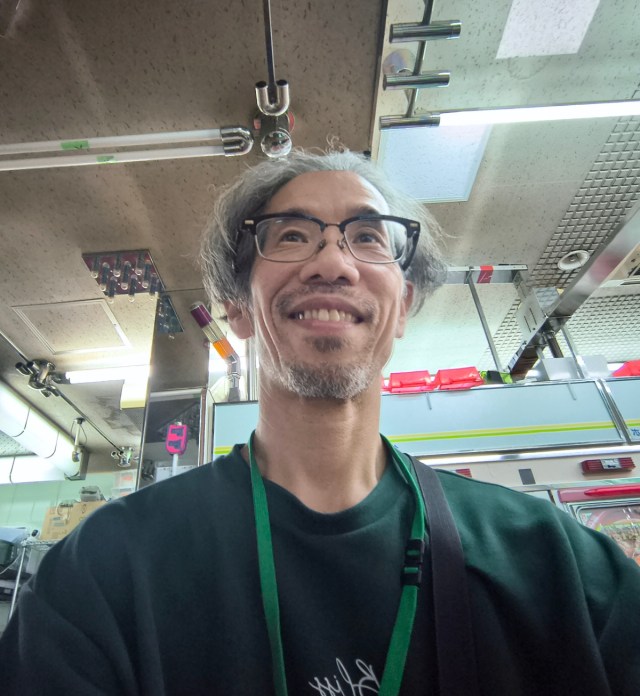
Being a man of culture, when our ace reporter Mr. Sato is out and about in the suburbs and sees on the map that there’s a “game center” (as Japanese arcades are called) on the map, he often goes to check them out. This isn’t because he’s a hardcore gamer (though he’s got some impressive in-game victories under his belt), but because a lot of times suburban arcades have a lineup of retro games, and visiting them feels like taking a trip back in time twenty, thirty, or even 40 years.
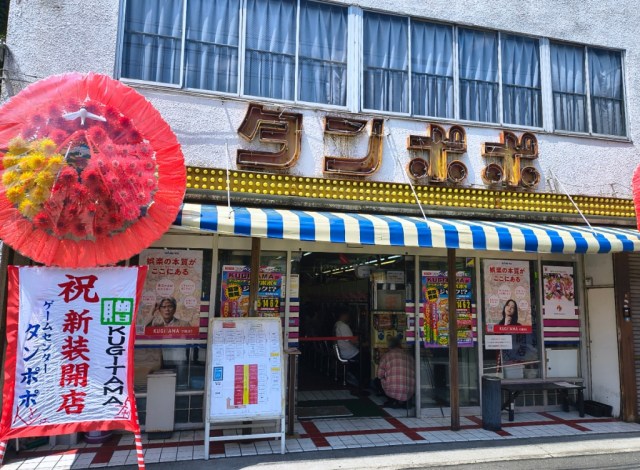
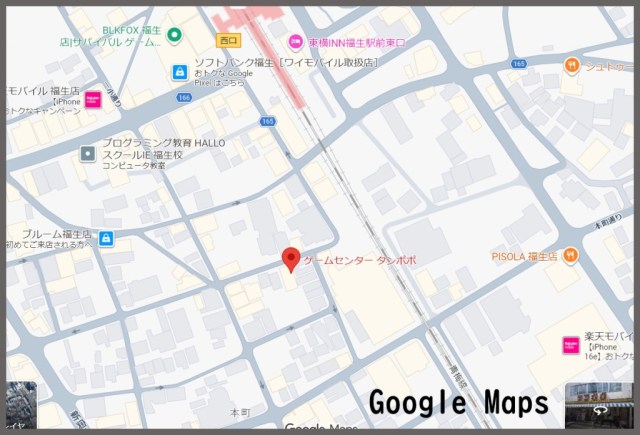
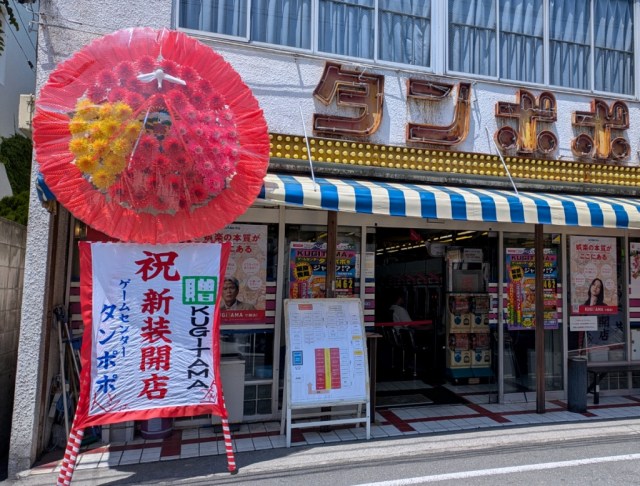
So when Mr. Sato was in Tokyo’s Fussa district, a bit west of the city center, on a recent afternoon and noticed “Game Center Tampopo” (ゲームセンタータンポポ) on Google Maps, and just a three-minute walk from Fussa Station, he decided to pay the place a visit and play some games.
However, when he got there, and took a look inside…
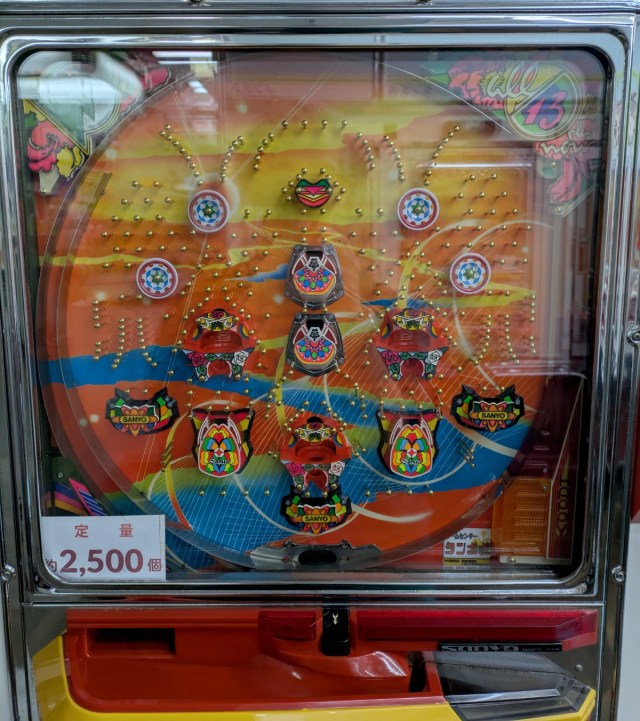
…he saw that the place is packed with pachinko machines!?!
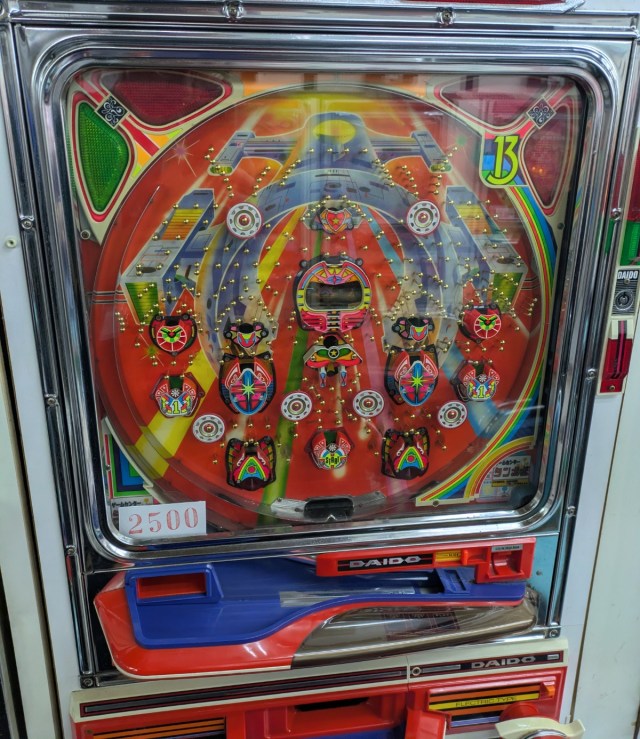
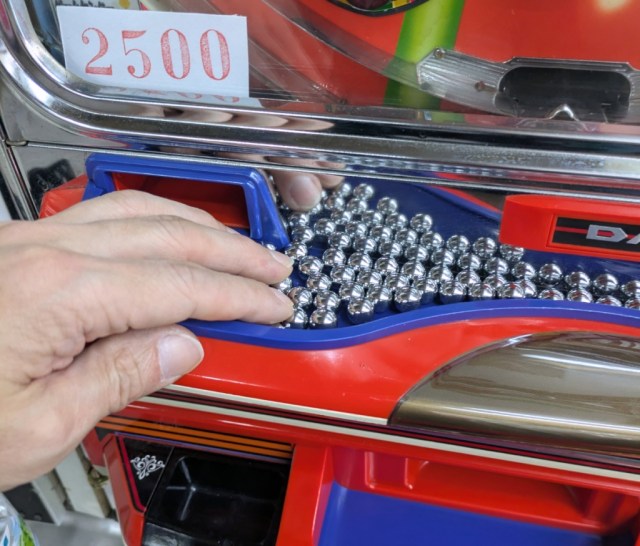
There are a total of 70 pachinko machines inside Tampopo, and not a single conventional video game. As such, “Game center” might seem like a misclassification of the facility, because pachinko parlors, by nature of being a form of gambling, are fundamentally different from game centers, right?
Except, Tampopo isn’t actually a gambling hall, because no matter what you do, you can’t win anything to take home.
Ordinarily, if you win at pachinko you can exchange the balls you’ve won for non-monetary prizes…and every neighborhood that has a pachinko parlor also, conveniently, has a small, nondescript shop (usually just a window set into an exterior wall) nearby that just so happens to be in the business of buying those prizes from people for cash (this whole song and dance is to get around Japan’s laws prohibiting gambling for money on pachinko). But at Tampopo, there are no prizes of any kind given out, regardless of how many balls you may win from their machines.
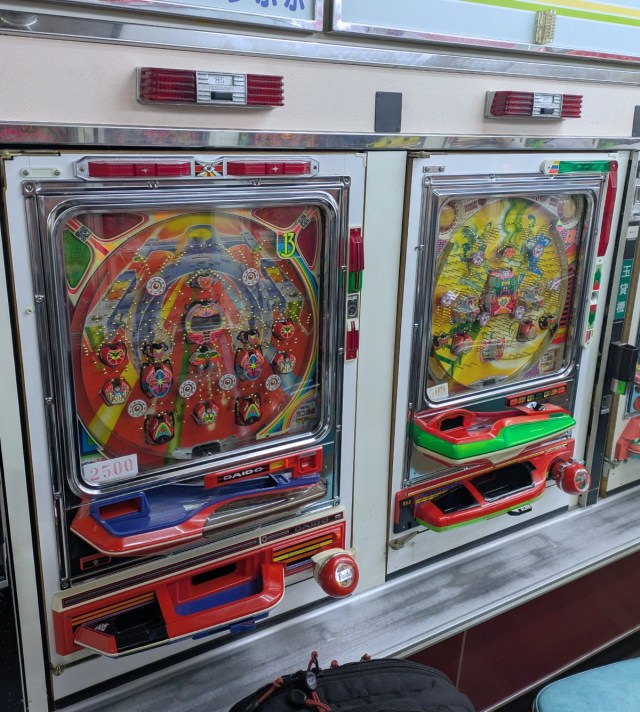
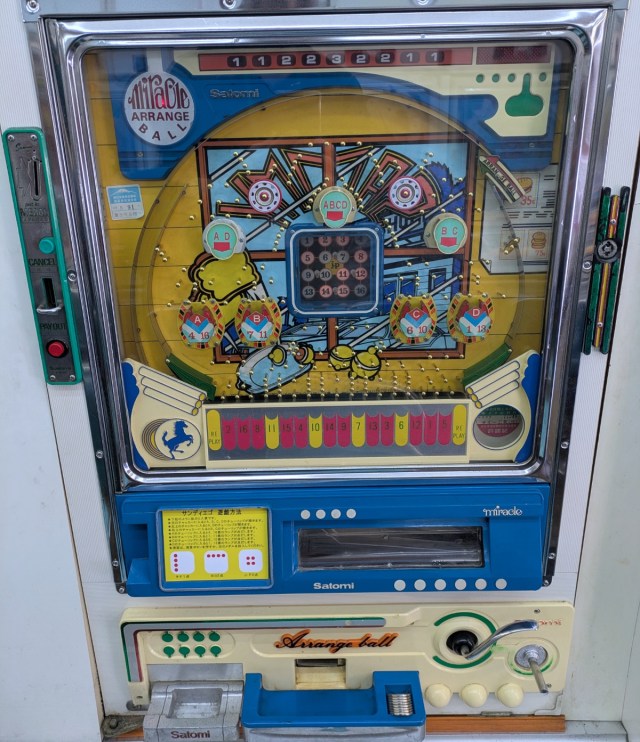
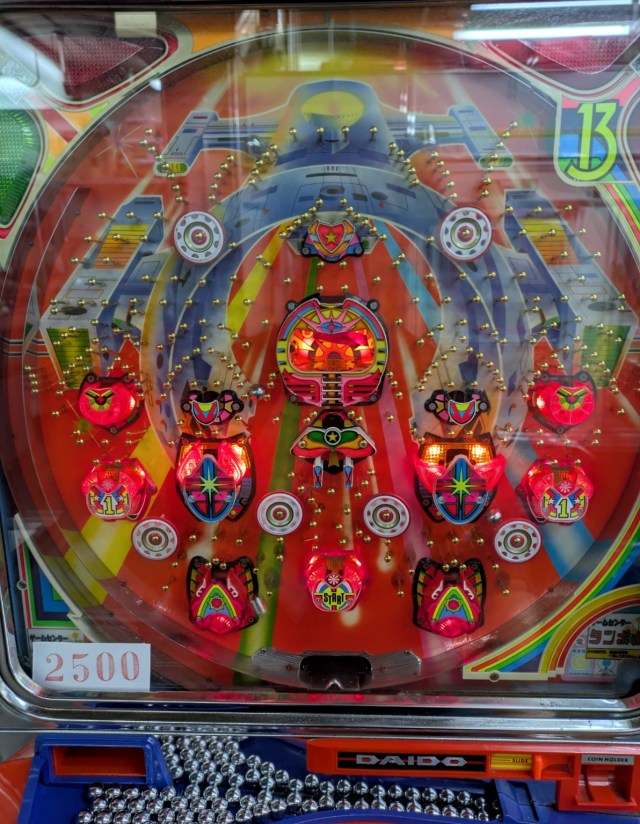
Why? Take a look at Tampopo’s machines, and you’ll probably notice that they’re all very old-school in design. Modern pachinko machines, pretty much without exception, have video displays and all sorts of other digital bells and whistles. Tampopo’s machines, though, are pretty much entirely analog.
As you might expect from gambling devices, there are a lot of rules about pachinko machines that operators have to follow. Machines have to be periodically certified as functioning properly and fairly, but even if their owners are keeping up with the required maintenance, the machines also have a specified maximum service life, after which they can no longer be legally used for gambling (i.e. the transaction in which players pay money for a chance at winning prizes). Once pachinko machines reach the end of their service period, most of them are scrapped, but Tampopo wants to give them a second life.
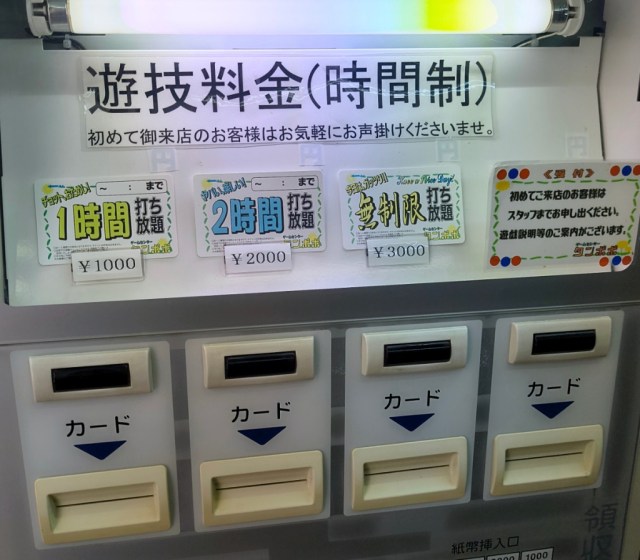
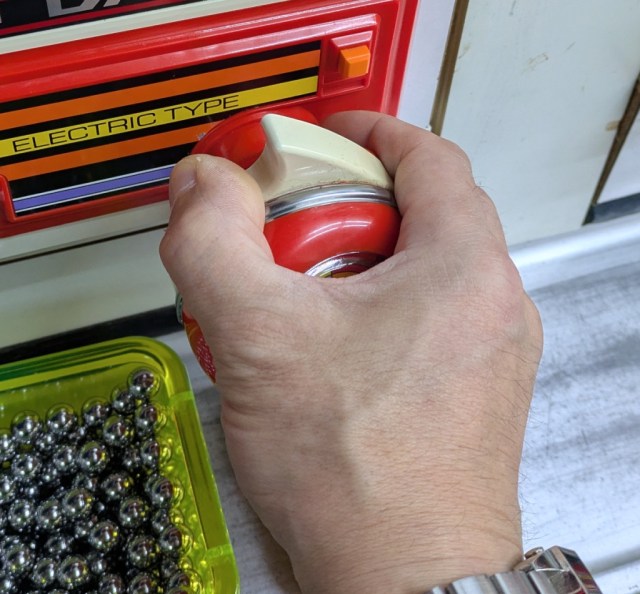
Tampopo’s machines are what are called “minashi machines,” meaning that they’re no longer played for gambling, but simply for fun. Instead of purchasing a set amount of balls, players at Tampopo pay for an unlimited amount of balls for a certain amount of time: 1,000 yen (US$6.50) for one hour, 2,000 yen for two hours, or 3,000 yen for a full day, from 10 a.m. to 8 p.m.
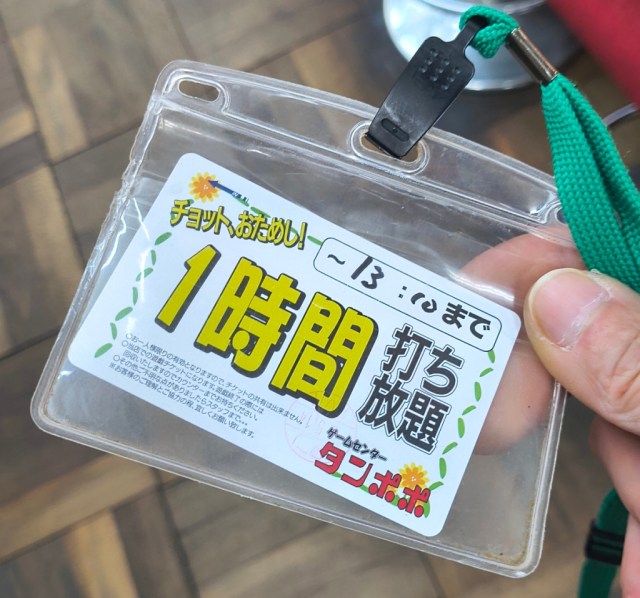
After purchasing the ticket you want from a vending machine, the staff will write the ending time of your session on it and place it in a lanyard that you wear while playing.
▼ Mr. Sato’s card, with “until 1:10 p.m.” (13:10まで) written on it
The lack of any possible payout means this isn’t gambling, and the vibe is more like an arcade or retro tech preservation museum. As a matter of fact, back in his youthful days in Shimane Prefecture, Mr. Sato spent about a year working in a pachinko hall when machines like this were still in widespread use, and Tampopo is a cleaner and more pleasant place to spend an extended time (especially since it’s an entirely non-smoking facility) than the parlor he worked in.
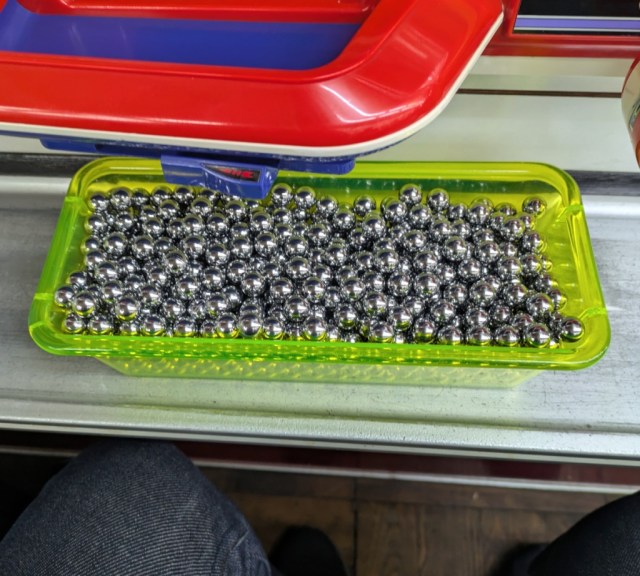
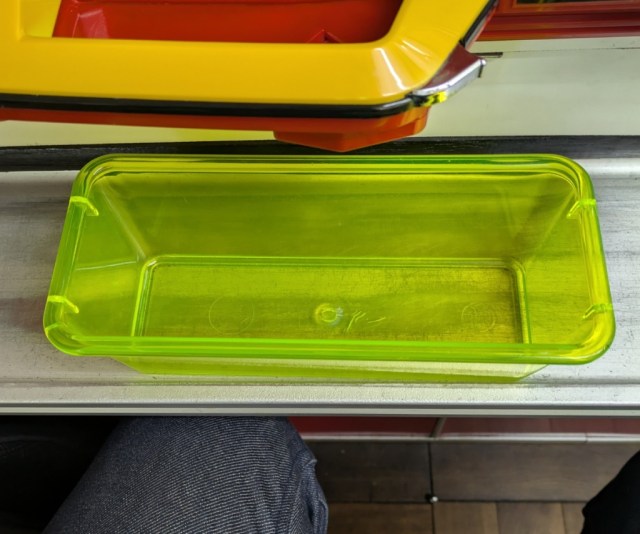
Once your session starts, you can grab an entire box of balls and play to your heart’s content.
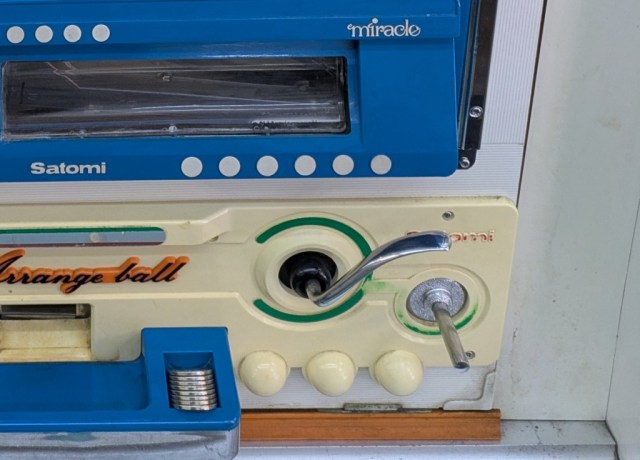
Free of any worry about winning or losing, Mr. Sato was able to sit back and appreciate the craftsmanship that went into pachinko machines of this era, when every pin, spinner, bumper, and target was a physical part of the playing field.
And should luck not be on your side and you run out of balls…
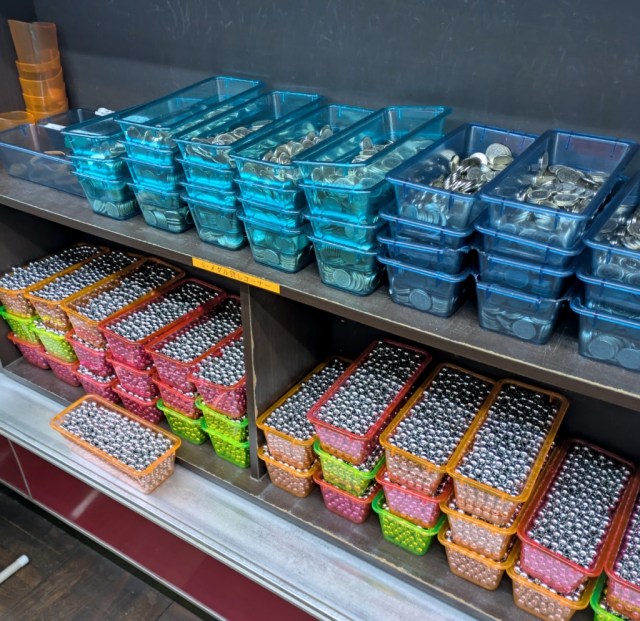
…you can just go and grab a refill.
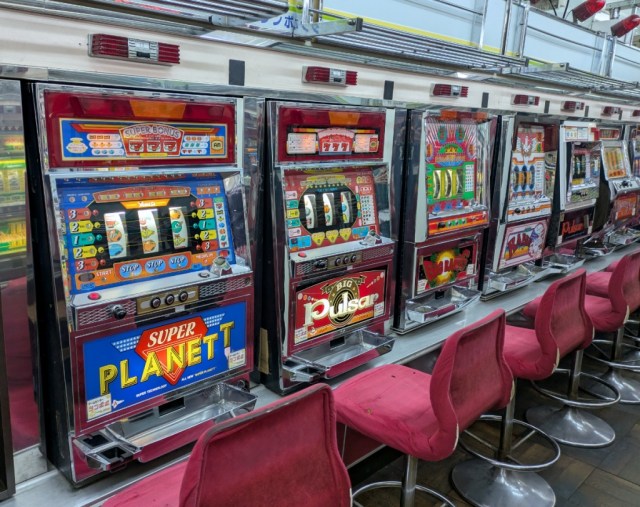
Ah, and if you’re wondering why there are boxes of tokens (or “medals,” as they’re called in Japan), that’s because in addition to its 70 pachinko machines, Tampopo also has 19 slot machines, which are also part of its unlimited-play not-for-gambling deal.
While retro video games are enjoying a revival in popularity these days, retro pachinko is something much harder to find, but it’s a fascinating pop culture subcategory in its own right too, and there’s no better place to get a taste of it in the Tokyo area than Tampopo.
Location information
Game Center Tampopo / ゲームセンター タンポポ
Addres: Tokyo-to, Fussa-shi, Honcho 135
東京都福生市本町135
Open 10 a.m.-8 p.m.
Closed Wednesdays (unless Wednesday is a holiday) Website
Critical Hit-flavor ice cream and Mimic containers among the sweet adventures waiting at Baskin-Robbins.
Generally speaking, customers wouldn’t be happy to see slimes at the restaurants and sweets shops they visit. But just like your kindergarten teacher told you, capitalization is important, and so the appearance of Slimes at Baskin-Robbins Japan is a cause for joy across the nation.
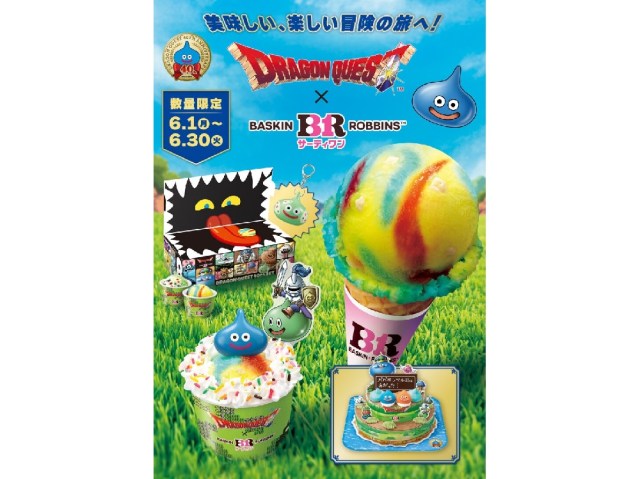
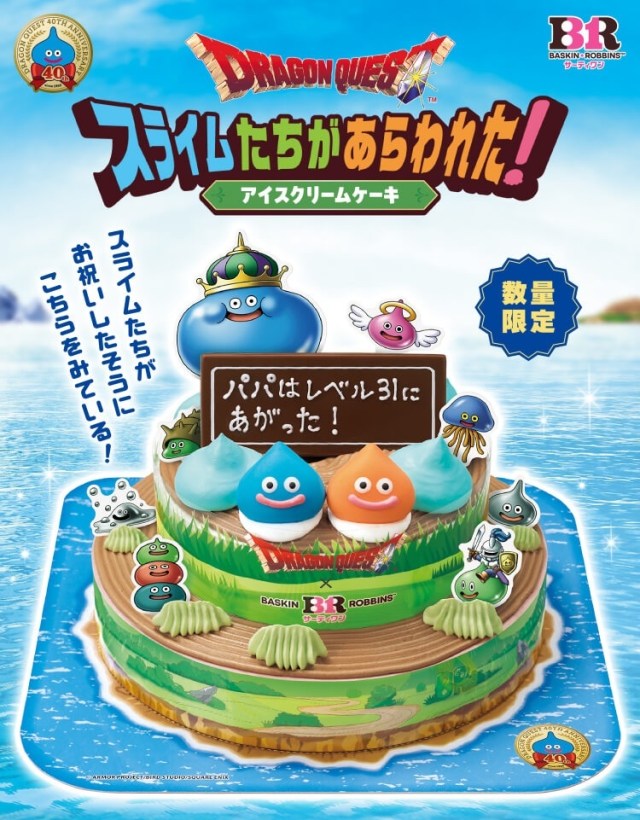
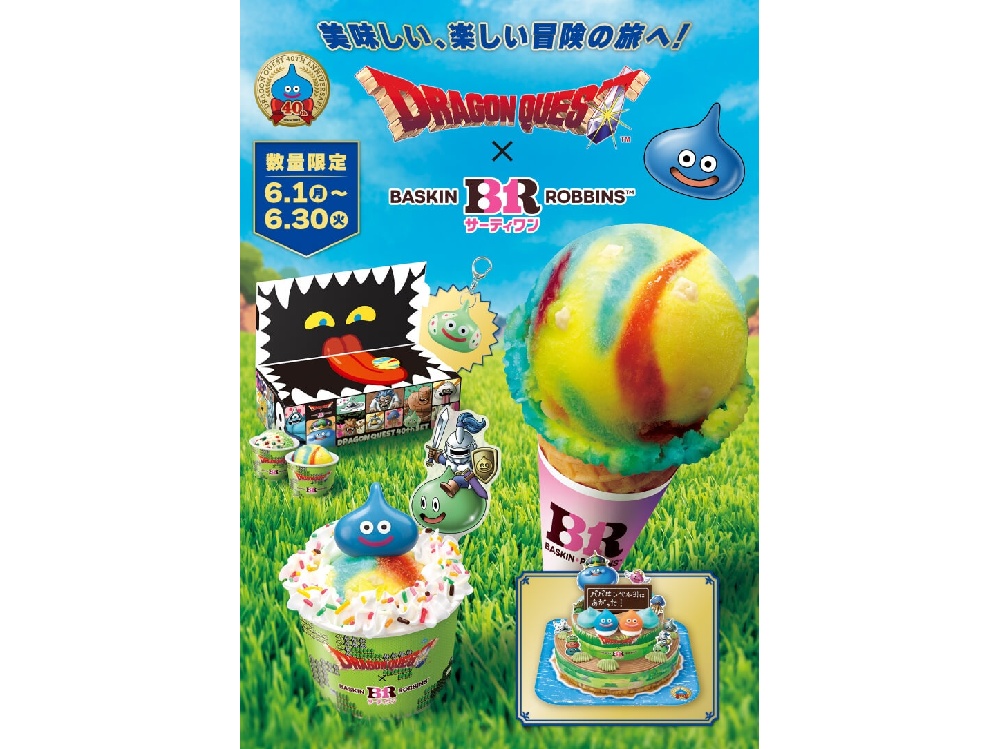
Yes, the mascot monsters of the Dragon Quest video game franchise have drawn near to Thirty-One, as Baskin-Robbins is known to fans in Japan. Among the treats that made their debut on June 1 is the Slimes Draw Near Ice Cream Cake.
This 11.5-centimeter (4.5-inch) diameter cake features a two-tiered Slime Island with edible frosting Slimes, decorative paper ones, and a command window-style chocolate plate with a message of your choice written on it (the one in the above photo announces “Papa has reached level 31!”). The cake’s interior is made up of four different flavors of ice cream: Double Chocolate, Caramel Ribbon, Strawberry, and Popping Shower, the last of which is so deeply loved in Japan that Baskin-Robbins had to remove it from the voting in their popularity polls.
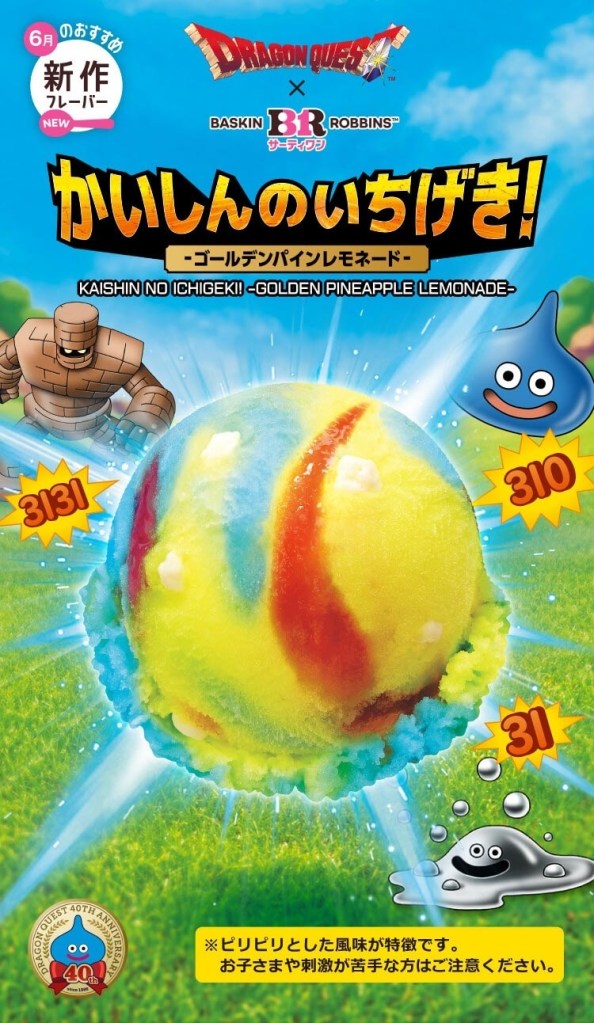
Arriving at the same time as the Slime cake is a new ice cream flavor called Critical Hit Golden Pineapple Lemonade (or Kaishin no Ichigeki Golden Pine Lemonade in Japanese) that tips its hat to Dragon Quest’s RPG gameplay mechanics.
The looks here are a little deceiving, as the sky-blue sorbet here isn’t the Ramune/Blue Hawaii flavor usually associated with this color in Japan, but instead is a lemonade-flavor sorbet, while the yellow is golden pineapple sorbet. The “critical hit” comes from the red ribbons of sour lemon flavor and the mixed-in pieces of Baskin-Robbins Japan’s newly crafted pachishuwa/“fizzy popping” candies, giving this refreshing new ice cream flavor a stimulating kick too.
▼ The introductory video even features the Dragon Quest critical hit sound effect, plus pop-up damage scores of 31, 310, and 3,131.
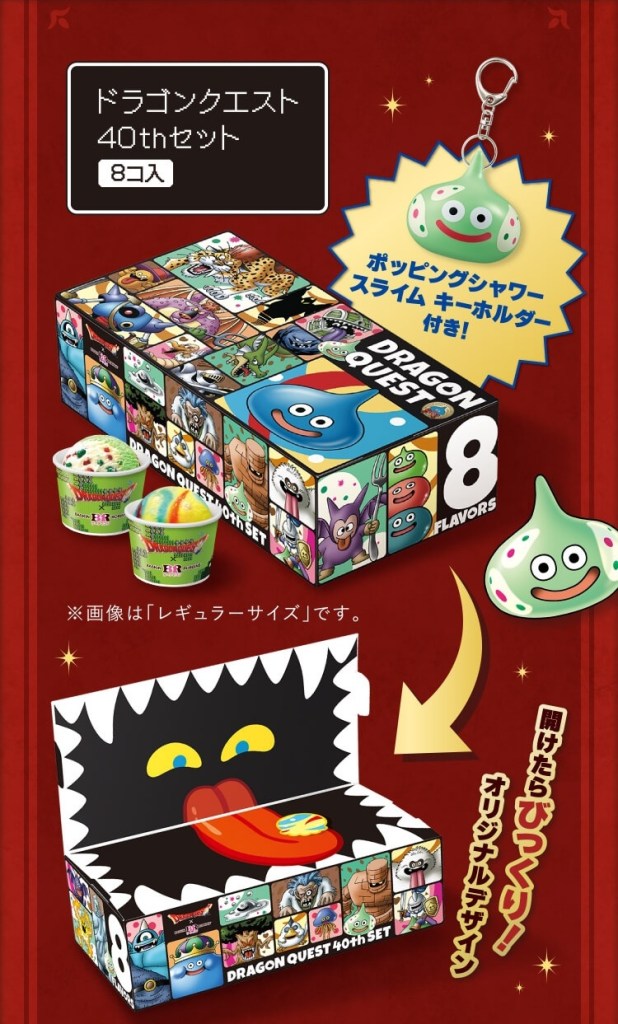
Of course, Baskin-Robbins’ whole deal is that they have a bunch of different flavors, and if you’re in the mood for far more than just one, there’s a Dragon Quest 40th Set (since this year is Dragon Quest’s 40th anniversary) that puts eight ice cream flavors of your choice inside a Mimic. Each flavor comes in a special cup with Dragon Quest overworld map pixel artwork, and the bundle also includes a Popping Shower Slime keychain.
▼ In order to lure in gold-seeking adventurers, Mimics usually disguise themselves as treasure chests, but here in the real world is there any container more tempting than a box filled with ice cream?
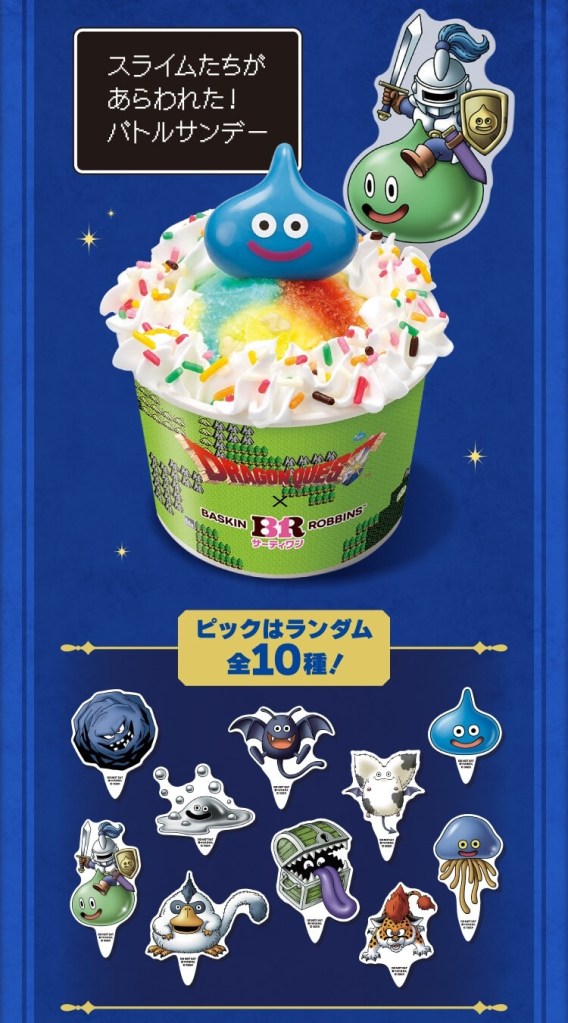
And finally, for those focused enough to only need one scoop of ice cream, or perhaps those cultured enough to always want whipped cream and sprinkles, there’s the A Slime Draws Near Battle Sundae, which includes one of 10 random decorative character illustrations.
The Battle Sundae is priced at 580 yen (US$3.75), the Slime cake 4,300 yen, and the Mimic box 3,000 or 3,500 yen, depending on whether you choose small or regular-sized scoops of ice cream. The Dragon Quest collaboration is scheduled to run until June 30.
Outer Senshi join their anime/manga magical girl sisters on the streets of Minato Ward.
Sailor Moon features some pretty fantastical settings, with much of its mythos involving ancient kingdoms on the moon and antagonists hailing from even farther reaches of the cosmos. However, most of the series takes place in Minato, one the actual wards of real-world Tokyo, where Usagi and her friends live, go to school, and fight many of the manga/anime’s monsters of the week,
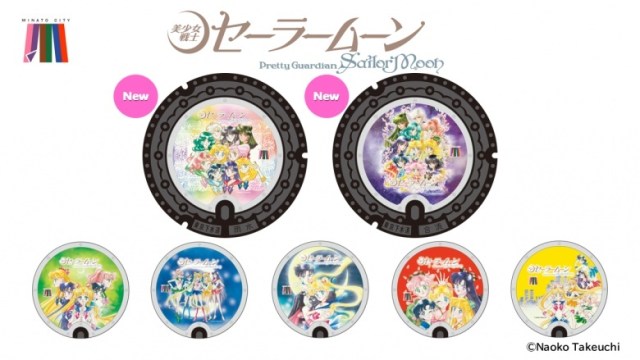
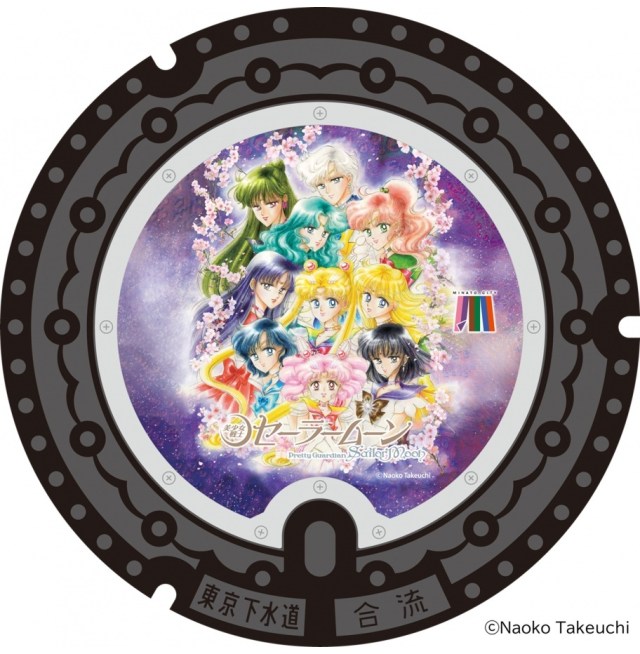
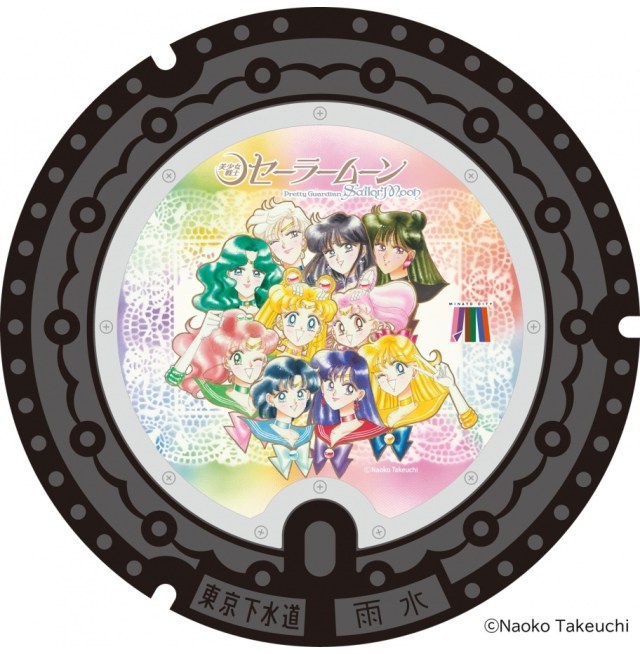
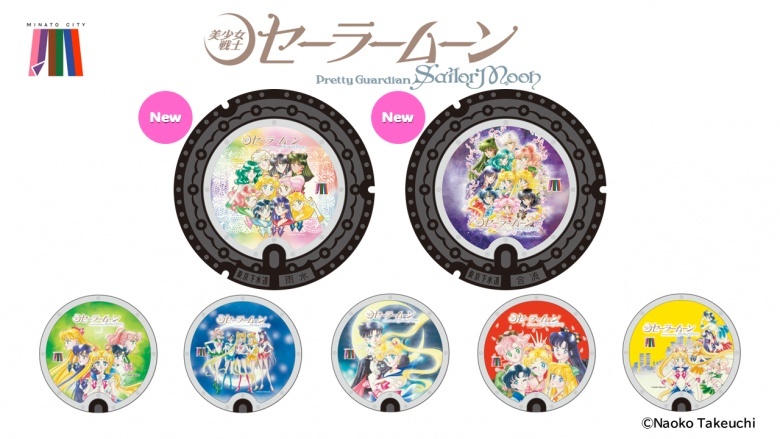
So a while back, Minato Ward decided to celebrate the connection by installing Sailor Moon manhole covers featuring artwork of Sailors Moon, Mercury, Mars, Jupiter, and Venus. As fans will be quick to point out, though, that’s actually only half the series’ roster of magical girls. As time went on, creator Naoko Takeuchi added new heroines to the cast, and now Minato Ward is adding new Sailor Moon manhole covers to its streets.
Out of the first five covers, four featured the Inner Sailor Senshi (Moon, Mercury, Mars, Jupiter, and Venus), while power couple Sailor Moon and Tuxedo Mask shared the fifth. The two new designs will both once again feature the Inner Senshi, but they’ll be joined by the Outer Senshi, Sailors Pluto, Uranus, Neptune, and Saturn, as well as disruptive and divisive time-traveler Sailor Chibi Moon.
The first of the new manhole covers has the fully assembled Senshi standing amidst the branches of a cherry blossom tree with the sakura in full bloom. It was installed towards the end of March in Minato Ward’s Roppongi district, specifically on the Roppongi 7-4-2 block, not far from the Tokyo Midtown shopping and entertainment complex.
The second new Sailor Moon cover, the seventh overall, will also show all 10 Sailor Senshi, this time with a pastel rainbow color scheme to the background. But while we know what it’ll look like, Minato Ward is keeping its location a secret for now, and will only be publicizing where to find it after it’s been installed.
Minato Ward is keeping the exact timetable under wraps too, but the Sailor Moon official website says that the rainbow Sailor Moon cover should be in place by the end of this month. And if you’re looking for even more crossovers between anime artwork and public infrastructure, don’t forget about the new Pokémon manhole covers in a part of Japan that’s looking to bounce back from a natural disaster.
Rock shochu and reggae shochu really do taste different from each other.
The island of Amami Oshima is part of Kagoshima Prefecture, and Kagoshima is usually pictured as making up the southwest tip of the island of Kyushu, one of Japan’s four main islands. Amami Oshima, though, is far, far away from the Kyushu coastline, so far away that the ferry from Kagoshima City takes 13 hours to get there.
▼ The route from Kagoshima City to Amami Oshima, which can alternatively be reached by plane from Tokyo in two and a half hours.
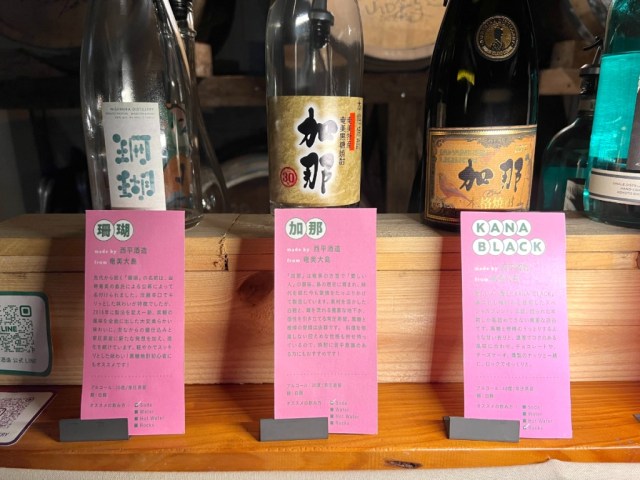
Oh, and it’s also famous for shochu, a distilled spirit with longstanding cultural connections to southwest Japan. Specifically, Awaji Oshima’s kokuto shochu, made with rice and brown sugar, is highly prized, and so on our recent visit to the island we didn’t just want to drink some, but also see how it’s made.
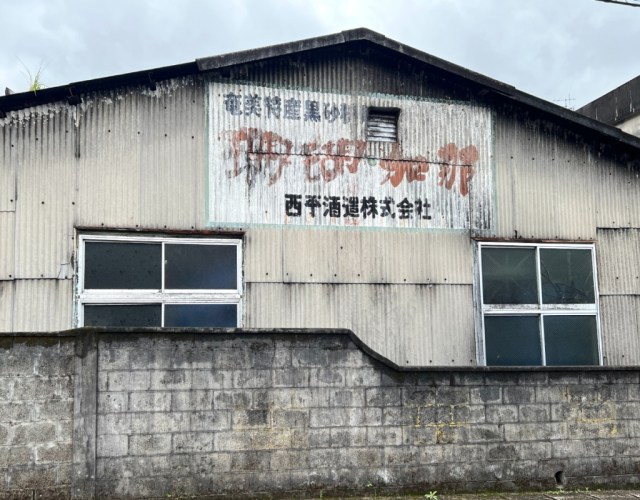
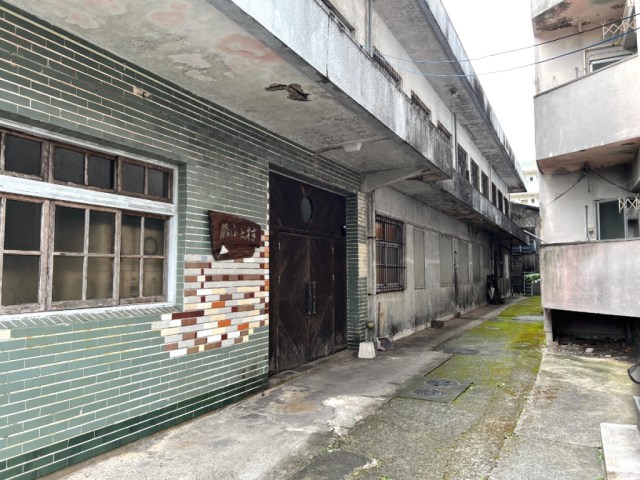
We lucked out when we contacted Nishihira Shuzo, an Amami Oshima shochu maker that’s been in business for 99 years, and they said they could offer us a tour of the facility, and a tasting too, with some very unique beverages to sample.
▼ The rustic exterior of the Nishihira Shuzo distillery
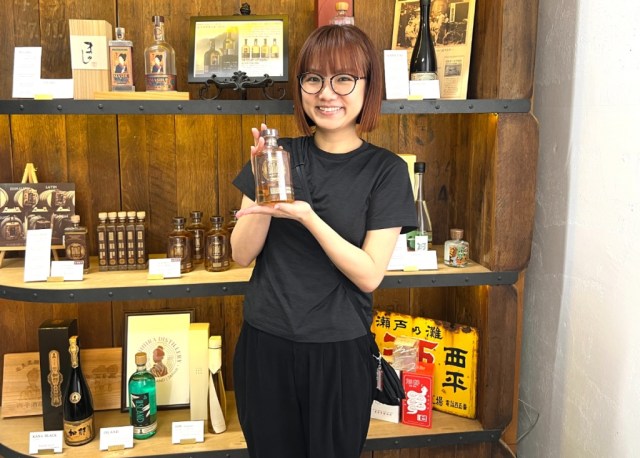
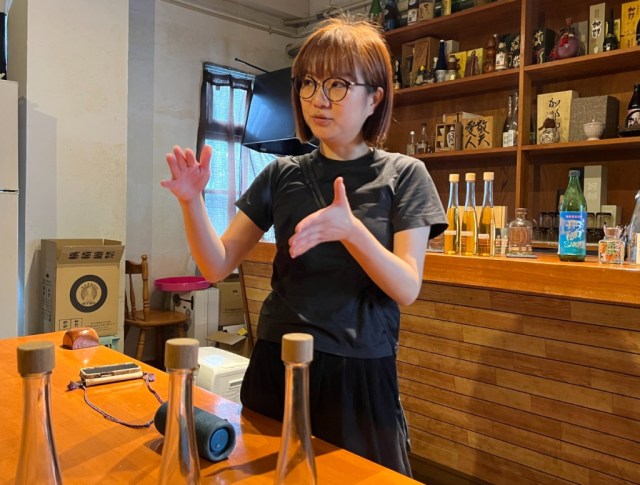
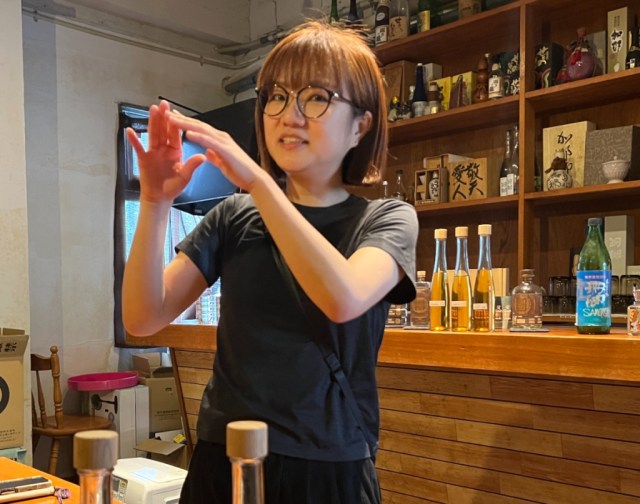
Despite being around for nearly a century, Nishihira Shuzo is still a family-run operation, and we were told that the fourth-generation owner of the business would be our guide. With shochu being a high-alcohol drink with an old-school vibe, our mental knee-jerk reaction was to expect a stern-looking, silver-bearded gentleman, but instead we were warmly greeted by Serena Nishihira and her friendly smile.
▼ Serena Nishihira
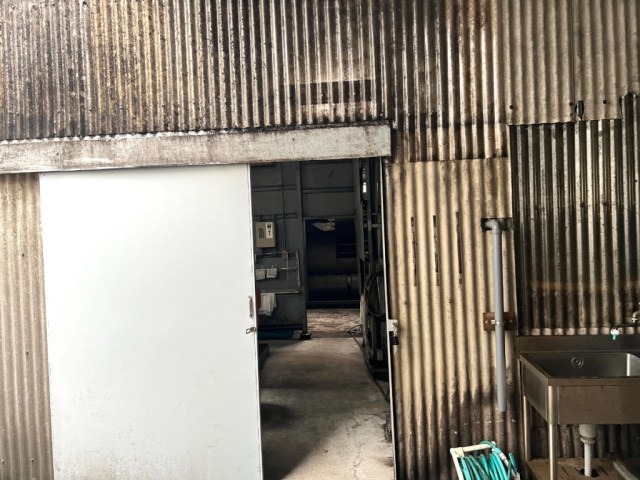
In addition to being a skilled shochu distiller and businesswoman, Nishihira is also a musician, which is something that’ll come into play later on. To start, though, she led us into the distillery’s production area.
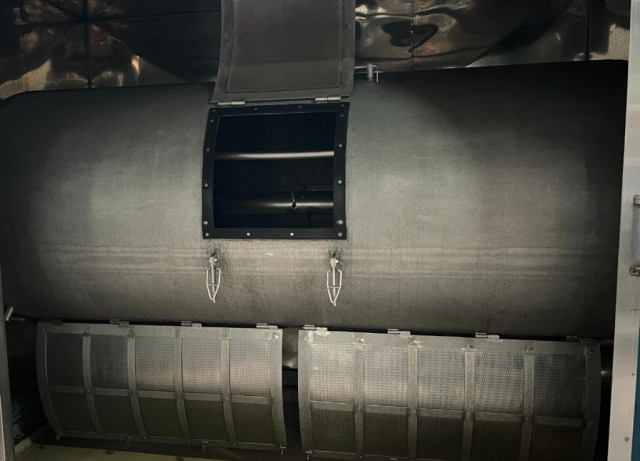
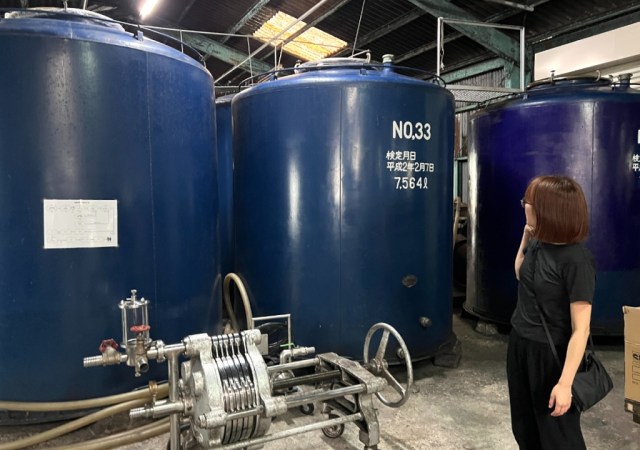
As mentioned above, Nishihira Shuzo’s shochu is made from rice, so steaming the grains is the first step in making it. The distillery has a gigantic cylinder-shaped apparatus that’s used for washing and steaming, with a typical batch using about 400 kilograms (882 pounds) of rice.
Once the rice is cooked, it’s taken out of the drum and sprinkled with koji, a fermentation-triggering type of mold that’s also used in making sake. The rice is then put on racks in a temperature-controlled environment for its initial fermentation.
The next morning, the rice is put into jars with yeast and water to ferment for an additional five days. This isn’t a step that all shochu makers include in their process, but Nishihira Shuzo says it’s a key element of theirs.
After its time in the pot, the mixture is transferred into tanks and combined with liquified brown sugar, then given another two weeks to ferment.
That produces the fermented mash which is then distilled.
But that doesn’t mean Nishihira Shuzo can whip up a whole batch of kokuto shochu, start to finish, in just three weeks, because the final step (before bottling) is to age the shochu in tanks for at least one full year.
From a 400-kilogram load of rice, Nishihira Shuzo can produce roughly 800 1.8-liter (60.9-ounce) bottles of shochu. Luckily for us, some of those bottles end up in the distillery’s tasting room, which was the next place that Nishihira led us to.
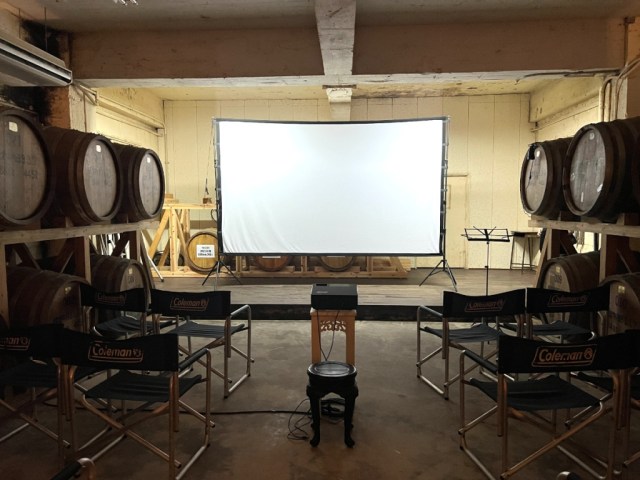
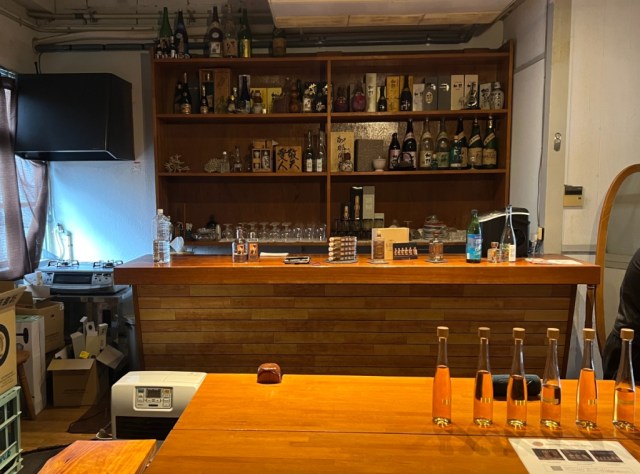
The tasting room has chairs, a projector, and a screen set up for use for group events or musical performances, but we had the place to ourselves on this day.
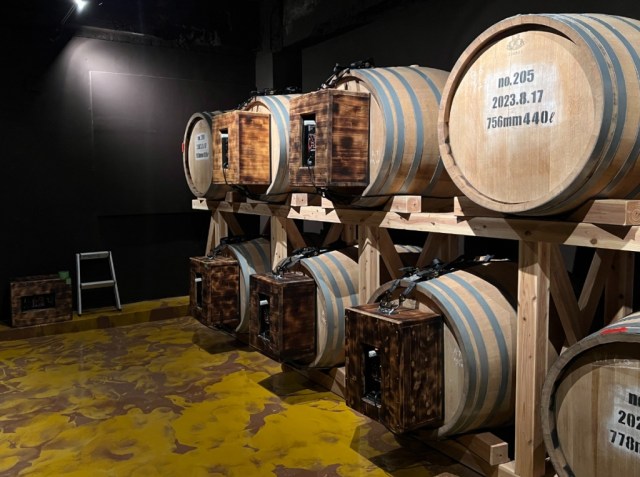
Nishira poured us a selection of the company’s products, and we found them all extremely enjoyable. But just when we thought things couldn’t get any better, she led us through a door at the back of the room where we saw this.
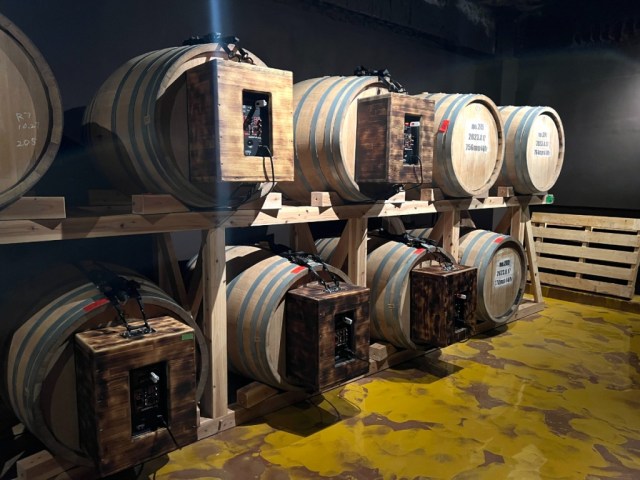
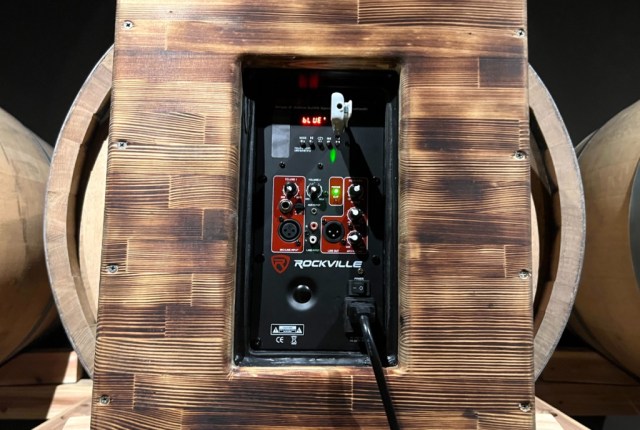
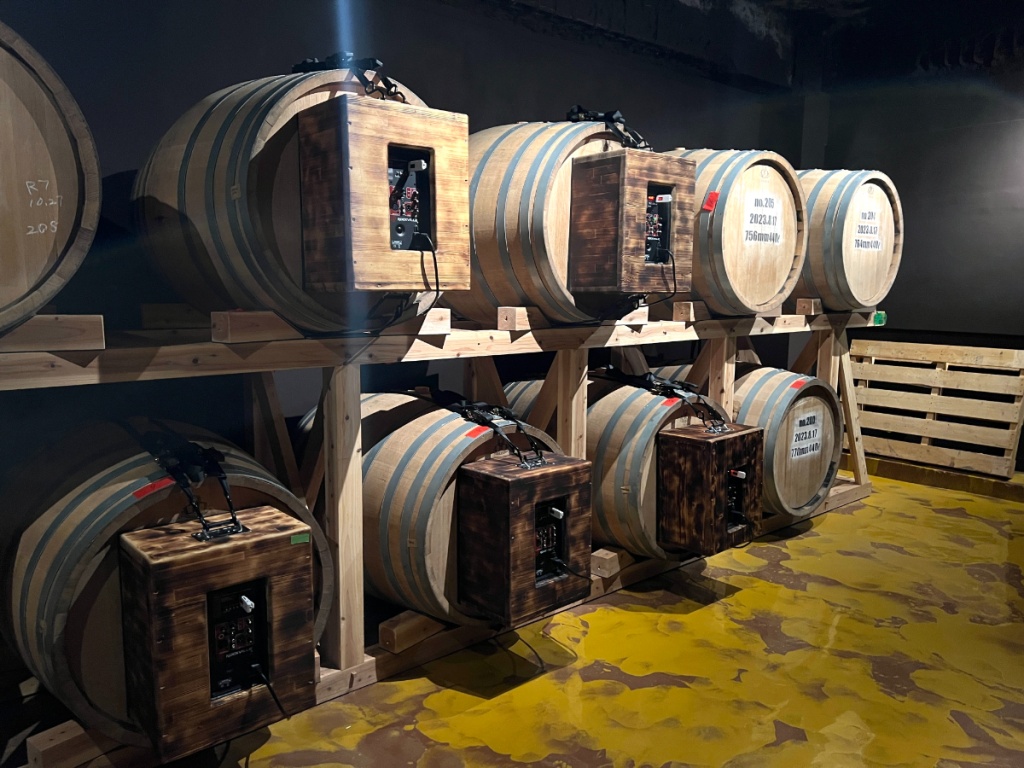
Those are shochu barrels with speakers attached to them. And not some little mini speakers that you might have set up in your kitchen to listen to tunes while you cook, but concert-size amps!
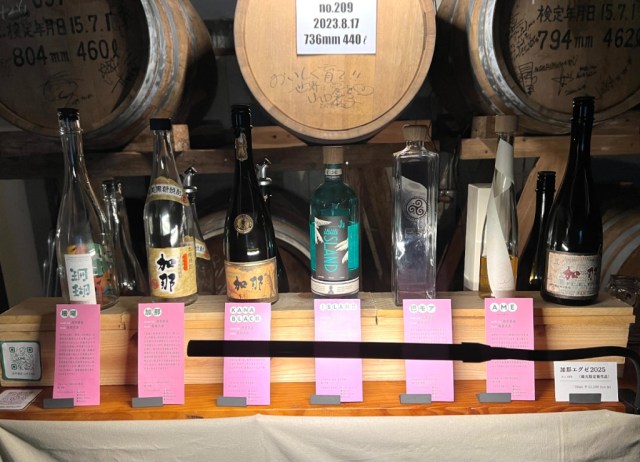
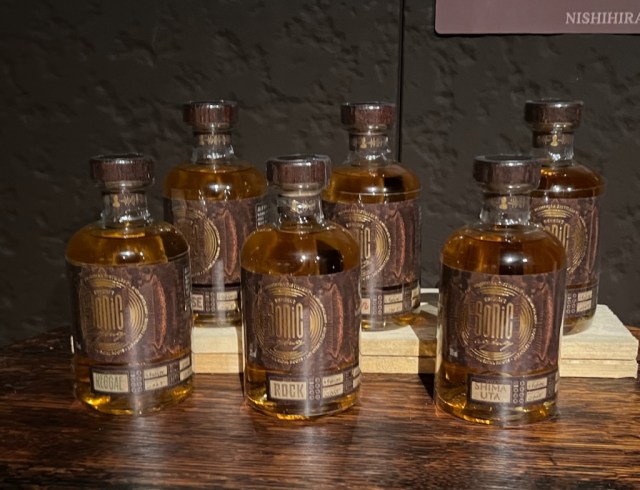
This is where the Nishihira’s Sonic Aging Project takes place. While the speakers were quiet as we looked at them, Nishihira turns all of them on when the distillery starts its shift for the day, and has them play for eight hours. Different amps play different genres of music, with a total of six styles: house, reggae, hip-hop, Latin, rock, and shima uta, or Japanese southern island folk songs.
“We play the music at high volumes,” Nishihira explained, “Depending on the genre, the music produces different vibrations within the barrels, and we want to see how that affects the shochu.”
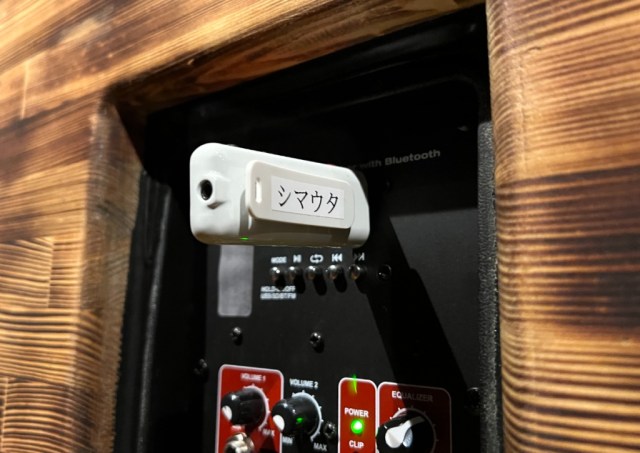
▼ The shima uta barrel
Like we said, Nishihira is a musician, so at first the idea of playing music for the shochu sounded like a whimsical, creative, but ultimately inconsequential idea. Nishihira, says, though, that with the barrels being music-treated for roughly 2,000 hours in a year, it really does make a difference.
Genres with more bass produce stronger vibrations in the barrel, and also with the shochu itself. That increased interplay between the container and its contents causes the wood to have a more significant influence on the color and flavor of the shochu that’s aging inside.
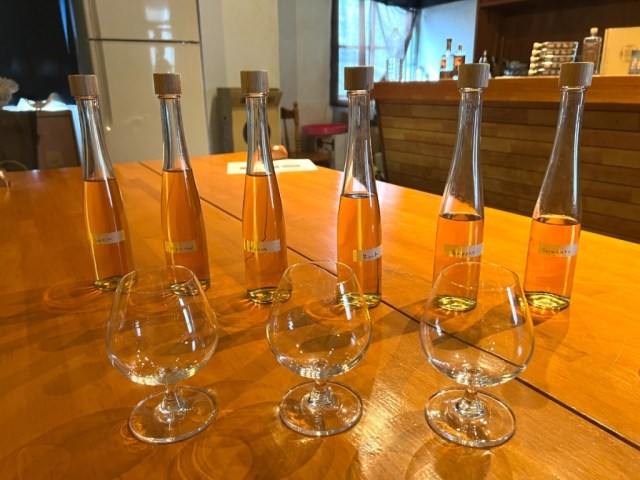
To prove this, Nishihira ushered us up to the second floor of the tasting area to try some of the Sonic Aging Project series.
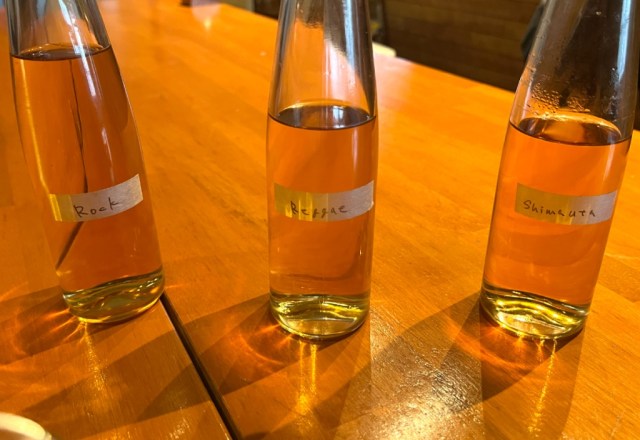
Out of the six music genres, Nishihira says that reggae produces the strongest vibrations, and shima uta the softest. So we definitely wanted to taste those two, and she also poured us some of the rock shochu, which is somewhere between the other two in the spectrum.
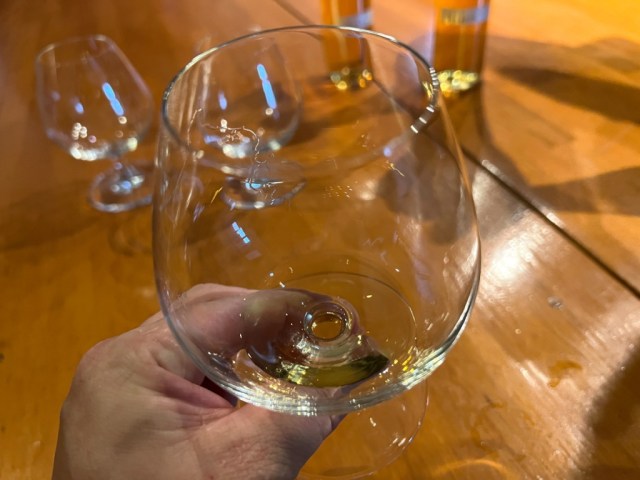
And you know what? We really could taste the difference! The reggae shochu was darker in color and had a rich flavor with some notable bitter notes from the wood. The shima uta shochu, meanwhile, was lighter in color and sharper in taste, with a more pronounced sensation of alcohol. The rock shochu, sure enough, was a mid-point between the more distinct characteristics of the reggae and shima uta.
So which of the Sonic Aging Project shochu styles is the best? There’s actually no answer to that, Nishihira says. Just like your favorite musical genre is a matter of personal taste, so too will different people have different rankings for how much they like the different types Sonic Aging Project shochu, and they’ve all got their own unique charms.
Reservations for Nishihira Shuzo tours can be made through their website here, but if you can’t make it all the down to Amami Oshima, they also offer their shochu, including the Sonic Aging series, through their online store here.
If you need a break from the noise in your life, this Koenji cafe is waiting for you.
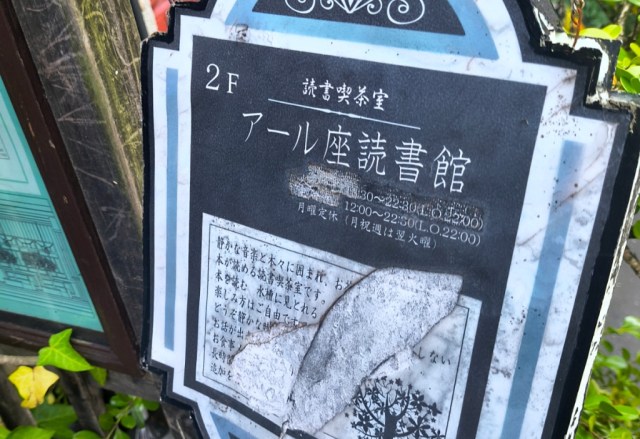
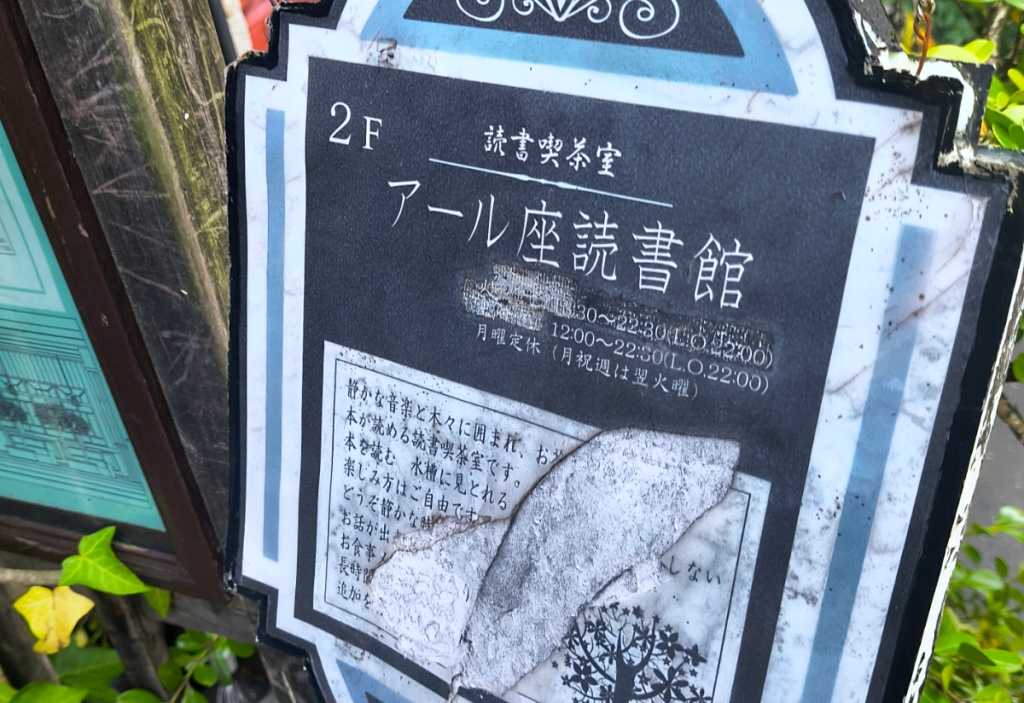
In Tokyo you’re never very far away from a convenience store or vending machine, so going to a cafe to have a drink is about more than just quenching your thirst. It’s about enjoying the atmosphere of a cozy or stylish space, and while some people might see that as conducive to lively conversation, others prefer a place that offers peaceful relaxation conducive to contemplation, and for those in the latter group, there’s R Zadokushokan.
Located in Tokyo’s Koenji neighborhood, The “Zadokushokan” part of R Zadokushokan’s name translates to “sitting and reading building,” and the place has the vibes of a classy reading room.
But what really makes R Zadokushokan unique is that the cafe explicitly asks customers to “please refrain from long conversations.” So while walking across the threshold doesn’t mean you’ve committed to a monastery-like vow of silence, it does mean that customers agree to keep their chitchat at a minimum. Aside from a few words exchanged between customers and staff when ordering, and the occasional sounds of the city outside that seep through the walls and windows, the only things you’ll be hearing are ambient sounds like the burbling of the water pump for the cafe’s aquarium or the soft mechanical click as its electric fan gently turns back and forth.
Our ace reporter Mr. Sato isn’t exactly a regular customer at R Zadokushokan, but he’s visited more than a few times, and recently stopped by one again. Mr. Sato spends most of his days chasing down trends as he looks for weird and wonderful things to write about, and when he’s on the move he’s pretty much always listening to music through earphones stuck in his ears. It’s exciting and all, but after a while that sort of sensory overload can start to saturate his cerebrum, and when he feels that sensation coming on he makes a detour to R Zadokushokan.
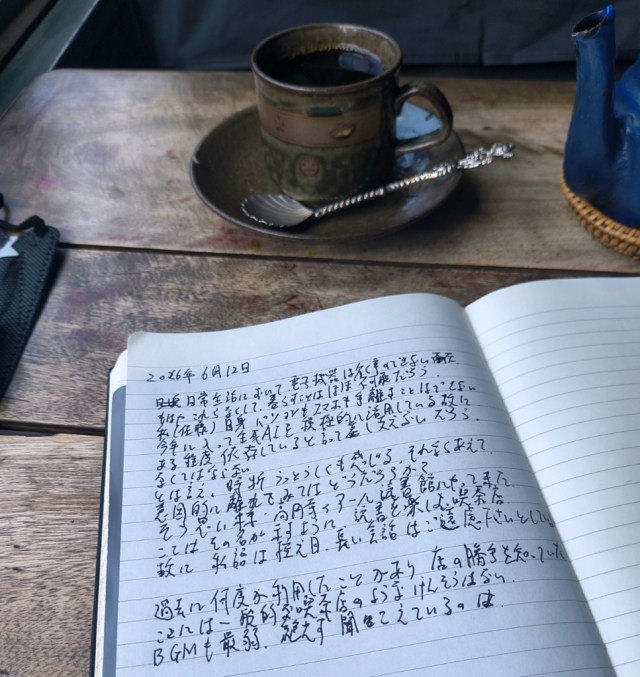
R Zadokushokan doesn’t have rules banning the use of smartphones or laptops (as long as they’re not emitting noise from their speakers). Even without any such formal policy, though, Mr. Sato feels like electronic devices would be sort of a mismatch for this atmosphere, and so when he visits he goes old-school in his musings, writing down his thoughts and drafting articles with pen and paper.
Being here, Mr. Sato’s thinking process starts to slow down, but it becomes clearer too. Yes, writing this way takes more time than typing, but when he’s at this cafe, speed isn’t his goal. He’s looking for a place where he can think deeply and thoroughly, and he doesn’t want to waste the opportunity to find meaningfully expressive words by rushing though his search for them.
With each line his pen leaves on the paper, Mr. Sato feels like he’s clearing away the unwanted, unnecessary distractions from his mind, and transferring what he really wants to say onto the page. That sensation of the world coming into sharper focus by stepping away from both the literal and mental noise that so often surrounds us is why he keeps coming back to R Zadokushokan, and why he recommends it to anyone looking for the same sensory reset.
Cafe information
R Zadokushokan / アール座読書館
Address: Tokyo-to, Suginami-ku, Koenji Minami 3-57-6
東京都杉並区高円寺南3丁目57-6
Open noon-10 p.m.
Closed Mondays Twitter
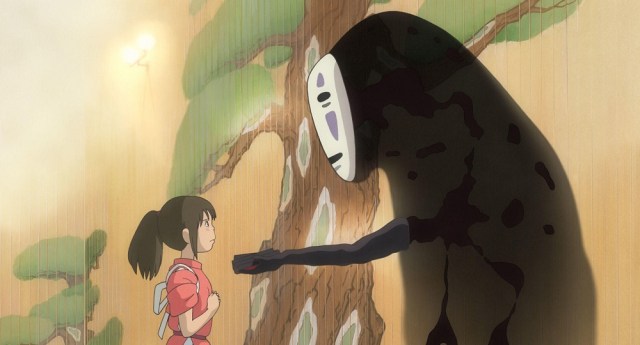
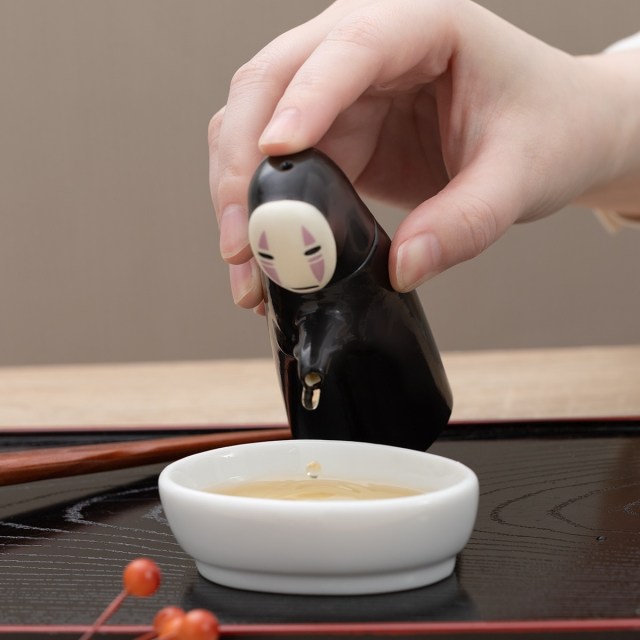
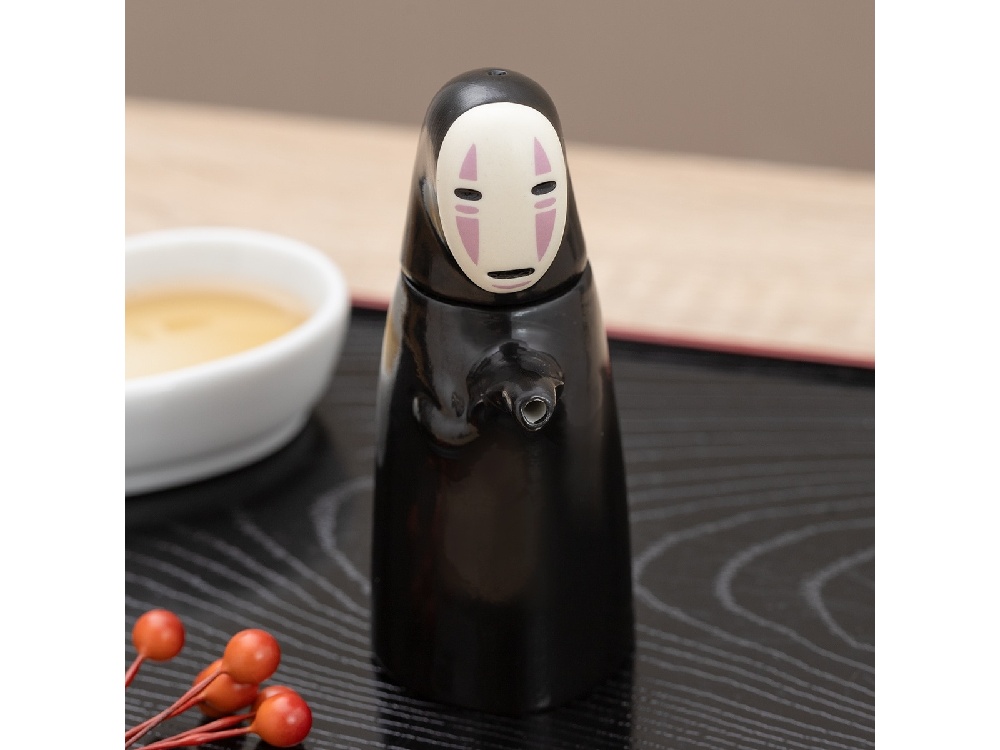
Explicit exposition has never really been Studio Ghibli’s thing, but even by their standards, No Face’s character arc is an impressive case. Without saying a single word of dialogue, we watch the Spirited Away scene-stealer go from covetous to considerate over the course of the film, learning that there’s more to life than a cycle of gorging and coercing people with regurgitated pricy baubles.
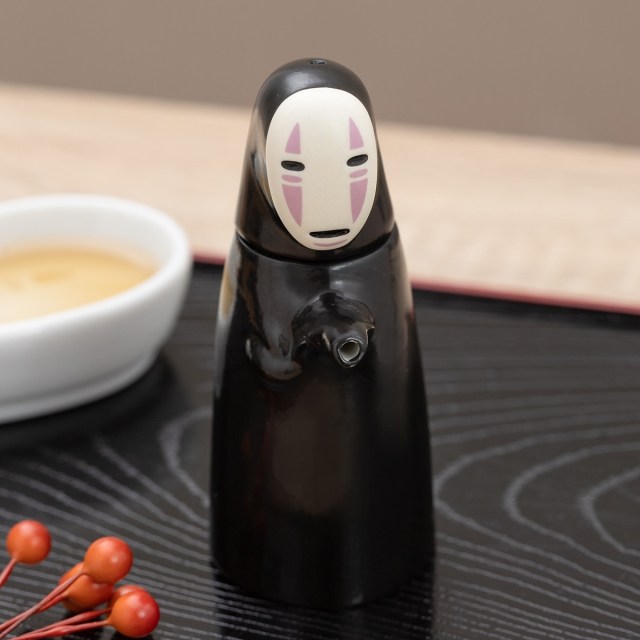
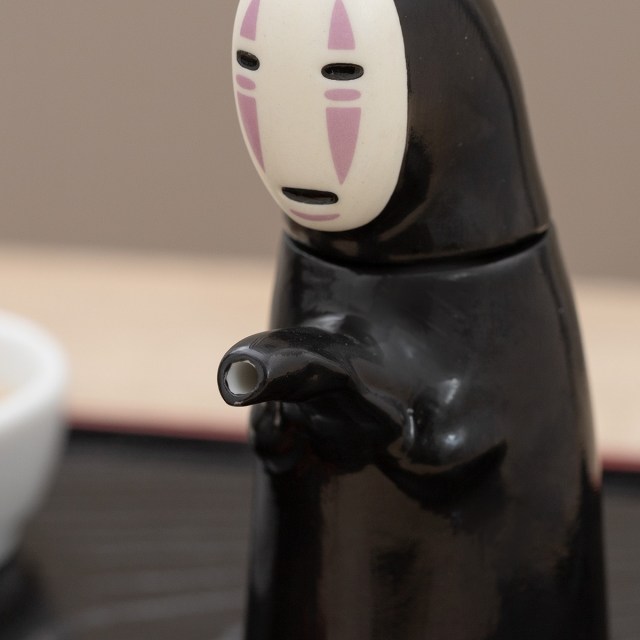
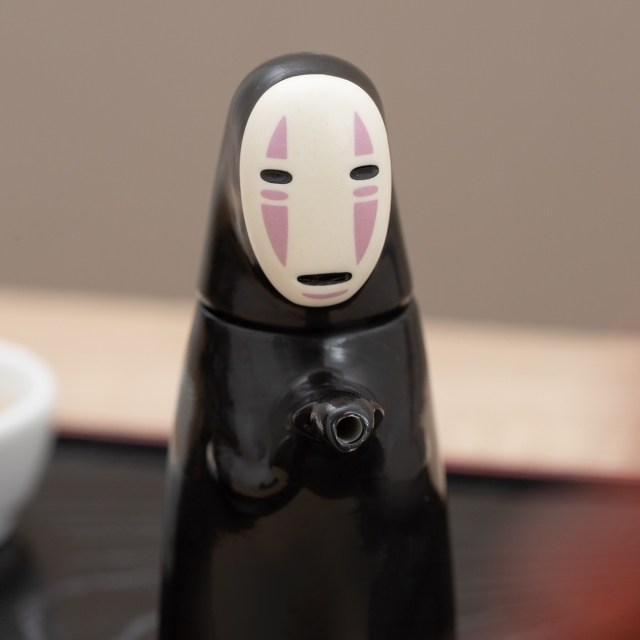
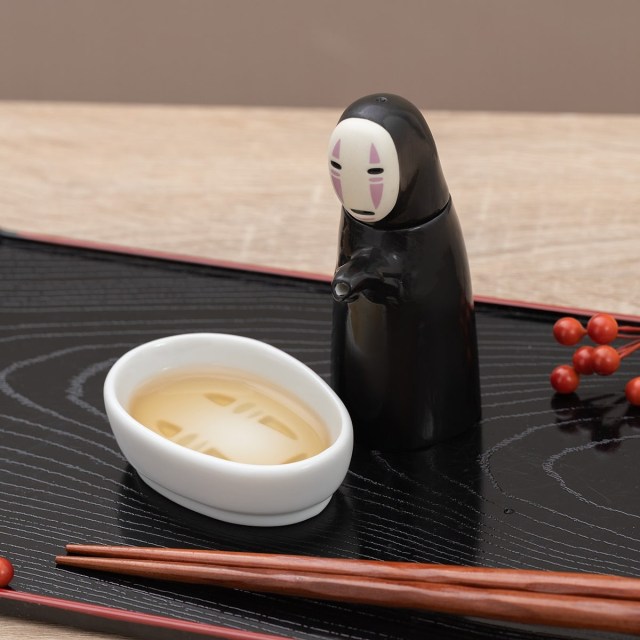
By the time the movie ends, No Face has become a sympathetic, even heartwarming character, and his new life as a generous, helpful sort can continue in your kitchen in the form of a cute and classy No Face soy sauce dispenser.
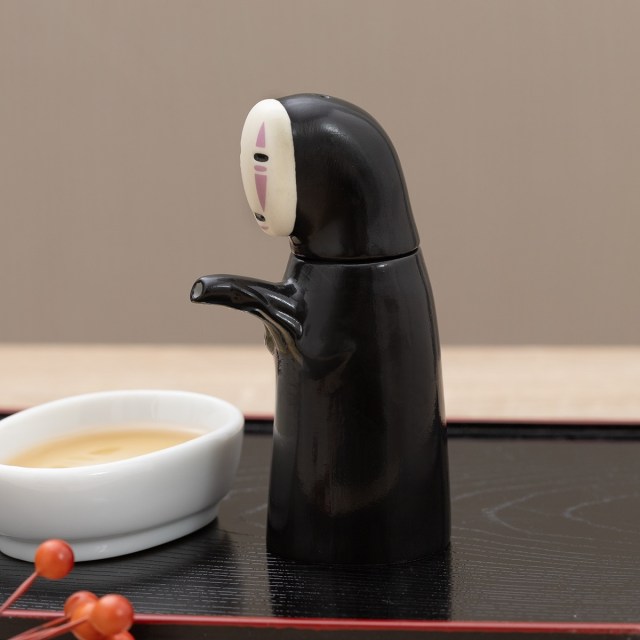
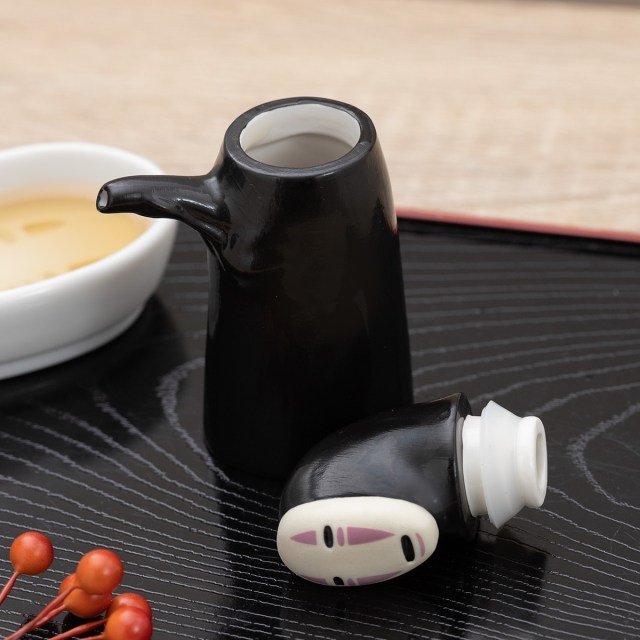
The porcelain bottle stands 10.8 centimeters (4.3 inches) tall, with its glaze catching the light in a hazy way evocative of the indistinct nature of No Face’s physical form within the anime.
Instead of pouring from the very top of the bottle, the soy sauce comes out of No Face’s extended arm, which is crafted to bring to mind his on-screen posing.
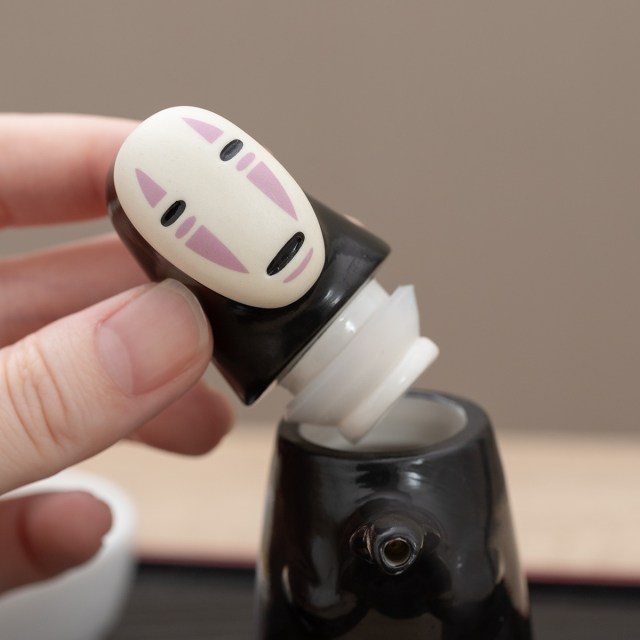
A silicone seal helps keep the connection between the two parts of the bottle snug and secure, and separating them also makes for easy cleaning of the inside.
While this is technically classified as a soy sauce dispenser by Ghibli specialty shop Donguri Kyowakoku, you could use it to hold whatever liquid you want (although the modest diameter of the opening means that thick condiments or lotions probably won’t flow too easily through it). And if your diet isn’t all that saucy, there’s always the option of using the bottle for decorative purposes like a very unique anime figure.
While the No Face soy sauce dish shown in the above photo is sold out, the soy sauce dispenser is back at Donguri Kyowakoku following a recent restock, and can be ordered through the chain’s online store here, priced at 2,640 yen (US$17). Just be careful not to spill any sauce on your new Totoro necktie.
We find out just how devilish and angelic these 100-yen surprises are.
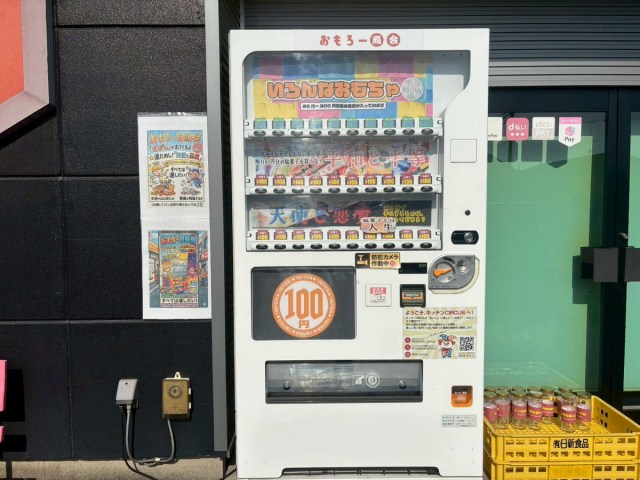
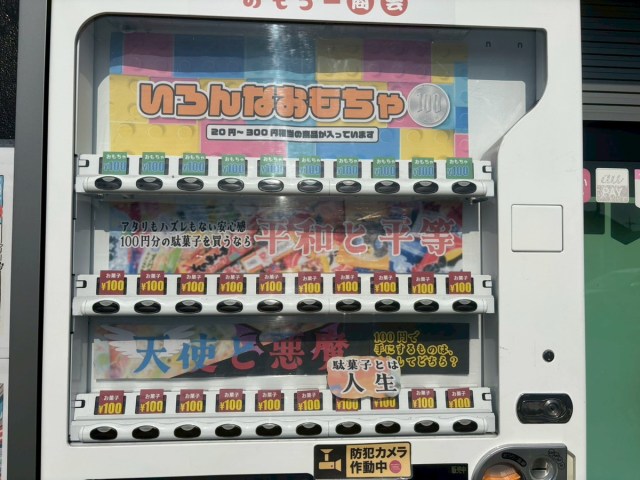
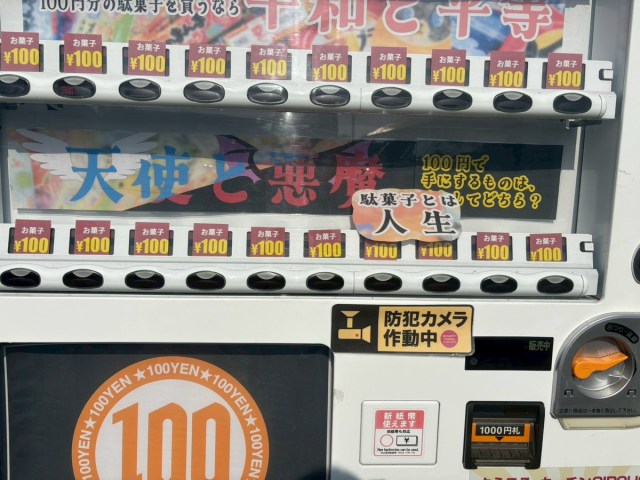
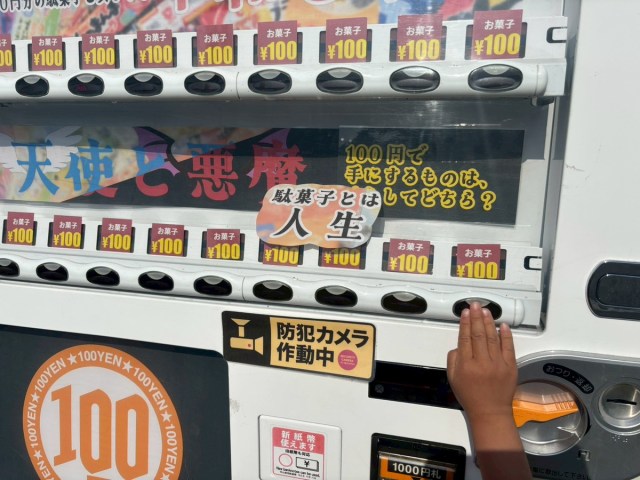
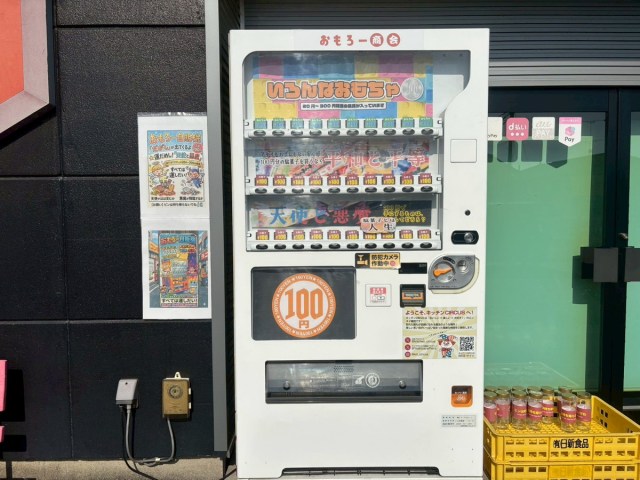
Our reporter Natsuno Futon was strolling the streets of OyamaCity in Tochigi Prefecture the other day when she came across an unusual vending machine. The first thing that caught her eye was the huge “100 yen” (US$0.63) sign on the front, but then, as she stepped closer, she became even more intrigued.
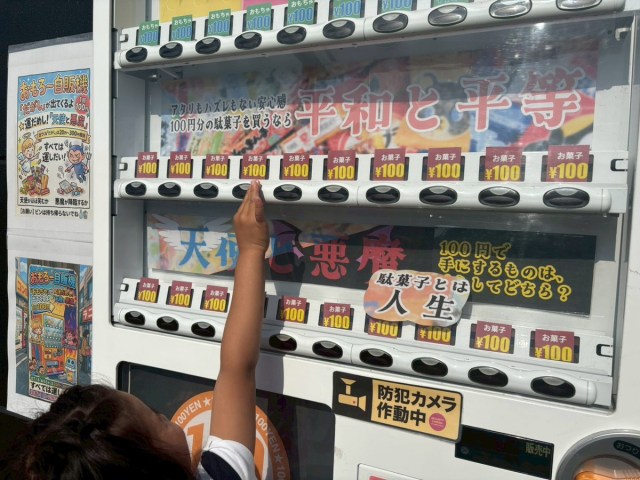
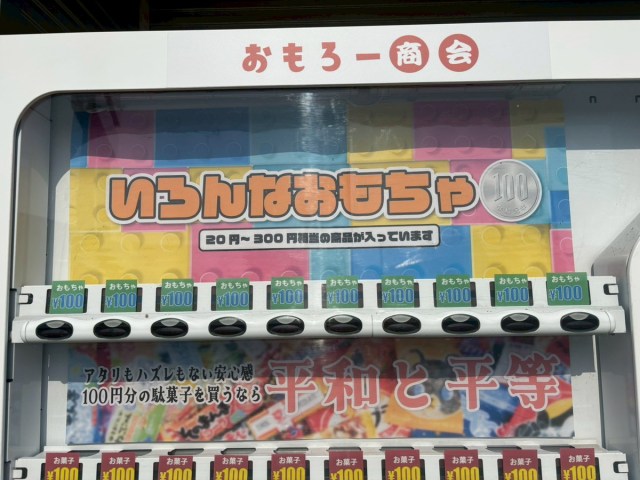
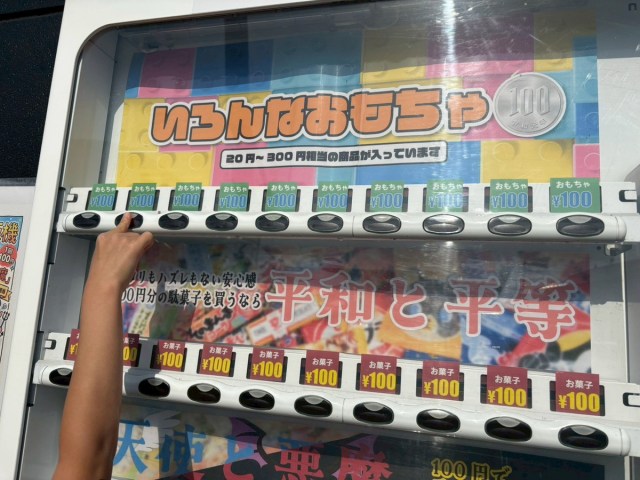
There, in the window display, were the words “いろんなおもちゃ” (“various toys“), and beneath them: “Contains items worth between 20 and 300 yen“.
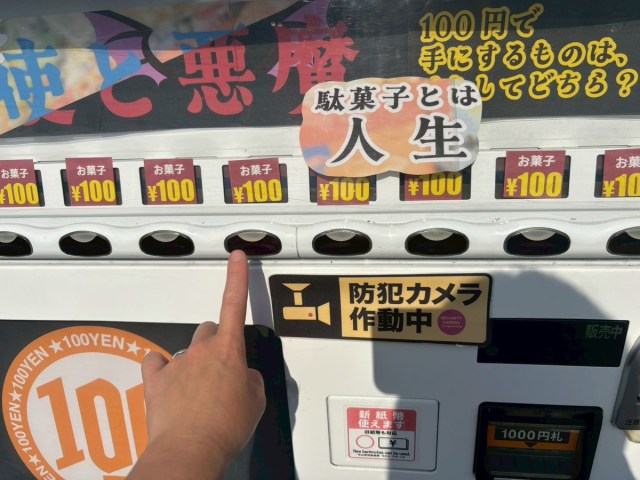
As her eyes moved down to scan the second row, she read the words: “平和と平等” (“Peace and Equality”) and then, on the third row, “天使と悪魔” (“Angels and Demons”).
Natsuno had never encountered a vending machine stocked with Peace and Equality and Angels and Demons before, and neither had her children who were with her on this outing. Needless to say, her children were excited to find out what these mystery items were, so Natsuno found herself reaching into her pocket for some 100-yen coins.
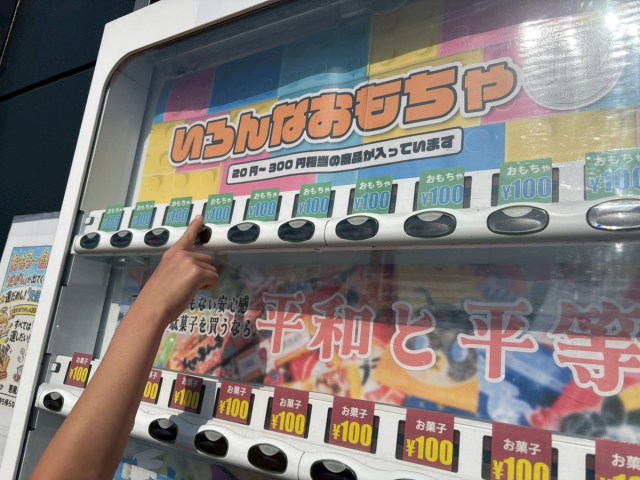
With a machine like this, part of the fun is randomly selecting a button to press, and her daughter started by pushing one of the buttons on the top row, which were marked “おもちゃ” (“toys“).
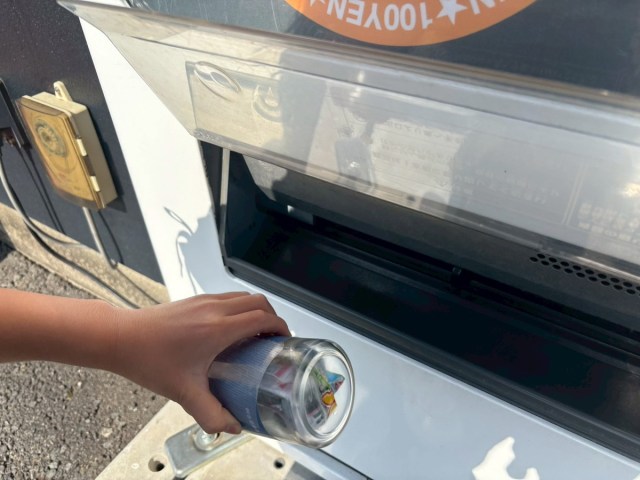
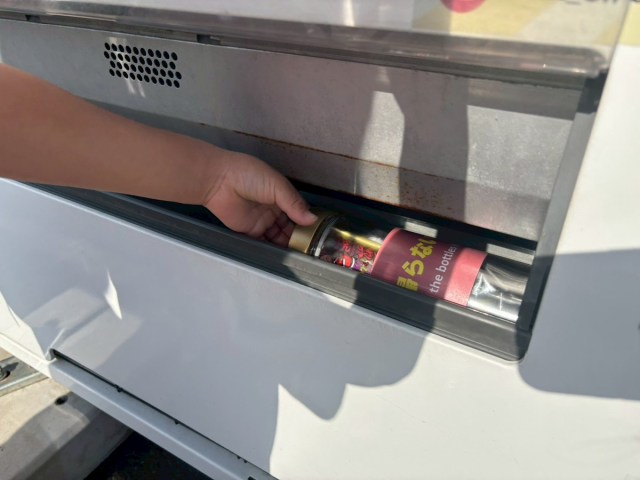
▼ A long cylinder immediately popped out into the tray at the bottom of the machine, and this is what came out of it.
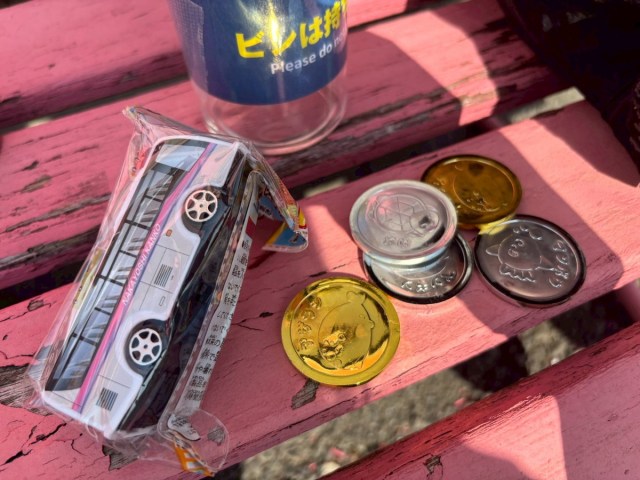
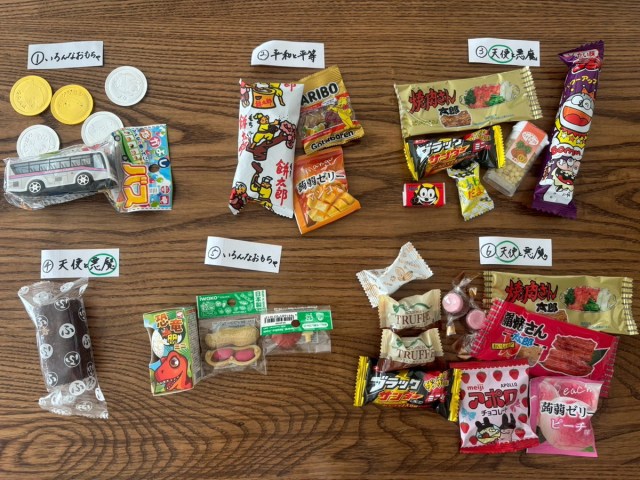
A toy car and five toy coins. From Natsuno’s point-of-view, this was a bit of a disappointment, particularly as her daughter doesn’t have any interest in toy cars or fake coins.
▼ Hoping for something better, her daughter popped a real coin into the machine and pressed a button on the “Peace and Equality“row.
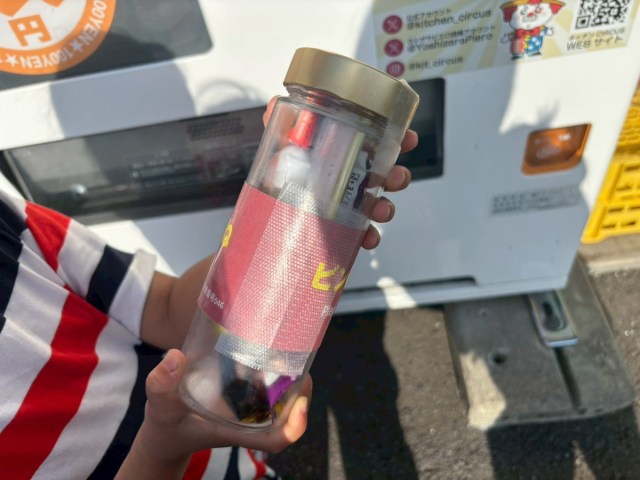
The buttons on the second and third rows read “お菓子” (“sweets“), so they knew this would be something edible. What that would be, however, remained a mystery until they popped the lid on the canister they received.
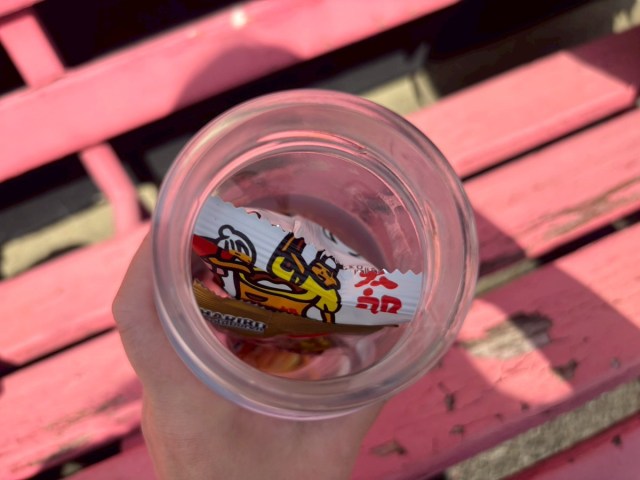
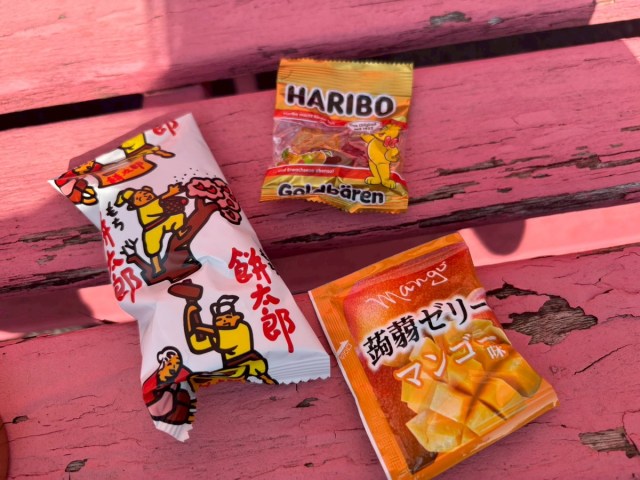
▼ Oh! That looks like Mochitaro.
Mochitaro is a classic Japanese “dagashi” (cheap snack) consisting of crunchy rice cracker chunks. It wasn’t the only thing in the canister, as it also contained some mango jelly and a small bag of Haribo gummy candies.
For 100 yen (US$0.63), this was a decent deal, and it gave Natsuno and her daughter hope that they might be able to encounter an angel on their next try.
▼ Time to press a button on the “Angels and Demons” row.
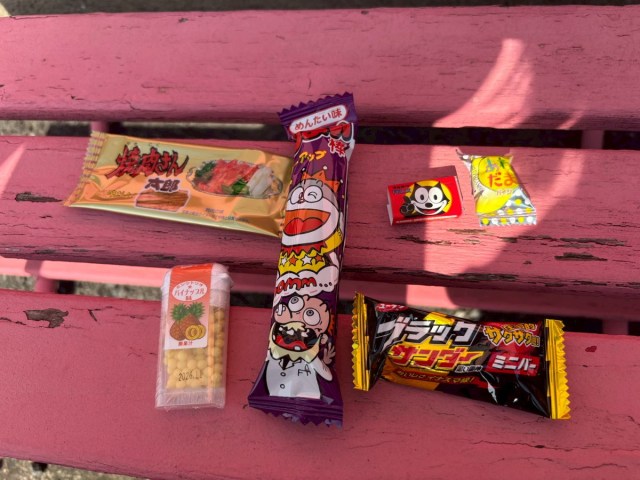
What came out, however, appeared to be neither an angel nor a demon, as the canister was ambiguous.
Even after looking inside, they weren’t sure whether they’d been visited by a demon or an angel, as they received six cheap candies that might’ve been worth around 100 yen. The dark hues on some of the packs, including the iconic Black Thunder chocolate, hinted at a devilish selection, but on the other hand, it was a pretty good deal.
▼ Curious to give it another try, Natsuno’s daughter pressed another button…
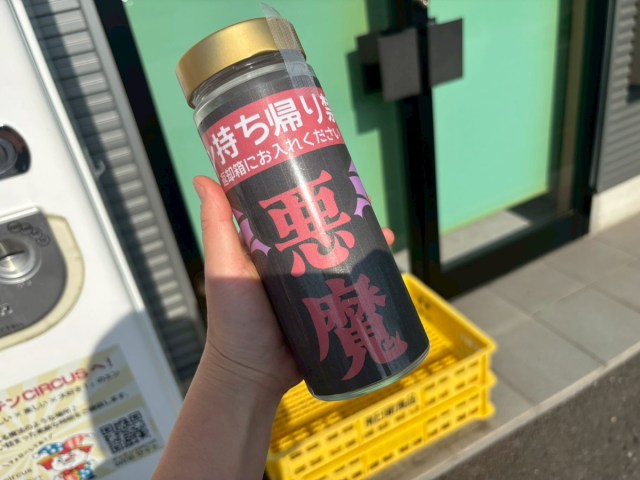
▼ …and out popped a canister with the word “Devil” printed on it in big red characters.
▼ What was inside?
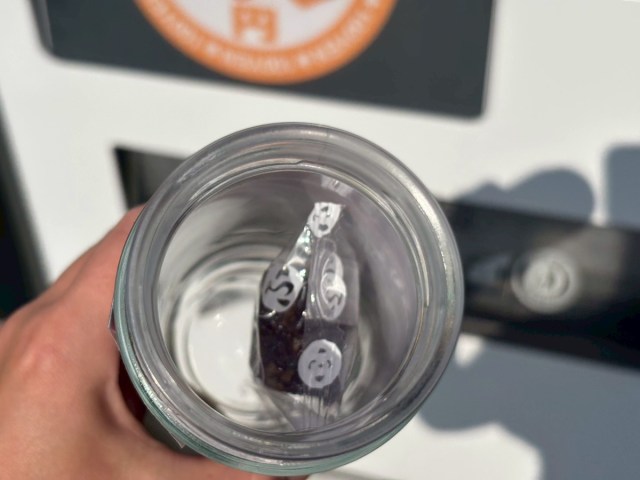
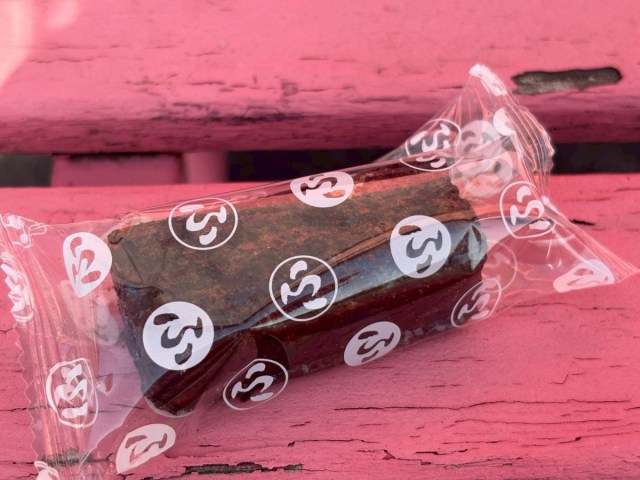
▼ One puffed wheat snack.
This was definitely devilish – paying 100 yen to receive just one cheap puffed rice snack was a merciless move, and now they were more determined than ever to meet an angel.
▼ One more try.
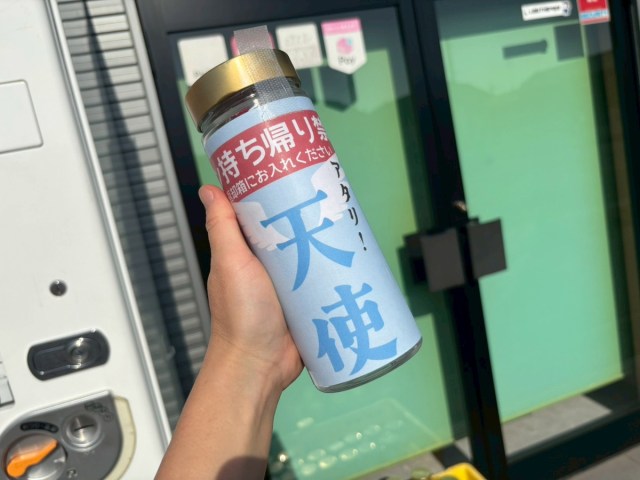
▼ Success!
The progression from ambiguous canister through to devil and then angel was such a great progression that Natsuno felt it was almost as if there was someone inside the machine, reading the atmosphere and doling out excitement in increasing levels.
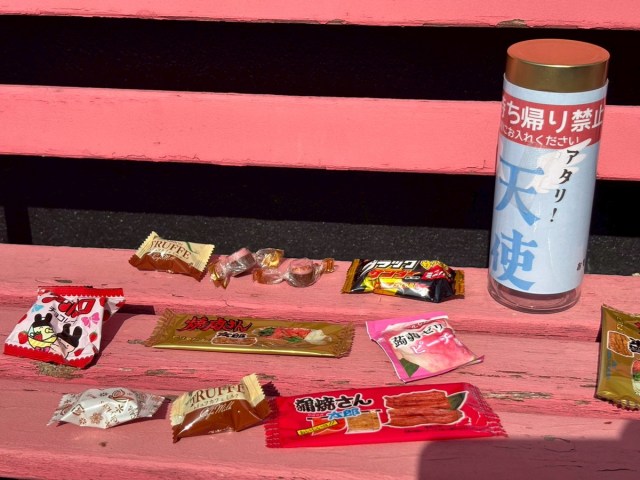
▼ The word “アタリ!” (“win!“) was also printed on the canister, adding to the sense of joy.
▼ So…let’s see what the angel delivered.
This was definitely a win, as it was the best result so far, with Natsuno estimating the total value to be more than 100 yen. Emboldened by this result, Natsuno and her daughter went for another try on the toy line, which seemed to present a better deal than the sweet options.
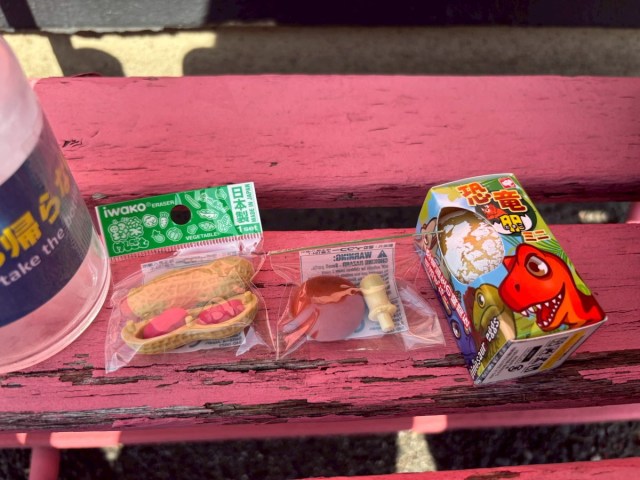
▼ If there’s a chance of winning something worth up to 300 yen, this is where they might get lucky.
▼ They were rewarded with two fun erasers from respected company Iwako, and a dinosaur egg.
Natsuno figured this bundle was worth over 200 yen. It wasn’t bad, but to be honest, she wouldn’t say it was worth 300 yen.
▼ After a total of six tries, here’s everything they received.
It may not have been a huge deal, but the real draw of the machine wasn’t a tangible product visible to the human eye. The real takeaway here was the fun and excitement of wondering what might come out of the machine, and that was worth way more than every deposit of 100 yen.
▼ There aren’t really any other places in the world where you can buy “peace and equality” for 100 yen.
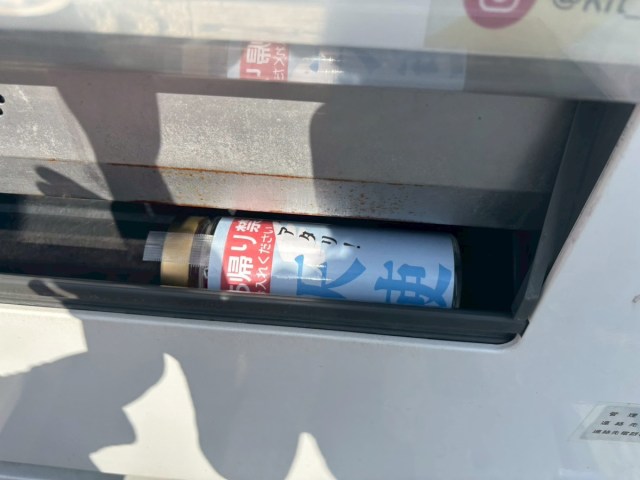
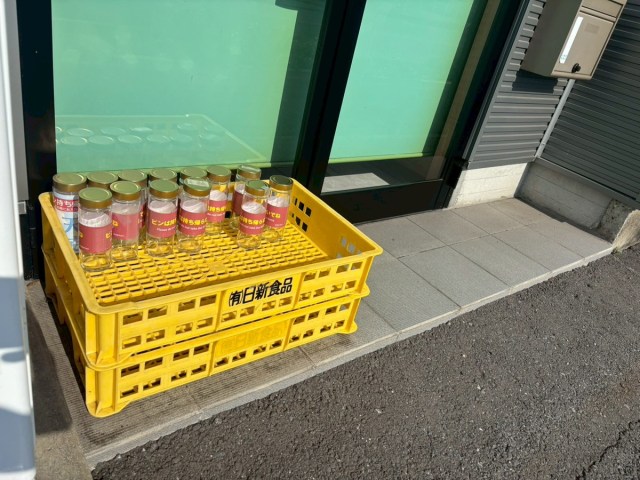
▼ Judging by the containers in the return spot for reuse, there weren’t many angels that day either, so they felt extra blessed to have received one.
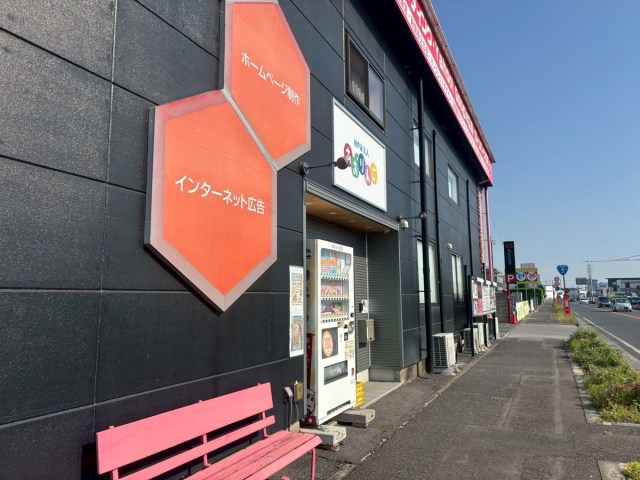
If you’d like to try your luck at the vending machine, it’s located under a sign for “NPO Aoringo” on a black building that reads “Ad Promote Co., Ltd.”and we’ve included the address for you below.
Ad Promote operates and stocks these machines, and according to its online shop, “Omoro Shokai” (“Fun Trading Company”), the Omoro vending machines ceased operations in January this year. That means this machine, which we visited in May, is the last of its kind in the country, so if you’re like us and love visiting weird and unusual machines, this is a stop worth putting on your itinerary.

 Login
Login