Normal view

  • ✇Popular Science
  • Scotland’s ancient human-made islands are dripping with secrets Margherita Bassi
    Mysterious and ancient human-made islands of timber and stone have endured amidst Scotland’s more well-known standing stones, Roman forts, and 18th century battlefields. Called crannogs, archeologists were initially not so sure what purpose these islands served, but were relatively confident that most of them date back to between the Iron Age (800 BCE to 400 CE) and the post medieval period (1550 to 1800). That is, until local diver Chris Murray found pottery fragments that were much older than
     

Scotland’s ancient human-made islands are dripping with secrets

5 June 2026 at 13:00

Mysterious and ancient human-made islands of timber and stone have endured amidst Scotland’s more well-known standing stones, Roman forts, and 18th century battlefields. Called crannogs, archeologists were initially not so sure what purpose these islands served, but were relatively confident that most of them date back to between the Iron Age (800 BCE to 400 CE) and the post medieval period (1550 to 1800). That is, until local diver Chris Murray found pottery fragments that were much older than they should have been.

Murray discovered the pottery remains from a crannog in the Isle of Lewis, part of the Outer Hebrides island chain on the country’s northwestern coast. Experts at the National Museum at Edinburgh were bewildered to discover that they were Neolithic (4000 to 2500 BCE), and thousands of years older than they would have guessed for remains associated with crannogs. Since then, archaeologists have been taking a closer look at these artificial islands and their true origin.

“[They are] these strange little circular islands that exist in all the different watery environments in Scotland and Ireland, typically in lakes or lochs, as they call them in Scotland. You would look at one and say it doesn’t look quite natural, because it looks very uniform, a very cohesive structure with lots of small portable stones on top,” Stephanie Blankshein, a maritime archaeologist at the University of Southampton, tells Popular Science. “They’re clearly something different.”

brown and black pottery fragments
Fragments of a Neolithic pot found near the crannog. Image: University of Southampton.

The island builders

Archaeologists have known about crannogs for more than a century, but it is quite difficult to really investigate the structures because their timelines can be complex. People occupied them for multiple time periods, either continuously or with stretches of abandonment followed by reoccupation. What’s more, it’s difficult to excavate down to the artificial island’s oldest layers.

Murray’s discovery of pottery fragments in 2012 shouldn’t have come as a huge surprise. In the 1980s, one very confused archaeologist discovered Neolithic material at his presumed Iron Age site. However, the wider archaeological community simply deemed it as a strange, hyper-local anomaly, and moved on. The belief that the vast majority of crannogs date back no more than about 2,000 years endured for decades—including for most of Blankshein’s lifetime, she points out.

The waterlogged Neolithic pottery changed all of that, and Blankshein and colleagues started investigating the matter. They gathered and dated organic material and more pottery remains from six sights—five identified during Murray’s dive and the one from the 1980s. They confirm that both the pottery and the crannog were Neolithic, and ultimately found that 11 crannogs in the Outer Hebrides were from that period, with potentially many more around the same age in that region and beyond.

“I’m sure there are many, many more just waiting to be discovered,” Blankshein explains.

So, who were these Neolithic island-builders? It’s important to note that “Neolithic” doesn’t just refer to a time period, but also a lifestyle. Neolithic people were early farmers and pastoralists, and ancient DNA studies have revealed that Neolithic communities in Britain and Ireland were genetically distinct from the Mesolithic (about 9600 to 4000 BCE) hunter-gatherers who lived in the area before them.

two divers in full gear examining and under water dig site in a scottish lake
Divers xxcavating underwater at the loch. Image: University of Southampton.

Advanced research techniques such as ancient DNA and isotopic analyses are also revealing where they came from. Neolithic people originated from the present-day Middle East and eventually spread across Europe. Some people migrated along the Mediterranean coast as far as west as Gibraltar, before moving north along the Atlantic coast to Britain and Ireland, where they ultimately replaced the Mesolithic communities.

In fact, researchers have traced the strongest genetic connections of Neolithic people in Scotland not to nearby France but to the Iberian Peninsula, Blankshein says. Britain’s early farmers may have been or descended from Neolithic seafarers. Notably, they would have made landfall a few centuries before the Neolithic crannogs in the Outer Hebrides started popping up.

The oldest crannog in the Outer Hebrides dates back to 3800 BCE, while the earliest Neolithic site in the United Kingdom in southern England is from around 4100 BCE. 

“So it’s entirely possible that there was a very early arrival in Scotland as well, and essentially straight away they started building these islands,” says Blankshein. “So it seems like this may have been a tradition that they actually brought with them, or that they established very quickly after their arrival.”

A big Neolithic platform

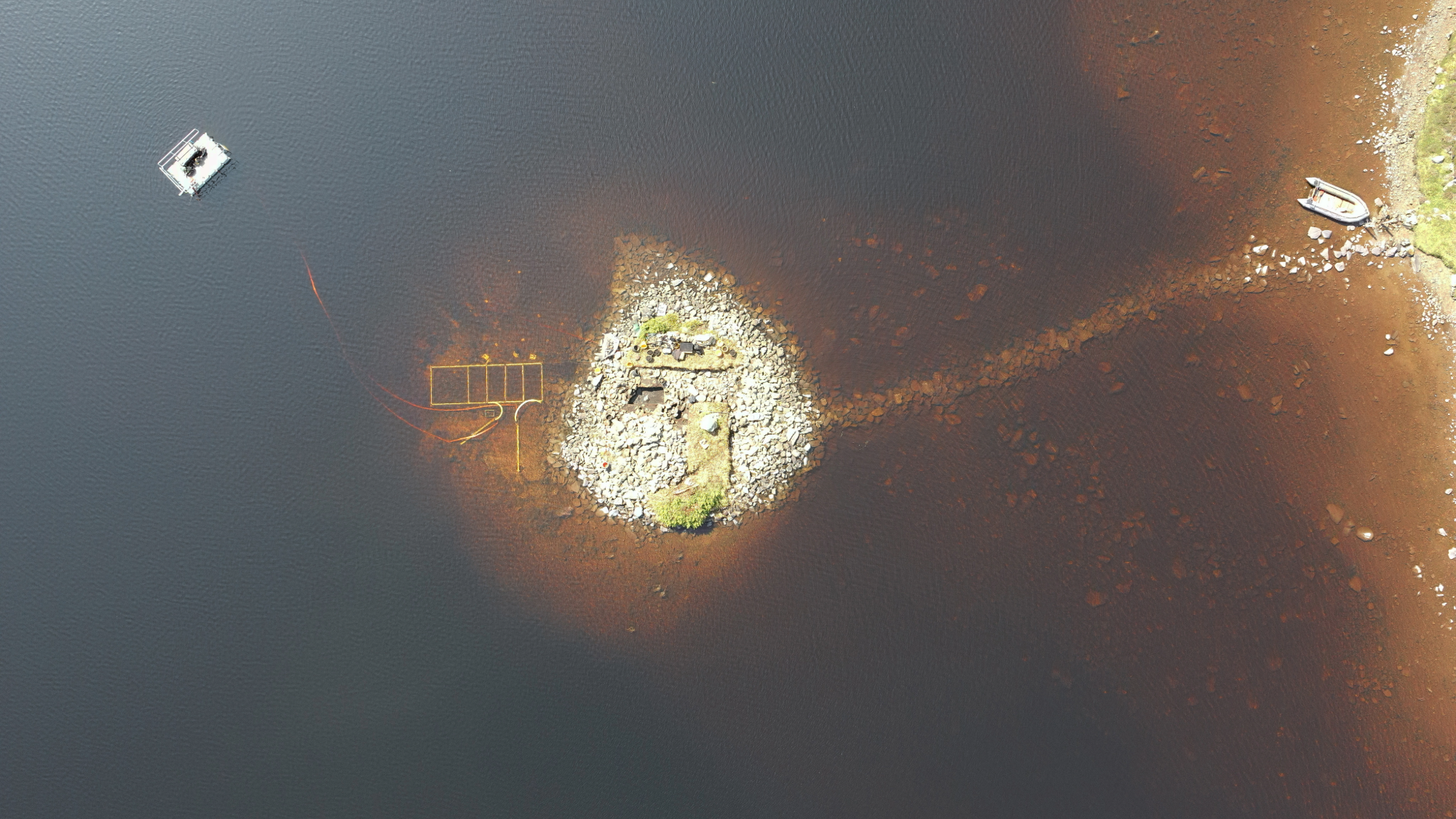
One of the crannogs that Blankshein’s team has studied in significant detail is the structure on the Isle of Lewis’ Loch Bhorgastail. It has already yielded hundreds of pottery shards, and they have also spotted pieces of timber embedded in the structure underwater. Importantly, the team could date that wood using standard carbon-14 dating. And unlike other crannogs, the Loch Bhorgastail crannog didn’t have any structures built on top of it (like a medieval castle) that could complicate excavations.

The team conducted their first serious excavation in 2021, expecting to reveal an island made of stone and reinforced with some timber. While they did not find full pieces of timber, bits of wood were scattered about, leading the maritime archaeologists to an entire underwater timber structure.

“We were just absolutely blown away because we started following this structure further and further back from the island. And by the end of the month of excavation, we hadn’t reached the end of it,” Blankshein says. “And that was about six meters [19.6 feet] that we had extended out. So we knew there was something quite interesting there.”

The wood dates to between 3500 and 3300 BCE, which is consistent with most of the other early Neolithic sites in the Outer Hebrides. When the team returned in 2023, they discovered that the timber platform wasn’t just extending from the stone base underwater, it was under the entire crannog itself.

wood timbers at the bottom of a lake
The wooden platform beneath the Lock Bhorgastail crannog. Image: University of Southampton.

directly on the lochbed, potentially circular, and potentially featured stone reinforcements around the edges and/or stakes securing it. Core samples taken from the lake’s dirt and rock indicate that the loch’s water levels would have been lower at the time of its construction, so the platform could have sat under just a foot of water, or even been dry. Another possibility is that it was dry during the summer and underwater in the winter, and so was used seasonally.

The platform is also quite large, at around 75.5 feet (23 meters) in diameter. Now that the researchers have a good understanding of how big the platform was, the next natural question is what it was used for. This is a significantly harder inquiry to answer, and researchers have a number of different theories, according to Blankshein. 

Broadly, it probably served several important purposes. The presence of food residue in the many pottery fragments indicate that people were consuming food on the island, thus it could have been a gathering place for a ritual feast or ceremony. As such, one of the theories is that it was used to host coming of age ceremonies. Since the wooden platform would have been on water, another hypothesis is that it could have represented a neutral and egalitarian meeting point.

Materials last touched over 5,000 years ago

In addition to phenomenal archaeological results, the Loch Bhorgastail crannog also prompted the team to develop a new technique for photogrammetry (stitching 2D pictures together to form a 3D model of a site) in shallow water. At these depths, photogrammetry is more difficult to execute than in the deep sea. They describe their method, which involves attaching two GoPro cameras to a rig, in a study recently published in the journal Advances in Archaeological Practice.

The team is finishing the final analysis of the Loch Bhorgastail site and are detailing the excavation results for a future paper. 

“Working on such an ancient site is genuinely surreal,” Blankshein admits, speaking of the work in general. “Despite the huge lapse in time, there are moments underwater when the distance between past and present suddenly feels incredibly small—lifting pottery from the loch bed that was last touched by a Neolithic person over 5,000 years ago, or seeing bark still preserved on timbers beneath the sediments as if it had been placed there yesterday. Moments like that provide connections to the past I couldn’t have imagined before working on the site.”

The post Scotland’s ancient human-made islands are dripping with secrets appeared first on Popular Science.

  • ✇Popular Science
  • Arizona students design app that calculates least-sweaty walking route Margherita Bassi
    It’s not unheard of for standard navigation apps to map out a less-than-ideal pedestrian journey. You technically can walk under that bridge and cross that six-lane highway, but that doesn’t mean you want to. The app doesn’t take into account your safety, nor your comfort in steamy weather. Now, a team at Arizona State University (ASU) is developing a tool to tackle the latter aspect of the problem. The aptly-called Cool Routes is an online navigation system that calculates sun exposure and m
     

Arizona students design app that calculates least-sweaty walking route

12 June 2026 at 14:43

It’s not unheard of for standard navigation apps to map out a less-than-ideal pedestrian journey. You technically can walk under that bridge and cross that six-lane highway, but that doesn’t mean you want to. The app doesn’t take into account your safety, nor your comfort in steamy weather. Now, a team at Arizona State University (ASU) is developing a tool to tackle the latter aspect of the problem.

The aptly-called Cool Routes is an online navigation system that calculates sun exposure and mean radiant temperatures to suggest cooler (in the temperature sense) pedestrian routes. A radiant temperature measurement represents the total heat load one experiences in a particular spot. The measurement takes elements like sun exposure and reflected heat into account to better describe just how hot a space will be. 

The mean radiant temperature in Phoenix in the sun can go over 150 degrees Fahrenheit, but decrease to under 100 degrees in the shade. Cool Routes updates its data hourly based on meteorological forecasts and also takes into account buildings and trees. 

“Cool Routes is a website running on a server, and anybody can use it. A user can open it in a browser, pick where they want to start and where they want to go on the ASU Tempe campus, and see walking routes that account for heat exposure,” Ariane Middel, director of ASU’s SHaDE Lab, tells Popular Science. “It looks like a navigation map, but with a heat layer added. Instead of only asking, ‘What is the shortest way to get there?’ Cool Routes also asks, ‘What is the cooler way to get there?’” 

a man walks with an air temperature measuring device in a wagon
To validate the predicted heat loads, researchers used MaRTy, a rolling instrument station that measures human thermal exposure and other meteorological data. Image: Ariane Middel/Arizona State University.

During tests spanning 12 days and different seasons on ASU’s Tempe Campus, Cool Routes successfully found cooler routes over 70 percent of the time, including during mornings and evenings, when there’s usually less of a difference in heat loads between shaded and sunny areas. These paths decreased the perceived heat load by around 4.5 degrees on average. 

To confirm Cool Route’s heat exposure estimates, the team also used a rolling instrument station that measures human thermal exposure among other data., Their results were significantly accurate. Middel and her colleagues describe their work in a study recently published in the journal Building and the Environment

“One of the main things we found is that people often do not need to take a very large detour to reduce their heat exposure. In many cases, a slightly longer route can be substantially more shaded compared with the shortest route,” Middel explains. 

“I would definitely walk 10 extra minutes to get more shade and protect myself from UV exposure. But everyone makes that decision differently,” says Waqar Khan, an ASU computer scientist and co-author of the study. “Some people may choose the cooler route, while others may prefer the shortest one. That is why, in our application, we show both the shortest and coolest routes, along with the route length, estimated walking time, and expected heat exposure.”

Cool Routes currently only works for ASU’s Tempe Campus, but the approach can be applied to identify pedestrian paths in other areas, including cities. What’s more, the researchers believe that Cool Routes data could help city planners find the best places for shade solutions, and even test out potential future cooling strategies via heat load simulations. 


Moving forward, the team, including ASU computer science student and co-author Fletcher Emmott, aims to increase the tool’s accessibility with a Cool Routes mobile application as a part of Emmott’s honors thesis. 

The post Arizona students design app that calculates least-sweaty walking route appeared first on Popular Science.
  • ✇Popular Science
  • Fact or myth? Ticks can drop out of trees like paratroopers. Margherita Bassi
    The official start of summer is days away, and after a particularly long and cold winter in parts of the United States, many are ready to enjoy the outdoors again without risking frostbite. Warm weather comes with another type of bite, however. One that comes with an unwanted guest attached to your body. Along with mosquitos and flies, ticks are among our most disliked arachnids. However, their infamy comes with a lot of myths, and with tick season in full swing, it’s important to straighten
     

Fact or myth? Ticks can drop out of trees like paratroopers.

8 June 2026 at 14:03

The official start of summer is days away, and after a particularly long and cold winter in parts of the United States, many are ready to enjoy the outdoors again without risking frostbite. Warm weather comes with another type of bite, however. One that comes with an unwanted guest attached to your body.

Along with mosquitos and flies, ticks are among our most disliked arachnids. However, their infamy comes with a lot of myths, and with tick season in full swing, it’s important to straighten out a few misconceptions. 

False: Ticks can fly

If you’ve heard that ticks can fly and/or jump, you’ll be relieved to know that they can’t. In fact, their legs are pretty unimpressive appendages, according to Escher Cattle, an entomologist at the Regional Government of Cape Cod.

“They have some pretty good grabbers on their front legs and their other legs are pretty decent as well, but really all a tick has the equipment to do is walk around and grab stuff,” Cattle tells Popular Science. They’re not muscular like those of grasshoppers, for example. As for locomotion more generally, ticks don’t have wings, nor are they aerodynamic. As such, they’re also “not physically geared to be dropping out of trees like some kind of paratrooper.”

While a tick might attach onto an animal that takes it up into a tree and then fall, the chances that the skydiving arachnids will land on you is infinitesimal, Cattle says. In fact, ticks generally exist beneath an elevation of at most three feet. 

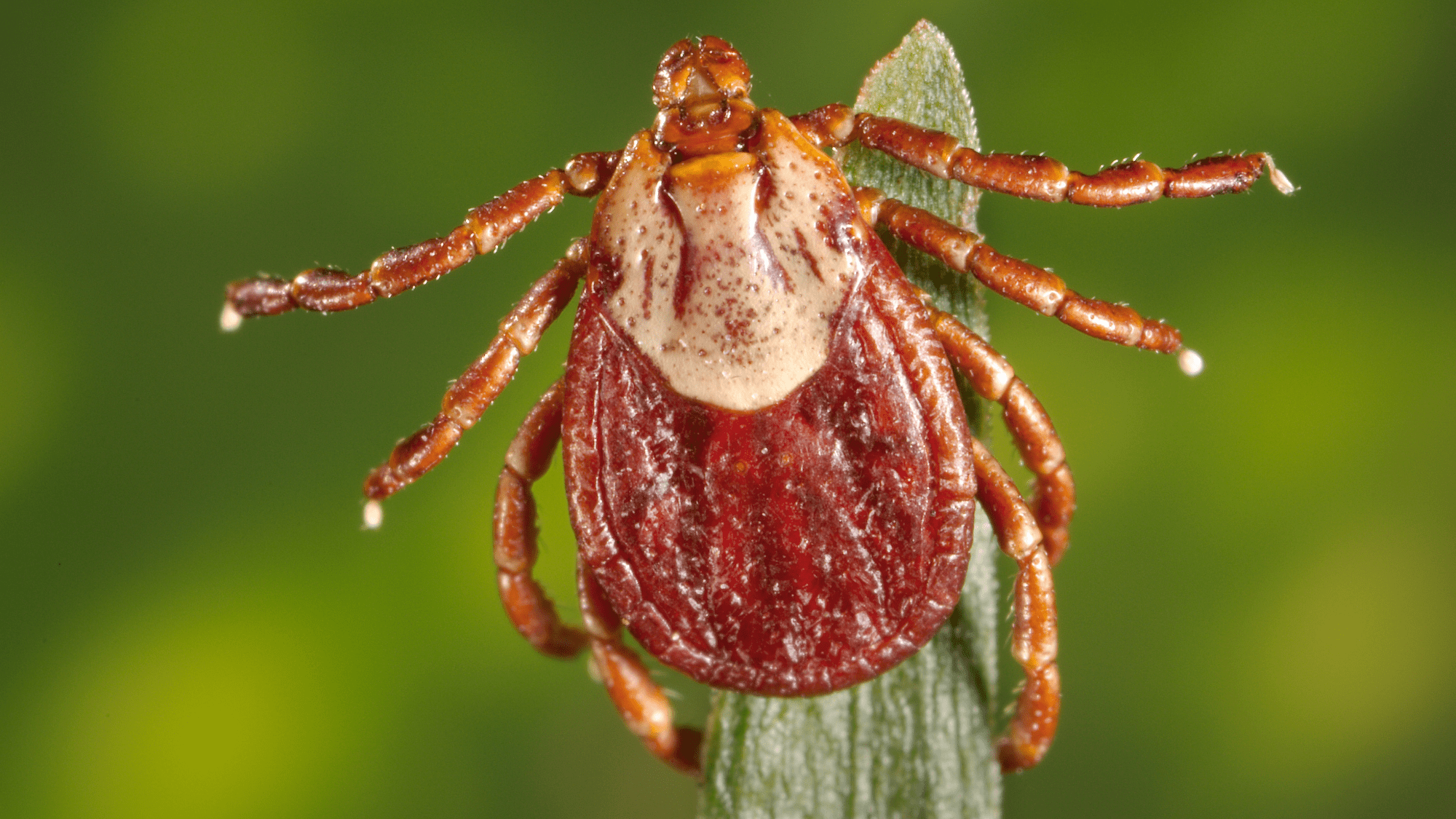
The way a tick actually attaches to a host is by climbing to the top of a plant, sticking its arms out, and waiting for something alive to brush by—a behavior called questing. It does so after sensing chemical cues of something warm, moving, and blood-filled. 

a tick on a blade of grass
Deer ticks are found in the eastern half of North America. Image: CDC/ James Gathany; William L. Nicholson, Ph.D.

False: Opossums help remove ticks by eating them

Speaking of blood-filled things, one tick myth that Cattle is sorry to dispel is one that paints opossums as tick-eating machines. You may have read that opossums are good to have around because they eat lots of ticks. This popular notion is founded on the results of a study in which researchers put ticks on opossums, among other animals, to investigate how these animals reacted to the pest. 

Because the team wasn’t seeing any ticks dropping off the opossums, they assumed the mammals were eating them all. As of now, there is no direct evidence known to researchers of opossums eating any ticks. 

One similar belief is that birds such as turkeys and guinea fowl eat ticks. While that’s true, they also carry them around, so having one in your backyard doesn’t automatically mean you’ll have less ticks.

True: They can carry disease

What isn’t a myth, though, is that ticks can be vectors of disease. These include Rocky Mountain spotted fever, tularemia, ehrlichiosis, and most infamously, Lyme disease. 

The good news is that you can decrease your chances of catching the disease from a tick bite if you remove the tick within 24 hours. But sometimes, tick bites go unnoticed, so it’s important to check yourself when you come back indoors during warm weather. 

Ticks are shockingly cold-resistant, but they usually keep to themselves during the colder seasons. They still can come back out as soon as the sun starts shining—including on those randomly very hot February days. 

True: A ‘dorky’ look helps prevent tick bites

If you do find a tick, don’t try to burn or suffocate it off your skin. Use a trusty pair of tweezers, grip it near the mouth parts, and pull it off. If anything gets left behind, your skin will naturally push it out with some time. If you’re not sure how long the tick has been on you, you should contact your doctor. 

As for tick bite prevention, “I know it looks kind of dorky, but tucking your pants into your socks is a really good tip. Making it so that there are barriers between ticks and your skin as much as possible is extremely good as a strategy,” explains Cattle, who also teaches about tick-borne disease prevention for Cape Cod Cooperative Extension. 

a pair of khaki pants tucked into high white socks
Tucking long pants into socks creates a good barrier between ticks and your skin. Image: Delaware Department of Natural Resources and Environmental Control.

You can also apply a synthetic pesticide called permethrin on their clothes and insect repellant on any exposed skin.

Ticks are “very good at what they do,” he concludes, but “I think adopting just a couple habits at a time really makes a difference.”

Update June 9 9:47 a.m. EDT : This story incorrectly identified ticks as insects. They are arachnids.

The post Fact or myth? Ticks can drop out of trees like paratroopers. appeared first on Popular Science.
  • ✇Popular Science
  • Thomas the moray eel goes to the doctor Margherita Bassi
    Routine checkups for humans are usually straightforward. The doctor tells you what to do, and unless you’re a squirming baby or terrified of needles, you pretty much follow instructions.  But what happens when the patient is a giant yellow-orange eel with sharp teeth? Things get a bit slippery. At the New England Aquarium, experts need to follow a complicated process in order to get Thomas, a green moray eel (Gymnothorax funebris), ready for his yearly checkup.  The first step consists of
     

Thomas the moray eel goes to the doctor

30 May 2026 at 19:15

Routine checkups for humans are usually straightforward. The doctor tells you what to do, and unless you’re a squirming baby or terrified of needles, you pretty much follow instructions. 

But what happens when the patient is a giant yellow-orange eel with sharp teeth? Things get a bit slippery. At the New England Aquarium, experts need to follow a complicated process in order to get Thomas, a green moray eel (Gymnothorax funebris), ready for his yearly checkup. 

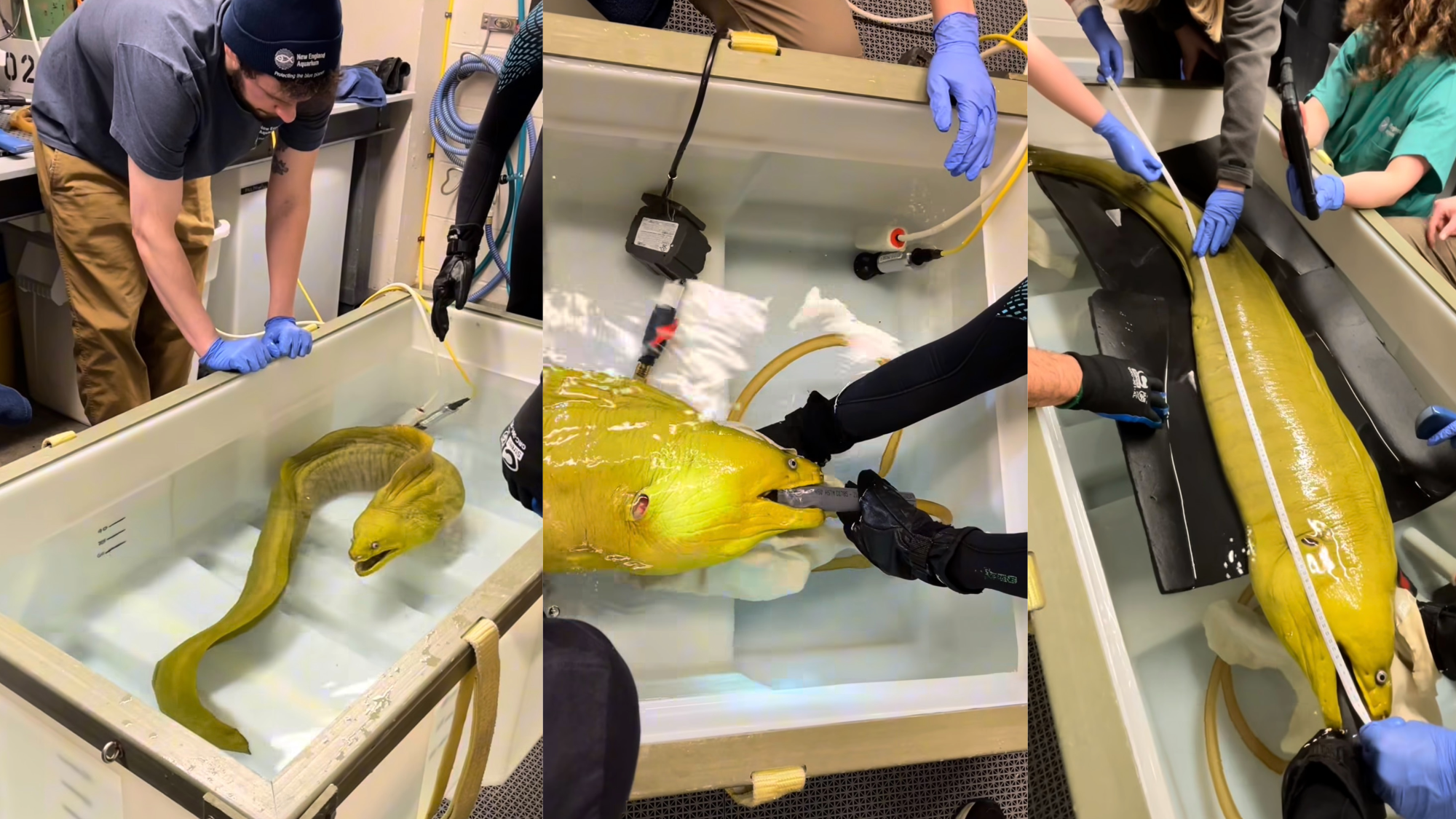
The first step consists of retrieving Thomas from the aquarium’s giant ocean tank. Divers get him into a plastic barrel.Thomas and the barrel are then submerged into a different water tank with powdered anesthetic water, Melissa Joblon, New England Aquarium’s director of animal health, tells Popular Science

“We have to be really cautious to make sure that he’s fully anesthetized before we handle him because they can be dangerous,” she adds, “and they’re very slippery and can kind of slither away if we’re not really careful.”

Once Thomas is essentially knocked out, the team lifts him from his sedation bin and onto a rack. They then flush water—with more of the anesthesia agent—which allows him to continue breathing. 

The medical exam is preventative care, meaning the team is on the lookout for any health issues to catch them before they become serious. The session includes a physical exam, bloodwork, a full ultrasound, and an electrocardiogram. The team is essentially investigating the eel’s outsides and insides. 

“We do full routine annual exams on the majority of the animals that live at the aquarium, similar to bringing your cat or dog to a vet once a year,” Joblon explains. 

Thomas is probably 18 to 21 years old, but he was a juvenile when the New England Aquarium took him in. A pet owner donated him after wisely deciding that they couldn’t care for the eel anymore—Thomas was becoming too big. Green moray eels are, after all, among the largest morays—they can be eight feet long.

Here’s to making sure Thomas eels good. 

The post Thomas the moray eel goes to the doctor appeared first on Popular Science.
  • ✇Popular Science
  • How you can help NASA (even if you failed math) Margherita Bassi
    Attention creative souls! While NASA might feel like an exclusive den of scientists, engineers, and otherworldly athletes, the agency is reaching out to storytellers and artists via two new initiatives. “As NASA pushes the boundaries of exploration and innovation for the benefit of humanity, the agency is looking for partners to share mission stories covering Artemis Moon missions, nuclear propulsion, aeronautics, and more,” NASA wrote in a press release. Since “journalists” aren’t mentioned
     

How you can help NASA (even if you failed math)

29 May 2026 at 16:10

Attention creative souls! While NASA might feel like an exclusive den of scientists, engineers, and otherworldly athletes, the agency is reaching out to storytellers and artists via two new initiatives.

“As NASA pushes the boundaries of exploration and innovation for the benefit of humanity, the agency is looking for partners to share mission stories covering Artemis Moon missions, nuclear propulsion, aeronautics, and more,” NASA wrote in a press release. Since “journalists” aren’t mentioned in either of these calls for creatives, it would appear that NASA is seeking other means to keep people talking about its missions. 

Specifically, they are seeking proposals from creatives including documentarians, songwriters, storytellers, and poets for projects about missions including Artemis III in 2027 and Space Reactor-1 Freedom to Mars in 2028, among others. Proposals are due by the end of June.

NASA is also launching another creative initiative called Moon Joy June. 

“To keep the Moon Joy alive after the Artemis II mission, NASA is hosting a month-long art challenge on Instagram, Threads, and Tumblr. Each week during the month of June 2026, NASA will provide a prompt to inspire participants to make and share their artistic creations,” they explain in an FAQ page.

The prompts have already been released, so artists looking to participate can already start brainstorming. Week one’s prompt is “launch,” week two will be “moon,” week three will be “crew,” and week four will be “Earth.” 

A note to the competitive-minded—the agency highlights that Moon Joy June is not a contest but an art challenge, meaning there will be no prize. And as if it could get any worse for type-A people, participants don’t actually have to follow the prompts. It seems like we’re in for a free-for-all artistic takeover of the three social media platforms.

Non-traditional art forms like nail art and latte foam art are also welcomed. In NASA’s words, “The sky is (not) the limit!” 

The post How you can help NASA (even if you failed math) appeared first on Popular Science.
  • ✇Popular Science
  • Orphaned baby turkeys think a feather duster is their mom Margherita Bassi
    While turkeys are more associated with the fall, spring is the season of the baby turkey just like with most birds. When two turkeys were left without a mother, staff at Raven Ridge Wildlife Center in Pennsylvania resorted to a surprising replacement: a feather duster.  It might sound like a Disney-esque solution, but rehabilitation animals won’t start healing until they are relaxed, and these two chicks—just a day or two old—were very stressed. According to Raven Ridge’s Game Warden, a man f
     

Orphaned baby turkeys think a feather duster is their mom

6 June 2026 at 14:04

While turkeys are more associated with the fall, spring is the season of the baby turkey just like with most birds. When two turkeys were left without a mother, staff at Raven Ridge Wildlife Center in Pennsylvania resorted to a surprising replacement: a feather duster

It might sound like a Disney-esque solution, but rehabilitation animals won’t start healing until they are relaxed, and these two chicks—just a day or two old—were very stressed. According to Raven Ridge’s Game Warden, a man found them running down the same road where their mother and a sibling were killed. 

Turkeys are precocial birds, meaning they’re pretty independent soon after they hatch. Unlike baby blue jays or robins, turkey and pheasant chicks eat and move on their own. However, they do rely on their mother for warmth and protection. So when these two chicks arrived at the wildlife rehabilitation center in southeastern Pennsylvania, the staff put them in an incubator to keep them warm. 

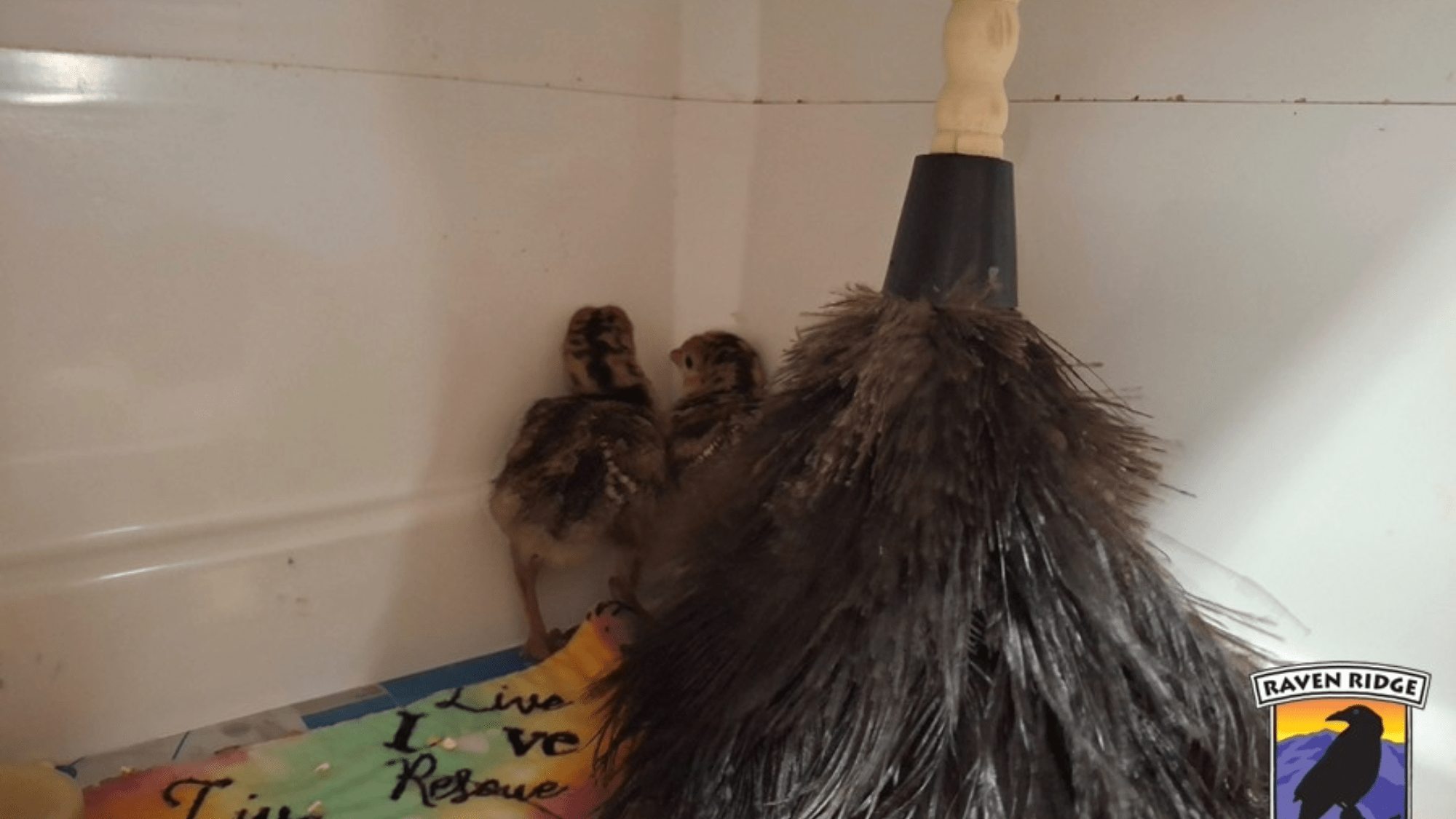
This particular incubator hosts a third presence. The staff put in a feather duster with the chickens, that they can hide under as if it were their mother. 

two turkey chicks in a box
The chicks were found after one of their siblings and mother were likely hit by a car. Image: Raven Ridge Wildlife Center.

“The incubator is nice and warm, which would be just like mom,” Tracie Young, director of the Raven Ridge Wildlife Center, tells Popular Science. “And to cut down their stress, the feather duster is hanging from the inside of the incubator. It’s more natural, more something that they’re going to recognize, and they’re able to hide under it. So it’s just like mom. It’s safety, it’s warmth. And that really does help with these animals in rehabilitation.” 

Interestingly, Young and her colleagues also put pictures of adult turkeys in the incubator so that, in the absence of a real one, the chicks can still see a sort of adult role model. It’s not unusual for wildlife centers to resort to off-beat solutions for orphaned babies in rehabilitation. In 2024, wildlife care staff wore fox masks while caring for a juvenile red fox so that it doesn’t get used to humans. 

Young says that when dealing with one or just a few ducklings at Raven Ridge, they give them adult duck decoys. As for turkey chicks, “a turkey decoy is not going to fit into an incubator,” she explains, so that’s where the pictures come in.

This isn’t the first time the team has reached for the feather duster in such a scenario, nor will it be the last. In fact, the wildlife center also just received another baby bird—its first ever ruffed grouse (Bonasa umbellus). That means they’ll have to procure another feather duster. 

The baby chicks will likely be at the wildlife center until closer to the fall, when they’ll be returned to the wild. Once the birds become bigger and able to keep themselves warm, the team will transfer them into a larger cage and then outside. For now, however, the featherduster is helping. 

“They were running out from underneath their duster, running back underneath the feather duster,” she says, “but we noticed, too, that after putting the feather duster in they were a lot calmer, they were eating more, and their weight is going up.” 

The post Orphaned baby turkeys think a feather duster is their mom appeared first on Popular Science.
  • ✇Popular Science
  • Watch adorable animals compete for best chewer in 2026 Crunch-a-Thon Margherita Bassi
    Social media is widely considered to be bad for one’s mental health, at least anecdotally. However, it can have some positive impacts, such as videos of animals chewing food very loudly. What could possibly be better than a closeup of an animal’s snout as it crunches on a carrot?  This week, zoos around the United States have been using social media to highlight one particularly cute muncher—tree kangaroos. Ahead of World Tree Kangaroo Day on May 21, conservation organization AZA SAFE (Saving
     

Watch adorable animals compete for best chewer in 2026 Crunch-a-Thon

16 May 2026 at 14:01

Social media is widely considered to be bad for one’s mental health, at least anecdotally. However, it can have some positive impacts, such as videos of animals chewing food very loudly. What could possibly be better than a closeup of an animal’s snout as it crunches on a carrot? 

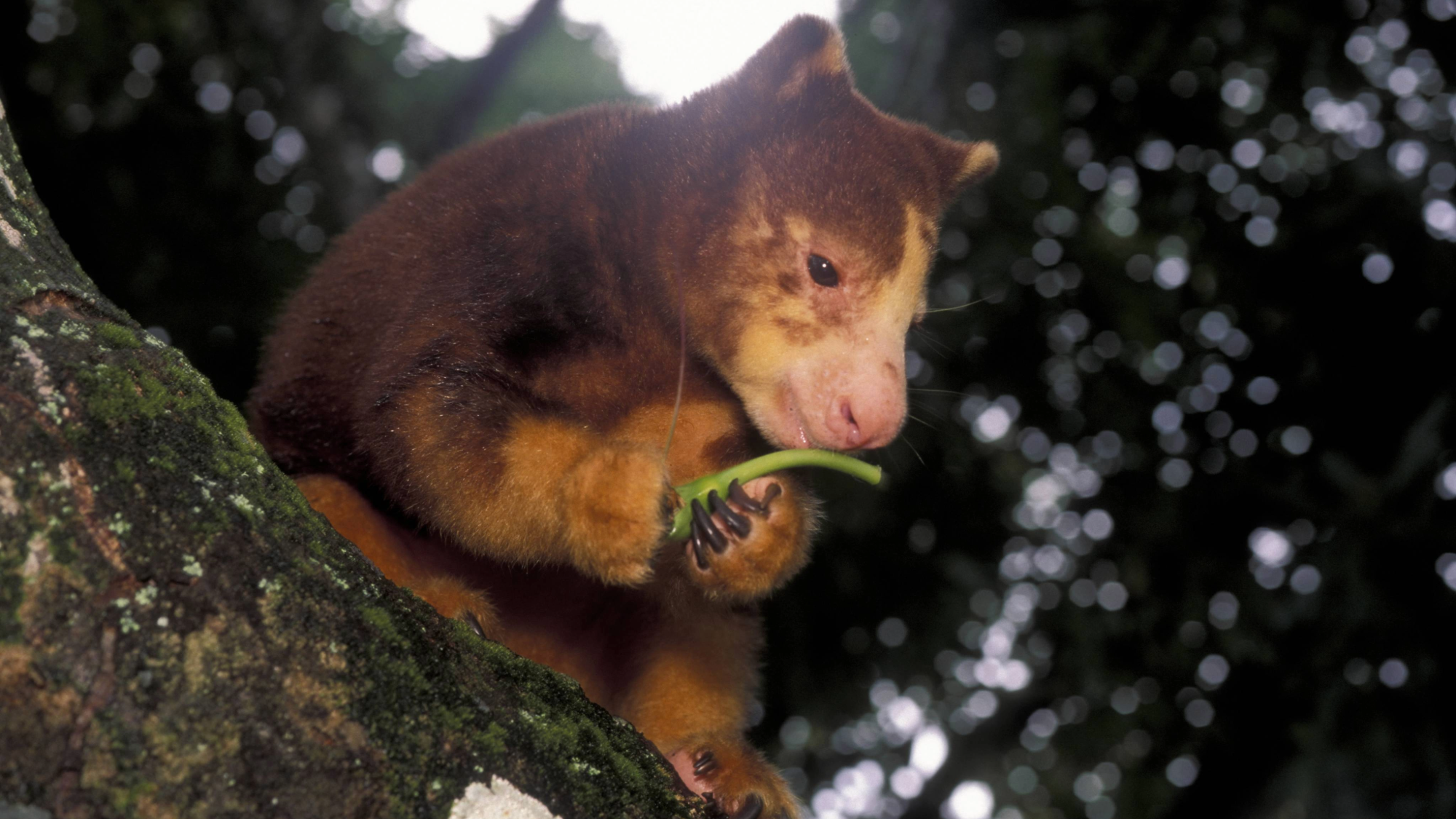
This week, zoos around the United States have been using social media to highlight one particularly cute muncher—tree kangaroos. Ahead of World Tree Kangaroo Day on May 21, conservation organization AZA SAFE (Saving Animals From Extinction): Tree Kangaroo of Papua New Guinea is inviting organizations working with tree kangaroos to compete in this year’s International Tree Kangaroo Crunch-a-Thon. 

In the aptly-named competition, participants posted videos on Instagram and/or Facebook of their tree kangaroo eating something. The competition categories are Most Likes, Most Views, and Judges’ Choice, and winners will be announced on May 17, Australian Eastern Standard Time. 

The organizers even provide crunchy food recommendations: bell peppers, celery, romaine hearts, snap peas, green beans, cucumbers, and zucchini—with the caveat that the last two vegetables might not have the best crunch. 

“In partnership with the AZA Tree Kangaroo SAFE program, we’re participating in the Tree Roo Crunch-a-Thon to help shine a spotlight on this endangered species,” reads a social media post by Roger Williams Park Zoo & Carousel Village featuring three munching, pink-nosed brown and white tree kangaroo. “Our Zoo is home to three Matschie’s tree kangaroos – a species of tree kangaroo native to the cloud forests of Papua New Guinea.”

Tree kangaroos are 14 species in the Dendrolagus genus, the sole arboreal kangaroo group. They are herbivorous marsupials with bushy tails, and usually have long arms and padded back feet. Tree kangaroos live in parts of Australia, Indonesia, and New Guinea’s rainforests. The Golden-mantled tree kangaroo (Dendrolagus pulcherrimus) is among the world’s most endangered mammals and only lives in a small area of Papua New Guinea. 

In the words of the Crunch-a-Thon organizers, “let the crunching begin!” 

The post Watch adorable animals compete for best chewer in 2026 Crunch-a-Thon appeared first on Popular Science.
  • ✇Popular Science
  • Hidden Nazi symbols discovered in famous German artist’s painting Margherita Bassi
    They say you shouldn’t judge a book by its cover, but what about judging a painting by the way it looks? While that sounds much more intuitive, a technique called X-ray fluorescence spectroscopy reveals that what’s on the surface might not be the whole story.  At a first glance, the painting that producer and filmmaker Thomas Schuhbauer found in his parents’ house in Germany seemed innocent enough. It was painted by Erich Mercker (1891–1973), a successful artist from Munich, and it was a wedd
     

Hidden Nazi symbols discovered in famous German artist’s painting

11 June 2026 at 18:45

They say you shouldn’t judge a book by its cover, but what about judging a painting by the way it looks? While that sounds much more intuitive, a technique called X-ray fluorescence spectroscopy reveals that what’s on the surface might not be the whole story. 

At a first glance, the painting that producer and filmmaker Thomas Schuhbauer found in his parents’ house in Germany seemed innocent enough. It was painted by Erich Mercker (1891–1973), a successful artist from Munich, and it was a wedding present gifted to Schuhbauer’s parents in 1966. 

It showcases a motif that is found in some of his other works, too: a view of Munich’s the Feldherrnhalle (Field Marshals’ Hall) monument. The landmark is an arched hall built in the early 1840s in honor of the Bavarian army. However, in 1933, a smaller monument called the Mahnmal der Bewegung was added inside Felderrnhalle. The monument paid tribute to the rebels who died during the failed Nazi coup d’état in November of 1923. 

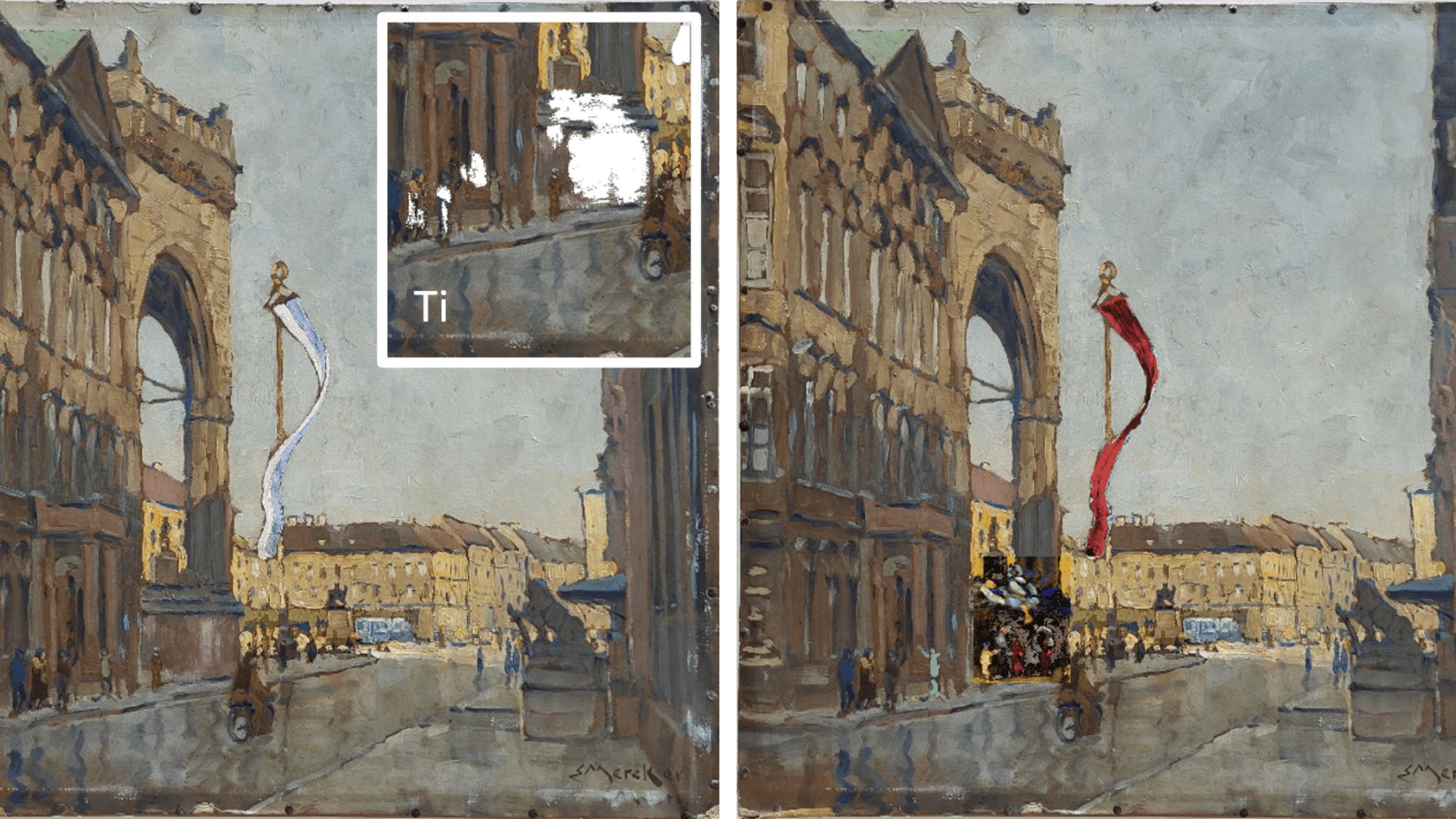
Nonetheless, the painting doesn’t have any blatant Nazi references. The flag waving at the side of the monument is the Bavarian one and not the more familiar Nazi flag. One feature, however, suggests that not all is as it seems. Beneath the closest arch to the viewer is a statue on the pedestal—the top of the Mahnmal der Bewegung. Given that the Mahnmal der Bewegung was destroyed right after World War II, this indicates that Mercker painted it during the Nazi era. 

If you look closer at the Bavarian flag’s white and blue colors, you can also find traces of reddish color. Indeed it was the traces of red that made Schuhbauer think there was more than meets the eye, according to Ioanna Mantouvalou, a physicist at the Helmholtz-Zentrum Berlin research center and first author of a study on the painting recently published in Nature Journal Heritage Science..

Schuhbauer thus turned to the research center, where Mantouvalou and a colleague used X-ray fluorescence spectroscopy (XRF). It consists of a non-destructive technique that, simply put, reveals the presence of elements in things, and comes in handy when researchers want to study hidden layers. 

“I investigated the painting together with Yannick Wagener, a masters student at the TU Berlin, and we found that large areas of the original painting had been hidden,” Mantouvalou tells Popular Science

Namely, the Bavarian flag hides a red Nazi flag, and someone also covered up soldiers, Nazi salutes by passersby, and wreaths on the Mahnmal der Bewegung monument. 

At least one version of this painting in its original Nazi version exists, but did Mercker himself modify the Schuhbauer’s copy? The materials in the painting suggest that it could have been altered. The oil paints used to cover these elements had notable quantities of titanium white, a pigment that isn’t in any other part of the painting. However, a tube of oil paint labelled “Titanium White 10103 Schmincke” came to light among the artist’s paint tubes. What’s more, the back of the painting shows a number code which was deciphered in the project to reveal the year of production—1934. 

Left: The painting depicts a corner of Munich’s Odeonsplatz, with the Bavarian flag flying over the square. X-ray fluorescence analysis shows where areas have been overpainted with titanium white. Right: False-colour representation of the reconstructed painting featuring the memorial and the Nazi flag. Image: © npj Heritage Science (2026)

Mantouvalou explains that the paper presents, “the first definite proof that a painting by Erich Mercker was overpainted in order to hide Nazi symbols. The person who conducted the overpainting probably did it with great haste, as a monument, which was destroyed right after the end of the war, is still visible. We cannot prove unambiguously that Erich Mercker himself did it, but all findings point to this theory.”

After World War II, Mercker also created versions of the same perspective that were free of Nazi symbols. The Nazi-versions were titled “Die Stätte des 9. November” (The Site of November 9), while the post-war versions were titled “Feldherrnhalle” (Field Marshals’ Hall), or “München am Odeonsplatz” (Munich at Odeonsplatz, the square where Feldherrnhalle hall is), among others.  

According to the researchers, a significant number of artists that collaborated with the Nazis largely avoided backlash for decades. Once the war had ended, many German artists, including Mercker, carried on with business as usual. 

“From a purely monetary point of view, it makes sense to overpaint symbols in an oil painting which are not acceptable due to a change in political systems. The fact implies that moral considerations were not important enough to destroy the painting or completely redo the scene,” says Mantouvalou. “This does shed light on the way people come to terms with history and their personal involvement.” 

The post Hidden Nazi symbols discovered in famous German artist’s painting appeared first on Popular Science.
  • ✇Popular Science
  • Sturgeon sex creates thundering noise in New York Margherita Bassi
    Something strange is happening in the brackish waters of New York’s Hudson River. It sounds like a sort of low thundering, and while anything is possible in a lively body of water so closely associated with the Big Apple, it’s not the Teenage Mutant Ninja Turtles training with their rat sensei Splinter. Instead, scientists say that the mysterious sound is made by the reproductive antics of an endangered fish called Atlantic sturgeon (Acipenser oxyrinchus). Writing in a recent Endangered Speci
     

Sturgeon sex creates thundering noise in New York

8 June 2026 at 14:12

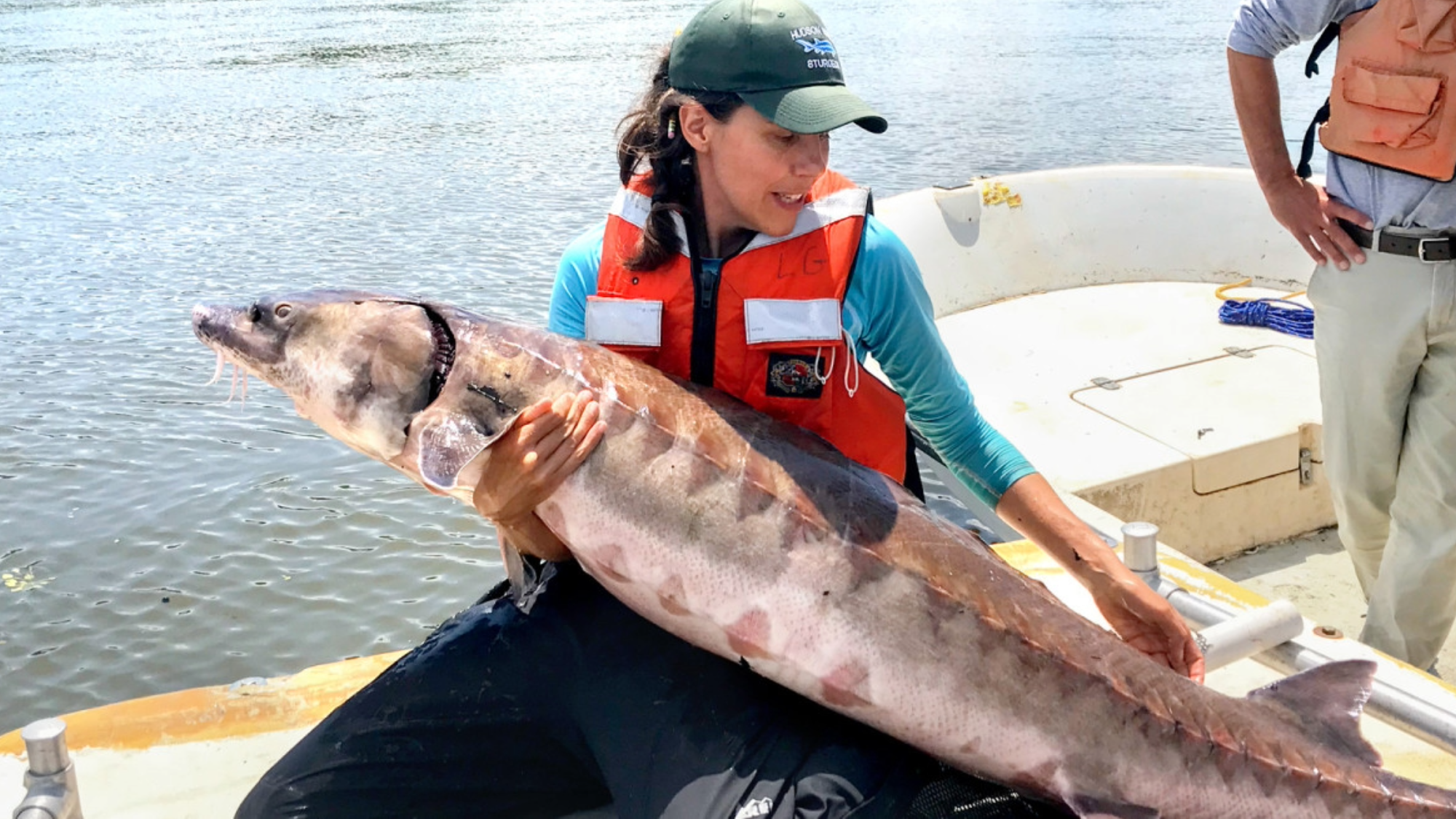
Something strange is happening in the brackish waters of New York’s Hudson River. It sounds like a sort of low thundering, and while anything is possible in a lively body of water so closely associated with the Big Apple, it’s not the Teenage Mutant Ninja Turtles training with their rat sensei Splinter. Instead, scientists say that the mysterious sound is made by the reproductive antics of an endangered fish called Atlantic sturgeon (Acipenser oxyrinchus).

Writing in a recent Endangered Species Research paper, the team is the first to verify the Atlantic sturgeon’s thundering. The noise is probably caused by males thrashing—and their swim bladders’ resonance—as they fertilize eggs, according to researchers. 

“It’s almost that you feel it more than you hear it,” Maija Niemistö, a researcher from the New York State Water Resources Institute and co-author of the study, said in a press release. “You can hear these chirps and squirts and bubbles underwater, but this is a different experience entirely. These are ancient fish, and the thunder – it’s almost like you’re brought back in time, because they’ve been making this sound, communicating with each other, for millions of years. It’s awe-inspiring.”

They are also classified as Endangered. In the spring, these giants leave the ocean to swim up the Hudson River to spawn. For sturgeon, this reproductive behavior involves males and females releasing their necessary parts into the water. In other words, the egg doesn’t fertilize inside of the female fish. 

The team eavesdropped on the crucial life cycle process with passive acoustic monitoring. They recorded sound within the waters of the Hudson River with underwater microphones for long periods of time. Though this noninvasive strategy is a common approach in marine and terrestrial research, it hasn’t been used as much in rivers and lakes with more freshwater. 

Now, the team’s discovery of sturgeon thundering provides the New York State Department of Environmental Conservation (NYSDEC) with an additional way to help monitor and better understand  Atlantic sturgeon behavior. As we frequently report, the more researchers know about a species, the more equipped they are to protect it. 

And the Atlantic surgeon certainly needs it. In the 19th and 20th century, overfishing greatly decreased their populations. Unfortunately, almost 30 years of protection hasn’t helped the species make a comeback. Part of the problem is that female Atlantic sturgeons can wait up to two decades before their first spawn.

“That’s why they’re so susceptible to overfishing,” added Amanda Higgs, also co-author of the study and a fisheries biologist with NYSDEC Hudson River Fisheries Unit. 

Eggs could represent 20 percent of a female’s substantial weight and fisheries were interested in their caviar. “A female was a lucrative catch,” Higgs added, “and so they got wiped out relatively quickly because they don’t have the ability to reproduce and replace themselves quickly.” 

While experts estimate that 6,000 Atlantic sturgeon spawned in its waters before the late 1800s, today less than 700 spawn here. Nonetheless, the Hudson River is home to the species’ largest population. 

Moving forward, the team can listen for previously unknown spawning grounds, enabling the state to deal out protections for these endangered river giants. 

The post Sturgeon sex creates thundering noise in New York appeared first on Popular Science.

  • ✇Popular Science
  • Neanderthal ‘dentists’ treated cavities 59,000 years ago Margherita Bassi
    Neanderthals (Homo neanderthalensis) were once considered to have been extremely primitive and unsophisticated compared to us humans (Homo sapiens). However, continued research into our long-lost cousins has revealed that these extinct hominids were not quite as archaic as they seemed to early anthropologists.  While archeologists have found that Neanderthals pulled out food from their teeth with toothpicks and may have even used medicinal plants as antibiotics, researchers still aren’t sure
     

Neanderthal ‘dentists’ treated cavities 59,000 years ago

13 May 2026 at 18:00

Neanderthals (Homo neanderthalensis) were once considered to have been extremely primitive and unsophisticated compared to us humans (Homo sapiens). However, continued research into our long-lost cousins has revealed that these extinct hominids were not quite as archaic as they seemed to early anthropologists. 

While archeologists have found that Neanderthals pulled out food from their teeth with toothpicks and may have even used medicinal plants as antibiotics, researchers still aren’t sure about the extent of their medical care abilities. Now, new research published in the journal PLOS One indicates that they were capable of complex dental interventions, which adds a series of cognitive and physical updates to the Neanderthal story. 

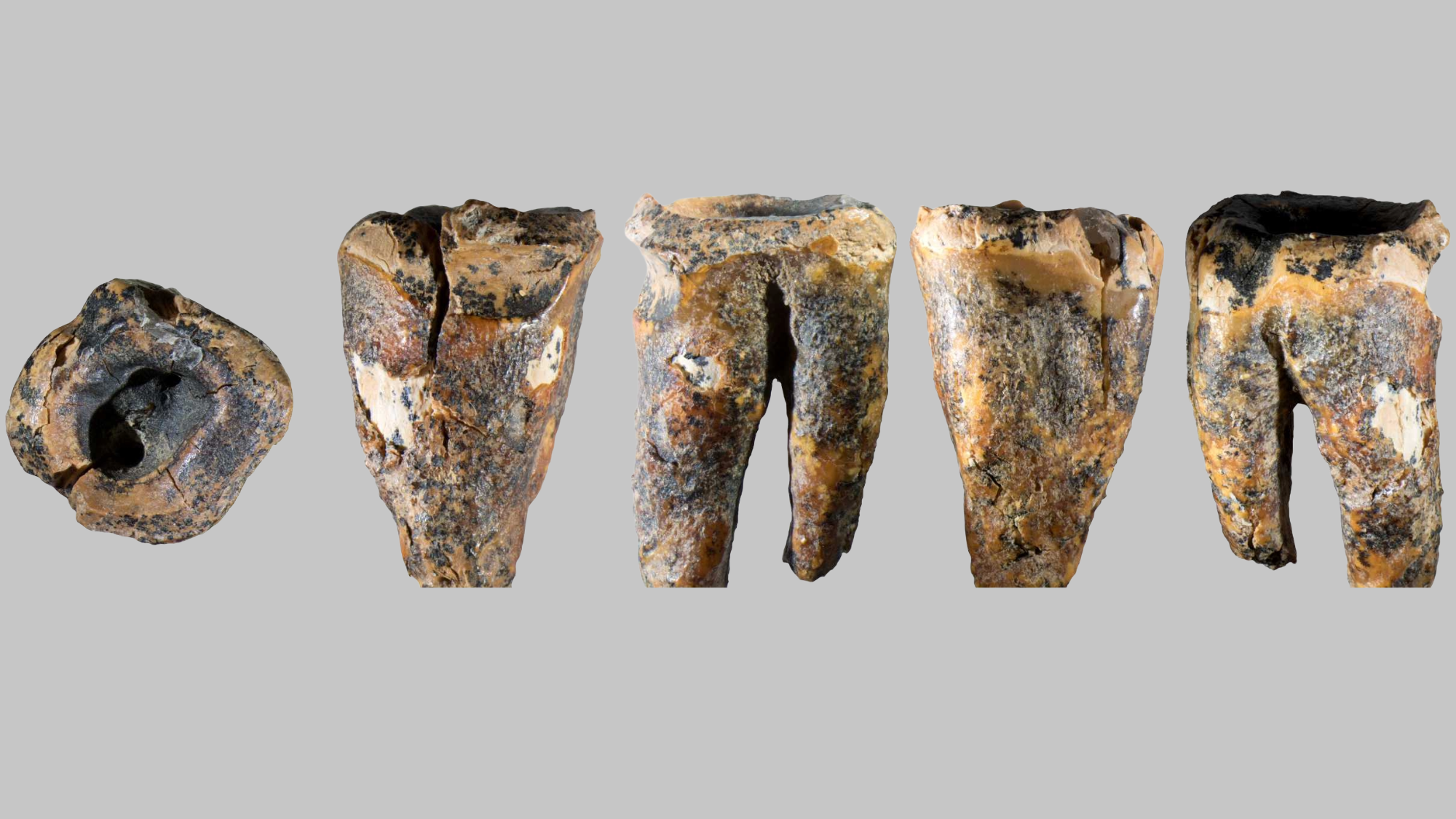
A team digging in Chagyrskaya Cave in southern Russia’s Altai region found a single Neanderthal molar that is approximately 59,000-years-old. The tooth features toothpick grooves along its sides, and a deep hole in its center that reaches into the pulp cavity. Tooth pulp is the jelly-like material that holds blood vessels, nerves, and connective tissue. 

Using three modern human teeth, the team showed that it’s possible to make a hole of the same shape and same patterns of microscopic grooves by drilling with a stone point similar to tools that were previously discovered in Chagyrskaya Cave. Andrey Krivoshapkin, a co-author of the study and a researcher at the Institute of Archaeology and Ethnography at the Siberian branch of the Russian Academy of Sciences, tells Popular Science that the team eliminated all other interpretations.

For example, “natural wear from chewing could expose a pulp chamber over time, but it would not widen the chamber or create a deep, irregular concavity with smooth, rounded edges. Dental trauma, such as a fracture, would leave sharp, irregular margins and crackings, not the polished, rounded contours we see,” he explains. 

They also ruled out taphonomic, geological, and chemical processes. “So while we always remain open to new interpretations, the evidence overwhelmingly supports deliberate human intervention,” he says.

Related Neanderthal Stories

Krivoshapkin and his colleagues also identified ante-mortem (before death) wear on the concavity walls and edges, showing that after the hole was made, the tooth continued to be used. In other words, the Neanderthal continued to chew and process materials with this tooth. According to Krivoshapkin, if the drilling had happened after the individual had died, the edges of the hole would be sharp and fresh and not polished in the slightest. 

“So the wear proves two things: first, the procedure was performed on a living person, and second, the intervention was successful enough that the tooth continued to function. That is what makes this a medical treatment rather than just a curious modification,” he explains.

The team also found changes in dentin mineralization in the tooth that aligns with serious cavities. Ultimately, Krivoshapkin and his colleagues argue that the hole in the tooth represents a Neanderthal dental operation that dug out the infection. And yes, it would have been painful—they didn’t have laughing gas 59,000 years ago. But as with dental surgery today, getting rid of the damaged part of the tooth lessens the pain from the infection. 

This intervention carries a whole set of implications about Neanderthal cognitive abilities.The tooth suggests that Neanderthals potentially could identify the source of pain, decide how to treat it, use the necessary manual dexterity to execute the operation, and withstand the intervention’s pain to diminish future pain. It represents the first time such behavior has been shown in non Homo sapiens, and it predates the earliest-known human example by over 40,000 years. 

This abstract causal reasoning in Neanderthals “goes far beyond the instinctive self‑medication seen in other primates,” Krivoshapkin explains. “Along with other recent discoveries this finding challenges the old stereotype of Neanderthals as cognitively inferior to us, showing that they were not failed humans but successful, innovative people in their own right. And on a deeply human level, it reminds us that the impulse to treat disease and relieve suffering is not uniquely modern, it is ancient and part of our shared hominin heritage.”

The post Neanderthal ‘dentists’ treated cavities 59,000 years ago appeared first on Popular Science.

  • ✇Popular Science
  • Pregnant gorillas undergo ultrasounds and the results might look familiar Margherita Bassi
    When Sachita Shah sent her cardiologist brother an ultrasound of her patient’s heart, he was very confused. The heart was huge, and the left ventricle incredibly muscular. His confusion was warranted, as the ultrasound was not of a human heart. It belonged to another primate—a gorilla. Shah, emergency physician and VP of Global Health at medical equipment manufacturer Butterfly Network, tells Popular Science that if she had shown an ultrasound of a gorilla fetus to a radiologist, they would have
     

Pregnant gorillas undergo ultrasounds and the results might look familiar

26 May 2026 at 18:30

When Sachita Shah sent her cardiologist brother an ultrasound of her patient’s heart, he was very confused. The heart was huge, and the left ventricle incredibly muscular. His confusion was warranted, as the ultrasound was not of a human heart. It belonged to another primate—a gorilla. Shah, emergency physician and VP of Global Health at medical equipment manufacturer Butterfly Network, tells Popular Science that if she had shown an ultrasound of a gorilla fetus to a radiologist, they would have assumed it was a human baby. 

Shah is on the gorilla care team currently looking after Jamani and Olympia, two western lowland gorillas (Gorilla gorilla gorilla) mothers at Woodland Park Zoo in Seattle, Washington. Jamani gave birth on Monday May 18, and Olympia is expected to deliver her new baby imminently. Shah and her colleagues’s work involves conducting ultrasounds of Jamani and Olympia’s baby bump—though now probably just Olympia’s—to keep an eye on the baby’s growth and position. 

“We got a really pretty baby face,” Shah says, speaking of the ultrasounds. “We could see nose and lips and fetal breathing movements and heartbeat and drinking fluid, opening mouth and swallowing. For all intents and purposes, it was very much the same [as a human baby].” 

The endangered gorilla mothers were trained to take part in the exams and procedures conducted by the gorilla care team, and they could choose whether to participate or not. The gorillas put their bellies against the edge of the enclosure for the scan (and received snacks), where there is a small opening through which the care team can reach through with the ultrasound probe. 

As such, the zoo needed a small and portable imaging device. That’s where Butterfly Network and their all-in-one ultrasound probe came in. 

“When you think of an ultrasound, you might think of a big cart with lots of different probes—a different probe if you wanted to do a pregnancy scan, or a heart scan, or a pediatric scan might have a tiny probe,” Shah says. 

Instead, the Butterfly probe they use at Woodland Park Zoo is a handheld ultrasound that plugs into a smart phone. It is around as big as an electric shaver, and it functions with a number of different softwares for either veterinarian or human health use. Notably, an app allows the team to use it for different types of scans—from a pregnant gorilla to a child’s lungs—that would traditionally require distinct probes and machines. 

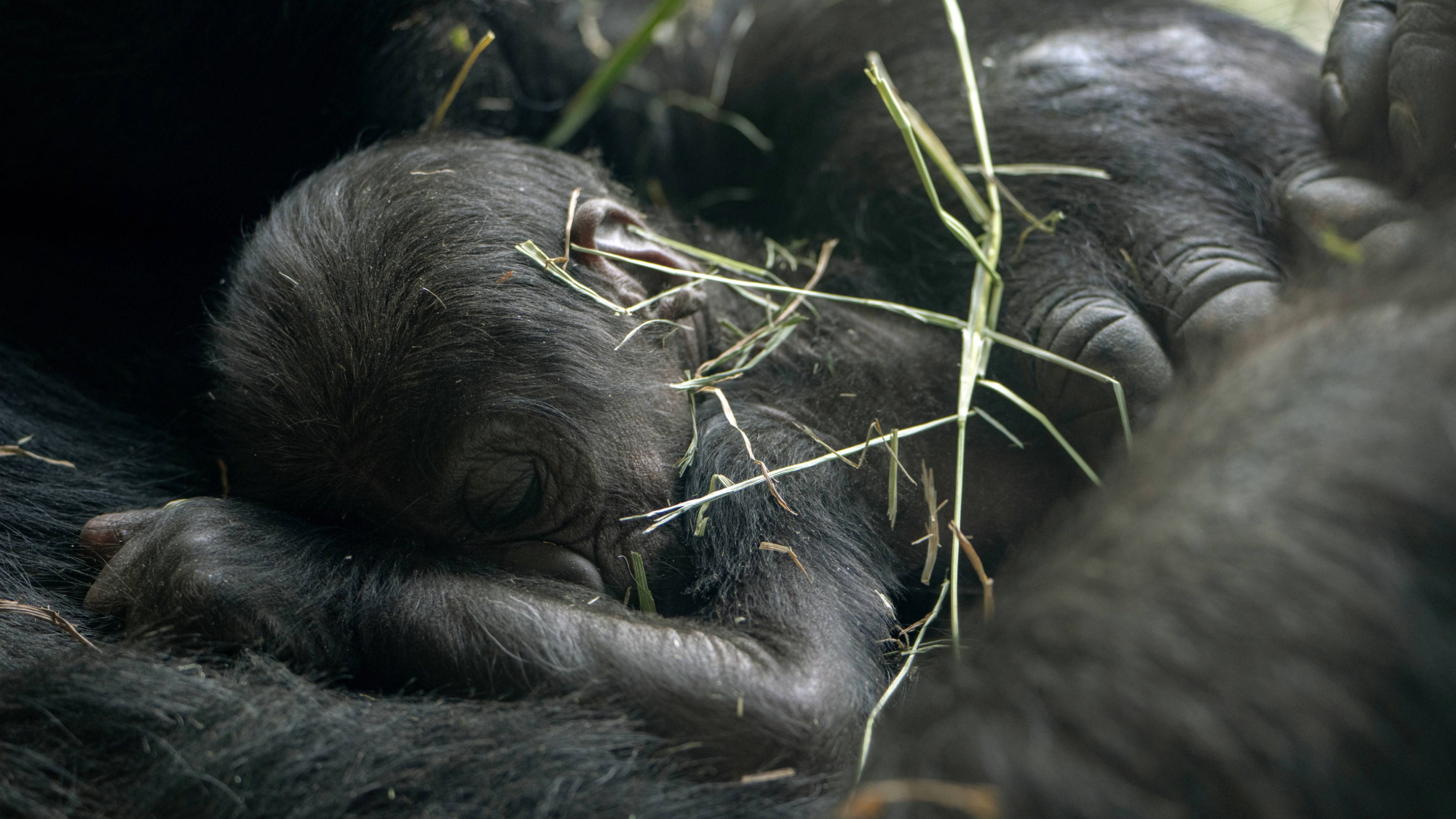
a sleeping baby gorilla
Jamani’s baby was born on May 18 at 5:50 a.m. Image: Jeremy Dwyer-Lindgren / Woodland Park Zoo.

Shah and her colleagues also used the Butterfly ultrasound device to scan the heart of Nadaya, the silverback gorilla father of both babies. In fact, the heart ultrasound Shah sent to her brother belonged to Nadaya.  They used human software for that scan, even though their vet software is optimized for fur. Fortunately, Nadaya’s chest isn’t very furry. 

Shah, who has gone through a pregnancy herself, was most moved by working with the gorilla mothers. 

“We could tell the baby’s head had dropped and we thought, ‘oh man, she must be so uncomfortable.’ And she was waddling and walking a little differently. I was like, ‘oh, I remember that, girl.’ It was just amazing to remember that we’re all connected in that way,” she says. 

Western lowland gorillas are critically endangered, so babies are always excellent news.

UPDATE May 27 8:19 a.m EDT

On Sunday, May 24, at 1:44 p.m. PDT, Olympia’s baby was delivered by an emergency C-section performed by a medical team who typically works on humans. This 5.4-pund boy is the western lowland gorilla’s second baby.

The post Pregnant gorillas undergo ultrasounds and the results might look familiar appeared first on Popular Science.

  • ✇Popular Science
  • Sir David Attenborough’s 100th birthday present is… a parasitic wasp Margherita Bassi
    Famed British naturalist and broadcaster Sir David Attenborough turns 100 years old on May 8, and a team of researchers has prepared a special present: an entire new genus of wasp named in his honor.  Meet Attenboroughnculus tau, a tiny parasitic wasp discovered in Chile. The specimen is 0.14 inches long and has a T-shaped marking on its abdomen that inspired the species name, “tau.” The insect was collected from Chile’s Valdivia Province in 1983, and it took over four decades for someone to
     

Sir David Attenborough’s 100th birthday present is… a parasitic wasp

7 May 2026 at 11:01

Famed British naturalist and broadcaster Sir David Attenborough turns 100 years old on May 8, and a team of researchers has prepared a special present: an entire new genus of wasp named in his honor. 

Meet Attenboroughnculus tau, a tiny parasitic wasp discovered in Chile. The specimen is 0.14 inches long and has a T-shaped marking on its abdomen that inspired the species name, “tau.” The insect was collected from Chile’s Valdivia Province in 1983, and it took over four decades for someone to officially recognize it as something new.  

a wasp
Attenboroughnculus tau is one of the over 50 species named in honor of the famed naturalist. Image: © Trustees of the Natural History Museum.

“We hope to inspire global scientists to take another look in their collections to see if there is something small that could contribute to our collective understanding and therefore the future of our natural world,” Jennifer Pullar, science communications manager at London’s Natural History Museum, says in a statement

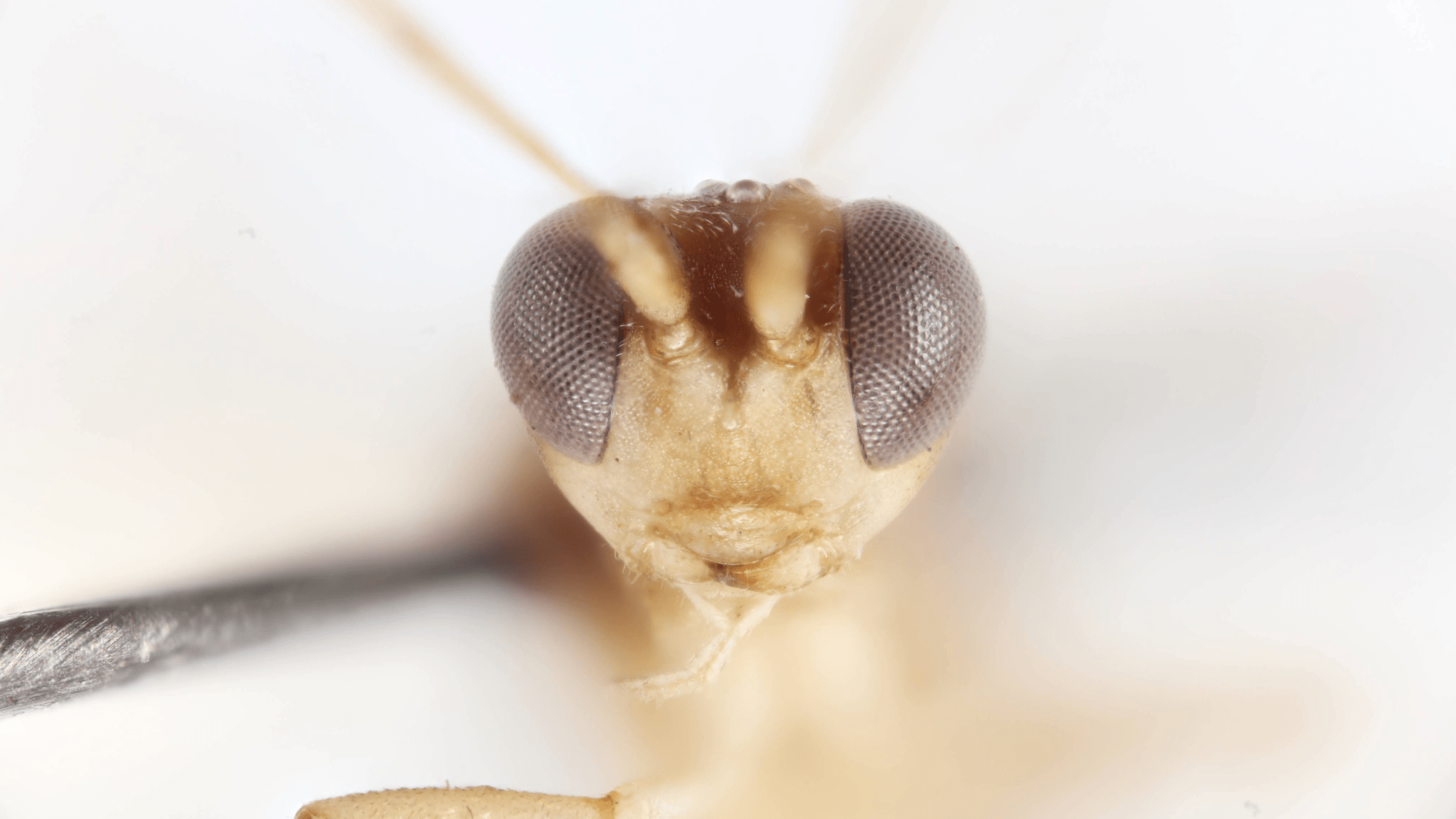
It was volunteer Augustijn De Ketelaere, a graduate student at Ghent University in Belgium, who noticed the insect’s unexpected traits while the team was examining the museum’s ichneumonid collections. Attenboroughnculus tau has a unique combination of anatomical features that make it different from already established genera: a strongly curved abdominal segment, toothlike structures on the ovipositor (which they use to lay eggs), and distinctive wing and leg morphology.

a close up view of a wasp
Attenboroughnculus tau is less than one inch long. Image: © Trustees of the Natural History Museum.

If you think Attenborough will be offended by the unsavory nature of the bug named in his honor, think again. Parasitoid wasps have appeared in his documentaries, such as the BBC nature documentary series The Trials of Life, in which he dubbed them the “bodysnatcher wasp.”

“David Attenborough has featured Chile’s diverse, extreme landscapes in several documentaries, emphasising the unique environmental challenges and ecological resilience of species within the country,” De Ketelaere, Pullar, and lead author Gavin Broad—principle curator of insects at the museum—write in a recent Journal of Natural History study. “He has used his work to reveal the intimate, unseen or overlooked within nature. This resonates in the discovery of this species in an unsorted drawer within the collections of the Natural History Museum, London.” 

This isn’t the first time Attenborough is honored by taxonomists. In fact, the man has over 50 species named after him, including the carnivorous plant Nepenthes attenboroughii

Happy Birthday Sir David Attenborough! 

The post Sir David Attenborough’s 100th birthday present is… a parasitic wasp appeared first on Popular Science.

❌
STEM and Knowledge