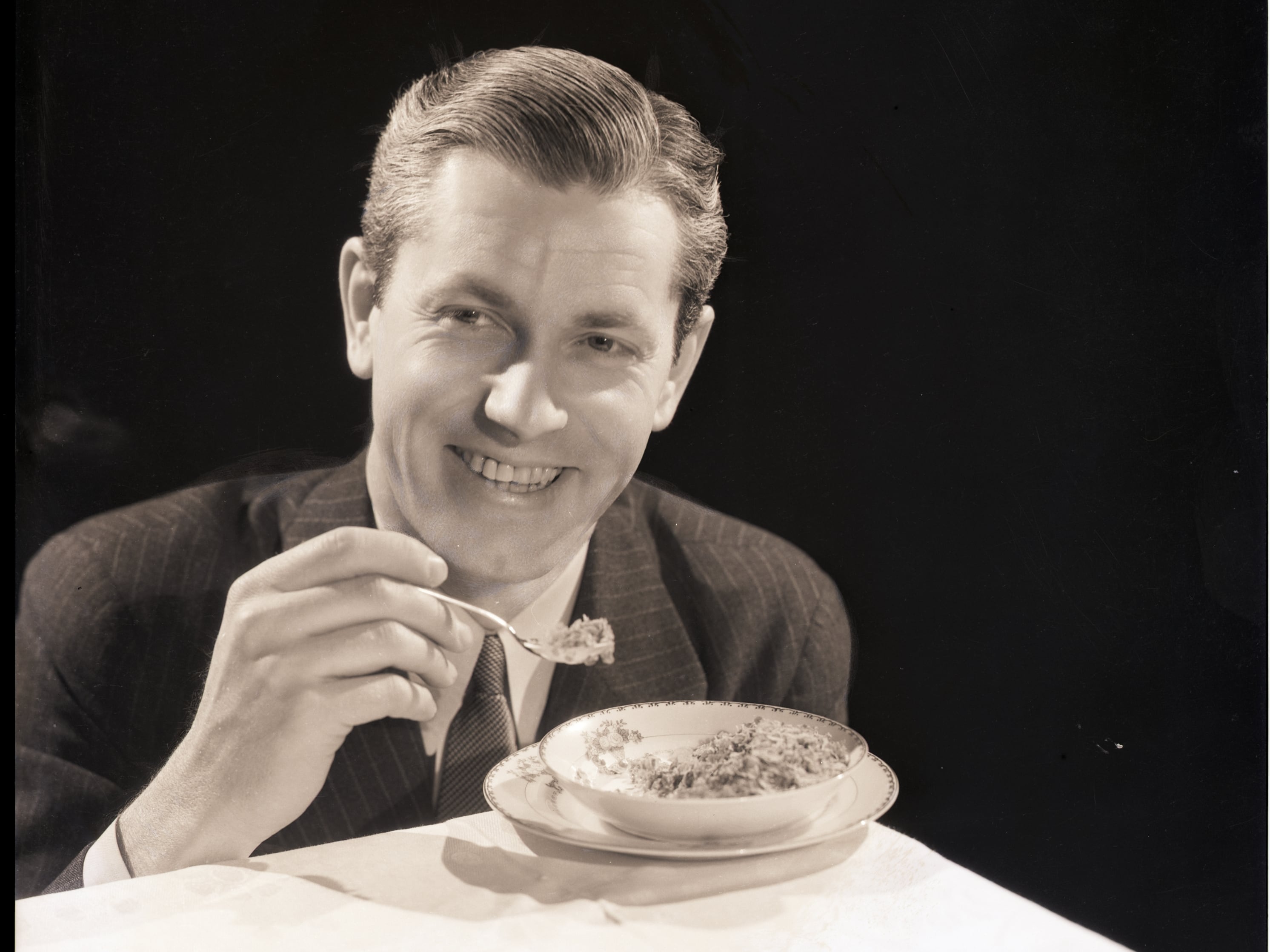
“Cereal Finally Manned Up.” That’s the slogan of Man Cereal, a cereal brand that not only contains creatine and extra protein—a gym bro’s dream — but also stands out for its packaging design that appeals to hypermasculinity by eschewing the colorful boxes that characterize most cereals on the market. Seguir leyendo
“Cereal Finally Manned Up.” That’s the slogan of Man Cereal, a cereal brand that not only contains creatine and extra protein—a gym bro’s dream — but also stands out for its packaging design that appeals to hypermasculinity by eschewing the colorful boxes that characterize most cereals on the market.
Almost exactly 6 years ago, as things started to shut down for Covid, I drew a cartoon about the challenges of planning in a time of uncertainty.
An executive holds up a coin and says, “We need to update our forecast. Heads, this will blow over soon. Tails, it’s the end of the world.”
At the time I shared a quote I’d heard that I found helpful: “The worst thing to do in a time of chaos is add to it.”
That of course hasn’t been the only moment of uncertainty in the last six years. Uncert
Almost exactly 6 years ago, as things started to shut down for Covid, I drew a cartoon about the challenges of planning in a time of uncertainty.
An executive holds up a coin and says, “We need to update our forecast. Heads, this will blow over soon. Tails, it’s the end of the world.”
At the time I shared a quote I’d heard that I found helpful: “The worst thing to do in a time of chaos is add to it.”
That of course hasn’t been the only moment of uncertainty in the last six years. Uncertainty makes it particularly hard to think about long-range planning.
Jim Hardison, co-founder of Character, shared some insights this week about brands in a time of uncertainty:
“For marketers, this volatility creates a specific problem: uncertainty undermines control. And control has always been central to how brands tell their stories.
“Traditional marketing assumes a relatively stable environment. Teams develop strategies months in advance, campaigns unfold in carefully sequenced phases, and brands guide audiences toward a narrative they have deliberately constructed. But when conditions change faster than plans can adapt, that narrative control begins to collapse. Strategies can be abandoned midstream. Messaging becomes reactive. Teams hesitate, waiting for clarity that never quite arrives.
“The result is often paralysis, or worse, generic behavior.”
Jim advises that brands take a cue from improvisational theater and learn to practice what he calls “disciplined adaptability.”
As he put it:
“Success depends less on executing a perfect plan and more on responding in character to changing circumstances.”
I like that framing. When things are uncertain is when we most need to “respond” instead of “react.”
Here are a few related cartoons I’ve drawn over the years:
Bait links. I hate them. I hate them so.very.much. I swear this morning I already saw 5 of them in my Facebook newsfeed. “See this cat? You won’t believe what happens next”. What? It cleans its butt? “See these 4 women on stage? You won’t believe what happens next”. What? They PERFORM on stage? “You’ll [...]
Bait links. I hate them. I hate them so.very.much. I swear this morning I already saw 5 of them in my Facebook newsfeed. “See this cat? You won’t believe what happens next”. What? It cleans its butt? “See these 4 women on stage? You won’t believe what happens next”. What? They PERFORM on stage? “You’ll [...]
I’d have liked to have seen more cartoons about yesterday’s Meet the Press interview, in which Kristin Welker pressed Trump for evidence of his claims and he reacted with the insult captured by Boris, Goris and Rapé, but it having occurred on a Sunday, a lot of cartoonists either decided to wait to make their […]
I’d have liked to have seen more cartoons about yesterday’s Meet the Press interview, in which Kristin Welker pressed Trump for evidence of his claims and he reacted with the insult captured by Boris, Goris and Rapé, but it having occurred on a Sunday, a lot of cartoonists either decided to wait to make their […]
Source: Earth’s Future
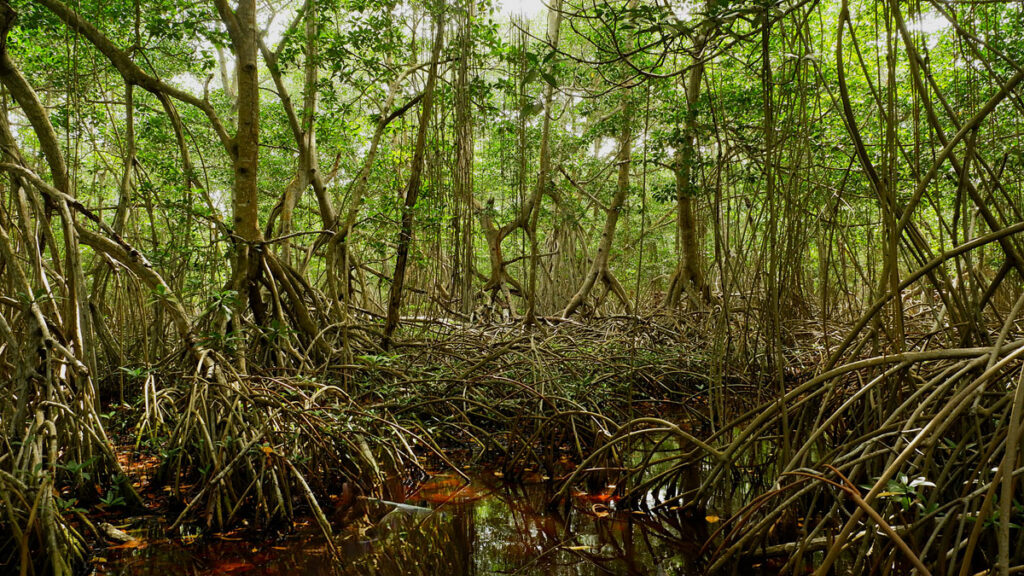
Mangrove forests straddle the edge of land and sea along some tropical and subtropical coastlines. These trees and shrubs have distinctive tangles of roots that trap sediment and produce organic matter, forming dense soils and efficiently storing carbon. Though mangroves cover only 1% of Earth’s surface, they store a whopping 15% of global ocean carbon in their trapped soils.
Their location along coastlines means mangroves are at the mercy of changing sea levels and
Mangrove forests straddle the edge of land and sea along some tropical and subtropical coastlines. These trees and shrubs have distinctive tangles of roots that trap sediment and produce organic matter, forming dense soils and efficiently storing carbon. Though mangroves cover only 1% of Earth’s surface, they store a whopping 15% of global ocean carbon in their trapped soils.
Their location along coastlines means mangroves are at the mercy of changing sea levels and sediment availability. Rising sea levels can drown mangroves or push them landward. At the same time, sediment supplies, belowground root growth, and organic matter accumulation can help build up mangrove soils, allowing forests to keep pace with sea level rise. So over time, will mangroves keep locking carbon into their soils, or will they start losing it?
Iwantoro et al. created a new model that examines the links between coastal processes to investigate vegetation growth and carbon accumulation in mangrove forests.
The researchers modeled a simplified tidal embayment to explore how different rates of sea level rise and sediment supplies would affect the mangroves. In these experiments, they found that carbon accumulation can increase at specific locations as waters rise because the increased water can lead to more mangrove growth—a result that matches existing data. However, when looking at landscape scales, they found sea level rise generally reduces total carbon sequestration through mangrove loss and soil erosion. The results showed that rising sea levels can alter mangroves from carbon storage sinks to carbon emitters.
The findings demonstrate that local trends in carbon sequestration may not be representative of larger-scale outcomes in mangrove forests. The study shows that understanding coastal landscapes as an interconnected system is crucial to understanding how mangroves can respond to climate and human-induced pressures, the researchers say. However, new assessments and approaches are needed to better understand future mangrove vulnerabilities. (Earth’s Future, https://doi.org/10.1029/2025EF006984, 2026)
Citation: Derouin, S. (2026), Mangroves may be losing their grip on carbon storage as sea levels rise, Eos, 107, https://doi.org/10.1029/2026EO260144. Published on 5 June 2026.
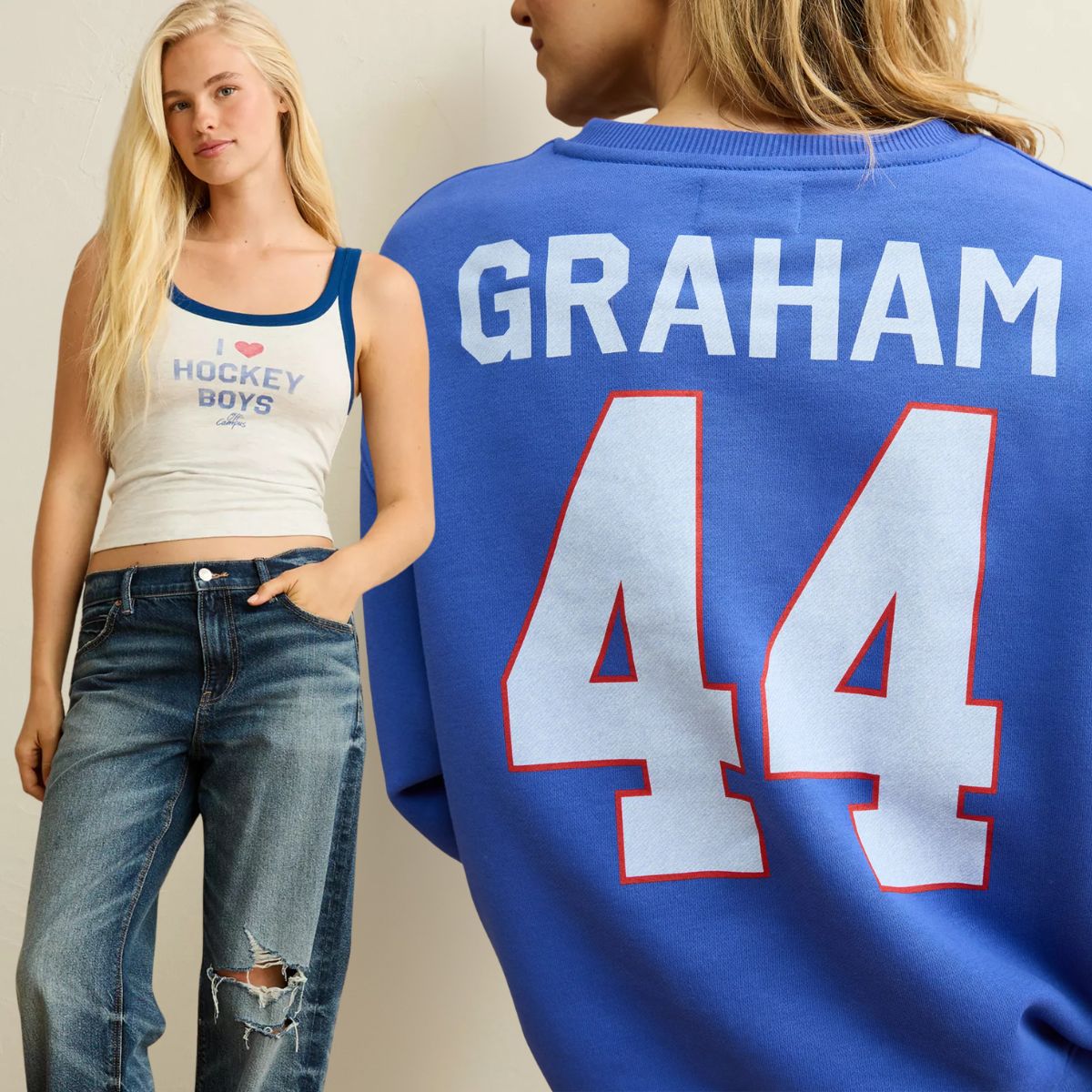
Don't know about you, but we can't stop thinking about Off Campus. Lucky for us all, American Eagle knows that all too well, and they've given us an official collab with the series.
The collection...
Don't know about you, but we can't stop thinking about Off Campus. Lucky for us all, American Eagle knows that all too well, and they've given us an official collab with the series.
The collection...
A traveller has been sentenced to six weeks in prison and fined HK$1,800 after attempting to smuggle cigarettes under his stockings while crossing the border from mainland China.
An incoming traveller is arrested on May 27, 2026, with packs of Illicit cigarettes wrapped around his lower legs. Photo: GovHK.
The 49-year-old man received his sentence at the Fanling Magistrates’ Courts on Thursday, one day after he was intercepted at the Lok Ma Chau Spur Line Control Point.
Customs officer
A traveller has been sentenced to six weeks in prison and fined HK$1,800 after attempting to smuggle cigarettes under his stockings while crossing the border from mainland China.
An incoming traveller is arrested on May 27, 2026, with packs of Illicit cigarettes wrapped around his lower legs. Photo: GovHK.
The 49-year-old man received his sentence at the Fanling Magistrates’ Courts on Thursday, one day after he was intercepted at the Lok Ma Chau Spur Line Control Point.
Customs officers seized 1,181 sticks of illicit cigarettes from the traveller, with an estimated market value of about HK$4,800, the Customs and Excise Department said in a statement on Thursday.
Around HK$3,900 in duties would have been charged on that amount of cigarettes, the statement added.
Customs also released a photo appearing to show cigarette packs wrapped around a man’s lower legs underneath his stockings.
The man was arrested on suspicion of contravening the Dutiable Commodities Ordinance and sentenced “for possessing duty-not-paid cigarettes and failing to declare them to Customs officers,” the statement said.
The department welcomed the ruling, saying: “The custodial sentence has imposed a considerable deterrent effect and reflects the seriousness of the offences.”

 Login
Login:max_bytes(150000):strip_icc():format(jpeg)/Tom-Brady-Marks-Start-of-Summer-with-Kids-in-New-Family-Photos-060426-3-4f7645999c1344e0be018d1524591012.jpg)