Normal view

Trump calls off threatened strikes, says deal with Iran is close

11 June 2026 at 22:55
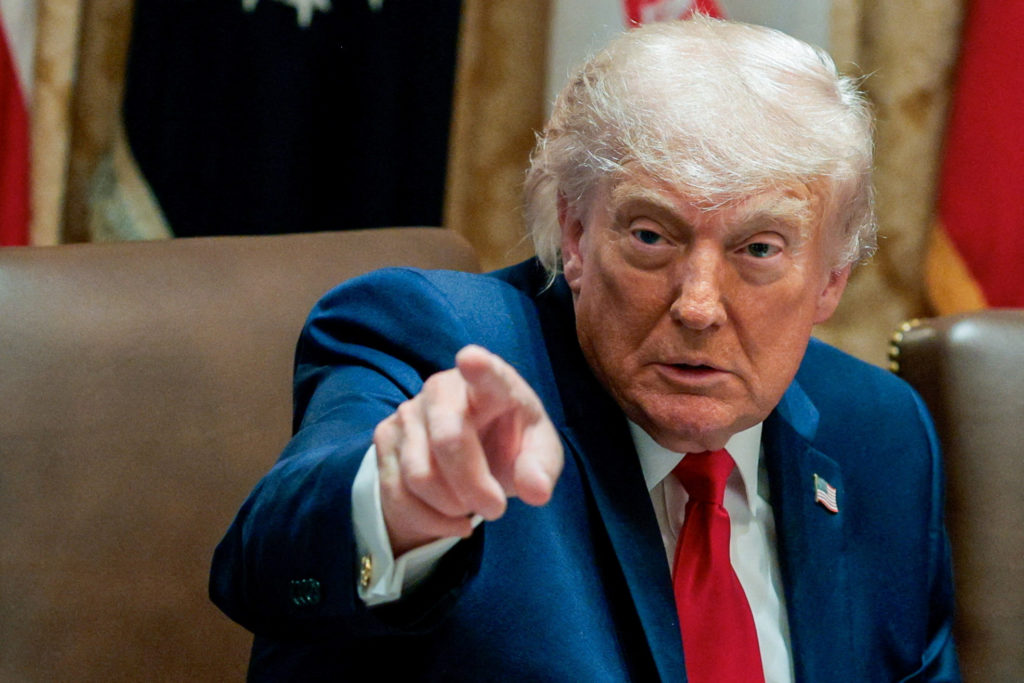
President Trump said he called off a third night of airstrikes on Iranian targets. In the Oval Office, he again said that a deal was close between the U.S. and Iran, and that it might be signed this weekend. Iran denied any movement toward a longer-term agreement. William Brangham reports.

Exchange of missile strikes between Israel and Iran threatens fragile ceasefire

8 June 2026 at 22:55
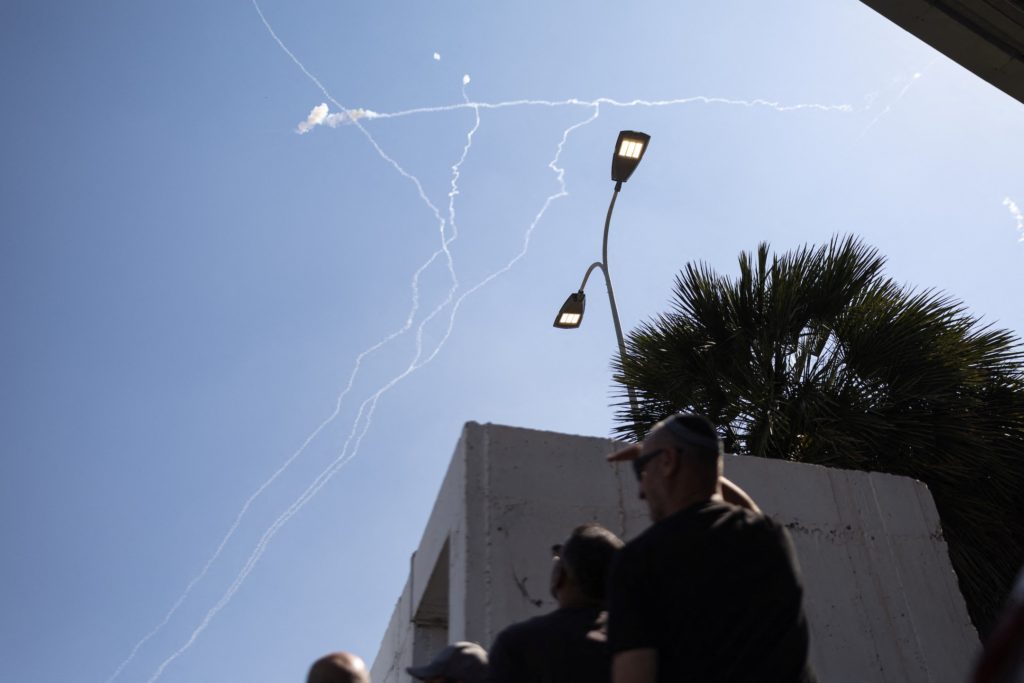
Israel and Iran traded long-range missile strikes for the first time since the ceasefire went into effect two months ago. Both countries appear to have agreed to stop their attacks, but not before sparking fears of a return to full combat in the region. Now, Trump and regional mediators are scrambling to salvage a deal to end the war with Iran. Ali Rogin reports.

  • ✇Collider
  • Only 3 Movies Realistically Capture the Horrors of War David Caballero
    The war genre in movies is quite renowned. Since the dawn of the medium, the war genre has had a large presence in cinema, first influenced by World War I and then being directly impacted and outright reshaped by World War II. Subsequent conflicts like the Korean War, the Vietnam War, and the 21st-century wars in Afghanistan and Iraq have also been hugely important for cinema. At their core, and barring some jingoistic depictions that glorify the military, war movies are usually statements on th
     

Only 3 Movies Realistically Capture the Horrors of War

2 June 2026 at 03:11

The war genre in movies is quite renowned. Since the dawn of the medium, the war genre has had a large presence in cinema, first influenced by World War I and then being directly impacted and outright reshaped by World War II. Subsequent conflicts like the Korean War, the Vietnam War, and the 21st-century wars in Afghanistan and Iraq have also been hugely important for cinema. At their core, and barring some jingoistic depictions that glorify the military, war movies are usually statements on the futility of armed conflict and the inherent destruction that it carries. Anti-war movies are their own subgenre, but overall, war cinema is all about why warfare ultimately only amounts to senseless destruction and the erosion of the soul.

Kuwait to get counter-drone tech from Trump-linked Anduril in US$1.98b deal after drone strike on airport

6 June 2026 at 05:26

Malay Mail

WASHINGTON, June 6 — The United States announced Friday its approval of a US$1.98 billion (RM7.98 billion) arms sale to Kuwait, one of the Gulf countries hit by Iranian strikes during the Middle East war.

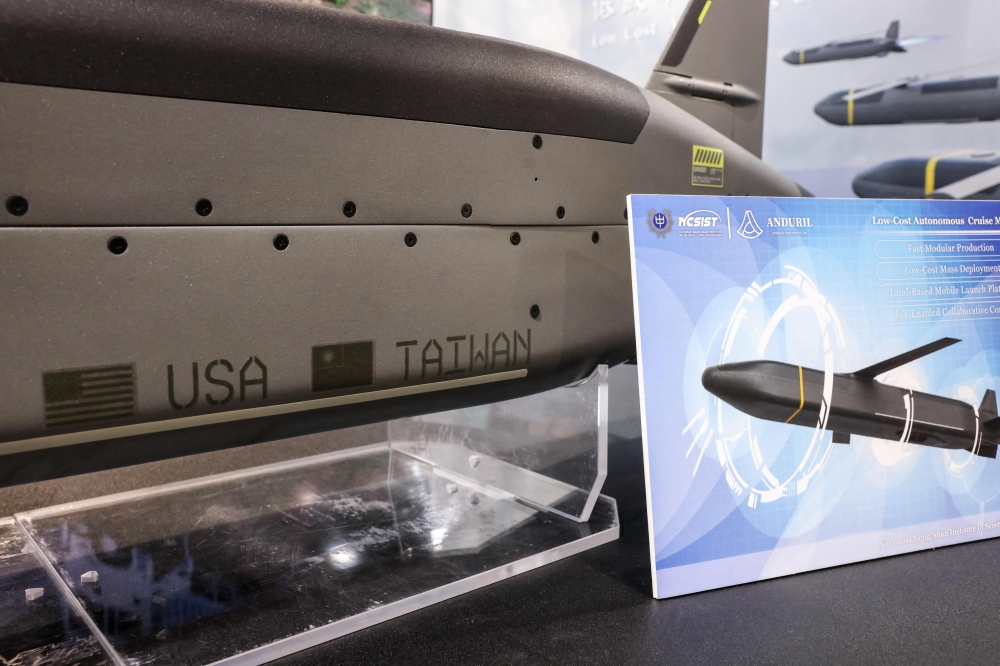
In a statement, the US State Department said it would allow purchases of counter-drone technology from defence company Anduril, which was founded by a supporter of President Donald Trump.

“This proposed sale will support the foreign policy and national security objectives of the United States by improving the security of a major non-Nato ally that has been an important force for political stability and economic progress in the Middle East,” the statement said.

Earlier this week, Kuwait officials “condemned Iranian aggression” when a drone strike on its international airport killed one person and injured 63 others.

Tehran denied involvement in the attack, saying it was “an error in the American Patriot systems,” referring to a US anti-missile battery.

The attacks came despite the April 8 ceasefire that paused the war sparked by the February 28 US-Israeli bombing of Iran, and has largely held despite sporadic exchanges of fire. — AFP

  • ✇Latin America Reports
  • US Secretary of War visits infamous Guantanamo Bay amid tensions with Cuba Raphael McMahon
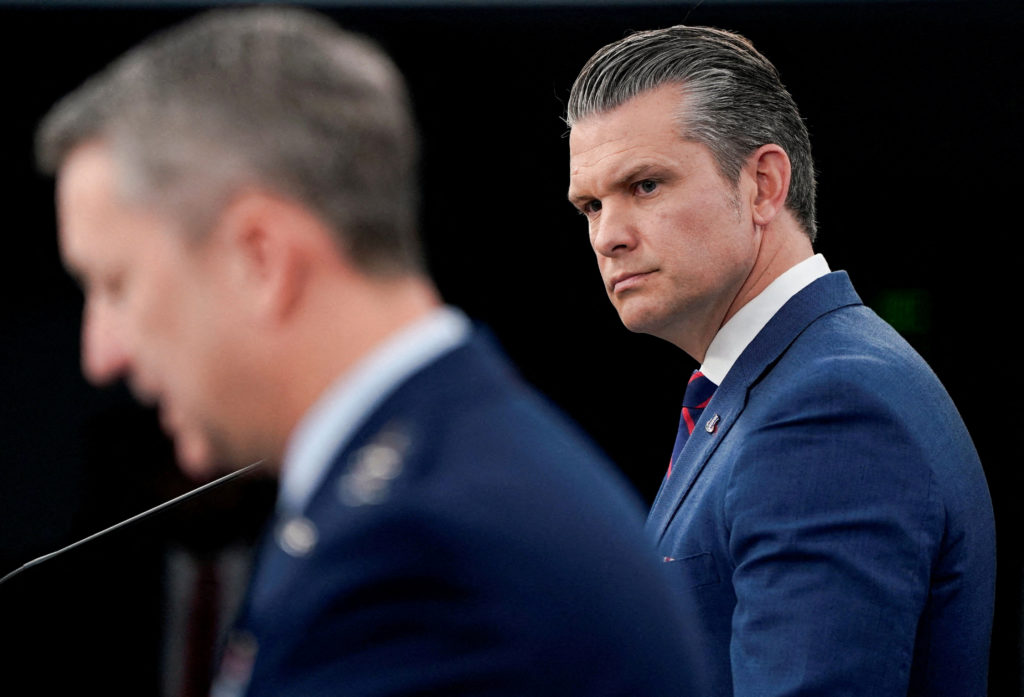
    United States Secretary of Defense Pete Hegseth visited the Guantanamo Bay military base, which is located on Cuba’s southeastern coast, yesterday.  Hegseth, who holds the secondary title of Secretary of War, met with U.S. troops stationed at the base and, while there, warned Cuba against acquiring military arms that could threaten either the naval facility or the U.S. mainland.  Hegseth’s visit to the territory, which Cuba has long demanded that Washington return, is likely to be provocat
     

US Secretary of War visits infamous Guantanamo Bay amid tensions with Cuba

11 June 2026 at 15:56

United States Secretary of Defense Pete Hegseth visited the Guantanamo Bay military base, which is located on Cuba’s southeastern coast, yesterday. 

Hegseth, who holds the secondary title of Secretary of War, met with U.S. troops stationed at the base and, while there, warned Cuba against acquiring military arms that could threaten either the naval facility or the U.S. mainland. 

Hegseth’s visit to the territory, which Cuba has long demanded that Washington return, is likely to be provocative, especially since the U.S. official called Cuba a national security threat as recently as May.  

Havana and Washington have been at loggerheads for months, as the White House has steadily ramped up political pressure on the island since its operation to capture former Venezuelan President and longtime Cuban ally Nicolás Maduro in January. 

Recently, Cuba’s political leadership in particular has been subject to increasingly punitive measures by the Trump administration. 

Last week, the U.S. announced sanctions against various prominent Cuban political figures, including Cuban President Miguel Díaz-Canel and the son and grandson of former President and revolutionary leader Raúl Castro.

U.S. authorities also indicted the aging Castro in late May because of his alleged role in the downing of two humanitarian planes in 1996. 

In response to the indictment and the sanctions, Cuba’s top diplomat in the United States – Ambassador Lianys Torres Rivera – accused the North American superpower of creating a “pretext” for a military intervention on the island.   

The Guantanamo Bay naval base, which was leased to the U.S. as part of a treaty between the two countries in 1903, would likely become a key battleground if the U.S. decided on such military intervention in Cuba. 

Hegseth’s warnings to the Cuban government about the dangers of attacking the base are likely a response to an Axios report last month which revealed that the Cuban military had acquired over 300 drones and was considering using them to attack Guantanamo, U.S. military vessels and potentially even Key West in Florida.

Jonathan Hansen, a historian and Senior Lecturer on Social Studies at Harvard University who has written extensively about Guantanamo Bay and its history, spoke to Latin America Reports about both the importance of Hegseth’s visit to the military base and the installation’s wider relevance in current and historic U.S.-Cuba relations. 

“Hegseth’s trip to the U.S. naval base was meant to keep Cuba guessing and on high alert … [and] see how useful the base might be – and how vulnerable it would be – should the U.S. and Cuba go to war,” Hansen argued. 

Guantanamo “would be very vulnerable, even given the degraded state of Cuba’s military these last thirty-odd years since the end of the Cold War. The base is surrounded by Cuban highground, and one can imagine Cuban drones having a field day attacking the base from the air,” the historian continued.

According to Hansen, this weakness, combined with the comparative greater proximity of U.S. Southern Command in Florida to important Cuban targets such as Havana, the high economic and logistical cost of supplying a base entirely on Cuban soil, and the absence of fighter jets on Guantanamo, makes the base strategically insignificant to the U.S. 

Instead, the Harvard Lecturer pointed out, the base draws importance from its symbolic value. 

The base is “useful symbolically to Trump and Rubio to remind Cuba that we’re not far away … Trump and Hegseth like Guantanamo because they like its reputation for toughness.”

Such a reputation stems largely from the base’s post-9/11 transformation into a detention centre for terror suspects. Prominent human rights organizations report that those suspects faced inhumane treatment and torture at the base. 

Hansen also expressed hope that the reassertion of Cuban sovereignty over Guantanamo would form a part of an eventual negotiated settlement between the U.S. and Cuba, who remain engaged in negotiations despite rising tensions. 

“One day, Guantanamo should be returned to Cuba. Justice and fairness and the principle of national sovereignty demand it. Cubans are as fractious a people as any. But as a good [Cuban] friend … said to me: “No matter how divided Cubans are, we agree about one thing: Guantanamo must return to Cuba.”

“That, along with an end to the embargo, would be the culmination of Cuban independence – one hundred and twenty-eight years overdue,” Hansen concluded.  

Featured Image: The Guantanamo Bay base.  

Image Credit: RUSMCUSA via Wikimedia Commons

License: Creative Commons Licenses

The post US Secretary of War visits infamous Guantanamo Bay amid tensions with Cuba appeared first on Latin America Reports.

With Hormuz shut and Saudi oil rerouted, Iran‑aligned Houthi threats to Red Sea shipping hit harder in today’s market

9 June 2026 at 13:00

Malay Mail

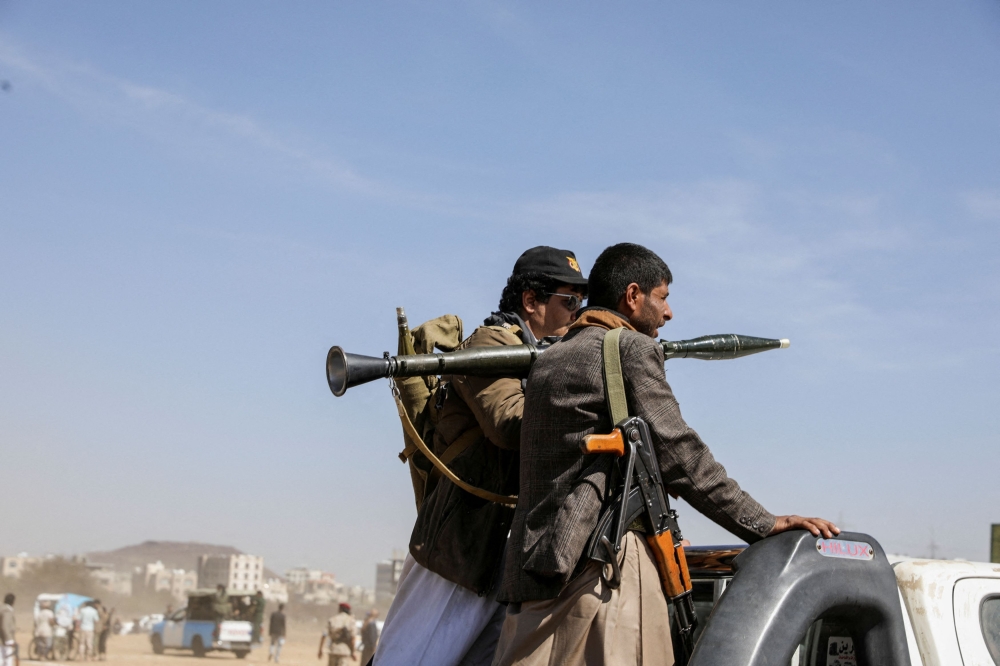
SANAA, June 9 — Yemen’s Iran-aligned Houthis said yesterday that they would ban ships linked to Israel from the Red Sea after Israel renewed its military attacks on Iran, adding to concerns about global ‌shipping and energy flows.

This is why it matters and what it means for the Iran war and the global energy crisis:

How big is the risk to global energy markets?

Iran’s closure of the Strait of Hormuz since Israel and the United States attacked it on February 28 has disrupted most oil and other energy exports from the Gulf, raising prices and causing a major energy shock.

Saudi ‌Arabia has responded by diverting more than 70 per cent of its normal daily crude exports to the Red Sea port of Yanbu.

That has been a lifeline for the energy market, helping to keep down global oil prices.

Any sustained Houthi disruption to Red Sea shipping including potential attacks on shipping or ports could be a big problem.

When the Houthis launched attacks on Red Sea shipping in November 2023, Gulf oil exports were flowing freely, meaning cargoes were diverted to avoid the Red Sea, but not halted. This time, they are being loaded there.

A Houthi source told Reuters preventing Israeli ships from transiting the Red Sea was “a first step” but that if escalation continued, the group would stop any ships heading to Israel as well as other measures.

When the group attacked shipping during the Gaza war its stated target of Israel-linked vessels included any vessel belonging to any company that used Israeli ports and its attacks on those ships dissuaded most companies from using the route.

Who are the Houthis?

The Houthis emerged as a military, political and religious movement in north Yemen in the 1990s, fighting guerrilla wars against the government in Sanaa.

They adhere to the Zaydi sect of Shi’a Islam, and after the 2011 Arab Spring they strengthened ties with ‌Iran and seized on instability to capture the capital in 2014, derailing a Gulf-backed political transition plan.

Saudi Arabia and Arab allies launched a military intervention months later to restore the ⁠ousted government and dislodge a group it saw as a proxy for Iran, Riyadh’s arch regional ⁠rival.

As Yemen’s civil war ground to a stalemate, the Houthis attacked oil installations and other infrastructure in Saudi Arabia and the ⁠United Arab Emirates with missiles and drones.

However, a ⁠2022 truce between Yemen’s warring sides has largely ⁠held.

Are the Houthis an Iranian proxy?

Iran champions the Houthis as part of its regional “Axis of Resistance”, which includes Lebanon’s Hezbollah and Iraqi Shi’ite militias, though its ties with the Yemeni movement are less clear than with those other groups.

The Houthis do not recognise Iran’s supreme leader as their ultimate religious authority in the same way Hezbollah and the Iraqi groups do. Its ⁠motivations are mainly domestic, though it is ideologically aligned with Iran.

The US says Iran has armed, funded and trained the Houthis with help from Hezbollah. The Houthis deny being an Iranian proxy and say they develop their own weapons.

Houthi military helicopter flies over the Galaxy Leader cargo ship in the Red Sea in this photo released November 20, 2023. — Houthi Military Media handout pic via Reuters

What happened when the Houthis attacked Red Sea ships before?

After the October 7, 2023, Hamas attack on Israel, and Israel’s devastating campaign in Gaza, the Houthis began firing at Israel and on international shipping in the Red Sea, saying they were doing so in support of Palestinians.

The Houthi attacks in the Red Sea severely disrupted global shipping, prompting Maersk, Hapag-Lloyd and other major companies to divert around Africa — a far longer, more expensive route.

A US-led mission to restore free navigation in ⁠the Red Sea involved repeated strikes on Houthi targets and a defensive campaign that shot down hundreds of drones and missiles.

But some Houthi attacks continued until last summer, only ending completely with the Gaza ceasefire in October.

What have they done during the latest Iran war?

While Hezbollah and the Iraqi groups joined ⁠the war early with rocket and drone fire after the first US and Israeli strikes on Iran, the Houthis have been comparatively quiet.

The group’s leader Abdul Malik al-Houthi said on ⁠March 5: “Our fingers are ⁠on the trigger at any moment should developments warrant it”.

Iranian military commanders have repeatedly warned the Houthis could join the war, with Revolutionary Guards Quds Force commander Esmaeil Qaani saying on June 1 they could choke off the Red Sea.

But before this week, the group’s only involvement was a few missile and drone attacks on Israel in late March and early April.

Why the Houthis have been relatively quiet so ‌far is not entirely clear.

They and Iran may have wanted to use the threat of another major energy route closure to warn Israel and the United States off further escalations.

The Houthis may also feel less committed to Iran’s security than do Tehran’s other regional allies.

And the group may not want to antagonise its powerful, wealthy neighbour Saudi Arabia and risk reigniting the conflict at home. — Reuters


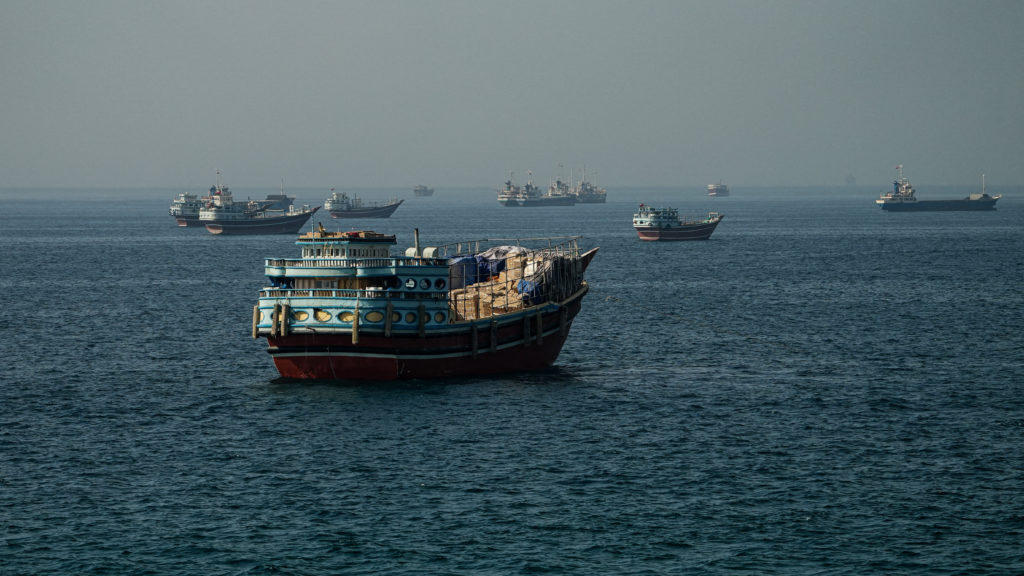
U.S. says it stopped a merchant ship trying to breach blockade and reach Iran

The U.S. military stopped a merchant vessel trying to break through its blockade of Iranian ports by firing a missile into its engine room, the U.S. Central Command said on Saturday.

Trump rips 'meaningless' House vote on resolution to end Iran war

4 June 2026 at 13:06
President Trump on Thursday panned the House for passing a resolution designed to force him to end the Iran war, calling the action "meaningless." “Yesterday, in a meaningless vote, the House voted, 4 bad Republicans and all of the Dumocrats, to limit my War Powers, right in the middle of my final negotiations to end...

Trump acknowledges calling Netanyahu 'crazy,' says Israel is complicating peace talks with Iran

Even as the U.S. president conceded the tensions in an interview released Wednesday, he insisted that his relationship with Israeli Prime Minister Benjamin Netanyahu was solid and that they connected, in part, because they are both "wartime" leaders.

❌
Subscriptions