EXCLUSIVE: Lionsgate’s highest-grossing movie in its history is even more so as expected: the Michael Jackson biopic Michael is crossing $900 million at the worldwide box office, we hear. The film is within $11M of overtaking Michael producer Graham King’s previous top-grossing movie, Bohemian Rhapsody ($911M WW). Once that happens, Michael will be the highest-grossing […]
EXCLUSIVE: Lionsgate’s highest-grossing movie in its history is even more so as expected: the Michael Jackson biopic Michael is crossing $900 million at the worldwide box office, we hear. The film is within $11M of overtaking Michael producer Graham King’s previous top-grossing movie, Bohemian Rhapsody ($911M WW). Once that happens, Michael will be the highest-grossing […]
Manuel Gual posted a photo:
A Cinematic Journey Through the History of Aviation
Description:
A wide cinematic collection celebrating the evolution of aviation, from fragile early biplanes and daring pioneer pilots to flying boats, wartime fighters, classic airliners, supersonic icons, stealth aircraft, and futuristic aerospace designs. The series combines golden hour light, dramatic skies, ocean crossings, misty runways, military silhouettes, retro travel atmosphere, and science fiction con
A Cinematic Journey Through the History of Aviation
Description:
A wide cinematic collection celebrating the evolution of aviation, from fragile early biplanes and daring pioneer pilots to flying boats, wartime fighters, classic airliners, supersonic icons, stealth aircraft, and futuristic aerospace designs. The series combines golden hour light, dramatic skies, ocean crossings, misty runways, military silhouettes, retro travel atmosphere, and science fiction concepts to create a visual timeline of flight as both engineering achievement and human dream.
These images have been generated by Artificial Intelligence.
ShutterNut... posted a photo:
Please be aware... ALL Photos are purely for entertainment. I am no expert. Titles are from recognition - what I was told - or a quick search. Polite comments or corrections are welcome.
Please be aware... ALL Photos are purely for entertainment. I am no expert. Titles are from recognition - what I was told - or a quick search. Polite comments or corrections are welcome.
Back in March, Icelandair launched an extremely unusual photo contest. Instead of seeking the most talented, best photographer, Icelandair wanted a "really bad" one. The airline wanted to show that Iceland is so beautiful that even a bad photographer could get good photos.
[Read More]
Back in March, Icelandair launched an extremely unusual photo contest. Instead of seeking the most talented, best photographer, Icelandair wanted a "really bad" one. The airline wanted to show that Iceland is so beautiful that even a bad photographer could get good photos.
In the late 12th century, a nobleman named Count Gerard van Loon commissioned an abbey to serve as his final resting place. Over the next few decades, amid plenty of political tumult, Herkenrode Abbey in Hasselt, Belgium, was converted to the first Cistercian convent for women. It was a site of pilgrimage from the 13th to the 15th centuries, and despite regional wars and economic uncertainty, it stayed the course. During the 16th century, it experienced its heyday thanks to the patronage of a
In the late 12th century, a nobleman named Count Gerard van Loon commissioned an abbey to serve as his final resting place. Over the next few decades, amid plenty of political tumult, Herkenrode Abbey in Hasselt, Belgium, was converted to the first Cistercian convent for women. It was a site of pilgrimage from the 13th to the 15th centuries, and despite regional wars and economic uncertainty, it stayed the course. During the 16th century, it experienced its heyday thanks to the patronage of a figure named Prince Bishop Evrard van der Marck, seeing the addition of a Gothic church that brimmed with beautiful stained glass windows, textiles, paintings, and more.
The Eighty Years’ War paused Herkenrode’s prosperity, and once things stabilized again politically, the abbey experienced several decades of good fortune, although much of this wealth was spent on the abbesses’ own acquisitions of property and art in a show of their prestige. But the paradigm-shifting Liège Revolution, which coincided with the French Revolution, brought all of this crashing to a halt by 1796. The abbey complex was promptly sold and dismantled.
Throughout the 19th and 20th centuries, Heckenrode went through many other uses, including factories and even a series of private homes, before it was again acquired by a religious organization in the 1970s. While the original 16th-century abbey church no longer exists due to a devastating fire in 1826, the site remains one of the region’s most culturally significant. And Herita has been working to restore it. As part of a phased regeneration of the landmark and its park, an ethereal, life-size sculpture of the abbey titled CLAUSURA by Gijs Van Vaerenbergh has risen from the building’s original footprint.
The studio, founded by Belgian designers Pieterjan Gijs and Arnout Van Vaerenbergh, conceived of CLAUSURA as “an artistic vision for the vanished heart of Herkenrode.” True to scale, the structure is made of slender steel rods that rise from the ground in an airy framework. The installation revolves around the idea of memory and sensation: rather than rebuilding the abbey to try to mirror what it may have looked like hundreds of years ago, the work nods to its past with an airy elegance.
“The new volumes are transparent, allowing their silhouettes to blend seamlessly with the landscape in the background,” says a statement. “The intervention balances between reconstruction and abstraction, as the original structures are evoked through a refined play of suggestion. Iconic details such as windows, vaults, and towers enhance the sense of recognisability, although at times, these elements dissolve back into a chaos of lines.”
Gijs Van Vaerenbergh is known for its architectural interventions, often utilizing steel, stone, wood, and a wide range of other building materials to re-envision spaces as structural sculptures. “What unites their diverse output is a sustained focus on how space is experienced—visually, bodily and temporally,” a statement says.
CLAUSURA is being constructed in three phases. The first, which is also the most ambitious, is slated to open to the public on June 18. Visitors will be able to walk and reflect amid the installation. See more on Gijs Van Vaerenbergh’s Instagram, and learn about the restoration progress and how to visit on Herita’s website.
By Mary Yang with Tommy Wang in Hong Kong
Vacuum cleaners and vapes could get more expensive if the Iran war drags on for much longer, Chinese factory owners and traders warn, as the world’s manufacturing hub reels from “crazy” costs.
Weeks of US-Israeli strikes on Iran and the effective closure of the Strait of Hormuz have choked Asia’s oil supply, stymieing the production of plastic — derived from oil — across the region.
Employees work on the vacuum cleaner production line at the RI
Vacuum cleaners and vapes could get more expensive if the Iran war drags on for much longer, Chinese factory owners and traders warn, as the world’s manufacturing hub reels from “crazy” costs.
Weeks of US-Israeli strikes on Iran and the effective closure of the Strait of Hormuz have choked Asia’s oil supply, stymieing the production of plastic — derived from oil — across the region.
Employees work on the vacuum cleaner production line at the RIMOO Electrical Appliance Tech Company in Foshan, in southern China’s Guangdong province, on April 28, 2026. Photo: Pedro Pardo/AFP.
Manufacturing giant China has been comparatively sheltered from fuel shortages thanks to oil reserves and renewable energy, but local factories are picking up a ballooning raw materials bill.
“Basically, we’ve been losing money on all our orders,” said Bryant Chen, a manager at vacuum cleaner factory RIMOO in southern Guangdong province’s Foshan.
The price of plastic has risen roughly 50 percent since before the Iran war, Chen told AFP as workers behind him fastened suction tubes to metal tanks.
“The costs of the products that we are making are being very greatly affected,” the 42-year-old said, listing plastic, copper for the vacuum’s motor and raw materials in its power cords.
“Typically at this time we’d be entering peak season, but compared to the same period previously, shipment and production data aren’t very optimistic.”
Two hours away, plastic traders in storage hub Zhangmutou said price fluctuations were the worst they’ve seen in decades.
“It has never been this crazy,” said Li Dong, 46, who entered the industry two decades ago.
The plastic, rice-sized pellets he buys for local phone cases and EV battery factories jumped wildly in March, triggering days of panic that jammed the small town’s roads as factories rushed to stock up.
‘Mutual state of decline’
Exporters in Zhangmutou showed AFP a vast range of products their pellets would become, including drones and badminton birdies.
One trader sifted through pink, green and purple beads that she said would be moulded into e-cigarette casings sold in the Middle East.
The Iran war has hit plastic production even harder than bottlenecks caused by the Covid pandemic, when ships could not come and go from China, Li said.
Employees work at the Zhangmutou Plastic Raw Material Market in Dongguan, in southern China’s Guangdong province, on April 29, 2026. Photo: Pedro Pardo/AFP.
Some sellers cashed in on the plastic panic, he added, fighting to take advantage of surging costs.
Li said the price of plastic had dropped around 10 to 20 percent from its height, but he cautioned against further oil hold-ups.
“The factories we supply to will suffer the most because their direct costs will rise,” he said.
For exporters, the Middle East crisis has added to the hangover still lingering from Donald Trump’s sweeping global tariffs last year.
The US Supreme Court struck down those levies as illegal, but tolls on Chinese goods entering the US still sit at around 20 percent.
On the outskirts of Guangzhou, one garment factory owner lamented the chaos triggered by the US president’s trade war.
Overseas clients are afraid to place orders, while Chinese manufacturers cannot pin down changing costs.
“As a result, everyone is in a mutual state of decline,” garment boss Zhou, 55, said.
While 80 percent of his clients have returned, the fabrics scattered on his factory floor made into sweatpants headed for Europe and North America have risen 10 to 20 percent in cost due to the Middle East war.
As overseas orders dropped, seamsters went months without a job.
‘Tensions rise, orders disappear’
Migrant worker Jingjing returned to her hometown in Hubei province for two months, where she made half the 400 yuan (US$60) she now earns in Guangzhou’s garment factories.
“When tensions rise… orders suddenly disappear,” the 42-year-old said.
But this year she said she always has something to do.
Job-seeking labourers and recruiters from clothing factories on a street in an urban village in Guangzhou, in southern China’s Guangdong province, on April 27, 2026. Photo: Pedro Pardo/AFP.
In a damp back alley, Jingjing joined job-seekers milling about leisurely, haggling for higher wages while garment bosses perched on scooters brandished hiring signs, desperate for day labourers.
Chen, the vacuum factory manager, said he was “still worried” about surging shipping costs should the Iran war drag on.
“If shipping costs rise, it will cause the final costs for our customers to increase sharply,” he said.
They “will have no way to sell normally, because the costs are just too high”.
Chen said RIMOO plans to expand to other markets beyond the Middle East where around 60 percent of its customers are based.
“We are still optimistic,” he said. “The market demand still exists.”
But analysts warn the war’s impact on costs will be felt for months.
“The problem is all of these costs will filter through the supply chains for the rest of the year,” said supply chain consultant Cameron Johnson.
“The longer it goes on, that kind of cascades into much bigger problems, particularly if there’s not enough oil in general to run stuff.”
Before Russia’s 2022 invasion of Ukraine turned it into the new pariah of the West, Iran was the most sanctioned country on Earth: more than 3,600 economic sanctions imposed by the United States, the United Nations, the European Union, and various other countries, measures that forced the Islamic Republic to reshape its economic policy to circumvent these obstacles. That included its vital oil sector, which U.S. President Donald Trump hoped to choke through the U.S. blockade of the Strait of Hor
Before Russia’s 2022 invasion of Ukraine turned it into the new pariah of the West, Iran was the most sanctioned country on Earth: more than 3,600 economic sanctions imposed by the United States, the United Nations, the European Union, and various other countries, measures that forced the Islamic Republic to reshape its economic policy to circumvent these obstacles. That included its vital oil sector, which U.S. President Donald Trump hoped to choke through the U.S. blockade of the Strait of Hormuz, the route through which Iran exports 90% of the crude it sells abroad.
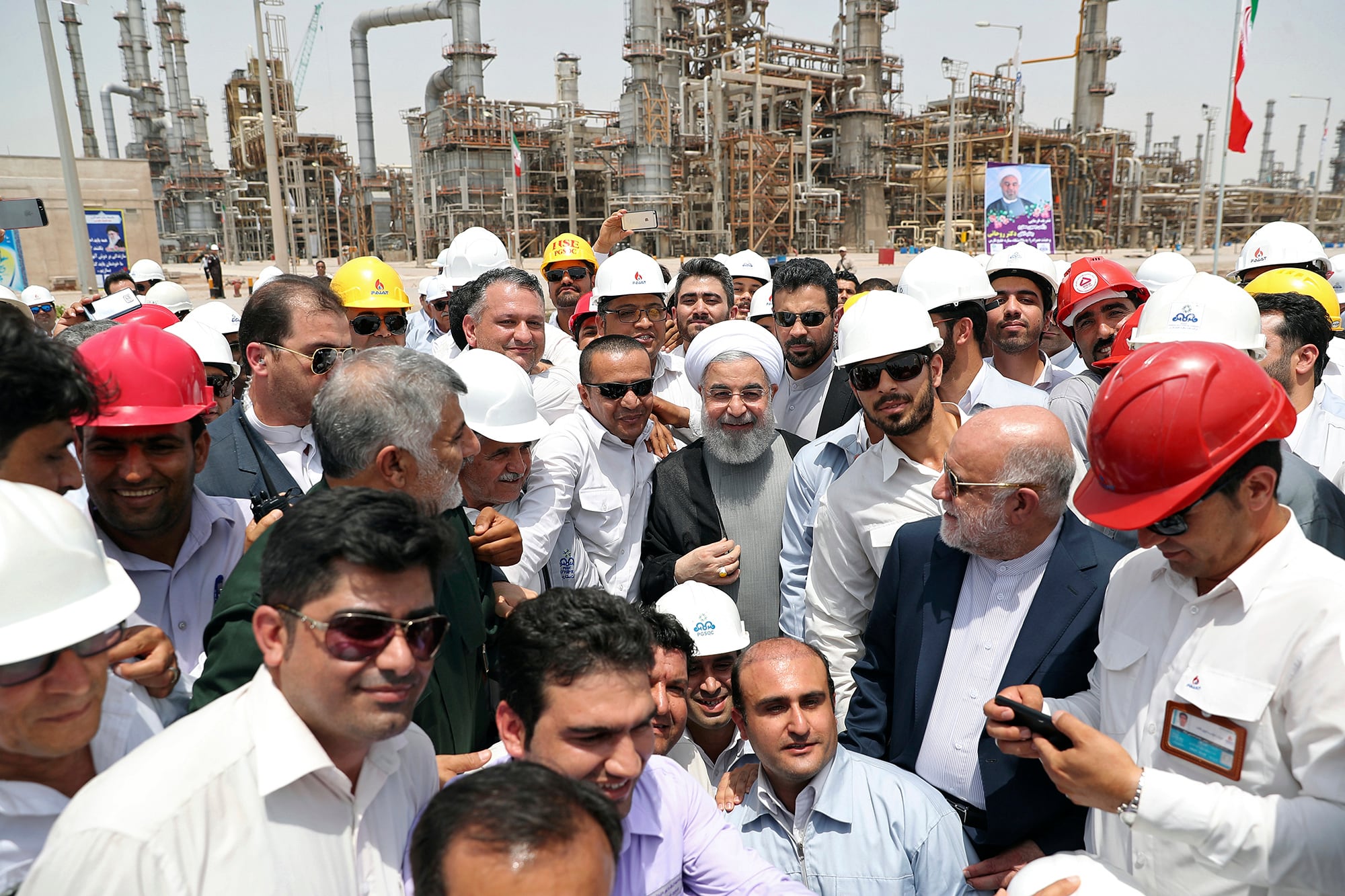
Then Iranian president, Hassan Rouhani (center), inaugurated the Persian Gulf Star refinery in Bandar Abbas, Iran, on April 30, 2017, in an image from the Iranian Presidency.
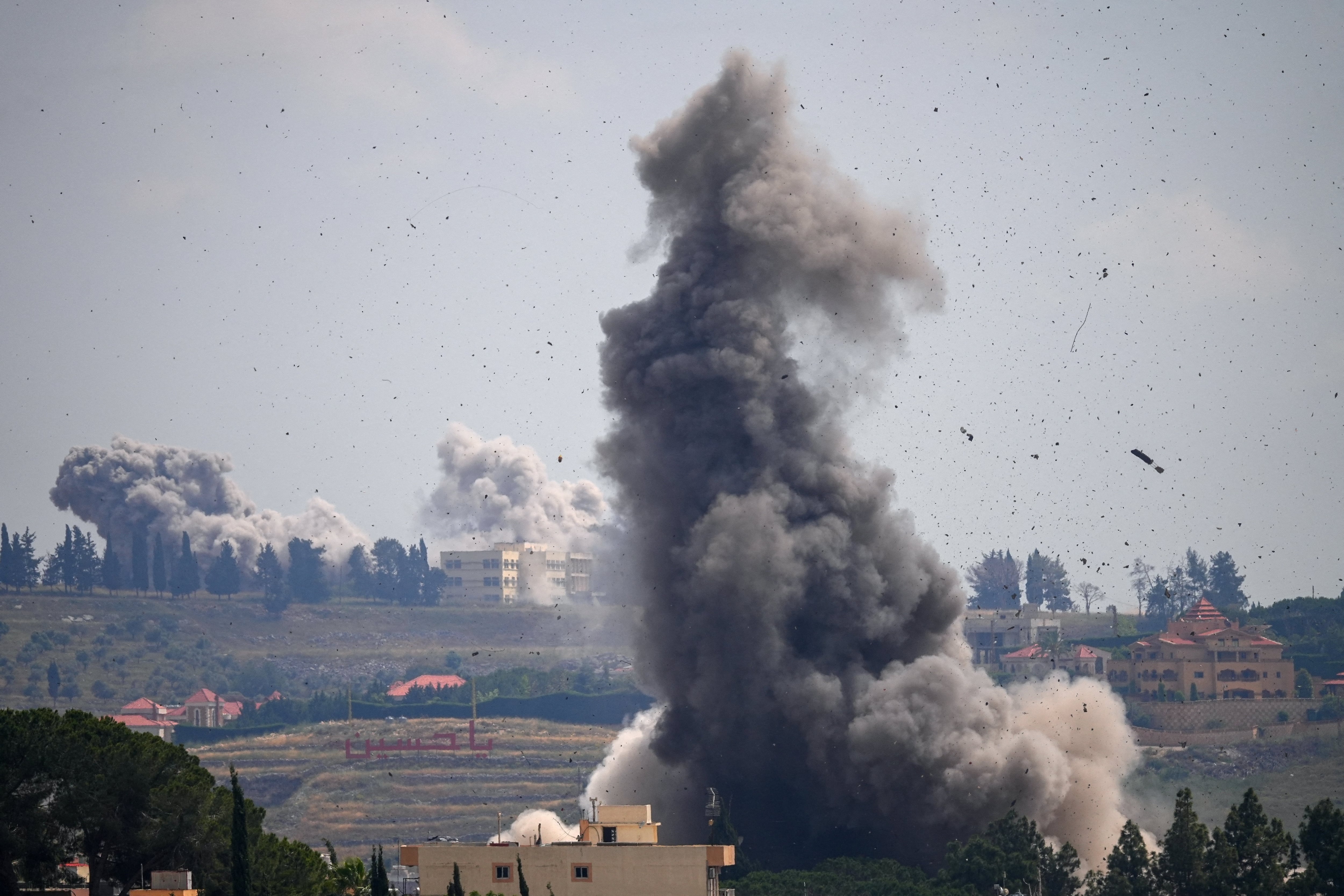
In the war with Iran, the sense of urgency has shifted sides. In February, the United States and Israel judged it so urgent to start the conflict that they were prepared to launch a massive strike and kill the supreme leader, Ali Khamenei, even amid negotiations; three months later it is Donald Trump who is trying to keep alive the talks that would definitively end the conflict, while Tehran remains firm. The U.S. president showed that attitude again on Monday when he ordered Israel’s prime mini
In the war with Iran, the sense of urgency has shifted sides. In February, the United States and Israel judged it so urgent to start the conflict that they were prepared to launch a massive strike and kill the supreme leader, Ali Khamenei, even amid negotiations; three months later it is Donald Trump who is trying to keep alive the talks that would definitively end the conflict, while Tehran remains firm. The U.S. president showed that attitude again on Monday when he ordered Israel’s prime minister, Benjamin Netanyahu, to halt the airstrikes the latter had announced on Beirut. The aim? To prevent the feared derailment of negotiations with the ayatollahs.
Michael A Lawrence posted a photo:
Taken at the same time as my previous photo, only this was the Kodak Brownie Hawkeye Camera. I keep two of these Hawkeyes under the passenger seat of my vehicle, one with 100 and the other with 400 speed film. I loaded this role of HP5+ on New Years Day....this last exposure was made at the end of May. I've not been shooting quite as much as I normally do.
Two very different cameras that arrived at kind of the same place when it was all said and done.
Taken at the same time as my previous photo, only this was the Kodak Brownie Hawkeye Camera. I keep two of these Hawkeyes under the passenger seat of my vehicle, one with 100 and the other with 400 speed film. I loaded this role of HP5+ on New Years Day....this last exposure was made at the end of May. I've not been shooting quite as much as I normally do.
Two very different cameras that arrived at kind of the same place when it was all said and done.

 Login
Login