Reading view

Only 2 in 5 Singapore employers offer flexible work even though jobseekers consider it a priority
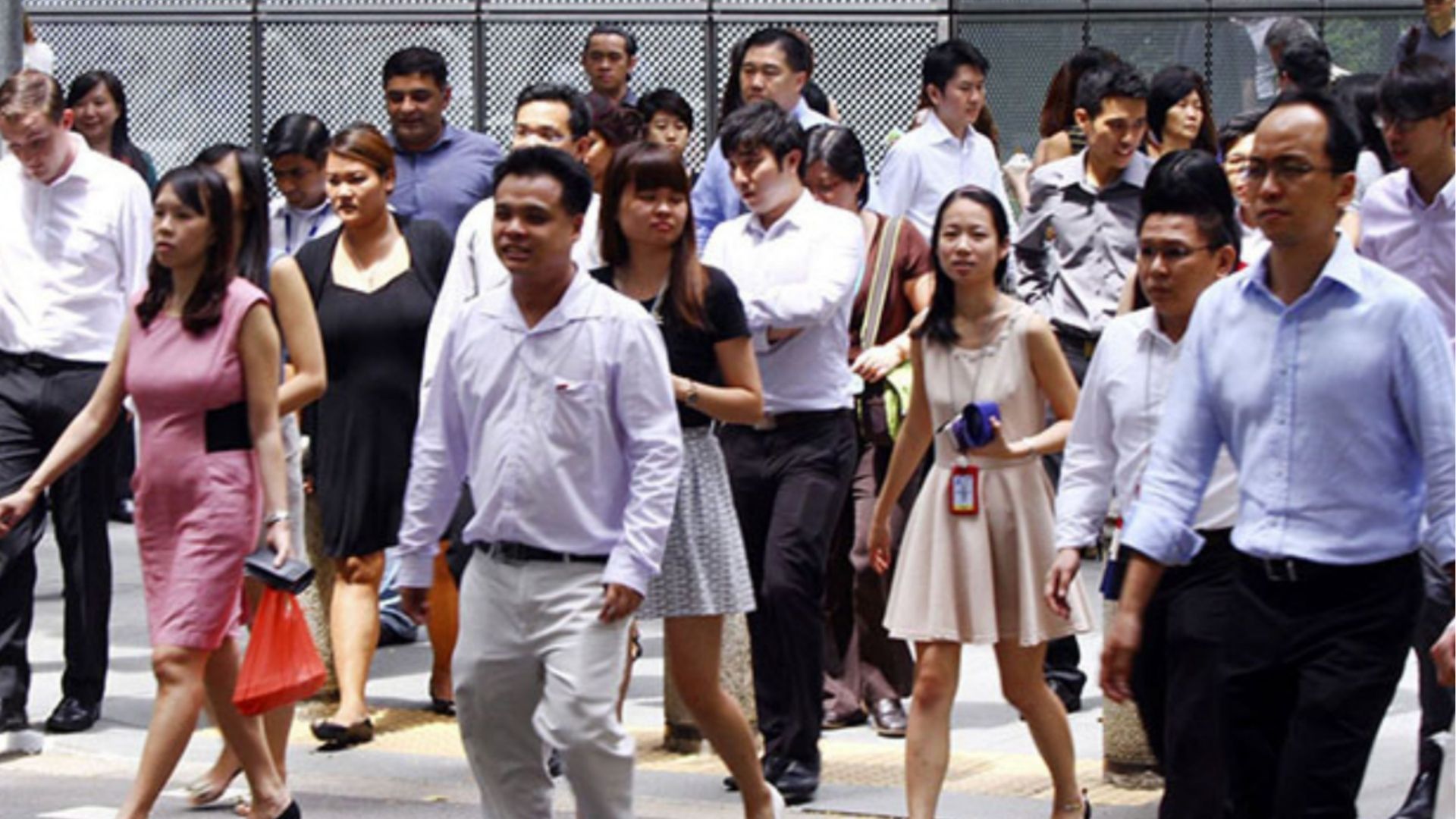
SINGAPORE: While Singapore workers are placing a growing premium on flexibility and work-life balance, many employers have yet to fully meet those expectations, according to Indeed’s latest Global Talent Report.

The study found that only 40 per cent of employers in Singapore offer flexible schedules for agile roles, while 42 per cent provide remote work options. The findings come as more job seekers show a preference for working arrangements that give them greater control over their time and personal lives.

Compared with the global average, job seekers in Singapore place a stronger emphasis on workplace flexibility. More than a third of respondents, 38 per cent, said flexibility and greater control over their schedules would be the main reason they would consider agile work. Another 35 per cent cited improved work-life balance as their key motivation.

When asked what would make agile roles more appealing, 64 per cent pointed to flexible schedules, while 60 per cent said remote work options would increase their interest.

Saumitra R Chand, Career Expert at Indeed, said the results highlight an opportunity for employers to better align their workforce strategies with changing employee priorities.

“The findings suggest there is a meaningful opportunity for employers in Singapore to better align workforce strategies with evolving employee expectations,” Ms Chand said, “Workers are increasingly open to more flexible ways of working, but they are still looking for stability, clarity and trust from employers.”

The report also found growing interest in alternative career paths among Singapore professionals. Although only 15 per cent of respondents currently consider themselves agile workers, 60 per cent said agile roles are attractive. This surpassed the 52 per cent who said traditional employment arrangements appeal to them.

Researchers also identified a gap between employers and employees when it comes to internal mobility. While 40 per cent of employers said they look within their organisations to fill agile roles, only 12 per cent of job seekers said they actively seek agile opportunities with their current employer.

Artificial intelligence is emerging as another area where employers and workers appear to be moving at different speeds.

Singapore employers were among the strongest adopters of AI tools for workforce planning and agile work arrangements. Just 10 per cent said they are not using AI in support of workforce agility. In contrast, 35 per cent of job seekers said they are not using AI for similar purposes.

Views differed sharply on AI’s impact on career opportunities, as well. Eight in 10 employers believe AI is helping to create more high-paying agile roles, but only 42 per cent of job seekers share that view.

The findings are based on a global survey of 10,283 respondents. In Singapore, the study included 503 job seekers and 100 employers.

This article (Only 2 in 5 Singapore employers offer flexible work even though jobseekers consider it a priority) first appeared on The Independent Singapore News.

  •  

What’s Below the Great Salt Lake? More Water

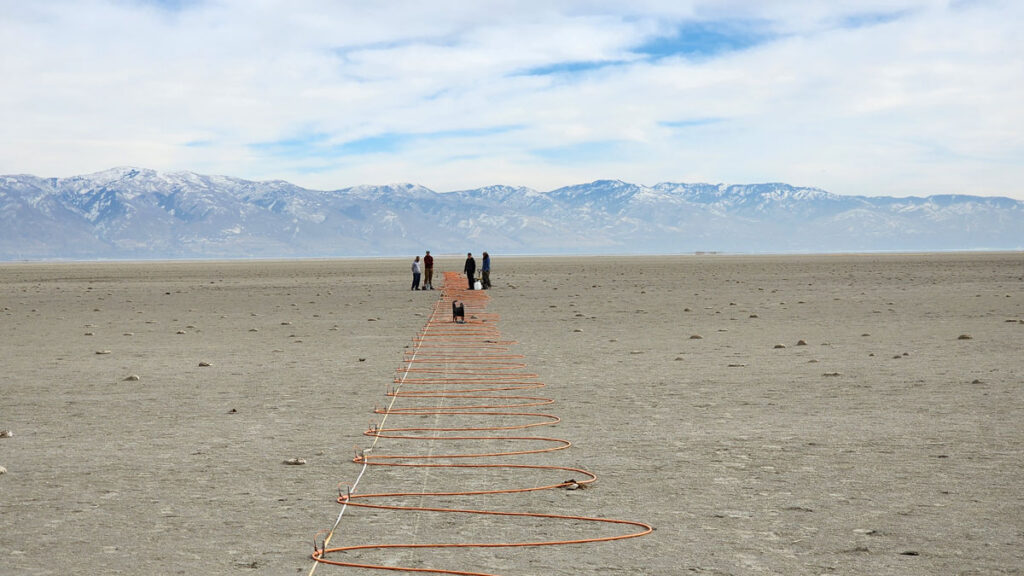
Researchers stand in the distance as an orange electrical cord snakes across a dry lake bed in the Great Salt Lake.

Since 1989, Utah’s Great Salt Lake has lost some 70% of its surface area, reducing its ecosystem services and creating stretches of drying lake bed (playa) that send toxic dust into the air.

That drying ground has also provided opportunities for scientists to survey what lies below the lake’s floor. In a study published in Geosciences, researchers revealed glimpses of fresh water and salt water, with some fresh water lurking only a few meters below the surface. The work could provide clues for conserving the lake, a crucial resource for both the ecology and the economy of the region.

Salt Lake, Fresh Water

In 2023, Michael Thorne and colleagues began using a technique known as electrical resistivity tomography (ERT), which can reveal the presence of fresh or salty water, at dozens of spots near the southern and eastern edges of the Great Salt Lake. Thorne is a geophysicist at the University of Utah in Salt Lake City and a coauthor of the new study.

The lake’s desiccation allowed the researchers to access areas where “at previous times, you would never be able to do measurements because [they] would be underwater,” said Thorne.

Establishing a network of ERT sensors requires robust fieldwork. Over the course of long days in the field, Mason Jacketta, lead author of the new study, and others placed electrodes into the ground a few meters apart, making lines that stretched hundreds of meters. Between pairs of electrodes, they measured the resistance to electrical current. Salty water, filled with electricity-conducting ions, has lower resistance than fresh water.

Paired with information on the rock and sediment beneath the surface, as well as with measurements from nearby wells, the ERT data allowed the team to work out a profile of how electrical resistance varied with depth and to figure out what kind of water seeped through pores in the ground below. The team shared the results of their work on the southern part of the lake in Geosciences, while more in-depth findings about the eastern shore will appear in an upcoming publication.

“What this is really showing is that [fresh water is] prevalent all over the place.”

At many of the sites, Jacketta and others found fresh water near the surface.

“What this is really showing is that [fresh water is] prevalent all over the place,” said Elliot Jagniecki, a geologist at the Utah Geological Survey who wasn’t part of the work.

That fresh water was often in close proximity to patches of salty groundwater. At one spot in the southeastern part of the lake, the team found a shallow layer of brine. But right below that, at only 5 meters of depth, they encountered fresh water. At the team’s most northern study site, they found fresh water around 2 meters deep. On the southern shore, they found fresh water in some places as shallow as 2.8 meters.

Mysterious Formations

The team’s results also helped explain curious features around the Great Salt Lake, including mounds made of salt and islands made of reeds.

The lacy-looking layers of the lake’s so-called mirabilite mounds form in the winter, when the cold freezes upwelling salty water, concentrating its salts. With measurements taken next to where some mirabilite mounds form, the researchers could visualize the underground conduits that send salty water to the surface.

While mirabilite mounds form close to shore, mounds made of Phragmites reeds appear in the lake’s interior as well as along its periphery. Thorne and his colleague William Johnson first noticed these mysterious circles popping up in Google Maps more than a decade ago. When they went to investigate, they found Phragmites.

“The population of Phragmites around the Great Salt Lake is really not allowing fresh groundwater to go back into the Great Salt Lake.”

In the new work, the team placed a line for electrical resistivity tomography straight through a Phragmites mound. These reeds wouldn’t be able to survive in the lake’s briny water, Thorne said, but the team’s results showed fresh water rising right to where the invasive reeds grew thick.

“The population of Phragmites around the Great Salt Lake is really not allowing fresh groundwater to go back into the Great Salt Lake,” said study coauthor Tonie van Dam, a geophysicist at the University of Utah. The reeds suck up some 70,000 acre-feet of fresh water that could go back into the lake, she said. In “sucking up [fresh water] for their own existence,” van Dam explained, the reeds crowd out native plant species that provide habitat for native birds.

More Than a Beautiful Landscape

Overall, the study provides a new picture of the fresh and salty groundwater beneath the lake and how these resources feed what people observe at the surface.

It’s also helped to prompt other work, Thorne said, including one recent study in which researchers used a helicopter carrying a wire loop to create and sense electrical currents underground. That study, published in Scientific Reports, suggested there could be a large amount of fresh water under one part of the lake.

But that work is a proof of concept, Jagniecki said, and accessing such potential aquifers might not be sufficient to help address the lake’s current desiccation. Even if they could, refilling them could take thousands of years. “I just don’t think that’s a solution,” he said.

Saline lakes are fragile ecosystems sensitive to climate change, Jagniecki said. The Great Salt Lake harbors plenty of life, such as brine shrimp that become food for a host of migratory birds that use the lake as a stopover. Mineral extraction and the use of brine shrimp for feed in aquaculture are important drivers of Utah’s economy.

Getting a better understanding of how saline lake systems function could be helpful in conserving them and maintaining the resources they provide humans, Jagniecki explained.

“It’s actually more than that. It’s a beautiful landscape,” he said.

—Carolyn Wilke, Science Writer

Citation: Wilke, C. (2026), What’s below the Great Salt Lake? More water, Eos, 107, https://doi.org/10.1029/2026EO260127. Published on 21 April 2026.
Text © 2026. The authors. CC BY-NC-ND 3.0
Except where otherwise noted, images are subject to copyright. Any reuse without express permission from the copyright owner is prohibited.
  •  

Matthew Celestial & Brittany Bell Launch Advisory Firm Rhetor Network

EXCLUSIVE: Canadian industry veterans veterans Matthew Celestial and Brittany Bell have joined forces for a Toronto-based advisory, Rhetor Network. The company will advise organizations in the entertainment, technology, consumer products, media and corporate sectors, offering a diet of strategic communications, reputation management, audience development, business strategy, commercialization and operational execution. Specifically, the business will be […]

  •  

Nancy Shukri says new care standards will safeguard dignity, rights across Malaysia’s care services

Malay Mail

KUALA LUMPUR, June 8 — The National Care Standards for Older Persons and Persons with Disabilities is expected to be launched in October this year as part of ongoing efforts to strengthen Malaysia’s care economy framework.

Women, Family and Community Development Minister Datuk Seri Nancy Shukri said the standards are currently under development, following continuous discussions to establish clear benchmarks for quality care services, including expectations for providers within the care sector.

“We are developing standards of care. This is still in the discussion stage and is expected to be launched in October.

“I am pleased to have heard the views of the industry players involved, including the challenges faced and the suggestions for improvement put forward,” she said after delivering her keynote address at the ABAC Malaysia Care Economy Roundtable 2026 here today.

She also noted that ongoing discussions continue to generate new ideas, reflecting the evolving nature of the care sector, which requires continuous refinement and policy enhancement.

Earlier in her keynote address, she said the standards would serve as a key governance instrument to strengthen the quality, safety and accountability of care services nationwide.

“They are intended to establish minimum standards of care, safeguard the dignity and rights of care recipients, and promote greater consistency in service delivery across institutional, community-based and home-based care settings,” she said.

Nancy said investment in the care economy is no longer merely a social welfare issue, but a critical economic imperative to ensure Malaysia’s future productivity and resilience.

She said addressing caregiving gaps and enabling greater labour force participation could contribute about RM77 billion annually to the national economy, equivalent to around five per cent of gross domestic product.

Citing research by the Institute of Strategic and International Studies (ISIS) Malaysia, the minister said unpaid care and domestic work are estimated to be worth RM379 billion annually, while about 3.2 million Malaysians face constraints in full labour force participation due to caregiving responsibilities.

Nancy also noted that Malaysia is undergoing significant demographic changes, with the total fertility rate declining from 6.0 births per woman in 1960 to around 1.6 currently, below the replacement level of 2.1.

To address these challenges, she said the Malaysia Care Strategic Framework and Action Plan 2026-2030 represents an important step towards establishing a more structured and coordinated national direction for the care ecosystem. — Bernama

  •  

Here’s Where to Watch ‘Rick and Morty’ Season 9 Online for Free

“Rick and Morty” returns for season nine. If you’re looking for ways to watch the animated series when it airs or when it’s available to stream, we got you covered with the best ways to watch online — including ways to watch for free. When Does ‘Rick and Morty’ Air? If you’d like to watch new […]

  •  

20260331-MORTADELO Y FILEMON 002-NB009-4K

Manuel Gual posted a photo:

20260331-MORTADELO Y FILEMON 002-NB009-4K

The Secret Ministry of Absurd Missions

Description

A cinematic retro spy comedy set in a fictional 1970s Spain, where secret agents, eccentric officials, nervous informants, improvised disguises, dusty archives, smoky offices, street chases, old cinemas, cheap bars, hotel lobbies, public squares, rooftops, laboratories and forgotten government corridors collide in a world of bureaucratic chaos and absurd investigation. The series blends vintage European cinema aesthetics with dark humor, slapstick energy and noir atmosphere: worn suits, red trousers, old telephones, typewriters, paper files, vending machines, battered cars, market stalls, taverns, secret dossiers and strange scientific experiments create a nostalgic but surreal universe. Each scene feels like a lost frame from an imaginary Spanish espionage film, mixing comedy, mystery, action and social satire with warm light, grainy textures, dramatic shadows and wide cinematic framing. The collection suggests a bizarre intelligence agency trapped between outdated technology, comic incompetence and dangerous missions that always seem to spiral out of control.

These images were generated by Artificial Intelligence.

  •  

20260405-EBANISTERIA JAPONESA-NB018-2K

Manuel Gual posted a photo:

20260405-EBANISTERIA JAPONESA-NB018-2K

The Quiet Discipline of Japanese Woodworking: A Traditional Joinery Workshop

Description

Inside a serene Japanese woodworking studio, the images reveal the slow, precise, and deeply tactile world of traditional cabinetmaking. Soft natural light filters through shoji screens, illuminating aged wooden workbenches, hand planes, chisels, saws, measuring tools, stacked timber, polished drawers, iron hardware, and carefully assembled joinery. The atmosphere is calm and contemplative, shaped by patience, repetition, and respect for material.

The series follows the full rhythm of artisanal creation: selecting and preparing raw boards, drawing measured plans by hand, sharpening blades on a wet stone, cutting and carving joints, planing long ribbons of wood from a board, assembling drawers and cabinets, fitting metal handles, brushing lacquer, polishing surfaces, and finally presenting finished tansu-style furniture in a quiet tatami room. Every scene emphasizes craftsmanship over speed, touch over machinery, and inherited knowledge over industrial production.

The visual language combines documentary realism with a refined cinematic sensibility. Warm wood tones, indigo work garments, soft diffused daylight, shallow depth of field, sawdust, wood grain, worn tools, and traditional Japanese interiors create an intimate portrait of a craft that feels timeless. The images celebrate not only furniture making, but also the philosophy behind it: restraint, precision, durability, balance, and beauty found in useful objects.

This collection is ideal for themes related to Japanese culture, traditional carpentry, handmade furniture, heritage crafts, sustainable design, woodworking, wabi sabi aesthetics, slow craftsmanship, interior design, and the quiet dignity of manual labor.

The images have been generated by Artificial Intelligence.

  •  

Mindy Kaling and ‘Not Suitable For Work’ Boss on Depicting the Gen-Z Workforce Onscreen and Setting Up Numerous Love Triangles: ‘You Want to Keep People Guessing’

SPOILER ALERT: This story contains spoilers for the three episode-premiere of “Not Suitable For Work,” now streaming on Hulu. Let the record show that Mindy Kaling is well aware of the possibility of people looking up “Mindy Kaling NSFW” and finding “inappropriate photos” of the actor/writer/producer, rather than information about her newest TV show, “Not Suitable […]

  •  

Kevin O’Leary & Nvidia’s Co-Founder Among 2026 Recipients Of AI Honors

Kevin O’Leary will be feted in Washington, D.C. next week as part of the second AI Honors Gala, joining other recipients including a top Pentagon official, Capitol Hill lawmakers and the co-founder of Nvidia. The Shark Tank star will receive the AI Global Ambassador Award for “his investments in AI implementation, data centers, and the […]

  •  
❌